PROSPECTUS 2018 - Southern African Wildlife College
←
→
Page content transcription
If your browser does not render page correctly, please read the page content below

PROSPECTUS 2018

     PROSPECTUS 2018   1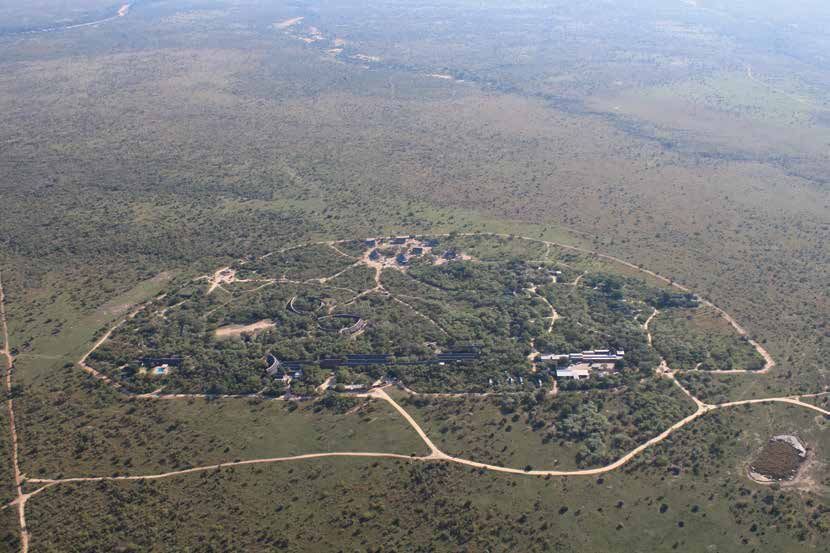
Prospectus 2018

2       PROSPECTUS 2018
Prospectus 2018

The College is a legal association with the registered name of the Southern African Wildlife College NPC – Registration Number
1996/005726/08 - and a non-profit company in terms of the Companies Act, no. 71 of 2008.

The Southern African Wildlife College (SAWC) NPC is an independent SADC recognised centre of specialisation in Conservation
Education, Training and Skills Development and is:

                                                                                       Registered with the Department of
                                                                                       Higher Education and Training as a
                                                              Kruger                   Private Higher Education Institution until
                                                                                       31 December 2021. Registration No. 2011/
                                                              National                 HE08/004.

                                                              Park                     Accredited with CATHSSETA, the Culture,
                                                                                       Arts, Tourism, Hospitality and Sports
                                                                                       Sector Education and Training Authority,
                                                                                       Accreditation no. 613/P/000001/2004 .

                                                                                       Registered as a VAT vendor with the
                                                                                       South African Revenue Services (SARS)
                                                                                       VAT Registration No: 4370159610 and Tax
                                                                                       Reference No: 9508059640.

                                                                                       Registered as a non-profit public benefit
                                                                                       organisation – NPO Registration Number
                                                                                       046-675-NPO / PBO Registration Number
                                                                                       930016093. The College does not receive a
                                                                                       government subsidy.

                                                                                       Recognised by the Department of
                                                                                       Environmental Affairs, South Africa, as a
                                                                                       credible and long-standing non-government
                                                                                       conservation organisation (NGO) and as
                                                                                       an approved project for Socio Economic
                                                                                       Development under the Broad-based
                                                                                       Economic Empowerment Act 53 or 2003
                                                                                       and the Codes of Good Practice on Broad-
                                                                                       based Black Economic Empowerment.

                                                                                       Proudly supported by both WWF-SA and
                                                                                       Peace Parks Foundation together with the
                                                                                       Southern African Wildlife Trust (SAWCT),
                                                                                       an independent Capital Trust Fund set up
                                                                                       by WWF-SA in 1999 to provide a reliable
        GPS co-ordinates for SAWC: 24°33’13.7”S 31°19’36.9”E                           income stream for the Wildlife College in
                                                                                       perpetuity.

                                 FOR FURTHER INFORMATION CONTACT
                                             Southern African Wildlife College NPC
                                        Private Bag X3015 Hoedspruit 1380, South Africa
                                                        Tel: +27 (15) 793-7300
                     Fax: +27 (15) 793-7314 | E-mail: info@sawc.org.za | Website: www.wildlifecollege.org.za

                                                       PROSPECTUS 2018                                                          3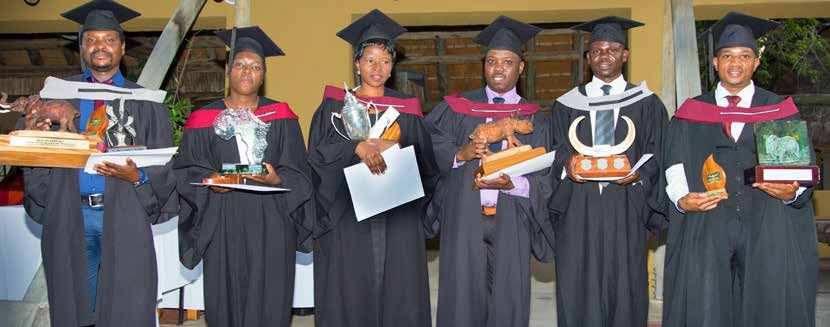
Contents

Message from the Academic Department 					5

Introduction to the Southern African Wildlife College:
ͳͳ Our vision								                                                            6
ͳͳ Our mission								                                                           6
ͳͳ An overview of the training we offer					                                     6
ͳͳ Our approach to training						                                                6
ͳͳ Our location 								                                                         7
ͳͳ Our facilities								                                                        7

Programmes and Institutional Accreditation 				8

Code of Conduct								8

Board of Directors							9

Executive Management							9

Senior Management Committee		                				9

Full-time Academic Staff							10

Training Associates							11

Courses Offered:
ͳͳ Higher Education							                                                       14
   · National Certificates
ͳͳ Occupational Qualifications 						                                            21
   · National Certificates
   · Skills Programmes
- Short Courses								                                                          33
- University Programmes and Short Courses for Groups			                          41
ͳͳ Youth Access: Bridging Programme: 					                                       43
   · An Introduction to Conservation and Environmental Education

Access to Information across all Programmes 				44
ͳͳ Student Support							                                                        44
ͳͳ Admissions and Selection: How to Apply					                                   44
ͳͳ Course Fees								                                                           45
ͳͳ Bursary Support							                                                        46
ͳͳ Contact Details 							                                                       46

Please note that the information in this Prospectus has been compiled as accurately as possible and was correct at the time of going
to print. The SAWC cannot be held responsible for any changes to policies, practices or changes to the programmes made thereafter.

4                                                        PROSPECTUS 2018
Message from the Academic Department

Message from the Academic Department
The Southern African Wildlife College, which was established in 1996, has evolved over the past twenty one years.

In 1997 we offered a series of short courses and in 1998, we implemented our first Certificate in Protected Area Management from which developed
the two Higher Education qualifications we know now.

In the early 2000s, we persevered through the various levels of accreditation through the (then) THETA, the Tourism and Hospitality Education
Training Authority, in order to expand our offering to include skills programmes and National Certificates in the Further Education and Training Band.
A unit standard aligned bridging course was added to its scope in 2010 to allow access to school leavers and entry into the conservation sector. By
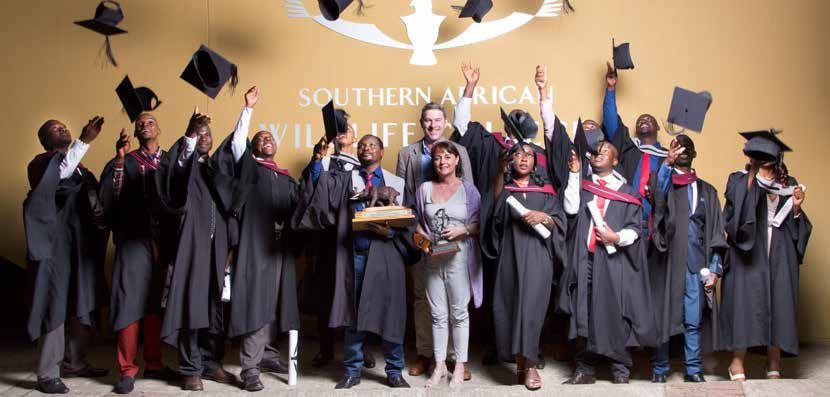
providing consistently high standards of education, we achieved the status of full registration as a Private Higher Education Institution in 2017.

To support the growth of our students and sustain the development of the College as a respected institution of learning, the Applied Learning
unit was established in 2016. This unit was created to facilitate monitoring, evaluation, research and the application thereof in all departments.
Monitoring allows a department to collect information in a logical and robust way in order to be properly evaluated. Research allows us to trial
new techniques and applications, or make changes to current methods and assess what impact these new or changed techniques have. Lastly, as a
training institution, we are in the fortunate position to be able to teach students from the lessons we learn during this process.

Our training courses have always been hands-on, with a strong practical application but the Applied Leanrning Unit will help us formalize this and
achieve our aim of making our teaching and curricula applied rather than theoretical, with the focus on real issues faced by students and practitioners
in their work. This is relevant to all sectors within the College but especially to the departments which are linked directly to the wildlife economy. The
outcomes of this applied learning will be:

   Teaching in a relevant, current and applied work orientated way.

   Keeping up to date with relevant techniques in these fields.

   Being pioneers in the improvement of techniques in these fields.

   An annual “Journal” with the project and research results of all College departments.

   New and improved links with partners, other institutions and in the industry as a whole.

There are already some very exciting projects underway.

To remain relevant and to be acknowledged as a contributor to the education and conservation sectors, in 2017, the College also began to undertake
public advocacy initiatives with parliament, various national departments and Southern African Development Community secretariat. The focus
being to advance and create awareness of the critical importance of conservation education, training and applied research.

Despite many changes in the education landscape, the College maintains direction and stays true to its vision and guiding principles.

Prof Alan Gardiner                                    Ashwell Glasson                                        Anelle Rautenbach
Head: Applied Learning                                Head: Academic Policy                                  Head: Academic Support and
                                                      & Sector Advancement                                   Quality Assurance

                                                                  PROSPECTUS 2018                                                                       5
Introduction

INTRODUCTION
The Southern African Wildlife College (SAWC) was conceptualised in 1993 and established in 1996 by the World Wide Fund for Nature, South Africa (WWF
South Africa) in close cooperation with interested and affected parties in southern Africa, including national and provincial government departments, other
conservation agencies and the Southern African Development Community (SADC).

A grant made by the German Ministry of Economic Cooperation (BMZ) via the German Development Bank (KfW) and WWF South Africa made the
construction of the College possible. Built on land that was donated by Mr Hans Hoheisen to WWF South Africa, the impressive College campus was
completed in record time thanks to cooperation between WWF-SA, the international donor community, local companies and individual supporters. An
association called the Bushbuckridge Builders’ Association, comprising several small contractors from local communities surrounding the College, helped
build the facility.

With its vision to become the most sought after Centre of Excellence in Conservation Education and Wildlife Management Training in the Southern African
sub-region, the College has since its inception, empowered people from Africa to manage and conserve some of the world’s most biologically diverse areas.

OUR MISSION
The Southern African Wildlife College aims through cutting edge, hands-on training programmes, to produce highly competent and motivated wildlife
area managers and conservationists who are able to manage and conserve their protected areas and associated fauna and flora on a sustainable
basis within the stated conservation objectives and in cooperation with local communities.

AN OVERVIEW OF THE TRAINING WE OFFER
The College plays a pivotal role in equipping a new generation of conservation managers with the necessary skills to deal with key challenges facing
conservation today. Closely linked to this is the role that nature-based tourism is set to play in the socio-economic development of southern Africa and
which in turn allows the College to expand its relevance and reach across borders, greatly impacting on the training of conservationists in Africa.

The training offered by the SAWC supports the imperative for responsible and sustainable business strategy and practice in the wildlife and nature-based
tourism sector. It focuses on protected area natural resource managers from Southern Africa who are either already in the service of conservation and
environmental agencies as well as individuals starting their careers in the conservation field.

The College also offers a range of institutionally-accredited short courses to meet the needs for on-demand and focused programmes that are cost-
effective and address specific occupational or skills needs for conservation professionals and new entrants.

The College also aims to provide courses that will open career opportunities for existing personnel who do not have formal qualifications to become
protected area natural resource managers. Thus, the necessary bridging skills will be provided so that these managers may return to their places of work
equipped with the means to manage their areas efficiently and effectively.

There is no doubt that the SAWC is a dynamic institution that strives to have a positive impact on conservation. In doing so, its courses need to remain
relevant to the needs of the conservation industry. As such, it is poised to assist with the training of managers required for broader Transfrontier
Conservation Areas (TFCAs), which will further open and link Africa’s existing protected area network. It is imperative that managers of these areas are
adequately trained for the task of custodianship of Africa’s dwindling, yet ever-important wildlife populations and other natural resources, and that a
high priority is placed on doing so in cooperation with local communities. In recognition of the important role that local communities will play in the
sustainable management of natural resources, the College is actively involved in capacity building at the community level.

The importance of training stakeholder community members in eco-tourism initiatives should not be under estimated. This directly benefits the people
living in protected area buffer zones and betters their standard of living. In line with the College’s new business strategy, the SAWC is set to play a pivotal
role in further improving the skills and knowledge needed for sustainable development. Dedicated to the empowerment, upliftment and capacity
building of communities living in and around protected wildlife areas, the SAWC aims to help strengthen existing and emerging enterprises within
the TFCAs in the SADC sub-region. In doing so, it will have a substantial impact on economic and unemployment issues through its involvement with
learnerships and other training projects.

OUR APPROACH TO TRAINING
At the SAWC we know that the most effective training combines action with reflection. The courses we offer are characterised by a practical and
highly participatory approach, which is complemented by group discussions, lectures and applied learning practical sessions. This training perspective
encourages mentors and students alike to embrace different ways of learning. Delivery takes place through contact education and training. The official
language used at the SAWC for tuition, record keeping and general correspondence is English.

6                                                                   PROSPECTUS 2018
Introduction

Unlike other training institutions, the College does not employ a large permanent staff, but contracts in relevant training expertise for short periods
of time to present specific modules. The trainers are selected from a large pool of natural resource management expertise within southern African
environmental and conservation agencies as well as from the private sector.
In contracting in experienced practicing professionals with the relevant experience, we ensure that the training is as practical, relevant and as current as
possible. The course methodology focuses on competency-based instruction, which ensures improved performance when students implement these
skills in the workplace.
Training interventions generally evolve around the diverse practical field experiences of both trainers and students. This allows students to apply
knowledge to their workplace, thereby not only benefiting themselves but also their individual organisations and their local communities.
Our Applied Learning approach has also expanded our training offering to include the co-supervision and management of post-graduate students, working
in collaboration with our various training departments on applied conservation projects.

OUR LOCATION
The SAWC is located in the Limpopo Province of South Africa. It forms part of a contractual National Park with the Kruger National Park. The
Kruger National Park in turn forms part of the Great Limpopo Transfrontier Park.
The College campus is situated 10km west of the Orpen Gate of the Kruger National Park. The College’s location allows access to a diversity of
land use types from national, provincial and private reserves, community owned agricultural land, and local community trust areas. The College
is easily accessible with regular flights into Hoedspruit (Eastgate), Phalaborwa and Nelspruit airports. The nearest town is Hoedspruit which offers
most of the important business requirements.
(For further reference, please see Location Map at the back of the Prospectus)

OUR FACILITIES
Training Infrastructure
The infrastructure at the SAWC comprises two lecture rooms seating up to 95 students as well as two smaller lecture rooms that can accommodate
a further 30 participants each. The College has recently undertaken a campus-improvement and expansion project, that has added a 40-seater
conference facility, 14 new offices and an additional 20-seat lecture room. In addition, the College is also proud to announce the development
of a laboratory and research centre, housing three offices, a dedicated laboratory, a 20-seat seminar room and additional working spaces. The
reception area has been upgraded and most importantly ‘green’ building improvements have made across student and staff accommodation
facilities.
The workshop area includes two classrooms as well as an infrastructure workshop for the training of carpentry, plumbing and building. Numerous
on-site practical training opportunities are also provided. The College also has its own vehicle fleet including game drive vehicles and two buses.
Other facilitation rooms include a full auditorium (for 80 participants) at the Hans Hoheisen Wildlife Research Station, only 10 km away from the
SAWC.
All necessary equipment such as data projectors, TV and video machines, slide projectors, screens, overhead projectors and PA systems are
available. A fully equipped computer centre accommodating 30 students with Internet connectivity and a well-stocked, informative Resource
Centre complete with reference books, relevant magazines and videos is available to students.
A clinic with a nurse is available on campus on Mondays.
Accommodation
Accommodation comprises 58 twin en-suite rooms (fitted for study with desks and chairs), and 17 safari tents (3-4 persons per tent accommodating
a total of 58 students). The majority of the rooms have wifi reception and there are various hotspots across campus. In addition six permanent
tents are dedicated to cater to the needs of researchers. These tents all have two twin beds and an en-suite bathroom.
Ranger Camp
Field ranger training takes place in a bush camp developed for this purpose. The learners are accommodated in 5x5 m tents and utilise communal
bathrooms. Classrooms are on site and are fully equipped and supplied with power including digital projectors. Storage facilities for training
equipment are on site as well. Courses can be run separately from all activities on the main campus. Kitchen facilities prepare field ranger type
rations on site in the camp.
The College also has a 100 metre accredited outdoor shooting range with purpose-built earthen side walls and backdrop to limit noise pollution.
This is used for internal and external training of field rangers, field guides and PH students.

                                                                   PROSPECTUS 2018                                                                        7
Programme and Institutional Accreditation

Meals
A fully equipped hospitality department runs an efficient kitchen and dining room and prepares all meals inclusive of packed meals as required
on field trips. The kitchen is also designed to accommodate the training of tourism/hospitality learners in real workplace requirements.

Recreation
Recreational facilities include a bush pub, swimming pool, pool table, gym equipment, dartboard, volleyball field, soccer field and an outdoor
fitness obstacle course. A bird hide and botanical trail have also been set up to enhance learner’s nature observation experiences and both are
used for tourism and conservation experiential training. Cultural guiding in the local community with some archaeological sites are close at hand
to add to the tourism training facilities.

PROGRAMME AND INSTITUTIONAL ACCREDITATION AND PROGRAMME APPROVAL
Training plays a pivotal role in terms of rehabilitating and sustaining wildlife areas. Appointed as a centre of specialisation in conservation education,
training and skills development within the SADC region, the SAWC has also been recognised as an Institute of Sectoral and Occupational Excellence
(ISOE) for its contribution to skills development and organisational capacitation by CATHSSETA; the custodian of national qualifications in the fields of
tourism, sport, hospitality, tourist guiding and nature conservation.

The College ensures that all legal requirements for institutional registration and programme accreditation are adhered to.

Legislative Context
The Programme Management Policy is benchmarked against the following legislation and guidelines:
   • National Education Policy Act, Act 27 of 1996
   • Higher Education and Training Act - as amended by the Higher Education Amendment Act (Act No. 39 of 2008)
   •	Higher Education Act, 1997 (Act No. 101 of 1997) Regulations for the Registration of Private Higher Education Institutions, 2016
   • Further Education and Training Act - as amended by the General and Further Education and Training Quality Assurance
      Amendment Act (Act No. 50 of 2008)
   • SAQA Act - as amended by the National Qualifications Framework Act (Act No. 67 of 2008)
   • Various SAQA Criteria and Guidelines documents such as the Guidelines to Integrated Assessment.
   • Skills Development Act - as amended by the Skills Development Amendment Act (Act No. 37 of 2008)
   • Skills Development Levies Act, Act 9 of 1999
   • ETQA Regulations
   • Requirements of the ETQA/QC with whom the College is accredited / registered (HEQC/UMALUSI/QCTO/ Sector
      Education and Training Authorities)
   • Department of Higher Education and Training guidelines for Work-Integrated Learning and Workplace-based Learning.
   • Council on Higher Education - A good practice guide for the quality management of short courses offered outside of the higher education
      qualifications sub-framework, September 2016
   • Department of Higher Education and Training - Draft policy on Internationalisation, April 2017

Code of Conduct
The SAWC is committed to excellent academic and ethical standards as expected in a conservation environment. In order for the College to ensure
that these standards are adhered to and maintained, the following guiding principles are used to encourage compliance by the students:
   • Honesty
   • Respect
   • Cooperation
   • Team work
   • Hard work

The primary purpose of the Code is to promote exemplary conduct. A copy of the Code of Conduct is made available to all students upon arrival;
every student will thus be subject to the stipulated rules and regulations of the College.

Every student is encouraged to be an asset to the College. A student deemed to be guilty of misconduct will be dealt with in accordance with the agreed
Code of Conduct if s/he disregards any provision of this Code or fails to comply with any provision thereof. A breach of the Code of Conduct may lead to a
disciplinary hearing which may in turn result in a disciplinary measures being taken to correct misbehavior.

At the time of registration all students will receive and sign a copy of the Code of Conduct.

Plagiarism is academic fraud and as such an unacceptable offence at the College. If a student is found guilty of plagiarism after a disciplinary hearing,
he/she will be disciplined or even expelled from the programme, pending an appeal by the student.

8                                                                 PROSPECTUS 2018
Board of Directors and Management

BOARD OF DIRECTORS
Dr Bartholomeu Filimon Soto (Chairperson)               National Administrator of Conservation Areas (ANAC), Mozambique
Mr Stephen Abrahams                                     Chief Financial Officer: WWF SA
Mr Paul Bewsher                                         Programme Manager: Peace Parks Foundation (PPF)
Mr Sifiso Keswa                                         General Manager: Ezemvelo KZN Wildlife
Countess Sylvia Labia                                   Founder Trustee: Southern African Wildlife College Trust (SAWCT)
Mrs Lize-Mari Lynch                                     Financial & Office Manager: Peace Parks Foundation (PPF)
Mr Otladisa Ernest Mokganedi                            Director: Transfrontier Conservation Areas: Department of Environmental Affairs (DEA)
Mr Werner Myburgh                                       CEO: Peace Parks Foundation (PPF)
Dr Glenda Raven                                         Senior Manager: Environmental Leadership Programme WWF SA
Prof Brian Kevin Reilly                                 Professor in Nature Conservation: Tshwane University of Technology (TUT)
Mrs Theresa Sowry                                       CEO: Southern African Wildlife College (SAWC)

EXECUTIVE MANAGEMENT STAFF
Mrs Theresa Sowry: Vice-Chancellor and Chief Executive Officer
Mrs Sharmain Hanekom: Executive Manager - Finance and Human Resources
Mrs Jeanné Poultney: Executive Manager - Marketing, Fundraising and Media Relations

SENIOR MANAGEMENT COMMITTEE
Prof Alan Gardiner: Head: Applied Learning
Ms Anelle Rautenbach: Head: Academic Support and Quality Assurance
Mr Ashwell Glasson: Head: Academic Policy and Sector Advancment
Dr Yolanda Pretorius: Manager: Natural Resource Management Qualifications
Ms Marilize van der Walt: Manager: University Groups and Short Courses

Mr Ruben de Kock: Head: Protected Area Integrity Department
Dr Kevin Robertson: Head: Sustainable Use and Field Guiding Department
Mr Christopher Kafoteka: Head: Community Development and Youth Access Department
Mr Sboniso Phakathi: Manager: Rural Initiative for Sustainable Environment

Mrs Lesley Greyling: Manager: Human Resources
Mr Mike Gardiner: Manager: Operations
Mr Kobus du Plessis: Manager: Maintenance

                                                           PROSPECTUS 2018                                                                      9
Full-Time Academic Staff

FULL-TIME ACADEMIC STAFF 2017

ACADEMIC SUPPORT AND QUALITY ASSURANCE
Ms Anelle Rautenbach: Head – Academic Support and Quality Assurance – National Diploma (Hotel Management)
Ms Daphne Gengayan: Learning Resources Officer – National Diploma: Library and Information Studies
Mrs Grace Ndlovu: Database Administrator – Certificate (Public Administration and Business English) Diploma (Public Administration)
and Diploma (Business English)

ACADEMIC POLICY AND SECTOR ADVANCEMENT
Mr Ashwell Glasson: BTD (Human Resource Development) Cum Laude (North-West University), GreenMatter Fellow, Member (Golden Key
International Academic Honour Society), Member of the North-West University Convocation

APPLIED LEARNING AND RESEARCH
Prof Alan John Gardiner: Head – Applied Learning and Research Unit – BSc (Rhodes), BSc Hons (Rhodes), DPhil (Univ Zim & Oxford), F.R.E.S.
Dr Cleo Graf: Information Database (Spatial Monitoring And Research Tool) & Training Coordinator – BSc (Hons) Applied Marine Biology
(Univ Liverpool, UK), MSc Advanced Methods in Taxonomy and Biodiversity (Imperial College, London, UK), PhD Community Ecology
(Univ Groningen, Netherlands)
Mr Iuan Gray: Information Systems Analyst and Trainer (City & Guilds), Advanced Diploma: Training & Development

NATURAL RESOURCE MANAGEMENT - HIGHER EDUCATION AND TRAINING
Dr Yolanda Pretorius: Manager: Natural Resource Management Qualifications – PhD Ecology (Wageningen University)
Ms Fortunate Mathonsi: Coordinator – Natural Resource Management Qualifications – Certificate
(Small Accommodation Establishment Operations)
Ms Marilize van der Walt: Manager: University Groups and Short Courses – FGASA level 1 Nature Guide, NDip (Nature Conservation), BTech
Nature Conservation (TUT)

COMMUNITY DEVELOPMENT AND YOUTH ACCESS
Mr Christopher Kafoteka: Head – Community Development and Youth Access – Diploma (Natural Resource Management),
Certificate (Wildlife Management) (Malawi)
Ms Candy Morale: Projects Administrator – Certificate (Small Accommodation Establishment Operations)
Ms Thinatia Seepane: Learnership Administrator – Certificate (Small Accommodation Establishment Operations)
Mr Sboniso Ryan Phakathi: Manager – Rural Initiative for Sustainable Environment
Ms Martha Ntlhaela Themba: Assistant Manager – Rural Initiative for Sustainable Environment – NDip (Nature Conservation), BTech Nature
Conservation (TUT)
Ms Linda Natasha Hlengwa: Field Facilitator & Researcher - Rural Initiative for Sustainable Environment - B Social Science. Majors: Geography an
Environmental Management. (UKZN)

PROTECTED AREA INTEGRITY
Mr Ruben de Kock: Head – Protected Area Integrity Department (African Field Ranger Training Services Division)
Mrs Marianne de Kock: Programmes Manager – Protected Area Integrity Department (African Field Ranger Training Services Division)
Ms Mercy Ntsandeni: Programmes Coordinator – Protected Area Integrity Department (African Field Ranger Training Services Division) – Diploma
(End User Computing); National Certificate (Natural Resource Management Terrestrial)
Mr Clive Van Rooyen: Training Manager - Special Programmes - Protected Area Integrity Department

SUSTAINABLE USE AND FIELD GUIDING
Dr Kevin Robertson: Head - Sustainable Use and Field Guiding Department – BVSc. in Veterinary Science, Dangerous Drugs (game capture) license
and a current full Zimbabwe PH license
Mr Pieter Nel: Senior Trainer – Sustainable Use and Field Guiding Department
Mr Gabriel Lindeque: Senior Field Guide and Trainer – Sustainable Use and Field Guiding Department – Certificate (FGASA Level II Trails Guide)

10                                                             PROSPECTUS 2018
Training Associates

Name                   Organisation        Area of Expertise                     Years experience     SAWC HET Training
Mr Les Ashley          Private             Conservation Management,              More than a decade   Conservation Management
                                           Integrated Fire Management                                 Planning; Infrastructure
                                                                                                      Maintenance
Mr Cleve Cheney        Private             Wildlife Conservation                 More than a decade   Animal Studies
Dr Brian Child         PPF                 Community based Natural Resource      35 years             Community based Natural
                                           Management (CBNRM)                                         Resource Management
                                                                                                      (CBNRM)
Dr Tony Cunningham     Private             Natural Resource Management           40 years             Natural Resource Use
Dr Andrew Deacon       Private             Biodiversity                          More than a decade   Biodiversity Management;
                                                                                                      Research Methodology
Mrs Sandy du Plessis   Private             Social Sciences                       5-10 years           Community based Natural
                                                                                                      Resource Management
                                                                                                      (CBNRM)
Ms Candice Eb          Private             Economics                             5-10 years           Resource Economics
Ms Rozanne Ernst                           Financial Management and              5-10 years           Financial Management and
                                           Administration; Teaching                                   Administration
Mr Allan Homela        Namibian Wildlife   Financial Management                  More than a decade   Financial Management
                       conservancies
Mr Denton Joachim      PPF                 Geographic Information System (GIS)   5-10 years           Geographic Information
                                                                                                      System (GIS)
Mr Ralf Kalwa          Rhengu Environ-     Ecology, Wildlife Management,         More than a decade   Conservation Management
                       mental Services     Environmental Audits                                       Planning; Environmental
                                                                                                      Development
Ms Johalize Koch       PPF                 Geographic Information System         5-10 years           Land-use Management
                                           (GIS); Land-use
Dr Thors Larsen        Private             Natural Resource Use                  40 years             Natural Resource Use
Mr Piet Muller         TUT                 Freshwater Ecology                    More than a decade   Catchment Management
Ms Jenny Newenham      K2C                 Conservation and Tourism              More than a decade   Ecotourism
Ms Kirsty Redman       SANParks            Environmental Education               More than a decade   Environmental Education

                                                          PROSPECTUS 2018                                                        11
Courses Offered THE COURSES WE OFFER HIGHER EDUCATION AND TRAINING The Southern African Wildlife College’s Higher Education Training (HET) Programme presented its first twelve-month Certificate in Nature Conservation in 1998. Soon afterwards a second, more advanced, twelve-month Certificate was developed. To date more than one thousand students from conservation organisations across Africa have graduated from both these HET courses. Both HET qualifications have been approved by the Council of Higher Education of South Africa. The Natural Resource Management Qualifications Department strives towards maintaining a healthy balance between theory and practice with a strong emphasis on Applied Learning. As the College is based within the Greater Kruger National Park, students acquire hands-on experience in all aspects of nature conservation during their training. Furthermore, a Work Integrated Learning project bridges the gap between classroom learning and workplace reality. The College presents two full qualifications. Higher Certificate: Nature Conservation – Conservation Implementation and Leadership NQF Level 5 Advanced Certificate: Nature Conservation – Trans-Frontier Conservation Management NQF Level 6 Mode of instruction: Contact Language policy: English Policy on Student Support The College provides a comprehensive student support system that ensures students have access to and support from lecturers, tutors and dedicated support staff. The focus is a holistic approach to ensure that students are encouraged to be motivated, team-oriented and lifelong learning focused. The services provided include literacy and numeracy classes through to Workplace-Integrated Learning guidance for assignments and projects. The student support system, also provides a mechanism for engagement with the College leadership via a democratically-elected Student Representative Council and programme class representatives. Feedback and input systems are implemented to help improve student support via the Qualification Manager and Academic Department. Policy on disability The College encourages applications from persons with disabilities and special needs. Due to the nature of the qualifications applicants with certain categories or types of disabilities may not be eligible for registration due to the nature of the programmes. Policy on health and wellness The College has a policy on health and wellness for staff and students, which includes proactive health planning, the promotion of regular exercise and the understanding of College health and safety requirements. These are requirements are included in the staff induction and student orientation. Policy on student complaints The student complaints policy adopts a student-safe or support-focused role. The students may lay specific complaints and grievances via formal student structures, or in an individual capacity to the Qualifications Manager: Natural Resource Management. Additional information on the College policies can be requested from info@sawc.org.za or aglasson@sawc.org.za Programme specific details are provided in the fact sheets for each individual programme. 12 PROSPECTUS 2018
Courses Offered

OCCUPATIONAL QUALIFICATIONS
The following Occupational Qualifications are offered by the College:

National Certificates
The College offers National Certificates in Conservation at NQF Level 2 and 5 recognised by the Education and Training Quality Assurance Body,
CATHSSETA. All our qualifications are recognised by the South African Qualifications Authority (SAQA) and made up of fundamental, core, and elective
unit standards which are the building blocks of the qualification. Our learners achieve these qualifications through a combination of training sessions on
the College campus and experiential learning in the workplace. See below for further details of the following qualifications on offer:

National Certificate: Natural Resource Management: Terrestrial: NQF Level 5
Further Education and Training Certificate: Professional Hunting: NQF Level 4
National Certificate: Nature Conservation: Resource Guardianship: NQF Level 2

Skills Programmes
Skills programmes are designed to be occupationally relevant and at the same time composed of CATHSSETA registered unit standards:

Dangerous Game Site Guide – NQF 2, TG/DANGAMSITEGD/2/0043
Dangerous Game Site Guide – NQF 4, TG/DANGAMSITEGD/4/0044
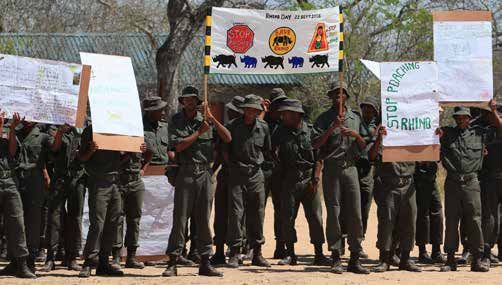
Field Ranger Law Enforcement- Unarmed or Armed – NQF 2, CONS/FIERANGLAWENF/2/0049
Field Ranger Protected Area (Unarmed) – NQF 2, FIERANGPROTAREA/2/0050
Conservation General Assistant – NQF 2, CONS/CONGENASS/2/0052

SHORT COURSES
The College also offers a range of specialist short courses, either as nationally accredited learning programmes with CATHSSETA , institutionally-
accredited higher education short courses, or non-accredited needs driven programme. The short courses include a wide spectrum of wildlife
management, nature-based tourism, community-based natural resource management and environmentally-related topics. These courses are aimed
at improving all-round performance and understanding. In doing so, the College also aims to open career opportunities for personnel who do not
have the formal qualifications to become protected area natural resource managers. These bridging skills also build capacity and equip personnel
with the necessary skills to manage their areas more effectively. A minimum of 10 participants is required for these short courses to run. Please
contact the College directly to arrange tailor-made short courses to suit specific training needs. See below for further details of short courses on offer.

OTHER PROGRAMMES
A six-month Youth Access Bridging Programme: An Introduction to Nature Conservation (accredited at NQF Level 2) and Environmental Education
(accredited at NQF Level 5) is aimed at school leavers interested in a career in conservation. Environmental Leadership, First Aid 1 and Reptile
Orientation are part of the training component.

This course focuses on exposing the learner to theory and practical application of Environmental Education and also the life of a Field Ranger in a
conservation area. Learners undergo a contact training session at the College for four months and are work-placed by host conservation organisations
(nature reserves) for two months for post-training learner experiential learning. This allows the students to get a real understanding of an entry level
career in conservation and environmental education.

                                                                  PROSPECTUS 2018                                                                        13
Higher Education and Training
HIGHER CERTIFICATE IN NATURE CONSERVATION:
CONSERVATION IMPLEMENTATION AND LEADERSHIP
SAQA QUAL ID QUALIFICATION TITLE
80929 Higher Certificate in Nature Conservation in Implementation and Leadership
PRIMARY OR DELEGATED QUALITY NQF SUB-FRAMEWORK
ASSURANCE FUNCTIONARY
CHE - Council on Higher Education HEQSF – Higher Education
Qualifications Sub-framework
REGISTRATION SAQA DECISION REGISTRATION REGISTRATION END DATE
STATUS NUMBER START DATE
Reregistered SAQA 10105/14 2015-07-01 2018-06-30
LAST DATE FOR LAST DATE FOR ACHIEVEMENT
ENROLMENT
2019-06-30 2022-06-30
NQF LEVEL NQF Level 5
DURATION OF THE The learning programme runs over a period of one academic year. Direct student contact sessions for the
programme take place during two College blocks, whilst the practical application of competencies take place
PROGRAMME over an additional sixteen weeks at students’ own workplaces. Provision for formal summative assessments
is made after each College block.
CREDIT VALUE The learning programme consists of 144 credits
PURPOSE The skills and competencies associated with the programme build on and support nature conservation
knowledge so as to enable the application of conservation skills in an entry level supervisory and leadership
capacity in nature conservation environments.
To enable the successful implementation of conservation operations it is required of individuals operating on
this level to have the ability to provide the necessary leadership to field staff. Such individuals will operate as
the link between management and operational field staff, playing an important role in the effective control
of operational activities This will support the management of nature conservation organisations through the
implementation of strategies and conservation plans
In particular, the programme aims to:
(a) Develop junior or entry level conservation management skills and knowledge required for
conservation application
(b) Empower students to acquire the knowledge, skills, attitudes and values required to operate
confidently and ethically in entry-level nature conservation supervisory and leadership positions
(c) Provide leadership in the implementation of conservation plans and ensure that conservation
practices are effectively implemented at operational level
(d) Respond to the challenges specific to the implementation of nature conservation strategies and
objectives
(e) Deal with developmental approaches relating to issues affecting community conservation in the
context of shared natural resources
(f) Apply law enforcement requirements specific to the protection of natural resources
(g) Handle administrative duties and requirements relevant to the conservation environment
effectively
The skills and competencies gained in the qualification enable entry into junior leadership and supervisory
positions within the operational context in a conservation environment as it applies to:
• Field Ranger
• Game Scout
• Wildlife Police Officer
• Senior Field Ranger
• Sergeant
• Park Ranger
14 PROSPECTUS 2018Higher Education and Training
TARGET GROUP The learning programme is aimed at individuals already involved in operational positions within the nature
conservation environment, who have been identified and earmarked for personal development and
career advancement into entry-level/junior managerial or supervisory positions in nature conservation
organisations within the SADC region, and beyond.
Individuals earmarked for personal growht and job advancement opportunities relevant to this qualification,
already have acquired technical expertise in the broad focus areas assosciated with nature conservation
principles and activities.
It is envisaged that individuals interested in the qualification will mainly fit into the following demograhic profile:
• Open age group
• Male or female
• Employed in a nature conservation environment for at least 3years
• Technical know-how of conservation issues
• Ability to work with a diverse range of cultures
• Ability to work outdoors, sometimes in less than optimal weather conditions
• Good ability to build rapport and operate as part of a team
• Good communication skills
ENTRY LEVEL It is assumed that students entering this qualification are competent in:
• English and Mathematical Literacy and NQF Level 4
REQUIREMENTS And that students have a:
• Recognised conservation qualifications on NQF level 4 or equivalent
• A minimum of 3 years full-time employment in a nature conservation related role
ASSESSMENT An integrated assessment approach is incorporated into the Qualification. This implies that theoretical
and practical components are assessed together. During integrated assessments, formative and summative
assessment methods and combinations of practical, applied, foundational and reflective competencies
are used.
A range of formative and summative assessment methods are used, and ensures that all Specific Outcomes,
Embedded Knowledge and Critical Cross-Field Outcomes are evaluated. Continuous assessment is
provided through:
• Portfolios
• Simulations
• Workplace assessments and practical workbooks
• Written assignments and tests
• Case studies and case presentations
• Peer group evaluation
• Competency evaluations of clinical skills
• Face to face contact with students
EXIT LEVEL Students qualifying against the learning programme will be able to
• Perform conservation administration functions
OUTCOMES OF THE • Execute operational activities required for the implementation of conservation plans
PROGRAMME • Manage personal resources at operational level
• Enforce conservation compliance in own operational area
RULES OF The qualification is made up of Fundamental and Core Components. No Elective component is provided.
The qualification will be awarded to students who have met competence requirements as detailed in the exit
COMBINATION level outcomes and associated assessment criteria.
Students are required to:
• Complete all fundamental components (32 Credits)
• Complete all core components (112 Credits)
• Complete Work Integrated Learning assessments (22 credits, which are included within
the above components)
in order to make up the overall minimum of 144 Credits for the qualification.
PROSPECTUS 2018 15Higher Education and Training
PROGRAMME LEARNING COMPONENT FUNDAMENTAL MODULE CREDITS
CURRICULUM ADMINISTRATION Fundamental Communication 8 Cr
Conservation Administration 8 Cr
Principles of Financial Administration 8 Cr
COMPUTER LITERACY Fundamental Computer Literacy 8 Cr
CONSERVATION ETHICS Core Philosophy and Ethics of Conservation 10 Cr
ECOLOGY Core Basic Ecology 10 Cr
FAUNA AND FLORA Core Vegetation Studies 12 Cr
Animal Studies 12 Cr
HUMAN RESOURCES Core Principles of Personnel Management 10 Cr
MANAGEMENT
PEOPLE AND Core Community Development and Conservation 6 Cr
CONSERVATION
Cultural Heritage Management 6 Cr
Environmental Education 6 Cr
Introduction to Eco Tourism 6 Cr
LEGISLATION Core Conservation Law Enforcement 10 Cr
INFRASTRUCTURE Core Infrastructure Maintenance 10 Cr
MANAGEMENT Core Conservation Management Planning 14 Cr
PRINCIPLES
WORK INTEGRATED Credits included within the Core and (22 Cr)
LEARNING Fundamental Components
TOTAL CREDITS: 144
16 PROSPECTUS 2018Higher Education and Training
ADVANCED CERTIFICATE IN NATURE CONSERVATION:
TRANS-FRONTIER CONSERVATION MANAGEMENT
SAQA QUAL ID QUALIFICATION TITLE
82006 Advanced Certificate: Nature Conservation: Trans-Frontier Conservation Management
PRIMARY OR DELEGATED QUALITY NQF SUB-FRAMEWORK
ASSURANCE FUNCTIONARY
CHE - Council on Higher Education HEQSF - Higher Education Qualifications Sub-framework
REGISTRATION SAQA DECISION REGISTRATION REGISTRATION
STATUS NUMBER START DATE END DATE
Reregistered SAQA 10105/14 2015-07-01 2018-06-30
LAST DATE FOR LAST DATE FOR ACHIEVEMENT
ENROLMENT
2019-06-30 2022-06-30
NQF LEVEL NQF Level 6
DURATION OF THE The learning programme runs over a period of one academic year. Direct student contact sessions for
the programme take place during two College blocks, whilst the practical application of competencies
PROGRAMME take place over an additional 16 weeks at students’ own workplaces. Provision for formal summative
assessments is made after each College block.
CREDIT VALUE The learning programme consists of 120 credits
PURPOSE The Southern African Wildlife College offers the Advanced Certificate in Nature Conservation: Trans-
Frontier Conservation Management as a training intervention aimed at the development of Nature
Conservation managers within the Southern African Development Countries (SADC) region.
The nature of conservation within the context of the SADC is evolving to enable the integration and
opening up of artificial boundaries previously associated with conservation areas. Through the working
relationships established through Transfrontier conservation initiatives it is becoming more and more
important to enable a consistent shared approach to matters concerning conservation.
The sustainable utilisation, conservation and protection of the natural environment and resources
require an integrated and holistic management approach. Effective management within Transfrontier
conservation areas promotes both natural environment issues and cooperation with stakeholders
including local communities.
Natural resources conservation challenges and objectives in the SADC region is the joint responsibility of
countries including:
• South Africa
• Mozambique
• Zambia
• Zimbabwe
• Malawi
• Botswana
• Swaziland
• Namibia and
• Lesotho
The effective management of the dynamics of Transfrontier conservation areas has particular importance
from the perspective of retaining our shared African heritage. The effective utilisation of this resource as a
major and increasingly important tourism attraction contributes to and promotes economic sustainability
across the SADC.
PROSPECTUS 2018 17Higher Education and Training
The qualification addresses competencies required for managerial positions within the conservation
environment, associated which positions such as:
• Reserve Managers
• Section Rangers
• Game Wardens
• Senior Field Rangers
• Senior Wildlife Officers
• Ranger – operations
• Ranger – extension
TARGET GROUP The learning programme is aimed at individuals already involved in operational positions within the
nature conservation environment; who have been identified and earmarked for personal development
and career advancement into management positions, based on their expertise and leadership abilities
in their country of origin.
Individuals earmarked for personal growth and job advancement opportunities relevant to this
qualification, already have acquired a minimum of five years technical expertise in the broad focus
areas associated with Nature Conservation principles and activities and have been exposed to entry-
level supervisory and leadership positions within a conservation context.
It is envisaged that individuals interested in the qualification will mainly fit into the following
demographic profile:
• Open age group with the average minimum age of the target group being between 25 and 30 years
of age
• Male or female
• Employed in a nature conservation environment for at least five years
• Above average level of technical know–how on conservation issues
• Ability to work with a diverse range of individuals
• Ability to work outdoors sometimes in less than optimal weather conditions
• Good ability to build rapport
• Good communication skills
ENTRY LEVEL It is assumed that students entering this qualification are competent in:
• English at NQF Level 5
REQUIREMENTS • Mathematical Literacy at NQF Level 5
• Recognised conservation qualification on NQF level 5 or equivalent
• A minimum of 5 years full-time employment in a nature conservation related role
ASSESSMENT An integrated assessment approach is incorporated into the Qualification. This implies that theoretical
and practical components are assessed together. During integrated assessments, formative and
summative assessment methods and combinations of practical, applied, foundational and reflective
competencies are used.
A range of formative and summative assessment methods are used, and ensures that all Specific
Outcomes, Embedded Knowledge and Critical Cross-Field Outcomes are evaluated. Continuous
assessment is provided through:
• Portfolios
• Simulations
• Workplace assessments and practical workbooks
• Written assignments and tests
• Case studies and case presentations
• Peer group evaluation
• Competency evaluations of clinical skills
• Face to face contact with students
Students qualifying against the learning programme will be able to
EXIT LEVEL OUTCOMES
• Determine the application of conservation practices in relation to Transfrontier conservation
OF THE PROGRAMME objectives
• Develop a management plan to support the effective operation of a Nature Conservation
unit or area
• Manage a conservation implementation plan according to organisational requirements
• Report on effectiveness of implementation
18 PROSPECTUS 2018Higher Education and Training
The qualification is made up of Fundamental and Core Components. No Elective component is provided.
RULES OF
The qualification will be awarded to students who have met competence requirements as detailed in the exit
COMBINATION level outcomes and associated assessment criteria.
Students are required to:
• Complete all fundamental components (30 Credits)
• Complete all core components (90 Credits)
• Complete Work integrated learning assessments (18 credits, which are included within the above
components) in order to make up the overall minimum of 120 Credits for the qualification.
LEARNING COMPONENT MODULE CREDITS
PROGRAMME
CURRICULUM RESEARCH Fundamental Conservation Research 10 Cr
GENERIC Fundamental Financial Management 10 Cr
MANAGEMENT
Human Resources Management 10 Cr
ECO TOURISM Core Eco Tourism 10 Cr
CONSERVATION PLANNING Core Environmental Development Planning 10 Cr
Land-use planning 5 Cr
Geographical information systems in 5 Cr
conservation
TRANSFRONTIER Core Transfrontier Conservation 10 Cr
CONSERVATION Natural Resources Protection 10 Cr
CONSERVATION Core Community-based Natural Resources 10 Cr
MANAGEMENT Management
Biodiversity Management 10 Cr
Catchment Management 10 Cr
RESOURCE ECONOMICS Core Resource Economics 10 Cr
WORK INTEGRATED Credits included within the Core and (18 Cr)
LEARNING Fundamental Components
TOTAL CREDITS 120
PROSPECTUS 2018 19Higher Education and Training
FIRST SEMESTER: HET COURSE SCHEDULE
Core teaching and assessment period 15 Jan 2018 - 13 April 2018
Higher Certificate Modules Course Code Dates Registration, Orientation and Course Code Dates
Induction
Registration, Orientation and 15 Jan Registration, Orientation and 15 Jan
Induction Induction
Foundation (numeracy, literacy, COM311, 16 Jan -2 Feb Conservation Research CRS414 16-23 Jan
communication, computer BCS312 (15 days) (6 days)
skills)
Conservation Management CMP329 5-7 Feb GIS GIS424 24 Jan-6 Feb
Planning (3 days) (10 days)
Philosophy & Ethics of PEC313 8-14 Feb Transfrontier-Conservation TFC422 7-9 Feb
Conservation (5 days) (3 days)
Conservation Administration VEG317 15-22 Feb Land Use Planning LUP425 12-19 Feb
(6 days) (6 days)
Principles of Personnel BEC314 23 Feb-2 Mar Catchment Management CAM412 20-27 Feb
Management (6 days) (6 days)
Basic Ecology GCA322 5-13 Mar Biodiversity Management BVM411 28 Feb-13 Mar
(7 days) (10 days)
Vegetation Studies PPM327 14-27 Mar Environmental Development EDP415 14-28 Mar
(10 days) Planning (10 days)
Conservation Management CMP329 28 Mar Transfrontier-Conservation TFC422 29 Mar
Planning (1 day) (1 day)
Exam Preparation Time: 29 – 31 Mar
Semester Exams: 3 – 13 April
Moderation: 16 - 20 April WIL: 14 April – 10 July
Supplementary Exams: 11 – 17 July
SECOND SEMESTER: HIGHER EDUCATION COURSE SCHEDULE
Core teaching and assessment period: 23 July – 9 November 2018
Higher Certificate Modules Course Code Dates Registration, Orientation and Course Code Dates
Induction
Infrastructure Maintenance INM324 23 Jul-3 Aug Financial Management FIM426 23 Jul- 3 Aug
(10 days) (10 days)
Animal Studies ANS315 6-17 Aug Resource Economics REN416 6- 14 Aug (
(10 days) 6 days)
Principles of Financial Admin- INM324 20-27 Aug Project management & stake- NEW! 15-22 Aug
istration (6 days) holder engagement (6 days)
Introduction to Eco Tourism IET321 28 Aug- 4 Sep CBNRM CBM413 23 Aug- 5 Sep
(6 days) (10 days)
Community Development & CDC323 5-12 Sep Natural Resources Protection NRP421 6-19 Sep
Conservation (6 days) (10 days)
Environmental Education ENE325 13-20 Sep
(6 days)
Cultural Heritage Management CHM316 21-28 Sep Eco Tourism ECT423 20-28 Sep
(5 days) (6 days)
Conservation Law Enforcement CLE326 1 – 12 Oct Human Resources Management HRM427 1-12 Oct
(10 days) (10 days)
Exam Preparation Time: 15 Oct – 19 Oct
Semester Exams: 22 Oct – 9 Nov
Supplementary Exams: 12 Nov – 16 Nov
Moderation: 19 Nov – 23 Nov
Graduation: 28 Nov 2018
20 PROSPECTUS 2018Occupational Qualifications
National Certificates
NATIONAL CERTIFICATE: NATURAL RESOURCE MANAGEMENT: TERRESTRIAL
CODE: 59949
NQF LEVEL NQF Level 5
The learning programme runs over a period of one academic year.
DURATION OF THE
PROGRAMME
CREDIT VALUE The learning programme consists of 144 credits.
PURPOSE • A learner who has achieved this qualification will be able to integrate supervisory knowledge
and skills with the operational specifics of a conserved area.
• The course focuses on the skills needed by field staff of a conserved area. The learner will
also be in a position to lead and mentor other learners in the attainment of management objectives in
the context of the different aspects of managing a conserved area.
• A learner will also be able to make valuable contributions to community developments and other
community based projects.
• The qualification has been developed to assist professionalism across the conservation industry.
TARGET GROUP Aspirant protected area and natural resource managers. Current field staff, e.g. field rangers, general
assistants, supervisors and junior managers. In addition unemployed learners who wish to enter the
fields of conservation can be selected and will be paired with employed learners in the workplace.
The course is structured in such a manner that it equips existing and potential protected area staff
or community leaders with relevant skills required to manage these areas more efficiently, or even
to make a value-added contribution to their communities through sustainable conservation of the
environment. It is aimed at individuals who are involved with, or wish to make significant contributions
to the practical field and administration tasks of a conserved area.
ENTRY LEVEL It is assumed that the learner entering a programme leading to this qualification has achieved an FET
certificate at NQF 4 or the equivalent, a Certificate in Conservation Guardianship, or has at least 3 yrs
REQUIREMENTS relevant conservation experience. The learner will have appropriate levels of written communication,
English proficiency, mathematical competence and occupational competence equivalent to at least
school leaving standards with at least 50% in mathematical literacy and English.
EXIT LEVEL Learners qualifying against the learning programme will be able to:
• Enforce compliance with relevant conservation legislation.
OUTCOMES OF THE • Manage the workplace at an operational level.
PROGRAMME • Ensure that effective communication is enabled through the maintaining of relevant communication
as per organisational requirements.
• Identify and solve problems in the application of Nature Conservation Management.
• Collect, analyse, organise and evaluate information at operational level.
• Support teamwork in the operational environment and in the execution of Conservation Resources
Management responsibilities.
• Maintain effective working relationships which are supported in the enforcing of
conservation compliance.
• Ensure that the use of Science and Technology is supported by the use of relevant technology
employed in the undertaking of patrols.
PROSPECTUS 2018 21Occupational Qualifications
PROGRAMME Unit Standard Name U Std U Std U Std
CURRICULUM Number Level Credit
Value
Develop and apply conservation ethics 253968 5 4
Manage area integrity 253964 5 12
Enforce conservation compliance 253973 5 5
Apply basic conservation management planning 253965 5 4
Apply protected area management planning 253961 5 4
Demonstrate an understanding of Indigenous plant management 253962 5 15
Demonstrate identification and application of indigenous plant
253971 5 6
species protection
Monitor the presence or absence of wild animal species 253969 5 15
Monitor wild animal populations 253957 5 15
Implement Integrated catchment management planning 253959 5 4
Manage cultural heritage resources in the field 253958 5 5
Construct and maintain infrastructure 8368 5 12
Control soil erosion 253972 5 5
Construct paths/tracks and maintain road networks 253963 5 5
Lead and manage teams of people 7859 6 6
Apply workplace communication skills 8647 5 10
Demonstrate an understanding of professional values and ethics 8648 5 4
Implement policies regarding HIV/AIDS in the workplace 9224 5 4
Analyse and communicate workplace data 8662 5 5
Facilitate conservation understanding 253967 5 4
TOTAL CREDITS 144
22 PROSPECTUS 2018You can also read


