LWALA MINE CYCLE 2 - SOCIAL AND LABOUR PLAN - Samancor Chrome
←
→
Page content transcription
If your browser does not render page correctly, please read the page content below
SOCIAL AND LABOUR PLAN

LWALA MINE
 REF NO: LP 30/5/1/2/2/38 MR

         CYCLE 2
          2018-2022

                               1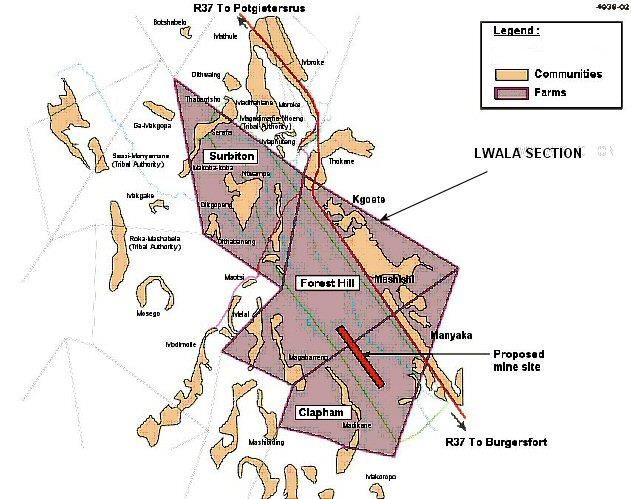
Table of Contents

1          Introduction and background information ........................................................................................7
1.1        INTRODUCTION ...................................................................................................................................8
1.2        PARTICULARS OF THE OPERATION .......................................................................................................8
1.3        COMPANY BACKGROUND .....................................................................................................................9
1.4        LOCATION OF THE MINE .......................................................................................................................9
1.5        MINE DEVELOPMENT SCHEDULE                    ........................................................................................................10
1.6        EMPLOYEES AND BUSINESS PLAN ......................................................................................................10
1.7        EXPECTED WORKFORCE AT LWALA MINE ............................................................................................11
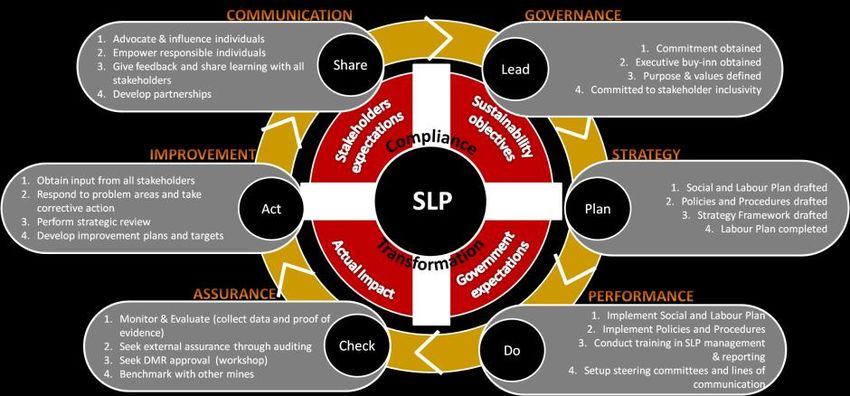
1.8        METHODS TO FACILITATE SLP IMPLEMENTATION..................................................................................12

2          Human resources development programme .................................................................................14
2.1        INTRODUCTION .................................................................................................................................14
2.2        APPROACH .......................................................................................................................................15
2.3        HUMAN RESOURCES DEVELOPMENT PROGRAMME MODEL ...................................................................15
2.4        RECRUITMENT ..................................................................................................................................16
2.5        SKILLS DEVELOPMENT PLAN ..............................................................................................................16

2.5.1      Introduction ....................................................................................................................................16
2.5.1      Adult Education and Training ........................................................................................................16
2.5.2      Learnerships ...................................................................................................................................19
2.5.3      Overview ........................................................................................................................................19
2.5.4      Skills training programmes ............................................................................................................21
2.5.5      Portable skills training ....................................................................................................................23
2.6        HARD-TO-FILL VACANCIES .................................................................................................................25
2.7        CAREER PROGRESSION PLAN ............................................................................................................26

2.7.1      Overview ........................................................................................................................................26
2.7.2      Career paths ..................................................................................................................................26
2.7.3      Progression plan ............................................................................................................................26
2.7.4      Establishing a talent pool ...............................................................................................................27
2.7.5      Action plan .....................................................................................................................................28
2.8        MENTORSHIP PLAN ...........................................................................................................................29

2.8.1      Overview ........................................................................................................................................29
2.8.2      Targets ...........................................................................................................................................29
2.8.3      Action plan .....................................................................................................................................30
2.9        INTERNSHIP AND BURSARY PLAN .......................................................................................................30

2.9.1      Overview ........................................................................................................................................30
2.9.2      Bursary plan ...................................................................................................................................31
2.10       EMPLOYMENT EQUITY PLAN ...............................................................................................................32

2.10.1 Overview ........................................................................................................................................32
2.10.2 HDSA in management targets .......................................................................................................33
2.10.3 Action plan .....................................................................................................................................33
2.10.4 Women in core mining targets .......................................................................................................34
3          Local Economic Development programme....................................................................................36

                                                                                                                                                                2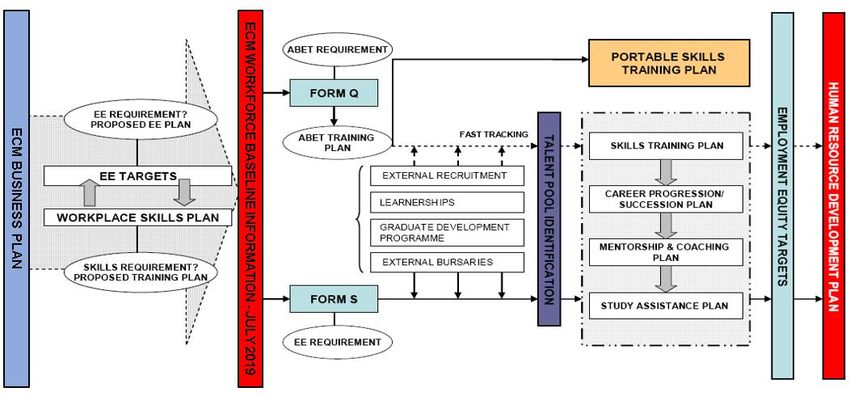
3.1        OVERVIEW  .......................................................................................................................................36
3.2        SOCIO-ECONOMIC BACKGROUND .......................................................................................................37
3.3        INTRODUCTION .................................................................................................................................37
3.4        DISTRICT AND LOCAL SOCIO-ECONOMIC REGIONAL ANALYSIS ..............................................................37
3.5        OVERVIEW .......................................................................................................................................37
3.6        POPULATION DEMOGRAPHICS ............................................................................................................37
3.7        INCOME LEVELS ................................................................................................................................38
3.8        SOCIAL DEPENDENCY .......................................................................................................................39
3.9        BASIC SERVICE DELIVERY AND INFRASTRUCTURE DEVELOPMENT ANALYSIS..........................................40
3.10       FREE BASIC WATER ..........................................................................................................................40
3.11       ACCESS TO SAFE DRINKING WATER....................................................................................................41
3.12       RIVERS AS A NATURAL WATER SOURCE ..............................................................................................42
3.13       ACTION PLAN INDICATING THE ZONE OF FOCUS OF THE SAMANCOR ECM LEDP ......................................42
3.14       SOCIO-ECONOMIC IMPACT OF OPERATION ‒ REGULATION 46 (C) (II) (B) ...............................................42
3.15       THE IMPACT .....................................................................................................................................42
3.16       INFRASTRUCTURE DEVELOPMENT, POVERTY ERADICATION AND WELFARE CREATION PROJECTS ............44
3.17       APPROACH .......................................................................................................................................44
3.18       BASELINE SITUATION.........................................................................................................................44
3.19       ACTION PLANS AND PROJECTS...........................................................................................................44
3.20       PROJECT SELECTION AND IMPLEMENTATION MECHANISM ....................................................................44
3.21       SMME DEVELOPMENT ......................................................................................................................49
3.22       THE PROCUREMENT PROGRESSION PLAN AND ITS IMPLEMENTATION FOR HDSA COMPANIES IN TERMS OF
           MINING GOODS AND SERVICES...........................................................................................................54
3.23       APPROACH .......................................................................................................................................54

3.23.1 The baseline situation ....................................................................................................................55
3.23.2 Action plan .....................................................................................................................................55
3.24       MEASURES TO ADDRESS HOUSING, LIVING CONDITIONS AND NUTRITION ...............................................57

3.24.1 Overview ........................................................................................................................................57
3.24.2 Housing plan ..................................................................................................................................57
3.24.3 Action plan .....................................................................................................................................57
3.24.4 Health care and nutrition................................................................................................................57
4          Programme for managing downscaling and retrenchment ............................................................59
4.1        ESTABLISHING A FUTURE FORUM .......................................................................................................59

4.1.1      Overview ........................................................................................................................................59
4.2        MECHANISMS TO SAVE JOBS AND AVOID A DECLINE IN EMPLOYMENT ....................................................59

4.2.1      Overview ........................................................................................................................................59
4.2.2      Consultation processes .................................................................................................................60
4.2.3      Notification to government authorities ...........................................................................................61
4.2.4      Strategic plans for providing job security .......................................................................................61
4.3        MECHANISMS TO PROVIDE ALTERNATIVE SOLUTIONS AND PROCEDURES FOR CREATING JOB SECURITY
           WHERE JOB LOSSES CANNOT BE AVOIDED ..........................................................................................61

4.3.1      Overview ........................................................................................................................................61
4.4        MECHANISMS TO AMELIORATE THE SOCIAL AND ECONOMIC IMPACT ON INDIVIDUALS, REGIONS AND
           ECONOMIES WHERE RETRENCHMENT OR CLOSURE OF THE MINE IS CERTAIN ........................................63

4.4.1      Overview ........................................................................................................................................63
5.         Financial provision for implementing the slp .................................................................................66

                                                                                                                                                            3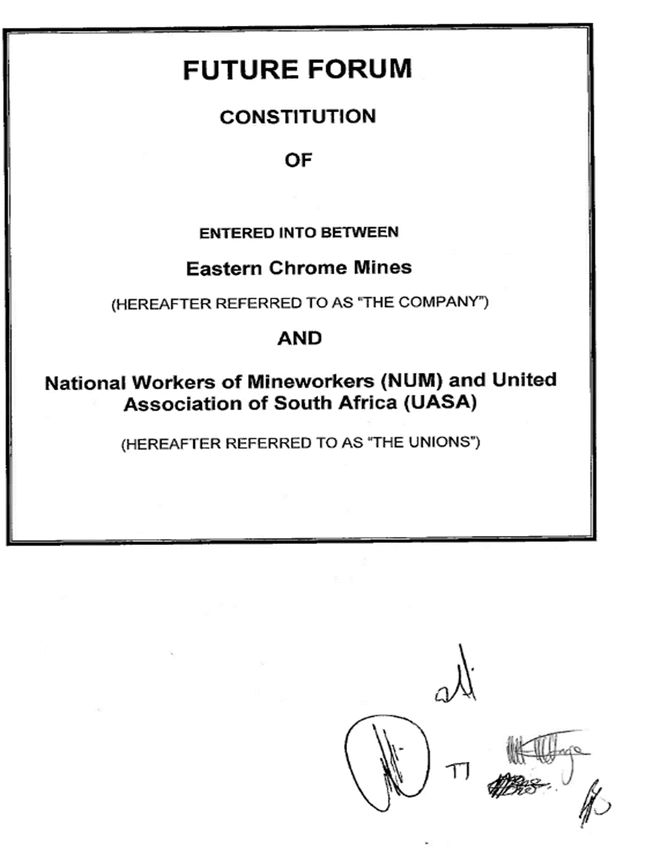
6.           Undertaking ...................................................................................................................................68
APPENDIX I: CAREER PROGRESSION PATHS AT SAMANCOR ECM ........................................................................69

appendix ii: Skills development facilitator appointment letter .....................................................................76
APPENDIX III: PROOF OF SUBMISSION OF WORKPLACE SKILLS PLAN ...................................................................77
APPENDIX IV: SKILLS TRAINING PROGRAMME LIST                  ............................................................................................78
APPENDIX V: FORM T ......................................................................................................................................81
APPENDIX VI:    STAKEHOLDER ENGAGEMENT RECORD ................................................................................83
APPENDIX VII:   FUTURE FORUM CONSTITUTION (SIGNED) ..........................................................................835

TABLES

TABLE 1: DETAILS OF THE LWALA MINING RIGHT................................................................................................................... 10
TABLE 2: ESTIMATED PERMANENT LWALA MINE WORKFORCE ................................................................................................. 11
TABLE 3: COMPLIANCE WITH SKILLS DEVELOPMENT LEGISLATION............................................................................................. 14
TABLE 4: FORM Q – EDUCATIONAL LEVELS OF THE WORKFORCE (REGULATION 46 (B) (I) AA) ......................................................... 17
TABLE 5: FIVE YEAR PLAN FOR AET ENROLMENTS .................................................................................................................. 18
TABLE 6: AET - COMMITMENTS, ACTIVITIES AND TIMEFRAMES................................................................................................. 19
TABLE 7: FIVE YEAR PLAN FOR LEARNERSHIP ENROLMENTS ...................................................................................................... 20
TABLE 8: LEARNERSHIPS - COMMITMENTS, ACTIVITIES AND TIMEFRAMES ................................................................................... 21
TABLE 9: FIVE YEAR PLAN FOR PERMANENT EMPLOYEES' SKILLS TRAINING INTERVENTIONS.............................................................. 22
TABLE 10: SKILLS TRAINING ACTION PLAN ........................................................................................................................... 23
TABLE 11: FIVE (5) YEAR PLAN FOR PORTABLE SKILLS TRAINING INTERVENTIONS ......................................................................... 23
TABLE 12: PORTABLE SKILLS - COMMITMENTS, ACTIVITIES AND TIMEFRAMES .............................................................................. 24
TABLE 13: HARD-TO-FILL VACANCIES AS PER FORM R IN ANNEXURE II OF THE MPRDA REGULATIONS ............................................. 25
TABLE 14: TALENT POOL AND FAST TRACKING PROGRAMME TARGETS AT LWALA MINE ................................................................. 28
TABLE 15: CAREER PROGRESSION - COMMITMENTS, ACTIVITIES AND TIMEFRAMES....................................................................... 28
TABLE 16: MENTORSHIP - COMMITMENTS, ACTIVITIES AND TIMEFRAMES .................................................................................. 30
TABLE 17: FIVE (5) YEAR PLAN FOR INTERNSHIP AND BURSARY TARGETS .................................................................................... 31
TABLE 18: INTERNSHIPS AND BURSARIES - COMMITMENTS, ACTIVITIES AND TIMEFRAMES ............................................................. 31
TABLE 19: PRELIMINARY EMPLOYMENT EQUITY STATISTICS AS PER FORM S IN ANNEXURE II OF THE MPRDA REGULATIONS ................ 32
TABLE 20: FIVE (5) YEAR PLAN AND TARGETS FOR HDSA PARTICIPATION AT LWALA IN LINE WITH REVISED MINING CHARTER TARGETS .. 33
TABLE 21: HDSAS IN MANAGEMENT - COMMITMENTS, ACTIVITIES AND TIMEFRAMES ................................................................. 33
TABLE 22: FIVE (5) YEAR PLAN AND TARGETS FOR THE PARTICIPATION OF WOMEN AT LWALA MINE ................................................ 34
TABLE 23: ANNUAL HOUSEHOLD INCOME LEVELS.................................................................................................................. 38
TABLE 24: ACCESS TO WATER ............................................................................................................................................ 41
TABLE 25: ACCESS TO WATER ............................................................................................................................................ 41
TABLE 26: ACCESS TO WATER ............................................................................................................................................ 47
TABLE 27: ENTERPRISE DEVELOPMENT BUDGET LWALA .......................................................................................................... 52
TABLE 28: ACTION PLAN ENTERPRISE DEVELOPMENT SUPPORT PLAN........................................................................................ 53
TABLE 29: TENDER ACTION PLAN ....................................................................................................................................... 53
TABLE 30: CURRENT LEVEL OF SPEND BY THE COMPANY ON BEE OR HDSA VENDORS ................................................................... 55
TABLE 31: TARGETS FOR INCREASING HDSA SUPPLIERS .......................................................................................................... 56
TABLE 32: TARGETS FOR INCREASING HDSA SUPPLIERS .......................................................................................................... 56
TABLE 33: HOUSING AND LIVING CONDITIONS - COMMITMENTS, ACTIVITIES AND TIMEFRAMES....................................................... 57
TABLE 34: FINANCIAL PROVISION FOR RETRENCHMENTS ......................................................................................................... 63
TABLE 35: BREAKDOWN OF THE SLP FINANCIAL PROVISION ..................................................................................................... 66

                                                                                                                                                                       4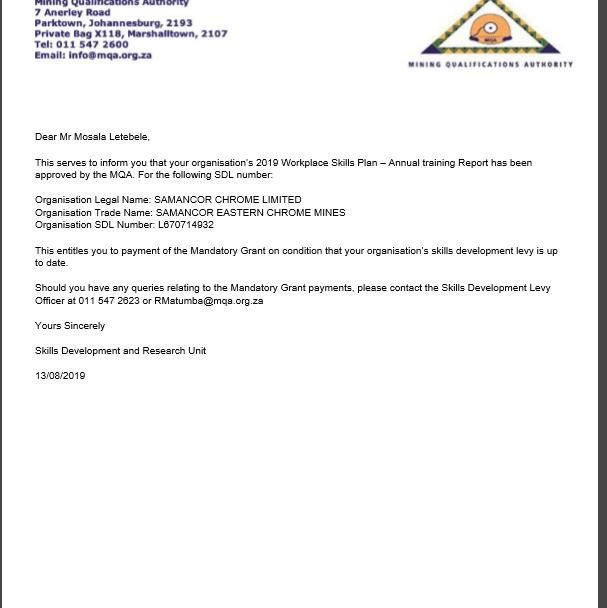
TABLE OF FIGURES

FIGURE 1: SHAREHOLDING STRUCTURE OF SAMANCOR CHROME LIMITED ..................................................................................... 9
FIGURE 2: LOCATION OF LWALA MINE................................................................................................................................. 10
FIGURE 3: METHODS OF IMPLEMENTING THE SLP ................................................................................................................. 12
FIGURE 4: SIMPLIFIED STRATEGIC HUMAN RESOURCES DEVELOPMENT MODEL .......................................................................... 15
FIGURE 5: ANNUAL INCOME LEVELS .................................................................................................................................... 39
FIGURE 6: TOTAL NUMBER OF BENEFICIARIES ........................................................................................................................ 40

                                                                                                                                                                    5
Abbreviations and Acronyms

                         DESCRIPTION
       AET:              Adult Basic Education and Training
       ABBREVIATION
       ASGISA:           Accelerated and Shared Growth Initiative for South Africa
       ATR:              Annual training report
        BEE:             Black Economic Empowerment
Annual BIC: Training     Bushveld Indigenous Complex
Report BSESS             Baseline Socio-Economic Survey Study
Bushveld   Indigenous
        BSESS:           Baseline Socio- Economic Study-Survey
ComplexCDM               Central District Municipality
         BSESS:
        CEO:             Chief Executive Officer
        CMR:             Conversion of Mining Right
BaselineCOO: Socio-      Chief Operations Officer
EconomicCSR: Study-      Corporate Social Responsibility
Survey DMRE:             Department of Mineral Resources and Energy
         CEO:
        DoL:             Department of Labour
        DTI:     Chief   Department of Trade and Industry
Executive
        EE:Officer       Employment Equity
         CMR:
        FET:             Further Education and Training
       FF:               Future Forum
Conversion
       FLC:of Mining     Foundational Learning Competency
Right HDSAs:             Historically Disadvantaged South Africans
         COO:
       HET:              Higher Education and Training
       HLC:     Chief    Housing and Living Conditions
Operations
       HRD:Officer       Human Resources Development
         CSR:
       HRDP:             Human Resource Development Programme
       IDP:              Integrated Development Plan
Corporate
       JIPSA: Social     Joint Initiative on Priority Skills Acquisitions
Responsibility
       LED:              Local Economic Development
         DTI:
       LEDP:             Local Economic Development Programme
       MPRDA:            Mineral and Petroleum Resources Development Act
Department
       MQA:of Trade      Mining Qualifications Authority
and Industry
       NQF:              National Qualifications Framework
         EE:
       RDP:              Reconstruction and Development Programme
        SETA:            Sector Education and Training Authority
Employment Equity
        SHEQ:            Safety, Health, Environment, and Quality
          FLC:           Social and Labour Plan
        SLP:
        SMMEs:           Small, Medium and Micro-Enterprises
Foundational
        VCT:             Voluntary Counselling and Testing
LearningWIM:
         Competency
                         Women in Mining
          HRDP:
        WSP:             Workplace Skills Plan
       ECM:              ISO, NHBRC,
                         Eastern     CIBDMines
                                 Chrome
Human      Resource
Development              kn
Programme
        LEDP:                                                                        6
              Local      idv
Economic
Development
Programme
SECTION 1
PREAMBLE:
Introduction to and background
information on the operation
Regulation 46(a)
71 INTRODUCTION AND BACKGROUND INFORMATION
1.1 Introduction
The second cycle of the new five-year Social and Labour Plan (SLP) for the period 2018-2022 is
submitted for Lwala Mine in terms of the requirements of the Mineral and Petroleum Resources
Development Act (Act 28 of 2002) (MPRDA). The development and submission of SLP is a
requirement of the MPRDA and sets out the social and labour programmes to be implemented
for the life of the existing mines.
The progress in meeting the commitments set out in the programmes outlined in the SLP with
regard to Human Resources Development (HRD), Local Economic Development (LED) and the
management of downscaling and retrenchment will be reported annually to the Limpopo
Regional Department of Mineral Resources (DMR).
The objectives of the SLP are to:
(i) Promote employment and advance the social and economic welfare of all South Africans;
(ii) Contribute to the transformation of the mining industry; and
(iii) Ensure that holders of mining rights contribute towards the socio-economic development
of the areas in which Lwala Mine operates.
Progress in meeting the commitments set out in the programmes outlined in the SLP with regards
to Human Resource Development (HRD), Local Economic Development (LED) and the
Management of Downscaling and Retrenchment will be reported annually to the Limpopo
regional Department of Mineral Resources (DMR).
1.2 Particulars of the Operation
Name of Company Samancor Chrome (Pty) Ltd
Name of Mine Lwala Mine
Farms Foresthill 117 KT and Clapham 118KT (along R37 Rd towards
Physical Address
Polokwane), Limpopo Province
Postal Address PO Box 3, Steelpoort, 1133
Telephone Number 013 230 7001
Fax Number 013 230 7003
Commodity Chrome Ore
Life of Mine 55 Years
Financial Year January to December
Reporting Period 31 March (Annually)
8Responsible Person Bertus Brink (General Manager)
1.3 Company Background
The history of Samancor dates back to 3 July 1937 with the founding of African Metals
Corporation (Amcor) by the industrial pioneer Dr Hendrik J van der Bijl. Samancor Chrome (Pty)
Ltd. operates five (5) mining operations in the Fetakgomo Local District Municipality, collectively
called Eastern Chrome Mines (ECM), namely Lwala, Lannex, Tweefontein, Spitskop and Jagdlust.
The development of a further mining operation namely Jagdlust is underway.
Figure 1: Shareholding structure of Samancor Chrome Limited
Beneficiation Credits 9%
EMPOWERMENT PARTNERS 9.51%
Terris Chrome/ ESOP Trust Holgoun Mining Hanwa/ Jogmeg Samancor
Sibilo 3.08% Nanka 3.7%
Mining 54% 1.11% 1.62% 32% Chrome 4.49%
Samancor Chrome Holdings (Pty) Limited 100%
Samancor Chrome Limited - Main Operating Company
1.4 Location of the Mine
The Lwala Mine is the Section of Eastern Chrome Mines which comprises of Twickenham, 114 KT,
Surbiton 115 KT, Hackney 116 KT, Forest Hill 117 KT and Clapham 118 KT. These farms are in the
custodianship of Roka Mashishi, Nareng Thokwana, Bakone Ba Manyaka, Roka-Mashabela and
Magadimana Ntweng Tribal Authorities which are classified as directly affected or host
communities. The mine is in the Greater Tubatse Local Municipality of the Sekhukhune District
Municipality in Limpopo Province.
9Figure 2: Location of Lwala Mine
1.5 Mine Development Schedule
Mine development commenced in March 2017 after a protracted legal battle with Bakone Ba
Manyaka Tribal Authority and illegal mining activity, with site establishment, preparation of
temporary offices, construction of infrastructure, services and access to roads. The mine is
currently an open pit operation with underground development scheduled to commence in 2020.
Table 1: Details of the Lwala Mining Right
Authorization Mineral
Operation Farm Name Mineral Extent (ha)
number Cession
Lwala Twickenham 114 KT Chromite 15/2000 K43/2002RM 3167.8936
Surbiton 115 KT Chromite 15/2000 K44/2002RM 2037.427
Hackney 116 KT Chromite 15/2000 K43/2002RM 3414.2622
Forest Hill 117 KT Chromite 15/2000 K43/2002RM 3202.1963
Clapham 118 KT Chromite 15/2000 K43/2002RM 2151.2316
1.6 Employees and Business Plan
The current operational philosophy of Samancor Chrome Limited is to manage each of the mining
operations as a separate entity with a full complement of employees in the different career
streams of Mining, Engineering, and Metallurgy. Support services e.g. Human Resources, Finance
10& Admin, Logistics, Mineral Resources, SHEQ and Senior Management) functions are managed
centrally Shared Services.
Lwala mine is a new operation which is currently operated by Open Cast Mining Contractor. The
majority of the current contractor compliment has been sourced from the surrounding
communities through Lwala Steering Committee. A and B band levels constitute the majority of
the labour force which, as per the career paths, requires minimal experience and qualifications
as an entry level.
A general principle has been adopted with the local communities where Samancor Chrome
utilizes their database of unemployed individuals in the communities from which the mines
preferentially recruit. This arrangement is also applicable to Lwala recruitment process in order
to maximize the socio economic benefit of the mine to the communities surrounding the
operation and the host province. The mine will maintain a strong focus on local recruitment
throughout the life of the operation.
1.7 Expected Workforce at Lwala Mine
Samancor Chrome’s policy of encouraging local recruitment wherever possible requires that the
workforce, including contractors, to be employed mainly from Fetakgomo Tubatse Local
Municipality (FTLM). An arrangement is in place with Lwala Steering Committee that facilitate
sourcing of CV’s for unskilled and semi-skilled positions, with emphasis on community members
residing within five (5) farms that form Lwala Mining Right area.
The current workforce at Lwala Mine which mainly comprises of contractor employees is 146
employees with a planned ramp- up to 495 employees on full production over five to six years.
Throughout this build-up, Lwala mine will continue with their strong focus of recruitment from
the local communities.
An updated details regarding actual number of employees per labour-sending areas will be
compiled and reported annually to the DMRE.
Table 2: Estimated Permanent Lwala Mine Workforce
Forecast
Employment Level
2018 2019 2020 2021 2022
E Senior Management 0 0 0 0 0
D Middle Management 2 2 3 3 3
C Junior Management 16 16 20 20 20
B Semi-Skilled 27 27 100 100 100
A Unskilled 21 21 80 80 80
Total enrolled employees 66 66 349 349 349
Total Core Contractor employees 146 146 146 146 146
GRAND TOTAL 212 212 495 495 495
NB: Figures indicated in Table 2 above are estimates and they will be reviewed annually in line with ramp-up
progress and production needs.
111.8 Methods to facilitate SLP Implementation
Lwala will use the following methods to ensure the successful and appropriate implementation
of the SLP:
(i) Ensuring continuous implementation of the Action Plans set out in the various sections
of the SLP.
(ii) Updating and/or reviewing all the baselines and target tables in this document to ensure
continuous monitoring.
(iii) Conducting regular meetings to discuss successes and address challenges.
(iv) Regular meetings will be held between Samancor ECM and the contractors to monitor
their implementation plan with regard to the SLP commitments.
Figure 3: Methods of Implementing the SLP
12SECTION 2
HUMAN RESOURCES
DEVELOPMENT
PROGRAMME
Regulation 46(b)
132 HUMAN RESOURCES DEVELOPMENT PROGRAMME
2.1 Introduction
The Mining Charter requires mines to formulate and implement an HRDP to enable the
transformation and empowerment of the workforce; in particular, empowering the historically
disadvantaged South African (HDSA) employees to progress to higher levels of employment in
the organization. The programme should also enable them to exploit alternative income-
generating opportunities outside the organization should they wish to leave us.
This section will outline the mine’s Human Resource Development (HRD) Programmes as required
by Section 46 of the Regulations to the MPRDA. This mining project is still in its early phase of
development and, ultimately, the large majority of the workforce will not be employed by
Samancor Chrome directly. Nonetheless, Samancor takes full cognisance of the provisions of
Section 101 of the MPRDA. As such the provisions of the HRD Programme outlined in this section
will apply, where required, to the Core Contractor’s workforce. The Core Contractor in this case
will be the Mining Contractor that started on site in March 2017.
The HRD Programme for Lwala is based on the Company’s HRD Strategy, with the following key
focus areas:
(i) Recruitment;
(ii) Talent Management;
(iii) Learnerships
(iv) Literacy and Numeracy Training (AET).
Continuous monitoring and evaluation of the implementation of all HRD Programmes as
contained in this SLP will be conducted.
Lwala requires a skilled workforce for daily activities at the proposed mine, and will therefore
offer training support and career development opportunities to its employees, in particular to
the Historically Disadvantaged South African (HDSA) employees from the local labour sending
areas.
Lwala mine will comply with the requirements of the Skills Development Act (No 97 of 1998) and
will submit Skills Development Plans and Annual Training Reports to the Mining Qualifications
Authority (MQA).
Table 3: Compliance with Skills Development Legislation
Name of SETA Mining Qualifications Authority (MQA)
Registration number with the SETA 16/MQA/0695/AC4/061216
Confirmation of having appointed a Skills
Appointment letter/Appendix attached
Development Facilitator
Proof of submission of Workplace Skills Plan and
See Appendix attached
date of submission
14In order to ensure proper implementation of the HRD Programme, the Company will utilize
accredited providers, where necessary, for their training needs, in order to ensure the on-going
facilitation of transferable, accredited skills amongst employees.
2.2 Approach
The integrated HRD Programme will seek to maximise the productive potential of people
employed by or contracted to Lwala, through the implementation of the following plans:
(i) A Skills Development Plan
(ii) A Career Progression Plan
(iii) A Mentorship Plan
(iv) An Internship and Bursary Plan
(v) An Employment Equity Plan
The HRD Programme for the next five years focuses on providing employees with adequate
opportunities for adult education and training (AET), skills development, progression at the mine,
as well as on compliance with the Mining Charter requirements.
The progress on the HRD Programmes will be reported on annually and assessed after a five-year
period, where after a new five-year plan will be developed and submitted to the DMRE.
In addition to the formal processes to achieve career progression, individuals can also be
identified through an informal process to advance and be promoted to higher positions. This
process is not documented but the company do provide assistance through study assistance,
internal training and on-the job training.
2.3 Human Resources Development Programme Model
The simplified model below shows how the mine’s business plan, projected labour requirements,
WSP and Employment Equity (EE) targets are integrated into each other to create a skills
development scenario
Figure 4: Simplified Strategic Human Resources Development Model
152.4 Recruitment
Recruitment of labour will be guided by the Company’s recruitment strategy, which
stipulates the employment of local labour by the mine as well as by any appointed
contractors.
A commitment to recruit unskilled and semi-skilled labour from local communities, is the
obligation Samancor Chrome made with communities and such an obligation will be
enforced to ensure contractors do comply in an endeavour to optimise economic benefits
for local communities.
2.5 Skills Development Plan
2.5.1 Introduction
Lwala recognises the importance of its future employees in the achievement of its
business objectives and that skills development is the foundation for developing
competent and productive employees who are able to participate in meeting the
proposed mine’s business objectives.
The Core Contractor will develop its own Skills Development Plans which will be in line
with the principles of the current Eastern Chrome Mines HRD Programme.
Lwala will implement a Skills Development Plan that focuses on equipping future
employees with skills to enhance their progression and development in the mining
industry, but will concentrate on community development initiatives until such time as
the mine begins to recruit permanent employees.
The Skills Development Plan provides action plans and targets how Lwala intends to offer
its future employees opportunities to become functionally literate and numerate; to
participate in learnerships, skills development programmes and various other training
initiatives; and to acquire portable skills.
The Lwala Skills Development Plan links with Skills Development legislation, and includes
the regular submitting of a Workplace Skills Plan (WSP) and annual training reports. This
includes the paying and claiming of levies and grants with the relevant Sector Education
and Training Authority (SETA) with which the operation is registered, i.e. the MQA.
2.5.1 Adult Education and Training
2.5.1.1 Overview
The Company is committed to developing the educational levels of its future employees
and Adult Education and Training (AET) will be a key focus area. Lwala has no employees
at present and therefore, no baseline information on educational levels and Functional
literacy and Numeracy levels is available. Statistics indicate that the local communities in
16this area have low percentages of people with matric and high unemployment rates.
However, many of these people have the necessary skills to work on the mines as many
were previously employed on the mines but subsequently retrenched due to the current
economic downturn.
Although Lwala prescribes to employ locally, there is a strong possibility that people with
rare skills and competency without functional literacy might be employed and will
possible require AET training.
Table 4: Form Q – educational levels of the workforce (Regulation 46 (b) (i) aa)
AET implementation targets for Share Services will be accounted and reported in the Tweefontein Mine Social and
Labour Plan.
Lwala Mine Core Contractor Employees
NQF Grand
Band Classification system Male Female Total
level Total
A C I/A W F A C F M F
No schooling/Unknown 0 0 0 0 0 0 0 0 0 0 0
Grade 0/Preschool 0 0 0 0 0 0 0 0 0 0 0
Grade 1/Sub A 1 0 0 0 0 0 0 0 1 0 1
Grade 2/Sub B 0 0 0 0 0 0 0 0 0 0 0
Grade 3/Std 1/ AET 1 0 0 0 0 0 0 0 0 0 0 0
General
Education Grade 4/Std 2 0 0 0 0 0 0 0 0 0 0 0
and
Training Grade 5/Std 3/ AET 2 0 0 0 0 0 0 0 0 0 0 0
(GET)
Grade 6/Std 4 2 0 0 0 0 0 0 0 2 0 2
Grade 7/Std 5/ AET 3 3 0 0 0 0 0 0 0 3 0 3
Grade 8/Std 6 6 0 0 0 0 0 0 0 6 0 6
1 Grade 9/Std 7/ AET 4 2 0 0 0 0 0 0 0 2 0 2
Further 2 Grade 10/Std 8/N1 34 0 0 0 0 2 0 0 34 2 36
Education
and 3 Grade 11/Std 9/N2 38 0 0 0 0 5 0 0 38 5 43
Training
(FET) 4 Grade 12/Std 10/N3 49 0 0 0 0 4 0 0 49 4 53
5 Certificates 0 0 0 0 0 0 0 0 0 0 0
Higher
Education 6 First degrees/Diplomas 0 0 0 0 0 0 0 0 0 0 0
and
Honours/Higher
Training 7 0 0 0 0 0 0 0 0 0 0 0
diplomas
(HET)
8 Masters/Doctorates 0 0 0 0 0 0 0 0 0 0 0
Total 135 0 0 0 0 11 0 0 135 11 146
A = African; C = Coloured; I/A = Indian/Asian; W = White
172.5.1.2 Targets
Samancor Chrome has adopted minimum educational requirement of Grade 10 as a
prerequisite for employment. However, there are instances where some of the potential
employees due to critical nature of their skills and experience, such a minimum
requirement is not observed. The following targets are based on the assumption that
employees who are below functional literacy level (Grade 10) will enrol and complete the
programme within the prescribed period. Since enrolment is voluntary, those employees
who are not interested in the programme will be required to sign disclaimer.
Currently, ECM has a strategic and integrated approach to AET whereby part time
literacy, numeracy and basic oral programmes are available (mine training centre and on
sites) to all employees and interested community members. Interested and affected
community members will also be offered an opportunity to enrol for AET Programmes in
consultation. However, the internal uptake of AET has been minimal despite several
initiatives and incentives to encourage employees. Furthermore, the completion rate
over the period of time has been dismal at around 23%. Interestingly, completion rate
for community members who participate is excellent. It’s however ironical that during
community engagements high interest has been shown in job related training
programmes e.g. Generic Engineering Training and Competent B.
Targets below are for the core contractor as Lwala mine’s permanent employees are still
to be employed during the year 2020. For shared services targets as per Form Q (Table
1), will be accounted for and reported in the Tweefontein Social and Labour Plan (a
subsidiary of Samancor)
Table 5: Five year plan for AET enrolments
Targets
ABET Level
2018 2019 2020 2021 2022
AET 1 1 0 0 0 0
AET 2 2 1 0 0 0
AET 3 0 2 1 0 0
AET 4 7 0 2 1 0
Total 10 3 3 1 0
Budget R35,000.00 R11,550.00 R12,705.00 R4,658.50 R0.00
* Note that these targets will be reviewed annually considering employees movement.
182.5.1.3 Action Plan
Table 6: AET - Commitments, activities and timeframes
Category Action Plan Timeframe
The current Eastern Chrome Mines AET policy, strategies and
procedures for employees will be used
Determine capacity and resources requirements
Year 2020 (Q 1)
Identify accredited service provider to conduct assessments
Assess employees in terms of skills and competencies gaps for
placement purposes.
Secure commitment and buy-in from employees and
management
AET Discussions with the Unions about their perceptions on the
proposed AET Programme
Create awareness amongst employees regarding training and
Year 2020 (Q2)
education and encourage individuals to undergo training and
education.
Commence with training
Update AET plan with targets, timeframes and budgets
Collate information and populate Form Q to confirm baseline. On-Going
Annual assessment and revision of the implementation
Annually
programme
2.5.2 Learnerships
2.5.3 Overview
As part of its Skills Development Plan, Lwala will introduce Learnership Programmes with
the aim to provide learners with an occupationally based qualification registered by the
NQF. A learnership is a registered and accredited learning programme that includes
practical work experience, as well as theoretical studies, thereby integrating both
workplace and institutional learning. Learnerships enable learners to work towards a
qualification whilst being employed. Learners will be recruited externally and placed on
in-house Learnerships to assist in addressing skills shortages and challenges.
Due to delayed commencement of Lwala Mine operations, internal learnership
programme will be considered in 2021. Currently there are 40 community members that
were enrolled in various learnership programmes, which will be captured in the table
below as roll-over for the year 2020.
192.5.3.1 Targets
The following targets are based on a five-year Learnership Programme. See tables for the
five-year targets. Both the Mining and Engineering (Boilermaker, Fitting, Electrical, Auto
Electrical and Diesel Mechanic) Learnership programmes have an estimated duration of
24 and 36 months respectively. Taking into account the duration of a learnership
programme, it will result in learners’ programmes overlapping annually as depicted in
the rollover figures in the table below. The targets for the annual Mining and Engineering
Internal (18.1) and External (18.2) Learnership intakes are aimed at a 50% Employee and
50% Community split with preference given to HDSAs and females. It’s anticipated that
Lwala mine’s would have reach more than 50% of its planned permanent compliment by 2023,
which will allow for employees to be enrolled in the learnership programme.
Table 7: Five year plan for Learnership enrolments
Internal Learnership Programme (18.1) Targets
2018 2019 2020 2021 2022
Programm
Roll Roll Roll Roll Roll
e
Ne - Tota Ne - Tota Ne - Tota Ne - Tota Ne - Tota
w ove l w ove l w ove l w ove l w ove l
r r r r r
Mining 0 0 0 0 0 0 0 0 0 10 0 10 0 10 10
Engineerin
0 0 0 0 0 0 0 0 0 6 0 6 0 6 6
g
Total 0 0 0 0 0 0 0 0 0 16 0 16 0 16 16
Budget R0.00 R0.00 R0.00 R2,073,957.33 R2,073,957.33
External Learnership Programme (18.2) Targets
2018 2019 2020 2021 2022
Programm
Roll Roll Roll Roll Roll
e
Ne - Tota Ne - Tota Ne - Tota Ne - Tota Ne - Tota
w ove l w ove l w ove l w ove l w ove l
r r r r r
Mining 6 0 6 0 6 6 0 0 0 10 0 10 0 10 10
Engineerin
0 40 40 0 40 40 0 40 40 6 0 6 0 6 6
g
Total 6 40 46 0 46 46 0 40 40 16 0 16 0 16 16
Budget R5,962,627.18 R5,962,627.18 R5,184,893.20 R2,073,957.28 R2,073,957.28
202.5.3.2 Action Plan
Table 8: Learnerships - Commitments, activities and timeframes
Category Action Plan Timeframe
Review and evaluate selection criteria and obtain
agreement with stakeholders.
Advertise and promote learnerships amongst local 2020 Q1
communities.
Re-evaluate the future skills needs of the mine
Learnerships
Refine and update five year learnership plan with targets,
timeframes and budgets
2020 Q2
Allocate mentors to learners tasked with supporting the
learner through the process
Annual assessment and revision of the implementation
Annually
programme
2.5.4 Skills Training Programmes
2.5.4.1 Overview
Skills training programmes offered at ECM aim to ensure that employees acquire the
necessary skills and competencies to successfully perform their respective tasks
according to the operational and legislative requirements.
These skills training programmes are also designed to equip employees with the required
capacity and skills to progress to higher levels of employment at the mine and consists
of, among others, novice training, licensing of equipment/machine operators, national
legislative skills programmes that are registered with the relevant SETA as well as
supervisory and managerial programmes.
Skills Training Programmes will cover a range of important skills. Given the challenges of
Safety Management in mining, Health and Safety skills has been identified as one of the
key skills priorities followed by technical, supervisory, education and environmental
management skills.The mine’s skills training programmes offer employees the
opportunity to implement their employment responsibilities and will also continue to
focus on HDSAs and Female employees.
Skills Training Programmes offer employees the opportunity to acquire the necessary
skills and competencies to successfully implement their employment responsibilities.
These programmes are also designed to equip employees with the required capacity and
skills to progress to higher levels of employment within Lwala as per individual Career
Progression Plans.
21The career paths discussed in Section 2.7.2 will identify the minimum requirements and
experience for each position. This will serve as a framework for planning any training and
development
2.5.4.2 Targets
Targets have been developed, based on the development plans of individuals in the
current workforce, hard-to-fill vacancies, scarce skills in the industry and the strategic
skills needed by the company to deliver on their business objectives.
These programmes are also intended to ensure promotional opportunities from within
the ranks of the company thus ensuring job security for current employees and entry
level employment opportunities for members of our local communities at the mine.
The Skills Training Programmes on this SLP have been grouped into categories to ensure
simplified reporting, although the specific breakdown of the various training
interventions will be kept on the Mines Learner Management System. A further
deliverable of the skills training programmes is to provide portable skills that will serve
employees beyond their employment at the mine.
Once the recruitment of the workforce commences, individual-specific training will be
planned based on the outcomes of the skills analysis and individual Career Progression
Plans developed there from.
Therefore, Lwala will provide several job specific and up-skilling training interventions to
their employees, which will allow them to be incorporated into Eastern Chrome mines
with trained skills.
The following table provides provisional training targets.
Table 9: Five year plan for permanent employees' skills training interventions
Targets
Programme
2018 2019 2020 2021 2022 Total
Certificated Training 0 1 1 6 6 14
Computer Based Training 0 1 1 7 7 16
MQA Skills programmes 0 6 6 18 18 48
Mine Licenses 0 12 12 45 45 114
Skills Training 0 20 20 40 40 120
Supervisory & Management 0 1 1 5 5 12
Total 0 41 41 121 121 324
Financial Contribution R0.00 R51,015.80 R54,586.91 R172,374.81 R184,441.04 R462,418.57
*Targets indicated above are estimates and they’ll be reviewed annually taking into consideration the actual staff
compliment.
222.5.4.3 Action Plan
The skills development programmes are offered during the employees’ working hours.
These Training programmes are in line with operational needs and individual
development plans. The Skills Training Programme will link with the Career Progression
Plan and Employment Equity Plan.
Table 10: Skills Training Action Plan
Anticipated
Action Required Responsible person
completion
Plan 2020 skills training April 2020
Communicate skills training Ongoing
HRD Superintendent
Implement skills training Ongoing (Technical)
Update LMS, Educational profiles and training matrix Ongoing
Annual assessment and revision of the implementation Annually
programme
2.5.5 Portable Skills Training
2.5.5.1 Overview
Due to the fact that the mine will only be operational for 2 years, Lwala will equip its
employees with portable skills to enable them to find other forms of livelihood in other
sectors of the economy. A Portable Skills Programme will be implemented during year 2.
It is a reality that many employees will not be able to find employment in the mining
sector. These employees will need to gain skills that they can use within other sectors to
generate income. Closer to the end of the life of the mine or in the event of downscaling,
the Company will focus more strongly on the provision of such skills. The strategies and
skills programmes will be determined in conjunction with the Future Forum and a fund
will be made available for this purpose.
2.5.5.2 Targets
Table 11: Five (5) year plan for Portable Skills Training Interventions
Targets
Portable Skills
2018 2019 2020 2021 2022
License: Forklift 4 Wheeler 0 0 1 1 1
License: Manitou (Telescopic
0 0 2 2 2
Boom Handler)
23Targets
Portable Skills
2018 2019 2020 2021 2022
ECM Heavy Duty Truck 0 1 1 1 1
License - Truck Mounted Crane
0 1 1 1 1
(HIAB)
License: Counterbalance Lift
0 1 1 1 1
Truck (New)
ECM License: Mine Bobcat 0 1 0 0 0
Advanced Rigging 0 2 1 0 1
Basic Rigging 0 4 3 3 3
Training: Basic Computer
0 6 6 6 6
(Portable Skill)
Skills Programme: Operative -
0 0 1 1 1
Diesel Mechanic
Skills Programme: Operative -
0 1 2 2 2
Fitter
Skills Programme: Operative -
0 1 1 1 1
Boilermaker and Plater
Skills Programme: Operative -
0 1 2 2 2
Electrical
Skills Programme: Medium
0 0 1 1 1
Voltage
Total 0 19 23 23 23
Budget R0.00 R52,227.96 R63,003.41 R64,075.46 R63,003.41
2.5.5.3 Action Plan
Table 12: Portable Skills - Commitments, activities and timeframes
Category Action Plan Timeframe
Develop portable skills strategy in line with life of mine and
future downscaling exercises
Identify service provider that could offer courses Year 1 Q 3
Portable skills
Determine procedures and methodology of training in terms of
frequency and duration
Consult with identified employees through engagement
structures and use socio-economic baseline to establish Year 1 Q4
portable skills requirement
24Category Action Plan Timeframe
Develop five year portable skills plan with targets, budgets and
training schedules
Commence with training Year 2 Q1
Annual assessment and revision of the implementation
Annually
programme
2.6 Hard-to-fill vacancies
Lwala will report annually on its hard-to-fill vacancies through the submission of Form R
(Error! Reference source not found.4 below). Hard-to-fill vacancies represent, in the case o
f a new mining right application, anticipated hard-to-fill or “hard-to-find” positions due
to the limited availability of related skills.
These “hard-to-find” vacancies will be addressed through special recruitment drives,
learnership programmes and bursaries within the broader framework of Lwala’s long-
term business strategy. Designated groups will be given preference in filling vacancies.
The following hard-to-fill vacancies are based on the overall positions that are scarce and
in high demand within the mining environment.
Table 13: Hard-to-fill vacancies as per Form R in Annexure II of the MPRDA regulations
Occupational Job title of scarce and Main reason for inability to
Intervention
level critical skill fill the vacancy
Metallurgy Superintendent Experience of candidates
Succession Planning
(DU) and market demands
Maintenance Experience of candidates Succession Planning and Head
Superintendent (DU) and high salary demands hunting
Maintenance Specialist all
Experience of candidates Succession Planning and Head
engineering disciplines
and high salary demands hunting
Middle (DL)
Management Mine Overseer (DU) Experience Succession Planning
Succession Planning and GIT
Rock Engineer (DU) Shortage in the market
programme
Succession Planning and GIT
Geologist Shortage in the market
programme
SHEQ Specialist Experience and
Succession Planning
Environmental (DL) qualifications
Metallurgy Supervisors Experience and
Succession Planning
(CU) qualifications
Maintenance Supervisor Experience and
Succession Planning
(CU) qualifications
Instrumentation Internal training and
Junior Market scarcity
Technicians (CU) development
Management
Experience and
Payroll Practitioner (CU) Succession Planning
qualifications
Experience and
HRD Coordinator (CM) Succession Planning
qualifications
Mining Shift-boss (CU) Experience Succession Planning
25Occupational Job title of scarce and Main reason for inability to
Intervention
level critical skill fill the vacancy
Learnership Programme and
Miners (C2) Qualification
succession planning
Succession Planning and GIT
Strata Control Officer (CU) Shortage in the market
programme
2.7 Career Progression Plan
2.7.1 Overview
Career Progression Planning is the process that plans and shapes the progression of
individuals within a Company in accordance with the Company’s needs and objectives,
employees’ potential and their preferences. Career Progression Plans is the outcome of
workforce planning and skills analysis processes and will be continually reviewed through
discussions between line management and employees.
Learnership programme, Graduate Development Programme, Skills training programme
and Individual Development Plans form basis of a career progression plan, which will
enable the employees to be provided with the correct skill and pathing to have the
opportunity to progress to a higher position. The progression will not be limited to Lwala
operation, but it will be in the much larger Samancor Eastern Chrome mines, which also
have a much longer operational life, which will allow the employees who do progress, to
settle into the position and gain experience, but also to progress even further.
2.7.2 Career Paths
The Career Progression Plan aims to illustrate a Career Path for employees, indicating
possible routes to move or change from one role or position to another within a specific
discipline. This will be achieved through defining competencies, such as skills and
experience required by the various job categories. Competency profiles for each job have
been developed and they’ll be discipline specific within the operational area.
2.7.3 Progression Plan
Lwala will promote career progression and succession opportunities among its
employees. Lwala will implement a Career Progression Plan by means of the following:
(a) The current Eastern Chrome Mines Career Progression policy, procedure and
programme, which is operation specific and contextually relevant to the
employment levels, organogram, workforce, skills needs and Employment Equity
needs of Eastern Chrome Mines will be used.
(b) The Career Progression Programme will be implemented for a five (5) year period
and will be reviewed annually.
26(c) The Career Progression Programme will be linked to the Skills Training
Programme, Learnership Programme, Internship and Bursary Programme,
Mentorship Programme and Employment Equity Programme.
(d) These must be closely aligned and linked to scarce skills needs, job-related skills
and employee development/progression at Lwala as well as Eastern Chrome
Mines.
(e) Mechanisms will be put in place for individuals to progress from lower skilled
working levels to higher skilled working levels and management levels should job
opportunities arise and positions become vacant.
(f) The Career Progression Plan will ensure that the qualifications, aspirations,
developmental needs, and potential capabilities of employees are accounted for
in line with the needs and capabilities of Samancor.
(g) Lwala will identify those employees who require further skills in their current
position, as well as employees who require further skills aimed at Career
Progression to fill a future position. In order to achieve this, Lwala will:
(i) Identify HDSA employees that do not meet the skills requirement for their
positions.
(ii) Schedule skills development interviews with these employees.
(iii) Develop suitable skills development plans with these employees.
(iv) Implement the actions necessary to achieve these plans.
(v) Monitor and review the plans on a monthly basis.
2.7.4 Establishing a Talent Pool
Lwala will endeavour to identify HDSA candidates with potential to accelerate their
progression into management positions within a specific timeframe. Establishment of
talent pool and fast tracking of candidates has begun with employees that are placed
under Shared Services and seconded to Lwala mine. Below, is the list contemplated for
the programme over a period of five (5) years and individual development programmes
will be signed-off the responsible E-Level manager.
From the talent pools, departmental succession plans are developed and reviewed
annually. These employees will have an individual development plan and training map
which are updated annually.
Formal Career Progression - (Nominated) Processes
Lwala Mine is committed to allow employees to be formally developed by means of a fair
selection process. This process is documented and forms part of selected employees
27You can also read


