PUBLIC DISCLOSURE STATEMENT - FY2019-20 CITY OF MELBOURNE ORGANISATION - Climate Active
←
→
Page content transcription
If your browser does not render page correctly, please read the page content below
PUBLIC
DISCLOSURE
STATEMENT

CITY OF MELBOURNE

ORGANISATION
FY2019-20

  Organisation name here   1

CLIMATE ACTIVE Public Disclosure Statement

                                                                                        Australian Government

                                                                                        Climate Active
                                                         Public Disclosure Statement

NAME OF CERTIFIED ENTITY: CITY OF MELBOURNE

REPORTING PERIOD: 01 July 2019 – 30 June 2020

Declaration
To the best of my knowledge, the information provided in this Public Disclosure Statement is true and
correct and meets the requirements of the Climate Active Carbon Neutral Standard.

Signature                                                      Date               29 October 2020

Name of Signatory
                                                     Justin Hanney

Position of Signatory
                                               Chief Executive Officer

Public Disclosure Statement documents are prepared by the submitting organisation. The material in Public Disclosure
Statement documents represents the views of the organisation and do not necessarily reflect the views of the Commonwealth.
The Commonwealth does not guarantee the accuracy of the contents of the Public Disclosure Statement documents and
disclaims liability for any loss arising from the use of the document for any purpose.

City of Melbourne                                             2
CLIMATE ACTIVE Public Disclosure Statement
1. CARBON NEUTRAL INFORMATION
Description of certification “City of Melbourne
The City of Melbourne is certified carbon neutral for council
is committed to
operations. This certification covers all City of Melbourne facilities, as
well as major contracts, services and events. leading the
community
Organisation description
transition to a zero
The City of Melbourne, legally known as the Melbourne City Council,
is one of 79 councils in Victoria operating as a public statutory body emissions city.”
incorporated under the Victorian Local Government Act 1989.
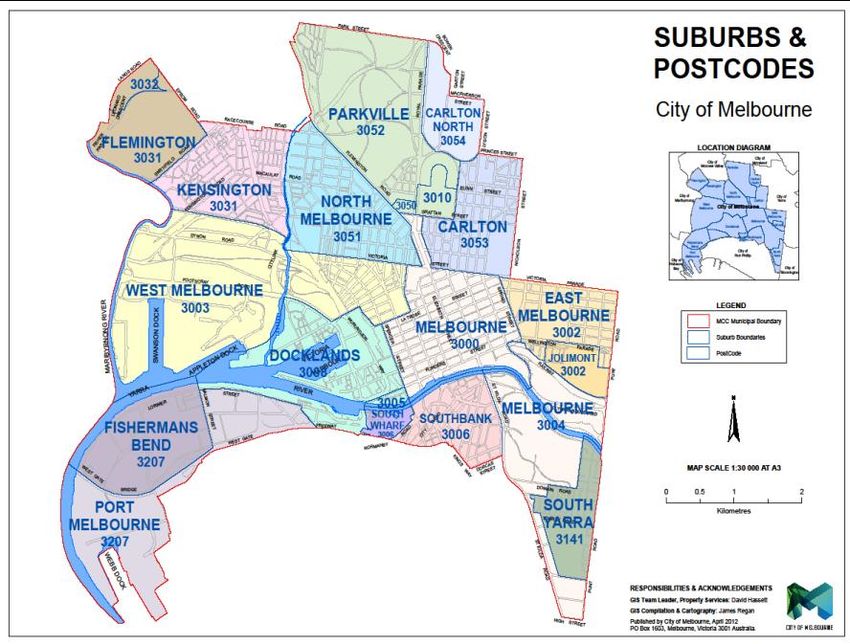
The City of Melbourne is the local government authority spanning the Melbourne city centre and
surrounding areas.
The City of Melbourne sits at the heart of Greater Melbourne, the state capital of Victoria and is Australia’s
second largest city. The municipality covers 37.7 square kilometres and has a residential population of
178,955. On an average weekday, more than 972,000 people work in or visit the city, and Melbourne hosts
over three million international visitors each year.
As a local government authority, the City of Melbourne strives to achieve its community’s vision of a bold,
inspirational and sustainable city. To lead the city towards this vision, the City of Melbourne is focused on
reducing its own environmental impact. In 2019, the City of Melbourne declared a climate and biodiversity
emergency and amended its target to zero emission for the municipality to 2040, ten years ahead of
schedule. Actions to achieve this are set out in the City of Melbourne’s Emissions Reduction Plan for our
Operations 2016-2021. The Plan also outlines a commitment to maintain carbon neutrality for operations.
This year marks the eighth year the City of Melbourne has upheld its carbon neutral certification with
Climate Active.
City of Melbourne 3CLIMATE ACTIVE Services and Facilities The City of Melbourne is responsible for maintaining an extensive range of facilities and delivering a diverse range of services. The community infrastructure maintained by the City includes roads, bridges, drains, town halls, libraries, recreation facilities, child care centres, community hubs, event venues, parks and gardens. The majority of the City’s operations are run out of three main administrative buildings in the central business district, including the Melbourne Town Hall, Council House 1 and Council House 2. Additional operations are run out of a number of external sites and facilities located throughout the municipality. The City owns and/or operates more than 350 buildings, parks, gardens and other facilities. The services provided by the City include property, economic, human, recreational and cultural services. The City also enforces state and local laws relating to matters such as land use, planning, environment protection, public health, traffic and parking, and animal management. Below is an overview of the services and operations undertaken by the City of Melbourne during 2019-20: Animal management Community and cultural services Event management and sponsorship Health services Local laws Parks, gardens and open space Planning and building Recreation services Roads and parking Strategic planning Sustainability Waste management City of Melbourne 4
CLIMATE ACTIVE Public Disclosure Statement

Emissions reduction strategy
The City’s Emissions Reduction Plan (ERP) for Council Operations summarises the actions that the City of
Melbourne will take to reduce emissions from activities and operations between 1 July 2016 and 30 June
2021, and maintain carbon neutrality. The ERP includes emissions reduction targets reflective of the 2015
Paris Climate Change Agreement. The actions described in the ERP will achieve further emission
reductions of 4.5% per year to meet or exceed the 1.5°C science-based target.

Emissions Reduction Plan actions

The ERP describes actions the City of Melbourne has taken to reduce emissions from activities and
operations, across seven priority areas:

     •     Develop a low carbon culture
     •     Celebrate Melbourne, without the emissions
     •     Zero carbon for our buildings
     •     Revitalise Queen Victoria Market
     •     Carbon neutral goods and services
     •     Zero carbon transport
     •     Reduce emissions from waste

To support delivery of the ERP, the City of Melbourne secured a loan from the Clean Energy Finance
Corporation (CEFC) to accelerate the implementation of energy efficiency and renewable energy
improvements across the major sources of emissions reported by the City annually under Climate Active.
These actions include LED street light upgrades, building energy efficiency improvements, and solar
installations on Council-owned buildings and community facilities. This program of works was completed in
2019.

Melbourne Renewable Energy Project

The Melbourne Renewable Energy Project (MREP) marked the first time in Australia that a group of local
governments, cultural institutions, universities and corporations have collectively purchased renewable
energy from a newly built facility.

The 39-turbine Crowlands Windfarm near Ararat is owned and operated by Melbourne-based clean energy
company Pacific Hydro. Under this project, fourteen members of the buying group combined their
purchasing power and committed to purchase 88 GWh of electricity per year from the windfarm under a
long-term power purchase agreement. The agreement enabled financing and construction arrangements
for the project; and because the windfarm generates more than the purchasing group's needs, it brings
additional renewable energy into the market.

The windfarm began supplying energy from 1 January 2019 and from this date the City of Melbourne’s
electrical load has been powered by renewable energy. The renewable energy certificates generated by
the windfarm are surrendered on behalf of City of Melbourne by our electricity retailer and the electricity
usage is treated as zero emissions.

City of Melbourne                                       5
CLIMATE ACTIVE Public Disclosure Statement
Solar
Since 2003 the City of Melbourne has undertaken multiple solar photovoltaic installations to reduce
Council’s reliance on Victoria’s carbon-intensive electricity grid. As of 30 June 2020, the City of Melbourne
held 993 kW of solar capacity across 26 sites, generating 862 MWh for 2019-20.
Table 1: Installed solar capacity
Installed Capacity Site
200 kW Queen Vic Market
200 kW North Melbourne Football Club
99.8 kW Kensington Recreation Centre
85 kW Library at the Dock
52 kW Fitzroy Garden Depot
45.8 kW Carlton Baths (2)
38.9 kW Kensington Flemington Bowls
38 kW Gowrie Child Care
35.1 kW Community Hub at The Dock (2)
30 kW Community Hub at The Dock (1)
27 kW Fitzroy Garden Visitor Centre
20 kW Boyd School
20 kW Flagstaff Bowls Club
15.6 kW Carlton Baths (1)
15.6 kW Fawkner Park Children's Centre & Senior Citizens Centre
15.6 kW Kensington Family Services
10.4 kW East Melbourne Library
10.4 kW Kensington neighbourhood Centre
7.5 kW Royal Park North Depot
6.24 kW North Melbourne Children's Centre
5.1 kW The Venny
4.8 kW Urban Camp
3.6 kW CH2
3.23 kW Art Play
2.3 kW North Melbourne Baths
1.3 kW Signal
City of Melbourne 6CLIMATE ACTIVE Public Disclosure Statement
Energy Efficiency
The City of Melbourne’s ERP and Asset Management Strategy 2015-2025 help to ensure we make the
right decisions about community assets, with the right information, by establishing the right data and
processes. The integration of these three elements helps ensure best practice energy efficiency
technology is delivered across the life cycle of assets.
The energy efficiency initiatives implemented in the financial year 2019-20 include:
• Completion of the second half of Council House 2’s LED lighting upgrade (building and
amenities)
• North Melbourne Recreaction Centre pool pump upgrade
• Analytics software upgrade on City of Melbourne’s Building Management System for improved
building efficiency
• Melbourne Town Hall admin smart controls upgrade
Waste Reduction
The City of Melbourne’s Waste and Resource Recovery Strategy 2030 addresses the emissions
generated by waste across the municipality and sets a key target of 1.2Mt CO2-e in greenhouse gas
emissions avoided by 2030. The strategy outlines key activities to create a more circular economy that will
reduce environmental impacts, improve the amenity and liveability of the city, and make the waste and
resource recovery system more resilient. The City of Melbourne does not own or operate any landfills;
however the waste collected from our facilities is taken to recycling stations and landfills outside the
municipality. The indirect emissions associated with recycling and landfill for the waste collected at our
facilities is included in our operational emissions inventory.
Eighteen worm farms were previously operating across City of Melbourne offices to transform organic
waste into compost and liquid fertilizer. The worm farms processed up to 12 tonnes of organic waste per
year, equating to 22 tonnes of CO2e, however due to COVID-19, the worm farms were returned to the
supplier due to working from home arrangements in March 2020. Their return, along with other organic
waste recycling options, will be considered upon return to the workplace.
Transport
City of Melbourne staff regularly travel by foot, cycling with electric bicycles, taking public transport and
driving electric vehicles to avoid emissions through the use of petroleum and diesel run vehicles.
Emissions from any work-related air travel are offset. Carbon neutrality for the vehicle fleet is maintained
through: offsetting transport fuel, reducing fleet size, reducing the engine size vehicles, introducing hybrid
and electric vehicles, charging electric vehicles in car parks owned by the City of Melbourne, and
increasing the weighting given to fuel efficiency in the evaluation criteria for new vehicle purchases. City of
Melbourne’s corporate vehicle fleet comprises 66 vehicles, including 14 fully electric vehicles, 14 hybrid
vehicles and 14 plug-in hybrid electric vehicles. Electric and hybrid vehicles constitute 53% of City of
Melbourne’s total fleet (a 23% increase from 2018-19).
City of Melbourne 7CLIMATE ACTIVE Public Disclosure Statement
Events
The City of Melbourne delivered the first certified carbon neutral large events portfolio in 2018-19 with the
inclusion of Melbourne Fashion Week, Melbourne Music Week and Melbourne Knowledge Week. This
work has continued for the 2019-20 portfolio with the same three events, however Melbourne Knowledge
Week did not go ahead due to COVID-19. The emissions savings from the two remaining events included:
Maximising the use of venues purchasing renewable energy
Minimising the use of venues with mains gas
Centralised programming to reduce attendee transport emissions
Reducing the amount of red meat in corporate and staff catering
A reduction in new construction to minimise the amount of raw materials used
Delivering a near zero waste hub for Melbourne Music Week
Contractors self-offsetting flights
The City of Melbourne is proud to have shared what it has learnt through this process with other public and
private organisations which are targeting carbon neutral events of their own.
City of Melbourne 8CLIMATE ACTIVE Public Disclosure Statement
2. EMISSION BOUNDARY
The City of Melbourne’s greenhouse gas emissions inventory has
been prepared according to the Climate Active Standard. The “Being a carbon neutral
emissions boundary is consistent with the GHG Protocol Corporate organisation is a key
Accounting and Reporting Standard:
part of our Climate and
Organisational boundary: The City uses the operational
control approach for measuring and reporting on the Biodiversity Emergency
organisation’s emissions. The City includes emissions from Response.”
all activities over which we have full operational control (as
shown in Figure 2).
Operational boundary: The emissions inventory includes direct emissions sources (scope 1),
emissions from purchased energy (scope 2) and other measurable indirect sources (scope 3) that
are material to the City’s operations (see Figure 2).
Based on an operational control approach, the following entities have been included:
Administration Buildings
Child Care Centres
Community Facilities
Libraries
Parks
Public Lighting
Recreation Centres
Sports Grounds
Subsidiaries
The following greenhouse gases have been considered:
Carbon dioxide CO2
Methane CH4
Nitrous oxide N2O
Synthetic gases HFCs, SF6, CF4, C2F6
The following emission sources have been included:
EMISSIONS SOURCE SCOPE
Natural gas 1, 3
Transport fuels 1, 3
Stationary fuels 1, 3
Refrigerants 1
Grid electricity 2, 3
Transport 3
Waste disposal 3
Reticulated water 3
Subsidiaries 3
Supply chain 3
Staff and volunteer travel 3
City of Melbourne 9CLIMATE ACTIVE Public Disclosure Statement Diagram of the certification boundary City of Melbourne 10
CLIMATE ACTIVE Public Disclosure Statement

Non-quantified sources

All relevant-non     Immaterial       Quantification is     Data                Initial emissions
quantified                            not cost effective    unavailable but     non-quantified
emission sources
CLIMATE ACTIVE Public Disclosure Statement

   Emission
                    Scope   Justification for exclusion & overall implications for footprint
     source
                            Citywide is a wholly owned subsidiary that is not under City of Melbourne’s
                            operational control. Citywide emissions not associated with City of
                            Melbourne usage have been excluded. City of Melbourne includes 23.5% of
    Citywide          3
                            Citywide’s emissions as this is the proportion of Citywide’s revenue
                            associated with service provision to City of Melbourne (e.g. waste collection)
                            in 2019-20. This is consistent with the method used for all contractors.
                            The City of Melbourne includes emissions associated with waste generated
                            during the course of Council business, i.e. within the operational control of
                            the City. The emissions associated with waste generated by residents and
                            businesses (municipal, commercial, industrial, construction and demolition
     Waste            3     waste streams) have been excluded as these waste streams are not under
                            the City’s operational control. However it should be noted the City collects
                            and transports a portion of this waste, which is included in our emissions
                            (reported under Citywide). Waste collected during the course of street
                            cleaning is excluded as the City has no operational control over this waste.
                            The City of Melbourne currently includes 11 emissions sources associated
                            with the purchase of goods and services. These sources were determined by
   Purchased
                            the principles outlined in the Value Chain (Scope 3) Accounting and
   goods and          3
                            Reporting Standard. The City has excluded two emissions sources identified
    services
                            in this process: animal management is excluded due to immateriality (see
                            below), and artists/speaker travel is excluded due to a lack of reliable data.
                            Animal management is primarily serviced in-house by City of Melbourne staff
     Animal                 and the fuel used is included in the corporate fleet emissions source. There
                      3
 Management                 are instances where the collection of animals is undertaken by the RSPCA
                            but these are considered insignificant (less than 10 pick-ups per month).
                            The City of Melbourne has included transportation and distribution of goods
                            and services for seven emissions sources; towing, parks and recreation,
                            building and property maintenance, street cleaning, security services, coin
   Upstream
                            collection and aged and disability services. The remaining emissions
transportation &      3
                            sources with transportation and distribution have been excluded due to lack
   distribution
                            of reliable data from suppliers. These include office paper, animal
                            management, promotion and marketing, and civil design and traffic
                            engineering.
                            The City of Melbourne currently includes metropolitan public transport use by
                            staff, hire cars, taxis, flights and use of its own fleet. Business travel
Business travel       3
                            undertaken by regional public transport or in employee vehicles are excluded
                            due to lack of reliable data.
  Downstream
transportation &      3     The City of Melbourne does not sell products.
   distribution
 Processing of
                      3     The City of Melbourne does not sell products
 sold products
  Use of sold
                      3     The City of Melbourne does not sell products
    products

City of Melbourne                                     12
CLIMATE ACTIVE Public Disclosure Statement End-of-life treatment of 3 The City of Melbourne does not sell products sold products Franchises 3 The City of Melbourne is not franchised. City of Melbourne 13
CLIMATE ACTIVE Public Disclosure Statement

                             3. EMISSIONS SUMMARY

Emissions summary (inventory)

Emission source category                                                         tonnes CO2-e
                                                                                                     14
Horticulture and Agriculture
                                                                                                  1,550
Postage, courier and freight
                                                                                                    614
Water
                                                                                                  1,830
Electricity
                                                                                                  2,443
Stationary Energy
                                                                                                  1,127
Waste
                                                                                                  3,579
Land and Sea Transport (fuel)
                                                                                                       6
Land and Sea Transport (km)
                                                                                                    175
Air Transport (km)
                                                                                                       8
Taxi and Uber
                                                                                                     0.1
Refrigerants
                                                                                                     56
Office equipment & supplies
                                                                                                     44
Cleaning and Chemicals
                                                                                                       -
Carbon neutral products and services
                                                                                                    348
Bespoke

                                                        Total Net Emissions                      11,794

Uplift factors
Reason for uplift factor                                                         tonnes CO2-e

4.68% to account for immaterial items and any uncertainty                                            552

                    Total Footprint to offset (uplift factors + net emissions)                   12,346

Carbon neutral products
Not applicable.

City of Melbourne                                         14
CLIMATE ACTIVE Public Disclosure Statement
Electricity summary
Electricity was calculated using a Market-based approach.
City of Melbourne seeks to ensure the accuracy and transparency of the emissions calculations and allow
comparison between both past years reports and future year’s. Utilising a market based approach
represents a deviation from the methodology which City of Melbourne has used in previous years. Utilising
a market based approach results in fewer emissions for City of Melbourne than location based, however
more accurately accounts for emissions reduction activities undertaken through the purchase of renewable
electricity. City of Melbourne has updated its reporting procedures and methodologies to align with the
best practice market-based accounting approach.
Renewable energy certificates
Melbourne, has signed a 10 year Power Purchase Agreement for 100 per cent renewable energy as part
of the Melbourne Renewable Energy Project. Renewable energy which is purchased through this PPA can
be treated as zero emissions as the associated Large-scale Generation Certificates (LGCs) have been
surrendered.
The below table provides the certificate numbers which have been voluntarily surrendered with the Clean
Energy Regulator Confirmation of Voluntary Certificate Surrender. A function of the electricity contract
which both CIity of Melbourne and Citywide holds with the PPA provider has LGCs split across 3 contracts.
• Melbourne City Council
• Melbourne City Council - Engineering & Eng Collective
• Citywide Service Solutions Pty Ltd
Citywide is a wholly owned subsidiary of the City of Melbourne. For the purposes of Climate Active
reporting Citywide is considered as a contractor as it is not under City of Melbourne’s operational control.
A proportion of Citywide’s total emissions, as captured under National Greenhouse and Energy Reporting
(NGER) boundary is reported based on the percentage of revenue associated with its service provision to
City of Melbourne. In 2019-20 this proportion was 23.5%. The proportion of LGCs generated through their
MREP contract which are attributable to City of Melbourne has been determined using the following
methodology.
1. Identified sites with electricity usage from the MREP contract which are used to service City of
Melbourne contracts
2. Identified if the site is used for multiple contracts or exclusively for City of Melbourne
3. For sites that are used for more than one purpose, applied a factor of 23.5%, used 100% for
sites only used for City of Melbourne
City of Melbourne 15CLIMATE ACTIVE Public Disclosure Statement
Certifica Fuel Generati Generati Certificate tag Certificate Certifica
te type sourc on year on state serial te
e number quantity
Melbourne City Council
MELBCITY COUNCIL Volun 2019 111729 -
LGC Wind 2019 VIC 3,255
MREP 114983
MELBCITY COUNCIL Volun 2019 148335 -
LGC Wind 2019 VIC 3,156
MREP 151490
LGC Wind 2020 VIC MCC 1Q20 Volunt 6432-9315 2,884
LGC Wind 2020 VIC MelCC VolQ2-20 64933-67671 2,739
Melbourne City Council - Engineering & Eng Collective
LGC Wind 2019 VIC MCC EE 1Q20 Volun 9316 - 9576 261
LGC Wind 2019 VIC MelCC Eng VolQ2-20 67672 - 67944 273
MELB CC ENG VOLUN 2019
LGC Wind 2020 VIC 27869 – 28170 302
MREP
MELB CC ENG Volun 2019 MREP 151491 –
LGC Wind 2020 VIC 279
151769
Citywide Service Solutions Pty Ltd
LGC Wind 2019 VIC CITYWIDE Volun 2019 MREP 32596 - 32739 144
CITYWIDE Volun 2019 MREP 147748 -
LGC Wind 2019 VIC 175
147922
LGC Wind 2020 VIC CityW 1Q20 Volun 5868-5994 127
LGC Wind 2020 VIC CityW VolQ2-20 64486-64615 130
LGCs from Citywide Service Solutions Pty Ltd attributable to CoM contract 134
Market-based approach electricity summary
A market based approach enables businesses to accurately reflect the emissions resulting from their
electricity choices and contracts, such as from Power Purchase Agreements. It facilitates transparent
reporting of all electricity sources and contracts while minimising the chance of under or over reporting of
renewable energy. The market based method calculates a ‘residual mix factor’ which replaces the location
based emissions factor. It removes the portion of renewable electricity from the state-specific electricity
emission factors and apportions an equivalent renewable percentage to the relative level of consumption
of the consumer. Removing this zero emissions electricity increases the relative emissions intensity of
each remaining unit of power in the electricity grid. This more accurately reflects the actual emissions
intensity of each unit of fossil fuel generated electricity used.
City of Melbourne 16CLIMATE ACTIVE Public Disclosure Statement
Emissions
Electricity inventory items kWh
(tonnes CO2e)
Electricity Renewables 17,224 0.00
Electricity Carbon Neutral Power 0 0.00
Electricity Remaining 1,692 1,830
Renewable electricity percentage 91%
Net emissions (Market based approach) 1,830
Location-based summary
Emissions are estimated using the emissions factors published in the National Greenhouse Accounts
Factors by the Department of Environment and Energy each year. These factors are calculated based on
the total emissions of all generation sources which supply electricity into the State’s grid. Emissions are
then allocated to consumers in proportion to their relative level of consumption through the use of these
factors. Renewable energy which contributes into the grid is considered zero emissions. Therefore a
portion of the electricity used by each consumer can be attributed to renewables through the published
Renewable Power Percentage (RPP).
Renewable energy which is purchased through a Power Purchase Agreement can be treated as zero
emissions provided the associated Large-scale Generation Certificates (LGCs) have been surrendered.
However these renewables are also counted in the Renewable Power Percentage and in the emissions
intensity of the emissions factor reducing the emissions and hence the zero emissions are double counted.
The location-based method does not accurately account for the renewable energy City of Melbourne
purchases through its Power Purchase Agreement; however for completeness and transparency, the
City’s location based emissions are presented below.
State/ Electricity Inventory items kWh Full Emission Emissions
Territory factor (Scope 2 (tonnes
+3) CO2e)
Vic Electricity Renewables 13,802 -1.12 -15,458
Vic Electricity Carbon Neutral Power - -1.12 0.00
Vic Netted off (exported on-site generation) - -1.02 0.00
Vic Electricity Total 18,916 1.12 21,186
Total net electricity emissions (Location based) 0.00 5,728
City of Melbourne 17CLIMATE ACTIVE Public Disclosure Statement
4. CARBON OFFSETS
A carbon offset is generated from an activity that prevents, reduces or removes greenhouse gas emissions
from being released into the atmosphere to compensate for emissions occurring elsewhere. Carbon
offsets are tradeable units that represent abatement of greenhouse gas emissions. Offsets represent the
rights to a greenhouse gas reduction, and the carbon offsets purchased are retired through a registered
third party so they cannot be counted twice. The City of Melbourne has retired eligible carbon offset units
from the following projects to compensate for the emissions associated with its activities this reporting
period.
Offset purchasing strategy: forward purchasing
The City of Melbourne purchases offsets according to the principles set out in our City of Melbourne
Carbon Neutrality Strategy (Council Operations) approved by the Council’s Future Melbourne Committee
at a meeting held on 17 April 2012:
Essential principles
Compliance with Carbon Neutral Standard
Social responsibility
Timeliness
Important principles
Certainty
Transparency
Cost effectiveness
Leadership
Biodiversity
Offsets are retired on an annual basis at the end of the reporting period after the inventory has been
completed. In previous years City of Melbourne has purchased and retired an additional 5% buffer to
account for any uncertainty. However this year, with the addition of the uplift factor methodolgy, this
function has been used to include the buffer of uncertainity within the reported footprint itself.
Forward purchasing summary
Forward purchasing summary
0
1. Total offsets previously forward purchased for this reporting period
12,346
2. Total offsets required for this reporting period
0
3. Net offset balance for this reporting period
22,173
4. Total offsets to be forward purchased for next reporting period
City of Melbourne 18CLIMATE ACTIVE Public Disclosure Statement
Offsets summary
1. Total offsets required for this report 12,346
2. Offsets retired in previous reports and used in this report 0
3. Net offsets required for this report 12,346
Project description Eligible Registry Date Serial number (including Vintage Quantity Quantity Quantity to Quantity
offset unit retired hyperlink to registry (tonnes used for be banked to be used
units retired in transaction record) CO2-e) previous for future this report
type report years
3,760,629,649 - 3,760,630,648
Savannah burning ACCUs ANREU 07/10/2020 3,756,673,318 - 3,756,673,972 2013+ 2,099 401 0 2,099
3,768,791,660 - 3,768,792,103
Promoting regeneration of native
ACCUs ANREU 07/10/2020 3,765,445,716 - 3,765,446,519 2013+ 804 2,196 0 804
forest
5744-257521609-257522878-
Renewables - Wind energy VCS APX 07/10/2020 VCU-034-MER-IN-1-1447- 2015 1,270 10,230 0 1,270
01012015-31122015-0
VCS + 8245-4602155-4620154-VCS-
Renun, Run-of-River, Indonesia Social APX 03/06/2020 VCU-842-VER-ID-1-488- 2016 18,000 0 9,827 8,173
Carbon 01012017-30042017-0
Total offsets retired this report and used in this report 12,346
Total offsets retired this report and banked for future reports 22,173
City of Melbourne 19CLIMATE ACTIVE Public Disclosure Statement
Co-benefits
The City of Melbourne has voluntarily retired and cancelled 12,346tCO2e of carbon offsets for 2019-20.
Our emissions were offset through a variety of projects, which were chosen based on criteria including
social responsibility, biodiversity, gender equity, and poverty alleviation.
All projects generate multiple co-benefits which are supportive of the United Nations Sustainable
Development Goals. The table below provides an overview of the offset projects, their co-benefits, and
their alignment to the UN Sustainable Development Goals.
Table 5. Offset projects and co-benefits
Offsets % of CoM
Project
(tCO2-e) inventory
Savannah Burning: North of Australia 2,099 17%
Savannah Burning: Credits will be drawn from Savannah burning projects located in the north of Australia.
Under this activity, emissions are avoided through managing savannah grassland fire regimes so as to
introduce fire during the early part of the the dry season, thereby reducing fire intensity and associated
greenhouse emissions.
The project contributes to the following United Nations Sustainable Development Goals:
Promoting regeneration of native forest 804 7%
Human Induced Regeneration of Native Forest: Credits will be drawn from Human Induced Regeneration of
Permanent Even Aged Native Forest projects registered under the Australian Emissions Reduction Fund and
located in QLD and NSW. Under this activity, carbon is sequestered through adjusting land management so
as to promote the regeneration of native forests through, for example, adjusting grazing regimes, ceasing
cyclic land clearing, managing pest animals/weeds. http://www.cleanenergyregulator.gov.au/ERF/project-and-
contracts-registers/project-register
The project contributes to the following United Nations Sustainable Development Goals:
Renewables - Wind energy 1,270 10%
Greenhouse emissions are avoided through displacing coal-fired electricity generation with renewable wind
electricity generation.
The project contributes to the following United Nations Sustainable Development Goals:
City of Melbourne 20CLIMATE ACTIVE Public Disclosure Statement Renun, Run-of-River, Indonesia 8,173 66% Renun Hydro Power: Harmoniously increasing energy access by using the power of flowing water. Located on the shores of Lake Toba in a remote part of North Sumatra, the project harnesses the power of the Renun River and its tributaries to generate renewable energy. The grid-connected project displaces energy derived from burning fossil-fuels and therefore avoids the associated greenhouse gases. Many measures have been taken to balance the need for powering local sustainable development with protecting the island’s rich natural landscape and vegetation. The project provides job opportunities and training and the project owner has also funded many initiatives to directly benefit the surrounding community. The project contributes to the following United Nations Sustainable Development Goals: City of Melbourne 21
CLIMATE ACTIVE Public Disclosure Statement
5. USE OF TRADE MARK
Description where trademark used Logo type
City of Melbourne website Certified organisation
Melbourne Fashion Week (programs, signage and
Certified event
websites)
Melbourne Music Week (programs, signage and websites) Certified event
6. ADDITIONAL INFORMATION
The City of Melbourne is committed to continuously improving our inventory. Improvements this year
include:
Improving data quality by constantly updating our web-based database that manages electricity
consumption and emissions. Assets and meter identifiers were reviewed and removed/added to
ensure accurate reporting with data feeds directly from our electricity retailer.
Back casting – where appropriate we have included new emissions sources or recalculated
(based on methodology changes) our previous years’ inventories in order to accurately measure
our emissions trend.
City of Melbourne 22CLIMATE ACTIVE Public Disclosure Statement
7. APPENDIX 1: EXCLUDED EMISSIONS
To be deemed relevant an emission must meet two of the five relevance criteria. Excluded emissions
are detailed below against each of the five criteria.
Relevance Test
Excluded The emissions The emissions Key The The emissions
Emission from a from a stakeholders responsible are from
particular particular deem the entity has the outsourced
source are source emissions potential to activities
likely to be contribute from a influence the previously
large relative to the particular reduction of undertaken
to the organisation’s source are emissions within the
organisation’s greenhouse relevant. from a organisation’s
electricity, gas risk particular boundary,
stationary exposure. source. or from
energy and outsourced
fuel emissions activities
typically
undertaken
within the
boundary for
comparable
organisations.
CityWide X
Waste X
Purchased
goods and X
services
Animal
X
management
Upstream
X
transport
Business
X
travel
Downstream
transportation
and
distribution
Processing of
sold products
Use of sold
products
End of life
treatment of
sold products
Franchises
City of Melbourne 23You can also read


