Public Protection Service

Food Law Enforcement
Delivery Plan
2018/2020
←
→
Page content transcription
If your browser does not render page correctly, please read the page content below
Public Protection Service Food Law Enforcement Delivery Plan 2018/2020
1
Contents Page
Service purpose and aims                                             3

Team priorities and objectives                                       4

Background Information regarding Bath and NE Somerset                4

Profile of the Local Authority                                       4

       Ethnicity                                                     5

Organisational Structure                                             7

Scope of the Food Law Enforcement Service                            8

Demands on the Food Service                                          9

Service Delivery Points                                              11

Enforcement Policy                                                   12

Service Delivery                                                     13

Resources                                                            23

Staff Development Plan                                               24

Quality Assessment                                                   25

Areas of Improvement & Challenge                                     26

Appendix 1 Organisational Chart
Appendix 2 Food Safety Team Work Plan 2017/2018
Appendix 3 Food Safety Team Work Plan 2018/2019
Appendix 4 Food Safety Team Projects for 2018/2020
Appendix 5 Food Sampling Programmes 2018/2019
Appendix 6 Food Safety Officers Training Matrix 2017/2018
Appendix 7 Process Flow Charts for delivery of Commercial Products

                                              2
FOOD LAW ENFORCEMENT SERVICE DELIVERY PLAN 2016/2017

This plan details the direction, planned activity and intended achievements of Bath and North East
Somerset Council in relation to Food Law Enforcement between April 2018 and March 2020. It is
based on current Food Standards Agency enforcement planning guidance contained in the Food
Law Code of Practice 2017 https://www.food.gov.uk/enforcement/codes-of-practiceand associate
guidance

SERVICE PURPOSE and AIMS

These are outlined in the Public Protection Service Plan;
http://www.bathnes.gov.uk/sites/default/files/sitedocuments/Your-
Council/pphi_service_plan_final_2016.pdf

Public Protection

Aims to make a difference to people’s lives by promoting a healthier, fairer and safer
environment in local homes, communities and workplaces and we support and promote a
thriving economy and growth across B&NES.

B&NES Strategic Priorities
1. A strong economy and growth
2. A focus on prevention
3 A new relationship with customers and communities
4. An efficient business

The Operational Plan recognises the need to continue to deliver high-quality statutory services,
e.g. Food Safety and Standards, Investigation of infectious disease, Health and Safety, Licensing
and Environmental Monitoring including air quality management. The plan also seeks to put the
needs of our most vulnerable adults, children and families first and details local priorities including
transport improvements, leisure centres and economic growth – ensuring Bath and North East
Somerset remains a great place to live and work. The plan outlines the key challenges facing the
authority
    • The need to find new ways of working and prioritise the services we deliver in order to
        make the necessary savings while protecting our most vulnerable.
    • Finding better ways to work with residents, partners, voluntary organisations and parishes
        to help manage demand into the future, particularly for social care.
    • To become self-funding through increased commercial activity, winning more Government
        grants, and by growing and investing in our local economy (more homes, offices and jobs).

Public Health Priorities (Health and Wellbeing Board Themes)
Theme 1 Helping people to stay healthy
   • Helping children to be a healthy weight
   • Improved support for families with complex needs
   • Reduced rates of alcohol misuse
   • Create healthy and sustainable places
Theme 2 Improving the quality of people’s lives
   • Improved support for people with long term conditions
   • Promoting mental wellbeing and supporting recovery
                                                  3
•   Enhanced quality of life for people with dementia
   •   Improved services for older people Theme 3 Tackling health inequality by creating fairer life
       chances
   •   Improve skills, and employment
   •   Reduce the health and wellbeing consequences of domestic abuse
   •   Take on loneliness

The purpose of the Food Team is –

To protect and promote the health, safety and wellbeing of the living, working and visiting
community within the area.

Our food related aims are:

   •   To help protect residents, workers and visitors to Bath and North East Somerset from the
       risk of food poisoning and food related illness.
   •   To help to ensure the production of clean and wholesome food within Bath and North East
       Somerset. This will be achieved by supporting businesses to achieve compliance with the
       law using an enforcement mix which incorporates a staged approach to enforcement, using
       local and national intelligence to determine the appropriate combination of interventions,
       education, complaint investigation and sampling.
   •   To support businesses and the local economy by promoting our business support packages
       to support compliance, protect public health and produce an income stream to help sustain
       the service
   •   To ensure and promote public confidence in food safety.
   •   To investigate the cases and outbreaks of infectious disease, ensure as far as possible the
       safety of those affected, assist in the prevention of the spread of infectious diseases in the
       community, and where possible and appropriate, prosecute those responsible.
   •   To work in conjunction with the Public Health team to promote healthy eating.
   •   To apply the law consistently and effectively. On a prioritised basis, proactively inspect food
       premises for compliance with food standards legislation providing advice and guidance as
       required or requested.
   •   To sample food products for fitness, adulteration and labelling compliance.
   •   To support all food businesses, especially start-up businesses, and local producers in
       achieving compliance with the law.
   •   To administer the approval of food manufacturers thereby enabling them to trade across the
       European Union.
   •   To promote animal health and welfare by the inspection of premises, auditing of records
       and the provision of advice and guidance.
   •   To monitor hygiene at primary food producers. (Farms)
   •   To monitor the manufacturing, mixing and use of animal feed stuffs.

Our Priorities

To align with the Council’s Vision and Priorities, our work programme, enforcement approach and
operational ethic all focus upon our customers and prioritise: businesses serving vulnerable
groups, and supporting local businesses to succeed and achieve compliance

The work-plan contained in Appendix 4 demonstrates the emphasis placed on business support,
especially through our staged enforcement approach, and priority given to businesses serving
vulnerable groups.

                                                  4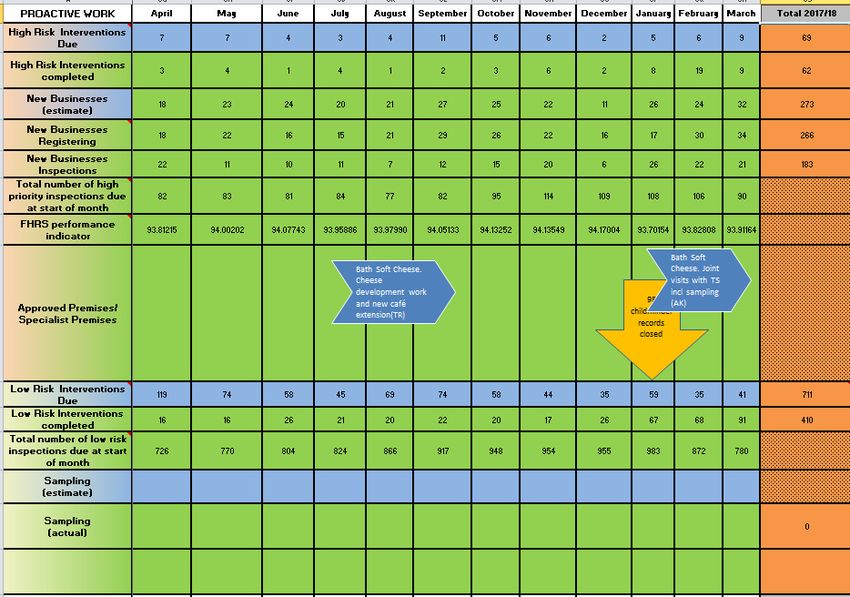
Background information – Profile of Bath and North East Somerset

There were 187,751 residents of Bath and North East Somerset in 2016; this is lower than the GP
registered population of 203,623.

Bath is the largest urban area in B&NES. At the time of the 2001 Census, it was the 9th largest
SW town or city, with population of around 90,000.

                           Population                 Area             Persons per
                           (000s)                     (sq km)          sq km
B&NES                      178.3                      346              515
Former Avon Area           1,055.9                    1,327            796
South West Region          5,178.0                    23,837           217
England                    51,092.0                   160,281          392
ONS Mid Year Estimates 2007 / ONS Census 2001 Urban area Data

Economic activity currently stands at 77.3%
B&NES has an unemployment rate of just 2%, less than half the national average
According to the 2011 Census in B&NES 2.7% of households with dependent children had no
adult in employment; this is significantly lower than the South West and England.
Local skills levels are high, with over 45% educated to NVQ4+ level
The majority of economic inactivity comes from the very high numbers of students in the authority
Accessibility of work/transport issues remain a priority issue in B&NES

Obesity is a major factor in the development of many diseases and the recent increase in the
population is striking and alarming.

    •   Over half of adults (55.7%) in B&NES are estimated to be overweight or obese,
        although this is significantly lower than regional and national figures.

    •   Rates of recorded obesity are rising in adults in B&NES, but are lower than national
        rates.

                                                         5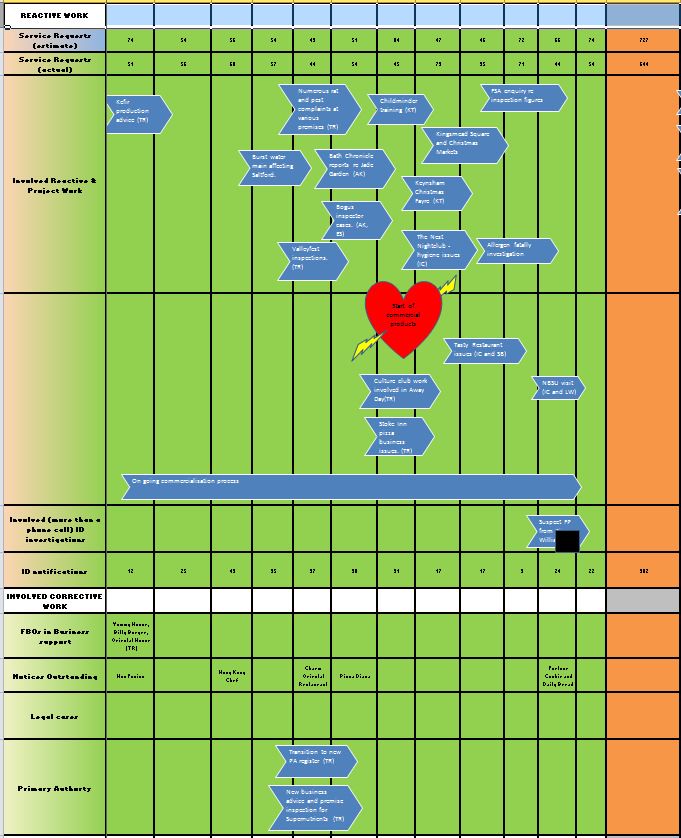
•   23.8% of Reception aged children (4 to 5 years old) in B&NES's schools are an
       unhealthy weight, i.e. either overweight or very overweight/obese. 8.8% of Reception
       aged children in B&NES are very overweight/obese.

   •   27.7% of Year 6 aged children (10 to 11 years old) in B&NES's schools are an unhealthy
       weight, i.e. either overweight or very overweight/obese. 13.8% of Year 6 aged children in
       B&NES are very overweight/obese

   •   Trends in childhood unhealthy weight - including overweight and very
       overweight/obese - have been relatively static since the national measurement
       programme began in 2006/07, i.e. there has been no long-term significant upward or
       downward shift. This accords with national findings that demonstrate prevalence
       rates of overweight and very overweight/obesity may have stabilised between 2004
       and 2013.

   •   The proportion of Year 6 aged young people in England classified as very
       overweight/obese appears to be increasing. Age is a significant factor in the levels of
       very overweight/obesity among children in B&NES, i.e. increasing with age.
   •   Deprivation is a significant factor in the level of very overweight/obesity among Year 6 aged
       children in B&NES, which is even more marked for Year 6 boys.
   •   There is a gender gap opening up nationally and locally among Year 6 aged boys,
       who are more likely to be classified as obese compared to their female peers.

Further Information defining the profile of Bath and North East Somerset:

Population
http://www.bathnes.gov.uk/services/your-council-and-democracy/local-research-and-
statistics/wiki/population

Economy
http://www.bathnes.gov.uk/services/your-council-and-democracy/local-research-and-
statistics/wiki/employment-and-economic

Socio-economic inequality
http://www.bathnes.gov.uk/services/your-council-and-democracy/local-research-and-
statistics/wiki/socio-economic-inequality

Healthy Weight
http://www.bathnes.gov.uk/services/your-council-and-democracy/local-research-and-
statistics/wiki/obesity

Organisational Structure

There is a cabinet of councillors appointed by the Council. This cabinet is responsible for making
all the executive decisions required at member level. These decisions may be made collectively
or individually by the cabinet Councillors.     Executive decisions are those that are concerned
with implementing major policies agreed by the Council and setting new service policies. The
Council also appoints a councillor to be the Leader of the Council.

The cabinet comprises the leader and 8 cabinet members

                                                 6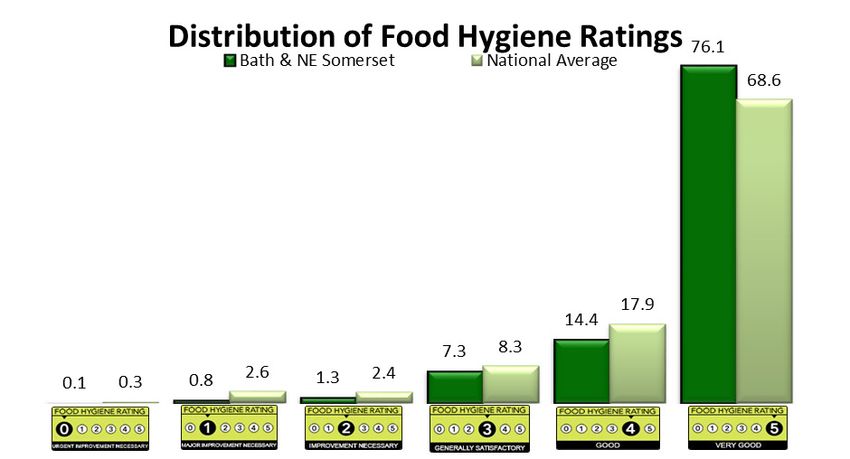
The cabinet office member with responsibility for Development and Neighbourhoods which
includes Public Protection Services is Cllr Bob Goodman:

The Council has delegated responsibility for the operational management of Food Law
Enforcement to the Group Manager for Public Protection and Health Improvement via the
Divisional Director – Environmental Services, together with a wide range of other duties and
responsibilities including that of “Proper Officer” for Infectious disease control purposes (this role is
held jointly with the Director of Public Health. The Group Manager is supported in this by the
Education and Enforcement Team Manager. Day to day responsibility for Food Standards/Animal
Health matters and the enforcement of Food Hygiene and related matters are the responsibility of
the Education and Enforcement Team Leaders. Arrangements for specialist services in support of
the function are provided by the appointed Public Analyst, and by the Regional Public Health
England Laboratory based in Porton Down Wiltshire. The function of “Medical Advisor “ to the
Council      to support the “ Proper Officer “ function is delegated to the “Consultants in
Communicable Disease Control” appointed by the Public Health England South West Northern
Hub Health Protection Unit.

An organisational chart is shown at Appendix 1.

Scope of the Food Law Enforcement Service

   -   With respect to food businesses, the Service is involved with the following activities:-

       - The maintenance of an up-to-date register of all food businesses within the authority.
       - The use of local intelligence and the inspection programme to identify new food
         businesses, change of use, or change of ownership
       - The inspection of food premises on a risk based rolling programme within the planned
         period, including alternative interventions and investigative visits relating to service
         requests in line with the “Food Law, Code of Practice”. Priority is placed on high risk
         businesses, new businesses, and businesses serving vulnerable groups.
       - The administration of the national Food Hygiene Rating System.
       - The Identification of premises processing, handling and storing meat products and
         preparations, dairy, fish and/or egg products and action to ensure they are approved as
         appropriate.
       - Advice, support and training in relation to allergens
       - The provision of consultancy services through the “New Business Start Up” and “Gain and
         Retain 5”
       -To operate as Primary Authority
       -To offer support to businesses through On-line and face-to-face Training, the sale of Blank
         “Food Safety Management “systems,

                                                   7
With respect to the safety of food, the Service provides the following activities:-

    -The investigation and resolution of all serious food product complaints.
    -The receipt and response to all food alerts.
    -The investigation of all food suspected of being contaminated and action where necessary.
    -The general surveillance associated with the movement of unfit food into and out of the area,
     including meat from animals, which have been illegally slaughtered.
    -The investigation of all cases and outbreaks of food and water related illness.
    -The selective sampling surveys to ensure food is safe to eat

With respect to food standards and animal health the Service provides the following activities:

    -The investigation of complaints.
    -The inspection of prioritised premises for compliance with food standards and animal health
     and welfare legislation
    -The investigation of notifiable animal diseases and zoonosis.
    -The provision of business advice as required.
    -The sampling of food and animal feeds for adulteration and compliance with labelling
    requirements.
    -Advice on Allergen labelling and the Food Information Regulations

With respect to food safety and healthy eating promotion the Service provides the following
activities:
    - The effective and timely provision of advice and assistance to businesses and consumers
        on food related issues. This is delivered through offering business support products to
        businesses, and the use of general and targeted promotional literature, officer contact, and
        promotional/educational events.
    - To organise the Council’s contribution to the annual food safety campaigns sponsored by the
        Food Standards Agency.
    - Provision of Health Promotion expertise to re-enforce the statutory functions of public
        protection and support other directorates in delivering a health improvement agenda.

                                                   8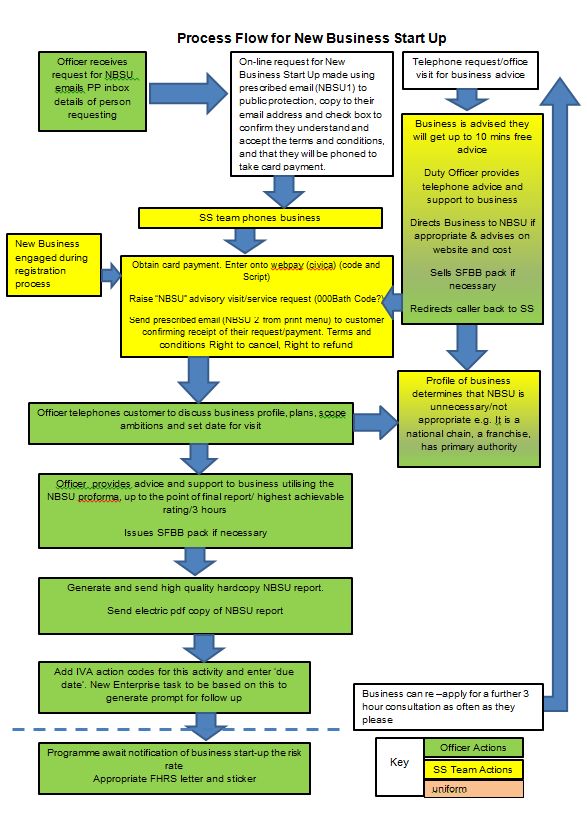
- Production and maintenance of an accessible website ….literature and resources on Health
       Promotion Issues.
   - Deliver “Mission Possible" – A food safety project for year 5 and 6 primary children. Target
       10 local schools, circa 200 pupils.
   - Deliver Child-minder food safety training 3 times in the year.
   - Raise awareness and improve legal compliance in relation to food allergens and food
       sensitivities.

In respect of enforcement, the Service takes the following approach:-

To take consistent and fair enforcement action in line with the staged approach contained within
the Public Protection’s Enforcement Policy

Enforcement policy hyperlink

Demands on the Food Law Enforcement Service.
The Public Protection team maintains a database in respect of Food Safety and Standards. The
database includes a total of food premises + 420farms for which the Council is the Enforcing
Authority. A breakdown of these premises according to the Code of Practice business category is
shown in Table 1.
The number and types of feed premises and their risk rating for food standards are shown at Table
2.

Table 1- Food premises profile

                                                9
Total number of Approved
Nature of Business
Premises
Dairy producer: 5
7 Cold store: 2
Table 2 - Feeding
Stuffs premises profile
Premises type High risk Medium risk
Compound feed 2
manufacturer
Pet food manufacturer 6
Surplus food supplier 21
Transporters 3
Co-product producers 2
Mixers 14
There are currently 2022 registered food businesses in Bath and NE Somerset Council (an
increase of 5.89% over 2015/16, which in turn was a 3.69% over 2014/15). Of these 7 are
approved premises under E.U. 583 approved to trade unrestricted across the European Union and
to which the regulation falls to the Local Authority
There are five hospitals in the area, four of which come under the responsibility of local NHS
Healthcare Trusts and one which is privately run. Each of these hospitals is regarded as High
Risk food premises; a consequence of their vulnerable clients and the catering methods.
In a normal year a range of events are held throughout the year which features a large number
and variety of mobile caterers the majority of which originate from outside the authority. To ensure
visitors are served with safe food all mobile caterers receive an inspection by the Food Safety
Team or the Home Authority for the mobile is contacted to confirm the business is registered and
fully compliant with the law.
The Service also investigates complaints regarding food standards and food hygiene, and
investigates cases and outbreaks of food related illness as notified by medical practitioners and
Public Health England’s Regional Microbiology Network (PHE RMN) – Local Microbiological
Laboratories resulting from their testing activities.
Service Delivery Points
Public Protection recognises that as a front line service, providing our customers with easy access
is an important part of the Service’s customer centred strategy. The number of Service Requests
made of the food team in 2017/18 were 667 compared with 750 in 2016/17
All first time contacts are received by business support staff or by the Council’s Call Centre –
Council Connect based at the Public Protection Offices at Lewis House Manvers Street, Bath, BA1
1JG, in addition the Consumer Direct Call Centre refer a number of complaints through to the
team. They are recorded on the Service Request Database and forwarded to a named officer as
appropriate. The office is open to receive telephone calls between 08:30 – 17:00 Monday to
Friday (16:30 on Fridays).
10Enforcement Policy
The primary function of the Food Service within B&NES is to safeguard public health. It aims to
achieve this through staged, fair, consistent and practical enforcement of Food Safety legislation.
These principles are embedded in the Regulators Compliance Code. The full text can be found at
https://www.gov.uk/government/publications/regulators-code In line with the Compliance Code,
Public Protection Services has developed an enforcement policy, which gives a clear statement of
enforcement action and the appeals procedure. The Enforcement Policy is published on the Bath
& North East Somerset Website, Enforcement policy hyperlink
Enforcement Model
The staged enforcement approach recognises that most “Food Businesses Operators” wish to
comply with the law without unnecessary difficulty or complication and for this reason an
educational approach to routine interventions and addressing non-compliance proves both
effective and efficient. In response to financial pressures on the Local Authority and a further move
towards a business support operating model , on 9th October 2017 a number of commercial
products were launched Amongst these are two consultancy offers. ”The New Business Start Up”
package provides support to new businesses, for a modest fee, and aims to support business to
achieve compliance and a good FHRS score from the outset. It also promotes diversity and
competition amongst food businesses contributing to the local economy. For businesses wishing
to expand, grow or diversify, the service offers the “Gain and Retain 5” package of support.
However, for those businesses that are found to have declining standards, in addition to statutory
notices, an office based “business support remediation” intervention is used as an additional
intermediate informal stage preceding litigation. Owners and managers of a poor business are
invited in to a B&NES office to draw up an action plan to combat non-compliance, re-orientate
management, promote investment and institute proper controls, and thereby avoid costly
prosecution.
11Service Delivery
These projections may be subject to change because of “Regulating Our Future” a fundamental
review of food enforcement currently being conducted by the Food Standards Agency to examine
how effect regulation may be achieve, reducing the burden on the industry and accommodation
the effects of BREXIT.
Annual Work-plan
The annual Work-plans for 2017/18 and 2018/19 are shown as Appendices 3 & 4.
Food Premises Inspections
Public Protection’s food premises database is maintained on a computer software package named
“IDOX UNIform”. For 2018/2019 the number of programmed food hygiene inspections due are
shown in Appendix 3
In addition to the above and based on the figures from preceding years; in 2018/19 we anticipate
around 300 new business premises will need to be rated . These “Unrated” premises which are
newly opened are not part of the rolling food hygiene inspection programme until they have been
inspected and risk rated. Many new businesses open with a willingness to engage with regulators
and for the local independent businesses in this category the “New Business Start-Up” (Hyperlink
Food safety BANES) commercial option may prove attractive. Others are less willing to engage
with the Council and open without prior registration. Local knowledge, vigilance and intelligence
gathering by the food team is essential in order to identify such businesses. All new food
businesses are offered 10 minutes free advice from officers and the opportunity to sign-up for 2
hour of consultancy through the “New Business Start-Up” option. Ensuring hygiene standards are
satisfactory from the outset, may avoid more costly remedial interventions at a later date.
Priority of intervention
12Approved premises and premises within the A, B, and non-compliant C (High risk) categories
include food premises such as food manufacturers, restaurants, take-ways, cafes, public houses
serving meals, nursing and residential care homes, schools, bakeries, butchers, supermarkets,
hospitals, nurseries and mobile caterers. These will be classed as high risk and will be scheduled
for physical inspection during the coming year. New businesses will be also prioritised and
inspected unless the nature of the business is inherently low risk.
The Food Safety team has set a target of 100% for its high risk food safety interventions
programme this year, either as full inspections, focused partial inspections or alternative
interventions. The food safety inspection work-plan for 2018/2020 is shown as Appendix 4. This
work-plan also demonstrates the emphasis placed on business support, especially through our
staged enforcement approach, and priority given to new businesses, and businesses serving
vulnerable groups.
In 2017/18 113 food premises required a follow up visit to check on works necessary to achieve
compliance with food legislation. A reduction of 21% on the 142 re-visits required in 2016/17. It is
predictable that business led demand for revisits will continue to be strong this year as awareness
of the national Food Hygiene Rating System continues to grow and attract attention in the media
and social networks.. It is clear that the introduction of a very visible food hygiene rating window
sticker and awareness of the FHRS Website has created business competition and motivated
drive in business to improve.
Compliant C, D and E risk rated premises, include bed and breakfast hotels, grocers, guest
houses, clubs, garages selling food and other retail outlets such as sweet shops and newsagents,
will be considered “Low Risk” and subject to a range of alternative forms of enforcement
determined and driven by intelligence gathering. Many of these businesses have received
physical inspection in the past and have proven to be of low risk, therefore office interventions
such as telephone surveys or verifying business details may negate the need for physical
inspections if no significant factors have changed. Self-certification, postal questionnaires,
telephone questionnaires and sampling visits might be appropriate to address any of the other
businesses on the categorised as low risk. These are effective interventions from a Public Health
point of view but they do not allow the award of a food hygiene rating. To get a “Food Hygiene
Rating Score” (FHRS) an officer has to cross the threshold of the business.
“Food Hygiene Rating Scheme”
Environmental Health and Food Safety Officers use 8 separate criteria to assess the risk rating of
a food business, the FHRS uses 3 of these to derive the Food Hygiene rating for display.
Ratings are published on the B&NES website www.bathnes.gov.uk/foodhygienerating and the
Food Standards Agency’s website (Hyperlink http://ratings.food.gov.uk/ )
At time of publication (ref date = 2nd July 2018) the Food Hygiene Ratings profile of B&NES
Council was
13FHRS rating Number %
1
0 0.1
1 11 0.8
2 19 1.3
3 104 7.3
4 207 14.4
5 1091 76.1
Businesses who are dissatisfied with their “Food Hygiene Rating Score” (FHRS) have always had
a right of appeal and a right to request a rescoring visit. The FHRS scheme still accommodates
this free of charge but builds in a lengthy period of time before a rescore can take place (free of
charge). The new Code of Practice allows rescoring to be fast-tracked and for a charge to be
levied. Businesses wanting a better score or wanting to be included in the scheme when they are
not an inspection priority for us can now apply and pay £175 for a “Rescoring Visit” (Hyperlink
http://www.bathnes.gov.uk/services/environment/food-safety/food-hygiene-rating-re-scoring)
Partial inspections
14These are appropriate intervention for high risk business if the officer wishes to focus upon
specific aspects of the business having checked that our existing knowledge and satisfaction with
other business activities are confirmed by brief review. Focus on partial inspection are unlikely to
save sufficient time to increase the number of visits an officer can achieve but would allow time to
concentrate on factors within the business which must be addressed. Partial Inspections may be
used by officers to check that previously compliant businesses are maintaining their standards and
can remain in or low priority list
Service requests
Service requests are prioritised as important and urgent and passed without delay to the Food
Team Duty Officer:
Service requests received 2017/18
Service request type Number
Hygiene Advice 176
Hygiene 145
Food related illness 96
New premises advice 76
Miscellaneous Food Complaint 36
Freedom of Information Act 34
Primary Authority activity 18
Special Events 17
Extraneous matter (foreign body) 16
Food hygiene rating activity 11
Hygiene-conditions of premises/equipment 10
Allergy advice 5
Hygiene - handling procedures 5
Smoke Free enquiry 4
Hygiene - other 4
Accumulations 3
Registration 3
Out of condition 2
Land Charge (Food Team) 1
Odour/Fumes 1
Out of date 1
Food alerts 1
Eat Out Eat Well activity 1
Composition 1
Commercial Activity
On 9th October 2017 the Food safety team launched a number of commercial activities aimed at
complementing our enforcement activity and raising income.
All are accessible from the newly designed web site:
http://www.bathnes.gov.uk/services/environment/food-safety
15The products offered are:
New Business Start Up
Gain and Retain 5
Re-scoring FHRS
Primary Authority Partnerships
On-line and Face-to-Face Training
Supply of “Safer Food Better Business” Packs and Diary Refills
The process flows for delivery of these are contained in Appendix 7
Vulnerable Groups
It is a priority that food safety in primary schools and residential homes is delivered to the highest
possible standard. in the past this was delivered a through a partnership with B&NES catering
services and Sirona, which offered ease and consistency in achieving this aim.
However the Authority has witnessed a change, with many of the Primary Schools now opting to
become academies and so ending their relationship with B&NES catering services. The team will
strive to form new partnerships with provider organisations and the establishments themselves
who cater for the young and elderly.
Food Safety Officers have worked with Early Years to introduce food safety workshops into the
induction training for new child-minders. This enables the food team to engage with up to 20 child-
minders per induction session which take place in various locations across the Authority about 3
times a year. The sessions have been so successful that Early Years have decided to designate a
whole session specifically to the food team rather than sharing a session.
Food Standards Inspection Programme
To align with the Council’s Strategic Priorities our work programme, enforcement approach and
operational ethic all focus upon our customers and prioritise: businesses serving vulnerable
groups, and supporting local businesses to succeed and achieve compliance
All premises identified as having a food standards elements are individually risk assessed using
Local Government Regulation, formally “LACORS” (Local Authority Co-ordinating Body on
Regulatory Services), guidelines and are identified as being either High, Medium or Low risk. The
numbers below are based on this current system. Low risk premises are not considered a priority.
The programmed work for 2018/19 is as follows:
Food Standards visits due in 2018/19 and the inspection
targets
Risk Due 2018/19
High 28
Medium 569
Low 1004
.Feeding Stuffs Premises Inspection Programme
16All premises identified as having an animal feeding stuff element are individually risk assessed
using the LACORS guidelines and are graded as either High, Medium or Low risk. The numbers
below are based on this current system. Unfortunately our current risking scheme does not take
into account earned recognition status which is for farms and businesses that are farm assurance
scheme members or have a previous history of very high compliance. These businesses will not
need to be visited as frequently as currently undertaken. There are 253 feed registered premises
currently and a 5 year plan is in place to ensure all farms are registered accurately and we will visit
a selection of these unregistered premises as part of our work. There has been a change in the
allocation of funding this year and the FSA are only providing funding for 9 feed visits in 2018/9
and for 7 food hygiene visits at primary production premises. There are 14 other livestock farms
that are due a feed visit and this work will be undertaken at the same time as any animal health
visit, if one is due.
The programmed work for 2018/2019 is as follows:
Animal Feeding Stuff visits funded by the FSA in
2018/19
Risk Due
High 1
Medium 8
Low -
Food Complaints (Foreign Bodies and Microbiological)
The food safety team operates a complaints procedure which was developed with the intention of
directing resources to those complaints which, after an initial assessment of the complaint, pose a
significant Public Health Risk, e.g. glass fragments/metal swarf in food and suspected food
poisoning associated with consumption of food. On the other hand where it is clear there are no
public health concerns, e.g. the presence of psocids in flour, struvite crystals in tinned salmon, salt
crystals in soy sauce, cod worms etc, which are naturally associated with the food product, then
no investigation is required and customers are provided with relevant advice and information.
Where a food complaint is considered to be of low health significance such as in the case of an
innocuous foreign object, or where it is immediately obvious that a foreign object may have found
its way into the food after sale and where there is no prospect of proving the case, the customer is
advised that formal action is unlikely to succeed and that they may receive a quicker and more
effective response by returning the item to the shop where it was purchased.
In 2017/18 the Food Safety Team investigated 152 food complaints.
In addition, the Food Safety Team have dealt with 612 other requests for service relating to food
premises, which included complaints concerning food preparation, cleanliness food handlers etc
Food Complaints (Food Standards issues)
Last year the Trading Standards Team received 12 Food Standards complaints (excluding
requests for guidance from businesses). We can expect to receive approximately the same
amount, which require investigation in accordance with our quality procedures. It is unknown how
17many will result in enforcement action. 2 feeding stuffs complaints were investigated in 2017/18
and it is anticipated to receive the same approximate amount this year.
Primary Authority
The Primary Authority Scheme has been operation since April 2009. It allows an enforcement
authority to enter a legal partnership with a business, charity or other organisation. The Authority
scrutinise the processes and procedures applied by the company to achieve its legal obligations in
respect of the laws regulated by Local Authorities and offers assured advice which must be taken
into account by other LAs, reducing duplication of effort and ensuring consistency. Such a
business can nominate a local authority to be its Primary Authority. This does not need to be the
local authority in which it is based. A nominated authority does not need to accept the role.
The role of the Primary Authority is to be the principal source of advice and guidance to the
business. In addition it, to an extent, co-ordinates and oversees enforcement action (including
inspections) carried out by other Authorities. This is in part carried out via the Regulatory Delivery
secure website.
B&NES is currently primary authority for the “Jamie’s Italian” Group, Super Nutrients and Buckley
and Beale. B&NES remains receptive to requests to consider a Primary Authority Partnership.
Such arrangements generate income proportionate to the work activity and pay dividends in
supporting expertise and staff development, but setting up such partnerships has a significant
impact upon staffing resources and introduces a contractual obligation to deliver a service which
may compete with other high priority areas for resources.
Super Nutrients
Nutrisure, trading as Super Nutrients is one of the UK and Europe’s leading importers and
wholesalers of super food ingredients and is also one of the fastest growing new Companies in the
South West. They supply a wide variety of businesses within the health food sector including
major high street chains. Their own brand Naturya has quickly become a market leader in the
superfood industry. They source product from around the world and have customers throughout
the EU and beyond. Through the Primary Authority scheme we provide support in Food Safety
and Trading Standards. Because of the unusual nature of the product range we deal with many
requests for advice, most of which require additional research and liaison with other agencies.
Jamie Oliver Restaurant Group
The Jamie Oliver Restaurant Group is a growing enterprise employing over 3500 people and has
around 30 restaurants in the UK made up of the brands including Fifteen, Barbecoa, Jamie’s
Italian, Jamie’s Italian Trattoria and Jamie’s Diner and more than 20 franchised restaurant s
overseas. Whilst the Food Safety and Standards advice we provide through the Primary Authority
Scheme relates to restaurants in England and Wales only the Company use this advice to inform
the policies in all their restaurants around the globe to achieve consistently high standards. As the
group bears the name of a celebrity it attracts a great deal of media attention some negative and
generates a large number of requests for advice ranging from liaison with other Local Authorities
to novel cooking methods.
Buckley and Beale
Are a small company that import high end products from around the world, in particular the USA
for sale in stores such as Marks and Spencer, Fortnum and Mason and Harrods. The work is for
food standards and mainly concerns labelling or composition issues.
Advice to Businesses
18The Food Team receive enquiries from food business proprietors, both potential and existing, to
provide information on food safety/standards matters. Last year (2015/16 the Food Safety Team
undertook 234 advice activities and the Trading Standards Team 41. In addition 6 new businesses
were advised on feeding stuffs.
Food Allergies
Following the tragic death of Chloe Gilbert in March 2017 a robust food enforcement approach has
been adopted in respect of the recent legislation. This approach will be delivered consistently by
all food offices and has 6 areas of activity
1. Investigate and apply appropriately staged enforcement to all allegations of allergic
response to food and cases of non-compliance discovered during routine interventions
including legal notices and potential prosecution
2. A 754 allergen newsletter-mailshot to selected businesses to highlight the legal
requirements on them
3. Follow up survey of all those businesses with a low confidence in management score to
check on compliance
4. Create a webpage containing allergen information and include a link to this website in all
correspondence to food businesses
5. Revise the allergen compliance checks performed during every Food Hygiene Inspection.
6. Labelling and constituent sampling surveys by Trading Standards Officers
Food and Feeding Stuffs Inspection and Sampling
a) The Authority routinely submits samples to the Public and Agricultural Analyst as a
consequence of sampling programmes and complaints. During 2017/8 67 samples were submitted
for analysis (approximately half of these were swabs used to ascertain levels of contamination in
the workplace)..
There are no programmed sampling surveys for 2018/19 as the FSA funding has been withdrawn.
However samples will be taken focusing on allergen issues at restaurants, pubs and takeaways.
We may also sample some “superfood” type products with health and nutrition claims.
No feed samples are programmed for 2018/19.
b) For food safety, the Authority submits samples, as a result of complaints, to either the PHE
RMN (Public Health England Regional Microbiological Network) or to the Public Analyst. Last year
8 food samples were submitted to the HPA RMN for microbiological analysis. Most of these food
samples were submitted for analysis as a result of complaints of food-borne illness.
Control and Investigation of Outbreaks and Food Related Infectious Disease
The Authority recognises the importance of notifications of food related illness as a potential
means of identifying instances where food which is contaminated has been consumed, enabling
appropriate action to be taken. However, it is acknowledged that in practice, the delay between
the onset of illness and notification to the Authority is a significant factor that undermines the
significance and effectiveness of investigation. Nevertheless the Service will investigate incidents
and outbreaks of food related illness where it is likely to lead to a meaningful conclusion, with
some public health benefit.
19Notifications of food related illness
Total Notified Full Investigation
YEAR
Cases Required
2007/08 181 33
2008/09 295 89
2009/10 305 63
2010/11 311 56
2011/12 330 66
2012/13 358 63
2013/14 297 27
2014/15 300 38
2015/16 333 38
2016/17 291 48
2017/18 302 43
B&NES maintains a close liaison with the Public Health England (PHE). Where an outbreak
situation develops the “Outbreak Control Plan” developed jointly by the Authority and the Health
Authority is put into action and overseen by the Area Consultant in Communicable Disease
Control (CCDC). The team offer support and guidance to the families affected to ensure there is
no further spread into the community or within the family home. Where the infection poses a
significant risk, detailed investigations are undertaken in association with the PHE to identify any
possible sources of infection and where necessary ensure those infected do not pose a risk to
others.
The Priorities in Infectious Disease Control:
1. To protect any likely victims by contacting them without delay to warn them of potential
harm and empower them to avoid the worst effects.
2. To prevent spread locally and nationally by investigating the likely source mitigating it and
tracing its dissemination.
3. To secure evidence and prosecute where possible.
20The tables below gives details of food related illness notifications in recent years in terms of total
numbers and broken down into types of infection
Food Safety Incidents
The Authority recognises its role in responding appropriately to Food Alerts issued by the Food
Standards Agency and those incidents in B&NES that require action in line with the authorities
enforcement responsibilities are notified in an appropriate manner. The team have a dedicated
mailbox to receive Food Alerts and other emergency communications from the Food Standards
Agency.
A documented procedure is in place, which relates specifically to Food Alerts and last year
B&NES received 19 of these, 3 of which required action to be taken.
Liaison with other organisations
The Public Protection Team has arrangements in place to ensure action taken in the B&NES area
is consistent with those of neighbouring Local Authorities and that the Team is up to date on
current information and initiatives, including:-
a) Liaising with and assisting the Food Standards Agency, DEFRA and other government
departments.
b) Attending Food Standards Agency briefings and update seminars.
c) Attending Chartered Institute of Environmental Health approved training courses
d) Attending professional and core competency training events, seminars and other relevant
professional meetings.
e) Participation in Trading Standards South West (TSSW) and South West Regulators Forum (
SWERF) organised training.
f) Inter-authority audits and drafting of new joint procedures with those Authorities
g) Regular liaison and partnership working with representatives from the Health Protection
Agency and the office of the Director of Public Health
Formal and informal arrangements with other key service providers within the authority
including the Licensing team, Planning and BC Services, in relation to change of use of
premises and structural alterations; and Ofsted and the Care Quality Commission (CQC) for
information exchange relating to Residential Care Homes, Nursing Homes, Nurseries and
Child-minders; Catering Services in relation to food safety issues in premises under their
control. All of these help to maintain an effective up-to-date database and add to the
intelligence used in setting priorities and informing activities.
The Service also acts as an advisor to other Services within the Council on all matters relating to
food safety.
Reducing the Risk of Escherichia coli Infections
In March 2009 the Report of the Public Inquiry into the 2005 outbreak of E.coli 0157 food
poisoning in South Wales was published (known as the Pennington Report).
157 children were ill and one child died as a result of this outbreak which was linked to a butcher
supplying meat for school meals. Criticism and recommendations regarding food safety practices,
food hygiene inspections, procurement and other key issues were contained in the report. Some
points were aimed at the business but others required action by the Food Standards Agency and
Local Authorities.
21The subsequent inquest into the tragic death of Mason Jones led to further guidance for all
businesses dealing with raw and cooked foods on the same premises being issued. For many
businesses in this sector the new guidance will require considerable adjustment of practices and
expense. This E.coli guidance is being constantly updated making advice to businesses more
demanding and inspections more complex.
Food Safety and Standards Promotion
B&NES view awareness raising, transparency of enforcement activity, the provision of information
and guidance to customers, be they local business or member of the public, as a priority. The
resource of the Food Team is of course finite and although there is ambition to complete the
series of projects listed in Appendix 4 this aspiration may be compromised by the conflicting
demands of the prioritised programme of inspections and the reactive workload,. Equally some of
the projects have temporal criteria and may fit with periods of lower reactive demand allowing
them to leapfrog projects of potentially greater importance.
Resources
Staff Development
Training needs are identified in a number of ways. B&NES recognise the need to support
professional officers achieve their continuous professional development (CPD) quota. It is also
important in the annual appraisals to understand the personal development requirements of
individual officers. To identify the needs of the service a training matrix has been developed
(Appendix 7), these 3 factors together with the training which is put on locally and nationally in
response to emerging issues forms the basis for a programme of training for the team in the
coming year.
Regular documented 1-1s are held with all staff. Each officer receives training in food related
matters of at least 10 hours per year, in order to fulfil the Continuous Professional Development
(CPD) requirement set out in the Code of Practice. Additional CPD may be required to fulfil
professional competencies (20 or 30 hrs pa) internal training and updates are also provided as
and when required. All such training is monitored and logged in individual Staff records. The
revised Food Law Code of Practice requires Enforcing Authority to have a system in place to
certify the competence of their Officers and that the Authorisation of those Officers is linked to
competence.
Professional Development
Public Protection services have a history of supporting students who are in the early stages of
their career. In 2017/18 PP was able to offer an internship partly funded by PHE for an
Environmental Health Graduate, who was able to contribute to the Food Teams output as well as
gain work experience and build their Professional Portfolio in all aspects of Environmental Health.
.As the post not only benefits the new officer, it also makes a notable contribution to team output.
No such funding will be available for 2018/19 so the service will revert to offering year long part-
time work experience to support a graduate EHO through their Professional Portfolio
Quality assessment
22TSSW has a three year inter-authority audit programme incorporating all of the enforcement
authorities in the South West of England. A full audit of B&NES food standards and safety system
following the FSA protocols was completed in January 2012,
FSA auditors visited B&NES in May 2013 to follow up a Standards audit from 2007. The action
plan from this was signed off after completion of the Inter Authority Audit Action Plan
An internal Audit of the Food Safety Service, and subsequent improvements was performed in
2015
Monitoring
Monitoring of the work plan outlined in Appendix 4 and team performance is carried out on a
monthly basis and reported back to the team meetings and individual 1-1 interviews.
Consistency
Consistency of enforcement is achieved through:
• Training, which is reviewed through the PDR and 1;1 processes with the aid of the training
matrix .(Appendix 7) which highlights the team’s training requirements
• Regular monthly team meetings, where judgements and new guidance is fully discussed.
• Staged enforcement, the integrated team approach to escalating enforcement actions
means senior and principal EHO’s become involved in cases as they reach higher levels of
enforcement action; for instance, outbreaks, service of notice, business support meetings,
and court proceedings. All of these require review of preceding actions which promotes
and ensures greater consistency of approach.
Equalities
BANES Council as attained “Level Three, Achieving Council” status with regard to equalities, and
Public Protection services are at the forefront of this initiative.
Food Hygiene & Standards Enforcement
Admin
(FTE) (FTE)
EHO/Food Hygiene Enforcement (FTE) 4.1 0.50
Food Standards Enforcement 1 0.50
Management (Safety and Standards) 0.05 0.1
There are 5 Environmental Health Officers (3.5 full time equivalent FTE) who are Environmental
Health Officers Registration Board registered, and 0.6 FTE working towards registration.
There are 4 Trading Standards Officers ( 3.3 FTE ) all of whom are appropriately qualified to
carry out Food Standards Inspections providing the 1 FTE resources expended.
Public Protection Services has 1.5 FTE administrators dedicated to the Health & Safety, Food
Safety and Trading Standards teams. Approximately 1.0 FTE is expended on food related issues.
23The Team Manager -Safety and Standards is accountable to the Group Manager of Building
Control and Public Protection for the implementation of the Food Law Enforcement Service Plan.
For the purpose of the Food Law Code of Practice:
Kelvin Pearce Team Leader Health, Safety and Food 012250396348
kelvin_pearce@bathnes.gov.uk is designated lead officer for Food Safety.
Stuart Brown - Team Leader for Trading Standards 01225 396752 stuart_brown@bathnes.gov.uk
is designated lead officer for Food Standards
Feeding Stuffs Enforcement
The Animal Feeding Stuffs service is currently provided by a group consisting of 1 appropriately
trained Officer from The Trading Standards Service who provide the 0.2 FTE resource
requirements of the inspectional/sampling programme
Review against the Service Plan
Twice yearly the Public Protection Management Team will meet to discuss its overall business
planning strategy and review the delivery plans (annual and half year review). Details of the
planned regulatory programme for food safety are contained in the Food Team Work Plan
Appendix 3. A redacted Appendix 2 describes the team’s proactive and reactive outputs of
2017/18
Areas of Improvement and Challenges
Objectives for 2018/20:-
• Pursue the programme of work outlined in appendix 4 with particular emphasis on reducing
the overdue low risk programme of inspections and increasing commercial activity
• Work with colleagues from neighbouring authorities involved in the devolution process –
with particular reference to the Better Business for All initiative
• Strengthen our joined our response to Infectious Disease Control with Public Health
England and Public Health partners
• Address any competency shortfall highlighted in training matrix
24Appendix 1: Organisational Chart B&NES Building Control and Public Protection Service
2526
Appendix 2 Food Safety Team Work Plan 2017/2018

                                                  27
Appendix 3 Food Safety Team Programmed Work 2017/2018
28Appendix 4 Food Safety Team Project Work 2016/2017
Council
Priority – Public
Lead
PROJECTS 2016/17 Outline & Rationale Targets is this Health
Officer/s
still Priority
current?
Model of Enforcement
Switch from the "Business
Support Model of Stage 1 Providing timely and accessible advice to New Businesses with 10 minute
Redesign to ensure On-line registration process is reliable,
Enforcement" to the free telephone advice and a comprehensive web site. As getting things right from
efficient and engages the business in a process which will
promotion of commercial the start is more economic and efficient for everyone, then corrective action later.
deliver compliance in the most expedient, most
packages supporting New businesses are offered “New Business Start Up” Building a positive
appropriate and most economical way possible for the type
Businesses through start relationship with businesses aides sustained compliance and promotes stage 2
of business concerned. New on-line registration process,
up, growth or transformation business support KP
new webpages, comprehensive library of support
providing comprehensive B&NES 1
information and a new method of prioritising and
advice to ambitious Stage2 “The Gain and Retain 5” process is designed to B&NES 2
processing New Registrations. T1
businesses in an support businesses through growth or transformation (preserving/increasing local B&NES 3
appropriate and timely employment) B&NES 4
75% of Businesses going into “Business Support
fashion All
Remediation” improve their FHRS score over the
Stage3 - Addressing failing “0” & "1” rated premises. Any business which is zero
subsequent two inspections, achieving sustained
rated or one rated under the Food Hygiene Rating Scheme should either be in
compliance
–retaining the Business “business remediation” with set targets for improvement, be subject to hygiene
Support remediation improvement/prohibition Notices, or be under consideration for prosecution. In the
See comment below
process for addressing current economic climate it can be expected that more businesses will fall into this
failing premises category, with the consequent drain on resources. Prosecutions being particularly
expensive in officer time
On 9th October 2017 the Food safety team launched a number of commercial
activities aimed at complementing our enforcement activity and raising income.
All are accessible from the newly designed web site:
Savings target apportioned to team £10,000 by April 2019
http://www.bathnes.gov.uk/services/environment/food-safety
TBD regarding target figures for commercial products
The products offered are: Note Whole team delivery and a conflict of priority with
B&NES 1
New Business Start Up delivering programmed interventions therefore whole team
Promote the sale of B&NES 2
Gain and Retain 5 targets need to be developed not individual sales, and a T1
commercial services B&NE.S 3
Re-soring FHRS complex indicator for individuals which encourages
B&NES 4
Primary Authority Partnerships proportional and appropriately prioritised activity in both
On-line and Face-to-Face Training commercial work, reactive work High risk and low risk
Supply of “Safer Food Better Business” Packs and Diary Refills establishments
Details are available on the web site
The process flows for delivery of these are contained in Appendix 7
The team will pursue the programme of Inspections as determined by the risk
ratings conducted in line the the Food Law code of Practice.
The risk rated Programme B&NES 1
of Food Hygiene B&NES 2
They will prioritise A B and C rated premises See comment above T1
Inspections. B&NES 3
B&NES 4
In a departure from past practice New businesses will not be prioritised will be
given 10 minute free consultation and advice before being encouraged to sign up
29for the “New Business Start Up” package of support.
(see appendix 7)
TBD
Over the last 7 year a backlog of overdue low risk interventions has accumulated.
Low Risk businesses being hose businesses which do not deal in high risk foods or To January 2018:
processes and businesses which in the past have proven themselves to be well
managed conscientious and hygienic. Of course over time things change, 374 inspections
performance fluctuates and businesses diversify. Intelligence of those businesses Data cleansing 230
on the low risk list has become so dated as to have become a concern so in 2017. Telephone surveys to date 120
15% increase in productivity or in-house team since launch
Elements of a strategy were drawn into an initial action plan to address the of commercial products on 9th October 2017
overdue inspections (that is the Risk rated proactive inspection list not the FHRS Contract Food Inspector and contract administrator
list they are two different but inter-related problems which may have significant deployed
impact on marketing, demand and income|):
1. Talk to team about the issue
2. Revise Enterprise work management desktop to prioritise Low C Consultant target 88 interventions by 31st March 2018
premises over New Business
3. Discuss new priorities with officers in PDRs and incorporate into Service
Delivery Plan Audit Table submitted Jan 2018 (Updated April 2018)
4. Analyst low Risk lists Divide by premises type.
5. Develop tailored telephone survey forms for E rated premises ,with main
aims - confirm existence, check status is unchanged, notify them of
FHRS status, record alternative intervention and allow reprogrammed
event/close premises/escalate to officer action or review/sell commercial
product. Direct to website for information/training/commercial services
B&NES 1
Childminders – 67 Phone check Still operational No change from self- KP
Addressing the backlog of • B&NES 2
Overdue low risk assessment held on record (Registrations come from OFSTED via B&NES 3 T1
interventions Children’s Services (who also notify us about CMs when they cease B&NES 4
trading!) Kellie registers them and sends out a SE questionnaire) Projected table2018/20
• Bed & Breakfast – 27 Number of food hygiene
• Home Caterers – 47
• Nursery/playgroup/after school club Count - 51
interventions projected for
• Social Clubs and Halls -69 2018/19 by risk band ( including
• Pub (Wet sales) - 15 likely overdue from this year)
• Other food retailer – 74 from Argos to Boots the Chemist and Cath
Kitson A 6 (6+0 overdue)
• 350 of 552 E’s B 50 (50+0 overdue)
6. Schools - require special attention with movement away from catering
services
C 242 (154+ 98 overdue)
7. PAs with inspection plans affecting our overdue inspections D 408(193+215 overdue)
8. Butchers - require special attention
9. Officers to assess telephone questionnaires were complexity involved
E 392 (145+ 347 overdue)
(need to react to information gained and sell our paid for service)) Unrated 296 (inc. 77 overdue)
10. New Business Telephone Triage to assess need for visit (and sell
commercial product)
Outside the Programme 7
11. Alternative to telephone call – send self-assessment forms and chase, Total 1401 (664 + 737 overdue low risk)
officer to review completed forms and action to promote compliance,
notify them of FHRS status training advice on allergens FHRS and
commercial products In 2018/19 additional resource will be directed from wider
12. Summary emails have to direct client to website for training, SFBB, team to address the large number of (overdue) E rated
Commercial products and allergens. Notifies them that an intervention premises. This is likely create demand for commercial
was due, that this type of intervention falls outside the scope of FHRS, produces
30You can also read


