QUALITY ASSURANCE St. Nicholas Montessori College Ireland - ST Nicholas Montessori
←
→
Page content transcription
If your browser does not render page correctly, please read the page content below
SNMCI QUALITY ASSURANCE

                      QUALITY ASSURANCE

St. Nicholas Montessori College Ireland
               (SNMCI)
Document Title         SNMCI Quality Assurance Manual
Purpose                Reference for principles, guidelines, policies, procedures and practices
                       upon which SNMCI QA mechanisms are based.
Approved by            Academic Board
Approval date          Sep 2019
Effective from         Sep 2019
Version                For re-engagement with QQI Oct 2019
Review date            On-going
Update 1:              August 2020: Blended Learning updates
Update 2:

Web:   www.smsi.ie

Email: info@smsi.ie

                                                                                                  0
SNMCI QUALITY ASSURANCE

Table of Contents
Section One:
1.      INTRODUCTION ............................................................................................................................... 3
     1.1        Legal Status ............................................................................................................................. 3
     1.2        History of the College.............................................................................................................. 3
     1.3        Vision, Mission and Values...................................................................................................... 4
     1.4        Strategic Plan .......................................................................................................................... 4
     1.5        Current Accreditation ............................................................................................................. 5
     1.6        Protection of Enrolled Learners (PEL) ..................................................................................... 6
2. BLENDED LEARNING AT SNMCI .......................................................................................................... 7
     2.1 Organisational Context ................................................................................................................. 7
     2.2 Programme Context .................................................................................................................... 10
     2.3 Learner Context: ......................................................................................................................... 13
3. GOVERNANCE AND MANAGEMENT OF QUALITY ............................................................................ 15
     3.1 Governance Infrastructure.......................................................................................................... 16
     3.2 Separation of Academic and Commercial Agendas .................................................................... 30
     3.3 Governance and Quality Management ....................................................................................... 30
4. MANAGEMENT OF INSTITUTIONAL RISK .......................................................................................... 32
     4.1 Policy Statement on Risk Management ...................................................................................... 32
     4.2 Risk Register ................................................................................................................................ 32
     4.3 Risk Mitigation ............................................................................................................................ 33
5. EMBEDDING A QUALITY CULTURE .................................................................................................... 34
     5.1 Institutional and national context............................................................................................... 34
     5.2 Internal dynamic process and constant improvement ............................................................... 34
     5.3 National Statutory Guidelines ..................................................................................................... 34
     5.3 European Standards and Guidelines ........................................................................................... 36
     ay 2015, 2015, p.5)............................................................................................................................ 36
     5.4 Principles of Quality Assurance and the Learner Journey .......................................................... 39

Section Two:
1. INTRODUCTION ................................................................................................................................. 42
2. DOCUMENTED APPROACH TO QUALITY ASSURANCE ...................................................................... 42
     2.1 Scope of Quality Assurance......................................................................................................... 45
     2.2 Formulation, Issuance and Enhancement of College Policies..................................................... 47

                                                                                                                                                          1
SNMCI QUALITY ASSURANCE
3. PROGRAMMES OF EDUCATION AND TRAINING ............................................................................... 52
4. STAFF RECRUITMENT, MANAGEMENT AND DEVELOPMENT ........................................................... 56
5. TEACHING AND LEARNING ................................................................................................................ 59
SNMCI TEACHING, LEARNING AND ASSESSMENT STRATEGY ........................................................... 63
6. ASSESSMENT OF LEARNERS .............................................................................................................. 64
7. SUPPORT FOR LEARNERS .................................................................................................................. 67
8. INFORMATION AND DATA MANAGEMENT ...................................................................................... 72
Data Storage...................................................................................................................................... 74
Retention of Data .............................................................................................................................. 74
Disclosure of Data ............................................................................................................................. 74
Disposal of Data ................................................................................................................................ 74
9. PUBLIC INFORMATION AND COMMUNICATION............................................................................... 78
10. OTHER PARTIES INVOLVED IN EDUCATION AND TRAINING ........................................................... 79
11. SELF-EVALUATION, MONITORING AND REVIEW ............................................................................ 80
FIGURES
Figure 1: College Timeline ...................................................................................................................... 3
Figure 2: Overview of Governance Structure ...................................................................................... 15
Figure 3: Roles and Responsibilities……………………………………………………………………………………………..28
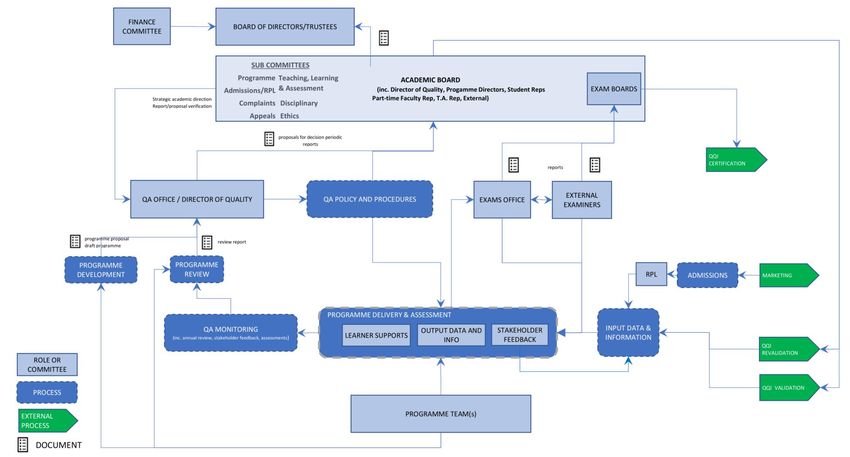
Figure 4: Interaction of Governance, Quality Assurance and Operations…………………………………
Error! Bookmark not defined.
Figure 5: Learner Journey..................................................................................................................... 41
2SNMCI QUALITY ASSURANCE
Section One:
1. INTRODUCTION
1.1 Legal Status
St. Nicholas Montessori College of Ireland (SNMCI) is a Company Limited by Guarantee (CLG)
first incorporated in 1978, with Company Registration Number 64259
SNMCI is also a registered charity and operates on a not-for-profit basis under Charity
Regulators Number 6193.
1.2 History of the College
SNMCI is based in Dún Laoghaire, Co. Dublin. The college is one of the three ‘pillars’ of St
Nicholas Montessori Society Ireland (SMSI), the other pillars representing St Nicholas
Montessori Schools and St Nicholas Montessori Ireland’s Teachers’ Association. The Society
has been providing Montessori education and training since 10th May 1970 when the first
committee of the St Nicholas Montessori Society of Ireland (SNMSI) was convened.
The summary timeline below describes major events in the history of the College. Alongside
these developments the original SMSI School also flourished. Now that school, and a second
SMSI school (SMSI Merrion) provide exemplars Montessori learning environment for our
student teachers while educating 150+ pupils aged 3 to 12.
Figure 1: College Timeline
1970 1997 2014
SNMSI First degree Expansion to
established programmes Cork
1994 2005 2019
NCEA Awards Montessori
designated placed on the Centre of
College NFQ Excellence
established
3SNMCI QUALITY ASSURANCE
1.3 Vision, Mission and Values
Our vision is to bring excellence in Montessori education to the broader education
landscape so that all young people are placed at the heart of their own educational
experience and empowered to be independent, confident and creative lifelong learners.
We strive to achieve our vision through our Centre of Excellence in Montessori Education in
which:
We provide outstanding learning experiences, guided by the philosophy of Dr Maria
Montessori, which meet the developmental needs of every individual.
We prepare and develop Montessori educators who are able to leverage the full
value of Montessori philosophy to support and nurture all learners to grow and
develop as valuable contributing members of society.
We advocate for the Montessori Method by supporting Montessori professionals to
continually improve and reflect upon their practice, and by supporting the
integration of Montessori philosophy into national education systems.
As we implement our mission, our actions and behaviours are guided by our core values:
Respect for the whole person – we value the full diversity of strengths of the whole
person and we seek to nourish the development of social, emotional, behavioural,
spiritual and cognitive excellence in all learners
Freedom – we believe in and value freedom of choice and independence in learning
and in life and we seek to design personal choice and responsibility into everything
that we do
Inclusion and diversity – we believe that every learner should have access to high
quality learning, and we seek to provide that opportunity to all learners regardless of
race, religion, ability, location, or socioeconomic status
Social Impact – we believe in the transformative power of the Montessori Method
and we seek to harness that power to make a positive impact on our learners, our
staff, local, national and international communities
1.4 Strategic Plan
2018 saw the ‘rebranding’ of St Nicholas Montessori Ireland and as part of the strategic plan
Society 2025. This strategic plan supports the spirit of unity between the schools, the
College and the teachers’ association, all operating under the umbrella of St Nicholas
Montessori Society of Ireland (SMSI). The College is committed not only to the development
of new programmes but also to adaptation of delivery and flexibility of provision. The
expansion of the schoolS enhances and showcases the work of the College, and the
Teachers Association supports alumni and forges links with the wider community.
4SNMCI QUALITY ASSURANCE
1.4.1 SNMCI as the Centre of Excellence in Montessori Education
To realise our vision of bringing the benefits of Montessori education to the broader
education landscape to empower lifelong learners, we are establishing a national Centre of
Excellence in Montessori Education which will:
Build on SMSI’s academic expertise in the development and delivery of Montessori
education throughout the continuum of education
Provide access to exemplars of Montessori best practice from birth to 12
Be a recognised centre for research, promotion, and sharing of best practice in
Montessori education, philosophy and practice
Facilitate access to high quality Montessori education, training and continuing
professional development on a nationwide and international basis, leveraging the
full benefits of educational technologies to achieve this.
Partner and collaborate with early years, Montessori and primary education
providers to support them, as they seek to leverage the proven value of Montessori
education in improving learning and social outcomes
Support government agencies, early years and primary organisations, the NCCA, the
Teaching Council and other stakeholders as they continue their journey of
integrating Montessori philosophy into national curricula
Facilitate access to Montessori education to disadvantaged and minority groups
through the provision of bursaries and other modes of access
Reach out to the wider community and support the introduction of Montessori
philosophy to areas outside of traditional education settings
1.5 Current Accreditation
SNMCI is a provider of programmes leading to QQI awards. The College provides the following
programmes:-
No. Programme Title Level/Type Status
1. BA in Montessori Education 7/Major Running with final cohort.
2. BA (Hons) in Montessori Education 8/Major One Year Full and Part Time
Progression from Level 7
3. Higher Diploma in Arts in Early Years 8/Major Programme for graduates of any
Montessori Education discipline who wish to follow a
career in Montessori ECEC.
4. B. Ed. (Hons) Montessori Education 8/Major First cohort Sep2019
5. B. Ed. Montessori Education 7/Major First cohort Sep2019
6. Montessori Education for Dementia 6/SPA Validated June 2020
First cohort Oct 2020
7. BA(Hons) Psychology 8/Major Validated June 2020
First cohort 2021
8. Certificate in Special Education Micro Validated
Credential Dec 2020
5SNMCI QUALITY ASSURANCE
1.6 Protection of Enrolled Learners (PEL)
SNMCI is a founding member of the Higher Education Colleges Association (HECA). HECA
offers the HECA PEL scheme which provides member organisations with two levels of
protection for enrolled learners:
Academic Bonding – SNMCI is bonded by the National College of Ireland (NCI) and
the Irish College of Humanities & Applied Sciences (ICHAS) such that these Colleges
have agreed to provide SNCMI programmes to SNCMI learners in the event that
SNMCI is unable to do so itself.
Financial Bonding – SNCMI pays an annual levy to the PEL scheme to support a sink
fund that HECA PEL members can access to resource the delivery of programmes in
the event that academic bonding is activated.
6SNMCI QUALITY ASSURANCE
2. BLENDED LEARNING AT SNMCI
The College was granted Blended Learning Status in October 2020 and has made
considerable advances in blended learning, with major investment in resources; human and
technological. These advances are on-going, as College programmes continue to be adapted
and written for the blended learning environment.
The College’s Blended Learning Strategy recognises the far-reaching impact of the
introduction of blended learning on all areas of College activity. The College has addressed
and is continuing to address the use of appropriate systems, infrastructure, pedagogic
supports and resources with reference to QQI’s 2018 Topic Specific Statutory Quality
Assurance Guidelines for Blended Learning which identifies three broad contexts which
inform and frame the development and implementation of a Blended Learning strategy:
- Organisational Context
- Programme Context including Development and Assessment
- Learner Experience Context
2.1 Organisational Context
The organisational context includes institution wide areas of infrastructure, resources, staff
qualifications and training. Blended learning has been a strategic consideration for SNMCI
since 2018 and in the time that has elapsed since, the context of the organisation has
evolved to one which is now well placed to begin the transition to a fully blended learning
institution.
This developing context has been driven by leadership which has been fully transparent
regarding how Blended Learning fits with the vision and mission of the College. The
inclusion of Blended Learning as a core element of that mission has been robustly supported
at Board level by a commitment to provide the financial resources needed to realise quality
blended learning delivery.
For blended learning to become fully embedded as a mode of delivery it is crucial that both
staff and learners feel confident that there is a long term institutional commitment to the
resourcing of the required transitions. SNMCI is now in a position to provide that
confidence.
2.1.1 Learning Technology Resources
- The College has chosen Moodle as the main Learning Management System (LMS)
and Zoom for virtual classrooms.
- Further development of the College website and Moodle platform has included
improved appearance, better organisation and use of accessibility features,
enhancement and integration of library services and the College’s student portal
system (which provides a one stop shop for all student services).
7SNMCI QUALITY ASSURANCE
- The College identifies reviews and tests additional learning technologies, such as
private messaging systems and e-portfolio solutions to further enhance the blended
learning experience for learners and staff
- All measures are taken to ensure that the physical and technical infrastructure is
sufficient to support Blended Learning at an institutional and programme level.
2.1.2 Human Resources
- The IT Manager has responsibility for the design, implementation, maintenance and
security of the Virtual Learning Environment (VLE).
- The IT Manager works closely with all staff members supporting them from a
technical perspective, to maximise the benefits of the learning technologies
employed by the College and to support the introduction of new technologies and
applications.
- The Instructional Designer/Technologist has responsibility for pedagogical aspects
and the development of online learning resources.
Staff members have been, and continue to be, consulted with respect to the impact of
blended learning on their roles and responsibilities.
This feedback informs updates to job descriptions for all roles within the College, e.g.:
- Lecturers
- Programme Directors
- Programme Managers
- Student Engagement Officer
- Learning Support Officer
The impact of teaching in a blended learning environment, including timetabling changes,
has been discussed with staff.
- Working hours and redefined workloads have been agreed with current staff
- These conditions are highlighted as part of the interview process for new staff
Professional Development - many staff have already engaged in both formal accredited
and formal non-accredited professional development with respect to Blended Learning.
The College is supporting staff members to engage in formal learning and training provided
by other institutions. In many cases this training will itself be delivered in a blended learning
format.
To date, staff members have completed certified Teaching and Learning Programmes in
Griffith College, IADT and UCD and non-accredited professional development webinars and
seminars led by Dublin City University and supported by the National Forum for the
Enhancement of Teaching and Learning. These webinars and seminars encourage
institutions to share knowledge, good practice and innovations with fellow HEI’s. They focus
8SNMCI QUALITY ASSURANCE
on the development of educators’ competencies on the European Framework for the Digital
Competence of Educators (DigComEdu). Topics have included:
o Digital Content Creation (DCU)
o Moodle (Hibernia College)
o Creating and modifying digital resources (Maynooth University)
o Universal Design for Learning: Accessibility and Inclusion (DCU)
o Academic Integrity (International Centre for Academic Integrity [ICIA]and
National Academic Integrity Network [NAIN])
The College’s Policy QA 4.3: Promoting Professional Development is aligned with the
National Forum’s Professional Development Framework.
2.1.3 Learner Resources
Specific resources and trainings have been implemented to ensure that all learners are
competent and confident users of learning technologies.
A “Blended Learning Induction Programme” (BLIP) has been launched to introduce all
learners to online and blended learning. The BLIP programme will be further enhanced with
online study skills development sections following in the coming months. The BLIP
programme complements the College’s other induction activities and events.
At induction a specific “Using Learning Technologies” induction programme is delivered to
all learners. This is supported by specific programme handbooks, or parts thereof, focussing
on learning through blended learning. Learners will be able to access all learning
technologies from dedicated I.T. stations in the College’s new campus (Jan 2021) and
support is available via an online trouble ticketing system. The Learner Support Officer and
Student Engagement Officer support learners engaging with blended learning.
2.1.4 Reviewing and Monitoring the Organisational Context for Blended Learning
The following review mechanisms seek stakeholder feedback regarding the organisational
context in which Blended Learning takes place:
- Annual reviews of Moodle and associated Learner Systems (ITM)
- Monitoring of new developments in technology enhanced learning (ID)
- Staff and learner feedback (module/programme/exams office/externs)
(PD’s/DQAA)
The following Q.A. policies impact on the organisational context in which Blended
Learning takes place and are regularly reviewed according to the policy specific review
timeline.
- QA 2.3: Academic Framework
- QA 3.1: Programme Proposal Policy and Procedure
9SNMCI QUALITY ASSURANCE
- QA 3.2: Programme Validation Policy and Procedure
- QA 4.1: Staff Recruitment
- QA 4.2: Lecturer Induction
- QA 4.3: Promoting Professional Development
- QA 4.4: Intellectual Property
- QA 5.2: Blended and Online Learning
- QA 5.3: Blended Programme Development
The following key roles in the organisation impact on the organisational context in which
Blended Learning takes place and they are aware of the resulting changing nature of their
roles and responsibilities:
- Board of Trustees (approval and commitment)
- CEO (institutional direction and strategic planning)
- HR (staff contracts, support, commitment to CPD)
- Finance Officer (financial viability)
- IT Manager (technical support, maintenance and development)
- Instructional Designer (development of pedagogical supports, training)
- DQAA (Quality Assurance Enhancement and Academic Oversight)
2.2 Programme Context
The programme context takes into account assuring quality in the design, development,
delivery and evaluation of modules and programmes that include blended learning.
2.2.1 Existing Programmes
The College has, for many years, utilised Moodle for the purposes of supporting campus-
based learners. Typically, this has included providing learning resources to learners via
Moodle, managing assessments and, in some cases, making use of the social learning tools
within Moodle such as the discussion fora.
More recently the College has embarked on two pilot studies in which a more carefully
designed approach to the use of Moodle has been implemented along with specifically
created learning resources. In summary, the programme context is one in which the tools of
blended learning are now very familiar to both staff and many students. The transition to a
fully blended learning institution includes a strategic approach to the design, development
and delivery of blended learning programmes.
2.2.2 New Programmes
The College has had two new programmes validated for blended learning mode of delivery.
Blended learning policy and procedure has been developed as part of the College’s re-
engagement process with QQI. This policy was used to inform the development of the
College’s first blended learning programmes,
- a special purpose award, titled Montessori Education for Dementia and
10SNMCI QUALITY ASSURANCE
- a BA (Hons) Psychology .
- New programmes will be developed with reference to policy QA 5.3: Blended
Programme Development which takes particular account of the issues related to the
development of programmes for blended mode, in the first instance, rather than the
adaptation of existing programmes.
- Existing programmes validated for face to face delivery, for which a need for blended
learning mode of delivery is identified, will be updated and modified to include
blended learning as a delivery mode, as and when required, or as part of the normal
programmatic review process.
With respect to QA 5.3: Blended Programme Development, the following context applies:
- The College, using the skills and experience of the newly appointed Instructional
Designer, is pursuing a range of pedagogical frameworks to inform the design and
development of the blended learning experience
- Content and material has been selected and produced to ensure that all learning
outcomes are met and with due regard to copyright and privacy policies
- Learning resources are produced, reviewed, and approved for academic content
before becoming accessible to learners
- For programme development, programme outcomes and pedagogical approaches
will be combined with care, in light of best practice in the design of teaching and
learning online.
2.2.3 Transitioning to a True Blend
The overarching objective of the College is for blended learning to become fully integrated
with existing delivery modes, such that the transition from one mode to another is seamless
and effortless from both a learner and staff perspective.
SNMCI acknowledges that effective Blended Learning delivery depends on the successful
interaction of the academic and the technical. Both aspects must work efficiently together,
to provide a quality experience
The College is aware of the wide range of factors that impact on the harmonious combining
of academic and technical aspects. These include:
- A systematic approach to programme development considering all QA aspects
- A systematic approach to programme development considering all academic aspects
- Plans and procedures to recruit appropriately qualified staff and staff support
through training and/or CPD opportunities
- Reviews of existing provision
- Opportunities for feedback from all stakeholders
- Communication and information
- Cyclical review
- Review of virtual learning environment
- High quality interactive video and audio systems
11SNMCI QUALITY ASSURANCE
- Real time technical support
- Monitoring of recorded material
2.2.4 Assessment:
SNMCI is committed to ensuring that there is a consistency of approach in assessment
whether face-to-face or in blended format. Blended Learning at SNMCI will be
‘content/pedagogy led’ and ‘technology supported’.
The College acknowledges, however, that the transition to a fully Blended Learning
institution requires a more bespoke and strategic approach to the use of learning
technologies to support assessment. In particular, Blended Learning provides opportunities
to pursue innovation in assessment, for diversifying assessment and for flexibility in terms of
time and location. There is an increased opportunity for a wider use of formative
assessment, maximising the benefits of technology, e.g. discussion forums, quizzes and
polling to check and respond to learners’ needs.
SNMCI is also mindful of the challenges this brings in terms of academic integrity, security
and authentication. Policies and procedures are in place to ensure that no learner
experiences undue advantage or disadvantage in the assessment process.
2.2.5 Reviewing and Monitoring the Programme Context for Blended Learning
The following review mechanisms seek stakeholder feedback regarding the programme
context in which Blended Learning takes place:
- Review of learning resources and multimedia produced as part of a module e.g.
module templates created within Moodle to create one click course creation process
which enables staff to focus on content creation and curation over and above
Moodle administration.
- Feedback and lessons learned from both a pilot programme and the College’s
response to COVID19
- Annual Programme Reviews (QA11.2) to provide an opportunity for Programme
Teams to identify, evaluate and address any issues surrounding the structure,
content, delivery and resourcing of individual programmes and to incorporate action
planning in support of continuous improvement
The following Q.A. policies impact on the programme context in which Blended Learning
takes place and are regularly reviewed according to the policy specific review policy.
- QA 3.13: Terms of Reference of the Programme Committee
- QA 5.2: Blended and Online Learning
- QA 5.3: Blended Programme Development
- QA: 6.1: Assessment Policy
12SNMCI QUALITY ASSURANCE
- QA 6.2: Lecturer/ Assessment Submission and Approval
- QA 6.3: Teaching Learning and Assessment Board
- QA 6.4: Assessment Control Principles and Procedures
- QA 6.6: Correction and Provision of Feedback
- QA 6.7: Internal Moderation Policy and Procedure
- QA 6.8: Examinations Policy and Procedures
- QA 6.11: Role and Responsibilities of External Examiners
- QA 6.13: Examinations Board
- QA 7.8: Academic Integrity
- QA 11.2: Annual Programme Review
The following key roles in the organisation impact on the programme context in which
Blended Learning takes place and they have adapted to the resulting changing nature of
their roles and responsibilities:
- Programme Directors
- Lecturing Staff
- Programme development teams
- Head of Examinations and Registrations
- Examinations Board
- External Examiners
- IT Manager
- Instructional Designer/technologist
- Admissions Officer
- Student Engagement Officer
- CEO/HR
- DQAA
2.3 Learner Context:
SNMCI is aware that in moving to blended delivery, it has a responsibility to support
learners, both as individuals and as cohorts on particular programmes. Accessing third level
education typically involves a transition to a less rigid learning environment and this
becomes even more evident in the blended space, where learners need to develop
considerable self-regulation and commitment to independent study. The College is
committed to maintaining ‘the blend’ i.e. including face to face sessions, to support social
interaction and to support learners to develop a sense of community.
2.3.1 Learner Support
SNMCI prioritises accessibility for all learners and is aware of the need to keep learners fully
informed and supported at each stage of their learning journey. The College will:
- Provide blended learning specific induction activities for learners (and staff)
- Provide technical support before and during synchronous classes
- Inform learners of both the benefits and challenges of blended learning
13SNMCI QUALITY ASSURANCE
- Inform learners of the requirements, (academic and resources) to successfully
complete a programme in blended mode so that they can make informed decisions;
- Deliver online and face-to-face induction sessions designed to support learners and
to address technical skills and technical problems; administrative issues; issues of
‘netiquette’, social interaction and study skills
- Allow learners to practice with technology
- Provide on-going support by the IT Manager and Instructional Designer/Technologist
- Provide opportunities for feedback
- Provide opportunities to engage socially in the online space, through the work of the
Student Engagement Officer
- Provide opportunities for pastoral and academic support through the work of the
Learner Support Officer and Student Engagement Officer.
2.3.2 Reviewing and Monitoring the Programme Context for Blended Learning
The following review mechanisms seek stakeholder feedback regarding the learner
context in which Blended Learning takes place:
- Induction Survey
- QA 3.14: Learner Feedback
- QA 7.7: Learner Complaints
- QA 7.11: Learner Appeals
The following Q.A. policies impact on the learner context in which Blended Learning takes
place and are regularly reviewed according to the policy specific review policy.
- QA 3.4: Admissions
- QA 3.6: Recognition of Prior Learning
- QA 3.8: Information for Learners
- QA 3.11: Learner Induction
- QA 7.2: Student Engagement
- QA 7.3: Student
The following key roles in the organisation impact on the learner context in which Blended
Learning takes place and they have adapted to the resulting changing nature of their roles
and responsibilities:
- Admissions Officer
- Programme Directors
- IT Manager
- Instructional Designer/Technologist
- Student Engagement Officer
- Learner Support Officer
14SNMCI QUALITY ASSURANCE
3. GOVERNANCE AND MANAGEMENT OF QUALITY
Figure 2: Overview of Governance Structure
15SNMCI QUALITY ASSURANCE
3.1 Governance Infrastructure
Boards and Committees:
The overarching governing body for the College is the Board of Directors of the Company,
who also act as Trustees of the charity. The Board of Directors is responsible for the
commercial and academic wellbeing of the College and seeks to provide a secure and stable
context within which the College can pursue its vision and realise its strategic objectives.
The Board of Directors interface with commercial and academic operations via the Chief
Executive Officer (CEO) who is responsible for human resources, commercial and business
operations.
The Academic Board is chaired by the Director of Quality and Academic Affairs and fulfils the
regulatory requirement to establish an appropriate academic governance model. It is the
primary decision-making body in the College for all academic matters.
The table below briefly describes the different boards and committees that form the
governance and operational structures of SNMCI.
BODY FUNCTION STAKEHOLDER
REPRESENTATION
Board of The function of the Board of External, representation
Directors/Trustees Directors is to safeguard the strategic financial, academic, industry
interests of St Nicholas Montessori based.
Society Ireland and to ensure that all
pillars of the Society, College, School
and Teacher’s Association function
effectively and legally, in accordance
with the vision, mission and values of
the Society
Finance The function of the Finance Institutional/management/
Committee Committee is oversight of St Nicholas external auditors
Montessori Society Ireland’s current
financial activity and consideration of
long term financial plans and
operations.
Academic Board The Academic Board fulfils the Academic, external ‘critical
regulatory requirement to establish friend’, learner representation
an appropriate academic governance
model. It is the primary decision-
making body in the College for all
academic matters.
Admissions The main function of the Admissions Academic
Committee Committee is the monitoring of
admissions data to ensure
16SNMCI QUALITY ASSURANCE
compliance with standards, process
and procedures for access, transfer
and progression of learners.
RPL & RPEL The main function of the RPL Academic
Committee Committee is overseeing the
implementation of procedures for
the accreditation of prior learning
and acknowledgement of prior
experiential learning.
Programme Each programme in the College has a Academic internal/academic
Committees Programme Committee to external/ learner
undertake, on behalf of the representation
Academic Board, responsibility for (Industry at programmatic
programme management, review)
development, delivery, monitoring
and evaluation in accordance with
regulations stipulated by QQI and as
agreed by the College’s QA.
Teaching, Learning The main function of the Teaching, Academic, learner
and Assessment Learning and Assessment Board is to representation
Board support and develop innovative
learning and teaching practices
linked to assessment of programme
and module outcomes. The Board
recommends, to the Academic
Board, any strategies, policy,
approaches to teaching, learning,
and assessment it considers will be
beneficial to all programmes in the
College.
Quality The key objective of the SNMCI All staff/student/academic,
Enhancement Quality Enhancement Committee administrative, learner
Committee (QEC) is to guide the College in the representation
development of policies and
procedures to fulfil its responsibilities
under the Qualifications and Quality
Assurance (Education & Training) Act
2012, QQI Core Statutory Quality
Assurance Guidelines (2016), QQI
Statutory Quality Assurance
Guidelines developed for
Independent/Private Providers
coming to QQI on a Voluntary Basis
(2016), the Standards and Guidelines
for Quality Assurance in the
European Higher Education Area
(ESG 2015) and associated policies,
17SNMCI QUALITY ASSURANCE
guidelines and codes
Research The key objective of the SNMCI Academic, learner
Committee Research Committee (RC) is to guide representative
the College in strategy, policy and
approach to research activity in the
College
Ethics Committee The key objective of the SNMCI Academic, external as
Ethics Committee (EC) is to define required for staff research
the ethical standards required for
the professional conduct of all
research within SNMCI carried out by
SNMCI researchers. The EC reviews
and advises on all submissions for
ethical approval made by
researchers, be they staff or
students.
Pre Exam Board The Pre-Exam Board takes place once Academic internal /academic
per year at the end of the first external
semester in order to ensure good
management of Learner progression.
Examination The Examination Board ratifies Academic internal /academic
Board results of modules and stages in external
programmes, including degree
classification at award stage.
Disciplinary The Disciplinary Committee reviews Academic internal and
Committee all information relating to breaches external as required
of good conduct, social and
academic, and reaches decisions on
the outcomes, with the imposition of
appropriate penalties where
applicable.
Appeals The Appeals Committee reviews all Academic internal and
Committee information relating to any learner external as required
appeal with regard to assessment
outcomes or other academic
decisions, and reaches a decision on
the outcome of any such appeal. It
may also review appeals of
examination and assessment grades
where appropriate.
Complaints The Complaints Committee reviews Academic and institutional /
Committee all information relating to any internal and external as
complaint by a learner, and reaches a required
decision on the outcome of any such
complaint.
18SNMCI QUALITY ASSURANCE
ANNUAL CALENDAR OF BOARDS AND COMMITTEES
Board Aug Sep Oct Nov Dec Jan Feb March April May June July Aug Notes
Committee
Board of x x x x x x x x
Trustees
Finance x x x x
Committee
Academic x x x x Generally at these
Board times but may be
convened as needed.
Admissions x x x Generally at these
Committee times but may be
convened as needed.
RPL (x) (x) (x) (x) As
Committee required
but
generally
at these
times
Programme x (x) x (x) mid-year review
Committee
Ethics x x Generally at time of
Committee student submission.
As required for staff
Teaching, x x x x Generally at
Learning and these times but
Assessment may be
Board convened as
needed.
Quality x x x Generally at these
Enhancement times but may be
Committee convened as needed.
Research x x Generally at these
Committee times but may be
convened as needed.
Pre-Exam x
Board
Exam Board x x
Disciplinary As required.
Committee Generally in line with
assessment periods
Appeals (x) (x) (x) As required.
Committee Generally in line with
exam periods
Complaints As required
Committee
19SNMCI QUALITY ASSURANCE
Body: Board of Directors/Trustees
Sub –Body of N/A
Composition Chair of the Board of Directors
Company Directors
Charity Trustees
Frequency of 8 times per year
meetings
Function To safeguard the strategic interests of St Nicholas Montessori Society Ireland
and to ensure that all pillars of the Society (College, School and Teacher’s
Association) function effectively and legally, in accordance with the vision,
mission and values of the Society
Operations - Oversee strategic development;
- Ensure all activities are within scope of charitable organisation;
- Review and sign off on capital expenditure;
- Ensure best practice in corporate and academic governance;
Decision –making The Board of Trustees/Directors is the overarching governing body for the
power College. It is a decision making body responsible for the commercial and
academic wellbeing of the College and it seeks to provide a secure and stable
context within which the College can realise its vision.
Body Finance Committee
Sub –Body of Board of Directors/Trustees
Composition Independent Chair
Company Directors
CEO
Finance Officer
Frequency of 4 times per year
meetings
Function The function of the Finance Committee is oversight of St Nicholas Montessori
Society Ireland’s current financial activity and consideration of long term
financial plans and operations.
Operations - Review monthly and annual P&L and Balance sheet;
- Sign off on annual returns;
- Monitor and review budgets;
- Review capital expenditure projects;
- Financial monitoring and compliance;
Decision –making The Finance Committee is not a decision making body. It reports directly to
power the Board of Directors/Trustees. It has oversight of monthly and annual
financial activity but all suggested strategies and innovations linked to
finance must be referred to the Board of Directors/Trustees.
Body Academic Board
Sub –Body of Board of Directors/ Trustees
Composition Director of Quality and Academic Affairs DQAA (Chair)
CEO
Programme Directors
Coordinator Cork campus
Head of Examinations and Registrations (Secretary)
Student Engagement Officer
20SNMCI QUALITY ASSURANCE
Independent External Advisor
Elected members: Learner Representative, elected by registered learners
By invitation: The Chairperson may invite an external party deemed relevant
to the business of a meeting.
Frequency of 4 times per year
meetings
Function The Academic Board fulfils the regulatory requirement to establish an
appropriate academic governance model. It is the primary decision-making
body in the College for all academic matters.
Operations - Establishes the principles underpinning quality in SNMCI and
approves the Quality Assurance Framework;
- Ensures that a fit-for-purpose academic administration system is in
place and applied consistently to the entire learner experience and
lifecycle;
- Ensures that the College academic policies relating to teaching and
learning are consonant with the College mission and strategic plan;
- Ensures that appropriate academic standards are consistently
adopted, applied and maintained in academic programmes;
- Monitors the design, development and implementation of
programmes of study in accordance with College functions;
- Ensures that the quality and standard of provision is routinely
monitored through annual monitoring, validation and review
procedures;
- Ensures that the assessment and examination of learners is fairly
operated;
- Approves External Examiner nominations;
- Establishes and approves the terms of reference of various
subcommittees including their decision-making powers;
- Reviews reports and recommendations received from its sub-
committees;
- Considers any matters referred to it, as appropriate, by other
authorities or individuals within the College;
- Monitors and reviews College academic management;
Decision –making The Academic Board is a decision making body and is responsible for the
power academic integrity and quality of programmes of education in SNMCI. It
approves decisions made by other Boards and Committees and is responsible
for overseeing all aspects of academic governance to ensure compliance with
external and internal academic regulations, policy and QA standards. The
Academic Board reports to, and makes recommendations to, the Board of
Trustees and in particular will seek the approval of the Board of Trustees in
matters where a decision may have ‘risk’ implications for the College.
Body Admissions Committee
Sub –Body of Academic Board
Composition Admissions Officer (Chair)
Head of Examinations and Registrations
DQAA
Programme Directors as required.
Frequency of meetings Normally take place three times a year but may convene as required
where timely decisions are needed outside of the these meetings.
Function The main function of the Admissions Committee is the monitoring of
21SNMCI QUALITY ASSURANCE
admissions data to ensure compliance with standards, process and
procedures for access, transfer and progression of learners.
Operations - Establishing policies and procedures for the admission of students
to programmes in the College;
- Reviewing and developing admissions policy and practice;
- Ensuring compliance with admissions criteria and requirements;
- Ensuring that all documentary evidence required to evidence
fulfilment of those criteria is supplied by applicants;
- Liaising with the RPL Committee on issues of advanced entry;
- Promoting fairness and consistency in admissions policy and
procedures;
- Revising the application form as required;
- Providing an annual report on its activities to the Academic Board
including information on standard and non-standard admissions;
admissions with advanced standing, and admission of mature
learners;
Decision –making The Admissions Committee is a decision making Committee and reports
power directly to the Academic Board.
Body RPL Committee
Sub –Body of Academic Board
Composition Head of Examinations and Registrations (Chair)
Admissions Officer
Programme Directors as relevant
DQAA (RPEL and as required)
Frequency of meetings As required
Function Overseeing the implementation of procedures for the accreditation of
prior learning.
Operations - Give value to all learning, both certified and experiential;
- Provide opportunities for access, transfer and progression in
education and training;
- Maintain the standards of the National Framework of
Qualifications (NFQ) and its awards;
- Monitor the College’s policy for advanced entry and transfer;
- Monitor policy for facilitating learners from other institutions
transferring onto undergraduate SNMCI with due regard to their
academic standards and the maintenance of quality;
- Evaluate all qualifications as a basis for determining admission to
SNMCI while having regard to the College’s Admissions Policy and
the standards defined by QQI for Access, Transfer and
Progression;
- Compiles annual report for Academic Board;
Decision –making The RPL Committee is a decision making Committee and reports to the
power Admissions Committee.
Body Programme Committee/s
Sub –Body of Academic Board
Composition The Programme Director: Chair [ex-officio];
22SNMCI QUALITY ASSURANCE
The Deputy Programme Directors [ex-officio]
The Programme Manager [ex-officio]
Full-time members of academic staff teaching on the programme;
Part-time members of academic staff teaching on the programme – co-
opted as appropriate;
A learner representative selected by democratic election by his/her class
group with due respect to gender balance (student members may be
excluded during discussion of reserved confidential items, e.g. matters
relating to individual students);1
The Programme Director may further extend the participation at certain
Programme Committee meetings to other College and/or external
participants to support fuller discussion of specific agenda items;
Note: The DQAA may attend all PC meetings
Frequency of meetings Normally take place twice a year (June/August) with a smaller review
meeting at the end of Semester One (Jan)
Function Each programme in the College will have a Programme Committee to
undertake, on behalf of the Academic Board, responsibility for
programme management, development, delivery, monitoring and
evaluation in accordance with regulations stipulated by QQI and as agreed
by the College’s QA.
Operations - To monitor the implementation of programmes of study as
defined in the Programme document and Approved Programme
Schedule;
- To review annually the structure, content, entry requirements,
curriculum and assessment strategies of the programme;
- To ensure the maintenance of academic and professional
standards for the programme/s concerned, ensuring they
conform to benchmarks and sectoral conventions determined by
QQI and the criteria contained in the National Framework of
Qualifications;
- To ensure that all proposed changes to Programmes are dealt
with as per QA 11.3: Programme Modification;
- To ensure that any minor changes are recorded in the Minutes of
the Programme Committee at which they were agreed, and sent
to the Academic Board for approval, prior to being incorporated
into the running of the Programme;
- To maintain a record of the evolution of the programme of study
since its approval by QQI;
- To participate in the Quality Assurance Procedures as defined and
agreed by the Academic Board in relation to internal evaluation of
programme/s and to participate in such periodic external peer
reviews as required e.g. Programmatic Reviews, and Institutional
Reviews;
- To contribute as appropriate to the implementation and ongoing
review of Quality Assurance policy and procedures within the
1
The Programme Committee reserves the right to carry out reserved business in the absence of learner participation
should the need arise.
23SNMCI QUALITY ASSURANCE
College, e.g. those relating to evaluation of student experience,
RPL, Access, Transfer and Progression, Learner Information,
Learner Induction etc;
- To oversee routine operational matters for staff and students;
- Monitoring and recording student performance on each stage of
the programme in line with the assessment strategies approved
for the programme as a whole, and providing the Programme
Manager with the necessary information to keep and maintain
formal records of assessment for each student;
- Compiles Annual Programme Report;
Decision –making Programme Committees are not decision-making bodies. Proposed
power changes emerging from Programme Committee meetings are referred to
the Academic Board for approval.
Body Teaching, Learning and Assessment Board
Sub –Body of Academic Board
Composition DQAA (Chair)
Programme Directors
Head of Examinations and Registrations
Instructional Designer
Frequency of meetings 4 times per year
Function The main function of the Teaching, Learning and Assessment Board is to
support and develop innovative learning and teaching practices linked to
assessment of programme and module outcomes. The Board
recommends, to the Academic Board, any strategies, policy, approaches
to teaching, learning, and assessment it considers will be beneficial to all
programmes in the College.
Operations - Facilitate best practice in teaching, learning and assessment by
raising awareness of current initiatives;
- Liaise with PD’s on issues in teaching, learning, and assessment
pertaining to their Programmes;
- Oversee academic standards for programmes in the College;
- Promote staff professional development;
- Promote academic integrity;
- Organise learning and teaching workshops for staff;
- Review the academic rules, regulations and assessment strategy
for all programmes (assignments, examinations and assessment
schedules;
- Produce an Annual Report for the Academic Board;
Decision –making The T, L &A Board makes decisions on all assignment briefs and
power examinations. For all other activities it refers any suggested strategies or
innovations to the Academic Board
Body Quality Enhancement Committee
Sub –Body of Academic Board
Composition DQAA (Chair)
Programme Directors
Head of Examinations and Registrations
Admissions Officer
Instructional Designer
24SNMCI QUALITY ASSURANCE
Student representative
Any member of staff may contribute /propose r
Frequency of meetings 3 times per year
Function The main function of the Quality Enhancement Committee is to support
the College’s mission and strategy for excellence in teaching, learning,
research and related College activities through developing and
embedding a culture of quality enhancement based on the outcomes of
robust ongoing reviews and analysis.
Operations - foster a quality culture throughout the College through
innovation, the sharing of good practice and development of
excellence in teaching, learning, research and related services;
- oversee the development of College’s quality assurance and
enhancement policies and procedures, informed by national and
international policy developments, that support strategic goals for
excellence and the identification of good practice;
- facilitate student engagement in quality assurance and
enhancement activities;
- ensure that College quality review policies and procedures meet
the national and European requirements;
- recommend policy and procedures for ensuring the integrity of
programmes in the College;
- review and analyse the outcomes of quality processes and
identify any required strategic enhancement activities;
- Produce an Annual Quality Report for the Academic Board and
submission to QQI;
Decision –making All policies and QA enhancement activities will be brought to the
power Academic Committee.
Body Research Committee
Sub –Body of Academic Board
Composition Chair Nominated (CEO AS OF 2020)
DQAA
Three nominated members
Three academic staff (application)
One student representative Instructional Designer
Frequency of meetings Twice per year
Function The key objective of the SNMCI Research Committee (RC) is to
guide the College in strategy, policy and approach to research
activity in the College
Operations - To promote excellence in all areas of research in the College;
- To review the goals and monitor the implementation of the
College’s Research Strategy;
- To consider and make recommendations to the Academic
Board on issues relating to research;
- To liaise with the Ethics Committee on the monitoring and
review of research activity, (staff and students);
- To contribute to the development of policy to ensure that
there are appropriate procedures for addressing ethical,
integrity and governance issues raised by the research of
staff and students;
25SNMCI QUALITY ASSURANCE
- To contribute to the development of College infrastructure
supporting the development of research and scholarship;
- To use staff research to enhance teaching and learning, fulfilling
the College’s mission to support and encourage students as self-
directed, life-long learners.
Decision –making The Research Committee is a subcommittee of the Academic Board.
power The Research Committee will refer any suggested strategies or
innovations to the Academic Board.
Body Ethics Committee
Sub –Body of Academic Board
Composition Chair: Nominated
Programme Directors (of programmes where research is a factor)
Academic Staff x2
Frequency of meetings Normally twice per year but may convene as needed.
Function The key objective of the SNMCI Ethics Committee (EC) is to define the
ethical standards required for the professional conduct of all research
within SNMCI carried out by SNMCI researchers. The EC reviews and
advises on all submissions for ethical approval made by researchers, be
they staff or students.
Operations - To foster an environment that encourages best ethical practice in
all areas of research;
- To promote awareness of relevant legislation and best practice in
research;
- To continue to improve and upgrade awareness in respect of
ethics, research and integrity;
- To ensure that the College policies relating to research are in
agreement with the College mission and strategic plan;
- To ensure the implementation of the research regulations of the
College;
- To review and advise on all submissions made to the EC for
ethical approval, be they for exemption or review;
- To convey to applicants in a timely manner all constructive
comments, suggestions and recommendations identified during
the review process;
Decision –making The Ethics Committee is a decision-making body for approval of student
power and staff research. For all other activities it refers any suggested strategies
or innovations to the Academic Board.
Body Pre-exam Board
Sub –Body of Examinations Board
Composition DQAA (Chair)
The Head of Examinations and Registrations;
The Programme Directors for all programmes with assessment being
discussed at the Board;
The Deputy Programme Directors for all programmes with assessment
being discussed at the Board;
The Programme Managers for all programmes with assessment being
discussed at the Board;
26You can also read


