RAC Report on Motoring 2017 - Feeling the squeeze
←
→
Page content transcription
If your browser does not render page correctly, please read the page content below
RAC Report on

                                                         RAC Report on Motoring 2017
                                                                                       Motoring 2017
                                                                                       Feeling the squeeze

                                                         #ROM2017

September 2017 ISBN 978-0-9576829-4-8
RAC House Brockhurst Crescent Walsall WS5 4AW
Website: rac.co.uk © Copyright 2017             010917
RAC Report on Motoring
Contents
Foreword                                  4   3.0 The dangers on our roads		 42          8.0 Successes over the last 12 months		 88
                                              3.1 The mobile menace		 44
Executive summary                         6                                              9.0
                                                                                             Who is the motorist?		 90
                                              3.2 Drink and drug-driving		 49
1.0   What’s on motorists’ minds?        10   3.3	The need for speed?		 52              10.0	Appendix		91
1.1   The rising cost of motoring        14                                              10.1	Research methodology		 91
                                              4.0 The state of our roads		 56
1.2   Growing safety concerns            18                                              10.2 Statistical reliability		 91
                                              4.1 Potholes and local roads		 58
1.3   Local roads and congestion         20   4.2 Tackling congestion		 62               11.0 120 years of serving our members		   92
1.4   Untaxed and uninsured drivers      22
                                              5.0 Air quality and the environment		 68   12.0
                                                                                              Company overview/Contacts		 95
1.5   Air quality and the environment    24
                                              5.1 Local air quality		 72
2.0   The squeezed motorist              26   5.2 Choice of next vehicle		 76
2.1   The impact of rising fuel prices   32
                                              6.0
                                                  R AC calls to action		 82
2.2   Insurance premiums on the up       36
2.3   A reformed tax system              40   7.0   Our work for motorists		 86

2                                                                                                                                       3
RAC Report on Motoring 2017                                                                                                                                          Foreword

Foreword
Ross Brawn OBE
I am delighted to introduce the RAC‘s 29th annual                                   15 to 20 years but there is more to do.
                                                                                    The current generation of Formula 1
                                                                                                                              The research for this year’s Report
                                                                                                                              on Motoring again demonstrates
Report on Motoring. For decades, Formula 1 has                                      petrol engines are recognised as the      that motorists recognise the need to
led the way in developing and utilising technologies                                most efficient on the planet and there
                                                                                    is more to come. I am very proud that
                                                                                                                              improve air quality in our towns and
                                                                                                                              cities and technology developed for
that have benefited motorists.                                                      F1 has set an example in the use of       motorsports can help realise this.
                                                                                    hybrid technology. The introduction
                                                                                                                              In this the RAC’s 120th
                                                                                    of regenerative braking through Kinetic
                                                                                                                              anniversary year, I am
                                                                                    Energy Recovery Systems (KERS) back
I have been fortunate to play a part       telematics technology that is now                                                  pleased to commend
                                                                                    in 2009 led the way in recovering
in this technical journey while at         starting to help motorists drive in                                                the 2017 RAC Report on
                                                                                    energy while braking and then storing
Benetton, Ferrari, Honda and Brawn         a safer, more affordable way and                                                   Motoring to you.
                                                                                    and releasing the energy to improve
GP. In my new role as F1 Managing          alerting organisations like the RAC      performance and efficiency, something     Ross Brawn OBE
Director of Motorsports I have the         to vehicle faults before they cause      that is increasingly common in today’s
opportunity to influence the future        a breakdown.                             mass market vehicles.
agenda to ensure that F1 technology
                                           Last year’s Report highlighted the       Today’s plug-in hybrid production cars
continues to benefit the wider
                                           epidemic of drivers using handheld       offer a genuine alternative to a pure
motoring community.
                                           mobile phones while driving and the      diesel or petrol engine for the family
Today, the number of fatalities on         last government responded to this        motorist and like KERS can contribute
Great Britain’s roads is half of what it   by increasing penalties and stepping     to the vehicle’s performance as well
was at the end of the last millennium      up communications via the THINK!         as its environmental footprint.
and less than a quarter of that in 1966,   campaign. Driver distraction through     Driving can still be fun as well as
when of course there were far fewer        the misuse of new technology is a        environmentally responsible.
vehicles on our roads. While many          constant risk.
factors have contributed to this                                                    The launch of FIA Formula E suggests
                                           F1 drivers cannot afford to lose         that motorsport is still evolving in a
success story, the ability to design
                                           concentration for a moment and           manner relevant to society and I am
cars in a way that reduces the risk of
                                           therefore designers have had to think    confident that the technology behind
a driver losing control in difficult
                                           hard about how they can introduce        this will help to make pure electric
conditions has certainly lessened the
                                           ever more sophisticated systems          vehicles a practical and affordable
likelihood of collisions. And today’s
                                           into vehicles while ensuring that they   proposition for everyday motoring.
cars are designed to absorb the
                                           can be used and optimised for the
impact and protect occupants and
                                           prevailing conditions by the driver
pedestrians when collisions do occur
                                           without any loss of focus on the race.
to improve the chances of survival.
                                           I am sure there are lessons for the
Both of these developments owe
                                           designers of today’s passenger cars.
much to motorsports and F1.
                                           The 2017 motoring agenda is
Similarly, telemetry has for many
                                           dominated by concerns about the
years been an essential part of F1
                                           harmful effects of vehicles’ exhaust
linking cars in real time to their
                                           emissions on air quality. Motor
support teams both at the track side
                                           manufacturers have dramatically
and back in the team’s engineering
                                           reduced emissions of both harmful
headquarters. And it is similar
                                           pollutants and CO2 over the last

4                                                                                                                                                                           5
RAC Report on Motoring 2017                                                                                                                                                           Executive summary

Executive summary

With more than                                        Motorists’ number one concern is now
                                                      other drivers’ use of handheld mobile
                                                                                                Motorists feel financially squeezed
                                                                                                with rising concerns over the cost of
                                                                                                                                           The condition and maintenance of
                                                                                                                                           local roads has fallen from its 2016
38 million motorists in                               phones while at the wheel.                filling up and further increases in        ranking as drivers’ top concern.
the United Kingdom1,                                  Irresponsible and illegal behaviour by
                                                                                                insurance costs.
                                                                                                                                           Concern over condition of local roads
it is of vital importance                             other drivers causes a considerable       Rising petrol and diesel prices over       has fallen back in 2017, with 10% of
                                                      level of concern among many of the        the winter of 2016-17 have driven an       motorists naming this as their top
that Britain’s politicians,                           motorists surveyed for this year’s        increase in concern over fuel costs:       worry against 14% a year ago.
transport authorities                                 Report on Motoring. The use of            this year, 9% of motorists say this is     Nevertheless, just over half (51%)
                                                      handheld mobile phones to talk, text,     their top concern compared with 7%         believe that the state of roads in their
and motor industry take                               take pictures or videos, or access the    in 2016, while 28% say the cost of         area has worsened in the past
their views into account                              internet, has been cited by 16% of        filling up is a top-four concern, as       12 months, and this proportion has
                                                      respondents as their top concern in       opposed to 25% 12 months ago.              not changed since 2016.
when it comes to                                      2017. This is a significant rise on the
                                                                                                Rising inflation and the failure of wage   Alongside potholes, factors such as
shaping policies and                                  13% recorded in 2016.
                                                                                                increases to keep pace have meant          inadequate street lighting and safety
plans for the future.                                 There are encouraging signs in terms      that drivers are feeling increasingly      barriers have received a greater share
                                                      of drivers’ own mobile phone use at       squeezed in financial terms. With          of the blame for deteriorating road
The 2017 Report on Motoring once                      the wheel: the proportion of motorists    industry figures showing premiums          conditions. While industry research
again covers a wide range of subjects                 who admit to using handheld phones        are on the up, the cost of motor           suggests that the backlog in local road
– from perennial hot topics such as                   while driving or stationary with the      insurance is the top concern for 8% of     repairs and maintenance has not
fuel prices and speed limits, to more                 engine running has declined from 31%      drivers in 2017 (the same proportion       reduced, the RAC’s own Pothole Index,
contemporary issues like handheld                     to 23%, though the decline was largely    as last year) but the percentage that      based on analysis of breakdown data,
mobile phone use and the perceived                    amongst occasional rather than            say insurance prices are a top-four        adds further evidence of a small
impact of diesels on air quality – to                 frequent users.                           concern has risen to 28% from 26%.         improvement. However, it is not clear
paint a comprehensive picture of                                                                                                           whether this is because councils are
drivers’ attitudes and concerns in                    There is generally a high level of        Meanwhile, a rising number of
                                                                                                                                           becoming more efficient in allocating
the UK today.                                         awareness of the Government’s             motorists say their car tax bills and
                                                                                                                                           maintenance spending or simply that
                                                      increased penalties for handheld          maintenance costs have increased
In addition, the Report compares                                                                                                           we have had less rain and fewer frost
                                                      mobile use – which were brought           over the past year.
current findings with data collected                                                                                                       days this winter than in previous years.
                                                      forward as a direct result of findings
over recent years to illustrate how                   in the 2016 Report on Motoring that
those attitudes and concerns are                      showed widespread disregard for
changing over time.                                   the law.
The Report is based on research and                   It is likely that the media focus
in-depth interviews conducted with a                  on this issue, as well as the
representative sample of more than                    Government’s decision to bring in
1,700 motorists around the UK.                        stiffer penalties, has played a part
Here is a summary of the key findings                 in improving drivers’ behaviour.
in the 2017 Report:

1. https://data.gov.uk/dataset/driving-licence-data
6                                                                                                                                                                                                    7
RAC Report on Motoring 2017                                                                                                                                                 Executive summary

Executive summary

There has been a further small rise        There is still majority support for         As previous Reports have found, a         In light of emerging plans in London
in concern regarding congestion and        raising the motorway speed limit, but       majority support a cut in the legally     and elsewhere to impose extra
increased journey times.                   this has fallen back a little from 65%      permitted blood-alcohol level in          charges on at least some diesels for
                                           to 62% over the past 12 months.             England, Northern Ireland and Wales       entering the more polluted areas and
With government figures indicating
                                           Meanwhile a considerable minority of        to 50mg/100ml or less.                    for parking, there has been a sharp
a rise in traffic volumes in 2016, it is
                                           motorists would like to see 20mph                                                     fall in the proportion of motorists
not surprising that concern over
                                           limits increased – but again, this          A significant percentage of motorists     (from 28% to 16%) who intend to
congestion and journey delays has
                                           proportion has fallen back since 2016,      have concerns about pollution and the     choose a diesel car when they next
increased: this year, 8% of motorists
                                           from 41% to 39%.                            air quality in their local area.          buy a vehicle.
say this is their top concern compared
with 7% a year ago.                                                                    Almost a third of drivers say they are    However, there has been only a small
                                           Concern about the threat posed                                                        rise in the relatively small percentage
Respondents say that congestion                                                        worried about their local air quality
                                           by drink-driving remains high.                                                        who plan to buy an alternatively fuelled
has worsened to the greatest                                                           – a slight fall on 2016 – but 40% say
                                           The 2017 Report also found that there       such concerns have increased in the       vehicle such as a plug-in hybrid, pure
degree on Britain’s motorways, with
                                           has been a small rise in concern about      past 12 months showing that there is      electric or even hydrogen fuel cell car.
drivers blaming roadworks, middle-
lane hogging and heavy-goods               other motorists driving under the           growing disquiet about the general
vehicles overtaking one another for        influence of alcohol or drugs. Drink-       situation, even if this does not extend
the deterioration.                         driving is the top concern among 7%         to a concern about the area in which
                                           of respondents, up from 5% in 2016.         a respondent lives.
Most motorists say they would use          Overall, 24% say drink-driving is one
public transport more but are put off                                                  Most motorists are aware of the
                                           of their top four concerns this year
by high fares and lack of coverage.                                                    Government’s plans to establish urban
                                           compared with 22% in 2016, while 19%
                                                                                       clean air zones, and there is strong
                                           cite drug-driving as a top-four concern
                                                                                       support for action to be taken to ban
The proportion of motorists who            – up from 17%.
                                                                                       the most polluting vehicles from such
admit to breaking the speed limit
                                           The proportion of motorists who admit       areas. However, a majority of drivers
has fallen.
                                           to driving under the influence of alcohol   do not back policies that penalise all
Fewer drivers are claiming to break the    has fallen from 20% in 2016 to 16% this     diesel vehicles irrespective of how old
speed limit in 2017, with 66% saying       year, with men and city dwellers most       they are or how much they are
they frequently or occasionally exceed     likely to admit to the offence.             contributing to the problem.
the motorway 70mph limit compared
                                           The Report has found that more
with 70% in 2016. For urban 30mph
                                           motorists who admit to drink-driving
areas, the rate has fallen from 44% to
                                           this year believe they have done so as
39%. We have yet to see evidence from
                                           the result of being over the limit the
other sources that support this, but
                                           morning after a drinking session than
generally government statistics on
                                           shortly after drinking.
speeding run 12 months in arrears so
are not yet available for comparison.

8                                                                                                                                                                                          9
RAC Report on Motoring 2017                                                      1.0 What’s on motorists’ minds?

1.0
     What’s on
     motorists’
     minds?
      The period since the EU referendum
      in June 2016 has been characterised
      by a degree of political and economic
      uncertainty in the UK. In recent
      months, this has manifested itself in
      an indecisive general election result
      as well as in rising inflation, which
      has now overtaken average wage
      growth, and slower-than-expected
      economic growth. >

                                              Page 14           Page 18                 Page 20
                                              The rising cost   Growing safety          Local roads
10                                            of motoring       concerns                and congestion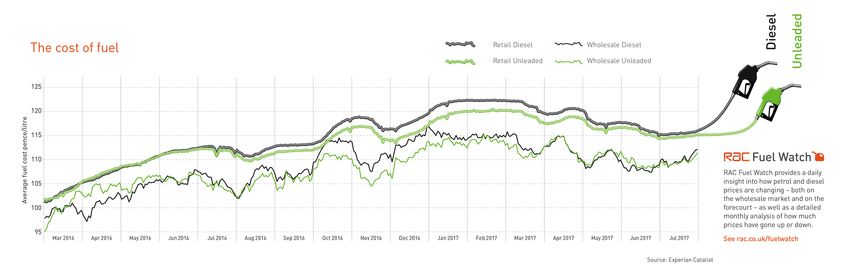
RAC Report on Motoring 2017                                                                                                                  1.0 What’s on motorists’ minds?

1.0 What’s on motorists’ minds?                                                           Motorists’ top concerns                                            16%
                                                                                                Drivers using handheld                                         13%
                                                                                            1   phones to talk, text or
                                                                                                access the internet                     5%
                                                                                                                                        6%
These economic jitters, coupled with a
rise in the price of fuel and widespread
                                               irresponsible and illegal use of handheld
                                               mobile phones while behind the wheel.        2   The condition and
                                                                                                maintenance of local roads
                                                                                                                                   7%
hikes in motor insurance premiums,                                                                                                 5%
                                               Meanwhile, dissatisfaction at the levels
have pushed the overall cost of
motoring back up the list of motorists’
                                               of congestion on British roads appears       3   Cost of fuel

main concerns.
                                               to be on the rise, as does concern about
                                               drivers under the influence of alcohol.                                        7%
Other issues are also causing significant
levels of worry: there is still considerable
                                               And while the issue does not rank
                                               particularly highly among drivers’ major
                                                                                            4   Cost of insuring a car        7%
                                                                                                                                                                     10%
disquiet about the state of local roads,       worries, there is greater awareness of                                                                                 14%
while the leading concern in 2017 is the
danger caused by other motorists’
                                               – if not outright concern about – the
                                               environmental impact of motoring.
                                                                                            5   Traffic congestion /slower
                                                                                                journey times
                                                                                                                               8%
                                                                                                                              7%
                                                                                            6   People driving cars without
                                                                                                tax or insurance
                                                                                                                                               9%                    2017
                                                                                                                                        8%
                           “Among our members, the key issues at the moment are                                                         8%      7%                   2016
                            driver distractions – such as mobile phones as well as          7   Drivers under the
                                                                                                influence of drink
                            in-car technology – and increasing congestion. Potholes
                            and problems with the condition of roads are just
                            slightly behind as current concerns.”                           8   Drivers breaking
                                                                                                traffic laws
                            SARAH SILLARS
                            Chief Executive
                            IAM RoadSmart

12                                                                                                                                                                          13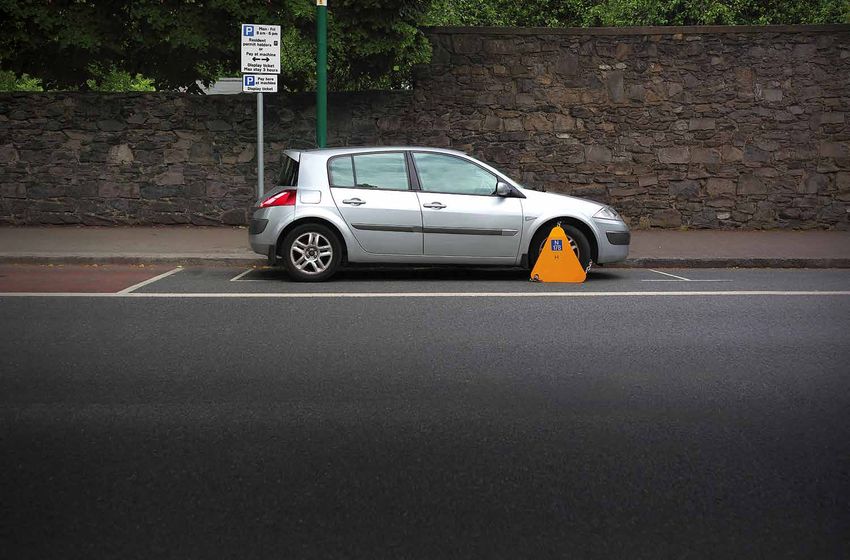
RAC Report on Motoring 2017                                                                                                   1.0 What’s on motorists’ minds?

1.0 What’s on motorists’ minds?

1.1 The rising cost of motoring                      While petrol and diesel prices have
The fall in the value of sterling in the             reached nowhere near the highs
wake of last year’s EU referendum                    experienced in 2012 and 2013, they
decision has played a role in pushing                have been considerably higher than in
up fuel prices and generally squeezing               the period covered by last year’s Report
motorists’ finances.                                 on Motoring. It is no surprise, then, that
                                                     the cost of fuel has been named by
A weaker pound has driven up the
                                                     significantly more respondents as their
cost of imports in general, not just oil
                                                     top concern in 2017 (9%) than in 2016,
prices, resulting in levels of inflation
                                                     when the rate was 7%.
that we haven’t seen for four years:
with earnings levels struggling to                   Overall, 28% of drivers place fuel
keep pace, the typical UK worker has                 expenditure among their top four
recently started to see their wages                  concerns in comparison with 24%
decline in real terms2.                              a year ago.

                                                                                                  28%
                                                                                                  of drivers place fuel
                                                                                                  expenditure among their
                                                                                                  top four concerns

                                                                                                  9%
                                                                                                  of motorists say the
                                                                                                  cost of fuel is their top
                                                                                                  concern in 2017

2. w
    ww.ons.gov.uk/employmentandlabourmarket/peopleinwork/earningsandworkinghours/articles/
   supplementaryanalysisofaverageweeklyearnings/latest
14                                                                                                                                                        15
RAC Report on Motoring 2017                                                                                                                                         1.0 What’s on motorists’ minds?

1.0 What’s on motorists’ minds?
                                                                                                   Running costs
                                                                                                   The percentage of motorists who have felt a rise
                                                                                                   in fuel and other types of running costs

These increases mean that the cost                    In terms of other motoring-related
of fuel has overtaken insurance                       expenses, the cost of parking has been
prices, and is now the third biggest                  named as a top-four concern by 17%              Fuel costs               Cost of repairs         Car tax           Insurance
concern in 2017: nonetheless, 8%                      of respondents – a slight fall from 18%
of the drivers questioned this year                   last year – while a higher proportion of
say motor premiums are their top                      drivers than in 2016 feel that running
concern, unchanged from 12 months
ago. Similarly, 28% of motorists name
insurance costs as a top-four concern
                                                      costs such as vehicle excise duty (VED)
                                                      and general maintenance or repairs
                                                      have risen in the past 12 months.
                                                                                                        61%                           46%             38%                 58%
this year compared with 26% in 2016                   The issues described in this section,
and just 18% a year earlier.                          as well as general attitudes to
                                                      motoring taxation, will be explored              31% in 2016                    41% in 2016     30% in 2016        46% in 2016
While the general squeeze on incomes
                                                      further in the next chapter.
is no doubt to blame for some of this
increased concern, industry data does
bear out the perception that premiums
are rising – not least as a result of recent
government changes to the way life-
changing personal injury compensation
claims are calculated and increases in
insurance premium tax3.

                              “Concern around the cost and availability of parking
                               appears to be waning, which perhaps is a reflection
                               of the fact that motorists are wiser to the tactics of
                               parking enforcement officers and may be taking
                               appropriate precautions.
                               There are so many apps out there that can flag up the
                               availability of cheap parking – and allow you to pay at the tap
                               of a button – that maybe it’s no longer the issue that it once
                               was. It may also be that the last Government’s focus on
                               parking, including a ban on councils ticketing motorists within
                               10 minutes of parking time expiring, and the eradication of
                               clamping on private land, is also starting to have an impact.”
                               GRAEME PATON
                               Transport Correspondent

                                                                                                   17%
                               The Times

                                                                                                   of respondents name the cost
3. w
    ww.abi.org.uk/news/news-articles/2017/04/up-8-motorists-face-bumpy-ride-as-motor-insurance-   of parking as a top-four concern
   premiums-continue-rise/
16                                                                                                                                                                                              17
RAC Report on Motoring 2017                                                                                           1.0 What’s on motorists’ minds?

1.0 What’s on motorists’ minds?

                                                                                       16%
1.2 Growing safety concerns               One in 20 motorists (5%) say that other
The irresponsible and potentially life-   drivers’ failure to adhere to traffic laws
threatening behaviour of other drivers    is their top concern. This is down from
remains an issue of significant concern   2016’s 6%, although overall concern
                                                                                       of motorists named drivers
for British motorists at the moment.      relating to this issue – that is, the
                                                                                       using handheld mobile phones
                                          number of people who named this as           as their top concern
The issue most commonly cited as a
                                          one of their four main concerns – has
number one concern in 2017 is drivers
                                          risen to 25% from 23%.
using handheld mobile phones to talk,
text, take pictures or access the         A sixth of motorists (17%) say that the
internet: 16% of respondents say this     behaviour of cyclists on the road is a
is their top concern, which represents    top-four concern – a similar proportion
a significant increase on the 13% who     to last year’s 18% – while there has
did so 12 months ago.                     been a slight fall in overall concern
                                          about other drivers’ rudeness (from
In total, 40% of motorists name
                                          21% to 19%).
handheld mobile use as a top-four
concern, very similar to the 41%          We will examine these issues, as well
recorded in 2016.                         as attitudes to in-car safety technology,
                                          speeding and speed restrictions, in
A considerable number of this year’s
                                          more detail in Chapter 3 of this Report.
other leading concerns relate to
inconsiderate and illegal behaviour at
the wheel. There has been a rise in
the proportion of motorists whose
chief concern is drivers under the

                                          5%
influence of alcohol: 7% say this is
their top concern, up from 5% in 2016,
while in total 24% name drink-driving
as a top-four concern (the equivalent
figure in 2016 was 22%). Drug-driving
                                          of motorists say that other
is the top concern for 4% of the          drivers’ failure to adhere to
motoring population and a top-four        traffic laws is their top concern
concern among 19% (17% in 2016).

                                          7%
                                          of motorists chief concern is
                                          drivers under the influence
                                          of alcohol

18                                                                                                                                                19
RAC Report on Motoring 2017 1.0 What’s on motorists’ minds?
1.0 What’s on motorists’ minds?
1.3 Local roads and congestion Nevertheless, motorists’ slightly more
The condition and maintenance of relaxed view of the state of local roads
local roads – as opposed to dual in 2017 does tally with findings from the
carriageways or the motorways and RAC’s Pothole Index, as we examine in
other major routes that make up the Chapter 4 of this Report.
UK’s strategic road network – remains
Over the past 12 months, there has
an important concern for motorists,
been no change in levels of concern
but perhaps not quite to the same
regarding the condition of dual
extent as in 2016.
carriageways and motorways:
Last year, the state of local roads 12% of drivers still cite this as one
was the most commonly named top of their top-four main concerns.
concern, with 14% citing it as their
There has been a small rise in concern
biggest issue: this year, however,
about traffic congestion and slower
that figure has fallen sharply to
journey times: 8% of drivers say this
10%. Nevertheless, the condition of
is their biggest concern this year
local roads is still the second most
compared with 7% in 2016: this view
significant concern – behind handheld
is consistent with figures from the
mobile phone use – in 2017.
Department for Transport4, which
In a similar way, overall concern suggest that there was a 2.2% increase
about local road conditions has fallen: in traffic volumes in 2016 to a record
now 33% say this is a top-four issue total of 323.7 billion miles driven.
compared with 38% who did last year.
Overall, 26% of motorists feel that
While these figures suggest conditions congestion and increased travel time
may be improving, it is worth bearing is a top-four concern, against 27%
in mind that year-on-year changes in last year.
51%
relative concern rankings can be the
10%
result purely of increased concern
about other issues. Interestingly, 51%
of respondents in this year’s survey say
the condition of roads in their area has of motorists say the condition
of local roads in their area
worsened over the past 12 months – of motorists cited the state of has worsened over the past
exactly the same proportion as local roads as their top concern 12 months
recorded in 2016.
8%
of drivers say traffic congestion
and slower journey times is
their biggest concern
4. w
ww.gov.uk/government/uploads/system/uploads/attachment_data/file/611304/
annual-road-traffic-estimates-2016.pdf
20 21RAC Report on Motoring 2017 1.0 What’s on motorists’ minds?
1.0 What’s on motorists’ minds?
29%
1.4 Untaxed and uninsured drivers It may be that rising insurance premiums, Meanwhile, the number of cars
The issue of motorists driving without as well, perhaps, as the switch away from clamped by the DVLA for failing to pay
tax or insurance has been a perennial the paper tax disc since October 2014, VED has risen sharply since the paper
concern in recent years: in 2017, 7% have underpinned the ongoing high levels tax disc was phased out in 2014: the
of drivers say that motorists
of respondents cite this as their top of concern in these areas. agency says that it has increased its driving without tax or insurance
concern, the same percentage as in enforcement efforts to ensure that is one of their top four concerns
Some analysts have warned5 that the
2016 and 2015. drivers ‘get the message’ that they
recent rises in insurance premium tax
still need to tax their vehicles6. Again,
In overall terms, untaxed and/or could lead to more people taking the risk
widespread media coverage of the
uninsured drivers is the third most of driving without cover, despite it being
DVLA’s enforcement activity may
significant overall concern, with 29% illegal. Such warnings may lead to
exacerbate fears that many cars on
of motorists placing this within their increased fears of uninsured drivers
the road are untaxed – irrespective
four biggest concerns. among law-abiding motorists.
of actual levels of tax evasion.
5. www.ft.com/content/0b058f56-46d0-11e7-8519-9f94ee97d996
6. www.bbc.co.uk/news/business-38389577
22 2343% in 2016
RAC Report on Motoring 2017 1.0 What’s on motorists’ minds?
1.0 What’s on motorists’ minds? 56 percent of people are
56%
aware of the Govern-
ments proposal to
establish clean air zones
57%
in towns and city areas
1.5 Air quality and the environment There has been a minimal increase in this year say they are concerned about This in part could be explained by the
Despite widespread media coverage concern about the effects of diesel their43%
local air quality (down marginally
in 2016 volume of media 55%coverage
in 2016 of the High
relating to the environmental impact of emissions on health – 7% say this is from 34% who had this view in 2016), Court ruling that the Government’s
motoring and government air quality a top-four concern this year compared while 40% are more concerned than original air quality strategy was
strategies, concern over such matters with 6% in 2016 – while the same they were a year ago about the impact inadequate and required improvement.
remains relatively low relative to the proportion are worried about the fuel vehicles have more generally on their
Motorists’ thoughts about the
issues highlighted so far in this chapter. efficiency and emissions claims made local air quality.
environment, as well as issues such as
by vehicle manufacturers.
57% 56%
Less than one in 10 motorists (9%) rate There is also a significantly higher level the Government’s attitude to diesel-
the environmental impact of car use as When analysed in isolation rather than of awareness about government plans powered vehicles and drivers’ engine
a top-four concern in 2017, although compared with other issues, however, to establish clean air zones in areas preferences, will be discussed in more
this is a rise on the 7% figure recorded environmental concerns do appear to where pollution is highest – 56% say detail in Chapter 5 of this Report.
both last year and in 2015. be fairly widespread: 32% of motorists they have heard about such measures,
55% in
up from 2016
43% in 2016. 43% in 2016
The local environment
68%
agree that stronger of drivers are aware of motorists agree with
action needs to be of the Government’s the banning of more
taken to reduce proposal to establish polluting vehicles from
pollution from vehicles
in areas with the
poorest air quality
56% clean air zones in
towns and city areas.
A 13% increase from
57% entering areas with the
poorest air quality.
A 2% increase from
last year’s stats last year’s stats
43% in 2016 55% in 2016
57%
55% in 2016
24 25RAC Report on Motoring 2017 2.0 The squeezed motorist
2.0
The
squeezed
motorist
Slow growth in earnings over the
past 12 months, allied to price
increases, has put motorists under
greater financial pressure – a state
of affairs that the results of the
2017 Report on Motoring bear out. >
Page 32 Page 36 Page 40
The impact of rising Insurance premiums A reformed
26 fuel prices on the up tax systemRAC Report on Motoring 2017 2.0 The squeezed motorist
2.0 The squeezed motorist
Concern about the cost of fuel has The impact of the weak pound has
risen sharply since last year’s Report, been widespread: with crude oil priced
and drivers also say they are spending in dollars, it has led directly to a rise in
more on insurance premiums, car tax fuel prices, as we will discuss below.
and maintenance than in 2016. But the rise in the cost of imports in
general has prompted a sharp upturn
Arguably, one of the key factors
in inflation, which hit 2.9% in May, the
underpinning the economic downturn
month when the survey was carried
has been the fall in the value of
out – well ahead of the Bank of
sterling in the wake of the June 2016
England’s Consumer Prices Index
EU referendum. On the day of the
target of 2%.
referendum, the pound was trading
at $1.50: 12 months later, it stood at With average wages rising more
$1.27, a loss of more than 15%. slowly than prices, the result is that
consumers’ real earnings have started
Sterling’s weakness has been a
to fall in recent months for the first
reflection of money-market fears that
time in three years7. Meanwhile, there
UK interest rates will remain low for
are signs that the economy is not
longer than previously expected –
growing as fast as previously expected,
indeed, the base rate was cut to 0.25%
with estimates for GDP in the first
in August 2016 – and that economic
three months of 2017 having to be
growth in Britain could be hampered
revised downwards from 0.3% to 0.2%
by the uncertainty surrounding the
by the Office for National Statistics8.
Brexit process.
On the day of the EU referendum (23 June
2016), the pound was trading at $1.50.
12 months later, it stood at $1.27, a loss VOTE
of more than 15%.
June 2016: £1= June 2017: £1=
$ 1.50 $ 1.27 -15%
7. h ttps://www.ons.gov.uk/employmentandlabourmarket/peopleinwork/earningsandworkinghours/articles/
supplementaryanalysisofaverageweeklyearnings/latest
8. http://www.bbc.co.uk/news/business-40042427
28 29RAC Report on Motoring 2017 2.0 The squeezed motorist
2.0 The squeezed motorist
The cost of insuring a car is still
a major concern and most of the
Meanwhile, this year’s Report has found
that almost half of drivers (46%) have
The cost of insuring a car is
motorists surveyed for the Report on seen their maintenance and repair still a major concern and most
Motoring 2017 say their premiums
have increased in the past 12 months
bills increase over the past 12 months
– a sharp rise on the 41% who reported
motorists surveyed for the
– a view borne out by insurance higher servicing charges in 2016. Report on Motoring 2017 say
industry figures9, with hikes fuelled at
If general motoring costs continue their premiums have increased
least partly by tax rises and changes
in compensation payment rules for
to rise, it could result in significant in the past 12 months.
changes in behaviour, the Report
cases involving life-changing injuries.
suggests: 46% of respondents say that
The reforms in the vehicle excise duty motoring could become a rare luxury
(VED) regime for new cars has resulted if these expenses increase further.
in higher car tax bills for nearly all This figure is higher still for drivers
popular models, but although the rules aged under 25 as well as for those who
only apply to vehicles registered since live in London – 57% in both cases.
1 April 2017, media coverage of the
changes may have given rise to the
general perception that road tax bills
are on the up.
46%
of respondents say that
46%
have seen their maintenance
motoring could become and repair bills increase over
a rare luxury the past 12 months
9. www.consumerintelligence.com/press-releases/car-insurance-accelerates-as-compensation-rules-bite
30 31RAC Report on Motoring 2017 2.0 The squeezed motorist
2.0 The squeezed motorist
2.1 The impact of rising fuel prices In contrast, average petrol prices have Crude oil prices last winter were propped Unfortunately, wholesale and retail
Given the change in the price of both generally been no cheaper than 115p up by the decision by the Organisation prices monitored by RAC Fuel Watch
petrol and diesel over the past year10, per litre since the start of 2017, with of the Petroleum Exporting Countries give reason to believe that forecourt
it comes as little surprise that motorists diesel typically a penny or two dearer. (OPEC) at the end of November to restrict operators have been too slow to pass on
say the cost of filling up is a significantly the supply of oil. But since March, these savings in the wholesale fuel price to
This price increase over the last 12
greater concern in 2017: 9% say it is efforts have been offset to some extent motorists at the pump, perhaps taking
months has been caused by an overall
their top concern, against 7% in 2016, by increased production in the United advantage of consumer concern about
rise in the dollar price of crude oil as
while 28% say it is a top-four concern States, chiefly through an expansion of Brexit, the weaker pound and the
well as a weaker pound. Over the
(compared with 25% in 2016). fracking activity. general election.
course of last winter, a barrel of crude
At the time that the 2016 Report on rose to around $55 – its highest price It has been a long-standing complaint
Motoring survey was carried out, the in almost 18 months – pushing petrol of motorists that retailers are quick to
price of both petrol and diesel was pump prices to 120p per litre and pass on rises in wholesale prices to
rising slowly from lows of almost £1 per diesel to over 122p during January, their customers, but less willing to cut
litre in February 2016 – the cheapest February and much of March 2017. prices in response to a reduction in
rate in the UK in more than six years. wholesale prices.
10. www.rac.co.uk/drive/advice/fuel-watch/
32 33RAC Report on Motoring 2017 RAC call to action: 2.0 The squeezed motorist
Fuel duty: see page 82
2.0 The squeezed motorist
Motorists have once again benefited While concern about the cost of fuel
from the Government’s decision to has risen over the past year, prices
extend the freeze on fuel duty: in last remain a long way below the highs
November’s Autumn Statement, witnessed in 2012, when the average
Chancellor Philip Hammond said it cost of a litre of petrol was above 140p
would not increase before 2018. and diesel was 147p.
Analysis has shown that the freeze, Looking back at the 2012 Report on
which has been in place since 2010, Motoring, the sky-high pump prices of
now saves the average car driver the time resulted in 66% of that year’s
£130 a year11 compared with what respondents saying they would be
they would have been paying had forced to severely reduce their car
the duty escalator been maintained. usage if fuel costs continued to rise.
Nevertheless, the RAC still supports By way of contrast, only 24% of
increasing transparency around the motorists this year say they have
impact of tax on forecourt prices. reduced their vehicle usage over
In February, Conservative MP Peter the past 12 months – and the main
Aldous introduced the Vehicle Fuel reasons for doing so have been falling
(Publication of Tax Information) Bill, incomes and difficulties in parking.
which was designed to force retailers
to display the Treasury duty and VAT
take on fuel pumps and receipts.
Unfortunately, the progress of the bill
through Parliament, which was
supported by the RAC, was halted when
the June general election was called.
While concern about the
cost of fuel has risen over
the past year, prices remain
a long way below the highs
130 24%
witnessed in 2012.
£ per
annum
saved by the average car of motorists this year say
driver since the fuel duty freeze they have reduced their vehicle
was put in place in 2010 usage over the past 12 months
11. www.ukbudget.com/measures-autumnstatement-2016/fuel-duty.aspx
34 35RAC Report on Motoring 2017 RAC call to action: 2.0 The squeezed motorist
Insurance premium tax: see page 82
2.0 The squeezed motorist
2.2 Insurance premiums on the up The first is a rise in insurance premium
The cost of insuring a car is the tax (IPT): this was upped from 6% to
most important concern for 8% of 9.5% in October 2015, and then to 10%
the motorists questioned this year 12 months later. The Government then
– the same percentage as in 2016 – decided at the end of last year that IPT
while the proportion of drivers who would increase yet again in June 2017
cite premiums as a top-four concern to 12%, effectively doubling the rate in
has risen from 26% to 28%. little over 18 months.
There has been a continued significant The other main cause of premium rises
rise, however, in the number of has been a change in the rules around
respondents who say the cost of compensation payments to motor
insurance has gone up since 2016: accident victims suffering life-changing
58% have experienced a rise in injuries to cover their loss of earnings
insurance premiums, against 46% and care costs, which was announced
who did so last year and 34% in 2015. earlier this year. The UK uses a
‘discount rate’ – often referred to as
Average motor insurance premiums
Industry figures indicate that
premiums have indeed increased over
the Ogden rate – to work out how much & insurance premium tax rates
compensation victims are entitled to
the past 12 months: between May 2016
when they take payments as a lump 14%
and May 2017, when this year’s survey
sum rather than in monthly instalments.
was carried out, the average price of a 13%
comprehensive policy increased by £494
more than 15%12, with a large 12% £462
58%
£429 £440
proportion of this rise coming this 11%
spring. While insurance costs often £379
move in cycles, the latest increases 10% £360
have largely occurred as a direct result 9%
of previous government decisions. of motorists have experienced
a rise in insurance premiums 8%
since 2016
7%
6%
15%
5%
Q1 2015 Q3 2015 Q1 2016 Q3 2016 Q1 2017 July 2017
IPT rates
average increase in the
price of a comprehensive car
insurance policy between
May 2016 and May 2017 Source:
www.abi.org.uk/news/industry-data-updates/2015/05/abi-average-motor-insurance-premium-tracker-q1-2015-data/
www.abi.org.uk/news/industry-data-updates/2015/10/abi-average-motor-insurance-premium-tracker-q3-2015-data/
www.abi.org.uk/news/industry-data-updates/2016/04/abi-average-motor-insurance-premium-tracker-q1-2016-data/
www.abi.org.uk/news/news-articles/2016/10/the-price-of-motor-insurance-shows-no-sign-of-reversing/
www.abi.org.uk/news/news-articles/2017/04/up-8-motorists-face-bumpy-ride-as-motor-insurance-premiums-continue-rise/
12. www.consumerintelligence.com/press-releases/car-insurance-accelerates-as-compensation-rules-bite www.abi.org.uk/news/news-articles/2017/07/motor-premiums-rising-at-fastest-rate-ever/
36 37RAC Report on Motoring 2017 RAC call to action: 2.0 The squeezed motorist
Discount rate & whiplash claims: see page 82
2.0 The squeezed motorist
The discount rate is applied to allow Ministers have also signalled their
for how much the value of an award intention to press ahead with a “The news from the Queen’s Speech that the Government
would be expected to grow over time crackdown on spurious whiplash- is planning to tackle bogus whiplash claims is welcome.
when invested and is based on returns related personal injury claims, Frankly anything that helps damp the soaring cost of
on index-linked gilts. which are thought to have contributed motor insurance is good news, particularly for young
significantly to premium increases drivers who are being hit disproportionately by the hike
In February 2017, the rate was
in recent years. in insurance premium tax.”
adjusted for the first time in 16 years
to avoid under-compensation as a In June’s Queen’s Speech, the STEVE GOODING
result of low investment returns. Conservatives said they would Director
The Lord Chancellor said it would introduce a Civil Liability Bill to RAC Foundation
change from 2.5% to minus 0.75%: regulate claims-management
which has meant insurers have had companies more strictly while also
to make much higher lump-sum cutting legal costs by allowing more
payments than before. cases to be dealt with by the small
claims court. The Government has
This has already resulted in premium
suggested this could lead to savings
increases of around 9% and further
on premiums of £35, but it is unclear
substantial rises are expected in the
if or how insurers will be compelled
second half of 2017 as insurers begin
to pass these on.
to renew their ‘reinsurance’ policies
which they have in place to protect
themselves against particularly large
losses. Analysts predict premiums
could go up by around £75 a year13.
Following an outcry from the
insurance industry, the Government
published a consultation looking at
the processes it uses to set the rate.
£ 75
the amount analysts predict
£ 35
possible saving on car insurance
premiums could go up by as premiums as a result of
insurers begin to renew their crackdown on spurious whiplash
‘reinsurance’ policies personal injury claims
13. www.pwc.blogs.com/press_room/2017/02/ogden-rate-change-pwc-comments-on-impacts-for-motor-
insurance-pricing.html
38 39RAC Report on Motoring 2017 2.0 The squeezed motorist
2.0 The squeezed motorist
37%
2.3 A reformed tax system While car tax itself has not been cited as Looking back five years to the 2012
At the start of April this year, reforms a significant overall concern in this year’s Report on Motoring, 50% of drivers
of the VED system took effect: since Report on Motoring, 38% of respondents said tax levels at the time were not a
then, all newly registered cars have say that their car tax has risen in the past ‘fair price’ to pay for such ‘freedom’
of motorists were opposed to
faced a drastically different approach 12 months against only 30% who said this – although it is worth bearing in mind
the idea of paying per mile to
to emissions-based taxation. last year. Given that the new VED system that fuel costs at the time were drive on certain roads
would have affected only a small fraction particularly high.
While actual rates can vary
of the motoring population by the time
significantly from vehicle to vehicle, There has also been a steady decline in
38%
this year’s survey was conducted in May,
the underlying approach is that new resistance to the idea of paying per mile
it could be that the publicity surrounding
cars will face higher first-year VED to drive on certain roads, provided this
the tax changes has created an
bills – which will be based on CO2 is offset with lower motoring taxes
impression of rising rates.
emissions – before the tax reverts elsewhere: this year, 37% of motorists
to a standard annual rate of £140. There have been no dramatic changes to were opposed to this idea, compared of respondents say that their
motorists’ views on the appropriateness with 41% 12 months ago. car tax has risen in the past
This year-two-and-beyond rate will be 12 months
or otherwise of current taxation levels.
slightly lower (£130) for alternatively
Nonetheless, there is a trend towards
fuelled vehicles, such as plug-in
greater acceptance of motoring taxes:
hybrids, and zero for zero-emission
this year, just 26% of respondents
vehicles. A separate supplement will “The figures showing that motorists feel they are
disagreed that current tax levels are
also apply to new vehicles with a list spending more on car tax are interesting – and it may
‘a fair price for the personal freedom
price of over £40,000 between years two be to do with the fact that, at the time this year’s
driving gives us’. In 2015, 37% disagreed
and six after the vehicle’s registration. survey was carried out, there had just been a well-
with the statement and in 2016, 29%.
publicised increase in VED for a high proportion of new
registrations. So most people haven’t seen their own
tax increase, but they are responding to this publicity.”
PHIL RYAN
VED reforms from April 2017 Group Operations Director
RAC
Total amount of VED payable over two years from when vehicle was
first registered. Each vehicle has a list price of under £40,000.
Nissan Mitsubishi Ford Vauxhall
Leaf Outlander Fiesta Astra
(Electric) 3h petrol hybrid 1.5 TDCi Zetec 1.0T 12V
0g CO2 /km auto 4WD 94g CO2 /km ecoFLEX Tech
41g CO2 /km Line 5 door
PRE 1 APRIL 2017 PRE 1 APRIL 2017 103g CO2 /km
£0 PRE 1 APRIL 2017 £0
POST 1 APRIL 2017 £0 POST 1 APRIL 2017
PRE 1 APRIL 2017
£0 £20
POST 1 APRIL 2017 £260
£130 POST 1 APRIL 2017
£280
40 41RAC Report on Motoring 2017 3.0 The dangers on our roads
3.0
The dangers
on our roads
For millions of Britons, the most
significant motoring-related issue is
the danger posed to them by reckless
and irresponsible drivers. The 2017
Report on Motoring has identified an
increase in levels of concern regarding
illegal behaviours ranging from the use
of handheld mobile phones, to drink
and drug-driving, to speeding and
failing to obey traffic signals. >
Page 44 Page 49 Page 52
The mobile menace Drink and drug-driving The need for speed?
42RAC Report on Motoring 2017 3.0 The dangers on our roads
3.0 The dangers on our roads
Drivers who use a handheld phone 3.1 The mobile menace
to talk, text or access the internet is The 2017 Report on Motoring has
the issue that was most commonly found 16% of British drivers feel that
ranked as the number one concern other motorists’ use of handheld
this year. But overall, almost a third mobile phones – whether to make
of the motorists we surveyed this and receive phone calls, send or
year say their biggest concern relates read text messages, or access the
to other drivers’ behaviour and the internet – is their single biggest
impact this has on road safety. concern, significantly higher than
24%
the 13% recorded 12 months ago,
The 2017 Report has found that a
and the 9% in 2015.
concerning proportion of motorists do
not expect to be caught if they break This year, worries over handheld
motoring laws – although the 24% who mobile use at the wheel overshadow
agree with this sentiment is a drop on discontent about the state of the of drivers do not expect to be
caught if they break motoring laws
the 27% recorded last year. Meanwhile, UK’s roads – last year’s top concern
a majority of drivers (62%) still feel there – as well as growing disquiet about
are not enough roads policing officers to increases in fuel and insurance costs.
enforce traffic laws effectively.
Overall, 40% of drivers said that
A large number of motorists say handheld mobile phone use – and the
that they are worried about the distraction it inevitably causes – is one
potential distraction caused, both to of their top four concerns, very similar
themselves and other road users, by to last year’s 41%.
in-car technology such as dashboard
The Department for Transport has
internet access and touch-screen
not conducted a handheld phone
sound system controls.
usage survey since the 2016 Report
There has also been an increase on Motoring was published so we do
in the number of motorists who not have an independent assessment
question how effective new of current usage.
technology is in enhancing road “Motorists are still using their phones while stopped
safety: while the overwhelming in traffic or at lights, even though this is also illegal.
One issue here is that drivers of cars with stop-start
40%
majority (83%) agree that cars are
safer than in the past, only 53% engines sometimes have the perception that they are
think driver-assistance technology not breaking the law by doing so because their
is making roads safer, down sharply engine is off.”
from 63% in 2016, while only 38% SUZETTE DAVENPORT
of drivers said that handheld
think that roads are safer today than mobile phone use is one of Former Chief Constable, Gloucestershire Police,
they used to be – considerably less their top four concerns and National Lead for Roads Policing in England and Wales
than last year’s 46%.
44 45RAC Report on Motoring 2017 3.0 The dangers on our roads
3.0 The dangers on our roads
However, the dangers of using This year’s Report has found that Percentage of drivers that make or receive calls 2016 2017
handheld phones at the wheel have 23% of drivers admit to having used a (without hands-free)
featured prominently in the news handheld mobile at the wheel to make
over the last year, and the resulting or take a call in the past 12 months
While driving While stationary with engine on
increase in awareness of this issue – a fall of almost a third on the 2016
may well have led to the heightened
concern we are now seeing.
figure. However, this fall is largely among
those who admitted to occasional use 23% 40%
The main catalyst for media interest in
and worryingly, there remains a hard
core of regular users who seem
31% 49%
drivers’ phone use over the past year
immune to warnings and deterrents.
was the finding in the 2016 Report on
Motoring that 31% of motorists admitted Those who use their cars for their jobs
to having used a handheld phone to are more likely to use handheld phones:
make or receive a call while driving 26% of business drivers say they either
in the previous 12 months, up from rarely or sometimes make calls in this
8% in 2014. way, compared with 18% overall.
This shocking statistic was seized upon Women are more likely than men to
by the media when the 2016 Report was ignore incoming calls while driving:
published last September, and quickly 57% of female motorists say this is
led to national newspaper campaigns their usual response to a call
for tougher government action to deter compared with 43% of men.
phone use. The Government had already
When it comes to using phones for
consulted on stiffer penalties but
other reasons, the trend is similar:
brought forward their plans and
in 2017, 82% of respondents say they
increased penalties more than was
never check texts, email or social
proposed in the consultation.
media while driving, up from 73% in
As a result, the law changed with effect 2016, while 89% never take photos or
from 1 March 2017, so that drivers in videos compared with 85% last year.
England, Scotland and Wales who
are caught using a handheld phone
23%
automatically receive six points on their
licence and are fined up to £200 – up
from three points and £100 respectively.
The RAC subsequently launched the
‘Be Phone Smart’ campaign in March of motorists admitted to having
used a handheld phone to make
2017 in a further attempt to encourage or receive a call while driving in
drivers to kick their handheld mobile the previous 12 months
phone habit (further details on page 87).
46 47RAC Report on Motoring 2017 RAC call to action: 3.0 The dangers on our roads
Handheld mobile phones: see page 83
3.0 The dangers on our roads
While motorists are more likely to use Although these compliance figures are Finally, mobile phones are not the one concern this year, up from 5%
their phones when their cars are moving in the right direction, it remains only in-car distraction that concern in 2016. Overall, 24% say this is a
stationary with the engine on – for clear that a minority of motorists do drivers this year: 80% of motorists, top-four concern compared with
example while waiting at traffic signals not recognise – or do not care about – for example, consider that the ability 22% 12 months ago.
or in traffic jams – compliance with the the danger that their own handheld to access the internet or email via their
After the proportion of motorists
law in this area is improving as well. mobile use causes. car’s dashboard would be dangerously
who admit to driving while above
For example, 60% say they would never distracting, while 43% are similarly
Interestingly, 10% of habitual handheld the legal alcohol limit rose in 2016,
make or receive a call while stationary concerned about touchscreen sound
phone users say they make and it has fallen back this year: 16% of
compared with 51% last year. And 62% system controls.
receive calls while driving because motorists reported believing they
say they wouldn’t check texts or emails
they believe they can ‘get away with it’ Meanwhile, the heads-up displays have been guilty of drink-driving over
while sitting in traffic, up from 54%.
– a proportion that has increased sharply (HUDs) incorporated into an increasing the past 12 months, compared with
There are clear signs that the since 2016 (7%). And astonishingly, 9% number of the latest vehicles are 20% in 2016. While the fall should be
Government’s tougher stance on of this group say they didn’t realise the also seen as potentially distracting welcomed, these figures nonetheless
handheld phone use has had some practice was against the law. by 37% of motorists, despite the fact suggest that around five million
impact: this year’s Report has found that such systems are designed to be motorists believe they have driven
More generally, there has been a fall in
a high level of awareness about the unobtrusive and to help drivers keep while over the limit at least once in
the number of drivers who think they
increase in penalties which was their eyes on the road ahead by the past year, a quite shocking figure.
can get away with breaking traffic laws:
announced last autumn and introduced providing essential information that It is also worth noting that, going back
this year, 24% say they are unlikely to
in March. Only 11% of motorists claim they would otherwise have to look five years, only 11% of motorists
get caught if they break most motoring
to be unaware that the law has down at their dashboard to see. admitted to drink-driving in research
laws, down from 27% in 2016. However,
changed, and of the 89% who are for the 2012 Report on Motoring.
30% of drivers in London and 32% of 3.2 Drink and drug-driving
aware, 28% say they have modified However, in recent years, awareness
business drivers feel they could, if they Drink-driving remains a concern and
their own behaviour as a result. has been raised of the dangers of
wished, break such laws with impunity. its position is unchanged in the overall
driving ‘the morning after’ and it is
ranking of motorists’ concerns. There
possible that the increase since 2012
has, however, been a small increase in
Awareness of penalty increases for the associated percentages with 7% of
may be attributable to this awareness
rather than a behavioural change.
using a mobile phone while driving motorists citing this as their number-
knew both the 27% “There seems to be some confusion over what a
amount of the fine
11% hadn’t heard about the heads-up display actually does. Some people think that
and number of
penalty points penalty increases it is going to provide news updates and so on – which
would indeed be distracting – rather than just provide
20% heard about the increase
easier access to standard dashboard information.”
but not the details
knew the amount 35% SARAH SILLARS
of the fine 7% knew the number of Chief Executive
penalty points IAM RoadSmart
48 49RAC Report on Motoring 2017 RAC call to action: 3.0 The dangers on our roads
Drink-driving: see page 83
3.0 The dangers on our roads
The latest Report has again found that Northern Ireland is due to introduce With official figures showing a rise in There has been little change in the
men are more likely to drink-drive a lower limit in 2018, but regrettably, drink-drivers being involved in accidents percentage of those admitting to
than women, while Londoners have a at present it appears that the UK in 201514, respondents were asked this drug-driving in 2017: 6% say they
greater tendency to drive while over Government is not actively considering year for their views on the reason for the have driven under the influence of
the limit: in the capital, only 74% say a change in the law. increase. The most common explanation drugs, down slightly from 7% in 2016.
they don’t think they have been guilty is that ‘people think they can get away This includes around 3% of motorists
A number of past Reports over the last
of this, compared with 84% in the with it’ – 85% take this view – followed who say they have driven after taking
20 years have also indicated majority
general population and 89% of those by ‘a minority of drivers who habitually legal prescription drugs that could
support for a cut in the drink-drive
who live in rural areas. drink-drive and don’t care’ about the impair their ability at the wheel.
limit. In the 1997 Report on Motoring,
potential consequences (79% agree
More respondents admit to driving 51% of drivers said they agreed that
with this statement).
when over the limit the morning after the limit should be reduced by about
a heavy drinking session (10%) than half while in the 2007 Report, 69%
shortly after drinking (8%) and this supported a cut to 50 milligrams per
figure rises to 14% for those aged 100 millilitres of blood. Driving under the influence
under 45.
10%
There remains general public support
for a UK-wide reduction in the legal Think they have driven under
84%
7% the influence of:
blood-alcohol limit: outside Scotland,
the limit is 80 milligrams of alcohol Illegal class A or B drugs (2%)
Illegal class C drugs (3%)
per 100 millilitres of blood and 59% of Legal prescription drugs (3%)
of drivers admit to driving
British motorists think this should be when over the limit the morning
(Includes 1% as passengers)
of motorists don’t
cut to 50 milligrams (the current after a heavy drinking session Think they have not driven think they have
Scottish limit) or even 20 milligrams. 93% under the influence of drugs driven while
over the limit
“There is still a widespread lack of understanding about
7%
of motorists know
the impact of alcohol on the body and, in particular, they have driven
while over the limit
how long it stays in the blood. Far too many people
think that, if they have managed a few hours’ sleep
after drinking, they will somehow automatically be
under the limit the next morning.”
SUZETTE DAVENPORT
Former Chief Constable, Gloucestershire Police,
and National Lead for Roads Policing in England and Wales
14. www.gov.uk/government/statistical-data-sets/ras51-reported-drinking-and-driving
50 51You can also read


