Regional and Local Governments (RLGs) Moody's Approach - JUNE, 2018 - salga
←
→
Page content transcription
If your browser does not render page correctly, please read the page content below
Regional and Local Governments
(RLGs) Moody’s Approach
SALGA – Municipal Innovative Infrastructure Financing Conference   JUNE, 2018

Agenda
1.   Moody’s Sub-Sovereign Group
2.   List of rated RLGs in South Africa
3.   List of Metros and secondary cities
4.   Moody’s RLGs Rating Approach

               Regional and Local Governments (RLGs) Moody’s Approach, June 2018   3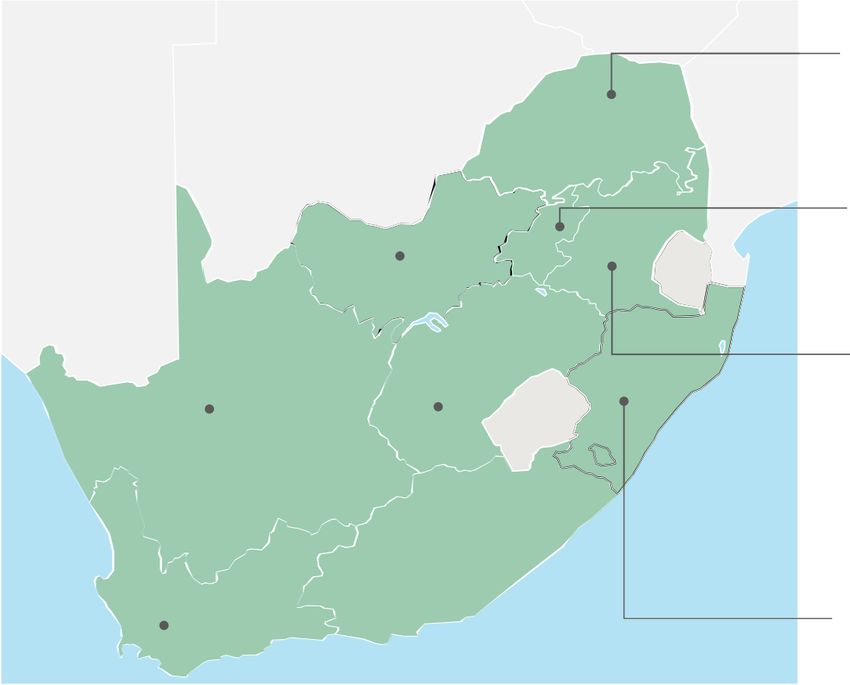
Moody’s
Sub-Sovereign Group
Sub-Sovereign – A global presence
           49 analysts/associates located in 17 offices, serving 44 countries

           16 different nationalities speaking 17+ languages

           USD 1.51 trillion rated debt

                                     Stockholm
                                                                   Moscow
                        Toronto                     London
                                                        Paris Prague
                              New York                       Frankfurt
                                                   Madrid                         Beijing
                                                             Milan
                                                                                         Tokyo
                                                                                   Shanghai
                Mexico City

                                      Sao Paulo
                                                              Johannesburg                   Sydney
                                Buenos Aires

Sources: CSS data, AWT, Moody’s Database                                                         Rated debt (excluding US)

                                                  Regional and Local Governments (RLGs) Moody’s Approach, June 2018          5
Rating Universe: A Wide Array of Public
Entities
Two big families: 337 RLGs, 162 GRIs
Regions
Provinces
RLGs States
337 Cities
Transportation
Higher Education
Water
Housing Association
GRIs Utilities
Healthcare
162
Specialized Lenders
Financial Institutions
Not for Profit
Regional and Local Governments (RLGs) Moody’s Approach, June 2018 6RLG Ratings Universe by Geography
Credits spread over 44 countries
Australia
» Strong presence in Canada and Mexico,
South
and Asia America
W.Europe & CEE/CIS
Africa
Western
» Issuer ratings dominant vs. debt ratings,
Europe
capital mkt activity limited in many countries
» National Scale Ratings widely used in
Mexico, CEE/CIS, South Africa and Turkey
North » Africa coverage is limited to South Africa
America
Eastern
Europe
Regional and Local Governments (RLGs) Moody’s Approach, June 2018 7List of rated RLGs in South Africa
South African Rated Sub-Sovereigns
(as at March 2018)
                                               Outlook         Global Scale           National Scale Rating
   METROPOLITAN MUNICIPALITIES
   City of Cape Town                           Negative        Baa3/P-3               Aaa.za/P1-za [1]
   Ekurhuleni Metro                            Stable          Baa3/P-3               Aaa.za/P-1.za [1]
   Johannesburg                                Stable          Baa3/P-3               Aa1.za/P-1.za [1]
   Nelson Mandela Metro                        Stable          Baa3                   Aaa.za
   City of Tshwane                             Stable          Ba2/NP                 A1.za/ P-1.za
   Mangaung                                    Stable          Ba2/NP                 A1.za/P-1.za
   LOCAL MUNICIPALITIES
   Rustenburg                                  Stable          Ba2                    A1.za
   Bergrivier                                  Stable          Ba3/NP                 Baa1.za/P-2.za
   Breede Valley                               Stable          Ba2/NP                 A2.za/P-1.za
   City of Umhlathuze                          Stable          Ba2                    A1.za
   DISTRICT MUNICIPALITIES
   Amathole District                           Stable          Ba1                    A2.za
   GOVERNMENT RELATED ISSUERS (GRI’S)
   City Power Johannesburg                     Stable          Baa3                   Aa1.za
   East Rand Water Care Company (ERWAT)        Stable          Ba1                    Aa3.za
                                               Ratings Under
    South African National Roads (SANRAL)                      Ba1/NP                 Aa3.za/P-1.za
                                               Review

Notes: [1] Issuer and debt ratings.

                                            Regional and Local Governments (RLGs) Moody’s Approach, June 2018   9
List of Metros and Secondary Cities
Metropolitan municipalities have large
revenue base
                                                                               Total Revenue - 2017    Total Revenue - 2017
 Metropolitan Municipalities                                  Province                 (ZAR million)             ($ million)

 Buffalo City Metropolitan Municipality                      Easter Cape                       6,276                    483

 City of Cape Town                                          Western Cape                     38,404                    2,954

 City of Ekurhuleni                                            Gauteng                       31,457                    2,420

 City of Johannesburg                                          Gauteng                       45,422                    3,494

 City of Tshwane                                               Gauteng                       30,401                    2,339

 Ethekwini Metropolitan Municipality                        Kwazulu Natal                    33,539                    2,580

 Mangaung Metropolitan Municipality                           Free State                       5,767                    444

 Nelson Mandela Bay Metropolitan Municipality                Easter Cape                       9,802                    754

Source: National Treasury & issuers’ financials

                                                  Regional and Local Governments (RLGs) Moody’s Approach, June 2018       11
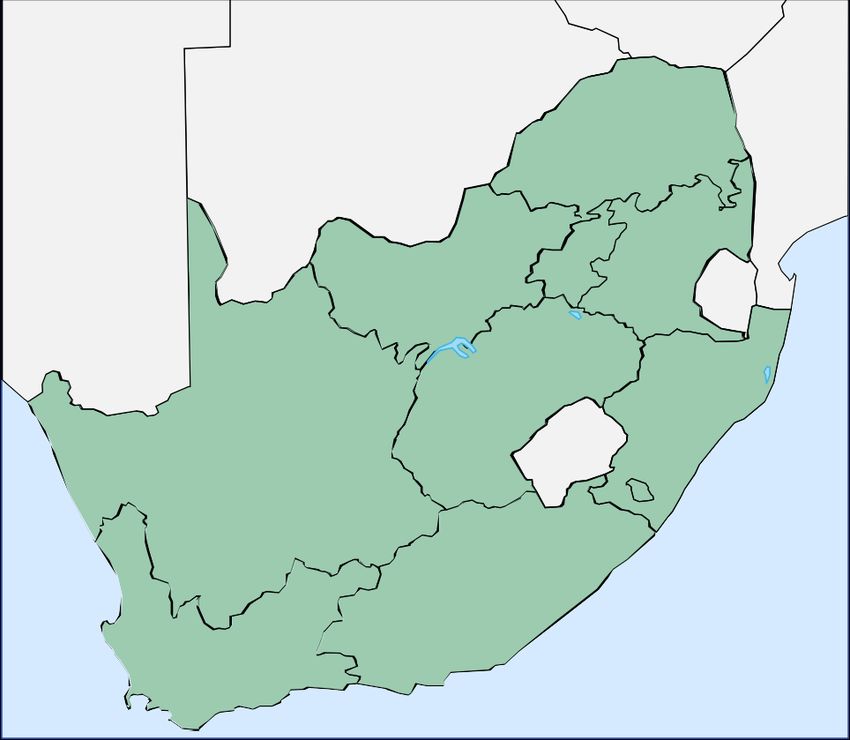
Metros’ population growth rate from
2011 – 2016 continue to exert spending
pressure
FREE STATE: GAUTENG:
Mangaung 2% Ekurhuleni 6%
Johannesburg 12%
Tshwane 12%
KWAZULU NATAL:
eThekwini 6%
EASTERN CAPE:
WESTERN CAPE:
Buffalo City 7%
Cape Town 7% Nelson Mandela
Bay 10%
Source: Statistics South Africa
Regional and Local Governments (RLGs) Moody’s Approach, June 2018 12Secondary cities largely depend on
transfers for capital infrastructure
Total revenue - 2017 Total revenue- 2017
Secondary cities Province (ZAR million) ($ million)
Emfuleni Gauteng 5,584 429
Msunduzi Kwazulu Natal 4,576 352
Rustenburg North West 4,277 329
Polokwane Limpopo 3,114 240
uMhlathuze Kwazulu Natal 3,007 231
Mogale City Gauteng 2,585 199
Mbombela Mpumalanga 2,587 199
Emalahleni Mpumalanga 2,470 190
Matlosana North West 2,402 185
Matjhabeng Free State 2,254 173
Sol Plaatje Northern Cape 1,905 147
Madibeng North West 1,879 145
Drakenstein Western Cape 1,883 145
Newcastle Kwazulu Natal 1,750 135
Govan Mbeki Mpumalanga 1,665 128
George Western Cape 1,643 126
Steve Tshwete Mpumalanga 1,449 111
Stellenbosch Western Cape 1,519 117
Tlokwe North West (2016 AFS) 1,270 98
Source: National Treasury, issuers’ financials
Regional and Local Governments (RLGs) Moody’s Approach, June 2018 13Population growth rate from 2011 –
2016 also exert spending pressure for
secondary cities
NORTH-WEST: LIMPOPO:
Rustenburg 14%
Polokwane 12%
Matlosana 5%
Tlokwe 10% GAUTENG:
Madibeng 12% Emfuleni 2%
Mogale City 6%
NORTHERN CAPE:
MPUMALANGA:
Sol Plaatje 3%
Mbombela 6%
Emalahleni 15%
WESTERN CAPE:
Drakenstein 12% Govan Mbeki 15%
George 7% Steve Tshwete 21%
Stellenbosch 11% KWAZULU NATAL:
Msunduzi 10%
FREE STATE: uMhlathuze 11%
Matjhabeng 6% Newcastle 7%
Source: Statistics South Africa
Regional and Local Governments (RLGs) Moody’s Approach, June 2018 14Moody’s RLGs Rating Approach
RLGs: The Approach

       RLGs are “enduringly linked” to their respective sovereign.
  1    The sovereign’s credit quality will to some extent anchor the
       credit quality of the RLG

       Sovereign and Sub-Sovereigns are likely to be affected by

  2    similar external factors. Sub-Sovereigns do not posses
       special autonomous characteristics that insulate them from
       sovereign-related risks

       Sub-sovereign issuers tend to be highly exposed to the same
  3    macroeconomic and financial sectors pressures which affect
       the central government.

             Regional and Local Governments (RLGs) Moody’s Approach, June 2018   16
How sovereign credit quality affects
other ratings
Slower economy
Slowing or contracting economic Austerity measures
activity can have wide-ranging
consequences Defensive sovereign actions may include
austerity measures which reduce or delay
government payments
Financing costs
Liquidity constraints and higher Exchange and interest rates
financing costs resulting from Unfavourable changes to exchange rates, interest rates
diminished investor confidence or price levels
Regulation Political uncertainty
Government interference or
Increased risk of political uncertainty and
changes in regulation
civil or labour unrest
Regional and Local Governments (RLGs) Moody’s Approach, June 2018 17Rating Approach:
BCA and Extraordinary Support
F1. Economic Fundamentals
F2. Institutional Framework
Operating Environment Extraordinary
F3. Financial performance & Debt profile (typically reflected in
Support Range
F4. Governance & Management Sovereign bond rating)
Assessment of Assessment of
idiosyncratic risk systemic risk
Baseline Credit Assessment
RLG Rating
Regional and Local Governments (RLGs) Moody’s Approach, June 2018 18Assessing Idiosyncratic Risk
Financial performance Governance
Economic Institutional
& &
Strength Strength Debt profile Management
Idiosyncratic Risk
Regional and Local Governments (RLGs) Moody’s Approach, June 2018 19Assessing Idiosyncratic Risk
Financial performance Governance
Economic Institutional
& &
Strength Strength
Debt profile Management
Why it matters
An RLG's ability to service its debt depends on, among other factors, the sufficiency
and reliability of its future revenues. Relative economic performance will likely impact
an RLG’s ability to generate own-source revenues and its dependence on fiscal
transfers. In general, a relatively wealthier region would have a more productive tax
base and could therefore generate necessary own-source revenues more readily.
How it’s measured in the scorecard
» Regional GDP per capita as a percentage of national GDP per capita
» Economic volatility is assessed by evaluating an RLG’s economic diversity
Idiosyncratic Risk
Regional and Local Governments (RLGs) Moody’s Approach, June 2018 20Assessing Idiosyncratic Risk
Financial performance Governance
Economic Institutional
& &
Strength Strength
Debt profile Management
Why it matters
The institutional framework encompasses the arrangements that determine intergovernmental
relations and shape RLG powers and responsibilities. This factor addresses the RLG's public-
policy responsibilities and the adequacy of its fiscal powers to meet them. It also addresses
the way in which these responsibilities and powers may be altered, whether by a higher tier
entity or by the RLG itself.
How it’s measured in the scorecard
» We gauge predictability, stability and responsiveness by assessing whether and how RLG
powers and responsibilities may be altered in response to changing circumstances.
» We gauge financial flexibility by evaluating own-source revenue flexibility and the RLG
sector's spending flexibility
Idiosyncratic Risk
Regional and Local Governments (RLGs) Moody’s Approach, June 2018 21Assessing Idiosyncratic Risk
Financial performance Governance
Economic Institutional
& &
Strength Strength
Debt profile Management
Why it matters
Financial performance is the product of accumulated decisions of policy makers regarding an
RLG’s revenue structure and expenditure base, as well as the economic environment in
which the government operates. The government's debt profile includes the amount of debt,
the burden it poses, its structure and composition, as well as past trends and future
borrowing needs – all important determinants of credit quality.
How it’s measured in the scorecard
» Ratio of gross operating balance to operating revenue
» Ratio of interest payments to operating revenue
» Cash and liquidity management
» Debt burden
» Debt structure
Idiosyncratic Risk
Regional and Local Governments (RLGs) Moody’s Approach, June 2018 22Assessing Idiosyncratic Risk
Financial performance Governance
Economic Institutional
& &
Strength Strength
Debt profile Management
Why it matters
Our assessment of a government's credit standing includes an assessment of the
quality of financial decision-making and execution with a review of the government
structure, financial management practices and the transparency of financial
disclosures.
How it’s measured in the scorecard
We evaluate each RLG’s:
» Risk controls and financial management practices.
» Investment and debt management policies and practices
» Transparency and disclosure practices
Idiosyncratic Risk
Regional and Local Governments (RLGs) Moody’s Approach, June 2018 23Assessing Extraordinary Support
Baseline Credit Assessment Extraordinary Support
Extraordinary support is defined as the likelihood that a higher-tier government would
aid an RLG in the event that it faced acute liquidity stress or act in such as way as to
help avoid a default of its debt obligations. Support could take different forms, for
example, a one-time cash infusion or any action facilitating negotiations with lenders
that enhances access to interim financing for the RLG.
RLG Rating
Regional and Local Governments (RLGs) Moody’s Approach, June 2018 24Introduction of Ranges for Support
» Consistent with the support ranges for government-related issuers, we
have refined our support classifications into five ranges: low (0% -
30%), moderate (31% - 50%), strong (51% - 70%), high (71% - 90%)
and very high (91% - 100%).
» To arrive at a decision concerning the degree of support, we consider
factors within three main areas:
– Institutional framework;
– Historical behaviour; and
– Individual characteristics.
Regional and Local Governments (RLGs) Moody’s Approach, June 2018 25Summary Idiosyncratic Risk Scorecard
and Weights
Scorecard Sub-factor weighting Factor weighting
1. Economic fundamentals 20%
1.1 Economic strength 70%
1.2 Economic volatility 30%
2. Institutional framework 20%
2.1 Legislative background 50%
2.2 Financial flexibility 50%
3. Financial performance and debt profile 30%
3.1 Operating margin 12.5%
3.2 Interest burden 12.5%
3.3 Liquidity 25%
3.4 Debt burden 25%
3.5. Debt structure 25%
4. Governance and management MAX 30%
4.1 Risk controls and financial management
4.2 Investment and debt management
4.3 Transparency and disclosure
Regional and Local Governments (RLGs) Moody’s Approach, June 2018 26Rating process: in five steps to the first
time rating
Moody’s provides agenda and
1. Informal talk with 2. Formalisation of the information requirements for
face-to-face meeting
Moody’s rating mandate
3. Formal rating meeting
with Moody’s
5. Issuer notification on 4. Analysis and rating
assigned rating and decision on the basis of Feedback in advance of
potential publication the committee vote the Rating Committee
Regional and Local Governments (RLGs) Moody’s Approach, June 2018 27Daniel Mazibuko Sebastien Hay Mauro Crisafulli
Associate Lead Analyst Senior Vice President / Manager Associate Managing Director
+271.1217.5481 +349.1768.8222 +3902.9148.1105
daniel.mazibuko@moodys.com sebastien.hay@moodys.com mauro.crisafulli@moodys.com
moodys.comThis publication does not announce a credit rating action. For any credit ratings referenced in this publication, please see the ratings tab on the issuer/entity page on www.moodys.com for the most updated credit rating action
information and rating history.
© 2018 Moody’s Corporation, Moody’s Investors Service, Inc., Moody’s Analytics, Inc. and/or their licensors and To the extent permitted by law, MOODY’S and its directors, officers, employees, agents, representatives, licensors
affiliates (collectively, “MOODY’S”). All rights reserved. and suppliers disclaim liability for any direct or compensatory losses or damages caused to any person or entity,
including but not limited to by any negligence (but excluding fraud, willful misconduct or any other type of liability that,
CREDIT RATINGS ISSUED BY MOODY'S INVESTORS SERVICE, INC. AND ITS RATINGS AFFILIATES (“MIS”) for the avoidance of doubt, by law cannot be excluded) on the part of, or any contingency within or beyond the control
ARE MOODY’S CURRENT OPINIONS OF THE RELATIVE FUTURE CREDIT RISK OF ENTITIES, CREDIT of, MOODY’S or any of its directors, officers, employees, agents, representatives, licensors or suppliers, arising from
COMMITMENTS, OR DEBT OR DEBT-LIKE SECURITIES, AND MOODY’S PUBLICATIONS MAY INCLUDE or in connection with the information contained herein or the use of or inability to use any such information.
MOODY’S CURRENT OPINIONS OF THE RELATIVE FUTURE CREDIT RISK OF ENTITIES, CREDIT
COMMITMENTS, OR DEBT OR DEBT-LIKE SECURITIES. MOODY’S DEFINES CREDIT RISK AS THE RISK THAT
AN ENTITY MAY NOT MEET ITS CONTRACTUAL, FINANCIAL OBLIGATIONS AS THEY COME DUE AND ANY NO WARRANTY, EXPRESS OR IMPLIED, AS TO THE ACCURACY, TIMELINESS, COMPLETENESS,
ESTIMATED FINANCIAL LOSS IN THE EVENT OF DEFAULT. CREDIT RATINGS DO NOT ADDRESS ANY OTHER MERCHANTABILITY OR FITNESS FOR ANY PARTICULAR PURPOSE OF ANY SUCH RATING OR OTHER
RISK, INCLUDING BUT NOT LIMITED TO: LIQUIDITY RISK, MARKET VALUE RISK, OR PRICE VOLATILITY. OPINION OR INFORMATION IS GIVEN OR MADE BY MOODY’S IN ANY FORM OR MANNER WHATSOEVER.
CREDIT RATINGS AND MOODY’S OPINIONS INCLUDED IN MOODY’S PUBLICATIONS ARE NOT STATEMENTS
OF CURRENT OR HISTORICAL FACT. MOODY’S PUBLICATIONS MAY ALSO INCLUDE QUANTITATIVE MODEL-
BASED ESTIMATES OF CREDIT RISK AND RELATED OPINIONS OR COMMENTARY PUBLISHED BY MOODY’S Moody’s Investors Service, Inc., a wholly-owned credit rating agency subsidiary of Moody’s Corporation (“MCO”),
ANALYTICS, INC. CREDIT RATINGS AND MOODY’S PUBLICATIONS DO NOT CONSTITUTE OR PROVIDE hereby discloses that most issuers of debt securities (including corporate and municipal bonds, debentures, notes
INVESTMENT OR FINANCIAL ADVICE, AND CREDIT RATINGS AND MOODY’S PUBLICATIONS ARE NOT AND and commercial paper) and preferred stock rated by Moody’s Investors Service, Inc. have, prior to assignment of
DO NOT PROVIDE RECOMMENDATIONS TO PURCHASE, SELL, OR HOLD PARTICULAR SECURITIES. any rating, agreed to pay to Moody’s Investors Service, Inc. for appraisal and rating services rendered by it fees
NEITHER CREDIT RATINGS NOR MOODY’S PUBLICATIONS COMMENT ON THE SUITABILITY OF AN ranging from $1,500 to approximately $2,500,000. MCO and MIS also maintain policies and procedures to
INVESTMENT FOR ANY PARTICULAR INVESTOR. MOODY’S ISSUES ITS CREDIT RATINGS AND PUBLISHES address the independence of MIS’s ratings and rating processes. Information regarding certain affiliations that
MOODY’S PUBLICATIONS WITH THE EXPECTATION AND UNDERSTANDING THAT EACH INVESTOR WILL, may exist between directors of MCO and rated entities, and between entities who hold ratings from MIS and have
WITH DUE CARE, MAKE ITS OWN STUDY AND EVALUATION OF EACH SECURITY THAT IS UNDER also publicly reported to the SEC an ownership interest in MCO of more than 5%, is posted annually at
CONSIDERATION FOR PURCHASE, HOLDING, OR SALE. www.moodys.com under the heading “Investor Relations — Corporate Governance — Director and Shareholder
Affiliation Policy.”
MOODY’S CREDIT RATINGS AND MOODY’S PUBLICATIONS ARE NOT INTENDED FOR USE BY RETAIL Additional terms for Australia only: Any publication into Australia of this document is pursuant to the Australian
INVESTORS AND IT WOULD BE RECKLESS AND INAPPROPRIATE FOR RETAIL INVESTORS TO USE Financial Services License of MOODY’S affiliate, Moody’s Investors Service Pty Limited ABN 61 003 399 657AFSL
MOODY’S CREDIT RATINGS OR MOODY’S PUBLICATIONS WHEN MAKING AN INVESTMENT DECISION. IF 336969 and/or Moody’s Analytics Australia Pty Ltd ABN 94 105 136 972 AFSL 383569 (as applicable). This document
IN DOUBT YOU SHOULD CONTACT YOUR FINANCIAL OR OTHER PROFESSIONAL ADVISER. is intended to be provided only to “wholesale clients” within the meaning of section 761G of the Corporations Act
2001. By continuing to access this document from within Australia, you represent to MOODY’S that you are, or are
ALL INFORMATION CONTAINED HEREIN IS PROTECTED BY LAW, INCLUDING BUT NOT LIMITED TO, accessing the document as a representative of, a “wholesale client” and that neither you nor the entity you represent
COPYRIGHT LAW, AND NONE OF SUCH INFORMATION MAY BE COPIED OR OTHERWISE REPRODUCED, will directly or indirectly disseminate this document or its contents to “retail clients” within the meaning of section
REPACKAGED, FURTHER TRANSMITTED, TRANSFERRED, DISSEMINATED, REDISTRIBUTED OR RESOLD, 761G of the Corporations Act 2001. MOODY’S credit rating is an opinion as to the creditworthiness of a debt
OR STORED FOR SUBSEQUENT USE FOR ANY SUCH PURPOSE, IN WHOLE OR IN PART, IN ANY FORM obligation of the issuer, not on the equity securities of the issuer or any form of security that is available to retail
OR MANNER OR BY ANY MEANS WHATSOEVER, BY ANY PERSON WITHOUT MOODY’S PRIOR WRITTEN investors. It would be reckless and inappropriate for retail investors to use MOODY’S credit ratings or publications
CONSENT. when making an investment decision. If in doubt you should contact your financial or other professional adviser.
CREDIT RATINGS AND MOODY’S PUBLICATIONS ARE NOT INTENDED FOR USE BY ANY PERSON AS A
BENCHMARK AS THAT TERM IS DEFINED FOR REGULATORY PURPOSES AND MUST NOT BE USED IN ANY Additional terms for Japan only: Moody's Japan K.K. (“MJKK”) is a wholly-owned credit rating agency subsidiary of
WAY THAT COULD RESULT IN THEM BEING CONSIDERED A BENCHMARK. Moody's Group Japan G.K., which is wholly-owned by Moody’s Overseas Holdings Inc., a wholly-owned subsidiary of
MCO. Moody’s SF Japan K.K. (“MSFJ”) is a wholly-owned credit rating agency subsidiary of MJKK. MSFJ is not a
All information contained herein is obtained by MOODY’S from sources believed by it to be accurate and reliable. Nationally Recognized Statistical Rating Organization (“NRSRO”). Therefore, credit ratings assigned by MSFJ are
Because of the possibility of human or mechanical error as well as other factors, however, all information contained Non-NRSRO Credit Ratings. Non-NRSRO Credit Ratings are assigned by an entity that is not a NRSRO and,
herein is provided “AS IS” without warranty of any kind. MOODY'S adopts all necessary measures so that the consequently, the rated obligation will not qualify for certain types of treatment under U.S. laws. MJKK and MSFJ are
information it uses in assigning a credit rating is of sufficient quality and from sources MOODY'S considers to be credit rating agencies registered with the Japan Financial Services Agency and their registration numbers are FSA
reliable including, when appropriate, independent third-party sources. However, MOODY’S is not an auditor and Commissioner (Ratings) No. 2 and 3 respectively.
cannot in every instance independently verify or validate information received in the rating process or in preparing
the Moody’s publications. MJKK or MSFJ (as applicable) hereby disclose that most issuers of debt securities (including corporate and
municipal bonds, debentures, notes and commercial paper) and preferred stock rated by MJKK or MSFJ (as
To the extent permitted by law, MOODY’S and its directors, officers, employees, agents, representatives, licensors applicable) have, prior to assignment of any rating, agreed to pay to MJKK or MSFJ (as applicable) for appraisal and
and suppliers disclaim liability to any person or entity for any indirect, special, consequential, or incidental losses or rating services rendered by it fees ranging from JPY200,000 to approximately JPY350,000,000.
damages whatsoever arising from or in connection with the information contained herein or the use of or inability to
use any such information, even if MOODY’S or any of its directors, officers, employees, agents, representatives, MJKK and MSFJ also maintain policies and procedures to address Japanese regulatory requirements.
licensors or suppliers is advised in advance of the possibility of such losses or damages, including but not limited to:
(a) any loss of present or prospective profits or (b) any loss or damage arising where the relevant financial
instrument is not the subject of a particular credit rating assigned
by MOODY’S.
Regional and Local Governments (RLGs) Moody’s Approach, June 2018 29You can also read


