Reliable characterizations of NLP systems as a social responsibility - ACL-IJCNLP 2021 Christopher Potts
←
→
Page content transcription
If your browser does not render page correctly, please read the page content below

Overview         Benchmark datasets                Assessment    Discussion

           Reliable characterizations of NLP
           systems as a social responsibility

                            Christopher Potts

               Stanford Linguistics and the Stanford NLP Group

                             ACL-IJCNLP 2021

                                                                       1 / 37
Overview    Benchmark datasets   Assessment   Discussion

More impact than ever before

                                                    2 / 37
Overview    Benchmark datasets   Assessment              Discussion

More impact than ever before

                                 Stanford Tech History Project

                                                                 2 / 37
Overview    Benchmark datasets   Assessment            Discussion

More impact than ever before

                                              2021 AI Index

                                                              2 / 37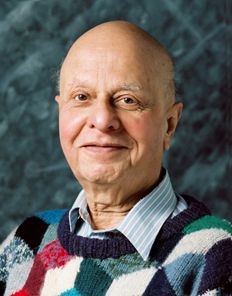
Overview    Benchmark datasets   Assessment            Discussion

More impact than ever before

                                              2021 AI Index

                                                              2 / 37
Overview Benchmark datasets Assessment Discussion
Application areas
• Self-expression
• Language preservation
• Accessibility
• Community building
• Healthcare
• Fraud detection
• Securities trading
• Recommendations
• Advertising
• Surveillance
• Propaganda
• Disinformation
3 / 37Overview Benchmark datasets Assessment Discussion
Application areas
• Self-expression
• Language preservation
• Accessibility
• Community building
• Healthcare
• Fraud detection
• Securities trading
• Recommendations
• Advertising
• Surveillance
• Propaganda
• Disinformation
Donahue et al. 2020
3 / 37Overview Benchmark datasets Assessment Discussion
Application areas
• Self-expression
• Language preservation
• Accessibility
• Community building
• Healthcare
• Fraud detection
• Securities trading
• Recommendations
• Advertising
• Surveillance
• Propaganda
• Disinformation
3 / 37Overview Benchmark datasets Assessment Discussion
Application areas
• Self-expression
• Language preservation
• Accessibility
• Community building
• Healthcare
• Fraud detection
• Securities trading
• Recommendations
• Advertising
• Surveillance
• Propaganda
• Disinformation
3 / 37Overview Benchmark datasets Assessment Discussion
Application areas
• Self-expression
A
O
V
M
I
D
X
DCCC X X
• Language preservation
Government by Algorithm:
• Accessibility Artificial Intelligence in Federal
• Community building Administrative Agencies
REPORT SUBMITTED TO THE ADMINISTRATIVE CONFERENCE OF THE UNITED STATES
• Healthcare
• Fraud detection
• Securities trading
• Recommendations
• Advertising
• Surveillance David Freeman Engstrom, Stanford University
Daniel E. Ho, Stanford University
• Propaganda Catherine M. Sharkey, New York University
Mariano-Florentino Cuéllar, Stanford University and Supreme Court of California
, 2020
• Disinformation
3 / 37Overview Benchmark datasets Assessment Discussion
Application areas
• Self-expression
• Language preservation
• Accessibility
[. . . ]
• Community building
• Healthcare
• Fraud detection
• Securities trading
• Recommendations
• Advertising
• Surveillance
• Propaganda
• Disinformation
3 / 37Overview Benchmark datasets Assessment Discussion
Application areas
• Self-expression
• Language preservation
• Accessibility
Truth, Lies, and
• Community building Automation
• Healthcare x
• Fraud detection
How Language
• Securities trading Models Could
• Recommendations Change Disinformation
• Advertising
• Surveillance
AUTHORS MAY 2021
• Propaganda Ben Buchanan
Andrew Lohn
Micah Musser
Katerina Sedova
• Disinformation
Clark et al. 2021
3 / 37Overview Benchmark datasets Assessment Discussion
Notions of social responsibility
1. Pursuit of knowledge
2. Dissemination of knowledge
3. Utility
4. Consequences
É for the planet
É for study participants and subjects
É for individuals and society
Edsall 1975, 1981
4 / 37Overview Benchmark datasets Assessment Discussion
First rule
Do exactly what you said you would do.
• Accurately charaterize what your dataset/model/system
does and what it does not do.
• Disclosures (e.g., Model Cards, Datasheets)
• Effective communication about context
Raises a different set of challenging questions.
5 / 37Overview Benchmark datasets Assessment Discussion
Limited goals for today
Pernicious
social biases
Approved and Safety in
disapproved uses adversarial contexts
First rule:
Do exactly what you
said you would do
6 / 37Overview Benchmark datasets Assessment Discussion
Roles to have in mind
First rule: Do exactly what you said you would do.
1. Insider : ACL attendee 1. Media : “Robots are better at
reading than humans” [link]
2. Practitioner : Informed
and engaged engineer 2. Insider : For SQuAD, a model
has surpassed our estimate of
3. Leader : Executive with
human performance.
technical training outside
of AI 3. Practitioner : There might be
value in QA models now.
4. Leader : Can we automate our
question answering?
Schlangen 2020
7 / 37Overview Benchmark datasets Assessment Discussion
Overview
1. Benchmark datasets: Delimit responsible use
2. System assessment: Connect with real-world concerns
3. Discussion
8 / 37Overview Benchmark datasets Assessment Discussion
Benchmark datasets
9 / 37Overview Benchmark datasets Assessment Discussion
Seeing farther than ever before
Aravind Joshi: Datasets as the
telescopes of our field
Photo credit: JoshiFest
10 / 37Overview Benchmark datasets Assessment Discussion
Benchmarks saturate faster than ever
Kiela et al. 2021
11 / 37Overview Benchmark datasets Assessment Discussion
Limitations found more quickly
ImageNet
SQuAD
SNLI
PTB
93
95
00
05
10
15
20
19
19
20
20
20
20
20
references
Errors Biases Artifacts Gaps
12 / 37Overview Benchmark datasets Assessment Discussion
Two perspectives on dataset creation
Fixed benchmarks
Benefits Drawbacks
Ease of measurement Community-wide overfitting
Efficiency Deficiencies inevitable
Strathern’s Law: “When a measure becomes a target, it
ceases to be a good measure.”
Nie et al. (2020): “ ‘moving post’ dynamic target”
Benefits Drawbacks
Diversity Expense
Evolving goals Comparisons harder
Can be responsive to evolving needs.
13 / 37Overview Benchmark datasets Assessment Discussion
Dynabench
Dynabench: Rethinking Benchmarking in NLP
Douwe Kiela† , Max Bartolo‡ , Yixin Nie? , Divyansh Kaushik§ , Atticus Geiger¶ ,
Zhengxuan Wu¶ , Bertie Vidgenk , Grusha Prasad?? , Amanpreet Singh† , Pratik Ringshia† ,
Zhiyi Ma† , Tristan Thrush† , Sebastian Riedel†‡ , Zeerak Waseem†† , Pontus Stenetorp‡ ,
Robin Jia† , Mohit Bansal? , Christopher Potts¶ and Adina Williams†
†
Facebook AI Research; ‡ UCL; ? UNC Chapel Hill; § CMU; ¶ Stanford University
k
Alan Turing Institute; ?? JHU; †† Simon Fraser University
dynabench@fb.com
Abstract
We introduce Dynabench, an open-source plat-
form for dynamic dataset creation and model
benchmarking. Dynabench runs in a web
browser and supports human-and-model-in-
the-loop dataset creation: annotators seek to
create examples that a target model will mis-
classify, but that another person will not. In
this paper, we argue that Dynabench addresses
a critical need in our community: contempo-
rary models quickly achieve outstanding per-
14 / 37Overview Benchmark datasets Assessment Discussion
Dynabench
https://dynabench.org
14 / 37Overview Benchmark datasets Assessment Discussion
Dynamics of dynamic datasets
1. SWAG to BERT to HellaSWAG (Zellers et al. 2018, 2019)
2. Adversarial NLI (Nie et al. 2020)
3. Beat the AI (Bartolo et al. 2020)
4. Dynabench Hate Speech (Vidgen et al. 2020)
5. DynaSent (Potts et al. 2021)
6. Dynabench QA
15 / 37Overview Benchmark datasets Assessment Discussion
Dataset papers
1. Standard: Motivation
2. Standard: Construction
3. Standard: Model evaluations
4. Proposed: Delimiting responsible use
Datasheets: “Is there anything about the composition of
the dataset [. . . ] that might impact future uses?”
É Reaching the well-intentioned user
Gebru et al. 2018; NeurIPS Datasets & Benchmarks track
16 / 37Overview Benchmark datasets Assessment Discussion
Looking back on the SST
Recursive Deep Models for Semantic Compositionality
Over a Sentiment Treebank
Richard Socher, Alex Perelygin, Jean Y. Wu, Jason Chuang,
Christopher D. Manning, Andrew Y. Ng and Christopher Potts
Stanford University, Stanford, CA 94305, USA
richard@socher.org,{aperelyg,jcchuang,ang}@cs.stanford.edu
{jeaneis,manning,cgpotts}@stanford.edu
Abstract Professional evaluations? Literary analysis?
Healthcare? –
0 –
Semantic word spaces have been very use-
Practitioner
0
Leader
0 – 0
.
This film
ful but cannot express the meaning of longer – 0
phrases in a principled way. Further progress 0 0 + +
does n’t care
towards understanding compositionality in 0 +
Socher et al. 2013
about
tasks such as sentiment detection requires + +
richer supervised training and evaluation re- + 0 0 +
or 17 / 37Overview Benchmark datasets Assessment Discussion
Assessment
18 / 37Overview Benchmark datasets Assessment Discussion
Notions of assessment
• Our apparent relentness pursuit of F1 (and friends)
• Empowering users
• Estimating human performance
19 / 37Overview Benchmark datasets Assessment Discussion
Metrics and application areas
• Missing a safety signal costs lives; human review is feasible
• Exemplars need to be found in a massive dataset
• Specific mistakes are deal-breakers; others hardly matter
• Cases need to be prioritized
• The solution needs to work over an aging cell network
• The solution cannot provide worse service to specific groups
• Specific predictions need to be blocked
Our (apparent) answer: F1 and friends
Practitioner Leader
20 / 37Overview Benchmark datasets Assessment Discussion
What we seem to value
The Values Encoded in Machine Learning Research
Abeba Birhane⇤ Pratyusha Kalluri* Dallas Card*
University College Dublin & Lero Stanford University Stanford University
Dublin, Ireland pkalluri@stanford.edu dcard@stanford.edu
abeba.birhane@ucdconnect.ie
William Agnew* Ravit Dotan* Michelle Bao*
University of Washington University of California, Berkeley Stanford University
wagnew3@cs.washington.edu ravit.dotan@berkeley.edu baom@stanford.edu
Abstract
Machine learning (ML) currently exerts an outsized influence on the world, in-
creasingly affecting communities and institutional practices. It is therefore critical
21 / 37Overview Benchmark datasets Assessment Discussion
What we seem to value
Selected ‘Values encoded in ML research’ from Birhane et al. (2021):
Performance
Efficiency
Interpretability (for researchers)
Applicability in the real world
Robustness
Scalability
Interpretability (for users)
Benificence
Privacy
Fairness
Justice
21 / 37Overview Benchmark datasets Assessment Discussion
What we seem to value
Selected ‘Values encoded in ML research’ from Birhane et al. (2021):
Performance
21 / 37Overview Benchmark datasets Assessment Discussion
Towards multidimensional leaderboards
Dodge et al. 2019; Ethayarajh and Jurafsky 2020
22 / 37Overview Benchmark datasets Assessment Discussion
Dynabench and Dynascore
8
2 2 2 2
Model Performance Throughput Memory Fairness Robustness Dynascore
DeBERTa 76.25 4.47 6.97 88.33 90.06 45.92
ELECTRA-large 76.07 2.37 25.30 93.13 91.64 45.79
RoBERTa 69.67 6.88 6.17 88.32 86.10 42.54
ALBERT 68.63 6.85 2.54 87.44 80.90 41.74
BERT 57.14 6.70 5.55 91.45 80.81 36.07
BiDAF 53.48 10.71 3.60 80.79 77.03 33.96
Unrestricted T5 28.80 4.51 10.69 92.32 88.41 22.18
Return Context 5.99 89.80 1.10 95.97 91.61 15.47
Question answering
Ma et al. 2021; https://dynabench.org
23 / 37Overview Benchmark datasets Assessment Discussion
Dynabench and Dynascore
8
5
1 1 1
Model Performance Throughput Memory Fairness Robustness Dynascore
DeBERTa 76.25 4.47 6.97 88.33 90.06 46.70
ELECTRA-large 76.07 2.37 25.30 93.13 91.64 46.86
RoBERTa 69.67 6.88 6.17 88.32 86.10 43.37
ALBERT 68.63 6.85 2.54 87.44 80.90 42.66
BERT 57.14 6.70 5.55 91.45 80.81 37.17
BiDAF 53.48 10.71 3.60 80.79 77.03 34.62
Unrestricted T5 28.80 4.51 10.69 92.32 88.41 23.19
Return Context 5.99 89.80 1.10 95.97 91.61 14.29
Question answering
Ma et al. 2021; https://dynabench.org
23 / 37Overview Benchmark datasets Assessment Discussion
New directions for neural IR – think of the User !
24 / 37Overview Benchmark datasets Assessment Discussion
New directions for neural IR – think of the User !
When was Stanford University founded?
" Provenance
Term look-up
" Updatability
% Synthesis
founded doc47 , doc39 , doc41 , . . .
fountain doc21 , doc64 , doc16 , . . .
..
.
Stamford doc21 , doc11 , doc17 , . . .
Stanford doc47 , doc39 , doc68 , . . .
..
.
University doc21 , doc39 , doc68 , . . .
Document scoring
doc39 A History of Stanford University
doc47 Stanford University – Wikipedia
doc64 Stanford University About Page
24 / 37Overview Benchmark datasets Assessment Discussion
New directions for neural IR – think of the User !
When was Stanford University founded?
% Provenance
% Updatability
" Synthesis
Stanford University was founded in 1891.
Metzler et al. 2021
24 / 37Overview Benchmark datasets Assessment Discussion
New directions for neural IR – think of the User !
When was Stanford University founded?
" Provenance
" Updatability
0.5 0.1 0.9 0.2
" Synthesis
0.6 0.1 0.7 0.2
0.4 0.4 0.1 0.2 Scoring and
extraction
0.2 0.4 0.7 0.6
“Stanford University was founded in 1885 by California sena-
tor Leland Stanford and his wife, Jane”
A History of Stanford University
“Stanford was founded in 1885 by Leland and Jane Stanford
in memory of their only child, Leland Stanford Jr.”
Stanford University – Wikipedia Khattab et al. 2021
“Opened in 1891”
Stanford University About Page
24 / 37Overview Benchmark datasets Assessment Discussion
Estimating human performance
Premise Label Hypothesis
A dog jumping neutral A dog wearing a sweater
turtle contradiction linguist
A photo of a race horse ? A photo of an athlete
A chef using a barbecue ? A person using a machine
Human response throughout: “Let’s discuss”
“Human performance” ≈ Average performance of harried crowdworkers
doing a machine task repeatedly
Pavlick and Kwiatkowski 2019
25 / 37Overview Benchmark datasets Assessment Discussion
Summary
Assessment today
• One-dimensional
• Largely insensitive to context (use-case)
• Terms set by the research community
• Opaque
• Tailored to machine tasks
Assessments in the future
• High-dimensional and fluid
• Highly sensitive to context (use-case)
• Terms set by the stakeholders
• Judgments ultimately made by users
• Tailored to human tasks (?)
26 / 37Overview Benchmark datasets Assessment Discussion
Discussion
27 / 37Overview Benchmark datasets Assessment Discussion
Opportunities and social responsibilities
• Self-expression
• Language preservation
• Accessibility 1. Insider : ACL attendee
• Community building 2. Practitioner : Informed
• Healthcare and engaged engineer
• Fraud detection 3. Leader : Executive with
• Securities trading technical training outside
of AI
• Recommendations
4. User : Someone deriving
• Advertising
value from an NLP-driven
• Surveillance system
• Propaganda
• Disinformation
28 / 37Overview Benchmark datasets Assessment Discussion
First Rule . . . of many
Pernicious
social biases
Approved and Safety in
disapproved uses adversarial contexts
First rule:
Do exactly what you
said you would do
29 / 37Overview Benchmark datasets Assessment Discussion
Translational research efforts
AI will call for unique solutions, but these examples might be
inspiring:
• National Center for Advancing Translational Sciences
• The Translational Research Institute for Space Health
• Mapping Educational Specialist KnowHow (MESH)
• Nutrition labels on foods
(cf. https://datanutrition.org)
30 / 37Overview Benchmark datasets Assessment Discussion
Components and consequences
• Informing well-intentioned potential users of your ideas.
• Components:
É Datasets
É Assessment
É Structural evaluation methods: Probing, feature
attribution, causal abstraction, . . .
É Licensing of data, code, models
É Valuing tools as major contributions
É Accurate naming of concepts (Mitchell 2021; Lipton
and Steinhardt 2019)
É ...
• Consequences:
É More multifaceted scientific goals
É More success out in the wider world
Thanks!
31 / 37References References for the benchmark timeline
References I
Max Bartolo, Alastair Roberts, Johannes Welbl, Sebastian Riedel, and Pontus Stenetorp. 2020. Beat the AI: Investigating
adversarial human annotation for reading comprehension. Transactions of the Association for Computational
Linguistics, 8:662–678.
Yonatan Belinkov, Adam Poliak, Stuart Shieber, Benjamin Van Durme, and Alexander Rush. 2019. Don’t take the premise
for granted: Mitigating artifacts in natural language inference. In Proceedings of the 57th Annual Meeting of the
Association for Computational Linguistics, pages 877–891, Florence, Italy. Association for Computational Linguistics.
Abeba Birhane, Pratyusha Kalluri, Dallas Card, William Agnew, Ravit Dotan, and Michelle Bao. 2021. The values encoded in
machine learning research. arXiv preprint arXiv:2106.15590.
Samuel R. Bowman, Gabor Angeli, Christopher Potts, and Christopher D. Manning. 2015. A large annotated corpus for
learning natural language inference. In Proceedings of the 2015 Conference on Empirical Methods in Natural
Language Processing, pages 632–642, Stroudsburg, PA. Association for Computational Linguistics.
Adriane Boyd, Markus Dickinson, and Detmar Meurers. 2008. On detecting errors in dependency treebanks. Research on
Language and Computation, 6(2):113–137.
Ben Buchanan, Andrew Lohn, Micah Musser, and Katerina Sedova. 2021. Truth, lies, and automation. Center for Security
and Emerging Technology.
Elizabeth Clark, Tal August, Sofia Serrano, Nikita Haduong, Suchin Gururangan, and Noah A Smith. 2021. All that’s
‘human’ is not gold: Evaluating human evaluation of generated text. In Proceedings of the 59th Annual Meeting of the
Association for Computational Linguistics and the 11th International Joint Conference on Natural Language Processing
(Volume 1: Long Papers), pages 7282–7296, Online. Association for Computational Linguistics.
Cody Coleman, Deepak Narayanan, Daniel Kang, Tian Zhao, Jian Zhang, Luigi Nardi, Peter Bailis, Kunle Olukotun, Chris Ré,
and Matei Zaharia. 2017. Dawnbench: An end-to-end deep learning benchmark and competition. Training,
100(101):102.
Kate Crawford and Trevor Paglen. 2021. Excavating ai: The politics of images in machine learning training sets. AI &
SOCIETY, pages 1–12.
Jia Deng, Wei Dong, Richard Socher, Li-Jia Li, Kai Li, and Li Fei-Fei. 2009. Imagenet: A large-scale hierarchical image
database. In 2009 IEEE conference on computer vision and pattern recognition, pages 248–255. Ieee.
Jia Deng, Olga Russakovsky, Jonathan Krause, Michael S Bernstein, Alex Berg, and Li Fei-Fei. 2014. Scalable multi-label
annotation. In Proceedings of the SIGCHI Conference on Human Factors in Computing Systems, pages 3099–3102.
Markus Dickinson and W. Detmar Meurers. 2003a. Detecting errors in part-of-speech annotation. In 10th Conference of the
European Chapter of the Association for Computational Linguistics, Budapest, Hungary. Association for Computational
Linguistics.
Markus Dickinson and W. Detmar Meurers. 2005. Detecting errors in discontinuous structural annotation. In Proceedings of
the 43rd Annual Meeting of the Association for Computational Linguistics (ACL’05), pages 322–329, Ann Arbor,
Michigan. Association for Computational Linguistics.
32 / 37References References for the benchmark timeline
References II
Markus Dickinson and Walt Detmar Meurers. 2003b. Detecting inconsistencies in treebanks. In Proceedings of the Second
Workshop on Treebanks and Linguistic Theories.
Jesse Dodge, Suchin Gururangan, Dallas Card, Roy Schwartz, and Noah A Smith. 2019. Show your work: Improved
reporting of experimental results. In Proceedings of the 2019 Conference on Empirical Methods in Natural Language
Processing and the 9th International Joint Conference on Natural Language Processing (EMNLP-IJCNLP), pages
2185–2194, Hong Kong, China. Association for Computational Linguistics.
Chris Donahue, Mina Lee, and Percy Liang. 2020. Enabling language models to fill in the blanks. In Proceedings of the 58th
Annual Meeting of the Association for Computational Linguistics, pages 2492–2501, Online. Association for
Computational Linguistics.
John T. Edsall. 1975. Scientific freedom and responsibility. Science, 188(4189):687–693.
John T. Edsall. 1981. Two aspects of scientific responsibility. Science, 212(4490):11–14.
David Freeman Engstrom, Daniel E Ho, Catherine M Sharkey, and Mariano-Florentino Cuéllar. 2020. Government by
algorithm: Artificial intelligence in federal administrative agencies. NYU School of Law, Public Law Research Paper,
(20-54).
Eleazar Eskin. 2000. Detecting errors within a corpus using anomaly detection. In 1st Meeting of the North American
Chapter of the Association for Computational Linguistics.
Kawin Ethayarajh and Dan Jurafsky. 2020. Utility is in the eye of the user: A critique of NLP leaderboards. In Proceedings of
the 2020 Conference on Empirical Methods in Natural Language Processing (EMNLP), pages 4846–4853, Online.
Association for Computational Linguistics.
Timnit Gebru, Jamie Morgenstern, Briana Vecchione, Jennifer Wortman Vaughan, Hanna Wallach, Hal Daumeé III, and Kate
Crawford. 2018. Datasheets for datasets. arXiv preprint arXiv:1803.09010.
Max Glockner, Vered Shwartz, and Yoav Goldberg. 2018. Breaking NLI systems with sentences that require simple lexical
inferences. In Proceedings of the 56th Annual Meeting of the Association for Computational Linguistics (Volume 2:
Short Papers), pages 650–655, Melbourne, Australia. Association for Computational Linguistics.
Suchin Gururangan, Swabha Swayamdipta, Omer Levy, Roy Schwartz, Samuel Bowman, and Noah A. Smith. 2018.
Annotation artifacts in natural language inference data. In Proceedings of the 2018 Conference of the North American
Chapter of the Association for Computational Linguistics: Human Language Technologies, Volume 2 (Short Papers),
pages 107–112, New Orleans, Louisiana. Association for Computational Linguistics.
Hans van Halteren. 2000. The detection of inconsistency in manually tagged text. In Proceedings of the COLING-2000
Workshop on Linguistically Interpreted Corpora, pages 48–55, Centre Universitaire, Luxembourg. International
Committee on Computational Linguistics.
Omar Khattab, Christopher Potts, and Matei Zaharia. 2021. A moderate proposal for radically better AI-powered Web
search. Stanford HAI Blog.
33 / 37References References for the benchmark timeline
References III
Douwe Kiela, Max Bartolo, Yixin Nie, Divyansh Kaushik, Atticus Geiger, Zhengxuan Wu, Bertie Vidgen, Grusha Prasad,
Amanpreet Singh, Pratik Ringshia, Zhiyi Ma, Tristan Thrush, Sebastian Riedel, Zeerak Waseem, Pontus Stenetorp,
Robin Jia, Mohit Bansal, Christopher Potts, and Adina Williams. 2021. Dynabench: Rethinking benchmarking in NLP. In
Proceedings of the 2021 Conference of the North American Chapter of the Association for Computational Linguistics:
Human Language Technologies, pages 4110–4124, Online. Association for Computational Linguistics.
Patrick Lewis, Pontus Stenetorp, and Sebastian Riedel. 2021. Question and answer test-train overlap in open-domain
question answering datasets. In Proceedings of the 16th Conference of the European Chapter of the Association for
Computational Linguistics: Main Volume, pages 1000–1008, Online. Association for Computational Linguistics.
Zachary Chase Lipton and Jacob Steinhardt. 2019. Troubling trends in machine learning scholarship. Queue, 17:45 – 77.
Pengfei Liu, Jinlan Fu, Yang Xiao, Weizhe Yuan, Shuaicheng Chang, Junqi Dai, Yixin Liu, Zihuiwen Ye, and Graham Neubig.
2021. Explainaboard: An explainable leaderboard forNLP. arXiv preprint arXiv:2104.06387.
Zhiyi Ma, Kawin Ethayarajh, Tristan Thrush, Somya Jain, Ledell Wu, Robin Jia, Christopher Potts, Adina Williams, and Douwe
Kiela. 2021. Dynaboard: An evaluation-as-a-service platform for holistic next-generation benchmarking. Ms., Facebook
AI Research and Stanford University.
Christopher D. Manning. 2011. Part-of-speech tagging from 97% to 100%: Is it time for some linguistics? In Proceedings of
the 12th International Conference on Computational Linguistics and Intelligent Text Processing – Part I, number 6608
in Lecture Notes in Computer Science, pages 171–189. Springer, Berlin.
Mitchell P. Marcus, Beatrice Santorini, and Mary A. Marcinkiewicz. 1994. Building a large annotated corpus of English: The
Penn Treebank. Computational Linguistics, 19(2):313–330.
Tom McCoy, Ellie Pavlick, and Tal Linzen. 2019. Right for the wrong reasons: Diagnosing syntactic heuristics in natural
language inference. In Proceedings of the 57th Annual Meeting of the Association for Computational Linguistics, pages
3428–3448, Florence, Italy. Association for Computational Linguistics.
Donald Metzler, Yi Tay, Dara Bahri, and Marc Najork. 2021. Rethinking search: Making experts out of dilettantes. arXiv
preprint arXiv:2105.02274.
Melanie Mitchell. 2021. Why AI is harder than we think. arXiv preprint arXiv:2104.12871.
Aakanksha Naik, Abhilasha Ravichander, Norman Sadeh, Carolyn Rose, and Graham Neubig. 2018. Stress test evaluation
for natural language inference. In Proceedings of the 27th International Conference on Computational Linguistics,
pages 2340–2353, Santa Fe, New Mexico, USA. Association for Computational Linguistics.
Yixin Nie, Adina Williams, Emily Dinan, Mohit Bansal, Jason Weston, and Douwe Kiela. 2020. Adversarial NLI: A new
benchmark for natural language understanding. In Proceedings of the 58th Annual Meeting of the Association for
Computational Linguistics, pages 4885–4901, Online. Association for Computational Linguistics.
Curtis Northcutt, Lu Jiang, and Isaac Chuang. 2021. Confident learning: Estimating uncertainty in dataset labels. Journal of
Artificial Intelligence Research, 70:1373–1411.
Ellie Pavlick and Tom Kwiatkowski. 2019. Inherent disagreements in human textual inferences. Transactions of the
Association for Computational Linguistics, 7:677–694.
34 / 37References References for the benchmark timeline
References IV
Adam Poliak, Jason Naradowsky, Aparajita Haldar, Rachel Rudinger, and Benjamin Van Durme. 2018. Hypothesis only
baselines in natural language inference. In Proceedings of the Seventh Joint Conference on Lexical and Computational
Semantics, pages 180–191, New Orleans, Louisiana. Association for Computational Linguistics.
Christopher Potts, Zhengxuan Wu, Atticus Geiger, and Douwe Kiela. 2021. DynaSent: A dynamic benchmark for sentiment
analysis. In Proceedings of the 59th Annual Meeting of the Association for Computational Linguistics and the 11th
International Joint Conference on Natural Language Processing (Volume 1: Long Papers), pages 2388–2404, Online.
Association for Computational Linguistics.
Pranav Rajpurkar, Robin Jia, and Percy Liang. 2018. Know what you don’t know: Unanswerable questions for squad. In
Proceedings of the 56th Annual Meeting of the Association for Computational Linguistics (Volume 2: Short Papers),
pages 784–789. Association for Computational Linguistics.
Pranav Rajpurkar, Jian Zhang, Konstantin Lopyrev, and Percy Liang. 2016. Squad: 100,000+ questions for machine
comprehension of text. In Proceedings of the 2016 Conference on Empirical Methods in Natural Language Processing,
pages 2383–2392. Association for Computational Linguistics.
Benjamin Recht, Rebecca Roelofs, Ludwig Schmidt, and Vaishaal Shankar. 2019. Do ImageNet classifiers generalize to
ImageNet? In Proceedings of the 36th International Conference on Machine Learning, volume 97 of Proceedings of
Machine Learning Research, pages 5389–5400, Long Beach, California, USA. PMLR.
Rachel Rudinger, Chandler May, and Benjamin Van Durme. 2017. Social bias in elicited natural language inferences. In
Proceedings of the First ACL Workshop on Ethics in Natural Language Processing, pages 74–79, Valencia, Spain.
Association for Computational Linguistics.
David Schlangen. 2020. Targeting the benchmark: On methodology in current natural language processing research. arXiv
preprint arXiv:2007.04792.
Vincent Sitzmann, Martina Marek, and Leonid Keselman. 2016. Multimodal natural language inference. Final paper,
CS224u, Stanford University.
Richard Socher, Alex Perelygin, Jean Wu, Jason Chuang, Christopher D. Manning, Andrew Y. Ng, and Christopher Potts.
2013. Recursive deep models for semantic compositionality over a sentiment treebank. In Proceedings of the 2013
Conference on Empirical Methods in Natural Language Processing, pages 1631–1642, Stroudsburg, PA. Association for
Computational Linguistics.
Abigale Stangl, Meredith Ringel Morris, and Danna Gurari. 2020. "person, shoes, tree. is the person naked?" what people
with vision impairments want in image descriptions. In Proceedings of the 2020 CHI Conference on Human Factors in
Computing Systems, pages 1–13, New York, NY, USA. Association for Computing Machinery.
Pierre Stock and Moustapha Cisse. 2018. Convnets and imagenet beyond accuracy: Understanding mistakes and
uncovering biases. In Proceedings of the European Conference on Computer Vision (ECCV), pages 498–512.
Saku Sugawara, Kentaro Inui, Satoshi Sekine, and Akiko Aizawa. 2018. What makes reading comprehension questions
easier? In Proceedings of the 2018 Conference on Empirical Methods in Natural Language Processing, pages
4208–4219, Brussels, Belgium. Association for Computational Linguistics.
35 / 37References References for the benchmark timeline
References V
Masatoshi Tsuchiya. 2018. Performance impact caused by hidden bias of training data for recognizing textual entailment.
In Proceedings of the 11th Language Resources and Evaluation Conference, Miyazaki, Japan. European Language
Resource Association.
Bertie Vidgen, Tristan Thrush, Zeerak Waseem, and Douwe Kiela. 2020. Learning from the worst: Dynamically generated
datasets to improve online hate detection. arXiv prerint arXiv:2012.15761.
Dirk Weissenborn, Georg Wiese, and Laura Seiffe. 2017. Making neural QA as simple as possible but not simpler. In
Proceedings of the 21st Conference on Computational Natural Language Learning (CoNLL 2017), pages 271–280,
Vancouver, Canada. Association for Computational Linguistics.
Kaiyu Yang, Klint Qinami, Li Fei-Fei, Jia Deng, and Olga Russakovsky. 2020. Towards fairer datasets: Filtering and balancing
the distribution of the people subtree in the imagenet hierarchy. In Proceedings of the 2020 Conference on Fairness,
Accountability, and Transparency, pages 547–558.
Rowan Zellers, Yonatan Bisk, Roy Schwartz, and Yejin Choi. 2018. SWAG: A large-scale adversarial dataset for grounded
commonsense inference. In Proceedings of the 2018 Conference on Empirical Methods in Natural Language
Processing, pages 93–104, Brussels, Belgium. Association for Computational Linguistics.
Rowan Zellers, Ari Holtzman, Yonatan Bisk, Ali Farhadi, and Yejin Choi. 2019. HellaSwag: Can a machine really finish your
sentence? In Proceedings of the 57th Annual Meeting of the Association for Computational Linguistics, pages
4791–4800, Florence, Italy. Association for Computational Linguistics.
36 / 37References References for the benchmark timeline
References for the benchmark timeline
Penn Treebank (Marcus et al. 1994) SQuAD (Rajpurkar et al. 2016, 2018)
1. van Halteren 2000 E 1. Weissenborn et al. 2017 A
2. Eskin 2000 E 2. Sugawara et al. 2018 A
3. Dickinson and Meurers 2003a E 3. Bartolo et al. 2020 A
4. Dickinson and Meurers 2003b E 4. Lewis et al. 2021 A
5. Dickinson and Meurers 2005 E
6. Boyd et al. 2008 E ImageNet (Deng et al. 2009)
7. Manning 2011 E
1. Deng et al. 2014 G
2. Stock and Cisse 2018 B
SNLI (Bowman et al. 2015)
3. Yang et al. 2020 B
1. Sitzmann et al. 2016 A 4. Recht et al. 2019 E
2. Rudinger et al. 2017 S 5. Northcutt et al. 2021 E
3. Naik et al. 2018 G 6. Crawford and Paglen 2021 B
4. Glockner et al. 2018 G
5. Naik et al. 2018 G
6. Poliak et al. 2018 A
7. Tsuchiya 2018 A
8. Gururangan et al. 2018 A
9. Belinkov et al. 2019 A
10. McCoy et al. 2019 A
timeline slide
37 / 37You can also read


