Teacher Assessed Grades Policy - London Design ...
←
→
Page content transcription
If your browser does not render page correctly, please read the page content below
Teacher Assessed Grades
                 Policy

Prepared by               Victoria Webb, VP, LDE UTC
Acknowledgements          Geoffrey Fowler, CEO, LDE UTC
                          Mark Watson, AP, LDE UTC
                          Kenan Drugzani, AP LDE UTC
Date Last Approved        25th March 2021
Policy Approved by        Board of Directors
Version                   2
Next Policy Review Date
Version Control Table
  Version              Date                     Amended by                   Rationale
  1                    05/03/2021               Victoria Webb                Original policy

  1.1                  10/03/2021               Victoria Webb                Following staff consultation, we have removed formative assessment from
                                                                             the evidence report and added in a further statement.
  1.2                  24/03/2021               Victoria Webb                Terminology change from Teacher Judgements to Teacher Assessed
                                                                             Grades (TAGs) following Ofqual’s guidance on making objective judgments.
                                                                             Additional paragraph added regarding evidence folders.
  2                    29/03/2021               Geoffrey Fowler              Updated with the release of JCQ’s Centre Policy Template

Policy Coverage

                                               THE POLICY APPLIES OR COVERS THE FOLLOWING GROUPS

  Type of Learner                                                Tick (✓)          Type of Stakeholder                                                            Tick (✓)
  Key Stage 3 (KS3) Carousel                                                       Teaching Staff                                                                      ✓
  Key Stage 4 (KS4) GCSE                                              ✓            Education Support Staff                                                             ✓
  Key Stage 5 (KS5) Level 2                                           ✓            Administrative Support Staff                                                        ✓
  Key Stage 5 (KS5) Level 3                                           ✓            Directors                                                                           ✓
  Key Stage 5 (KS5) A Levels                                          ✓            Employers                                                                           ✓
  Apprentices                                                         ✓            Visitors / Contractors

Contents
Policy Aims ....................................................................................................................................................................... 3
Statement of intent........................................................................................................................................................... 4
      What has Ofqual said? ................................................................................................................................................... 4
Roles and Responsibilities ............................................................................................................................................. 4
      Head of Centre ............................................................................................................................................................... 4
      Strategic Team, Leadership Team and Curriculum Leads .............................................................................................. 4
      Teachers/ Specialist Teachers / SENCo .......................................................................................................................... 5
      Examinations Officer ...................................................................................................................................................... 5
Training ............................................................................................................................................................................. 5
Support for Newly Qualified Teacher and teachers less familiar with assessment ................................................. 5
Use of evidence ................................................................................................................................................................ 5
      Additional Assessment Materials ................................................................................................................................... 6
      Awarding teacher assessed grades based on evidence ................................................................................................. 6
      Internal quality assurance .............................................................................................................................................. 6
      Comparison of Teacher Assessed Grades to results for previous cohorts ..................................................................... 7
      Reasonable adjustments and mitigating circumstances (special consideration) ........................................................... 7
      Addressing Disruption/Differentiated Lost Learning (DLL) ............................................................................................. 8
      Objectivity ...................................................................................................................................................................... 8
      Recording Decisions and Retention of Evidence and Data ............................................................................................. 8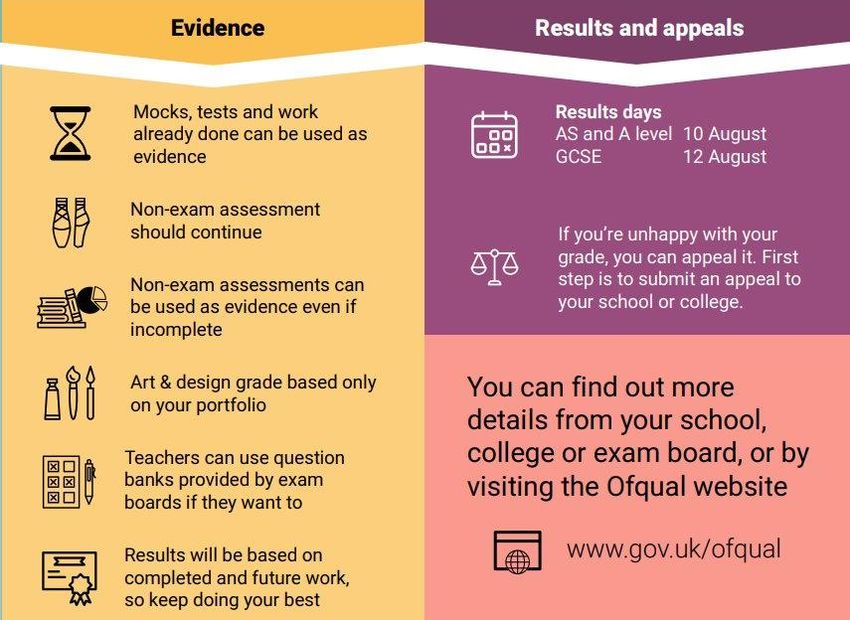
Authenticating Evidence ................................................................................................................................................ 8
Confidentiality, malpractice and conflicts of interest .................................................................................................. 9
   Confidentiality ................................................................................................................................................................ 9
   Malpractice .................................................................................................................................................................... 9
   Conflicts of Interest ........................................................................................................................................................ 9
Private candidates ......................................................................................................................................................... 10
External Quality Assurance .......................................................................................................................................... 10
Results ............................................................................................................................................................................ 10
Appeals ........................................................................................................................................................................... 10
Timelines and key dates ................................................................................................................................................ 11
Communicating grades ................................................................................................................................................. 11
What DATA will LDE UTC use and how will it be collected. (Procedures) .............................................................. 11
   Attendance ................................................................................................................................................................... 12
   Behaviour and exclusions ............................................................................................................................................. 12
   Milestone Assessments ................................................................................................................................................ 12
   Formative and summative assessments....................................................................................................................... 12
   External assessments ................................................................................................................................................... 13
   Teachers final standardised assessments (TFSAs) ........................................................................................................ 13
      Learner appeals on Teacher Assessed Grades (TAGs) .......................................................................................... 14
      Teacher Assessed Grades (TAGs) Evidence folders............................................................................................... 14
      Links with other policies ............................................................................................................................................ 14
   ANNEX A First sitting Teachers Final Standardised Assessment (TFSA) schedule ........................................................ 15
   ANNEX B Second sitting TFSA schedule ........................................................................................................................ 16
   ANNEX C Teacher Evidence Overview Report – (blank template):............................................................................... 17
   ANNEX D Teacher Evidence Overview Report – (exemplar): ....................................................................................... 19
   ANNEX E Examples of formative and summative assessment feedback ...................................................................... 21

Policy Aims
The purpose of this policy is to set out how LDE UTC will use the information collected internally from teachers and
eternally through moderation or public examinations to award learners in years 11, year 12 level 2 and year 13 with
their final subject grades for the summer of 2021.
This is the second cohort of learners who will face extraordinary measures for how their grades have been calculated
due to the Covid-19 Pandemic. As a result of the disruption caused to staff and learners due to the closure of colleges
and thus having reduced face to face lessons.
On Thursday the 25th February, Ofqual announced how qualifications would be awarded during the summer of 2021.
This follows on from their consultation launched on the 2021 exam replacement published on the 15th January 2021.
You can also read the statement from the DfE on awarding qualifications in summer 2021.
24th March, Ofqual issued information for centres about making objective judgements.
26th March, JCQ issued https://www.jcq.org.uk/summer-2021-arrangements/
This policy and procedure may be subject to change as and when the DfE, Ofqual or the exams boards update their
guidance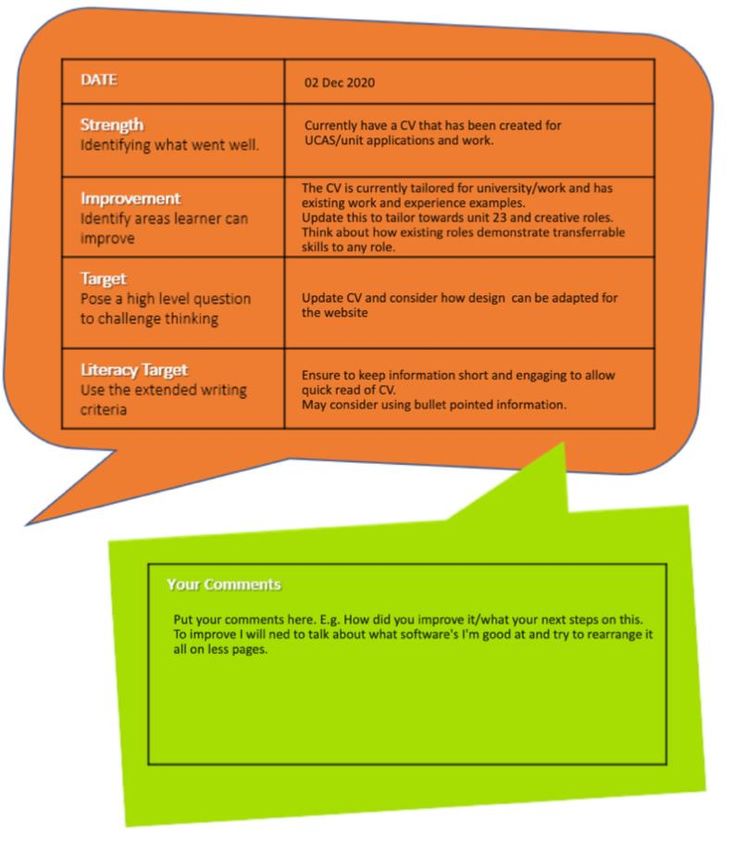
Statement of intent
The purpose of this policy is:

    •   To ensure that teacher assessed grades are determined fairly, consistently, free from bias and effectively
        within and across departments.
    •   To ensure the operation of effective processes with clear guidelines and support for staff.
    •   To ensure that all staff involved in the processes clearly understand their roles and responsibilities.
    •   To support teachers to take evidence-based decisions in line with Joint Council for Qualifications guidance.
    •   To ensure the consideration of historical centre data in the process, and the appropriate decision making in
        respect of, teacher assessed grades.
    •   To support a high standard of internal quality assurance in the allocation of teacher assessed grades.
    •   To support our centre in meeting its obligations in relation to equality legislation.
    •   To ensure our centre meets all requirements set out by the Department of Education, Ofqual, the Joint
        Council for Qualifications and awarding organisations for Summer 2021 qualifications.
    •   To ensure the process for communicating to candidates and their parents/carers how they will be assessed is
        clear, in order to give confidence.

What has Ofqual said?
     Vocational and technical        GCSE, AS and A level                    Evidence, results and appeals
          qualifications                qualifications

Roles and Responsibilities
This section gives details of the roles and responsibilities within our centre:

Head of Centre
   • Our Head of Centre, Geoffrey Fowler CEO and Principal, will be responsible for approving our policy for
      determining teacher assessed grades.
    •   Our Head of Centre has overall responsibility for the college as an examinations centre and will ensure that
        clear roles and responsibilities of all staff are defined.
    •   Our Head of Centre will confirm that teacher assessed grade decisions represent the academic judgement
        made by teachers and that the checks in place ensure these align with the guidance on standards provided by
        awarding organisations.
    •   Our Head of Centre will ensure a robust internal quality assurance process has been produced and signed-off
        in advance of results being submitted.

Strategic Team, Leadership Team and Curriculum Leads
Our Strategic Team, Leadership Team and Curriculum Leads will:

    •   provide training and support to our other staff.
    •   support the Head of Centre in the quality assurance of the final teacher assessed grades.
    •   ensure an effective approach within and across curriculum areas and authenticating the preliminary outcome
        from single teacher subjects.
•   be responsible for ensuring staff have a clear understanding of the internal and external quality assurance
        processes and their role within it.
    •   ensure that all teachers within their curriculum area make consistent judgements about learner evidence in
        deriving a grade.
    •   ensure all staff conduct assessments under the appropriate levels of control with reference to guidance
        provided by the Joint Council for Qualifications.
    •   ensure teachers have the information required to make accurate and fair judgments.
    •   ensure that a Curriculum Lead Checklist is completed for each qualification that they are submitting.

Teachers/ Specialist Teachers / SENCo
Our teachers, specialist teachers and SENCo will:

    •   ensure they conduct assessments under our centre’s appropriate levels of control and have sufficient evidence,
        in line with this Centre Policy and guidance from the Joint Council for Qualifications, to provide teacher
        assessed grades for each learner they have entered for a qualification.
    •   ensure that the teacher assessed grade they assign to each learner is a fair, valid and reliable reflection of the
        assessed evidence available for each learner.
    •   make judgements based on what each learner has been taught and what they have been assessed on, as
        outlined in the section on grading in the main JCQ guidance.
    •   produce an Assessment Record for each subject cohort, that includes the nature of the assessment evidence
        being used, the level of control for assessments considered, and any other evidence that explains the
        determination of the final teacher assessed grades. Any necessary variations for individual learners will also be
        recorded.
    •   securely store and be able to retrieve sufficient evidence to justify their decisions.

Examinations Officer
Our Examinations Officer will:

    •   be responsible for the administration of our final teacher assessed grades and for managing the post-results
        services.
Training
This section provides details of the approach our centre will take to training, support and guidance in determining
teacher assessed grades this year

    •   Teachers involved in determining grades in our centre will attend any centre-based training to help achieve
        consistency and fairness to all learners.
    •   Teachers will engage fully with all training and support that has been provided by the Joint Council for
        Qualifications and the awarding organisations.

Support for Newly Qualified Teacher and teachers less familiar with assessment
This section provides details of our approach to training, support and guidance for newly qualified teachers and teachers
less familiar with assessment

    •   We will provide mentoring from experienced teachers to NQTs and teachers less familiar with assessment.
    •   We will put in place additional internal reviews of teacher assessed grades for NQTs and other teachers as
        appropriate.

Use of evidence
This section gives details in relation to our use of evidence.

    •   Teachers making judgements will have regard to the Ofqual Head of Centre guidance on recommended
        evidence, and further guidance provided by awarding organisations.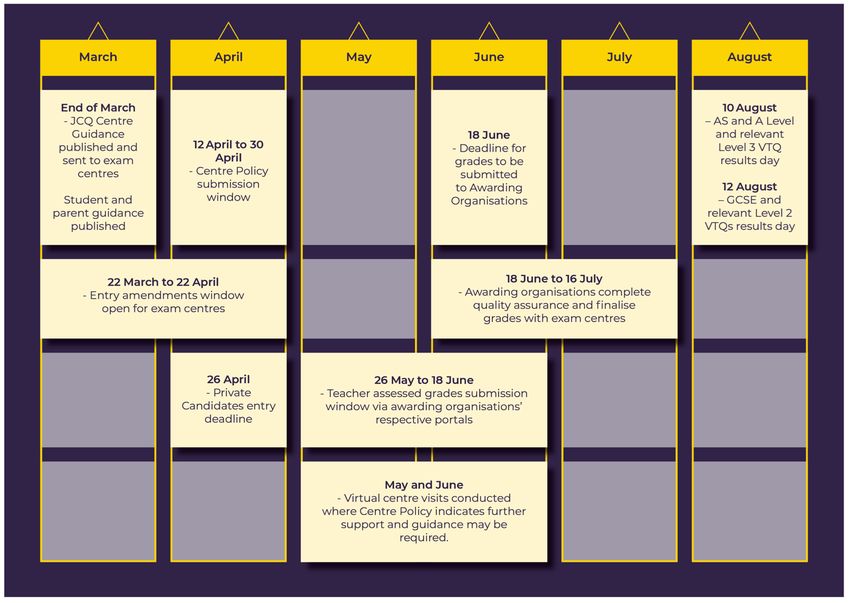
•   All candidate evidence used to determine teacher assessed grades, and associated documentation, will be
        retained and made available for the purposes of external quality assurance and appeals.
    •   We will be using learner work produced in response to assessment materials provided by our awarding
        organisation(s), including groups of questions, past papers or similar materials such as practice or sample
        papers.
    •   We will use non-exam assessment work (often referred to as coursework), even if this has not been fully
        completed.
    •   We will use learners work produced in centre-devised tasks that reflect the specification, that follow the same
        format as awarding organisation materials, and have been marked in a way that reflects awarding
        organisation mark schemes.
    •   We will use substantial class or homework (including work that took place during remote learning).
    •   We will use internal tests taken by pupils.
    •   We will use mock exams taken over the course of study.
    •   We will use records of a learner’s capability and performance over the course of study in performance-based
        subjects.

We provide further detail in the following areas:

Additional Assessment Materials
    •   We will use additional assessment materials to give learners the opportunity to show what they know,
        understand or can do in an area of content that has been taught but not yet assessed.
    •   We will use additional assessment materials to give learners an opportunity to show improvement, for
        example, to validate or replace an existing piece of evidence.
    •   We will use additional assessment materials to support consistency of judgement between teachers or classes
        by giving everyone the same task to complete.

We will combine and/or remove elements of questions where, for example, a multi-part question includes a part
which focuses on an element of the specification that hasn’t been taught.

Our centre will ensure the appropriateness of evidence and balance of evidence in arriving at grades in the following
ways:

    •   We will consider the level of control under which an assessment was completed, for example, whether the
        evidence was produced under high control and under supervision or at home.
    •   We will ensure that we are able to authenticate the work as the learner’s own, especially where that work was
        not completed within the college.
    •   We will consider the limitations of assessing a learner’s performance when using assessments that have been
        completed more than once, or drafted and redrafted, where this is not a skill being assessed.
    •   We will consider the specification and assessment objective coverage of the assessment.
    •   We will consider the depth and breadth of knowledge, understanding and skills assessed, especially higher
        order skills within individual assessments.

Awarding teacher assessed grades based on evidence
We give details here of our centre’s approach to awarding teacher assessed grades.

    •   Our teachers will determine grades based on evidence which is commensurate with the standard at which a
        learner is performing, i.e. their demonstrated knowledge, understanding and skills across the content of the
        course they have been taught.
    •   Our teachers will record how the evidence was used to arrive at a fair and objective grade, which is free from
        bias.
    •   Our teachers will produce an Assessment Record for each subject cohort and will share this with their Head of
        Department. Any necessary variations for individual learners will also be shared.

Internal quality assurance
This section gives details of our approach to internal standardisation, within and across subject departments.

    •   We will ensure that all teachers involved in deriving teacher assessed grades read and understand this Centre
        Policy document.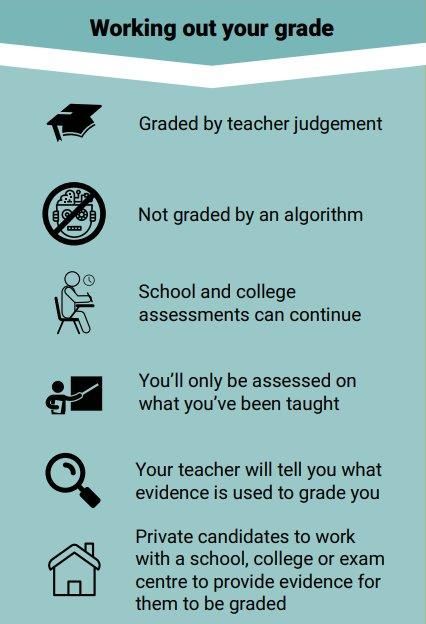
•   In subjects where there is more than one teacher and/or class in the department, we will ensure that our
        centre carries out an internal standardisation process.
    •   We will ensure that all teachers are provided with training and support to ensure they take a consistent
        approach to:
             o Arriving at teacher assessed grades
             o Marking of evidence
             o Reaching a holistic grading decision
             o Applying the use of grading support and documentation
    •   We will conduct internal standardisation across all grades.
    •   We will ensure that the Assessment Record will form the basis of internal standardisation and discussions
        across teachers to agree the awarding of teacher assessed grades.
    •   Where necessary, we will review and reflect on individual grading decisions to ensure alignment with the
        standards as outlined by our awarding organisation(s).
    •   Where appropriate, we will amend individual grade decisions to ensure alignment with the standards as
        outlined by our awarding organisation(s).
    •   Where there is only one teacher involved in marking assessments and determining grades, then the output of
        this activity will be reviewed by an appropriate member of staff within the centre.
             o This will be the Curriculum lead where they are not the sole teacher
             o Where the member of staff is the Curriculum Lead, this will be their line manager or another member
                 of the curriculum area.
    •   In respect of equality legislation, we will consider the range of evidence for learners of different protected
        characteristics that are included in our internal standardisation.

Comparison of Teacher Assessed Grades to results for previous cohorts
This section gives details of our internal process to ensure a comparison of teacher assessed grades at qualification level
to results for previous cohorts in our centre taking the same qualification.

    •   We will compile information on the grades awarded to our Learners in past June series in which exams took
        place (e.g. 2017 – 2019).
    •   We will consider the size of our cohort from year to year.
    •   We will consider the stability of our centre’s overall grade outcomes from year to year.
    •   We will consider both subject and centre level variation in our outcomes during the internal quality assurance
        process.
    •   We will prepare a succinct narrative on the outcomes of the review against historic data which, in the event of
        significant divergence from the qualifications-levels profiles attained in previous examined years, which
        address the reasons for this divergence. This commentary will be available for subsequent review during the
        QA process.

This section gives details of the approach our centre will follow if our initial teacher assessed grades for a
qualification are viewed as overly lenient or harsh compared to results in previous years.

    •   We will compile historical data giving appropriate regard to potential mixtures of A*-G and 9-1 grades in
        GCSEs. Where required, we will use the Ofqual guidance to convert legacy grades into the new 9 to 1 scale.
   • We will include grades from international GCSEs (for example, in mathematics) because we have previously
        offered these.
We will bring together other data sources that will help to quality assure the grades we intend to award in 2021.

This section gives details of changes in our cohorts that need to be reflected in our comparisons.

    •   We will omit subjects that we no longer offer from the historical data.

Reasonable adjustments and mitigating circumstances (special consideration)
This section gives details of our approach to access arrangements and mitigating circumstances (special consideration).

    •   Where learners have agreed access arrangements or reasonable adjustments (for example a reader or scribe)
        we will make every effort to ensure that these arrangements are in place when assessments are being taken.
    •   Where an assessment has taken place without an agreed reasonable adjustment or access arrangement, we
        will remove that assessment from the basket of evidence and alternative evidence obtained.
•    Where illness or other personal circumstances might have affected performance in assessments used in
         determining a learner’s standard of performance, we will take account of this when making judgements.
    •    We will record, as part of the Assessment Record, how we have incorporated any necessary variations to take
         account of the impact of illness or personal circumstances on the performance of individual learners in
         assessments.
    •    To ensure consistency in the application of Special Consideration, we will ensure all teachers have read and
         understood the document: JCQ – A guide to the special consideration process, with effect from 1 September
         2020

Addressing Disruption/Differentiated Lost Learning (DLL)
This section gives details of our approach to address disruption or differentiated lost teaching.

    •    Teacher assessed grades will be determined based on evidence of the content that has been taught and
         assessed for each learner.

Objectivity
This section gives a summary of the arrangements in place within our centre in relation to objectivity.
Staff will fulfil their duties and responsibilities in relation to relevant equality and disability legislation.

Senior Leaders, Curriculum Leads and the Centre will consider:

    •    sources of unfairness and bias (situations/contexts, difficulty, presentation and format, language, conditions
         for assessment, marker preconceptions);
    •    how to minimise bias in questions and marking and hidden forms of bias); and
    •    bias in teacher assessed grades.

To ensure objectivity, all staff involved in determining teacher assessed grades will be made aware that:

    •    unconscious bias can skew judgements;
    •    the evidence presented should be valued for its own merit as an indication of performance and attainment;
    •    teacher assessed grades should not be influenced by candidates’ positive or challenging personal
         circumstances, character, behaviour, appearance, socio-economic background, or protected characteristics;
    •    unconscious bias is more likely to occur when quick opinions are formed; and

Our internal standardisation process will help to ensure that there are different perspectives to the quality assurance
process.

Recording Decisions and Retention of Evidence and Data
This section outlines our approach to recording decisions and retaining evidence and data.

    •    We will ensure that teachers and Curriculum Leads maintain records that show how the teacher assessed
         grades process operated, including the rationale for decisions in relation to individual marks/grades.
    •    We will ensure that evidence is maintained across a variety of tasks to develop a holistic view of each learner
         demonstrated knowledge, understanding and skills in the areas of content taught.
    •    We will put in place recording requirements for the various stages of the process to ensure the accurate and
         secure retention of the evidence used to make decisions.
    •    We will comply with our obligations regarding data protection legislation.
    •    We will ensure that the grades accurately reflect the evidence submitted.
    •    We will ensure that evidence is retained electronically or on paper in a secure centre-based system that can be
         readily shared with our awarding organisation(s).

Authenticating Evidence
This section of our Centre Policy details the mechanisms in place to ensure that teachers are confident in the
authenticity of evidence, and the process for dealing with cases where evidence is not thought to be authentic.
• Robust mechanisms, which will include assessment sat under exam conditions with external invigilators, set
seating plans and learners declarations will be in place to ensure that teachers are confident that work used as
evidence is the learners’ own and that no inappropriate levels of support have been given to learners to
complete it, either within the centre or with external tutors.
• It is understood that awarding organisations will investigate instances where it appears evidence is not
authentic. We will follow all guidance provided by awarding organisations (AQA, City&Guilds, Eduqas, OCR,
Pearson, WJEC ) to support these determinations of authenticity.
Confidentiality, malpractice and conflicts of interest
Confidentiality
This section details the measures in place in our centre to maintain the confidentiality of grades, while sharing
information regarding the range of evidence on which the grades will be based.
• All staff involved have been made aware of the need to maintain the confidentiality of teacher assessed
grades.
• All teaching staff have been briefed on the requirement to share details of the range of evidence on which
learners’ grades will be based, while ensuring that details of the final grades remain confidential.
• Relevant details from this Policy, including requirements around sharing details of evidence and the
confidentiality requirements, have been shared with parents/guardians.
Malpractice
This section details the measures in place in our centre to prevent malpractice and, where that proves impossible, to
handle cases in accordance with awarding organisation requirements.
• Our general centre policies regarding malpractice, maladministration and conflicts of interest have been
reviewed to ensure they address the specific challenges of delivery in Summer 2021.
• All staff involved have been made aware of these policies, and have received training in them as necessary.
• All staff involved have been made aware of the specific types of malpractice which may affect the Summer
2021 series including:
o breaches of internal security;
o deception;
o improper assistance to learners;
o failure to appropriately authenticate a learner’s work;
o over direction of learners in preparation for common assessments;
o allegations that centres submit grades not supported by evidence that they know to be inaccurate;
o centres enter learners who were not originally intending to certificate a grade in the Summer 2021
series;
o failure to engage as requested with awarding organisations during the External Quality Assurance and
appeal stages; and
o failure to keep appropriate records of decisions made and teacher assessed grades.
• The consequences of malpractice or maladministration as published in the JCQ guidance: JCQ
Suspected Malpractice: Policies and Procedures and including the risk of a delay to learners receiving
their grades, up to, and including, removal of centre status have been outlined to all relevant staff.
Conflicts of Interest
This section details our approach to addressing conflicts of interest, and how we will respond to such allegations.
• To protect the integrity of assessments, all staff involved in the determination of grades must declare any
conflict of interest such as relationships with learners to our Head of Centre for further consideration.
• Our Head of Centre will take appropriate action to manage any conflicts of interest arising with centre
staff in accordance with the JCQ documents - General Regulations for Approved Centres, 1 September
2020 to 31 August 2021.
• We will also carefully consider the need if to separate duties and personnel to ensure fairness in later process
reviews and appeals.Private candidates
This section of our Centre Policy outlines our approach to working with Private Candidates to arrive at appropriate
grades.
• Our arrangements for assessing Private Candidates to arrive at appropriate grades are identical to the
approaches utilised for internal candidates.
• Where it has been necessary to utilise different approaches, the JCQ Guidance on Private Candidates has been
followed and any divergences from our approach for internal candidates have been recorded on the
appropriate class/learner documentation.
• In undertaking the review of cohort grades in conjunction with our centre results profiles from previous
examined years, the grades determined by our centre for Private Candidates have been excluded from our
analysis.
External Quality Assurance
This section outlines the arrangements we have in place to ensure the relevant documentation and assessment evidence
can be provided in a timely manner for the purposes of External Quality Assurance sampling, and that staff can be made
available to respond to enquiries.
• All staff involved have been made aware of the awarding organisation requirements for External Quality
Assurance as set out in the JCQ Guidance.
• All necessary records of decision-making in relation to determining grades have been properly kept and can be
made available for review as required.
• All learner evidence on which decisions regarding the determination of grades has been retained and can be
made available for review as required.
• Instances where learner evidence used to decide teacher assessed grades is not available, for example where
the material has previously been returned to learners and cannot now be retrieved, will be clearly recorded on
the appropriate documentation.
• All staff involved have been briefed on the possibility of interaction with awarding organisations during the
different stages of the External Quality Assurance process and can respond promptly and fully to enquiries,
including attendance at Virtual Visits should this prove necessary.
• Arrangements are in place to respond fully and promptly to any additional requirements/reviews that may be
identified as a result of the External Quality Assurance process.
• Staff have been made aware that a failure to respond fully and effectively to such additional requirements may
result in further action by the awarding organisations, including the withholding of results.
Results
This section details our approach to the issue of results to learners and the provision of advice and guidance.
• All staff involved have been made aware of the specific arrangements for the issue of results in Summer 2021,
including the issuing of A/AS and GCSE results in the same week.
• Arrangements will be made to ensure the necessary staffing, including exams office and support staff, to
enable the efficient receipt and release of results to our learners.
• Arrangements will be in place for the provision of all necessary advice, guidance and support, including
pastoral support, to learners on receipt of their results.
• Such guidance will include advice on the appeals process in place in 2021 (see below).
• Appropriate staff will be available to respond promptly to any requests for information from awarding
organisations, for example regarding missing or incomplete results, to enable such issues to be swiftly
resolved.
• Parents/guardians have been made aware of arrangements for results days.
Appeals
This section details our approach to managing appeals, including Centre Reviews, and subsequent appeals to awarding
organisations.• All staff involved have been made aware of the arrangements for, and the requirements of, appeals in Summer
2021, as set out in the JCQ Guidance.
• Internal arrangements will be in place for the swift and effective handling of Centre Reviews in compliance with
the requirements.
• All necessary staff have been briefed on the process for, and timing of, such reviews, and will be available to
ensure their prompt and efficient handling.
• Leaners have been appropriately guided as to the necessary stages of appeal.
• Arrangements will be in place for the timely submission of appeals to awarding organisations, including any
priority appeals, for example those on which university places depend.
• Arrangements will be in place to obtain the written consent of learners to the initiation of appeals, and to
record their awareness that grades may go down as well as up on appeal.
Appropriate information on the appeals process will be provided to parents/carers.
Timelines and key dates
The overall process for awarding in 2021 is illustrated below:
Communicating grades
In line with the guidance, LEARNERS AND PARENT/CARERS ARE NOT ALLOWED TO KNOW THE GRADES THEY HAVE BEEN
AWARDED BY THEIR TEACHERS. We will provide learners with a report following the final standardised assessment that
will recap in one document all of the information below. (A template of this report can be found in Annex C&D)
Learners will be able to use this report when they receive their grade in the summer to confirm that the grades they
have been awarded by the exam board are in line with the evidence we have. If this is not the case, then they will be
able to appeal their grade.
What DATA will LDE UTC use and how will it be collected. (Procedures)
LDE UTC has robust policies and procedures that ensure our learners receive high quality learning experiences achieved
through consistent approaches with teaching and learning, marking feedback and assessment. This coupled with our
wrap around pastoral care ensuring learners are equipped to have the right attitude to learning. As a result of these
consistent approaches, we are able to collect a huge amount of data about our learners that will enable all teachers to
make a holistic judgement of each learner’s performance.In line with the governments guidance all colleges must be able to show evidence of how the grades have been awarded.
For example, if a learner has been awarded a GCSE grade of a 7 in their subject, the teacher will have to show the piece/s
of work completed by the learner that shows it was indeed a 7.
LDE UTC’s evidence will comprised of:
• Attendance
• Behaviour and Exclusions
• Milestone assessments (progress, mocks and ATL)
• Formative and summative assessments
• External assessments
• Teachers final standardised assessments
Set out below we list the areas of evidence collected and detail:
Attendance
During normal college opening times and lockdown 3 all teachers recorded learner’s attendance via our normal
procedures using our MIS – Sims software.
During lockdown1 teachers recorded learner’s attendance to online lessons via the college attendance spreadsheet.
We could not use sims as we were unable to record learners attending lessons remotely but not on site at this time but
we wanted to be able to measure attendance to live remote lessons. All learners were X coded on sims.
Behaviour and exclusions
At all times, teachers have recorded behaviour points directly onto sims in line with the college behaviour policy. Internal
and external exclusions are recorded directly onto sims.
Milestone Assessments
Milestone assessments are pre-planned to cover the whole duration of the one or two year course. In line with the DfE
guidance, these milestone assessments were reduced from four per year to two per year. Following our marking and
assessment policy, these milestone assessment grades are formulated using:
• the formative and summative assessment data which is marked by teachers and moderated across the faculty
• mock exams which are marked by teachers, moderated across the faculty and one per year is externally
moderated by colleges and UTCs that teach the same course whom we’ve formed a good partnership with over
the years.
o 20/04/20 – 01/05/20 – cancelled due to government lockdown 1
o 25/01/21 – 05/02/21 - cancelled due to government lockdown 3
• Attitude to learning (ATL) which is created based on twelve criteria. (Please see the Assessment, Recording and
Reporting Policy for more information).
Formative and summative assessments
Formative and summative assessments are pre-planned to cover the whole duration of the one or two year course.
These assessments in the academic year 2019-20 took place alternately every fortnight and in line with DfE guidance
these assessments were reduced to take place alternatively over a fortnight with one formative and one summative per
half term in the current (2020-21) academic year.
• Formative assessment: Teachers plan a formative assessment task, deliver to the learners and then assess using
our orange formative assessment feedback stickers. Learners respond (DIRT – dedicated improvement and
reflection time) in green pen.
• Summative assessment: Teachers prepare a summative assessment task that learners complete. Teachers mark
all summative assessments and share the grades with learners. Every other summative assessment, in line with
the milestone assessments, are teacher marked and faculty moderated.
Formative and summative assessments will be evidenced to the exam boards through the learner’s workbooks, digital
media files, physical portfolios/products and teachers records.Please see below for the dates of when formative and summative assessment have taken place.
Formative assessments Summative assessments
16/09/19 – 20/09/19
14/10/19 – 18/10/19
Autumn 1 30/09/19 – 04/10/19 Autumn 1
11/10/19 – 15/11/19
25/11/19 – 29/11/19
31/01/20 – 17/01/20
10/02/20 – 14/02/20
Spring 1 27/01/20 – 31/01/20 Spring 1
02/03/20 – 06/03/20
16/03/20 – 20/03/20
11/05/20 – 15/05/20
Summer 1 Summer 1 30/03/20 – 03/04/20
08/06/20 – 12/06/20
Lockdown 1 Lockdown 1 06/07/20 – 10/07/20
22/06/20 – 26/06/20
21/09/20 – 20/10/20 19/09/20 – 12/11/20
Autumn 2 Autumn 2
22/11/20 – 04/12/20 14/12/20 – 08/01/21
Lockdown 3 11/01/21 – 22/01/21 Spring 2
01/02/21 – 12/02/21
Spring 2 19/04/21 – 23/04/21 Lockdown 3
External assessments
Some subjects are required to take externally assessed units over the duration of the course. Some of these may include
public exams, NEAs (Non-examined assessments), external moderation of coursework. All of these external assessments
have been taken in line with JCQ requirements and the exam boards have externally marked, moderated and awarded
the grade.
Teachers final standardised assessments (TFSAs)
All learners will receive two teachers final standardised assessments. The first teachers final standardised assessment
will take place w/b 15th March 2021 for years 11, 12L2 and 13. The second teachers final standardised assessment will
take place w/b 29th April 2021. (N.B.Years 10 and 12L3 exams will now take w/b 24th May 2021.)
These teachers final standardised assessments will:
• Consists of topics from the syllabus that have been delivered to our learners either remotely or face to face.
• Include NEAs where appropriate
• Have content for the first set of assessments which is produced by teachers
• Have content for the second set of assessments which is produced by the exam boards
• Be sat under JCQ exam controlled conditions with external invigilators onsite.
• Be marked by the subject teacher
• Be internally moderated within the subject faculty.
• Have one of the faculty moderated assessments externally moderated.
• Be kept as evidence for the exam board. This evidence may include digital media files, physical
portfolios/products and moderated marked work.
We have been informing learners throughout the term that there will be assessments in March once we return to
college and that these will form part of our evidence for final grades. These are not mock exams, but a standardised
assessment that enables the learners to demonstrate their understanding of the content that they have been taught.
We want to give our learners more than one chance to demonstrate what they have learnt. Staff have been asked to
ensure that only the content covered to date will be included in the standardised assessments and they will give learners
guidance in order to make these March assessments more approachable and to share a revision topic list prior to the
assessments, spending time reviewing and revising learning in class.
Although these assessments will form part of our evidence for grades, we would stress that there will be other evidence
used and that barring unforeseen circumstances there will be a further assessment taking place around late April / early
May when learners will be able to improve on what they achieve in March.
A good result in the March assessment should therefore provide evidence and some confidence to learners, but it is
also a chance to take on board feedback and then provide evidence of an improved performance in the second
assessment which we will be able to use when calculating our teacher assessments. Hence, learners who felt that they
did not completely do themselves justice in March will have a chance to improve.Although engagement in remote lessons has been excellent, we feel this approach is necessary given the different
circumstances that learners have had to work under since March last year.
Please note, assessment papers will not be returned to learners as these will be kept as evidence in the same way that
any external exam paper is not returned to them. Staff will however give feedback to the class as a whole and inform
learners where they are in comparison to their target grade, e.g. “if you perform like this in the second assessment, you
are on track to achieve your target grade’. Learners will be given the equivalent to an ‘examiners report’ where they
will see common misconceptions, model answers etc to aid them further in preparing for their second assessment
period.
Changes to grades will only be made if exam boards find that the grade is not a reasonable exercise of academic
judgement, rather than as a result of marginal differences of opinion, and only following discussion between the exam
board and the centre. (Consultation Decisions GCSE and A Level page 14)
Learner appeals on Teacher Assessed Grades (TAGs)
The exam board will consider whether the evidence of the learner’s performance indicates that the grade represents a
reasonable exercise of academic judgement. (Consultation Decisions GCSE and A Level page 16). This is why we wish to
give our learners as much information as possible with regards to the evidence we have for our TAGs (see Annex C&D).
Teacher Assessed Grades (TAGs) Evidence folders
The evidence should relate to the specification content and should reflect, as far as possible, the sorts of questions and
tasks that learners would usually do for the qualification.
We will make learners aware of the sources of evidence that will form the basis of the grades submitted and, as far as
possible, the sources of evidence should be consistent across a class of cohort of learners.
The range and amount of evidence could vary between subjects. Teachers will need to be flexible where some learners
have missed particular assessments, through no fault of their own, and may substitute other evidence if available.
Where learners work was completed before the new guidance was published (24/03/2021), and in no longer available,
appropriate records may be included as evidence instead (e.g report data). Any work produced by learners after this
guidance will be kept by the college to be used as part of the evidence to support the grade.
Links with other policies
This policy is linked to our:
• Assessment, recording and reporting policy
• Behaviour for learning policy
• Exclusions policy
• Feedback and marking policy
• SEN policyANNEX A First sitting Teachers Final Standardised Assessment (TFSA) schedule
Teachers final standardised assessment schedule – 15th March – 30th March
Year 13 and any learners taking
Year 11 and Year 12
GCSE resits
L3 Business Mon 22 GCSE English Language GCSE Maths
Mon 15 A Maths Pure L3 Built Environment GCSE Spanish, Arabic and Italian Listening & Reading
Tue 23 GCSE Biology
L3 Digital Media U1 GCSE History
L3 Engineering - U1 A Product design Wed 24 GCSE English Literature GCSE Chemistry
A Economics A Chemistry Thu 25 No assessments – careers day
Tue 16
A Biology
GCSE English Retake Fri 26 GCSE Physics GCSE Computer Science
A Computer Science
GCSE Design
A Physics
Wed 17 L3 Engineering - U2 Technology
A Psychology L2 Built Environment
Mon 29 GCSE Spanish, Arabic and Italian Writing
A Maths Applied L2 Engineering Design
Thu 18 L3Mathematical L3 Engineering - U4 L2 Engineering
Studies Mechatronics
GCSE Maths Retake L3 Engineering - U3 GCSE Geography Yr. 12 L3 Engineering U1
Fri 19 Tue 30 L2 Business Yr. 12 L2 Engineering U2
L3 Digital Media U2 L3 Digital Media U6
Yr. 12 L3 ArchitectureANNEX B Second sitting TFSA schedule
Teachers final standardised assessment schedule – 29th April – 14th May
Year 13, any learners taking GCSE
Year 11 and Year 12 Engineers
& Year 12 Architects
L3 Business Fri 7 GCSE English Language GCSE Maths
Thu 29 A Maths Pure
L3 Built Environment GCSE Spanish, Arabic and Italian Listening & Reading
Mon 10 GCSE Biology
L3 Engineering - U1 A Product design GCSE History
A Economics A Chemistry Tue 11 GCS£ English Literature GCSE Chemistry
Fri 30
A Biology GCSE English Retake
Wed 12 GCSE Physics GCSE Computer Science
A Computer Science
Mon 3 Public Bank Holiday GCSE Design Technology
A Physics L2 Built Environment
Tue 4 L3 Engineering - U2 Thu 13 GCSE Spanish, Arabic and Italian Writing
A Psychology L2 Engineering Design
L2 Engineering
A Maths Applied
Wed 5 L3 Engineering - U4 Mechatronics
L3 Mathematical Studies GCSE Geography Yr. 12 L3 Engineering U1
L3 Engineering - U3 Fri 14
Thur 6 GCSE Maths Retake L2 Business Yr. 12 L2 Engineering U2
Yr. 12 L3 ArchitectureANNEX C Teacher Evidence Overview Report – (blank template):
Name of learner Candidate number:
Year Date of birth
All the data below will be used as evidence towards your overall TAGs
Milestone assessments (MA1, 2, 4 reported to parents) and MA3 internal review of learning during lockdown Summative assessments
2019 - 2020 2020 - 2021 Term average
Date taken th
9 – 18 Decth th
11 -22 Maynd th
19 -23 Octrd 26th Jan – 12th Feb
Date marked th
7 – 17 Jan th st th
1 – 12 June th th
9 – 13 Nov 22nd-26th Feb
Summer 1
Autumn 1
Autumn 2
Spring 1
Spring 2
Date moderated th
17 Jan th
19 June th th
16 - 20 Nov 1st – 5th Mar
Date published 5th Feb 23rd June Internal 19th Mar
MA1 MA2 MA3 MA4
Subject Target PRG ATL ATL 1 ATL 2 PRG ATL PRG ATL
1
2
3
4
5
6
7
Evidence folders
N.B. the TFSA’s include questions and mark schemes set externally by exam boards, marked internally, moderated internally and externally.
TFSA 1 TFSA 2 Evidence 3 Evidence 4 Evidence 5
Subject Target % Grade PRG % Grade PRG Grade PRG Grade PRG Grade PRG
1
2
3
4
5
6
7External assessments already taken place
Subject Exam board Date Unit Result
1
2
3
4
Attendance
2019 - 2020 2021 - 2021 2019 - 2021
4 Sept – 20 Mar Onsite 23 Mar – 17 Jul Lockdown 1 07 Sept – 18 Dec Onsite 01 Jan – 5 Mar Lockdown 3 08 Mar – 14 May Onsite Average
Behaviour points Number of days of exclusion
2019 - 2020 2020 - 2021 Total 2019 - 2020 2020 - 2021 Total
Positive Negative Positive Negative Positive Negative Internal External Internal External Internal External
Colour Key
ATL What does this mean for you? Attendance What does this mean for you?
E Your ATL is excellent > 98% You have excellent attendance. You are likely to achieve or exceed your targets.
G Your ATL is good. 95 – 97 % You have good attendance. You are likely to achieve your targets.
I You need to improve your ATL. 92 – 94 % You need to improve your attendance. You may not meet your targets.
You need to urgently improve You need to urgently improve your attendance. You are not likely to meet your targets as you have
S < 92 %
your ATL not been able to access the subject content.
Progress What is your teaching projecting you to achieve?
Well above You could achieve 2 or more grades higher than your target grade.
Above You could achieve one grade higher than your target grade.
On You are likely to achieve your target grade.
Below You are unlikely to achieve your target grade.
Well below You are unlikely to achieve your target grade by 2 or more grades.ANNEX D Teacher Evidence Overview Report – (exemplar):
Name of learner Katherine Johnson Candidate number: 10101010
Year 13 Date of birth 26th August 1918
All the data below will be used as evidence towards your overall TAGs .
Milestone assessments (MA1, 2, 4 reported to parents) and MA3 internal review of learning during lockdown Summative assessments
2019 - 2020 2020 - 2021 Term average
Date taken 9th – 18th Dec 11th-22nd May 19th -23rd Oct 26th Jan – 12th Feb
Date marked th
7 – 17 Janth st th
1 – 12 June th th
9 – 13 Nov 22nd-26th Feb
Summer 1
Autumn 1
Autumn 2
Spring 1
Spring 2
Date moderated th
17 Jan th
19 June th th
16 - 20 Nov 1st – 5th Mar
Date published th
5 Feb rd
23 June Internal 19th Mar
MA1 MA2 MA3 MA4
Subject Target PRG ATL ATL 1 ATL 2 PRG ATL PRG ATL
Mathematics A*
Business Studies Dist
Engineering Design DistDist
Evidence folders
N.B. the TFSA’s include questions and mark schemes set externally by exam boards, marked internally, moderated internally and externally.
TFSA 1 TFSA 2 Evidence 3 Evidence 4 Evidence 5
Subject Target % Grade PRG % Grade PRG Grade PRG Grade PRG Grade PRG
Mathematics A* 72 A 80 A* A A* A*
Business Studies Dist 40 Pass 70 Distinction Dist Dist Dist
U1 70 Distinction U1 73 Distinction
U2 62 Merit U2 70 Distinction
Engineering Design DistDist U3 65 Merit U3 71 Distinction Dist Dist Dist
U4 60 Merit U4 70 Distinction
U10 NEA Distinction U6 NEA Distinction
External assessments already taken place
Subject Exam board Date Unit Result
Business Studies Pearson Edexcel June 2020 3 Distinction
Engineering Design OCR June 2020 6 Distinction
Engineering Design OCR June 2020 14 MeritAttendance
2019 - 2020 2020 - 2021 Average
4 Sept – 20 Mar Onsite 23 Mar – 17 Jul Lockdown 1 07 Sept – 18 Dec Onsite 01 Jan – 5 Mar Lockdown 3 08 Mar – 14 May Onsite
97% 96% 98% 99% 96% 98%
Behaviour points Number of days of exclusion
2019 - 2020 2020 - 2021 Total 2019 - 2020 2020 - 2021 Total
Positive Negative Positive Negative Positive Negative Internal External Internal External Internal External
95 3 82 0 177 3 0 0 0 0 0 0
Colour Key
ATL What does this mean for you? Attendance What does this mean for you?
E Your ATL is excellent > 98% You have excellent attendance. You are likely to achieve or exceed your targets.
G Your ATL is good. 95 – 97 % You have good attendance. You are likely to achieve your targets.
I You need to improve your ATL. 92 – 94 % You need to improve your attendance. You may not meet your targets.
You need to urgently improve You need to urgently improve your attendance. You are not likely to meet your targets as you have
S < 92 %
your ATL not been able to access the subject content.
Progress What is your teaching projecting you to achieve?
Well above You could achieve 2 or more grades higher than your target grade.
Above You could achieve one grade higher than your target grade.
On You are likely to achieve your target grade.
Below You are unlikely to achieve your target grade.
Well below You are unlikely to achieve your target grade by 2 or more grades.ANNEX E Examples of formative and summative assessment feedback:
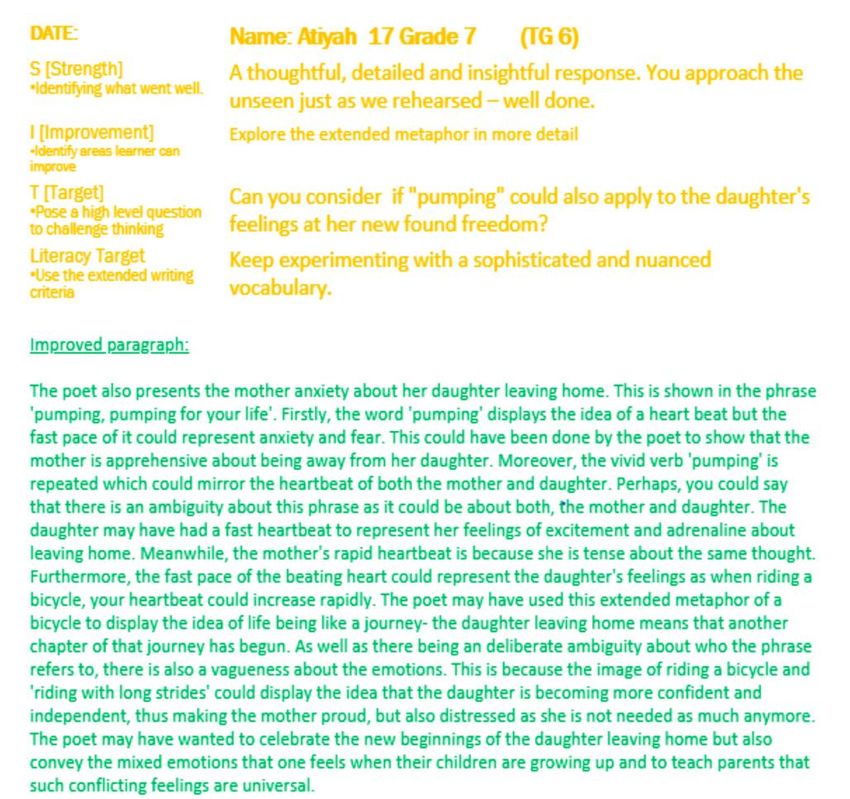
You can also read


