REPORT: FABRICATING WORKFORCE - Community Futures ...
←
→
Page content transcription
If your browser does not render page correctly, please read the page content below
REPORT: FABRICATING WORKFORCE

Fabricating Workforce Wild Rose Region                 Contents

    TABLE OF CONTENTS

        1   Introduction

        2   Project Overview

        3 Methodology
              Environmental Scan & Literature Review
              Engagement
                   Surveys & Interviews
                   Community Sessions

        7 Findings
              Environmental Scan & Literature Review
              Engagement
                   Surveys & Interviews
                   Community Engagement

        14 Conclusions

        16 Reccomendations

        17 Appendix
Fabricating Workforce Wild Rose Region                                            Introduction

  INTRODUCTION

Metal fabrication has been identified by communities in the Wild Rose region as a value-added
sector ripe for investment, growth and innovation. It is a value-adding sector that contributes to
the capacity of other key economic drivers in the region and province, including oil and gas,
value-added agriculture, clean technology and renewable energy. The region includes Rocky
View, Wheatland and Kneehill Counties as well as the Towns of Bassano, Trochu, Strathmore,
Three Hills, the city of Chestermere, and numerous villages.

The region is home to Alberta’s High Load Corridor, which is a strategic asset to the metal
fabrication industry. A key consideration in growing this sector is access to a skilled and
semi-skilled labour market. In 2015-16, Rocky View County commissioned a Labour Market Study
that included a Location Quotient Analysis. The findings show that the number of people
currently employed in the manufacturing sector is significantly low on a per capita basis
compared to the province as a whole. This raises a concern regarding the regions capacity to
support this high growth potential sector. The Government of Canada, the Government of               1
Alberta, Rocky View county and Community Futures Wild Rose are partnering to develop a
labour market profile of metal fabrication in the region in order to anticipate challenges,
strategize with stakeholders and ultimately to ensure that the region has the labour force to
support value-added growth and innovation.

Workforce development is a critical component to healthy economic development. There are
two basic approaches to workforce development. The first focuses on the needs of industry and
strategies on how to develop, retain and/or attract the needed skills. The second focuses on
leveraging the skills of the local workforce to drive economic opportunities. Together these two
approaches represent both the supply and demand in the labour market. The goal of this project
is to create balance in the labour market.

This report was made possible thanks to the support of The Government of Canada, the
Government of Alberta, Rocky View county and Community Futures Wild Rose.
Project Overview                                            Fabricating Workforce Wild Rose Region

      PROJECT OVERVIEW

      The project had three key phases. The first consisted of an environmental scan, data analysis
      and literature review. The results of this phase were summarized in a document, and pre-
      sented to stakeholders. On May 1st, 2017, Community Futures Wild Rose hosted a community
      stakeholder workshop in Strathmore to bring key community leaders together to discuss the
      results of the environmental scan, data analysis and literature review. The focus of the session
      was to engage those stakeholders who would most likely utilize the labour market intelligence
      and take concrete actions to support the growth and innovation of metal fabrication in the Wild
      Rose Region. The second phase was community and industry consultation, consisting of
2     community workshops, targeted interviews, as well as surveys. The underlying intent of ths
      phase was to groundtruth the preliminary findings and gather intelligence from the region. The
      findings of the stakeholder consultation process were presented at a second
      community session held on June 5th. At this session, industry and community leaders
      strategized and identified opportunities to support growth and innovation in the sector. The
      final phase was the development of a sector profile and report, including analysis of
      stakeholder input, visual design and representation of the information, as well as the
      development of recommendations to support next steps.

      Project Outline
      Environmental Scan and Literature Review
      Surveys & Interviews
      Community Sessions
                    Session 1 – May 1
                    Session 2 – June 5
      Sector Profile and Report
Fabricating Workforce Wild Rose Region                                                       Methodology

METHODOLOGY

Outcomes, Measures & Targets

 To focus the project on achieving meaningful outcomes, an outcome performance framework
was established that identifies clear immediate, short-term and long-term outcomes, measures
and targets. This has allowed the project team to strategically focus efforts on the most
impactful approaches to completing the deliverables. For example, it was determined early in
the project that face-to-face stakeholder engagment was necessary in order to achieve the short
term outcome targets. As a result, two engagement sessions were scoped into the process,
resulting in high value engagement and facilitated strategic planning.

Immediate      Stakeholders are consulted in the devel- # of Community and        : 10 communities
               opment of a metal fabrication labour
               market profile of the region.
                                                        Industry Stakehold-
                                                        ers Consulted.
                                                                                  and 10 Industry by
                                                                                  July 30, 2017.
                                                                                                           3
Short-term     Stakeholders have information and           # of Concrete steps    3 by December
               insight into the workforce needs of the     taken by community     30, 2017
               metal fabrication sector required to        stakeholders to sup-
               strengthen the labour market.               port Metal Fabrica-
                                                           tion Labour Market
                                                           Development
Long-term      Existing and prospective metal fabri-       Growth of employ-      Equal to or greater
               cation businesses in the region have        ment in Metal Fabri-   than growth in the
               access to skilled and semi-skilled labour   cation in the region   province.
               needed to support growth and innova-        between 2016-2021
               tion in the sector                          according to Census
                                                           Data.

Environmental Scan & Literature Review

We set out to systematically explore and interpret the industry landscape in order to
better understand the trends, drivers of change, Strengths Weaknesses, Opportunities
and threats in relation to the metal fabrication and the workforce.

The scan was broken into two phases;
1. Information gathering
2. Evaluation
Methodology                                   Fabricating Workforce Wild Rose Region

      Environmental Scan Scope
      1. Macro Environment
      Larger societal forces that effect the micro environment
      We included an overview of Canada, Alberta and the Calgary Region

      2.Micro Environment (Operating Environment of the Wild Rose
      Region) Immediate environment that effects the performance,
4     including: Suppliers/supply chain
      Metal Fabrication Manufacturing Businesses
      Customers/clients
      Workers
      Training

      Information Sources;
      Conference board of Canada          Canadian Manufacturers and Exporters
      Calgary Economic Development        Alberta Steel Manufacturers
      Statistics Canada                   Calgary Regional Partnership
      National Household Survey Results   TD Economics
      Government of Canada                SAIT
      Canada Business Network             Canadian Metalworking
      Government of Alberta               Canadian Fabricating & Welding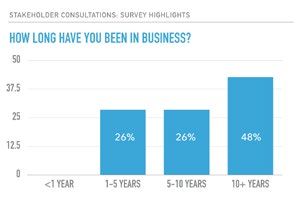
Fabricating Workforce Wild Rose Region                                               Methodology

Factor 5 Group conducted the environmental scan and literature review to understand and
establish the context of the project. The key challenge in interpreting the secondary information
was to balance the three key factors: time, geography and sector.

To guide the scan and review process, 7 core framing questions were established. These
questions were expanded following the first community session to include a range of other
perspectives as identified by stakeholders.

What metal fabrication is taking place in Alberta and the region?
Who is doing the metal fabrication and where?
Who is training metal fabricators? What training do they need?
What are the anticipated changes in the sector?
What are the location considerations for metal fabrication companies?
                                                                                                          5
What data is currently available?
Who are key industry stakeholders?

The findings of the scan were then grouped together using the STEEP classification framework as
follows:

Social – Unions, associations etc., education & training (opportunities and gaps), labour and
workforce populations,

Technological – Automation, supply chain management systems, R&D activity, technological
change rate

Economic – Cost, GDP, sector and sub-sector growth,

Environmental – Geographic, Resource availability, regulation, impact, carbon tax/cap incentives,
retrofitting, etc.

Political – Laws, trade restrictions and tariffs, enviro. Regulation, political policy, employment law,
tax policy, etc.
Methodology Fabricating Workforce Wild Rose Region
Surveys and Interviews
There were two survey’s drafted drawing on the information that community session participants
identified as being useful in advancing local understanding and leading to action. One was geared
towards collecting insights from industry and business, the other was for government and
community insights.
Surveys were conducted on line and by phone by compiling a list of industry, government and
community stakeholders and sending out emails with attachments to Survey Monkey. In cases
where participants were reached by phone, the survey was administered verbally, and entered
into Survey Monkey by the administrator.
6
Community Sessions
As the projects administrator and regional steward, Community Futures Wild Rose provided the
venue, free lunch and promoted the events throughout its extensive network of community,
municipal and industry leaders.
As a result, both the community sessions were attended by a regional cross section of
municipal and community leaders interested in advancing the metal fabrication sector in the
region. A complete list of attendees can be found in the Appendix. The sessions included
participants from the private, public and non-profit sectors, including municipalities, provincial
and federal departments, entrepreneurs, metal fabrication operators and institutions.Fabricating Workforce Wild Rose Region Findings FINDINGS Environmental Scan & Literature Review The North American Industry Classification System (NAICS) identifies 9 distinct industry activities represented by 9 distinct codes. NAICS is used by statistics Canada to determine the number of business and employees in a given industry, in a given geographic area. The NAICS codes that were the primary focus of this study include 3321-9. To analyze industry, a range of geographical areas were used as reference, including muncipal, metropolitan and provincial census areas. 1. Forging & stamping 2. Cutlery & handtool manufacturing 3. Architecture & structural metals manufacturing 4. Boiler, tank & shipping container manufacturing 7 5. Hardware manufacturing 6. Spring & wire product manufacturing 7. Machine shops turned product screw nut & bolt manufacturing 8. Coating & engraving 9. ‘Other’ fabricated metal product manufacturing The followng is a breakdown of Metal Fabrication by the numbers. Canada Alberta 12,713 Firms 1930 Firms 279,400 Employed 35,000 Employed 6% Annual Growth in Outputs 2 Large Firms (>500) 4% Cost Advantage over USA 60% used in Alberta 10 Billion Exports 4 Billion Exports 20 Billion Imports 1.5 Billion Imports One of the key reasons that it is important to take a detailed look at the potential of the metal fabrication sectors in the Wild Rose region is because it is projected by Stats Canada to be a high growth sector over the next 7 years.
Findings                                                          Fabricating Workforce Wildrose Region

     In 2016, sales of Alberta’s processed food and beverage industry were $14.6 billion making it
     Alberta’s top manufacturing industry on a revenue basis.

     Based on the available literature, the following are the key metal fabrication labour force
     challenges in Alberta; however, due to the boom-bust nature of the Alberta economy and the
     time lag between the most recent reports and the current circumstances, these challenges do
     not accurately depict todays labour market dynamics.

     None-the-less, there are clear trends that will have a significant impact on the future of the
     labour market, including the demographics of the workforce. The metal fabrication labour force
     is aging more rapidly than the economy as a whole. Moreover, much of the technical knowledge
     that is critical to the industry is learned through experience, creating a critical need to transfer the
8    knowledge to future generations.

     “Automation is expected to limit the employment growth in the industry, however, there will still
     be a significant need to replace the aging workforce as it leaves the labour market.”
     - The Future of Manufacturing Labourforce in Canada, By Prism Economics and Analysis, for Canadian Manufacturers
     and Exporters, 2015

     Businesses identify workforce requirements as being critical to business expansion. If not
     addressed, weakness in the labour market can restrict the economic potential of the industry in
     the region.

     In 2012, the Edmonton CMA accounted for 53% of Alberta manufacturing sales ($38 billion out of
     $71.7 billion), Calgary for 17% ($12.2 billion) and the rest of Alberta for 30% ($21.6 billion). Out of the
     $6.8 billion sales increase between 2007 and 2012, Edmonton accounted for $6.1 billion of the
     increase.

     In the Edmonton CMA, by far the largest sector on a sales basis is the refineries sector ($17.7
     billion in 2012), followed by chemicals ($5.6 billion), machinery ($4.4 billion), fabricated metals
     ($3.3 billion) and food processing ($2.0 billion).

     In the Calgary CMA, the largest sector is the machinery sector ($2.8 billion in 2012), followed by
     fabricated metals ($1.7 billion), food processing ($1.4 billion) and primary metals ($881 million).
Fabricating Workforce Wildrose Region Findings In the rest of Alberta, the largest sector is food processing ($6.8 billion in 2012), followed by chemicals ($6.0 billion – probably mainly in the Red Deer area), fabricated metals ($1.2 billion) and machinery ($952 million). In 2012, manufacturing employment in Edmonton was 59,164, in Calgary 43,431 and in the rest of Alberta 38,767. In Alberta, there are a wide range of education and training providers that are important stakeholders in the development of the metal fabrication workforce, including institutes of technology, community colleges, Universities, Centres of Excellence and Provincial programs. Based on the preliminary findings, there are a number of strategies identified that can support the growth and innovation of metal fabrication in the Wild Rose Region, including: 9 Cross Sector Planning for Demographic Change Research Impacts of Technology and Trade Patterns on Labour Regional Training Consortia Sector Image and Profile Campaign In-house Employee Training Programs Labour Market Research
Findings                                        Fabricating Workforce Wild Rose Region

      LABOUR MARKET CHALLENGES AND SOLUTIONS
      Labour Market Challenges               Labour Market Solutions

      • Recruitment gap in acquiring         • Cross Sector Planning for Demographic
      skills needed                          Change

      • Aging and retiring workforce         • Research Impacts of Technology and
                                             Trade Patterns on Labour
10    • Recruitment challenges affect
      company growth                         • Regional Training Consortia

      • Technology and automation is         • Sector Image and Profile Campaign
      expected to restrict job growth to
      replacement even while sector out-
                                             • In-house Employee Training Programs
      put grows
                                             • Labour Market Research
      • High competition for skilled
      work-ers requires employers to
      provide incentives to attract talent
Fabricating Workforce Wild Rose Region Findings
Surveys and Interviews
The following are the highlights from the surveys:
100% of Businesses are looking to expand
100% of Businesses are looking to diversify
28% of Businesses are looking to source locally
67% of Respondents imagine other uses for their shops
100% of Respondents do not currently offer benefits but all would like to.
As demonstrated by the figure below, almost half of the responding businesses indicated that
they were established over 10 years ago. Noticeably, no businesses that responded have been
started in the past 12 month, while 26% were established in the past 5 years.
11
• There’s currently an imbalance in the regional labour market as a result of weak industry
demand for metal fabrication due to the decline in the oil and gas sector.
To bring balance to the labour market requires increasing the demand for local metal fabrication.
• When oil fully recovers, there will be high competition for skilled workers again. This will
require employers to provide incentives to attract talent.
• One of the surprise findings of the stakeholder consultation process was that there are little
to no sector specific skills required to move into emerging sectors. The training needed to
succeed is readily available, while the skills are generally acquired on the job.Findings Fabricating Workforce Wild Rose Region
A key finding of the data analysis of the businesses in the region is that the sector is
dominated by small and medium sized enterprises (SMEs) which are likely to be locally
owned, with only one large company with more than 200 employees. The ramifications of this
are that these local businesses contribute significantly to the local economy, not only directly
through jobs and investment, but through local taxes, charitable donations etc.
12
The most significant source of sector insight came from targeted interviews of key sector
stakeholders, who identified that while there were barriers to metal fabrication growth in Clean
Technology and Energy, there were significant opportunities in Value Added Agriculture.
Specifically, there is a growing demand in south east Asia for regulated foods that are grown,
produced and distributed to Alberta standards. This presents a very significant opportunity for
the Wild Rose region, given its geographical location, and existing agricultural capacity. This
insight was further ground-truthed by participants in the June Community Session, as well as
independent sources.
HEMP
An additional agricultural opportunity identified relates to the metal fabrication of Hemp
processing equipment. While the region is well suited to growing hemp for both seed and
fibre, this early stage industry is looking for European manufactured processing equipment.
However, drawing on the regions agricultural tradition and strategic location along the high
load corridor, and in light of the high potential for hemp industry growth, there may be
significant opportunities to replace the import of European metal fabrication with local metal
fabrication.Fabricating Workforce Wild Rose Region Findings
Community Sessions
Based on the insight provided by industry stakeholders and confirmed by community session
participants, a key challenge to labour market development is that it takes time doing low value
work to acquire the basic skills to succeed in the shop environment. This lag time between when
entrants begin working, and when they begin welding, results in many young people leaving
before they get a footing in the industry.
One potential solution to this problem identified at Session 2, was the development of an internal
training program that better communicates and demarcates the progress being made by early
employees while they are learning about the shop environment. A best practice that can be used
for modeling, ie: The KNACK system developed by Potluck Cafe to teach culinary training
practices. 13
Metal fabrication was identified as a critical asset to the development of a variety of industries,
including most notably Value Added Agriculture. The challenge identified is that if villages lose
their metal fabricator due to the current decline in demand, it can jeopardize the future of the
communities sustainability and economic capacity to support emerging sectors. Therefore,
particularly in small rural communities, it is critical to support industry development and for local
metal fabricators to be included in sector development initiatives.
The overarching theme of the project's findings is that there is an imbalance in the regional
labour market as a result of underutilized metal fabrication capacity. The decline in the oil and
gas sector has led to significant downsizing on the part of metal fabrication businesses. To bring
balance to the labour market requires increasing the demand for metal fabrication.
Skills & Special Training Required
Journeyman Welding Fall Arrest
B Pressure Ticket Powerline
First Aid Contractor Orientation
Whims Apprenticeship
H2S Sheet Metal Mechanic
TDG Gas fitting & A/CConclusions Fabricating Workforce Wild Rose Region
CONCLUSIONS
CONCLUSIONS BASED ON KEY FINDINGS
Based on the findings of this project, it is clear that balancing the labour market requires
increasing the demand for local and regional metal fabrication. The demand for metal
fabrication is driven by primary and secondary industries, and therefore it is critical to look
upstream to better asses the regions assets and potential.
When conducting the labour market analysis, the emphasis was placed squarely on metal
fabrication businesses and employees. However, to understand emerging demand, it is
necessary to look to the skills and training needed to create the demand. Most notably, metal
fabrication is a physical process that results from engineering and design. Therefore, engineers
are a key piece of the labor value chain that contribute to the metal fabrication labour market.
This posses a significant opportunity for the Wild Rose region, as there is a large number of
under and unemployed engineers from the oil and gas sector in the Calgary region and beyond.
14 The next step down the value chain from engineers is entrepreneurs and investors. These skills
are needed to identify and pursue specific business opportunities based on market intelligence.
In the case of the Wild Rose Region, Bow Valley College is actively developing an entrepreneur
program, that can be fine tuned to support the growth and innovation of metal fabrication in the
region by creating awareness among local entrepreneurs of the regions existing metal
fabrication capacity.
Growth and innovation in the metal fabrication sector begins with market intelligence, and the
local capacity to identify strategic opportunities. In the Wild Rose region, the most compelling
opportunity appears to be in value added agriculture and the growth of agri-foods for the
international market place. However, the economic benefits of this sector stem primarily from
one-time capital investments which do not create economic stability for the region.
By contrast, becoming the centre of manufacturing of metal goods, such as manufacturing and
processing equipment related to the growth of the bio-composite/hemp industry offers a higher
risk, higher return economic opportunity, as it could result in the sustainable growth of a
manufacturing industry in the region.
Finally, improved communication between metal fabrication sector stakeholders and other
economic drivers can improve the capacity of the local metal fabrication sector. As a result
of their relatively small size, operators in the region express and inability to compete for large
projects. Strategic collaboration within the sector could improve the efficiency and scalability of
industry in the region.Fabricating Workforce Wild Rose Region Conclusions
PROJECT OUTCOMES
This project set out to achieve three sets of outcomes: immediate, short-term, and long-term.
Immediate Outcomes Acheived
The immediate outcomes targets were focused on the level of consulation that was included in the
process. As identified below, the project significantly over acheived by engaging at least 33 regional
stakeholders.
OUTCOME MEASURE TARGET Achievement
Immediate Stakeholders are consulted in # of Community and : 10 commu- 12 industry (3 participants, 8
the development of a metal Industry Stakehold- nities and 10 Surveys, 1 site visit, 1 phone.) 10
fabrication labour market ers Consulted. Industry by Municipal , 1 post-secondary, 12
profile of the region. July 30, 2017. employment agency, 4 prov., 4
Community Futures by June 30,
2017.
Short-term Stakeholders have infor- # of Concrete steps 3 by December Skill Metal Site Tour and Strategic 15
mation and insight into the taken by community 30, 2017 Planning Meeting June 21, 2017
workforce needs of the metal stakeholders to sup- including Alberta Labour, CF
fabrication sector required to port Metal Fabrica-
Wild Rose and Factor 5 Group.
strengthen the labour market. tion Labour Market
Development *Outcomes to watch for listed
below
Long-term Existing and prospective Growth of employ- Equal to or
metal fabrication businesses ment in Metal Fabri- greater than
in the region have access cation in the region growth in the
to skilled and semi-skilled between 2016-2021 province.
labour needed to support according to Census
growth and innovation in the Data.
sector
Short-term Outcomes Achieved and Anticipated
Throughout this project, a wide range of stakeholders participated, provided input and identified po-
tential next steps to support the growth and innovation of metal fabrication in the Wild Rose region.
They range from actions that can be taken by individual and small groups of stakeholders, to system
level actions to build the capacity of the sector and strategically advance opportunities.
As a direct result of this project, select sector stakeholders held a strategic planning session and
industry site tour at Skill Metal fabricators in Bassano, on June 21, 2017. The session included the
identification of next steps in advancing the sector, a tour of the facility, mapping the businesses
value chain assessing the practical needs of industry. As a result, regional stakeholders have
identified specific next steps to supporting growth and innovation in metal fabrication.Recommendations Fabricating Workforce Wild Rose Region
RECOMMENDATIONS
1) Leverage the information compiled in the Sector Profile to engage
community and industry leaders across the Wild Rose Region to facili-
ate dialogue on sector growth and innovation.
2) Faciliate networking and community capacity building among in-
dustry leaders, supported by government and community leaders,
including the prospect of an industry association, social enterprise or
cooperative.
16 3) Identify and organize specific training programs needed to support
growth and innovation in metal fabrication.
4) Provide market intelligence on emerging markets and support fab-
ricators in diversifying and expanding their markets, with emphasis on
agriculture including both agrifood value added processes and bast
fibre (hemp) crop processing equipment.
5) Conduct research including a detailed analysis of the metal fabrica-
tion supply chain in the region, import replacement opportunties and
export market asessment, to identify untapped busienss opportunities.
6) Establish a metal fabrication incubator in the region by strategical-
ly leveraging assests including redundant schools and equipment.Fabricating Workforce Wild Rose Region Appendix APPENDIX Survey 1 Community & Government Question1: How can Metal Fab Benefit your Community? Question 2: Who is doing Metal Fab and Where? Question 3: Who are the Key Idustry Stakeholders? Question 4: How can communities take advantage of location; ie: transcanada, high-load corri- dor, rail lines, airport etc.? Question 5: Are there any anticipated changes to the sector? Question 6: What are the export development opportunities? Question 7: In your opinion and/or experience, what are the location considerations for metal fabrication companies? Question 8: What training do metal fabricators need? Who is doing the training? Who could? Question 9: Is transitional and/or affordable housing available for the workforce? Survey 2 Industry & Business 17 Question 1: How long have you been in business? Less than a year 1-5 Years 5-10 Years 10 + Years Question 2: How many people do you employ? Question 3: Are you looking to expand and/or diversify? Question 4: Is there anything you have difficultu sourcing locally? Question 5: Do you know of or offer benefits, programs and/or other and supports for your employees? Question 6: What is your specialization? Question 7: What special skills are required for your business? Question 8: What type of training is required for your employees? Who could provide this train- ing? Question 9: Is there anything else you can imagine that your shop equipment could be used for? Question 10: How could younger people better access the training and jobs in metal fabrica- tion?
Appendix                                                       Fabricating Workforce Wild Rose Region

                             Fabricating Workforce – Community Session # 1 Notes
                                          May 1, Strathmore, Alberta

 Contacts who provided feedback:

 •     Sharmin (McBride) Ssurani@mcbridecareergroup.com (587) 437-5765
 •     Loraleigh Peterson (Irricana) (403) 819-3375
 •     Gaylene Smith (McBride) gsmith@mcbridecareergroup.com (403) 934-4305
 •     Mike Worthington (Entrepreneur) worthingtonmike@hotmail.com (403) 540-4842
 •     Patrick Earl (Kneehill)
 •     Jacqueline Buchanan (Three Hills) 403 443 5822
 •     David Kalinchuk
 •     Marilyn MacArthur (Bassano) community@bassano.ca (403) 641-3788
 •     Joe Pedersen (Standard) pedersen.ja@gmail.com

     Questions:

     Are the product financially viable?
     Are the products priced competitively?
18   Is what is being fabricated a specialize private sector feature?
     Benefits for employees and support available?
     What type of training is needed?
     Who could offer this training?
     Is there opportunity to expand and diversify?
     What is your specialization?
     Have you diversified? If so How?
     How else can your shop and equipment be used?
     What do you wish you could source locally?
     What specific skills are needed?
     How can younger people access programs and jobs?
     Export market development opportunities?
     Supply chain and logistics?
     Succession Planning?
     Is transitional and affordable housing available?
     What is the supply chain carbon footprint and full cycle economic analysis including carbon, water, energy and
     regional health impact?
     Analysis of metal works value chain, global competitiveness and opportunities
     How can communities take advantage of location on the TransCanada, high load corridor, rail lines, air?
     Impact of housing, rural homelessness, need for auxiliary businesses
     How can metal fabrication benefit your community?
     Why did shop in Bassano close?
     What specific skills are needed?
Fabricating Workforce Wild Rose Region Appendix Q: Who specifically should we be interviewing? A: • Rockyford Steel – Adrian DeGroot • D.Alta Steel Fab – Dave Schadlich • Highschool Counsellors • Employees • Agencies and Government Programs • Welding Companies • Lazer Metal Companies • R and D Operations • Shannon Mervold COO McBride Career Group smervold@mcbridecareergroup.com (403) 200-1628 • Wheatland Metal Products. Ltd. (Stainless Steel) Strathmore • Jody @ TCB in Brooks (Metal Manufacture Repair and Sales) Jody@tcbwelding • Operators • Farms, Oil and Gas, Schools and Post-Secondary • Unemployed fabricators • Logistics companies: CN, CP, 19 • CAOs, EDOs, Planners, Chambers • Golden Hills School Board • Olds College Q: How do you envision using this information? A: • Assisting people build careers in trades (McBride) • A guide for government to offer required labour programs and financial assistance to industry trade schools to set up regionally in small towns (Irriciana) • Identify areas where talent is lacking (McBride) • Possible development of training opportunities (McBride) • Partnership to place skilled workers (McBride) • Market and Regional Research- where to expand? Where to sell and or partner with projects, people and environment. (Worthington) • Learn the concerns of the community leaders, et al through networking (Worthington) • Sector focused strategic planning (Kneehill) • Sharing with the community and existing fabricators, investors (Three Hills) • Sharing with schools for programming and mentorship (Three Hills)
Appendix                                                      Fabricating Workforce Wild Rose Region

     •        Employment Opportunities and off farm jobs
     •        Investment Attraction
     •        Serving Site Selectors Needs
     •        New Project Attraction – Pre-feasibility
     •        Business Retention and Expansion
     •        Attracting workers and investors
     •        To promote awareness in my community

     Comments:

     •        “Very Exciting, lots of potential for opportunity assessment, implementation and impact” (MW)
     •        “ Rural Homelessness is primarily hidden. Often Youth and single parents couch surfing. This is a huge
              resource as these people often move out of the area to find work and housing. IE “go back to for Mac
              when prices go up”. Or “ Move out of the area to larger centre once Damage and Rent is saved”
     •        “Interested to see findings”
     •        “Great start to this project”
     •        Source: Jim Brown’s High Load Corridor Study (Van Horne)
20
         Additional Notes:

     •     Need to assess the supply and value chains to identify opportunities for import replacement and export
           development.
     •     Next steps as identified by stakeholders during the session included
     o     R and D incubator in Standard School including drafting program and labs
     o     Mentorship program
     o     Leverage Foreign Trade Zone Designation and promote through Chambers
     o     Succession Planning and Match Making Program
     o     Employment Career Fair
     o     Develop Career Path Supply Chain
     o     Inform government
     o     Assess opportunities for import replacement
     o     Investment Attraction Program
     o     Identify specific skills needed
     o     Market Research (regional, market access, partners)
     o     Partnership opportunities between gov, institutions and private sector
     •     Recommendation to design next project with focus on supply chain development, logistics, import re-
     placement, export development and investment attraction/facilitation
Fabricating Workforce Wild Rose Region Appendix
Fabricating Workforce – Community Session # 2 Notes
June 5, 2017, Strathmore Alberta
On Monday, June 5th 2017, Community Futures Wild Rose hosted its second community session to re-engage community and in-
dustry stakeholders to identify opportunities for collaboration to support growth and innovation in metal fabrication. The
session started with a brief overview of the preliminary findings presented in May, and focused on the input provided by local and
regional stakeholders. Drawing on the prospective actions identified earlier in the process, the session concluded with discussion
of next steps and best practices from other sectors in the region.
The session included participants from the private, public and non-profit sectors, including municipalities, provincial and federal
departments, entrepreneurs, metal fabrication operators and institutions.
The Wild Rose region consist of 34 communities, ranging from City and Towns, to Villages and Counties.
( one of the questions raised related to the discrepency between Total Revenue in Canada and Alberta. While Canada has approx.
6 times the number of businesses and 8 times the number of Employees, it has 54 time the amount of total revenue. )
In Alberta, the Metal Fabrication sector is dominated first by Metal Product Manufacturing, followed by Architectural and Struc-
tural Manufacturing.
In the Wild Rose region, machine shops are the most numerous metal fabrication businesses, followed by Plate Work and Struc-
21
tural Product Manufacturing and Metal Building
A key finding of the data analysis of the businesses in the region is that the sector is dominated by small and medium sized enter-
prises (SMEs) which are likely to be locally owned, with only one large company with more than 200 employees. The
ramifications of this are that these local businesses contribute significantly to the local economy, not only directly through jobs
and investment, but through local taxes, charitable donations etc.
A number of community engagement tools were used to gather input and feedback from regional stakeholders from government,
industry and communities during May and June 2017. These included community sessions, targeted interviews, and surveys.
The most notable finding is that the imbalance in the regional labour market is a result of weak industry demand for metal fabri-
cation. The decline in the oil and gas sector has led to significant downsizing on the part of metal fabrication businesses. To bring
balance to the labour market requires increasing the demand for metal fabrication.
At Community Session #1 held in May 2017, the following actions were identified as prospective next steps that stakeholders
could/would take to action the findings of the project. This initial list was later revisited at the close of Community Session #2 in
June 2017.
Surveys were conducted on line and by phone by compiling a list of industry, government and community stakeholders and send-
ing out emails with attachments to Survey Monkey. Then, the list was contacted by phone, starting with those contacts that did
not have email addresses. In cases, where particpants were reached by phone, the survey was administered verbally, and entered
into Survey Monkey by the administrator.Appendix Fabricating Workforce Wild Rose Region
The following are the highlights from the surveys:
As demonstrated by the figure below, almost half of the responding businesses indicated that they were established over 10 years ago.
Noticeably, no businesses that responded have been started in the past 12 month, while 26% were established in the past 5 years.
On of the surprise findings of the stakeholder consultation process was that there are little to no sector specific skills required to move
into emerging sectors. The training needed to succeed were readily available, while the skills are generally acquired on the job.
Based on the insight provided by industry stakeholders and confirmed by community session participants, a key challenge to labour
market development is that it takes time doing low value work to acquire the basic skills to succeed in the shop environment. This
lag time between when entrants begin working, and when they begin welding, results in many young people leaving before they get a
footing in the industry.
One potential solution to this problem that was identified at Session 2 was the development of an internal training program that better
communicates and demarcates the progress being made by early employees while they are learning about the shop environment. A
best practice that can be used for modeling such program is the KNACK system developed by Potluck Cafe to teach culinary training
practices.
22
Metal fabrication was identified as a critical asset to the development of a variety of industries, including most notably Value Added
Agriculture. The challenge identified is that if villages loose their metal fabricator due to the current decline in demand, it can jeopar-
dize the future of the communities sustainability and economic capacity to support emerging sectors. Therefore, particularly in small
rural communities, it is critical to support industry development and for local metal fabricators to be included in sector development
initaitives.
The most significant source of sector insight came from Tom McCaffery, Director of Industrial Manufacturing with Alberta Economic
Development and Trade. McCaffery identified that while there were significant barriers to metal fabrication growth in Clean Tech-
nology and Energy, there were significant opportunities in Value Added Agriculture. Specifically, a recent study conducted by the
department identified a growing demand in south east Asia for regulated foods that are grown, produced and distributed to Alberta
standards. This presents a very significant opportunities for the Wild Rose region, given its geographical location, and existing agricul-
tural capacity.
This insight was further ground-truthed by participants in the June Community Session, as well as independent sources. An additional
agricultural opportunity identified relates to the metal fabrication of Hemp processing equipment. While the region is well suited to
growing hemp for both seed and fibre, this early stage industry is looking for European manufactured processing equipment. However,
drawing on the regions agricultural tradition and strategic location along the high load corridor, and in light of the high potential for
hemp industry growth, there may be significant opportunities to replace the import of European metal fabrication with local metal
fabrication.
In 2012, the Edmonton CMA accounted for 53% of Alberta manufacturing sales ($38 billion out of $71.7 billion), Calgary for 17%
($12.2 billion) and the rest of Alberta for 30% ($21.6 billion). Out of the $6.8 billion sales increase between 2007 and 2012, Edmonton
accounted for $6.1 billion of the increase.Fabricating Workforce Wild Rose Region Appendix In the Edmonton CMA, by far the largest sector on a sales basis is the refineries sector ($17.7 billion in 2012), followed by chem- icals ($5.6 billion), machinery ($4.4 billion), fabricated metals ($3.3 billion) and food processing ($2.0 billion). In the Calgary CMA, the largest sector is the machinery sector ($2.8 billion in 2012), followed by fabricated metals ($1.7 billion), food processing ($1.4 billion) and primary metals ($881 million). In the rest of Alberta, the largest sector is food processing ($6.8 billion in 2012), followed by chemicals ($6.0 billion – probably mainly in the Red Deer area), fabricated metals ($1.2 billion) and machinery ($952 million). In 2012, manufacturing employment in Edmonton was 59,164, in Calgary 43,431 and in the rest of Alberta 38,767. Based on the findings of this project, it is clear that balancing the labour market requires increasing the demand for local and regional metal fabrication. The demand for metal fabrication is driven by primary and secondary industries, and therefore it is critical to look upstream to better asses the regions assets and potential. When conducting the labour market analysis, the emphasis was placed squarely on metal fabrication businesses and employees. However, to understand emerging demand, it is necessary to look to the skills and training needed to create the demand. Most notably, metal fabrication is a physical process that results from engineering and design. Therefore, engineers are a key piece of the labor value chain that contribute to the metal fabrication labour market. This posses a significant opportunity for the Wild 23 Rose region, as there is a large number of under and unemployed engineers from the oil and gas sector in the Calgary region and beyond. The next step down the value chain from engineers is entrepreneurs and investors. These skills are needed to identify and pursue specific business opportunities based on market intelligence. In the case of the Wild Rose Region, Bow Valley College is actively developing an entrepreneur program, that can be fine tuned to support the growth and innovation of metal fabrication in the region by creating awareness among local entrepreneurs of the regions existing metal fabrication capacity. In conclusion, growth and innovation in the metal fabrication sector begins with market intelligence, and the local capacity to identify strategic opportunities. In the Wild Rose region, the most compelling opportunity appears to be in value added agriculture and the growth of agri-foods for the international market place. However, the economic benefits of this sector stem primarily from one-time capital investments which do not create economic stability for the region. By contrast, becoming the centre of manufacturing of metal goods, such as manufacturing and processing equipment related to the growth of the bio-composite/hemp industry offers a higher risk, higher return economic opportunity, as it could result in the sustainable growth of a manufacturing industry in the region. Finally, improved communication between metal fabrication sector stakeholders and other economic drivers can improve the capacity of the local metal fabrication sector. As a result of their relatively small size, operators in the region express and inabili- ty to compete for large projects. Strategic collaboration within the sector could improve the efficiency and scalability of industry in the region. Recommendations; Throughout this project, a wide range of stakeholders participated, provided input and identified potential next steps to support the growth and innovation of metal fabrication in the Wild Rose region. They range from actions that can be taken by individu- al and small groups of stakeholders, to system level actions to build the capacity of the sector and strategically advance opportu- nities.
Appendix                                                 Fabricating Workforce Wild Rose Region

     ENVIRONMENTAL SCAN
     Supply Chain
     Metal Fabrication Procurement for Development and Operations of Alberta’s OIlsands
     https://open.alberta.ca/dataset/9662ff30-c3a0-47d9-8148-4e664aaa22ef/resource/56425cb4-34fd-496b-
     9d74-94865d4d165f/download/6112426-2011-Unlocking-the-Prize.pdf

     Overcoming the commodity management challenges in metals & mining https://www.slideshare.net/ekamar-
     keting/overcoming-the-commodity-management-challenges-in-metals-mining

     https://www.slideshare.net/ekamarketing/overcoming-the-commodity-management-challenges-in-met-
     als-mining

     Alberta Industrial Sector Market Opportunities Report
     http://www.albertacanada.com/Alberta_Industrial_Sector_Market_Opportunities_Report--June_2010.pdf

     https://www.albertacanada.com/files/albertacanada/SP-Commentary_10-18-16.pdf

     Metal fabrication Canada

     •      Canadian Metal fabrication
     •      Alberta Metal Fabrication - https://work.alberta.ca/documents/workforce-strategy-manufacturing-
            industry.pdf
24   •
     •
            http://www.albertacanada.com/business/industries/im-about-the-industry.aspx
            Metal Fabrication Central Alberta
     •      http://www.edmontonindustrial.ca/manufacturing-metal-fabrication-and- machinery.aspx
     •      http://www.albertasteelmanufacturers.com/
     •      http://www.edmontonindustrial.ca/documents/Metal_Fab_Brochure_2015.pdf
     •      http://www.albertacanada.com/files/albertacanada/Industrial-Manufacturing-profile.pdf
     •      http://www.albertasteelmanufacturers.com/vision-mission
     •      Alberta Learning Information Service (ALIS) http://www.alis.alberta.ca/
     •      http://www.cwa-acs.org/about.html
     •      http://www.cme.engineering.ualberta.ca/Research/ResearchCentres/CCWJ.aspx
     •      http://www.cisc-icca.ca/
     •

     Manufacturing Alberta
     -       http://goproductivity.ca/workshops/innovating-for-productivity-workshop/
     -
     Metal Fabrication Alberta
     http://www.cme-mec.ca/download.php?file=h8q5gph6.pdf

     -      https://www.albertacanada.com/files/albertacanada/Industrial-Manufacturing-profile.pdf
     -      http://www.albertacanada.com/AIS_MF_metalfab_overview.pdf
     -      http://www.albertacanada.com/AIS_MF_pvbenchmark_report.pdf
     -      https://open.alberta.ca/dataset/b53bd698-d950-4546-bbd4-b5896c3caae9/ resource/ed3fceb0-
            40eb-4a13-8f91-887d648efe59/download/SP-AlbertaInternationalExportsIndustry-10YearReview-
            2004-2014.pdf
     -      https://tradesecrets.alberta.ca/trades-occupations/profiles/011/
     -      http://www.albertacanada.com/Alberta_Industrial_Sector_Market_ Opportunities_Report--June_2010.
            pdf
     -      http://www.albertacanada.com/business/industries/im-opportunities.aspx
     -      http://www.apvma.ca/
     -      http://www.jwnenergy.com/
     -      https://oilsandstradeshow.com/
     -
     -
     -
Fabricating Workforce Wild Rose Region Appendix
Calgary Region Economy + Metal Fabrication
-
• TD Economics: Alberta recession not like the others https://www.td.com/document/PDF/economics/
special/AlbertaRecession2016.pdf
• Economic Indicators http://www.calgaryeconomicdevelopment.com/research-and-reports/
economic-indicators/more-economic-indicators/
• Alberta Economy: Indicators at a Glance http://www.finance.alberta.ca/aboutalberta/at-a-glance/
current-economy-indicators-at-a-glance.pdf
• RBC Provincial Outlook, http://www.rbc.com/economics/economic-reports/pdf/provincial-forecasts/
alta.pdf
• Highlights of the Alberta Economy 2017 http://www.albertacanada.com/files/albertacanada/SP-EH_
highlightsABEconomyPresentation.pdf
• file:///Users/amandaburton/Downloads/manufacturing-sectorProfile%20(2).pdf
Exports/Imports
https://www.industrie2030.ca/download.php?id=71
http://www.cme-mec.ca/
http://www.albertacanada.com/business/export-your-products.aspx
http://www.albertacanada.com/business/export/international-market-profiles.aspx
http://www.international.gc.ca/trade-agreements-accords-commerciaux/assets/pdfs/ceta-aecg/final_sec-
tors_content-eng_v11.pdf
https://open.alberta.ca/dataset/b53bd698-d950-4546-bbd4-b5896c3caae9/resource/ed3fceb0-40eb-4a13-
25
8f91-887d648efe59/download/SP-AlbertaInternationalExportsIndustry-10YearReview-2004-2014.pdf
Education and Training
NAIT http://www.nait.ca/
SAIT http://www.sait.ca/
University of Calgary http://www.ucalgary.ca/
University of Alberta https://www.ualberta.ca/
Olds College https://www.oldscollege.ca/index.html
Certification http://www.albertacanada.com/business/industries/industrial-manufacturing.aspx
Reports
- The Talented Mr. Robot The impact of automation on Canada’s Workforce http://brookfieldinstitute.ca/
wp-content/uploads/2016/06/TalentedMrRobot.pdf
- Alberta Jobs Taskforce Report An Alberta Made Plan for Job Creation http://albertajobstaskforce.ca/
wp-content/uploads/2017/02/English-Report-FINAL.pdf
- Alberta’s Short Term Employment Forecast https://work.alberta.ca/documents/short-term-employ
ment-forecast.pdf
- Job Growth in Clean Energy Employment in Alberta’s Emerging Renewables and Energy Efficiency
Sector https://www.pembina.org/reports/job-growth-in-clean-energy.pdf Pembina Institute
- Portrait of Canada’s Labourforce
- The Risk of Automation for Jobs in OECD Countries: A Comparative Analysis Economic Co-operation
and Development (OECD), http://www12.statcan.gc.ca/nhs-enm/2011/as-sa/99-012-x/99-012-x2011002-
eng.cfm
- Industry Profile: Construction, GOA 2017 https://work.alberta.ca/documents/industry-profile-
construc tion.pdf
- Strengthening Canada’s Manufacturing Sector Strengthening Canada’s Manufacturing Sector
- How CETA will Benefit Canada’s Key Economic Sectors
- http://www.international.gc.ca/trade-agreements-accords-commerciaux/assets/pdfs/ceta-aecg/final_
sectors_content-eng_v11.pdf
- Industry Sector Profile: Industrial Manufacturing http://www.albertacanada.com/files/albertacanada/
Industrial-Manufacturing-profile.pdf
Canadian Apprenticeship Forum http://caf-fca.org/wp-content/uploads/2017/01/Member11-Exam-
Supports-2.pdf
- http://occupations.esdc.gc.ca/sppc-cops/w.2lc.4m.2@-eng.jspAppendix Fabricating Workforce Wild Rose Region
Workforce + Metal Fabrication
Future of Manufacturing Labourforce in Canada http://www.cme-mec.ca/download.php?file=55wlrxala.pdf
http://www.statcan.gc.ca/pub/11-621-m/11-621-m2016100-eng.htm
http://www.calgary.ca/cfod/hr/Documents/Union/UnionAgreement-CUPE-Local-709.pdf
http://caf-fca.org/wp-content/uploads/2014/08/Investigating-Apprenticeship-Completion-in-Canada.pdf
News
http://www.macleans.ca/education/how-to-be-an-apprentice/
https://www.google.ca/search?q=how+many+metal+apprentices+in+canada%3F&ei=lsMGWcLuMYy-
2jwOEmK7wCQ&start=20&sa=N&biw=1280&bih=682
Labour Market
https://work.alberta.ca/labour/labour-market-information.html
https://work.alberta.ca/labour/2016-monthly-labour-force-statistics.html
https://work.alberta.ca/labour/labour-market-forecasts.html]
https://work.alberta.ca/documents/supply-outlook-model-visible-minorities-aboriginals-and-per-
sons-with-disabilities.pdf
https://work.alberta.ca/labour/occupational-demand-and-supply-forecast.html
https://work.alberta.ca/documents/oil-sands-construction-maintenance-and-operations-labour-demand-out-
look.pdf
http://www.calgary.ca/CA/fs/Pages/Corporate-Economics/Labour-Market-Review.aspx
26
http://www.calgaryeconomicdevelopment.com/workforce/labour-market-overview/overview/
http://www.rupertsland.org/2015-labour-market-analysis.pdf
Workforce Development + Manufacturing
http://work.alberta.ca/department/betw.html
http://www1.agric.gov.ab.ca/$department/deptdocs.nsf/all/agp14322
http://www.acr-alberta.com/ProgramsProjects/AboriginalProgramsProject/ProgramSummaries/Work-
forceDevelopment/tabid/236/Default.aspx
https://www.ualberta.ca/executive-education/programs/strategic-workforce-development
http://bowvalleycollege.ca/get-working/workforce-development-and-corporate-training-solutions.html
Steel Fabricators + Wild Rose Region
http://www.ctidirectory.com/search/product_company_list.cfm?prod_code=4883000®ion=Alberta-AB
http://www.waiward.com/
Steel Fabrication + Alberta
https://www.andersonranch.org/workshop/metal-fabrication-steel-structures-idea-form-janstu2017s/?gclid=-
CO_J2aKpz9MCFZOBfgodPzQM_w
https://www.pressreader.com/canada/edmonton-journal/20160316/281629599381957
http://absteel.ca/
Metal Fabrication + New Technology
http://www.thefabricator.com/
https://www.youtube.com/watch?v=DqDUJbZV5Bo
https://abas-erp.com/en/news/innovation-vital-metal-fabricators-face-new-challenges
http://blog.swantonweld.com/innovation-in-the-metal-fabrication-industry
http://www.fabtechexpo.com/
http://ntmetals.com/
https://www.metaltechindustries.ca/
http://www.meptec.com/ http://www.core77.com/posts/25163/fords-new-freeform-fabrication-technology-
produces-metal-stamped-parts-without-any-stamping-or-dies-25163
http://www.supermetal.com/metal-structure/technology/quick-facts.aspx
Metal Fabrication + Innovation + Research
http://goproductivity.ca/blog/304/alberta-metal-fab-innovation-amfi-program/
http://ab.cme-mec.ca/?action=show&lid=UFTAL-PQ7LG-1F62R&comaction=show&cid=WXFLE-1LPTA-3QMBB
http://albertatechfutures.ca/amfi/Home.aspx
http://innovativefab.com/Fabricating Workforce Wild Rose Region Appendix http://innovativemetalfab.com/ https://www.youtube.com/watch?v=E8U4djNtI1I http://register.extension.iastate.edu/mfiis Metal Fabrication + Agriculture http://www.specialmetalfabricating.com/ http://www.thomasnet.com/alberta/metal-fabrication-50550409-1.html https://www.mecinc.com/markets/agriculture-construction http://www.hynesindustries.com/supply-chain-services http://www.metalformalberta.com/ Metal Fabrication + Aerospace http://www.lmiaerospace.com/capabilities/aerostructures/metal-fabrication/ http://www.cuttingdynamics.com/aerospace-sheet-metal-fabrication/ http://www.arnprioraerospace.com/sheet-metal-fabrication.shtml http://www.uni-fab.on.ca/ http://www.wd-deo.gc.ca/images/cont/13449a-eng.pdf http://www.thomasnet.com/alberta/precision-machining-45620408-1.html http://www.exchangeincomecorp.ca/overlanders_manufacturing Metal Fabrication + Auto Industry https://albertaventure.com/2012/02/building-a-homegrown-auto-sector/ https://www.aiacanada.com/career-resources/career-choices/manufacturing/ https://my.wcb.ab.ca/rm/wcb.ratemanual.webserver/IndustryDescription.aspx?ID=30100 https://my.wcb.ab.ca/rm/wcb.ratemanual.webserver/IndustryDescription.aspx?ID=30100] 27 http://www.canadianmetalworking.com/?author=1&page=463 https://www.albertaoilmagazine.com/2013/09/our-home-and-native-sands/ http://www.aasp.ca/aasp_tmpl.php?content=auditors Metal Fabrication + Energy Industry http://www.thefabricator.com/article/shopmanagement/what-is-metal-fabrication-and-where-is-the-industry- headed- http://alumasteel.com/site/industries-we-serve-custom-steel-fabrication/custom-metal-fabrication-energy-in- dustry/ http://veriform.ca/metal-fabrication-industry-leaders/ http://www.palliseralberta.com/?page_id=95 http://www.theglobeandmail.com/report-on-business/rob-magazine/six-canadian-clean-energy-companies/ article17685931/ http://www.onealmfgservices.com/renewable-energy.html http://www.evsmetal.com/2015/08/metal-fabrication-for-alternative.html Metal Fabrication + Emerging Sectors http://www.southgrow.com/investing/key-industries http://business.financialpost.com/executive/looking-beyond-oil-these-three-industries-will-drive-growth-in- alberta http://www.meetingscalgary.com/why-calgary/business-sectors/ https://www.nrcan.gc.ca/sites/www.nrcan.gc.ca/files/www/pdf/publications/emmc/15-0177%20EM- MC-Strong%20Cdn%20EMS_e_acc.pdf https://www.desjardins.com/ressources/pdf/per0114e.pdf?resVer=1390922069000 Metal Fabrication Training https://tradesecrets.alberta.ca/trades-occupations/profiles/026/ http://www.sait.ca/programs-and-courses/full-time-studies/diplomas/welding-engineering-technology http://goproductivity.ca/blog/304/alberta-metal-fab-innovation-amfi-program/ http://www.metalfab.ca/ https://www.oldscollege.ca/programs/apprenticeship/apprenticeship-programs/welder/index.html
You can also read


