Reporting MIPS in 2018 - Rebecca Hancock, MHA, Director, IRIS Registry Jessica Peterson, MD, MPH, Manager, Quality & HIT Policy Sue Vicchrilli ...
←
→
Page content transcription
If your browser does not render page correctly, please read the page content below

Reporting MIPS in 2018
Rebecca Hancock, MHA, Director, IRIS® Registry
Jessica Peterson, MD, MPH, Manager, Quality & HIT Policy
Sue Vicchrilli, COT, OCS, Director, Coding & Reimbursement

Reporting Options
• IRIS Registry and your EHR
  o Group and Individual Reporting

• EHR via your vendor
  o Group and Individual Reporting

• IRIS Registry manual entry
  o Clinical Cluster Reporting

• Claims
  o Individual Reporting ONLY

                                     2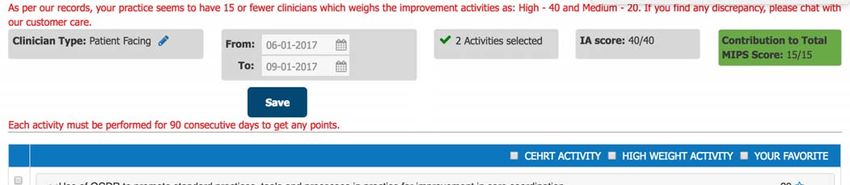
Target Dates
• June 1, 2018
  o Last date to register for first-time EHR integration with IRIS Registry for 2018 MIPS

• Summer 2018
  o IRIS Registry opens for 2018 MIPS reporting

• Aug. 1, 2018
  o Integration should be complete for 2018 IRIS Registry EHR reporting

• Oct. 31, 2018
  o Last date to register with IRIS Registry to manually report MIPS data for 2018 reporting

                                                                                               3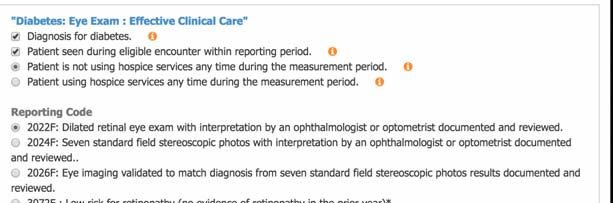
Reporting Target Dates
• Jan. 15, 2019
  o IRIS Registry data entry must be complete
  o Data release consent form must be signed.

• March 1, 2019
  o Claims reporting deadline for claims processing.

                                                       4
Automatic Exemptions
• Low-volume threshold:
  o Less than $90,000 in Medicare Part B allowables, or
  o Fewer than 200 Medicare Part B patients.

• CMS will notify clinicians/groups of exemption status.
• Should be able to check website in spring 2018 if automatically exempt:
  https://qpp.cms.gov/participation-lookup

                                                                            5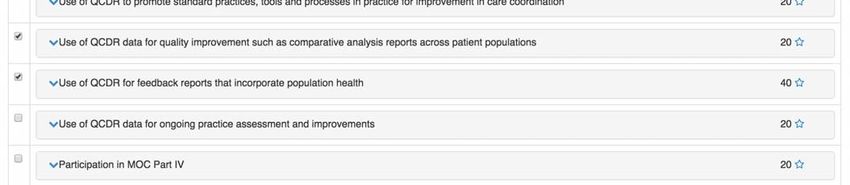
Avoid the Penalty in 2020
• Penalty of up to 5 percent of all Medicare Part B payments in 2020, including
  Part B drug payments
• 15-point MIPS final score to avoid penalty
• How to do it:
  o Report 6 quality measures, a clinical cluster or
  o Report the improvement activity category

                                                                                  6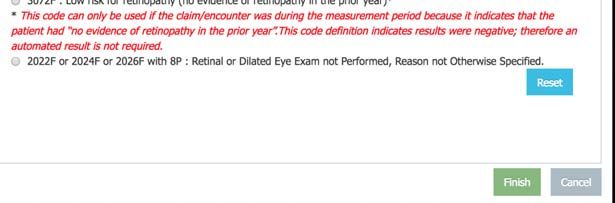
MIPS’ 4 Categories for Evaluation
   50%           25%            15%          10%

   Quality   Advancing care                  Cost
  measures    information     Improvement
                                activities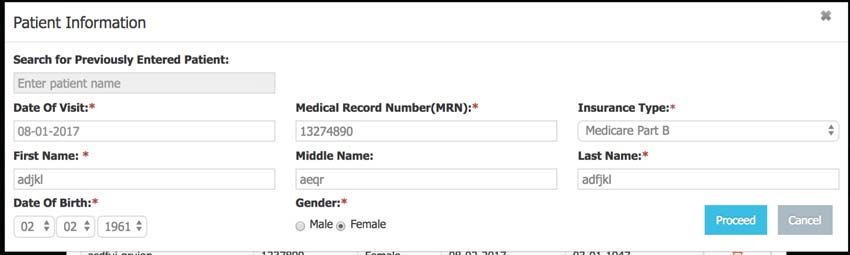
Small-Practice Accommodations
• Who counts: Practices with 15 or fewer eligible clinicians
• Maintained: 2017 accommodations for improvement activities (double credit
  for each activity)
• New in 2018: 5-point bonus added to MIPS final score
• Small practice hardship under advancing care information

                                                                              8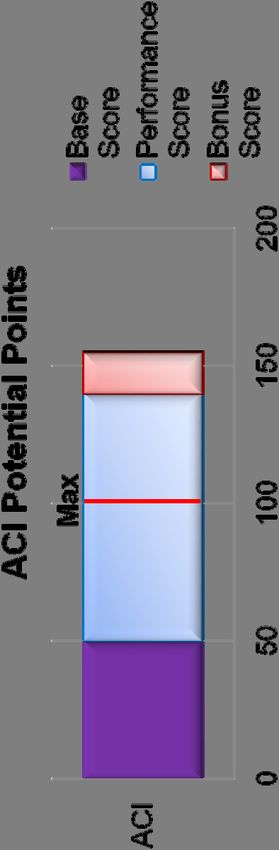
MIPS’ 4 Categories for Evaluation
   50%

   Quality
  measures

Quality – Weighted 50 Percent
• Report 6 measures, including one outcome or high-priority measure (if no
  outcome measure available)
  o Non-EHR IRIS Registry practices can report a “clinical cluster”

• 60 percent of patients, all payers (Medicare only if reporting by claims)
• Report for the full calendar year
  o Measures reported on less than 60 percent of patients or less than a full year earn one
    point (three points for small practices)

• Category improvement score
  o Worth up to 10 percent added into quality score

                                                                                              10
MIPS’ 4 Categories for Evaluation
25%
Advancing care
informationAdvancing Care Information
• Category score: weighted 25 percent
o Must submit all 4 (2014 CEHRT) or 5 (2015 CEHRT) base measures to receive any credit
o Total category score = Base score (50 points) + Performance score (90 Points) + Bonus
score (25 Points)
Capped at 100 points
12Advancing Care Information
• Test pace: Fulfill and report all base measures (50 points)
o Each measure requires a numerator and denominator of at least 1
o Commonly audited: Security risk analysis measure – document properly!
• Partial and full participation: Performance + bonus score capped at 50 points
o Various performance and bonus measures to report on, all with different point values
o Performance scoring: Based on numerator/denominator
Participation with the IRIS® Registry (with an integrated EHR system): 10 points
o Bonus:
Completing certain improvement activities using CEHRT: 10 points
Exclusive use of 2015 CEHRT for ACI reporting: 10 points
13Advancing Care Information Base Measures
• Each measure requires at least ONE patient in the numerator
Base Measures
2014 CEHRT 2015 CEHRT Reporting Requirement
Security Risk Analysis Security Risk Analysis Yes/No
E-Prescribing E-Prescribing Numerator/denominator
Provide Patient Access Provide Patient Access Numerator/denominator
Health Information Exchange Send a Summary of Care Numerator/denominator
Request/Accept Summary of Care Numerator/denominator
14Advancing Care Information
Performance Measures
Performance Measures
2014 CEHRT % (Points) Reporting Requirement
Provide Patient Access Up to 20 Numerator/denominator
Health Information Exchange Up to 20 Numerator/denominator
View, Download or Transmit Up to 10 Numerator/denominator
Patient-Specific Education Up to 10 Numerator/denominator
Secure Messaging Up to 10 Numerator/denominator
Medication Reconciliation Up to 10 Numerator/denominator
Public Health and Clinical Data Registry 0 or 10 Yes/No
Reporting
15Advancing Care Information
Performance Measure Scoring
Performance Rates for Each Measure Worth Up to 10%
Performance Rate 1-10 = 1% Performance Rate 51-60 = 6%
Performance Rate 11-20 = 2% Performance Rate 61-70 = 7%
Performance Rate 21-30 = 3% Performance Rate 71-80 = 8%
Performance Rate 31-40 = 4% Performance Rate 81-90 = 9%
Performance Rate 41-50 = 5% Performance Rate 91-100 = 10%
Example: If a MIPS-eligible clinician submits a numerator and denominator of 85/100 for the
Patient-Specific Education measure, their performance rate would be 85%, and they would earn
9 out of 10 percentage points for that measure.
16Advancing Care Information Bonus Measures
Bonus Measures
Measure % (Points) Reporting Requirement
Active Participation in a Registry 0 or 5 Yes/No
Completion of Certain Improvement
0 or 10 Yes/No
Activities Using CEHRT
Use 2015 CEHRT for ACI reporting 0 or 10 Yes/No
17Advancing Care Information Reporting
• Report all ACI measures on the same 90+ consecutive day period.
• IRIS® Registry for advancing care information reporting:
o The IRIS Registry can submit advancing care information attestation along with your quality
and improvement activities performance
o Integrated IRIS Registry users earn 10 advancing care information performance points
• Group reporting
o If you report advancing care information as a group, you must report all categories (quality,
improvement activities, cost) as a group
o Group reporting helps accommodate clinicians who do not use EHRs
You can only report patient encounters captured in CEHRT toward advancing care information
18Advancing Care Information
Hardship Reweighting
• CMS may reweight ACI category points toward the quality category. As a
result:
o ACI category weight decreases from 25 percent to 0 percent of final MIPS score and
o Quality category weight increases from 50 percent to 75 percent of final MIPS score
• If you qualify for automatic reweighting, ACI reporting is optional
Automatic Reweighting Hardship
• Hospital-based clinicians • Insufficient internet connectivity
• Non-patient facing clinicians • Extreme and uncontrollable circumstances
• NP, PA, CRNA, CNS • Lack of control over availability of CEHRT
• Small practices (beginning in 2018)
192017 Program Changes in 2018 Final Rule
• New measure exclusions (starting in 2017 performance year)
o HIE/Send a Summary of Care
Exclusion for those with2017 Program Changes in 2018 Final Rule
• Advancing care information:
o Earlier hardship-application deadline: Dec. 31 of performance year
212018 Advancing Care Information Wins!
• Credit for IRIS participation
o Increased to 10 points in 2018 from 5 points in 2017
• Delay of 2015 CEHRT Requirement
o 10-point category bonus for using 2015 CEHRT exclusively
• New hardships
o Clinicians whose EHR was decertified can apply for decertification exception
o Small practices (≤15 eligible clinicians)
Reweight advancing care information to 0 percent, quality to 85 percent
• No term limit on hardships, except for EHR decertification
o Previously, you could only get hardships for a maximum of five years
22MIPS’ 4 Categories for Evaluation
15%
Improvement
activitiesImprovement Activities
• Category score: weighted 15 percent
o Total category score is capped at 40 points
• How to fulfill the category
o Small practices (≤ 15 clinicians)
1 high-weighted improvement activity, OR
2 medium-weighted improvement activities.
o Larger practices (> 15 clinicians)
2 high-weighted improvement activities,
4 medium-weighted improvement activities, OR
1 high-weighted improvement activity AND 2 medium-weighted improvement activities.
24Improvement Activities Reporting
• Report and document improvement activities over a 90+ consecutive day
performance period.
• Use the IRIS Registry to report improvement activities
• Other reporting options may include your EHR vendor or the CMS attestation
portal.
• Group reporting
o If you report improvement activities as a group, you must report all categories (quality, ACI,
cost) as a group
o At least one clinician in the group must complete the improvement activity
The entire group gets credit as long as one clinician performs the activity(ies).
25Improvement Activities
• Minor modifications include:
o IA_AHE_1 Engagement of New Medicaid Patients and Follow-Up
Timely = 10 business days
o IA_EPA_1 24/7 Patient Access added telehealth
• Small practices still receive double points
26MIPS’ 4 Categories for Evaluation
10%
CostCost
• Category score: weighted at 10 percent in 2018 performance year.
• CMS will evaluate two measures:
o Medicare spending per beneficiary, and
o Total per capita cost per attributed beneficiary
• Reporting: Based on claims data.
• How to prepare:
o Download your QRUR - go to aao.org/qrur to learn more
o Contact QualityNet Help Desk at 1.866.288.8912 or
o Email healthpolicy@aao.org if you have questions
28IRIS® Registry Participation Update
IRIS® Registry Statistics
As of Oct. 1, 2017:
• Total: 16,503 physicians from 5,119 practices
• With EHR integration: 13,046 physicians from 3,057 practices
• Patient visits: 166.16 million, representing 41.22 million patients

                                                                    30
50 EHR Systems Integrated with IRIS® Registry
o Amazing Charts o EyeMD EMR o ManagementPlus o NeoMed
o ChartLogic o GE Centricity EMR o Mastermind EHR o NexTech
o ChartMaker Medical o Greenway Intergy o MaximEyes by First o NextGen
Suite o Greenway/Primesuite Insight o Origin
o ClinixMD o HCIT HER o MDIntelleSys Intellichart o Prime Clinical System
o Compulink Pro
o ifa systems EMR o PrognoCIS
o Crystal PM o MDoffice
o iMedicWare o Soapware
o DoctorSoft o Medent
o IMS o SRS
o eClinicalWorks o MedEvolve
o Integrity EMR for Eyes o TriMed EHR
o eMDs o Medflow
o IO Practiceware o VersaSuite
o EnableDoc o Medinformatix HER
o iPatientCare o Vitera EHR
o Epic o Meridian
o KeyChart EMR
o ExamWRITER o Modernizing Medicine
o KeyMedical Software
o EyeDoc EMR o My Vision Express
o MacPractice MD
31IRIS® Registry Penalty Avoidance
• IRIS Registry has saved participants over $185 million in estimated
penalties avoided since 2014:
o 2014: $17 million
o 2015: $73 million
o 2016: $95 million
• 2019 MIPS penalty for 2017 reporting: 4 percent - an estimated $18,600 for
the average ophthalmologist
32How IRIS® Registry Will Support 2018 MIPS Reporting
MIPS 2018
• Total 2018 MIPS payment adjustment depends on final MIPS score:
  o 15 points: bonus (up to 5 percent)
  o >70 points: exceptional-performance bonus

• The IRIS® Registry will continue to support all MIPS-score goals for
  practices with or without an EHR system

                                                                         34
IRIS® Registry and MIPS
2018 Quality Measures: eCQMs
Expected quality measures for IRIS® Registry participants with integrated EHR
systems:
•   Closing the Referral Loop: Receipt of Specialist Report – high priority
•   Documentation of Current Medications in the Medical Record – high priority
•   Preventive Care and Screening: Body Mass Index (BMI) Screening and Follow-Up Plan
•   Pneumonia Vaccination Status for Older Adults
•   Diabetes: Eye Exam
•   Cataracts: Complications within 30 Days Following Cataract Surgery Requiring Additional Surgical Procedures -
    outcome
•   Cataracts: 20/40 or Better Visual Acuity within 90 Days Following Cataract Surgery - outcome
•   Preventive Care and Screening Tobacco Use: Screening and Cessation Intervention
•   Falls: Screening for Fall Risk – high priority
•   Diabetic Retinopathy: Communication with the Physician Managing Ongoing Diabetes Care – high priority
•   Primary Open Angle Glaucoma (POAG): Optic Nerve Evaluation
•   Preventive Care and Screening: Influenza Immunization
•   Use of High-Risk Medications in the Elderly – high priority
•   Diabetic Retinopathy: Presence or Absence of Macular Edema and Level of Severity of Retinopathy

                                                                                                                    36
Quality: IRIS® Registry – EHR Reporters
Monitor your dashboard to review your quality performance and MIPS scores
372018 Quality Measures: Manual Entry (non-EHR)
o Diabetes: Hemoglobin A1c Poor Control, Outcome
o Melanoma: Overutilization of Imaging Studies in Melanoma, High
o Primary Open Angle Glaucoma: Optic Nerve Evaluation Priority
o Age-related Macular Degeneration: Dilated Macular Examination o Preventive Care and Screening Tobacco Use: Screening and
o Diabetic Retinopathy: Communication with the Physician Managing Cessation Intervention
Ongoing Diabetes Care, High Priority o Use of High-Risk Medications in the Elderly, High Priority
o Preventive Care and Screening: Influenza Immunization o Biopsy follow-up, High Priority
o Pneumonia Vaccination Status for Older Adults o Preventive Care and Screening: Screening for High Blood
o Diabetes: Eye Exam Pressure and Follow-Up Documented
o Documentation of Current Medications in the Medical Record, High o Adult Primary Rhegmatogenous Retinal Detachment
Priority Surgery: Return to OR, Outcome
o Melanoma: Continuity of Care – Recall System, High Priority o Adult Primary Rhegmatogenous Retinal Detachment
Surgery: Improvement in Visual Acuity, Outcome
o Melanoma: Coordination of Care, High Priority
o Cataract Surgery with Intra-Operative Complications (Unplanned
o Age-related Macular Degeneration: Counseling on Antioxidant
Rupture of Posterior Capsule Requiring Unplanned Vitrectomy),
Supplement
Outcome
o Primary Open-Angle Glaucoma: Reduction of Intraocular Pressure (IOP)
o Cataract Surgery: Difference Between Planned and Final
by 15% OR Documentation of a Plan of Care, Outcome
Refraction, Outcome
o Cataracts: 20/40 or Better Visual Acuity within 90 Days Following
o Melanoma Reporting, High Priority
Cataract Surgery, Outcome
o Tobacco use and help quitting among adolescents
o Cataracts: Complications within 30 Days Following Cataract Surgery
Requiring Additional Surgical Procedures, Outcome o Overuse of Neuroimaging for Patients with Primary
o Headache and Normal Neurological Examination, High Priority
38QCDR Measures
• Additional subspecialty eye care outcome and high priority QCDR quality
measures for 2018 reporting are under CMS evaluation
• Academy will announce once these measures are approved
39IRIS® Registry Non-EHR: 2 Options
• #1: Pick a clinical cluster to report for a • #2: Report six measures (including one
full year on 60 percent of patients: outcome measure or high-priority
o Primary open-angle glaucoma measure) and report for a full year on
POAG optic-nerve evaluation 60 percent of patients
Reduction in IOP by 15 percent or o Partial credit awarded even if you report
documentation of care plan on fewer than six measures
o Age-related macular degeneration
Dilated macular exam
Counseling antioxidant supplements
o Retinal care:
Retinal-detach return to OR 90 days
Retinal-detach VA improvement 90 days
40Quality: IRIS® Registry Manual Reporters
(non-EHR)
• Manually select measures and input patient data in the IRIS Registry
41Improvement Activities Weighted 15 Percent
o Attest that you have completed enough improvement activities for a 90-day period to
reach 40 points (small practices earn double points)
Note: This is the “easy” category in 2018 for practices that want to avoid penalties
422017 Advancing Care Information
Weighted 25 Percent
• Report advancing care information measures for base and performance
scores
• IRIS® Registry participants:
o Earn 10 performance points for participating in the IRIS Registry
o Earn 10 percent bonus for completing a clinical practice improvement activity using
CEHRT
43Report Advancing Care Information
Using the IRIS® Registry
• Select CEHRT edition, advancing care information measure set, timeframe
and enter measure numerators and denominators, or answer yes/no:
44IRIS® Registry MIPS Score Calculator
• The IRIS Registry will give participants an estimated MIPS score on three
categories, based on data collected:
45ACO Participants and IRIS® Registry
• Accountable care organizations must meet their own quality-reporting
standards, based mostly on primary-care measures
• Under MIPS, ACO participants can report using the IRIS Registry
• If the ACO fails to meet its quality-reporting obligations, this will protect
participants from automatic penalties
46Participate in the Academy’s IRIS® Registry
Benefits of IRIS Registry participation include:
Helps meet quality-reporting requirements
Provides at least one outcome or high priority measure for most participants to report
Supports credit for improvement activities
Facilitates advancing care information reporting by including a web entry portal
Earn bonus quality points through IRIS Registry participation:
For reporting multiple outcomes measures
For electronic reporting through an IRIS Registry-integrated EHR system
47Academy Resources
• Washington Report Express
• Emailed every Thursday evening. It’s the first place you will see any changes discussed and explained.
• MIPS manual: https://www.aao.org/eyenet/article/eyenet-s-guide-to-mips-2017?august-2017
• MIPS webpages
• Quality: https://www.aao.org/practice-management/regulatory/mips/quality-reporting
• ACI: https://www.aao.org/practice-management/regulatory/mips/advancing-care-information
• Improvement Activities: https://www.aao.org/practice-management/regulatory/mips/improvement-activities
• MIPS landing page: aao.org/medicare
• Contains links to all of the above information (except Washington Report Express)
• Will link to any new resources we add.
• IRIS Registry sign-up: https://iris1.aao.org/signup/Registry.aspx (first-time users)
• Email questions to mips@aao.org.
48You can also read


