Return Strategy and Machine Learning Optimization of Tennis Sports Robot for Human Motion Recognition
←
→
Page content transcription
If your browser does not render page correctly, please read the page content below

BRIEF RESEARCH REPORT
                                                                                                                                                    published: 28 April 2022
                                                                                                                                           doi: 10.3389/fnbot.2022.857595

                                             Return Strategy and Machine
                                             Learning Optimization of Tennis
                                             Sports Robot for Human Motion
                                             Recognition
                                             Yuxuan Wang 1,2 , Xiaoming Yang 3,4 , Lili Wang 4 , Zheng Hong 5 and Wenjun Zou 1*
                                             1
                                               Sports Institute, Nanchang JiaoTong Institute, Nanchang, China, 2 Graduate School, University of Perpetual Help System
                                             Dalta, Las Piñas, Philippines, 3 Faculty of Educational Studies, Universiti Putra Malaysia, Kuala Lumpur, Malaysia, 4 College of
                                             Physical Education, East China University of Technology, Nanchang, China, 5 School of Software, Nanchang University,
                                             Nanchang, China

                                             At present, there are many kinds of intelligent training equipment in tennis sports, but
                                             they all need human control. If a single tennis player uses the robot to return the ball,
                                             it will save some human resources. This study aims to improve the recognition rate of
                           Edited by:        tennis sports robots in the return action and the return strategy. The human-oriented
                       Mu-Yen Chen,
                 National Cheng Kung         motion recognition of the tennis sports robot is taken as the starting point to recognize
                    University, Taiwan       and analyze the return action of the tennis sports robot. The OpenPose traversal dataset
                        Reviewed by:         is used to recognize and extract human motion features of tennis sports robots under
                         Yaodong Gu,
                                             different classifications. According to the return characteristics of the tennis sports robot,
              Ningbo University, China
                       Mustafa Sögüt,        the method of tennis return strategy based on the support vector machine (SVM) is
                 Middle East Technical       established, and the SVM algorithm in machine learning is optimized. Finally, the return
                     University, Turkey
          Jose Maria Gimenez-Egido,          strategy of tennis sports robots under eight return actions is analyzed and studied. The
           University of Murcia, Spain       results reveal that the tennis sports robot based on the SVM-Optimization (SVM-O)
                         Ersan Arslan,
                                             algorithm has the highest return recognition rate, and the average return recognition
                Tokat Gaziosmanpasa
                     University, Turkey      rate is 88.61%. The error rates of the backswing, forward swing, and volatilization are
                    Ruey-Shun Chen,          high in the return strategy of tennis sports robots. The preparation action, backswing,
National Chiao Tung University, Taiwan
                                             and volatilization can achieve more objective results in the analysis of the return strategy,
                  *Correspondence:
                         Wenjun Zou          which is more than 90%. With the increase of iteration times, the effect of the model
                  06005@ncjti.edu.cn         simulation experiment based on SVM-O is the best. It suggests that the algorithm
                                             proposed has a reliable accuracy of the return strategy of tennis sports robots, which
          Received: 18 January 2022
           Accepted: 18 March 2022
                                             meets the research requirements. Human motion recognition is integrated with the return
            Published: 28 April 2022         motion of tennis sports robots. The application of the SVM-O algorithm to the return
                           Citation:         action recognition of tennis sports robots has good practicability in the return action
Wang Y, Yang X, Wang L, Hong Z and
                                             recognition of tennis sports robot and solves the problem that the optimization algorithm
  Zou W (2022) Return Strategy and
   Machine Learning Optimization of          cannot be applied to the real-time requirements. It has important research significance
     Tennis Sports Robot for Human           for the application of an optimized SVM algorithm in sports action recognition.
                Motion Recognition.
      Front. Neurorobot. 16:857595.          Keywords: OpenPose traversal dataset, human motion characteristics, machine learning, support vector machine
   doi: 10.3389/fnbot.2022.857595            algorithm, human motion recognition

Frontiers in Neurorobotics | www.frontiersin.org                                     1                                               April 2022 | Volume 16 | Article 857595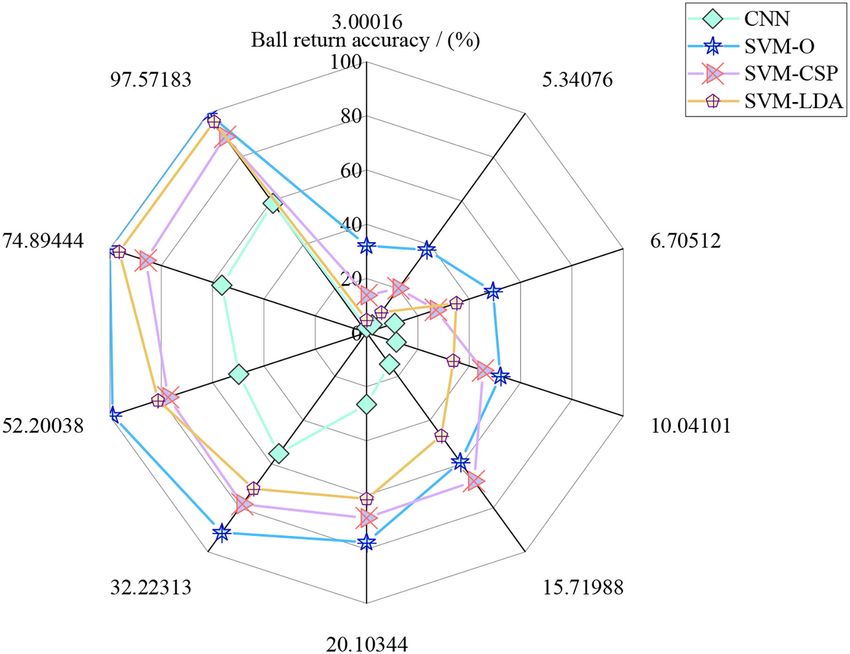
Wang et al.                                                                                                                    Tennis Sports Robot

RESEARCH PURPOSE AND CURRENT                                              model, which has been integrated into the current research
SITUATION                                                                 method. Multiple researchers do various experiments through
                                                                          the standard datasets of machine learning and promote the
With the progress of computer technology and its wide                     research process by comparing the different methods. Giles and
application in life practice, behavior detection and action               Kovalchik (2020) studied the direction change in the tracking
recognition projects based on various algorithms are being                data of professional tennis players and found that the support
applied and studied in related fields (Aslan and Durdu,                   vector machine (SVM) algorithm tested the non-linear kernel
2020). Behavior monitoring includes bee colony behavior and               method. The nearest neighbor method was used to test the simple
human behavior monitoring through graphics, temperature,                  neural network. It was usually recommended to experiment
humidity, sound, and other information (Jalal and Kamal, 2019).           with the data of some shapes (Giles and Kovalchik, 2020;
Introducing human motion recognition and motion intention                 Kunze et al., 2020). ImageNet is one of the most influential
prediction into the machine can bring the users a better sense            datasets, which effectively promotes the development of the DL
of experience. People and robots coexist or work together. On             model (Alexopoulos and Nikolakis, 2020). Moreover, according
the premise of ensuring that robots do not harm humans, it                to the tennis sports robots’ return action selection and return
is necessary to explore efficient human–machine cooperation               strategy characteristics, there are many other datasets besides
schemes to complement the advantages of humans and robots                 the ImageNet dataset. Based on that, many researchers also
(Kahanowich, 2021). Generally, human motion is obtained in                put forward new questions. These datasets also promote the
the form of a video or image and then recognized. With                    development of relevant research (Liu et al., 2019).
the development of science and technology and the electronic                 For the problem of reduced human resources in tennis
industry, wearable sensor devices are being used to recognize             training, the robot can return the ball according to human
human actions (Hou et al., 2019; Jalal and Quaid, 2019; Zhao,             actions. With the human motion recognition in the return
2020). With the growth of wireless technology and the expansion           strategy of tennis sports robots as the main starting point,
of coverage, wireless fidelity (WiFi) signal is being used to             this study extracts the human motion features through the
recognize human motion, and good results have been achieved,              tennis sports information under different classifications and the
which is also the latest research trend (Zhao et al., 2019; Zhu           OpenPose traversal dataset. The return strategy of tennis sports
et al., 2021). Generally, data are first collected, then denoised,        robots is studied through machine learning. Besides, this study
and processed in human motion recognition. Then, feature                  also focuses on the SVM algorithm optimization in machine
quantity is extracted, trained, and classified to realize the final       learning. The return strategy of the tennis sports robot is
recognition. Almost all research teams achieve human motion               optimized by the SVM-optimization (SVM-O) algorithm. This
recognition according to this general process. In these five parts,       study provides a reference basis for robot return strategy in tennis
data denoising and feature extraction are the two key links               sports and has crucial research significance.
(Gurbuz, 2019; Wang and Zhang, 2019; Xiong et al., 2020).                    Section Research Purpose and Current Situation introduces
Researchers are deeply improving and developing these two links           the research background of the machine learning algorithm
to improve recognition accuracy.                                          of tennis robots for human motion recognition, which paves
    The training law of tennis strategy and tactics is a difficult        the way for the development of the SVM algorithm. Section
work faced by coaches and players. In the evaluation study of             Literature Review discusses the worldwide research on ball
tennis serve and return practice, Krause et al. (2019) found              return strategy and human motion recognition. Section Research
that every hitting technique and step running position of the             on Machine Learning and Related Sports Robots introduces
opponent could determine the return quality. Athletes also                machine learning and robots on the playground. Section Design
need to combine their own playing characteristics and styles in           of the SVM-O Model introduces the SVM algorithm and the
peacetime training to figure out every technical detail of the            optimization process of SVM. Section Research Model and
opponent to benefit from it (Krause et al., 2019). People hope            Framework mainly aims at the ball return action recognition and
to find a method that can be applied to all players to make               ball return strategy design of the tennis robot. Section Results and
them adopt strategies and tactics in a broader range and find             Discussion analyzes the regression error rate, regression accuracy
weaknesses through analysis. Human motion recognition is a                rate, regression recall rate, regression score rate, and regression
new human–computer interaction mode. It extracts and classifies           recognition rate of eight actions in the tennis robot regression
human action features through computer vision technology,                 strategy and compares the regression accuracy rate of tennis
identifies human actions, obtains action information, and makes           robot under different model training. Finally, the whole research
the machine “read” human body language (Oudah and Al-                     is summarized and analyzed, and the research limitations are
Naji, 2020; Pourdarbani et al., 2020; Yang et al., 2021). At              put forward.
present, significant progress has been made in the research and
application of machine learning represented by deep learning
(DL), which has effectively promoted the development of                   LITERATURE REVIEW
artificial intelligence. DL is a method of machine learning. In
2010, a large image dataset named ImageNet appeared. DL                   According to the research on the return strategy, Sharma
requires a lot of computational power, so some researchers                and Kumar (2021) designed the badminton robot through the
combine the central processing unit (CPU) to train the DL                 learning method of the database and obtained the movement

Frontiers in Neurorobotics | www.frontiersin.org                      2                                      April 2022 | Volume 16 | Article 857595
Wang et al.                                                                                                                        Tennis Sports Robot

track of badminton through the binocular camera. However,                    2D and 3D multi-person keypoint detection and a calibration
due to the fixed base and position of the robot, the receiving               toolbox for estimating specific area parameters. It can accept
distance was short when returning the ball. Yunardi et al. (2021)            many kinds of input, including images, videos, and webcams.
designed an omnidirectional mobile tennis robot. Through the                 Similarly, the output of OpenPose is also diverse. The input and
design of a robot manipulator, the robot could return the ball               output parameters can also be adjusted according to different
at different angles and forces and could move in any direction               needs. At present, the sensor technology of human motion
and return the ball at different angles on the playground. Based             recognition takes the human motion posture database as the
on the fully connected neural network, the return strategy of the            action classifier, obtains the image of human motion through the
badminton robot was studied. The neural network was optimized                sensor, subdivides it according to the motion angle and speed,
through the activation function and residual connection of the               and finally classifies the information with the classifier.
neurons. The training was designed according to the return point                This thesis uses the OpenPose traversal dataset to extract
of badminton as the input value. However, only the coordinates               the information features of human motion recognition nodes
of the return point of the badminton in returning the ball were              and extracts human motion features through tennis motion
researched. The return type and the return action of the opponent            information under different classifications and the OpenPose
were not taken into account, so it was difficult to return the               traversal dataset. The return strategy of the tennis robot is studied
ball for the action of the robot facing the human body (Gao                  by machine learning and optimized by the SVM-O algorithm.
et al., 2020). In the data-processing stage, three-dimensional
(3D) is much more complex than two-dimensional (2D). The
2D human pose recognition is more mature than 3D in terms                    RESEARCH ON MACHINE LEARNING AND
of data and models. The 2D models also have a lot of outdoor                 RELATED SPORTS ROBOTS
and natural data, but almost all 3D data have indoor data.
Because of the complexity of the 3D annotation and recognition,              Algorithm Design of Machine Learning
massive sensors and cameras are needed to collect data. Before               Machine learning is the general name of a class of algorithms.
2015, the regression method was widely used to confirm the                   These algorithms intend to mine the hidden laws from massive
coordinates of human-joint points. Its innovation was to extract             historical data and use them for prediction or classification.
them from the 3 and 7 layers of convolutional neural network                 More specifically, machine learning can be seen as looking for
(CNN) and then conduct the convolution operation, which is                   a function, whose input is the sample data and the output is
called the spatial fusion model. Faisal et al. (2019) used the spatial       the expected result. However, this function is too complex to be
fusion model to extract the internal relationship between joint              expressed formally (Mohabatkar and Ebrahimi, 2021). It should
points, but this method was difficult to expand in the model.                be noted that the goal of machine learning is to make the learned
The critical path method (CPM) proposed in 2016 has strong                   functions well applicable to the new sample data, not just perform
robustness, and many subsequent methods are improvements                     well on the training samples (Ghorbanzadeh et al., 2019). The
based on this method.                                                        ability of the learned function to apply to new samples is called
    The contribution of the CPM is to use sequential convolution             generalization ability. Figure 1 shows the specific algorithm steps
architecture to express spatial and texture information. The                 of machine learning.
network is divided into several stages, and each stage has a                     The machine learning steps in Figure 1 are divided into the
part in supervision and training. The previous stage uses the                following three steps. First, an appropriate model is selected,
original image as the input. The latter uses the feature image               which usually depends on the actual problem. Suitable models
of the previous stage as the input, mainly to integrate spatial              need to be selected for different problems and tasks. The model
information, texture information, and center constraints. In                 is a set of functions. Next, the quality of a function is judged,
addition, Li et al. (2020) simultaneously used multiple scales               which needs to determine a measurement standard, that is, the
to process the input characteristics and responses for the same              loss function. The determination of loss function also depends on
convolution architecture, ensuring accuracy and considering the              specific problems. For example, Euclidean distance is generally
distance relationship between the various components. Fine-                  used in regression problems, and the cross-entropy cost function
tuning was conducted based on CNN. Its innovation lies in the                is generally used in classification problems. Finally, the “best”
use of a geometric transformation kernel in the convolution                  function is found. The commonly used methods include gradient
layer, which can model the dependence between the joint                      descent algorithm, ordinary least squares, and other tricks. The
points. Moreover, a bidirectional tree model was proposed,                   “best” function needs to be tested on a new sample after it is
so that the feature channel of each joint could receive the                  learned. It is a good function only if it performs well on the
information of the other joints, which was called information                new sample. Machine learning is a huge family system, involving
transmission. This tree structure can also estimate the attitude             multiple algorithms, tasks, and learning theories. Figure 2 is the
of multiple people. However, the accuracy of this multi-person               learning roadmap of machine learning.
attitude estimation is not high, and the method based on a                       In Figure 2, different colors represent different learning
single person is better. OpenPose is a framework for real-time               theories—orange represents tasks and green represents methods.
estimation of the human body, face, and hand morphology                      According to the task types, machine learning models can
proposed by the cognitive computing laboratory of Carnegie                   be divided into regression, classification, and structure. The
Mellon University (Jaruenpunyasak et al., 2022). It provides                 regression model is also called the prediction model. The

Frontiers in Neurorobotics | www.frontiersin.org                         3                                       April 2022 | Volume 16 | Article 857595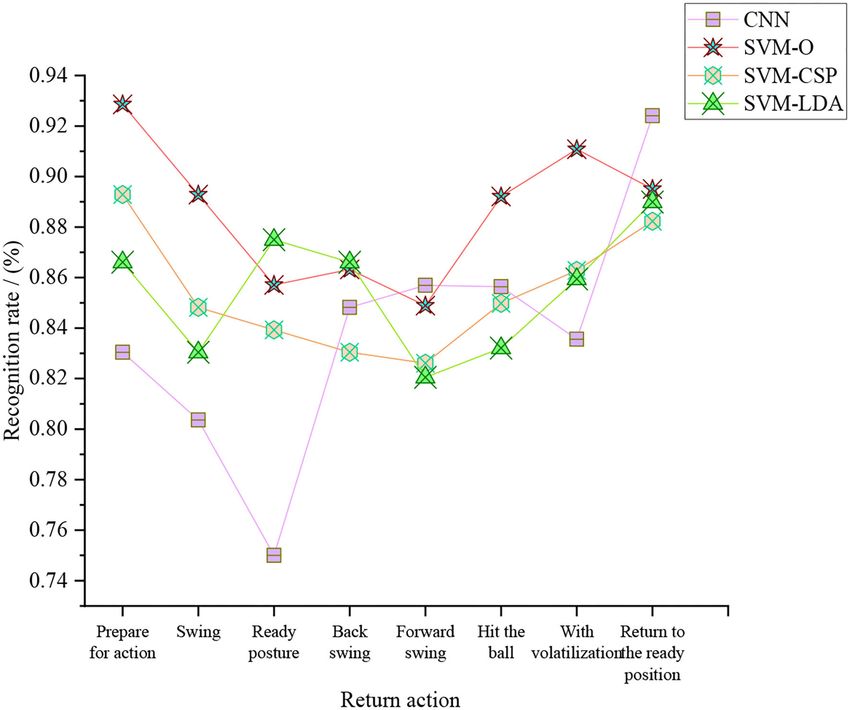
Wang et al.                                                                                                                     Tennis Sports Robot

 FIGURE 1 | Machine learning steps.

output is a numerical value that cannot be enumerated. The                 to act according to the current state in a specific environment
classification models are divided into binary classification and           to obtain the maximum reward. The most significant difference
multi-classification. The common binary classification problems            between reinforcement learning and supervised learning is that
are spam filtering, and the common multi-classification problems           each decision in reinforcement learning does not define right or
are automatic document classification. The output of the                   wrong, but aims to get the most cumulative rewards.
structured learning model is no longer a value with the fixed
length, but the text description of the figure. From the perspective       Robots on the Playground
of the method, it can be divided into linear and non-linear                Robot technology became the hottest topic in the investment
models. The linear model is relatively simple, but its role cannot         circle together with unmanned aerial vehicle technology as early
be ignored. It is the basis of the non-linear model. Many non-             as 5 years ago. However, this topic was not pushed to the sports
linear models are transformed from the linear model. The non-              world until the “human–machine war” between Google AlphaGo
linear models can be divided into traditional machine learning             and South Korean chess player Li Shishi.
models, such as SVM, K-nearest Neighbor (KNN), decision tree,                 The Japanese Volleyball Association uses robots to practice
and DL model. According to the learning theory, the machine                with athletes to improve the level of the athletes. This “defense
learning model can be divided into supervised, semi-supervised,            robot” has three pairs of mechanical arms, which can move from
unsupervised, transfer, and reinforcement learning. When the               one end to the other in front of the net to imitate the action
training sample is labeled, it is supervised learning. When part           of defense when smashing the attacker. The defensive robot is
of the training sample is labeled and part of the training sample          studied by the Japanese Volleyball Association and the University
is not labeled, it is semi-supervised learning. When all training          of Tsukuba. The coach can manipulate the robot arm back and
samples are unlabeled, it is unsupervised learning. Transfer               forth according to the training needs. If the coach thinks the team
learning is to transfer the trained model parameters to the                can perform better in a past game, the robot can reproduce the
new model to help in the new model training. Reinforcement                 game’s situation at that time. The robot can imitate the possible
learning is to learn the optimal policy, which enables an agent            actions of the opponent on the field in the future according to the

Frontiers in Neurorobotics | www.frontiersin.org                       4                                      April 2022 | Volume 16 | Article 857595
Wang et al.                                                                                                                    Tennis Sports Robot

 FIGURE 2 | Roadmap for machine learning.

strategic style of the opponent in the future. After the training        training to help the runner improve the performance. In terms
starts, the coach only needs to press a button, and the robot’s          of configuration, this small remote-controlled machine car has
mechanical arm will quickly reach the designated position. The           nine infrared sensors, drives small wheels through an Arduino
moving speed of this robot can reach 3.7 m/s, which is faster than       board, and is equipped with a light-emitting diode (LED) light
that of the ordinary athletes running on the field.                      and a GoPro camera on the body.
   Robomintoner, developed by Chengdu Electric Technology                   The table tennis serving robot users can control the five
Chuangpin Robot Technology Co., Ltd., has reached the level of           built-in motors of the equipment in the supporting application
ordinary badminton lovers. Its technical core is the positioning         of Trainerbot and set the serving into the up rotation, down
and navigation of the whole field, the visual tracking and               rotation, side rotation, and random modes. The Trainerbot
recognition of high-speed moving objects, and the control of             table tennis robot is 32 cm high and weighs only 1.2 kg. It can
the motion system. The robot mainly recognizes the trajectory            accommodate up to 30 table tennis balls. It can serve one ball
of the badminton through binocular vision and predicts the               every 0.5 s at the fastest and every 3 s at the slowest. Moreover,
landing point. It will tell the motion system the landing point          the table tennis coach robot can be used to recognize the ball’s
of the badminton through Bluetooth communication, and the                movement. The camera can track the position of table tennis
robot will move to the position where the badminton will land            80 times per s, including ball speed, rotation speed, rotation
in advance.                                                              direction, and other data. The sensor can analyze the speed of
   The track and field training robots have a speed of 44.6 km/h,        the ball 1,000 times per s and predict where the ball will land.
which is comparable to the world record of Usain Bolt in 2009.           Forpheus can calculate the angle and point at which the racket
The main function is to see the difference between the user’s            should hit back, with an error of
Wang et al.                                                                                                                     Tennis Sports Robot

 FIGURE 3 | SVM regression model.

point of the table tennis ball will be displayed by projection to          can be classified reasonably and as quickly as possible. This thesis
help the athletes adjust their movements.                                  optimizes the SVM sample classification process.
   The tennis collection robot itself is equipped with advanced                Given the training samples, the basic idea of the SVM
sensors. It detects, locates, and collects tennis balls by using the       algorithm classification learning is to find a partition hyperplane
onboard computer to analyze the collected information and a                in the sample space based on the training samples to separate
wide-angle camera. In addition to the configured sensors, it also          the samples of different categories. However, many partition
has a “Tennibot site” installed on the tennis net post. The site is        hyperplanes can separate the training samples, and the most
a camera used to track the robot’s position, which is connected            reliable one needs to be found (Shi, 2020). Intuitively, the one
with the robot through wireless communication. With the site               in the middle of the training sample should be found, because
to detect the robot’s position, the robot’s supporting iPhone              the partition hyperplane has the best tolerance to the local
Operating System (iOS) and Android application (APP) can be                disturbance of the training sample. It means that the classification
used to control which area of the playground it drives, set specific       result of the partition hyperplane is the most robust and has the
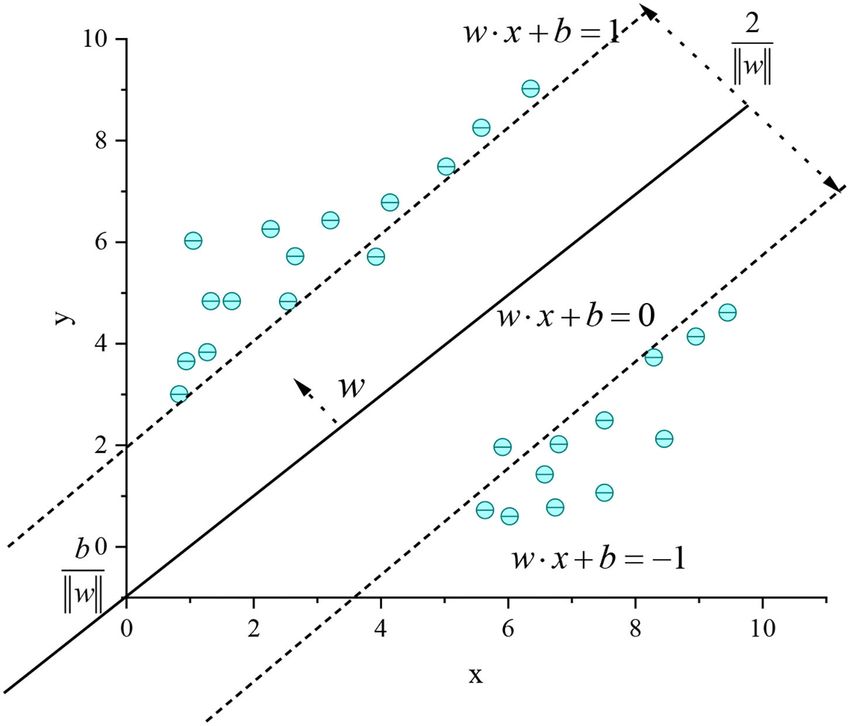
routes, or manual control. It can even be operated on an Apple             strongest generalization ability to the unseen examples. Figure 3
watch, which users can choose. It is to avoid the robot appearing          shows the SVM regression model.
at the foot and affecting the playing when the user plays. The                 In Figure 3, the hyperplane in the sample space can be divided
speed of collecting the tennis balls is 1.4 miles/h, about 38 m/min.       by a linear equation w · x + b = 0, where w is the normal vector of
A basket can collect 80 tennis balls, with a battery life of 4–            the hyperplane partition, which determines the direction of the
5 h and only 90 min of charging each time, which can meet the              hyperplane; b is the displacement term, which determines the
needs of long-term practice. After use, the robot can be lifted and        distance between the hyperplane and the origin. The partition
transported away through the handle like a suitcase.                       hyperplane can be determined by w and b. The interval between
                                                                           two heterogeneous support vectors and the hyperplane is γ =
                                                                             2
DESIGN OF THE SVM-O MODEL                                                  kwk . In tennis sports, the robot return sample can be mapped
                                                                           from the original to a high-dimensional feature space, so that
Support vector machine is a binary classification model, which             the sample can be linearly separable in this feature space. If the
is initially used in the case of linear separability. According to         original space has a finite number of attributes, there must be
the diversity of the human actions studied, more action samples            a high-dimensional feature space to divide the return samples.

Frontiers in Neurorobotics | www.frontiersin.org                       6                                      April 2022 | Volume 16 | Article 857595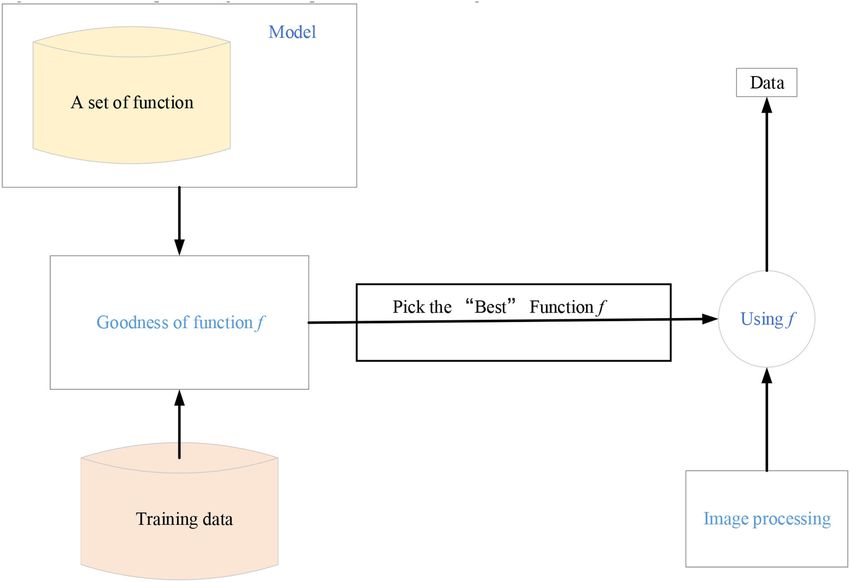
Wang et al. Tennis Sports Robot
φ(x) is set as the feature vector after x is mapped to the high Equation (4) is the inner product of xi and xj in feature space. It is
dimension. Then, the model corresponding to φ(x) dividing the equal to their calculation by function k (·, ·) in the original sample
hyperplane in the feature space can be expressed as: space. Equation (4) is solved to obtain the following:
m
f (x) = wT φ(x) + b (1) f (x) = wT φ(x) + b =
X
αi yi φ(xi )T φ(x) + b
i=1
w and b are model parameters. There is m
X
= αi yi k(x, xj ) + b (5)
1 i=1
min(w,b) kwk2 , st, yi (wT φ(xi ) + b) ≥ 1, i = 1, 2, ..., m (2)
2
Common kernel function: Equation (6) is the Gaussian kernel
function; σ is the bandwidth of the Gaussian kernel.
Equation (3) is a dual problem.
xi − xj
m m X
m
k(xi , xj ) = exp(− ), σ > 0 (6)
X 1 X 2σ 2
maxα ai − αi αj yi yj φ(xi )T φ(xj )
2 Equation (7) is the Laplace kernel function:
i=1 i=1 j=1
m
X
s.t. αi yi = 0,αi ≥ 0, i = 1, 2, ..., m (3) xi − xj
k(xi , xj ) = exp(− ), σ > 0 (7)
i=1 σ
Equation (8) is the Sigmoid kernel function; tanh is a hyperbolic
φ(xi )T φ(xj ) is the inner product after the training samples xi and
tangent function.
xj are mapped to the feature space. The dimension of the feature
space may be very high or even infinite. Therefore, the direct k(xi , xj ) = tanh(βxiT xj + θ ), β > 0, θ < 0 (8)
calculation is difficult, and a kernel function can be envisaged:
All of the above samples must be divided correctly. The
k(xi , xj ) ≤ φ(xi ), φ(xj ) ≥ φ(xi )T φ(xj ) (4) samples that do not meet the constraints can be optimized
FIGURE 4 | Regression curve of SVM-O.
Frontiers in Neurorobotics | www.frontiersin.org 7 April 2022 | Volume 16 | Article 857595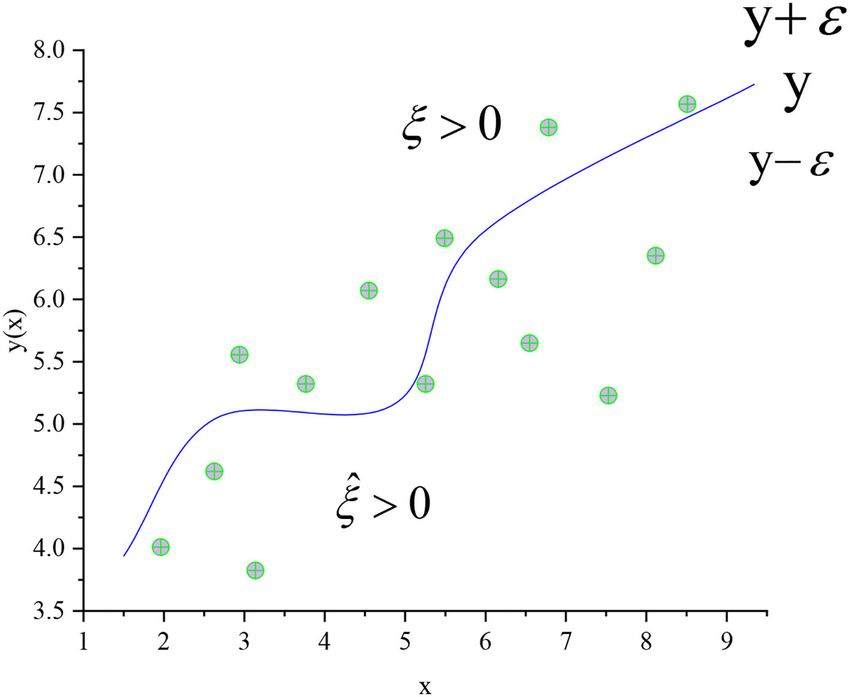
Wang et al. Tennis Sports Robot
while maximizing the interval to reduce the error. The most TABLE 1 | Analysis of tactical action characteristics of return ball of tennis sports
commonly used error function is the least square sum error robot.
function. Figure 4 shows the optimization effect of the SVM Return strategy Characteristic Optimization objectives
regression curve.
In Figure 4, the regression curve of the SVM in Figure 3 is Continuous return Continuity Change different ball
optimized. C is the regularization coefficient and the relaxation speeds, forces and
directions
variable ξ is introduced. In the regression problem, each data
Return with more Depth continuity, Return quickly
point xn needs two relaxation variables ξn ≥ 0 and ξ̂n ≥ 0. ξn ≥ 0
strengths velocity
corresponds to tn > y(xn ) + ε (above the curve in Figure 4) and
Moving return Continuous power Improve return accuracy
corresponds to tn < y(xn ) + ε (below the curve in Figure 4). and continuity
Equation (9) is a function that minimizes the regularization error. Return with High endurance Slash and straight ball
Equations (10) and (11) are the corresponding conditions. endurance and
defense
N
X 1 Changeable return Change the speed, Optimize the rotation and
C Eε (y(x) − tn ) + kwk2 (9) direction and kinetic direction of the shot
2
n=1 energy of the ball
tn ≤ y(xn ) + ε + ξ̂n Attack front court Aggressive Return forehand, backhand
tn ≥ y(xn ) − ε − ξ̂n (10)
The updated error function is as follows:
Another method for SVM regression does not fix the width of
N the insensitive area ε but fixes the proportion v of the data
X 1 points outside the pipeline. The maximization equation can
C (ξn + ξ̂n ) + kwk2 (11)
2 prove that at most vN data points fall outside the insensitive
n=1
pipeline, and at least vN data points are support vectors on or
The Lagrange multiplier method is introduced to optimize the outside the pipeline. The value of vC is generally determined
by cross-validation.
equation with constraints and minimize the error function:
N N P
N N
L̃(a, ãn ) = − 21
P P
(an − ãn )(am , −ãm )k(xn , xm ) + (an − ãn )tn
(ξn + ξ̂n ) + 21 kwk2 −
P P
L=C N(µn ξn + µ̂n ξ̂n ) n=1 m=1 n=1
n=1 n=1 N N (16)
N N (12) C C P P
P P 0 ≤ an ≤ N,0 ≤ ãn ≤ N, (an − ãn ) = 0, (an + ãn ) ≤ vC
− an (ε+ξn + yn − tn ) − ân (ε+ξ̂n − yn + tn ) n=1 n=1
n=1 n=1
By finding the derivative of the Lagrange function for w, b, ξn and
ξ̂n as 0, it can be obtained that RESEARCH MODEL AND FRAMEWORK
δL
N
P Recognition of Return Motion of Tennis
=0⇒ (an − ãn )φ(xn )
δw
n=1 Sports Robot
N The robot return in tennis sports cannot be realized only with
δL P (13)
δb =0⇒ (an − ãn ) = 0
n=1 a heavy swing. It needs to study the combination of human
δL δL action routines and constantly return the ball to the other party.
δξn = 0 ⇒ an + µn = C, = 0 ⇒ ãn + µ̃n = C
δ ξ̃n
For example, in diagonal backhand, the robot needs to catch
The new input variable can be obtained by using the the opportunity ball that the opponent’s oblique return angle
equation below: is not good, the ball speed is not fast, and the ball falls in
the center of the court or in a comfortable position in front
N
X of the body. The robot’s backhand position can be changed
y(x) = (an − ãn )φ(xn )φ(x) + b to the forehand to play the diagonal ball and return the ball
n=1 effectively. These return methods provide the structure of tennis
N
X return tactics and can be used to teach tennis sports robot
= (an − ãn )k(xn , x) + b (14) return. Table 1 is the analysis of the return tactics of tennis
n=1 sports robot.
The value of b in Equation (1) can be obtained from According to Table 1 and the high-performance camera
Equation (15): processing of the tennis robot, the robot responds to the
falling point of the opponent’s returning the ball. The
N
X tennis movement is set as the return movement of 8
b = tn − ε − wT φ(xn ) = tn − ε − (am − ãm )k(xn , xm ) tennis sports robots, which are preparation action, swing,
m=1 preparation position, backswing, forward swing, hitting, follow-
(15) up swing, and return to preparation position (Haryanto,
Frontiers in Neurorobotics | www.frontiersin.org 8 April 2022 | Volume 16 | Article 857595Wang et al. Tennis Sports Robot
FIGURE 5 | Motion recognition of tennis sports robots.
2020). In tennis robots’ data-processing stage of return motion TABLE 2 | Recognition and evaluation results of the return motion of the tennis
recognition, 3D human motion recognition is much more sports robot under different classifiers.
complex than 2D. Two-dimensional human motion recognition Evaluation SVM Decision Random Multi-layer
is more mature than 3D in terms of data and models. parameters classifier tree forest perceptron
2D models also have many outdoor and natural datasets. classifier classifier (MLP)
However, almost all 3D human motion recognition datasets classifier
are indoor. Because of the complexity of 3D annotation and
Accuracy 0.99 0.73 0.99 0.99
recognition, many sensors and cameras are needed to collect
Recall 0.99 0.72 0.99 0.98
data. Figure 5 is a motion recognition system of a tennis
f1 score 0.99 0.72 0.99 0.98
sports robot.
Model call time 0.00015 0.00001 0.00002 0.00001
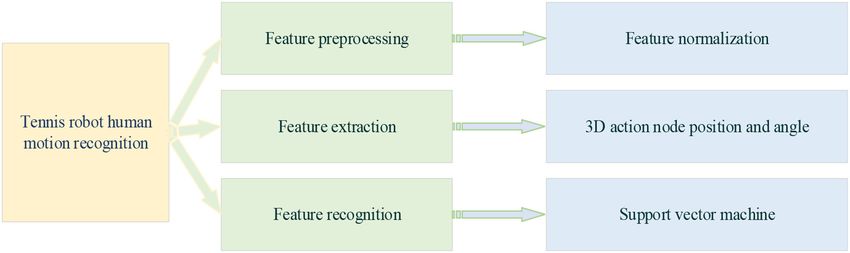
Figure 5 is the dataset feature extraction of the return strategy
of tennis sports robots for human motion recognition. First,
human motion recognition is carried out, followed by the
extraction of motion features. The collected serving action
100 pieces of data only need to output one label. Shell is adopted
images of the human body in tennis sports are put into the
to process label files. Finally, the eight return motions in the
OpenPose skeleton extraction network to extract the keypoint
label file are replaced with numbers from 1 to 8. The human
coordinate data of human action. Then, the human action
bone information read from the input CSV is taken as the input
information under different classifications is extracted as action
and the CSV file of the Y label as the output. The training and
features and saved as the corresponding text (TXT) documents
verification sets are divided according to the proportion of 0.3.
(Neff et al., 2019). Then, the features are integrated. The extracted
Then, they are converted into a NumPy matrix to participate in
feature information is integrated with the corresponding images
the operation. The decision tree, random forest, neural network,
in a TXT file, and the useless and redundant datasets are removed
and SVM are selected as the machine learning model classifiers to
simultaneously. Finally, the TXT information is integrated
test the model effect. The evaluation of the model is mainly based
as input and output tag comma-separated value (CSV) files,
on the confusion matrix, accuracy, recall, and f1 score. Table 2
respectively. Among them, the input features include the key
shows the recognition and evaluation results of the return motion
points of human service and the line features connected by
of the tennis sports robot under different classifiers.
different bone points and the surface features formed by the
Table 2 shows that the SVM classifier is superior to the
combination of different lines. These features will be extracted
decision tree classifier, random classifier, and MLP classifier
and learned through different classification algorithms.
in action recognition of the tennis sports robot in the
In a convolutional neural network, the human motion figures
accuracy, recall rate, f1 score, and model call time. It has
are put into the network in the matrix form. The x, y, and z
high accuracy and meets the tennis sports robot’s return action
axes are taken as red, green, blue (RGB)—three channels of the
recognition requirements.
figures. Then, the data are arranged in a row to get a vector with
n columns. However, for convenience, n is decomposed. Every
100 groups of data form a return action figure of a tennis sports Design of Return Strategy Algorithm for
robot, that is, 1∗ 100∗ 3 represents a return action figure of a tennis Tennis Sports Robot
sports robot. Of course, if the input is modified, the label file The landing areas of the tennis serve are two diagonally opposite
should also be modified accordingly. Before modification, each areas. Before serving, it is essential to stand in the area behind
piece of data will have a label. However, after modification, every the end line and between the midpoint and the hypothetical
Frontiers in Neurorobotics | www.frontiersin.org 9 April 2022 | Volume 16 | Article 857595Wang et al. Tennis Sports Robot FIGURE 6 | Return state of the tennis sports robot. FIGURE 7 | Return strategy model of the tennis sports robot based on SVM. extension line of the sideline, throw the tennis ball into the air, running. It is best to stand in the specified position and not touch hit the ball with the racket before the ball touches the ground, other areas. The player serves from the end line of the right area and complete the sending of the ball when the racket contacts the at the beginning of each game and then changes to the left area ball. When facing a tennis player serving, the tennis sports robot to serve after they score or lose points. In serving, the ball should cannot change the position of the original station by walking or cross the net and fall on the opposite service area in the opposite Frontiers in Neurorobotics | www.frontiersin.org 10 April 2022 | Volume 16 | Article 857595
Wang et al.                                                                                                                                Tennis Sports Robot

 FIGURE 8 | Implementation framework of the return strategy of the tennis sports robot.

corner, or it can fall on the surrounding line. However, another                          Figure 7 is a multivariable SVM learning based on eight ball
service is required if the ball touches the net and falls into the                    return actions of a tennis sports robot. However, the maximum
opponent’s service area during the service, and the tennis sports                     interval characterizes the boundary between the current classifier
robot is not ready to return. Figure 6 shows the return state of                      and the dataset because the model is linearly separable from the
the tennis sports robot.                                                              2D traditional model. The data volume is modeled and classified
   In Figure 6, after the ball rebounds, the tennis sports robot                      based on the feature extraction of human motion recognition
starts to stare at the ball, which is the same as the ball pressure                   images. With the two classifiers in Figures 3, 4 as examples,
with a deep landing point. The reason is that the backswing is                        the maximum interval of blue lines in the curve is greater than
too late. If the human movement causes the ball speed to reach                        that of the black lines. Therefore, the blue line is selected as the
260 km/h, the tennis compression is more obvious. The tennis                          classifier. Machine learning is carried out for the return motion
ball forms the incident angle and exit angle with the ground in                       of the tennis sports robot, and the probability value is the output
returning the ball. In a tennis sports robot, the average serving                     through the probability estimation of accuracy. Figure 8 is the
speed of the human body is 150–250 km/h. According to different                       implementation framework of the return strategy of the tennis
return points, the opponent serves within a certain speed range                       sports robot.
no matter how fast the service is. Through the ball return and                            In Figure 8, the algorithm design of the tennis sports robot’s
landing points in different speed ranges, the robot can aim at the                    return strategy is carried out using machine learning and the
other party’s ball return and landing point area to return the ball.                  SVM-O algorithm. Feature extraction is carried out through
The tennis sports robot can use SVM to get the optimal return                         the motion characteristics of human motion recognition,
strategy. Figure 7 is the return strategy model of a tennis sports                    and the SVM algorithm is designed and studied for the
robot based on SVM.                                                                   return ball strategy of the tennis sports robots. Finally, the

Frontiers in Neurorobotics | www.frontiersin.org                                 11                                      April 2022 | Volume 16 | Article 857595
Wang et al.                                                                                                                              Tennis Sports Robot

 FIGURE 9 | Error rate analysis of 8 kinds of return movements of tennis sports robot based on SVM-O.

accuracy of the return strategy of the tennis sports robot                          degrees to further analyze the return strategy of the tennis sports
is simulated.                                                                       robots. Figure 10 shows the analysis of different return strategies
                                                                                    of the tennis sports robots.
                                                                                        Figure 10 shows that in the ball return strategy of the tennis
RESULTS AND DISCUSSION                                                              sports robots after optimization, the action with the highest
                                                                                    accuracy rate of machine learning is swing, 94%. The action
Return Analysis of the Tennis Sports Robot                                          with the highest recall rate is the preparation action, 98.21%,
To optimize machine learning, the return error rate, return                         and the action with the highest-scoring rate is volatilization,
accuracy, return recall rate, return score rate, and return                         96.79%. Regarding the return accuracy, return recall, and return
recognition rate of eight actions in the return strategy of a tennis                score, the average values of preparation, swing, ready posture,
sports robot are analyzed through the optimization analysis of                      backswing, forward swing, hitting, volatilization, and returning
the SVM algorithm. Figure 9 displays the analysis results of the                    to the ready position are 93.38, 89, 86.93, 90.10, 86.28, 85.84,
error rate of different return actions of tennis sports robots based                90, and 86.73%. It reveals that in the return strategy of the
on SVM-O.                                                                           tennis sports robots, preparation, backswing, and volatilization
   In Figure 9, the average error rates of preparation, swing,                      can achieve more objective results in the analysis of the return
ready posture, backswing, forward swing, hitting, volatilization,                   strategy. CNN, SVM-Linear Discriminant Analysis (SVM-LDA)
and returning to the ready position are 0, 0.21, 0.32, 2.12, 4.3,                   algorithm, and SVM—common spatial pattern (SVM-CSP)
0.26, 3.75, and 0%, respectively. The error rate of the backswing,                  algorithm are compared and analyzed to study the superiority of
forward swing, and volatilization in the return strategy of the                     the SVM-O algorithm in the ball return recognition rate of the
tennis sports robot are high. The return accuracy, return recall,                   tennis sports robot. Figure 11 shows the return recognition rate
and return score of eight return actions are analyzed in varying                    of the tennis sports robots under different models.

Frontiers in Neurorobotics | www.frontiersin.org                               12                                      April 2022 | Volume 16 | Article 857595
Wang et al. Tennis Sports Robot
FIGURE 10 | Analysis of different return strategies of the tennis sports robot.
Figure 11 shows that the tennis sports robot based on is the simulation effect of the return accuracy of the tennis
the SVM-O algorithm has the highest return recognition sports robot.
rate, with an average return recognition rate of 88.61%. Figure 12 shows that when the base number of simulation
Then, the average return recognition rates of the tennis times is small, there is little difference between the four models
sports robot based on the SVM-LDA algorithm, SVM-CSP for the return accuracy of the tennis robot. With the increase of
algorithm, and CNN algorithm are 85.49, 85.49, and the iteration times, the effect of the model simulation experiment
83.82%. based on SVM-O is the best, followed by SVM-LDA, SVM-CSP,
and finally CNN.
Discussion
Simulation Effect of the Return Accuracy First, the OpenPose traversal dataset was used to extract the
of the Tennis Sports Robot Under Different information features of the human motion recognition nodes.
Model Training Then, 8 kinds of tennis robots’ return movements were integrated
The maximum number of iterations is set to 1 million times with the human motion characteristics, and the 8 kinds of
in the whole robot return strategy to refer to the final accuracy tennis robots were used to analyze the return movements. By
of the tennis sports robot return. In the simulation process, selecting these 8 basic return movements, the complexity of
different models are simulated with different iteration times the human motion recognition process in tennis sports robots
to simulate the return accuracy of the tennis robot. Figure 12 is reduced. The results show that when the number of return
Frontiers in Neurorobotics | www.frontiersin.org 13 April 2022 | Volume 16 | Article 857595Wang et al. Tennis Sports Robot FIGURE 11 | Return recognition rate of the tennis sports robot under different models. actions of the robot is set to 1 million, the recognition accuracy studied and analyzed by combining human motion recognition of the tennis sports robot to the CNN model is too small, and and robot return action. it is not easy to distinguish the return actions of the tennis sports robot. The smaller the number of iterations, the greater CONCLUSION the impact on the recognition accuracy. The automatic ball- picking robot operates on the image data according to the Research and analysis show that there is almost no error rate previous tennis movement. The eagle eye system is composed of in the preparation and return to the ready position of return multiple high-speed cameras. Through the application of image strategy of the tennis robot. The error rate of the backswing, recognition, image fusion, and 3D reconstruction technology, the forward swing, and volatilization is higher than that of the configuration of the tennis robot is too high, and the return action other movements. Through the optimized SVM, the accuracy of the tennis robot is not fully realized. The exploration is done to of the swing motion is as high as 94.00%. The action with the analyze the return action of the tennis sports robots based on the highest recall rate is preparation, 98.21%. The action with the hitting strength and predicted landing point of the tennis sports highest score is swing, 96.79%. Regarding the return accuracy, robot. It is not easy to distinguish the characteristics of human return recall, and return score, the average values of preparation motion by recognizing and analyzing human motion through action, return action, and volatilization action are higher than the image obtained by the camera. However, the recognition the other return actions, which are 93.38, 90.10, and 90%, of these feature points is significant. The image acquisition respectively. The research on the return ball recognition rate of the robot camera improves the efficiency of computational of the tennis robots under different models shows that the image recognition. However, when these human action feature tennis robots’ return ball recognition rate based on the SVM- points greatly impact the recognition results, this method is O algorithm is higher than that of the SVM-LDA algorithm, not desirable. Therefore, the return strategy of tennis robots is SVM-CSP algorithm, and CNN algorithm. Its average return Frontiers in Neurorobotics | www.frontiersin.org 14 April 2022 | Volume 16 | Article 857595
Wang et al.                                                                                                                                   Tennis Sports Robot

 FIGURE 12 | Simulation effect of the return accuracy of the tennis sports robot.

ball recognition rate is 88.61%. To sum up, the simulation effect                        DATA AVAILABILITY STATEMENT
of the tennis robot’s return strategy model based on SVM-
O is the best, improving the diversity of the tennis robot’s                             The raw data supporting the conclusions of this article will be
return strategies.                                                                       made available by the authors, without undue reservation.
    The required operations such as picking up, putting, and
collecting balls in the tennis court are completed through the                           ETHICS STATEMENT
previous research on the design of the robot arm of the automatic
ball-picking robot in tennis sports. The tennis robot’s return                           Written informed consent was obtained from the individual(s)
strategy implementation model based on the SVM-O is proposed.                            for the publication of any potentially identifiable images or data
It can integrate human action recognition with the return action                         included in this article.
of the tennis sports robot. Applying the SVM-O algorithm to
the tennis sports robot’s return action recognition solves the
problem that the optimization algorithm cannot be applied to                             AUTHOR CONTRIBUTIONS
real-time requirements. It has important research significance
for the application of an optimized SVM algorithm in sports                              All authors listed have made a substantial, direct, and intellectual
action recognition. Tennis robots can combine different return                           contribution to the work and approved it for publication.
strategies according to the recognition rate and accuracy of the
return action. However, according to the work of the tennis                              FUNDING
robot, its internal structure will delay the operation of the system.
Due to the complexity of human motion recognition, the robot                             This work was supported by the Special Project “Research
cannot quickly launch the ball return according to the ball                              on the Development and Application of Physical Education
return strategy. In the follow-up research, more details can be                          in Colleges and Universities” of China Higher Education
considered to improve the autonomy of the tennis robot.                                  Society, Research on the influence of the evolution of national

Frontiers in Neurorobotics | www.frontiersin.org                                    15                                      April 2022 | Volume 16 | Article 857595
Wang et al. Tennis Sports Robot
student physical health standard on the reform of physical “Health China” led by the scientific theoretical basis and
education in colleges and universities (Grant No.: 21TYYB12) promotion of national fitness exercise and dance research (Grant
and Jiangxi Provincial Sports Bureau Sports Research Project, No.: 202142).
REFERENCES Mohabatkar, H., and Ebrahimi, S. (2021). Using chou’s five-steps rule to classify and
predict glutathione S-transferases with different machine learning algorithms
Alexopoulos, K., and Nikolakis, N. (2020). Digital twin-driven supervised and pseudo amino acid composition. Int. J. Peptide Res. Therap. 27, 309–316.
machine learning for the development of artificial intelligence applications doi: 10.1007/s10989-020-10087-7
in manufacturing. Int. J. Comp. Integr. Manufact. 33, 429–439. Neff, C., Mendieta, M., Mohan, S., Baharani, M., and Rogers, S. (2019). REVAMP
doi: 10.1080/0951192X.2020.1747642 2 T: real-time edge video analytics for multicamera privacy-aware pedestrian
Aslan, M. F., and Durdu, A. (2020). Human action recognition with tracking. IEEE Internet Things J. 7, 2591–2602. doi: 10.1109/JIOT.2019.2954804
bag of visual words using different machine learning methods and Oudah, M., and Al-Naji, A. (2020). Hand gesture recognition based on computer
hyperparameter optimization. Neural Comp. Appl. 32, 8585–8597. vision: a review of techniques. J. Imag. 6, 73. doi: 10.3390/jimaging6080073
doi: 10.1007/s00521-019-04365-9 Pourdarbani, R., Sabzi, S., Kalantari, D., and Hernández-Hernández, J. L. (2020).
Faisal, A. I., Majumder, S., Mondal, T., Cowan, D., and Naseh, S. (2019). A computer vision system based on majority-voting ensemble neural network
Monitoring methods of human body joints: state-of-the-art and research for the automatic classification of three chickpea varieties. Foods 9, 113.
challenges. Sensors. 19, 2629. doi: 10.3390/s19112629 doi: 10.3390/foods9020113
Gao, J., Ye, W., and Guo, J. (2020). Deep reinforcement learning for indoor mobile Sharma, M., and Kumar, N. (2021). Badminton match outcome prediction model
robot path planning. Sensors 20, 5493. doi: 10.3390/s20195493 using Naïve Bayes and Feature Weighting technique. J. Ambient Intellig.
Ghorbanzadeh, O., Blaschke, T., Gholamnia, K., Meena, S. R., and Tiede, D. Human. Comput. 12, 8441–8455. doi: 10.1007/s12652-020-02578-8
(2019). Evaluation of different machine learning methods and deep-learning Shi, Q. (2020). Fault diagnosis of an autonomous vehicle with an improved
convolutional neural networks for landslide detection. Remote Sensing 11, 196. SVM algorithm subject to unbalanced datasets. IEEE Trans. Indust. Electr. 68,
doi: 10.3390/rs11020196 6248–6256. doi: 10.1109/TIE.2020.2994868
Giles, B., and Kovalchik, S. (2020). A machine learning approach for Wang, M., and Zhang, Y. D. (2019). Human motion recognition exploiting
automatic detection and classification of changes of direction from radar with stacked recurrent neural network. Digital Signal Proc. 87, 125–131.
player tracking data in professional tennis. J. Sports Sci. 38, 106–113. doi: 10.1016/j.dsp.2019.01.013
doi: 10.1080/02640414.2019.1684132 Xiong, Q., Zhang, J., Wang, P., and Liu, D. (2020). Transferable two-stream
Gurbuz, S. Z. (2019). Radar-based human-motion recognition with deep learning: convolutional neural network for human action recognition. J. Manufact. Syst.
promising applications for indoor monitoring. IEEE Signal Proc. Magaz. 36, 56, 605–614. doi: 10.1016/j.jmsy.2020.04.007
16–28. doi: 10.1109/MSP.2018.2890128 Yang, L., Liu, Y., Yu, H., Fang, X., Song, L., and Li, D. (2021). Computer
Haryanto, J. (2020). The relationship of concentration and eye-hand coordination vision models in intelligent aquaculture with emphasis on fish detection
with accuracy of backhand backspin serve in table tennis. Int. J. Technol. Innov. and behavior analysis: a review. Arch. Comput. Methods Eng. 28, 2785–2816.
Human. 1, 51–56. doi: 10.29210/881701 doi: 10.1007/s11831-020-09486-2
Hou, C., Xu, Z., Qiu, W., Wu, R., Wang, Y., and Xu, Q. (2019). A biodegradable and Yunardi, R. T., Arifianto, D., and Bachtiar, F. (2021). Holonomic implementation
stretchable protein-based sensor as artificial electronic skin for human motion of three wheels omnidirectional mobile robot using dc motors. J. Robot. Control
detection. Small 15, 1805084. doi: 10.1002/smll.201805084 2, 65–71. doi: 10.18196/jrc.2254
Jalal, A., and Kamal, S. (2019). Depth maps-based human segmentation and action Zhao, J., Liu, L., Wei, Z., Zhang, C., and Wang, W. (2019). R-DEHM: CSI-based
recognition using full-body plus body color cues via recognizer engine. J. Electr. robust duration estimation of human motion with WiFi. Sensors. 19, 1421.
Eng. Technol. 14, 455–461. doi: 10.1007/s42835-018-00012-w doi: 10.3390/s19061421
Jalal, A., and Quaid, M. A. K. (2019). A wrist worn acceleration based human Zhao, L. (2020). Detection and recognition of human body posture in motion
motion analysis and classification for ambient smart home system. J. Electr. based on sensor technology. IEEJ Trans. Electr. Electron. Eng. 15, 766–770.
Eng. Technol. 14, 1733–1739. doi: 10.1007/s42835-019-00187-w doi: 10.1002/tee.23113
Jaruenpunyasak, J., García Seco de Herrera, A., and Duangsoithong, R. (2022). Zhu, M., Yi, Z., and Yang, B. (2021). Making use of nanoenergy from human–
Anthropometric ratios for lower-body detection based on deep learning and nanogenerator and self-powered sensor enabled sustainable wireless iot sensory
traditional methods. Appl. Sci. 12, 2678. doi: 10.3390/app12052678 systems. Nano Today 36, 101016. doi: 10.1016/j.nantod.2020.101016
Kahanowich, N. D. (2021). Robust classification of grasped objects in intuitive
human-robot collaboration using a wearable force-myography device. IEEE Conflict of Interest: The authors declare that the research was conducted in the
Robot. Autom. Lett. 6, 1192–1199. doi: 10.1109/LRA.2021.3057794 absence of any commercial or financial relationships that could be construed as a
Krause, L. M., Buszard, T., Reid, M., and Pinder, R. (2019). Assessment potential conflict of interest.
of elite junior tennis serve and return practice: a cross-sectional
observation. J. Sports Sci. 37, 2818–2825. doi: 10.1080/02640414.2019.16 Publisher’s Note: All claims expressed in this article are solely those of the authors
65245 and do not necessarily represent those of their affiliated organizations, or those of
Kunze, K. N., Karhade, A. V., Sadauskas, A. J., and Schwab, J. H. (2020).
the publisher, the editors and the reviewers. Any product that may be evaluated in
Development of machine learning algorithms to predict clinically
this article, or claim that may be made by its manufacturer, is not guaranteed or
meaningful improvement for the patient-reported health state after total
hip arthroplasty. J. Arthroplasty 35, 2119–2123. doi: 10.1016/j.arth.2020. endorsed by the publisher.
03.019
Li, Z., Zhang, R., and Lee, C. H. (2020). An evaluation of posture Copyright © 2022 Wang, Yang, Wang, Hong and Zou. This is an open-access article
recognition based on intelligent rapid entire body assessment system for distributed under the terms of the Creative Commons Attribution License (CC BY).
determining musculoskeletal disorders. Sensors 20, 4414. doi: 10.3390/s201 The use, distribution or reproduction in other forums is permitted, provided the
64414 original author(s) and the copyright owner(s) are credited and that the original
Liu, Y., Chen, P. H. C., and Krause, J. (2019). How to read articles that use publication in this journal is cited, in accordance with accepted academic practice.
machine learning: users’ guides to the medical literature. JAMA 322, 1806–1816. No use, distribution or reproduction is permitted which does not comply with these
doi: 10.1001/jama.2019.16489 terms.
Frontiers in Neurorobotics | www.frontiersin.org 16 April 2022 | Volume 16 | Article 857595You can also read


