SAMIS PROJECT / Component
←
→
Page content transcription
If your browser does not render page correctly, please read the page content below
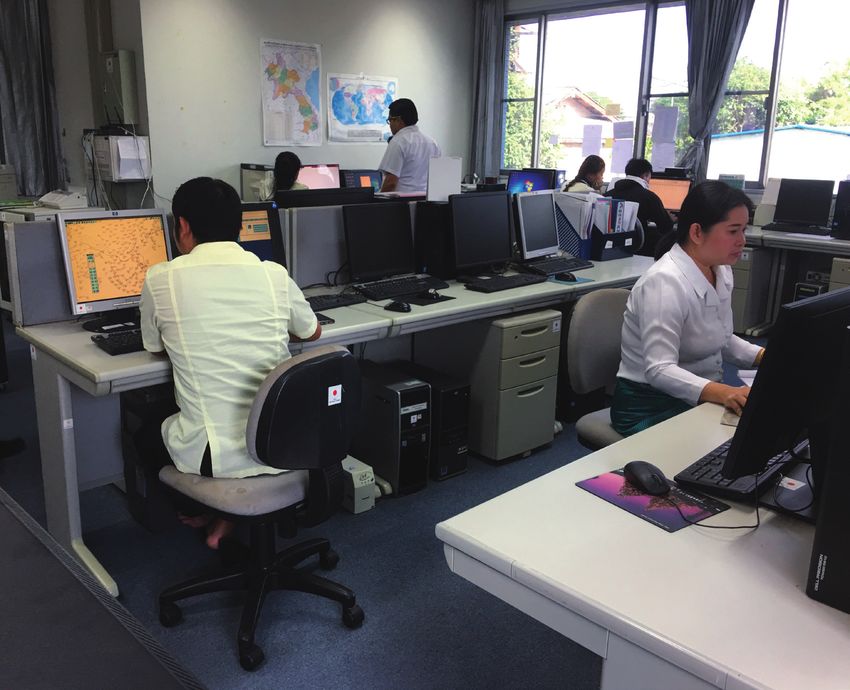
Photo: ©FAO/ Phommachanh Phothichanh

                                       SAMIS PROJECT / Component 1
                                       Strengthening agro-climatic monitoring, analysis, communication and
                                       use of data and information for decision-making and food security in
                                       the agricultural sector in the Lao People’s Democratic Republic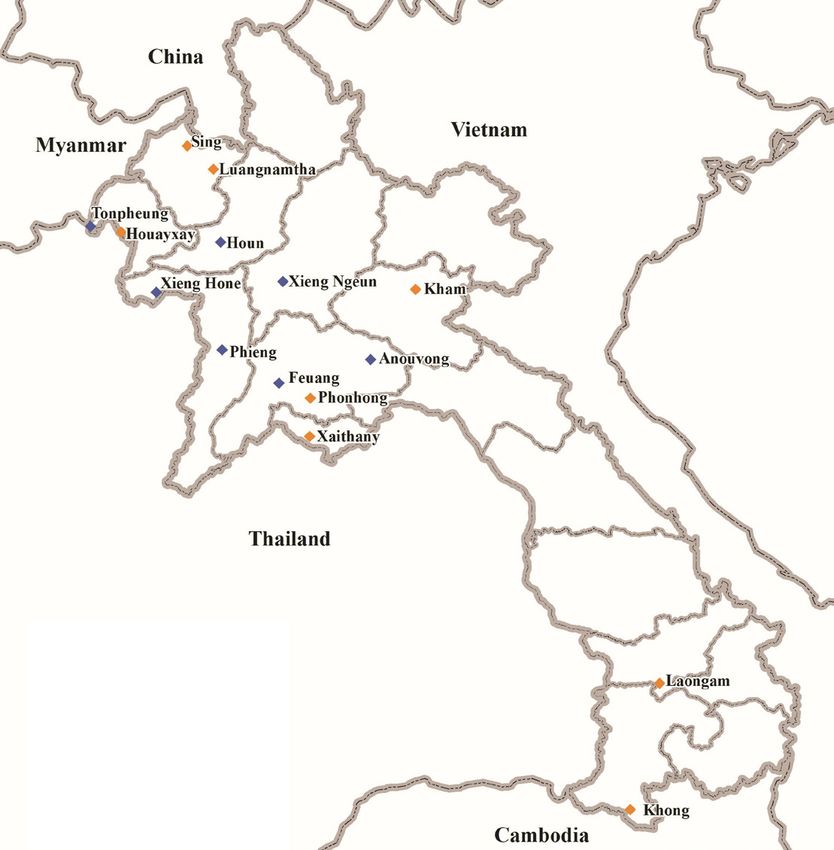
SAMIS agro-meteorological stations

Sing

Luangnamtha

Tonpheung

Houayxay

Houn

Xieng Hone

Xieng Ngeun

Kham

Phieng

Anouvong

Feuang

Phonhong

Xaithany

Laongam

Khong

Laboratory for agro-meteorological sensor calibration established and
agro-meteorological monitoring facilities improved at national level
15 weather stations
Eight weather stations will be improved and seven new weather stations will be installed.
Also, agro-meteorological forecast will be piloted in five provinces.

Northern part:     Kham, Xieng Ngeun, Phieng, Xieng Hone, Houn,
		                 LaungNamtha, Sing, Houayxay and Tonpheung Districts.
Central Part:      Xaithany, Phonhong, Feuang and Anouvong Districts.
Southern Part:     Laongam and Khong Districts.

                                        Climate and Agro-meteorological Division facilities are
                                        renovated and a laboratory for calibration and maintenance
                                        of agro-meteorological essential sensors is installed.
                                        Also, high performace computing systems for data entry
                                        and climate analysis is set up.

                                        Photo: ©FAO/Phommachanh Phothichanh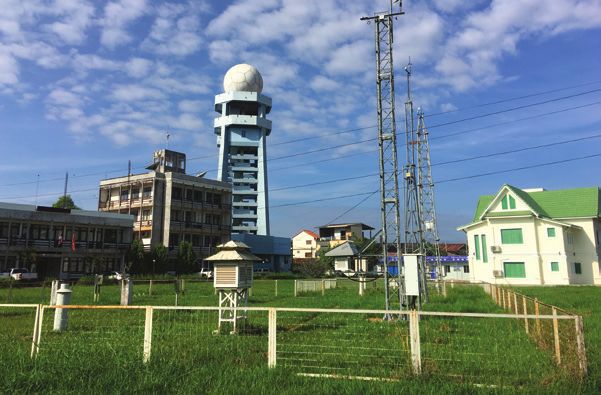
The Laos Climate Services in Agriculture (LaCSA) system
LaCSA archives and processes agro-meteorological and climatological data. By means of such data,
it interpolates and provides agro-meteorological services to end-users. The system generates and
delivers agro-met services to farmers by analyzing the meteorological and crop cycle data. It produces
seasonal forecast and seven days bulletins. The seven days bulletin contains weekly weather bulletin,
climate smart agriculture recommendations and pest and diseases risk advisory.

                                                 LAOS CLIMATE SERVICES FOR AGRICULTURE

      Weather and climate observation                      Weather and climate forecast              Agro-met services          Resources

                                                               AGRO-MET DATABASE
                               AGRO-MET                                                                                         INPUT DATA
                                 INFO
                                                                        tive      Historical
                                                                                                          WEATHER                    DMH
                            Crop specific agro-met           Administra
                            indices forecast: GDD,             GIS data          weather da
                                                                                             ta         CLIMATE INFO               Climate DB
                               Rainfall, WSI, ET                                                                                   Weather and
                                                                                                          Weather morning
                                                                                                                                climate forecasts
                                Pest & disease
                                                                            il
                                                              Crop and so
                                                                                                           Weather forecast
                                                                                   Weather                                         Weather DBs
 USER GROUPS                    early warning
                                                                  data             forecast                                     from other donors
                                                                                                          Seasonal forecast
       National            Crop yield forecast with
  Government Units         best farm management                                                          Hourly/Daily/Monthly
                             recommendations
 Ministry of Agriculture                                                                                    data analysis
     and Forestry                (from NAFRI)                   Pest and           Seasonal
                                                                         ta         forecast
                           Secondary products:
                                                              desease da                                    Extremes alert
                           forecasts, warnings
                                                                                                             and forecast

                               AGRO-MET                                    l
  Local Government             BULLETIN                       Agricultura         Registered
  Units and Farmers                                             models             user data
         DAFO              Location specific weather
         PAFO                  and climate Info
      Farmers                                                                        User
       NGOs
                            Location, crop specific            Resources                      n
                               agro-met info                                     authorizatio                                   System Operation
  Farmers Associate                                                                  data
                                                                                                                                  Management
                           Delivery: web, mobile, email,
                           paper print, push alarm, sms

                                                                                                                                 OPERATOR
                                                             SYSTEM CONFIGURATION                                                    DMH
                                                                                                                                     Admin
                           Seasonal forecast configuration    Agro-met bulletin configuration     Registered user management

 Products and partnerships
 A first LaCSA testing phase will be developed and delivered to farmers by the 2019 season. The
 finalized LaCSA will be available in 2020 and will continue to be improved in the 2021 crop season.
 The activity is realized with the support of APEC Climate Center (APCC), and in collaboration with the
 Ministry of Agriculture and Forest, including the Agriculture and Forestry Research Institute (NAFRI)
 and the Plant Protection Centre (PCC). A collaboration with the CGIAR CIAT Research Center in Hanoi
 is supporting various aspects of capacity development and field level research.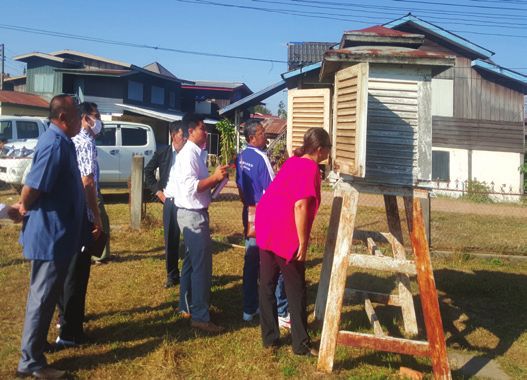
Institutional capacity development
The training will be realised by RIMES (the Regional Integrated Multi-Hazard Early Warning System), by the
CGIAR CIAT Research Center in Hanoi, by the Asian Institute of Technology, and by the APEC Climate Center.

                                      Central level DMH
                                      •   Management training
                                      •   Technical training
                                      •   Communication training
                                      •   4 guidelines: agronomic data collection, synoptic observation
                                          manual, weather observation data input, weather observation
                                          data handbook.

                                      Local level
                                      •   Agro-meteorology in the field
                                      •   Climate information for farmers
                                      •   Collection of basic agronomical data during season
                                      •   Standard Operating Procedures training
                                      •   Automatic weather stations (AWS) maintenance

Photo: ©FAO/Rattanakaroun Phanthavongsa      Photo: ©FAO/Rattanakaroun Phanthavongsa   Photo: ©FAO/Phothichanh Phommachanh

     Standard Operation Procedures (SOP)
     The project will prepare the procedures for carrying out a given agro-meteorological operation,
     or Standard Operation Procedures (SOP). SAMIS role is to help setting up an environment of
     discussion at managerial level and to improve the consciousness and responsibility of staff by
     assigning clear duties. SOP for Climatology and Agro-meteorology Division will be endorsed and
     approved by the Department of Meteorology and Hydrology (DMH) and at the ministry level.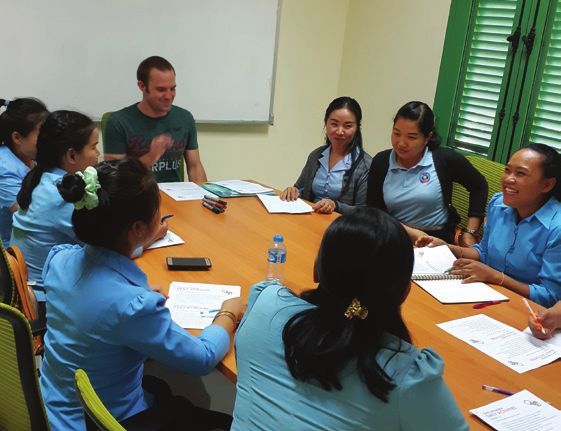
Agro-meteo services
                         prepared by the APEC Climate
                                                                                Data
                                                                                collected by decentralised
                         Center (APCC)
                                                                                level entities of the Ministry
                                                                                of Natural Resources
                                                                                and Environment (MONRE)

                                                CLIMATE
                                                SERVICES

                                                                                        CLIMATE Services

                                              (prepared by DMH)
                                                                                       14% GROW

                                                                                      Climate services
Climate services                                                                      (distributed by app)
distributed by the District Office of
Natural Resources and Environment
(DONRE) and by the District Offices of
Agriculture and Forestry (DAFO)

   Objectives                                            Benefits
   To enhance farmer capacities to make                  The project will develop agro-meteorological
   appropriate decisions during the cropping             system at national and local levels in Lao
   season.                                               PDR, aiming at:

   To support farmers accessing and using                • Decision makers will have easy access to
   agrometeorological data and information.                information about the cropping season;
                                                         • Smallholders will improve their
                                                           productivity and food security;
   Impacts                                               • The sustainability of crop production will
   Farmers are empowered in their                          be improved over time as farmers will
   decision-making and in the selection of the             have access to pest and disease forecast.
   most appropriate agricultural practices.

   Food security in rural areas is increased.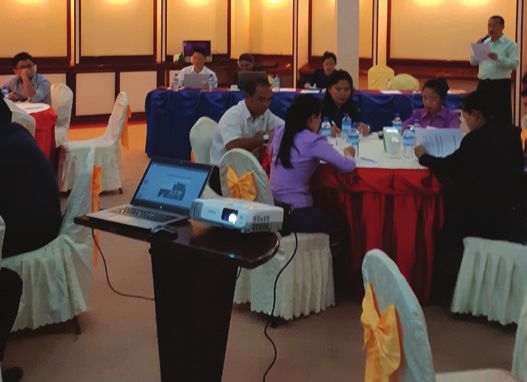
www.fao.org/in-action/samis

 Viengxai Manivong                      Monica Petri                            Department of
 National Project Director              Project Coordinator
                                                                                Meteorology and
 Director of General Affair                                                     Hydrology (DMH)
                                        Tel +856 (0)20 5914 6952
 Tel. +856 (0)20 5474 4333              Monica.Petri@fao.org       Souphanouvong Avenue,
 vxmanivong.dmh@gmail.com                                          Ban Akat, Sikhothabong District,
                                                                   Vientiane Capital, Lao PDR

                                                                   Postal office: PO Box 2903,
                                                                   Vientiane Capital, Lao PDR
                                                                                                      CA2927EN/1/0219
                                                                                                      © FAO, 2019

                    Some rights reserved. This work is available
                    under a CC BY-NC-SA 3.0 IGO licence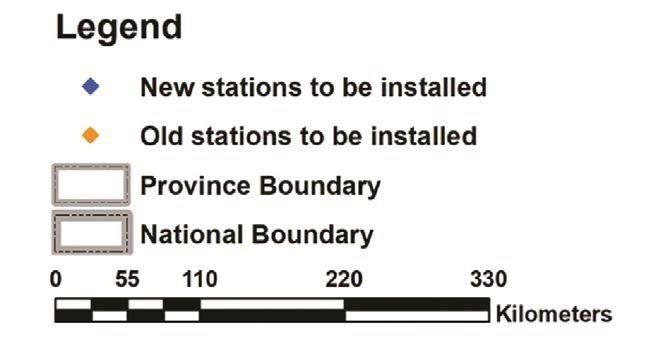
You can also read


