Scientific Information and technical references on particular aspects of Killer Whales (Orcinus orca) - Wissenschaftliche Informationen und ...
←
→
Page content transcription
If your browser does not render page correctly, please read the page content below
Scientific Information and
     technical references on
       particular aspects of
 Killer Whales (Orcinus orca).
Wissenschaftliche Informationen und Fachspezifische
 Bezüge zu Einzelnen Aspekten von Schwertwalen
                   (Orcinus Orca)

                   August 2015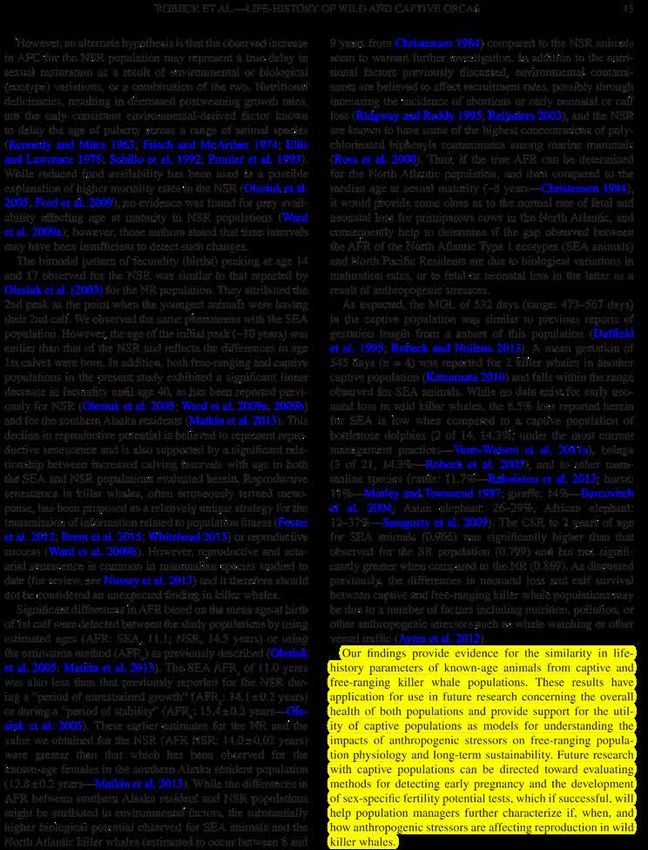
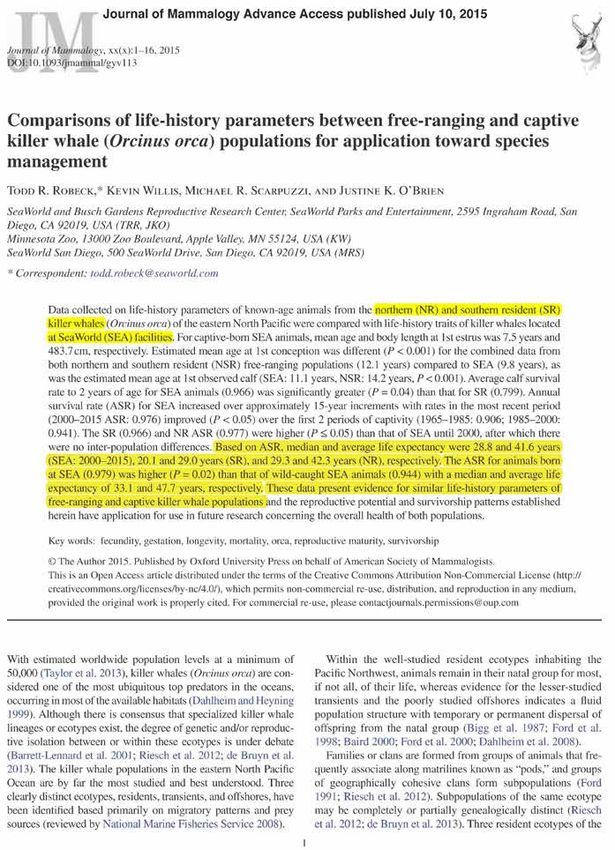
Table of Contents / Inhalt
1 Rake marks / Bissspuren
2 Tooth wear / Zahnverschleiβ
3 Tear film / Tränenfilm
4 Longevity / Lebensdauer
1                    Rake Marks / Bissspuren

1.1 Introduction / Einleitung

1.2 Scientific description of rake marks in wild killer whales
Wissenschaftliche Darstellung von Bissspuren bei wilden Schwertwalen

1.3 Scientific description of rake marks in wild dolphins
Wissenschaftliche Darstellung von Bissspuren bei wilden Delfinen.

1.4 Some examples of rake marks in wild orcas from identification
catalogs
Beispiele von Bissspuren bei wilden Schwertwalen aus
Identifikationskatalogen.
1.1                      Introduction / Einleitung

Rake marks are normal features in wild killer whales, and in all the    Bissspuren sind sowohl bei wilden Schwertwalen als auch
toothed wales (Odontocete) species. These scratches are produced        bei allen anderen Zahnwalen (Odontoceti) völlig normale
by the normal social interaction between individuals of the group,      Merkmale. Diese Schrammen und Kratzer entstehen im Laufe der
during agonistic interactions (aggressions) one animal can leave        normalen sozialen Interaktion der Gruppenmitglieder. Wenn es
marks on the skin of another with his teeth.                            zu agonistischen Interaktionen, also Agressionen kommt, ist es
                                                                        durchaus üblich, dass die Tiere mit ihren Zähnen Spuren auf der
These marks are well known by cetacean scientists, and also by          Haut eines anderen Tieres hinterlassen.
the crews of the whale-watching boats. In killer whales this marks
have been scientifically documented in several occasions, for           Diese Kratzer und Narben sind unter Walforschern und bei
example by Ingrid Visser (Free Morgan Foundation) who found             den Besatzungen von Walbeobachtungsbooten sehr bekannt.
two individuals prolifically raked in New Zealand almost 20 years       Bei Schwertwalen wurden diese Bissspuren bereits mehrmals
ago (See 1.2)                                                           wissenschaftlich dokumentiert – zum Beispiel von Ingrid Visser
                                                                        (Free Morgan Foundation), die vor fast 20 Jahren in Neuseeland
Despite the arguments of wild cetaceans able to swim out to avoid       zwei Exemplare sichtete, welche besonders viele Narben aufwiesen.
conflicts in the wild (never described in the scientific literature),   (siehe 1.2)
the intensity of rakes in wild dolphins have been used to monitor
aggressive behaviour. (See 1.3)                                         Trotz der Argumente, dass wilde Walarten in freier Wildbahn
                                                                        in der Lage sind, sich gegenseitig aus dem Weg zu gehen, um
Rake marks in wild killer whales are so very common that they can       Konflikte zu vermeiden (was nie in der wissenschaftlichen
be easily found in killer whale ID catalogues (See 1.4)                 Literatur beschrieben wurde), wurde das Ausmaβ der Bisspuren
                                                                        bei wilden Delfinen dennoch zur Beobachtung und Beurteilung
Rake marks can only be considered a health problem when there is        von agressivem Verhalten verwendet. (siehe 1.3)
poor water quality (for example in heavily polluted coastal areas).
Loro Parque has a water quality system that has been accredited         Bissspuren bei wilden Schwertwalen sind so häufig, dass sie leicht
by the Animal and Plant Health Inspection Service of the United         in Schwertwal-Identifikationskatalogen zu finden sind. (siehe 1.4)
States to exceed the standards in place in the cetacean facilities
in the USA. Water quality is controlled daily, and bacteriological      Bissspuren können nur bei mangelnder Wasserqualität
tests are run twice a week to ensure that it is free of pathogenic      (zum Beispiel in stark verschmutzten Küstengebieten) als
microorganisms. As a result the potential deleterious effect of the     Gesundheitsproblem angesehen werden. Der Loro Parque verfügt
rake marks on the health of these killer whales is negligible.          über ein Wasserqualitätssystem, das laut dem amtlichen Tier-
                                                                        und Pflanzenschutzdienst der Vereinigten Staaten von Amerika
                                                                        die höchsten Standards von Einrichtungen in den USA sogar
                                                                        noch übertrifft. Die Wasserqualität wird täglich kontrolliert und
                                                                        zweimal pro Woche werden bakteriologische Tests durchgeführt,
                                                                        die sicherstellen, dass das Wasser frei von krankheitserregenden
                                                                        Mikroorganismen ist. Demzufolge sind die potenziellen
                                                                        schädlichen Auswirkungen der Bissspuren auf die Gesundheit
                                                                        dieser Schwertwale unerheblich.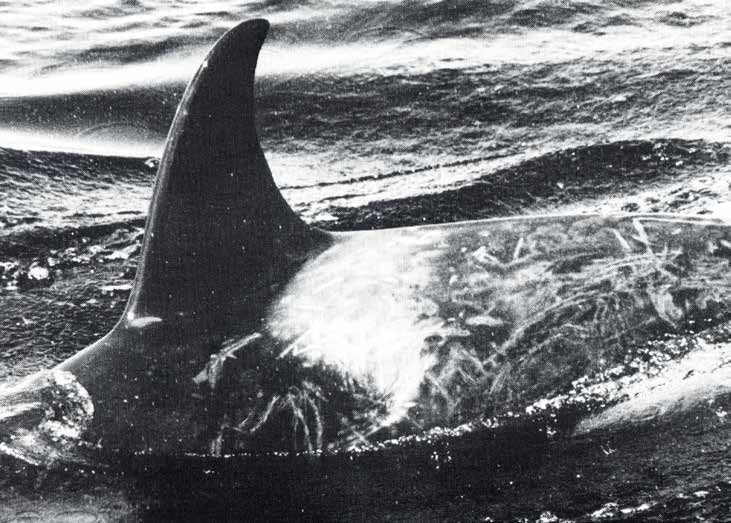
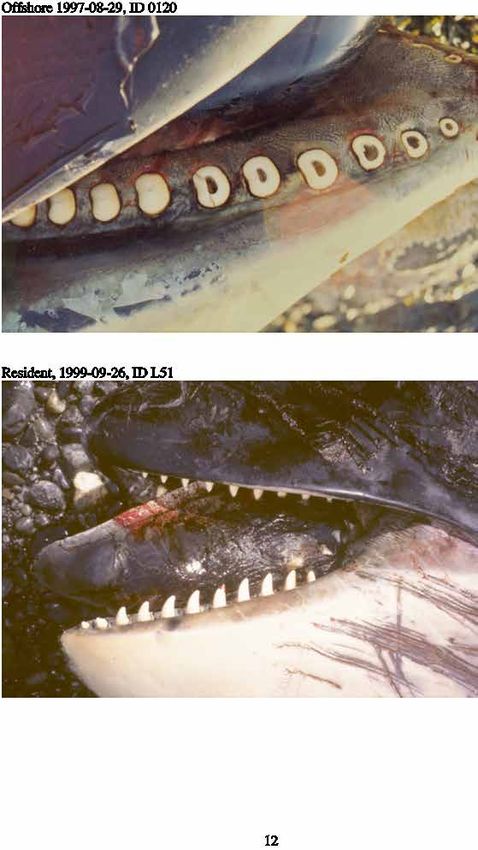
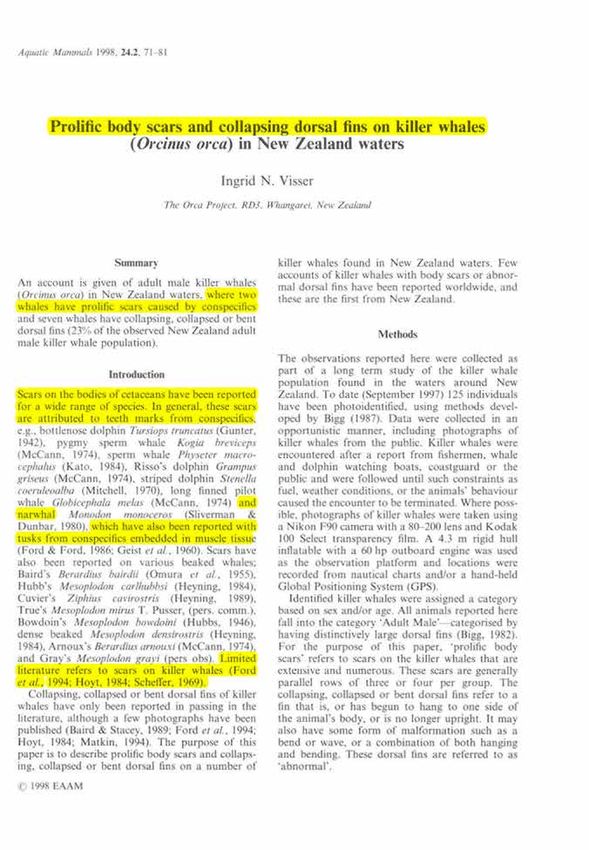
Scientific description of rake marks in killer whales

1.2
      Wissenschaftliche Darstellung von Bissspuren bei
      Schwertwalen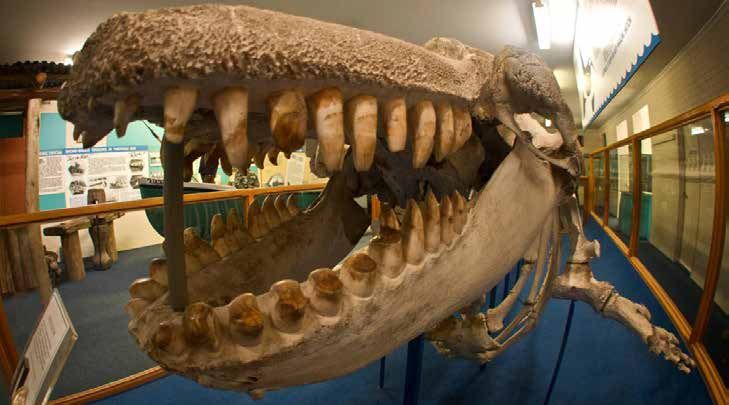
Scientific description of rake marks in killer whales

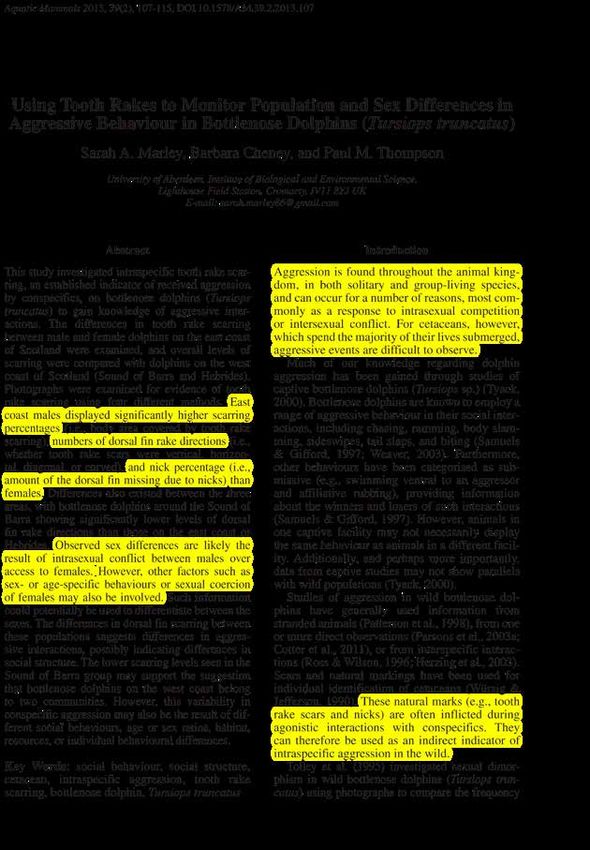
1.3
      Wissenschaftliche Darstellung von Bissspuren bei
      Delfinen
Examples of rake marks in wild killer whales
1.4
Beispiele von Bissspuren bei Schwertwalen
Rake marks in wild killer whales are so very
common that they can be easily found in
classic killer whale ID catalogues, in the new
ID catalogues online (http://northernresi-
dentorcas.tumblr.com) or even on the web-
sites of whale-watching companies or orca
conservation NGOs.
Bissspuren bei wilden Schwertwalen sind so
häufig, dass sie problemlos in klassischen
Schwertwal-Identifikationskatalogen, in
den neuen Identifikationskatalogen online
(http://northernresidentorcas.tumblr.com)
oder sogar auf den Internetseiten von Wal-
beobachtungsunternehmen oder Nichtr-
egierungsorganisationen, die sich für den
Naturschutz einsetzen, zu finden sind.Individual / Exemplar: AB 6 (Foreground / Delante) AB 37 (Background / Atrás) Date / Datum : 11 May 1986 / 11 de mayo de 1986 Author / Urheber: Craig Matkin Note / Anmerkung: Heavily raked calf not identified in the original publication, possibly AB 37 / Cría con un enorme número de marcas, el ejemplar podría ser AB37 aunque no se identifica en la publicación original. Photo-Identification Catalog / Foto-Identifikationskatalog: Killer whales of Prince William Sound and Southeast Alaska A Catalogue of Individuals Photoidentified, 1976-1986. Edited By Graeme Ellis. West Coast Whale Research Foundation. 1040 West Georgia Street, Room 2020. Vancouver, British Columbia.
Individual /Exemplar:
AB 37 (Foreground / Delante)
AB 6 (Background / Atrás )

Date / Datum:
11 May 1986 / 11 de mayo de 1986

Author / Urheber :
Craig Matkin

Photo-Identification Catalog / Foto-Identifikationskatalog:
Killer whales of Prince William Sound and Southeast Alaska A Catalogue of Individuals Photoidenti-
fied, 1976-1986. Edited By Graeme Ellis. West Coast Whale Research Foundation. 1040 West Georgia
Street, Room 2020. Vancouver, British Columbia.
Individual / Exemplar:
AD 6

Date / Datum:
4 August 1986 / 4 de agosto de 1986

Author / Urheber:
Craig Matkin

Photo-Identification Catalog / Foto-Identifikationskatalog
Killer whales of Prince William Sound and Southeast Alaska A Catalogue of Individuals Photoidenti-
fied, 1976-1986. Edited By Graeme Ellis. West Coast Whale Research Foundation. 1040 West Georgia
Street, Room 2020. Vancouver, British Columbia.
Individual / Exemplar:
AF 9

Date / Datum:
28 August 1984 / 28 de agosto de 1984

Author /Urheber:
Suzanne Healy

Photo-Identification Catalog / Foto-Identifikationskatalog:
Killer whales of Prince William Sound and Southeast Alaska A Catalogue of Individuals Photoidenti-
fied, 1976-1986. Edited By Graeme Ellis. West Coast Whale Research Foundation. 1040 West Georgia
Street, Room 2020. Vancouver, British Columbia.
Individual /Exemplar:
AG 21

Date / Datum:
Not indicated in the original publication / No indicado en la publicación original

Author / Urheber:
Not indicated in the original publication / No indicado en la publicación original

Photo-Identification Catalog / Foto-Identifikationskatalog:
Killer whales of Southeast Alaska A Catalogue of Photoidentified individuals (1997) Dahlheim, M,
Ellifrit D. and Swenson J. Eds. Marine Mammal Laboratory, Alaska Fisheries Science Center, National
Marine Fisheries Service NOAA. Day Moon Press, Washington, 90 pp.
Individual / Exemplar:
AG 17

Date / Datum:
Not indicated in the original publication / No indicado en la publicación original

Author / Urheber:
Not indicated in the original publication / No indicado en la publicación original

Photo-Identification Catalog / Foto-Identifikationskatalog:
Killer whales of Southeast Alaska A Catalogue of Photoidentified individuals (1997) Dahlheim, M,
Ellifrit D. and Swenson J. Eds. Marine Mammal Laboratory, Alaska Fisheries Science Center, National
Marine Fisheries Service NOAA. Day Moon Press, Washington, 90 pp.
Individual / Exemplar:
AH 5

Date / Datum:
Not indicated in the original publication / No indicado en la publicación original

Author / Urheber:
Not indicated in the original publication / No indicado en la publicación original

Photo-Identification Catalog / Foto-Identifikationskatalog:
Killer whales of Southeast Alaska A Catalogue of Photoidentified individuals (1997) Dahlheim, M,
Ellifrit D. and Swenson J. Eds. Marine Mammal Laboratory, Alaska Fisheries Science Center, National
Marine Fisheries Service NOAA. Day Moon Press, Washington, 90 pp.
Individual / Exemplar:
AI 4

Date / Datum:
11 September 1986 / 11 de septiembre de 1986

Author / Urheber:
* Not indicated in the original publication / No indicado en la publicación original

Photo-Identification Catalog / Foto-Identifikationskatalog:
Killer whales of the Prince William sound and Southeast Alaska a catalog of individuals photoidenti-
fied, 1976-1986. Sea World Research Institute, Hubbs Marine Research Center. Technical Report Nº
87-200. April 1987
Individual / Exemplar:
AJ 10

Date / Datum:
11 September 1986 / 11 de septiembre de 1986

Author / Urheber:
* Not indicated in the original publication / No indicado en la publicación original

Photo-Identification Catalog / Foto-Identifikationskatalog:
Killer whales of the Prince William sound and Southeast Alaska a catalog of individuals photoidenti-
fied, 1976-1986. Sea World Research Institute, Hubbs Marine Research Center. Technical Report Nº
87-200. April 1987
Individual / Exemplar:
AJ 15

Date / Datum:
* Not indicated in the original publication / No indicado en la publicación original

Author / Urheber:
* Not indicated in the original publication / No indicado en la publicación original

Photo-Identification Catalog / Foto-Identifikationskatalog:
Killer whales of Prince William Sound and Southeast Alaska A Catalogue of Individuals Photoidenti-
fied, 1976-1986. Edited By Graeme Ellis. West Coast Whale Research Foundation. 1040 West Georgia
Street, Room 2020. Vancouver, British Columbia.
Individual / Exemplar:
AZ 16

Date / Datum:
*

Author /Urheber:
*

Photo-Identification Catalog / Foto-Identifikationskatalog:
Killer whales of the Prince William sound and Southeast Alaska a catalog of individuals photoidenti-
fied, 1976-1986. Sea World Research Institute, Hubbs Marine Research Center. Technical Report Nº
87-200. April 1987
Individual / Exemplar:
L 88 (Wave walker)

Date / Datum:
16 July 2009 / 16 de Julio de 2009

Author / Urheber:
Dave Ellifrit, Center for Whale Research

Source / Quelle:
http://pugetsoundblogs.com/waterways/2009/07/16/tooth-marks-on-an-adult-orca-may-spell-
minor-conflict/
Individual / Exemplar:
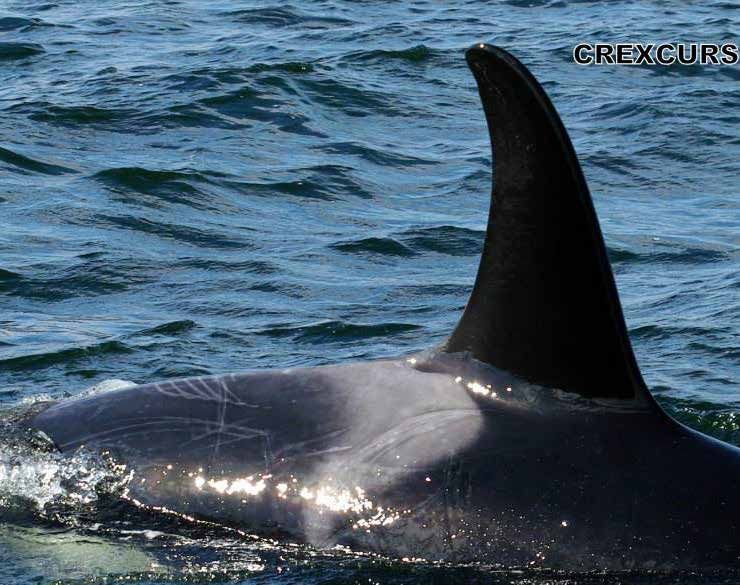
A 89 (Kanish)

Date / Datum:
24 July 2015

Author / Urheber:
CREXCURSIONS

Source / Quelle
http://northernresidentorcas.tumblr.com/image/124926887851
Individual / Exemplar:
*

Date / Datum:
*

Author / Urheber:
Orca Research Trust

Source / Quelle
http://www.orcaresearch.org/index.php/research/our-team
2              Tooth wear / Zahnverschleiß

2.1 Introduction / Einleitung

2.2 Scientific description of tooth abrasion in wild killer whales
Wissenschafltiche Darstellung von Zahnabrieb bei wilden
Schwertwalen

2.3 Some examples of tooth wear in wild orcas from strandings
Einige Beispiele von Zahnverschleiß bei gestrandeten wilden
Schwertwalen.
2.1                   Introduction / Einleitung

Dental problems (dental abrasion and broken teeth) are not exclusive of captive killer whales. The appearance
of killer whales’ teeth can vary greatly, depending on different factors. Certain ecotypes eat different types of
food that will wear down their teeth in different ways. See this illustration from National Geographic (http://
ngm.nationalgeographic.com/2015/07/orca-feeding/img/teeth-graphic-571x493.jpg) for examples of what
different killer whale teeth look like:

Zahnprobleme (Zahnabrieb und gebrochene Zähne) treten nicht nur ausschlieβlich bei Schwertwalen in Ge-
fangenschaft auf. In Abhängkeit von unterschiedlichen Faktoren kann der Zustand und das Aussehen der
Zähne erheblich variieren. Da sich die Ernährung von bestimmten Ökotypen unterscheidet, nutzen sich ihre
Zähne auch in unterschiedlicher Art und Weise ab. Siehe hierzu die Illustration von National Geographic mit
Beispielen, wie unterschiedlich die Zähne von verschiedenen Schwertwalen aussehen. (http://ngm.national-
geographic.com/2015/07/orca-feeding/img/teeth-graphic-571x493.jpg)
Scientific description of tooth abrasion in wild killer

2.2
      whales
      Wissenschaftliche Darstellung von Zahnabrieb bei
      wilden Schwertwalen
Some examples of tooth wear in wild orcas from
2.3
strandings
Einige Beispiele von Zahnverschleiß bei
gestrandeten wilden Schwertwalen
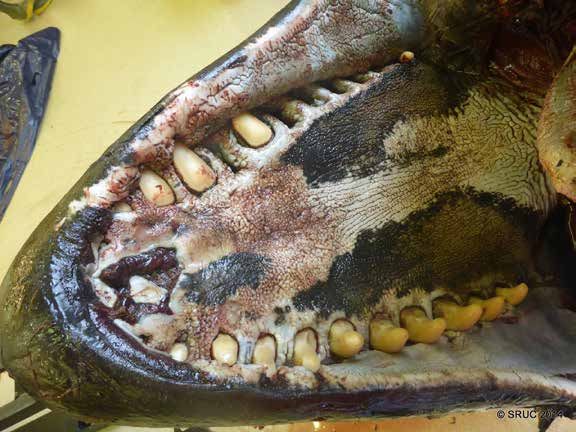
Scotish Marine Animal Stranding Scheme ASIMETRIC Tooth wear in an stranded suction
feeder killer whale.
Abrasión dental asimétrica en una orca varada de un ecotipo que se alimenta por succión.
Scottish Marine Animal stranding scheme.Example of tooth wear in a stranded killer whale in Port Moller (Alaska)
Beispiel der Abnutzung von Zähnen bei einem gestrandeten Orca in Port Moller (Alaska)
MARINE MAMMAL STRANDING REPORT - LEVEL A DATA
2013 2013186
FIELD #: __________________________ NMFS REGIONAL #: _____________________________ NATIONAL DATABASE#: __________________________________
(NMFS USE) (NMFS USE)
killer whale
COMMON NAME: _______________________________ Orcinus
GENUS: _______________________________ orca
SPECIES: ___________________________________________
Aleria Jensen
EXAMINER Name: ________________________________________________ NMFS
Affiliation: _________________________________________________________________
Address: _____________________________________________________________________ Phone: ______________________________________________________
109h
Stranding Agreement or Authority: ________________________________________________________________________________________________
LOCATION OF INITIAL OBSERVATION OCURRENCE DETAILS □ Restrand GE# ____________________
AK
State: _______ County: _____________________ Group Event: □ YES �□ NO (NMFS Use)
Port Moller
City: _____________________________________ If Yes, Type: □ Cow/Calf Pair □ Mass Stranding # Animals: _______ □ Actual □ Estimated
Bristol Bay
Body of Water: ____________________________
Findings of Human Interaction: □ YES □ NO □ � Could Not Be Determined (CBD)
Locality Details: ____________________________
If Yes, Choose one or more: □ 1. Boat Collision □ 2. Shot □ 3. Fishery Interaction
_________________________________________
□ 4. Other Human Interaction:_____________________________________________________________________
Lat (DD): ________ . _____________________ N
How Determined (Check one or more): □ External Exam □ Internal Exam □ Necropsy
Long (DD): ________ . ___________________ W
□ Other: _____________________________________________________________________________________
□ Actual □ Estimated
Gear Collected? □ YES □� NO Gear Disposition: _____________________________________________________
How Determined: (check ONE) Other Findings Upon Level A: □ YES □ NO �□ Could Not Be Determined (CBD)
□ GPS □ Map □ Internet/Software If Yes, Choose one or more: □ 1. Illness □ 2. Injury □ 3. Pregnant □ 4.Other:____________________________
How Determined (Check one or more): □ External Exam □ Internal Exam □ Necropsy
□ Other: __________________________________________________________________________
INITIAL OBSERVATION LEVEL A EXAMINATION �□ Not Able to Examine
Date: Year: _______ November Day: _______________
2013 Month: ____________ 4
Date: Year: _______ Month: ____________ Day: _______________
First Observed: □
� Beach or Land □ Floating □ Swimming
CONDITION AT INITIAL OBSERVATION (Check ONE) CONDITION AT EXAMINATION (Check ONE)
□ 1. Alive □ 4. Advanced Decomposition □ 1. Alive □ 4. Advanced Decomposition
�□ 2. Fresh dead □ 5. Mummified/Skeletal □
� 2. Fresh dead □ 5. Mummified/Skeletal
□ 3. Moderate decomposition □ 6. Condition Unknown □ 3. Moderate decomposition □ 6. Unknown
INITIAL LIVE ANIMAL DISPOSITION (Check one or more) MORPHOLOGICAL DATA
□ 1. Left at Site □ 6. Euthanized at Site
SEX (Check ONE) AGE CLASS (Check ONE)
□ 2. Immediate Release at Site □ 7. Transferred to Rehabilitation: □ 1. Male □ 1. Adult □ 4. Pup/Calf
□ 3. Relocated Date: Year:______ Month:_____Day:___
□ 2. Female □ 2. Subadult □
Facility:___________________________ � 5. Unknown
□ 4. Disentangled □ 8. Died during Transport □
� 3. Unknown □ 3. Yearling
□ 5. Died at Site □ 9. Euthanized during Transport □ □ Partial Carcass
� Whole Carcass
□ 10. Other:____________________________________________________
222
Straight length:______________ □ cm □
� in □
� actual □ estimated
CONDITION/DETERMINATION (Check one or more)
n/a
Weight:____________________ □ kg □ lb □ actual □ estimated
□ 1. Sick 7. Location Hazardous
□ 2. Injured □ a. To animal PHOTOS/VIDEOS TAKEN: □
� YES □ NO
□ 3. Out of Habitat □ b. To public Photo/Video Disposition: ________________________________________________
□ 4. Deemed Releasable □ 8. Unknown/CBD photos sent by observer
____________________________________________________________________
□ 5. Abandoned/Orphaned □ 9.Other__________________
□ 6. Inaccessible __________________________ CARCASS STATUS (Check one or more)
□
� 1. Left at Site □ 4. Towed: Lat__________Long__________ □ 7. Landfill
TAG DATA Tags Were: □ 2. Buried □ 5. Sunk: Lat__________Long__________ □ 8. Unknown
Present at Time of Stranding (Pre-existing): □ YES □ NO
□ 3. Rendered □ 6. Frozen for Later Examination □ 9. Other______________
Applied during Stranding Response: □ YES □ NO
SPECIMEN DISPOSITION (Check one or more)
ID# Color Type Placement* Applied Present □ 1. Scientific collection □ 2. Educational collection
�
(Circle ONE)
D DF L □ □ □ 3. Other:__________________________________________________________
_________________________ LF LR RF RR see remarks section
Comments: __________________________________________________________
D DF L □ □ ____________________________________________________________________
_________________________ LF LR RF RR
NECROPSIED □
� NO □ YES □ Limited □ Complete
D DF L □ □
_________________________ LF LR RF RR □ Carcass Fresh □ Carcass Frozen/Thawed
* D= Dorsal; DF= Dorsal Fin; L= Lateral Body NECROPSIED BY: ____________________________________________________
LF= Left Front; LR= Left Rear; RF= Right Front; RR= Right Rear Date: Year: ______________Month:_______________Day:__________________
NOAA Form 89-864 (rev. 2007) OMB No.0648-0178; Expires 10/31/2010 PLEASE USE THE BACK SIDE OF THIS FORM FOR ADDITIONAL REMARKSExample of tooth wear in a stranded killer whale in Port Moller (Alaska)
Beispiel der Abnutzung von Zähnen bei einem gestrandeten Orca in Port Moller (Alaska)
ADDITIONAL REMARKS
ADDITIONAL IDENTIFIER: _________________________________________________ (If animal is restranded, please indicate any previous field numbers here)
____________________________________________________________________________________________________________________________________
On 11/6/13, NMFS Alaska Marine Mammal Stranding Program received a call about two stranded dead killer
whales in Port Moller. The whales were first spotted 4 mi apart on 11/4/13 and are believed by locals to have
washed ashore during a recent storm. Given the unusual nature of the event and the high priority of
responding to killer whales, stranding network member organizations worked on logistics to attempt necropsy,
but ultimately on-site response proved too challenging to pursue (lack of flights, personnel limitations, cost).
Instead, local caretaker at Port Moller Dennis Tinker was able to collect tissues from each animal and send to
Kathy Burek AVPS for analysis and distribution. Bears were seen on each carcass soon after sample
collection.
The following tissues were collected:
skin
blubber
tongue
lower jaw chunk with teeth in the jaw
Also length, dorsal fin & tail measurements as follows:
Information for Killer Whale #2 - PortMoller/Franks Lagoon
(1) Total length - 22'
(29) Flipper length - 33"
(30) Flipper length - 24"
(31) Maximum width of flipper - 18"
(32) Height of dorsal fin - 21"
(33) Length of dorsal fin - 22"
(34) Width of flukes - 5'
DISCLAIMER
THESE DATA SHOULD NOT BE USED OUT OF CONTEXT OR WITHOUT VERIFICATION. THIS SHOULD BE STRICTLY ENFORCED WHEN REPORTING SIGNS
OF HUMAN INTERACTION DATA.
DATA ACCESS FOR LEVEL A DATA
UPON WRITTEN REQUEST, CERTAIN FIELDS OF THE LEVEL A DATA SHEET WILL BE RELEASED TO THE REQUESTOR PROVIDED THAT THE REQUESTOR
CREDIT THE STRANDING NETWORK AND THE NATIONAL MARINE FISHERIES SERVICE. THE NATIONAL MARINE FISHERIES SERVICE WILL NOTIFY THE
CONTRIBUTING STRANDING NETWORK MEMBERS THAT THESE DATA HAVE BEEN REQUESTED AND THE INTENT OF USE. ALL OTHER DATA WILL BE
RELEASED TO THE REQUESTOR PROVIDED THAT THE REQUESTOR OBTAIN PERMISSION FROM THE CONTRIBUTING STRANDING NETWORK AND THE
NATIONAL MARINE FISHERIES SERVICE.
PAPERWORK REDUCTION ACT INFORMATION
PUBLIC REPORTING BURDEN FOR THE COLLECTION OF INFORMATION IS ESTIMATED TO AVERAGE 30 MINUTES PER RESPONSE, INCLUDING THE TIME
FOR REVIEWING INSTRUCTIONS, SEARCHING EXISTING DATA SOURCES, GATHERING AND MAINTAINING THE DATA NEEDED, AND COMPLETING AND
REVIEWING THE COLLECTION OF INFORMATION. SEND COMMENTS REGARDING THIS BURDEN ESTIMATE OR ANY OTHER ASPECT OF THE
COLLECTION INFORMATION, INCLUDING SUGGESTIONS FOR REDUCING THE BURDEN TO: CHIEF, MARINE MAMMAL AND SEA TURTLE CONSERVATION
DIVISION, OFFICE OF PROTECTED RESOURCES, NOAA FISHERIES, 1315 EAST-WEST HIGHWAY, SILVER SPRING, MARYLAND 20910. NOT WITHSTANDING
ANY OTHER PROVISION OF THE LAW, NO PERSON IS REQUIRED TO RESPOND, NOR SHALL ANY PERSON BE SUBJECTED TO A PENALTY FOR FAILURE
TO COMPLY WITH, A COLLECTION OF INFORMATION SUBJECT TO THE REQUIREMENTS OF THE PAPERWORK REDUCTION ACT, UNLESS THE
COLLECTION OF INFORMATION DISPLAYS A CURRENTLY VALID OFFICE OF MANAGEMENT AND BUDGET (OMB) CONTROL NUMBER.
NOAA Form 89-864 (rev. 2007) OMB No. 0648-0178; Expires 10/31/2010Killer whale skull at the Oxford University Museum of Natural History Schwertwalschädel im Naturkundemuseum der Oxford University Skull of a young killer whale stranded at Ras Marbat in June, 1989. Oman National History Museum, Whale Pavillion (Killer whales are rarely reported near Oman.) Schädel eines jungen Schwertwals, der im Juni 1989 bei Ras Marbat strandete. Naturkundemuseum Oman, Walpavillon (Schwertwale werden sehr selten in der Nähe des Oman gesichtet)
Skeleton of “Old Tom” in the Eden Killer Whale Museum. On this side you can see where Tom’s teeth are worn down to the nub
through grabbing the whaling boats’ ropes to pull them along
Skelett von „Old Tom“ im Schwertwalmusum von Eden. Auf dieser Seite kann man sehen, dass Toms Zähne durch das Greifen der
Seile um die Walfangboote umherzuziehen, fast komplett abgenutzt sind.

                                                                                     Orca teeth; Credit: © Proceedings
                                                                                     of the Royal Society B: Biological
                                                                                     Sciences - See more at: http://www.
                                                                                     earthtimes.org/scitech/niches-
                                                                                     speciation-orca/2419/#sthash.
                                                                                     fjd1KhT9.dpuf

                                                                                     Schwertwalzähne; Anerkennung:
                                                                                     © Das Vorgehen der Königli-
                                                                                     chen Gesellschaft (Royal Socie-
                                                                                     ty) B: Biowissenschaften – Siehe
                                                                                     auch:     http://www.earthtimes.
                                                                                     org/scitech/niches-speciation-
                                                                                     orca/2419/#sthash.fjd1KhT9.
                                                                                     dpuf
3 Tear film / Tränenflüssigkeit 3.1 Veterinary statement about tear film in killer whales Tiermedizinische Stellungnahme zum Tränenflüssigkeit bei Schwertwalen
Veterinary statement about tear film in killer whales

3.1
      Tiermedizinische Stellungnahme zum
      Tränenflüssigkeit bei Schwertwalen
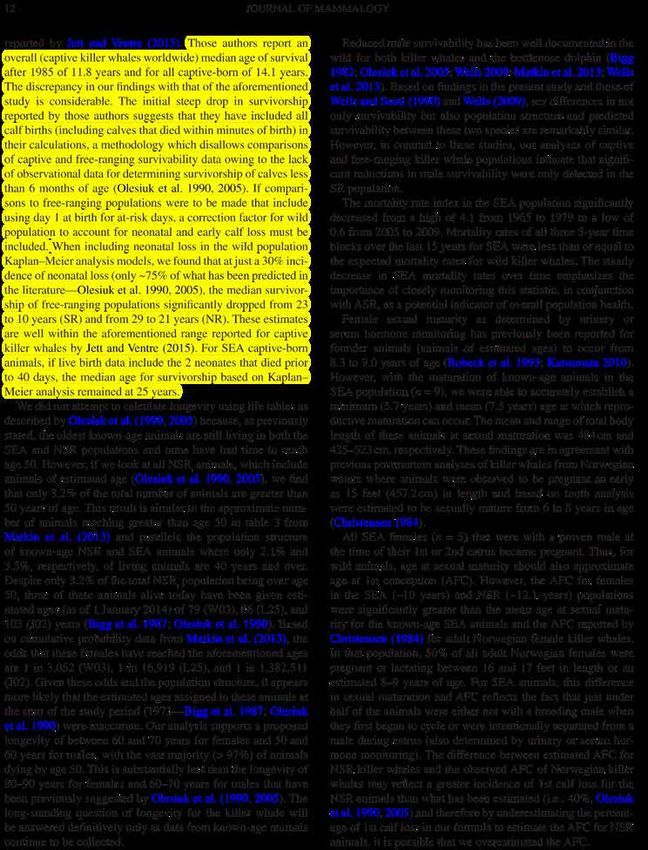
4 Life expectancy / Lebenserwartung 4.1 Introduction / Einleitung 4.2 Scientific literature on killer whale life expectancy Wissenschaftliche Literatur zur Lebenserwartung von Schwertwalen.
4.1                       Introduction / Einleitung

The first determination of the life expectancy for Orcinus orca       Die erste Bestimmung der Lebenserwartung von Orcinus Orca
was published almost 25 years ago, using age-based mortality          wurde vor fast 25 Jahren veröffentlicht. Dabei wurden alters-
rates calculated from observations of the Southern and North-         bedingte Sterblichkeitsraten verwendet, die auf Grund von
ern resident killer whales off Washington State. In that study        Beobachtungen der südlichen und nördlichen residenten Schw-
the mean life expectancy of the species was determined to be 50       ertwale des US-Bundestaates Washington ermittelt wurden. Bei
years for the females and 30 years for the males. These calcula-      der Studie wurde bestimmt, dass die mittlere Lebenserwartung
tions, and the associated maximum longevity estimations (80           bei Weibchen 50 Jahre beträgt und bei Männchen 30 Jahre.
years for females and 60 for the males) have been widely used         Diese Berechnungen und die daraus abgeleiteten Schätzungen
and accepted since then. These data included many individu-           der maximalen Lebensdauer (80 Jahre bei Weibchen und 60 bei
als with estimated ages that were affecting the precision of the      Männchen) wurden seitdem auch weitestgehend verwendet und
results.                                                              akzeptiert. Diese Daten bezogen viele Individuen mit ein deren
                                                                      Alter lediglich geschätzt werden konnte, was die Genauigkeit
A current review of the ages of the killer whales living in the       der Ergebnisse beinträchtigte.
coast of Washington State reveals that post-reproductive fe-
males are less abundant that predicted by the model published         Ein aktueller Bericht über das Alter von Schwertwalen, die an
in 1990. A recent scientific research comparing free-ranging and      der Küste des US-Bundesstaates Washington leben, zeigt, dass
captive killer whale populations evidence similar life-history        es bei weitem weniger Schwertwalweibchen jenseits des fortp-
parameters. That research proves that Killer whale life expect-       flanzungsfähigen Alters gibt, als es von dem 1990 veröffentli-
ancy was overestimated by previous research, and also proves          chten Modell vorausgesagt wurde. Eine kürzlich erstellte wis-
that the longevity of free-ranging and captive killer whales is       senschaftliche Studie, die wild lebende und in Gefangenschaft
similar. (See 4.2). The results of this study give an estimation on   lebende Schwertwale vergleicht, liefert Beweise für gleiche
mean life expectancy for killer whales of:                            Parameter ihrer Lebenszyklen. Diese Forschungsarbeit belegt,
                                                                      dass die Lebenserwartung bei Schwertwalen von früheren Stu-
Eastern-North Pacific Southern Residents (SR): 20,1 (male) and        dien überschätzt wurde und dass die Lebensdauer von frei leb-
29,0 (female)                                                         enden und in Gefangenschaft lebenden Schwertwalen ähnlich
                                                                      ist. (siehe 4.2) Die Ergebnisse dieser Studie ergeben eine Schät-
Eastern-North Pacific Northern Residents (NR): 29 (male) and          zung für die mittlere Lebenserwartung der Schwertwale:
42 (female)
                                                                      Im Nordostpazifik, im südlichen Teil ansässige Schwertwale
SEA (SeaWorld whole population): 28,8 (male) and 41,6 (fe-            (SR): 20,1 (Männchen) und 29,0 (Weibchen)
male)
                                                                      Im Nordostpazifik, im nördlichen Teil ansässige Schwertwale
SEA (SeaWorld considering only captive bred): 33,1 (male) and         (NR): 29 (Männchen) und 42 (Weibchen)
47,7 (female)
                                                                      Von SEA (SeaWorlds komplette Population): 28,8 (Männchen)
                                                                      und 41,6 (Weibchen)

                                                                      Von SEA (nur Schwertwale bei SeaWorld, die in Gefangenschaft
                                                                      geboren wurden): 33,1 (Männchen) und 47,7 (Weibchen)
Scientific literature on killer whale life expectanc
4.2
Wissenschaftliche Literatur zur Lebenserwartung
von Schwertwalen.You can also read


