SECONDARY GIFTED EDUCATION PROGRAM REVIEW - MARIJA GLISIC, PHD LAURA NAISMITH, PHD - PEEL DISTRICT ...
←
→
Page content transcription
If your browser does not render page correctly, please read the page content below
Secondary Gifted Education
    Program Review
   Marija Glisic, PhD     Laura Naismith, PhD
                 December 2019

                 FINAL REPORT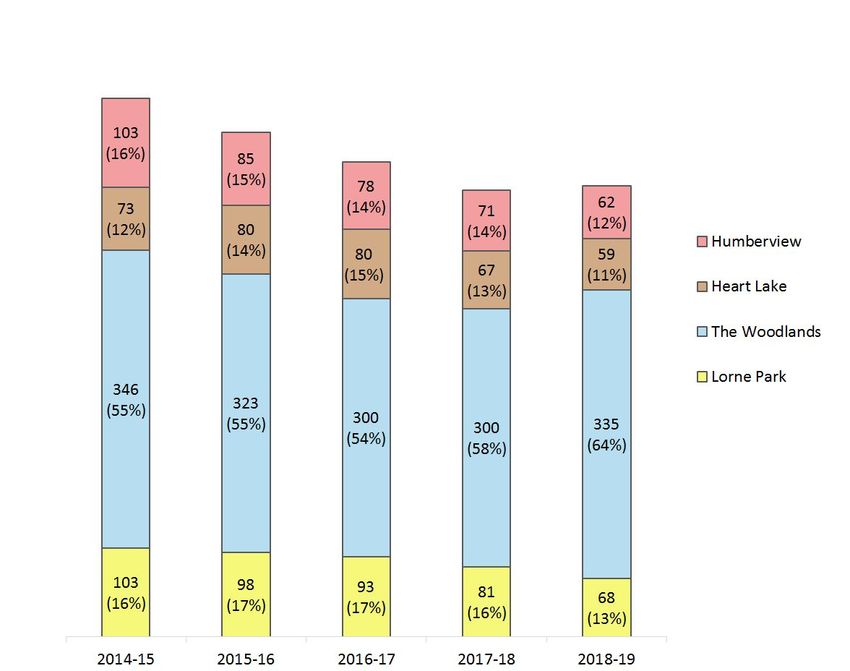
Table of Contents Hyperlinks
●   Purpose and Scope of the Review
●   Review Activity #1 - Literature Review
●   Review Activity #2 - Review of the PDSB Special Education Plan - Gifted Component
●   Review Activity #3 - Trends in Secondary Gifted Education
●   Review Activity #4 - Secondary Gifted Education at the PDSB
     ○   Enhanced Learning Program Site Profiles
     ○   Stakeholder Perspectives
     ○   Secondary Gifted Programming in the Toronto-Area Region
●   Review Activity #5 - Student and Parent Voice
     ○   Student Well-Being and School Experience
     ○   Reasons for not Attending the Secondary ELP
●   Recommendations for Future Planning and Improvement
                                                                                        2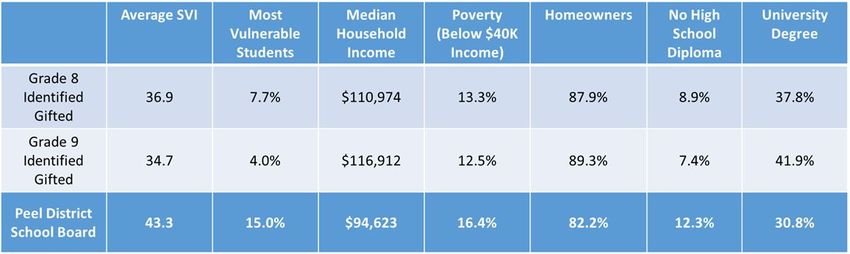
Purpose and Scope of the Review

The last PDSB Gifted Education Program Review was published in 2009, based on data collected
between 2006 and 2008.
The purpose of this review is to:
   1) Provide an update on the Ontario gifted education context and literature trends;
   2) Describe the secondary gifted education pathways in the PDSB and neighbouring school boards;
   3) Assess whether current secondary gifted education programs are meeting the needs of PDSB secondary
      students and their families; and
   4) Outline recommendations for future planning and improvement.

What does this review add?
  ● New data sources: Ontario Ministry of Education, Student Enrolment Analyser Special Education; PDSB
    School Information System; PDSB Student Census 2018
  ● Focused review of alignment with the Ontario Ministry of Education’s Special Education Policy and the
    PDSB’s goals for Equity and Inclusion

                                                                                                            3
Literature Review

                    4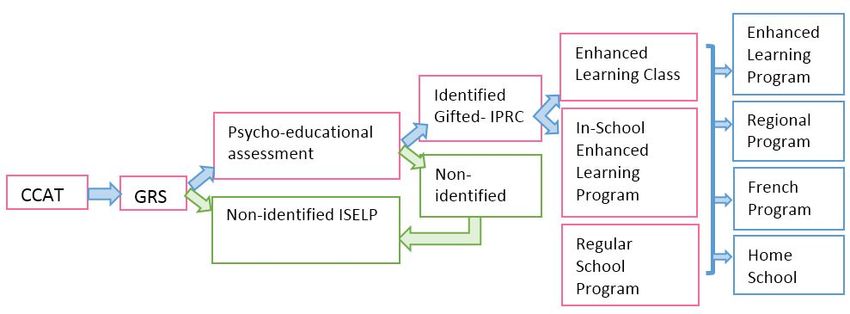
Literature Review
Definition and Models of Giftedness
 ●   Giftedness typically refers to above average intellectual ability, however there are many different theoretical
     models that explain the concept and no universal operational definition of it.[1-6]
 ●   Perceptions of giftedness are shaped by culture and cultural norms, including beliefs, customs, needs, values,
     attitudes, and language.[7-8]

Characteristics of Successful Gifted Education Programs
 ●   Successful gifted education programs provide: intellectual peer interactions, flexible grouping, differentiation
     of curriculum and instruction, continuous academic progress, continuity of support services, and teachers
     with specialized training in gifted education.[9]
 ●   A meta-analytic study of gifted programs reported positive student outcomes with respect to their cognitive,
     affective, and social development.[10]
 ●   There are limited data on gifted students’ program choices and program satisfaction in secondary school. In
     one Canadian study, gifted students in 3 types of specialized secondary programs (gifted, specialized science,
     International Baccalaureate) were highly satisfied with their academic programs and enjoyed opportunities to
     interact with other highly able and motivated peers.[11]
                                                                                                                        5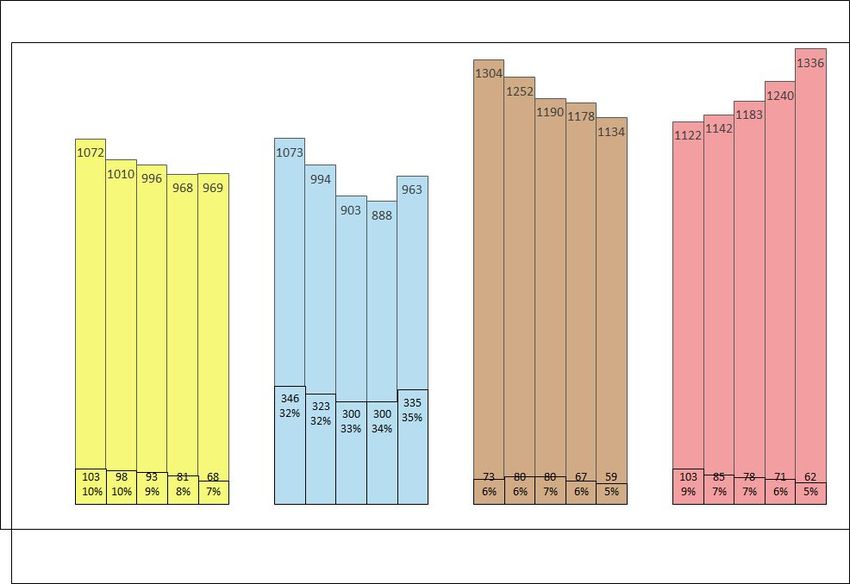
Literature Review (continued)
Facilitating the Transition to Secondary School
 ●   Gifted students require support when transitioning from elementary to secondary school. In a longitudinal
     study of the negative life events of gifted students, nearly half of the sample reported school transitions as
     among their most stressful and challenging experiences.[12]
 ●   Transition programs involving students and educators at both elementary and secondary schools can be helpful
     for addressing students’ academic, social, and organizational expectations.[13-15]

Equity Considerations
 ●   There is considerable evidence of disproportionalities in the composition of gifted education programs along
     race, class, and gender lines.[16-19]
 ●   Increasing the number of underrepresented students in gifted programs requires attention to both
     identification and retention practices.[19-22]
       ○ Identification Best Practices: universal screening, multiple assessment measures, teacher training on
            how giftedness is expressed in underserved populations
      ○    Retention Best Practices: culturally responsive teaching, mentoring, focus on growth mindset
                                                                                                                      6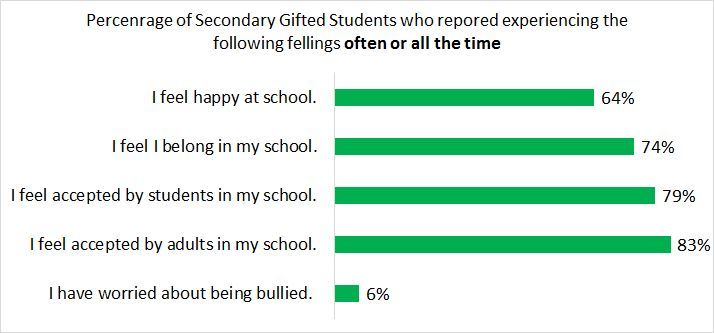
Review of the PDSB Special Education Plan -
             Gifted Component

                                              7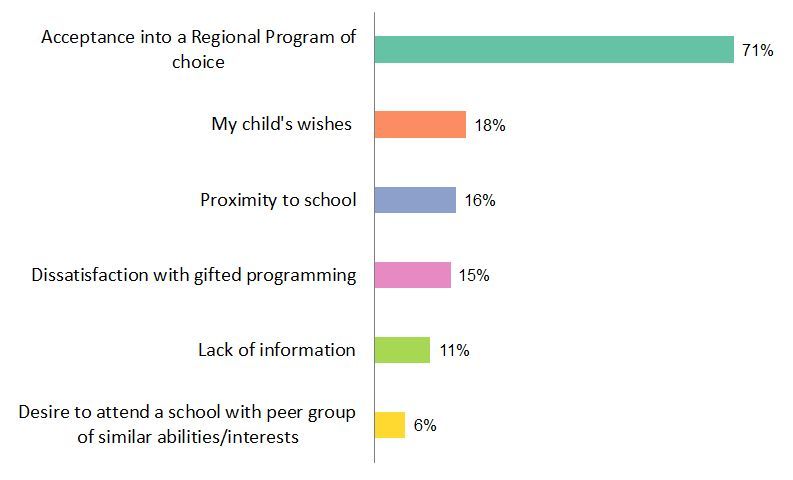
Giftedness in the Ontario Context
●   Giftedness is considered a special education need by the Ontario Ministry of Education (2017). It is categorized
    as an intellectual exceptionality and operationalized as:
    “an unusually advanced degree of general intellectual ability that requires differentiated learning experiences
    of a depth and breadth beyond those normally provided in the regular school program to satisfy the level of
    educational potential indicated”

●   There are no standard gifted identification criteria set by the Ministry. Many Ontario school boards use a form
    of group-based intellectual aptitude testing (e.g., CCAT, OLSAT) in Grade 3 or Grade 4 and refer students
    above a certain cut-off for further individual assessment.
●   The Ministry specifies 5 different placement options for K-12 students in all categories of exceptionalities
    including giftedness. These range from a regular class with indirect support to a full-time special education
    class.
●   Decisions about the identification and placement of individual students are made at the school board level by
    Identification, Placement, and Review Committees (IPRCs).

                                                                                                                       8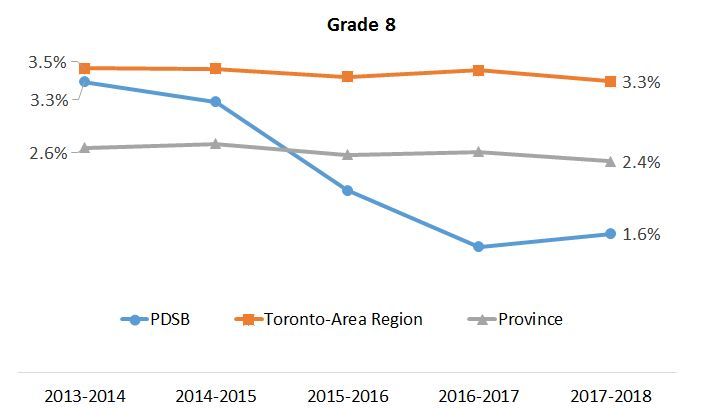
Enhanced Learning at PDSB
  ●    At the elementary level, gifted education services (also referred to as Enhanced Learning) are provided at the
       PDSB using a 3-tiered model.
  ●    Identification and placement decisions are made by an IPRC based on cognitive and academic assessments
       completed by the student and a Gifted Rating Scale completed by a teacher.*
  ●    Elementary students identified as Exceptional Intellectual: Gifted receive services under Tier 2 (In-School
       Enhanced Learning Program) or Tier 3 (Enhanced Learning Class).
  ●    Grade 8 students identified as Exceptional Intellectual: Gifted have many secondary school options. They
       may:
        ● Choose to attend the Regional Secondary Enhanced Learning Program (ELP);
        ● Apply for a Regional Learning Choices Program (e.g., Advanced Placement, International Baccalaureate,
           Regional Arts);
        ● Choose to continue in French Immersion or Extended French (if currently enrolled); or
        ● Choose to attend their home school;
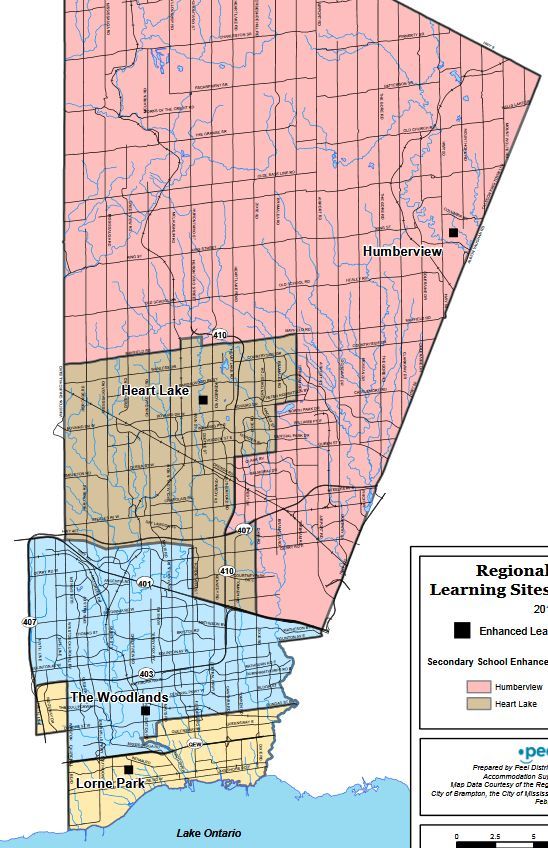
  ●    As of 2019-2020, there are 4 ELP sites throughout the PDSB: Heart Lake SS, Humberview SS, Lorne Park SS,
       and The Woodlands SS. Placement at a specific site is determined by the student’s home address.

*Resolution No. 19-110 to improve the gifted identification and placement process was passed at the Regular Meeting of the Board on May 28,
                                                                                                                                              9
2019. Specific recommendations are due back to the Special Education Advisory Committee in the Fall of 2019.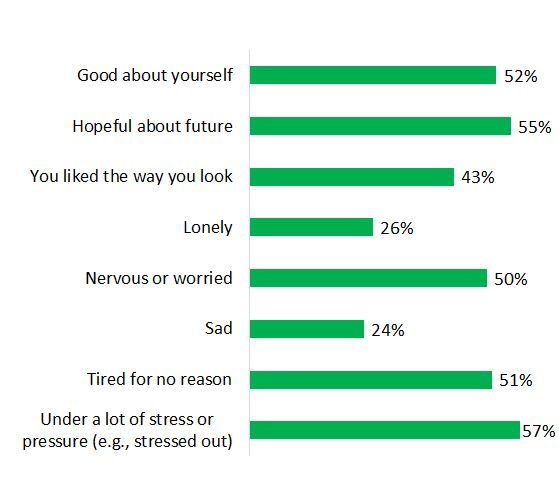
PDSB Gifted Identification Process and Program Options

                     Elementary                     Secondary

                                                                10
Standards for Special Education Plans
“Regulation 306 requires every school board to maintain a special education plan…the special
Ministry of
Education
education plan shall be made available to the ministry for review and be publicly accessible” [23]
The PDSB’s Special Education Plan is publically available
Amendments to the plan made each school year and available for the past 13 years
PDSB
Members of the community invited to provide input into the plan through the board’s
Special Education Advisory Committee (SEAC)
The PDSB is fully aligned with this regulation of the Ministry’s Special Education Policy and Resource Guide.
11The IPRC Process and Transition Planning
“Identification, Placement, and Review Committees (IPRCs) are responsible for the identification of exceptional students
Ministry of
Education
and their placement in special education programs.”[23]
There is no explicit mention of demission processes.
PDSB Special Education Plan
○ Category - Intellectual - Giftedness
Identification and Assessment Processes
1) CCAT assessment as an initial screener for all students
PDSB
2) GRS assessment
3) Psycho-educational assessment
Referral Process
○ different referral pathways specified in the PDSB Special Education Plan
IPRC Recommendations
○ placement decisions “based on demonstrated need for increasing levels of differentiated instruction”
The PDSB has a longstanding practice of demitting students with a gifted exceptionality who choose not to attend
! an Enhanced Learning Program in secondary school. The demission process is not standardized, and demitted
students do not go through an IPRC process. Demitted students’ gifted designation is removed from the PDSB
Student Information System. 12The Individual Education Plan (IEP)
“With regard to transition planning, in addition to what is stated above about the requirements under O. Reg.
181/98, ministry policy requires that a transition plan be developed for all students, from Kindergarten to Grade
Ministry of
Education
12, who have an IEP, whether or not they have been identified as exceptional by an Identification, Placement, and
Review Committee (IPRC) and including those identified as exceptional solely on the basis of giftedness.
“A team approach should underlie the IEP process, and the process should focus on how the student is expected
to progress through the Ontario curriculum – with or without accommodations, modified expectations, and/or
alternative programs (those not described in the Ontario curriculum) – as well as on how the student will make
key educational transitions, including the transition to a postsecondary destination.” [23]
PDSB
The classroom teacher, in the development of the Individual Education Plan (IEP), uses information from the
psycho-educational assessment to inform the identification of the student’s strengths and needs and includes the
corresponding strategies in the IEP.
An Individual Education Plan will be developed for students who are serviced through the ISELP
! PDSB students with a gifted exceptionality who choose not to attend the Enhanced Learning Program in secondary
school are usually NOT provided with an IEP related to their gifted exceptionality in their secondary program.
13Trends in Secondary Gifted Education
14Students Receiving Special Education Services for Giftedness – Five Year Trends
Key Findings – Five Year Trends
Over five years (2013-2018):
1. The percentage of PDSB grade 8 students receiving gifted education services decreased from 3.3% to 1.6%.
2. The percentage of PDSB grade 9 students receiving gifted education services decreased from 1.8% to 1.0%.
3. The percentages of Toronto-Area Region and Provincial students receiving gifted education services decreased slightly for grade 8 students and
were unchanged for grade 9 students.
Note: The Toronto-Area Region consists of 8 school boards: Peel, Dufferin-Peel Catholic, Toronto, Toronto Catholic, Halton, Halton Catholic, Upper Grand, and Wellington Catholic.
Data source: Ontario Ministry of Education, Education Information Centre, Student Enrolment Analyser Special Education 15Students Receiving Special Education Services for Giftedness – Five Year Trends by Gender
Key Findings – Five Year Trends by Gender Percentage of PDSB Students Receiving Gifted Education
Over five years (2013-2018): Services by Total Enrolment, 2013-2018 by Gender
1. The percentage of female grade 8 students receiving gifted
education services was slightly lower for the PDSB than for the
Toronto-Area Region and the Province. Grade 8 Grade 9
2. The percentage of female grade 9 students receiving gifted
Female Students 1.9% 1.1%
education services was lower for the PDSB than for the
Toronto-Area Region and the Province. Male Students 2.7% 1.9%
3. Compared to all PDSB students in these grades, male students
All Students 2.3% 1.5%
were overrepresented and female students were
underrepresented.
Data source: Ontario Ministry of Education, Education Information Centre, Student Enrolment Analyser Special Education 16Students Receiving Special Education Services for Giftedness – 2017-2018 by Municipality
Key Findings – 2017-2018 by Municipality Percentage of PDSB Students Receiving Gifted Education
Services by Total Enrolment, 2017-2018 by Municipality
During the 2017-2018 school year at the PDSB:
Grade 8 Grade 9
1. Students with home addresses in Mississauga made up the
majority of students receiving gifted education services in Mississauga 2.6% 1.8%
both grade 8 and grade 9.
2. Compared to all PDSB students in these grades, Mississauga Brampton 0.7% 0.2%
students were overrepresented, while Brampton students Caledon 1.0% 1.4%
were underrepresented. Caledon students were slightly
underrepresented in grade 8 and slightly overrepresented in All Students 1.6% 1.0%
grade 9.
Data source: PDSB School Information System (SIS), rundate October 31, 2017
17Students Receiving Special Education Services for Giftedness – 2017-2018 by SVI
Key Findings – 2017-2018 by SVI
During the 2017-2018 school year at the PDSB:
1. Based on their home address postal codes, grade 8 and 9 students receiving gifted education services had lower average socioeconomic
vulnerability index (SVI) scores compared to the PDSB average. These differences were highly statistically significant.
2. Grade 8 and 9 students receiving gifted education services live in areas where the median household income is higher, poverty rates are
lower, and rates of home ownership and educational attainment are higher than PDSB averages.
Data sources: PDSB School Information System (SIS), rundate October 31, 2017; Socioeconomic Vulnerability Index (SVI) 2017, Peel District School Board 18Grade 9 Program Placement of Grade 8 Identified Gifted Students over Five Years (2013-2018)
Results may not add up to 100% due to rounding
Key Findings – Grade 9 Program Placement Legend
Over five years at the PDSB (2013-2018): ISELP = In-School Enhanced Learning Program
ELC = Intermediate Enhanced Learning Class (Fully Self-Contained)
1. Students who were in a fully self-contained Enhanced ELP = Regional Secondary Enhanced Learning Program
Learning Class in grade 8 were more likely to attend the RLCP = Regional Learning Choices Program (e.g., Advanced Placement,
Enhanced Learning Program in grade 9, while students in the International Baccalaureate, Regional Arts)
In-School Enhanced Learning Program were more likely to EF = Extended French
attend Regional Learning Choices Programs. FI = French Immersion
*Students who were in both ELP and EF/FI were counted as ELP
Data source: PDSB School Information System (SIS), rundate October 31, 2018 19Secondary Gifted Education at the PDSB
20Enhanced Learning Program (ELP) Site Profiles
Number of Elementary Schools in each ELP
Total Number of Gifted Students at Each Site
Catchment Area
21
Data source: PDSB School Information System (SIS), rundate October 31, 2018Gifted Students in Proportion to Total Enrolment in ELP Sites - Five Year Trends
Total
Enrolment
Number
of Gifted
Students 4 8 8 8 4 8
201 201 201
4 201 201
4 201 201 201
Lorne Park The Woodlands Heart Lake Humberview
22
Data source: PDSB School Information System (SIS), rundate October 31, 2018Commonalities and Differences amongst ELP Sites
Commonalities Differences
● Lead teacher who coordinates the ELP, supports students, and ● Fully self-contained ‘core’ courses at some sites and blended courses
provides ad-hoc professional learning for teachers at other sites
● Many opportunities for extracurricular activities and additional ● Some sites offer the opportunity to attend both ELP and French
enhancements (e.g., clubs, special events, field trips, music program, Immersion/Extended French, while others do not offer French
volunteering) programs
● Capacity and willingness to take on more gifted students ● Cohorts of gifted students at some sites and not at other sites
● Gifted students typically: ● Frictions with mainstream students more pronounced at sites where
○ are involved in the school community ELP is perceived as more ‘elite’
○ have aspirations to attend university ● Timetabling challenges for sites with smaller programs
○ are very competitive for marks and awards ● Some sites have been able to maintain consistency in the pool of
● High parent engagement and advocacy teachers who teach gifted students while others have not
● Reduced available pool of incoming gifted students: ● Transportation challenges at more remote sites impact
○ Changes to the identification process opportunities to offer the same types of extracurricular activities
○ Parent perceptions of Regional Learning Choices and field trips as at other sites
Programs
● Observed increase in the prevalence of mental health issues (e.g.,
anxiety) in gifted students
● Desire for more cross-site professional learning opportunities
focused on gifted education
23
Data source: ELP Site Visits conducted in April-May, 2019Stakeholder Perspectives: Policies and Practices
● The current ELP model does not offer sufficient flexibility to meet the diverse needs of gifted learners:
○ Students have to take at least 1 enhanced course per semester to maintain bussing, even if not in an
area of strength
○ No gifted education supports for students who want to enrol in other programs
○ Need for innovative solutions to accommodate students who want to go beyond their grade level
● Information and support for the elementary to secondary transition process varies by school, particularly for
students who are demitted from the gifted program:
○ Parents of demitted students may not know that their children can come back to ELP
○ Parents of demitted students can request an IEP but need to go through the IPRC process
● Regional Learning Choices Programs are having a significant negative impact on ELP enrolment
● There is a need for more cross-site professional learning opportunities for teachers of gifted learners
● There is a need for a central gifted coordinator or principal in addition to the lead teachers at the ELP sites
Data source: Key Informant Interviews (N=8) conducted in May-June, 2019 24Stakeholder Perspectives: Gifted Learners
● Gifted learners have learning needs that cannot always be accommodated with differentiation in mainstream
classrooms:
○ Enhancements within mainstream classrooms are often more work rather than different work
○ Teachers who teach enhanced courses progress through the curriculum faster, explore additional
areas in a greater depth, and provide a stimulating environment for gifted students
○ Mainstream students are negatively impacted by being in the same class with gifted students
● Larger gifted programs provide more opportunities for students to be with like-minded peers
● Not all gifted learners are the same:
○ Some gifted students are very strong in some areas but not in others
○ Challenges in supporting students with multiple exceptionalities
○ Gifted underachievers are not well understood or supported
● Gifted students are under a lot of stress:
○ High academic expectations from self and parents
○ High involvement in activities inside and outside of school
○ High levels of perfectionism, anxiety, and other mental health issues
○ Classroom practices that promote unfriendly competition 25
Data source: Key Informant Interviews (N=8) conducted in May-June, 2019Stakeholder Perspectives: Parents of Gifted Students
● Parents prefer contained gifted courses to blended courses because they feel that they serve their children’s
academic, social, and emotional needs better
● Parents perceive Regional Learning Choices Programs to be more prestigious than the ELP and to offer better
opportunities for their children to get into their university programs of choice
● Parents want to ensure that their children have the highest level of opportunity to demonstrate success:
○ They are highly informed and engaged, but can also be very demanding of staff time and attention
○ Parents want teachers of gifted students to have specialized training
Data source: Key Informant Interviews (N=8) conducted in May-June, 2019 26Secondary Gifted Programming in the Toronto-Area Region
School Board Secondary Gifted Programming IEP Process
Toronto District Most gifted students continue into the Intensive Support Program (ISP, 10 IEPs are maintained for all gifted students. If the
School Board sites). The ISP offers 4 fully self-contained classes for Grades 9 and 10 and 2 for student does not attend the ISP, then IEPs are
Grades 11 and 12. TTC tickets may be provided based on distance and financial managed by the school special education
111 secondary schools criteria. support team. Accommodations may relate to
curriculum, social communication, organization,
Approximately a third of gifted students do not continue into the ISP. Instead time management, participation in class,
they attend other specialized schools and programs or their home school. collaboration/group work.
Halton District School Most gifted students continue into a Secondary Gifted Placement (SGP, 6 sites). IEPs are maintained for all gifted students. They
Board Students need to take at least 2 of 4 gifted courses per year. Gifted courses are are developed at the school level by Special
offered to other high-achieving students if necessary to fill the cohort. Education Resource Teachers (SERTs).
16 secondary schools Transportation is provided.
The International Baccalaureate is available at 3 sites and the I-STEM program is
available at 1 site.
Upper Grand District Gifted students attend their home secondary school. Advanced Placement IEPs are maintained for all gifted students.
School Board programs are available at 5 sites. The International Baccalaureate is available at Accommodations are mainly curriculum
1 site. focused. Process is managed at the school level
11 secondary schools by SERTs with input from classroom teachers.
27
Data sources: Board Websites and Special Education Plans, Email and Telephone Survey (N = 6), conducted November 2019Secondary Gifted Programming in the Toronto-Area Region
School Board Secondary Gifted Programming IEP Process
Toronto Catholic Gifted placements in secondary schools are available in the regular classroom, IEPs are maintained for all gifted students.
District School Board with facilitated opportunities for self-selected enhanced learning. The TCDSB
also offers many specialized schools and programs at the secondary level.
31 secondary schools
Dufferin-Peel Catholic Gifted students are directed to the International Baccalaureate program (3 No information available.
District School Board sites), which is also open to non-identified students. Advanced Placement
programs are available at 4 sites. There are also 2 Regional Centres for the Arts.
26 secondary schools
Halton Catholic Gifted placements in secondary schools are available in the regular classroom. IEPs are maintained for all gifted students.
District School Board Advanced Placement programs are available at 3 sites. The International
Baccalaureate is available at 1 site.
9 secondary schools
Wellington Catholic Gifted placements in secondary schools are available in the regular classroom. IEPs are maintained for all gifted students.
District School Board The International Baccalaureate is available at 1 site.
4 secondary schools
28
Data sources: Board Websites and Special Education Plans, Email and Telephone Survey (N = 6), conducted November 2019Student and Parent Voice
29Perceptions of Gifted Students in the ELP
Percentage of ELP Students who reported experiencing the following feelings
often or all the time (N = 514)
Percentage of ELP Students who reported taking part in learning
activities outside school on a weekly basis (N = 514) 5% to 10% higher than all PDSB secondary students
within 5% of all PDSB secondary students
Data sources: PDSB School Information System (SIS), rundate October 31, 2018; PDSB Student Census, November 2018 30Perceptions of Gifted Students in the ELP
Percentage of ELP Students who reported experiencing the following feelings
often or all the time (N = 514)
5% to 10% higher than all PDSB secondary students
within 5% of all PDSB secondary students
5% to 15% lower than all PDSB secondary students
Data sources: PDSB School Information System (SIS), rundate October 31, 2018; PDSB Student Census, November 2018 31Reasons for not Attending the Secondary ELP
Reason % of Respondents
Key Findings – Parent Interviews
● Parents of gifted students were asked why their child(ren) did not
continue in ELP in Grade 9
● 72% of parents responded
● The main reason for not choosing the ELP was students’ acceptance
into a Regional Learning Choices Program (71%), followed by
students’ wishes (18%) and proximity to school (16%)
*Please note that parents were able to indicate more than one reason, and the results thus do not add to 100%. 32
Data source: Parent Telephone and Email Survey (N = 273) conducted July-September, 2019Reason: Acceptance into Regional Program
● Perception that regional programs provide better preparation for university
● Perception that regional programs are more academically challenging
● The ELP does not provide a ‘certificate of completion’, whereas regional programs
do
● Peer pressure to attend regional programs
● The ELP does not meet gifted students’ needs (e.g., musical or artistic
enhancements)
Data source: Parent Telephone and Email Survey (N = 273) conducted July-September, 2019 33Reason: Lack of Information
● Lack of awareness among parents and students that the Enhanced Learning Program
exists
● No information or guidance from the Board or school about secondary options for
gifted students
● Guidance counsellors indicated there was no difference between ELP and Advanced
Placement or that ELP was not necessary
● Letters from the Board indicated the child is demitted from the gifted program
Data source: Parent Telephone and Email Survey (N = 273) conducted July-September, 2019 34Reason: Dissatisfaction with Gifted Programming ● Lack of appropriate enhancement and differentiation in elementary gifted program ● Inconsistency in program delivery ● Insufficient teacher training to teach gifted learners ● Lack of communication between teachers and families ● Not inclusive and socially supportive ● Dissatisfaction with the school in which the elementary gifted program was located Data source: Parent Telephone and Email Survey (N = 273) conducted July-September, 2019 35
Recommendations for Future Planning
       And Improvement

                                      36
Recommendations for Future Planning and Improvement
*These recommendations need to be considered in the context of K-12 gifted education, as elementary
programming and practices impact eligibility and participation in secondary gifted programs*
Programming and Practices
1. Beginning in the 2020-2021 school year, stop the practice of demitting students with a gifted identification
who do not attend the ELP.
2. Beginning in the 2020-2021 school year, provide an IEP for all secondary students with a gifted identification.
a. Implementation will be staged:
i. Grade 9 students in 2020-2021
ii. Grade 9 and 10 students in 2021-2022
iii. Grade 9, 10, and 11 students in 2022-2023
iv. Grade 9, 10, 11, and 12 students in 2023-2024
b. Exception: any student who chooses to remain in a school after the ELP has been relocated to a different
site (see recommendation 3) will receive an IEP regardless of grade level.
37Recommendations for Future Planning and Improvement
Programming and Practices
3. Beginning in the 2020-2021 school year, provide all gifted secondary students with an opportunity to
attend contained classes by merging the 4 ELP sites into 2:
a. Mississauga Field Office schools - The Woodlands SS
b. North Field Office schools - Heart Lake SS
c. Any student who wishes to remain in a school after the ELP has been relocated to a different site
will be allowed to remain at the current school and will receive an IEP regardless of grade level.
Program Streamlining Benefits:
● Improved educational experiences of gifted secondary students by increasing access to a variety of
contained courses at different grade levels
● Increased socialization and enrichment opportunities with a larger cohort of gifted students
● Reduced timetabling challenges for schools
● Increased opportunities to develop a consistent pool of teachers who teach gifted students
38Recommendations for Future Planning and Improvement
Programming and Practices
4. During the budget development process for the 2020-2021 school year, consider the allocation of central staff
responsible for gifted education. Areas of responsibility would include:
● Designing communication for families and responding to questions
● Coordinating professional learning
● Providing support for IEPs
● Coordinating additional learning opportunities for gifted students
● Reviewing identification practices
Information and Support for Families
5. Improve communication and education about secondary gifted programming options by developing standardized
communication plans for students in both ELC and ISELP placements (e.g., information packages sent to all
parents/guardians of gifted students at time of placement and again in Grade 6 or 7)
6. Develop communication materials about the ELP for distribution during Regional Learning Choices Program
information nights
7. Work with ABC representatives to increase support for gifted students and their families in the transition to
secondary school (e.g., Erindale SS’s model of transition support for students with LDs)
39Recommendations for Future Planning and Improvement
Professional Learning and Networking Opportunities
8. Provide professional learning opportunities focused on gifted education and gifted learners.
9. Provide networking opportunities for PDSB staff who teach and work with gifted students (e.g., conferences, online
discussion forums).
10. Provide networking opportunities for PDSB gifted students regardless of their secondary program choice (e.g.,
ThinkBowl).
Student Well-Being
11. Develop, in collaboration with the board mental health lead, a plan to proactively support gifted students’ mental
health throughout secondary school.
Equity Considerations
12. Continue to investigate and identify possible causes of the inequitable distribution of gifted students in the ELP
related to gender, SVI, and municipality.
13. Review the existing gifted identification processes (elementary and secondary) as they impact the pool of students
eligible to attend the ELP. 40Acknowledgments
Thank you to the students, parents, educators, administrators, and staff who contributed
to this review.
We wish to acknowledge the members of the Review Steering Committee: Craig Caslick,
Craig Cooper, Barbara Cyr (SEAC/ABC), Kerry Everitt, Paul Favaro, Shelley Foster (SEAC),
Janet Jackowski, Sue Lawton, Shawn Moynihan, Michele Reynolds, Rosemary Stiglic, and
Erin Vardy. Special thanks to Tracey Bardell, Liza Brasil, and Kim Bennett for their
continued support.
41References
1. Freeman, J. (2015). Cultural Variations in Ideas of Gifts and Talents With Special Regard to the Eastern and Western Worlds, in Dai, D.Y. & Ching, C.K.
(Eds.), Gifted education in Asia (pp. 231-244). Charlotte, NC: Information Age Publishing.
2. Kaufman, S. B., & Sternberg, R. J. (2010). Conceptions of giftedness. In S. I. Pfeiffer (Ed.), Handbook of giftedness in children (pp. 71–91). New York, NY:
Springer.
3. McAlpine, D. (2004). What do we mean by gifted and talented? In D. McAlpine & R. Moltzen (Eds.), Gifted and talented: New Zealand perspectives (2nd
ed., pp. 33-66). Palmerston North, New Zealand: Kanuka Grove Press.
4. Page, A. (2006). Three models for understanding gifted education. Kairaranga, 7(2), 11-15.
5. Pfeiffer, S. I. (2012). Current perspective on the identification and assessment of gifted students. Journal of Psychoeducational Assessment, 30(1), 3-99.
6. Tourón, J. & Freeman, J. (2017). Gifted Education in Europe: Implications for policymakers and educators. In S. I. Pfeiffer (Ed.), APA handbook on
giftedness and talent (pp. 54-70). Washington, DC: American Psychological Association (APA).
7. Davis, G. A., Rimm, S. B., & Siegle, D. (2010). Education of the gifted and talented (6th ed.). Upper Saddle River, NJ: Prentice Hall.
8. McAlpine, D. (1991). Issues in the education of the gifted and talented. In proceedings for the 1991 NZAGC Teachers’ Conference ‘Education for the
Gifted and Talented Child’, (pp. 12-19). Auckland: NZAGC.
9. Brulles, D., & Winebrenner, S. (2011). The Schoolwide Cluster Grouping Model: Restructuring gifted education services for the 21st Century. Gifted Child
Today, 34(4), 35–46.
10. Reis, S. M., & Renzulli, J. S. (2010). Is there still a need for gifted education? An examination of current research. Learning and Individual Differences,
20(4), 308-317.
11. Matthews, D., & Kitchen, J. (2007). School-within-a-School gifted programs: Perceptions of students and teachers in public secondary schools. Gifted
Child Quarterly, 51(3), 256-271.
12. Peterson, J., Duncan, N, & Canady, K. (2009). A longitudinal study of negative life events, stress, and school experiences of gifted youth. Gifted Child
Quarterly, 53(1), 34-49.
42References
13. Benson, M. B. IV. (2009). Gifted middle school students transitioning to high school: How one teacher helped his students feel less anxious. Gifted Child
Today, 32(2), 29-33.
14. Smith, J. S. (2006). Examining the long-term impact of achievement loss during the transition to high school. The Journal of Secondary Gifted Education,
17(4), 211-221.
15. Mizelle, N. B., & Irvin, J. L. (2000). Transition from middle school into high school. Middle School Journal 31(5), 57-61.
16. Ford, D. Y. (2010). Underrepresentation of culturally different students in gifted education: Reflections about current problems and recommendations
for the future. Gifted Child Today, 33(3), 31-35.
17. Peterson, J. (2013). Gender differences in identification of gifted youth and in gifted program participation: A meta-analysis. Contemporary Educational
Psychology, 38, 4, 342-348.
18. Parekh, G., Brown, R. S., & Robson, K. (2018). The social construction of giftedness: The intersectional relationship between whiteness, economic
privilege, and the identification of gifted. Canadian Journal of Disability Studies, 7(2). Retrieved from:
https://cjds.uwaterloo.ca/index.php/cjds/article/view/421
19. Grissom, J. A., Redding, C., & Bleiburg, J. F. (2019). Money over merit? Socioeconomic gaps in receipt of gifted services. Harvard Educational Review,
89(3), 337-369. Retrieved from: https://hepgjournals.org/doi/pdf/10.17763/1943-5045-89.3.337
20. Ecker-Lyster, M., & Niileksela, C. (2017). Enhancing gifted education for underrepresented students: Promising recruitment and programming strategies.
Journal for the Education of the Gifted, 40(1), 79-95.
21. Ford, D. Y., & Grantham, T. C. (2003). Providing access for culturally diverse gifted students: From deficit to dynamic thinking. Theory into Practice, 42(3),
217-225.
22. Hodges, J., Tay, J., Maeda, Y., & Gentry, M. (2018). A meta-analysis of gifted and talented identification practices. Gifted Child Quarterly, 62(2), 147-174.
23. Ontario Ministry of Education (2017). Special Education in Ontario Kindergarten to Grade 12: Policy and Resource Guide. Retrieved from:
http://www.edu.gov.on.ca/eng/document/policy/os/onschools_2017e.pdf
4344
You can also read


