DRAFT Strategic Plan 2021- 2023 - MOUNT MAUNGANUI COLLEGE TOGETHER AS LEARNERS, WE ARE INSPIRED TO GROW
←
→
Page content transcription
If your browser does not render page correctly, please read the page content below
SA
                 PIEN              O
                     TIA CARIOR AUR

MOUNT MAUNGANUI COLLEGE
         TOGETHER AS LEARNERS,
        WE ARE INSPIRED TO GROW

DRAFT Strategic Plan
2021- 2023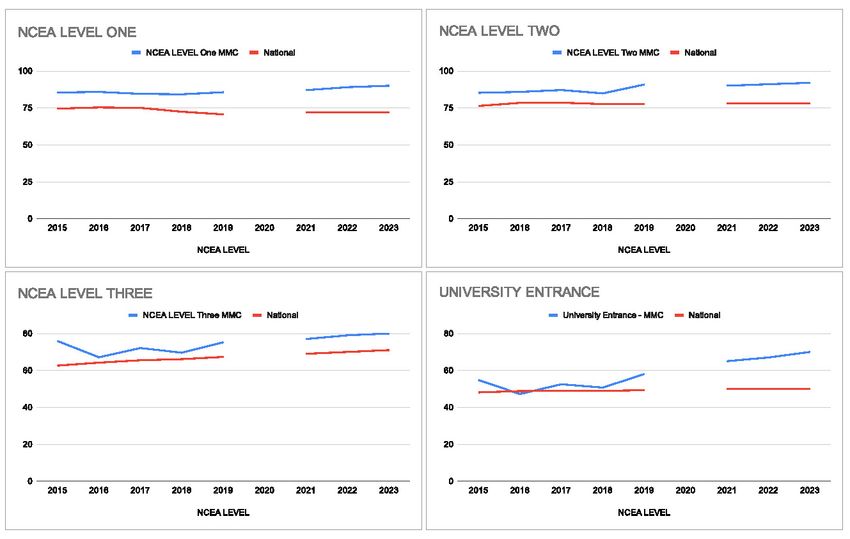
Contents

    SCHOOL CONTEXT..................................................................................................... 4
    SCHOOL HISTORY...................................................................................................................4
    STUDENT ACHIEVEMENT........................................................................................................4

    SCHOOL ORGANISATION........................................................................................... 5
    SCHOOL EXECUTIVE...............................................................................................................5
    BOARD OF TRUSTEES.............................................................................................................5
    DEPARTMENTS ........................................................................................................................6
    CHARTER REVIEW AND CONSULTATION...............................................................................7

    VISION.......................................................................................................................... 7

    FOUNDATIONAL PEDAGOGY..................................................................................... 7

    STRATEGIC FOCUS..................................................................................................... 8

    VALUES........................................................................................................................ 8

    TOUCHSTONES........................................................................................................... 8

    COMMITMENT TO TE TIRITI O WAITANGI.................................................................. 8

    BOARD OBJECTIVES - EDUCATION AND TRAINING ACT ...................................... 10

    CULTURAL DIVERSITY.............................................................................................. 11

    PRIORITY LEARNERS................................................................................................ 12

    STRATEGIC PLAN 2021 - 2023 (DRAFT)................................................................... 13
    CULTURALLY RESPONSIVE AND RELATIONAL PEDAGOGY (CRRP)...................................13
    ENRICHING.............................................................................................................................13
    CAPABILITY BUILDING...........................................................................................................13

    ANNUAL REVIEW....................................................................................................... 15
    RESULTS OVERALL / NATIONAL...........................................................................................15
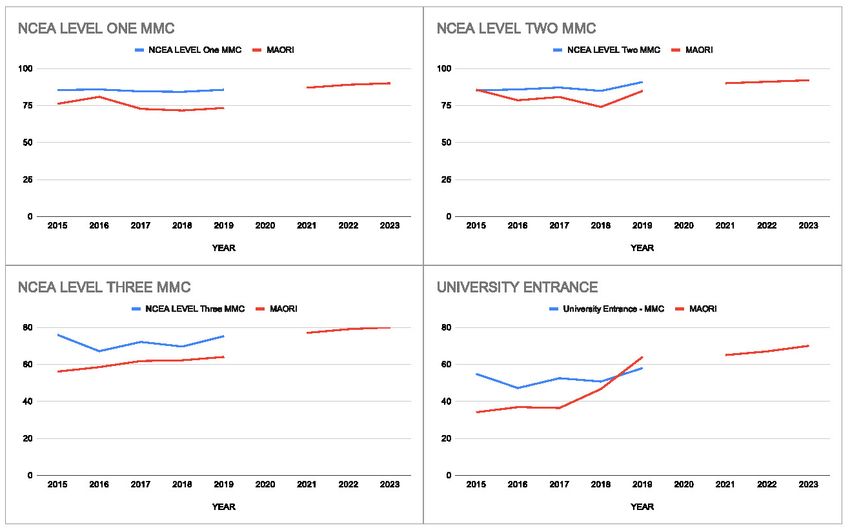
    RESULTS MĀORI....................................................................................................................16
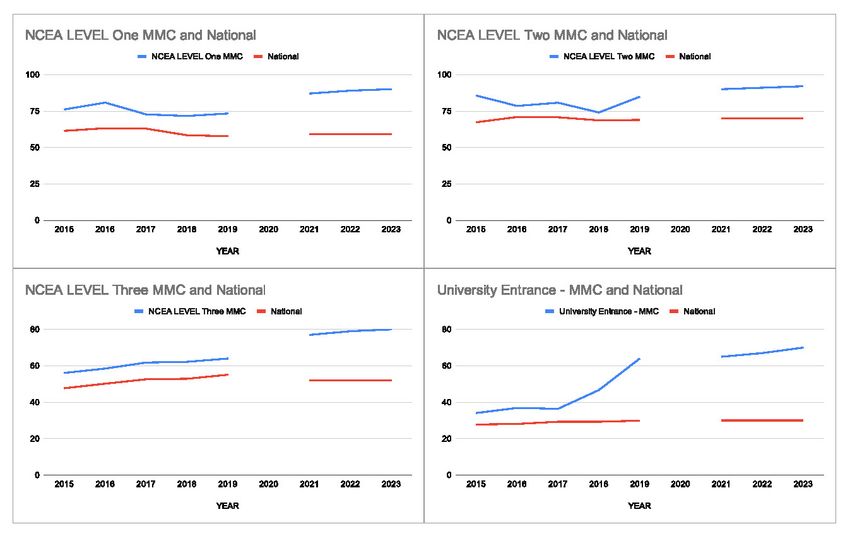
    RESULTS MĀORI / OVERALL COMPARISON........................................................................16

    SCHOOL GOVERNANCE........................................................................................... 17
    PERSONNEL...........................................................................................................................17
    FINANCE.................................................................................................................................17
    PROPERTY .............................................................................................................................17

    KEY IMPROVEMENT STRATEGIES: SCHOOL ORGANISATION............................... 18
    PROPERTY..............................................................................................................................18
    FINANCE.................................................................................................................................18
    PERSONNEL...........................................................................................................................19
    PROFESSIONAL DEVELOPMENT..........................................................................................19
    COMMUNITY ENGAGEMENT.................................................................................................19

DRAFT MOUNT MAUNGANUI COLLEGE STRATEGIC PLAN 2021                                                                                                PAGE 3
SCHOOL CONTEXT
SCHOOL HISTORY
In 1957 Tauranga College was disestablished and three school were created to serve what is now known as the
Western Bay of Plenty; Mount Maunganui College, Tauranga Girls’ College and Tauranga Boys’ College.
The current student roll is 1607, with a decile rating of 6. The College is situated on Maunganui Road, and
savours its view of Mauao, Te Awanui, Kaimai, Papamoa Hills and the Te Moana a Toi.
We exist in a very special part of New Zealand, and acknowledge mana whenua – Ngāi Te Rangi and their role
as kaitiaki of the local area. Furthermore, we acknowledge our three local iwi – Ngāi Te Rangi, Ngāti Ranginui
and Ngāti Pukenga as tangata whenua of the wider region, and from which many descendants have been, and
continue to be educated within our school programme.
Mount Maunganui College considers itself a traditional school with modern teaching and learning. It has a
proud history of NCEA achievement well above national and decile averages. It has a thriving Arts and cultural
programme and has a presence at a national level in the performing arts. With an average of 20 national sporting
representatives a year for the past 10 years it boasts a robust and wide range of sporting opportunities.
At the heart of our school are our students and each one is treated with care and respect and as the unique
young person, they are.
STUDENT ACHIEVEMENT
Mount Maunganui College continues to make steady improvement across our overall academic measures. While
results vary from cohort to cohort the overall trend is positive. Mount Maunganui College remains among the
top-performing public schools in the wider Bay of Plenty region. Our academic focus over the next five years
will see an emphasis on increasing NCEA Level and University Entrance achievement for all learners ensuring
equity of outcomes for all.
PAGE 4 DRAFT MOUNT MAUNGANUI COLLEGE STRATEGIC PLAN 2021SCHOOL ORGANISATION
SCHOOL EXECUTIVE
Principal: Alastair Sinton
Associate Principal: Tina Yule
Deputy Principal: Ady van der Beek
Deputy Principal: Michelle Ballard
Deputy Principal: Mikaere October
Deputy Principal: Brendon-Ray Horlock
BOARD OF TRUSTEES
Chairperson: Andrea Webster
Parent Representative: Rachel Cade
Parent Representative: Maia Ririnui
Parent Representative: David Weaver
Parent Representative: Debbie Green
Iwi Representative:
Staff Representative: Graeme Skudder
Student Representative: Maddie Ford
Minute Taker: Donna Beattie
DRAFT MOUNT MAUNGANUI COLLEGE STRATEGIC PLAN 2021 PAGE 5DEPARTMENTS
The College has a total of 17 Departments with 112 Teaching Staff. In addition, 41 support staff are employed,
including: teacher support, administration, finance, property, attendance/ truancy, student services, library,
sports coordinators and IT systems. The teaching departments are as follows:
DEPARTMENT HEAD OF DEPARTMENT
Art Mike Linklater
Careers Jane Doherty
Commerce Dianne Hodge
Drama/ Dance Wayne Flanagan
English Pip Tinning
Home Economics Claire Fuller
Information Technology Martin Burch
International Students Maz Roberts / Hayden Burns
Languages Tamara Williams
Learning Centre Amanda Devereux / Kate Burns
Māori Khan Butler
Mathematics Dave Cleland
Music Wendy Stewart
Physical Education Erin Porteous
Science Claire Lindsey
Social Science Fran Stubbins (Acting)
Technology Sean Embling
Employment Development Graeme Skudder
PAGE 6 DRAFT MOUNT MAUNGANUI COLLEGE STRATEGIC PLAN 2021CHARTER REVIEW AND CONSULTATION
Review of the previous Charter and Strategic Plan was undertaken between February 2020 and July 2020 by
independent consultant - Peter Leggart.
1. Review of literature (including but not limited to): historical school documentation, internal school initiatives/
research, historical and existing school data and trends of data, He Waka Eke Noa (MMC Māori Strategic
Plan), various national and international education reports, and existing national educational initiatives;
2. Stakeholder consultation (school leadership, teachers, support staff, students, parents, community):
current strengths of the school, areas for improvement, new ideas, and strategies for change;
Consultation was undertaken in various ways including surveys, discussions, and workshops with a number of
different stakeholders, including:
1. Leadership (school executive & Board of Trustees): 4 discussion meetings
2. School Staff (teachers & support staff): ongoing regular surveys, 1 workshop
3. Students (all year levels): 1 surveys (408 responses), 1 discussion meeting
4. Parents (existing and new enrolments): 1 survey, 1 discussion meeting
5. Māori Community: 1 community meeting
Information gained throughout the review has been used to consolidate the vision, strategic goals, values
and touchstones contained within this document. It has shaped the foundations of the school’s existing and
developing pedagogy as well and identifying three key areas of focus for the next three years.
VISION
“Mā tō rourou, mā tōku rourou, ka ora ai te iwi”
Together as learners, we are inspired to grow
FOUNDATIONAL PEDAGOGY
• Culturally Responsive and Relational
• Enriching
• Capability Focused
DRAFT MOUNT MAUNGANUI COLLEGE STRATEGIC PLAN 2021 PAGE 7STRATEGIC FOCUS
As a community of learners, Mount Maunganui College will:
• Explore innovative and engaging learning experiences that exemplify 21st Century education
• Encourage service and contribution that strengthens school culture and develops an awareness of our
social impact
• Improve achievement across all year levels with a focus on equity
VALUES ROHA
• Mana
• Aroha UORA
ĀKO
TOUCHSTONES
HA
SA
PIEN O
TIA CARIOR AUR
• Ako
• Hauora
ANA
COMMITMENT TO TE TIRITI O WAITANGI
The Board of Trustees remain committed to Te Tiriti O Waitangi and governing to ensure Māori learners are
supported academically, culturally, spiritually, socially and emotionally. Within this strategic plan there is a
deliberate emphasis on equity of outcomes. Legislation is now reflecting wider discourse on equity with the
Education and Training Act: 2020 now making explicit reference to equity for Māori in section 127. Other key
elements the Board is entrusted with through the Act are;
• working to ensure their plans, policies and local curriculum reflect local tikanga Māori, mātauranga Māori
and te ao Māori
• taking all reasonable steps to make instruction available in tikanga Māori and te reo Māori and Te Ao
Māori is rich in nature through its long history, through legacy and through its strength of survival and the
passionate commitment of its people. Te Ao Māori encompasses not only the lived realities of Māori in a
modern context, but also the lived realities of all those who have gone before. Te Ao Māori is a worldview
founded on rich tradition of tikanga (custom / correct procedure), kawa (marae customs), and whanonga
pono (values) that are connected to both the physical and spiritual realms.
PAGE 8 DRAFT MOUNT MAUNGANUI COLLEGE STRATEGIC PLAN 2021Mount Maunganui College acknowledges the importance of protecting this rich history and providing a place
whereby Te Ao Māori is legitimised, welcomed and appreciated for its unique contribution to the development
of the community as a whole. The College accepts its responsibilities under Te Tiriti o Waitangi and values their
relationship with local iwi as partners in educating all Māori students at the College. We further acknowledge
that to achieve equitable outcomes for Māori students, we need to work in partnership with whānau, mana
whenua, local iwi and regional/ national Māori initiatives. This includes working in alignment with the following
key documents:
• Te Pae Tukutuku Ahurea o Ngāi Te Rangi: Guidelines for Culturally Responsive Schools
• Te Māhere Rautaki Mātauranga o Ngāi Te Rangi (2011-2031) (Ngāi Te Rangi Education Strategy)
• He Waka Eke Noa (Mount Maunganui College Māori Strategic Team)
• Ka Hikitia – Ka Hāpaitia | The Māori Education Strategy
Mount Maunganui College illustrates our commitment to Te Ao Māori through:
• Development and resourcing of He Waka Eke Noa (MMC Māori Strategic Team)
• Provision of Māori representation in school leadership roles, including but not limited to the Board of
Trustees and School Executive;
• Māori representation throughout school structures which has the ability for Māori authority (i.e. self-
determination) or wider consultation with Māori communities;
• Encouraging strong Māori student leadership throughout the school;
• Continual focus on developing equity for Māori students, through a focus on resourcing, relational
pedagogy, meaningful student pathways and equitable student achievement;
• Continual focus on developing and promoting cultural self-determination through the availability of school
programmes that support Māori students to understand who they are as Māori, and the unique position
that they bring to this world, that is: Māori students achieving as Māori;
• Implementation of school-wide programmes in tikanga me te reo Māori on offer to students (year 9 – 13)
and to the wider school community;
• Provision of professional development opportunities for staff members to increase their understanding
and skill in te reo me ōnā tikanga Māori and Te Tiriti o Waitangi;
• Creating opportunities for contextual learning for the school community through regular participation in
Maori events (local, regional, national);
• Encouragement and recognition of the use of te reo me ōnā tikanga Māori within day-to-day school life,
and in representation of school at external activities/ events;
• Development of a local curriculum that emphasises an understanding of local history and cultural
significance of our environment;
• Inclusion of Te Tiriti o Waitangi into the curriculum across all of departments;
• Set Māori achievement as a mandatory department goal, with regular progress reporting; and,
• Inclusive communication with whānau supporting them to understand how the College works, and what
they can do to increase their child’s achievement.
DRAFT MOUNT MAUNGANUI COLLEGE STRATEGIC PLAN 2021 PAGE 9Mount Maunganui Colleges acknowledges the relevance and importance of tikanga Māori, and will ensure that
correct procedures are followed at school events, including but not limited to: pōwhiri for new staff, students
and special guests; opening of new buildings; start of close of each school year, and school awards evenings.
Specific programmes offered at Mount Maunganui College include:
• He Waka Eke Noa - Strategic Steering Group
• Responsive & Relational Pedagogy
• Kaupapa Māori Student Council
• Te Kura Tuarua o Mauao Kapa Haka
• Responsive Wānanga
• Te Reo Māori instruction (year 9 – 13)
• Inter-house Haka Competition
• Year 9 Māori Student Induction Programme
BOARD OBJECTIVES - EDUCATION AND TRAINING ACT
• Educational achievement
• Physical and emotional safety of staff and students
• Inclusive and cater for students of differing needs
• Give effect to Te Tiriti o Waitangi
PAGE 10 DRAFT MOUNT MAUNGANUI COLLEGE STRATEGIC PLAN 2021CULTURAL DIVERSITY
General Student Roll (March 2020)
46% NZ European 32% Māori 2% Pacific Island 3% Asian 16% Other
International Students 70 (4%) of whole school population
At Mount Maunganui College, we aim to provide a learning context where students can acquire the knowledge,
skills, and attitudes to equip them for life in a multi-cultural world. At our College we value pedagogy that
supports students to understand and respect diverse viewpoints, values, customs, and languages. Furthermore,
we recognise that ethnicity is just one characteristic that contributes to diversity, and that cultural diversity
occurs within ethnic groups.
Our College aims to ensure that teacher pedagogy is culturally responsive and relational, through:
• Teachers and support staff being aware of students’ different cultural identities;
• Learning programmes and classroom environments incorporating relevant cultural contexts;
• Teachers demonstrating awareness of own culturally-based beliefs and practices and how these play out
in the classroom and teaching practice;
• Recognising diversity within cultures, e.g: gender, socio-economic background, and religion;
• Celebrating diversity through practical opportunities to share language and cultural experiences;
• Providing a safe place for students to respectfully express their cultural values and beliefs in the classroom;
and,
• Treating all students with respect and dignity.
DRAFT MOUNT MAUNGANUI COLLEGE STRATEGIC PLAN 2021 PAGE 11PRIORITY LEARNERS
Mount Maunganui College identifies priority students as those learners who have inequitable success in the New
Zealand schooling system. This includes many Māori, Pacific Island, those learners from low socio-economic
backgrounds, and students with special education needs including gifted and talented. Mount Maunganui
College will continue to use feeder school data, testing and observation to identify students with needs. Priority
cohorts are consistently monitored throughout the year to ensure early detection of any learning difficulties and
timely intervention to ensure learning progression is being achieved.
At Mount Maunganui College, teachers are expected to have a clear understanding of:
1. The expected learning students should make (performance, developmental/ achievement expectations)
2. The learning students have made (prior learning, achievement and progress)
3. The learning students need to make (gaps between expectations and prior learning and achievement)
Strategies employed to support priority learners include:
• Viewing the progression and growth of our priority learners as an indicator of key success for the College;
• Increased focus on supporting priority learners to be present, engaged and achieving, with a specific
focus on years 9-10;
• Set priority learner achievement as a mandatory department goal, with regular reporting;
• Junior School assessment frameworks that are responsive to learners and the curriculum
• Creating contexts that excite and engage learners, and that affirm their identities, languages and cultures;
• Responding to students’ learning needs by adapting programmes and resources;
• Use information on students’ strengths, interests and needs to inform programme review; and,
• Supporting students to manage transitions within and into the workforce or further study.
• Staffing positions dedicated to learning support, cultural inclusiveness and gifted and talented.
PAGE 12 DRAFT MOUNT MAUNGANUI COLLEGE STRATEGIC PLAN 2021STRATEGIC PLAN 2021 - 2023 (DRAFT)
CULTURALLY RESPONSIVE AND RELATIONAL PEDAGOGY (CRRP)
Since 2014 Mount Maunganui College has centred professional development and resourcing to becoming a
culturally responsive and relational school. Beginning with reviews completed by an external researcher the
school has adopted CRRP as a fundamental pedagogy for all teaching staff. With support from Kia Eke Panuku
(MoE funded professional learning provider) Mount Maunganui College has adapted and implemented a number
of key strategies and initiatives to support teacher practice and enhance the learning experience and achievement
outcomes for Māori learners. A fundamental driver behind this pedagogy has been He Waka Eke Noa (HWEN). A
collection of teaching staff voluntarily support CRRP throughout the school by supporting Māori cultural identity,
teaching practice or achievement outcomes for Māori within the parametres set by HWEN. This has aligned with
our Māori Strategic Plan however through discussion and consultation we have chosen to combine all strategic
planning into one document for the 2021 – 2023 planning cycle.
Significant progress in CRRP has been made with positive student voice and achievement outcomes for Māori
(above all National and Decile averages) as key indicators. Mount Maunganui College has developed Te Tauranga
Mātauranga as its teaching framework and observation and coaching tool. The school has continued the Ngai
te Rangi initiative of Club Rangatahi independently for the past two years which provides extra support for
learners on Wednesday afternoons. The school has been acknowledged by NZQA as a lead school for Māori
achievement in STEM subjects. We acknowledge there is more progress required to ensure equity of outcomes
for all learners at Mount Maunganui College, therefore we place CRRP as a pedagogical foundation. Mount
Maunganui College will continue to build on the progress we have made and will seek alignment with Ka Hikitia,
Tapasa (Cultural Competencies Framework for Teachers of Pacific Learners) and the Ngāi te Rangi Cultural
Guidelines where necessary.
ENRICHING
For the purposes of this strategic plan Mount Maunganui College uses this term broadly to encompass learning
support, Gifted and Talented Programmes, Te Ao Māori, Key Competency aligned programmes such as sport
and the Arts, Employment Development, Gateway, learning area achievement and NCEA.
Our responsibility to our community is to provide each student with what they need to grow as learners. Teachers,
middle leaders, senior leaders and the Board of Trustees all have a responsibility to add value to each student
at Mount Maunganui College. We accept that each learner is an individual and has unique experience, skills and
needs and we will take all reasonable steps to accelerate a student’s learning across all aspects of school life.
CAPABILITY BUILDING
Over time the New Zealand Curriculum’s vision for young people (confident, connected, actively involved, lifelong
learners), values (high expectations, learning to learn, Treaty of Waitangi, community engagement, coherence,
cultural diversity, inclusion, future focus) and Key Competencies (Thinking, Relating to Others, Understanding
Language, Symbols and Text, Managing Self, Participation) have come into sharper focus. As the understanding
of 21st Century skills and dispositions and their value hold increasing weight against what has been considered
the ‘back end’ of the curriculum (Curriculum area Achievement Objectives), capabilities matter as they remain
constant in times of certain change.
Mount Maunganui College recognises the importance of the New Zealand Curriculum’s Vision, Values and Key
Competencies and will plan and implement in meaningful ways, opportunities to develop capabilities in our
students through learning areas, courses and all other aspects of our student’s school experience.
DRAFT MOUNT MAUNGANUI COLLEGE STRATEGIC PLAN 2021 PAGE 13PAGE 14
VISION
Mā tō rourou, mā tōku rourou, ka ora ai te iwi - Together as learners, we are inspired to grow
MANA AROHA
CULTURALLY ENRICHING CAPABILITY CULTURALLY ENRICHING CAPABILITY CULTURALLY ENRICHING CAPABILITY
RESPONSIVE BUILDING RESPONSIVE BUILDING RESPONSIVE BUILDING
SCHOOL CULTURE AND CONTRIBUTION ACHIEVEMENT
INNOVATION
Encourage service and contribution that strengthens
Explore innovative and engaging learning experiences Improve achievement across all year levels with a
school culture and develops an awareness of our
that exemplify 21st Century education. focus on equity
social impact
ACTION
ACTION • Review existing Raukura and pastoral care
structures to ensure efficient use of time and ACTION
• Develop and implement a school-wide digital
strategy that meets the needs of all learners. resources. • Set clear school-wide and departmental targets for
• Develop and implement effective school achievement and equity.
• Encourage all staff to engage in professional
practice that uses inquiry, collaborative problem communication. • Use data as a tool to identify and respond to
solving and professional learning to improve • Create equitable processes and opportunities for achievement and equity challenges as they occur.
professional capability. leadership and participation that challenge and
enhance the well-being of students and staff.
EVIDENCE EVIDENCE EVIDENCE
• Digital strategy developed and embedding. All • Structures reviewed and any changes
• School has set clear and achievable achievement
departments have identifiable and measurable implemented.
targets in both senior and junior school.
targets that support this goal.
• Modern communication systems are developed
• Departments can provide clear evidence of the
• All staff can provide evidence of professional and key events and messages are clearly
steps taken to achieve these targets.
learning that supports innovative teaching. communicated to all relevant parties.
• Stakeholders can see how classroom practice is
• Learning experiences for students are improved • Evidence demonstrates an increase in participation
aligned with this goal.
(this is an addition). and contribution for staff and students.
REVIEW REVIEW REVIEW
DRAFT MOUNT MAUNGANUI COLLEGE STRATEGIC PLAN 2021ANNUAL REVIEW
• A sustainable, data driven annual review process has been developed and implemented since 2019.
• Includes achievement, attendance, pastoral and professional development data.
• Analysed at a school wide and departmental level, and can be refined even further if appropriate.
RESULTS OVERALL / NATIONAL
DRAFT MOUNT MAUNGANUI COLLEGE STRATEGIC PLAN 2021 PAGE 15RESULTS MĀORI
RESULTS MĀORI / OVERALL COMPARISON
PAGE 16 DRAFT MOUNT MAUNGANUI COLLEGE STRATEGIC PLAN 2021SCHOOL GOVERNANCE
PERSONNEL
The Board of Trustees will implement personnel and industrial policies which promote high levels of staff
performance, use resources effectively, recognise the needs of students as well as being a good employer as
defined by the State Sector Act 1988.
FINANCE
The Board of Trustees will allocate funds according to school’s priorities as established in the School Charter,
including but not limited to:
• Allocate funds according to school’s priorities.
• Monitor and control school expenditure.
• Comply with current asset management agreement.
• Implement a maintenance programme to ensure building compliance.
• Provide a safe and healthy learning environment.
• Respond appropriately to the emerging challenge of reduced income from international students.
PROPERTY
The Board of Trustees will ensure development of a 10 year Property Plan (10YPP) to provide the right quantity
and quality of school property to achieve the best physical environment for learning, including oversight of the
day-to-day management of school property to ensure it is in good order and repair. Alignment between the
School’s Charter and the Property Plan is monitored by the Board of Trustees.
DRAFT MOUNT MAUNGANUI COLLEGE STRATEGIC PLAN 2021 PAGE 17KEY IMPROVEMENT STRATEGIES: SCHOOL ORGANISATION
PROPERTY Immediate (two year) focus on the Western area of the school including:
• Board / Community funded Whareka / wharenui redevelopmenti
completed 2021.
• Swimming pool complex redevelopment including demolition and
replacement of existing changing rooms, outdoor education shed
and beautification of surrounding area including fencing, viewing area
and buildings.
Advocating for the Ministry of Education to reach an outcome on a plan for
our existing buildings that are beyond their intended life or no longer fit for
purpose
• Including but not limited to: B block, C block, F block and all temporary
buildings.
• Expansion of existing specialist teaching areas including science
Labs, gymnasium, technology and hall.
• Creating environments to encourage student interaction.
• Development of school gate numbers (for emergency access).
• Review of departmental IT needs, including preparedness for online/
digital submission of work/ assessments.
FINANCE • Increased transparency of school budget timeline, process and
decision-making for school staff members.
• Ensure the Board of trustees have sufficient working capital to be
able to enhance Ministry of Education funded projects and drive local
projects in the best interest of students.
PAGE 18 DRAFT MOUNT MAUNGANUI COLLEGE STRATEGIC PLAN 2021PERSONNEL • Continue to upskill school leadership on legal obligations and seek
advice where appropriate.
• Review of a Staff Management System for resolving inconsistencies
in staff performance and behaviour.
• Continuation of voluntary First Aid Training for all staff members,
including increased staff awareness of school emergency procedures.
• Review of school administration, technical support, and teacher relief
needs.
PROFESSIONAL • Professional learning reflects the goals of the Strategic Plan.
• Departmental focus on strengthening the use of technology within
DEVELOPMENT each subject area.
• Continuation of the Responsive and Relational Pedagogy programme.
• Continued focus on improving pedagogy across all school areas.
• Department identified Professional Development.
COMMUNITY • Continue to explore opportunities for local industry involvement in
student learning.
ENGAGEMENT • Increased opportunities for engagement with parents, including a
stronger focus on parent-student pathway planning.
• Increased opportunities for engagement with our wider Māori
community, including but not limited to: Ngāi Te Rangi iwi, Māori
parents, local Māori industry, and regional/ national connections.
DRAFT MOUNT MAUNGANUI COLLEGE STRATEGIC PLAN 2021 PAGE 19You can also read


