Secondary Transition Training - Supporting Continuous Improvement in Transition Planning
←
→
Page content transcription
If your browser does not render page correctly, please read the page content below

Secondary Transition Training

Supporting Continuous
      Improvement
 in Transition Planning

                                     1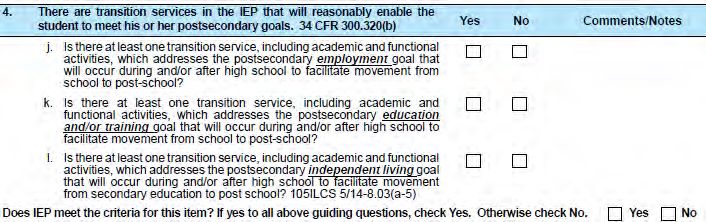
State Performance Plan: Indicator 13
Introduction
The legal framework
Indicator 13 measurement
details
Information about
findings of
noncompliance
Indicator 13 Data
Verification Audit
Data Verification Rubric
2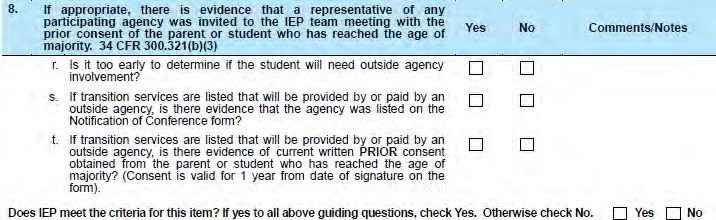
Post-Secondary Success is Embedded in
                IDEA
The purpose of IDEA is to ensure that all children with
disabilities have available to them a free, appropriate public
education (FAPE) that includes special education and
related services designed to meet their unique needs and
prepare them for further education, employment and
independent living.
(34CFR§300.1(a))

                                                                 3
Federal Transition Requirements
Beginning not later than the first IEP to be in effect when the
child turns 16 . . . and updated annually, thereafter, the IEP
must include –

   – Appropriate measurable post-secondary goals based
     upon age appropriate transition assessments related
     to training, education, employment, and, where
     appropriate, independent living.
     (34CFR §300.320(b)(1))

   – The transition services (including course of study)
     needed to assist the child in reaching those goals.
     (34CFR §300.320(b)(2))

                                                              4
Illinois Transition Requirements

• Transition planning begins for the first IEP that will be in
  effect at the age of 14 ½ years.

• Transition planning for Independent Living is a
  requirement. (PA 098-0517)

• Students can delegate their educational decision-making
  rights to their parent/guardian or other adult.
  (105 ILCS 5/14-6.10)

                                                                 5
Definition of Transition Services
          http://www.isbe.net/spec-ed/pdfs/comparison.pdf

a)   Transition services means a coordinated set of
     activities for a child with a disability that:

     1. is designed within a results-oriented process, that is
     focused on improving the academic and functional
     achievement of the child with a disability to facilitate
     movement from school to post school activities,
     including post-secondary education, vocational
     education, integrated employment, continuing and
     adult education, adult services, independent living or
     community participation…

     2. is based on the individual child’s needs, taking into
     account the child’s strengths, preferences and
     interests;

     34CFR §300.43(a)
                                                                 6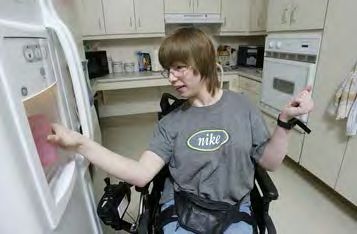
Federal Definition: SPP Indicator 13
States must report their level of compliance for SPP Indicator 13 in
the Annual Performance Report. States submit Indicator 13 data
based on all students who are age 16 and above and have an IEP.
    “Percent of youth with IEPs aged 16 and above with an IEP
    that includes appropriate measurable post-secondary goals
    that are annually updated and based upon an age appropriate
    transition assessment, transition services, including courses
    of study, that will reasonably enable the student to meet those
    post-secondary goals, and annual IEP goals related to the
    student’s transition services needs. There also must be
    evidence that the student was invited to the IEP Team meeting
    where transition services are to be discussed and evidence
    that, if appropriate, a representative of any participating
    agency was invited to the IEP Team meeting with the prior
    consent of the parent or student who has reached the age of
    majority.” 20 U.S.C. 1416(a)(3)(B)

                                                                   7
Findings of Noncompliance

Districts who don’t meet the measurable and rigorous
target of 100% for Indicator 13.

Indicator 13 Data Verification Audit is an activity that is
used to verify compliance.

All findings of noncompliance must be corrected within
12 months of issuance.

                                                              8
Data Verification Audit
The SPP Indicator 13 Data Verification Audit will continue in LEAs across the state. 34
CFR §300.640 outlines the SEA’s responsibility to submit data required by section 618 of
the IDEA. The State Performance Plan details the required improvement activities for
each indicator.

Districts are randomly chosen and sent a letter outlining the process, timeline,
requirements, and a sample of up to 15 students, ages 16 and above.

Districts submit documentation for the list of students.

ISBE uses the Data Verification Audit Rubric to score the sample students.

Districts will be sent a letter and a copy of the scored rubrics.

Districts who “do not meet” will be sent a letter with instructions for corrective action.

The Indicator 13 Data Verification Rubric and other valuable tools and resources for
transition planning are located on ISBE’s webpage:
http://www.isbe.state.il.us/spec-ed/html/indicator13.htm

                                                                                             9
Indicator 13 Rubric

                      10
State Performance Plan: Indicator 13
Segment 1
Rubric Item 1:
Measurable Post-
School Goals
11Indicator 13: Rubric Item 1
12Indicator 13: Rubric Item 1
A measurable post-secondary goal must be
developed and written in the following areas for
transition-aged students aged 14 ½ and above in
Illinois:
• Education and/or training
• Education: community college, university, technical/trade/vocational school
• Training: vocational or career field training, independent living skill training,
apprenticeship, on the job training, job corp
• Employment
• Paid employment (competitive, supported)
• Non-paid employment (volunteer, in a training capacity)
• Military
• Independent Living
• Independent living skills, health/safety, financial/income, transportation/
mobility, social relationships, recreation/leisure, self-advocacy/future planning
13Selected Resources to Assist in Developing
Transition Independent Living Goals
Casey Life Skills http://lifeskills.casey.org
Casey Life Skills is a free practice tool and framework to assess independent
living skills. This assessment measures in the following domains:
Daily Living Skills
Self Care Skills
Relationships & Communication Skills
Housing & Money Management
Work & Study Skills
Career & Education Planning
Illinois’ Social and Emotional Learning Standards
http://isbe.net/ils/social_emotional/standards.htm
14Concern Over Post-Secondary Goals
“If it is stated as a measurable goal that occurs
after students have left the LEA. I’m concerned
about liability issues when students don’t meet
those stated goals after school.”
IDEA does not require that local education
agencies (LEAs) be held accountable for students’
attainment of post-secondary goals. The post-
secondary goals are required components of
transition planning.
15Transition Responsibility of Schools
Schools ARE responsible for:
providing the educational programs and
transition services stated in the IEP.
Schools ARE NOT responsible:
if the post-secondary goal is not attained
by the young adult.
16Measurable Post-Secondary Goal
A measurable post-secondary goal uses results oriented
terms such as:
“enrolled in”
“work”
“part time”
“full time”
Formula provided by the National Secondary Transition
Technical Assistance Center:
____________ ______ WILL ________ _________.
(After High School) (student) (behavior) where & how)
17State Performance Plan: Indicator 13
Segment 2
Rubric Item 2:
Post-secondary
Goals Updated
Annually
18Indicator 13: Rubric Item 2
19Updating Post-Secondary Goals Annually
Three post-secondary goals were included in the IEP. The IEP was updated
within 12 months as indicated by the following examples:
Example: “date of last review” and “signature dates on the current
IEP”.
The goals meet I-13 standards for Item #2 for the following reasons:
a) post-secondary goals were identified in conjunction with
developing the IEP and the IEP was reviewed with 12
months of the previous IEP.
Example: Present Level of Academic and Functional Performance
(PLAAFP) indicates that “since last school year”
The goals meet I-13 standards for Item #2 for the following reasons:
a) “since last year” indicates that the information was
updated annually and contributed to the post-secondary
goals identified in this IEP.
20State Performance Plan: Indicator 13
Segment 3
Rubric Item 3:
Post-secondary
Goals Based on
Age-Appropriate
Transition
Assessments
21Indicator 13: Rubric Item 3
22Transition Assessments
Must Address These Areas
Employment Independent
Living
Education/
Training
23Indicator 13: Rubric Item 3
Guidance from the National Technical Assistance Center on Transition
located at http://www.transitionta.org. (This has replaced NSTTAC).
Become familiar with different types of transition assessments and their
characteristics.
Select methods that assist students by helping them answer:
Who am I?
What do I want in life, now and in the future?
What are some of life’s demands that I can meet now?
What are the main barriers to getting what I want from school and
community?
What are my options in the school and community for preparing me for
what I want, now and in the future?
24Indicator 13: Rubric Item 3
Formal transition assessments:
– Adaptive behavior/daily living skills assessments
– General and specific aptitude tests
– Interest inventories
– Intelligence tests
– Temperament inventories/instruments
– Career maturity or employability tests
Informal transition assessments:
– Interviews (student and family)
– Questionnaires
– Direct observation
– Curriculum-based assessments
– Environmental analysis
25Examples of Age-Appropriate
Transition Assessments
Social Histories ACT/SAT
Career Cruising ASVAB
Explore Test Think Link
PLAN test Transition Planning Inventory
PSAE Student Interview Inventory
Assessment of Technology Vocational Evaluation
Needs Compass Test
Interest Inventories Work Keys
Career Interest Inventory Family Interviews
Learning Styles Inventory Career Portfolios
Independent Living Skills Person-Centered Planning
Questionnaire Employability Skills Inventory
Social Skills Inventories Mechanical Aptitude Test
Kuder Assessment Personality Scales
26Examples of Non-Appropriate Transition
Assessments
STEP program
Student Career Plan
Resource Management Class
Career Day
Transition Fair
Career Counseling
DRS Coordination
Transition Planning
Coursework
27State Performance Plan: Indicator 13
Segment 4
Rubric Item 4:
Transition Services
28Indicator 13: Rubric Item 4
29Transition Services
• Instruction is one component of a transition program that “the student needs
to receive in specific areas to complete needed courses, succeed in the
general curriculum, and gain needed skills.” Storms, J., O’Leary, E., & Williams, J. (2000).
Transition requirements: A guide for states, districts, schools, universities and families. Eugene: University of
Oregon, Western Regional Resource Center.
• Related service is defined as “transportation, and such developmental,
corrective, and other supportive services (including speech-language
pathology and audiology services, interpreting services, psychological
services, physical and occupational therapy, recreation, including therapeutic
recreation, social work services… counseling services, including
rehabilitation counseling, orientation and mobility services, and medical
services, except that such medical services shall be for diagnostic and
evaluation purposes only) as may be required to assist a child with a
disability to benefit from special education….” Individuals with Disabilities Education
Improvement Act of 2004, Public Law No. 108-446, 20 U. S. C. 1400, H. R. 1350.
• Community experiences are one component of a transition program “that are
provided outside the school building or in community settings.…” Storms, J.,
O’Leary, E., & Williams, J. (2000). Transition requirements: A guide for states, districts, schools, universities
and families. Eugene: University of Oregon, Western Regional Resource Center.
–
30Transition Services (cont.)
• Employment and other post-secondary adult living objectives are components of
transition that “the student needs to achieve desired post-secondary goals.
These could be services leading to a job or career or those that support activities
done occasionally such as registering to vote, filing taxes, renting a home,
accessing medical services, filing for insurance or accessing and planning for
adult services such as Social Security Income (SSI).” Storms, J., O’Leary, E., & Williams,
J. (2000). Transition requirements: A guide for states, districts, schools, universities and families. Eugene:
University of Oregon, Western Regional Resource Center.
• Acquisition of daily living skills is a component of transition that is included “if
appropriate” to support student ability to do those activities that “adults do
every day.” Storms, J., O’Leary, E., & Williams, J. (2000). Transition requirements: A guide for states,
districts, schools, universities and families. Eugene: University of Oregon, Western Regional Resource
Center.
• Functional vocational evaluation is a component of transition that is included “if
appropriate.” This evaluation involves “an assessment process that provides
information about job or career interests, aptitudes, and skills. Information may
be gathered through situational assessment, observations or formal measures,
and should be practical. The IEP team could use this information to refine
services outlined in the IEP.” Storms, J., O’Leary, E., & Williams, J. (2000). Transition
requirements: A guide for states, districts, schools, universities and families. Eugene: University of Oregon,
Western Regional Resource Center.
31Transition Services - Examples
Post-Secondary Goal:
Upon completion of high school, John will attend Lincoln
Land Community College.
Transition Services:
Instruction: John will receive tutoring in reading comprehension
strategies.
Related Services: John will receive counseling services to increase
ability to manage anger.
Community Experience: John will have three visits to Lincoln Land’s
Disability Services Office.
Development of Employment: John will take Lincoln Land’s entrance
prep exam.
Daily Living Skills: John will use resources such as public
transportation to attend classes at Lincoln Land.
32Transition Services - Examples
Post-Secondary Goal:
After graduation, Kevin will participate in habilitative and
functional skill training through the ARC of Chicago and
will attend courses designed to provide specialized
academic, functional, and occupational preparation.
Transition Services:
Daily Living Skills: Maintain a bank account, practice safety skills in the
community, select clothing for the day, express preferences related
to saving money for personal use.
Employment and Other PS Living Objectives: Meet with job coach in
classroom and community settings, meet with SSI representative to
determine possible financial benefits, vocational rehabilitation
referral.
Functional Vocation Evaluation: Refer to DRS for non-verbal, modified
assessments of adaptive behavior, career interests and skills.
33State Performance Plan: Indicator 13
Segment 5
Rubric Item 5:
Course of Study
34Indicator 13: Rubric Item 5
35Indicator 13: Rubric Item 5
As you plan the course of study, consider these points:
Does the transition plan include documentation that
aligns with the student’s post-secondary goals?
Does a post-secondary goal require or benefit from the
successful completion of specific high school courses
such as
A future chef planning to take and complete all cooking
related classes;
A future child care provider planning to take and complete
all relevant Family and Consumer Science classes;
A future auto body mechanic planning to take and
complete relevant classes in ‘shop.”
36Indicator 13: Rubric Item 5
The Course of Study must be completed for all transition-aged
students from the current year through the anticipated year of
graduation. Writing the word elective does not provide the
needed documentation of a course of study that aligns with the
student’s post-secondary goals.
If a vocational class related to the student’s career interests is
not available due to budget constraints or other extenuating
circumstances, state that either in the Course of Study or
PLAAFP so that everyone involved knows that the student’s
strengths, preferences and interests were discussed.
Delineate in the Course of Study to show the progression of
classes that assist the student in meeting his/her transition
post-secondary goals, i.e., Foods I, Foods II, etc.
37State Performance Plan: Indicator 13
Segment 6
Rubric Item 6:
Annual Goals
38Indicator 13: Rubric Item 6
39Indicator 13: Rubric Item 6
For each post-secondary goal, is there at least one annual goal and short-term
objective included in the IEP related to the student’s transition services needs?
Transition services are developed to assist the student in progressing toward their
post-school goals. Therefore, annual goals are related to the post-secondary goals via
transition services.
Annual goals are “statements that describe what a child with a disability can
reasonably be expected to accomplish within a 12-month period in the child’s special
education program.”
There must be at least one annual that ties back to each of the post-school
goals.
An annual goal might be academic and transition, functional and transition,
academic, functional and transition, or just transition.
A Helpful Formula from NSTTAC
Given __________ _________ WILL______ ____________ _______.
condition student behavior criteria time frame
(i.e., direct instruction, (i.e., 80%) (i.e., by June, 2015)
modeling, peer
tutoring)
40Post-Secondary Goal
After graduation from high school, Jodi will participate in remedial education
courses at the local community college focusing on life skills instruction,
functional reading, functional math, productivity and basic employability skills.
Present Level of Academic Achievement & Functional
Performance
• Jodi completed the Brigance Employability Skills Inventory which reported that
she was functioning at grade 3 in reading and at grade 4 in math. Her intake
assessment suggested that she has adequate verbal skills. The quick-screen
indicated she lacked basic employment literacy skills in math and reading.
41Annual Goal
Jodi will increase her inferential reading comprehension scores by one grade
level as measured by classroom assessments by May 1, 2017, in order to improve
this skill in on the job training materials.
Objectives
Given daily instruction and use of high-interest reading materials such as the
newspaper, young adult magazines, school-approved web-sites, and short stories
for adults, Jodi will increase her reading comprehension by .5 grade level by the
end of the first semester in the 2016–2017 school year.
Given daily instruction and use of high-interest reading materials such as the
newspaper, young adult magazines, school-approved web-sites, and short stories
for adults, Jodi will increase her reading comprehension by one grade level by the
end of the 2016-2017 school year.
42State Performance Plan: Indicator 13
Segment 7
Rubric Item 7:
Inviting Students
43Indicator 13: Rubric Item 7
44Indicator 13: Rubric Item 7
For the current year, is there documentation in the IEP or
cumulative folder that the student was invited to attend the IEP
meeting?
Is the student’s invitation signed (by the LEA) and dated prior to
the date of the IEP meeting?
Compliance is inclusion of the student’s name in the Notice of
Conference letter as a person who is invited to the IEP meeting.
45State Performance Plan: Indicator 13
Segment 8
Rubric Item 8:
Inviting Outside
Agencies
46Indicator 13: Rubric Item 8
47Indicator 13: Rubric Item 8
For the current year, is there evidence in the IEP that representatives of
any agencies/services were invited to participate in the IEP meeting,
including but not limited to: post-secondary education, vocational
education, integrated employment (including supported employment),
continuing and adult education, adult services, independent living or
community participation for this post-secondary goal?
The 3-step process includes:
Step 1: Are there transition services listed that are likely to be provided or paid for by
an outside agency?
Step 2: If there are such services, is there documentation that the parent/guardian
and/or student who has reached the age of majority has provided consent to invite the
relevant outside agencies?
Step 3: If consent is obtained, is there evidence that one or more of the outside
agencies/services were invited to the IEP meeting to discuss transition?
48Indicator 13: Rubric Item 8
Examples of Outside Agencies
US Military representative
DHS DRS representative
Local Social Security Administration representative
Employer
Post-Secondary education and training provider (e.g., office of disability
services)
Independent Case Coordination Unit (PAS agency)
Adult service agency representatives
Center for Independent Living (CIL)
workNet Center representative
Community leaders such as religious leaders, recreation programs, and
county extension agents
**Individuals that are paid by and under the jurisdiction of the school district
are not considered outside agencies.
49Indicator 13: Rubric Item 8
Once obtained, parent/student consent is valid for one year or less if a new
meeting is called prior to the annual review to discuss transition issues.
Districts can choose a proactive plan to ensure that obtaining consent does
not get in the way of outside agency participation. Examples include but are
not limited to:
– After the current IEP meeting
– At fall registration
– At a well-attended parent night or other school function
For those invited post-school service providers who declined and/or were
unable to attend the IEP meeting, is there evidence that alternative forms of
communication and information gathering were used to support
networking/access for the IEP team and specifically the family and/or
student? (Note: Provide the agency information in the linkages section so that
the student/family has it for future reference.)
A sample consent form can be found at:
http://www.isbe.state.il.us/spec-ed/html/indicator13.htm
50Transition Rubric Summary
Age Appropriate
Transition Assessments Interests, Needs, Preferences, Strengths
Write Measurable
Post-Secondary Goals Education/Training, Employment, Independent Living
Identify Transition Community Experience, Instruction, Related Services, Employment,
Services Adult Living & Daily Living
Write the Course of
Study Delineate the course of study
Write the Annual IEP
Goals IEP goal for each area of transition
Coordinate Services
with Adult Agencies Invite Outside Agencies
51State Performance Plan: Indicator 13
Segment 9
Next Steps for Findings of
Noncompliance
52Next Steps for Findings of Noncompliance
• Correct identified noncompliance
– Use the scored rubric as a guide
• Provide documentation of students who are no
longer under the jurisdiction of the district
• Assigned consultants (Indicator 13 Team) can
communicate via e-mail, fax and/or phone
• If needed, on-site training may be provided to
districts who have a finding
• Findings of noncompliance must be closed within
one year of issuance
• ISBE is federally required to pull a second sample
53State Performance Plan: Indicator 13
Segment 10
Transition Case Studies
Resources
Conclusion
Indicator 13 Team
Members’ Contact
Information
54Transition Case Studies
Use the National Secondary Transition Technical Assistance Center (NSTTAC) case studies for
other examples and non-examples of Indicator 13 requirements. The students in the case
studies represent a wide range of abilities to provide users with a wealth of examples.
Students with:
Specific learning disabilities: Refer to the case studies for Allison, Jason & John.
Autism: Refer to the case study for Alex.
Emotional behavioral disorder: Refer to the case study for Jamarreo.
Intellectual disabilities: Refer to the case studies for Jeremy, Jodi, Lissette, Paulo &
Stephanie.
Severe, complex disabilities: Refer to the case studies for David, Kevin, Lily, &
Rolanda.
http://www.nsttac.org
55Additional Information
ISBE has a continuum of tools available to assist districts in meeting SPP
Indicator 13 requirements. The eight Indicator 13 statements/questions,
based on the NSTTAC Indicator 13 Checklist vetted by OSEP, form the basis
for each of the following tools:
SPP Indicator 13 Checklist: This checklist is a one page tool that can be used
as a vehicle to capture Indicator 13 data after the IEP meeting for entry to
FACTS (Funding and Child Tracking System). The FACTS document is NOT
the same as the Indicator 13 rubric that is used in the evaluations of
transition plans. http://www.isbe.net/spec-ed/pdfs/indicator13_checklist.pdf
Indicator 13 Data Verification Rubric: Districts and cooperatives can use the
rubric for staff training and self-assessment purposes. The rubric may be
accessed at http://www.isbe.net/spec-ed/pdfs/37-40-spp-ind13-scoring-rubric.pdf
56Additional Information (cont)
Indicator 13 Required Evidence of Correction: Districts and cooperatives can use
the Evidence of Correction form when given a finding by ISBE for noncompliance
in one of the eight rubric areas. The form may be accessed at
http://www.isbe.net/spec-ed/pdfs/indicator13-evidence-of-correction.pdf.
Indicator 13 Summary Sheet: Districts and cooperatives may use this one page
summary sheet that provides helpful tips on meeting compliance for Indicator 13.
The summary sheet may be accessed at http://www.isbe.net/spec-
ed/pdfs/indicator13-summary.pdf.
Additional tools and resources for transition planning are located on ISBE’s
webpage: http://www.isbe.net/spec-ed/html/indicator13.htm.
**NOTE: Districts’ completion of the checklist and/or rubric does not constitute evidence of meeting the
minimum Indicator 13 requirements; i.e., evidence of compliance must be within the student’s IEP
document , including the transition plan pages, and/or within the student’s file.
57Differences Between Middle School and High
School Transition Plans
Middle School Transition Plan High School Transition Plan
• Must contain all components of the • Must contain all components as
transition plan as required by required by regulation.
regulation. • Plans are detailed.
• Plans are less detailed. • Focus on outside
supports/services.
• Focus on school-based
• Post-secondary goals relate to a
supports/services. specific career/employment.
• Post-secondary goals relate to • Focus more on the post-secondary
general employment/career cluster. goals and uses
assessments/experiences.
• Focus more on
assessment/experiences to help
explore and narrow down post-
secondary goals.
58Critical Interrelationships
Quality IEPs Staying in
(Indicator 13) school
(Indicators 2 & 4)
Positive post-
school outcomes
(Indicator 14)
Graduating
(Indicator 1)
59ISBE INDICATOR 13 TEAM
Springfield Office: 217-782-5589
Melanie Fleenor: mfleenor@isbe.net
Connie Heinz cheinz@isbe.net
Laura Quimby lquimby@isbe.net
Chicago Office: 312-814-5560
Paula Powers ppowers@isbe.net
Helen Kossler hkossler@isbe.net
60You can also read


