SEIZING OPPOR-TUNITIES - ELEVATOR PITCH - UNITED ARAB EMIRATES (UAE) - Rödl & Partner
←
→
Page content transcription
If your browser does not render page correctly, please read the page content below
SEIZING
OPPOR-
TUNITIES
 ELEVATOR PITCH –
 UNITED ARAB EMIRATES (UAE)
Elevator
Pitch
United Arab Emirates
(UAE)
The United Arab Emirates form a federation of
seven primarily autonomous emirates (federal
states) in total. The economy has experienced
a tremendous growth since the last couple of
years. Having both economic centers in Abu
Dhabi and Dubai, the UAE now count among
the most dynamic and significant hubs for the
Middle East.

The UAE dispose of a very well developed and
modern infrastructure and logistics, e.g. with
respect to aeronautics, highways and ports,
but also within the real estate as well as the
information and communication technology
sector. The UAE are optimally prepared for the
introduction of new technology for artificial
intelligence. Favorable framework conditions
along with tax benefits and free trade
zones provide ideal conditions for German
engagement.

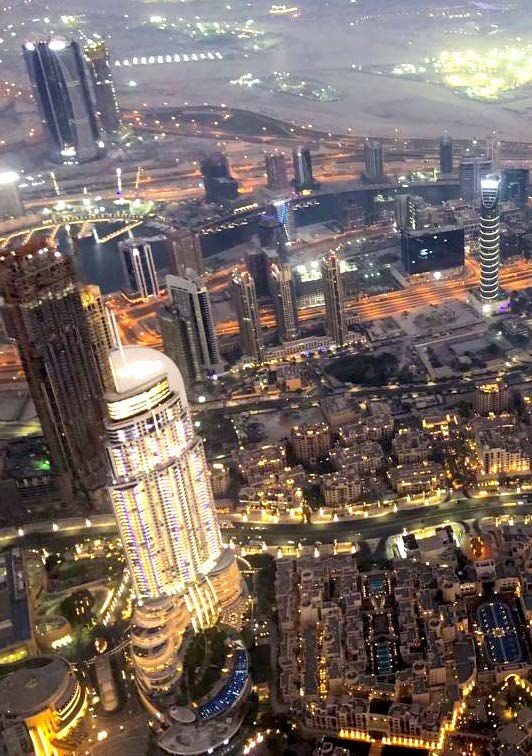
The emirate Dubai, comprising more than three million inhabitants, is the place of business for many small-scale companies
at the same time, particularly regarding the processing industry and the trading and real estate sector. Thanks to its
geographical location with a state-of-the-art infrastructure on an extremely high level, Dubai has managed to develop to a
financial and commercial center between Europa, Africa and Asia. Furthermore, it has evolved into a global hub owing to
its international airports “Dubai International” and “Al-Maktoum International Airport”. in preparation for the Expo 2020,
the development of numerous infrastructure projects has already begun.

Abu Dhabi, which was once crossed by the caravans, is the largest emirate of the UAE in terms of surface area. Now, it
has developed into one of the most modern cities on a global scale with a partly futuristic charm in a minimum of time.
Additionally, it has become a popular travel destination for high-end tourists (art, cultural exhibitions and architecture).
Due to its large amount of mineral oil being exported, it is the richest emirate in the UAE. However, there is a high interest
in diversifying the economy in order to become less dependent on the export of mineral oil in the long run. For this purpose,
various economic plans have already been worked up, such as “Stadtentwicklung 2030 (City Development 2030). There is
a strong emphasis on the sectors of tourism, real estate, trade and infrastructure development in particular.

             Form of government              Federal constitutional monarchy

                                             Abu Dhabi, Dubai, Ajman, Sharjah, Umm al-Quwain,
             Seven emirates
                                             Ras al-Khaimah, Fujairah
             President of the UAE
                                             Sheik Khalifa bin Zayed Al Nahyan
             (monarch of Abu Dhabi)
             Prime Minister
                                             Sheik Mohammed bin Rashid Al Maktoum
             (emir of Dubai)

                                                                                                                           2
National holiday                 2. December

             Capital                          Abu Dhabi (concurrently seat of the government of the UAE)

             Location                         Arab peninsula (South East)

                                              Tropical climate (humid and hot at the coast during summer).
             Climate
                                              Very dry and hot in the center of the country.

             Surface (km2)                    83,600 (comparison Germany: 357,386)

                                              Around 10 million (comparison Germany: 82.8 Mio.) with
             Population                       a high percentage of foreigners (the percentage of
                                              natives is approx. 12 %).
             Percentage of population
                                              Around 34.5 %
             below 25

             Business language                Arab, English

             Official language                Arab (fifth-most-spoken language worldwide)

             Currency                         UAE dirham

             Gross Domestic Product           USD 382.6 billion (comparison Germany: EUR 3.28 trillion)

             Economic growth                  2.9 % (Estimate 2018)

             Inflation rate                   3.5 % (Estimate 2018)

             Unemployment rate                1.8 %

             Illiteracy rate                  6.2 %

             Internet users                   95 % of the population

PRIVATE PUBLIC PARTNERSHIP (PPP)
         The significance of PPP projects has risen in the last few years. This particularly applies to investments
         within the sectors of transport infrastructure and power supply. The construction of the world’s
         largest waste incineration plant in Dubai, the “Dubai Mega Waste-to-Energy Plant”, is one of the most
         important PPP projects. Just like the metro project “Dubai’s Route 2020”, it is intended to be finished
         before Expo 2020.

DOUBLE TAX TREATY WITH GERMANY
        Effective since 14. July 2011.

INVESTMENT PROTECTION TREATY WITH GERMANY
        Effective since 2. July 1999.

             Ease of Doing Business           Rank 11 of 190 countries

             Corruption Perceptions
                                              Rank 21 of 180 countries
             Index 2017

             Hermes country category          Risk category 2

                                                                                                                      3
–– Industry
–– Transport
–– Logistics
–– Trade
–– Hotel
Important sectors for –– Gastronomy
investors –– Tourism
–– Financial services
–– Construction (real estate)
–– Healthcare
–– Communication
–– Technologies regarding renewable energies
–– China
–– USA
Main supplying countries
–– India
–– Germany
–– India
–– Iran
–– Japan
Main buyer countries –– China
–– Oman
–– Switzerland
–– South Korea
–– Vehicles
–– Motorised vehicles and parts
German export products –– Machinery
–– Chemical products
–– Electrical engineering and electronics
–– Base metals (primarily)
–– Vehicles
–– Electrical engineering
–– Electronics
German import products –– Chemical products
–– Machinery
–– Basic materials (excluding fuel)
–– Motorized vehicles and parts
–– Textiles and clothing (to a minor extent)
Trading volume Germany
Around EUR 12 billion (Germany to USA: around EUR 172 billion)
to the UAE
German local companies Around 800 (according to Chamber of Commerce)
4WEAKNESSES / CHALLENGES
–– The development of oil prices
–– Too dependent on mineral oil and natural gas
–– High dependence on imports (e.g. machinery, plants, motorised vehicles, pharmaceuticals)
offers chances for German companies
–– The government intends to create more incentives for the native population concerning the
private sector.
–– The implementation of the Value Added Tax increases the price of the products and services.
This has affected the consumption behavior.
–– Geopolitical tensions could affect the economic framework conditions.
–– The government aims to diversify and internationalize the economy.
ADVANTAGES / MARKET CHANCES
–– Excellent industrial infrastructure, e.g. in the sectors of transport, logistics, water disposal and
wastewater disposal
–– Growing activities in the development of infrastructure prior to the Expo 2020
–– Oil wealth of Abu Dhabi
–– Great market potential for new products
–– Diversification of electricity generation by means of renewable energies (energy strategy by
2030) and the consequent goal to make the UAE less dependent on oil revenues
–– General diversification of the economy, e.g. by expanding industry, trade and logistics as
well as tourism
–– Improve the awareness for an environment-friendly life
–– Belongs to the best educational market within the region of the Gulf Cooperation Council
MEMBERSHIP IN ECONOMIC AND INTERNATIONAL ALLIANCE
–– United Nations (UN) and special organizations of the UN
–– Organization of the Petroleum Exporting Countries (OPEC)
–– Organization of the Arab Petroleum Exporting Countries (OAPEC)
–– Pan-Arab Free Trade Area (PAFTA)
–– Gulf Cooperation Council (GCC)
–– International Renewable Energy Agency (IRENA)
–– International Organization of Arab States (League of Arab States)
–– Organization for Islamic Cooperation (OIC)
–– International Monetary Fund (IMF)
–– World Trade Organization (WTO)
–– World Health Organization (WHO)
MOST IMPORTANT MEDIA (ENGLISH)
–– The National
–– Khaleej Times
–– Gulf News
–– Financial TimesGRIT CAMPOS NAVE
Rödl & Partner
Taunus Tower
Mergenthalerallee 73-75
65760 Eschborn
Deutschland/Germany
T +49 6196 7611 4722
grit.camposnave@roedl.com
www.roedl.comYou can also read


