Sence Valley Forest Plan 2019 to 2028 - Forestry Commission Consultation Hub
←
→
Page content transcription
If your browser does not render page correctly, please read the page content below
Sence Valley
Forest Plan
2019 to 2028

               1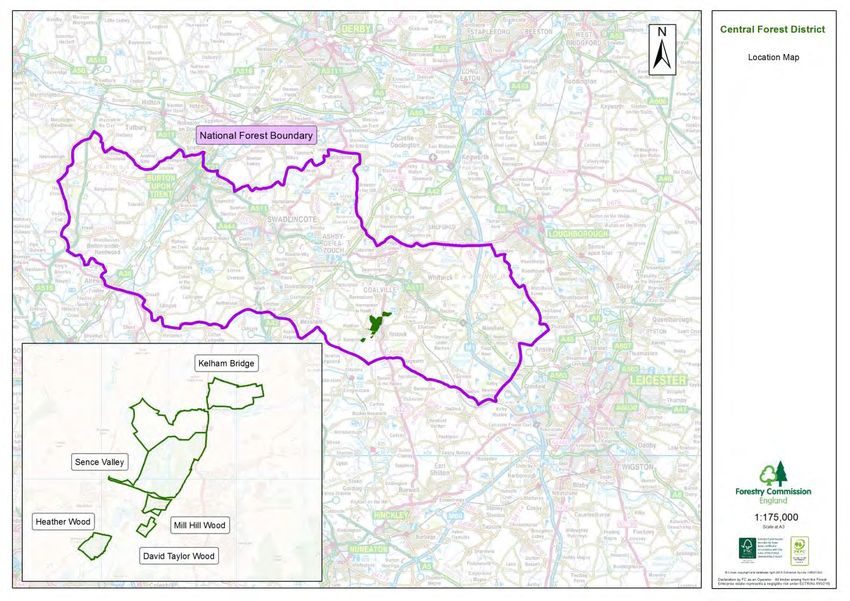
Sence Valley Forest Plan 2019 to 2029

                                           Summary

The Sence Valley Forest Plan (FP) summarises proposals by the Forestry Commission for
the management of Sence Valley (109.9ha), Kelham Bridge (26ha), Mill Hill Wood (7ha),
David Taylor Wood (3.5ha) and Heather Wood (10.9ha). The FP lies within Leicestershire
and South Derbyshire Coalfield landscape character area (LCA) which comprises of gently
undulating sequence of mudstones and sandstones with seatearths and coal seams, which
strongly influences both the physical and cultural patterns of the landscape. This is a
landscape in continuing transformation, in part assisted by the regeneration initiative of The
National Forest that covers most of the LCA.

Each of the woodlands in the FP have all been planting in the last 20 years as part of the
restoration of former open cast sites and all provide good access for local communitys.
Sence Valley is the key site and provides formal facilities for the public including car parks,
toilets and picnic areas. As part of the Forestry Commission Centenary celebrations that
take place in 2019 an additional 48ha of arable land has now been purchased on the
northside of Sence Valley increasing the Sence Valley site from 61.9ha to 109.9ha . The
new woodland will be planted in 2019 with a mixture of conifer and broadleaves to showcase
how sustainable forest management can be practiced and helps deliver an economically
valuable timber resources while also delivering social and environmental benefits for years
to come.

Principle management objectives for the FP will be to; diversify the species and age
structure to mitigate against the impacts of climate change, pests and disease; grow
sustainable commercial crops; manage and facilitate public access across all sites; conserve
the landscape and conservation value of the woodlands and manage the natural resources
to maintain soil and water quality.

                                                                                                  2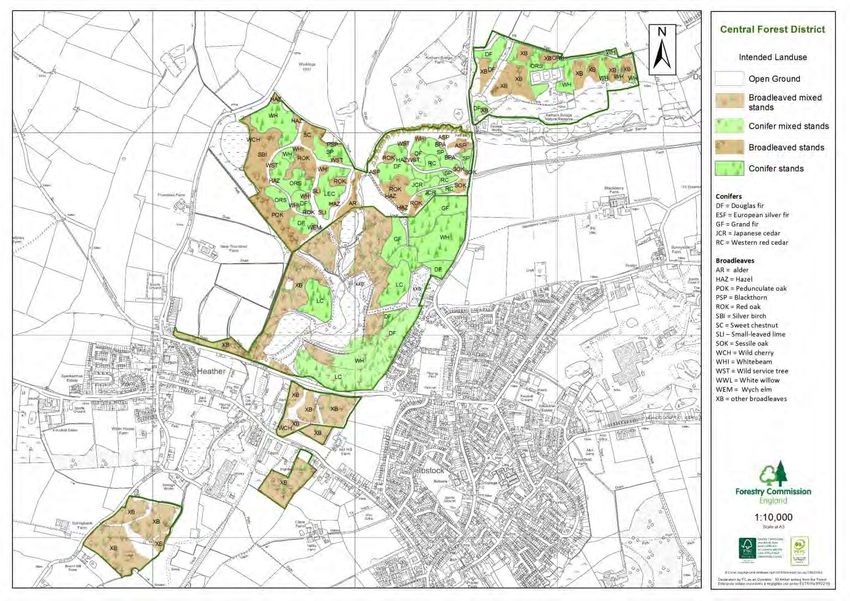
Sence Valley Forest Plan 2019 to 2029

Central Forest District - North Staffordshire Forest Plan
                                                                                  Maps

Contents:                                                              Page No.
                                                                                         Location Map                               12
      Summary                                                             1
                                                                                         Survey Data                                13
1.    What are Forest Plans?                                              4
                                                                                         Recreation and Conservation                14
A     Application for Forest Plan Approval
                                                                                         Current Species                            15
2.    Management Objectives                                               5
                                                                                         Concept Map                                16
2.1   Environment                                                         6
                                                                                         Silvicultural Systems                      17
2.2   Economic
                                                                                         Felling Map                                18
      Pic.1 Hobby bird of prey seen within the woodlands
                                                                                         Intended Landuse                           19
      Pic.2 Gatekeeper butterfly recorded in the woodlands
                                                                                         Sence Valley new planting 2020 and 2060    20
      Pic.3 Logs stacked in the forest following thinning operations
                                                                                         Sence Valley and Mill Hill 2020 and 2060   21
      Pic.4 Landscape view of the Corscian pine dominating the            7
      upper slopes at Sence Valley.
                                                                                         Appendix I— Terms of Reference             21
2.3   Social
                                                                                         Appendix II—Glossary                       24
      Pic.5 Visitors using motorised wheel chair on forest paths
      Pic.6 Children cycling in Sence Valley
      Pic.7 Families using the picnic facilities
3.    Intended Landuse                                                    8
      Fig 8. Mature Douglas firs with an understory of regeneration

      Fig. 9 Douglas fir cones

      Fig.10 Red oak leaves with autmn colour

      Table 1. Sence Valley Forest Plan Contribution

      towards the Central District Commitments to UWAS and UKFS

4.    Consultees                                                          9
5.    Meeting and Monitoring Management Objectives                        10

                                                                                                                                                3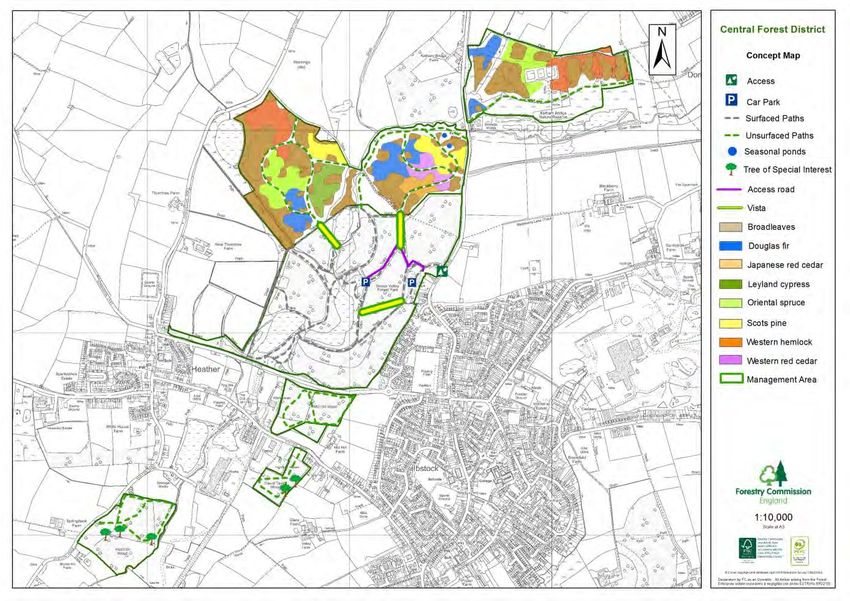
Sence Valley Forest Plan 2019 to 2029
1. What are Forest Plans? A Application for Forest Plan Approval
Forest Plans are produced by us, the Forestry Commission (FC), as a means of
communicating our management intentions to a range of stakeholders. They aim to fulfil a i Plan Area Identification:
number of objectives:
Forest District: Central Forest District
To provide descriptions of our woodlands to show what they are like now.
Beat: National Forest & North Staffordshire
To explain the process we go through in deciding what is best for the woodlands’ long-
Name: Sence Valley Forest Plan
term future.
Nearest Town: Ibstock
To show what we intend the woodlands to look like in the future.
OS Grid Reference: Sence Valley SK 3998 1124
To detail our management proposals, for the first ten years so we can seek approval
Kelham Bridge SK 4092 1224
from the statutory regulators.
Mill Hill Wood SK 3981 1060
We have produced this draft plan to illustrate our management proposals thereby creating David Taylor Wood SK 3967 1026
an opportunity for you to comment on the plan, whether you are a user, a neighbour or a Heather Wood
member of one of the many stakeholder groups that have an interest in the woodlands.
Information on how to get your comments to us is on our webpage. Local Planning Authority Leicestershire
This plan does not set out the detailed yearly management operations for each small piece
ii Designations:
of a wood, known as a coupe*. It is not possible to say which year a particular operation will
take place, but we can say in which five-year period it should happen. Secondary Woodland*, National Forest* and lies in the Leicestershire and South
Derbyshire Coal—National Character Area Profiles No.71.
All tree felling in the UK is regulated and a licence is required before trees can be felled; the iii Date of Commencement of Plan
scale of tree felling in Central England Forest District, which this plan forms part of, is such As soon as possible once approved.
that the Forest Plan is the best mechanism for applying for this licence. Responsibility for
checking that the plan meets all the relevant standards and statutes lies with another part of Area (ha) Conifers Broadleaves
the FC (Forest Services). If all the criteria are met, full approval is given for the management Felling 0.5 0.2
operations in the first ten years (2019 - 2028) and outline approval for the medium term
Restocking and new 29.2 16.5
vision (2028 - 2067). The plan will be reviewed after the first five years (2023) to assess if
planting
the objectives are being achieved.
We use some technical words and phrases in the text because they best describe what we
are doing. There is a glossary at the back of the plan (Appendix II) with some commonly
NB - All above figure’s refer to the gross area and excludes thinning operations that
used technical forestry terms and abbreviations. These technical words are identified
take place on a 5 year cycle in conifers and 10 year cycle in broadleaves.
throughout the plan with an asterisk *.
4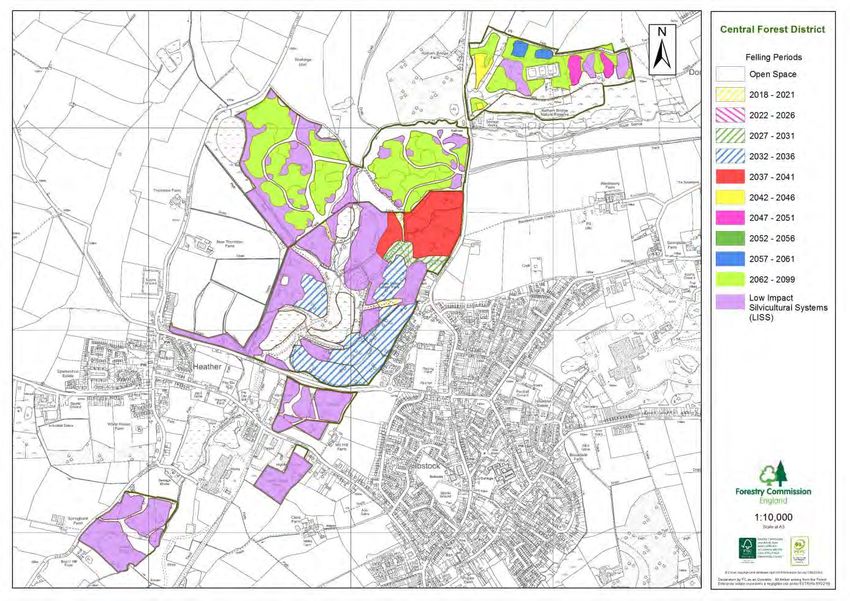
Sence Valley Forest Plan 2019 to 2029

        Total clear fell area 0.7ha                                                                2. Management Objectives
        Forest Plan maps are attached
                                                                                                         Protecting and Expanding England’s Forests and Woodlands and Increasing their
In addition to the above felling 74ha will be managed using Low Impact Felling Silvicultural                                       Value to Society and the Environment
Systems (LISS). This will be done through the removal of single and small groups of trees,
removing no more than 40% of the stems within any single management unit/compartment
over the plan period. This operation will include; provide sufficient light to boost growth of
understorey and ground flora, allow adequate space for the development of crowns and
stem form for quality timber and accelerate individual tree growth.                                                        Select suitable species and
                                                                                                                           appropriate silvicultural             Maintain existing
                                                                                                                           techniques to regenerate              public access and
I apply for Forest Plan approval for the area described above and in the enclosed Forest                                   (either naturally or through          enhance where possible.
Plan.                                                                                                                      planting) commercially
                                                                                                                           productive forests.
I undertake to obtain any permission necessary for the implementation of the approved plan.
                                                                                                           Ensure stands       Create new woodland and secondary
                                                                                                           are more            woodland habitats to meet economic,
Signed ……………………………                        Approved …………………………                                              structurally and    environmental and social objectives.
                                                                                                           species diverse
                                                                                                            making them more resilient to        Sympathetically designed and
          FDM                                                                                                 the impacts from climate           appropriately scaled interventions to
                                                                                                                 change, pests and disease.      improve and maintain the visual
                                                                                                                                                 integration of the forest into the
District …..………………………..                   Conservancy ……………………….
                                                                                                                              Manage wetland
                                                                                                                              habitats and open space          Conserve TSIs and
Date     ……………………………                      Date        …………………………                                                                                               recruit future veteran
                                                                                                                              for the benefit of wildlife
                                                                                                                                                               trees and increase
                                                                                                                              and nature conservation.         deadwood habitat.
All of our forests and woodlands in this Forest District are certified by the Forest Stewardship
Council ® (FSC®) and the Programme for the Endorsement of Forest Certification™
(PEFC™). All Forestry Commission forests and woods are independently certified as
sustainably managed, to continue to benefit future generations.

                                                                                                   NB—Management objectives arise from the Terms of Reference (Appendix I) written at the outset of each plan
                                                                                                   by the senior district management staff, beat team and planner.

                                                                                                                                                                                                                5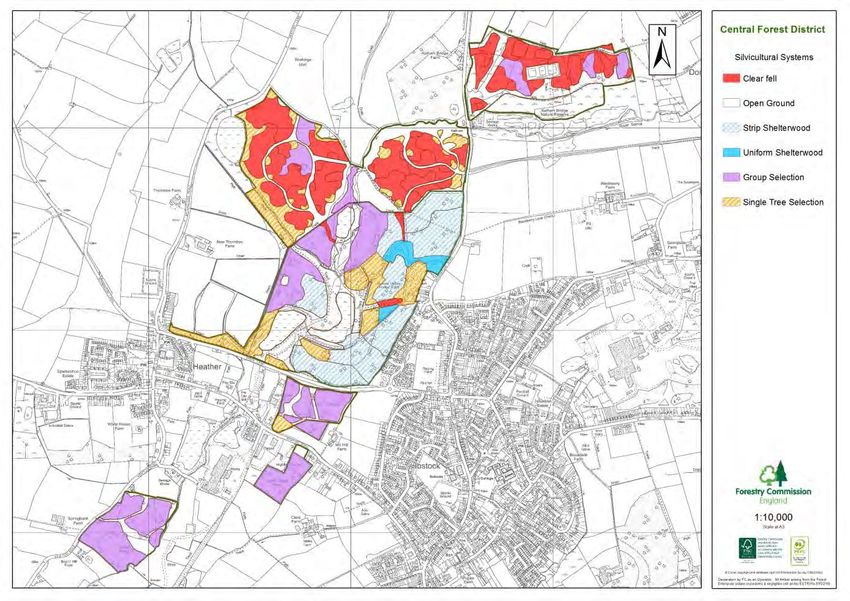
Sence Valley Forest Plan 2019 to 2029                                                                        Sence Valley Forest Plan 2019 to 2029

2.1       Environmental                                                                                Deadwood habitat and Trees of Special Interest (TSI) are limited in these young woodlands
The design plan area comprises new woodlands planted on former open cast and arable                    and the Forestry Commission will, when operations are carried out, retain trees beyond their
sites that have over the last 20 years become fully established. The original design                   economic rotation to increase the available deadwood and TSI where it is safe to do so.
incorporated a mixture of conifer and broadleaved woodlands, open grassland and wetland
habitats. The design of each woodland provides a nice                                                  Woody vegetation along the banks of the River Sence and around the lakes will be cut
mosaic of habitats, and despite being busy sites                                                       periodically to ensure they remain open with some individual and small groups of trees.
attracting many visitors, there are still areas left                                                   Within the new woodland a riparian woodland will be created along the modified ditch that
undisturbed for wildlife. The grassland and wetland                                                    runs parallel to the western boundary. This area will be planted with alder, aspen and oak.
habitats have attracted a wide variety of birds and                                                    Opportunities to renaturalise the stream will be explored in conjunction with Environment
Lepidoptera and the woodlands provide nesting sites and                                                Agency which will help slow the flow of water into the River Sence. In the eastern area of
cover. Grassland habitats are being actively managed                                                   the new planting a naturally wet area will be managed to create two seasonal ponds and
through a varied cutting programme that has created a                                                  provide additional wetland habitats between the lakes in Sence Valley and the wetland
variety of grassland swards suitable for the feeding,                                                  habitats in Kelham Bridge Natural Reserve.
breeding and nesting habitats for a variety of bird
species. In 2008 an artificial sand martin wall was                                                    2.2 Economic
installed on the edge of the Horseshoe lake in Sence
Valley and this has been used successfully by breeding                                                 The new woodland area to be planted has been designed and species have been selected
pairs each year. Otters have been sighted in the                  Pic.1 Hobby feeding locally          to ensure that the woodland can produce quality timber products. Forestry operations
River Sence which runs through Kelham Bridge, Sence Valley and Heather Wood. Future                    across each of the woodland areas have been carefully planned to ensure they can be
management operations will ensure that the timing and scale of any felling operations                  carried out sustainably and generate a valuable timber resource. The timing and scale of
stabilises the soils and does not lead to siltation of the lakes or river.                             operations will take into account the social and
                                                                                                       environmental management objectives,
39.8 ha of new woodland will be planted in 2019 and this will incorporate a wide variety of            diversify the internal landscape and create
native and non-native species planted at varying density. This will create a more diverse              transitional open space for wildlife. The
woodland habitat as the woodland becomes established. The new woodland will also                       existing woodlands are now reaching an age
                                                       incorporate 8.2ha of open space and 6.8km       where the first thinning operations are due to
                                                       of woodland edge habitat which will             take place and all areas will be thinned in the
                                                       increase the available habitat further still.   next 10 years.
                                                       The size and distribution of planting                                                              Pic.3 Logs stacked ready for collection
                                                       patterns in the new woodland intersected
                                                                                                       The Corsican pine stands are now being affected by Dothistroma needle bight (DNB)* which
                                                       by open areas will provide a wide variety of
                                                                                                       has reduced the yields. DNB causing the trees to shed needles each year, gradually
                                                       habitats which it is hoped will allow
                                                                                                       weakening the trees and will in some cases may kill the trees. To counter the effect of        6
                                                       associated species to become more widely
distributed.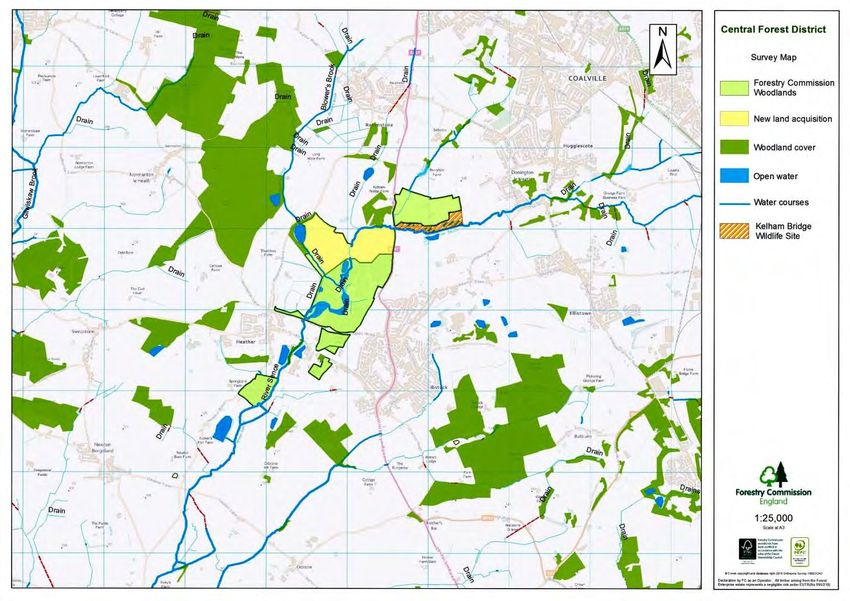
Sence Valley Forest Plan 2019 to 2029

the DNB the Corsican pine stands will be thinned and rows of trees removed. This will               As part of the Forestry Commission Centenary
increase aeration in the crowns of the trees reducing the damp conditions where the fungus          celebration that takes place in 2019 a new woodland
spreads rapidly and create space for underplanting. The underplanting will allow the site to        will be planted that has been designed to enhance the
be managed productively again while the phased removal of the Corsican pine take place.             visitor experience on the site. A new path running
                                                                                                    parallel to the River Sence will be created and lined
                                                                                                    with an avenue of cherry trees that will be set in an
                                                                                                    open 30-40m wide open glade. Five species of cherry
                                                                                                    have been chosen which will be planted along the            Pic.5 Easy access trails
                                                                                                    avenue with flowering seasons from April through till October each year.

Pic 4. Corsican pine stands dominate the upper slopes of Sence Valley
                                                                                                                                            Within the new woodland 24 species of trees will be
The underplanting will help lessen the impact on the landscape when the final phase of pine
                                                                                                                                            planted and these have been chosen for their distinct
removal takes place as the 60% of the area will already have been restocked and the
                                                                                                                                            character, shape, colour and form (see Intended
conifers fully established. Corsican pine stands will be removed in 3 phases over the next
                                                                                                                                            landuse map). Each species will be planted in single
15-20 years with the weakest trees being removed first. The four species selected to
                                                                                                                                            species groups so as to emphasis their colour and
restock the pine stands have been chosen to make the woodlands more resilient to future
                                                                                                                                            texture of the bark, leaves and needles. The size,
impacts from climate change, pests and disease.
                                                                                                                                            shape and distance between the groups has been
The mixed broadleaved stands are being affected by Ash die back which will kill the young            Pic.6 Cycle routes are promoted        scaled so that the public moving through the
ash trees and prevent them from ever reaching a size which would generate revenue. To               woodland on foot will experience a diverse woodland which will provide a distinct sensory
counter this, group felling will be used to remove the ash and the areas replanted with             experience created by the group planting.
alternative broadleaved and conifer species.

The Forestry Commission is currently working with a local business who operates a pre               A ranger service is provided for the woodlands by the Forestry Commission and they co-
school nursery on site and the Forestry Commission will continue to look for opportunities to       ordinate a variety of activities and events each year to help the public get involved. There is
work with other organisations and user groups to deliver a wider range of public services that      also a well established group of volunteers who, working with the rangers, help maintain the
may in the future generate income and employment in the local area.                                 site, improve conservation areas and access routes. As part of the Centenary Celebration a
                                                                                                    number of additional activities and events will take
                                                                                                    place and these will be promoted locally and on the
2.3 Social
                                                                                                    Forestry Commissions website.
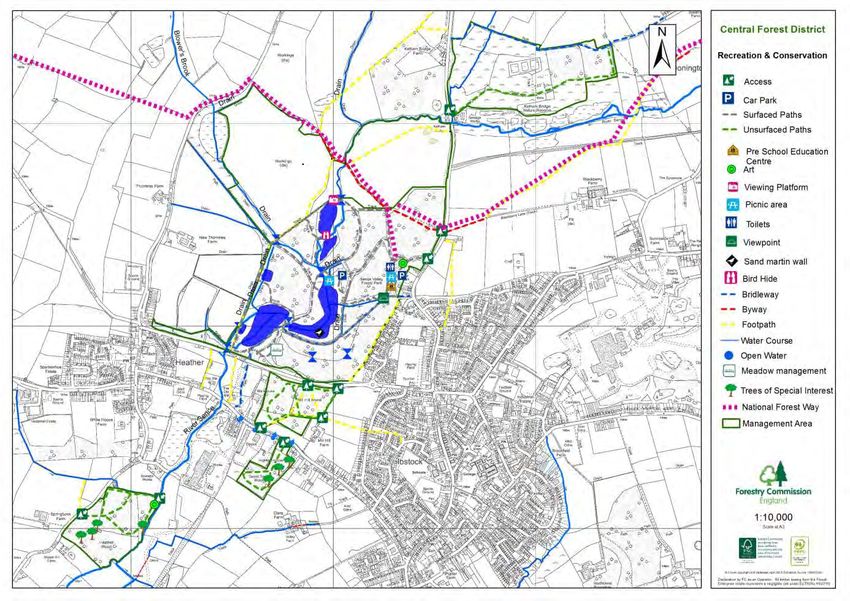
Each of the woodlands has been designed with a network of paths and trails for the local
community to gain easy access across each of the sites which link into the network of public
rights of way in the local countryside. Sence Valley is the key site within the design plan
area and provides with a wide variety of facilities which include, car parks, toilets, bird hide,
viewing platform, art works, picnic areas, view points, seating and waymarked trails. The                                                                   Pic.7 Picnic facilities in Sence Valley   7

other woodlands are more informal with well managed trails and occasional seating areas.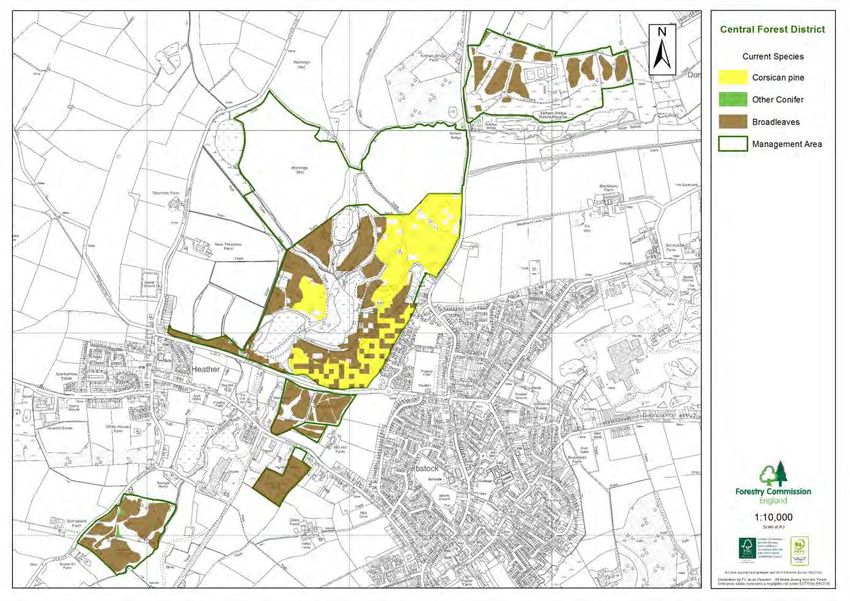
Sence Valley Forest Plan 2019 to 2029

                                                                                               Rabbit, hares and muntjac deer are known to be resident in the area and fences will be used
3.   Intended Landuse                                                                          in the new woodland to protect the young trees from damage. Underplanting within the
The current landuse within the established woodland sites will remain largely unchanged        existing woodland will not be fenced off and the Forestry Commissions ranger services will
with the percentage of areas managed as open space, wetland habitats and woodlands             monitor and control mammal damage as necessary. When restocking takes place trees will
remaining unchanged. The longterm objectives within the woodland areas will be for the         be planted at a stocking density of between 2,800 to 4,000 stems / ha depending on each
production of commercial timber from both the broadleaves and conifer crops and this will be   species preferred habitat requirements
extended to the new woodland being planted in 2019.
                                                                                               Table 1 shows how the woodlands contribution to the whole of the Central Districts
                                                                                               compliance against UKWAS, PEFC and UK Forest Standard. No natural reserves will be
                                                                                               designated in this FP due to the small size of each woodland and their urban setting. As the
                                                                                               woodlands develop areas will be retained beyond the economic age as long term retentions
                                                                                               that will provide future Trees of Special Interest (TSI), deadwood habitat and a more diverse
                                                                                               habitat for wildlife.

                                                                                               Table.1 Sence Valley Forest Plan Contribution towards the Central District and

                                                                                                         commitments to UWAS and UKFS

                                                                                                                             Forest Plan    Forest Plan   Forest District Forest District
                                                                                                                                Area        Percentage        Area         Percentage
Pic. 8 & 9. Douglas fir trees and cones
The most significant habitat changes to be seen will be through the removal of Corsican pine      Total Area                    157.3           100          28,170            100
that dominate Sence Valley and its replacement through underplanting with Douglas fir,            Total Wooded Area              106           67.3          23,859            84.6
Lawson cypress, Western hemlock and Grand fir. The introduction of 4 species previously
                                                                                                  Open Habitat (>10%)           51.3           32.7           4,311            15.3
occupied by just one will help diversify the woodland structure and make the woodland more
                                                                                                  Natural Reserves - Plan-
resilient to climate change, pests and disease.                                                                                   0              0             171              1.4
                                                                                                  tation (1%)
                                       A more subtle change will occur in the broadleaves         Natural Reserves - Semi
                                                                                                                                  0              0             396              3.3
                                                                                                  Natural (5%)
                                       stands where the ash trees will be removed and
                                                                                                  Longterm Retentions &
                                       replaced with conifers and oak. As the ash is planted
                                                                                                  Low Impact Silvicultural       74            69.8          14,474            60.8
                                       in small groups its removal will be less apparent and      Systems (>1%)
                                       as the mixed broadleaved stands are thinned and            Area of Conservation
                                       restructured the loss of the ash will not have a           Value (>15%) including
                                                                                                                                 63             40           15,152            53.9
                                                                                                  designations, PAWS,
                                       significant impact on the internal landscape or            AW, ASNW, NR, LTR
                                       woodland microclimate.
Pic 10. Red oak autumn colour                                                                                                                                                                  8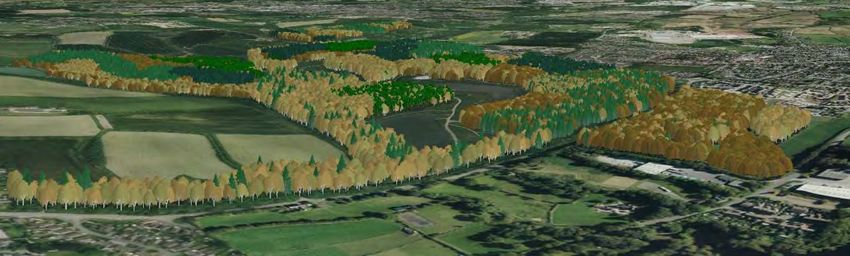
Sence Valley Forest Plan 2019 to 2029

4.     Consultees

     The consultation undertaken in the preparation of this plan has been wide ranging and extensive. Full documentation including letters, notes of conversations etc. are held at our District
                                                                                            Offices.

                 Consultee                     Date Contacted         Date Response                         Issues Raised                                   Forest District Response to Issues
                                                                        Received

 As part of the local consultation a public drop in day was held at Sence Valley on the 23rd October 2018, 10 stakeholders were contacted, notices placed on site, copies of the plan placed in; Ashby de la
 Zouch reference librarie and on the FC website. Comments received and the Forestry Commission’s responses will be recorded above.

                                                                                                                                                                                                               9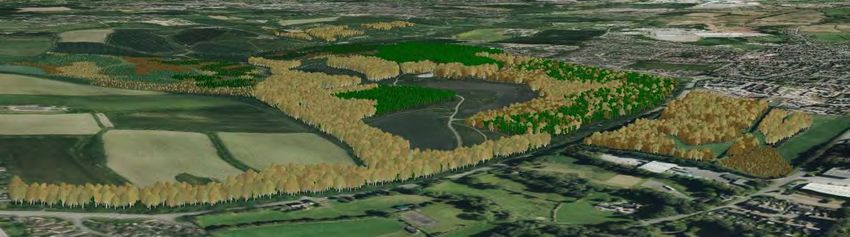
Sence Valley Forest Plan 2019 to 2029
6. Meeting and Monitoring Management Objectives
National Strategy District Strategy Forest Plan Objective Monitoring
Economic: Adapting our management practices to suit Initiate a structured and sustained programme This will be reviewed annualy and any
the character and requirements of local of clearfell and thinning to include changes recorded in the sub compartment
Maintain the land within our stewardship woodlands whilst satisfying national infrastructure requirements. data base.
under UKWAS certification, standards and business requirements.
Select suitable species and appropriate Planting stock will be recorded in the sub
Improve the economic resilience of our We will use the opportunity presented by silvicultural techniques to regenerate (either compartment data base including the
woods and forests, additional, unscheduled clear felling as a naturally or through planting) commercially providence and origin of the seed stock.
result of disease control to accelerate the productive forests. Underplanting growth rates will be monitored
Encourage and support business activity diversification of both conifer and broadleaf annually.
on and around the Estate. species appropriate to each local area and Ensure stands are more structurally and
site type, and in some areas trialling species species diverse making them more resilient to Reviewed every 10 years as part of the
which may not have been previously planted the impacts from climate change, pests and design plan renewal.
in forest conditions, using a range of disease.
silvicultural systems.
Nature: Adapting more sensitive timber harvesting Employ a variety of silvicultural techniques to Reviewed every 10 years as part of the
arrangements and adopting recent FC maintain soil structure, stability and site design plan renewal.
Improve the resilience of the natural guidance on forest operations to reduce the infrastructure.
environment of the Estate under our impact of forest operations on soils and
Stewardship, ground vegetation on sensitive sites. Identify existing locations of TSIs and Recorded on the conservation data base and
demonstrate appropriate management to reviewed every 10 years as part of the
Realise the potential of the Public Forest Contributing to and undertaking control recruit future veteran trees and increase the design plan renewal.
Estate for nature and wildlife, programmes to limit the impact of deer and volume and distribution of deadwood.
other species on woodland habitats in order
Maintain and improve the cultural and to reduce the adverse impacts of grazing and
heritage value of the Estate. disturbance to native habitats and their flora Recognise the significance of FC land holding Monitored by the beat team and ecologists
and Fauna. and management in relation to the water when operational plans are written fo rworks
catchment area. on or adjacent to water.
Where possible, work with interested parties
to explore ways to maintain or improve
features of cultural or heritage value to the Management operations will be planned to Monitored by the ecologists and wildlife
local community. take into account the habitat requirements of rangers annually and when operational plans
European protected species associated with are written.
Forestry Commission land.
10Sence Valley Forest Plan 2019 to 2029
6. Meeting and Monitoring Management Objectives (continued)
National Strategy District Strategy Forest Plan Objective Monitoring
People: Provide safe and accessible woodlands. Expand the areas of open woodland and No monitoring required.
Encourage communities to become Offering opportunities for quiet recreation and network of access routes for the public and
involved in the Estate, its management adventurous activities, to enable people to links into the surrounding countryside.
and direction, experience the potential health and wellbeing
benefits. Continue to work with local businesses to No monitoring required.
Provide high quality woodland-based provide a wider range of services and
recreational opportunities for people and Encouraging third party environmental facilities on site.
business, educators and other partners to offer learning
opportunities on the public forest estate. Continue to develop and run a programme of
Enable everyone, everywhere to connect events and activities for the Sence Valley Monitored by the beat team annually when
with the nations’ trees and forests so that they write their events programme.
volunteer group and members of the public
they understand their importance and act
positively to safeguard forests for the
future.
11Sence Valley Forest Plan 2019 to 2029
Sence Valley Forest Plan
lies in a post industrial
landscape which is now
being transformed as part
of The Na onal Forest
a er decades of coal
mining, clay and gravel
extracti n into a green
woodland landscape.
Sence Valley Forest Plan
comprises of 5 new
woodlands which were all
planted in the last 20
years and are popular
with local residents for
walks, picnics and bird
watching.
An addi onal 48ha of land
has now been purchased
adjacent to Sence Valley
to further expand the
woodland habitat and
increase pubic access.
The new woodland area
will include an avenue of
cherry trees planted to
commemorate the
Forestry Commission
Centenary in 2019.
12Sence Valley Forest Plan 2019 to 2029
Leicestershire & Rutland Wildlife Trust manage
Kelham Bridge Wildlife Site Nature Reserve
which has in places diverted the River Sence to
form meanders and small areas of ooding. The
Forestry Commission is managing its open
grassland habitat adjacent to the Nature Reserve
in order to create favourable habitat and cover
for some of the 100 species of birds, 16 species
New Na onal Forest woodlands of dragonfly nd 19 species of bu er y that have
dominate the local landscape been recorded on the site.
and the new land acquisi on will
bring Sence Valley closer to the
Queen Elizabeth Diamond Jubilee
Woodlands in the west and
Kelham Bridge in the east.
Sence Valley’s three major lakes
act as silt traps for the River
Sence and provide a wide range
of ecological habitats.
Sence Valley was a former open cast colliery
that covered 186ha. This closed in 1996 and
tree plan ng began in 1998 on 61.9ha. The
soils on both the existi g and new land
acquisiti n are manmade with low fer lity.
13Sence Valley Forest Plan 2019 to 2029
The existi g woodlands have a good
network of paths that are all well used by
local residents and visitors. The extensive
network of Public Rights of Way provide
important links between sites and
neighbouring Na onal Forest woodlands.
The woodlands each provide a wide Sence Valley is the most developed site with
variety of secondary woodland habitats regards public facili es. It has 2 car parks,
that are managed though a varied cu ng toilets, surfaced trails, art work, picnic
programme which has a racted a wide faciliti s and a bird hide. Working with local
variety of dragonfly nd bu er y. businesses a Pre School Nursery now have
faciliti s on the site and they u lise the
The young woodlands have now become forest as part of the services they provide to
fully established and a programme of families and children.
thinning will be undertaken in 2018/19
to open up the stands and provide space
for the trees to mature.
Over 100 different bird species have been
identified in the woodlands and the
wetland habitats including Water Rail,
Grasshopper Warbler, Sedge Warbler,
Reed Warbler, Li le Ringed Plover,
Peregrine. Wigeon, Gadwall. Shoveler.
Teal. Great Crested Grebe, Li le Grebe,
Kingfis er and buzzard have all been seen.
Within Heather Wood and David Taylor Wood
there are a few remaining old broadleaves.
These will be retained in perpetuity for
biodiversity which will provide deadwood,
nesting and feeding habitats not found 14
elsewhere in the young woodlands.Sence Valley Forest Plan 2019 to 2029
The patchwork of colours represents the
percentage of each species within mixed
crops. The spa al representa on does not
refl ct the positi n on the ground of each
species, simply the overall woodland
Sence Valley is planted with Corsican
pine and a variety of broadleaves. Pine
dominates the upper slopes and
broadleaves the lower valley bo om
around the lakes.
The Corsican pine has become infected
with Dothistroma needle blight (DNB) a
disease which causes the needles to turn
red and drop, significa tly reducing
mber yields and eventually leading to
the death of the tree.
The broadleaved stands in all of the woodlands are
planted with a mixture of species planted in small
groups. Oak, ash, poplar, cherry, eld maple,
willow, birch and alder are the key species with the
long term objec ve of oak and ash being the climax
top canopy species.
A disease known as ash die back (Hymenoscyphus
fraxineus) has now spread across the Bri sh
countryside in the last decade and is affe ng the
ash trees within the Sence Valley FP. Once infected
the young ash trees will usually be dead within a
short me scale.
15Sence Valley Forest Plan 2019 to 2029
The public footpath will be
Within the new land acquisition a diverted to run parallel to the
network of paths will provide access River Sence and planted with
for the public and two new seasonal an avenue of cherry trees in
ponds will be created for wildlife. celebration of the Forestry
Commission Centenary.
The new woodland will be planted with
a mixture of species to create varying
patterns of colour and texture for
visitors throughout the year. Conifers
will dominate but be interspersed with Tree planting will be extended at
blocks of broadleaves which will Kelham Bridge with the introduction of
diversify the available woodland conifers around the broadleaved
habitat and cover for wildlife. stands. The open habitat adjacent to
the Wildlife Trust site will be left open.
Within the current mixed broadleaved
stands the dead and dying ash will be
removed and replanted with groups of
broadleaves and conifers which will provide
additional cover for wildlife throughout the
winter months and provide greater diversity A new pedestrian access route off the
in planting age structure. top car park will be created on a
surfaced path providing a better link to
the view points over the lakes and easier
access into Sence Valley Forest Park.
Sightlines along key access routes
from the upper car park and paths
linking onto the new planting site will
be opened up by removing trees and
periodic cutting of vegetation. Underplanting will take place
adjacent to the access road and
between the bridleway and vista to
create an improved aesthetic as the
existing Corsican pine has lost a
large proportion of its needles.
Trees of Special Interest will be
retained in perpetuity to provide
diversity and increase the
16
availability of deadwood habitats.Sence Valley Forest Plan 2019 to 2029
A clearfell and restocking system will
be the dominant system used to
managed the new and future conifer
stands. Crops will be grown until they
reach market diameter or height and
then felled in one operation before
being replanted.
Uniform shelterwood systems will be used to
Single tree selection systems will remove the Corsican pine in two operations.
be used in areas of high landscape Firstly the Corsican pine will be thinned heavily
importance, and riparian zones. to allow sufficient light to the forest floor for the
Future felling's will be designed to area to be underplanted with shade tolerant
diversify the stand structure and conifers. The Corsican pine will be then
provide room for regeneration to removed in a second phase of felling once the
become fully established and the underplanting has become fully established.
crowns develop fully.
The majority of Corsican pine stands will
be managed under a strip shelterwood
system where rows of pine are felled in
3 phases and the felled row replanted
with alternative conifers. The phased
removal of the pine will take place in the
next 15 to 20 years.
The mixed broadleaved stands will favour a group
selection felling system where groups of trees are
felled to allow natural regeneration to become fully
established or restocking to take place. The size and
shape of group felling will be varied and based on the
light requirements of the trees to be planted.
17Sence Valley Forest Plan 2019 to 2029
The new conifer and broadleaves
planted in the northern half of
Sence Valley will be managed on a
50–85 year rotation. These stands
will be thinned once the trees reach
18-20 years but no clearfells are
planned in the next 50 years.
Small clearfells are planned for
Kelmam Bridge but these will not
begin for another 25 years and be
phased in over the next 25-50 years.
3 small clearings will be created where
selected trees will be removed to open
up the views over Sence Valley and
the centenary woodland planting.
The felling periods highlighted for
the Corsican pine stands depict the
time period when the last of the
Corsican pine will be removed,
2027-31 & 2032-37. The Corsican
pine will be removed in 2 or 3
phases with the areas cleared
being underplanted with evergreen
conifers so by the time the last of
the Corsican pine is finally removed
the understory will be well
developed 2+ meters tall.
In addition to the proposed felling
operation the conifer stands will be
thinned every 5 years and the
broadleaves every 10 years.
18Sence Valley Forest Plan 2019 to 2029
In celebration of the Forestry Commission
Centenary an avenue of cherry trees will be
planted along the public footpath that runs
parallel to the River Sence.
The conifer stands will be planted
with a mixture of species that have
been selected to maximise timber
yields and reduce the impact of
climate change, pests and disease.
The planting patterns and species
selected for the new land acquisition
have been chosen to create a varied
Within Sence Valley the broadleaved pattern of colour and texture Conifers
stands around the lakes will be managed to throughout the year. This will DF = Douglas fir
create a more diverse stand structure by GF = Grand fir
enhance the aesthetic value of the JCR = Japanese red
introducing some conifers species where woodland as the species planted in cedar
openings are created when infected ash is single species groups will change RC = Wester red cedar
removed allowing a more mixed every 50-100m. Enhancing further LC = Lawsons cypress
broadleaved/conifer crop to develop. The still the variation in shape, form and LEC = Leyland cypress
areas of conifers will not exceed 20% of the ORS = Oriental spruce
characteristic of each species. SP = Scots pine
current broadleaved areas.
WH = Western hemlock
Broadleaves
ASP = Aspen
AR = Alder
HAZ = Hazel
The upper slopes of Sence Valley POK = Pedunculate oak
PSP = Blackthorn
will be restocked with conifers and ROK = Red oak
the existing broadleaves that have SBI = Birch
become established will be SC = Sweet chestnut
retained to form part of the next SLI = Small-leaved lime
rotation allowing a mixed stand to SOK = Sessile oak
WCH = Wild cherry
develop, dominated by conifers. WHI = Whitebeam
WST = Wild service tree
WEM = Which elm
XB = Mixed broadleaves
The young broadleaved stands in Mill Hill,
David Taylor and Heather Woods will be
managed longterm as broadleaved
woodlands. Some enrichment planting will
take place with evergreen conifers where the
ash dies but this will not exceed 20% of the
woodland area.
19Sence Valley Forest Plan 2019 to 2029
2020
In celebration of the Forestry Commission
Centenary an avenue of cherry trees has been
planted along the public footpath that runs
parallel to the River Sence and an additional
48ha of new woodland created.
The uniform stands of conifers and broadleaves
will be diversified in the next rotation allowing
more mixed stands to develop.
2060
The new woodland uses interlocking shapes to
ensure when future felling takes place, it
create’s a variety of transitional open space
and diversifies the internal landscape and
aesthetic value for visitors.
20Sence Valley Forest Plan 2019 to 2029
The new woodland planting has extended the existing
61.9ha of woodland in Sence Valley to 109.9ha. Corsican pine dominates the upper slopes and
2020 one block adjacent to the centre lakes.
Sence Valley woodlands around the lakes are
dominated by mixed broadleaves.
Mill Hill Wood has now become well
established with mixed broadleaves.
Corsican pine stands have been felled and replaced with a mixture
2060 of evergreen conifers which contain small groups of broadleaves.
Sence Valley Woodlands have matured and through
periodic felling operations has created a diverse
woodland structure with varying ages, canopy levels
and stocking densities.
Broadleaved stands in Sence Valley and Mill Hill Wood
now incorporate some small groups of evergreen conifers
providing winter colour and winter cover for wildlife.
21Sence Valley Forest Plan 2019 to 2029
Terms of Reference for Sence Valley Forest Plan
National Strategy District Strategy Forest Plan Objective Monitoring
Economic: Adapting our management practices to suit Initiate a structured and sustainable This will be reviewed every 10 years as part
the character and requirements of local programme of clearfell and thinning to include of the FP review process and any changes
Maintain the land within our stewardship woodlands whilst satisfying national infrastructure requirements. recorded in the sub compartment data base.
under UKWAS certification, standards and business requirements. ESC will be used to help select suitable
Improve the economic resilience of our species for each restock site and production
woods and forests, We will use the opportunity presented by forecasts run annually to inform the Central
Encourage and support business activity additional, unscheduled clear felling as a Select suitable species and appropriate Districts business plan of predicted yields.
on and around the Estate. result of disease control to accelerate the silvicultural techniques to regenerate (either Stocking density, growth rates, stems/ha and
diversification of both conifer and broadleaf naturally or through planting) commercially species origin and provenance will be
species appropriate to each local area and productive forests. recorded and monitored as part of the Forest
site type, and in some areas trialling species plan review.
which may not have been previously planted
in forest conditions, using a range of
silvicultural systems. Ensure stands are more structurally and
species diverse making them more resilient
to the impacts from climate change, pests
and disease.
Environment, Nature and History: Adapting more sensitive timber harvesting Employ a variety of silvicultural techniques to Silvicultural systems shown in the forest plan
arrangements and adopting recent FC maintain soil structure, stability and site and will be reviewed prior to any operations
Improve the resilience of the natural guidance on forest operations to reduce the infrastructure. taking place and operations will be planned
environment of the Estate under our impact of forest operations on soils and to help maintain soil stability.
Stewardship, ground vegetation on sensitive sites.
Realise the potential of the Public Forest Identify existing locations of TSIs and Trees of Special Interest (TSI) and deadwood
Estate for nature and wildlife, Contributing to and undertaking control demonstrate appropriate management to habitats will be identified and recorded on the
Maintain and improve the cultural and programmes to limit the impact of deer and recruit future veteran trees and increase the conservation layer of ensure they are
heritage value of the Estate. other species on woodland habitats in order volume and distribution of deadwood. retained in perpetuity.
to reduce the adverse impacts of grazing and
disturbance to native habitats and their flora Recognise the significance of FC land All operation will be carried out in accordance
and Fauna holding and management in relation to the with the Forestry and Water Guidelines.
water catchment area.
Where possible, work with interested parties Conservation measures will be reviewed
to explore ways to maintain or improve when Operational plans are written and
features of cultural or heritage value to the Management operations will be planned to monitored by the Forestry Commission
local community. take into account the habitat requirements of ecologists.
European protected species associated with
Forestry Commission land.
22Sence Valley Forest Plan 2019 to 2029
Terms of Reference for Sence Valley Forest Plan—continued
People: Provide safe and accessible woodlands. Expand the areas of open woodland and Public access and facilities will be monitored
Encourage communities to become involved Offering opportunities for quiet recreation and network of access routes for the public and and maintained by the beat team on a regular
on the Estate, its management and direction, adventurous activities, to enable people to links into the surrounding countryside. basis throughout the year.
Provide high quality woodland-based experience the potential health and wellbeing
recreational opportunities for people and benefits. Continue to work with local businesses to The beat team and estates department will
business, provide a wider range of services and
monitor existing and future contracts with
Enable everyone, everywhere to connect with Encouraging third party environmental facilities on site.
the nations’ trees and forests so that they educators and other partners to offer learning private businesses annually.
understand their importance and act opportunities on the public forest estate. Continue to develop and run a programme of
positively to safeguard forests for the future. events and activities for the Sence Valley The beat team will monitor and review
volunteer group and members of the public. activities throughout the year.
23Sence Valley Forest Plan 2019 to 2029
Appendix II
Glossary
Glossary
Forest Stewardship Council (FSC)
An internationally recognised body made up of non-government organisations promoting
Biological Diversity sustainable forest management to the forest industry and consumers.
The richness and variety of wildlife and habitats.
Historic Environment
Canopy These are the physical remains of every period of human development from
The mass of foliage and branches formed collectively by the crowns of trees. 450,000 years ago and include earthworks, buried remains, structures and
buildings.
Clearfell System
The removal of all trees in one operation >0.5ha. Landscape Character
England is renowned for its rich, diverse and beautiful landscapes which have their own
Coupes distinct local character. These have been shaped over many thousands of years by natural
Areas of forest that have been or will be managed together. influences such as soil and landform and by generations of human activity.
Ecosystems Lepidoptera
An ecosystem includes all of the living things (plants, animals and organisms) in a given Lepidoptera is an order of insects that includes butterflies and moths.
area, interacting with each other, and also with their non-living environments (weather, earth,
sun, soil, climate). Long Term Retention
Trees that are being retained beyond their normal economic / commercial age.
England Forestry Strategy (now England’s Trees Woodlands and Forests)
Describes how the Government will deliver its forestry policies in England and sets Low Impact Silvicultural Systems (LISS)
out the Government’s priorities for the next five to ten years. Describes a number of felling systems (shelterwood, group felling, selection systems) which
avoid large scale felling coupes and the forest canopy is maintained at one or more levels.
European Potected Speices (EPS)
National Forest
Forest Enterprise England (FEE) The National Forest is right in heart of the country, embracing 200 square miles of the
The part of the Forestry Commission that following devolution is responsible for the Midlands with the aim of greening the landscape formally used for heavy industry and coal
management of the Public Forest Estate woodlands in England. mining.
Forestry and Water guidelines 5th edition 2011 Natural Areas
Forests and Water is one of a series of seven guidelines that support the United Kingdom England is divided into 159 distinct natural areas. Each is defined by a unique combination
Forestry Standard (UKFS). The UKFS and guidelines outline the context for forestry in the of landscape, biodiversity, geodiversity and cultural and economic activity.
UK, set out the approach of the UK government to sustainable forest management, define
standards and requirements, and provide a basis for regulation and monitoring including Natural regeneration
national and international reporting. The growth of trees from seed found in the soil or cast from adjacent trees and
shrubs.
Forestry Commission Guidelines
Outline the principles and standards of good management practices in forests and Natural Reserve
woodlands for landowners, land managers and their advisors. Natural reserves are predominantly wooded, are permanently identified and are in locations
which are of particularly high wildlife interest or potential. They are managed by minimum
Forest Plan (FP) intervention unless alternative management has higher conservation or biodiversity value.
An approved plan that outlines felling operation over a 10 year period, outlining proposals
over the next 50 years. The FP’s are reviewed every 5 years and redrawn and approved Operational Plans (Ops1)
every 10 years. Detailed site plans that are prepared in advance of all major forest operations and
identify site constraints, opportunities and areas requiring special treatment or
protection. 24Sence Valley Forest Plan 2019 to 2029
Glossary Glossary
Provenance Thinning
The geographic locality of a stand of trees from where the seed was collected. The removal of a proportion of the trees in a sub-compartment to improve the
quality of the remaining trees, accelerate individual tree growth and provide
Public Forest Estate (PFE) income.
The woodlands managed by the Forestry Commission which would include both freehold
and leasehold land. UK Forestry Standard (UKFS)
Outlines the Government’s criteria and standards for the sustainable management
Public Rights of Way (PROW) of forests in the UK.
Access routes open to the public through legal designation.
UK Woodland Assurance Scheme (UKWAS)
Restocking A voluntary scheme for the independent assessment of forest management in the
The re-establishment of trees where felling has taken place. Restocking may be UK. The Scheme has been developed by a partnership of forestry and
achieved through natural regeneration but as a term, it is more usually associated environmental organisations in response to the growing consumer demand for
with replanting. timber products from sustainably managed forests.
Ride Trees of special interest (TSI)
Forestry term for unsurfaced roads, paths and tracks within a woodland. A tree that is of interest biologically, aesthetically or culturally because of its age,
or a tree that is in the ancient stage of its life, or a tree that is old relative to others
of the same species.
Secondary Woodland
Woodlands that have been established on land that was formally used as pasture, Yield Class
meadows, arable, quarries etc and has not continually been wooded Yield class is a measure of the growth rate of a tree crop and is the maximum
average rate of volume increment (increase) that a particular crop can achieve.
Selective Felling For example, a crop capable of a maximum annual increment of 14 m 3 per hectare
Where individual trees of varying sizes are selected and removed from a stand. The whole has a yield class of 14.
stand is worked and its aim is to maintain full stocking of all tree sizes and ages, from
seedlings to mature trees, in any one area.
Silvicultural Systems
Techniques of managing a forest through a variety of cutting / felling patterns over varying
time scales.
Sub-compartments
Areas of forest comprising a more or less homogeneous crop in terms of age,
species composition and condition. Their boundaries may change as the forest
develops after felling and restocking.
Strategic Plan
Serves as a guide to the management of woodlands within Central England
Forest District. It divides the district into zones for the purpose of management
and ensures that forestry activities reflect the local ecological, social and cultural
individuality of woodland. Strategic objectives for each zone are presented within
the context of the Government’s strategic priorities for forestry in England (e.g.
forestry for rural development; forestry for economic regeneration; forestry for
recreation, access and tourism and forestry for the environment and conservation).
25You can also read


