SERVICE CHARTER AND SERVICE DELIVERY IMPROVEMENT PLAN: 2018 2021
←
→
Page content transcription
If your browser does not render page correctly, please read the page content below
DEPARTMENT OF COOPERATIVE GOVERNANCE AND TRADITIONAL AFFAIRS
SERVICE DELIVERY IMPROVEMENT PLAN 2018/21

              SERVICE CHARTER AND
                SERVICE DELIVERY
               IMPROVEMENT PLAN:
                   2018 - 2021

                                             1
DEPARTMENT OF COOPERATIVE GOVERNANCE AND TRADITIONAL AFFAIRS
          SERVICE DELIVERY IMPROVEMENT PLAN 2018/21

SERVICE DELIVERY CHARTER AND THE SERVICE DELIVERY IMPROVEMENT PLAN
OF THE DEPARTMENT OF COOPERATIVE GOVERNANCE & TRADITIONAL AFFAIRS
                            2018 – 2021

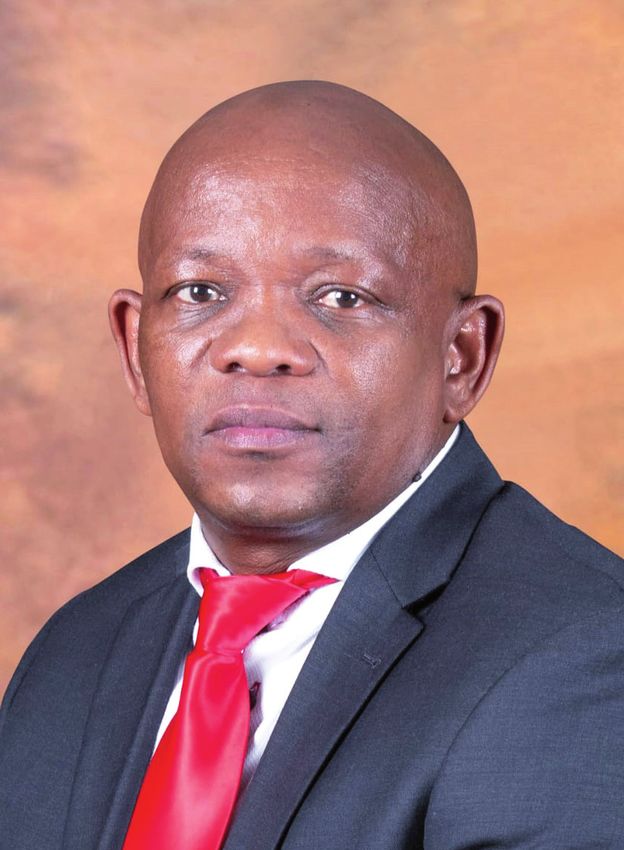
   Honourable Xolile Nqatha                                       Ms Gabisile Gumbi-Masilela
   Member of the Executive Council                                Head of Department

                                                      2
DEPARTMENT OF COOPERATIVE GOVERNANCE AND TRADITIONAL AFFAIRS
SERVICE DELIVERY IMPROVEMENT PLAN 2018/21
TABLE OF CONTENTS PAGE
PART A: SERVICE CHARTER......................................................................................................................................... 2 – 7
ANNEXURE: DEPARTMENT’S CONTACT DETAILS......................................................................................................... 8 - 9
PART B: SERVICE DELIVERY IMPROVEMENT PLAN...................................................................................................... 10 - 11
OFFICIAL SIGN-OFF..................................................................................................................................................... 12
1. SDIP DEVELOPMENT APPROACH....................................................................................................................... 13
1.1 INTRODUCTION...................................................................................................................................... 13
1.2 PROBLEM STATEMENT ......................................................................................................................... 13
1.3 PREPARATORY PROCESS....................................................................................................................... 13
1.4 SDIP DEVELOPMENT APPROACH........................................................................................................... 14
2. LEGAL MANDATE, LISTED SERVICES & SITUATIONAL ANALYSIS........................................................................ 14
2.1 VISION.......................................................................................................................................................... 14
2.2 MISSION....................................................................................................................................................... 14
2.3 VALUE STATEMENT...................................................................................................................................... 15
2.4 THE LEGAL MANDATE OF THE DEPARTMENT............................................................................................... 15
2.4.1 CONSTITUTIONAL MANDATES...................................................................................................................... 15 - 16
2.4.2 LOCAL GOVERNMENT LEGISLATION............................................................................................................. 16
2.4.3 TRADITIONAL AFFAIRS LEGISLATION ........................................................................................................... 17
2.4.4 FURTHER PIECES OF LEGISLATION............................................................................................................... 17
2.4.5 TRANSVERSAL LEGISLATION........................................................................................................................ 18
3. SERVICE DELIVERY IMPROVEMENT PLAN.......................................................................................................... 19
3.1 LIST OF SERVICES PROVIDED BY THE DEPARTMENT................................................................................... 19
3.2 SITUATIONAL ANALYSIS................................................................................................................................ 19 - 21
3.3 IDENTIFICATION OF KEY (MAIN CRITICAL) SERVICES................................................................................... 21
4. SDIP IMPLEMENTATION, MONITORING AND REPORTING METHODS................................................................... 21
5. CONCLUSION .................................................................................................................................................... 21
ANNEXURE A: SUPPORT PROVISION OF FREE BASIC SERVICES BY MUNICIPALITIES.................................................. 22 - 25
ANNEXURE B: IMPROVE INFRASTRUCTURAL SPENDING BY MUNICIPALITIES............................................................. 26 - 27
ANNEXURE C: IMPROVE CONSTRUCTION OF TRADITIONAL COUNCILS........................................................................ 28 - 29
3DEPARTMENT OF COOPERATIVE GOVERNANCE AND TRADITIONAL AFFAIRS
SERVICE DELIVERY IMPROVEMENT PLAN 2018/21
It is hereby certified that this Service Delivery Charter was:
i. developed by the management and all the programmes of the Department of Cooperative Governance and
Traditional Affairs with the guidance of Honourable Xolile Nqatha, the MEC for the Department of Cooperative
Governance and Traditional Affairs;
ii. prepared in line with the current Annual Performance Plan of the Department of Cooperative Governance and
Traditional Affairs and the COGTA Service Delivery Model.
_________________________ _____________________
K. SHINTA DATE
CHIEF FINANCIAL OFFICER
_________________________ _____________________
P. ROBOJI DATE
DEPUTY DIRECTOR GENERAL: DEVELOPMENTAL LOCAL GOVERNMENT
_________________________ _____________________
V. MLOKOTHI DATE
DEPUTY DIRECTOR GENERAL: CORPORATE MANAGEMENT
_________________________ _____________________
T.W. GWEBINDLALA DATE
DEPUTY DIRECTOR GENERAL: TRADITIONAL AFFAIRS
_________________________ _____________________
G. GUMBI-MASILELA DATE
HEAD OF DEPARTMENT
APPROVED
_________________________ ____________________
X. NQATHA DATE
MEMBER OF THE EXECUTIVE COUNCIL
4DEPARTMENT OF COOPERATIVE GOVERNANCE AND TRADITIONAL AFFAIRS
SERVICE DELIVERY IMPROVEMENT PLAN 2018/21
OUR MANDATE
We are mandated by the Constitution of the Republic of South Africa (1996), Chapters 2, 3, 6, 7 and 12; Chapter
6: Section 139 interventions in local government, Chapter 7: Sections 154 and 155 to support and strengthen the
capacity of municipalities and traditional leadership institutions to be able to:
• Manage their own affairs
• Exercise their powers and
• Perform their functions.
Chapter 12: Sections 211 and 212:
• Recognition
• Role of traditional leaders
Chapter 7 outlines the objectives and mandates in respect of local government. The following mandates for the
Department of Cooperative Governance and Traditional Affairs can be extracted from this:
• To establish municipalities consistent with national legislation;
• To support and strengthen the capacity of municipalities;
• To regulate the performance of municipalities in terms of their functions listed in Schedules 4 and 5 of the
Constitution;
• To intervene where there is non-fulfilment of legislative, executive or financial obligations; and
• To promote developmental local government.
Our Vision
We envision an integrated, capable, responsive and accountable local government and traditional institution system
focusing on the needs of the community.
Our Mission
We undertake to promote a developmental local state and traditional institutions that are accountable, focused on
citizen’s priorities; capable of delivering high-quality services consistently and sustainably through Local Government
and participatory democracy.
Our Values
Our values, principles and aspirations are people orientated and are based on the Batho Pele Principles.
5DEPARTMENT OF COOPERATIVE GOVERNANCE AND TRADITIONAL AFFAIRS
SERVICE DELIVERY IMPROVEMENT PLAN 2018/21
VALUES DEFINITIONS
Consultation We always consult our customers on the level, quality and choices of the services we
offer.
Quality We set high standards geared towards effective and efficient services delivery.
Equality We shall give equal access to our services to all, with special emphasis on targeted
groups.
Professionalism We believe that our customers are entitled to be treated courteously and with the
highest level of professionalism.
Highest ethical standards We shall always maintain zero tolerance towards fraud and corruption
Staff our greatest assets We believe that our employees are integral to the success of the Department and we
will at all times endeavour to ensure that their organizational needs are satisfied.
Responsiveness We pledge to respond speedily and effectively to the needs of stakeholders and
communities.
CORE SERVICES RENDERED BY THE DEPARTMENT
• Legislation to provide support the functionality of municipalities and traditional leadership institutions;
• Norms and standard frameworks;
• Capacity building and technical support to municipalities and traditional leadership institutions;
• Financial support to municipalities and traditional leadership institutions;
• Oversight reports;
• Intervention mechanisms.
• Construction of Traditional Councils
GENERIC SERVICE STANDARDS
We undertake to adhere to the following service standards:
• Serve all service beneficiaries courteously and promptly at all service delivery points.
• Ensure that all capital grant spending is accounted for and funds are spent for the intended purposes.
• Ensure that regular updates are provided to communities in relation to petitions
submitted both to municipalities and provincial government.
• All employees shall wear name tags for easy identification.
• All applications for vacant posts shall be acknowledged within 21 days from date of receipt.
• Update and audit Indigent Registers (IR) to eliminate illegal beneficiaries in the list.
• All shortlisted candidates shall be notified within 2 working days after short listing and at least 3 days before
interview.
• All unsuccessful candidates shall be advised in writing within a maximum of 30 working days after the
interview.
• All visitors shall be treated courteously and wear visitors identification tags.
• All visitors shall be seated in a comfortable area and attended within 10 minutes on arrival.
• Suppliers and / or creditors shall be paid within 30 days on receipt of invoices.
• Successful and unsuccessful bidder(s) shall be advised of the outcome within 15 days.
• All employees shall dress appropriately as per the Dress Code Policy of the Department.
6DEPARTMENT OF COOPERATIVE GOVERNANCE AND TRADITIONAL AFFAIRS
SERVICE DELIVERY IMPROVEMENT PLAN 2018/21
CORE SERVICE STANDARDS
BRANCH: DEVELOPMENTAL LOCAL GOVERNMENT
The Department shall provide support to municipalities within 30 days of notification.
The Department shall monitor infrastructure spending by municipalities on a quarterly basis.
The Department shall monitor electrification, water, sanitation, debts, indigent register and intervention measures
to municipalities.
BRANCH: TRADITIONAL AFFAIRS
• All requests for recognition of traditional leaders shall be processed within 30 days.
• Improve construction of Traditional Councils
LODGING OF COMPLAINTS
We respect the right of citizens to complain if our services are poor or unsatisfactory.
In this regard;
• You may lodge your complaint to the District Director’s office (District Offices).
• Customer Care office; Corporate Communications Directorate: Head Office
• We undertake to investigate and respond to your complaint within 14 days of receipt
• Should you not be satisfied with the outcome, you may lodge your complaint to the Director: Office of the
Head of Department.
• We will apologize and take corrective measures if it is our fault
• We will maintain a complaints registration and follow-up mechanism
• We undertake to treat any information on fraud and corruption seriously
• You may use the toll-free number to report fraud, corruption and mal-administration.
YOUR RIGHTS
We acknowledge that you, as our service beneficiary, you have all the rights that are enshrined in the Bill of Rights
of the Constitution of South Africa as they relate to our mandate.
YOUR OBLIGATIONS
As our service beneficiary, we expect you to be reasonable, courteous and respect the dignity of our employees.
OUR COMMITMENT TO BETTER SERVICES
We undertake to coordinate support and strengthen the capacity of municipalities in order to manage their own
affairs and to perform their functions.
We also undertake to support the institution of traditional leadership to perform their functions effectively and
efficiently.
7ANNEXURE: DEPARTMENT’S CONTACT DETAILS
Name of the Department Cooperative Governance and Traditional Affairs
The Physical, postal and e-mail addresses of the Department Phalo Avenue, Tyamzashe Building
Private Bag X0035
Bhisho
5605
040 609 5656 / 7 / 8 (Office of the HoD)
Fax: 040 639 2163
Website: www.eclgta.gov.za
The days and times that the Department is open to public except Public Holidays Monday – Thursday : 08h00 to 16h30
Friday : 08h00 to 16h00
Contact numbers
SERVICE DELIVERY IMPROVEMENT PLAN 2018/21
Name Component Designation Tel Numbers e-mail
8
Mr X. Nqatha Office of the Public Member of the 040 609 5788 noncedo.nothoko@eccogta.gov.za
Bearer Executive Council
Ms G. Gumbi-Masilela Head of Department Head of Department 040 609 5657 Gabisile Gumbi-Masilela
040 609 5658
DEPARTMENT OF COOPERATIVE GOVERNANCE AND TRADITIONAL AFFAIRS
Ms P. Roboji Developmental Local Deputy Director 040 609 5578 pashee.roboji@eccogta.gov.za
Government General
Mr V. Mlokothi DDG: Corporate Deputy Director 040 609 5336 vuyo.mlokothi@eccogta.gov.za
Management General
Mr T.W. Gwebindlala Traditional Affairs Deputy Director 040 609 5710 tandabantu.gwebindlala@eccogta.gov.za
General
Ms K. Shinta Finance and Supply Chief Financial 040 609 5289 kutala.shinta@eccogta.gov.za
Chain Management Officer
Mr M. Ngam Corporate Director: Corporate 040 609 5743 mamnkeli.ngam@eccogta.gov.za
Communications & Communications
Customer CareDISTRICT OFFICES
OR Tambo Alfred Nzo Joe Gqabi
Director – Mr L. Jiyose Director – Mr M. Pinyana Director – Mr P. Funani
Contact Details: (Office) – Contact Details: (Office) – Contact Details: (Office) –
Mobile Phone: 083 248 0254 Mobile Phone:072 250 4417 Mobile Phone: 079 508 7502
E-mail: lamla.jiyose@eccogta.gov.za E-mail: mawetu.pinyana@eccogta.gov.za E-mail:paulos.funani@eccogta.gov.za
Physical and Postal address: Physical and Postal address: Physical and Postal address:
Room 849, 8th Floor, Botha Sigcau Building, cnr Mzimvubu Local Municipality, Corner of Coles and Queens Terrence
Owen & Leeds Street, Mthatha, 5100 Street, Aliwal North 9750
Block A Office, 67 Church Street,
Tel: 051 0117 183 Cell: 082 495 3268
Mount Ayliff,
Sarah Baartman Amathole & Buffalo City Metro Chris Hani
Director – Mrs N. Jamjam Director – Mr Z. Bokwe Director – Mrs S. Nyaba
SERVICE DELIVERY IMPROVEMENT PLAN 2018/21
Contact Details: (Office) – 041 390 4231 Contact Details: (Office) – Contact Details: (Office) –
Mobile Phone: 071 671 1441 Mobile Phone: 082 495 3013 Mobile Phone: 079 508 7605
9
E-mail: nozibele.jamjam@eccogta.gov.za E-mail: zingisa.bokwe@eccogta.gov.za E-mail: sindiswa.nyaba@eccogta.gov.za
Physical and Postal address: Physical and Postal address: Physical and Postal address:
55 Clevedon Rd, Central, Port Elizabeth No. 1 Ironwood House, Palm Square, Private Bag X7086, Queenstown, 5320
DEPARTMENT OF COOPERATIVE GOVERNANCE AND TRADITIONAL AFFAIRS
6001 Beacon Bay, East London, 5241 Komani Hospital, QueenstownDEPARTMENT OF COOPERATIVE GOVERNANCE AND TRADITIONAL AFFAIRS
SERVICE DELIVERY IMPROVEMENT PLAN 2018/21
PART B: SERVICE DELIVERY IMPROVEMENT PLAN
DOCUMENT CONTROL
Document title Department of Cooperative Governance and Traditional Affairs Service Delivery
Improvement Plan (SDIP) 2018-2021
Creation date January 2018
Effective date 01 April 2018
Status Final
Version V1
Owner file, name and Chief Director: Corporate Services, Mr M.L. Ngcai,
contact details
040-608 4837, Malibongwe.ngcai@eccogta.gov.za
Director: Organisational Transformation and Planning,
Mr M.C. Giyose, 040-609 5633, Mongezi.giyose@eccogta.gov.za
SDIP Coordinator, Service Excellence, Sub-directorate,
Ms A. Conradie, 040-609 5127, Amalia.conradie@eccogta.gov.za
Mr B. Gidi, 040-609 5127
Banele.gidi@eccogta.gov.za
Author title, name and Director: Organisational Transformation and Planning
contact details
Contributors Directorate: Organisational Transformation and Planning
Directorate: Monitoring and Evaluation
Directorate: Strategic Management
Editor Director: Organisational Transformation and Planning
Distribution Department of Cooperative Governance and Traditional Affairs employees;
National Department of Cooperative Governance and Traditional Affairs;
Office of the Premier: Director: Process Design and Improvement, Director General:
Office of the Premier;
Director General: Office of the Premier;
Minister of Public Service and Administration;
Department of Public Service and Administration;
Department of Planning, Monitoring & Evaluation;
Metropolitan Municipalities, District Municipalities and Local Municipalities;
Provincial House of Traditional Leaders
Security classification Open source
10DEPARTMENT OF COOPERATIVE GOVERNANCE AND TRADITIONAL AFFAIRS
SERVICE DELIVERY IMPROVEMENT PLAN 2018/21
LIST OF ABBREVIATIONS
APP Annual Performance Plan
DPSA Department of Public Service and Administration
M&E Monitoring and Evaluation
MECA Municipal Evaluation and Capacity Assessment
OP Operational Plan
OTP Office of the Premier
SDIP Service Delivery Improvement Plan
DEFINITIONS
TERM DEFINITION
Function The intended purpose of a person or thing in a specific role. Purpose, responsibility, concern,
undertaking, commission, obligation, duty, etc. A system supplying a public need such as
transport or water, etc., run by the state.
Service Action/process of serving. Actions that fulfil a function. To supply the needs of the public by
performing specific tasks; performance of work for another.
Standard Level, grade, calibre, merit, yardstick, benchmark, measurement, criterion, touchstone, such
as a code of behaviour, code of honour, principle, ideal, ethics, seniority levels at work, etc.
For our purposes, a standard is something specific, measurable and realistic that can be
achieved within a given time-frame.
Target A person, object or place selected as an aim of an attack (marksman). An objective or result
towards which efforts are directed. For the purposes of Service Delivery Improvement Stan-
dards and Targets may be differentiated as follows:
Standards set measurable levels of Service Performance; and
Targets set measurable levels of Citizen Satisfaction.
Task A specific piece of work that is required to be done. Assignment, duty, chore, detail, exercise.
For example, by the end of this session you will be given the task of developing SDIPs for your
divisions
Theme An idea or topic, a unifying idea. A subject on which a person speaks or writes or about which
she or he thinks
Project An enterprise carefully planned to achieve a particular aim. For example, a government-subsi-
dised block of houses. A proposal, scheme or a task requiring a concerted effort
Improvement To become or make better in quality, to achieve better standards or to increase in quantity, in
comparison with existing conditions
Indicator Guide, mark; a thing that indicates a state or level; a meter or gauge to reflect or indicate spe-
cific outcomes or outputs. A device to attract attention; a measuring instrument.
Quantity Amount, number, aspect that can be measured, weighed, counted. An answer to “How
much?” or “How many?”
Quality A degree or standard of excellence. High standard in accordance with a given template or
national or international specifications such as SABS or ISO 9001 : 2000.
Time-bound A specified period, duration, deadline
Cost Budget. Something measured in money or time; the amount paid for a commodity. If an ap-
proved service is delivered in the right quantity, at the right quality, within the given time-frame
and budget, it is likely that it is also providing value for money.
11DEPARTMENT OF COOPERATIVE GOVERNANCE AND TRADITIONAL AFFAIRS
SERVICE DELIVERY IMPROVEMENT PLAN 2018/21
SIGN-OFF
Official Sign-Off
It is hereby certified that this Service Delivery Improvement Plan was:
iii. developed by the management and all the programmes of the Department of Cooperative Governance and
Traditional Affairs under the guidance of Hon. X. Nqatha, the MEC for the Department of Cooperative Governance
and Traditional Affairs;
iv. prepared in line with the current Annual Performance Plan of the Department of Cooperative Governance and
Traditional Affairs and the COGTA Service Delivery Model.
_________________________ _____________________
K. SHINTA DATE
CHIEF FINANCIAL OFFICER
_________________________ _____________________
P. ROBOJI DATE
DEPUTY DIRECTOR GENERAL: DEVELOPMENTAL LOCAL GOVERNMENT
_________________________ _____________________
V. MLOKOTHI DATE
DEPUTY DIRECTOR GENERAL: CORPORATE MANAGEMENT
_________________________ _____________________
T.W. GWEBINDLALA DATE
DEPUTY DIRECTOR GENERAL: TRADITIONAL AFFAIRS
_________________________ _____________________
G. GUMBI-MASILELA DATE
HEAD OF DEPARTMENT
APPROVED
________________________ ____________________
X. NQATHA DATE
MEMBER OF THE EXECUTIVE COUNCIL
12DEPARTMENT OF COOPERATIVE GOVERNANCE AND TRADITIONAL AFFAIRS
SERVICE DELIVERY IMPROVEMENT PLAN 2018/21
1. SDIP DEVELOPMENT APPROACH
1.1 Introduction
Over the years, the Department of Cooperative Governance and Traditional Affairs has been developing its SDIP
and Service Charter as matter of compliance. However, with the advent of the new Public Service Regulations
and the relevant guidelines, it has become necessary not only to comply with the regulatory framework in terms of
procedure and substance but also to continuously improve service delivery. Therefore, the purpose of this SDIP
is to develop an improvement plan that is practical, effective and resulting to continuous improvement of service
delivery and satisfaction to service beneficiaries.
Some of the weaknesses include but not limited to lack of meaningful consultation with key stakeholders, less
emphasis on quality, time and costs, lack of or very little benchmarking. The SDIP 2018/2021 seeks to improve on
these weaknesses and to comply fully with the regulatory framework.
One of the measures to address the weaknesses is to engage all key stakeholders in meaningful consultation and
involvement, address fully the concepts of quantity, quality, time and costs and strive for continuous improvement
of service.
1.2 Problem statement
At present, there has been a notable increase in public service delivery protests and poor financial management by
a number of municipalities. Furthermore, there is insignificant impact in the construction of Traditional Councils by
the Department as well as a high rate of initiation deaths.
To address the abovementioned service delivery challenges, the Department has identified four (4) key services as
top priority which are elaborated upon in paragraph 3.
1.3 Preparatory process
NAME BUSINESS UNIT DESIGNATION GENDER RACE
M.C. Giyose HR Organisational Transformation & Director M B
Planning
W. Galli Strategic Management Director M C
E. Vermaak Monitoring & Evaluation Director M W
M. Ngam Corporate Communications Director M B
N.A. Dlulane Regional Coordination Director F B
L. Marwede Organizational Development Deputy Director M B
M. Yotsi Municipal Performance Monitoring Director M B
A. Conradie Service Excellence Senior Personnel Practitioner F W
B. Gidi Service Excellence Senior Personnel Officer M B
13DEPARTMENT OF COOPERATIVE GOVERNANCE AND TRADITIONAL AFFAIRS
SERVICE DELIVERY IMPROVEMENT PLAN 2018/21
1.4 SDIP development approach
Consultation of the SDIP
STAKEHOLDERS REASONS FOR CONSULTATION
Head of Department To obtain her strategic perspective, commitment and support for the SDIP process
Strategic Management To obtain input and advice in the selection of key services rendered by the
and Communication Department
Services Chief
Directorate
Managers To obtain managerial perspective, commitment and support for the SDIP process
Staff To obtain their views and support for the SDIP process
Trade Unions To comply with good labour relations practice and legislation
Other Government To obtain views and guidance for the development of the SDIP
Departments (OTP)
DPSA To obtain views and guidance for the development of the SDIP
The following table outlines the plans which informs the development, implementation and the evaluation of the
SDIP:
PLAN OUTLINE
Communication Plan The key message will be to seek agreement and the support from key stakeholders
through SMS meetings, Staff meetings, Electronic communication, High level meet-
ings and MuniMEC and the Management Labour Forum
Implementation Plan The SDIP will be implemented through the Annual Performance Plan and Operational
Plan
Reporting Plan Reports will be made as prescribed in the APP and OP
Monitoring Plan Monitoring of effectiveness will done as prescribed by Monitoring & Evaluation Policy
Evaluation Plan Assessment of impact will be done as prescribed by M&E and MECA
Change Management
Plan
2. LEGAL MANDATE, LISTED SERVICES & SITUATIONAL ANALYSIS
2.1 Vision
An integrated, capable, responsive and accountable local government and traditional institution system
focusing on the needs of the community.
2.2 Mission
To promote a developmental local state and traditional institutions that are accountable, focused on
citizen’s priorities; capable of delivering high-quality services consistently and sustainably through Local
Government and participatory democracy.
14DEPARTMENT OF COOPERATIVE GOVERNANCE AND TRADITIONAL AFFAIRS
SERVICE DELIVERY IMPROVEMENT PLAN 2018/21
2.3 Value Statement
Our values are people orientated and are based on the Batho Pele Principles.
VALUES DEFINITIONS
Consultation We always consult our customers on the level, quality and choices of the services we
offer.
Quality We set high standards geared towards effective and efficient services delivery.
Equality We shall give equal access to our services to all, with special emphasis on targeted
groups.
Professionalism We believe that our customers are entitled to be treated courteously and with the
highest level of professionalism.
Highest ethical standards We shall always maintain zero tolerance towards fraud and corruption
Staff our greatest assets We believe that our employees are integral to the success of the Department and we
will at all times endeavour to ensure that their organizational needs are satisfied.
Responsiveness We pledge to respond speedily and effectively to the needs of stakeholders and
communities.
2.4 The legal mandate of the Department
2.4.1 Constitutional Mandates
The Constitution of South Africa, 1996 as amended provides the national overarching framework for the functionality
of all Government Departments in South Africa. Chapter 7 outlines the objectives and mandates in respect of Local
Government, as the following:
2.4.1.1 To establish municipalities consistent with national legislation;
2.4.1.2 To support and strengthen the capacity of municipalities;
2.4.1.3 To regulate the performance of municipalities in terms of their functions listed in schedules 4 and 5 of
the Constitution, 1996;
2.4.1.4 To intervene where there is non-fulfilment of legislative, executive or financial obligations; and
2.4.1.5 To promote Developmental Local Government
Regarding Traditional Leadership, the Constitution of South Africa, 1996 as amended states the following on
Recognition in Section 211:
The institution, status and role of Traditional Leadership, according to customary law, are recognized subject to the
Constitution.
A Traditional Leadership Institution that observes a system of customary law may function subject to any applicable
legislation and customs, which includes amendments to, or repeal of, that legislation or those customs.
The courts must apply customary law when that law is applicable, subject to the Constitution and any legislation
that specifically deals with customary law.
15DEPARTMENT OF COOPERATIVE GOVERNANCE AND TRADITIONAL AFFAIRS
SERVICE DELIVERY IMPROVEMENT PLAN 2018/21
The roles of Traditional Leaders are spelt out in Section 212 of the Constitution of South Africa, 1996.
National legislation may provide for a role for Traditional Leadership as an institution at local level on matters
affecting local communities.
To deal with matters relating to Traditional Leadership, the role of Traditional Leaders, customary law and the
customs of communities observing a system of customary law:
National or Provincial legislation may provide for the establishment of Houses of Traditional Leaders; and National
legislation may establish a Council of Traditional Leaders.
2.4.2 Local Government Legislation
LEGISLATION DESCRIPTION
Municipal Structures Act, 1998 & The Acts Provide for the establishment of municipalities in accordance with
the requirements relating to and the types of municipalities.
2000 (Act 117 of 1998 and
Provide for an appropriate division of functions and powers between
Amendment Act 33 of 2000) categories of municipalities; and regulate the internal systems, structures
and Office-bearers of municipalities.
Municipal Systems Act, 2000 Provides for the core principles, mechanisms, and processes that are
necessary to enable municipalities to move progressively towards the social
(Act 32 of 2000) and economic up-liftmen of local communities and ensure universal access
to the essential services that are affordable to all.
Municipal Finance Management This Act aims to secure sound and sustainable management of the financial
affairs of municipalities as well as to establish norms and standards against
Act, 2003 (Act 56 of 2003) which the financial affairs can be monitored and measured.
Municipal Property Rates Act, This Act aims to regulate the power of a municipality to impose rates on
property, exclude certain properties from rating in the national interest, make
2004 (Act 6 of 2004) provision for municipalities to implement a transparent and fair system of
exemptions, reduce and rebate through their rating policies, make provision
for fair and equitable valuation methods of properties, make provision for an
objection and appeal process and amend the Local Government.
Municipal Demarcation Act, 1998 Provides for the criteria and procedures for the determination of municipal
(Act 27 of 1998 as amended) boundaries by an independent authority.
Disaster Management Act, 2002 This Act provides for integrated and coordinated disaster management
focused on rapid and effective response to disasters and the reduction of
(Act 57 of 2002) disaster risk. It also provides for the establishment of Provincial and Municipal
Disaster Management Centers.
Intergovernmental Relations This act aims to establish a framework for National Government as well as
Provincial Governments and municipalities to promote and facilitate inter-
Framework Act, 2005 (Act 13 of governmental relationships and to provide mechanisms and procedures to
facilitate the settlement of intergovernmental disputes.
2005)
Disaster Management Act, 2002 The Act provides an integrated and coordinated Disaster Management
Policy that focuses on preventing or reducing the risk of disasters, mitigating
(Act 57 of 2002) the severity of disasters, emergency preparedness, rapid and effective
response to disasters and post-delivery recovery. The establishment of
National, Provincial and Municipal Disaster Management Centers; Disaster
management volunteers and matters incidental thereto.
16DEPARTMENT OF COOPERATIVE GOVERNANCE AND TRADITIONAL AFFAIRS
SERVICE DELIVERY IMPROVEMENT PLAN 2018/21
2.4.3 Traditional Affairs Legislation
LEGISLATION DESCRIPTION
House of Traditional Leaders Provides for the establishment of the House of
Act, 1995 (Act 1 of 1995) Traditional Leaders.
Traditional Leadership and Governance Framework Act, Provides for the functions and roles of Tradi-
2003 (Act 41 of 2003 tional Leaders.
Eastern Cape Traditional Leadership and Governance Provides for the establishment of the Provincial
Act, 2017 (Act No 1 of 2017) EC House of Traditional Leaders.
Eastern Cape Customary Male Initiation Practice Act, HOTL
2016 (Act No. 5 of 2016)
2.4.4 Further Pieces of Legislation
2.4.4.1 Administration and Control of Townships in Black Areas Regulations.
2.4.4.2 Broad Based Black Economic Empowerment Act, 2003 (Act 53 of 2003)
2.4.4.3 Control of Access to Public Premises Act, 1985 (Act 53 of 1985)
2.4.4.4 Environment Impact Assessment Regulations: Implementation of Sections 21, 22, 26 of the Environment
Conservation Act, 1998 (Act 107 1998)
2.4.4.5 Fire Brigade Services Amendment Act; 2000 (Act 14 of 2000)
2.4.4.6 Inter-governmental Relations Framework Act, 2005 (Act 13 of 2005)
2.4.4.7 Land Survey Act, 1997 (Act No 8 of 1997)
2.4.4.8 Land Tenure in Towns Regulations
2.4.4.9 Land Use Planning Ordinance 15 of 1985
2.4.4.10 Less Formal Township Establishment Act,1991 (Act 113 of 1991)
2.4.4.11 Municipal Act of 1985 (Ciskei)
2.4.4.12 Municipal Act of 1979 (Transkei)
2.4.4.13 Municipal Ordinance 20 of 1974 (Cape Provincial Administration)
2.4.4.14 Physical Planning Act 1991 (Act 125 of 1991)
2.4.4.15 Re-determination of the Boundaries of Cross-Boundary Municipalities Act, 2005 (Act 6 of 2005)
2.4.4.16 Townships Proclamation No R293 of 1962
2.4.4.17 Removal of Restrictions Act, 1967 (Act 84 of 1967)
2.4.4.18 Remuneration of Public Office Bearers Act,1998 (Act 20 of 1998)
2.4.4.19 State Information Technology Agency Act, 1998 (Act 88 of 1998)
2.4.4.20 Spatial Planning and Land Use Management Act 2013 (Act 16 of 2013)
2.4.4.21 Townships Ordinance 33 of 1934
2.4.4.22 Transfer of staff to Municipalities Act, 1998 (Act 17 of 1998)
17DEPARTMENT OF COOPERATIVE GOVERNANCE AND TRADITIONAL AFFAIRS
SERVICE DELIVERY IMPROVEMENT PLAN 2018/21
2.4.5 Transversal Legislation
TERM DEFINITION
Basic Conditions of Employment Act, To give effect to the right to fair labor practices referred to in section 23(1) of the
1997 (Act 75 of 1997 as amended): Constitution, 1996 by establishing and making provision for the regulation of
basic conditions of employment; and thereby to comply with the obligations
of the Republic of South Africa as a member state of the International Labor
Organization; and to provide for matters related therewith.
Employment Equity Act, 1998 (Act. 55 To promote equality, eliminate unfair discrimination in employment and to
of 1998): ensure the implementation of employment equity measures to redress the
effects of discrimination; to achieve a diverse and efficient workforce broadly
representative of the demographics of the Province of the Eastern Cape.
Labor Relations Act, 1995 (Act 66 of To regulate and guide the employer in recognizing and fulfilling its role in
1995): effecting labor peace and the democratization of the workplace.
Occupational Health and Safety Act, To provide for the health and safety of persons at work and for the health
1993 (Act 85 of 1993): and safety of persons in connection with the use of plant and machinery; the
protection of persons other than persons at work against hazards to health
and safety arising out of or in relation with the activities of persons at work;
to establish an advisory council for occupational health and safety; and to
provide for matters related therewith.
Public Service Act, 1994 (Act 103 of To provide for the organization and administration of the public service of
1994 as amended by Act 30 of 2007): the Republic of South Africa, the regulation of the conditions of employment,
terms of office, discipline, retirement and discharge of members of the public
service, and matters related therewith.
Skills Development Act, 1998 (Act 97 To provide an institutional framework to devise and implement national,
of 1998) sector and workplace strategies to develop and improve the skills of the
South African workforce; to integrate those strategies within the National
Qualifications Framework contemplated in the South African Qualifications
Authority Act, 1995; to provide for learner ships that lead to recognized
occupational qualifications; to provide for the financing of skills development
by means of a levy-grant scheme and a National Skills Fund; to provide for
and regulate employment services; and to provide for matters connected
therewith.
Public Finance Management Act, 1999 To regulate financial management in the National and Provincial
(Act 1 of 1999): Governments; to ensure that all revenue, expenditure, assets and liabilities
of those governments are managed efficiently and effectively; to provide for
the responsibilities of persons entrusted with financial management in those
governments; and to provide for matters connected therewith.
Skills Development Levies Act, 1999 To provide any public service employer in the national or provincial sphere of
(Act 9 of 1999): Government with exemption from paying a skills development levy; and for
exemption from matters related therewith.
Promotion of Access to Information To give effect to the constitutional right of access to any information held
Act, 2000 (Act 2 of 2000): by the State and any information that is held by another person and that
is required for the exercise or protection of any rights; and to provide for
matters related therewith.
To give effect to the right to administrative action that is lawful, reasonable
and procedurally fair and to the right to written reasons for administrative
action as contemplated in section 33 of the Constitution of the Republic of
South Africa, 1996; and to provide for matters incidental thereto.
18DEPARTMENT OF COOPERATIVE GOVERNANCE AND TRADITIONAL AFFAIRS
SERVICE DELIVERY IMPROVEMENT PLAN 2018/21
3. SERVICE DELIVERY IMPROVEMENT PLAN
3.1 List of services provided by the Department
3.1.1 Provide legislation to provide support the functionality of municipalities and traditional leadership
institutions;
3.1.2 Provide norms and standard frameworks;
3.1.3 Provide capacity building and technical support to municipalities and traditional leadership institutions;
3.1.4 Provide financial support to municipalities and traditional leadership institutions;
3.1.5 Provide oversight reports;
3.1.6 Provide intervention mechanisms.
3.2 Situational analysis
The Department of Cooperative Governance and Traditional Affairs (COGTA) is mandated by the Constitution
of the Republic of South Africa to support and strengthen the capacity of municipalities and Traditional
Leadership Institutions to be able to manage their own affairs, exercise their powers and perform their
functions.
According to the Annual Performance Plan 2018 / 2019 of the Department, the stimulus for economic
growth within the province still remains infrastructure. The provincial logistics network is particularly poor
– with provincial road infrastructure being very poor. The provision and cost of utilities such as electricity,
at municipal level needs to be strengthened to attract businesses / industry to EC. Water and Sanitation
infrastructure remains a challenge with some provincial towns. Some municipalities still have a bucket
system or no sanitation facility at all. Furthermore, poor alignment between IDPs and Sectoral Plans has a
negative impact on Infrastructure Planning. Contract management is poor leading to diminished value for
money in projects undertaken. The expenditure of infrastructure budgets continues to be a challenge and
that leads to public intolerance, escalating public demands and increasing dependence on government.
However, the department is extensively prioritizing the infrastructure development support to municipality
together with spatial planning in order to realize social and economic development at a municipal level.
According to the Statistics South Africa report State of Basic Service Delivery in South Africa: In-depth
analysis of the Community Survey 2016 data (2016: 14), household access to piped water as their main
source of water was highest in Western Cape (99%), Gauteng (97,4%) and Free State (96,2%), and lowest
in Eastern Cape (75,1%) and Limpopo (79,9%). A large percentage of households in Eastern Cape (17,9%),
KwaZulu-Natal (7,6%) and Limpopo (6,7%) still relied on unsafe sources of water.
Composite Service Delivery Index
The Infrastructure Quality index combines the individual index scores that were calculated for sanitation,
water, refuse disposal and electricity in order to create an overall measure of service delivery across
municipalities. This is done by creating a weighted average of the individual index scores.
19DEPARTMENT OF COOPERATIVE GOVERNANCE AND TRADITIONAL AFFAIRS
SERVICE DELIVERY IMPROVEMENT PLAN 2018/21
Table 9.1: Composite service delivery index scores by municipal category and province, 2016
Index
Service delivery
Municipal category Sanitation Water Refuse removal Electricity
Index
Metro (A) 4,7 4,5 4,5 4,6 4,6
Secondary City (B1) 4,4 4,3 4,0 4,6 4,3
Large town (B2) 4,3 4,0 3,9 4,5 4,2
Small town (B3) 4,3 4,0 3,6 4,5 4,1
Rural municipality (B4) 3,5 2,8 2,3 4,5 3,3
Province
Western Cape 4,8 4,6 4,7 4,8 4,7
Eastern Cape 4,1 3,3 3,2 4,4 3,8
Northern Cape 4,3 4,1 3,9 4,6 4,2
Free State 4,4 4,3 4,1 4,7 4,4
Kwa-Zulu Natal 4,1 3,8 3,5 4,5 4,0
North West 4 3,8 3,7 4,6 4,0
Gauteng 4,7 4,5 4,5 4,5 4,6
Mpumalanga 4 3,9 3,2 4,6 3,9
Limpopo 3,6 3,3 2,6 4,7 3,6
South Africa 4,3 4,1 3,9 4,6 4,2
The department, like all organizations is greatly affected by the macro environment. The political and
economic factors, in particular the recent economic developments have had a profound impact on the
Department. The political instability of the country has been one of the greatest threats as it has led to the
country receiving a poor credit rating (so-called junk status) although there has been a slight improvement
with the change of political leadership. One of the consequences of the downgraded credit rating is less
disposable income and job security risks. This has led to a reduction of the budget of the department. It
means the department has to do more with less. Therefore, decentralization of functions to districts and
reduction of costs has to be expedited.
An internal analysis of the department namely, the resources and capabilities in terms of strengths and
weaknesses reveal the following situation:
3.2.1 Decentralization of functions is being implemented and given full support by Top Management;
3.2.2 Labour instability because the majority union in the department is not participating in formal and
institutionalized labour structures;
3.2.3 Dwindling resources due to budget cuts as well as its suspect capabilities;
3.2.4 The Department has not yet conducted a skills audit of its employees and match it with its strategic
objectives;
3.2.5 The operations management framework as outlined in the Public Service
Regulations of 2016 has not been fully implemented.
20DEPARTMENT OF COOPERATIVE GOVERNANCE AND TRADITIONAL AFFAIRS
SERVICE DELIVERY IMPROVEMENT PLAN 2018/21
Therefore, during the development of this SDIP the Department has taken into account its strengths and weaknesses
visa n vis the ever-growing demand for continuous improvement of delivery of services and satisfaction to service
delivery.
3.3 Identification of key (main critical) services
3.3.1 Service Delivery Improvement Areas
3.3.1.1 List of services provided by the Department:
3.3.1.1.1 Legislation for functionality of municipalities and traditional leadership institutions;
3.3.1.1.2 Norms and standard frameworks;
3.3.1.1.3 Capacity building and technical support to municipalities and traditional leadership institutions;
3.3.1.1.4 Financial support to municipalities and traditional leadership institutions;
3.3.1.1.5 Oversight reports;
3.3.1.1.6 Intervention mechanisms;
3.3.1.1.7 Construction of Traditional Councils.
4. SDIP IMPLEMENTATION, MONITORING AND REPORTING METHODS
The SDIP, as one of the key operating tools of the Department is aligned with the Annual Performance Plan 2018 -
2021 and as such it has been integrated into the Strategic Plan of the Department. Therefore, it will be implemented
simultaneously with the Annual Operational Plan and the Annual Performance Plan.
The SDIP will be monitored and reported on a quarterly basis through the prescribed reporting template.
5. CONCLUSION
The Department of Cooperative Governance and Traditional Affairs is committed to fulfilling its mandatory obligations
as prescribed in the Constitution and other legislation. Furthermore, it commits itself to continue to improve all the
services it provides through improved integration and coordination of service delivery.
21ANNEXURE A: SUPPORT THE PROVISION OF FREE BASIC SERVICES BY MUNICIPALITIES
KEY SERVICE : 1 SERVICE PERFORMANCE AREA BASE YEAR PERFORMANCE PERFORMANCE PERFORMANCE
BENEFICIARY 2017/2018 TARGET 2018/2019 TARGET 2019/2020 TARGET
PERFORMANCE 2020/2021
LEVELS
Provide capacity building Municipalities Support the provision 36 36 38 38
and technical support to of free basic services
municipalities and traditional by Municipalities
leadership institutions
Process mapping & unit Please refer to the attached MIS standard operating procedures
costing
Problem analysis and Prob- Inadequate implementation of indigent policies to roll out free basic services by municipalities.
lem statement
Illegal provision of free basic services benefits to illegitimate households.
SERVICE DELIVERY IMPROVEMENT PLAN 2018/21
Failure to collect enough revenue by municipalities.
22
As a result of the above statement, the quality of services provided by municipalities are compromised.
Professional Standards MIS staff comprises of professional Civil and Electrical Engineers and therefore, standards/guidance are provided by the (1)
South African Institute of Civil Engineering (SAICE) and (2) Engineering Council of South Africa (ECSA) respectively
Legal Standards if applicable National Indigent Policy Framework
DEPARTMENT OF COOPERATIVE GOVERNANCE AND TRADITIONAL AFFAIRS
(including standards operat- Provincial Indigent Policies
ing procedures) Indigent PolicyBATHO PELE PRINCIPLES
CURRENT 2017/18 DESIRED: YEAR 1 (2018/19) DESIRED: YEAR 2 (2019/20) DESIRED: YEAR 3 (2020/21)
Consultation Quarterly Indigent Steering Quarterly Indigent Steering Quarterly Indigent Steering Quarterly Indigent Steering
Committee meetings at local Committee meetings at local Committee meetings at local Committee meetings at local level.
level. level. level. Quarterly Free Basic Services
Quarterly Free Basic Services Quarterly Free Basic Services Quarterly Free Basic Services District Forums.
District Forums. District Forums. District Forums. Annual workshops with District
Annual workshops with District Annual workshops with District municipalities.
municipalities. municipalities. One on one sessions with
One on one sessions with One on one sessions with municipalities 1 x annually.
municipalities 1 x annually. municipalities 1 x annually. Municipality engagement on
Municipality engagement on Municipality engagement on request.
request. request. Use of Imbizo’s to local
Use of Imbizo’s to local Use of Imbizo’s to local communities when necessary
communities when necessary communities when necessary
Courtesy Written acknowledgement Written acknowledgement of Written acknowledgement of Written acknowledgement of
SERVICE DELIVERY IMPROVEMENT PLAN 2018/21
of approval and rejection of approval and rejection of the approval and rejection of the approval and rejection of the
the indigent applications as indigent applications as well as indigent applications as well as indigent applications as well as the
23
well as the termination of the the termination of the provision the termination of the provision termination of the provision of the
provision of the free basic of the free basic services. of the free basic services. free basic services.
services. Sending of sms’s on the status Sending of sms’s on the status Sending of sms’s on the status of
DEPARTMENT OF COOPERATIVE GOVERNANCE AND TRADITIONAL AFFAIRS
Sending of sms’s on the of the indigent provision to of the indigent provision to the indigent provision to individual
status of the indigent individual applicants. individual applicants. applicants.
provision to individual
applicants.
Access Service points in all the Service points in all the Service points in all the Service points in all the townships.
townships. townships. townships. Satellite offices in the SASSA pay
Satellite offices in the SASSA Satellite offices in the SASSA Satellite offices in the SASSA points.
pay points. pay points. pay points. Satellite offices in tribal offices in
Satellite offices in tribal offices Satellite offices in tribal offices Satellite offices in tribal offices rural areas.
in rural areas. in rural areas. in rural areas. Payment and purchasing of
Payment and purchasing Payment and purchasing of Payment and purchasing of electricity at the venders nearer to
of electricity at the venders electricity at the venders nearer electricity at the venders nearer their residence.
nearer to their residence. to their residence. to their residence. Accessing free basic services from
Accessing free basic services Accessing free basic services the cell phone and internet.
from the cell phone and internet. from the cell phone and internet.Information Use of motorcade in the Use of motorcade in the Use of motorcade in the Use of motorcade in the townships
townships and all residential townships and all residential townships and all residential and all residential areas.
areas. areas. areas. Use of community radios to inform
Use of community radios to Use of community radios to Use of community radios to the communities about free basic
inform the communities about inform the communities about inform the communities about activities.
free basic activities. free basic activities. free basic activities. Distribution of pamphlets and
Distribution of pamphlets Distribution of pamphlets and Distribution of pamphlets and brochures in all social strategic
and brochures in all social brochures in all social strategic brochures in all social strategic areas.
strategic areas. areas. areas. Use of social networks.
Use of social networks. Use of social networks. Constant consumer education
Constant consumer education Constant consumer education in partnership with key sector
in partnership with key sector in partnership with key sector departments.
departments. departments.
Openness and Advocacy and marketing Advocacy and marketing of the Advocacy and marketing of the Advocacy and marketing of the
Transparency of the free basic services in free basic services in schools, free basic services in schools, free basic services in schools,
schools, churches, social churches, social gatherings, etc. churches, social gatherings, etc. churches, social gatherings, etc.
SERVICE DELIVERY IMPROVEMENT PLAN 2018/21
gatherings, etc. Use of customer services to Use of customer services to Use of customer services to inform
Use of customer services to inform the community about inform the community about the community about the activities
24
inform the community about the activities of the free basic the activities of the free basic of the free basic services.
the activities of the free basic services. services. Use of Imbizo’s to local
services. Use of Imbizo’s to local Use of Imbizo’s to local communities when necessary
Use of Imbizo’s to local communities when necessary communities when necessary
DEPARTMENT OF COOPERATIVE GOVERNANCE AND TRADITIONAL AFFAIRS
communities when necessary
Redress Each municipality have Each municipality have Each municipality have Each municipality have suggestion
suggestion boxes in strategic suggestion boxes in strategic suggestion boxes in strategic boxes in strategic areas.
areas. areas. areas. Ward committee report back
Ward committee report back Ward committee report back Ward committee report back meetings.
meetings. meetings. meetings. Individual mayoral report back
Individual mayoral report back Individual mayoral report back Individual mayoral report back meetings.
meetings. meetings. meetings. Complaints registers in each
Complaints registers in each Complaints registers in each Complaints registers in each municipalities units.
municipalities units. municipalities units. municipalities units. Individual one on one meetings.
Individual one on one meetings. Individual one on one meetings. Individual explanatory letters
Individual explanatory letters Individual explanatory lettersValue for money Accurate dissemination Accurate dissemination of Accurate dissemination of Accurate dissemination of
of information to the information to the communities. information to the communities. information to the communities.
communities. Effective and efficient use Effective and efficient use Effective and efficient use of tax-
Effective and efficient use of tax-payer’s revenue by of tax-payer’s revenue by payer’s revenue by municipalities.
of tax-payer’s revenue by municipalities. municipalities. Improve management of indigent
municipalities. Improve management of Improve management of registers.
indigent registers. indigent registers.
Human Resources 9 11 11 11
Cost R439 000 R265 000 R834 500 R439 000
Time Annually Annually Annually Annually
SERVICE DELIVERY IMPROVEMENT PLAN 2018/21
25
DEPARTMENT OF COOPERATIVE GOVERNANCE AND TRADITIONAL AFFAIRSANNEXURE B: IMPROVE INFRASTRUCTURAL SPENDING BY MUNICIPALITIES
KEY SERVICE : 2 SERVICE BENEFICIARY PERFORMANCE AREA BASE YEAR PERFORMANCE TAR- PERFORMANCE TAR- PERFORMANCE TAR-
2017/2018 PERFOR- GET 2018/2019 GET 2019/2020 GET 2020/2021
MANCE LEVELS
Provide financial support Municipalities Improve infrastruc- 36 36 36 36
to municipalities and tra- tural spending by
ditional leadership institu-
Municipalities
tions
Process mapping & unit Please refer to the attached MIS standard operating procedures
costing
Problem analysis and Lack of Technical capacity & poor planning.
Problem statement As a result of the above statement, the quality of services provided by municipalities are compromised.
Professional Standards MIS staff comprises of professional Civil and Electrical Engineers and therefore, standards/guidance are provided by the (1)
South African Institute of Civil Engineering (SAICE) and (2) Engineering Council of South Africa (ECSA) respectively
SERVICE DELIVERY IMPROVEMENT PLAN 2018/21
Legal Standards if appli- National Indigent Policy Framework
cable( including standards Provincial Indigent Policies
26
operating procedures) Indigent Policy
BATHO PELE PRINCIPLES
DEPARTMENT OF COOPERATIVE GOVERNANCE AND TRADITIONAL AFFAIRS
CURRENT 2017/18 DESIRED: YEAR 1 (2018/19) DESIRED: YEAR 2 (2019/20) DESIRED: YEAR 3 (2020/21)
Consultation Pre district appraisal Pre district appraisal committee, Pre district appraisal committee, Pre district appraisal
committee, PMISD: Provincial PMISD: Provincial Municipal PMISD: Provincial Municipal committee, PMISD:
Municipal Infrastructure Infrastructure Service Delivery Infrastructure Service Delivery Provincial Municipal
Service Delivery DWIF: District Wide Infrastructure DWIF: District Wide Infrastructure Service
DWIF: District Wide Forum Infrastructure Forum Delivery
Infrastructure Forum DWIF: District Wide
Infrastructure Forum
Courtesy Offering assistance to Offering assistance to Offering assistance to Offering assistance to
municipalities to avoid municipalities to avoid stopping municipalities to avoid stopping municipalities to avoid
stopping and re-allocation of and re-allocation of MIG funding. and re-allocation of MIG stopping and re-allocation of
MIG funding. funding. MIG funding.You can also read


