Service Overview CDN - HUAWEI TECHNOLOGIES CO., LTD. Issue Date 09 2021-01-19
←
→
Page content transcription
If your browser does not render page correctly, please read the page content below
CDN

Service Overview

Issue    09
Date     2021-01-19

HUAWEI TECHNOLOGIES CO., LTD.
Copyright © Huawei Technologies Co., Ltd. 2021. All rights reserved.
No part of this document may be reproduced or transmitted in any form or by any means without prior
written consent of Huawei Technologies Co., Ltd.

Trademarks and Permissions

      and other Huawei trademarks are trademarks of Huawei Technologies Co., Ltd.
All other trademarks and trade names mentioned in this document are the property of their respective
holders.

Notice
The purchased products, services and features are stipulated by the contract made between Huawei and
the customer. All or part of the products, services and features described in this document may not be
within the purchase scope or the usage scope. Unless otherwise specified in the contract, all statements,
information, and recommendations in this document are provided "AS IS" without warranties, guarantees
or representations of any kind, either express or implied.

The information in this document is subject to change without notice. Every effort has been made in the
preparation of this document to ensure accuracy of the contents, but all statements, information, and
recommendations in this document do not constitute a warranty of any kind, express or implied.

Huawei Technologies Co., Ltd.
Address:       Huawei Industrial Base
               Bantian, Longgang
               Shenzhen 518129
               People's Republic of China

Website:       https://www.huawei.com
Email:         support@huawei.com

Issue 09 (2021-01-19)          Copyright © Huawei Technologies Co., Ltd.                                  i
CDN
Service Overview                                                                                                                      Contents

                                                                                                                      Contents

1 What Is CDN?........................................................................................................................... 1
2 How CDN Works...................................................................................................................... 2
3 Node Distribution.................................................................................................................... 5
4 Advantages............................................................................................................................... 7
5 Application Scenarios............................................................................................................. 8
6 Billing....................................................................................................................................... 12
7 Billing FAQ.............................................................................................................................. 20
8 Basic Concepts........................................................................................................................24
9 Restrictions............................................................................................................................. 26
10 Permissions Management................................................................................................. 28
11 Related Services...................................................................................................................33
A Change History...................................................................................................................... 34

Issue 09 (2021-01-19)                      Copyright © Huawei Technologies Co., Ltd.                                                             ii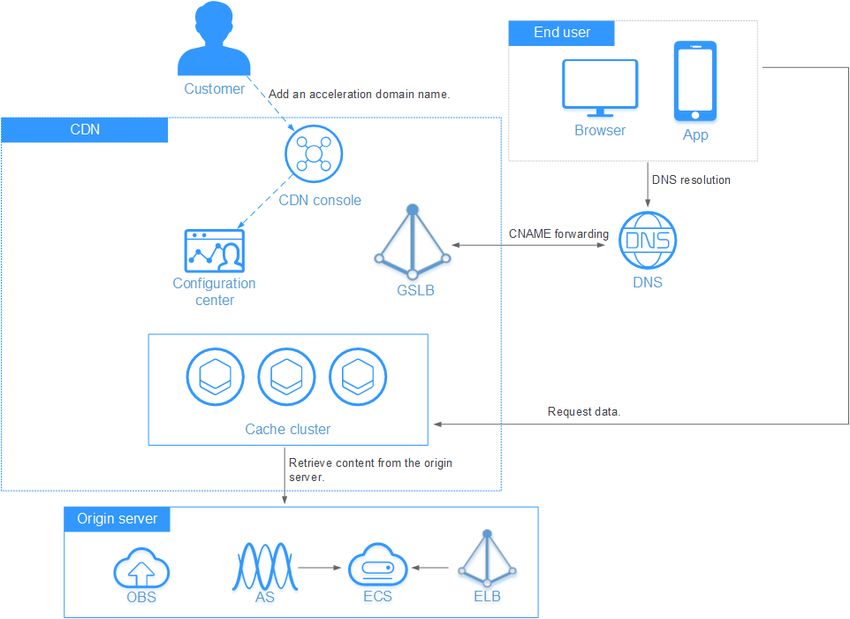
CDN
Service Overview                                                                        1 What Is CDN?

                                                                1         What Is CDN?

                   Content Delivery Network (CDN) is an intelligent virtual network built on top of
                   existing Internet infrastructure. Origin content is cached on nodes closer to end
                   users so content can load faster. CDN speeds up site response and improves site
                   availability, breaking through the bottlenecks caused by low bandwidth, heavy
                   user access traffic, and uneven distribution of edge nodes.
                   HUAWEI CLOUD CDN caches origin content on edge nodes across the globe. End
                   users are served from the nearest nodes, so that content does not always need to
                   be retrieved from the origin server. This significantly reduces latency and improves
                   user experience. Based on a group of preset policies (including content types,
                   geological locations, and network loads), CDN provides the end user with the IP
                   address of a CDN node that responds the fastest, enabling the end user to obtain
                   the requested content faster than would have otherwise been possible. For details
                   about how to connect to HUAWEI CLOUD CDN, see Getting Started.

Things You Need to Learn About CDN
                   See the following documents to learn how to use CDN.

                    Reference                                   Description

                    Basic Concepts                              Common concepts you may encounter
                                                                when using CDN

                    Progressive Knowledge                       CDN knowledge for users from
                                                                beginner level to expert level

                    API Reference                               APIs that you can call to perform
                                                                operations like you do on the CDN
                                                                console

CDN Pricing
                   See Billing.

Issue 09 (2021-01-19)             Copyright © Huawei Technologies Co., Ltd.                            1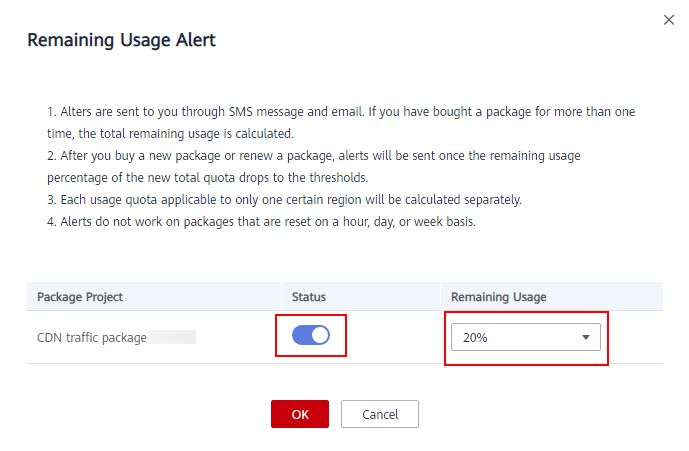
CDN
Service Overview                                                                   2 How CDN Works

                                                      2         How CDN Works

                   When an end user accesses a website that uses HUAWEI CLOUD CDN, the local
                   DNS server will redirect all domain requests to CDN using the CNAME method.
                   Then, based on a group of preset policies (including content types, geological
                   locations, and network loads), CDN provides the end user with the IP address of a
                   CDN node that responds the fastest, enabling the end user to obtain the desired
                   content faster than would have otherwise been possible. There are two different
                   HTTP request process flows, one where the CDN node has cached the desired
                   content, and one where it has not.
                   ●    Scenario where the CDN node has cached the desired content

                   Figure 2-1 HTTP request process (content cached on the CDN node)

                   The HTTP request process is as follows:

Issue 09 (2021-01-19)          Copyright © Huawei Technologies Co., Ltd.                           2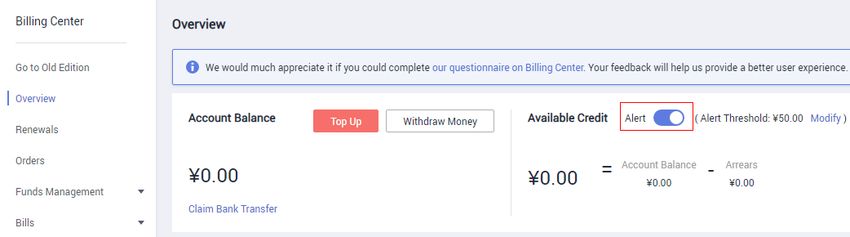
CDN
Service Overview                                                                   2 How CDN Works

                   1.   A user enters the domain name of a website to be accessed in the browser
                        and a DNS request is sent to the local DNS server.
                   2.   The DNS request is sent to the authorized DNS server of the website.
                   3.   The DNS server resolves the domain name and finds that the domain name
                        points to www.example.com.c.cdnhwc1.com (CNAME record of the domain
                        name).
                   4.   The request is directed to the CDN service.
                   5.   CDN performs intelligent domain resolution and provides the end user with
                        the IP address of a CDN node with the fastest response speed.
                   6.   The user obtains the IP address of the CDN node with the fastest response
                        speed.
                   7.   The end user's browser sends the access request to the CDN node after it
                        receives the IP address of the CDN node.
                   8.   The CDN node returns the required resources to the user.
                   ●    Scenario where the CDN node has not cached the desired content

                        Figure 2-2 HTTP request process (content not cached on the CDN node)

                   The HTTP request process is as follows:
                   1.   A user enters the domain name of a website to be accessed in the browser
                        and a DNS request is sent to the local DNS server.
                   2.   The DNS request is sent to the authorized DNS server of the website.
                   3.   The DNS server resolves the domain name and finds that the domain name
                        points to www.example.com.c.cdnhwc1.com (CNAME record of the domain
                        name).
                   4.   The request is directed to the CDN service.
                   5.   CDN performs intelligent domain resolution and provides the end user with
                        the IP address of a CDN node with the fastest response speed.

Issue 09 (2021-01-19)           Copyright © Huawei Technologies Co., Ltd.                           3
CDN
Service Overview 2 How CDN Works
6. The user obtains the IP address of the CDN node with the fastest response
speed.
7. The end user's browser sends the access request to the CDN node after it
receives the IP address of the CDN node.
8. The CDN node retrieves the required resources from the origin server.
9. The CDN node caches the retrieved resources.
10. The CDN node returns the required resources to the user.
Issue 09 (2021-01-19) Copyright © Huawei Technologies Co., Ltd. 4CDN
Service Overview 3 Node Distribution
3 Node Distribution
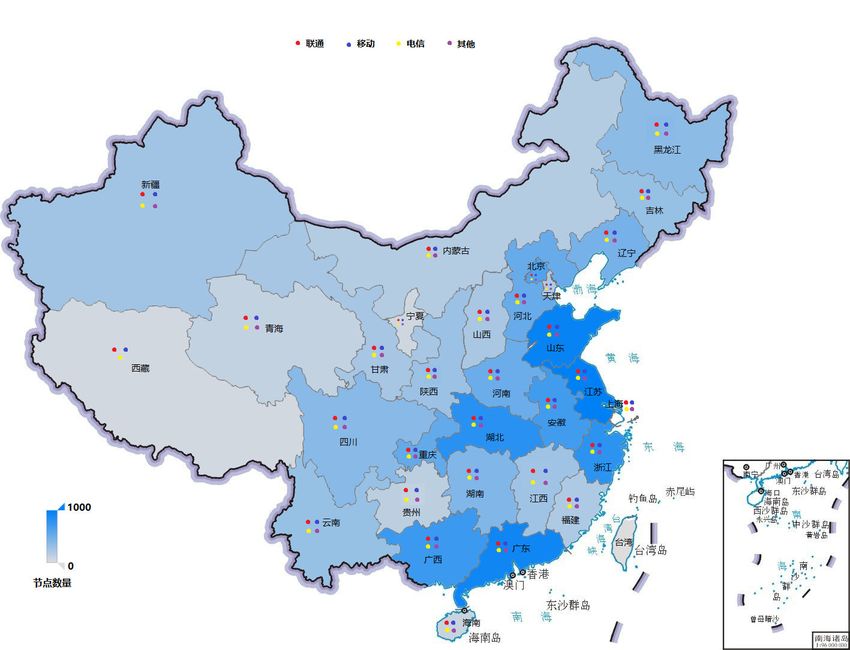
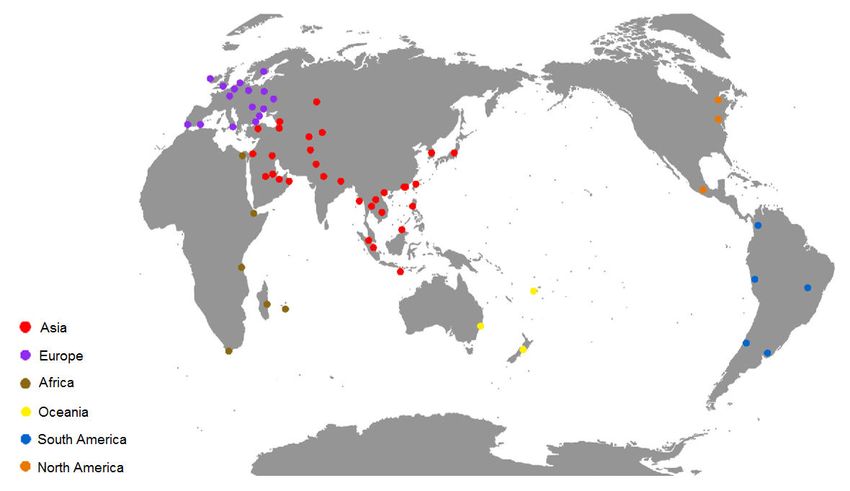
HUAWEI CLOUD has more than 2,000 edge nodes in the Chinese mainland and
over 500 edge nodes outside the Chinese mainland. The network-wide bandwidth
is at least 100 Tbit/s. Up to now, HUAWEI CLOUD CDN covers more than 130
countries and regions, connecting to over 1,600 carriers' networks. CDN precisely
schedules user requests to the most appropriate edge nodes, providing efficient
and reliable acceleration.
Node distribution in the Chinese mainland
Issue 09 (2021-01-19) Copyright © Huawei Technologies Co., Ltd. 5CDN Service Overview 3 Node Distribution Node distribution outside the Chinese mainland Issue 09 (2021-01-19) Copyright © Huawei Technologies Co., Ltd. 6
CDN
Service Overview                                                                          4 Advantages

                                                                   4         Advantages

Global Presence
                   ●    HUAWEI CLOUD CDN has more than 2,500 nodes across the globe, in which
                        2,000 are in the Chinese mainland.
                   ●    The network-wide bandwidth is at least 100 Tbit/s.
                   ●    Up to now, HUAWEI CLOUD CDN covers more than 130 countries and
                        regions, connecting to over 1,600 carriers' networks. CDN precisely schedules
                        user requests to the most appropriate edge nodes, providing efficient and
                        reliable acceleration.

Security
                   ●    HUAWEI CLOUD CDN provides secure and reliable content delivery services.
                   ●    Advanced network security functions, such as secure transmission over HTTPS
                        and hotlink protection, are applied throughout the entire network.

Easy Operations
                   ●    The access mode is simple and fast, and self-service domain name
                        configuration is provided.
                   ●    Custom configuration items including hotlink protection, cache policy, and
                        HTTPS certificates, are all supported.
                   ●    You can analyze statistics, manage logs, and customize cache policies easily.

Diverse Applications
                   ●    HUAWEI CLOUD CDN can speed up web pages, downloads, VOD, or entire
                        websites.
                   ●    One-stop acceleration solutions for a range of scenarios improve the overall
                        user experience.

Issue 09 (2021-01-19)           Copyright © Huawei Technologies Co., Ltd.                               7
CDN
Service Overview 5 Application Scenarios
5 Application Scenarios
Website Acceleration
CDN is perfect for web portals, e-commerce platforms, news apps, and user
generated content (UGC)-focused apps. It provides excellent acceleration for static
content associated with an accelerated domain name. In addition, it supports
custom cache policies. Users can set the maximum cache age as needed. The files
that can be cached include but are not limited
to .zip, .exe, .wmv, .gif, .png, .bmp, .wma, .rar, .jpeg, and .jpg.
Figure 5-1 Website acceleration
Download Acceleration
CDN is useful for download clients, game clients, app stores, and websites that
provide download services based on HTTP or HTTPS. An increasing number of new
Issue 09 (2021-01-19) Copyright © Huawei Technologies Co., Ltd. 8CDN
Service Overview 5 Application Scenarios
services, such as apps and mobile games, require software updates in real time.
Conventional download services need to provide even more and larger downloads.
If origin servers have to handle all of these requests directly, it places tremendous
strain on these servers and results in a significant bottleneck. With CDN download
acceleration, content to be downloaded is distributed to edge nodes, easing the
pressure on origin servers and ensuring high-speed downloads.
Figure 5-2 Download acceleration
VOD Acceleration
For customers providing on-demand audiovisual services, CDN is a must. Such on-
demand services include online education, video sharing, music or video on
demand, and other audiovisual content. Conventional on-demand audiovisual
content puts significant load on the servers and consumes an enormous amount
of bandwidth. When this happens, user experience is compromised for low-speed
services. CDN ensures fast, reliable, secure acceleration for such services by
delivering content to all CDN nodes. Users are then able to obtain that content
from nearby nodes anywhere and anytime.
Issue 09 (2021-01-19) Copyright © Huawei Technologies Co., Ltd. 9CDN
Service Overview 5 Application Scenarios
Figure 5-3 VOD acceleration
Whole Site Acceleration
CDN is a good option for websites that consist of both dynamic and static content
and for sites that involve a large number of ASP, JSP, or PHP requests. CDN's
whole site acceleration accelerates both dynamic and static content. Static content
can be served from nearby nodes, while dynamic content is retrieved from the
origin server through the fastest route possible. As such, dynamic pages can be
loaded more quickly by bypassing congested routes.
Issue 09 (2021-01-19) Copyright © Huawei Technologies Co., Ltd. 10CDN
Service Overview 5 Application Scenarios
Figure 5-4 Whole site acceleration
Issue 09 (2021-01-19) Copyright © Huawei Technologies Co., Ltd. 11CDN
Service Overview 6 Billing
6 Billing
This section describes the CDN billing items and billing modes. For details about
CDN pricing, see Price Calculator.
Billing Items
CDN pricing includes a basic fee and additional billing for value-added services
(optional).
● Basic fee: billing for traffic or bandwidth, which is calculated on a pay-per-use
or yearly/monthly basis.
● Value-added service fee: price for whole site acceleration. It is calculated
based on the number of requests.
Billing Options
When enabling CDN, you need to choose traffic- or peak bandwidth-based billing.
The following table describes the billing options.
Billing Billed By Description Reference
Mode
Pay per Traffic You are billed by the traffic used By traffic
use per hour.
Peak The system measures and records By peak
bandwidth a peak bandwidth value every 5 bandwidth
minutes, so 288 values are
recorded per day. The highest
measurement per day is used as
the billable bandwidth.
Issue 09 (2021-01-19) Copyright © Huawei Technologies Co., Ltd. 12CDN
Service Overview 6 Billing
Billing Billed By Description Reference
Mode
95th percentile In each calendar month, the By 95th
bandwidth bandwidth is measured and percentile
recorded every 5 minutes on each bandwidth
valid day. At the end of the
month, the records are sorted
from the highest to the lowest,
and the top 5% of the recorded
bandwidth values are thrown
away. Then the highest
bandwidth value in the remaining
records is the billable bandwidth
of the month and a bill is
generated based on the contract
price.
By average At the end of each calendar By average
daily peak month, the system calculates the daily peak
bandwidth average bandwidth based on the bandwidth
peak bandwidth of each valid day
in this month. The average value
is the billable bandwidth of the
month and the bill is generated
based on the contract price.
Yearly/ Prepayment Purchase a traffic package that Yearly/
Monthl suits your needs. Your traffic Monthly
y package is used first. Traffic subscription
consumed beyond the package
will be billed on a pay-per-use
basis.
NOTE
● The Dashboard page and the Statistical Analysis page on the CDN console display the
logged traffic statistics of accelerated domain names. These statistics are retrieved from
logs at the application level. However, the billable traffic (the actual network traffic) is
7% to 15% higher than the displayed statistics on the Dashboard and Statistical
Analysis pages because TCP/IP packet headers and TCP retransmissions also need to be
counted in. Therefore, according to common practices, the billable traffic is 10% higher
than the statistics displayed on the CDN console.
● CDN services in the Chinese mainland and outside the Chinese mainland are charged
separately.
1. Billing by traffic
Scenarios
– If you choose to be billed by traffic when enabling CDN and do not
purchase a traffic package, you will be billed on a pay-per-use basis.
– Traffic-based billing is suitable if your site traffic fluctuates greatly, daily
bandwidth usage is less than 30%, and the bandwidth has a peak.
Issue 09 (2021-01-19) Copyright © Huawei Technologies Co., Ltd. 13CDN
Service Overview 6 Billing
Pricing Details
Billed By Billing Rules Billing Cycle Description
Traffic ● Payment: post You are billed You are billed by the
payment on an hourly traffic used per hour.
● Billing method: basis. The
You are billed usage for each
based on traffic hour is usually
tiers. billed within
four hours of
● 1 GB = 1,024 when the
MB billing cycle
ends.
NOTE
● Bandwidth usage = Traffic used per day (GB)/(Peak bandwidth (Mbit/s) x 10.54);
10.54 = Daily traffic generated by 1 Mbit/s at 100% usage
● Bills generated from 23:00:00 to 00:00:00 will be paid at 15:20:00 on the following
day.
Billing Example
Traffic-based billing has three tiers: 0 TB to 10 TB, 10 TB to 50 TB, and over
50 TB.
The total traffic for company A from January 1 to January 10 is 10,000 GB,
and the traffic consumed from 00:00:00 to 01:00:00 on January 11 is 300 GB.
By 01:00:00 on January 11, the accumulated traffic is 10,300 GB. Of the 300
GB used from 00:00:00 to 01:00:00 on January 11, 240 GB is billed as part of
the 0 GB to 10 TB tier. The unit price for this traffic is M1/GB. The remaining
60 GB is billed as part of the 10 TB to 50 TB tier, and at a unit price of M2/GB.
In this scenario, for the period from 00:00:00 to 01:00:00 on January 11, you
would be billed for 240 GB x M1/GB + 60 GB x M2/GB.
Bill Run Time
The system generates a bill and automatically deducts fees from your account
balance within four hours of when the billing cycle ends. A monthly bill
usually will be finalized on the third day of each new month. The precise bill
generation time may vary slightly from month to month.
2. Billing by peak bandwidth
Scenarios
– If your site traffic is stable and daily bandwidth usage is greater than
30%, then choose peak bandwidth-based billing when enabling CDN.
Pricing Details
Issue 09 (2021-01-19) Copyright © Huawei Technologies Co., Ltd. 14CDN
Service Overview 6 Billing
Billed By Billing Rules Billing Cycle Description
Peak ● Payment: post You are billed The system measures
bandwidt payment on a daily and records a peak
h ● Billing method: basis. The bandwidth value every 5
You are billed usage for each minutes, so 288 values
based on peak day (00:00:00 are recorded per day.
bandwidth tiers. to 23:59:59) The highest
will be billed measurement per day is
● 1 Mbit/s = on the used as the billable
1,000 kbit/s following day. bandwidth.
Billing Example
Company B's peak bandwidth on a day is 2,000 Mbit/s, which puts them in
the 500 Mbit/s to 5 Gbit/s tier. The price for this bandwidth tier is M3/Mbit/s.
Therefore, the bill amount of the company on that day is 2,000 Mbit/s x M3/
Mbit/s.
Bill Run Time
The system generates a bill at about 16:00:00 (GMT+08:00) on the next day
and automatically deducts fees from your account balance. A monthly bill will
be generated on the third day of the next month. The precise bill generation
time may vary slightly from month to month.
3. Billing by 95th percentile bandwidth
Scenarios
If your monthly expenditure is greater than, or is expected to exceed $15,000
USD, contact your account manager for service provisioning.
Pricing Details
Billed By Billing Rules Billing Cycle Description
95th ● Billing item: You are billed In each calendar month,
percentile peak bandwidth on a monthly the bandwidth is
bandwidt ● Payment: post basis. The measured and recorded
h payment usage for each every 5 minutes on each
month will be valid day. At the end of
● Billing method: billed in the the month, the records
You are billed following are sorted from the
by peak month. highest to the lowest,
bandwidth at and the top 5% of the
the contract recorded bandwidth
price. values are thrown away.
● 1 Mbit/s = Then the highest
1,000 kbit/s bandwidth value in the
remaining records is the
billable bandwidth of the
month.
Issue 09 (2021-01-19) Copyright © Huawei Technologies Co., Ltd. 15CDN
Service Overview 6 Billing
NOTE
● Valid day: Any day when traffic is consumed is considered a valid day.
● Daily peak bandwidth: The system measures and records a bandwidth value every
5 minutes, so 288 values are recorded every day. The highest measurement each
day is the daily peak bandwidth for that day.
Billing Example
Company C's 95th percentile billing took effect on October 1, 2017, and the
contract price is M/Mbit/s per month.
Suppose that there are X valid days in October, so there are 288 x X
measurement points. The top 5% these bandwidth values are thrown away,
and the highest bandwidth value in the remaining records is the billable
bandwidth, which is put down as Max95. The billable amount for company C
for October is then Max95 x M x (X/Total days in a calendar month).
Bill Run Time
A bill will be generated at about 20:00:00 (GMT+08:00) on the first day of the
next month. The precise bill generation time may vary somewhat. After a bill
is generated, the system automatically deducts the billed amount from your
account balance.
4. Billing by average daily peak bandwidth
Scenarios
If your monthly expenditure is greater than, or is expected to exceed $15,000
USD, contact your account manager for service provisioning.
Pricing Details
Billed By Billing Rules Billing Cycle Description
Average ● Billing item: You are billed At the end of each
daily peak bandwidth on a monthly calendar month, the
peak ● Payment: post basis. The system calculates the
bandwidt payment usage for each average bandwidth
h month will be based on the peak
● Billing method: billed in the bandwidth of each valid
You are billed at following day in this month. The
the contract month. average value is the
price based on billable bandwidth of the
the average month and the bill is
daily peak generated based on the
bandwidth. contract price.
● 1 Mbit/s =
1,000 kbit/s
Billing Example
Company D pays for CDN by the average daily peak bandwidth. The billing
option took effect on December 15, 2017, and the contract price is M/Mbit/s
per month.
Suppose there are X days in December counted as valid days, and the peak
bandwidth values of each valid day are recorded as Max_1, Max_2, ..., Max_X.
Then calculate an average peak bandwidth value as Average (Max_1,
Issue 09 (2021-01-19) Copyright © Huawei Technologies Co., Ltd. 16CDN
Service Overview 6 Billing
Max_2, ..., Max_X). Therefore, the bill amount of the company for December
is:
Average (Max_1, Max_2, ..., Max_X) x M x (X/Total days in a calendar
month)
Bill Run Time
A bill will be generated at about 20:00:00 (GMT+08:00) on the first day of the
next month. The precise bill generation time may vary somewhat. After a bill
is generated, the system automatically deducts the billed amount from your
account balance.
5. Yearly/Monthly subscription
Scenarios
If you choose traffic-based billing when enabling CDN and you expect that
your site will generate a large volume of traffic, then you are advised to buy
economical traffic packages to save money.
Pricing Details
– Package quota: 500 GB to 1 PB. A traffic package is valid for 6 months or
1 year.
– Payment: one-off payment. The subscription takes effect immediately
after purchase. Traffic packages cannot be unsubscribed from.
– Deduction: Your traffic package is used first if you have one. Traffic
consumed beyond the package will be billed on a pay-per-use basis.
Traffic deducted from a package will not be accumulated for the billing
based on tiered pricing.
– Billing item: outbound traffic
– Billing cycle: hourly
– Package use: Only traffic generated on the Chinese mainland can be
deducted from Chinese mainland traffic packages. Only traffic generated
outside the Chinese mainland can be deducted from International traffic
packages.
Notes
– Only real-name authenticated users can buy traffic packages, and a
package can be used only by the current account of the buyer.
– If multiple traffic packages are purchased, the one with the earliest
expiration date is used first.
– A traffic package automatically expires when its validity period expires.
Any remaining traffic in the package can no longer be used.
– Traffic consumed by whole site acceleration can be deducted from your
traffic package, but the number of requests for whole site acceleration
are billed separately.
– You can use traffic packages only when you are billed by traffic. If you
change to be billed by bandwidth, your purchased packages will be
frozen until you switch back.
– CDN cannot share a traffic package with Live and VOD.
– There is a 4-hour delay before traffic can be billed.
Issue 09 (2021-01-19) Copyright © Huawei Technologies Co., Ltd. 17CDN
Service Overview 6 Billing
Billing for Whole Site Acceleration
Scenarios
Whole-site acceleration pricing includes a basic fee for site acceleration and
additional billing for value-added services.
Pricing Details
1. Basic fee: The basic fee pricing is described in Billing Options.
2. Value-added service fee: You are charged based on the number of requests for
whole site acceleration.
Billing Example
If you enabled whole site acceleration, in addition to the basic fee, requests will be
billed as well ($0.023 USD for 10,000 requests). For details, see Pricing Details.
Changing Billing Option
You can select a billing option that suits you most.
Procedure
1. Log in to the CDN console.
2. In the navigation pane, choose Dashboard.
3. In the upper right corner, view the current billing option. To change the billing
option, click the drop-down button. See Figure 6-1.
Figure 6-1 Billing option
4. Select the target billing option and click OK.
NOTE
● If you change from billing by traffic or peak bandwidth to another one, the change
will take effect at 00:00:00 (GMT+08:00) on the night of the day you submitted the
change.
● If you change from billing by 95th percentile bandwidth or average daily peak
bandwidth to another one, the change will take effect from 00:00:00 (GMT+08:00)
on the first day of the next month.
● If the 95 percentile or average daily peak bandwidth billing needs to be changed,
contact your account manager.
● You can change the billing options until that time when your most recently
submitted change has taken effect.
Renewal
You can renew a resource package on the Renewals page. For details, see How
Do I Renew an Existing Resource Package?.
Issue 09 (2021-01-19) Copyright © Huawei Technologies Co., Ltd. 18CDN
Service Overview 6 Billing
Expiration and Overdue Payment
Handling Arrears
If your account is in arrears, a retention period will be granted based on the
customer tier. For details about how to handle service suspension due to arrears,
see Service Suspension and Resource Release.
View the outstanding amount of your account in Billing Center and top up the
account to offset the outstanding amount.
About Arrears
During the grace period, CDN services are not stopped, but you cannot modify
configurations or refresh or preheat the cache.
If your account balance is used up and your account enters the retention period
due to using other HUAWEI CLOUD services, you cannot use CDN for acceleration
even if your CDN traffic package still has remaining traffic.
Balance Alert
If enabled, CDN alerts you if your account balance drops below a specified
threshold. For details, see How Do I Set a Balance Alert Threshold?.
If you are using a traffic package, you are advised to enable Remaining Usage
Alert. If the remaining quota of the traffic package drops below a configured
threshold, an SMS message or email will be sent to you.
High Bill Risk Warning
If your site is attacked or has malicious traffic coming, there may be sudden traffic
spikes that result in a bill higher than your normal daily expenditures. This part
describes the potential risks and solutions.
● Risks
Attacks generate excessive bandwidth usage, and you need to pay
significantly more than you usually do.
● Solutions
– You are advised to configure access control (including referer validation,
IP address blacklist and whitelist, and URL authentication) for domain
names to avoid unnecessary traffic or bandwidth consumption. For
details, see Access Control.
– You are advised to enable balance alert. If the available balance in your
account is lower than a specified amount, the system sends an SMS alert.
NOTE
To ensure the integrity of statistics and accuracy of bills, a bill is usually
generated after a billing cycle ends. For details, see Billing Options. Therefore,
the bill time is later than the time when resources are consumed, and resource
consumption cannot be reflected in real time through bills. This is due to the
distributed architecture of CDN nodes, which is widely used.
Issue 09 (2021-01-19) Copyright © Huawei Technologies Co., Ltd. 19CDN
Service Overview 7 Billing FAQ
7 Billing FAQ
Will I Be Billed If My Domain Name Is Under Attack?
Yes. The consumed traffic or bandwidth will be billed.
If attacks on your domain name have affected other CDN users or CDN security,
CDN will take the domain name offline according to your configured termination
policy. After your domain name returns to normal, contact customer service to
unban the domain name.
Why Is the Traffic Usage in a Traffic Package Different from That Showed in
Statistical Analysis?
The traffic displayed on the Statistical Analysis page is updated in real time, but
there is a four-hour delay for the traffic generated in one hour to be displayed on
the Traffic Packages page.
If Global Acceleration Is Configured, Are the Traffic and Bandwidth
Consumptions Inside and Outside the Chinese Mainland Billed Separately?
Yes. The traffic and bandwidth consumed in the Chinese mainland are billed based
on the prices for the Chinese mainland. The traffic and bandwidth consumed
outside the Chinese mainland are billed based on the prices for outside the
Chinese mainland. The unit prices are different.
If I Only Purchase an International Traffic Package, How Will I Be Billed for
Traffic Generated on the Chinese Mainland?
Chinese and international traffic packages are billed separately.
● If you only purchase an international traffic package, traffic generated on the
Chinese mainland will be billed on a pay-per-use basis. For details, see Price
Calculator.
● If you only purchase a Chinese mainland traffic package, traffic generated
outside the Chinese mainland will be billed on a pay-per-use basis.
Issue 09 (2021-01-19) Copyright © Huawei Technologies Co., Ltd. 20CDN
Service Overview 7 Billing FAQ
Why Is the Consumed Traffic Not Deducted from My Purchased Traffic
Package?
Possible reasons include:
● Your account is not configured to be billed by traffic consumed.
Traffic is only deducted from the traffic package when your account is
configured for it.
● Not enough time has passed.
The traffic usage for each hour is billed up to four hours after the billing cycle
ends. A traffic package cannot be used to pay for traffic generated before that
package was purchased.
Does CDN Charge for HTTP/HTTPS Requests?
If you have enabled whole site acceleration, billing items include the traffic or
bandwidth and number of requests.
Price for whole site acceleration = Basic fee (by traffic or bandwidth) + Billing for
requests
Other acceleration types, such as website acceleration and file download
acceleration, only generate basic fees (traffic or bandwidth fees).
Can Multiple Accelerated Domain Names Share the Same Traffic Package?
Yes. After a CDN traffic package is purchased, all domain names under your
account can use traffic from the same package.
Do CDN Traffic Packages Expire?
A CDN traffic package is good for six months or one year. After this period elapses,
the traffic package becomes invalid.
Do I Need to Consider the Area When Buying a Chinese Mainland Traffic
Package?
A Chinese mainland traffic package can only be used for traffic generated on the
Chinese mainland. It does not make a difference where you live in the Chinese
mainland.
How Do I Renew an Existing Traffic Package?
To renew a package:
1. Log in to the HUAWEI CLOUD console. On the homepage of the
management console, choose Storage > CDN. The CDN console is displayed.
2. In the upper right corner of the page, choose Billing Center > Renewal.
Issue 09 (2021-01-19) Copyright © Huawei Technologies Co., Ltd. 21CDN
Service Overview 7 Billing FAQ
3. On the Renewals page, renew the traffic package.
By renewing a package, you may choose to extend its validity period or
increase the package quota. You can define the validity period of the package
when you renew a package. For details about the renewal rules, see Renewal
Rules.
How Do I Set a Balance Alert Threshold?
To set a balance alert threshold:
1. Access the Overview page of the billing center.
2. Switch on Alert. Click Modify to set a threshold. See the following figure.
3. Receive an SMS message if the total amount of the available credit, cash
coupons, and flexi-purchase coupons drops below a certain threshold.
How Do I Set an Alert for the Remaining Traffic in a Traffic Package?
To set a usage alert:
1. Log in to the HUAWEI CLOUD console and go to the Billing Center.
2. In the navigation pane, choose My Packages.
Issue 09 (2021-01-19) Copyright © Huawei Technologies Co., Ltd. 22CDN
Service Overview 7 Billing FAQ
3. Click Remaining Usage Alert. In the dialog box displayed, switch on and set a
remaining usage threshold. See the following figure.
4. Click OK.
Issue 09 (2021-01-19) Copyright © Huawei Technologies Co., Ltd. 23CDN
Service Overview 8 Basic Concepts
8 Basic Concepts
● Accelerated Domain Name
Accelerated domain names are provided by users for CDN acceleration. A
domain name is an identification string that defines a realm of administrative
autonomy, authority, or control within the Internet, such as a website, an
email address, or an FTP server.
● CNAME Record
A Canonical Name record (CNAME record) is a type of resource record in the
Domain Name System (DNS) that maps one domain name (an alias) to
another (the canonical name).
Example:
a. You have a server that stores some files and can access the files through
file.example.com, but you want to access these files through another
domain name data.example.com.
b. Add a CNAME record to your domain's DNS records so that
data.example.com points to file.example.com.
c. After the CNAME record has been added, all requests for
data.example.com will be redirected to file.example.com, and the same
content will be obtained.
● CNAME
On the CDN console, after a domain name is added, the system will assign a
CNAME record (in the form of *.c.cdnhwc1.com) to the domain name. Then,
you need to add this CNAME record to your domain's DNS records. After the
CNAME record takes effect, all the requests for your domain name will be
redirected to CDN nodes.
● Origin Server
An origin server is the customer's service server, the source of the data
accelerated for delivery.
● DNS
DNS translates human readable domain names into IP addresses. With DNS,
users can access servers using their assigned domain names.
For example, when you access xxx.abc.com, the domain name is converted
into 220.xxx.xxx.xxx (an IP address) through DNS. You can use HUAWEI
CLOUD DNS or a DNS service from other providers.
Issue 09 (2021-01-19) Copyright © Huawei Technologies Co., Ltd. 24CDN
Service Overview 8 Basic Concepts
● Edge Node
Edge nodes are also known as CDN nodes or cache nodes, which end users
need the fewest intermediate steps to connect to. Compared with other
nodes, edge nodes provide end users with faster response and connection.
● Content Retrieval
If a CDN node does not cache origin content or if cached content has expired,
the CDN node obtains the requested content from the origin server and
returns it to the client.
For example, if you access a URL and the CDN node does not cache the
content, your request will be directly sent to the origin server and a response
will be returned based on the URL.
● Retrieval Host
The origin server determines the IP address of the origin server that a content
retrieval request is sent to. The retrieval host determines which site the
content retrieval request is sent to.
Example 1: If the origin domain is www.xxx.com but the retrieval host is
www.abc.com, content retrieval requests actually go to www.abc.com.
Example 2: If the origin IP address is 1.1.1.1 but the retrieval host is
www.abc.com, content retrieval requests actually go to www.abc.com.
● SSL/TLS
Secure Sockets Layer (SSL) is a cryptographic protocol designed to provide
communications security over a computer network. Transport Layer Security
(TLS) is an improved version of SSL and has now replaced SSL.
● URL Parameter Filtering
Enable or disable this configuration item based on your service needs, to filter
out parameters after the question mark (?) in a URL.
– Disabled
CDN nodes will retrieve content from origin servers based on users'
request URLs, and content corresponding to different parameters in URLs
will be cached after the end user's request is fulfilled. When users request
to access a URL, content will be provided based on different parameters
after the question mark (?) in the URL.
– Enabled
Parameters after the question mark (?) in a URL will be ignored when
CDN nodes retrieve content from origin servers. Only one version of
content will be cached after the end user's request is fulfilled. When users
request to access a URL, the cached content will be returned, which is not
differentiated according to parameters after the question mark (?) in the
URL.
Issue 09 (2021-01-19) Copyright © Huawei Technologies Co., Ltd. 25CDN
Service Overview 9 Restrictions
9 Restrictions
Admission Requirements
Table 9-1 lists requirements for domain names that require CDN acceleration.
Table 9-1 Domain name requirements
Service Area Requirement
Chinese mainland ● Real-name authentication has been completed on
HUAWEI CLOUD.
● The domain name has been licensed by the
Ministry of Industry and Information Technology
(MIIT) and the Internet Content Provider (ICP)
license is still valid.
● Content stored in your origin server has been
reviewed and approved.
Global (Chinese Content stored in your origin server has been
mainland not included) reviewed and approved.
Global ● Real-name authentication has been completed on
HUAWEI CLOUD.
● The domain name has been licensed by the
Ministry of Industry and Information Technology
(MIIT) and the Internet Content Provider (ICP)
license is still valid.
● Content stored in your origin server has been
reviewed and approved.
NOTE
Whether a domain name needs to be licensed does not depend on the region of the
domain name provider or the area where the website server is located. All that matters is
the service area of your domain name. If your service area is Chinese mainland or Global,
your domain name must be licensed by the MIIT before being added as an accelerated
domain name.
Issue 09 (2021-01-19) Copyright © Huawei Technologies Co., Ltd. 26CDN
Service Overview 9 Restrictions
Content Moderation
Before accessing your own domain name, the system reviews your site content.
CDN does not support the access of websites that violate related laws and
regulations, including but not limited to:
● Websites that contain pornographic content or content related to illegal drugs
● Gaming websites that run on illegal private servers
● Websites that provide pirated games/software/videos
● P2P lending websites
● Unofficial lottery websites
● Unlicensed hospital and pharmaceutical websites
● Inaccessible websites or websites that do not contain any substantial
information
Domain Quota Limits
Quotas are enforced for service resources on the platform to prevent unforeseen
spikes in resource usage. Quotas can limit the number or amount of resources
available to users. Table 9-2 describes the quota limits.
If the existing domain name quota cannot meet your service requirements, submit
a service ticket to request a higher quota.
Table 9-2 Domain quota limits
Resource Default Quota
Domain quantity 100
Files to be refreshed 2,000 per day
Directories to be refreshed 100 per day
URLs to be preheated 1,000 per day
Issue 09 (2021-01-19) Copyright © Huawei Technologies Co., Ltd. 27CDN
Service Overview 10 Permissions Management
10 Permissions Management
If you need to assign different permissions to employees in your enterprise to
access your CDN resources, IAM is a good choice for fine-grained permissions
management. IAM provides identity authentication, permissions management,
and access control, helping you securely access your HUAWEI CLOUD resources.
With IAM, you can use your HUAWEI CLOUD account to create IAM users, and
assign permissions to the users to control their access to specific resources. For
example, some software developers in your enterprise need to use CDN resources
but should not be allowed to delete the resources or perform any other high-risk
operations. In this scenario, you can create IAM users for the software developers
and grant them only the permissions required for using CDN resources.
If your HUAWEI CLOUD account does not require individual IAM users for
permissions management, skip this section.
IAM can be used free of charge. You pay only for the resources in your account.
For more information about IAM, see IAM Service Overview.
CDN Permissions
By default, new IAM users do not have permissions assigned. You need to add a
user to one or more groups, and attach permissions policies or roles to these
groups. Users inherit permissions from the groups to which they are added and
can perform specified operations on cloud services based on the permissions.
CDN is a global service deployed and accessed without specifying any physical
region. CDN permissions are assigned to users in the global project, and users do
not need to switch regions when accessing CDN.
You can grant users permissions by using roles and policies.
● Roles: A type of coarse-grained authorization mechanism that defines
permissions related to user responsibilities. This mechanism provides only a
limited number of service-level roles for authorization. When using roles to
grant permissions, you need to also assign other roles on which the
permissions depend to take effect. However, roles are not an ideal choice for
fine-grained authorization and secure access control.
● Policies: A type of fine-grained authorization mechanism that defines
permissions required to perform operations on specific cloud resources under
Issue 09 (2021-01-19) Copyright © Huawei Technologies Co., Ltd. 28CDN
Service Overview 10 Permissions Management
certain conditions. This mechanism allows for more flexible policy-based
authorization, meeting requirements for secure access control. For example,
you can grant ECS users only the permissions for managing a certain type of
ECSs. Most policies define permissions based on APIs. For the API actions
supported by CDN, see IAM Policies and Supported Actions.
A policy is a set of permissions defined in JSON format. By default, new IAM users
do not have any permissions assigned. You need to add a user to one or more
groups, and assign permissions policies to these groups. The user then inherits
permissions from the groups it is a member of. This process is called authorization.
After authorization, the user can perform specified operations on CDN based on
the permissions. IAM provides system policies that define the common permissions
for different services, such as administrator and read-only permissions. You can
directly use these system policies to assign permissions.
CDN is a global service deployed and accessed without specifying any physical
region. CDN permissions are assigned to users in the global project, and users do
not need to switch regions when accessing CDN.
Table 10-1 lists all the system policies supported by CDN.
Table 10-1 System-defined policies supported by CDN
Policy Name Description Policy Type
CDN Administrator Operation permission: All System role
operations on CDN.
Function scope: Global-
level service
CDN Operation permission: System-defined policy
DomainReadOnlyAc- Read-only permissions on
cess CDN accelerated domain
names.
Function scope: Global-
level service
CDN StatisticsReadOn- Operation permission: System-defined policy
lyAccess Read-only permissions on
CDN statistics.
Function scope: Global-
level service
CDN Operation permission: System-defined policy
LogsReadOnlyAccess Read-only permissions on
CDN logs.
Function scope: Global-
level service
CDN DomainConfigura- Operation permission: System-defined policy
tion Configuring CDN
accelerated domain names.
Function scope: Global-
level service
Issue 09 (2021-01-19) Copyright © Huawei Technologies Co., Ltd. 29CDN
Service Overview 10 Permissions Management
Policy Name Description Policy Type
CDN Operation permission: System-defined policy
RefreshAndPreheatAc- Configuring CDN cache
cess refreshing and preheating.
Function scope: Global-
level service
Table 2 lists the common operations supported by each system-defined policy or
role of CDN. Select the policies or roles as required.
Table 10-2 Common operations supported by each system-defined policy or role
of CDN
Operati CDN CDN CDN CDN CDN CDN
on Administr Domain Statisti LogsRea Domain RefreshAnd
ator ReadOn csRead dOnlyAc Configu PreheatAcc
lyAccess OnlyAc cess ration ess
cess
Queryin √ √ x x x x
g
domain
names
Creatin √ x x x √ x
g
domain
names
Removi √ x x x √ x
ng
domain
names
Queryin v √ x x x x
g origin
informa
tion
Queryin √ √ x x x x
g
HTTPS
settings
Queryin √ √ x x x x
g cache
rules
Issue 09 (2021-01-19) Copyright © Huawei Technologies Co., Ltd. 30CDN
Service Overview 10 Permissions Management
Operati CDN CDN CDN CDN CDN CDN
on Administr Domain Statisti LogsRea Domain RefreshAnd
ator ReadOn csRead dOnlyAc Configu PreheatAcc
lyAccess OnlyAc cess ration ess
cess
Queryin √ x x x x x
g IP
blacklis
ts
Modifyi √ x x x √ x
ng
origin
server
details
Configu √ x x x √ x
ring
HTTPS
Configu √ x v x x x
ring
cache
rules
Enablin √ x v x x √
g the
refreshi
ng
functio
n
Enablin √ x v x x √
g the
preheat
ing
functio
n
Queryin √ x √ x x x
g the
total
networ
k traffic
Queryin √ x √ x x x
g
details
of
networ
k traffic
Issue 09 (2021-01-19) Copyright © Huawei Technologies Co., Ltd. 31CDN
Service Overview 10 Permissions Management
Operati CDN CDN CDN CDN CDN CDN
on Administr Domain Statisti LogsRea Domain RefreshAnd
ator ReadOn csRead dOnlyAc Configu PreheatAcc
lyAccess OnlyAc cess ration ess
cess
Queryin √ x √ x x x
g
details
of
networ
k
bandwi
dth
Queryin √ x √ x x x
g
consum
ption
summa
ry
Queryin √ x √ x x x
g
carrier
consum
ption
Queryin √ x x √ x x
g logs
NOTE
The CDN DomainConfigureAccess and CDN RefreshAndPreheatAccess permissions cannot
be configured separately. To configure the two permissions, you need to configure the CDN
DomainReadOnlyAccess permission as well. Otherwise, all domain names are invisible, and
domain configurations and refreshing and preheating configurations cannot be performed.
Helpful Links
● IAM Service Overview
● Creating a User and Granting CDN Permissions
● Permissions Policies and Supported Actions
Issue 09 (2021-01-19) Copyright © Huawei Technologies Co., Ltd. 32CDN
Service Overview 11 Related Services
11 Related Services
Table 11-1 Related services
Interactive Function Related Service Reference
An OBS bucket can Object Storage Service (OBS) Overview
function as the origin
server of an accelerated
domain name.
IAM provides: Identity and Access Management Permissions
● User and permission (IAM) Management
management OBS Private
– IAM user and user Bucket
group management Retrieval
– Fine-grained policy
management
● Agency management
Before setting private
bucket retrieval, you
need to go to IAM
Console and authorize
OBS access to CDN.
Once the appropriate
permissions have been
granted, CDN can
access your OBS
private buckets.
CTS records operations on Cloud Trace Service (CTS) Auditing
CDN resources for future
query, audit, and
backtracking.
Issue 09 (2021-01-19) Copyright © Huawei Technologies Co., Ltd. 33CDN
Service Overview A Change History
A Change History
Release Date Description
2020-10-09 This issue is the ninth official release.
This release incorporates the following changes:
● Optimized section "Billing FAQs."
● Optimized section "Billing."
● Modified content in Table System-defined policies
supported by CDN in section "Permissions
Management."
2020-04-10 This issue is the eighth official release.
This release incorporates the following changes:
● Added section "Billing."
● Optimized some descriptions.
2019-09-26 This issue is the seventh official release.
This release incorporates the following changes:
● Added section "Restrictions."
● Add descriptions about live streaming acceleration in
section "Application Scenarios."
2019-05-08 This issue is the sixth official release.
The modification is as follows:
● Changed "Product Description" to "What Is CDN?"
● Optimized the description of "Advantages."
2019-03-14 This issue is the fifth official release.
The modification is as follows:
● Combined sections "Accessing CDN" and
"Permissions."
● Deleted section "Pricing."
Issue 09 (2021-01-19) Copyright © Huawei Technologies Co., Ltd. 34CDN
Service Overview A Change History
Release Date Description
2019-02-28 This issue is the fourth official release.
The modification is as follows:
● Optimized the description of CDN acceleration
principles.
● Optimized the "Overview" section.
● Optimized the chapter structure and added the
"Advantages" section.
● Optimized the "Related Services" section.
2018-11-30 This issue is the third official release.
The modification is as follows:
● The section "Limitations and Constraints" is moved to
the CDN User Guide.
2018-09-21 This issue is the second official release.
The modification is as follows:
● Updated section "Product Description."
● Updated section "Related Services."
● Updated section "Constraints and Limitations."
2018-05-05 This issue is the first official release.
Issue 09 (2021-01-19) Copyright © Huawei Technologies Co., Ltd. 35You can also read


