Shark Bay World Heritage Property Strategic Plan 2008-2020 - Summary document for
←
→
Page content transcription
If your browser does not render page correctly, please read the page content below

Summary document for the
Shark Bay World Heritage Property
Strategic Plan 2008–2020
Shark Bay is a place where World Heritage values are respected by the
local community and visitors, where people enjoy their experience, retain
an appreciation of the natural and cultural heritage and scientific significance
of the property, and understand the need to protect the natural and cultural
values for present and future generations, through cooperative management and
community involvement, while allowing for ecologically sustainable activities.

Cover (main) Big Lagoon, Francois Peron National Park; insets (left to right) dugong feeding on seagrass;
everlasting wildflower; stromatolites in Hamelin Pool; Eagle Bluff; canoeing in Shark Bay; woylie.

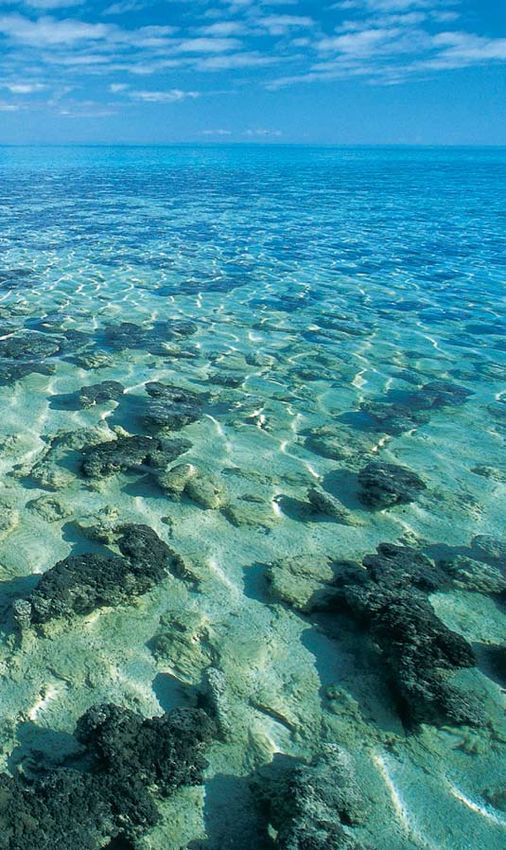
These pages (main) Stromatolites in Hamelin
Pool; (right) wildflowers in Shark Bay; (insets
left to right) recreational fishing at Steep Point;
Shark Bay daisy; Dirk Hartog Island black and
white fairy-wren; coastal landscape;
flowering Acacia.

                                                      INTRODUCTION
                                                      The spectacular 22,000-square km Shark Bay
                                                      World Heritage Property, on Australia’s most
                                                      westerly point 800 km north of Perth, is one
                                                      of the world’s most outstanding marine and
                                                      semi-arid terrestrial areas. The property is
                                                      located in the Gascoyne Region, which includes
                                                      the shires of Shark Bay and Carnarvon. Sixty-six
                                                      per cent of the property is marine with some
                                                      1500 km of coastline.
                                                      Because of its outstanding natural heritage
                                                      values, Shark Bay was inscribed on the World
                                                      Heritage List on 13 December 1991, becoming
                                                      Australia’s tenth and Western Australia’s first,
                                                      World Heritage Property. Including Shark Bay,
                                                      there are currently 17 Australian World
                                                      Heritage sites.
                                                      AMONG THE WORLD’S WONDERS
                                                      At the time of its World Heritage listing, Shark
                                                      Bay was one of just 11 places globally to satisfy
                                                      all four of the natural criteria. Other similarly
                                                      qualified places include the Great Barrier Reef,
                                                      the Galapagos Islands (Ecuador), Mt Cook and
                                                      Fiordland National Parks (New Zealand), plus
                                                      Yellowstone, the Grand Canyon and the Great
                                                      Smoky Mountains National Parks (USA).
                                                      A STRATEGIC PLAN SUMMARY
                                                      This document provides a summary of the
                                                      comprehensive strategic plan for the Shark
                                                      Bay World Heritage Property. The strategic plan
                                                      outlines the goals, objectives and strategies that
                                                      all levels of government and the community
                                                      have supported for the property’s future over
                                                      the next 12 years. It also provides management
                                                      direction and guidance for agencies,
                                                      organisations, committees and individuals.
                                                      The strategic plan provides a planning
                                                      framework for managing the Shark Bay World
                                                      Heritage Property and meeting international,
                                                      national and state obligations. It outlines
                                                      World Heritage Convention requirements and
                                                      the legislative framework across the property.
                                                      The aim of the plan is to help land and marine
                                                      managers, World Heritage Property committees
                                                      and community members understand the
                                                      value of World Heritage and their roles
                                                      and responsibilities related to it.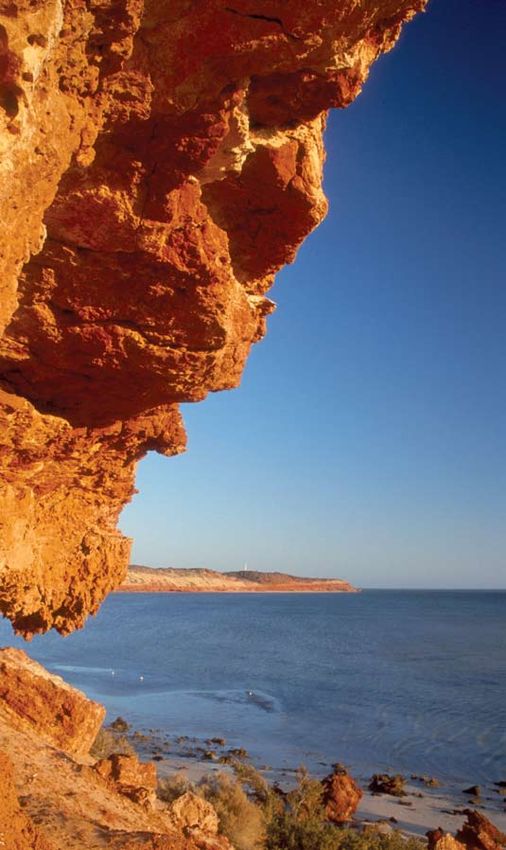
(Left) Shark Bay World Heritage Discovery
                                                                                                         Centre; (below insets left to right) Shark Bay
                                                                                                         is enjoyed by tourists and locals; fish and
                                                                                                         cabbage coral; loggerhead turtle; dugong;
                                                                                                         thick billed grasswren.

COMMITTED AND INVOLVED COMMUNITY
A key consideration for future management is that, while World Heritage values are conserved,
the community benefits socially and economically from World Heritage listing and is proud of
what is achieved. The desired future for Shark Bay is for the local community and visitors to the
area to be informed, involved, supportive and committed to helping meet Australia’s international
World Heritage obligations. All levels of the community, government, industry and landholders
need to work together for the area’s protection and enhancement.
THE COMMUNITY VISION
People living and working in the area have helped develop this vision statement:
Shark Bay is a place where World Heritage values are respected by the local community and
visitors, where people enjoy their experience, retain an appreciation of the natural and cultural
heritage and scientific significance of the property, and understand the need to protect the natural
and cultural values for present and future generations, through cooperative management and
community involvement, while allowing for ecologically sustainable activities.
WHAT IS WORLD HERITAGE?
Adopted by the United Nations Educational, Scientific and Cultural Organisation (UNESCO) in
1972, the World Heritage Convention promotes international cooperation to protect natural and
cultural heritage which is of such universal value, that its conservation is a concern for all people.
A key element of the UNESCO World Heritage mission is to encourage participation of the local
population in the preservation of their cultural and natural heritage.
In 1974, Australia became one of the first countries to ratify the World Heritage
Convention and remains a strong supporter of its aims.

                    (Main image right) Rugged and spectacular Zuytdorp Cliffs; (insets left to right)
                    boodie; migrating humpback whale; commercial beach seine fishing in Shark Bay;
                    Eremophila sp.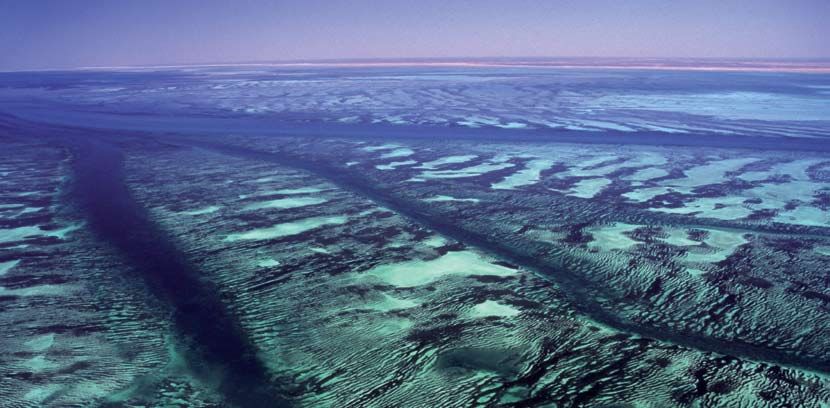
Five of Australia’s 26 endangered mammal species have their only, or major,
populations in Shark Bay. It is home for 12 threatened reptile species, 35 migratory
bird species and expansive and diverse areas of seagrass meadows, hypersaline
environments and microbial communities. The area is home to dugong and
loggerhead turtles and is also a staging point for humpback whales.

                            SHARK BAY’S WORLD HERITAGE VALUES
                            Shark Bay is a complex marine and terrestrial ecosystem containing many important features
                            that contribute to the property meeting all four natural criteria for World Heritage listing.
                            The Earth’s evolutionary history
                            Shark Bay has outstanding examples of the Earth’s evolutionary history with its microbial
                            communities, including the living stromatolites – the oldest form of life on earth –
                            and microbial mats of Hamelin Pool.
                            Geological process and biological evolution
                            Significant ongoing geological and biological processes continue in Shark Bay, such as the
                            evolution of the bay’s hydrologic system and the ongoing evolution, succession and creation
                            of exclusive habitats. The bay’s hydrological structure, altered by the Faure Sill and a high
                            evaporation rate, has produced one of world’s few areas where marine waters are hypersaline
                            – almost twice that of normal seawater. Shark Bay is one of the few marine areas in the world
                            dominated by carbonate deposition. Being at the transition between temperate and tropical marine
                            environments, Shark Bay’s waters have some 323 fish species, 218 bivalves and 80 coral species.
                            Superlative natural phenomena or features
                            The 1,030-sq km Wooramel seagrass bank contains the world’s largest seagrass meadows.
                            Other significant features include Faure Sill (and its associated unique hydrologic structure),
                            the Zuytdorp cliffs, the peninsulas and prongs, and the area’s abundance of marine fauna
                            including 10,000 dugongs (12.5 per cent of the world population), dolphins, sharks, rays,
                            green and loggerhead turtles and fish.
                            Secure habitats for threatened species
                            Five of Australia’s 26 endangered mammal species have their only, or major, populations in
                            Shark Bay. It is home to 12 threatened reptile species and 35 migratory bird species and is a
                            staging point for humpback whales. Shark Bay has 15 species of rare or threatened plants. The
                            property offers the opportunity to maintain refuges on islands and some peninsulas for species
                            that are threatened or extinct elsewhere on the mainland.
                            Other values
                            Shark Bay has other significant Aboriginal and European cultural values, plus important social
                            and economic aspects. Cultural and historic sites of significance include Aboriginal midden sites,
                            shipwreck sites and associated land camps, pearling camps, guano establishments and
                            military camps.

                                                                       Shark Bay World Heritage Property – Strategic Plan 2008 – 2020   3
(Far right) Coastline of the Zuytdorp Cliffs;
(right) Shell Beach.

                                                A RANGE OF LAND TENURES                               WORLD HERITAGE ADMINISTRATION
                                                Some highly modified enclaves are excluded            In September 1997, the Western Australian
                                                from the Shark Bay World Heritage Property,           and Commonwealth governments signed an
                                                namely the town of Denham and environs,               agreement on administrative arrangements
                                                Useless Loop saltworks and the gypsum                 for the Shark Bay World Heritage Property.
                                                leases on Edel Land. Administered under               This provides for on-ground management,
                                                State statutes, the Shark Bay World Heritage          operational support and administrative
                                                Property has land tenures including freehold,         structures run by the WA Government, in
                                                pastoral lease and conservation reserve, for a        accordance with Australia’s World Heritage
                                                range of land uses.                                   Convention obligations.
                                                World Heritage listing does not:                      The organisational structure and reporting
                                                                                                      relationships of the various committees
                                                –	alter land tenure, but may have
                                                                                                      representing the world heritage properties
                                                   some effect on land use activities;
                                                                                                      across Australia and the relevant State and
                                                –	affect ownership rights or control –               Commonwealth ministers is undergoing a
                                                   Federal, State and local laws continue             review. An Environment Protection Heritage
                                                   to apply; or                                       Council has been established to deal with
                                                                                                      all national, strategic or cross-cutting issues
                                                –	automatically mean that properties
                                                                                                      with regard to world heritage properties.
                                                   placed on the World Heritage List become
                                                                                                      Other site specific matters will be dealt with
                                                   Commonwealth properties. However, the
                                                                                                      on a bilateral basis by relevant State and
                                                   Commonwealth Government does have
                                                                                                      Commonwealth ministers. The responsibilities
                                                   an international obligation to protect
                                                                                                      of the previous Ministerial Council will be dealt
                                                   and conserve World Heritage values. This
                                                                                                      with by correspondence between ministers
                                                   is reflected in legislation and the 1997
                                                                                                      where they do not fall within the ambit of the
                                                   State–Commonwealth agreement.
                                                                                                      Environment Protection Heritage Council.
                                                                                                      The 1997 State–Commonwealth agreement
                                                                                                      established a Community Consultative
                                                                                                      Committee and Scientific Advisory Committee
                                                                                                      for the Shark Bay World Heritage Property.
                                                                                                      The role of these committees will continue
                                                                                                      to be to provide advice to the Environment
                                                                                                      Protection Heritage Council and State and
                                                                                                      Commonwealth ministers as required.

                                                (Left) Landscapes and seascapes of Peron Peninsula;
                                                (insets) aquaculture in Shark Bay Marine Park;
                                                Pileanthus sp.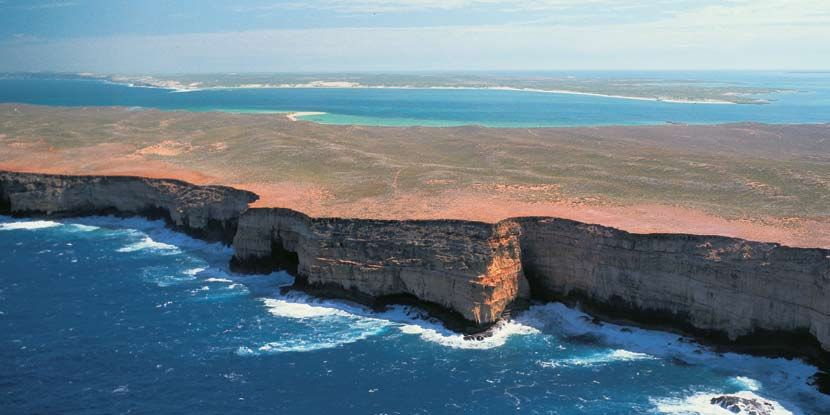
Responsible agencies                                 In achieving this primary goal, proper                 PROTECTION
                                                     regard will be given to:
The strategic plan identifies the responsibilities                                                          Appropriate legislation, regulatory and
and actions required of agencies in relation         –	allowing for the provision of essential             institutional arrangements are needed to
to managing World Heritage values. Often                services to communities;                            protect and manage the property and to
agencies or authorities will carry out these                                                                generate widespread community support.
                                                     –	allowing for uses of the area which
actions under their existing programs.                                                                      The goal is to protect Shark Bay’s World
                                                        do not threaten the World Heritage
Resources are unlikely to be available to                                                                   Heritage values through effective legislation
                                                        values and integrity;
achieve all actions immediately; many will                                                                  and integrated management. For this to
be ongoing. Initially, agencies are likely to        –	recognising the role of management                  happen, everyone involved must be aware
commit available resources to high priority,            agencies in the protection of the                   of the implications of World Heritage listing,
or ongoing, actions. The plan’s priorities              area’s values; and                                  their responsibilities for protecting World
may also be varied due to new knowledge,                                                                    Heritage values and have procedures and
                                                     –	involving the local Shark Bay community
developments or issues. The Environment                                                                     processes in place to ensure their protection.
                                                        in the planning and management of the
Protection Heritage Council and State and                                                                   Regular and effective communication
                                                        Shark Bay World Heritage Property.
Commonwealth ministers will provide                                                                         between agencies and relevant authorities
direction in identifying priority actions            IDENTIFICATION                                         will ensure that World Heritage values are
for implementation, with advice from the                                                                    actively considered in their activities and
Community Consultative Committee and                 Further biological research and surveys
                                                                                                            actions. The priorities for the protection
the Scientific Advisory Committee.                   of Shark Bay’s terrestrial and marine
                                                                                                            of World Heritage values will be identified
                                                     environments will be comprehensively
                                                                                                            and reviewed regularly, through community
At the end of the strategic plan’s term,             documented to record areas of outstanding
                                                                                                            and interagency consultation.
a new plan will be produced for approval             universal value. Over much of Shark Bay,
of State and Commonwealth ministers.                 the World Heritage values can be effectively           World Heritage values must not be
Amendments can occur within the life of              managed consistent with existing tenure and            degraded by activities or developments
the strategic plan, but these will only be           land use. However, in some areas, changes in           within or adjacent to the Shark Bay World
made after a public consultation process and         tenure may produce improved World Heritage             Heritage Property. All such proposals will
with approval of State and Commonwealth              value protection and management. In liaison            be subject to an environmental assessment
ministers.                                           with the community, including leaseholders,            process, in accordance with State and
                                                     tenure and land use requirements will                  Commonwealth legislation and the
THE PRIMARY GOAL
                                                     be reviewed to identify any such areas.                State–Commonwealth agreement.
The strategic plan’s primary goal is, in             Effective community consultation and
accordance with Australia’s obligations              efficient administration will work to develop
under the World Heritage Convention,                 community support for any appropriate
to identify, protect, conserve, present              amendments in tenure. Economic and social
and transmit to future generations and,              values also need to be taken into account
if appropriate, rehabilitate Shark Bay’s             when any tenure changes are considered.
World Heritage values.

                                                                                                  Shark Bay World Heritage Property – Strategic Plan 2008 – 2020   5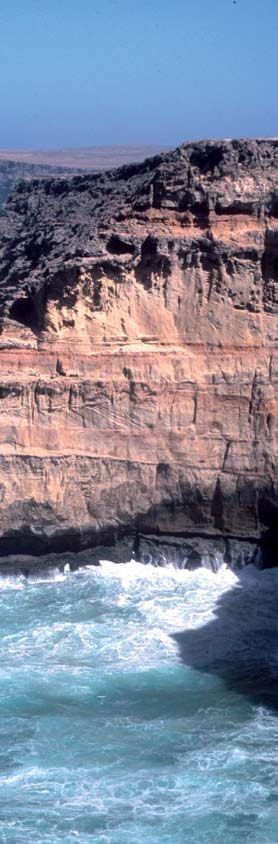
CONSERVATION                                             Fauna                                                      Cultural heritage
    A key focus of the majority of the                       An important fauna management strategy                     Although listed because of its natural values,
    recommended actions in the strategic plan is             is to re-establish populations of threatened               Shark Bay also has Aboriginal and European
    to conserve Shark Bay’s World Heritage values            species in areas where they formerly occurred.             cultural heritage of local and national
    by managing threatening processes such as                This has been undertaken on Heirisson                      significance. A key action will be to identify
    fire, introduced plants and animals, plant               Prong (including the boodie, western barred                and document such sites and artifacts, where
    and animal diseases, pollution, impacts from             bandicoot and Shark Bay mouse) as part                     appropriate, to properly protect them and to
    human activities and competing land uses.                of the Useless Loop Community Biosphere                    increase community and visitor awareness,
                                                             Project (ULCBP) and Peron Peninsula (including             appreciation and understanding of cultural
    Management, research and monitoring
                                                             the malleefowl, woylie and bilby) as part                  values.
    programs will assist in the understanding,
                                                             of the Department of Environment and
    control and management of such threats                                                                              Pollution
                                                             Conservation’s Project Eden. On Salutation
    to enable as many self-sustaining natural
                                                             Island, the greater stick-nest rat has been                A range of potential pollution sources could
    areas as possible to thrive. Through broad
                                                             successfully established to protect the species,           impact on Shark Bay’s World Heritage values,
    consultation, a research and monitoring
                                                             although it did not previously occur there.                particularly in the marine environment.
    program will be developed to prioritise
                                                             More recently Shark Bay mice, boodies, banded              Action will be taken to research, monitor
    needs and knowledge gaps.
                                                             hare-wallabies, western barred bandicoots and              and control such sources, including shipping
    Through community collaboration, human-                  greater stick-nest rats have been released on              movements and ballast discharge, and nutrient
    induced disturbances to the integrity of                 Faure Island in association with the Australian            inputs to groundwater. Through inter-agency
    World Heritage values will be minimised.                 Wildlife Conservancy.                                      collaboration, a contingency plan has been
    Community involvement will also help, with                                                                          prepared for emergency pollution and oil spills.
                                                             A key action in the strategic plan is to support
    any restoration and rehabilitation required,
                                                             the preparation and implementation of                      Introduced plants
    to enhance World Heritage values.
                                                             recovery plans for all of Shark Bay’s
                                                             threatened flora and fauna.                                Weeds can displace native flora species,
    Species richness
                                                                                                                        destroy habitat, reduce pastoral production
    To conserve the values of the property,                  Marine formations and landforms                            and degrade aesthetic and recreational
    management aims to maintain species                                                                                 values. A weed management strategy will
                                                             Marine formations (including the
    richness and genetic diversity, so the                                                                              be developed and implemented to prevent
                                                             stromatolites, Faure Sill and the Wooramel
    populations of threatened species remain                                                                            the introduction of, and to manage the
                                                             Seagrass Bank) and landforms (including
    viable, and to maintain opportunities for                                                                           spread of, unwanted terrestrial and marine
                                                             Zuytdorp Cliffs, Dirk Hartog Island dunes, shell
    the area’s continued natural evolution. A                                                                           plants. Through consultation, priorities will
                                                             deposits of L’haridon Bight and Hamelin Pool,
    key action will be to support the preparation                                                                       be documented for the control of introduced
                                                             plus Peron Peninsula) must be managed so
    and implementation of recovery plans for                                                                            plants and action plans developed with land
                                                             human activities and threatening processes
    all threatened flora and fauna in the                                                                               managers to prevent additional infestations.
                                                             do not degrade them. Through consultation,
    Shark Bay World Heritage Property.
                                                             research and monitoring will be encouraged                 Introduced animals
    Flora                                                    to avoid or minimise any such threats.
                                                                                                                        Some of the most significant threats to
    The Shark Bay World Heritage Property                    Any potential impacts on the significant                   World Heritage values are from cats, foxes,
    is located at the transition zone of two                 visual resource value of Shark Bay’s seascapes             rabbits and goats. The status and distribution
    botanical provinces – South West and                     and landscapes will be considered in the                   of introduced animals will be investigated,
    Eremaean – so many flora species are located             environmental assessment process for                       priorities established, control programs
    at the northern and southern limits of their             proposed developments and activities.                      implemented and monitoring undertaken in
    geographical range. Shark Bay contains two                                                                          collaboration with land managers. To prevent
    rare species of flora and 63 priority listed                                                                        the introduction and spread of exotic marine
    species. Further knowledge is required on                                                                           animals, similar procedures and a monitoring
    the distribution, biology, threatening                                                                              program will be developed for the marine
    processes and management requirements                                                                               environment.
    of threatened flora species and others
    of special conservation interest. Priorities
    need to be set for the conservation
    of species within the area.

                         This page (insets left to right) Malleefowl; birrida on Peron Peninsula; commercial fishing;
                         nudibranch egg mass; Monkey Mia tourists with bottlenose dolphins.
                         Opposite page Coastal landscapes in Shark Bay.

6    Shark Bay World Heritage Property – Strategic Plan 2008 – 2020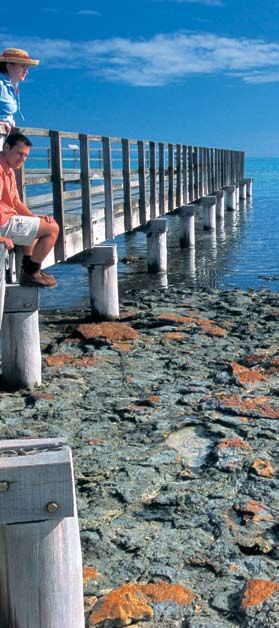
Fire
                                                  To ensure appropriate fire management,
                                                  inter-agency support will be coordinated to
                                                  contain wildfires to the smallest possible area,
                                                  so World Heritage values are protected. When
                                                  appropriate for vegetation management,
                                                  fire will be used to protect and enhance the
Through community collaboration, human-induced    habitat for threatened species. To ensure
                                                  consistent policies for fire management,
disturbances to the integrity of World Heritage   liaison will be facilitated between landholders,
values will be minimised.                         managers and local authorities.
                                                  Recreation
                                                  Shark Bay’s most popular recreation sites
                                                  include Monkey Mia, Francois Peron National
                                                  Park, Shell Beach Conservation Park, Hamelin
                                                  Pool and Steep Point. Viewing the dolphins at
                                                  Monkey Mia rates as the most popular activity,
                                                  followed by sightseeing, photography and
                                                  picknicking. Water-based activities, including
                                                  boating, canoeing, sea kayaking, diving,
                                                  snorkelling and fishing are also popular.
                                                  The plan’s objective is to encourage local
                                                  communities and visitors to enjoy the
                                                  values of Shark Bay by providing diverse
                                                  and sustainable activities that do not
                                                  adversely impact on World Heritage values.
                                                  In consultation with the community and key
                                                  organisations, appropriate planned recreation
                                                  opportunities will be facilitated. Degraded
                                                  recreation sites will be identified
                                                  and prioritised for rehabilitation.
                                                  Nature-based tourism
                                                  The property’s diverse range of natural values
                                                  and features represents a major resource for
                                                  expansion of nature-based tourism. Through
                                                  collaboration with the tourism industry and
                                                  relevant agencies, the strategic plan aims to
                                                  develop nature-based tourism opportunities
                                                  and visitor experiences that support the
                                                  protection of World Heritage values. Programs
                                                  will be developed and implemented to
                                                  ensure that tour operators remain well
                                                  informed about World Heritage values
                                                  and management proposals.
                                                  Nature-based tourism is a major regional
                                                  economic industry for Shark Bay. Interacting
                                                  with wildlife is an increasingly popular
                                                  activity for tourists who visit each year. Such
                                                  wildlife must have the appropriate legislative
                                                  protection and management. The strategic
                                                  plan works to encourage those wildlife
                                                  interactions that maximise educational
                                                  opportunities, foster support for wildlife
                                                  conservation and have no adverse impact
                                                  on fauna populations.
                                                  Access
                                                  A key objective is to provide appropriate
                                                  road, air and water access to Shark Bay
                                                  that addresses everyone’s needs, without
                                                  compromising World Heritage values. Key
                                                  actions will include improving access where
                                                  appropriate, rehabilitating disused tracks
                                                  and working with the community to restore
                                                  degraded sites.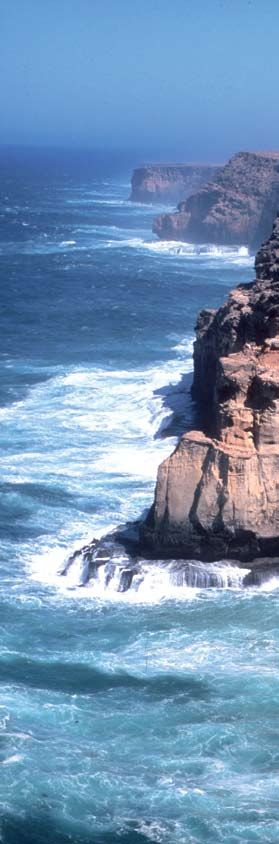
(Above) Seagrass meadows in Shark Bay
                                                                                                                  Marine Park; (insets left, left to right) Bernier
                                                                                                                  Island in Shark Bay; landscapes and seascapes
                                                                                                                  of Shark Bay; Useless Loop solar salt production;
                                                                                                                  (insets right, left to right) bottlenose dolphin;
                                                                                                                  Tamala rose; Shark Bay mouse; rugged western
                                                                                                                  coastline of proposed Dirk Hartog Island
                                                                                                                  National Park; (below right) Hamelin Pool.

    CONSERVATION (continued...)                              Petroleum resource development                   Fisheries

    Climate change                                           Proposals for petroleum exploration and          Commercial and recreational fishing are
                                                             extraction activities in and adjacent to Shark   important economic and social components
    Climate change is likely to impact on WA’s               Bay will be assessed and evaluated under         of Shark Bay. Fisheries in the area will be
    North-West through increased warming,                    existing legislation and Government policies     managed in line with existing plans, plus State
    changed rainfall patterns and more extreme               to ensure they do not impact on World            and Federal legislation. The status of targeted
    weather events. To minimise climate change               Heritage values or the environmental             fish species will be regularly monitored
    impacts on World Heritage values in Shark                integrity of the property.                       and reported. Aquaculture proposals will
    Bay, management practices will be adapted                                                                 be assessed under existing legislation and
    as new knowledge is acquired. A key action               Salt production
                                                                                                              Government policies to ensure they do not
    will be to ensure that adequate areas are set                                                             impact on World Heritage values.
                                                             Salt production is expected to continue in
    aside to protect flora and fauna, to rehabilitate
                                                             Shark Bay, but with ongoing controls and
    vegetation and to reduce overgrazing by                                                                   Pastoral use
                                                             monitoring, to avoid or minimise impacts
    native and introduced herbivores.
                                                             on World Heritage values. Through effective      Pastoralists are resource managers in the
    Mineral resource development                             consultation, mine operators will be             property. Agencies will liaise with pastoralists
                                                             encouraged to ensure protection of these         on those management activities that relate
    World Heritage listing requires any proposed             values is considered in the management and       to maintaining World Heritage values.
    developments to be carefully evaluated to                control of solar salt operations.                Pastoral lease conditions will be appropriately
    ensure they do not degrade World Heritage                                                                 evaluated and applied, to protect and conserve
    values. Proposals for mineral exploration                Basic raw material use
                                                                                                              these values.
    and development in and adjacent to Shark
                                                             The extraction of basic raw materials such
    Bay will be assessed and evaluated to ensure                                                              Other uses
                                                             as gravel, sand, limestone, gypsum and shell
    they do not impact on World Heritage
                                                             grit for construction can degrade natural        The strategic plan also addresses factors
    values and the integrity of the property. The
                                                             values including the visual landscape. Through   such as horticultural use, other resource use,
    environmental impacts of mineral exploration
                                                             inter-agency consultation, extraction of each    including resource use by Aboriginal people,
    and development will be closely monitored
                                                             resource will be planned, to address resource    and the impact of the provision of services and
    and reported.
                                                             availability and demand. Research will be        infrastructure on Shark Bay’s World Heritage
                                                             undertaken to improve the understanding          values.
                                                             of ecological processes associated with shell
                                                             being deposited in L’haridon Bight.

8    Shark Bay World Heritage Property – Strategic Plan 2008 – 2020
Proposals for mineral exploration and development in and adjacent to Shark Bay
will be assessed and evaluated to ensure they do not impact on World Heritage
values and the integrity of the property. The environmental impacts of mineral
exploration and development will be closely monitored and reported.
PRESENTATION REHABILITATION
There is an obligation to provide information, There is an obligation to restore and manage
education and interpretation to local, national degraded areas caused by unmanaged
and international visitors and communities. threatening processes. Changes to natural
The goal is to create greater awareness and functioning ecosystems can cause degradation.
understanding of Shark Bay’s universal values, The introduction of weeds and feral animals,
while engendering support and respect for plant and animal diseases, fire, pollution,
the property. human activities and competing land uses
can also degrade areas of the property.
To create a greater appreciation for these
These require some form of rehabilitation
outstanding universal values, relevant agencies
to ensure that Shark Bay’s World Heritage
will monitor the implementation of the
values are maintained. Through inter-agency
Shark Bay World Heritage Communication
consultation, an inventory of any degraded
Strategy and Interpretation Action Plan. This
sites will be developed. Rehabilitation
provides the blueprint for developing a wide
requirements will be identified, documented
range of interpretive products to promote
and prioritised. Disturbed areas will be
understanding of World Heritage values and
rehabilitated based on these priorities and
responsible visitor behaviour. The Shark Bay
community involvement will be encouraged.
World Heritage Discovery Centre was opened
in 2006 and provides outstanding interpretive Monitoring
displays that present the World Heritage
The overall condition of the Shark Bay area will
values of the property.
be monitored annually and reports prepared
every six years, to keep the community
informed about the state of the conservation
of the Shark Bay World Heritage Property
and to meet UNESCO and Commonwealth
requirements.MORE INFORMATION ON THE STRATEGIC PLAN
More information can be found at the Department of Environment
and Conservation’s website www.naturebase.net and at the Shark
Bay World Heritage website www.sharkbay.org.
Information can also be obtained by from:
Department of Environment and Conservation
89 Knight Terrace
DENHAM WA 6537
Phone: 9948 1208
Email: denham@dec.wa.gov.au
Proposed South Peron
Conservation Park
Photos – DEC, Tourism WA, Stax Stevens, Bill Bachman,
Eva Boogaard and John Gollings.
2007044-0408-1MYou can also read


