SIKKIM THE LAND OF PEACE AND TRANQUILITY - DO-DRUL CHORTEN STUPA IN GANGTOK, SIKKIM - IBEF
←
→
Page content transcription
If your browser does not render page correctly, please read the page content below
DO-DRUL CHORTEN STUPA IN GANGTOK, SIKKIM

 SIKKIM
 THE LAND OF PEACE AND TRANQUILITY

For updated information, please visit www.ibef.org                                      May 2018
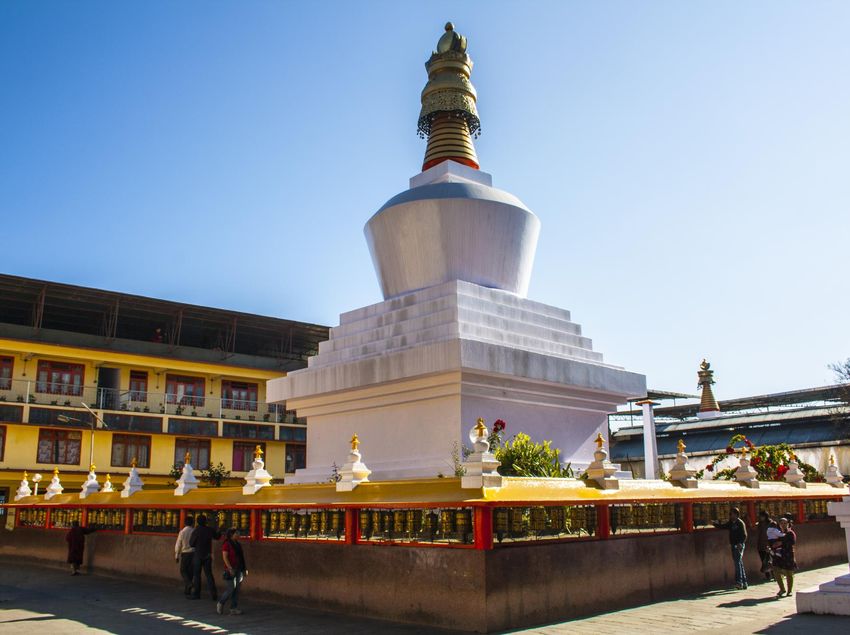
Table of Content

   Executive Summary .…………….…….…...3

   Introduction ……..………………………...…4

   Economic Snapshot ……………….….……9

   Physical Infrastructure ………..……..........14

   Social Infrastructure ..................................20

   Industrial Infrastructure ……..……….........24

  Key Sectors ………….………………..…...27

  Key Procedures & Policies………………...37

  Annexure.………….……..….......................42
EXECUTIVE SUMMARY
Sikkim is home to around 5,000 species of flowering plants, 515 rare orchids, 60 primula species & 36
Strong floriculture
rhododendron species. This makes it one of the leading states in the Northeast region in terms of production &
sector supply of cut flowers to mainland consumer markets.
Strong potential of Of the 6,000 medicinal plants in India, over 424 plants (including the famous Artemisia vulgaris that is used as
medicinal plants an antiseptic) are grown in Sikkim. Moreover, it is all set to be recognised and certified by the Government of
industry India under National Medicinal Plant Board (NMPB) proposed under the 12th Five Year Plan.
Second-largest The state is considered as a huge cardamom epicentre of the world, producing around 80 per cent of large
cardamom in the country. Additionally, India is the world leader of the crop, producing over 50 per cent of the
producer of cardamom
global yield.
Presence of world’s Sikkim has mighty snow-capped peaks including the Kanchenjunga, the world’s 3rd highest peak, which
third highest peak attracts a large number of tourists from across the globe.
The state's economy is largely agrarian, based on the terraced farming of rice & the cultivation of crops such
as maize, millet, wheat, barley, oranges, tea & cardamom.
Agrarian economy
Sikkim produces more cardamom than any other Indian state & is home to the largest cultivated area of
cardamom
Source: Ministry of Agriculture, Government of India
3 SIKKIM For updated information, please visit www.ibef.org
SIKKIM

INTRODUCTION
ADVANTAGE: SIKKIM
High economic growth and stable Conducive agro-climatic conditions
political environment
Sikkim’s GSDP grew at a compound annual growth Sikkim has favourable agro-climatic conditions, which
rate (CAGR) of 11.05 per cent between 2011-12 and support agriculture, horticulture & forestry; there is
2016-17. potential for development in related areas
Large production of cardamom and flowers has opened As per the state budget 2016-17, Sikkim got certified
up immense possibilities for the state economy. as the first fully organic state in India by the Central
Rail and air connectivity as well as optical-fibre Ministry of Agriculture and Farmers’ Welfare as well as
networks are being developed in the state. other recognized agencies of the country.
Advantage
Sikkim
Rich labour pool Policy and institutional
Sikkim has a high literacy rate of around 81.42 per support
cent.
The state has a skilled and educated labour force. The state follows the North East Industrial Investment
With the establishment of Sikkim Manipal University Promotion Policy, 2007, which provides several
and the Sikkim University, the quality and quantity of incentives and concessions for investment.
employable graduates in the state has steadily Institutional support is provided through various central
improved. & state government agencies viz., North East Council,
Skilled labour contributes in the modernization of the Ministry of Development of North Eastern Region &
state through the development of services sector. Commerce and Industries Department.
Source: Central Electricity Authority, GSDP: Gross State Domestic Product;
5 SIKKIM For updated information, please visit www.ibef.org
NORTH EAST REGION VISION 2020
Improving standard of living of
State government has set a target to
people in the region to meet the
grow GSDP by 9.5% and per capita
national standard by 2020
GSDP by 8.3% over the period 2007-
Improving the quality and creating
20.
state-of-art hospitals and
educational institutions
Encouraging public investment in Better governance and ensuring
infrastructure to attract private Quality of life of Growth rate in
people GSDP1
peace and harmony through
investment. maximising self governance and
Creating a centre for trade and increased people participation.
commerce through improving Promoting
investments Governance
relations with neighbouring
countries. Vision
2020
Encouraging HYV crops Industry Development of agro-processing
Agriculture
through better use of organic and sericulture industries.
manure, fertilisers and
Increase in investment in
pesticides. Infrastructure Tourism manufacturing units depending
Preventing soil erosion by upon the availability of resources
controlling floods. in the region.
Promoting cultivation of
horticulture crops.
Facilitating easy movement of Focusing and developing
goods and people by investing in services that would promote
road, rail, inland water and air tourism and create employment
transportation. opportunities in the states.
Source: NER Vision 2020, HYV: High Yielding Variety, 1GSDP is at fixed costs at 2006-07 prices
6 SIKKIM For updated information, please visit www.ibef.orgSIKKIM FACT FILE
Nepali, Bhutia, Lepcha, Limboo, Magar, Rai, Gurung, Sherpa,
Tamang, Newari & Sunuwar (Mukhia) are the commonly spoken
languages. Hindi & English are also widely spoken. Sikkim has 10
mountain peaks, 84 glaciers, 315 glacial lakes (including the
Tsomgo, Gurudongmar & Khecheopalri), 5 hot springs & 8 mountain
passes – making it an ideal tourist location. The Teesta & the
Rangeet are the 2 major rivers with nearly hundred tributaries.
Parameters Sikkim
Capital Gangtok
Geographical area (lakh sq. km) 7,096
Administrative districts (No) 4
Sikkim is surrounded by vast stretches of Tibetan Plateaus in the
north, the Chumbi Valley of Tibet & the Kingdom of Bhutan in the Population density (persons per sq. km) 86
east, the Kingdom of Nepal in the west & Darjeeling district of West
Total population (million) 0.61
Bengal in the south
Male population (million) 0.32
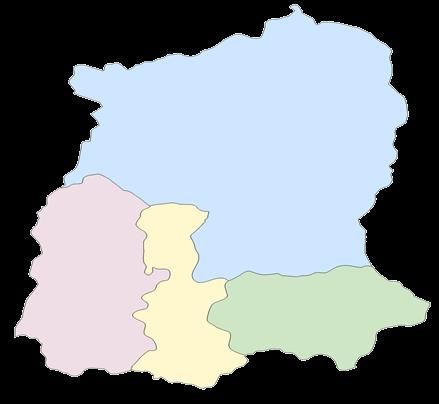
Sikkim has 4 districts – East Sikkim, West Sikkim, North Sikkim &
Female population (million) 0.29
South Sikkim. The district capitals are Gangtok, Gyalshing, Mangan
& Namchi respectively Sex ratio (females per 1,000 males) 890
Literacy rate (%) 81.42
Source: Sikkim State Portal, Census 2011
7 SIKKIM For updated information, please visit www.ibef.orgSIKKIM IN FIGURES
Sikkim’s Contribution to Indian Economy (2016-17) Physical Infrastructure in Sikkim
Parameter Sikkim India Parameter Sikkim India
GSDP as a percentage of all Installed power capacity
0.12 100.0 962.14 343,788.39
states’ GSDP (MW) (April 2018)*
1
GSDP growth rate (%) 11.20 10.83 Wireless subscribers (No)
58,507,306 1,183,408,611
(as of March 2018)
Per capita GSDP (US$) 4,343.02 1,750.29 1
Internet subscribers (Mn)
17.38 445,96
Social Indicators (as of December 2017)
National highway length
Parameter Sikkim India 463 122,432
(km)
Literacy rate (%) 81.42 73.0
Birth rate (per 1,000
16.6 20.4
population)
Industrial Infrastructure Investments (as of December 2017)
Parameter Sikkim India Parameter Sikkim India
Operational PPP projects (No) Cumulative FDI equity inflows 1
30 9,066 4.19 367.93
(May 2018) since April 2000 (US$ billion)
Note: GSDP, per capita GSDP figures are taken at current prices, Exchange Rate used is average of 2016-17, i.e. USD = 67.09, 1For West Bengal including Sikkim
PPP:-Public-Private Partnership, 1Including West Bengal and Andaman & Nicobar Islands, 2Projects Under Construction
8 SIKKIM For updated information, please visit www.ibef.orgSIKKIM ECONOMIC SNAPSHOT
ECONOMIC SNAPSHOT – GSDP
GSDP of Sikkim at current prices (in US$ billion) GSDP per capita of Sikkim at current prices (US$ )
CAGR 11.05% 4,400 CAGR 9.89% 3,30,000
3.00 0.20
3,00,000
4,343.02
0.18 4,200
0.19
2,70,000
2.81
2,91,372.89
2.50
0.16
2.59
2,64,903.60
0.17
2,40,000
2.52
2,43,392.12
4,000
2.33
0.15
0.14
2.29
4,046.80
2,10,000
2.27
2.00
2,21,082.97
3,980.25
0.14
0.12 1,80,000
1,98,686.32
3,800
0.12
1,81,841.97
1.50 0.10 1,50,000
0.11
3,792.32
0.08 3,600 1,20,000
3,654.26
3,648.97
1.00 90,000
0.06
3,400 60,000
0.04
0.50 30,000
0.02
3,200 0
0.00 0.00
2012-13
2011-12
2013-14
2014-15
2015-16
2016-17
2011-12
2012-13
2013-14
2014-15
2015-16
2016-17
US$ Rs
US$ billion Rs trillion
The state’s per capita GSDP was Rs. 291,372.89 (US$
At current prices, Sikkim’s Gross State Domestic Product
4,343.02) in 2016-17 as compared to Rs. 181,841.97 (US$
(GSDP) was Rs. 0.19 trillion (US$ 2.81 billion) in 2016-17.
3,792.32) during 2011-12.
GSDP expanded at a CAGR of 11.05 per cent between 2011-
Per capita GSDP increased at a CAGR of 9.89 per cent
12 and 2016-17.
between 2011-12 and 2016-17.
Note: GSDP, per capita GSDP figures are taken at current prices, Exchange Rate as per slide 44
Source: Ministry of Statistics and Program Implementation
10 SIKKIM For updated information, please visit www.ibef.orgECONOMIC SNAPSHOT – NSDP
NSDP of Sikkim at current prices (in US$ billion) NSDP per capita of Sikkim at current prices (US$)
3,900 3,00,000
3.00 CAGR 11.30% 0.18 CAGR 10.14%
3,800 2,70,000
3,833.39
0.16
0.17
2.50 3,700 2,40,000
2,57,182.02
0.14
0.15
3,600
2.48
2,33,953.97
2,10,000
2.29
0.14
2,14,147.51
3,574.00
2.22
2.00 0.12 3,500
1,80,000
1,94,624.07
0.12
2.03
3,502.00
2.02
1.99
0.1 3,400
1,74,182.75
0.11
1,50,000
1.50
1,58,667.38
3,300
0.10
0.08 1,20,000
3,309.02
3,200
3,216.93
1.00 0.06 90,000
3,198.95
3,100
0.04 3,000 60,000
0.50
0.02 2,900 30,000
2,800 0
0.00 0
2011-12
2012-13
2013-14
2014-15
2015-16
2016-17
2013-14
2011-12
2012-13
2014-15
2015-16
2016-17
US$ billion Rs trillion US$ Rs
Sikkim’s per capita NSDP was Rs. 257,182.02 (US$ 3,833.39)
At current prices, Sikkim’s Net State Domestic Product (NSDP)
in 2016-17 as compared to Rs.158,667.38 (US$ 3,309.02)
was Rs. 0.17 trillion (US$ 2.48 billion) during 2016-17.
during 2011-12.
NSDP of the state expanded at a CAGR of 11.30 per cent
Per capita NSDP of Sikkim increased at CAGR of 10.14 per
between 2011-12 and 2016-17.
cent between 2011-12 and 2016-17.
Note: GSDP, per capita GSDP figures are taken at current prices, Exchange Rate as per slide 44
Source: Ministry of Statistics and Program Implementation
11 SIKKIM For updated information, please visit www.ibef.orgECONOMIC SNAPSHOT – PERCENTAGE
DISTRIBUTION OF GSVA
The overall performance of the economy of the state during 2016-17 Percentage distribution of GSVA
was encouraging.
100%
At a CAGR of 12.83 per cent, the tertiary sector witnessed the 28.82% CAGR 31.68%
90%
fastest growth among the three sectors during 2011-12 to 2016-17.
The growth has been driven by trade, hotels, real estate, finance, 80% 12.83%
insurance, transport, communications and other services. 70%
62.83%
59.27%
In 2016-17, the secondary sector contributed 59.27 per cent to the 60%
state’s GSVA at current prices. It was followed by the tertiary sector 50%
at 31.68 per cent and primary sector at 9.05 per cent.
40%
9.43%
The secondary sector grew at a CAGR of 9.43 per cent between 30%
2011-12 and 2016-17. The primary sector grew at a CAGR of 12.51
20%
per cent between 2011 and 2016-17.
10%
12.51% 9.05%
8.35%
0%
2011-12 2016-17
Primary Secondary Tertiary
Note: GSDP, per capita GSDP figures are taken at current prices, Exchange Rate as per slide 44
Source: Ministry of Statistics and Program Implementation
12 SIKKIM For updated information, please visit www.ibef.orgECONOMIC SNAPSHOT – FDI INFLOWS &
INVESTMENTS
According to the Department of Industrial Policy & Promotion (DIPP), Cumulative FDI inflows in West Bengal1 (in US$ million)
FDI inflows in West Bengal, along with Sikkim and Andaman &
Nicobar Islands, during April 2000 to December 2017, totalled US$
4500
4.19 billion.
West Bengal contributes around 1% to the total FDI inflows of the
4,191.00
4000
country.
3,985.00
3,936.00
During Bengal Global Summit, a total investment of US$3.48 billion 3500
was allocated to the mining and the fisheries sector of the state.
3000
The state government has received investment proposals worth US$
2,981.00
33.83 billion during the two-day Bengal Global Business Summit,
2,742.00
which was organised in January 2017. 2500
2,306.00
2000
1,882.00
1500
1,488.00
1,392.91
1,277.60
1000
500
0
2008-09
2009-10
2010-11
2011-12
2012-13
2013-14
2014-15
2015-16
2016-17
2017-18*
Note: 1Includes West Bengal, Sikkim and Andaman & Nicobar Islands, *from April 2017 to Dec2017
Source: Department of Industrial Policy & Promotion (DIPP)
13 SIKKIM For updated information, please visit www.ibef.orgSIKKIM PHYSICAL INFRASTRUCTURE
PHYSICAL INFRASTRUCTURE – ROADS
Sikkim had a total road network of 2,425.45 km. The state is Fund Allocation and Expenditure
connected to West Bengal & the rest of India through National CRF (US$ million) EI & ISC (US$ million)
Highway (NH)-31A. The Sikkim Nationalised Transport (SNT)
Accrual Release@ Accrual Expenditure
operates 114 buses (covering 43 routes), 64 trucks & 33 tankers
2014-15 0.74 0.24 NA NA
across the state. As per budget 2018-19, more than 2,977 km new
roads have been constructed since 1994. 2015-16 0.81 NA NA NA
Bus/truck terminus will be constructed at all district headquarters & 2016-17 1.96 1.46 NA NA
other major stations. 600 km of major district roads to be made 2017-18 1.96 0.65 1.55 0.45^
intermediate lane & efforts to black topped with permanent bridges.
Road type Length (km) (2015-16)
The state government proposed an allocation of Rs. 278.59 crore National highways (NH)
463
(US$ 43.23 million) for roads and bridges department during 2018- (February 2018)
19. State highways 701.09
District roads 1,080.85
The state government has proposed a vision for the development of
roads and bridges until 2020. Other district roads 334.51
In 2018, National Highway & Infrastructure Development Corporation
Limited will construct 250km new road from NH31C near Bagrakote
and ends at Gangtok. This project was approved by centre in 2015.
Note: @ Funds to some states have been released more than accrual of a state from the unspent balance of previous years of that States, ^ Up to December, 2017, NA – Data not available.
Source: Public Works Roads and Bridges Department, Government of Sikkim, mhupa.gov.in, Ministry of Road Transport & Highways
15 SIKKIM For updated information, please visit www.ibef.orgPHYSICAL INFRASTRUCTURE – RAILWAYS AND
AIRPORTS
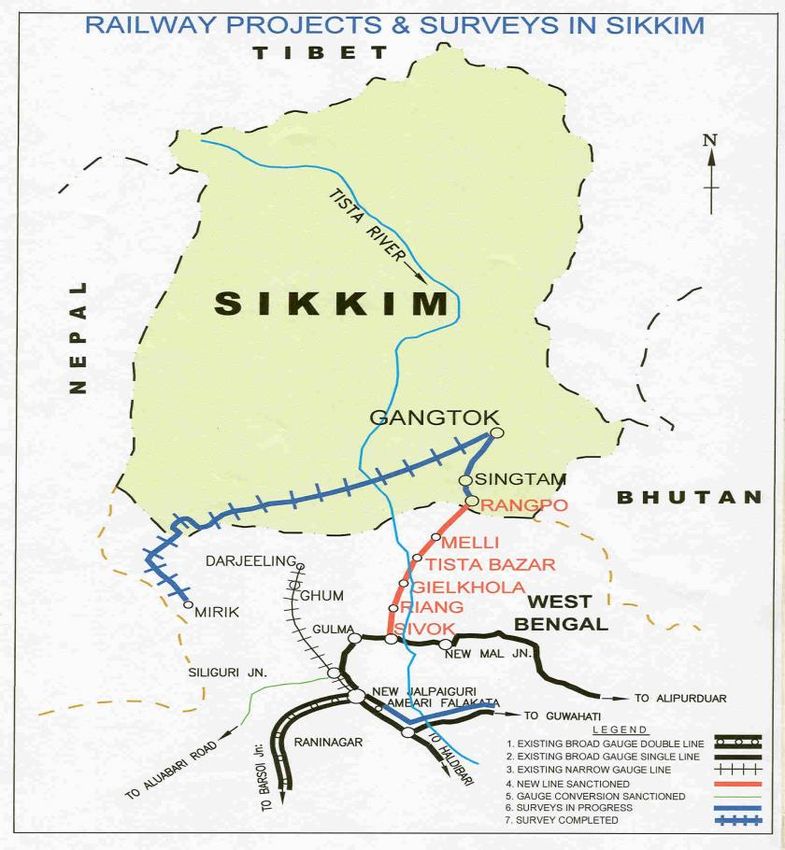
Indian Railway Construction Company approved the construction of
rail connectivity between Sevoke in West Bengal to Rangpo in
Sikkim.
Total length of rail track between Savor and Rangoon will be 52.7
km. Rail connectivity between Rangpo-Siliguri is also under
construction.
Furthermore, it is expected that the airport construction which
includes navigational aids and passenger terminal would be
completed by June 2017, and once full operational, the airport would
be capable of handling ATR-72 type of aircraft.
In May 2018, Indian Railways has plan several projects worth of Rs
40,000 crore (US$ 6.21 billion) to construct rail links which will
connect capital cities of northeast states such as Manipur, Mizoram,
Meghalaya, Sikkim and Nagaland.
Construction of much anticipated airport at Pakyong has started
adding to Sikkim's infrastructural achievements. Helicopter services
are available from Bagdogra (West Bengal) to Gangtok.
Source: North-East Region Rail Infrastructure presentation; Ministry of Railways, Sikkim Times, June 2013, Assorted news articles
16 SIKKIM For updated information, please visit www.ibef.orgPHYSICAL INFRASTRUCTURE – POWER
In April 2018, Sikkim had a total installed power generation capacity Installed power capacity (MW)
of 962.14 MW, of which 151.03 MW was under central utilities,
1200.00
399.00 MW was under private utilities & 412.11 MW was under state
1000.00
utilities. Of the overall installed power generation capacity of in the
962.14
962.14
800.00
414.48
state, thermal power contributed 87.03 MW, while hydropower and
305.50
323.48
314.00
758.14
600.00
206.40
renewable power contributed 823.00 MW & 52.12 MW, respectively.
400.00
200.00
Power generation in the state increased 120.6 per cent year-on-year
0.00
to reach 8,336.59 MW during April-January 2017-18. All villages of
2011-12
2012-13
2013-14
2014-15
2015-16
2016-17
2017-18
2018-19*
the state have been electrified.
Sarda Energy and Minerals Limited (SEML) plans to add
hydroelectric capacity of over 125MW over the upcoming 2-3 years Hydro Electric Potential Development Status (in terms of
in Sikkim and Chhattisgarh. Installed capacity (in MW)) (April 2018)
Budget allocation, during 2018-19, for the energy and power sector Total Identified capacity (above 25 MW) 4,248
is estimated to be Rs. 284.81 crore (US$ 44.19 million).
Capacity under operation 2,169.0
Capacity under construction 1,133.0
Capacity to be taken up under construction 946.0
Note: * As of April 2018
Source: Central Electricity Authority
17 SIKKIM For updated information, please visit www.ibef.orgPHYSICAL INFRASTRUCTURE – TELECOM
The state recorded tele-density1 of 91.02 per cent in March 2018. Telecom Infrastructure (As of March 2018)
Virtual Private Network (VPN) and 3G-services are available in the Wireless subscribers
1
58,507,306
state.
1
Wireline subscribers 277,267
Forty five common service centres have been constructed across the
state. The centres provide an internet-based interface for Internet subscribers
(1)(2)
17,380,000
implementing various government programmes and schemes.
Source: Telecom Regulatory Authority of India,1Denotes West Bengal, including Sikkim,
Vodafone launched its services in Lachung as the first private
telecom operator in the region. With this expansion, it has now
Major telecom operators in Sikkim
covered more than 91 per cent of population in Sikkim.
Bharat Sanchar Nigam Limited IDEA Cellular
(BSNL)
Postal services are available through India Post and other private
courier services. Reliance Communications
Bharti Airtel
Tata Teleservices
Vodafone
Note: 1Includes West Bengal, 2As of December 2017
Source: Telecom Regulatory Authority of India
18 SIKKIM For updated information, please visit www.ibef.orgPHYSICAL INFRASTRUCTURE – URBAN … (1/2)
To extend financial support to the state government and to provide Classification of AMRUT Cities in Sikkim (Funds allocated,
water supply facilities in towns having population less than 20,000,
committed and sanctioned by central) (US$ million)
the centrally sponsored Accelerated Urban Water Supply Total
Committed Sanctioned
Programme (AUWSP) was launched that has been merged with Allocation
Urban Infrastructure Development Scheme for Small and Medium Fund under AMRUT
6.22 5.60 5.60
Program^
Towns (UIDSSMT).
Total number of
1
Under this, US$ 8.7 million has been allocated for development of AMRUT cities
water supply systems and sewerage in Mangan, Namchi, Jorethang,
Melli and Rangpo. The Sikkim Water Security & Public Health
Engineering Department (WS & PHED) provides water supply to Funds Sanctioned to Sikkim under Asian Development Bank
Gangtok, six major notified towns, 41 other urban towns and 92 assistance to improve urban services (US$ million)
notified rural marketing centres.
Funds sanctioned (US$
Year
million)
As per state budget 2018-19, out of 736 Home stay sanctioned
earlier, more than 90 per cent have been completed and made 2014-15 3.35
operational. All eligible habitation as per 2001 census in the state
shall be connected by PMGSY roads by the year 2019. 2015-16 2.10
The total budget allocation for urban development and housing 2016-17 2.09
during 2018-19 is Rs. 136.23 crore (US$ 21.14 million).
2017-18* 1.18
Note: 2017-18* - Up to November 2017, ^ Status as of April, 2018
Source: Ministry of Urban Development, Government of India
19 SIKKIM For updated information, please visit www.ibef.orgSIKKIM SOCIAL INFRASTRUCTURE
SOCIAL INFRASTRUCTURE – EDUCATION
Sikkim has a literacy rate of 81.42 per cent; the male and female Funds released for Primary Education (US$ million)
literacy rates were 86.55 per cent and 75.61 per cent, respectively.
8.00
The Sikkim Manipal University (SMU), a partnership between the
7.00
Government of Sikkim and Manipal Education and Medical Group
7.02
6.00
6.49
6.29
(MEMG), provides technical, healthcare and science education. It is 5.00
5.40
rated as one of the top universities in the country. 4.00
1.61
1.55
1.40
3.00
1.08
The proposal of establishing a state university by forming a cluster of 2.00
different colleges, was also approved by RUSA (Rashtriya Uchhatar 1.00
0.00
Shiksha Abhiyan) in 2015-16. Allocation of US$ 100.3 million was *
2014-15
2015-16
2016-17
2017-18
made for human resource development department in state budget
2017-18.
Sikkim is the first state to partner with United Nation Educational and MDM Scheme SSA Programme
Scientific Organization (UNESCO) MGIEP (Mahatma Gandhi
Institution of Education for Peace and Sustainable Development) for Literacy rates (%)
implementation of Sustainable Development Goal (SDG) in Primary
Text Books. Literacy rate 81.42
Sikkim has secured third rank in the category of Elementary
Male literacy 86.55
Education in the country as per the Educational Development Index
(EDI) released by the Ministry of Human Resource Development in
Female literacy 75.61
2014. The EDI was measured based on four constituents of Access,
Infrastructure, Teachers and Outcome.
Distance education is available for students via SMU and Indira
Gandhi National Open University (IGNOU).
Note: * As of December 2017
Source: NEDFI Databank;, Budget 2017-18
21 SIKKIM For updated information, please visit www.ibef.orgSOCIAL INFRASTRUCTURE – HEALTH … (1/2)
Sikkim has an impressive health infrastructure, one of the best in the Health infrastructure (as of June 2018)
country. The state has witnessed declining critical health indicators Sub centres 197
such as disease prevalence, mortality rates, morbidity, etc. over the Primary health centres 28
past years.
Community health centres 2
Health tourism is being promoted in the state to utilise its medical District hospitals 5
infrastructure and boost the economy. The state has 28 primary Sub district hospitals 1
health centres, 197 sub-centres, two community health centres and
Source: Ministry of Health & Family Welfare, NHRM
five district hospitals as of June 2018.
The Department of Health and Family Welfare is instrumental and
Health indicators as (SRS-2016)
responsible for implementation of various national programs in the
Crude Birth rate (per thousand persons) 16.6
areas of health and family welfare as well as prevention and control
of communicable diseases in the state. Crude Death rate (per thousand persons) 4.7
Sir Thutob Namgyal Memorial (STNM) Hospital has introduced latest Infant mortality rate (per thousand live births) 16
technology for Laparoscopic Machine in surgery department. Now
onwards patients will be able to undertake medical treatment of
various cases like hernia, gallbladder stone and appendix with
advanced techniques and innovative methodology.
Source: Central Bureau of Health Intelligence, Government of India, Sample Registration System (SRS) Bulletin, NHRM
22 SIKKIM For updated information, please visit www.ibef.orgSOCIAL INFRASTRUCTURE – HEALTH … (2/2)
As per the Budget 2018-19, Drug Testing Laboratory is being constructed at Chuwatar at a cost of Rs. 880 Lakh (US$ 1.37 million).
As per the new Budget, Tuberculosis hospitals at Gyalshing and Mangan and Blood Bank at Mangan will be completed in FY2018-19.
Construction of new district hospitals at Mangan at a cost of Rs. 20 crore (US$ 3.10 million) has been initiated.
Sikkim government is also setting up Sowa Rigpa at National Institute of Tibetology, Deorali at a cost of Rs. 10.50 crore (US$ 1.63 million).
Government of Sikkim would provide free health care services with various improvements in infrastructure and improvised provision of complete
health services. Moreover, government is coming up with 1,000 bedded multi-specialty hospital.
Source: Central Bureau of Health Intelligence, Government of India, State Budget 2016-17
23 SIKKIM For updated information, please visit www.ibef.orgSIKKIM INDUSTRIAL INFRASTRUCTURE
INDUSTRIAL INFRASTRUCTURE… (1/2)
Brewing, distilling, tanning and watchmaking are the main industries Prime Minister's Employment Generation Programme (PMEGP)
Schemes, fund allocation and utilisation in Sikkim
located in the southern regions of Sikkim.
Allocated (US$ Utilized (US$ Employment
A small mining industry exists in the state, extracting minerals such Year
million) million) generated
as copper, dolomite, talc, graphite, quartzite, coal, zinc and lead.
2014-15 0.84 0.05 54
Sikkim has identified Rangpo-Gangtok, Melli-Jorethang, Jorethang-
Rishi & Ranipool-Gangtok as industrial corridors with provision for 2015-16 0.35 0.29 397
giving land to investors on a lease basis.
2016-17 0.13 0.06 201
Sikkim is a leading north-eastern state in hydroelectric power
development with 28 different projects identified under PPP mode. 2017-18* 0.31 0.04 168
The units that are engaged in the manufacturing sector are mainly Sikkim has identified agro-based industries, horticulture & floriculture,
dealing with pharmaceuticals, chemicals, liquors, foam mattresses, minor forest-based industries, animal husbandry & dairy products,
food products, iron rods, etc. tourism-related industries, IT including knowledge-based industries,
precision oriented high value-low volume products, hydro-power, tea,
education and hospitality as thrust sectors.
The Information Technology (IT) Department, Government of Sikkim
is in the process of setting up a state-of-the-art IT Park and National
Institute of Electronics and Information Technology (NIELIT) at
Note: * As on January 2018.
Pakyong.
25 SIKKIM For updated information, please visit www.ibef.orgINDUSTRIAL INFRASTRUCTURE… (2/2)
Smart cities in Sikkim
Cities Population Literacy Rate
Namchi 12,190 88.10%
Gangtok 100,286 89.33%
The central government announced plans to develop Namchi and
Gangtok as two of the 100 smart cities in India.
From the state of Sikkim, Gangtok has been included under AMRUT
(Atal Mission for Rejuvenation and Urban Transformation).
Gangtok
Namchi
26 SIKKIM For updated information, please visit www.ibef.orgSIKKIM KEY SECTORS Agro & Food Processing and Horticulture Tourism Floriculture & Sericulture Pharmaceuticals
KEY SECTORS – AGRO & FOOD PROCESSING AND
HORTICULTURE… (1/3)
Production of vegetables (in ‘000 MT) Production of fruits (in ‘000 MT)
200.0 30
190.7
150.0 25
25.8
155.7
24.8
147.7
24.1
24
24.01
20
22.5
134.4
134.5
134.4
132.5
100.0 127.7
121.0
19.7
19.7
15
18.5
98.0
15.7
50.0 10
0.0 5
0
2008-09
2009-10
2010-11
2011-12
2012-13
2013-14
2015-16
2016-17
2017-18*
2014-15
2008-09
2009-10
2010-11
2011-12
2012-13
2013-14
2015-16
2016-17
2017-18*
2014-15
Agriculture is vital to the progress of Sikkim as more than 64 per cent of the population depends on it for their livelihoods. The Sikkim AGRISNET
is an internet-based agriculture information centre to promote scientific agricultural methods and convert research into practice in the agricultural
sector.
Sikkim has a suitable climate for agricultural and horticultural products. It supports multiple crops; viz., rice, wheat, maize, millet, barley, urad, pea,
soya bean, mustard and large cardamom.
The surveyed arable land in Sikkim is 109,000 ha, of which only 9.5% is used; this provides a vast untapped potential for development.
The state government is also laying emphasis on improving organic farming in the state. The state was certified as the first fully organic state in
India, by the Central Ministry of Agriculture and Farmers’ Welfare as well as other recognized agencies of the country.
There are large areas of fallow land available, having the potential to be converted into productive farms for cash crops. Egg production in the
state stood at 101.57 lakh units in 2015-16 and 980 lakh units in 2016-17. Meat production in the state was recorded at 5.84 thousand tonnes in
2015-16. Milk production in the state increased from 66.74 thousand tonnes in 2015-16 to 127 thousand MT in 2016-17.
Note: MT: Metric Tonnes, 2017-18* - As per 1st advance estimates
Source: Indian Horticulture Database 2014-National Horticulture Board, Department of Agriculture Cooperation and Farmers Welfare
28 SIKKIM For updated information, please visit www.ibef.orgKEY SECTORS – AGRO & FOOD PROCESSING AND
HORTICULTURE… (2/3)
Crop Production – 2017-18 (‘000 tones)
The primary sector contributed around 9.05 per cent to Sikkim’s
Fruits 24.01
GSDP in 2016-17. Agriculture provides livelihood to more than 64
Vegetables 190.72
per cent of the people of Sikkim, either directly or indirectly. Sikkim is
Flowers 16.59
the top producer of large cardamom, contributing over 80 per cent to Spices 67.14
India’s total production.
Sector Allocation (2018-19) (US$ million)
The area under production for fruits and vegetables during 2017-18 Crop husbandry 24.30
was 18,330 hectares and 25,540 hectares respectively Soil & water conservation 2.40
Animal husbandry 9.22
The state government is targeting to launch new agricultural
Dairy development 0.12
schemes for making farming more profitable and allowing the youth
Fisheries 0.93
to determine agriculture as a budding source of livelihood.
Implementation of such schemes is expected to result in increase in Forestry & wild life 19.28
the area utilization for the cultivation & production of various crops. Plantations 1.36
The state government is also laying emphasis on improving organic Food, storage & warehousing 2.94
farming in the state. Cooperation 2.62
Other agricultural programmes 4.25
As per budget 2018-19, allocation of Rs. 484.52 crore (US$ 67.42
million) is made for the development of the agriculture & allied Budget 2018-19 states that total vegetables requirement to feed the
services sector. Sikkim will become self sufficient in terms of food entire population of the sate (Including tourist and floating population)
grains production within next 5 years. is 95,000 metric tonnes per annum
Note: Exchange rate as per slide number 44
Source: ENVIS Centre: Sikkim Annual Report; Sikkim Agrisnet; Spices Board, State Budget 2018-19, Department of Agriculture Cooperation and farmers Welfare
29 SIKKIM For updated information, please visit www.ibef.orgKEY SECTORS – AGRO & FOOD PROCESSING AND
HORTICULTURE… (3/3)
Allocation to Krishi Vigyan Kendras (in US$ ‘000) Allocation under PKVY scheme (in US$ ‘000)
760 1600.00
740 1400.00
1,472.1
720
738
700 1200.00
680 1000.00
1,013.5
660 800.00
666
640 600.00
653
620
614.2
400.00
627
600
580 200.00
560 0.00
2014-15
2015-16
2016-17
2017-18
2015-16
2016-17
2017-18
In 2003, the state government took the decision to become a fully organic state through a declaration in the legislative assembly. In January 2016,
Sikkim became the first fully organic state in India. Around 75,000 hectares of agricultural land in the state was gradually converted to certified
organic land by implementing practices and principles as per guidelines laid down in National Programme for Organic Production.
The Indian Council of Agricultural Research (ICAR) has established three Krishi Vigyan Kendras (KVKs) in Sikkim to impart training to farmers in
various aspects of agriculture including organic farming
Paramparagat Krishi Vikas Yojana (PKVY) is a sub-scheme under National Mission of Sustainable Agriculture (NMSA) through which assistance
is provided for Organic Farming clusters. The state has around 150 clusters and the government plans to develop 200 more clusters in 2017-18.
State Irrigation Plan (SIP) for the period of 5 years from 2017-18 to 2021-22 has been approved to surface minor irrigation and Repair,
Restoration and Renovation (RRR) of existing water bodies to support Sikkim Organic Mission.
Source: Ministry of Agriculture and Family Welfare.
30 SIKKIM For updated information, please visit www.ibef.orgKEY SECTORS – TOURISM… (1/2)
Foreign tourists arrivals in Sikkim (in ‘000) Domestic tourists arrival in Sikkim (in ‘000)
70.0
1600
60.0
66.0
1400
50.0
1376
1200
49.2
49.1
40.0 1000
38.5
30.0 800
31.7
741
600
705
26.5
700
20.0
23.9
616
577
20.8
562
559
552
400
19.2
16.5
18.0
17.8
17.7
512
485
10.0
422
348
200
0.0
0
2005
2006
2007
2008
2009
2010
2011
2012
2013
2014
2015
2016
2017
2005
2006
2007
2008
2009
2010
2011
2012
2013
2014
2015
2016
2017
An extraordinary increase in the number of tourists in the state has been witnessed over the past few years owing to the efforts that the state
government is making for promoting tourism in the state.
Sikkim is setting up a fossil park in Mamley (south Sikkim), where rare one billion-year-old Stromatolite fossils occur. GSI plans to set up a
geological museum in Sikkim, displaying fossils, rock samples, etc., from various parts of India. This would attract palaeontology enthusiasts
across the world.
Foreign tourists* would be allowed to visit certain location of the country, which were earlier considered as Restricted Area Permit regime.
Tourist arrival (domestic and foreign tourist) in the state has increased from 99,000 in 1994 to more than 1.4 million in 2017.
Note: 2017* - Up to 18th June 2017,* excluding China and Pakistan
Source: Ministry of Tourism- Government of India, Sikkim Tourism, Government of Sikkim
31 SIKKIM For updated information, please visit www.ibef.orgKEY SECTORS – TOURISM… (2/2)
Tourism in Sikkim has emerged as the new profession of the Sikkimese people with its vast natural potential. Promotion of village tourism,
homestay, cultural tourism, trekking tourism, ecotourism, wellness tourism, flori–tourism and adventure tourism has given fillip to the tourism trade
in the state where a large of number of people are engaged under different employment opportunities.
Sikkim has been featured and ranked 17th in the New York Times “52 best places to go in 2017”.
The government is aiming at developing a number of tourist infrastructures in the state so as to provide the tourists with village tourism, nature
tourism, culture tourism, etc.
Sikkim has the perfect blend of natural wealth and topography, which ranges from tropical to temperate to alpine. The state is richly endowed with
thick forests, flora and fauna, lakes, glaciers and mountain peaks, which makes it a tourist paradise.
Creation of tourist complexes, ecotourism, adventure tourism, ethnic-culture tourism, health farms, hotels, convention centres, tourist travel
services, etc., are various avenues for investment in the tourism sector.
Cho-Lhamu lake situated in Sikkim is the highest lake in the country and sixth highest in the world. It is expected that recognition of this lake will
boost tourism in the state.
During 2018-19, an allocation of Rs. 96.99 crore (US$ 15.05 million) is made for the tourism and civil aviation departments.
Ministry of Tourism, Government of India, awarded the capital city of Sikkim, Gangtok, with the title of 'Cleanest Tourist Destination' in the country.
Source: Department of Tourism, Government of Sikkim, state budget 2018-19
32 SIKKIM For updated information, please visit www.ibef.orgKEY SECTORS – FLORICULTURE & SERICULTURE…
(1/2)
Sikkim's geographical & environmental conditions are quite conducive for development of floriculture at a higher altitude. The state is also
considered to be the Kingdom of flowers and is an innovator in cultivating Gladiolus.
Sikkim is the natural home to more than 600 different types of orchids, over 100 primulas & rhododendrons. A number of cut flowers & bulbs are
supplied by the farmers to areas in Delhi, Kolkata, Kalimpong, Uttaranchal & Bihar.
The existing industry is at a nascent stage & has the potential to be developed & promoted towards an export-oriented business. The Sikkim
government has announced a technical collaboration with floriculturists from the Netherlands & Thailand to develop the state’s potential in
floriculture & market cut flowers from the state globally.
Sikkim’s most important commercial flowers are Cymbidium Orchids, Gladiolus, Carnation, Gerbera, Asiatic, Oriental Lilies & Anthurium, among
others, that can be grown for domestic & export markets.
During 2017-18, production of cut flowers & loose flowers in the state is expected to reach 0.09 thousand metric tonnes and 16.50 thousand metric
tonnes, respectively.
During the year 2017-18 total funds allocated under National Horticulture Mission For North Eastern Himalayan States for the promotion of
horticulture were Rs 35,330 crores (US$ 5.45 billion) of which Sikkim has been allocated Rs 3,050 crores (US$ 470.86 million).
Source: Indian Horticulture Database 2014-National Horticulture Board
33 SIKKIM For updated information, please visit www.ibef.orgKEY SECTORS – FLORICULTURE & SERICULTURE…
(2/2)
Mulberry, muga, eri, oak-tussar & silk are cultivated in Sikkim.
Year Raw Silk production (MT)
The Sericulture Directorate is responsible for development of
sericulture in Sikkim. The Directorate is maintaining three sericulture 2013-14 0.20
farms, one each in east, south & west district.
2014-15 8
Forest Department has two sericulture farms, one at Rorathang (east 2015-16 6
Sikkim) and the other at Mamring & Namthang (south district).
2016-17 9
The sericulture potentiality of Sikkim state has been explored jointly
by the State Department & Central Silk Board, through launching a
flagship programme titled Catalytic Development Programme.
Over the years with consorted efforts from the both ends (state &
central governments), considerable success have been achieved by
the state sericulture industry in generating employment.
2017-18 target for raw silk production of Sikkim is 17 metric tonnes.
Source: Central Silk Board, Directorate of Sericulture, Sikkim
34 SIKKIM For updated information, please visit www.ibef.orgKEY SECTORS – PHARMACEUTICALS… (1/2)
Pharmaceutical is an emerging industry in Sikkim due to tax incentives offered by the state government as well as low manufacturing and labour
costs.
Sikkim is home to 14 major pharma companies, which have significant investments in the state. These include Cipla, Sun Pharma, Zydus Cadila,
Alembic, IPCA, Alkem Lab, Intas Pharma, Torrent Pharma & Unichem.
The North-East Industrial and Investment Promotion Policy, 2007 and the pollution free atmosphere are highly beneficial for pharma investments
in Sikkim. Some of the policy incentives are:
• 100% excise duty exemption on finished products.
• 100% income tax exemption.
• 30% capital investment subsidy on investments in plant and machinery.
Sikkim is the only state which offers excise benefits and major players of the pharmaceutical industry have set up their manufacturing units in the
state. Few of these are Cipla, Sun Pharma, Zydus Cadila, Alembic, IPCA, Alkem Lab, Intas Pharma, Torrent Pharmaceuticals, Unichem.
Source: Sikkim Human Development Report 2014, News articles
35 SIKKIM For updated information, please visit www.ibef.orgKEY SECTORS – PHARMACEUTICALS… (2/2)
Cipla is one of the world’s largest generic pharmaceutical companies with presence in over 170 countries. It
exports raw materials, intermediates, prescription drugs, over the counter (OTC) & veterinary products, among
others.
The Cipla has 2 plants locations in Rangpo and Rorathang in the state.
Cipla
India-based Sun Pharmaceutical Industries Limited is a global pharmaceutical company headquartered in
Mumbai, Maharashtra. It manufactures and sells pharmaceutical formulations and Active Pharmaceutical
Ingredients (APIs) mainly in India and the US.
The company offers formulations in therapeutic areas such as cardiology, psychiatry, neurology, gastroenterology
and diabetology. There are 13,000 employees in the company.
Sun Pharmaceutical
industries limited
India-based Cadila Healthcare is a pharmaceutical company headquartered in Ahmedabad, Gujarat. It is the 5th
largest pharmaceutical company in India & is a significant manufacturer of generic drugs. The company has a
workforce of 13,181 employees worldwide.
Cadila Healthcare has global operations in four continents spread across the US, Europe, Japan, Brazil, South
Africa & 25 other emerging markets.
Zydus Cadila
36 SIKKIM For updated information, please visit www.ibef.orgSIKKIM KEY PROCEDURES & POLICIES
KEY APPROVALS REQUIRED

     List of approvals and clearances required                                                           Department

     Incorporation of company                                                                       Registrar of Companies

     Registration, Industrial Entrepreneurs Memorandum, industrial licences

     Permission for land use                                                                 Commerce and Industries Department

     Allotment of land

     Site environmental approval
                                                                                                 Sikkim Pollution Control Board
     No-objection Certificate and consent under Water and Pollution Control Act

     Registration under States Sales Tax Act and Central and State Excise Act
                                                                                  Excise Department, Sales Tax Department, Commercial Taxes
                                                                                      Division, Finance, Revenue & Expenditure Department
     Commercial taxes

     Sanction of power

     Power feasibility                                                                          Energy and Power Department

     Power connection

     Approval for construction activity and building plan                           Building & Housing Department, Public Works Department

     Water and sewerage clearance
                                                                                     Water Security & Public Health Engineering Department
     Water connection

38     SIKKIM                                                                                For updated information, please visit www.ibef.org
CONTACT LIST
Agency Contact information
Government of Sikkim
Gangtok-737101, Sikkim
Commerce and Industries Department Phone: 91-3592-202 670
Website: sikkimindustries.gov.in
E-mail: industriesdept@yahoo.co.in
Energy & Power Department
Gangtok, Sikkim
Energy and Power Department
Website: www.sikkimpower.org
E-mail: pbsubba@sikkimpower.org
Bhanu Path,
Gangtok-737103, Sikkim
Sikkim Industrial Development & Investment Corporation Limited Phone: 91-3592-202287, 202637, 209622,
(SIDICO) Fax: 91-3592-202287
Website: www.sidico.org
E-mail: mdsidico@rediffmail.com
Director, D.H.H, Gangtok
Directorate of Handloom and Handicrafts East Sikkim
Phone: 91-3592-203 126/202 926
39 SIKKIM For updated information, please visit www.ibef.orgCOST OF DOING BUSINESS IN SIKKIM
Cost parameter Cost estimate Source
Hotel costs US$ 30-150 per room per night Industry sources
Office space rent (2,000 sq ft) US$ 500-2,500 per month Industry sources
Residential space rent (2,000 sq ft) US$ 100-500 per month Industry sources
Unskilled: US$ 1.8 Ministry of Labour and Employment,
Labour cost (minimum wages per day)
Skilled: US$ 2.8 Government of India
40 SIKKIM For updated information, please visit www.ibef.orgSTATE ACTS & POLICIES
Objectives
To develop tourism as a key sector in Sikkim’s economy.
Sikkim Tourism Policy
To promote low impact sustainable tourism for the state.
2017 Read more
To deliver a consistent high level of satisfaction and hospitality to tourists.
To establish Sikkim as an ultimate and unique ecotourism destination, offering memorable and high quality learning
Sikkim Ecotourism Policy experiences to visitors to contribute to poverty alleviation and promote nature conservation.
2011
To promote ecotourism in a sustainable manner based on the Global Sustainable Tourism Criteria. Read more
To make the state’s farming more respectable, sustainable as well as remunerative.
Sikkim Policy on Organic
To extend the conserved traditional agricultural knowledge in the state.
Farming 2010 Read more
To minimize the use of agrochemicals as well as other hazardous materials in various agro-based plants.
North East Industrial and To employ IT to provide better governance and generate employment.
Investment Promotion
Policy (NEIIPP) 2007 To improve productivity in government departments through computerisation. Read more
IT Policy of Sikkim 2006 To promote the Northeast as an attractive investment destination through several concessions and incentives.
Read more
Upcoming Policies
New Sikkim Tourism Policy
41 SIKKIM For updated information, please visit www.ibef.orgSIKKIM ANNEXURE
ANNEXURE…(1/2) - SOURCES

                          Data                                                     Sources

     GSDP (state)                                              Directorate of Economics and Statistics of Sikkim

     Per capita GSDP figures                                   Directorate of Economics and Statistics of Sikkim

     GSDP (India)                                             Ministry of Statistics and Program Implementation

     Installed power capacity (MW)                               Central Electricity Authority, as of April 2018

     Wireless subscribers (No)                             Telecom Regulatory Authority of India, as of March 2018

     Internet subscribers (Mn)                           Telecom Regulatory Authority of India, as of December 2017

     National highway length (km)                        NHAI, Roads and Building Department - Government of India

     Literacy rate (%)                                                           Census 2011

     Birth rate (per 1,000 population)                                  SRS Bulletin, September 2017

     Cumulative FDI equity inflows (US$ billion)   Department of Industrial Policy & Promotion, April 2000 to December 2017

     Operational PPP projects (No)                                 Ministry of Finance, Government of India

43      SIKKIM                                                                       For updated information, please visit www.ibef.org
ANNEXURE…(2/2) - EXCHANGE RATES
Exchange Rates (Fiscal Year) Exchange Rates (Calendar Year)
Year INR INR Equivalent of one US$ Year INR Equivalent of one US$
2004–05 44.95 2005 44.11
2005–06 44.28 2006 45.33
2006–07 45.29 2007 41.29
2007–08 40.24
2008 43.42
2008–09 45.91
2009 48.35
2009–10 47.42
2010 45.74
2010–11 45.58
2011 46.67
2011–12 47.95
2012 53.49
2012–13 54.45
2013 58.63
2013–14 60.50
2014 61.03
2014-15 61.15
2015-16 65.46 2015 64.15
2016-17 67.09 2016 67.21
2017-18 64.45 2017 65.12
Source: Reserve bank of India, Average for the year
44 SIKKIM For updated information, please visit www.ibef.orgDISCLAIMER
India Brand Equity Foundation (IBEF) engaged Aranca to prepare this presentation and the same has been prepared by Aranca in consultation with
IBEF.
All rights reserved. All copyright in this presentation and related works is solely and exclusively owned by IBEF. The same may not be reproduced,
wholly or in part in any material form (including photocopying or storing it in any medium by electronic means and whether or not transiently or
incidentally to some other use of this presentation), modified or in any manner communicated to any third party except with the written approval of
IBEF.
This presentation is for information purposes only. While due care has been taken during the compilation of this presentation to ensure that the
information is accurate to the best of Aranca and IBEF’s knowledge and belief, the content is not to be construed in any manner whatsoever as a
substitute for professional advice.
Aranca and IBEF neither recommend nor endorse any specific products or services that may have been mentioned in this presentation and nor do
they assume any liability or responsibility for the outcome of decisions taken as a result of any reliance placed on this presentation.
Neither Aranca nor IBEF shall be liable for any direct or indirect damages that may arise due to any act or omission on the part of the user due to any
reliance placed or guidance taken from any portion of this presentation.
45 SIKKIM For updated information, please visit www.ibef.orgYou can also read


