SNOW FACTORY - TechnoAlpin
←
→
Page content transcription
If your browser does not render page correctly, please read the page content below
365 DAYS OF SNOWMAKING

SNOW
FACTORY
english
SNOW WITHOUT LIMITS
     Snowfactory: making snow, even when temperatures are above freezing

     The Snowfactory is an innovative snowmaking technology that can produce

     snow regardless of air temperatures. It can thus support ski resort operators

     and competition organisers in planning their operations and events. The

     Snowfactory is not intended to replace conventional snowmaking systems,

     but rather to complement them.

     The principle The Snowfactory uses an innovative refrigerating technology to

     produce snow. An efficient heat exchanger cools the water down to freezing

     point without chemical additives, and enables snow production in a closed

     circuit no matter what the outside temperature. The snow is made exclusively

     of water. The consistency and high volumes of the snow make it last longer

     despite warmer ambient temperatures.

                                                  w w w.technoalpin.com

02
365 DAYS OF SNOWMAKING
The units The Snowfactory does not require any extensive construction

work or installations. It is delivered ready for operation in a container to the

respective location, and is available both as a mobile and as a stationary unit.

The SF100 basic unit has a snow production capacity of 100 m³ per day.

The system can be expanded with modules.

Following connection to electricity and water supplies, snow can be pro-

duced twenty-four-seven, regardless of the external conditions at the site.

This allows the Snowfactory to be used for temporary installations. The

snowmaker’s production maturity and tried and tested technology allows the

adaptation of a wide range of models and sizes to individual requirements.

                                                                                   03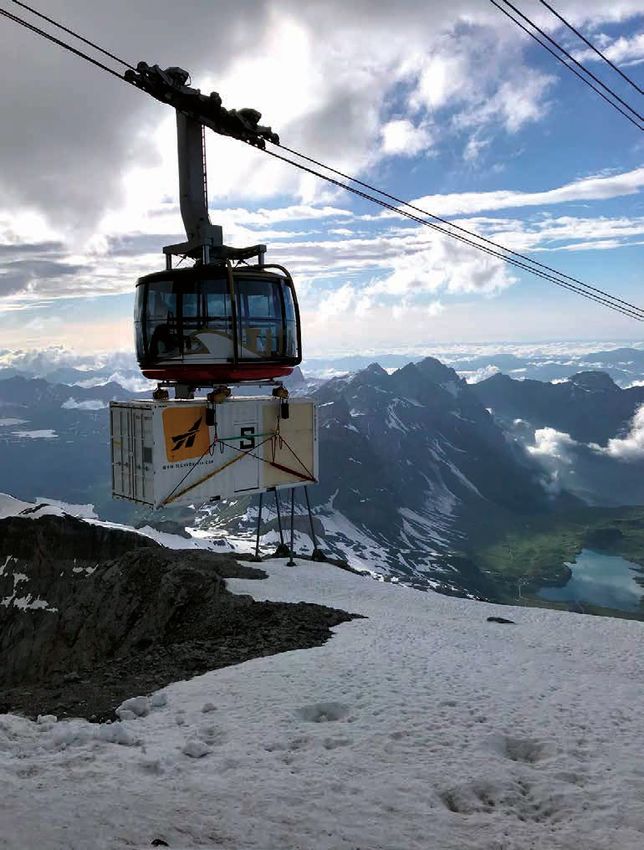
OUR SNOW IS YOUR SUCCESS
     Application areas The Snowfactory was designed for the purpose of making

     the snow experience accessible to people all over the world, no matter where

     they are. It is suitable for making snow on low-lying sections of the slopes

     and increases planning reliability for Nordic centres. The Snowfactory can

     also be used for indoor and outdoor events of all kinds.

                                                  w w w.technoalpin.com

04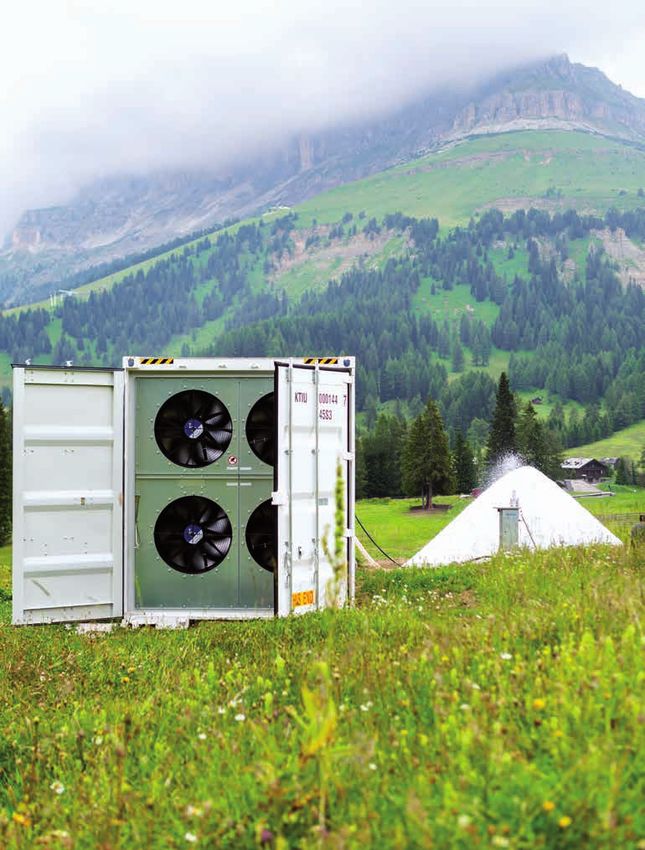
APPLICATION AREAS

1   SKI RESORTS
                          2   ALPINE SKI
                              WORLD CUP

3   CROSS-COUNTRY
    SKIING AND BIATHLON
                          4   SKI JUMPING

5   OTHER
    SPORTS EVENTS
                          6   INDOOR

7   SPECIAL EVENTS
                          8   GLACIERS

                                            05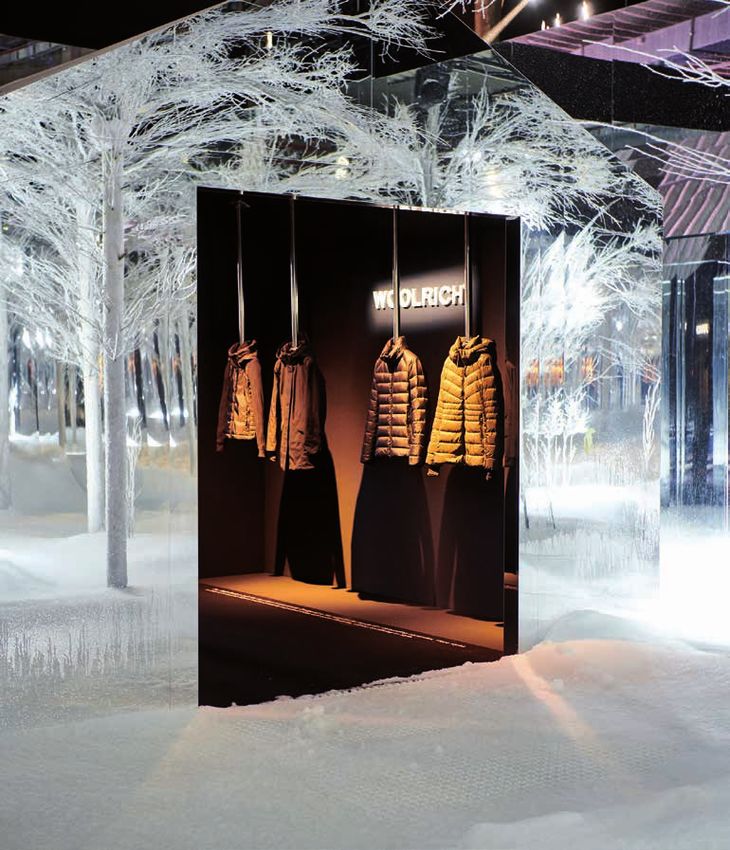
APPLICATION AREA

     SKI RESORTS

     The Snowfactory guarantees snow on the lower sections of the valley runs

     and important linking pistes, as it can also be used in warmer temperatures.

     It produces technical snow, which differs in quality and structure from the

     snow produced by traditional snowmaking machines but can be prepared in

     such a way that no difference is noticeable. The Snowfactory is not used as

     a substitute but rather as a supplement to traditional snowmaking machines.

     With the help of the Snowfactory, snow capacities can be increased in warm

     temperatures, so that the start of the season can be guaranteed. Its use not

     only allows an earlier start but also a longer season for ski resorts.

06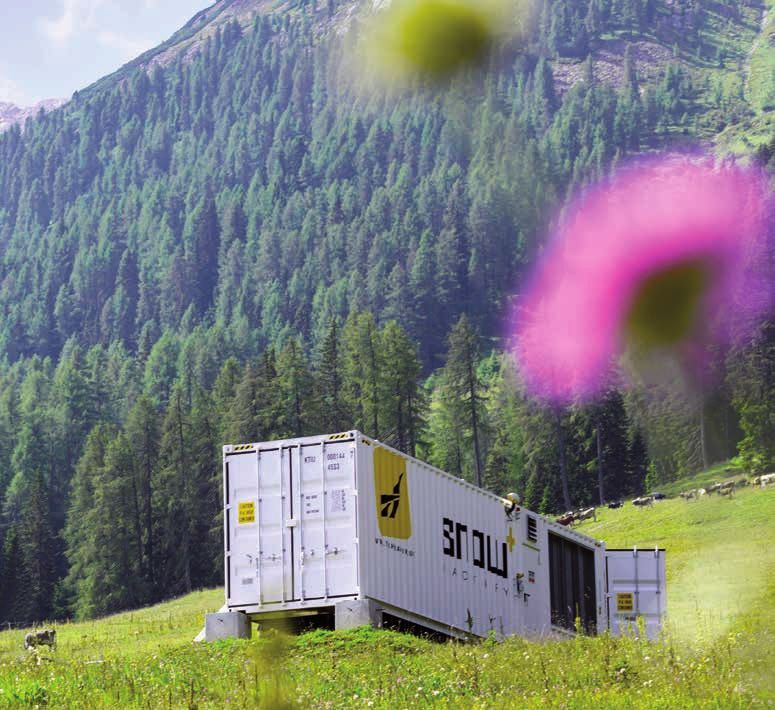
The Snowfactory is used worldwide

to guarantee snow reliability:

  Ski Apache (USA)

  Châtel and Super Besse (France)
  Gleenshee, Glencoe, Lecht and Cairngorm

  (Scotland/United Kingdom)

  Vallasen and Idre Fjäll (Sweden)

  Kurza Gora and Winterpol - Karpacz (Poland)

  Moninec and Ostrava (Czech Republic)

  Poppenberg and Klante in Winterberg

  (Germany)

  Mt. Buller, Lake Mountain and Mt. Baw Baw

  (Australia)

  Whakapapa (New Zealand)

                     SKI RESORTS            07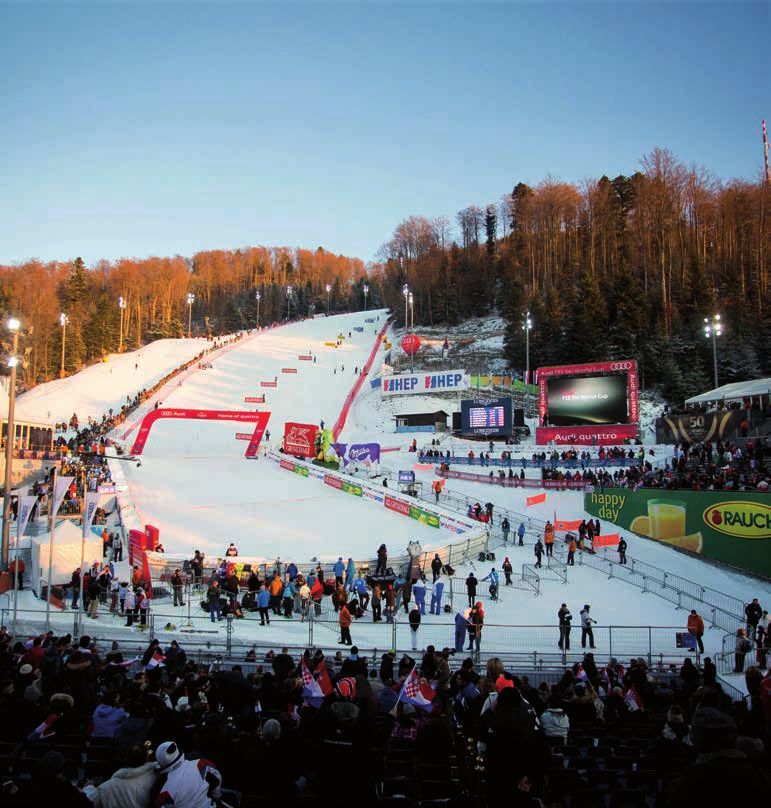
MT. BAW BAW
     The Mount Baw Baw ski resort (Australia) near Sydney has been relying on

     a Snowfactory SF100 since the 2018 winter season. The operators use the

     technology to guarantee snow reliability for their guests, which is all the more

     important in view of the resort’s short snow season. The resort’s general

     manager, John Fascio, recounts: “We are very impressed with the positive

     development in our operations.” John is not only impressed by the

     predictability of snow production, but also emphasises that “Snowfactory

     snow makes snow farming much easier”.

     WHAKAPAPA
     The Whakapapa ski area (New Zealand) is located on the largest volcano

     in the country, Mount Ruapehu. The special weather conditions with high

     humidity and considerable wind speeds in combination with ice-cold

     temperatures pose a particularly demanding challenge to snowmaking. The

     resort consequently decided to use a Snowfactory SF210. Thanks to this

     investment, the Rock Garden trail was able in 2018 to record the earliest

     season start in over 35 years.

08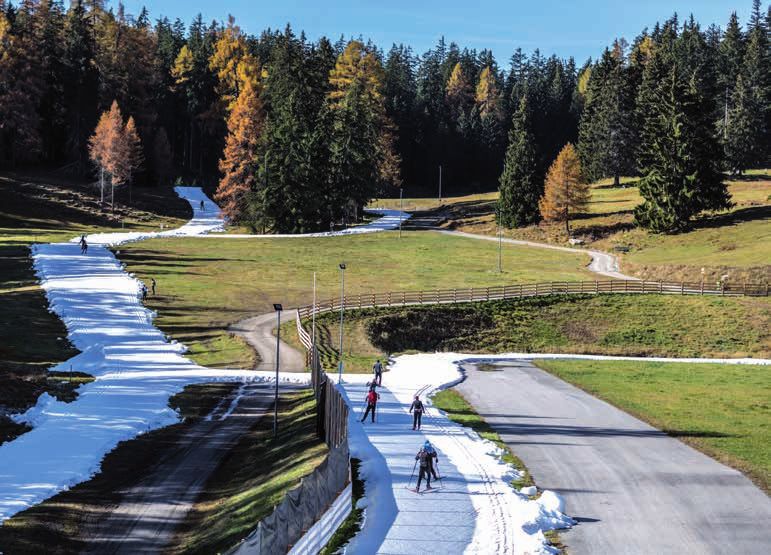
CHÂTEL
The operators of the Châtel ski resort (France) are more than pleased with

the innovative temperature-independent snowmaker. TechnoAlpin installed

its first Snowfactory SF100 in 2017, a second model was purchased two

years later. The two Snowfactorys complement the classic snowmaking

system and were acquired to ensure snow reliability and increase production

capacities.

                                                                    SKI RESORTS   09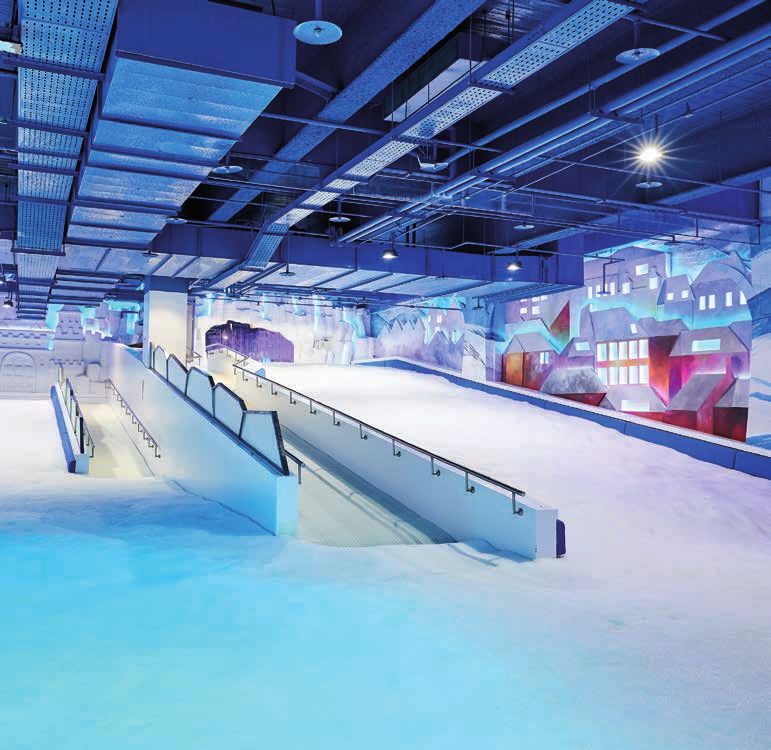
MONINEC
     The Moninec ski resort (Czech Republic) decided to use Snowfactory units in

     2016 and get the season off to an earlier start. With the help of the Snow-

     factorys, part of the skiing area was already skiable at the end of October in

     this season. The main piste awaited the first winter sports enthusiasts bang

     on time from mid-November. With the official opening on 17 November 2016,

     Moninec was the first ski resort in the Czech Republic to open for skiing that

     year.

     WINTERBERG
     The very first Snowfactory was installed in Winterberg (Germany) in 2014.

     The popular ski resort is located near the Ruhr area and therefore attracts

     not only German ski fans but also English, Dutch and Danish skiers. Snow

     reliability is a particular challenge for the Winterberg region, as the entire area

     is located at less than 810 m above sea level. Winters are relatively warm

     and humid. In the 2019/2020 ski season, the two operators, Winterberg Pop-

     penberg and Skilift Klante, which now use three SF210 and two SF210 units

     respectively for snowmaking, were able to open early.

10
CAIRNGORM
Due to the nearby ocean, winters in Cairngorm (Scotland) are characterised
by warm temperatures, strong winds and high humidity levels. Winters often
have little snow and, due to the difficult weather conditions, the snow win-
dows are usually only very short. December 2019 was the warmest Decem-
ber in Scotland since 1948, making planning reliability all the more important.
Even before this difficult season, the Cairngorm operators had decided to
support conventional technical snowmaking with a Snowfactory SF210.
Along with Cairngorm, four of the five ski resorts in the Scottish Highlands
rely on the innovative snowmaking solution, thus guaranteeing the timely
opening of the ski season.
SKI RESORTS 11APPLICATION AREA
ALPINE SKI
WORLD CUP
The Snowfactory has already proven itself at numerous world cup venues –
including the FIS Alpine Ski World Cup. Such important major events always
mean a great deal of pressure for the organisers. When a competition cannot
take place as planned, this results in a significant loss of revenue. Snow
reliability is therefore crucial. To guarantee that there is never a lack of the
precious white powder, organisers not only use conventional snow guns but
also the innovative technology of the Snowfactory. It ensures snow reliability
at an early stage and the competitions can be confirmed on time for the offi-
cial snow control. “Although the structure of the Snowfactory snow is differ-
ent than the classic, technical snow, it can be prepared so that no difference
is noticeable for the races”, explains Markus Waldner, FIS race director.
12The Alpine Ski World Cup
relies on the Snowfactory:
Stockholm (Sweden)
DSV (Germany)
Sljeme (Croatia)
ALPINE SKI WORLD CUP 13© Agence Zoom
Not just individual venues, but also sports associations rely on the
innovative snowmaking technology:
THE GERMAN SKI ASSOCIATION (DSV)
The DSV has opted for the TechnoAlpin Snowfactory and purchased two
mobile SF100 units to guarantee snow reliability for training runs and compe-
titions at the various World Cup events. Walter Vogel from the DSV is enthu-
siastic: “The Snowfactory is a very good investment, it has so far impressed
every one of the organisers.”
Offizieller Ausrüster der
Deutschen Ski-Nationalmannschaften
14SLJEME
The Slalom World Cup in Sljeme (Croatia) suffered from snow uncertainty
for many years. Two Snowfactory SF100 units were therefore put to work
in 2017 to guarantee the race. In an interview, FIS race director Markus
Waldner emphasised how indispensable the Snowfactory had also been for
the organisation of the tournament in 2020. “Using the Snowfactory in Sljeme
was of paramount importance this year: without it, the races could not have
been confirmed on Snow Control Day. The Snowfactory made it possible to
cover the last section of the racing track with snow. The traditional methods
of snow production on their own would not have been sufficient to hold the
races.”
ALPINE SKI WORLD CUP 15APPLICATION AREA
CROSS-
COUNTRY
SKIING AND
BIATHLON
Cross-country ski tracks need to be prepared on time for the start of the
season to cater to the increasing numbers of winter sports enthusiasts. In
this case, the use of the Snowfactory can be decisive. It guarantees the
snow volumes required for the high-quality preparation of the tracks, and
can ensure they are opened punctually for the start of the season, or even
earlier if required. Snow reliability is particularly important for the venues of
international competitions. Biathlon arenas and Nordic competition centres
are usually located at lower altitudes than alpine skiing areas. The snow
windows are therefore even shorter at these locations, and the use of the
Snowfactory all the more important.
16© Enrico Langer
Snowfactory produces snow
for Nordic skiing around the world:
Mt. Van Hoevenberg (USA)
Sjusjøen (Norway)
Lenzerheide (Switzerland)
Dresden and Ruhpolding (Germany)
Lake Mountain Alpin Resort (Australia)
CROSS-COUNTRY SKIING AND BIATHLON 17DRESDEN
To ensure that the FIS Cross-Country World Cup in Dresden (Germany) can
be held as planned, the organisers have two mobile Snowfactory SF100
units at hand. The snowmaking machines were made available to the orga-
nisers by the German Ski Association (DSV) and do not require any complex
construction work or installations. All they need to manufacture snow is a
simple connection to power and water supplies. The necessary snow is ge-
nerated by the Snowfactories at Dresden Airport from where it is transported
to the competition site.
LENZERHEIDE
To ensure that the Biathlon Arena in Lenzerheide (Switzerland) opens on time
for the 2018/2019 winter season beginning 1 November 2018, the organi-
sers began producing snow with their Snowfactory SF210 in the last week
of September. The Snowfactory was in operation for six weeks covering the
biathlon and Nordic skiing trails with snow.
18© Michael Schmidt
CROSS-COUNTRY SKIING AND BIATHLON 19MT. VAN HOEVENBERG
Mount Van Hoevenberg, also known as “Van Ho”, is the location of a Nordic
sports centre at Lake Placid, USA. The winter sports resort, which also
hosted the Olympic Games in 1980, has been relying on the Snowfactory
since the 2016/2017 winter season to make snow for the cross-country
ski runs. In the previous winter, Mt. Van Hoevenberg had only been able
to open for 37 days due to bad weather conditions. In the next season, a
Snowfactory was used for the first time. Mt. Van Hoevenberg manager Kris
Cheney Seymour reported happily in January 2017 that: “The Snowfactory
guarantees the possibility of opening on the desired date and holding the
races as planned: we can now be relied upon as a world-class venue. The
Snowfactory has revolutionised everything.”
20SJUSJØEN
The popular winter sports resort of Sjusjøen (Norway) is a mere 20 km from
the Olympic town of Lillehammer. The resort operators decided to use a
Snowfactory in the modern biathlon arena, above all because of the snow
guarantee. Espen Vetsch, park manager of the Sjusjøen area, is delighted
with the use of the innovative snow gun in combination with the ATASSplus
control software: “The Snowfactory ran 24 hours a day without any
problems. Thanks to the integration into ATASSplus, I was able to monitor
the machine by remote control. It is very easy to operate, as it runs fully
automatically.”
CROSS-COUNTRY SKIING AND BIATHLON 21APPLICATION AREA
SKI JUMPING
As with other important events, the Snowfactory also plays a special role
in ski jumping events such as the FIS World Cup. It is used to prepare the
out-run and is powerful enough to produce the required volumes of snow of
approximately 4,000 m³. Classic snow guns are often used in addition to the
Snowfactory. But the use of a Snowfactory as a standalone snowmaker has
also proven effective and successful.
© Jürgen Benitz
22The Snowfactory will supply
the requisite snow at future Ski Jumping
World Cup events in Germany,
regardless of climatic conditions:
Klingenthal (Germany)
Willingen (Germany)
Titisee-Neustadt (Germany)
© SC-Willingen
SKI JUMPING 23© G. Brand
KLINGENTHAL
To guarantee that the Ski Jumping World Cup in Klingenthal (Germany)
always runs smoothly, the organisers use Snowfactory units provided by the
German Ski Association (DSV). The machines produce roughly 3,000 m³ of
snow for the competition held in the Vogtland Arena. For Walter Vogel of the
DSV, the Snowfactory was the salvation of the Ski Jumping World Cup in
2015/2016: “Without the Snowfactory, the World Cup in Klingenthal would
not have taken place. We are very happy with the decision to purchase these
machines; they work perfectly and reliably. There is always a certain amount
of tension or uncertainty whenever temperatures play up, particularly at
events. The Snowfactory simply gives the organisers the reliability they need.”
24© G. Brand
© G. Brand
© G. Brand
SKI JUMPING 25APPLICATION AREA
OTHER
SPORTS
EVENTS
In addition to the World Cup events in the areas of alpine skiing, ski jumping,
biathlon and cross-country skiing, many other important events are also held
on snow made by the Snowfactory. This is not only due to the need for snow
reliability but also to the often difficult climatic conditions at some venues.
Events and competitions do not necessarily always take place in a winter
sports area. Cities and stadiums, for example, are also popular venues and
attract many spectators. Snow production in these often lower-lying loca-
tions poses a particular challenge, for which the Snowfactory can prove the
ideal solution.
26The following event organisers,
among others, rely on the Snowfactory:
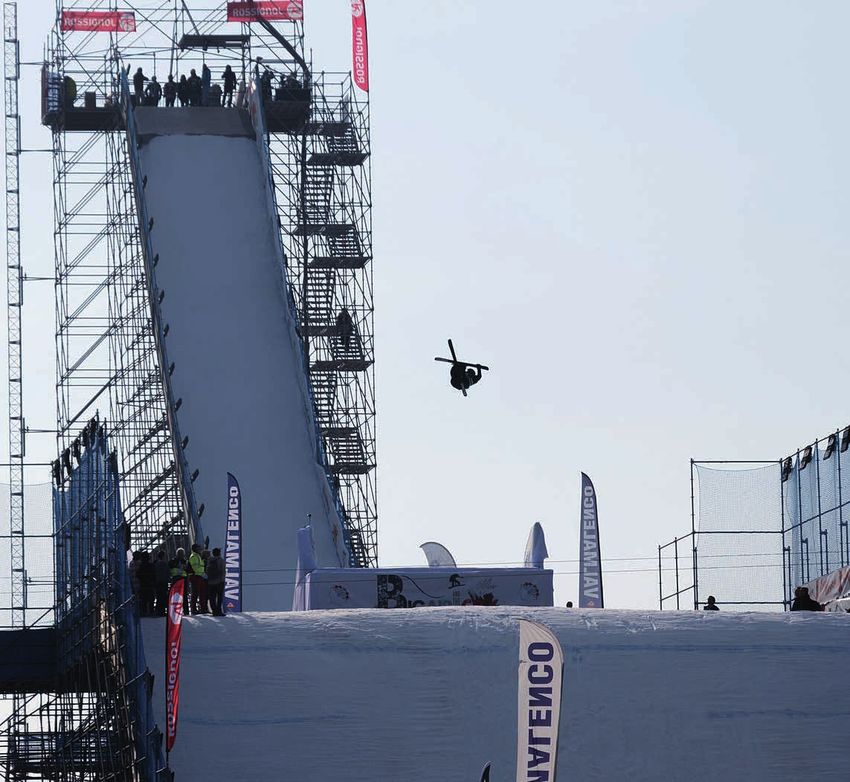
Red Bull Freestyle Event in Zürich
(Switzerland)
Big Air Freestyle Event
at the Expo Area in Milan (Italy)
Biathlon auf Schalke in Gelsenkirchen
(Germany)
FIS Snowboard Parallel Slalom World Cup
in Winterberg (Germany)
OTHER SPORTS EVENTS 27APPLICATION AREA
INDOOR
The Snowfactory can provide the snow required for indoor winter activities.
By using a Snowfactory, the hall does not have to be cooled down to cold
temperatures, which saves valuable energy. The Snowfactory produces snow
at external temperatures of up to +35°C, allowing the creation of an indoor
winter world with pleasantly comfortable temperatures of +15°C to +25°C.
The innovative snow machine is therefore ideal for indoor snow parks, where
up to 5,000 m² of snow playgrounds and small pistes are covered with snow
for learners making their first attempts at skiing and sledging. Such indoor
snow parks are often located in shopping centres, offering visitors sponta-
neous winter fun and their very first winter sports experiences, even without
special winter equipment. The consistency of the snowflakes can be re-
fined, if desired, to create an experience that resembles nature as closely as
possible. The highlight of every indoor snow park is the simulation of falling
snow: this optional Snowfactory feature guarantees an unforgettable snowfall
experience for the visitors on an area of 30 m².
28For many indoor hall operators,
the Snowfactory is the ideal solution:
Snow Town Jakarta Bekasi and Bintaro
(Indonesia)
Snow Town Saigon (Vietnam)
Snow Town Bangkok (Thailand)
Snow Town Shanghai (China)
Snow Town Taipei (Taiwan)
INDOOR 29JAKARTA
In Bekasi (Indonesia), a suburb of the capital Jakarta, four Snowfactory
SF100 Plus units were installed at a 4,000 m² indoor centre. The Trans Snow
World is part of a large residential, business, shopping and entertainment
complex. The attraction is open all year round and offers no end of fun in the
snow playground area and on the ski slopes. To adapt the Snowfactory to
the extremely warm climate conditions of the location and increase efficiency,
a specifically customised model is used to produce snow at temperatures of
up to 35°C.
30TAIPEI
The Snowfactory with its excellent snowmaking results not only makes large
indoor projects possible, but also small snow halls and playgrounds. For
example, a Snowfactory SF100 Plus in Snow Town in the Mitsui Outlet Park
in Taipei (Taiwan) guarantees the snow required for an area of some
1,000 m². It ensures heaps of snow fun in the playground area of the hall and
on the short sled run, delighting young and old alike – and at pleasant room
temperatures of around 18°C.
INDOOR 31APPLICATION AREA
SPECIAL
EVENTS
The Snowfactory inspires not only at sporting events. It also allows
impressive, temporary installations for trade shows, exhibitions, fashion, art
and cultural events.
© Woolrich
32© Woolrich
SPECIAL EVENTS 33PITTI UOMO 2020
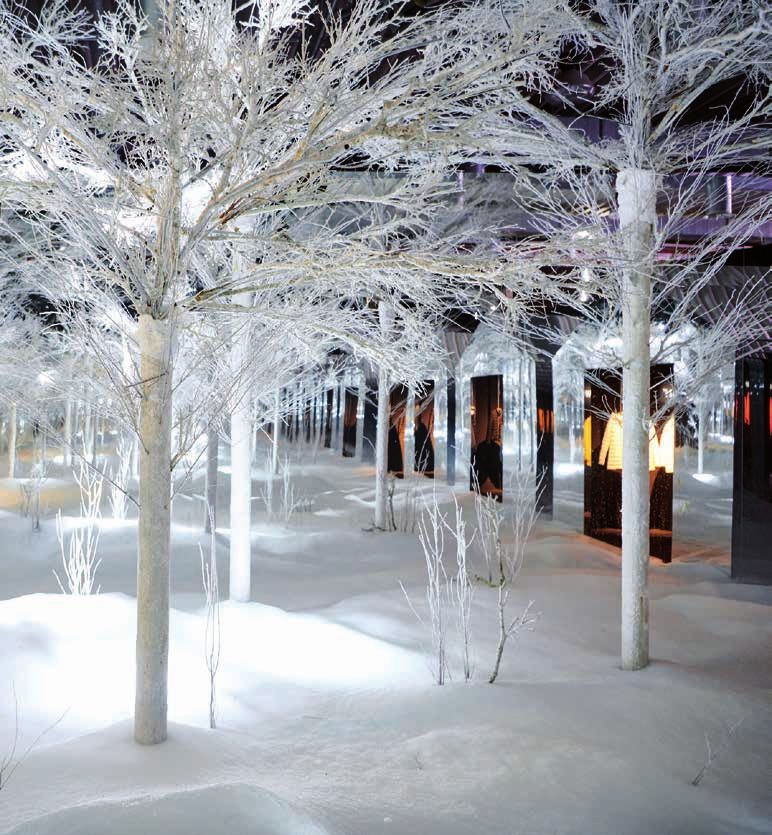
In January 2020, the Snowfactory conjured up winter magic at the 97th
edition of the Pitti Uomo, Italy’s most important menswear show. The fair at-
tracts thousands of visitors from the international fashion industry every year.
To present the new products in an appealing background, fashion company
Woolrich decided to implement the theme world of a winter forest with real
snow in the Dogana in Florence. The winter paradise was made possible
by the innovative Snowfactory, which can guarantee snow production and
simulated snowfall, even at comfortably pleasant temperatures. The snow for
the winterscape in the hall was produced in just 24 hours. As large amounts
of snow were spread within a short time period, the snow cover held up well
and melted only very slowly.
34© Woolrich
SPECIAL EVENTS 35APPLICATION AREA
GLACIERS
The Snowfactory can be used during the summer months on the peaks of
glaciers to provide snow fun and entertainment for guests. In summer ski re-
sorts it can ensure that the area around the mountain stations of the ski lifts
is also covered with snow. Snowfactory snow can also be used to fill cracks
or renew or cover snow that has become soiled due to heavy visitor traffic.
This can reduce snowmelt and counteract glacier shrinkage.
36GLACIERS 37
TITLIS GLACIER
     A Snowfactory SF100 was installed on the Titlis glacier in Engelberg (Swit-

     zerland) at an altitude of some 3,020 m above sea level. The special feature

     of this already exceptional project was not least how the snowmaker was

     transported: it was lifted to the glacier by cable car. To make this possible,

     the technology was fitted into two 20-foot containers instead of the usual

     single 40-foot container. Due to the reduced weight and size, it was possible

     to attach the individual parts to the bottom of the gondola and in this way

     transport them to the top of the mountain.

38
GLACIERS 39
SPECIFICATIONS

                                    SF100 standard                                         SF100 mobile
     Electrical characteristics                              Electrical characteristics
     Nominal voltage                             400 V       Nominal voltage                           400 V
     Nominal frequency                           50 Hz       Nominal frequency                         50 Hz
     Power requirement                         87 kW*        Power requirement                      130 kW*
     Installed power                          140 kW         Installed power                         208 kW
     Relative power consumption         20.9 kWh/m       3
                                                             Relative power consumption      31.2 kWh/m3
     Fabrication                                             Fabrication
     Container                              1x 40' HC        Container                          1x 40' HC
     Dimensional data                                        Dimensional data
     Length Container A                        12.2 m        Length Container A                      12.2 m
     Width Container B                           2.5 m       Width Container B                         2.5 m
     Height Container H                          2.9 m       Height Container H                        2.9 m
     Weights                                                 Weights
     Weight                                 17,000 kg        Weight                             17,000 kg
     Snow volume                                             Snow volume
     Production of snow                     100 m /d*3
                                                             Production of snow                 100 m3/d*
     Production of snow                        45 t/d*       Production of snow                       45 t/d*
     Connections                                             Connections
     Water required [min.]                      1 l/sec      Water required [min.]                    1 l/sec
     Water connection [¾"]                      20 DN        Water connection [¾"]                    20 DN
     Water pressure [min./max.]              2 – 5 bar       Water pressure [min./max.]             2 – 5 bar
     Water inlet temperature                 5 – 20°C        Water inlet temperature                5 – 20°C
     Snow supply                                             Snow supply
     Delivery height [max.]                      20 m        Delivery height [max.]                    20 m
     Delivery distance [max.]                   150 m        Delivery distance [max.]                 150 m
     Connection [3"]                            80 DN        Connection [3"]                          80 DN
     Various                                                 Various
     Refrigerant                                 R717        Refrigerant                              R449a
     System guide                          ATASSplus         System guide                       ATASSplus

     Data are subject to change depending on the type of plant and/or the country of installation
     (please always refer to the wiring diagrams).

     * For water tempartures 5ºC (41ºF) and air temparature 15ºC (59°F).
     Snow production decreases and the energy required increases at warmer temperatures.

40
SF100 plus SF210
Electrical characteristics Electrical characteristics
Nominal voltage 400 V Nominal voltage 400 V
Nominal frequency 50 Hz Nominal frequency 50 Hz
Power requirement 210 kW* Power requirement 184 kW*
Installed power 270 kW Installed power 295 kW
Relative power consumption 48 kWh/m 3
Relative power consumption 21.2 kWh/m3
Fabrication Fabrication
Container 1x 40' HC Container + capacitor module 3x 40' HC
Dimensional data Dimensional data
Length Container A 12.2 m Length Container A 12.2 m
Width Container B 2.5 m Width Container B 3.6 m
Höhe Container H 2.9 m Height Container H 8.4 m
Length Cooling tower A 1.9 m Weights
Width Cooling tower B 1.9 m Weight 35,600 kg
Height Cooling tower H 3.5 m Snow volume
Weights Production of snow 207 m3/d*
Weight 19,500 kg Production of snow 94 t/d*
Snow volume Connections
Production of snow 92,4 m3/d* Water required [min.] 2 l/sec
Production of snow 42 t/d* Water connection [1¼"] 32 DN
Connections Water pressure [min./max.] 2 – 5 bar
Water required [min.] 1 l/sec Water inlet temperature 5 – 20°C
Water connection [¾"] 20 DN Snow supply
Water pressure [min./max.] 2 – 5 bar Delivery height [max.] 50 m
Water inlet temperature 5 – 45°C Delivery distance [max.] 200 m
Snow supply Connection [4"] 100 DN
Delivery height [max.] 20 m Various
Delivery distance [max.] 150 m Refrigerant R717
Connection [3"] 80 DN System guide ATASSplus
Various
Refrigerant R449a
System guide ATASSplus
Data are subject to change depending on the type of plant and/or the country of installation
(please always refer to the wiring diagrams).
* For water tempartures 5ºC (41ºF) and air temparature 15ºC (59°F).
Snow production decreases and the energy required increases at warmer temperatures.
SPECIFICATIONS 41w w w.technoalpin.com
05.2020
You can also read


