Status of Climate in Ireland - Dr. Saji Varghese Head of Research, Environment and Applications Division, Met Éireann - The Citizens' Assembly
←
→
Page content transcription
If your browser does not render page correctly, please read the page content below
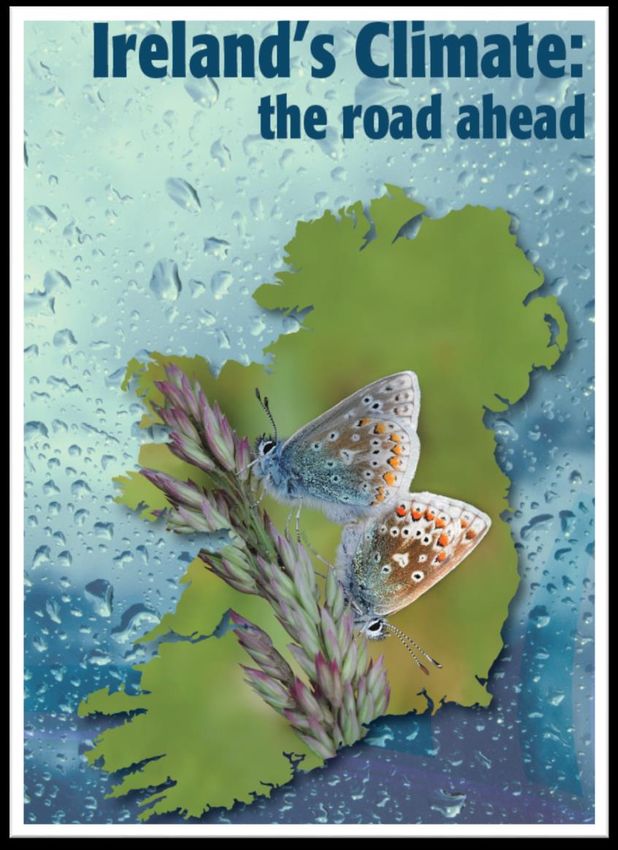
Status of Climate in Ireland
                    Dr. Saji Varghese
Head of Research, Environment and Applications Division,
                      Met Éireann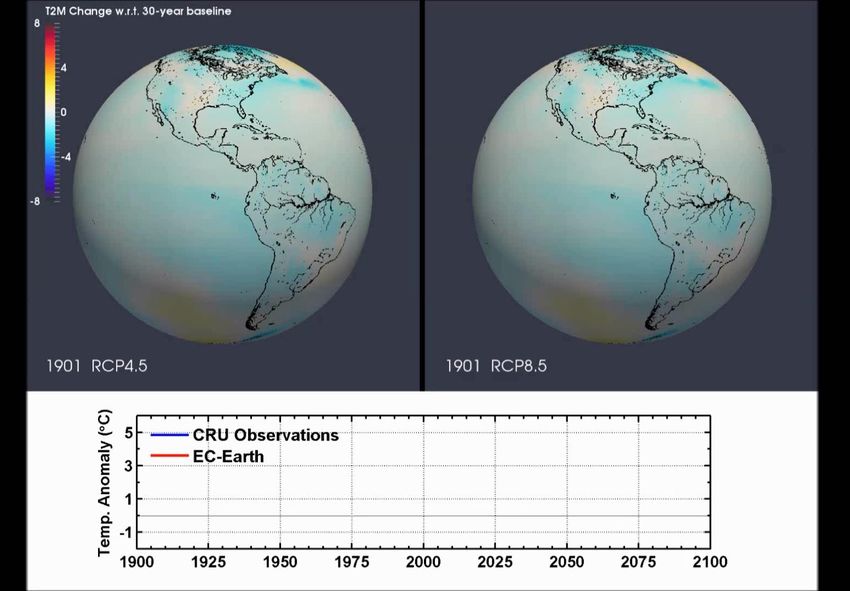
Outline
• Overview on the role of Met Éireann with respect to climate
  change

• Data on climate observations

• Climate change indicators

• Projections for the future
National Meteorological Service

• Monitor, analyse and predict Ireland's weather and climate
• Provide a range of high quality meteorological and related
  information
• Help to ensure the protection and safety of life and property

                   Supporting impact based decision making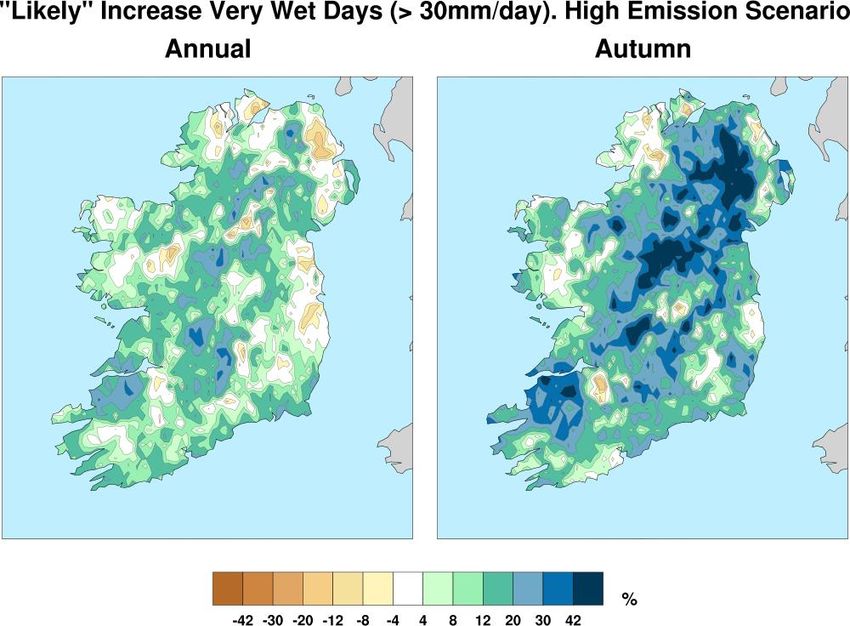
National & International Collaboration

Instrumentation                                     Aviation

                                                      General
    ICT
                            Met Éireann              Forecasting

                                                        Flood
Observations                                         Forecasting

                 Research                 Climate

    Met Éireann’s core areas of activity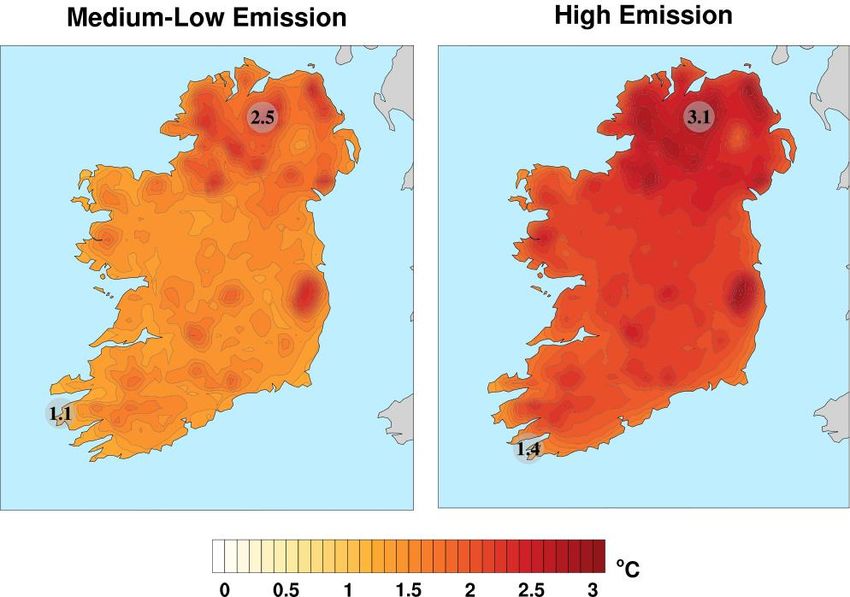
Supporting                        Integrated
  Impact based                  Climate Services
  Decision making

                 Infrastructure and
                      Expertise

     Establish
                           Optimised Communication
 Flood Forecasting           & Reach of information

Weather and climate prepared Ireland
Impact based operational Weather and Climate Services
Climate Services (1)
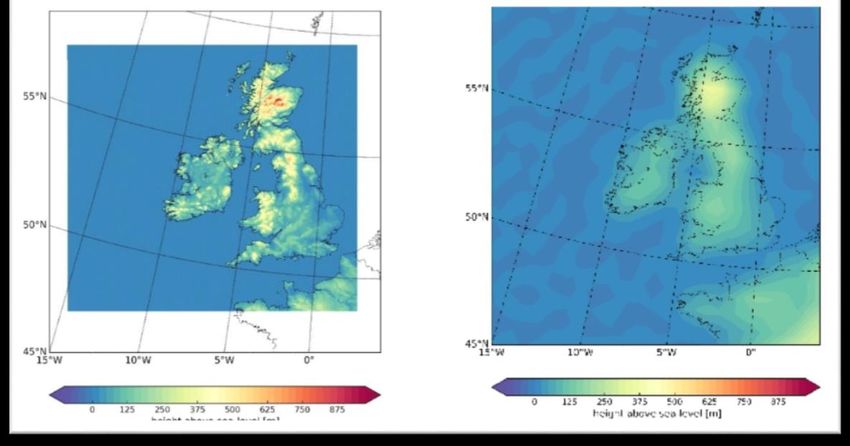
MÉRA (2.5 km grid spacing) and ERA-Interim (79 km grid
spacing) orographies
35-year very high resolution climate
reanalysis for Ireland
MÉRA, Using meso-scale Harmonie
2.5 km
Energy, agriculture, engineering,
research
Driven by observations and ECMWF
ERA-interim global re-analysis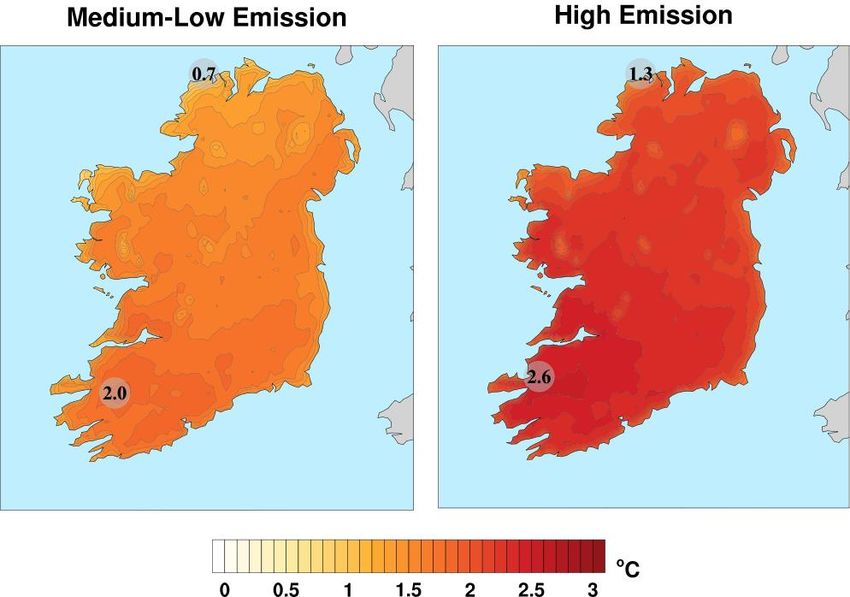
Climate Services (2)

                                  • Fine tune the latest version of
                                    EC-earth model along with
                                    the consortium members

EUPHEME: Attribution of           • Carry out CMIP6 simulations
extreme weather events              for different scenarios and
                                    contribute to IPCC AR6 report
WINDSURFER: Assessment of
extreme wind and wave risk        • Downscale simulated data on
                                    a regional scale for
INDECIS: Climate indicators for     development of climate
agriculture, energy, health,        application to support public
water, disaster risk reduction      provision of climate
                                    information
Climate Services (3)

Observations

   • Surface observations: synoptic stations, climatological stations, voluntary observers

   • Upper-air observations: Valentia Observatory, Kerry

   • Atmospheric Chemistry measurements - Ozone
                                   - particulate matter
                                   - sulphur dioxide
                                   - nitric oxides
                                   - rainwater sampling
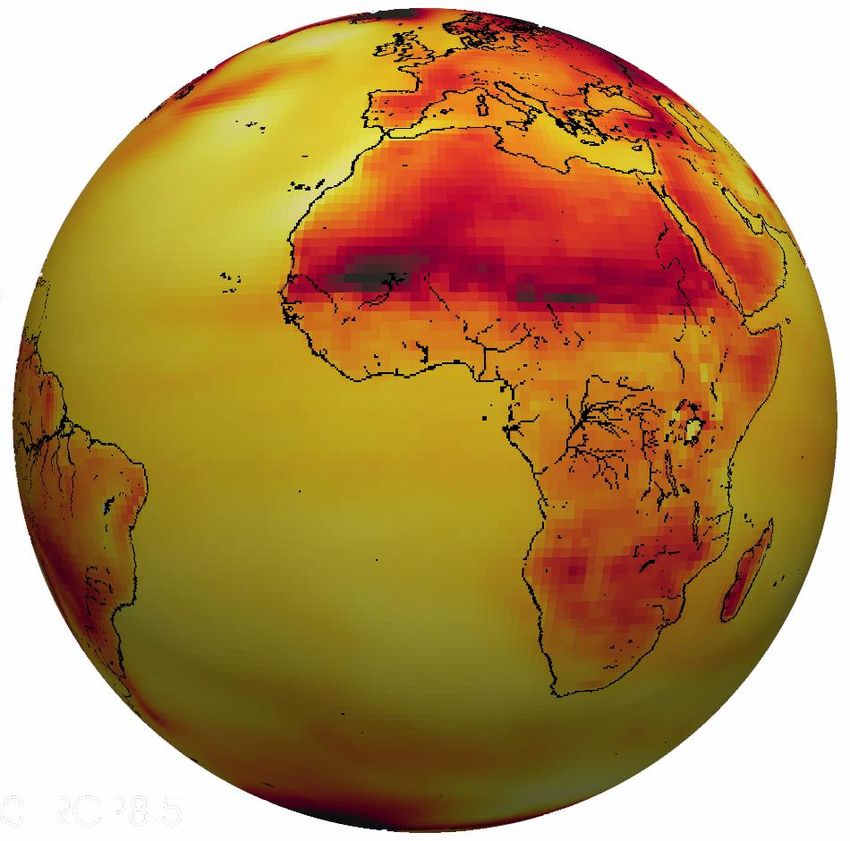
Summary of Global Climate Trends and Projections Temperature have increased by 1° Celsius from pre industrial levels (1.5-4.5° by 2100) Sea level rising at ~ 3mm/year, projected rise of 0.5-1m by 2100 depending on scenario Increased desertification/shifting rainfall patterns Increasing glacial retreat, decreasing Arctic sea ice CO2 levels continuing to rise - above 400ppm
Observing the Irish Climate
ECVs directly relevant to Ireland (41)
Atmospheric(land, sea & ice)
Air Temperature, Precipitation, Wind, Water
Vapour, Radiation, CO2, Methane, Ozone,
Aerosols….
Oceanic
Sea temperature, Salinity, Sea Level, Sea State,
Colour, Acidity, Current ….
Terrestrial
Land cover, Biomass, Soil moisture, River
Discharge, Groundwater, Lakes, Albedo ….Observed Climate Change Temperature
Annual Mean temperatures have
increased by approximately 0.8
Degrees Celsius per decade since
1900
All seasons show a rise in
temperature
Maximum temperatures have
risen slightly more than minimum
temperatures in winter and spring
Minimum temperatures have
risen more than maximum
temperatures in summerTrend in frost days and hot days Min. temperature < 0o C Max. temperature > 20o C
Rainfall
Rainfall shows great year to year variability
A comparison of 30 year means indicates an increase of
approximately 70mm over the last two decadesObserved Climate Change - Rainfall
All seasons show a small increase in
totals over the last few decades.
Some evidence of an increase in
number of days with rainfall>10mmTrends in heavy rain days (> 10mm) and wet days (>0.2mm)
Some evidence of an increase in number of days with rainfall>10mmSea level rise
Global sea level rise observed:
3mm per year between 1980 and
2010.
Ireland: 2–3 mm per year since the
early 1990s based on satellite
measurementsClimate Projections
Downscaling the Global Data
The spatial resolution of the global models are constrained by
computational resources. It is not possible to assess the
impacts of climate change at a regional level.
Global Model
to Regional Model
We used Regional Climate Models (RCMs) to dynamically
downscale the coarse information from the global models.RCM Projections for Ireland The future climate of Ireland was simulated at high spatial resolution for the 40-year period 2021-2060 For reference, the past climate was simulated for the period 1961-2005 Difference between the two periods provide a measure of climate change
RCM Projections for Ireland - the Ensemble Method (Uncertainty) Climate change projections are subject to uncertainty, which limits the value of individual projections. To address this issue of uncertainty, an ensemble of Regional Climate Models (RCMs) was run.
RCM Projections for Ireland
          - the Ensemble Method
Global Climate Models      Regional Climate Models

EC-Earth (3)                          CLM3
HadGEM2-ES                  COSMO-CLM4
ECHAM5                                WRF
CGCM3.1

     Future Climate
Emission Scenarios
       B1, A1B, A2,
   RCP4.5, RCP8.5
RCM Projections For Ireland Through the ensemble approach, the uncertainty in the projections can be quantified, proving a measure of confidence in the predictions. The RCP4.5 and the B1 scenario simulations were used to create a medium-low emission ensemble while the RCP8.5, A1B and A2 simulations were used to create a high emission ensemble.
Mean Annual Temperature Change
Mid-Century (2041-2060) Projections
Mid-Century Projections For Ireland
  Summer Day-time Temperature Change
Mid-Century Projections For Ireland
  Winter Night-time Temperature Change
Projected Change in Temperature Frost days
Mid Century Projections For Ireland
 Annual Precipitation Change (%)
Mid Century Projections For Ireland
Summer Precipitation Change (%)
Mid Century Projections For Ireland
     Heavy Rainfall Days (%)
Summary of Future Projections
TemperatureSummary of Future Projections
Rainfall
Large decreases are expected in average rainfall during
spring & summer. Small to ~0 decreases over the full year.
The largest drying (~20% reduction in precipitation under
the high emission scenarios) is expected during summer.
- An increase in the number of dry periods.
The frequency of heavy precipitation events (winter &
autumn) shows notable increases of up to 30%.Acknowledgements • Séamus Walsh – Head of Climate and Observations Division, Met Éireann • Paul Nolan – EPA Research Fellow, Met Éireann & Irish Centre for High-End Computing
You can also read


