Strategic Intentions - New Zealand Ministry of Foreign Affairs ...
←
→
Page content transcription
If your browser does not render page correctly, please read the page content below
A.1 SOI (2021)

                                        2021 - 2025
                Strategic
MANATU AORERE   Intentions
Te Tiriti o Waitangi
Te Tiriti o Waitangi is at the core of what we do
and how we work.
Ko Te Tiriti o Waitangi kei te iho o ā mātou mahi,
o te āhua o tā mātou mahi.

Our purpose
The Ministry acts in the world to build a safer,
more prosperous and more sustainable future
for New Zealanders.
Kia hāngai ake e te Manatū he ao-haumaru,
ao-tōnui, ao-pūmau, ki te oranga tonutanga
mō Aotearoa whānui.

Our values
            Impact
            We achieve for Aotearoa New Zealand,
            every day, everywhere

            Kotahitanga
            We draw strength from our diversity

            Courage
            We do the right thing

            Manākitanga
            We honour and respect others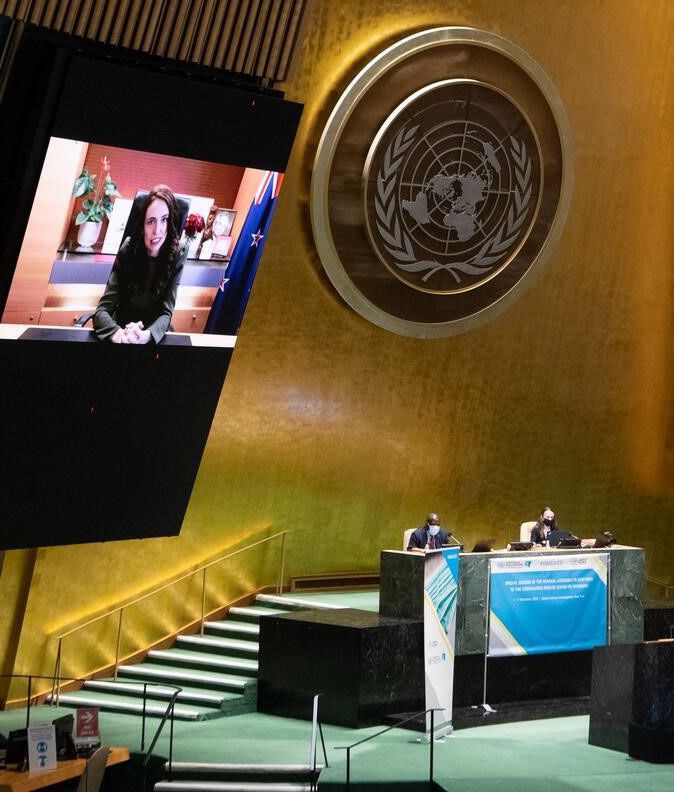
1

Contents                 Ngā

                                    MINISTRY OF FOREIGN AFFAIRS AND TRADE
                         Ihirangi

   Foreword from
   our Minister           2

                                    STRATEGIC INTENTIONS 2021-2025 |
   Introduction from
   our Chief Executive    4
   Our context
                          7
   Our strategic
   direction             13
   Managing our
   functions and         35
   operations

   Asset management
   and investment        37
   intentions

   Presented to the
   House of Representatives
   pursuant to Section 39 of
   the Public Finance Act 1989
2

    Foreword from Kupu
      our Minister whakataki
                   mai i tō
                   mātou Minita
    Tuia ki te Rangi, Tuia ki te Papa, Tuia ki te Moana, Ka rongo te
    pō, Ka rongo te ao. He pō, He ao, He awatea – Tīhei Mauri Ora!

    Ko te tautoko i te oranga whakawhiti atu i ngā reanga, te rangimārie, te taurikura
    mō te katoa hoki kei te ngako o tā Aotearoa kaupapa here ki tāwāhi.
    Nā KOWHEORI-19 i whakapiki te haurokuroku, i whakapakari hoki ngā wero ā-ao
    pērā i te korenga mana ōrite, i te pōharatanga. Nāna i kotiti te aronga atu i te
    whakatuma tauoranga nui whakaharahara o tō tātou nei wā – arā ko te panoni
    āhuarangi.
    E pā ana ngā tōrangapū-matawhenua nekeneke, me ngā whakatete ka hua mai i
    tērā i te hokohoko, i te whakahangahanga, i te ū ā-takiwā, i te manapori tuwhera,
    mārama hoki, i ngā tika tangata anō hoki.
    Kei te hiahiatia e ēnei wā autaia he aronga ki tā Aotearoa kaupapa here ki tāwāhi
    e pungatia ana ki ō tātou uara, e noho pūtaketake ana ki ngā mātāpono o te
    ngātahitanga, o te whakaute tētahi ki tētahi. Ka whakatōngia mai ki a tātou te
    tūmanako, te āki hoki mai i ngā mātāpono kua whakatinanatia ki tō tātou puka
    pūtaketake whakapūmau, ki Te Tiriti o Waitangi. Ko tō tātou aronga ā-tuakiri,
    ā-wāhi, ā-hononga e kore e taea te whakawehe i Te Moana-nui-a-Kiwa, i te
    hononga pūmau ki ō tātou haumi mai rā anō.
    Kei te whirinaki tā tātou kaupapa here mō tāwāhi ki ngā uara kua ahu mai
    i tō tātou tukunga ihotanga, i ngā ahurea e rua – arā, te manaakitanga, te
    whanaungatanga, te kotahitanga, te kaitiakitanga. Kei te mōhio tātou ka kaha ake,
    ka matatū ake ngā putanga pai ina hangaia mā te kōrerorero, ina whakaaturia ana
    te māramatanga ngātahi, ngā tirohanga rerekē anō hoki.
    Inarā, e mihi ana au ki ngā hononga e tūhono ana i tā mātou pāhekoheko
    whakawhanaketanga ki te takiwā o Te Moana-nui-a-Kiwa hei whanaunga.
    Ko te aumangea wā-roa o ngā whenua o Te Moana-nui-a-Kiwa kei te iho o tā
    tātou tiakitanga ngātahitanga o tō tātou Paparahi Moana Kikorangi – arā,
    Te Moana-nui-a-Kiwa.
    Māku e whakarite ka whāia e te kaupapa here ki tāwāhi i ō Aotearoa pānga
    matua, i te wā tonu e whakaatu ana i ō tātou uara hei kaitiaki haepapa o ērā mea
    e matapoporetia ana e te hunga nō Aotearoa. Ā tātou tāngata, tō tātou wāhi, tō
    tātou ao, tō tātou taurikura ki Te Moana-nui-a-Kiwa pūmau.
    Kei roto i tēnei ko ngā whāinga o te Kāwanatanga hei tiaki kia noho haumaru
    te hunga nō Aotearoa i KOWHEORI-19, hei whakatere i tā tātou haumanutanga
    ohaoha, me te hanga anō mā ngā putanga hokohoko whakauruuru, toitū hoki,
    tae atu ki te hokohoko herekore me ngā mākete tuwhera; me ngā whāinga hei
    whakatutuki i ō tātou wero pūtaketake, pērā i te panoni āhuarangi. Kei te aro hoki
    tā tātou kaupapa here ki tāwāhi pūtake-uara ki te hapahapai i ngā tika tangata, te
    manapori mārama, te tikanga o te ture ā-ao, te whakakore i ngā rākau karihi; te
    kore mana ōrite me te kore manatika mā tā mātou hōtaka whakawhanaketanga
    me te hapahapai; te kōkiritanga o ngā Sustainable Development Goals; me te
    whakarite kia tautokona te noho a Aotearoa ki Te Kōpakatanga ki te Tonga mā te
    whakawhanaketanga anō o Scott Base.
    Mā te tūhono ki te iwi whānui o Aotearoa, ki a Ngāi Māori, ki te hunga nō Te
    Moana-nui-a-Kiwa, ki ngā whakahaere kāwanatanga-kore, ki te pāpori whānui,
    ki te pakihi, ki te ao matauranga, ki ērā atu hunga whai pānga, kei te hiahia au
    ki te hanga i te māramatanga ngātahitanga, i te whakaaetanga ā-pāpori hoki ka
    whakarite kia kitea e tātou ngā uara e noho pūtaketake ana i tā tātou kaupapa
    here ki tāwāhi.
    Ahakoa he nui ngā wero o te taiao rautaki o nāianei, māku e whakarite kia
    whakamahia te kaupapa here ki tāwāhi hei tautoko i te hanganga anō o te
    aumangea ki te kāinga, ki Te Moana-nui-a-Kiwa, ki te ao hoki. Ā, kia mahi ngātahi
    tātou kia kākāriki, kia whakauruuru, kia ōrite te haumanutanga, te hanganga anō
    hoki. E tika ana mā tātou tahi kia pēnei ai i runga i te tino rahi o ngā wero kei mua
    i a tātou.
3

                                                                                             MINISTRY OF FOREIGN AFFAIRS AND TRADE
Tuia ki te Rangi, Tuia ki te Papa, Tuia ki te Moana, Ka rongo te pō,
Ka rongo te āo. He pō, He āo, He awatea – Tīhei Mauri Ora!
Supporting intergenerational wellbeing, peace and prosperity for all is at the heart of
Aotearoa New Zealand’s foreign policy.
COVID-19 has increased uncertainty and compounded global challenges, such as
inequality and poverty. It has also diverted attention from the true existential threat
of our time – climate change. Shifting geopolitics and resulting tensions are affecting

                                                                                             STRATEGIC INTENTIONS 2021-2025 |
trade, diplomacy, regional stability, open and transparent democracy and human
rights.
These extraordinary times require an approach to Aotearoa New Zealand’s foreign
policy that is anchored in our values and grounded in the principles of partnership
and mutual respect. We can draw hope and encouragement from the principles
embodied in our founding document Te Tiriti o Waitangi. Our sense of identity, place
and connection is inextricably linked to the Pacific and the enduring relationship with
our traditional allies.
Our foreign policy draws on values derived from our bicultural heritage – manākitanga,
whanaungatanga, kotahitanga, and kaitiakitanga. We know that positive outcomes
will be stronger and more enduring when built through dialogue and reflect shared
understanding and diverse perspectives.
In particular, I acknowledge the connections that links our development cooperation in
the Pacific region as whanaunga. The long-term resilience of Pacific nations is core to
our shared stewardship of our Blue Ocean Continent – Te Moana-nui-a-Kiwa.
I will ensure foreign policy pursues Aotearoa New Zealand’s core interests, while
projecting our values as a responsible guardian of those things New Zealanders hold
dear. Our people, our place, our planet and our prosperity in a stable Pacific.
This includes the Government’s goals to keep New Zealanders safe from COVID-19,
to accelerate our economic recovery and rebuild through inclusive and sustainable
trade outcomes, including free trade and open markets; and goals to tackle our
foundational challenges, such as climate change. Our values-based foreign policy is
also focused on advocacy for human rights, inclusive and transparent democracy,
the international rule of law, and nuclear disarmament; inequality and injustice
through our development programme and advocacy; advancement of the Sustainable
Development Goals; and ensuring Aotearoa New Zealand’s presence in Antarctica is
supported through the Scott Base redevelopment.
Through engaging with the New Zealand public, Māori, Pasifika, non-government
organisations, civil society, business, academia and other stakeholders, I want to
build shared understanding and social licence that ensures we realise the values that
underpin our foreign policy.
While the current strategic environment is challenging, I will ensure that foreign
policy is used to support the building back of resilience at home, in the Pacific and
internationally. And that we work together to make it a green, inclusive and equitable
recovery and rebuild. It is in our collective interests to do so given the enormity of the
challenges before us.

RESPONSIBLE MINISTER STATEMENT
I am satisfied that the information on strategic intentions prepared by the
Ministry of Foreign Affairs and Trade is consistent with the policies and performance
expectations of the Government.

HON NANAIA MAHUTA
MINISTER OF FOREIGN AFFAIRS / MINITA TAKE AORERE
RESPONSIBLE MINISTER FOR THE MINISTRY OF FOREIGN AFFAIRS AND TRADE /
TE MINITA HAEPAPA MŌ TE MANATŪ AORERE
4
Introduction Kupu
from our whakataki
Chief mai i tō
Executive mātou Tumu
Whakarae
Kia hāngai ake e te Manatū Aorere he ao-haumaru, ao-tōnui,
ao-pūmau, ki te oranga tonutanga mō Aotearoa whānui.
Ki te taha o ngā pānga ngaukino ā-hauora, ā-ohaoha o KOWHEORI-19, he
pānga whānui ake anō ōna ki ngā mahi ā-ao, ki te horopaki mahi o Aotearoa
anō hoki. Nāna i whakatere ngā ia rautaki-matawhenua, whakarorotu ehara i te
pai e haere kē ana. Nāna i whakatakoto i te pēhanga anō ki tētahi pūnaha ā-ao
kua tino whakataumahatia kētia. Ā, nāna hoki i whakakaha ngā wero me ngā
mōrearea whakahaumaru o mua.
E tūmanako ana te Manatū ka tukuna āna tohutohu kaupapa here, tautoko
mō tāwāhi ki te horopaki e whakatuanuitia tonutia ana a KOWHEORI-19, i te
wā-waenga i te itinga iho, ā, ki tētahi ao he iti iho te tuwhera, he iti iho te
taurikura, he iti iho te haumarutanga, he iti iho te herekore, he tino taurangi
hoki. He ao e piki ana te hiahia kia urutau te Manatū mā te tuku anō i ā mātou
rauemi, mahi hoki hei whakatutuki i ngā wero hou, he nui ngā wā ka pēnei i te
iti o te wā mai i te whakamōhiotanga atu, i te tere anō hoki.
Kei te whakatakotoria e ngā Takune Rautaki te pānga e whāia ana e te Manatū
te whakatutuki mō te hunga nō Aotearoa. Kei te whakatakotoria tō mātou
whāinga, ā, he aha tā mātou e whai ana kia tuku mā te whā tau kia tuku i te
tautoko whaitake ki te oranga o te hunga nō Aotearoa.
Ka kōkiri tonu te Manatū i ngā whakaarotau ki te horopaki o tā
Te-Katoa-o-te-Kāwanatanga urupare, haumanutanga hoki i KOWHEORI-19.
Ko ētahi atu whakaarotau kia whakatutuki i ngā whāinga o te Kāwanatanga
ko te tuku tautoko ki Te Moana-nui-a-Kiwa hei whakamāmā i ngā pānga o
KOWHEORI-19; te whakaū i te āheinga o te pūnaha matatini ki te urupare ki ngā
mōrearea hauora ā muri ake; te tuku i ngā putanga APEC, kaupapa here hoki; te
tautoko i te whāinga panoni āhuarangi mā ngā hononga ā-ao; me te whakaoti
i ngā Whakaaetanga Hokohoko Herekore ki te Kotahitanga o Ūropi, ki Piritana
Nui anō hoki.
Kia kōkiri mātou i ō mātou whakaarotau ki te taiao taumaha o waho, me
moruki mātou, me urutau hoki i te āhua o tā mātou mahi. Kei te noho pūtake te
whakahangahanga matihiko, te mahi mohoao hoki i te katoa o ā mātou mahi,
pērā i te kitenga atu ki tā mātou manaakitanga matihiko i APEC, ā, i te wāhi
waiwai kei tō mātou kōtuitui ki tāwāhi tonu hei whakamōhio, hei tautoko i te
urupare, te mahi haumanutanga KOWHEORI-19 a te Kāwanatanga.
E ū tonu ana te Manatū ki te hanga i te āheinga, i te māia o ā mātou tāngata
ki te reo Māori, ki ngā tikanga, ki te mātauranga Māori anō hoki. Mā konei e
āhei ai ā mātou tāngata kia mōhio ake, kia pai ake ina tūhono ana ki ngā iwi, ki
Ngāi Māori anō hoki, ā, kia pai ake tā rātou whakakanohi i Aotearoa ki tā mātou
tūhononga whakahangahanga ā-ao.
Ko tētahi aronga matua ko te tautoko hoki i te oranga, i te aumangea o ā mātou
kaimahi, inarā ā mātou tāngata ki tāwāhi e kōkiri tonu ana i ō Aotearoa pānga i
te wā e mahi ana ki ngā taiao uaua kua pāngia e te mate urutā. E mihi ana au ki
tō rātou manawanui.
Ka whakatutuki tonu mātou i ā mātou takune hei tuku i te tautoko nui ki te
haumanutanga, te hanganga anō o Aotearoa i KOWHEORI-19, ki te oranga o te
hunga nō Aotearoa mā te wā roa.5
MINISTRY OF FOREIGN AFFAIRS AND TRADE
The Ministry of Foreign Affairs and Trade acts in the world to
build a safer, more prosperous and more sustainable future for
New Zealanders.
Alongside the devastating health and economic impacts, COVID-19 has also had wider
impacts on international affairs and Aotearoa New Zealand’s operating context. It has
STRATEGIC INTENTIONS 2021-2025 |
accelerated negative geostrategic and populist trends already underway. It has placed
more pressure on an already overburdened international system. And it has exacerbated
pre-existing security challenges and risks.
The Ministry expects to deliver its foreign policy advice and support in a context where
COVID-19 remains prevalent, at least in the medium term, and in a world that is less
open, less prosperous, less secure, less free, and highly changeable. A world that is
increasingly requiring the Ministry to adapt by redirecting our resources and effort to
meet new challenges, often at short notice, and at pace.
The Strategic Intentions sets out the impact the Ministry aims to achieve for
New Zealanders. It sets out our purpose and what we are seeking to deliver over four
years to make a material contribution to New Zealanders’ wellbeing.
The Ministry will continue to progress priorities in the context of the All-of-Government
response and recovery from COVID-19. Other priorities to meet the Government’s goals
include delivering support to the Pacific to alleviate COVID-19 impacts; reinforcing the
multilateral system’s ability to respond to future health crises; delivering APEC and
policy outcomes; supporting climate change ambition through international links; and
concluding Free Trade Agreements with the European Union and the United Kingdom.
Progressing our priorities in a challenging external environment means we need to
be agile and adaptable in how we operate. Virtual diplomacy and remote working
now underpin all our mahi, as we have seen with our virtual hosting of APEC and with
the critical role our offshore network continues to play to inform and support the
Government’s COVID-19 response and recovery effort.
The Ministry remains committed to building the capability and confidence of our people
in te reo Māori, tikanga and mātauranga Māori. This will enable our people to be more
knowledgeable and effective when engaging with iwi and Māori, and to better represent
Aotearoa New Zealand in our diplomatic engagement globally.
A key focus is also supporting the wellbeing and resilience of our staff, particularly our
people offshore who continue to advance Aotearoa New Zealand’s interests, while
working in challenging environments affected by the pandemic. I acknowledge their
dedication.
We will continue delivering on our intentions to make a significant contribution to
Aotearoa New Zealand’s COVID-19 recovery and rebuild, and to New Zealanders’
wellbeing over the longer-term.
CHIEF EXECUTIVE STATEMENT OF RESPONSIBILITY
In signing this information, I acknowledge that I am responsible for the information
on strategic intentions for the Ministry of Foreign Affairs and Trade. This information
was prepared in accordance with section 38 and section 40 of the Public Finance Act
1989.
CHRIS SEED
SECRETARY OF FOREIGN AFFAIRS AND TRADE
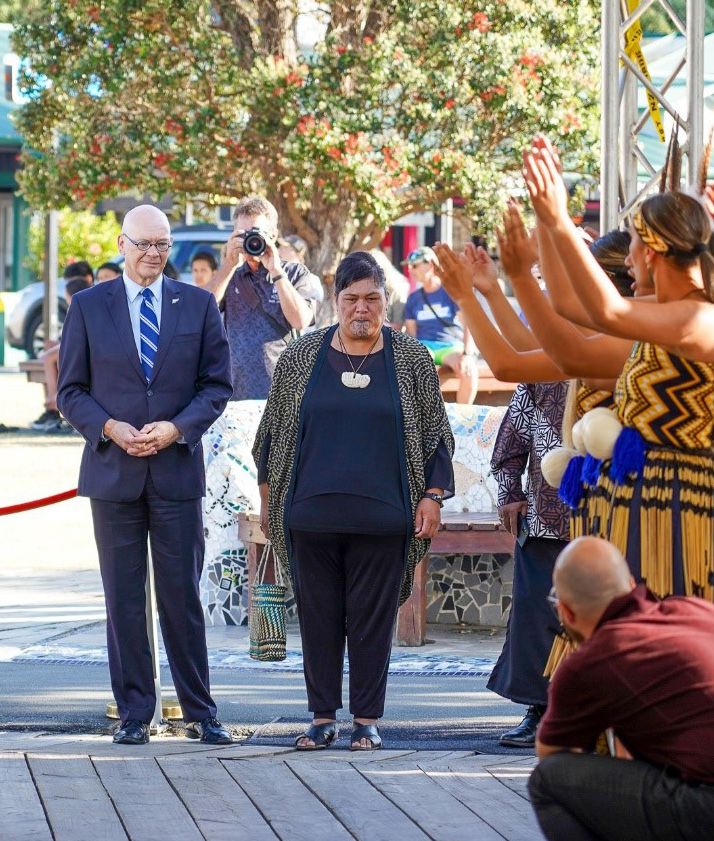
TE HEKERETARI O MANATŪ AOREREThe Minister of Foreign Affairs, Hon Nanaia Mahuta, and MFAT Chief Executive Chris Seed, arriving at the Waitangi Day reception on 6 February 2021. The reception, hosted by the Minister of Foreign Affairs, was where she delivered her first foreign policy speech to the Aotearoa New Zealand Diplomatic Corps. Credit: MFAT.
7

                    Our                                                           Tō mātou
                 context                                                          horopaki

                                                                                                                                        MINISTRY OF FOREIGN AFFAIRS AND TRADE
Our purpose
The Ministry acts in the world to build a safer, more prosperous and more
sustainable future for New Zealanders.
Kia hāngai ake e te Manatū he ao-haumaru, ao-tōnui, ao-pūmau, ki te oranga tonutanga
mō Aotearoa whānui.
We engage with other countries and in regional, international and multilateral bodies to influence outcomes

                                                                                                                                        STRATEGIC INTENTIONS 2021-2025 |
that align with Aotearoa New Zealand’s values and protect enduring national interests in:
•         a rules-based international system that supports Aotearoa New Zealand’s priorities
•         a security environment that keeps New Zealanders and Aotearoa New Zealand activities safe
•         international conditions and connections that enable New Zealanders to prosper
•         global action on sustainability issues that matter to Aotearoa New Zealand.
Aotearoa New Zealand’s diplomacy protects and advances these interests.

Our values
Our organisational values of Impact, Kotahitanga, Courage, and Manākitanga guide how we interact with
people inside and outside the Ministry. They also reflect to our global partners and to New Zealanders the
qualities of the country we represent: a tolerant, diverse, inclusive and welcoming society.
Our Ministry’s values complement and reinforce those values reflected in our foreign policy approach; and
guide us to deliver foreign policy outcomes both for and on behalf of New Zealanders, in a challenging
global environment.
In living our values, we give effect to the Public Service Act 2020, by acting in the spirit of service to the
community and by seeking to be impartial, accountable, trustworthy, respectful, and responsive.

Te Tiriti at the core of our work
Te Tiriti o Waitangi (The Treaty of Waitangi) sets out a partnership framework between Māori and the Crown.1
As a public service department, the Ministry of Foreign Affairs and Trade is required to actively protect
Māori interests and provide redress where previous wrongs are identified. This is reflected in the Ministry’s
ongoing commitment to delivering on its obligations as a Treaty partner with authenticity and integrity.
This includes consulting and engaging with Māori appropriately.
Te Tiriti principles of partnership, mutual respect and redress provide the foundation for how Aotearoa
New Zealand’s foreign policy is conducted. Equally, the Ministry’s work is guided by the values that are
derived from Aotearoa New Zealand’s bicultural heritage – manākitanga, whanaungatanga, kotahitanga,
and kaitiakitanga.2
In this way, Te Tiriti also offers a foreign policy framework where respect and equality between peoples and
countries is recognised, and relationships exercised in a way that affirms kāwanatanga (right to govern)
and tino rangatiratanga (right to sovereignty).
Te Tiriti and Aotearoa New Zealand’s bicultural experience helps to define our unique identity as a nation.
Aotearoa New Zealand’s strengths and achievements have emerged from our rich history, experiences, diversity
and evolving partnership between Māori and the Crown. They are supported by an ongoing commitment to
learn from and reconcile with our past. We know that where there has been conflict there must be restitution
and reconciliation.

1
    Te Tiriti o Waitangi or Te Tiriti in this document, refers to all versions of the Treaty of Waitangi.
2
     Manākitanga (kindness, care, the spirit of reciprocity and our common humanity), whanaungatanga (connectedness), kotahitanga
    (working towards a common purpose, shared objectives and unity), and kaitiakitanga (stewardship and intergenerational wellbeing).
8
By continuing to learn from the evolving Māori Crown relationship,
the Ministry aims to establish enduring relationships internationally
Our value propositions for
to address difficult issues of social exclusion, civil and racial unrest,
inequity and poverty; and domestically to create social licence, achieve long-term wellbeing
collective impact with other agencies, and support Māori, New Zealand
businesses, non-government organisations (NGOs) and organisations
Kaitiakitanga – Generations of New Zealanders
to achieve their international aspirations. benefit from sustainable solutions to global and regional
The Māori Crown relationship therefore shapes and informs the
challenges
Ministry’s strategic goals and work to achieve those goals. For New Zealanders’ long-term wellbeing depends on the international
example, the Ministry’s: community working together to safeguard shared global resources,
promote global norms and achieve resilient development. We lead
• Economic Returns and Resilience and International Rules and
efforts to ensure Aotearoa New Zealand has a say on decisions that
Institutions goals support the large and growing Māori economy.
affect us and people around the world now and in the future.
• Environment and Climate Change goal reflects values of
Specifically, we:
kaitiakitanga or guardianship and protection. It recognises that
global environmental issues impact on Aotearoa New Zealand’s • support the international and regional institutions tasked with
resolving problems that cross borders and impact on global
environment and natural resource challenges.
wellbeing
The Ministry will continue to build the capability and confidence of
• work with other countries to negotiate and implement
our people to draw on mātauranga Māori in their work in a way that
agreements on issues, such as climate change and over-fishing
represents Māori interests with authenticity, enables them to engage
with Māori stakeholders effectively, and brings mana (authority) to the • contribute to global sustainable development efforts
Ministry and to Aotearoa New Zealand. • deliver Aotearoa New Zealand’s international development
cooperation, with a focus on the Pacific region, and lead
We engage with a wide range of Māori business groups including the
responses to humanitarian crises and natural disasters
Federation of Māori Authorities (FOMA), Iwi Chairs Group, Te Taumata–
a group of Māori leaders chosen by Māori to engage with the Ministry • promote global rules and legal frameworks on issues, including
on trade policy and related matters, and Ngā Toki Whakarūruranga, human rights, and support the international justice system
a group of claimants to the Waitangi Tribunal. We also established • pursue Aotearoa New Zealand’s interests in Antarctica and the
a group to assist and guide our APEC team with respect to Māori Southern Ocean.
kaupapa. We are committed to exploring ways to ensure that Māori
views and interests are actively sought and reflected in our work.
Contributing to
New Zealanders’ wellbeing Security – New Zealanders are able to live, do
business, travel and communicate more safely at
The Ministry contributes to New Zealanders’ wellbeing by delivering
home and offshore
on our four value propositions: Kaitiakitanga; Security; Influence;
and Prosperity, which sit at the heart of the Ministry’s Strategic New Zealanders’ ability to operate in safe environments, whether
Framework. in Aotearoa New Zealand, offshore or online, can be threatened by
international factors ranging from conflict to cyber-attacks.
Our Strategic Framework is linked to The Treasury’s Living Standards
The Ministry is Aotearoa New Zealand’s voice in fora that address
Framework for Aotearoa New Zealand and its four capitals of natural,
security issues affecting our country, our region and the world. We
human, social, financial/physical – the foundations for generating
also provide consular services that help keep New Zealanders safe
wellbeing now and in the future.
and informed when they live or travel overseas.
We have a role in building Aotearoa New Zealand’s long-term capital and
Specifically, we:
managing related risks through our work to establish and maintain strong
• lead Aotearoa New Zealand’s contribution to global and regional
international connections, effective relationships with a diverse range of
efforts to promote peace and security
partners, a voice in international fora and a range of robust institutions,
rules and norms that serve Aotearoa New Zealand’s interests. Aotearoa • work with international partners on rules and capacity building to
New Zealand relies on global goods, such as the atmosphere, economic reduce threats from cyber and terrorist attacks, illegal migration,
stability and global institutions, rules and agreements. We both invest in transnational crime and other threats
and benefit from these international assets. • help advance global disarmament and rules against the
proliferation of weapons of mass destruction
In turn, Aotearoa New Zealand’s value proposition internationally is
underpinned by the domestic strengths and values that make up the • provide safe travel information, help New Zealanders affected by
wellbeing capitals. These include our commitment to democracy and crises and other problems overseas, and ensure their rights are
rule of law, honouring our Treaty partnership with Māori as Aotearoa protected.
New Zealand’s indigenous people, the integrity of our public service
•
and governance institutions, the strength of our economic and
environmental management, and our values of fairness, freedom,
inclusiveness, openness and tolerance. We leverage these intrinsic
advantages to promote Aotearoa New Zealand’s international assets.9
Influence – New Zealanders have confidence their Our functions
country can influence others on issues that matter to
The Ministry is the Government’s principal agent for pursuing
them, now and in the future Aotearoa New Zealand’s interests and representing our country
Aotearoa New Zealand’s ability to influence the decisions of other internationally. We build connections with and influence other
countries and organisations supports New Zealanders’ wellbeing. countries to advance Aotearoa New Zealand’s interests, project our
The Ministry works to ensure that Aotearoa New Zealand has the values and secure outcomes that matter to our country. We pursue
MINISTRY OF FOREIGN AFFAIRS AND TRADE
relationships and levers to achieve what matters to New Zealanders. the Government’s international priorities and provide advice to the
Specifically, we: Government on the implications for Aotearoa New Zealand of what is
• sustain Aotearoa New Zealand’s reputation for being a principled, happening in the world.
fair and constructive participant in global and regional affairs We lead the New Zealand government diplomatic network. This
• work to strengthen institutions and rules to give small states network is a unique national asset, safeguarded by international law,
influence and protect their interests able to speak with an authoritative voice, and with heads of mission
• build trust and long-term capital with other countries, so we can and posts formally charged with representing the state.
secure their support when we need it We are the Government’s specialist foreign, trade and development
• create global coalitions to support initiatives on issues that are policy adviser, international legal adviser and negotiator. We are
important to New Zealanders and where we have expertise. responsible for delivering Aotearoa New Zealand’s international
development cooperation; for providing consular services to
New Zealanders overseas; and for coordinating offshore
STRATEGIC INTENTIONS 2021-2025 |
emergency responses.
Prosperity – New Zealanders have better job
Our Aotearoa New Zealand
opportunities and incomes from trade, investment and connections
other international connections The Ministry’s performance as a public service department and our
International trade and investment are essential for New Zealanders’ success in pursuing Aotearoa New Zealand’s interests internationally,
prosperity and standard of living. One in four jobs depends on exports. rely on strong connections at home.
The Ministry negotiates the reduction and removal of barriers to
The Ministry is committed to a systematic, collaborative and
trade and investment, supports access to overseas markets and helps
transparent approach to working with Aotearoa New Zealand
exporters succeed.
partners and engaging with Māori, other stakeholders and
Specifically, we: the New Zealand public. Our objectives are set out in the
• help build global and regional trade rules and frameworks through NZ Connections organisational capability goal on page 30.
the World Trade Organization (WTO) and other fora, such as the Our partnership with other government agencies with external
Asia-Pacific Economic Cooperation (APEC) to make it easier for interests working under the NZ Inc brand is critical to delivering results
New Zealanders to transact international business for New Zealanders. The Ministry leads and supports an integrated
• open up and protect diverse exporting and investment NZ Inc approach, both onshore and offshore, to maximise collective
opportunities through negotiating free trade agreements and impact in pursuing the Government’s objectives internationally.
reducing non-tariff barriers Our work with NZ Inc agencies involves strategic leadership on
• defend Aotearoa New Zealand’s access rights including through international issues and engagement, a high level of collaboration on
taking dispute settlement action when other countries do not keep delivery of shared objectives, and practical services for agencies with
their commitments staff offshore, many who are located in Ministry offices.
• support New Zealand businesses through our network of The growing complexity of international relations, and the increasing
overseas posts to succeed in international markets and support interplay between foreign and domestic policy, are deepening this
international connections in areas such as research NZ Inc collaboration. We contribute to cross-agency coordination
• promote and protect the Aotearoa New Zealand brand. and policy-making on a range of policy areas, including Pacific policy,
economic policy, the national security system, the border system,
climate change, and natural resources. COVID-19 has also increased
demand for rapid policy development in new areas and brought new
domestic interdependencies to the fore.
The Ministry has extensive engagement across Aotearoa
New Zealand, including with iwi, Māori organisations and Māori
leaders and stakeholders in business, NGOs, local government,
community groups, and academia to inform policy and negotiating
objectives; and to pursue mutually beneficial partnerships.10
Our operating environment
Border Executive Board The global environment
The Ministry is a member of the Border Executive Board (BEB), Aotearoa New Zealand’s COVID-19 recovery and rebuild are taking
to deliver an integrated and effective border system. As the place amid a marked deterioration in our strategic environment.
first interdepartmental board to be established under the For decades after the end of the Cold War, we enjoyed a favourable
Public Service Act 2020, the Board’s chief executives from six strategic environment with a rules-based international system
agencies work collectively and have joint accountability. The
that reflected our values. Trade frameworks boosted Aotearoa
BEB is hosted by the New Zealand Customs Service.
New Zealand’s GDP per capita, spurred innovation, enabled more
The role of BEB is to:
affordable goods and services, and created conditions for the
• ensure the response to keep COVID-19 out is working well Māori economy to expand, contributing significantly to Aotearoa
at the border
New Zealand’s economy.
• position Aotearoa New Zealand to have a safer and
These conditions no longer hold. The tide was already turning
smarter border
pre-COVID-19, but the pandemic accelerated this shift and revealed
• address gaps or future risks from people, goods or craft
new pressure points.
arriving at the border
We live in an age of uncertainty and risk. There is a lot we do not
• manage border-related fiscal challenges arising from a
change in cost-recovery activities. know about COVID-19’s trajectory, but its effects on societies,
economies and governments will compound over time. We can expect
The key functions of the Ministry of Foreign Affairs and Trade
that our world will be less open, less prosperous, less secure, and less
in BEB includes:
free. This is the environment in which we will be making our foreign
• supporting the resilience of Pacific countries, by
policy choices over the medium-term.
facilitating safe movement of people, goods and services
between Aotearoa New Zealand and the Pacific The rules-based international system, already under significant
• reinvigorating New Zealanders’ social and economic pressure, was dealt further blows during the pandemic as countries
links with people and markets abroad through the turned inwards and populism continued to rise. The “nation first”
advancement of quarantine-free travel initiatives approach is most starkly demonstrated in the inequitable access to
• ensuring consular dimensions of border policies vaccines. At the same time, we see democracy itself under threat.
and processes, including impact on distressed Negative geostrategic trends have accelerated around the world, and
New Zealanders offshore, is taken into account in violations of human rights obligations observed in many places.
BEB decisions
Geostrategic competition has sharpened across multiple issues and
• leveraging our international engagement and Aotearoa geographies, including in our neighbourhood – the Pacific – and our
New Zealand’s international posts network
region – the Indo-Pacific. This competition is squeezing our strategic
• supporting development of a travel health pass (including space and putting pressure on the institutions, rules and norms that
digital COVID-19 vaccination and pre-departure testing reflect our nation’s interests and values.
certificates) that aligns with global standards; and leading
engagement with partner countries to seek technical COVID-19 continues to amplify and multiply international security
recognition of Aotearoa New Zealand’s digital COVID-19 challenges. Over the next 12-24 months, the pandemic is likely
vaccination certificate. to further destabilise security and exacerbate opportunities for
transnational crime, violent extremism, people smuggling and
malicious cyber activities. We expect these threats to be fed by
greater instability, reduced capacity in countries to address
trans-border security threats, and malign actors exploiting
instability and diverted attention.
This context poses a threat to Aotearoa New Zealand’s interests in
a resilient Indo-Pacific region and stable regional architecture that
supports our preferred rules and norms.
Much of Asia has managed the pandemic fairly well (despite the
resurgence of cases in countries where the virus was previously
well-controlled). In assuming the APEC chair for 2021, Aotearoa
New Zealand focused on building regional resilience and enabling
pandemic recovery through the sustainable expansion of trade and
open markets.
However, major power tensions remain the key feature of regional
dynamics. Vital regional architecture is under pressure. As countries
outside the region expand their regional engagement, further
questions will arise around the balance of the regional system, and
how new groupings will engage with existing architecture.11
The Pacific, our home front, continues to be severely affected by The domestic environment
COVID-19. Pacific economies rely heavily on tourism and labour
Aotearoa New Zealand’s foreign policy reflects our country’s
mobility, and revenue from these sources has dried up. A deep and
economic, security, social, cultural, and public service realities. There is
long recession will increase poverty and drive down standards of
a strong and growing link between Aotearoa New Zealand’s domestic
MINISTRY OF FOREIGN AFFAIRS AND TRADE
living, impacting the region’s stability and security in ways that will
and international policy.
directly impact Aotearoa New Zealand.
The Ministry shares and facilitates the sharing of other agencies’
The Ministry’s development programme and activities have been
domestic experiences with partners and stakeholders internationally.
recalibrated to support the COVID-19 response and recovery in the
These efforts support Aotearoa New Zealand’s contribution to
Pacific, and other countries in the region over the long term, as they
international dialogues and solutions, help to build new bridges, and
seek to build greater resilience. The regional architecture plays an
deepen Aotearoa New Zealand’s and the Ministry’s relationships, mana
important role in building regional resilience by generating
and influence.
Pacific-owned solutions to current and future challenges.
The Ministry’s work is shaped by:
The trade impacts of COVID-19 on Aotearoa New Zealand’s economy
• the principles of partnership and mutual respect embodied in
are considerable. Our exports, while inevitably down, have mostly
Te Tiriti o Waitangi
held up better than predicted, however, with tourism and education
STRATEGIC INTENTIONS 2021-2025 |
services remaining significant exceptions. • the ambition and intent of the Public Service Act 2020 regarding
a unified public service, strengthened Māori Crown relationships,
Yet nationalist and protectionist measures have become more
and strategic leadership
pervasive; global demand for Aotearoa New Zealand’s goods and
services have dropped; and importers and exporters continue to face • the importance of a coordinated All-of-Government response to
significant supply chain issues. Re-building economic resilience will domestic and international dimensions of security concerns, such
therefore be the enduring trade policy challenge over the next as violent extremism, cyber threats and foreign interference
12-24 months. • the interplay between domestic and international policy on
COVID-19 is not the root cause of the challenges faced by Aotearoa climate change, environment, health, education, science, poverty
New Zealand and other countries. Rather, it is a destabilising force eradication, indigenous and disability issues
that has magnified existing challenges. • the connections between Pacific and Aotearoa New Zealand
While responding to the pandemic is an important focus, the Ministry wellbeing, including through Pasifika communities in Aotearoa
is mindful of the need to monitor and address other important and New Zealand
ever-present challenges. • expectations of deeper and more transparent engagement to
Climate change is the greatest threat to livelihoods, security and earn the confidence of New Zealanders
wellbeing in our Pacific region and worldwide. There are threats to • growth of the Māori economy
the ocean environment, on which Aotearoa New Zealand and our • increasing significance of services trade and digital commerce
Pacific neighbours rely. The near-term opportunities for progress relative to goods exports
on climate change look better than at any time in the past, thanks • expectations of government departments to focus on
to encouraging signals from countries like the United Kingdom, the intergenerational wellbeing, and to better demonstrate and
United States, and China; although the economic costs of COVID-19 assess the impact of their work.
may weigh on progress.
The Ministry’s offshore network of diplomatic posts will continue
to be vital in sustaining Aotearoa New Zealand’s international
relationships in challenging circumstances, as described under the
International Relationships goal.
We expect future years of COVID-19 recovery will be difficult.
Aotearoa New Zealand’s security, prosperity and sustainability will
continue to be impacted, even once vaccines are widely distributed
and a new rhythm of international engagement resumes.
Our foreign policy will need to continue to prioritise Aotearoa
New Zealand’s economic recovery and resilience; the Pacific recovery
and rebuild; and vaccine access for Aotearoa New Zealand and the
Pacific. At the same time, the Ministry will focus on building greater
resilience across the breadth of our country’s security, prosperity
and sustainability interests, reinforcing our values and managing
risks along the way.14
Rt Hon Jacinda Ardern, Prime Minister of New Zealand, virtually addresses the General Assembly Special Session in
Response to the Coronavirus Disease (COVID-19) Pandemic in December 2020. Credit: UN Photo/Eskinder Debebe.13
Our Tā mātou
strategic aronga
MINISTRY OF FOREIGN AFFAIRS AND TRADE
direction rautaki
The Ministry’s Strategic Framework defines our purpose and the impact
we are seeking to achieve over a 10-year horizon. It also identifies the
STRATEGIC INTENTIONS 2021-2025 |
medium-term deliverables we are prioritising; articulates the Ministry’s
contribution to New Zealanders’ wellbeing; and provides a basis for
measuring and assessing our performance and linking our priorities and
resources.
The Strategic Framework diagram over the page illustrates the interdependencies between:
• the Ministry’s contribution to New Zealanders’ wellbeing (our value propositions)
• the seven strategic goals that express the impact the Ministry aims to achieve over the next 10 years
• the critical capability we need to deliver on our strategic goals and outcomes as expressed in the two
organisational capability goals.
Our strategic goals are:
• International Rules and Institutions – Strengthen, protect and use international rules and institutions
to pursue Aotearoa New Zealand’s values and interests
• Economic Returns and Resilience – Grow sustainable economic returns and resilience from trade,
investment and other international connections
• Indo-Pacific – Embed Aotearoa New Zealand as an active and integral partner in shaping an Indo-Pacific
order that delivers regional stability and economic integration
• Pacific – Promote a peaceful, prosperous and resilient Pacific in which Aotearoa New Zealand’s interests
and influence are safeguarded
• Environment and Climate Change – Promote sustainable international solutions to global environment
and natural resource challenges that impact on Aotearoa New Zealand
• Security and Safety – Lead Aotearoa New Zealand’s international action to advance and protect
New Zealanders’ safety and Aotearoa New Zealand’s security
• International Relationships – Build and leverage targeted international relationships to achieve our
goals.
Our organisational capability goals are:
• NZ Connections – Foster mutually beneficial relationships with NZ Inc partners, Māori, domestic
stakeholders and New Zealanders
• Organisational Foundations – Deliver optimal outcomes for Aotearoa New Zealand through our people,
network, systems and services.
An overview of each goal is set out on pages 16-33, showing:
• why the goal matters for Aotearoa New Zealand
• our 10-year outcomes that articulate the impact we are intending to achieve for New Zealanders
• the enduring work the Ministry undertakes to deliver on our outcomes
• the tangible things the Ministry is prioritising for delivery toward our outcomes in the next four
years (priority deliverables)
• how we are going to measure progress, including through quantitative indicators that support a
qualitative assessment.14 15
Strategic
Framework
MINISTRY OF FOREIGN AFFAIRS AND TRADE
MANATU AORERE
OUR PURPOSE
The Ministry acts in
the world to build a safer,
STRATEGIC INTENTIONS 2021-2025 |
more prosperous and
more sustainable future
K
for New Zealanders
A
G n lob
en e fi a
IT
th ot n ce
be o g
E
no r s
er t f l a
t
w
em he
f o n ce fi d e
C
at ro nd
IA
io m r
EN
er e n
ns s e g
r e t t fl u co
KI
of u s t i o n
tu a i n e
fu t m n av
N e ain al
r
U
TA
e a ca h
w a b ch
th s th r y r s
FL
Ze le all
in e t e
d su u n a n d
N
al so en
IN
a n lu ge
.
a n n is r co e a l
GA
d e ti o s .
o ei Z
NZ
r s ns
t h ew
N
CONNECTIONS
International Economic
Rules & Environment & Security International
Returns & Indo-Pacific Pacific
Institutions Climate Change & Safety Relationships
Resilience
Our value
Our value to
propositions
New Zealanders
ORGANISATIONAL
PR FOUNDATIONS
N b o tr inte
Y
O
ew p a r
jo om r
IYT
SPP
fr the
Ze por de, aotti
fes. msa tlr ble
Our strategic goals
y
re elys el
o
el
al tu ifnrov hoen
oofr ree sv,e a
ho ofre av
IRT
. af
an njoi em rali
RE
dsh caot ersa rle
afnf nim in, t aab
dNe tbieo stm nctoe
RU
OR
erw sp rae nr
e o ute sss rs
ca beu ere
s apn dn nae
UC
SITP
Zhae odr et, tcit
ni oin nda
n
eh cou uds lars
SCE
vae tiun ainn oion
amt dm veb, edae
lab nc vde nas
YE
ned iotim s l c.
ho caonm dlio laZn
SE
tet ese tm on
m
Our organisational
R
TŌ TĀTOU KAUPAPA
at nd ivteo, ewa
resr sa e n
nd m
Our organisational
capability goals
a l NZ
ha nd nt ec
IT
oam
t o ew
ve in an tio capability goals
N
Y
be co d ns.
Kia hāngai ake e te Manatū
t t me
er s
he ao-haumaru, ao-tōnui,
ao-pūmau, ki te oranga
tonutanga mō Aotearoa
whānui16
International
Strengthen, protect and use international rules and institutions
Rules &
OUR STRATEGIC GOALS
Institutions to pursue Aotearoa New Zealand’s values and interests
Why this strategic goal matters During the next four years, the Ministry will continue to act on behalf
of Aotearoa New Zealand to support the effectiveness of those parts
Aotearoa New Zealand’s values, interests and identity are served by of the system that matter most to New Zealanders and where we can
a rules-based international system that effectively addresses global have an impact.
challenges and conflict. The system is founded on relationships
Where international rules exist, we need to work with others to ensure
between states and through international frameworks and institutions.
they are respected. Where new rules and norms are being developed,
It benefits Aotearoa New Zealand by:
we need to pursue consistency and standards that accord with our
• facilitating cooperation on security, disarmament, economic values, interests and identity. Where institutions are failing to deliver
integration, trade, financial, environmental, human rights and results, we need to seek reform to improve the system’s credibility and
global health security issues sustain broad involvement.
• maintaining predictability and stability in global rules, norms and
state behaviour
Outcome: Aotearoa New Zealand has used
• constraining the use of force
international rules and institutions to progress
• supporting peaceful settlement of disputes
national interests
• delivering international support and outcomes that benefit the
Pacific The Ministry achieves this outcome through contributing to
international cooperation that improves global readiness and response
• amplifying our voice and enabling promotion of our national
in relation to pandemics and other health emergencies.
values and identity
We aim to successfully defend challenges to Aotearoa New Zealand’s
• providing a platform to deliver on Aotearoa New Zealand’s
international legal rights, core principles of international law, rights and
sustainable development objectives under Agenda 2030 at a
norms, including human rights, especially in our region.
global scale.
We work to secure outcomes through the WTO that advance our economic
The system also underpins liberal norms, open markets, the rule of law,
and wider interests; and to ensure that rules and norms that respond to
democratic participation, transparency and accountability.
emerging global challenges reflect Aotearoa New Zealand’s priorities.
The importance of a well-functioning system is highlighted by a range
Our work towards this outcome recognises that international
of urgent global challenges mentioned in Our operating environment
institutions provide a platform to deliver Aotearoa New Zealand’s
section on page 10. Yet the system is under pressure and its ability
sustainable development objectives under Agenda 2030 at a global
to respond effectively to these challenges and issues is undermined
scale, thereby extending the reach and impact of our funding.
by a lack of consensus among states and weak global leadership. The
effectiveness of international institutions is challenged when they The Ministry’s core delivery during the next 10 years involves
become platforms for geostrategic rivalry. continuing efforts to:
Despite these challenges, Aotearoa New Zealand’s commitment to • promote adherence to international law, rights and norms through
multilateralism and the rules-based international system remains bilateral and regional diplomacy
steadfast as there is no better means through which to promote • advise on and represent Aotearoa New Zealand in the negotiation
collective action on global problems and to maintain global stability. of new and amended international rules and norms
Accordingly, there is a strong public expectation at home that we • deliver development, humanitarian and other assistance through
will actively participate in the United Nations (UN), the World Trade multilateral organisations.
Organization (WTO), the World Health Organization (WHO), the
The Ministry’s priorities for the next four years include:
Commonwealth, the Organisation for Economic Co-operation and
Development (OECD), and other international organisations across a • strengthening the rules-based international system’s resilience
wide range of international issues. and ability to respond to future crises including health, trade and
humanitarian challenges
Given the challenges to the system, and the complexity of the issues,
Aotearoa New Zealand is discerning about where we invest in rules and • delivering on the decision of the Pacific Islands Forum leaders
institutions; and where we look to build new and stronger partnerships, in 2019 to take collaborative action to ensure that members’
and persuade other states and actors of the benefits of multilateral maritime zones delineated in accordance with the United Nations
cooperation. Convention on the Law of the Sea are preserved in the face of sea
level rise and climate change17
• contributing to the development of international rules, norms The Ministry’s priorities for the next four years include:
and behaviours relating to exploitation and use of outer space • leading efforts to achieve a credible disarmament outcome from
resources, and avoiding harmful interference with the activities of the Treaty on the Non-Proliferation of Nuclear Weapons Review
other space actors. Conference in August 2021
MINISTRY OF FOREIGN AFFAIRS AND TRADE
How we will measure progress: • ensuring a successful first Meeting of States Parties of the Treaty
• We will report on progress towards our priorities and relevant on the Prohibition of Nuclear Weapons in January 2022, including
core work. by promoting uptake of the Treaty
• We will use the following indicator to help measure the Ministry’s • running the campaign to secure the election of Aotearoa
success: New Zealand’s candidate to the International Law Commission
↑ Maintain or increase volume of concessional financing from
in November 2021.
Asian Development Bank and World Bank to the Pacific. How we will measure progress:
• We will report on progress towards our priorities and relevant
core work.
Outcome: Aotearoa New Zealand has helped
• We will use the following indicator to help measure the Ministry’s
STRATEGIC INTENTIONS 2021-2025 |
protect and strengthen international rules and success:
the effectiveness of the multilateral system
√ Subscription to global disarmament treaties.
In delivering on this outcome, the Ministry works with other countries
to ensure that existing international rules and norms are respected.
Where new rules and norms are being developed, we aim to pursue
consistency and standards that accord with Aotearoa New Zealand’s
values and interests. Where institutions are failing to deliver results, we
promote reforms to improve the system’s capability or effectiveness,
while extending our work with other countries.
The Ministry’s core delivery during the next 10 years involves
continuing efforts to:
• advocate for Aotearoa New Zealand’s interests in the governance,
priorities, and delivery of UN, WTO, WHO, International Financial
Institutions, Commonwealth, the OECD; and other international
organisations and treaty regimes
• advise on compliance with international obligations by Aotearoa
New Zealand and others, and ensure implementation in the
Ministry’s areas of responsibility
• run targeted NZ Inc candidature campaigns
• coordinate and provide input to reporting on Aotearoa
New Zealand’s international obligations.18
Economic
Returns &
Grow sustainable economic returns and resilience from trade,
OUR STRATEGIC GOALS
Resilience investment and other international connections
Why this strategic goal matters Over the next 10 years, the necessary transition to a low carbon global
economy will further disrupt the trading environment – with both risks
Trade and investment are essential for Aotearoa New Zealand’s and opportunities. Digital connectivity will transform commerce.
prosperity and New Zealanders’ standard of living. Imports give us
To secure resilient and long-term prosperity for Aotearoa New Zealand,
access to quality products at internationally competitive prices. One
the Ministry will support exporters to respond to these shifts and
in four New Zealanders’ jobs depends on exports; exporting firms are
capitalise on opportunities they offer to further diversify Aotearoa
more productive, employ more staff and pay better wages; and exports
New Zealand’s markets.
make a valuable contribution to the overall Aotearoa New Zealand
Public support for international trade and investment is important for
economy.
Aotearoa New Zealand’s economic success. The Ministry is committed
The rapidly growing Māori economy is heavily invested in sectors
to engaging with Māori as the Treaty partner; as well as maintaining
that encounter high levels of protectionism overseas. Increasing
engagement with stakeholder groups and the wider public on trade
participation in services and digital exports is an additional focus
and investment policy that responds to concerns and interests across
for Māori.
Aotearoa New Zealand society, helps exporters respond to COVID-19,
Providing secure market access on favourable terms to a diverse and delivers demonstrable benefits for New Zealanders.
range of international markets help New Zealand businesses become
more competitive and able to increase incomes and jobs. It also makes
Aotearoa New Zealand more resilient to change and external shocks. Outcome: Aotearoa New Zealand trade policy
The Ministry will continue to seek to diversify the market access has been a key enabler of economic recovery
opportunities open to New Zealand businesses, through our free trade from the COVID-19 pandemic, diversified market
agreements (FTAs) agenda as well as day-to-day work, such as tackling access and increased export earnings and
non-tariff barriers (NTBs) and working with other agencies. resilience to future shocks
The Ministry’s trade work therefore contributes to Aotearoa
Our work towards this outcome aims to protect and improve access to
New Zealand’s overall economic strategy. It helps to realise the vision
diverse international markets, particularly for higher value New Zealand
of a productive, sustainable and inclusive economy that is net carbon
goods and services exports, and ensure supply chains for essential
zero by 2050.
products remain open, connected and resilient.
The Ministry’s efforts to support trade recovery is essential to enable
Where exporters face barriers, the Ministry works to resolve NTBs,
sustained domestic economic recovery from the shock of COVID-19.
particularly for those that have high commercial value. The Ministry
We will need to remain agile in our efforts. The economic impacts of
also supports the development of digital trade rules that make it easier
COVID-19 will continue to reshape the international trade environment
for New Zealand businesses to succeed.
and impact our exporters as global demand shifts; flows of goods,
We facilitate opportunities for New Zealand businesses to invest in
services, investment and people are expected to remain reduced; and
export markets and attract investment.
businesses are likely to give more weight to resilience in supply chains.
The Ministry’s core delivery during the next 10 years involves
We expect that adaptive COVID-19 behaviours and logistical
continuing efforts to:
arrangements are unlikely to simply snap back to pre-COVID-19
settings, even after the health threat diminishes. There are signs of • lead Aotearoa New Zealand trade policy and its contribution to
a more fundamental shift by some governments towards greater wider government policy, including seeking to ensure domestic
intervention in supply chains. and international policies are mutually supportive
Pressures on aspects of the global trading system that matter deeply • pursue Aotearoa New Zealand’s interests through the WTO,
to Aotearoa New Zealand, open markets, respect for trade rules and including its monitoring, negotiation and dispute settlement
effective multilateral trade architecture, have increased as nationalism, functions
protectionism and disrespect for rules have become more pervasive. • negotiate, promote, implement and enforce trade and economic
The Ministry will continue to work harder in the COVID-19 environment agreements, including FTAs, and explore new FTA opportunities
to protect liberal economic norms; and to retool our services to meet • further develop the Single Economic Market with Australia
the changing needs of our exporters as they seek to recover markets
• advocate with other governments to resolve NTBs and other
and seize opportunities in the disrupted environment. In doing so, we
bilateral trade problems.
will be mindful that our domestic responses to the economic impact
of COVID-19 and what we advocate for internationally need to be
consistent.You can also read


