Sustainability report 2015 - Elkem
←
→
Page content transcription
If your browser does not render page correctly, please read the page content below
Sustainability report 2015
Contents
ABOUT ELKEM                                     26   Water management in silicone production
3    Key figures 2015                           27   Lower PAH emissions
3    Global Reporting Initiative                28   Capturing ultrafine dust
4    Interview with CEO Helge Aasen and         29   Combatting dust at Elkem Carbon’s plants
     Chairman of the board Robert Lu
6    Elkem – an overview                        ELKEM EMPLOYEES

7    People are the driving force               30   Mutual respect

8    Corporate management and                   32   From preventing injuries to
     board of directors                              improving health

9    Corporate governance
                                                PRODUCT STEWARDSHIP
10   Corporate social responsibility in Elkem
                                                35   Product stewardship in Elkem
12   Collaboration to achieve improvements

                                                BUSINESS ETHICS
ENVIRONMENT
                                                38   Responsible business conduct
16   Goal: Reduced environmental impact
18   Energy efficiency and scrubbing
     measures in Elkem                          SUPPLY CHAIN
19   The silicon and ferrosilicon process       40   Elkem’s supplier requirements
20   Innovation in Elkem
21   Carbon Neutral Metal Production            ELKEM’S BUSINESS AREAS

22   Research to develop next generation        42   Silicon Materials
     high capacity Li-ion batteries             44   Silicones
23   Energy leadership                          45   Foundry Products
24   Cooperation across European industries     46   Carbon
25   Local water monitoring in Norway
Key figures
FINANCIALS                         UNIT                     2015                2014*                2013*              2012*

Revenues                           NOK million             14 541               12 674               11 473             11 526
EBITDA                             NOK million             2 207                 1 252                  819             1 048
EBIT                               NOK million             1 465                   578                  345              (216)
Profit for the year                NOK million               953                  (22)               (268)                (82)
Total assets                       NOK million            14 477               15 453               13 086             12 548
Net interest-bearing
assets /(liabilities)              NOK million           (1 928)              (3 529)              (3 538)            (7 399)
Equity                             NOK million              6 319               5 675                4 022                (112)
Equity ratio                       Per cent                  43.6                 36.7                 30.7              (0,9)
No. of employees                   Numbers                 3 628                3 459                3 420              3 409

Health and safety
Sick leave rate                    Per cent                   3.7                   3.4                  3.7               3.9
No. of lost time injuries H1 1.3 2.1 0.8                                                                                    1.8
per million work hours

Energy and emissions
Energy recovered                   GWh                       483                  420                  450                340
CO2 emissions                      1000 tonnes             1 498                 1 478                1 352              1 389
NOx emissions                      Tonnes                  7 049                8 086                  7 119             7 341
SO2 emissions                      Tonnes                  7 392                7 536                7 525              7 328
* Elkem Solar is presented as discontinued operation for the two months ended February 2014 and for the year ended 2013 and
2012. As a consequence Elkem Solar is not included in revenues, EBITDA, EBIT and net interest-bearing asset/(liabilities). Please
refer to accounting principles under consolidated financial statement for Elkem AS group in the annual report 2015 for more
details: www.elkem.com/about-elkem/key-figures/

                                                                    Global Reporting Initiative
                                                                    For the year 2015, Elkem is reporting                   • Labour practices, human rights
                                                                    according to the Global Reporting                         and decent work
                                                                    Initiative-guidelines (G4/Core). When                      -- Occupational health and safety
                                                                    addressing sustainability issues, Elkem                    -- Non-discrimination
                                                                    puts great emphasis on input from                          -- Training and education
                                                                    stakeholders (see page 12). Based on                          (own indicator: EBS)
                                                                    this input, and a broad knowledge of                       -- Supplier assessment for labour
                                                                    Elkem’s sustainability challenges and                         practices
                                                                    possibilities, Elkem’s CSR committee
                                                                                                                            • Business ethics
                                                                    (see page 10) considers the following
                                                                                                                               -- Anti-corruption
                                                                    aspects the most material for Elkem:
                                                                                                                               -- Anti-competitive behaviour
                                                                    • Environment
                                                                                                                            • Local communities
                                                                       -- Energy
                                                                       -- Emissions                                         • Product responsibility
                                                                       -- Effluents and waste                                  -- Customer health and safety
                                                                       -- Supplier environment assessment                      -- Product and service labelling

                                                                                                                                    Elkem sustainability report 2015   3
ABOUT ELKEM

Interview with CEO Helge Aasen and Chairman of the board Robert Lu

Business as part of sustainable growth
Q: The Vision 2050 report, devel-        Aasen: An example of this is microsil-     from quartz, carbon (C) is added to the
oped by World Business Council for       ica. Today microsilica is a product with   process. Carbon connects eagerly with
Sustainable Development, calls for a     many applications, and an important        oxygen, forming CO2 that is emitted,
new agenda for business. The mes-        business area for Elkem. However, it       leaving silicon (Si). One possible way
sage is that business must change, if    used to be a big problem, both in terms    of reducing the total CO2 emissions is
the world is going to be habitable in    of cost and waste of resources, and as     to substitute fossil carbon (coal) with
2050. How do you find this relevant      an environmental problem, as dust was      charcoal in this process. In a long-term
for Elkem?                               covering the neighbourhoods of the         cycle, this will come close to being
                                         silicon plants.                            carbon neutral, as the trees grow back.
Lu: The key message is that business                                                This is not easily done, but we are
can contribute, and must contribute.                                                working on finding solutions.
Elkem’s strategy aligns well with this   Q: How do you see Elkem in a carbon
scenario: We want to improve our         neutral future?
production processes, and produce                                                   Q: Why is it so difficult to replace coal
more efficiently, with less energy       Aasen: CO2 is a by-product in the          with charcoal?
consumption and with utilisations of     silicon production process. Silicon is
all by-products. We want to bring to     made from quartz, which consists of        Aasen: First, we must be sure that the
market solutions that bring value to     silicon and oxygen. Quartz without         production process is not adversely
society.                                 oxygen is silicon. To release the oxygen   affected by substituting one major

4   Elkem sustainability report 2015
We do not accept
that injuries or illnesses are unavoidable
facts of life in our industry.
raw material with another, and that do not accept that injuries or illnesses in emerging economies are three
our product quality is maintained. are unavoidable facts of life in our important examples. Our quartz to
Secondly, we must be certain that the industry. There is also a need to focus ready-made solar panels value chain
trees that end up as charcoal in our on individual choices and behaviour, gives the word renewable energy. Our
processes are sustainably sourced, not only on the systems. Our statistics quartz-to-silicones value chain lays the
and that the charcoal itself is pro- show us another fact: that the vast foundation for a myriad of different sili-
duced in a safe and environmentally majority of injuries can be traced back cone products. Silicones have a smaller
responsible manner. If this does not to unsafe behaviour. environmental footprint than plastics.
happen, we risk adding to existing The superior properties of silicones
problems with deforestation and Aasen: The results for 2015 are good. make them sought after in all walks of
natural habitat destruction. Thirdly, However, these positive results were life, from health care to fire prevention.
we must consider the impact a major overshadowed by a fatal accident that A rule of thumb: Consumption of sili-
charcoal project can have on people happened to a contractor at our site cones grows at twice the pace of
who live in or near the areas affected. in Brazil. Contractors are overrepre- the economy.
sented when it comes to injuries. Our
Lu: We are conducting a major statistics show that it is possible to
research project into a new, innovative run operations with zero injuries; this Q: What are the main challenges?
way of producing metal. The project is must be the case for contractors in our
called CNMP – Carbon Neutral Metal plants as well. Lu: There is no lack of good projects
Production. It aims at integrating the in the pipeline. However, implementa-
production of charcoal in our metal tion of Elkem’s ambitious plans cannot
production and ensuring that all mate- Q: What about energy? move faster than our resources allow.
rials and energy are use as efficiently We have to stay competitive.
as possible. If we succeed, it will be a Aasen: Elkem’s plant at Bjølvefossen
revolution: carbon neutral metal pro- in Norway was the first plant in the Aasen: Major innovative solutions have
duction with zero net electricity input. world to use the hot off-gases from the inherent financial risk and are expen-
production process to produce elec- sive to launch, even if they probably
Aasen: There are also other important tricity in 1977. Now the facility has been will be profitable in the long, or very
ways to reduce emissions of CO2 . We upgraded with an additional 30 GWh long run. We are therefore dependent
strive to maximise the yield, which is to a capacity of 80 GWh a year. Many on close cooperation with govern-
the ratio between the amount of raw Elkem plants have energy recovery ments and other funding sources, to
materials you put into the process systems today, but there is still a large be able to put some of our ideas into
and the amount of silicon you get out. potential at all plants. The challenge action.
Elkem’s plants have high yields and is to make it financially viable. Energy
we constantly work to improve this to recovery investments require very high Lu: Businesses have an important role
the benefit of the environment and, of capital expenditure and the pay-back to play in solving many of the chal-
course, to improve our financial results. time is much longer than most other lenges the world faces today. We must
investments in our industry. This makes show how we can align high economic
it difficult to finance large energy growth with a drastic reduction in
Q: The number of medically treated recovery investments. We do however, greenhouse gases and other environ-
injuries fell to an all time low in 2015. hope to realise further major energy mental challenges. Without growth,
Only ten Elkem employees experienced recovery projects in the years to come. there is no way to lift large populations
injuries that needed medical treatment. out of poverty.
Have you now reached the safety level Lu: We see sustainability-related
that you have been striving for? megatrends driving the underlying
demand for Elkem’s products. The
Lu: Elkem’s health and safety work is need for renewable energy, population
based on a zero-harm-philosophy. We growth and improved living c onditions
Elkem sustainability report 2015 5
Elkem - an overview
Elkem is one of the world’s leading companies in the environmentally responsible manufacture
of metals and materials. The main activities are related to production and sale of silicon materials,
silicones, ferrosilicon, specialty alloys for the foundry industry, carbon products and microsilica.
In 2015 the turnover was NOK 14.5 billion and the net profit NOK 953 million. Elkem had 3,628
employees in over 40 countries throughout the world. Elkem is owned by Bluestar Elkem
International Luxembourg, which is controlled by China National Bluestar.

    OUR BUSINESS AREAS                                                                        OUR MARKETS

    Silicon Materials is one of the world’s                                                   •   Silicones
    leading suppliers of silicon and microsilica.                                             •   Aluminium
    Silicon has a wide range of applications                                                  •   Chemicals
    and is used in the chemical, solar, electron-                                             •   Solar
                                                     3 plants in Norway.
    ics and aluminium industries worldwide.                                                   •   Electronics
    Microsilica is extremely finely grained                                                   •   Microsilica
    silicon that is used as additive to concrete,                                             •   Construction
    refractory materials, plastics, fertiliser and                                            •   Refractories
    sealants for oil wells.                                                                   •   Oil & gas

    Silicones (Bluestar Silicones) was merged                                                 • Paper & film release
    with Elkem in June 2015. Silicones pro-                                                   • Automotive
    duces siloxanes and a comprehensive                                                       • Chemical
    range of silicones, which are a family of                                                   formulators
    specialty, high performance products and                                                  • Personal care/
    materials, produced by reacting silicon                                                     Cosmetics
    with methyl chloride. The Silicones division     2 plants in France and one plant         • Safety cable
    trades under the Bluestar Silicones brand        in Spain, Italy, Germany, US, Brazil     • Textile
    name.                                            and China.                               • Oil field

    Foundry Products is the world’s leading                                                   •   Automotive
    producer of ferrosilicon and ferrosili-                                                   •   Engineering
    con-based speciality alloys. The division                                                 •   Piping
    provides metal treatment solutions to                                                     •   Specialty steel
    iron foundries and is a supplier of high
    quality specialty ferrosilicon to the steel
    industry. The automotive, engineering,           2 plants in Norway and one plant
    pipe and steel industries are important          in Iceland, Canada, China, (plant in
    markets for Foundry Products.                    Paraguay under construction).

    Carbon is a world-leading supplier                                                        •   Ferroalloys
    of electrically calcinated anthracite,                                                    •   Silicon
    which is used in electrode paste,                                                         •   Aluminium
    cathode ramming paste and furnace                                                         •   Iron foundries
    lining products that are necessary in
    the manufacturing process for steel,
    aluminium, silicon and other metals.             Plants in Norway, South Africa,
                                                     China and 2 plants in Brazil (plant in
                                                     Malaysia under construction).

    Elkem Technology works on research and development projects related to all
    parts of Elkem’s value chain. The research strategy is based on a close connection
    between the operational organisation and the researchers.

6    Elkem sustainability report 2015
ABOUT ELKEM

People are the driving force
Elkem Business System (EBS) forms the foundation of Elkem’s corporate culture and operations.
EBS is a set of fundamental principles describing how employees at all levels and in all positions
shall work together to achieve common goals and continuous improvement.

Individual responsibility                      Leadership responsibility                       where everyone in the organisation is
One of the main EBS principles is that         Another key principle of EBS is that            interlinked as suppliers and customers in
people are the driving force. This means       leaders are coaches and must have               a value chain.
that each Elkem employee is encouraged         in-depth knowledge about critical
and expected to actively look for and          processes. Elkem’s leaders are expected         2. Empowered people
suggest improvements to the processes          to be regularly present at the production       Elkem ascribes 70 per cent of its success
he or she is involved in. In order to ensure   facilities to see for themselves what           to human input and 30 per cent to the
that everyone can take part in and             is happening, engage in discussions             underlying system and technical equip-
contribute to the continuous improve-          with employees about their tasks, the           ment. People who perform the tasks are
ment work, targeted training sessions          production flow and improvement                 the experts, and together they constitute
are arranged at operator, team leader,         ideas. In addition to good coaching and         Elkem’s resource base.
administration and management levels.          listening skills, the ability to give direct,
All Elkem’s plants have established arenas     specific feedback on how each employee          3. Eliminating waste
for active daily improvement work.             is performing his or her duties is an           Eliminating all forms of waste, including
A deep level of personal engagement            important leadership skill in Elkem.            waste of time and human resources, lies
from all employees is an important                                                             at the heart of Elkem’s goal of continuous
success factor for Elkem. Annual devel-        The four main principles of Elkem               improvement.
opment discussions provide basis for the       Business System are:
professional and personal development                                                          4. Processes in control
of Elkem’s employees.                          1. Make to use                                  All processes shall be stable and predict-
                                               The customer’s needs are always in focus.       able, and variations shall be avoided.
                                               This applies also internally in Elkem,

                                                                                                               PROCESSES
                                                                                                               IN CONTROL

                                                                                                       Elkem sustainability report 2015    7
ABOUT ELKEM

Corporate management                                                   Board of directors

Helge Aasen                 Morten Viga        Katja Lehland           Robert Lu
CEO                         CFO                CHRO                    CEO Bluestar
                                                                       Chairman

Inge Grubben-Strømnes       Håvard I. Moe      Trond Sæterstad         Olivier de             Sverre T. Tysland
SVP Business                SVP Technology     SVP Silicon Materials   Clermont-Tonnerre      Selmer DA
development                                                            Bluestar Silicones     Board member
                                                                       Board member

Frédéric Jacquin            Asbjørn Søvik      Jean Villeneuve         Helge Aasen            Yougen Ge
SVP Silicones               SVP Carbon         SVP Foundry Products    Elkem AS               Bluestar
                                                                       Board member           Board member

Louis Vovelle               Mark Breidenthal   Kristin Karlstad        Einar Støfringshaug    Espen Sortevik
SVP Innovation and          VP EHS & CSR       VP Public relations     Union representative   Union representative
R&D                                                                    Board member           Board member

8     Elkem sustainability report 2015
ABOUT ELKEM

Corporate governance
Elkem considers good corporate governance to be a prerequisite for value creation and trustworthiness.
Elkem has governance documents setting out principles for how business should be conducted. These
apply to all Elkem entities. The board of directors approves the Elkem governance structure.

Elkem is governed by the board of direc-     directly to Elkem’s CEO.                     Detailed authority structure and
tors, which consists of seven individuals,                                                internal control
five of whom are elected by the owners       Elkem has dedicated governing docu-          Control and corporate governance
and two by the employees. Mr. Robert         ments and a number of tools in the areas     mechanisms shall contribute to achieving
Lu of Bluestar is chairman of the board.     of sustainability and social responsibil-    predictability and reducing the level of
Elkem’s CEO Helge Aasen is board mem-        ity in order to safeguard basic human        risks for owners and other stakeholders.
ber elected by the owners. Aasen also sits   rights, the employees’ rights as workers,
on Bluestar’s board of directors.            environmental concerns, a sustainable        Assessment of risks includes all aspects
                                             utilisation of natural resources and busi-   of the operation and is delegated as a line
Elkem has had employee representatives       ness integrity.                              responsibility. This includes health and
on its board since 1974 and promoted the                                                  environmental risk, financial risk, market
introduction of corporate democracy in       Elkem does not permit or tolerate            risk (price and volumes) and operational
Norway. The relationship between the cor-    engagement in any form of corruption         risk. There are policies and procedures in
porate management and the employees is       and has implemented an anti-corruption       place for all areas, and the risk assess-
characterised as good and constructive.      policy that defines different forms of       ment is updated regularly. The board and
                                             corruption and how it must be avoided.       management monitor Elkem’s perfor-
Elkem’s board meets regularly and            Elkem has also implemented supplier          mance on a regular basis and implement
conducts its activities in accordance        requirements regarding human rights and      necessary actions when needed.
with approved rules of procedure,            responsible environmental management.
which are based on the provisions of                                                      Elkem’s internal control function is
the Norwegian Public Limited Liability       In addition to these policies and tools,     exercised through monthly reviews of the
Companies Act.                               Elkem publishes an annual sustaina-          business activities at the group manage-
                                             bility report, documenting its activi-       ment level. The monthly reviews are con-
                                             ties and results (see page 10 for more       ducted according to a standard agenda.
Corporate social responsibility              information).
Elkem’s work on corporate social                                                          A detailed authority structure has
responsibility (CSR) is coordinated                                                       been developed to determine who can
through a steering committee lead by                                                      make decisions at various levels in the
CHRO. The steering committee reports                                                      organisation.

                                                                                                  Elkem sustainability report 2015   9
ABOUT ELKEM
Corporate social responsibility in Elkem
Elkem is a signatory to UN Global Compact, and Elkem’s definition of corporate social responsibility
(CSR) is based on the ten UN Global Compact principles. CSR forms an important part of Elkem’s
business culture.
Organisation and responsibilities • Mandate for the CSR steering of ethics and social responsibility
Elkem’s CEO is the formal owner of committee • Auditing of own business, suppliers,
Elkem’s policy and program for corporate • Code of conduct customers and partners
social responsibility, and governing doc- • Whistle blowing
uments are subject to board approval. All • Anti-corruption policy Corporate and divisional procurement
employees have responsibilities to follow • Competition law compliance policy functions
Elkem’s policies and principles, to report • Annual sustainability report • Mapping and basic monitoring
discrepancies to his or her immediate of suppliers in relation to Elkem’s
supervisor, or Elkem’s function for whistle requirements
blowing, and help investigate and correct CSR steering committee • Collaboration with suppliers to improve
discrepancies. The CSR steering committee has the identified discrepancies
overall responsibility for defining and • Termination of relationships with sup-
Each location and function is responsible following up governing documents pliers when the improvement rate is not
for establishing an understanding of how for corporate social responsibility. The satisfactory
Elkem’s CSR policy affects their specific committee has responsibility for Elkem’s
working environment and develop nec- annual sustainability reporting. Corporate and divisional sales functions
essary procedures and routines to ensure • Mapping and basic monitoring of
full compliance. On a day to day basis, support for Elkem’s the business functions (sales office,
CSR activities is given by corporate and distributor, agent and customer)
The formal CSR framework in Elkem divisional functions. This includes: • Collaboration with agents, distributors
includes the following policies and and customers to improve identified
documents: Corporate help chain functions (HR, discrepancies
• General policy of Elkem AS EHS, EBS, Legal department) • Termination of relationships with
• Elkem policy for corporate social • Support for competence building and agents and customers when the
responsibility change management within the areas improvement rate is not satisfactory
10 Elkem sustainability report 2015UN Global Compact
10 principles
Training and education WE SUPPORT
All employees are given documented 1 Human Rights
training in Elkem’s Code of conduct. Principle 1: Businesses should support and respect the protection of
Training includes details about all Elkem internationally proclaimed human rights; and
policies related to social responsibility Principle 2: make sure that they are not complicit in human rights abuses.
and focus on understanding how local
culture and customs can influence the 2 Labour
perception of what is acceptable in dif- Principle 3: Businesses should uphold the freedom of association and
ferent situations. Selected target group the effective recognition of the right to collective bargaining;
employees are also required to have Principle 4: the elimination of all forms of forced and compulsory labour;
documented training in Elkem’s Anti- Principle 5: the effective abolition of child labour; and
corruption and Competition law compli- Principle 6: the elimination of discrimination in respect of employment
ance policy. Each location is responsible and occupation.
for its own implementation and docu-
mentation of training, with support from 3 Environment
Principle 7: Businesses should support a precautionary approach to
the corporate HR and Legal department.
environmental challenges;
Agents doing business with Elkem’s prod-
Principle 8: undertake initiatives to promote greater environmental
ucts also have anti-corruption training.
responsibility; and
Principle 9: encourage the development and diffusion of
Employees who conduct supplier audits
environmentally friendly technologies.
receive additional training in recognised
international standards and the use of 4 Anti-corruption
audit tools. The corporate EHS/CSR Principle 10: Businesses should work against corruption in all its forms,
function is closely involved in this type including extortion and bribery.
of training.
Elkem sustainability report 2015 11ABOUT ELKEM
Collaboration to achieve improvements
Cooperation and dialogue with employees, politicians, local communities, regulatory authorities,
organisations, researchers and other interested parties forms an important part of Elkem’s continuous
improvement philosophy.
Employees influence young people to choose educa- Institute and Technische Universität
Elkem strives to create a working envi- tions that are relevant to Elkem, typically Bergakademie Freiburg (Germany), Texas
ronment employees find fulfilling, both science subjects. School visits, trade fairs A&M University System (USA), Okayama
on a personal and professional level. We and other forums are used to meet stu- University (Japan), KTH Royal Institure
want our employees to be able to be dents near our production, at universities of Technology (Sweden), the University
proud of working for Elkem. Employee and sales locations around the world. of Central Lancashire (UK) and NTNU
involvement at all levels of the organisa- (Norway).
tion is an important part of this and fully
integrated in the Elkem Business System. Research institutions
This means that employees are involved Elkem is dedicated to improving its exist-
Regulatory and supervisory
in systematic continuous improvement ing business and developing innovative authorities
activities throughout Elkem and included solutions. To achieve this world-class Dialogue with regulatory authorities takes
in dialogue about working conditions, research is needed and Elkem works place both as direct contact between
occupational health and safety, and extensively with many research insti- Elkem and the authorities, and indirectly,
Elkem’s economic results and strategic tutions around the world. International through business associations. Elkem’s
choices. research partners include institutions largest presence is in Norway and France,
such as the Wuhan University of Science where many of our largest plants, as well
Elkem needs to attract highly qualified and Technology (China), L’Ecole des as our corporate headquarters and major
and dedicated employees, and wants to Mines d’Alès (France), Fraunhofer research facilities are located. Elkem
12 Elkem sustainability report 2015wants to contribute to, and influence, the implementation in industry. and is carried out both formally and on
framework conditions for our industry. an informal day-to-day basis. Input from
An important aspect of Elkem’s dialogue Non-governmental organisations local communities is considered valua-
with public authorities involves informing (NGOs) ble information that helps us improve.
about the impact policies will have on Important topics for dialogue with local
our plants and facilities. Elkem is an active Elkem maintains informal dialogue with communities are community develop-
member of national and European indus- numerous environmental organisations ment projects, job security, safe opera-
try organisations such as Euroalliages, and other NGOs in order to share knowl- tions, emissions and other environmental
Eurometaux, the European chemical edge about various environmental and issues, and traffic generated by the plant.
industry council (CEFIC) and industry social issues associated with the opera- Complaints raised by local communi-
associations in Norway and France. tion of Elkem’s plants. Elkem also cooper- ties, and traffic incidents related to our
Important topics for the industry’s dia- ates formally with certain NGOs, drawing operations are registered and managed
logue with public authorities are emissions on their competence in matters such as in accordance with good practices for
and other environmental issues, energy sustainable sourcing of raw materials. incident and deviation management.
policies and EHS.
Corporate sustainability initiatives Traffic
R&D funding Elkem is signatory to the UN Global Elkem manages most if its’ own logistics
Support to implement major, capital Compact, the world’s largest corporate activities stretching from raw material
intensive research and development sustainability initiative. Global Compact transportation to production sites and to
(R&D) projects is important to promote challenges us to align our strategies finished product transportation to cus-
industrial innovation and growth. and operations with universal principles tomers. This general principle allows us
on human rights, labour, environment to better manage and influence environ-
Elkem is actively involved in several major and anti-corruption. Elkem’s silicones mental and safety factors throughout the
research projects together with research division is a member of Responsible Care, supply chain.
institutes and industry partners in the chemical industry’s global initiative
Norway, France and on EU level. The EU is to drive continuous improvement in Elkem has introduced a ‘safe truck initi-
an important partner. For example, Elkem environment, health, safety and security ative’ in parts of Norway, which means
Technology R&D Center in Kristiansand, performance. that if there is reason to doubt whether a
Norway, will be an industry partner in a truck and/or driver satisfy national safety
EU project called REE4EU. The project requirements, loading will be refused. If
will develop, test and industrialise novel Local communities the identified deviation is not remedied,
methods for recycling of Rare Earth Elkem is focused on being a good it is regarded as a breach of contract and
Elements (REE) from wastes and end-of- neighbour everywhere our operations the service provider may lose its contract.
life magnets and batteries. are located. As a long-term partner, we
maintain a good dialogue with neigh- Transportation of raw materials, interme-
In Norway, Enova, the Research Council bours and local politicians. Many of diates and some finished products in the
of Norway, Innovation Norway, Siva, Elkem’s plants are cornerstone employers silicones division includes a higher level
the Norwegian business sector’s NOx and of great importance to local commu- of risk than in the other Elkem divisions
Fund, the Environmental Fund, and nities, in terms of tax incomes, jobs and as many of these products are defined as
private actors such as the Competence community development. hazardous goods. The division has strict
Development Fund of Southern Norway, policies for their logistics activities and
are important partners to promote R&D Dialogue with local communities is the follows mandated procedures for hazard-
break-through technologies and their responsibility of each plant manager ous goods transportation.
Elkem sustainability report 2015 13ABOUT ELKEM
Iceland: Dialogue on environmental performance
Each year, companies located at monitoring program is issued for 10 tion results from each of the plants are
Grundartangi industrial area in Iceland years at a time and is under supervision presented in a public meeting, including
are required by their operating permit of the Environment Agency of Iceland. an introduction on counter measures
to perform research in order to evaluate The environmental monitoring program from Elkem Iceland and the other com-
environmental impacts caused by their covers the concentration of pollutants in panies. The Environmental agency is in
operations. The companies participat- the atmosphere, river water, vegetation, charge of the meetings and researchers
ing in the environmental monitoring ovine animals, the marine ecosystem and company representatives are pres-
programme are Elkem Iceland, Century and ocean near seashore landfills in the ent and available to answer questions
Aluminium, GMR recycling and vicinity of the industrial plants. from stakeholders. In addition, Elkem
Kratus ehf. Iceland informs stakeholders (employ-
The environmental performance of ees, students, local community, custom-
The purpose of the programme is to the industrial area is important to the ers and public authorities etc.) about
research, ascertain and document any Icelandic government, but also to the how Elkem Iceland addresses important
change in environmental effect that local communities and farmers. The environmental issues in an annual sus-
the industrial area could have on the results from the receptor monitoring, tainability report.
external environment (receptor). The internal monitoring (source) and inspec-
Plant manager
Gestur Pétursson
participates in
meeting with
stakeholders.
14 Elkem sustainability report 2015Brazil: Colorir
The Colorir project was started as a rovides teaching materials and training
p
neighbourhood project initiated by for school employees.
employees at Elkem Carbon’s plants
Carboindustrial and Carboderivados The project has won the ‘Socio-
in Brazil. economic development’ category in
a competition organised by Brazilian
Colorir uses principles from the Elkem authorities. Colorir also won second
Business System (EBS) and focuses on place in the ‘Education and develop-
continuous improvement. Measuring ment’ category.
progress and results is an important part
of the project. Activities and lectures Colorir is registered as an independent
focus on safety and maintenance, and organisation in Brazil and several com-
clear goals are set. Today the project panies participate as sponsors when the
also includes schools where Elkem project is rolled out in other areas.
Broad Based Black In order to deliver excellent results on
BBBEE, Elkem Carbon Ferroveld, South
4 Socio economic development
through working with the community
Economic Africa, in conjunction with co-owner
Samancor Chrome, has implemented
to improve the lives of community
members within the communities that
Empowerment policies in the following areas: the company operates. The following
projects have been undertaken:
1 Employment equity through appoint-
ing people in line with a strategy of • A school kitchen has been built
The Broad-Based Black Economic preferential employment of disadvan- for the Jeremiah Ndaka Primary
Empowerment Act (BBBEE) taged racial groups School. The school is situated
is implemented by the South within 5 kilometres of the plant
2 Skills development through continu- and offers schooling to 1450
African government in order to
ous training of employees and offering pupils.
redress inequalities of the past
scholarships and learnerships for com-
and improve the livelihood for • Contribution to the furnishing and
munity members.
disadvantaged ethnic groups. medical equipment of a primary
3 Preferential procurement through health clinic that will allow all
awarding contracts to black owned members of the community
companies as well as developing black access to primary health care.
owned businesses.
Elkem sustainability report 2015 15ENVIRONMENT
Goal: Reduced environmental impact
Based on highly developed production technology, Elkem converts natural resources into products
that society cannot do without. This process involves resource and energy consumption and emissions.
Elkem is committed to continuously improve the company’s environmental performance.
Two of Elkem’s most important environ- consumption. Current energy recovery technology development to reduce and/
mental initiatives involve efficient use of systems connected to furnace operations or clean these emissions.
energy and energy recovery. In addition, have a capacity of recovering a total
the environmental focus for 2015 has of 200 GWh/year electricity and 400 Furnace 3 at Elkem Salten was rebuilt
been on activities to ensure compliance GWh/year steam and hot water. A major according to plan in 2015. One of the main
with the EU water directive and to further upgrade of the existing energy recov- goals was to reduce the furnace’s NOx
reduce the level of dust emissions. For ery system at the Bjølvefossen plant in emissions by 50 per cent, i.e more than
the EU water directive, information Norway was completed in March 2016, 400 tonnes per year. Because of the NOx
collection through recipient surveillance and existing energy recovery systems reduction potential, financial support
and analysis is still the main focus. You in both Thamshavn and Chicoutimi have was available from the Norwegian NOx
can read more about this on page 29. For shown good results. New investments for fund. Elkem is also planning to convert
dust emissions, a number of successful energy saving and energy recovery are several other furnaces based on achieved
initiatives have been implemented at in the pipeline. More information about results and operating experiences related
different plants and measurements show Elkem’s energy management is found on to the new NOx-reduction technology.
improvement in many areas. Read about page 18. Converting furnace 1 at Salten and fur-
Elkem’s management of discharge to nace 5 in Bremanger will give an addi-
water on page 25. tional reduction of more than 400 tonnes
Emissions per year in the coming years. Together,
Main emissions to the air include CO2, all of these projects will represent nearly
Energy NOX , SO2 (sulphur) and dust. As these 1000 tonnes of reduced NOx emissions
By the end of 2015, all production plants are inherent to our production process, annually.
in Norway had implemented systems for emission levels vary with production from
energy management according to ISO year to year. There are however a number As far as net CO2 emissions are con-
50001, and also reduced their energy of projects focusing on process and cerned, improvement is dependent on
16 Elkem sustainability report 2015improving production yield and increas- reducing their environmental footprint. 97 per cent of CO2 emissions stem from
ing the amount of reduction materials Great importance is attached to the process emission. You can see how silicon
from non-fossil sources that can be used recovery and use of bi-products from the production results in CO2 emissions on
in the process. The yield has been suc- different production processes. Emissions page 19.
cessfully increased over the years, while and discharges are recorded and dealt
the future use of biocarbon will depend with in compliance with public permits Even though the EU emission trading
on the price and availability of sustainable at each site. All identified challenges system (ETS) price is currently relatively
charcoal. are being managed in a timely manner low, it does lead to a mark-up in energy
in cooperation with the authorities. All prices as power producers pass on their
Elkem allocates significant resources to environmental incidents are recorded, CO2 costs to consumers of power. This
combat dust. However, extremely high investigated and followed up. has a significant effect on companies that
temperatures and ultrafine particles that consume large amounts of power like
disperse very quickly make it especially Elkem does. To counter ‘carbon leak-
difficult to capture dust generated in CO2 quotas age’, i.e. that companies in the European
some of the production processes. Due Since 2013, Elkem plants in Europe Economic Area (EEA) relocate outside
to high production volumes and start have been subject to the EU system for the EEA and thus move their emissions to
up challenges after rebuilding the dust trading CO2 quotas. Energy recovery another region without a CO2 price, the
emissions have gone slightly up in 2015. measures and high consumption of EU and Norway has introduced schemes
Read more about Elkem’s work to reduce charcoal over many years have given to compensate for the unintended effects
dust emissions on page 28. lower net emissions of fossil CO2 and quota trading has on energy prices in
thus reduced Elkem’s need to purchase Norway. Elkem received a compensa-
For SO2 the main focus has traditionally quotas. Companies like Elkem get the free tion of NOK 67 million in 2015 (for 2014:
been on sourcing raw materials with a allocation of 75 per cent of their emis- NOK 31 mill) for the impact CO2 quota
lower sulphur content. As this potential is sions based on historical product data, prices had on energy prices. Both the
limited, scrubbing systems are also being but are also credited with quotas for heat free allocation of free quotas and the
considered where this is feasible. Elkem sales, energy recovery and/or using bio- compensation for the impact of the prices
is currently evaluating two major projects based means of reduction. In 2015, Elkem for CO2 on energy prices are temporary
with support from the Norwegian SO2 purchased 333,151 CO2 quotas to cover schemes that will be gradually phased
fund. Decisions are expected during 2016 the gap between its total CO2 emissions out , meaning that Elkem’s allocations via
with possible effect from 2018. of 1,310,521 tonnes in Europe and the free these schemes will shrink each year, while
allocation. costs will vary according to CO2 prices as
before.
Local responsibility Elkem’s silicon and ferrosilicon smelting
All plants have actions plans aiming at plants are based on hydroelectric power.
SO2 (SULPHUR) EMISSIONS Tonnes NOX EMISSIONS Tonnes
8000 9000
7500 8000
7000 7000
6500 6000
6000 5000
5500 4000
5000 3000
4500 2000
4000 1000
3500 0
2009 2010 2011 2012 2013 2014 2015 2009 2010 2011 2012 2013 2014 2015
DUST EMISSIONS Tonnes CO2 EMISSIONS Tonnes
2500 1600
1500
2000
1400
1500 1300
1200
1000 1100
1000
500
900
0 800
2009 2010 2011 2012 2013 2014 2015 2009 2010 2011 2012 2013 2014 2015
Elkem sustainability report 2015 17ENVIRONMENT
Energy efficiency and scrubbing measures in Elkem
Problem Measures Where Solution provides
Unused thermal energy from Energy recovery plant Most plants Hot water and steam for reuse
production or sale
Poor resource utilisation Electricity for sale
Unnecessary indirect CO2 Better resource utilisation
emissions Lower CO2 emissions
Unnecessary electricity con- Ensuring stable furnace operation All plants Lower electricity consumption
sumption for furnace operation and continuous development of
optimum furnace operation
Poor resource and raw material Better resource and raw
utilisation material utilisation
Unnecessary electricity con- Energy efficiency measures All plants Lower electricity consumption
sumption for plant operations,
other than furnaces
Poor resource utilisation and Better resource utilisation and
higher costs lower costs
Inadequate control of silicon dust Collection of dust in scrubbing All silicon and Valuable by-product
from production system connected to silicon and ferrosilicon plants (Microsilica)
ferrosilicon furnaces
Less pollution and better qual-
Local pollution and loss of Processes under control ity of life in local environment
sellable by-product
Better relationship with local
community
Inadequate control of dust in the Development of production meth- All plants Improved working environment
workplace ods for avoiding dust generation and health and safety results
Deterioration of the working New equipment Reduced time used and costs
environment for cleaning and maintenance
Wasting sellable by-products Better extraction and cleaning Sellable by-product
Time and resources spent on
cleaning and maintenance
NOx emissions Introduction of new feed method, Elkem Salten, Norway Up to 40 per cent lower NOx
new furnace design in line with emissions
Poorer air quality in the local research results
environment
SO2 emissions Use of raw materials with less Raw material use in all Eliminates SO2 emissions
sulphur where appropriate plants
Poorer air quality in the local SO2 capture and scrubbing Plans for SO2 capture Better relationship with local
environment, odour at Fiskaa Carbon and community
Bjølvefossen
Runoff of pollutants to water- Reduced water use Silicones plants in Reduced chemical oxygen
ways, sea and ground France demand (COD) emissions
Projects reducing pollution of
waste water Elkem Carbon, Reduced supply of polluted
Norway and Brazil. dust into the surroundings that
Better control of diffuse emissions Bremanger Silgrain can be dispersed further by
water
Bio-purification of polluted rain
water at plants in tropical climates Clean water
18 Elkem sustainability report 2015The silicon and ferrosilicon process
RAW MATERIAL CO2
Consumable Cleaned process gas
Carbon Quartz electrodes
Electric energy
Boiler Filter
Crater
Liquid metal
Crushing Solidification Refining
Sizing
MICROSILICA
Electric or heat
energy recovery
SILICON
PRODUCTS
FACTS ABOUT NOX
Silicon is the most common element in the furnaces and turns into CO2 . But some • In Norway, the transport sector
the Earth’s crust. In the Elkem process it lonely oxygen atoms seeking a partner accounts for 58 per cent of Norway’s
is extracted from the mineral quartz. In its will always manage to bind themselves collective emissions, while industry
natural state, silicon is ‘married’ to oxygen. to nitrogen in the air instead and thus accounts for 11 per cent.
This is a marriage that only a very high become nitrogen oxides (NOx). • Elkem accounts for about 3 per cent of
temperature can dissolve. Temperatures Norway’s total NOx emissions.
must reach 1,500-2,000 degrees Celsius Nitrogen oxides (NOx) are gases that lead • The Norwegian business sector’s NOx
before silicon is released from the oxygen to higher concentrations of tropospheric Fund is a team effort where affiliated
bond; only then does the substance ozone, acid precipitation and global companies can apply for support for
become a useful product. warming. These emissions can be harmful emissions reducing measures. The
to ecosystems and vegetation, as well as processing industry is not obliged to
Much of the released oxygen remarries health. pay into the fund, but can still receive
with the carbon in coal, coke or wood in support for cost-effective measures.
Elkem sustainability report 2015 19ENVIRONMENT
If you and your company have ideas
that may be of interest to Elkem,
please contact us. We are always inter-
ested in discussing new technology,
products or business opportunities or
even sharing best practices to enhance
our innovation performances.
Innovation in Elkem
Future oriented and ambitious innovation strategies have been the foundation for Elkem’s
development and success since Sam Eyde established the company in 1904. The integration of
Bluestar Silicones in 2015 reinforced this strategy, mainly in the field of new products and new markets.
Elkem’s development has always been and product development. possibilities.
based on world-class in-house expertise • Radical improvements: To keep our
within our core competencies: metal- position as a world-leading materials Identifying potential partners and
lurgical high temperature processes, producer Elkem also seeks radical developing relationships with customers,
furnace operations, material character- improvements through research. suppliers, research institutions, govern-
isation and chemical analysis. Research ment authorities and financial markets
& development (R&D) is at the core of is therefore an integral part of Elkem’s
Innovation as part of the corporate
our businesses, and Elkem’s R&D centres innovation strategy. By working alongside
with near 400 researchers, are strategi-
strategy partners with complementary skills to our
cally located across Asia, Europe, Latin In Elkem we set innovation targets to own, we have enhanced the development
America and the USA. Our commitment achieve our strategic goals and envi- of new products, processes and services.
to R&D upholds our reputation as a leader ronmental performance. Examples are
in our field and we continuously lead the Carbon Neutral Metal Production, research Elkem continues to move production
way in pioneering technologies that ask on reuse of process water and projects on towards ever more specialised solutions
more from metallurgy and chemistry. energy recovery and energy efficiency. and products. Ideas for new products
During the last few years, innovation in often emerge in meetings where our
Elkem has been focused on finding sus- The four most important areas for step technical specialists, researchers and pro-
tainable solutions. Elkem University is the change innovation or radical improve- duction managers cooperate with the cus-
main internal arena for technology trans- ments are: tomer to find solutions. By continuously
fer and dissemination of new knowledge. looking for ways to improve our products,
• New or improved products and services focusing on quality rather than just cost,
Elkem’s innovation strategy covers: • Fundamentally new production meth- we create lasting value for our customers.
ods, equipment and processes that
• Incremental innovation: The core of achieve improved quality, improved The open innovation approach to R&D is
Elkem Business System (EBS) is the safety and a smaller environmental also made possible by multiple collabo-
organisation’s continuous work on footprint of our products – energy rative projects supported by European,
improvements. Elkem employees are efficiency, resource efficiency, or Norwegian, Chinese and French gov-
always looking for improvement poten- reduced emissions ernments and through industry clusters
tials, and use EBS tools to describe the • Development of new sources of raw such as Eyde in Norway and Axelera and
potential, find solutions and measure materials Techtera in France.
results. This means that Elkem achieves • Innovative ways of working, both in
progress that keeps the company sales, marketing and production Many of our most successful research-
equipped to stay competitive. based innovations come from research
• Step-change innovation: As we programmes in cooperation with universi-
continue to evolve, we look for future Open innovation ties, research institutes and industry part-
growth opportunities by monitoring Collaboration is increasingly important ners, with support from the Norwegian
market trends. Working groups consist- for successful innovation. Open inno- Research Council and French Ministry of
ing of marketing, technology and R&D vation means that we share ideas and Research.
resources support front-end innovation create value, and open the mind to new
20 Elkem sustainability report 2015ENVIRONMENT
Carbon Neutral Metal Production
Carbon Neutral Metal Production (CNMP) is the combination of ferrosilicon or silicon production,
charcoal production, and utilisation of the combined high energy off-gas flows from both
production lines for steam or electrical power generation.
At optimal levels, the power generated Research on the CNMP process started in Liquid or gas bio fuel for the transport
in this process will be greater than the 2013. In December 2014, the Norwegian sector, whether for cars and trucks or air-
power consumed. Alternatively, the by Research Council of Norway awarded planes, can be an interesting alternative
products from the charcoal production, NOK 7 million in funding to the research to producing electricity. To make use of
including both biogas and bio oil, can be project over a two-year period starting low temperature heat, district heating can
refined into more high value chemical in January 2015. Elkem’s own investment be an interesting option if the charcoal
products. will be just over NOK 8 million in the same plant is located close to densely popu-
period. Elkem’s technological partners in lated areas.
Elkem is among the world’s cleanest the project are SINTEF Energy Research
metal manufacturers but still releases and Teknova, both located in Norway. The common denominator for all con-
around 1.4 million tonnes of CO2 each Elkem is considering teaming up with cepts is to extract all energy and mate-
year. It has long been acknowledged that partners from relevant industries. rials from the timber that will be used as
it is possible to replace fossil coal with feedstock. The goal is zero waste and
charcoal, thus substantially reducing net During 2015, the CNMP project has been zero net greenhouse emissions. No waste
CO2 emissions depending on the amount looking into different ways to optimise means better economy.
of charcoal used. Quartz consists of the concept. Technically, it is possible to
silicon and oxygen. In a chemical reaction adjust the process to increase the amount The research project is scheduled to
at high temperatures carbon releases the of oil produced at the cost of lower conclude by the end of 2016. Elkem will
oxygen from the quartz. Subject to strict volumes of electricity and charcoal. The then decide whether the project will be
quality requirements, charcoal could do optimal mix of charcoal, electricity and continued with large-scale tests in labora-
this job better than fossil coal, meaning oil will depend of the market prices and tories and industrial pilot plants.
that the use of charcoal may also increase government taxes or subsidies.
the efficiency of the silicon furnaces.
Elkem sustainability report 2015 21ENVIRONMENT
Research to develop next generation
high capacity Li-ion batteries
Two new projects will help develop the promising Li-ion batteries further. The test cells that have
been tested contain twice the amount of energy compared to Li-ion batteries available today.
Next generation electric vehicles, the lead to the pulverisation of the anode, could do more than 1000 charge cycles.
development of smart grid solutions and meaning that the battery looses capacity. This is, however, still low for most electri-
the need for more efficient utilisation of cal vehicles.
renewable power, demands Li-ion batter-
ies with higher storage capacity. Current Silicon and graphite To improve these results, the two new
Li-ion batteries are limited by the material Elkem has its own divisions of specialists research projects ‘Silicon anodes for
properties of graphite and cannot fulfill in both carbon and silicon who, together Li-ion batteries – optimised binder, elec-
the future capacity need. Replacing with the Institute for Energy Technology trolyte and cathode’ and ‘Industrial scale
graphite with silicon would solve this (IFE) and SINTEF in Norway have tried silicon - carbon composites adapted to
problem. to find mix proportions with silicon that battery grade anode material’ have been
can withstand enough charging cycles launched. The goal is full industrial use of
Until now, the problem with silicon based to be used in, for example, a car. Binding silicon as anode material.
Li-ion batteries has been restrictions together microscopic particles of silicon
in how many times the batteries can and graphite leaves enough room in Elkem currently produces speciality
be charged. In 2015, Elkem made good the structure for the silicon elements to silicon, Silgrain® e-Si, at the plant in
progress in increasing the numbers of expand and contract without the sub- Bremanger, Norway. Elkem’s unique
charging cycles. The ground-breaking stance being pulverised. production process gives Silgrain® e-Si
research is supported by the Research a considerably lower environmental
Council of Norway. In 2015, Elkem Technology concluded a footprint than comparable silicon
three-year research project and decided materials, a pH that limits hydrogen
Elkem has carried out research on devel- to transfer the battery development gas development during processing of
oping the optimal silicon material for bat- project to Elkem Silicon Materials. This slurries and high consistency in size and
teries since 2010. In theory it is possible indicates a possible commercialisation chemical composition. Institutes and
to increase battery capacity tenfold by in foreseeable future. During 2015 tests Li-ion battery producers use Silgrain® e-Si
using silicon as the anode material. The have been done with Si-batteries that in battery Li-ion batteries. Silgrain® e-Si
problem with silicon, however, is that it have double storage capacity compared was developed in collaboration with AIST
expands 3-400 per cent when it reacts with ordinary batteries. Results show that Kansai, a Japanese research centre.
with lithium during discharge. This can a battery with a silicon/graphite anode
22 Elkem sustainability report 2015ENVIRONMENT
Energy leadership
Elkem is constantly seeking ways to reduce energy consumption per produced unit. There are three
ways to reach this goal: Increasing the production yield, recovering heat from the furnace off gases
and managing other energy consumption.
Silicon alloy production is energy inten- lenges. The first method recovers energy duction respectively. 70 per cent of the
sive. In 2015, the electrical smelting by utilising surplus heat directly in the electrical energy used at Elkem Chicoutimi
furnaces in Elkem consumed 4,314 GWh form of steam or hot water. This is very in 2015 was recovered as steam and
electricity, compared to 4,257 GWh in efficient, but not very feasible as most sold for use at a neighbouring plant. The
2014. In addition to electricity, the produc- of Elkem’s plants are located in sparsely main study for a new energy recovery
tion process requires adding carbon based populated areas where there is little facility at Elkem Salten, Norway, with a
reduction materials in vast quantities to demand for heat from local communities potential of recovering 300 GWh/year
the process. Historically most of these or other industry. has been performed, but low electricity
have been fossil based sources (approxi- prices in Norway have made it difficult
mately 500 thousand tonnes coal in 2015) In the second method for energy recov- to finance the project, which still is under
while a substantial amount have also been ery, surplus heat is used to produce consideration.
renewable based sources (approximately electricity. The advantage is that elec-
250 thousand tonnes charcoal/woodchips tricity can be fed into the power grid. The
in 2015). Taking into account the different problem is that two thirds of the energy is Energy management
carbon content, reduction materials from lost in the transformation. All Elkem plants in the Silicon Materials,
renewable sources comprises about 15 per Foundry and Carbon divisions now have
cent of the total. The carbon sources also Both methods are currently used by Elkem. energy management systems that comply
represent a vast amount of energy. In Norway, Elkem Thamshavn currently with ISO 50001. The process has showed
generates around 160 GWh of electricity us that even small measures, such as bet-
Elkem recovered 483 GWh of energy in every year, and Elkem Bjølvefossen will ter insulation, motor inspections, lighting
2015, compared with 421 GWh in 2014. increase it generating capacity from 40 to management, sealing leaks in compressed
As per cent of total electricity consump- 80 GWh per year, after the recovery facil- air systems, and heating and cooling
tion, the amount of recovered energy was ity upgrade was finished in March 2016. control, can produce substantial savings,
11.1 per cent in 2015 (9.9 per cent in 2014). even though each individual measure is
Maintaining an intense focus on energy relatively small compared with the energy
While 180 GWh of new electricity was efficiency has made Elkem Thamshavn, consumption of a smelting furnace.
generated from hot off gasses at two of Norway and Elkem Chicoutimi, Canada Potential energy savings of 10 per cent of
the plants, most of the recovered energy the world’s most energy efficient smelting auxiliary energy have been identified.
was utilised as district heating, or in the plants for silicon and ferrosilicon pro-
case of Elkem Chicoutimi, as 224 GWh of
steam sold to the nearby aluminium plant
of Rio Tinto.
Energy efficiency
The most effective method to reduce the
energy used per produced tonne of ferro-
silicon or silicon is to make the production
process more energy efficient. Elkem has
some of the most energy efficient smelt-
ing furnaces in the world, but we still see
there is potential for improvements and
have a dedicated research and develop-
ment project called Si2020 that focuses
on furnace design, process control, refin-
ing, and optimal use of raw materials.
Energy recovery
There are two main pathways to recov-
ering energy from the smelting process.
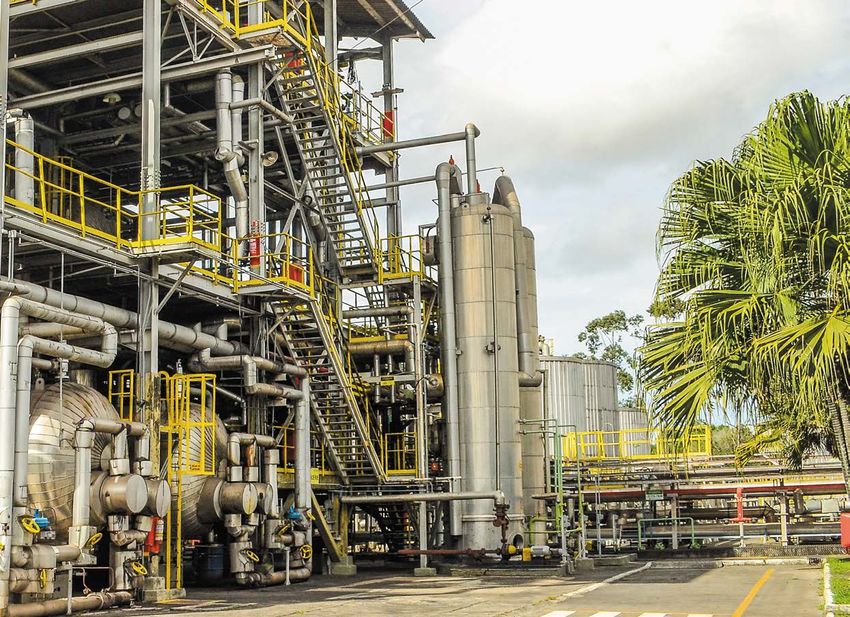
Both have their advantages and chal- The upgraded energy recovery plant at Bjølvefossen.
Elkem sustainability report 2015 23You can also read


