Swiss Cooperation Programme Bosnia and Herzegovina 2021-24
←
→
Page content transcription
If your browser does not render page correctly, please read the page content below
Swiss
Cooperation Programme
Bosnia and Herzegovina
2021–24

Table of contents Foreword
Foreword 3
1. Development context 5 The stability and prosperity of the Western Balkan countries Building on Switzerland’s long-term presence in the country
2. Swiss foreign policy objectives and the donor context in BiH 7 constitute an essential aim for Swiss foreign policy. Switzer- and earlier achievements, the Swiss Cooperation Programme
land’s engagement in the region began in the 1990s, when it 2021–24 focuses on three thematic areas: Economic Devel-
3. Results and lessons learned from the 2017–20 period 9
provided humanitarian assistance and refuge for many peo- opment and Employment, Health, and Local Governance and
4. Implications for the Cooperation Programme 2021–24 11
ple affected by conflicts. Over the years, Switzerland and the Municipal Services. Switzerland has relevant expertise in all
5. Strategic orientation and Swiss priorities for 2021–24 13
Balkans have developed close political, economic and cultural three areas and we are confident that we can make an effec-
5.1. Portfolio outcome 1: Economic Development and Employment 13
ties, marked by geographical, human and economic proximity tive contribution to the further development of Bosnia and
5.2. Portfolio outcome 2: Health 14
and documented by a sizeable diaspora living in Switzerland. Herzegovina. We count on the ownership and leadership of
5.3. Portfolio outcome 3: Local Governance and Municipal Services 14 our partners to achieve lasting reforms and results. The fore-
6. Programme management and implementation 16 Starting with humanitarian assistance in 1996, Switzerland’s seen financial commitments for the 2021–24 period amount
7. Strategic steering 18 cooperation with Bosnia and Herzegovina has gradually to CHF 63 million.
shifted to supporting transition processes and European inte-
Annex 1: Results framework synopsis 20 gration. Today, Switzerland ranks among the largest bilateral The Swiss Cooperation Programme 2021–24 was developed
Annex 2: Results framework for Swiss portfolio outcomes 21 cooperation partners of Bosnia and Herzegovina. The Swiss by the Swiss Agency for Development and Cooperation (SDC)
Annex 3: Monitoring system 32 Cooperation Programme Bosnia and Herzegovina 2021–24 is and the Swiss State Secretariat for Economic Affairs (SECO), in
Annex 4: Financial planning 33 based on a trusted partnership and mutual interests. It repre- close consultation with the Swiss State Secretariat for Migra-
Annex 5: Objectives and sub-objectives of Switzerland’s International Cooperation Strategy 2021–24 34 sents a strong commitment to continue supporting the eco- tion (SEM), as well as government offices and partners from
Annex 6: Overview Swiss whole-of-government partners and their mandates 36 nomic, social and political reform processes in the country, in the civil society and the economy in Bosnia and Herzegovina.
Annex 7: Abbreviations 37 a volatile environment hit hard by the COVID-19 crisis and its The SDC and SECO cooperate and coordinate closely in the
Annex 8: Map of Bosnia and Herzegovina 38 ensuing effects. implementation of the Cooperation Programme, through the
Swiss Embassy in Bosnia and Herzegovina.
Bosnia and Herzegovina has made progress towards political
and macroeconomic stability, but considerable challenges We are confident that the goals and priorities set out in this
remain. To tackle these, Switzerland will continue to support programme will contribute in a relevant way to the sustaina-
the country in specific sectors in line with the priorities de- ble and inclusive development of Bosnia and Herzegovina and
fined by the Government of Bosnia and Herzegovina and will the well-being of its people.
work with partners who can accelerate reforms and develop
new perspectives and opportunities. It takes into account the Bern, January 2021
needs and the challenges Bosnia and Herzegovina faces and
leverages Switzerland’s comparative advantages and interests
in key areas.
Swiss Agency for Development Swiss State Secretariat for
and Cooperation (SDC) Economic Affairs (SECO)
Patricia Danzi Marie-Gabrielle Ineichen-Fleisch
Director General State Secretary
Front page photograph: The youth of Bosnia and Herzegovina are empowered and engaged to shape a better future for themselves and their country.
Strengthening Local Communities Project “Mjesne zajednice”, Petrovo.
2 Table of contents Foreword 3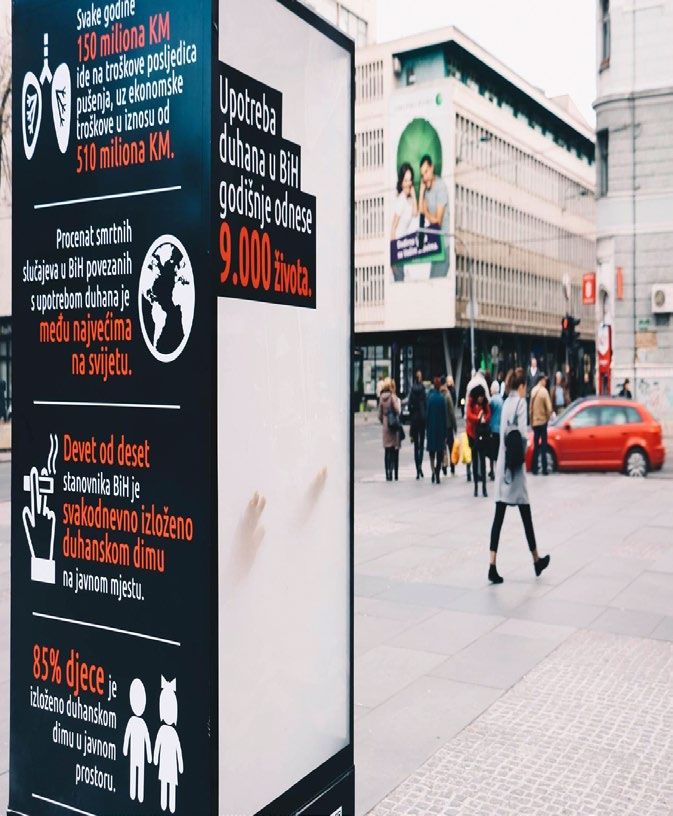
1. Development context
The armed conflict that took place in Bosnia and Herzegovina ical leaders will, however, need to overcome political block-
(BiH) from 1992–95 left a grim legacy in its wake: around ages and ethno-nationalist divisions and demonstrate their
100,000 people were killed, more than two million were declared commitment towards EU integration in effectively
displaced and the country’s economy was completely devas- addressing the identified issues.
tated. The Dayton Peace Accords of 1995 brought an end
to the conflict, but also shaped a very complex political and BiH presented its first Voluntary National Review on its im-
institutional set-up, with 14 governments and diverging inter- plementation of the 2030 Agenda at the United Nations (UN)
pretations of their respective powers. To allow for equal pow- High-Level Political Forum 2019. Meanwhile, it has drafted
er-sharing among the country’s three ‘constituent peoples’ a Sustainable Development Goals (SDG) Framework, which
(Bosniaks, Serbs and Croats), the Peace Accords set up two provides information about entity strategies for SDG imple-
entities, the Federation of BiH (FBiH) and the Republika Srpska mentation. These strategies are still awaiting approval, how-
(RS), in addition to Brcko, a self-governing district, overarched ever. The potential for leveraging the 2030 Agenda is mainly
by a state government and a rotating presidency. In addition, via the EU accession process, as these are mutually reinforc-
BiH still remains under the international oversight performed ing and complementary processes. Significant potential for
by the Office of the High Representative. addressing the SDGs in BiH lies at the local level, where an
estimated 70% of the EU acquis needs to be implemented.
Twenty-five years after the end of the conflict, political in-
stability and accumulated structural problems continue to BiH’s economy relies heavily on exports of metals, energy,
mark BiH. The process of reconciliation and dealing with the textiles, and furniture as well as on tourism, remittances and
legacy of the armed conflict has yet to be realised in BiH. foreign aid. Both entity governments endorsed economic
Stalled socio-economic reforms, high unemployment, grow- reforms (2019–22) aimed at improving the business environ-
ing inequalities, and depopulation are further affecting BiH’s ment, stimulating growth and competitiveness, and depolit-
development. The country’s political elites continue to play an icising state-owned enterprises (SOEs). Political uncertainty
ambivalent role in the search for compromises and effective and delays in forming governments at the different state
solutions to these problems. They often defend the interests levels have, however, blocked actual implementation of these
of their own constituencies at the expense of decisions that much-needed reforms.
would lead to the greater welfare of the whole population. In
addition, regional developments e.g. the issue of recognition Real gross domestic product (GDP) growth slowed to an es-
of Kosovo or political tensions between Serbia and Montene- timated 2.6% in 2019. This was mainly triggered by a weak
gro, have an almost immediate spillover effect into BiH. This global trade environment that has also hit the EU economy.
has trapped the country in a prolonged political crisis which State-owned electricity producers were affected by adverse
often leaves state institutions in deadlock. The lack of rule of meteorological conditions which had a strong negative im-
law and decent job prospects, a culture of nepotism, shrink- pact on electricity production and exports.
ing space for civil society and general apathy have all resulted
in more and more people, especially skilled youth, deciding to The coronavirus (COVID-19) pandemic of 2019 has hit BiH’s
leave BiH, mainly for Western Europe. economy hard. It contracts by at least 5% in 2020, the sever-
est GDP drop in decades. Manufacturing, exports, tourism
There has been a noticeable rollback of previously enacted and retail trade, the main drivers of the BiH economy, are par-
systemic reforms: authorities at all levels continue to disregard ticularly badly affected. Lower government revenues and an
or reject binding decisions of the judiciary, including decisions increasing fiscal deficit (6% of GDP in 2020), lost markets and
of the BiH Constitutional Court, while corruption remains a decrease in remittances are adding to the dire economic
widespread. In its May 2019 opinion on BiH’s application for situation. The anticipated return of BiH workers from Western
membership of the European Union (EU), the European Com- Europe due to the forecast recession will impact the unem-
mission identified fourteen priorities for BiH in the areas of ployment rate. This is currently at 33% and is expected to rise
democracy/functionality, rule of law, fundamental rights and to 38% in 2020. Youth unemployment stands at 47%. The
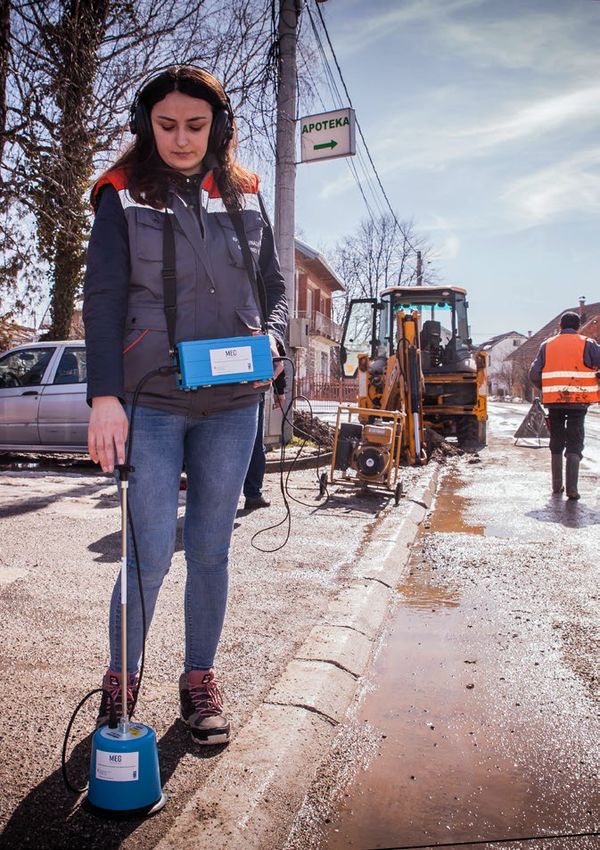
Repairing water pipes: Authorities are supported to provide better access to drinking water and ensure waste water treatment. public administration reform. EU membership is the one goal governments will finance fiscal measures primarily through
Municipal Governance and Environment Project, Kostajanica. which all sides agree upon. To achieve this goal, BiH’s polit- borrowing from multilateral lenders (international financial
4 1. Development context 5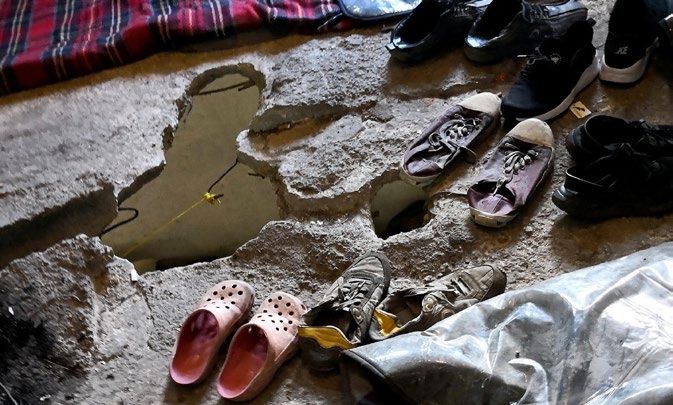
2. Swiss foreign policy objectives and
institutions – IFIs) and therefore BiH debt/GDP ratio is expect-    BiH adopted the Strategy for Approximation of the EU Envi-
ed to rise from 38% in 2019 to 43% in 2020.                         ronmental Acquis in 2017, which deals with several sub-sets

                                                                                                                                        the donor context in BiH
                                                                    of the EU acquis (water management, waste management,
Poverty rates remain alarming with 18% of the population            air quality and climate change, industrial pollution, chemicals
living in absolute poverty, and approximately half of the pop-      and environmental protection). Climate change is expected
ulation at risk of falling into poverty. Poverty rates are ex-      to increase the length of dry periods, the frequency of flash
pected to rise as a consequence of the COVID-19 pandemic.           floods and the intensity of soil erosion. Urban areas face poor
This will primarily affect vulnerable groups such as the Roma,      air quality, particularly in the winter, with air pollution stem-
but also people with disabilities, the elderly, and migrants.       ming in large part from coal- and wood-fired heating.
Most of these individuals remain socially and economically
excluded as BiH experiences increasing inequality driven by         The most likely future scenario is a continuation of the sta-
the concentration of resources in a small number of urban           tus quo, characterised by slow reform progress hampered
centres, whilst outlying and rural areas gradually decline. The     by a relatively functional but inefficient and oversized state      In accordance with Switzerland’s Foreign Policy Strategy                               also affect Switzerland, e.g. through increased irregular mi-
social assistance system creates further inequality among its       apparatus delivering public services at excessive costs and         2020–23, the focus of Swiss engagement for the Western                                 gration. At the same time, BiH’s geographic proximity means
clients, either because of their place of residence (territorial    with uneven access for people in BiH. Movement towards a            Balkans, and thus for BiH, is on supporting its stability and                          that economic development offers trade and investment op-
inequality) or the social category to which a client belongs        positive scenario, characterised by an increased and continu-       prosperous development, including providing assistance with                            portunities for Swiss entrepreneurs. It is thus in Switzerland’s
(status-based inequality).                                          ous willingness for systemic reform, would require all polit-       the European integration process.                                                      own interest to contribute to the stability and prosperity
                                                                    ical actors to become more consensus-driven and willing to                                                                                                 of BiH through the joint commitment of the Directorate of
Significant gender gaps in women’s political participation          compromise. This would also entail substantive constitutional       Informed by the current Foreign Policy Strategy and the In-                            Political Affairs (PD), the Swiss Agency for Development and
persist (in the local elections of 2020, out of 143 mayors only     changes to improve the functioning and coordination of gov-         ternational Cooperation Strategy 2021–24, Switzerland’s co-                            Cooperation (SDC), the Swiss State Secretariat for Economic
4 were female). Despite the fact that women hold a large            ernment authorities. Movement towards a negative scenario           operation with BiH is founded on geographic proximity, close                           Affairs (SECO), the Swiss State Secretariat for Migration (SEM),
portion of public-sector jobs, they remain under-represent-         (characterised by reform set-backs, increased polarisation          partnership and strong political, economic and cultural ties.                          through its Migration Partnership and the Swiss Migration
ed in key political functions and managerial positions with         and serious social unrest) could occur if the socio-economic        With a diaspora of about 60,000 people of BiH descent living                           Strategic Framework for the Western Balkans 2020 –2023,
decision-making power. This is due to biases stemming from          effects of the COVID-19 pandemic persist, and also if a po-         in Switzerland1, ties between the two countries are very close.                        and the Department of Defence, Civil Protection and Sport
traditional patriarchal social norms about the type of work         tential surge of nationalist and secessionist politics leads to     Recognising these linkages, and capitalising on successful                             (DDPS) via the deployment of a military contingent to the
that is suitable for women and the lack of available support        further destabilisation.                                            cooperation over the last 25 years, international cooperation                          European Union Force in BiH (European Union Force in BiH
services such as childcare. BiH’s gender employment gap is                                                                              with BiH responds to the demands and needs of BiH and its                              Operation Althea – EUFOR Althea).
double the EU average. Entrepreneurship remains largely                                                                                 people, and Switzerland’s long-term interests. To do this, it
underdeveloped among BiH women due to a general pref-                                                                                   builds on Swiss added-value and comparative advantages.                                All Swiss state actors engaged in BiH build upon their
erence for reliable public-sector jobs, reluctance to take risks                                                                                                                                                               mandates and comparative advantages (Annex 6), apply a
and the lack of benefits for the self-employed. Women hop-                                                                              BiH still faces political tensions that have a certain potential                       whole-of-government approach (WOGA), and work towards
ing to start families and those already with families are often                                                                         for escalation. This could destabilise the whole region and                            the common goal of improving the everyday life of people in
discriminated against by employers, especially in the private                                                                                                                                                                  BiH. Swiss interventions enjoy well-established relations with
sector. Despite the existence of laws and regulations that pe-                                                                                                                                                                 key actors at all levels of government, civil society, the private
                                                                                                                                        1 Iseni, B., Ruedin, D., Bader, D. and Efionayi-Mäder, D., 2020. Die Bevölkerung von
nalise gender-based discrimination, the lack of a solid redress                                                                         Bosnien und Herzegowina in der Schweiz. Bern: BFM/DEZA, p.34.                          sector and other cooperation agencies.
mechanism and inconsistencies such as different maternity
leave entitlement in the different BiH entities make it difficult
to effectively implement these laws.

Access to basic public services for all is not yet a reality in
BiH. This is also true for the healthcare and water sectors.
Only 75% of the population has access to safe drinking water
and as little as 41% is connected to a public sewage system.
Out-of-pocket payments for healthcare are very high at 29%
of total health expenditures, almost double the EU average.
This represents a particularly great burden to the 18% of the
people who belong to the poorest groups, and considerably
limits their ability to escape from the ‘poverty zone’.

Since 2018, BiH has been heavily affected by the irregular
entry of over 60,000 migrants, mainly from Afghanistan,
Bangladesh, Pakistan, Iraq, Iran and Syria. Many migrants
who initially intended to continue their journey to Western
Europe remain for a longer period in BiH because of the high-
ly protected EU borders. Migration management is therefore
a rather new, additional challenge for the local authorities,
and the burden of the migration crisis is unevenly distributed
among different regions and levels of government.                                                                                                       Better service for patients in the community mental health centers significantly reduce the need for patients to be hospitalized.
                                                                                                                                                                                              Exhibition “Čovjek je čovjek”, Mental Health Project.

6          1. Development context                                                                                                                                                                                  2. Swiss foreign policy objectives and the donor context in BiH             7
3. Results and lessons learned from
the 2017–20 period
Switzerland has successfully contributed to social, economic Excellent results in terms of leverage for infrastructure in-
and political development in BiH, especially at the local level. vestment were produced by the SDC and SECO with the
Swiss interventions mostly met their targets and achieved investment of KfW for the rehabilitation of the wastewater
significant results. They have positively impacted the lives management system in the municipality of Gradiška. The
of hundreds of thousands of BiH citizens. Switzerland has performance-based approach, which was newly introduced
consistently supported policy dialogue by uniting BiH stake- by Switzerland and includes good governance principles to
holders and other development partners that are working award grants for water infrastructure investments, will be
towards inducing systemic change. However, not enough taken over by the World Bank (WB) and the EU. The approach
traction has been achieved for the implementation of sys- has also informed the drafting of a new water policy for BiH.
temic and long-lasting institutional changes. Overcoming the
Switzerland supports the provision of health care services to migrants both in official reception centers as well as to people
political divide to work towards a consistent development In the justice sector, support for BiH’s High Judicial and Pros-
sleeping in spontaneous settlements. Bira Center, near Bihać. strategy paving the way for BiH to comply with the EU acquis ecutorial Council was also successful. The number of criminal
remained unachievable in the 2017–20 period. cases which remained unresolved after two years fell by 47%
compared with 2015. In the juvenile justice sector, children
Switzerland’s added value in BiH lies in the following areas: ´ Environment and climate change: Switzerland’s expertise In the Democratic Governance, Municipal Services and in contact with the law (as offenders or victims) now benefit
(SDC, SECO) in dealing with natural disasters, applying Justice area of the 2017–20 strategy (SDC, CHF 27 million; from increased access to more child-friendly legal assistance.
´ Governance: Democratic governance and the rule of innovative solutions for climate change adaptation and SECO, CHF 12 million), Switzerland supported municipalities
law are essential for sustainable development and social managing major challenges in the water sector are in improving the quality of service delivery, in including citi- In the Health area (SDC, CHF 11 million), Switzerland has sup-
cohesion in BiH. Given Switzerland’s reputation as an increasingly in demand. zens in democratic processes, and in increasing the efficiency ported health authorities by improving accessibility, quality
honest broker, its own experience which is grounded in and transparency of local public administrations. The criteria and safety of primary healthcare. Special attention was given
the principles of subsidiarity and direct democracy, as ´ Migration: As a transit country for migrants, BiH faces for grant allocations to municipalities in both entities were to strengthening health promotion and disease prevention as
well as its decentralised administrative set-up, Switzerland migration management challenges. It can rely on close adjusted to enable a swifter response to emerging priorities cost-effective investments in improving the health of the pop-
(SDC, SECO) is a credible partner and well placed to work cooperation with Switzerland within the Migration during the COVID-19 pandemic. Switzerland is the most ulation. More than 2.3 million BiH citizens now have access to
on improving governance across all levels in BiH. Given Partnership and on Swiss expertise in this area. Facilitating important development partner when it comes to providing standardised, gender-sensitive services for the prevention of
similar political set-ups, Switzerland is often seen as a knowledge transfers between the diaspora and BiH and support to municipalities. cardiovascular diseases (1.56 million in 2016).
political model for BiH. This is combined with Switzerland’s the flow of remittances makes it possible to harness the
solid expertise (SDC, SECO) in the efficient management potential benefits of migration, contributing to BiH’s Thanks to Swiss support, citizens now engage more in local Significant contributions have been made to improve the
of public services, in particular in the health and water sustainable development. decision-making (participation in consultation mechanisms framework conditions for reducing health risk factors in
sectors. on planning and budgeting within partner municipalities is on the country, including tobacco control. Affordable and sus-
Switzerland has invested CHF 705 million in BiH since 1996, average 20% higher than in 2016). Municipal administrations tainable models of primary healthcare were developed, and
´ Economic development: Going by the success of its eco- of which CHF 585 million classify as Official Development are becoming more accountable (901 citizens’ priorities have these have a strong potential to be scaled up. The relevance
nomic model, Switzerland (SDC, SECO) intends to foster Assistance (ODA)2. Over the past decade, ODA allocations in been included in local governance plans, and more than two and effectiveness of these models were also proven during
sustainable socio-economic development in BiH based BiH have been declining and Switzerland now ranks as the thirds have been implemented), and women are stepping up the COVID-19 pandemic, as they enabled continued service
on the principles of the market economy and effective third largest grant-giving donor. The largest donors are the to fill leadership positions. provision for the most vulnerable populations, despite the
framework conditions, innovation and the promotion of EU and the US/USAID, respectively. The major lenders to BiH crisis-related restrictions.
economic stability, increased income and better living are the European Investment Bank (EIB), the European Bank The quality of municipal services has improved, with close
conditions, with particular attention given to the inclusion for Reconstruction and Development (EBRD), the World Bank to 1 million people benefitting from improved infrastructure Over the past four years, thanks to Swiss support, more
of vulnerable groups. Group (WBG) and Germany. Switzerland actively connects (local roads, street lighting, children’s playgrounds). In the than 105,000 socially excluded persons benefitted from
with key development partners to ensure that Swiss experi- water sector, the complementarity between SDC and SECO community nursing services. Four municipalities embraced a
´ Vocational skills development (VSD): Switzerland’s exper- ence informs their programming. has proven very successful. Reforms in the water regulato- community health promotion model, based on multi-sectoral
tise (SDC, SECO) in the field of dual-oriented vocational ry framework have led to the introduction of Public Service cooperation and the promotion of healthy lifestyles. A care
training can help young people find a job in BiH. Having a Agreements (PSAs) in 16 municipalities across the country. coordination model was introduced in mental health facilities
labour force that is market-oriented and possesses up-to- PSA-facilitated collaboration between the municipal admin- across the country and improved the quality of life for over
date skills, including digital skills, is becoming increasingly istration and the water utilities provides efficient, sustainable 3,260 people (48% of whom are women) with severe mental
2 The other CHF 120 million are non-ODA support in the area of security (such as contri-
important in a highly globalised economy. butions to EUFOR). and equitable water services. disorders and for their families. The hospital referral rate of
8 2. Swiss foreign policy objectives and the donor context in BiH 3. Results and lessons learned from the 2017–20 period 9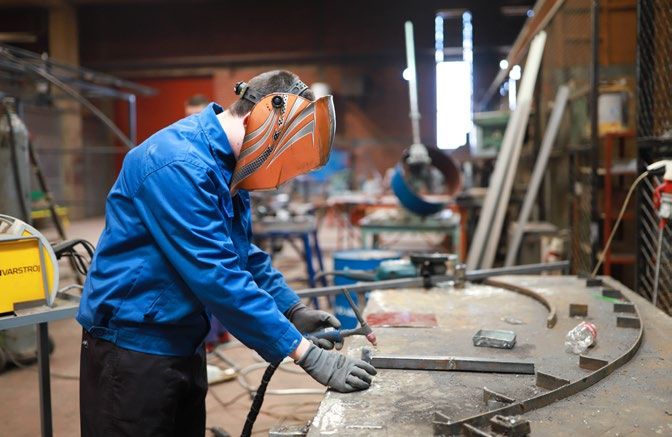
4. Implications for the Cooperation
patients with mental disorders has significantly decreased         The Swiss Migration Partnership, though not an integral
due to improved services at the primary healthcare level, gen-     part of the Swiss Cooperation Programme, was fully aligned

                                                                                                                                       Programme 2021–24
erating important savings for the health system.                   to Swiss engagement in BiH. Facilitated by the SEM, it contrib-
                                                                   uted to improving the management of migration flows and
Over 173,000 young people were reached through health              border management in BiH. A modern migration information
education sessions aimed at promoting healthy lifestyles and       system has been introduced, allowing for inter-departmen-
fighting health-related gender stereotypes. Capitalising on its    tal data exchange. In addition, capacity management of the
extensive network and expertise, Switzerland took the lead in      readmission process has been improved, allowing for effec-
bringing together development partners for concerted policy        tive social and economic integration of returnees to BiH. In
influencing and pushing for reform in the health sector.           response to the migration and humanitarian crisis caused by
                                                                   migrants being stranded on their way to Western Europe,
Contributions in the Economy and Employment area (SDC,             Switzerland provided targeted humanitarian assistance. Mi-
CHF 17 million; SECO, CHF 5 million) helped unemployed             grants gained access to basic healthcare.
people find jobs more easily, increased youth employment
and successfully facilitated private sector growth through an      The following lessons learned are of particular importance          The Swiss Cooperation Programme Bosnia and Herzegovina                to speak with one voice when focusing on systemic change.
improved business environment. Switzerland succeeded in            for the Swiss Cooperation Programme 2021–24: (1) People             2021–24 will sustain efforts to accelerate reforms for the ben-       It will advocate for joint policy influencing in favour of com-
optimising all public employment service (PES) procedures.         must be at the centre of the Swiss programme and become             efit of people in all parts of the country. With the exception        prehensive local governance and health sector reforms, water
The new procedures were anchored in legal frameworks,              actors of change. (2) Gender must be kept high on the agenda,       of the justice sector, it will continue to engage in the same         sector efficiency and sustainability, for an enabling business
thus regulating how the services operate throughout BiH. In        by continuously challenging gender stereotypes and address-         priority areas, capitalising on previously achieved results.          environment and the creation of more and better jobs. In this
total 32,379 (48% female) unemployed individuals found jobs        ing root causes of gender inequality across the programme.                                                                                regard, Swiss results will be scaled up through collaboration
thanks to support from a PES.                                      (3) The systematically applied performance-based approach           The Swiss Cooperation Programme will be implemented in                with multilateral organisations, particularly the WBG. Chang-
                                                                   proved to be successful in delivering results and sustainable       a volatile environment hit hard by the COVID-19 crisis. Les-          ing social norms towards gender equity, social inclusion and
Swiss-supported interventions improved the vocational skills       change. (4) The scaling up of Swiss results is done most effec-     sons learned from the pandemic will be addressed system-              citizen participation will become an integral part of the Pro-
of 6,191 young people (45% female). For the first time in BiH,     tively by integrating successful approaches into legal frame-       atically across the Programme with the aim of improving               gramme.
private companies were directly involved in the revision of the    works or by influencing the programming of big players, such        BiH’s resilience towards such shocks. The Swiss Cooperation
school curricula and the definition of occupational standards.     as the WB or the EU. (5) In a country with no overarching           Programme is based on the status quo scenario, which is               Furthermore, strong synergies across the Programme will be
Entrepreneurship was boosted through better services being         development framework, it is crucial to have strong alliances       considered to be most plausible. All interventions will take          pursued in order to maximise results. This will go hand in
offered by business incubators and accelerators across BiH.        with like-minded development partners in order to hold gov-         into account the dysfunctionality of the state apparatus in           hand with systematically seizing upon the potential of digital
Some 314 start-ups, including social enterprises, received         ernment partners accountable for delivering results and scal-       providing effective services to its citizens, signals of a possible   transformation in all interventions.
support. A total of 1,061 jobs were created.                       ing up good practices. Switzerland is well positioned to push       increase of tensions and escalation, important demographic
                                                                   for such an approach, as it is highly respected for its effective   changes in an ageing society, depopulation, a shortage of             Finally, the impact of interventions on climate change, required
Special attention was given to the promotion of women-led          political messaging and for bringing organisations and people       skilled workers and an ongoing influx of irregular migrants.          risk mitigation and adaptation measures will be addressed
businesses and the provision of new role models. A nation-         together. (6) Partnerships need to be further diversified in or-                                                                          systematically, e.g. through the provision of more efficient
wide campaign challenging gender stereotypes in the labour         der to reduce the risks associated with working with a limited      Sustainable development is at risk if the stakeholders remain         water services and climate-smart water infrastructure, as well
market enjoyed high visibility and stimulated a lively debate.     number of partners and implementation modalities. (7) The           unwilling to move forward and to undertake the necessary              as by strengthening resilience through the Disaster Risk Re-
As a result, 52% of start-ups entering programmes/training         COVID-19 pandemic provides the opportunity to put health            reforms. This already appears to be the case in the country’s         duction (DRR) programme, and more climate-sensitive urban
were female-led or owned, while 43% of mentors are female.         sector reform back on the agenda. As a long-term partner in         socio-economic response to the COVID-19 crisis, as it focus-          planning and design.
Private sector investments in small and medium enterprises         this sector, Switzerland is well placed to take a leading role      es much more on maintaining existing structures than on
(SMEs) and start-ups reached a total of CHF 7.2 million. This      here. (8) Given labour shortages and growing inequality in          engaging in reform processes. Switzerland will work more              It is expected that BiH will continue to be a transit country
was also due to significant financial contributions and suc-       access to services in depopulated regions, new modes of             with those who are willing to perform and who demonstrate             for irregular migrants in the coming years. Since the state
cessful know-how transfer by members of the BiH diaspora.          service delivery must be explored. This could include seizing       ownership for systemic change, including by increasing their          lacks needed capacities to deal with large-scale migration
                                                                   the potential of digitalisation. (9) The donor landscape in         financial contributions. This approach will contribute to the         flows, Switzerland will continue its assistance in meeting the
Reforms to insolvency legislation in RS shortened bankruptcy       the justice sector is crowded and it is difficult to ensure that    sustainability of Programme results. Switzerland will work            humanitarian needs of migrants by working in a manner that
proceedings substantively, saw the introduction of pre-bank-       Swiss contributions continue to add value. (10) The quest for       with committed citizens, activists, entrepreneurs, officials, and     prevents conflicts between migrants and host communities.
ruptcy restructuring for indebted companies and saved 626          a better balance across the portfolio needs to be pursued and       politicians who strive to work against general apathy, while          Also, as stressed in the Strategy on International Coopera-
jobs (98 held by women). Municipal counselling for indebted        the synergies among projects initiated during the last 4 years      advocating for citizens’ interests, demanding a responsive            tion 2021–24, the Migration Partnership and its migration
citizens contributed to the reduction of non-performing loans.     needs to be consolidated in order to better contribute to the       government, and promoting change throughout the country.              dialogue will remain relevant. It will provide Switzerland and
Swiss-supported initiatives facilitated access to EU markets for   overall goal.                                                       Justice projects will be phased out upon completion of their          BiH with a shared platform to discuss, manage and develop
ten companies employing 3,800 people (36% female), and                                                                                 final phases, given a crowded donor landscape in this sector.         interventions of mutual interest. These comprise a flexible set
these companies have increased their export value by CHF 55                                                                                                                                                  of initiatives in line with the Swiss Migration Strategic Frame-
million over the last four years. Maintaining employment and                                                                           The Swiss Cooperation Programme will be guided by the                 work for the Western Balkans 2020-2023.
job creation became even more important in the context of                                                                              2030 Agenda and its leave no one behind imperative, and
the COVID-19 pandemic. Partners working on entrepreneur-                                                                               intervene in alignment with EU accession priorities and rele-         This may be condensed into an overall goal for the Swiss
ship provided mentorship and technical assistance to small                                                                             vant domestic strategies. The Programme will be implement-            Cooperation Programme BiH 2021–24: Women and men
businesses in adapting their business models to the current                                                                            ed throughout the country, with special attention given to            in BiH engage to shape government policy at all levels
situation. Business plans have been identified and supported,                                                                          working across entity lines.                                          and benefit from effective, sustainable and inclusive
seizing upon commercial opportunities created as a result of                                                                                                                                                 public services, economic growth, higher employability
the pandemic.                                                                                                                          Switzerland will continue to push the international communi-          and better healthcare for all.
                                                                                                                                       ty to work in a coordinated and complementary manner and

10         3. Results and lessons learned from the 2017–20 period                                                                                                                                     4. Implications for the Cooperation Programme 2021–24               11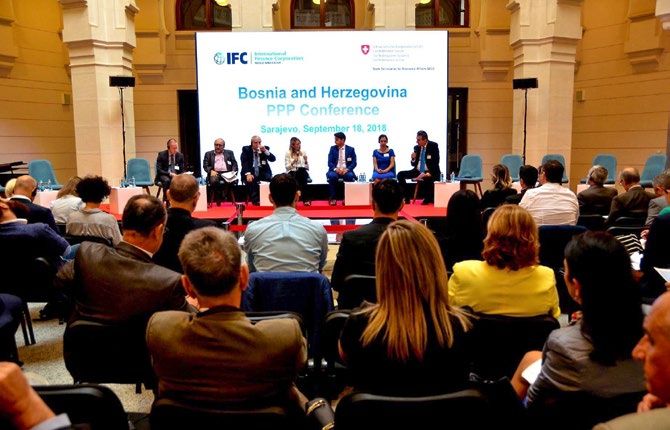
5. Strategic orientation and Swiss
priorities for 2021–24
Switzerland contributes to four sub-objectives (2, 6, 7 and 5.1 Portfolio outcome 1: Economic
10) of its 2021–24 International Cooperation Strategy in BiH: Development and Employment
promoting innovative private sector initiatives to facilitate the
creation of decent jobs; preventing disasters and ensuring The overall objective of the Economic Development
reconstruction and rehabilitation; strengthening equitable and Employment portfolio is: Women and men contribute
access to quality basic services; and promoting good govern- to, and benefit from, economic growth, sustainable prosperi-
ance and the rule of law and strengthening civil society. Each ty and more decent jobs.
of the three portfolios – economic development and employ-
ment, health, local governance and municipal services – links This contributes to the Swiss International Cooperation Strate-
up to several of the four sub-objectives, ultimately contribut- gy 2021–24, mainly sub-objective 2, but also 7 and 10 (Annex
ing to the achievement of all four objectives of Switzerland’s 5). The portfolio will contribute to BiH’s Joint Socio-Economic
International Cooperation Strategy (Annex 1). The financial Reform Programme 2019–22. The planned budget amounts
framework for the Cooperation Programme 2021–24 com- to CHF 20 million.
prises CHF 63 million, whereas the total amount of Swiss
funds for Bosnia and Herzegovina may reach a maximum Outcome statement 1: An improved innovation-friendly
amount of CHF 79 million3 (Annex 4). business environment paves the way for a more competitive,
productive and growth-oriented private sector and attracts
The Swiss Cooperation Programme strives to integrate gender more investments in BiH companies.
equity, good governance, social inclusion as well as climate
change and resource efficiency in a transversal manner4 in Switzerland supports its partners in designing an efficient and
all its interventions. It systematically takes climate risks into transparent legal economic framework in BiH both at nation-
account and seeks to mobilise the private sector to a greater al and local level. This reduces bureaucracy and the cost of
extent to make climate-friendly investments. Migration will doing business, as well as uncertainty for companies and in-
also remain an important topic. The Programme will seek to vestors, laying the ground for sustainable economic growth.
harness diaspora know-how and resources and reduce hard- Switzerland is supporting its partners in removing potential
ship for migrants transiting BiH, while strengthening BiH’s gender-specific hurdles in the business environment, leading
capacities to prevent irregular migration and improve border to equitable opportunities for men and women. Enabling an
management. A conflict-sensitive programme management innovation-friendly and climate-smart business environment
approach will be applied to all interventions. Youth opinions and by granting access to knowledge and finance, including
and voices shall feature more prominently through a Youth from the BiH diaspora, improves the competitiveness and pro-
Advisory Board, in an effort to mobilise people to become ductivity of start-ups and SMEs. Finally, Switzerland facilitates
agents of their own development. access to Swiss and EU markets for selected industries, ena-
bling growth in exports and further job creation in BiH. With
Arts and culture are an important part of human develop- its support, Switzerland contributes to the country’s objective
ment. Therefore approximately 1% of the SDC’s overall of creating a favourable environment for investments and
budget for BiH in 2021–24 will be spent to support local cul- private sector development, leading to more jobs.
tural initiatives and artists.
Outcome statement 2: Fostered by a favourable environ-
ment, entrepreneurship development is more inclusive and
creates more decent income opportunities for women and
men.
Entrepreneurship and start-ups are seen as crucial for the
By asking people to vote for female candidates in local elections. The “Ja glasam za ženu” campaign
3 Figures in this document are rounded up in millions. creation of more income opportunities in BiH. To thrive, these
4 The Swiss Cooperation Programme thus contributes in a transversal manner to sub-ob-
promotes women’s visibility and participation in politics. jectives 1, 3, 8 and 9 of the Strategy on International Cooperation 2021–24. need a conducive social, legal and economic environment.
12 5. Strategic orientation and Swiss priorities for 2021–24 13Switzerland therefore advocates for government policies Through its support, Switzerland contributes to the country’s
which encourage and safeguard entrepreneurs. It promotes objectives of enhancing health promotion and reducing the
the expansion of local support services such as entrepreneur- burden of non-communicable diseases as the leading cause of
ship training, professional networks and access to funding. ill-health and a poorer quality of life among BiH’s population.
Particular attention will be paid to youth and female-led
start-ups. Thus, the Programme contributes to the country’s Outcome statement 2: Communities actively engage in
objective of fostering quality employment through youth en- creating health-promoting conditions, and women, men, and
trepreneurship and by simplifying the creation of start-ups. In youth in particular, adopt healthier lifestyles.
addition, a strong focus on responsible business practices will
foster climate-friendly investments and the creation of more As the health of the population is determined by many more
decent jobs. factors than just the performance of the healthcare system,
the Swiss Cooperation Programme supports concerted ac-
Outcome statement 3: Male and female technical and voca- tions of different sectors to ensure that non-health sectors
tional education and training (TVET) students become more also protect and promote the population’s health. Framework
employable as a result of the introduction of a dual-oriented, conditions for health promotion are improved, for instance
widely accepted TVET system. those related to tobacco control and nutrition policies. Com-
munities are mobilised in creating a health-supportive envi-
Switzerland facilitates the establishment of a dual-oriented ronment and in encouraging people to take responsibility for
TVET system in BiH. This is pursued by supporting selected their health and to make healthier choices. This contributes to
vocational education and training (VET) schools and through the country’s objectives of reducing behavioural risk factors
the establishment of a formalised dialogue between VET and promoting health and well-being of the population.
schools, education authorities and companies, so as to foster
market orientation of the TVET system. Ensuring labour mar-
ket relevant skills, particularly for those who are entering the 5.3 Portfolio outcome 3: Local
labour market, is a cornerstone of BiH’s economic contingen- Governance and Municipal Services
cy plan in response to the COVID-19 pandemic, and part of
the Joint Socio-Economic Reform Programme 2019–22. The overall objective of the Local Governance and Mu-
Strengthening vocational educational and training contributes to lower youth unemployment.
nicipal Services portfolio is: Citizens demand, and benefit Strengthening Technical Vocational Education and Training Project, JU Tehnička škola Gradiška.
from, democratic, inclusive and effective institutions.
5.2 Portfolio outcome 2: Health
This contributes to the Swiss International Cooperation Strat- ter sector, in a climate-smart, disaster-resilient, inclusive and Outcome statement 3: Citizens, in particular women and
The overall objective of the Health portfolio is: Women egy 2021–24, sub-objectives 6, 7 and 10 (Annex 5). By doing sustainable way. youth, engage as actors of change in democratic processes
and men demand, and benefit from, high-quality primary so, Switzerland will contribute to the two entity local govern- and demand reforms.
healthcare and live healthier lives. ance development strategies. The planned budget amounts Through Swiss support, municipalities adopt a perfor-
to CHF 27 million. mance-based management system (PMS), thereby operation- Switzerland encourages all citizens, in particular women and
This contributes to the Swiss International Cooperation Strate- alising good governance principles within municipalities and youth, to express their voices in a structured way and to
gy 2021–24, sub-objectives 7 and 10 (Annex 5). The portfolio Outcome statement 1: Higher-level governments ensure strengthening social cohesion. The use of digital solutions actively participate in decision-making. The municipal regu-
contributes to the implementation of BiH’s Joint Socio-Eco- a more conducive framework, which provides municipalities will be systematically promoted. Switzerland will support an- lations are adjusted to integrate citizens’ voices more system-
nomic Reform Programme 2019–22 and to the two entity with adequate powers and resources (financial, human). ti-corruption measures and the application of gender-respon- atically, particularly those of socially excluded people. Digital
strategies on primary healthcare development, which aim to sive and socially inclusive budgeting approaches. In the water solutions for e-governance will be promoted. Swiss interven-
strengthen preventive care and reduce health inequalities in Switzerland contributes to the establishment of a local gov- sector, the establishment of the performance-based system tions will also focus on supporting rights-based civil society
the country. The planned budget amounts to CHF 14 million. ernance framework that is more conducive for municipalities at the municipal level involving capacity building of water util- organisations (CSOs) with strong links to citizens, including
to respond to the demand of their citizens, deliver inclusive ities is combined with reforms in the regulatory framework at marginalised groups. Through professionalisation and evi-
Outcome statement 1: The primary healthcare (PHC) sys- services, enhance resilience to climate change and promote higher levels. Through the collaboration with the WB Water dence-based advocacy, CSOs will become reliable partners in
tem sustainably provides access to gender sensitive services of social cohesion. This is tackled by strengthening the ability and Sanitation Services Modernization Program, Switzerland policy-making and democratic reform processes at all levels.
improved quality, focusing on the prevention of non-commu- of the Associations of Municipalities and Cities (AMCs) to will contribute to investment in water service delivery and Switzerland contributes to the EU pathway to operationalise
nicable diseases (NCDs) and leaving no one behind. effectively address the reform priorities of municipalities. In wastewater treatment. To make the investment sustainable, it a regular cooperation and consultation mechanism between
addition, Switzerland supports the establishment of a perfor- will be conditional on progress in management capacity and civil society organisations and the Council of Ministers, and
Switzerland supports the standardisation of PHC services, mance-oriented system that informs all levels of government. the application of good governance principles. Swiss exper- to establish a framework for the transparent funding of civil
particularly those provided by mental health professionals As for the water sector, through joint programming between tise will be used to build the necessary capacity for good qual- society organisations.
and nurses. It is ensured that services are affordable, ef- Switzerland, the United Nations Development Programme ity wastewater treatment at all government levels. Through
fective, gender-sensitive and focused on the prevention of (UNDP) and the WB, BiH authorities will be supported as they Swiss support, urban planning in the Canton of Sarajevo will
non-communicable diseases. Healthcare is brought closer to establish a regulatory framework at all levels, guided by good be improved to be more participatory and benefit from Swiss
the communities, ensuring affordability and equitable access governance principles. This contributes to the country’s objec- expertise. Climate change will be tackled through targeted
to care, particularly for socially-excluded persons (the elderly, tive to improve the overall system of strategic policy planning. interventions aiming at making wastewater and infrastructure
persons with mental disorders, persons without health insur- management more energy efficient as well as through DRR
ance), including migrants stranded in BiH. Experiences from Outcome statement 2: Local governments (LGs) improve interventions. Switzerland will thus contribute to BiH’s nation-
the COVID-19 pandemic are used to push for the required their performance, are more accountable, and provide al objective of addressing public administration reform and
reforms, including digitalisation for easier access to services. high-quality and equitable services, in particular in the wa- the public water investment plan.
14 5. Strategic orientation and Swiss priorities for 2021–24 5. Strategic orientation and Swiss priorities for 2021–24 156. Programme management
and implementation
Switzerland is respected for its consistent political messag- important partner for joint policy dialogue and for upscaling governance and municipal services, an enabling business en- climate change will be introduced in relevant Swiss interven-
ing, its coherent engagement in policy influencing and for successful approaches and results, in particular in the fields vironment and employment. The SDC and SEM will cooperate tions based on the Climate, Environment and Disaster Risk
bringing organisations and people together. It will intensify of employment, water and health. This implies the continued closely on migration, in particular when it comes to address- Reduction Integration Guidance (CEDRIG).
these efforts in the new Swiss Cooperation Programme. In support of the Embassy’s management team and the Swiss ing the challenges caused by the large number of migrants
the absence of unified political leadership and without a BiH Ambassador. Progress will be monitored as a management stranded in BiH on their way to Western Europe. The challenge of obtaining results in a country with a com-
development strategy, it is of utmost importance that the in- objective. plex political system and a limited readiness for consensus will
ternational community has a common understanding of the Switzerland will share its expertise in different areas, such remain. Thus an adaptive management approach will be ap-
development challenges. Switzerland will remain engaged in A modality mix will be applied to implement the Swiss Co- as the political system, vocational education, water sector plied to respond to emerging opportunities and unexpected
donor coordination particularly in the fields of local govern- operation Programme: mandates to international or local and urban planning. This will include facilitating knowledge developments. The reorganisation of the cooperation team
ance, an enabling business environment, water, health and non-governmental organisations (NGOs); contributions to exchange with Swiss institutions and also drawing on the ex- will be completed by mid-2021. The reallocation of portfolios
TVET. government programmes, local and international NGOs; as pertise of academia and Swiss NGOs. The latter will be more will not only allow programme officers to have a fresh look
well as multi-bi contributions to multilateral organisations. systematically included in policy influencing, to explore ways at each project and project partner, but will also allow team
Switzerland will continue to work with multilateral organi- To diversify the partnerships, the volume of multi-bi funding to create stronger cooperation and make use of complemen- members to acquire new skills for the successful implemen-
sations and international financial institutions on a strategic will be reassessed. Co-funding partnerships and topical al- tarities towards the achievement of the overall goal. Innova- tation of the Cooperation Programme. In addition, Switzer-
level. Dialogue with UN agencies on the importance of their liances will be established with other bilateral donors and, tion will be fostered by combining Swiss and BiH know-how, land’s increased engagement in policy influencing will require
normative role and on policy advice will be pursued, and inte- if possible, with the Swiss private sector. Synergies between including initiatives that foster digitalisation. Partnerships for skills development beyond project management.
grated in project cooperation. The World Bank will remain an SDC and SECO projects will be pursued, e.g. on the topics of project implementation will be diversified, working more
with local actors, either with governmental institutions (‘use
of country systems’), the private sector and its representation
organisations, or civil society organisations. Local partner-
ships have proven to be successful in creating sustainability.
Options that make use of existing systems in the country are
under discussion in various programmes and will be further
developed. To mitigate the risk of corruption from financial
contributions to government budgets, contributions shall be
based on pre-agreed performance indicators. Furthermore,
sustainability shall be addressed consistently (for example, by
requesting increased financial contributions on the part of
local partners). Progress in this regard will be monitored and
integrated as a management objective.
Gender equity remains high on the agenda and will be mon-
itored as a management objective across the portfolio. An
analysis of every project will be conducted to ensure that the
root causes of gender inequality in BiH are addressed. Gen-
der-sensitive language shall be applied in all partnerships. The
recommendations of the 2020 National Human Development
Report on Social Inclusion will be used to launch a public
debate on inequalities in the country and those left behind.
The relevance of the Swiss portfolio for the young generation
will be ensured by engaging with the Youth Advisory Board,
which Switzerland helped launch. A locally developed guide
on conflict sensitive programme management (CSPM) will be
used to address elements of fragility and to promote social
Public-Private Partnerships are essential for achieving progress. PPP conference Public-Private Partnership Project. cohesion across communities and entities. Finally, addressing
16 6. Programme management and implementation 6. Programme management and implementation 177. Strategic steering
The team of the Swiss Embassy in BiH will assume responsi- The steering is also informed by a political economy analy-
bility for the results-oriented implementation, monitoring and sis done as part of project appraisals and planning, whenever
steering of the Swiss Cooperation Programme. The monitor- relevant. Strategic monitoring visits to project partners,
ing system consists of several tools which are used at different stakeholders and beneficiaries are organised at least twice
levels of observation and complement each other (Annex 3). a year for accountability, reporting and learning purposes.
It is tied to the annual reporting and planning process. These instruments, along with the meetings with project
partners (where specific challenges and topics of importance
The results framework is the most important reference for to the portfolios are discussed), also contribute to strategic
Programme monitoring and steering (Annex 2). It describes steering and the development of synergies between projects
the intended results and indicators of success with regard to for concerted, result-oriented policy influencing.
the Swiss portfolio and country development outcomes to
which the Swiss portfolio contributes. Half of the indicators In addition, partner risk and internal control system
also measure the Programme’s contribution to the Interna- assessments are used to identify and mitigate the risks
tional Cooperation Strategy 2021–24 and the 2030 Agenda related to implementation partners and their administrative
for Sustainable Development. Reporting on results is based and financial compliance and transparency, and to ensure the
on national statistics and the monitoring data of other in- cost-effectiveness of supported interventions. Zero tolerance
ternational development partners, whenever available and applies to sexual harassment and corruption in Swiss projects.
relevant, and on the monitoring systems of projects. For the Particular attention is paid to ensuring ethical behaviour and
latter, the outcome monitoring summary (OMS) assesses improving the awareness and skills of project partners and
results achieved by individual projects and their contribution stakeholders in identifying and addressing potential corrup-
to the targets of the results framework. It guides the discus- tion risks. Reputational risks will be mitigated by a systematic
sion on project progress with partners, stakeholders and au- assessment of partner organisations related to politically ex-
thorities, for joint learning and use of its findings for project posed persons.
steering.
A mid-term review of the Swiss Cooperation Programme
The yearly progress made towards achieving the results will assess the relevance of the Programme, report the most
outlined in the results framework is presented in an annual important results with regard to the Programme’s strategic
report. The report also monitors different scenarios and pre- objectives, identify any necessary adaptations and feed into
sents steering decisions and priorities for the following year. the new Swiss Cooperation Programme.
Furthermore, its conclusions rely on an analysis of the country
development context, trends and risks (MERV). Monitoring
of the financial planning and disbursements takes place
continuously throughout the year and is discussed in the an-
nual report. A management response to the annual report
is provided by the Swiss whole-of-government partners and
informs the strategic steering of the Cooperation Programme.
Based on the planning section of the annual report, a mid-
year review is undertaken to allow stock-taking and identifi- Raising public awareness on the importance of a smoke free environment aims to improve public health.
cation of short-term adaptations prior to the end of the year. “Klima bez dima” campaign, Reducing Health Risk Factors Project.
18 7. Strategic steering 19You can also read


