SYDNEY CITY CENTRE ACCESS STRATEGY - December 2013
←
→
Page content transcription
If your browser does not render page correctly, please read the page content below
SYDNEY CITY CENTRE
ACCESS STRATEGY
December 2013
SYDNEY CITY CENTRE ACCESS STRATEGY
                                                                                             DECEMBER 2013

     CONTENTS

     MINISTERS’ MESSAGE                                                                                       1

     EXECUTIVE SUMMARY                                                                                        2

     AN INTEGRATED NETWORK IN THE CITY CENTRE                                                                 4

     PROGRESSING INITIATIVES IN THE CITY CENTRE                                                               6

     INTEGRATED OUTCOMES IN THE CITY CENTRE                                                                   7

     TRANSFORMING SYDNEY’S CBD                                                                                8

     THE CHALLENGES                                                                                           9

     OUR PLAN FOR IMPROVING ACCESS TO AND WITHIN SYDNEY’S CITY                                            18
     CENTRE

     ACTIONS IN DETAIL                                                                                    27

     OUR FUTURE TRANSPORT NETWORK – STREET BY STREET                                                      58

     HOW YOU HELPED – THE CONSULTATION PROCESS                                                            68

     SYDNEY CITY CENTRE ACCESS STRATEGY
     December 2013
                                                    Disclaimer
     ISBN: 978-1-922030-62-7
                                                    While every reasonable effort has been made to
     Copyright notice                               ensure that this document is correct at the time of
     © State of New South Wales through the         printing, the State of NSW, its agents and employees,
     Director General of Transport for NSW, 2013.   disclaim any and all liability to any person in respect
     Transport for NSW                              of anything or the consequences of anything done or
     18 Lee Street                                  omitted to be done in reliance upon the whole or any
     Chippendale NSW 2008                           part of this document.

ii
SYDNEY CITY CENTRE ACCESS STRATEGY
DECEMBER 2013

MINISTERS’ MESSAGE

Sydney is Australia’s leading global city and
primary economic centre with outstanding natural
assets, attractions and a strong business and
employment base. The city centre is a hub of
activity with more than 630,000 trips made to the
centre each weekday. This is expected to grow to
775,000 trips over the next 20 years.

Sydney’s status as a liveable and vibrant global         The Access Strategy will transform many aspects
city relies on efficient access to, and movement         of the city centre’s transport network. It will
around, the city centre. We need to provide              also transform parts of the central city creating
better public transport options for a growing            new precincts and places that are attractive and
transport task and make our city streets work            where people will want to spend more time. It
more effectively.                                        is an important step to prepare Sydney for future
                                                         growth and to create a seamless, integrated and
Our extensive harbour frontage is a natural wonder;
                                                         fully- functioning transport system that meets the
however the geography presents challenges
                                                         needs of our customers travelling to, from and
for our transport network and means we have
                                                         within the city centre.
constraints affecting how we cater for growth.
                                                         The Sydney City Centre Access Strategy has been
Developing the Sydney City Centre Access Strategy
                                                         informed by a clear understanding of the existing
is a key action in the NSW Long Term Transport
                                                         and future transport task to and within the city
Master Plan. The Access Strategy is the state’s
                                                         centre, as well as in-depth analysis of transport
first detailed plan showing how people will enter,
                                                         as an integrated system. The Access Strategy has
exit and move in and around the CBD over the
                                                         also been informed by community feedback. We
next 20 years. The Access Strategy demonstrates
                                                         released the Sydney City Centre Access Strategy
how light rail, buses, trains, ferries, cars, taxis,
                                                         for further consultation in September 2013.
pedestrians and cyclists will interact in the heart of
Sydney. The Access Strategy also provides a clear        We acknowledge and thank everyone who
direction for how all the different transport modes      provided comments on that version of the Access
will work together in the city centre to:                Strategy. Your feedback has helped to strengthen
                                                         the final Strategy. We are now getting on with
•• Reduce congestion
                                                         the job of delivering this plan of action to put
•• Provide for future growth                             the right mode in the right place in the city
                                                         centre, cut congestion and support a globally
•• Improve the customer experience.                      competitive city.
Better facilities for pedestrians and a completed
city centre cycleway network will make it easier to
move around within the city centre. We will also
make better use of limited road space within the
                                                         Gladys Berejiklian MP         Duncan Gay MLC
city centre to manage congestion and to meet
                                                         Minister for Transport        Minister for Roads and
the needs of business for efficient access for
                                                                                       Ports
deliveries and services.

                                                                                                                1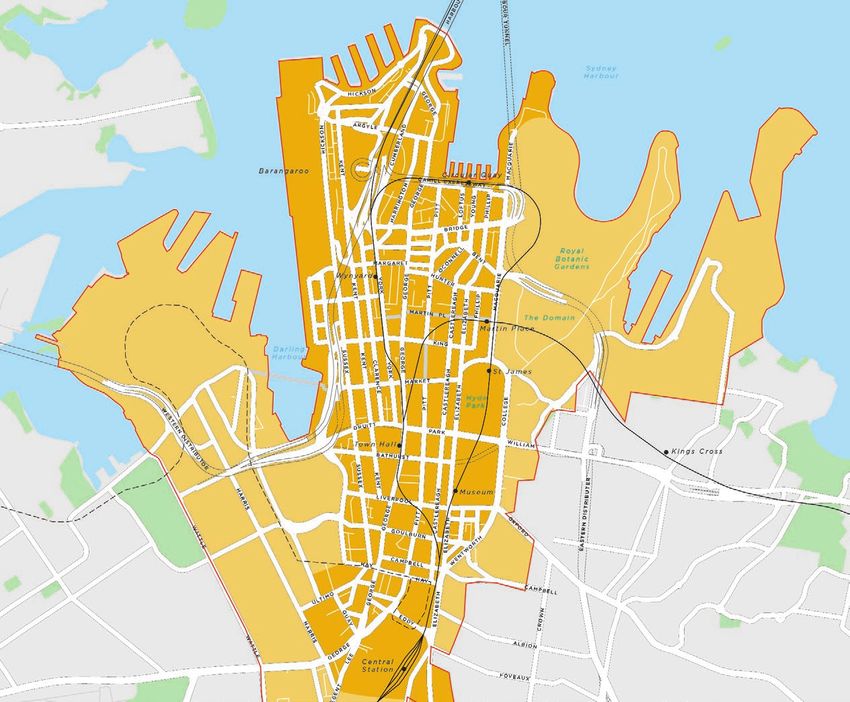
SYDNEY CITY CENTRE ACCESS STRATEGY
                                                                                                      DECEMBER 2013

    EXECUTIVE SUMMARY

    The Sydney City Centre Access Strategy will               Bus routes will be redesigned to include new and
    deliver a fully integrated transport network in           improved services that are more reliable, easier to
    Sydney’s city centre that puts the customer first         understand and offer better flexibility for transfer
    and meets the growing transport task. It will mean        with other modes. These changes, together with
    more people use public transport to access the            the commencement of the CBD and South East
    city centre and it will change the way people move        Light Rail, will mean 220 fewer peak hour buses
    around within it.                                         would enter the city centre, relieving congestion.
                                                              The North West Rail Link will further contribute to
    Rail will remain the dominant mode for getting to
                                                              a reduction in buses with some 160 fewer buses
    the city centre. The North West and South West
                                                              entering the city centre.
    Rail Links will mean customers from Sydney’s
    growth areas are able to access the city centre           An additional 55 extra weekly ferry services,
    rapidly and reliably. The NSW Long Term Transport         including ferry routes with more consistent stopping
    Master Plan has highlighted the Second Harbour            patterns and longer hours of operation to better
    Crossing as Sydney’s next major rail project. This        match demand, were introduced in October 2013
    project is a new rail line under the city, it will        as part of the first integrated timetable for ferries,
    expand the rapid transit network already being            buses and trains. A new ferry hub at Barangaroo
    delivered by the North West Rail Link and feature         opening in 2016 will connect ferry customers to
    fully automated, single deck trains and new               the western and mid-town parts of the city centre.
    underground stations. It will relieve congestion          A high quality pedestrian link, the Wynyard Walk,
    at existing stations and also open up new                 will connect Barangaroo and Wynyard.
    connections to the city centre.
                                                              Access for motorists – including service and
    Together with other measures to fix Sydney’s trains,      delivery vehicles – will be maintained. Service
    the Second Harbour Crossing will enable Sydney’s          and delivery vehicles will be encouraged to make
    rail network to carry up to 100,000 more people           deliveries outside peak hours and use off-street
    an hour, unlock significant capacity on key rail          loading docks. For motorists, traffic bypass
    corridors and provide rail access to growing parts        routes will be optimised, including getting more
    of the city. This will create significant incentive for   traffic into the Cross City Tunnel, and establishing
    customers to shift from cars to public transport.         priority routes for motorists around the city
                                                              centre on streets such as the Wentworth Avenue
    We will also undertake station upgrades at Central
                                                              / College Street / Macquarie Street route.
    and Wynyard with further upgrades at Town
    Hall, Martin Place, St James and Museum. We are           The Access Strategy clearly prioritises and
    starting detailed planning to transform Central           allocates street space for public transport,
    Station into an iconic world class transport hub and      general traffic, pedestrians, cyclists, taxis and
    the southern arrival gateway to the Sydney CBD.           service vehicles, helping to unlock Sydney’s
                                                              transport capacity. Improved signage and
    The new CBD and South East Light Rail will
                                                              wayfinding will also help manage the demand for
    connect the south eastern suburbs to Central
                                                              limited space in the city centre and make it easier
    Station and Circular Quay and move up to 9,000
                                                              for people to move around.
    people per hour in each direction through the city
    centre. Together with the Inner West Light Rail
    extension, the CBD and South East Light Rail will
    bring new options for moving through the city
    centre, and provide customers with seamless
    interchange with the bus and rail networks.

2
SYDNEY CITY CENTRE ACCESS STRATEGY
DECEMBER 2013

Walking is the dominant way of travelling within       The NSW Long Term Transport Master Plan
the city centre, and a program of initiatives will     identifies the need for better access to and within
improve the safety, amenity and capacity for           the CBD and to provide transport to a growing
pedestrians in the city centre. We will create a       CBD. More than 100,000 jobs will be created in
safer environment with 40 km/h speed limits in         the city centre over the next 20 years. The Access
parts of the city centre. Forty percent of George      Strategy is a detailed plan that outlines initiatives
Street will be pedestrianised; footpaths will be de-   to make travel easier to, from and within the city
cluttered and there will be reduced waiting times      centre for all customers and support greater public
for pedestrians at traffic lights. The city centre     transport use to meet future growth.
cycleway network will be completed, supporting
                                                       The draft Metropolitan Strategy for Sydney to
the rapid growth in cyclists to the city centre,
                                                       2031 sets priorities for the Sydney CBD such as
without compromising access for other modes in
                                                       ‘strengthen connections to the rest of the Sydney
the city centre. The College Street cycleway will be
                                                       Metropolitan Area’ and ‘prioritise transport
removed after key links of the expanded cycleway
                                                       investment’. The Access Strategy identifies
network are completed.
                                                       enhancements on key corridors connecting the
Implementing the Access Strategy will involve          city centre with the rest of Sydney and identifies
periods of construction and change. To support         transport initiatives required to respond to
these changes, detailed planning is well advanced      demand in order to prioritise investment.
on initiatives that will keep the city moving
                                                       The Access Strategy will be updated in five years
and minimise impacts on businesses, workers,
                                                       to take account of the light rail development and
visitors and residents in the city centre during
                                                       the associated major transformation of the city
the implementation of the CBD and South East
                                                       centre’s transport system.
Light Rail. Before major light rail construction
commences, the bus network within the city centre
will be modified, and some on-street parking
spaces reallocated to provide more taxi ranks and
to ensure an adequate supply of loading zones. Taxi
ranks will be better located to make sure customers
are not more than 150 metres from a taxi rank.

A City Centre Transport Taskforce, a permanent
specialist team based at the Transport
Management Centre, will be responsible for the
smooth operation of the city centre 24/7.

                                                                                                               3
SYDNEY CITY CENTRE ACCESS STRATEGY
                                                                                   DECEMBER 2013

    AN INTEGRATED NETWORK IN THE CITY CENTRE

    The Access Strategy considers all transport modes
    and their key networks (each shown as a layer in the
    adjacent figure). The development of the Access
    Strategy has balanced the needs of customers for
    each transport mode in order to deliver a more
    integrated network that makes the best use of
    finite space in the Sydney city centre. The different
    transport modes do not function in isolation, but
    together as an integrated transport system.

    An integrated network has significant customer
    benefits including:
    •• Making interchange easier.

    •• Improving reliability of surface public transport
      (buses, light rail and taxi).

    •• Improving safety for all users.

    •• Reducing conflict between modes.

    The integrated city centre transport network of
    the future will look and operate differently than
    today for most customers. Key features of a future
    integrated network include:

    •• Light rail on George Street between Central
      and Circular Quay

    •• Pedestrianisation of George Street between
      Bathurst and Hunter Streets

    •• Improved pedestrian connections throughout
      the city centre including Wynyard Walk

    •• Redesigned bus services with priority routes on
      Elizabeth Street/ Castlereagh Street, Park Street/
      Druitt Street and Clarence Street / York Street

    •• New interchange precincts at Town Hall,
      Wynyard, Central and Circular Quay, and also at
      Martin Place and Museum

    •• An integrated cycleway network

    •• A new ferry hub at Barangaroo

    •• A new railway line and train stations for the
      city centre

    •• New designated traffic routes through and
      around the city centre.

    The NSW Government ’s commitment to
    implementing the CBD and South East Light Rail
    signals an exciting chapter in Sydney’s development.

4
SYDNEY CITY CENTRE ACCESS STRATEGY
DECEMBER 2013

2031 city centre transport network

                                     Note: A new CBD rail line and rail
                                     crossing under the harbour will
                                     also exist on an as yet undefined
                                     alignment.

                                                                          5
SYDNEY CITY CENTRE ACCESS STRATEGY
                                                  DECEMBER 2013

    PROGRESSING INITIATIVES IN THE CITY CENTRE

6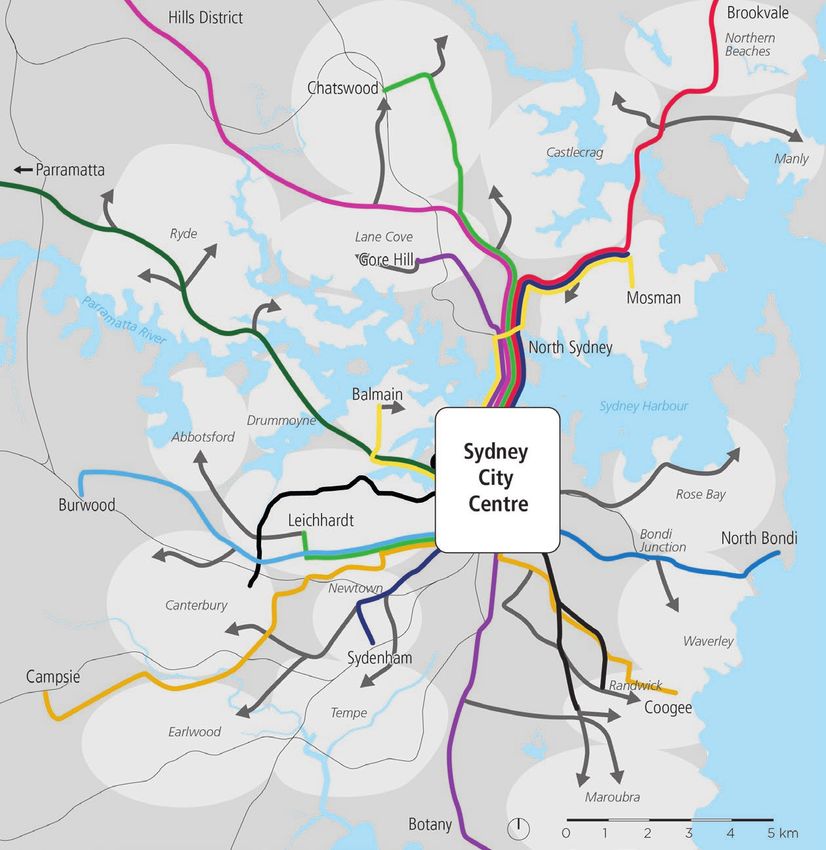
SYDNEY CITY CENTRE ACCESS STRATEGY
DECEMBER 2013

INTEGRATED OUTCOMES IN THE CITY CENTRE

Connect Barangaroo to                Circular Quay revitalisation
the city centre and Sydney
                                     •• Revitalised Circular Quay
transport network
                                        interchange precinct
•• Wynyard Walk will provide            with a new light rail stop,
   a direct, accessible                 fewer buses, de cluttered
   pedestrian connection                footpaths and improved
   between Barangaroo                   wayfinding.
   and the Wynyard Station
   interchange precinct
                                     Improving access to
•• New bus routes serving
                                     commercial and retail activity
   Barangaroo and Walsh Bay
•• A new Barangaroo ferry            •• Pedestrian improvements
   hub and new routes to                in areas of highest
   provide more opportunities           pedestrian activity will
   to access Barangaroo and             include reduced waiting
   the mid town precinct by             time at intersections, the
   public transport.                    introduction of the George
                                        Street pedestrian zone and
                                        localised areas of footpath
Making public transport                 widening
transfers easier                     •• The late night public
                                        transport network will be
•• Interchange precincts at
                                        extended and there will be
   key transport hubs will
                                        an increase in the secure
   make it easier for public
                                        taxi ranks at Town Hall,
   transport customers to
                                        helping to stimulate the late
   transfer between trains,             night economy.
   buses, light rail and ferries.
   These key transport hubs
   will include Opal ticketing,      Improving safety in the
   decluttered footpaths,            city centre
   improved wayfinding, real
   time passenger information,       •• Improve safety for all
   accessible pathways and              customers by managing
   better shelters.                     traffic speeds at gateways
                                        to the 40km/hr high
                                        pedestrian activity areas.
Connect the Sydney
International Convention,
Exhibition and Entertainment         Increasing public transport
Precinct to the city centre          access to and capacity in the
and metropolitan transport           city centre
network
                                     •• The CBD and South East
•• The redevelopment of                 Light Rail is a high capacity,
   the Sydney International             reliable and sustainable
   Convention, Exhibition               mode of public transport
    and Entertainment Precinct          that will ease the pressure
   (SICEEP) will be supported           on Sydney’s roads by
   by a number of new and               reducing the city’s reliance
   enhanced transport options           on buses. The redesigned
•• The extension of the existing        city centre bus and light
   light rail network will              rail system will provide
   provide a regular and easy           easier to understand routes,
   to use transport service,            better stops and higher
   connecting SICEEP through            frequencies throughout the
   the CBD, to the Inner West           day and into the night
   and to the South East             •• Station improvements at
•• Improved pedestrian and              Central, Town Hall and
   cycling links will connect           Wynyard through boarding
   SICEEP to Central Station            and alighting management,
   via the extended Goods Line          platform redesigns and
•• New taxi ranks and                   timetable changes will
   improved wayfinding will             provide short term capacity
   also support customers               increases.
   visiting SICEEP.

                                                                         7
SYDNEY CITY CENTRE ACCESS STRATEGY
                                                                                                  DECEMBER 2013

    TRANSFORMING SYDNEY’S CBD

    Light rail provides an opportunity to transform         •• Completing the extension of the Kent Street
    the transport system and contribute to major              cycleway and a new east-west cycleway along
    improvements in people’s overall experience of            Liverpool Street, working closely with the City
    the Sydney city centre. Light rail will also be a         of Sydney.
    critical element in meeting the future transport
                                                            •• Completing Wynyard Walk to provide a direct
    needs of our global city.
                                                              connection between Barangaroo and the major
    The improvements light rail will deliver in terms         transport interchange at Wynyard.
    of capacity and reliability will enable major
                                                            •• Removing the monorail, which will free up
    reforms to the transport system within the city
                                                              street space for other uses.
    centre. It will reduce bus numbers, facilitate
    the pedestrianisation of 40 per cent of George          •• Rolling out the Opal card across all public
    Street and enable the completion of a network of          transport modes to make travel easier and
    cycleways. We will preserve access for motorists,         transfers between services and modes
    delivery vehicles and taxis by prioritising traffic       more efficient.
    movements on certain routes through signal
                                                            Careful sequencing of transport projects and other
    optimisation and reconfiguring intersections.
                                                            initiatives will minimise disruption for customers,
    To support these changes, detailed planning is          businesses and residents during construction. We
    well advanced on a number of initiatives to keep        are working with the City of Sydney and engaging
    the city moving during the implementation of the        with the community and property owners to
    light rail project, while also minimising impacts       understand their specific access needs during
    on residents, workers, visitors and business in the     construction. We are committed to maintaining
    city centre.                                            property access to George Street at all times
                                                            during construction of the CBD and South East
    Initiatives that will be completed in advance of
                                                            Light Rail.
    major light rail construction include:
                                                            The initiatives outlined above will also help manage
    •• Establishing a dedicated City Centre Transport
                                                            other changes taking place during this period of city
      Taskforce with responsibility for the smooth
                                                            centre transformation, including landmark projects
      operation of city centre transport on a 24/7
                                                            like Barangaroo and the new Sydney International
      basis. It will provide a single point of reference
                                                            Convention, Exhibition and Entertainment Precinct.
      for transport incident response and oversee
      management of transport impacts due to                Light rail and the other changes in the CBD
      construction and other changes.                       provide the opportunity to rethink how all
                                                            transport services can work more effectively
    •• Modifying the bus network within the city
                                                            together to reduce congestion, improve access
      centre so that it operates effectively before,
                                                            and help people move more seamlessly around
      during and after light rail construction.
                                                            the city. The robust analysis and integrated
      The redesigned bus network will see buses
                                                            planning that sits behind the Sydney City Centre
      relocated from George Street and reduce the
                                                            Access Strategy makes it possible to address
      number of buses that need to move through
                                                            many shortcomings of the current transport
      the city centre.
                                                            system. Light rail is the catalyst for transforming
    •• Working with the City of Sydney, the taxi            the city – and the Sydney City Centre Access
      industry and businesses to increase the number        Strategy provides the blueprint to deliver
      and improve the location of taxi ranks, and to        integrated, multi- modal transport outcomes for
      ensure sufficient loading zones in the city centre.   the city centre that unlock Sydney’s capacity and
                                                            meets the needs of our customers.
    •• Improving signage, wayfinding and customer
      information to make it easier for people to
      locate major transport hubs and transfer
      between different services.

8
SYDNEY CITY CENTRE ACCESS STRATEGY
DECEMBER 2013
THE CHALLENGES
Growing demand for access to Major developments at Barangaroo and Darling
Harbour will generate significant travel demand,
Sydney’s city centre with the development at Barangaroo alone bringing
Sydney’s city centre is a growing economic hub and an additional 23,000 jobs to the city centre.
cultural focal point for metropolitan Sydney and
Efficient, high capacity public transport services
the whole of Australia. It generates $70 billion of
are needed to meet this growing demand to get
economic activity each year. The efficient and reliable
people into the city centre and to make it easy to
movement of people and goods to, from, through
move around once there.
and within the city centre is essential to maintaining
Sydney as a competitive global city, as well as a The trends in how people access the city centre
liveable city for residents, workers and visitors. are changing. Over the last ten years, the number
of people driving to the city centre in the morning
Over 630,000 trips are made to the city centre
peak hour has plateaued at around 25,000 trips
each day and a further 1. 27 million within the
and the number of people arriving by public
centre for work, education, shopping, tourism and
transport has increased from 105,000 to 145,000
by those who live there, generating demand for a
trips. From a low base, walking and cycling trips
mix of high capacity transport services.
to the city centre in the morning peak hour has
The number of people travelling to the city centre more than doubled in just ten years from 5,000
each day will grow to 775,000 by 2031 – an extra to 11,000 trips.
145,000 trips.
Sydney city centre
9SYDNEY CITY CENTRE ACCESS STRATEGY
DECEMBER 2013
Throughout the day, how customers choose to The Access Strategy recognises that the
travel to and from the city centre is very different to characteristics and demand for travel to, from
the journeys made within it. More than 60 per cent and within the city centre are very different to
of people travelling to or from the city centre travel the rest of metropolitan Sydney and plans for this
by rail, bus or ferry and 25 per cent by car. In the accordingly. The Access Strategy is focussed on
morning peak hour, a smaller proportion of people providing a range of transport choices for our
drive, with only 14 per cent of trips to the city customers, while prioritising different transport
centre made by car. modes in different parts of the city centre.
Within the city centre walking makes up 90 per
cent of the trips made over the course of the day.
Trends in travel to the Sydney City Centre – AM peak 1 hour
Daily trips within the city centre and to the city centre
10SYDNEY CITY CENTRE ACCESS STRATEGY
DECEMBER 2013
Congestion and access to the peak hour trips are made by public transport
with rail carrying the biggest share of public
city centre transport trips.
Congestion across metropolitan Sydney is
The number of people entering the city centre
estimated to cost up to $5 billion per annum and
in the morning peak hour (8.00am – 9.00am) is
is forecast to increase to around $8 billion per
expected to grow from 180,000 to 225,000 trips
annum by 2020.
in 2031 and more than half of this increase will
At least half of all weekday trips to the city centre need to be met by rail services.
are from adjacent inner-city areas with about
Over 115,000 of the 180,000 trips to the city
30 per cent from middle ring suburbs and less than
centre in the morning peak hour occur in two main
20 per cent from the outer metropolitan regions.
corridors: the multi-modal Harbour Bridge corridor
The morning and afternoon peak periods are the to the north (with rail the dominant mode) and the
critical period when people are travelling into and rail corridor through Central Station. Increasing
out of the city centre to work and study, provide access through key corridors will be a critical part
services and make deliveries. of meeting future demand.
About 180,000 of the over 630,000 trips made
into the city centre each weekday are in the
morning one hour peak. Over 80 per cent of these
Origin of weekday (all day) trips to the city centre – 2011 to 2031
11SYDNEY CITY CENTRE ACCESS STRATEGY
DECEMBER 2013
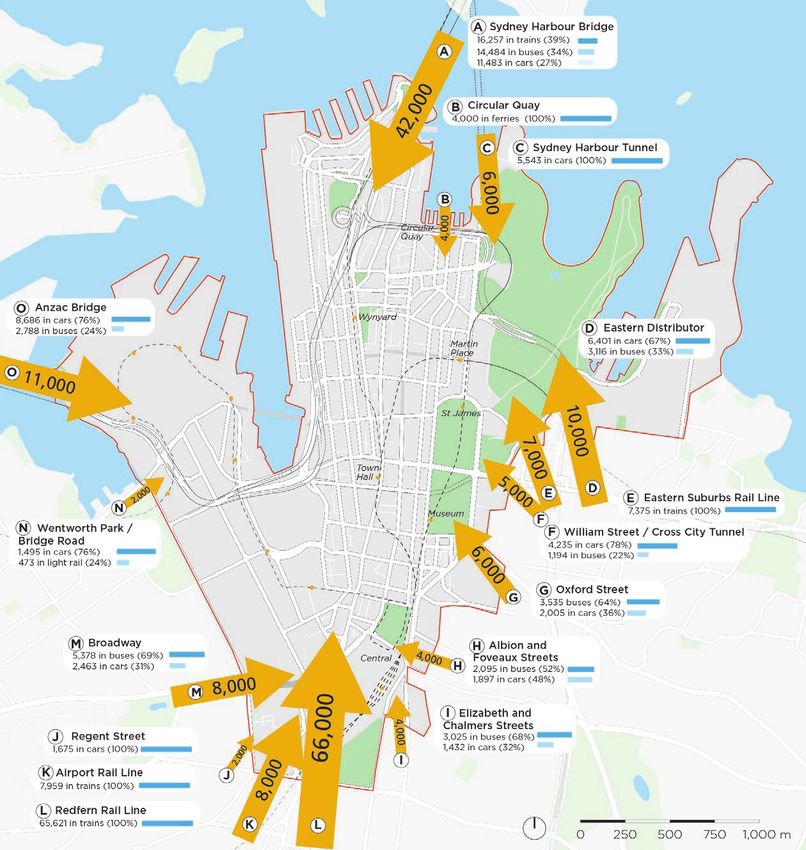
Entries into city centre (location and current passenger volumes entering the city centre
through key gateways 8:00am–9:00am)
Notes:
Some corridors such as the Eastern and Western Distributors, Cahill Expressway and Cross City Tunnel carry
significant volumes of passengers through, under and around the city centre.
WestConnex will link Sydney’s west and the city centre via Anzac Bridge (through a connection to the City
West Link at Haberfield) and via Broadway (through a connection to Parramatta Road in the Camperdown
area). It will provide high quality access for a wide range of daily freight, commercial and business trips
essential for serving economic activities in the city centre.
12SYDNEY CITY CENTRE ACCESS STRATEGY
DECEMBER 2013
Passenger trips to and from the city centre on an average weekday by time of day 2010-11
Sydney’s constrained strategic corridors in 2031 without action
13SYDNEY CITY CENTRE ACCESS STRATEGY
DECEMBER 2013
Public transport capacity Meeting future demand for
Some public transport services, stations and stops access to the city centre
are operating above their intended capacity during While many people will travel to work and
peak periods. The Western rail line is already at access services in other Sydney centres such as
capacity with regular overcrowding and is the Macquarie Park and Parramatta, the city centre
least reliable service of any line. Sydney’s Rail will remain a key commuter, retail and tourism
Future forecasts that without action the whole rail destination for people living in metropolitan
network would exceed capacity at some point in the Sydney and beyond.
mid to late 2020s.
More than 100,000 jobs will be created in the city
Bus services are often delayed because of centre over the next 20 years, about five times
congestion and they are struggling to meet more than the next largest centre, Parramatta,
growing demand. More than 1,000 buses which will have an additional 21,000 jobs.
converge on the city centre in the morning peak
hour, adding to congestion. The number of people accessing the city centre
from outer suburban growth areas will increase
There is spare capacity on ferry services but by around 37,000 over the next 20 years as new
they are currently only serving a small part of the suburbs are built. A similar increase is forecast
overall transport task to the city centre. for middle ring suburbs as urban infill occurs but
the greatest increase will be from adjacent inner
city areas (69,000) where there are the highest
Road capacity dwelling densities. This degree of growth means
Without action, congestion on our roads will that the transport system needs to meet a variety
worsen. For example, by 2031 peak travel times by of needs as well as an overall increase in demand
road are forecast to increase by an average of 15 over the next 20 years, which affects a number of
minutes between Parramatta and the city centre key corridors as shown on the previous page.
and by a similar amount between Mona Vale and
To cater for future demand a shift to greater use of
the city centre. The city centre gateways from
public transport is necessary. This will be achieved
William Street and Oxford Street at College Street
through providing quality transport services that
are already operating above capacity causing
meet customers’ preferences.
significant delays for all road users.
14SYDNEY CITY CENTRE ACCESS STRATEGY
DECEMBER 2013
Congestion and getting Sydney residents would ride to work at least once
a week if they had access to separated bike paths
around within the city centre for the full distance of their trip.
During work hours the number of people in the
centre of Sydney grows tenfold. The daily influx of
people and the provision of goods and services Demand for street space
results in congestion which increases travel times, Within the city centre, pedestrians, cyclists, buses
reduces reliability and affects the amenity of the and other vehicles compete for the use of limited
city centre. space on streets and through intersections.
On an average weekday almost 1.3 million trips Cars dominate the space on streets across the
occur within the city centre, over twice as many city centre, including during the morning and
trips as those made into the city centre, and this is afternoon peak periods. Between 8.00am
expected to approach 1.7 million by 2031. and 9.00am, 87 per cent of traffic movements
Walking is the dominant mode with 1.15 million through city centre intersections are made by
walking trips each day – that is 92 per cent of cars and taxis, eight per cent are by buses and
all trips within the city centre. Walking trips are the remaining five per cent are made by trucks
mostly for short distances – 46 per cent are less and cyclists.
than 500 metres and 80 per cent are less than Despite the large number of cars, they move only
one kilometre. 35 per cent of all people who come into the city
Pedestrian safety is critical. Between 2007 centre on the street network.
and 2011, there were 904 casualties involving a Buses perform a much larger role, moving around
pedestrian in the city centre. 62 per cent of people on the street network into
In addition to an increase in walking trips, it is the city centre and along key streets. For example,
expected that cycling trips will grow. Cycling trips in the morning peak hour, George Street near
have doubled between 2010 and 2012 (25,000 to Goulburn Street currently carries approximately
50,000 trips a day) and significant future growth is 5,900 people northbound on 170 buses
anticipated. Research suggests two-thirds of inner compared to around 900 people northbound
in 720 cars.
Share of vehicle and share of passenger movements in the city centre (street network)
15SYDNEY CITY CENTRE ACCESS STRATEGY
DECEMBER 2013
Taxis and commercial vehicles also compete for
Meeting future demands within
the limited street space – the timely movement of
commercial traffic is critical to supporting the city
the city centre
centre’s economy. To meet increased demands within the city centre,
we need to make better use of the available street
Light commercial vehicles represent 95 per cent
space.
of weekday commercial vehicles. Approximately
29 per cent of commercial traffic movements As the number of people living and working in the
occur in the morning and afternoon peak periods. city grows, pedestrians will need more space and
improved footpaths to easily and safely move around.
An extended bicycle network will also support
Intersections and pinch points continued growth in cycling within the city centre.
The capacity of many intersections in the city Use of street space needs to be prioritised and
centre is exceeded during the morning and allocated for public transport, general traffic, taxis
afternoon peaks, causing delays to road users and and service vehicles to manage congestion so that
affecting the entire city centre road network. the city centre functions effectively.
Delays for vehicles are especially long at Also, with transformation we need to accommodate
Castlereagh Street/Park Street, Druitt Street/ the transport requirements associated with major
Park Street/George Street, and George Street/ construction projects within the city centre. Through
Grosvenor Street/Bridge Street intersections. the Transport Taskforce we will actively manage
Pedestrians experience longer delays at traffic associated with major projects as part of
intersections than other road users as a result maintaining the effective operation of the city centre.
of different timing and phasing allocations at The development of the Access Strategy has been
traffic signals, even though they are often the informed by a strong evidence base (including
largest proportion of people passing through an traffic analysis) and feedback from our customers.
intersection. The light rail and other transformative projects
will have a significant influence on how initiatives
in the Access Strategy are rolled out in the city
centre. Further traffic analysis will be undertaken
to progress key elements of the Access Strategy
through detailed design to implementation. This
work may give rise to modifications to continue to
improve aspects of the Access Strategy.
16SYDNEY CITY CENTRE ACCESS STRATEGY
DECEMBER 2013
What is important to •• Efficient travel – customers value the systems
and facilities that make their trip easier such
customers? as direct access to car, motorcycle and bike
Customers accessing and travelling within the parking, electronic ticketing for public transport
city centre use a range of transport modes and services, reduced delays at traffic signals and
services. Many customers come into and leave the seamless connections between transport modes
city centre in the morning and afternoon peaks. and services.
Our customer research has shown that no matter
•• Reassurance – customers value feeling safe
what time of day or which mode of travel, there
and secure while they travel and while they are
are key attributes of travel that are important to
waiting for services. Drivers, pedestrians and
customers:
people who ride motorbikes and bicycles value
•• Time – customers value reduced and well maintained roads and safe and courteous
predictable journey times (on roads, footpaths behaviour from other road users. Public
and cycleways as well as public transport), and transport customers value safe and comfortable
frequent public transport services. waiting areas. Active transport customers value
changing facilities at the end of their trip.
•• Reliability – customers expect public transport
services to turn up as scheduled. Road users •• Comfort – customers value modes and
value direct routes and by-passes that help to services that are clean and spaces that are less
avoid unpredictable delays due to congestion. crowded with features like air-conditioning,
shade and shelter.
•• Information – customers value real time
information and clear signage that helps them The Access Strategy has been developed to
make informed transport choices. Road signs meet the needs of all of our customers, including
might direct a driver to a by-pass route, signs on residents, workers and visitors, throughout the day
the footpath can help people find a station or and night. We have broadened our focus to ensure
an app might help identify the next connecting we provide quality transport services that cater
public transport service. for the growing number of people accessing the
city centre and that these services are designed to
reflect what our customers’ value most.
17SYDNEY CITY CENTRE ACCESS STRATEGY
DECEMBER 2013
OUR PLAN FOR IMPROVING ACCESS TO
AND WITHIN SYDNEY’S CITY CENTRE
Access to the city centre
Our solution for improving access to the
city centre, and access within it, is focused The Access Strategy responds to the challenges
on three priorities: facing the city centre by defining a series of
actions to increase the capacity, reliability and
•• Reducing congestion quality of public transport services while better
managing congestion on roads with targeted
•• Servicing future growth in demand
investments to relieve pinch points and to improve
•• Improving the customer experience. traffic flows. The actions in the Access Strategy
aim to improve access to, from and within the city
Each action delivers against one or more of
centre for all of our customers.
these priorities.
The Access Strategy has been developed in
conjunction with the modal plans identified in the
NSW Long Term Transport Master Plan. These provide
details of key connections between the city centre
and the wider Metropolitan area for each mode.
Rail
Rail will continue to be the ‘heavy lifter’ of the
transport system, carrying the largest share
of growing travel demand to the city centre.
improvements to existing rail services will be
supported by new railway infrastructure to
provide fast, high capacity transport into the
heart of the city centre.
Rail travel will be a more attractive transport
choice for customers with the progressive rollout
of additional brand new air- conditioned Waratah
trains across the Sydney rail network and train
carriages will be cleaner with the establishment of
a specialist cleaning service.
Sydney’s Rail Future outlines several initiatives
that benefit rail customers travelling to the
city centre.
1,000 extra train services across the network were
added in October 2013 with the implementation of
the new public transport timetable.
The South West Rail Link and North West Rail Link
are extending the reach of the Sydney rail network,
improving rail access to the city centre for
customers living in outer suburban growth areas.
Major station upgrades will be undertaken at
Central and Wynyard to accommodate future
growth and relieve congestion. These will
focus on improving the customer experience at
stations through infrastructure upgrades and
operational improvements.
18SYDNEY CITY CENTRE ACCESS STRATEGY
DECEMBER 2013
A new CBD rail line and crossing under the harbour Road
will provide a step change in capacity for rail
The main focus for the road network is to better
customers. it will enable the Sydney rail network
manage congestion. This will be achieved by
to deliver more than a 60 per cent increase in
extending clearways on key routes into the city
services to the Sydney CBD and carry an additional
centre and targeted action on pinch points.
100,000 people across the network in the peak
Motorists travelling to destinations outside the
hour. in addition, capacity on Western line (T1) will
city centre will be encouraged to use by-pass
be increased by more than 60 per cent by 2026, to
routes to avoid being delayed on slower moving
carry an additional 14,000 customers on this line.
city streets through traffic management measures
This will help to unclog the two most heavily used including signage. WestConnex is one the NSW
gateways to the city – the multi-modal Sydney Government’s key infrastructure projects which
Harbour Bridge and the multiple rail lines passing aims to ease congestion, create jobs and connect
through Redfern and Central stations. communities. The 33 kilometre motorway
will support Sydney’s economy by providing
investment in rapid transit combined with upgrades
improved access for freight, commercial and
of the existing rail system will add significant
business vehicles.
capacity to the rail system within and to the city
centre and provide for growth well beyond 2031.
Cycling
Completing safe and direct cycleway connections
Light rail
to the north, east, west and south of Sydney’s
More customers will be able to access reliable light
CBD will provide the infrastructure needed for the
rail services with the extension of the inner West
increasing number of people who are choosing to
Light Rail and the new CBD and South East Light
ride between the city and surrounding suburbs.
Rail. The light rail network across Sydney is being
Our initial focus will be on providing separated
extended because it provides higher capacity and
cycleways to the city centre within five kilometre
greater reliability compared to existing bus services.
catchments of major centres. We will then broaden
our focus to cycleways outside of these areas.
Bus
Bus services to the city centre will benefit from Walking
improved routes, more convenient interchanges
With more than 20,000 people set to join the
and provide greater flexibility for customers to
240,000 residents already living on the fringe
transfer to other transport modes.
of Sydney’s city centre in the next five years,
A simpler and easier to use bus network outside walking is becoming an increasingly important way
the city centre will provide easy to access, reliable for people to get to and from the city. Already,
bus services where rail and light rail do not more than a quarter of City of Sydney residents
operate. Where there is high population growth, walk to work. Walking is an efficient, healthy and
we will stage the implementation of Bus Rapid environmentally friendly mode of transport.
Transit on transport corridors.
Our aim is to make walking quicker and easier by
reducing delays to pedestrians at intersections.
Ferry We will work with councils to increase the appeal
Additional ferry services will be introduced across of walking by improving the amenity and safety of
the network. Most of these will provide access to key walking links and providing better information
the city centre. Construction of a new ferry hub at and signage.
Barangaroo will also provide greater capacity for
customers to access the western and central parts
of the city centre by ferry.
19SYDNEY CITY CENTRE ACCESS STRATEGY
DECEMBER 2013
Access within the city centre Modal priorities within the city centre
The focus within the city centre is to improve
transport services and manage congestion by
prioritising different modes in different parts of the
city centre.
The Access Strategy has been developed with a
clear focus on delivering an integrated transport
system to seamlessly take people where they
need and want to go and to support the ongoing
development of Sydney as a world class city.
The Sydney city centre is the State’s key
destination and should be the showcase of design
that is accessible to people of all level of mobility.
The diagram on the next page illustrates key
aspects of the Access Strategy.
• in the central spine of the city centre the
movement of public transport and pedestrians
will be prioritised. Our analysis shows that the
already high levels of pedestrian activity in the
core of the city centre will continue to grow
around the high capacity public transport
services provided by the future light rail line and
the existing and future underground rail lines.
• Alongside and across the central spine, multi
modal transport corridors will support access
to the city centre by buses, taxis, cyclists,
motorcycles, private and delivery vehicles. The
road space in these corridors will be allocated
and managed to prioritise the different modes
to ensure they move as freely and efficiently
as possible.
• A network of outer routes will be prioritised
for private vehicle access to and around the
city centre. These routes will link to key traffic
gateways to the north, west, east and south.
20SYDNEY CITY CENTRE ACCESS STRATEGY
DECEMBER 2013
Walking • Light Rail – Light rail has been adopted in
cities around the world to assist with the task
Analysis shows 92 per cent of trips within the
of moving a growing a population around
city centre are walking trips and this will continue
city centres. The new light rail extension
to grow. Changes to bus and light rail services
from Circular Quay to Central and the South
will enable the pedestrianisation of 40 per cent
East along the George Street spine will have
of George Street, creating a more pleasant and
capacity to move 9,000 people per hour in each
accessible environment for pedestrians. This
direction through the city centre with much
will be further supported by priority pedestrian
greater reliability than buses currently travelling
improvements on city centre streets that have very
along George Street. Light rail will transform the
high levels of pedestrian activity.
city centre by reducing bus numbers entering
The Wynyard Walk, a fully accessible pedestrian the CBD from the South East and circulating
link, will enable people to access Barangaroo and through busy city centre streets. it will
the Western and mid town part of the city centre provide an easy to use hop- on hop-off public
from Wynyard in about six minutes. transport service.
We are taking action to make walking easier by • Bus – a redesign of city centre bus services will
providing better signage; de-cluttering footpaths; mean buses run along a network of key bus
reducing waiting times at traffic lights and rolling corridors that skirt the core of the city centre.
out a series of footpath improvements at priority This network of high frequency, all day services
locations. These improvements will be designed to will be easy for customers to understand.
improve access for people with disability or limited interchange precincts will also be created
mobility. where bus customers can easily transfer to
rail, light rail and other buses. The redesigned
Lowering the speed limit to 40 km/h in parts of
bus service together with the extensions to the
the city centre will also help to improve road safety
light rail network will mean 220 fewer buses
for pedestrians in the city centre.
travelling into the city centre in the morning
peak ’s busiest hour, relieving road congestion.
Public transport The North West Rail Link will further contribute
The different modes of public transport will work to a reduction in buses with some 160 fewer
together to meet the growing demand for access buses entering the city centre.
to and within the city centre.
• Rail – Rail provides underground access for Road
large volumes of customers to the city centre. Street space within the city centre will be
The rail system runs under the core of the city allocated to reduce conflicts between public
centre. The rail network provides the easiest transport movements and other transport activity
access to the city centre for the highest on the road network to provide access for private
number of people. Work has commenced on vehicles, taxis and service and delivery vehicles.
detailed planning for a second crossing under
• Preserving access for motorists – The Access
the harbour and new CBD rail line is planned
Strategy preserves access for motorists to the
to provide for future demand and will include
city centre using:
new CBD stations helping to increase capacity
across the network. We are already getting – Bypass Routes that will continue to bring cars
on with the job of improving rail services, by into, out of or around (or under) the city centre
implementing the actions set out in Sydney’s
– Traffic Priority Routes which will distribute
Rail Future. This includes the de-cluttering of
cars within the city centre
platforms, use of better dwell time management,
and other works to increase capacity at city – Local Access Routes (most of the remaining
centre stations making it easier for more streets) which will get motorists to their
customers to get on and off trains. final destination within the city centre and
provide access to public or private car parks.
21SYDNEY CITY CENTRE ACCESS STRATEGY
DECEMBER 2013
• Parking – We will work with the City of Sydney The Access Strategy will maintain access for these
to reallocate some of the space currently used vehicles to commercial premises.
for on-street parking to provide for new and
We will also work with businesses to promote
expanded taxi zones, more loading zones and to
off-street deliveries over on-street deliveries and
make way for traffic prioritisation, bus lanes and
to schedule more servicing outside peak periods.
stops, light rail and cycleways. This reallocation
Together, these changes will reduce congestion in
will be made possible by encouraging greater
the city centre.
use of the spare capacity in off-street parking
(spare daytime capacity in the city is around
10-30 per cent of the total supply of 70,000
Cycling
spaces). importantly, access to off street parking The number of cyclists accessing the city centre
will be maintained. On-street parking will be through key gateways has increased significantly
reduced on Castlereagh Street, Liverpool Street, over recent years. in the past four years the
Park Street, College Street and Elizabeth Street. Sydney Harbour Bridge has seen a 70 per cent
increase in cyclists and the Anzac Parade cycleway
• Taxis – We will work with the City of Sydney and has seen a 109 per cent increase. This rapid rate
the taxi industry to create new and expanded of growth in the number of customers choosing to
taxi zones around the city centre with taxi ranks cycle to and around the city centre is expected to
every 150 metres, so that more customers will continue and will be supported by completing the
be closer to taxi ranks than they currently are. city centre cycleway networks. This means some
We will also establish short-stay multi-use existing cycleways will be extended and additional
spaces in the CBD to provide additional pick cycleways will be built to connect the whole city
up/set down points for taxis. centre. in most cases, cycleways will be provided
in street space currently not used for traffic
Servicing and deliveries movement, including parking and loading zones
Service and delivery vehicles are critical to the and some areas of wide footpaths.
efficient operation of city centre businesses
Separating cycleways from vehicles, buses and
and contribute to the overall health of the
pedestrians will provide safer and more direct
economy. Service and delivery vehicles will
access for cyclists and encourage them to use
benefit from improved management of the street
dedicated routes. This will reduce the conflicts
network, reduced congestion and improved
between cyclists and other customers.
journey times.
22SYDNEY CITY CENTRE ACCESS STRATEGY
DECEMBER 2013
A focus on our customers A better experience for all our
customers
integration of services The Access Strategy aims to improve the travel
We will deliver much improved customer experience for all our customers. A number of
information as well as initiatives to integrate initiatives will encourage customers to better
transport services. For example, Opal ticketing and share road space and respect each other’s’ needs,
interchange precincts at key transport hubs will and diffuse some of the current frustrations
make it easier for customers to choose their best experienced by customers. These include:
transport option and to transfer between services
• Shorter waiting times for pedestrians at
within the city centre.
intersections to reduce the currently high
The Opal card will facilitate much easier instance of customers walking against the
interchange between different modes. Customers lights, increasing the chance of being involved
will also be able to take advantage of free in a crash
transfers between services of the same mode
• Taxi ranks every 150 metres will encourage
within an hour. For example, catching a bus within
taxi customers and drivers to use taxi ranks
60 minutes of leaving another bus will count as
and reduce the instance of taxis stopping in
one journey and one fare when using an Opal card.
locations that impact on the safe and efficient
The interchange precincts will be developed at key operation of the transport network
transport hubs, where they will enable easy access
• A connected network of separated cycleways
between rail, bus, light rail and ferry. Service
and improved signals that better detect cyclists
planning, as well as the design of the interchange
will enable and encourage cyclists to obey the
precincts will make them the natural, easy, place to
road rules at intersections
transfer between public transport services.
• 40km/hr speed limits in parts of the city centre
Most interchange movements will take place at
to improve safety for pedestrians.
street level, with footpath de-cluttering, reduced
pedestrian delays at crossings, better shelters,
clear signage and real time information ensuring
easy and comfortable transfers between modes.
23SYDNEY CITY CENTRE ACCESS STRATEGY
DECEMBER 2013
Our customers include visitors Some of the specific changes that will benefit
visitors include:
Sydney’s city centre is home to some of Australia’s
most important visitor and cultural attractions, •• Improving visitor information including
public spaces and natural sights, as well as a range wayfinding and signage to other CBD
of restaurants, shops and entertainment venues. destinations and transport hubs in major visitor
Festivals and events are playing an increasingly precincts such as Circular Quay including
important role in attracting visitors. The high the Overseas Passenger Terminal, the new
concentration of accommodation in the city centre Sydney International Convention, Exhibition
means many visitors use the city centre as a base and Entertainment Precinct, and the new
for sightseeing. Barangaroo development
Visitors move around in every part of the city •• Improved coach and taxi access near major
centre, but most frequently visit key locations attractions and visitor destinations
such the Rocks/Circular Quay; and key cultural
•• Dedicated and safe areas at key precincts and
attractions between Walsh Bay and the State
locations for loading and unloading passengers
Library, and Darling Harbour. Barangaroo and
and luggage from vehicles
the new Sydney international Convention,
Exhibition and Entertainment Precinct will •• Working with coach operators to identify coach
grow in their importance as key destinations for layover requirements in the CBD to support the
business visitors. growing visitor economy including investigating
a potential layover in the east of the CBD.
The actions in the Access Strategy will benefit
visitors, in addition to people who travel regularly
to the city centre.
24SYDNEY CITY CENTRE ACCESS STRATEGY
DECEMBER 2013
Managing the transformation I
of the city centre
The actions in the Access Strategy will transform
parts of the city centre. Periods of construction
and change can disrupt customers’ usual journeys
but a program of initiatives is already being
developed to minimise the inconvenience for
customers and businesses to maintain access to
the city centre during this period.
A permanent City Centre Transport Taskforce
will be established working 24/7 at the Transport
Management Centre. The Taskforce will be
responsible for the smooth operation of city
centre transport, helping to manage congestion
and providing a rapid response to incidents. The
Taskforce will also ensure the smooth operation of
special events and during the construction of the
CBD and South East Light Rail.
The Taskforce is part of the NSW Government’s
broader focus on integrating and coordinating
construction activities in the city centre in order
to minimise the risk of disruption of customers.
Our project teams are already working together
to better understand potential disruptions in order
manage travel demand in critical locations at
critical times.
25SYDNEY CITY CENTRE ACCESS STRATEGY
DECEMBER 2013
Overview of actions
•• Establish a City Centre Transport Taskforce responsible for smooth operation
of the city centre network
•• Prioritise city centre street space and signal operation for specific purposes
including:
–– public transport –– taxis, service vehicles and
–– traffic bypasses loading
Prepare for –– general traffic within the city –– cycling
change within centre –– parking
the city centre
•• Improve wayfinding in the city centre for pedestrians and vehicles, with
upgraded signs, maps and real time information for public transport services
•• Redesign the city centre bus network and, following commencement of light
rail in the CBD, reduce the number of buses travelling through the city centre
(as light rail is extended and as North West Rail Link services commence)
•• Develop an interchange precinct at Town Hall and other hubs to optimise
transfers between public transport services
Improve access within the city centre
•• Complete Opal card roll-out to all public transport modes
•• Declutter and improve footpaths at priority locations
•• Complete the Wynyard Walk connecting Barangaroo and Wynyard
•• Pedestrianise 40 per cent of George Street (with introduction of light rail)
Improve safety, •• Introduce a 40 km/h speed limit in parts of the city centre to improve
amenity and pedestrian safety
capacity for •• Complete the city centre cycleway network including:
walking and –– Extending existing north-south cycleway on Kent Street
cycling in the –– An east-west cycleway along Liverpool Street
city centre
–– Completing the existing King Street Cycleway
–– A new north-south Castlereagh and Pitt Street Cycleway which
allows decommissioning of the existing College Street cycleway (to
accommodate traffic diverted from George Street)
Ensure efficient •• Encourage loading and servicing to occur out of peak periods and promote
access for
off-street deliveries where possible rather than on-street deliveries
commercial and
•• Maintain sufficient on-street loading to serve the needs of the
service vehicles
in the city centre business community
•• Provide more rail services to the city centre starting with more than 1,000 extra
weekly train services with the new timetable implemented in October 2013
Operational
•• Implement priority bus corridors, new routes and services to the city centre
Improve access to the city centre
changes
•• Provide more frequent ferry services and more direct routes starting with 55
to increase
new services with the 2013 timetable
capacity
•• Extend clearways on major traffic routes
•• Declutter and reconfigure city centre train stations
•• Complete the Inner West Light Rail extension
Extend public •• Commence services on South West and North West Rail Links
transport •• Complete the CBD and South East Light Rail extension through the city
access centre to Circular Quay and the University of NSW and Randwick
•• Construct a new ferry hub at Barangaroo
A step change •• Construct a new rail crossing under Sydney Harbour and a new CBD rail line
in future and stations
capacity for •• Provide higher levels of service on principal bus routes on key corridors and
access to the in the longer term investigate possible conversion of some routes to light rail
city centre where there is high population growth and density
26You can also read


