Systematic Profiling of Alternative Splicing Events in Ovarian Cancer - Frontiers
←
→
Page content transcription
If your browser does not render page correctly, please read the page content below

ORIGINAL RESEARCH
                                                                                                                                                published: 08 March 2021
                                                                                                                                          doi: 10.3389/fonc.2021.622805

                                              Systematic Profiling of Alternative
                                              Splicing Events in Ovarian Cancer
                                              Jia Liu 1 , Dekang Lv 2 , Xiaobin Wang 1 , Ruicong Wang 3* and Xiaodong Li 2*
                                              1
                                                Department of Gynecology, Liaoning Cancer Hospital & Institute, Cancer Hospital of China Medical University, Shenyang,
                                              China, 2 Cancer Center, Institute of Cancer Stem Cell, Dalian Medical University, Dalian, China, 3 Department of Gynecology
                                              and Obsterics, First Affiliated Hospital of Dalian Medical University, Dalian, China

                                              Alternative splicing (AS) is significantly related to the development of tumor and the
                                              clinical outcome of patients. In this study, our aim was to systematically analyze the
                                              survival-related AS signal in ovarian serous cystadenocarcinoma (OV) and estimate its
                                              prognostic validity in 48,049 AS events out of 21,854 genes. We studied 1,429 AS
                                              events out of 1,125 genes, which were significantly related to the overall survival (OS)
                                              in patients with OV. We established alternative splicing features on the basis of seven AS
                                              events and constructed a new comprehensive prognostic model. Kaplan-Meier curve
                                              analysis showed that seven AS characteristics and comprehensive prognostic models
                                              could strongly stratify patients with ovarian cancer and make them distinctive prognosis.
                                              ROC analysis from 0.781 to 0.888 showed that these models were highly efficient in
                                              distinguishing patient survival. We also verified the prognostic characteristics of these
                                              models in a testing cohort. In addition, uni-variate and multivariate Cox analysis showed
                           Edited by:
                   Umberto Malapelle,         that these models were superior independent risk factors for OS in patients with OV.
  University of Naples Federico II, Italy     Interestingly, AS events and splicing factor (SFs) networks revealed an important link
                        Reviewed by:          between these prognostic alternative splicing genes and splicing factors. We also found
                       Felice Crocetto,
                                              that the comprehensive prognosis model signature had higher prediction ability than the
   Federico II University Hospital, Italy
                     Caterina Marchiò,        mRNA signature. In summary, our study provided a possible prognostic prediction model
                University of Turin, Italy    for patients with OV and revealed the splicing network between AS and SFs, which could
                  *Correspondence:            be used as a potential predictor and therapeutic target for patients with OV.
                         Xiaodong Li
            xd_li201212@dmu.edu.cn            Keywords: ovarian cancer, alternative splicing, integrated prognostic model, LASSO, splicing factor
                      Ruicong Wang
          asruicong860325@163.com
                                              INTRODUCTION
                   Specialty section:
         This article was submitted to        Ovarian cancer is one of the most common malignant tumors in women and the fifth leading cause
                     Women’s Cancer,
                                              of death among women with serious gynecological problems. It is estimated that there are 13,940
               a section of the journal
                                              deaths and 21,750 new cases in the United States Cancer Statistics in 2020 (1). Due to the late
                 Frontiers in Oncology
                                              diagnosis of ovarian cancer and the lack of effective treatment at present, the prognosis of OC
         Received: 29 October 2020
                                              patients is very poor, and the 5-year survival rate is only 30–40% (2). Although the diagnosis and
        Accepted: 15 February 2021
                                              treatment of OC have been improved to some extent in the past 30 years, OC is still a serious
          Published: 08 March 2021
                                              malignant tumor, threatening the lives of women (3). Therefore, the risk assessment of prognosis is
                              Citation:
                                              of great value for clinical decision-making and patient consultation.
Liu J, Lv D, Wang X, Wang R and Li X
         (2021) Systematic Profiling of
                                                 So far, due to the lack of high sensitivity and specificity, several common bio-markers for
 Alternative Splicing Events in Ovarian       the diagnosis of OC are still not satisfactory, such as carbohydrate antigen 125 (CA125) (4) and
    Cancer. Front. Oncol. 11:622805.          human epididymal protein 4 (HE4) (5). At the same time, some studies have identified some
      doi: 10.3389/fonc.2021.622805           genes that were significantly related to the prognosis of OC patients, such as TRIM44 (6) and

Frontiers in Oncology | www.frontiersin.org                                          1                                           March 2021 | Volume 11 | Article 622805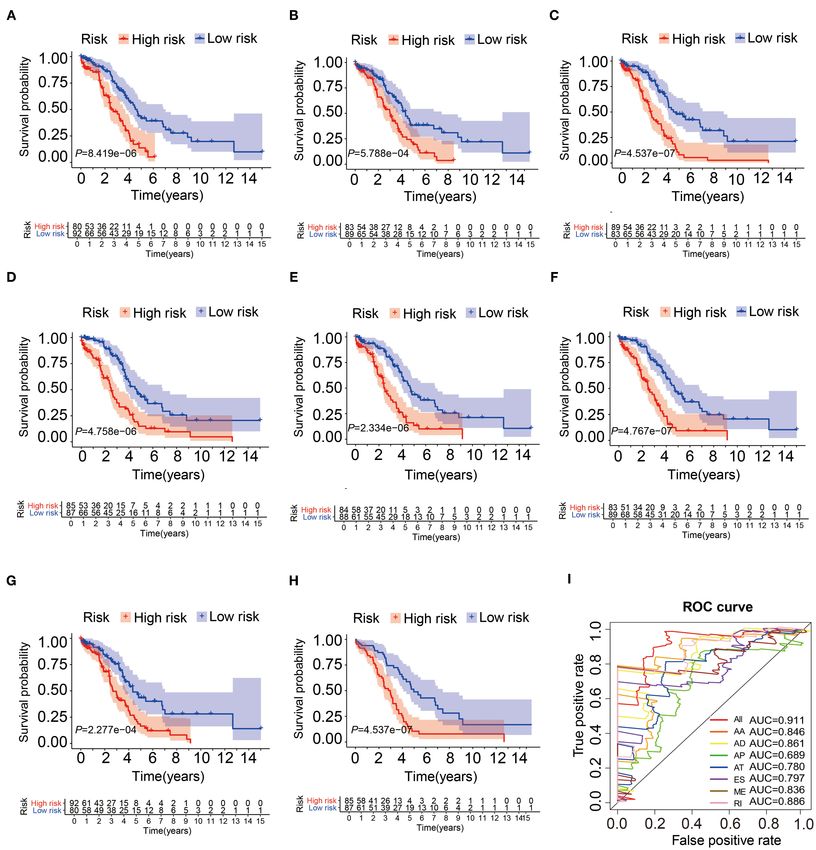
Liu et al.                                                                                               Prognostic Biomarker for Ovarian Cancer

CENPK (7). However, due to the inconsistency of sample                  the frequency of different AS events. The validated data set
collection, detection methods and sample size, the prognostic           contained 172 patients who were randomly selected from the
value of a single candidate index is very limited. Many                 overall population.
reports have shown that, compared with a single bio-marker,
integrated bio-markers can improve the accuracy of prognosis            Survival Analysis
(8). Therefore, extensive studies have attempted to establish           A total of 344 OV patients participated in the study. All AS events
molecular characteristics based on gene expression data to              were included and uni-variate analysis was performed. These
predict the survival and prognosis of patients, including mRNA          AS events were reserved as candidate prognostic events (P <
(9), microRNAs (3) and long non-coding RNA (LncRNA) based               0.05). Kaplan-Meier curve was used to evaluate the differential
signatures (10). However, although these promising traits played        prognosis. Using the “Survival ROC” R packet, the receiver
an important role in predicting the survival of patients with           operating characteristic curve (ROC) was performed to explore
OV, they mainly focused on changes in gene expression levels,           the sensitivity and specificity of prognostic features. Through
ignoring the diversity of RNA sub-types regulated by alternative        univariate and multivariate Cox analysis, forest map R packet
splicing (AS).                                                          was used to evaluate the prognostic independence and clinical
   Alternative splicing, a post-transcriptional process by which        characteristics of AS signatures.
a single pre-mRNA can be spliced into different arrangements
to produce mRNA sub-types and protein diversity (11). Many              UpSet Plot and Splicing Factor to Regulate
studies have shown that this process has a great impact on the          Network Construction
occurrence and development of cancer, including metastasis,             The Upset interaction plot was developed a more scalable
therapeutic resistance, and other carcinogenic processes (12). In       visual diagram to explore the interactive set of these AS events
normal physiological processes, more than 95% of human genes            and to use the “Upset” R package to visualize their potential
have AS events and encode various splicing variants (13). More          interrelationships. The expression data of splicing factor (SFs)
importantly, recent trends in different types of cancer research        was extracted from TCGA-OV mRNA-seq data. All SF genes
have shown that AS-related genes have new potential in cancer           were analyzed by uni-variate Cox analysis. When their P < 0.05,
treatment (14). There is growing evidence that AS is associated         these SF were considered to be survival-related splicing factors.
with carcinogenic processes, including proliferation, metastasis,       The relationship between the expression value of SFs and the PSI
apoptosis, angiogenesis, hypoxia, and immune escape (15). In            value of AS was calculated by Spearman test. At the same time,
addition, previous studies showed that widespread dysfunctional         Cytoscape 3.7.0 (https://cytoscape.org/) was used to illustrate the
AS events in a variety of cancers could be easily programmed by         interactive network diagram of these SFs and prognosis-related
different SFs (16, 17). The overall changes may occur in some           AS events.
cancer-specific AS events resulting from the expression of these
SFs changes, thus affecting the occurrence, and progression of          Establishment of Prognostic Model
cancer. Since the close relationship between AS and SFs is only         The least absolute shrinkage and selection operator (LASSO)
understood from the surface of their complexity, it is of great         analysis was carried out with “glmnet R” package, and the
significance to study their potential prognostic manifestations         most valuable and concise AS events filtered in univariate Cox
and regulatory mechanisms in OV. Therefore, it is very necessary        analysis were screened out (P < 0.05). Afterwards, the prognostic
to explore AS signature for the survival of OV patients.                independence of AS signature was constructed by multivariate
   Some studies have screened out some important AS and SF              Cox analysis. Then, according to the coefficients of the above
in ovarian cancer (18). However, their results were not obtained        AS events, the risk score of each patient was calculated with the
through strict scientific methods. In this study, univariate            signature. At the same time, patients were divided into subgroups
Cox, LASSO, and multivariate analysis were performed to                 according to the median risk score.
systematically develop AS events related to prognosis in OV,
and to establish a predictive model based on AS to evaluate             Statistical Analysis
the prognostic ability of AS signatures in patients with OV             P-value
Liu et al.                                                                                                                       Prognostic Biomarker for Ovarian Cancer

  FIGURE 1 | Overview of AS events in TCGA OV cohort. (A) Seven types of AS events were illustrated including exon skip (ES), retained intron (RI), alternate promoter
  (AP), alternate terminator (AT), alternate donor site (AD), alternate acceptor site (AA), and mutually exclusive exons (ME). (B) Numbers of AS events and AS-associated
  genes in 344 OV patients. (C) UpSet plot of overlapping genes among the seven patterns of AS events.

Retained Intron (RI) in 1,952 genes, 208 Mutually Exclusive                             Development of Prognosis-Related AS
Exons (ME) in 208 genes (Figure 1B). In TCGA-OV, ES events                              Events in OV
were the most common spliced signatures, accounting for more                            In order to screen out the AS events related to the overall
than 1/3 of all events, followed by AP and AT events, and ME                            survival time of OV patients, 48,049 AS events were involved and
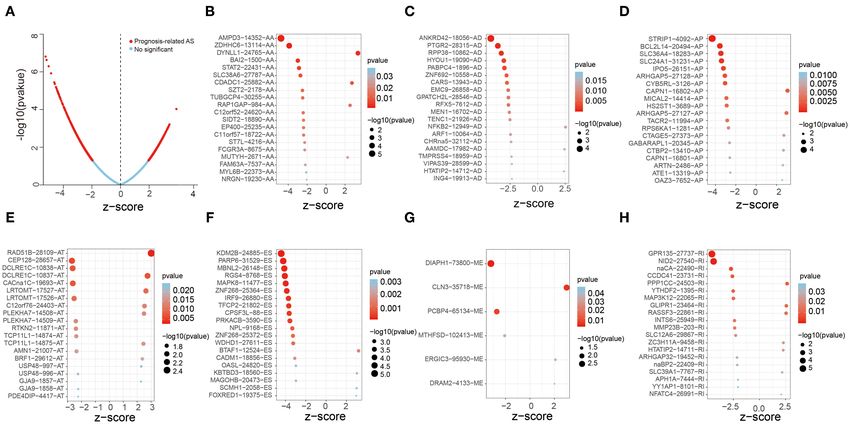
was the least. It was worth noting that the number of AS events                         univariate Cox analysis was performed. The results showed that
far exceeded their corresponding mRNAs. In addition, a subset of                        1,429 AS events out of 1,125 genes were significantly associated
overlapping AS events in various types of AS in OV was shown                            with overall survival in OV patients (Figure 2A). Figures 2B–H
by the UpSet diagram (Figure 1C).                                                       showed the top 20 significant prognosis-associated AS events

Frontiers in Oncology | www.frontiersin.org                                         3                                            March 2021 | Volume 11 | Article 622805
Liu et al.                                                                                                                      Prognostic Biomarker for Ovarian Cancer

  FIGURE 2 | Forest plots analysis of survival-related AS events. (A) The Volcano plot depicts the P-values from the uni-variate Cox analysis of 48,049 AS events. (B–H)
  Forest plots of z-score of the top 20 significantly survival-related AS events for seven splicing types (ME has only six events).

of the seven types. Then Lasso Cox analysis was performed to                            prognostic model, rather than a single prognostic model,
further select the AS events related to the overall survival and                        including different types of AS events, had the highest efficiency
prognosis of OV patients, which could reduce the coefficient and                        of 0.888 (AUC). The risk score, survival status and expression
be designed as a linear regression background (19). Interestingly,                      profile of all AS models were shown in Supplementary Figure 3.
some of these AS genes experienced multiple types of AS events.
For example, AA, AD, ES of TMUB2 and AA, AT, ES of RBM39                                Validation of the AS Signatures in the
were obviously related to overall survival.                                             Testing Cohort
                                                                                        In order to verify the prognostic efficiency of AS signatures,
Construction of Prognostic AS Signatures                                                we also performed Kaplan-Meier analysis and ROC curve
We collected AS events related to prognosis by univariate                               (Figures 4A–I) in 172 patients (Supplementary Table 1) in the
Cox analysis and LASSO Cox regression analysis                                          same model test cohort. The Kaplan-Meier curve showed
(Supplementary Figures 1A,B). Then, through multivariate                                that these seven AS events and comprehensive prognostic
Cox analysis, several prediction models based on these                                  characteristics had strong ability to distinguish between favorable
selected events were established. Finally, a joint prognostic                           and unfavorable survival in patients with OV (Figures 4A–H).
model was established from different types of AS events                                 The previous article only obtained a single result through the
(Supplementary Table 2). The Kaplan-Meier curve shown in                                overall analysis (18). However, this study validated the results
Figures 3A–H indicated that the OS of OV patients in the                                by using inner testing cohort, which was a powerful evidence
high-risk group was significantly shorter than that in the low-risk                     of this paper. Then, the AUC of all models ranged from 0.689
group, suggesting that these AS signatures may be powerful                              to 0.911, and the combined prognostic model had the highest
bio-markers to distinguish the prognosis of OV patients.                                AUC value, indicating that these prognostic AS signatures were
Obviously, the joint prognostic model showed better predictive                          more accurate (Figure 4I). These results suggested that these AS
performance than a single type of AS events (Figure 3H). In                             characteristics, especially the combined prognostic model, can
addition, to evaluate the significance of each gene in ovarian                          be considered as powerful indicators for predicting the overall
cancer, we conducted Kaplan-Meier analysis of each gene’s                               survival of patients with OV.
mRNA level and found most of these genes had consistent
prognostic value, shown in Supplementary Figure 2. In order to                          AS Signatures Were Independent to Other
compare the predictive ability of these prognostic models, ROC                          Clinical Characteristics
analysis was performed. The results showed that all models had                          To evaluate the effectiveness of AS signatures and other
strong prediction performance, with AUC values ranging from                             clinical features in predicting survival, we performed univariate
0.781 to 0.888 (Figure 3I). It was conceivable that an integrated                       and multivariate Cox analysis to determine whether these AS

Frontiers in Oncology | www.frontiersin.org                                         4                                           March 2021 | Volume 11 | Article 622805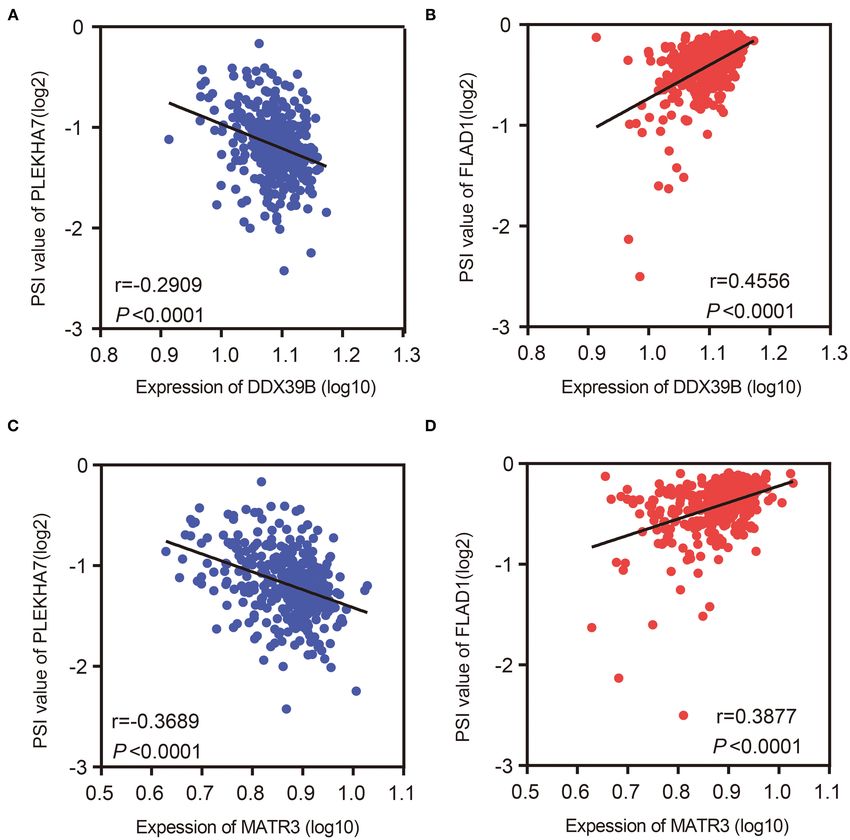
Liu et al.                                                                                                                Prognostic Biomarker for Ovarian Cancer

  FIGURE 3 | The Kaplan-Meier curves and ROC curves of prognostic AS models. (A–G) The Kaplan-Meier plots of seven types of AS events, respectively. (H) The
  Kaplan-Meier plots of combined prognostic model. (I) The ROC curves for overall survival of seven types of AS events and combined prognostic model.

signatures can be used as independent risk factors for evaluating                   (HRD) is involved in the tumorigenesis and progression of
the prognosis of OV patients. Uni-variate Cox analysis showed                       high-grade serous ovarian carcinoma (20) as well as AS factors
that all risk scores, cancer status, and ethnicity were significantly               can contribute to the DNA damage response signaling (21).
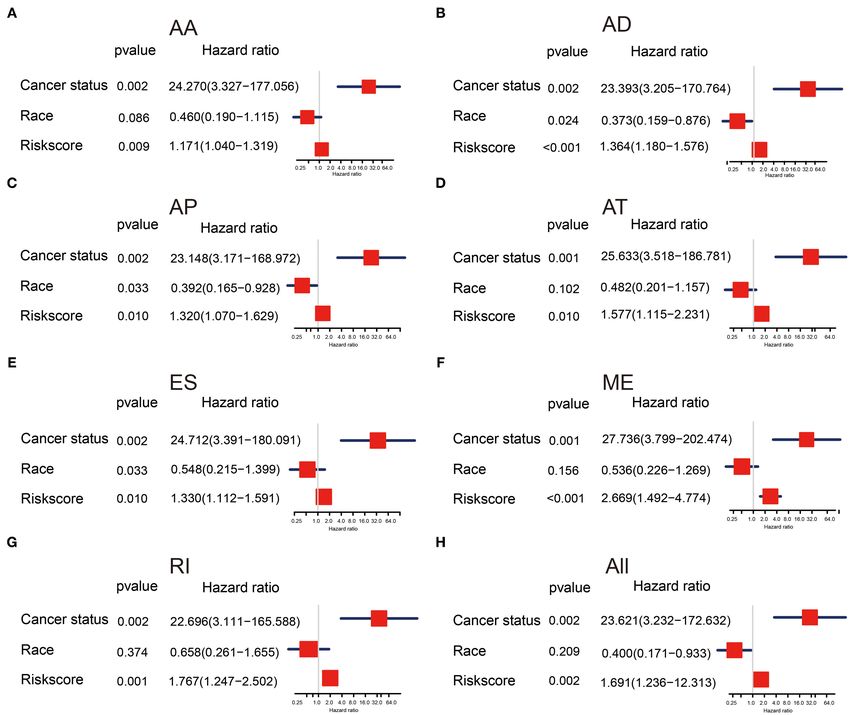
correlated with overall survival (Supplementary Figure 4). In                       Therefore, we also analyzed the important of HRD in ovarian
addition, multivariate Cox analysis showed that risk score                          cancer and found the HRD signature had prognostic value
and cancer status still had prognostic ability, suggesting that                     in univariate Cox analysis, but HRD signature were not
risk score and cancer status were independent prognostic                            independent prognostic factors in multivariate Cox analysis
factors for patients with OV (Figures 5A–H). In multivariate                        (shown in Supplementary Figure 4). This result demonstrated
analysis, it was found that cancer status increased the risk                        that HRD may interactive with AS event, which is consistent with
of patients, which may provide a reference for clinicians and                       the Takaya’s research (20). Taken together, these results showed
patients to choose treatment. Furthermore, it is well-known that                    that the characteristics of AS events had strong predictive effect
Homologous recombination repair (HRR) pathway deficiency                            in patients with OV.

Frontiers in Oncology | www.frontiersin.org                                     5                                         March 2021 | Volume 11 | Article 622805

Liu et al.                                                                                                                Prognostic Biomarker for Ovarian Cancer

  FIGURE 4 | The Kaplan-Meier curves and ROC curves of prognostic AS models in the testing cohort. (A–G) The Kaplan-Meier plots of seven types of AS events,
  respectively. (H) The Kaplan-Meier plots of combined prognostic model. (I) The ROC curves for overall survival of seven types of AS events and combined
  prognostic model.

Prognostic AS and SFs Networks                                                      events associated with prognosis in OV, we used the Spearman
Splicing factor was a kind of RNA-binding protein, which                            test to calculate the correlation coefficient between SFs and
could affect the exon selection and splicing site selection of                      the most important prognostic AS events in patients with OV
pre-mRNA. Interestingly, in many types of cancer, widespread                        (Supplementary Figures 5A–E). Among these networks, 22 SFs
misalignment of AS events can easily be programmed by specific                      (purple dots) were significantly associated with 249 prognosis-
SFs. To identify specific SF that was closely related to AS                         related AS events, involving 136 favorable AS events (green dots)

Frontiers in Oncology | www.frontiersin.org                                     6                                         March 2021 | Volume 11 | Article 622805
Liu et al.                                                                                                                     Prognostic Biomarker for Ovarian Cancer

  FIGURE 5 | (A–H) Forest plots of hazard ratios of risk scores and clinical characteristics from multivariate Cox analyses.

and 113 adverse AS events (red dots). There was a positive                               AS signatures and mRNA signatures. Both results from Kaplan-
correlation (red line) between the most favorable prognosis-                             Meier and ROC analysis showed that AS signature had
related AS events (red dots) and SFs (purple dots), while most                           better survival rate and higher ROC than mRNA signature
adverse prognosis-related AS events (green dots) were negatively                         (Figures 7A,B). These data showed that the predictive ability of
correlated with SFs (green lines). For example, the expression of                        AS signature was better than that of mRNA signature. In general,
DDX39B and MATR3 was negatively correlated with the AT of                                AS signature could be used as a superior indicator to predict the
PLEKHA7 (Figures 6A,C), but positively correlated with the AD                            prognosis of OV patients.
of FLAD1 (Figures 6B,D).
                                                                                         DISCUSSION
The AS Signature had Better Predictive
Property Than mRNA Signature                                                             AS can not only play an important role in maintaining the
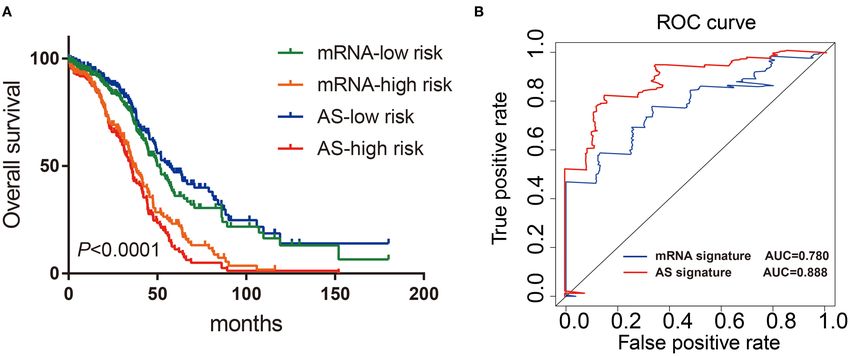
Finally, we constructed the mRNA signature of OV patients                                normal physiological process of human body, but also a key
through uni-variate and multivariate Cox analysis: mRNA risk                             mechanism leading to all kinds of pathology. In the past decade,
score signature = (−2.1573∗ HMGB3) + (2.6940∗ PDS5B) +                                   many investigations have disclosed that AS events are detected
(1.9730∗ NBN) + (1.5767∗ CDKN1B) + (−2.1324∗ PRIM2) +                                    in the occurrence and development of many human diseases,
(2.4335∗ CDKN2A). Then, the Kaplan-Meier and ROC curves                                  including tumors. In the field of AS research, recent studies have
were implemented to compare the prognostic ability between                               shown that several mutations in alternative splice and different

Frontiers in Oncology | www.frontiersin.org                                          7                                         March 2021 | Volume 11 | Article 622805
Liu et al. Prognostic Biomarker for Ovarian Cancer FIGURE 6 | Correlations between expression of splicing factors and PSI values of AS events. (A,B) Representative dot plots of correlations between splicing factor DDX39B and AT of PLEKHA7 and AD of FLAD1, respectively. (C,D) Representative dot plots of correlations between splicing factor MATR3 and AT of PLEKHA7 and AD of FLAD1, respectively. splicing events in specific cancers may be used as indicators TFCP2 is considered to be a favorable prognostic factor (18). for the diagnosis, prediction, and prognosis of ovarian cancer. All these studies show that the results of this paper are basically For example, the low expression of CADM1 in OV has been consistent with the previous reports. Overall, these reports reported to inhibit the proliferation and migration of ovarian remind us that further exploration of AS in OV may contribute cancer cells through the PI3K/Akt/mTOR pathway (22). It has to the discovery of some powerful diagnostic bio-markers and been proved that CLN3 is abnormally highly expressed in a therapeutic targets. variety of cancer-related cell lines, including ovarian cancer (23). In recent years, with the progress of high-throughput Further studies have shown that CLN3 plays an important role technology, great progress has been made in the identification of in tumorigenesis and drug resistance of ovarian cancer (24). the most common genetic aberrations in splice sites and splice It is reported that the high expression of CTBP2 is closely bodies. Therefore, the study of abnormal patterns of AS is very related to the poor prognosis of patients with OV (25). A helpful for the development of new OV treatment strategies. number of reports have shown that RAD51B variants are poor In this study, we screened out some regulatory splicing prognostic factors in ovarian cancer (26–29). In OV, the ES of factors and AS events in ovarian cancer in order to further and Frontiers in Oncology | www.frontiersin.org 8 March 2021 | Volume 11 | Article 622805
Liu et al.                                                                                                             Prognostic Biomarker for Ovarian Cancer

  FIGURE 7 | Comparison of Kaplan-Meier and time-dependent ROC analysis of AS signature with mRNA signature. (A) Comparison of Kaplan-Meier analysis of AS
  signature and mRNA signature. (B) Comparison of ROC analysis of the sensitivity and specificity of AS signature and mRNA signature.

comprehensively understand the variant RNA splicing pattern.                      potentially reliable bio-markers for predicting the survival of
Of the 1,125 host genes, a total of 1,429 AS events were                          patients with OV.
significantly associated with the survival status of patients in                     It is reported that AS events are largely regulated by their
OV. Interestingly, the top 20 AS events related to survival                       corresponding core SFs. Therefore, we further exploded the
tend to have a good prognosis. Further analysis shows that                        relationship between these SFs expression levels and survival-
the prognostic prediction model based on ES events is more                        related AS events in OV. 22SFs, including IGF2BP3, BAG2,
efficient than the model based on six additional AS events to                     and RNF213, were found to be associated with survival-
distinguish the survival of OV patients. In addition, based on                    related AS events. Interestingly, IGF2BP3 has been found to be
the differential splicing patterns of 13 genes, an ideal prognostic               associated with chemotherapy resistance and poor prognosis of
model is proposed. This model has high performance in the                         ovarian cancer (31–33). BAG2 can promote the metastasis and
risk stratification of OV patients and has great potential in                     proliferation of gastric cancer (34). By affecting the MAPK/JNK
predicting the prognosis of OV patients. All these results suggest                signal pathway (35), RNF213 can inhibit the carcinogenesis of
that AS events have a wide range of variability in the tumor                      glioblastoma. However, it is necessary to further explore the more
environment, and these changes can greatly affect the clinical                    specific regulatory mechanism of the AS-SF network.
outcome of cancer patients. Mutated RNA splicing related genes                       At present, many studies have established the prognostic
and their corresponding splicing regulatory genes enrich our                      characteristics of cancer patients based on RNA expression.
understanding of AS and provide potential bio-markers and                         Therefore, we compared our AS signature with mRNA signature
potential targets for prognosis in patients with OV. In addition,                 and found that AS signature has better prediction ability than
this paper also strengthens our opinion on finding more AS                        mRNA signature. These data provided a useful evidence that AS
signatures related to prognosis in the OV cohort, which may help                  signature can be used in clinical applications.
to significantly increase the life expectancy of highly personalized                 However, the limitations should be acknowledged for this
treatment according to different treatment responses of OV                        study. First, the prognostic AS signature were identified by
patients with different gene AS status and different AS levels                    reasonable and reliable statistical approaches, but the results was
based on the same gene.                                                           only verified in TCGA database and simple size is small. Second,
    The test cohort accounted for 50% of all patients and was                     the TCGA database represents part but not all of the possible
selected randomly (30). By applying these AS signatures in                        clinical characteristics information, such as alcohol consumption
the test cohort, significant risk stratification and high AUC                     and social status were not available in TCGA database. Thus,
values for patient survival were also observed, which proved the                  we could not control those factors that might cause biases
efficiency and rationality of LASSO regression analysis (19). The                 in our analysis. Finally, we identified several prognostic AS
internal verification results can greatly increase the reliability                events can be regulated by some key SFs. Unfortunately, the
and potential of clinical application. In addition, uni-variate                   study of the specific mechanism between AS events and key
and multivariate Cox analysis showed that AS signatures were                      SFs is unclear and experimental studies on these mechanisms
independent risk factors for the prognosis of patients with                       are greatly needed to further understand their functional role
OV. These results suggested that these AS signatures were                         in OC.

Frontiers in Oncology | www.frontiersin.org                                   9                                        March 2021 | Volume 11 | Article 622805
Liu et al. Prognostic Biomarker for Ovarian Cancer
In summary, this study revealed the prognostic value of SUPPLEMENTARY MATERIAL
several AS events in TCGA-OV, and these prognostic AS events
can be regulated by some key SFs. Our findings may provide The Supplementary Material for this article can be found
new prospects for effective treatment of AS events in patients online at: https://www.frontiersin.org/articles/10.3389/fonc.
with OV. 2021.622805/full#supplementary-material
Supplementary Figure 1 | Survival-related AS events were selected using the
LASSO Cox analysis. (A) LASSO coefficient profiles of the candidate
DATA AVAILABILITY STATEMENT survival-related AS events. (B) Dotted vertical lines were drawn at the optimal
values by using the minimum criteria.
The datasets presented in this study can be found
Supplementary Figure 2 | The Kaplan-Meier curves of each prognostic AS’
in online repositories. The names of the repository/
mRNA level.
repositories and accession number(s) can be found in the
article/Supplementary Material. Supplementary Figure 3 | (A–H) Construction and analysis of risk scores of
combined prognostic model. The top panels indicate the risk scores of the
patients. The middle panels depict the survival status and survival time of patients
AUTHOR CONTRIBUTIONS distributed by risk score. The bottom panels display the heatmap of the PSI values
for predictive factors distributed by risk score.
JL, RW, and XL designed the study and wrote the paper. JL and
Supplementary Figure 4 | Forest plots of hazard ratios of risk scores and clinical
DL performed research. JL, DL, XW, and RW analyzed data.
characteristics from univariate and multivariate Cox analyses.
JL and XL wrote the first draft of the paper and edited the
manuscript. All authors have read and approved the final version Supplementary Figure 5 | Correlation network between the expression of
of the manuscript. survival splicing factors and the PSI values of AS genes produced by Cytoscape.
Purple dots were survival-related splicing factor. Green/Red dots were
favorable/adverse AS events. Red/Green lines represent positive/negative
FUNDING correlations between substances.
Supplementary Table 1 | Clinical characteristics of OV in TCGA data set.
This work was supported by the Guidance Plan Projects
of Natural Science Foundation of Liaoning Province Supplementary Table 2 | OV-specific genes involved in combined prognostic
(No. 20180550748). model.OV, ovarian cancer; HR, hazard ratio.
REFERENCES 10. Xu L, Wu Y, Che X, Zhao J, Wang F, Wang P, et al. Cox-LASSO
analysis reveals a ten-lncRNA signature to predict outcomes in patients
1. Siegel RL, Miller KD. Cancer statistics, 2020. CA Cancer J Clin. (2020) with high-grade serous ovarian cancer. DNA Cell Biol. (2019) 38:1519–
70:7–30. doi: 10.3322/caac.21590 28. doi: 10.1089/dna.2019.4826
2. Enroth S, Berggrund M, Lycke M, Broberg J, Lundberg M, Assarsson E, 11. Jin Y, Dong H, Shi Y, Bian L. Mutually exclusive alternative splicing of pre-
et al. High throughput proteomics identifies a high-accuracy 11 plasma mRNAs. Wiley Interdiscip Rev RNA. (2018) 9:e1468. doi: 10.1002/wrna.1468
protein biomarker signature for ovarian cancer. Commun Biol. (2019) 12. Singh B, Eyras E. The role of alternative splicing in cancer. Transcription.
2:221. doi: 10.1038/s42003-019-0464-9 (2017) 8:91–8. doi: 10.1080/21541264.2016.1268245
3. Li L, Gu H, Chen L, Zhu P, Zhao L, Wang Y, et al. Integrative 13. Nilsen TW, Graveley BR. Expansion of the eukaryotic proteome by alternative
network analysis reveals a microRNA-based signature for prognosis splicing. Nature. (2010) 463:457–63. doi: 10.1038/nature08909
prediction of epithelial ovarian cancer. BioMed Res Int. (2019) 14. Martinez-Montiel N, Rosas-Murrieta NH. Alternative splicing as a target for
2019:1056431. doi: 10.1155/2019/1056431 cancer treatment. Int J Mol Sci. (2018) 19:545. doi: 10.3390/ijms19020545
4. Mansha M, Gill A, Thomson PC. Potential risk factors of ovarian cancer and 15. Oltean S, Bates DO. Hallmarks of alternative splicing in cancer. Oncogene.
analysis of CA125, a biomarker used for its monitoring and diagnosis. Mol (2014) 33:5311–8. doi: 10.1038/onc.2013.533
Biol Rep. (2019) 46:3325–32. doi: 10.1007/s11033-019-04794-8 16. Koh CM, Bezzi M, Low DH, Ang WX, Teo SX, Gay FP, et al. MYC regulates the
5. Scaletta G, Plotti F, Luvero D, Capriglione S, Montera R, Miranda A, et al. core pre-mRNA splicing machinery as an essential step in lymphomagenesis.
The role of novel biomarker HE4 in the diagnosis, prognosis and follow-up Nature. (2015) 523:96–100. doi: 10.1038/nature14351
of ovarian cancer: a systematic review. Expert Rev Anticancer Ther. (2017) 17. Shilo A, Ben Hur V, Denichenko P, Stein I, Pikarsky E, Rauch J, et al. Splicing
17:827–39. doi: 10.1080/14737140.2017.1360138 factor hnRNP A2 activates the Ras-MAPK-ERK pathway by controlling A-
6. Liu S, Yin H, Ji H, Zhu J, Ma R. Overexpression of TRIM44 is Raf splicing in hepatocellular carcinoma development. RNA. (2014) 20:505–
an independent marker for predicting poor prognosis in epithelial 15. doi: 10.1261/rna.042259.113
ovarian cancer. Exp Ther Med. (2018) 16:3034–40. doi: 10.3892/etm.2018. 18. Zhu J, Chen Z, Yong L. Systematic profiling of alternative splicing signature
6541 reveals prognostic predictor for ovarian cancer. Gynecol Oncol. (2018)
7. Lee YC, Huang CC, Lin DY, Chang WC, Lee KH. Overexpression of 148:368–74. doi: 10.1016/j.ygyno.2017.11.028
centromere protein K (CENPK) in ovarian cancer is correlated with poor 19. Tibshirani R. The lasso method for variable selection in the Cox model. Stat
patient survival and associated with predictive and prognostic relevance. Med. (1997) 16:385–95. doi: 10.1002/(SICI)1097-0258(19970228)16:4
PeerJ. (2015) 3:e1386. doi: 10.7717/peerj.1386 20. Takaya H, Nakai H, Takamatsu S. Homologous recombination deficiency
8. Barata PC, Rini BI. Treatment of renal cell carcinoma: current status-based classification of high-grade serous ovarian carcinoma. Sci Rep.
status and future directions. CA Cancer J Clins. (2017) 67:507– (2020) 10:2757. doi: 10.1038/s41598-020-59671-3
24. doi: 10.3322/caac.21411 21. Lenzken SC, Loffreda A, Barabino SM. RNA splicing: a new
9. Zhou J, Yi Y, Wang C, Su C, Luo Y. Identification of a 3-mRNA player in the DNA damage response. Int J Cell Biol. (2013)
signature as a novel potential prognostic biomarker in patients with ovarian 2013:153634. doi: 10.1155/2013/153634
serous cystadenocarcinoma in G2 and G3. Oncol Lett. (2019) 18:3545– 22. Si X, Xu F, Xu F, Wei M, Ge Y, Chenge S. CADM1 inhibits
52. doi: 10.3892/ol.2019.10701 ovarian cancer cell proliferation and migration by potentially
Frontiers in Oncology | www.frontiersin.org 10 March 2021 | Volume 11 | Article 622805Liu et al. Prognostic Biomarker for Ovarian Cancer
regulating the PI3K/Akt/mTOR pathway. Biomed Pharmacother. (2020) 31. Liu H, Zeng Z, Afsharpad M, Lin C, Wang S, Yang H, et al.
123:109717. doi: 10.1016/j.biopha.2019.109717 Overexpression of IGF2BP3 as a potential oncogene in ovarian clear
23. Rylova SN, Amalfitano A, Persaud-Sawin DA, Guo WX, Chang J, Jansen PJ, cell carcinoma. Front Oncol. (2020) 9:1570. doi: 10.3389/fonc.2019.
et al. The CLN3 gene is a novel molecular target for cancer drug discovery. 01570
Cancer Res. (2002) 62:801–8. 32. Hsu KF, Shen MR, Huang YF, Cheng YM, Lin SH, Chow NH,
24. Mao D, Che J, Han S, Zhao H, Zhu Y, Zhu H. RNAi-mediated et al. Overexpression of the RNA-binding proteins Lin28B and IGF2BP3
knockdown of the CLN3 gene inhibits proliferation and promotes apoptosis (IMP3) is associated with chemoresistance and poor disease outcome
in drug-resistant ovarian cancer cells. Mol Med Rep. (2015) 12:6635– in ovarian cancer. Br J Cancer. (2015) 113:414–24. doi: 10.1038/bjc.
41. doi: 10.3892/mmr.2015.4238 2015.254
25. Barroilhet L, Yang J, Hasselblatt K, Paranal RM, Ng SK, Rauh-Hain JA, 33. Kobel M, Xu H, Bourne PA, Spaulding BO, Shih Ie M, Mao TL, et al.
et al. C-terminal binding protein-2 regulates response of epithelial ovarian IGF2BP3 (IMP3) expression is a marker of unfavorable prognosis in
cancer cells to histone deacetylase inhibitors. Oncogene. (2012) 32:3896– ovarian carcinoma of clear cell subtype. Mod Pathol. (2009) 22:469–
903. doi: 10.1038/onc.2012.380 75. doi: 10.1038/modpathol.2008.206
26. Caminsky NG, Mucaki EJ, Perri AM, Lu R, Knoll JHM, Rogan PK. Prioritizing 34. Sun L, Chen G, Sun A, Wang Z, Huang, H Gao Z, et al. BAG2
Variants in Complete Hereditary Breast and Ovarian Cancer Genes in promotes proliferation and metastasis of gastric cancer via ERK1/2
Patients Lacking Known BRCA Mutations. Hum Mutat. (2016) 37: 640–52. signaling and partially regulated by miR186. Front Oncol. (2020)
doi: 10.1002/humu.22972 10:31. doi: 10.3389/fonc.2020.00031
27. Scarbrough PM, Weber RP, Iversen ES, Brhane Y, Amos CI, Kraft P, 35. Wang X, Ye M, Wu M, Fang H, Xiao B, Xie L, et al. RNF213
et al. A cross-cancer genetic association analysis of the DNA repair suppresses carcinogenesis in glioblastoma by affecting MAPK/JNK signaling
and DNA damage signaling pathways for lung, ovary, prostate, breast, pathway. Clin Transl Oncol. (2020) 22:1506–16. doi: 10.1007/s12094-020-02
and colorectal cancer. Cancer Epidemiol Biomarkers Prev. (2015) 25:193– 286-x
200. doi: 10.1158/1055-9965.EPI-15-0649
28. Earp MA, Kelemen LE, Magliocco AM, Swenerton KD, Chenevix-Trench G, Conflict of Interest: The authors declare that the research was conducted in the
Australian Cancer Study, et al. Genome-wide association study of subtype- absence of any commercial or financial relationships that could be construed as a
specific epithelial ovarian cancer risk alleles using pooled DNA. Hum Genet. potential conflict of interest.
(2014) 133:481–97. doi: 10.1007/s00439-013-1383-3
29. Song H, Dicks E, Ramus SJ, Tyrer JP, Intermaggio MP, Hayward J, et al. Copyright © 2021 Liu, Lv, Wang, Wang and Li. This is an open-access article
Contribution of germline mutations in the RAD51B, RAD51C, and RAD51D distributed under the terms of the Creative Commons Attribution License (CC BY).
genes to ovarian cancer in the population. J Clin Oncol. (2015) 33:2901– The use, distribution or reproduction in other forums is permitted, provided the
7. doi: 10.1200/JCO.2015.61.2408 original author(s) and the copyright owner(s) are credited and that the original
30. Ju HQ, Zhao Q. A circRNA signature predicts postoperative publication in this journal is cited, in accordance with accepted academic practice.
recurrence in stage II/III colon cancer. EMBO Mol Med. (2019) No use, distribution or reproduction is permitted which does not comply with these
11:e10168. doi: 10.15252/emmm.201810168 terms.
Frontiers in Oncology | www.frontiersin.org 11 March 2021 | Volume 11 | Article 622805You can also read


