Bleeding During Treatment With Aspirin Versus Apixaban in Patients With Atrial Fibrillation Unsuitable for Warfarin
←
→
Page content transcription
If your browser does not render page correctly, please read the page content below
Bleeding During Treatment With Aspirin Versus Apixaban
in Patients With Atrial Fibrillation Unsuitable for Warfarin
The Apixaban Versus Acetylsalicylic Acid to Prevent Stroke in Atrial
Fibrillation Patients Who Have Failed or Are Unsuitable for Vitamin k
Antagonist Treatment (AVERROES) Trial
Greg C. Flaker, MD; John W. Eikelboom, MBBS; Olga Shestakovska, MSc; Stuart J. Connolly, MD;
Scott Kaatz, DO, MSc; Andrzej Budaj, MD, PhD; Steen Husted, MD, DSc;
Salim Yusuf, MBBS, DPhil; Gregory Y. H. Lip, MD; Robert G. Hart, MD
Background and Purpose—Apixaban reduces stroke with comparable bleeding risks when compared with aspirin in
patients with atrial fibrillation who are unsuitable for vitamin k antagonist therapy. This analysis explores patterns of
bleeding and defines bleeding risks based on stroke risk with apixaban and aspirin.
Methods—The Apixaban versus Acetylsalicylic Acid to Prevent Stroke in Atrial Fibrillation Patients Who Have Failed or
Are Unsuitable for Vitamin k Antagonist Treatment (AVERROES) trial randomized 5599 patients with atrial fibrillation
and risk factors to receive either apixaban or aspirin. Bleeding events were defined as the first occurrence of either major
bleeding or clinically relevant nonmajor bleeding.
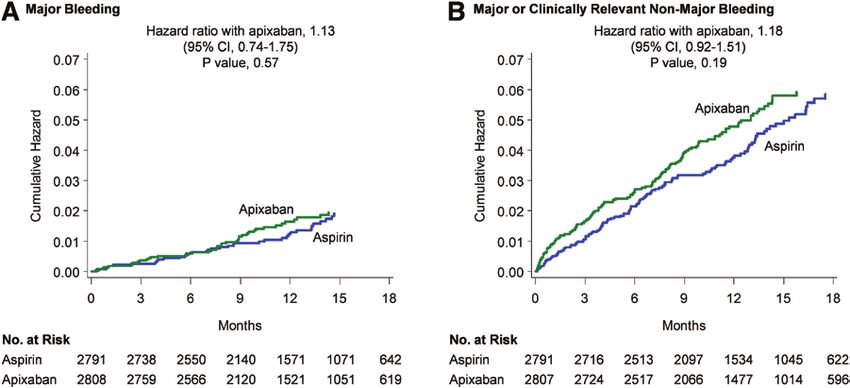
Results—The rate of a bleeding event was 3.8%/year with aspirin and 4.5%/year with apixaban (hazard ratio with apixaban,
1.18; 95% CI, 0.92–1.51; P=0.19). The anatomic site of bleeding did not differ between therapies. Risk factors for
bleeding common to apixaban and aspirin were use of nonstudy aspirin >50% of the time and a history of daily/occasional
nosebleeds. The rates of both stroke and bleeding increased with higher CHADS2 scores but apixaban compared with
aspirin was associated with a similar relative risk of bleeding (P interaction 0.21) and a reduced relative risk of stroke
(P interaction 0.37) irrespective of CHADS2 category.
Conclusions—Anatomic sites and predictors of bleeding are similar for apixaban and aspirin in these patients. Higher
CHADS2 scores are associated with increasing rates of bleeding and stroke, but the balance between risks and benefits of
apixaban compared with aspirin is favorable irrespective of baseline stroke risk.
Clinical Trial Registration Information—www.clinicaltrials.gov. Unique identifier: NCT 00496769.
(Stroke. 2012;43:3291-3297.)
Key Words: apixaban ◼ atrial fibrillation ◼ clinical trial ◼ factor Xa inhibitor ◼ hemorrhage ◼ risk prediction
T he efficacy of warfarin for stroke prevention in
patients with atrial fibrillation (AF) is well estab-
lished by randomized clinical trials1–3 but vitamin k antag-
for Vitamin k Antagonist Treatment (AVERROES) trial.7
Compared with aspirin, apixaban reduced the rate of stroke or
systemic embolism from 3.7%/year to 1.6%/year. The rate of
onists (VKAs) remain underused in clinical practice.4–6 major bleeding was 1.4%/year with apixaban and 1.2%/year
Many patients who do not receive VKA receive aspirin for with aspirin, not significantly different.
stroke prevention. Given the low rate of bleeding, apixaban appears to be
Apixaban, a novel oral Factor Xa inhibitor, is superior an attractive alternative to aspirin for stroke prevention
to aspirin for prevention of stroke in patients with AF who in patients with AF unsuitable for VKA. However, more
were deemed unsuitable for warfarin anticoagulation in the detailed information about bleeding risk would be useful to
Apixaban versus Acetylsalicylic Acid to Prevent Stroke in guide clinicians concerning the relative merits of this new
Atrial Fibrillation Patients Who Have Failed or Are Unsuitable anticoagulant when compared with aspirin. We analyze the
Received May 22, 2012; final revision received August 21, 2012; accepted August 28, 2012.
From the University of Missouri–Columbia, Columbia, MO (G.C.F.); the Population Health Research Institute, McMaster University and Hamilton
Health Sciences, Hamilton, Ontario, Canada (J.W.E., O.S., S.J.C., S.Y., R.G.H.); Henry Ford Hospital, Detroit MI (S.K.); Postgraduate Medical School,
Warsaw, Poland (A.B.); Aarhus University Hospital, Skejby, Aarhus, Denmark (S.H.); and the University of Birmingham Centre for Cardiovascular
Sciences, City Hospital, Birmingham, UK (G.Y.H.L.).
The online-only Data Supplement is available with this article at http://stroke.ahajournals.org/lookup/suppl/doi:10.1161/STROKEAHA.112.
664144/-/DC1.
Correspondence to Greg C. Flaker, MD, Five Hospital Drive, CE306, Columbia, MO 65212. E-mail flakerg@health.missouri.edu
© 2012 American Heart Association, Inc.
Stroke is available at http://stroke.ahajournals.org DOI: 10.1161/STROKEAHA.112.664144
3291
Downloaded from http://stroke.ahajournals.org/ by guest on November 1, 20153292 Stroke December 2012
Figure 1. Kaplan-Meier estimates of
the cumulative hazard function for major
bleeding (A) and the composite of major
and clinically relevant nonmajor bleeding
(B) in 2 treatment groups. Probability value
is from the likelihood ratio test, Cox pro-
portional hazards regression model.
sites of bleeding and the clinical and laboratory predictors the benefits and the risk of therapy for patients with CHADS2=1, or
of major and clinically relevant nonmajor bleeding during patient refusal. In most patients, multiple reasons for unsuitability for
VKA therapy were provided. Salient exclusion criteria relevant to
apixaban and aspirin therapy in the AVERROES trial. We also bleeding were recent serious bleeding and active peptic ulcer disease.
assess the risk of bleeding with apixaban versus aspirin in Patients were randomized to receive apixaban (5 mg twice daily) or
patients determined to be at low, moderate, and high risk of aspirin (81–324 mg daily) administered d ouble-blind. A reduced dose
ischemic stroke. of apixaban (2.5 mg twice a day) was assigned to participants who met
at least 2 of the following criteria: (1) age ≥80 years; (2) body weight
≤60 kg; or (3) serum creatinine ≥1.5 mg/dL or 133 μmol/L. For this
Methods analysis, the estimated glomerular filtration rate was calculated using
The design, inclusion criteria, study execution, and main results of the C KD-EPI (Chronic Kidney Disease Epidemiology Collaboration)
the AVERROES trial have been published.7,8 The AVERRROES formula, considered to be more accurate than other equations and
trial-included patients were not candidates for oral anticoagulation appropriate for population studies.9 Patients were strongly encour-
with a VKA (eg, warfarin). Reasons for unsuitability for VKA are aged to stop o pen-label aspirin if they were taking aspirin at baseline.
listed in the main article.8 Investigators were asked to indicate the rea- Patients who developed a clear indication for antiplatelet therapy dur-
son for unsuitability for warfarin, which included an inability to main- ing the study were advised to not exceed 100 mg daily of aspirin.
tain an international normalized ratio within the therapeutic range, The bleeding outcome of interest for these analyses was the first
international normalized ratio could not be assessed at requested occurrence of either major bleeding or clinically relevant nonmajor
intervals, uncertainty about the patient’s ability to comply with in- bleeding, both defined in the online-only Data Supplement.
structions, anticipated difficulty in contacting the patient about urgent All analyses were based on the intention-to-treat principle. The
dosing changes, uncertainty regarding a favorable balance between rates of major and clinically relevant nonmajor bleeding were
Table 1. Site of Bleeding
Major Bleeding Major or Clinically Relevant Nonmajor Bleeding
No. of Events‡ %/y§ No. of Events‡ %/y§
Aspirin (N=2791) Apixaban (N=2808) P Value† Aspirin (N=2791) Apixaban* (N=2808) P Value†
Intracranial 13 (0.41) 11 (0.35) 0.69 13 (0.41) 11 (0.35) 0.69
Gastrointestinal 14 (0.45) 11 (0.35) 0.56 39 (1.25) 42 (1.35) 0.73
Respiratory tract 0 1 (0.03) ... 8 (0.25) 6 (0.19) 0.59
Superficial/hematoma/puncture site‖ 3 (0.10) 3 (0.10) ... 22 (0.70) 13 (0.41) 0.13
Genitourinary¶ 1 (0.03) 0 ... 17 (0.54) 23 (0.74) 0.34
Ear, nose, and throat** 2 (0.06) 0 ... 15 (0.48) 25 (0.80) 0.11
Surgical bleeding/trauma†† 5 (0.16) 6 (0.19) 0.75 8 (0.25) 9 (0.29) 0.80
Other‡‡ 3 (0.10) 13 (0.41) ... 6 (0.19) 14 (0.45) 0.07
*One patient in the apixaban group with intracranial site of bleeding was excluded from the analysis of the composite of major and clinically relevant nonmajor
bleeding.
†P value is from the likelihood ratio test (Cox proportional hazards regression model). The rates were not compared if no. of events wasFlaker et al Bleeding With Aspirin and Apixaban 3293
Table 2. Multivariable Analysis of Predictors of the Composite of Major and Clinically Relevant Nonmajor
Bleeding in 2 Treatment Groups
Aspirin (N=2791) Apixaban* (N=2808)
Characteristic Hazard Ratio (95% CI†) P Value† Hazard Ratio (95% CI†) P Value†
Age ≥75 y 1.32 (0.88–1.98) 0.18 1.60 (1.10–2.32) 0.01
Female sex 0.82 (0.54–1.23) 0.33 0.96 (0.66–1.39) 0.82
Regular alcohol consumption (at least once/wk) 1.08 (0.68–1.66) 0.74 0.98 (0.64–1.49) 0.94
Prior stroke or transient ischemic attack 1.07 (0.61–1.75) 0.81 1.49 (0.95–2.25) 0.08
Hypertension, receiving treatment 0.78 (0.48–1.33) 0.35 1.49 (0.89–2.68) 0.13
Heart failure or LVEF ≤35% 0.90 (0.61–1.32) 0.59 0.85 (0.59–1.21) 0.37
Peripheral artery disease 2.30 (1.11–4.27) 0.03 1.89 (0.73–4.00) 0.17
Diabetes, receiving treatment 0.96 (0.59–1.49) 0.85 1.08 (0.69–1.62) 0.74
Classification of AF 0.43 0.19
Persistent versus paroxysmal 0.85 (0.47–1.50) 0.98 (0.61–1.55)
Permanent versus paroxysmal 1.18 (0.76–1.85) 0.72 (0.48–1.08)
History of cancer 0.96 (0.46–1.79) 0.91 1.30 (0.73–2.18) 0.36
Ever fainted 0.62 (0.32–1.09) 0.10 1.12 (0.70–1.72) 0.64
Daily/occasional nosebleeds 2.47 (1.26–4.42) 0.01 2.10 (1.11–3.65) 0.02
Hemorrhoids 1.38 (0.75–2.38) 0.29 1.29 (0.76–2.08) 0.33
Non-study aspirin >50% of the time 1.89 (1.13–3.02) 0.02 1.75 (1.09–2.70) 0.02
Hemoglobin‡ g/L 0.621 (0.419–0.922) 0.02 0.745 (0.516–1.077) 0.12
Estimated GFR§: ≥60 mL/min versus 50% of the time during f ollow-up.
Multivariable Cox models included characteristics that were either
significantly associated with the outcome in the univariate analysis After a mean follow-up of 1.1 years, there were 83 major
or were known important risk factors. These characteristics were hemorrhages (44 on apixaban, 39 on aspirin, first events) and
fitted regardless of the characteristics’ apparent level of significance 180 clinically relevant nonmajor hemorrhages (96 on apixaban,
in the univariate analysis. Significance was established at the 5% 84 on aspirin, first events). Ten patients (3 on apixaban and 7
level.
Cox proportional hazards regression models were used to on aspirin) had both severities of bleeding. The annual rate of
assess the effect of apixaban compared with aspirin on the rate of major bleeding was 1.2% with aspirin and 1.4% with apixaban
bleeding events as well as stroke in subgroups by ischemic stroke (hazard ratio with apixaban, 1.13; 95% CI, 0.74–1.75; P=0.57),
risk categories as evaluated by the CHADS2 score: 0 to 1 (low), 2 and the annualized rate of clinically relevant nonmajor bleeding
(intermediate), and 3 to 6 (high). The significance of interaction
between the ischemic stroke risk categories and the effect of apixa-
was 2.7% with aspirin and 3.1% with apixaban (hazard ratio
ban compared with aspirin on stroke and bleeding outcome was with apixaban, 1.15; 95% CI, 0.86–1.54; P=0.35). One patient
also assessed. in the apixaban group had an asymptomatic cerebral microbleed
Downloaded from http://stroke.ahajournals.org/ by guest on November 1, 20153294 Stroke December 2012
Figure 2. Risk of major or clinically rel-
evant nonmajor bleeding with apixaban
versus aspirin in key subgroups according
to baseline characteristics. The squares
and horizontal lines indicate hazard ratios
and the 95% CIs. The dashed vertical line
represents the point estimate of the over-
all hazard ratio.
detected by MRI as part of a prospective substudy. This patient rate (≥60 mL/min versus 50% of the time CHADS2 (score 3–6), the stroke rate was 1.8%/year, whereas
(P=0.02 for both treatments) and a history of daily/occasional the bleeding rate was 6.1%/year. There was no heterogene-
nosebleeds (P=0.01 and P=0.02, respectively). Additionally, ity of treatment effect of apixaban compared with aspirin for
there were 4 independent predictors associated with the out- bleeding according to CHADS2 score risk categories. For
come for one treatment but with a similar hazard ratio for the patients at higher risk for stroke (CHADS2 3–6), the differ-
other treatment, albeit not reaching statistical significance: age ence between ischemic strokes prevented and bleeding was
(≥75 years versusFlaker et al Bleeding With Aspirin and Apixaban 3295
Figure 3. Risk of major or clinically rel-
evant nonmajor bleeding with apixaban
versus aspirin in patients at high and
low risk of bleeding based on estab-
lished risk models. The squares and
horizontal lines indicate hazard ratios
and the 95% CIs. The dashed vertical
line represents the point estimate of the
overall hazard ratio.
Discussion definitions limit cross trial comparisons, the types of patients
The main results of this study are (1) the site-specific bleeding (age, CHADS2 score) included in AVERROES are similar to
rates for patients with AF judged unsuitable for VKA treatment those included in other contemporary antithrombotic trials in
are not substantially different between apixaban and aspirin; AF. The low rate of major bleeding in this study with apixa-
(2) independent predictors of bleeding are similar with aspirin ban should help allay fear about bleeding. The risk of major
and apixaban; and (3) the balance between strokes prevented bleeding with apixaban in patients eligible for warfarin is
and bleeding risk for apixaban compared with aspirin is favor- the ARISTOTLE trial was also low, ranging from 0.52% to
able at all levels of stroke risk. Thus, apixaban is an attractive 2.13%/year depending on the criteria used for major bleed-
choice for antithrombotic prophylaxis across the spectrum of ing.21 Another Factor Xa inhibitor, rivaroxaban, has a rate of
ischemic stroke risk in patients with AF unsuitable for warfa- major and clinically relevant nonmajor bleeding comparable
rin therapy. with warfarin.22
A major reason for not using anticoagulants for stroke pre- The site of major and clinically relevant nonmajor bleeding
vention in AF is fear of bleeding. The rate of major bleed- during treatment with highly efficacious dosages of apixaban
ing with warfarin in recently completed clinical trials varied in elderly patients with AF were all similar to that seen with
between 1.4% and 3.57%/year.14–18 The rate of major bleed- aspirin. By contrast, warfarin compared with aspirin16 or dabi-
ing with dabigatran, a direct thrombin inhibitor, has been gatran18 causes more central nervous system bleeding, possibly
reported to be between 2.71% and 3.11%/year depending on explained by inhibition of the tissue Factor VIIA complex that is
the dose.18 Data from anticoagulation clinics have reported present in high concentration in the brain and critically important
the rate of major bleeding to be extremely variable in in normal hemostasis.23,24 On the other hand, dabigatran etexi-
elderly patients, ranging from 1.87%/year to 7.2%/year.19,20 late, a drug with low bioavailability, causes more gastrointestinal
Although differences in patient populations and bleeding bleeding than warfarin, possibly due to elevated concentrations
Table 3. Rates of Ischemic Stroke and Bleeding Events According to Risk Categories of CHADS2 Score in 2 Treatment Groups
Ischemic Stroke, Stroke of Uncertain Classification Major or Clinically Relevant
or Systemic Embolism Nonmajor Bleeding
No. of Events‡/Patient, %/y§ No. of Events‡/Patient, %/y§
Aspirin Apixaban* Rate P Value† for Aspirin Apixaban* Rate P Value† for
(N=2791) (N=2808) Difference, %/y P Value† Interaction (N=2791) (N=2808) Difference, %/y P Value† Interaction
Overall 106/2788 (3.4) 45/2806 (1.4) −2.03296 Stroke December 2012
of the drug in the gut as a result of low bioavailability and con- Smith Kline, B ristol-Myers Squibb, and Astra Zeneca and lecture
version of the prodrug to dabigatran by gut esterases. Potent fees from Sanofi-Aventis, Boehringer-Ingelheim, Glaxo Smith Kline,
and Astra Zeneca and reimbursement for travel, accommodations, or
inducers of the p -glycoprotein system (like rifampin) may result meeting expenses from Sanofi-Aventis, B oehringer-Ingelheim, Glaxo
in increased local levels of dabigatran in the gut because dabi- Smith Kline, and Astra Zeneca. Dr Yusuf received consulting fees
gatran etexilate is a substrate for p -glycoprotein.25 The bleeding from Boehringer-Ingelheim, Sanofi-Aventis, Novartis, Astra Zeneca,
profile of apixaban suggests that it is suitable across the spec- Bristol-Myers Squibb, and Glaxo Smith Kline and grant support from
trum of patients with AF who are at risk for stroke. Boehringer-Ingelheim, Sanofi-Aventis, Novartis, Astra Zeneca, Glaxo
Smith Kline, and Bristol Myers Squibb. Dr Lip received consulting
fees from Astellas, Boehringer-Ingelheim, Bayer, Daiichi, Merck,
Limitations Portola, Biotronic, Sanofi-Aventis, and Astra Zeneca and grant sup-
Clinically relevant nonmajor bleeding was not adjudicated by port on behalf of his institution, City Hospital, from Bayer; lecture
fees from B oehringer-Ingelheim, Bayer, Merck, and S anofi-Aventis;
an independent, blinded events committee although mitigated
and payment from Boehringer-Ingelheim for developing educational
by blinding of investigators to treatment assignment. Like presentations. Dr Hart was paid for services rendered as a member of
with all randomized trial, patients enrolled in this study may the Operations and Publications Committee of AVERROES.
differ from patients in clinical practice who are thought to be
unsuitable for warfarin. References
1. Ogilvie IM, Newton N, Welner SA, Cowell W, Lip GY. Underuse of
Conclusions oral anticoagulants in atrial fibrillation: a systemic review. Am J Med.
2010;123:638.e4–645.e4.
Patients who have bleeding and who are judged unsuitable 2. Albers GW, Sherman DG, Gress DR, Paulseth JE, Petersen P. Stroke
for warfarin have a relatively low risk of major bleeding prevention in nonvalvular atrial fibrillation: a review of prospective ran-
or clinically relevant nonmajor bleeding when treated with domized trials. Ann Neurol. 1991;30:511–518.
3. Hart RG, Pearce LA, Aguilar M. Meta-analysis: antithrombotic therapy
aspirin or apixaban. The anatomic sites of bleeding and
to prevent stroke in patients who have nonvalvular atrial fibrillation. Ann
independent predictors of bleeding are similar for apixa- Intern Med. 2007;146:857–867.
ban and aspirin and the favorable balance between benefits 4. Majeed A, Moser K, Carroll K. Trends in the prevalence and manage-
and risks of treatment are evident at all levels of ischemic ment of atrial fibrillation in general practice in England and Wales,
1994–1998: analysis of data from the general practice database. Heart.
stroke risk. The initial step in the decision to prescribe an 2001;86:284–288.
anticoagulant for stroke prevention in patients with AF 5. Fang MC, Stafford RS, Ruskin JN, Singer DE. National trends in antiar-
involves weighing the benefit of stroke prevention against rhythmic and antithrombotic medication use in atrial fibrillation. Arch
Intern Med. 2004;164:55–60.
the risk of bleeding. These data reassure that apixaban 6. Dewilde S, Carey IM, Emmas C, Richards N, Cook DG. Trends in the
is an attractive option for stroke prevention for patients prevalence of diagnosed atrial fibrillation, its treatment with antico-
with AF deemed unsuitable for warfarin at all levels of agulation and predictors of such treatment in UK primary care. Heart.
stroke risk. 2006;92:1064–1070.
7. Connolly S, Eikelboom J, Joyner C, Diener C, Hart R, Golitsyn S,
et al. Apixaban in patients with atrial fibrillation. N Engl J Med.
Sources of Funding 2011;364:806–817.
The AVERROES study (NCT 00496769) was funded by B
ristol-Myers 8. Eikelboom JW, O’Donnell M, Yusuf S, Diaz R, Flaker G, Hart R,
Squibb and Pfizer. et al. Rationale and design of AVERROES: apixaban versus acetyl-
salicylic acid to prevent stroke in atrial fibrillation patients who have
failed or are unsuitable for vitamin k antagonist treatment. Am Heart J.
Disclosures 2010;159:348–353.
9. Levey AS, Stevens LA, Schmid CH, Zhang YL, Castro AF, Feldman HI,
Dr Flaker serves as a consultant for B ristol-
Myers Squibb and
et al. CKD-EPI (Chronic Kidney Disease Epidemiology Collaboration).
Pfizer, Sanofi-
Aventis, and Boehringer- Ingelheim. Dr Eikelboom
A new equation to estimate glomerular filtration rate. Ann Intern Med.
receives consulting fees from Bristol-Myers Squibb, Sanofi-Aventis, 2009;150:604–612.
Eli Lilly, Astra Zeneca, and Novartis and lecture fees from 10. Pisters R, Lane DA, Nieuwlaat R, deVos CB, Crijns HJ, Lip GY. A
Bristol-
Meyers Squibb, S anofi-Aventis, Eli Lilly, and Astra novel user-friendly score (HAS-BLED) to assess one-year risk of major
Zeneca. Dr Connolly received payment for serving on the boards of bleeding in atrial fibrillation patients: the Euro Heart Survey. Chest.
Boehringer-Ingelheim, S anofi-Aventis, Portola and Merck; consult- 2010;138:1093–1100.
ing fees from B oehringer-Ingelheim, S anofi-Aventis, Portola, and 11. Lip G, Frison L, Halperin J, Lane D. Comparative validation of a novel
Merck; and grant support on behalf of his institution, McMaster risk score for predicting bleeding risk in anticoagulated patients with
University, from Boehringer-Ingelheim, Sanofi-Aventis, Portola, and atrial fibrillation. J Am Coll Cardiol. 2011;57:173–180.
Bristol-Myers Squibb and lecture fees from B oehringer-Ingelheim, 12. Fang MC, Go AS, Chang Y, Borowsky LH, Pomernacki NK, Udaltsova
Sanofi-
Aventis, and Portola. Dr Kaatz received grant sup- N, et al. A new risk scheme to predict warfarin-associated hemorrhage.
port from Boehringer-Ingelheim, B ristol- Myers Squibb, Bayer, J Am Coll Cardiol. 2011;58:395–401.
Jansen, Johnson and Johnson, Eisa, the National Institutes of 13. Shireman TI, Mahnken JD, Howard PA, Kresowik TF, Hou Q, Ellerbeck
Health, Canadian Institute of Health Research, Blue Cross/Blue EF. Development of a contemporary bleeding risk model for elderly war-
Shield of Michigan; speaker honorarium from Jansen, Johnson farin recipients. Chest. 2006;130:1390–1396.
14. Executive Steering Committee on behalf of the SPORTIF III Investigators.
and Johnson, Glaxo Smith Kline, and Eisai; is a consultant for
Stroke prevention with the oral direct thrombin inhibitor ximelagatran
Boehringer-Ingelheim, Bristol-Myer Squibb, Pfizer, Jansen, Johnson compared with warfarin in patients with n on-valvular atrial fibrillation
and Johnson, Daiichi Sankyo; and is on the membership board for (SPORTIF III): randomized Controlled trial. Lancet. 2003;362:1691–1698.
nonprofit organizations AC Forum, National Certification Board 15. SPORTIF Executive Steering Committee for the SPORTIF V
of Anticoagulation Providers and National Blood Clot Alliance Investigators. Ximelagatran vs warfarin for stroke prevention in patients
Medical, and Scientific Advisory Board. Dr Budaj received consult- with nonvalvular atrial fibrillation. JAMA. 2005;293:690–698.
ing fees from Sanofi-Aventis, Eli Lilly, Novartis, and Astra Zeneca 16. The ACTIVE Writing Group on behalf of the ACTIVE Investigators.
and grant support both for himself and on behalf of his institution, Clopidogrel plus aspirin versus oral anticoagulation for atrial fibrillation
Grochowski Hospital, Sanofi-Aventis, Boehringer-Ingelheim, Glaxo in the Atrial fibrillation Clopidogrel Trial with Irbesartan for prevention
Downloaded from http://stroke.ahajournals.org/ by guest on November 1, 2015Flaker et al Bleeding With Aspirin and Apixaban 3297
of Vascular Events (ACTIVE W): a randomized controlled trial. Lancet. elderly patients with atrial fibrillation. Circulation. 2007;115:
2006;367:1903–1912. 2689–2696.
17. The Amadeus Investigators. Comparison of idraparinux with vitamin k 21. Granger CB, Alexander JH, McMurray JJV, Lopes RD, Hylek EM,
antagonist for prevention of thromboembolism in patients with atrial Hanna M, et al. Apixaban versus warfarin in patients with atrial fibrilla-
fibrillation: a randomized, open-
label, non-
inferiority trial. Lancet. tion. N Engl J Med. 2011;365:981–992.
2008;371:315–321. 22. Patel M, Mahaffey K, Garg J, Guohua P, Singer D, Hacke W, et al.
18. Connolly SJ, Ezekowitz MD, Yusuf S, Eikelboom J, Oldgren J, Parekh Rivaroxaban versus warfarin in nonvalvular atrial fibrillation. N Engl J
A, et al. Dabigatran versus warfarin in patients with atrial fibrillation. Med. 2011;365:883–891.
N Engl J Med. 2009;361:1139–1151. 23. Fleck RA, Rao LV, Rapaport SI, Varki N. Localization of human tis-
19. Poli D, Antonucci E, Testa S, Tosetto A, Ageno W, Palareti G; Italian sue factor antigen by immunostaining with monospecific polyclonal
Federation of Anticoagulation Clinics. Bleeding risk in very old patients anti-human tissue factor antibody. Thromb Res. 1990;59:421–437.
on vitamin k antagonist treatment: results of a prospective collaborative 24. Mackman N. The role of tissue factor and factor VIIa in hemostasis.
study on elderly patients followed by Italian Centres for Anticoagulation. Anesth Analg. 2009;108:1447–1452.
Circulation. 2011;124:824–829. 25. Eisert WG, Hauel N, Stangler J, Wienen W, Clemens A, van Ryn J.
20. Hylek E, Evans-Molina C, Shea C, Henault L, Regan S. Major hemor- Dabigatran: an oral novel potent reversible nonpeptide inhibitor of
rhage and tolerability of warfarin in the first year of therapy among thrombin. Arterioscler Thromb Vasc Biol. 2010;30:1885–1889.
Downloaded from http://stroke.ahajournals.org/ by guest on November 1, 2015SUPPLEMENTAL MATERIAL
Appendix

Major bleeding, the primary safety outcome of AVERROES, was defined as clinically overt

bleeding accompanied by 1 or more of the following: decrease in hemoglobin of ≥2 g/dl over a

24-hour period, transfusion of ≥2 units of packed red blood cells, bleeding that occurs in a

critical site (intracranial, intra-spinal, intraocular, pericardial, intra-articular, intramuscular with

compartment syndrome, retroperitoneal), or bleeding that was fatal. Clinically relevant non-

major bleeding was defined as acute clinically overt bleeding that does not satisfy additional

criteria required for the bleeding event to be defined as a major bleeding event but results in

hospital admission, physician-guided medical or surgical treatment, or prompting a change in

antithrombotic therapy. Examples of clinically relevant non- major bleeding events include 1)

epistaxis (nose bleed) during which the subject seeks medical attention from a physician in an

emergency room, or requires an intervention, e.g., nasal pack, or experiences a single bleeding

episode persists for five minutes or more. 2) gastrointestinal bleeding, defined as vomitus

containing frank blood or coffee ground material which tests positive for blood, or

endoscopically confirmed bleeding, or frank blood per rectum or melena stools. 3) hematuria

which persists for 24 hours or more after instrumentation. 4) bruising/ecchymosis defined as any

bruise which is assessed as “unusual” (e.g., greater than expected following surgery). 5)

hematoma which is demonstrated radiographically, e.g. by ultrasound, CT, MRI, associated with

a drop in hemoglobin with no external evidence of bleeding. 6) hemoptysis, defined as the

expectoration of blood or blood-stained sputum. Major bleeding was centrally adjudicated by

those unaware of treatment assignment in order to apply uniformly these criteria.
Bleeding During Treatment With Aspirin Versus Apixaban in Patients With Atrial
Fibrillation Unsuitable for Warfarin: The Apixaban Versus Acetylsalicylic Acid to Prevent
 Stroke in Atrial Fibrillation Patients Who Have Failed or Are Unsuitable for Vitamin k
                         Antagonist Treatment (AVERROES) Trial
   Greg C. Flaker, John W. Eikelboom, Olga Shestakovska, Stuart J. Connolly, Scott Kaatz,
       Andrzej Budaj, Steen Husted, Salim Yusuf, Gregory Y. H. Lip and Robert G. Hart

            Stroke. 2012;43:3291-3297; originally published online October 2, 2012;
                           doi: 10.1161/STROKEAHA.112.664144
      Stroke is published by the American Heart Association, 7272 Greenville Avenue, Dallas, TX 75231
                    Copyright © 2012 American Heart Association, Inc. All rights reserved.
                               Print ISSN: 0039-2499. Online ISSN: 1524-4628

The online version of this article, along with updated information and services, is located on the
                                       World Wide Web at:
                                 http://stroke.ahajournals.org/content/43/12/3291

                                      Data Supplement (unedited) at:
          http://stroke.ahajournals.org/content/suppl/2012/10/02/STROKEAHA.112.664144.DC1.html

 Permissions: Requests for permissions to reproduce figures, tables, or portions of articles originally published
 in Stroke can be obtained via RightsLink, a service of the Copyright Clearance Center, not the Editorial Office.
 Once the online version of the published article for which permission is being requested is located, click
 Request Permissions in the middle column of the Web page under Services. Further information about this
 process is available in the Permissions and Rights Question and Answer document.

 Reprints: Information about reprints can be found online at:
 http://www.lww.com/reprints

 Subscriptions: Information about subscribing to Stroke is online at:
 http://stroke.ahajournals.org//subscriptions/

                     Downloaded from http://stroke.ahajournals.org/ by guest on November 1, 2015
You can also read


