THE EFFICACY OF THE CERAMIC WATER PURIFIER FOR RURAL SIERRA LEONE - BY MIRIAM HANSEN MENG CHEMICAL ENGINEERING IN COLLABORATION WITH PHD CANDIDATE ...
←
→
Page content transcription
If your browser does not render page correctly, please read the page content below
The efficacy of the
                     Ceramic Water Purifier
                      for rural Sierra Leone
                                                                   by Miriam Hansen
                                                           MEng Chemical Engineering
            In collaboration with PhD candidate Ana Vieria and Dr. Blanca Andizar-Ladislao

Acknowledgements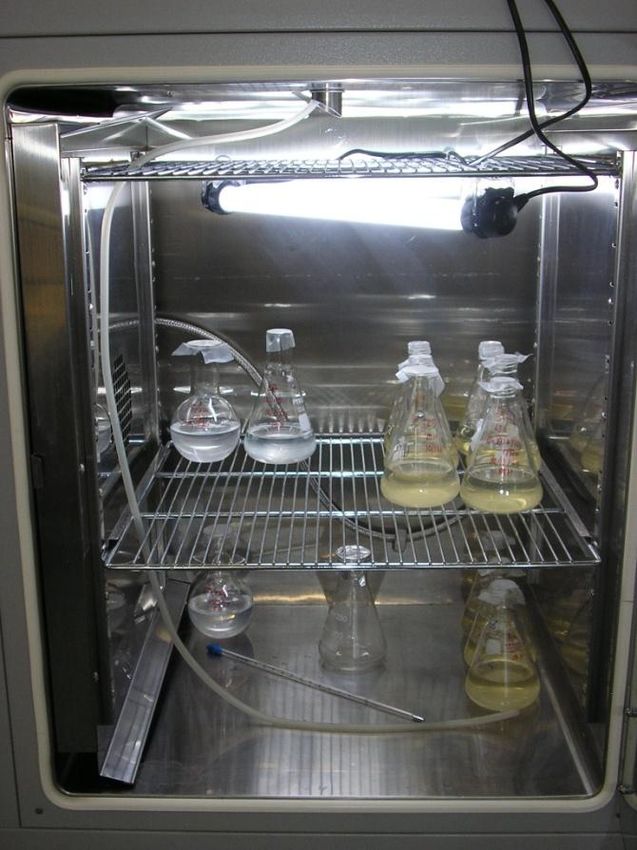
Outline
1. Motivation
2. Aims and Objectives
    i. Laboratory
    ii. Ceramic Water Purifier Design
    iii. Community Integration
3. Results and Discussion
4. Preliminary Conclusions
5. Further Work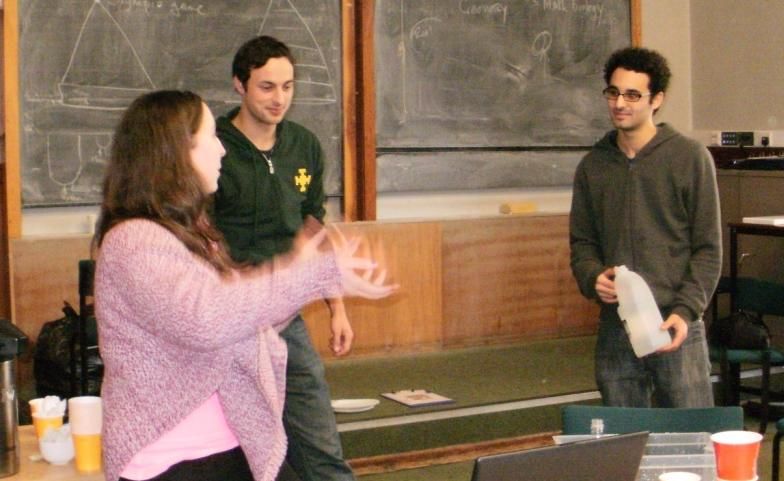
Motivation • 5,000 children die daily across the world due to unsanitary water (WHO, 2005). • In Sierra Leone only 32% of the countries rural population have access to improved drinking water sources (UNICEF, 2004). • Achieving water purification in developing countries is a fundamental human right which so far has failed to be achieved (UNICEF and WHO 2004). References WHO and UNICEF (2005) Water for life: making it happen. France, WHO and UNICEF. UNICEF (2004) Meeting the MDG Drinking Water and Sanitation Target: A Mid Term Assessment of Progress. Geneva: WHO. UNICEF(2004) At a glance: Sierra Leone. http://www.unicef.org/infobycountry/sierraleone_statistics.html
Motivation
             The CWP Process
The Ceramic Water Purifier (CWP) was designed by Dr. Fernando
Mazariegos of the Central American Industrial Research Institute (ICAITI)
in Guatemala, in 1981.

        Colloidal Ag
        coating
                                            Ceramic pores
                                            < 2μm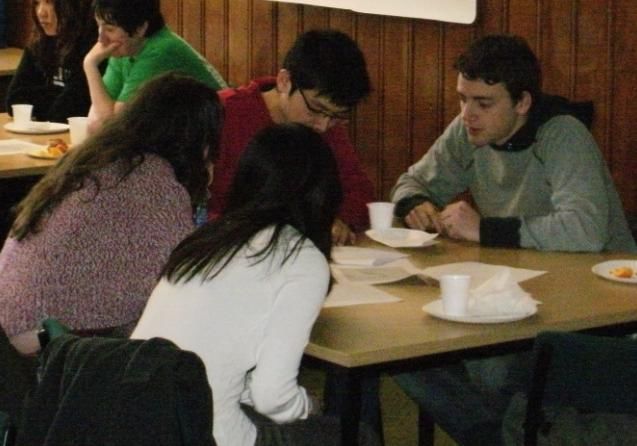
Motivation
              The CWP Process
The Ceramic Water Purifier using a TiO2 coating. Incorporating low energy, low
cost solutions with locally available resources.

                                                       Natural
      Contaminated
                                                      UV-visible
         Water
                                                      radiation

               Colloidal
         Colloidal Ag
         coating filter
               TiO2
                coating
                                                 Ceramic0.2μm
                                                          pores
                                                 < 2μm
                                                     ceramic filter

                                                                      Potable
                                                                       Water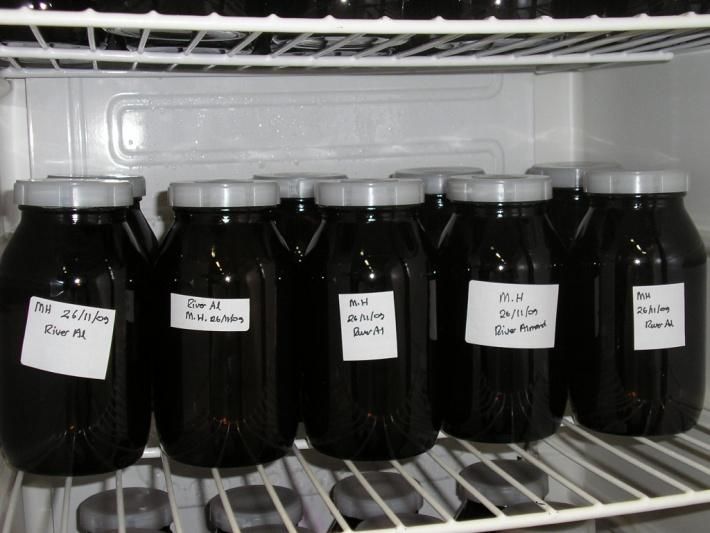
Motivation

DNA
damage

                          Cell wall,
                          DNA and
                           protein
                          damage

         Adapted from: Wu L, Khraisheh M, Antizar-Ladislao B (2008), Investigation of the use of doped-TiO2 to water disinfection and decontamination.
         Water and Sanitation in International Development and Disaster Relief, Proceedings of International Workshop, Edinburgh, 274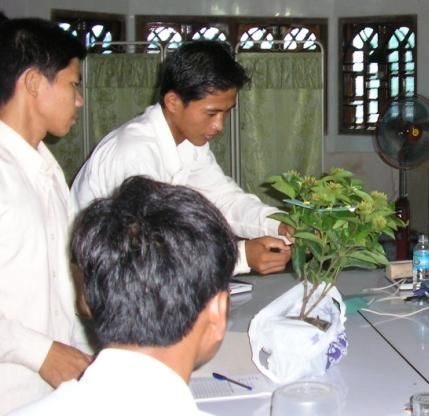
Motivation

  “Development does not start with
    goods; it starts with people and
   their education, organisation and
                discipline”
                                              E.H.Schumacher

E.H,Schumacher, Small is Beautiful, USA1973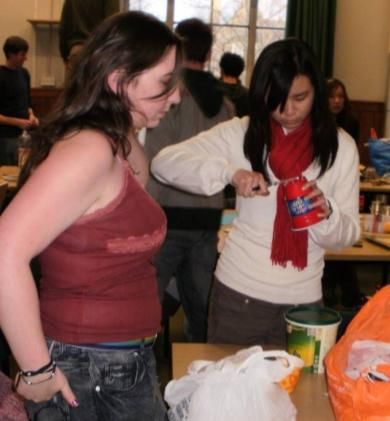
Aim and Objectives
AIM
Aim
To evaluate the potential of the CWP as a low cost, low energy water
treatment solution which uses local skills and materials for
sustainability in rural and peri-urban Sierra Leone.
Objectives
To investigate the ability of colloidal TiO2, a local resource in Sierra
Leone to remove organic contaminants under natural conditions.
To compare the ability of TiO2 and colloidal silver as filter pot coatings
in their ability to remove organic contaminants and pathogens.
To address the need of intermediate education and community
participation to ensure sustainability.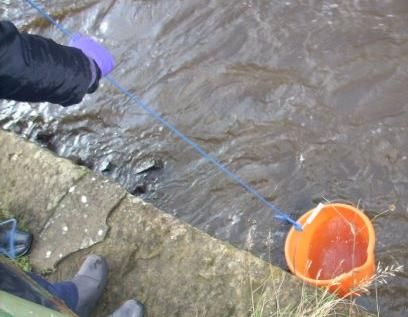
Method
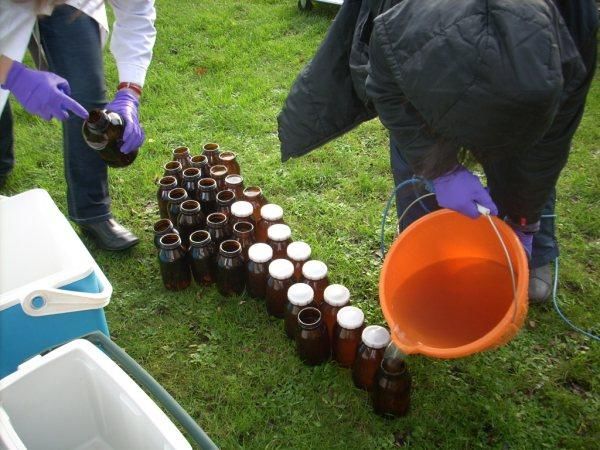
                                  •   Collecting
                                      water from
                                      the River
                                      Almond
Objective 1: Laboratory

                          Water
                                                   Samples
                          collected
                                                   places in
                          from the
                                                   brown
                          River
                                                   jars and
                          Almond.
                                                   stored at
                                                   4oC.
Method
The effect of TiO2/Ag on the
removal of organic
contaminants and pathogens
in water in the presence of
Objective 1: Laboratory
humic substances.
Environmental conditions:
Temperature, 26-310C
pH, 7
Natural light and darkness.
Humic substances:
Leonardite 40 mg l-1
Organic contaminant
Phenanthrene 0.8 mg l-1
Colloidal particles
TiO2, 10mg/l
Silver, 1.5mg/lMethod
The efficacy of TiO2 to remove PAH’s
Objective 1: Laboratory
River Water Ultra Pure Water Natural Light Darkness
L3 X X
L5 X X
D3 X X
D5 X XMethod
The efficacy of TiO2 to remove Humic substances
1.2
1
Objective 1: Laboratory
0.8
C/Co
0.6
D4
D8
0.4
L4
0.2 L8
0
0 24 48 72 96 120 144
Time (hours)
River Water Ultra Pure Water Natural Light Darkness
L4 X X
L8 X X
D4 X X
D8 X XMethod
The effect of TiO2/Ag on the
removal of organic
contaminants and pathogens
Objective 2: Ceramic Water
in water in presence of humic
substances, using CWP.
v
Leonardite
Purifier Design
Phenanthrene
E.Coli
TiO2
Ag
J=(1/A)*(dV/dt)Objective 3: Community Integration Method
Objective 3: Community
Integration              Method
Method

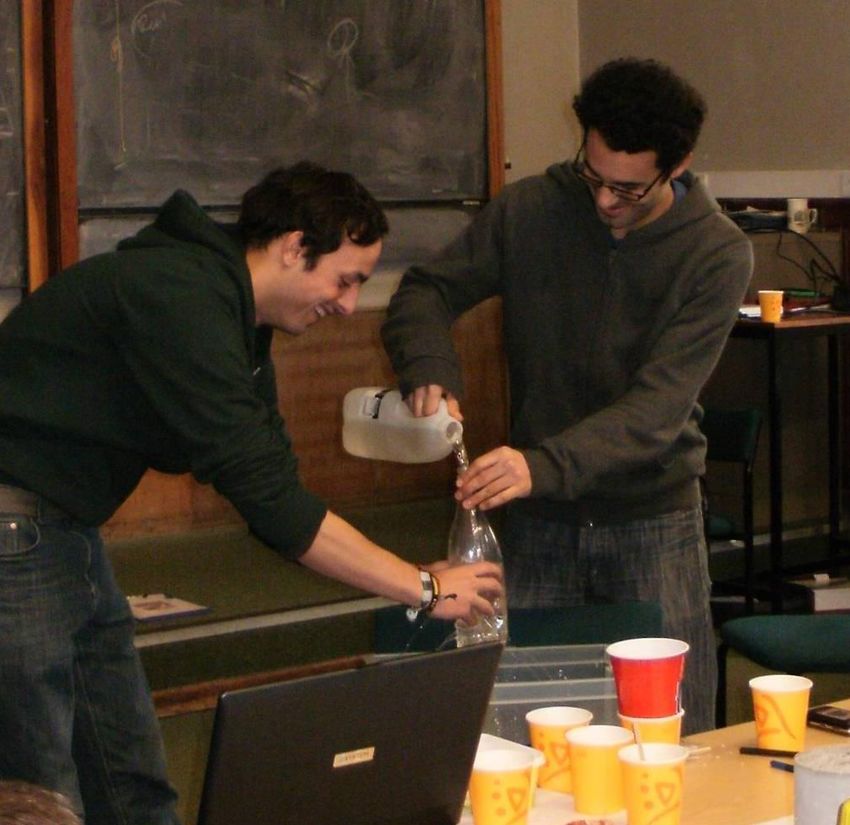
                                              Interactive Learning:
                                       Taking Science back to hands on
Objective 3: Community

                                             E     • Engage
                                             E
                                                    • Explore
Integration

                                             E      • Explain
                                             E      • Elaborate
                                             E      • Evaluate

                         Roger Meacham, Headmaster, Dalmeny Primary School, Edinburgh in conjunction with Primary Connections,
                         Australia
Results
Results: Intermediate Education
Objective 3: Community
IntegrationPreliminary Conclusions TiO2 is able to remove PAH’s though the current time of 72 hours is too long a residence time for the CWP. Preliminary trials making the filter showed that the mould needs to be of a very rigid, yet still locally available material. Heavy stones could be fashioned to provide the weight required for pressing and can be simulated using concrete weights in the lab. Preliminary work has proved that it is possible to communicate the science and engineering principles behind the CWP making intermediate education at a community level viable.
Further Work
Further Work
To test the performance of TiO2 as a ceramic
filter coating in its ability to remove organic
material and pathogens.
To investigate the effect of doping TiO2 in order
to reduce the residence time of the CWP.
To conduct field studies to investigate the
appropriateness of the technology and
technology integration potential in Sierra Leone.Thank you for your
attention
Miriam Hansen
School of Engineering
The University of Edinburgh
The Kings Buildings
Edinburgh EH9 3JL, Scotland
E-mail: M.L.Hansen@sms.ed.ac.uk
Institute for Materials and Processes & Institute for Infrastructure and EnvironmentYou can also read


