The International Federation of Clinical Chemistry and Laboratory Medicine - Prepared by the Committee on Public Relations Communications and ...
←
→
Page content transcription
If your browser does not render page correctly, please read the page content below

The International Federation of
    Clinical Chemistry and
     Laboratory Medicine

               Prepared by the
       Committee on Public Relations
 Communications and Publications Division (CPD)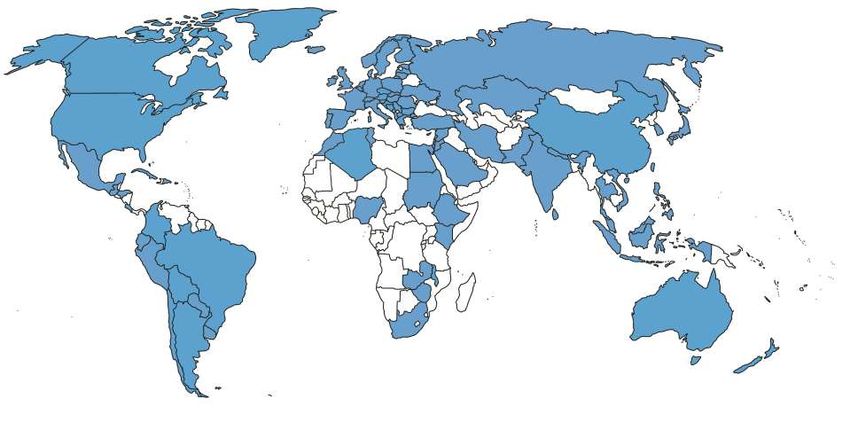
What is IFCC
    The IFCC is a worldwide, non-political organization for
    Clinical Chemistry and Laboratory Medicine.
    Among its aims:

    1.Establishing global standard setting in collaboration with other international
      organizations;
    2.Supporting its members through scientific and educational endeavour;
    3.Providing a series of congresses, conferences and focused meetings in order
      for laboratory medicine specialists to meet and present original findings and
      best practice.

February 2018
IFCC History
• Proposal of Prof. Earl J King, Royal Postgraduate Medical School London:
Emerging national societies of clinical chemistry to organise into an
international body.
• International Association of Clinical Biochemists, Founded July 24th 1952 –
Paris, under the auspices of International Union of Pure & Applied Chemistry
(IUPAC)
• Renamed International Federation of Clinical Chemistry (IFCC) in 1955 in
Brussels as a Section of IUPAC
• IFCC became an independent body in 1967 and Associate Member of IUPAC
• Name updated to International Federation of Clinical Chemistry and
Laboratory Medicine (IFCC) in 1997
February 2018IFCC Members
• 93 Full Members
• 13 Affiliate Members
• 6 Regional Organizations
o Arab Federation of Clinical Biology (AFCB)
o African Federation of Clinical Chemistry (AFCC)
o Asia-Pacific Federation for Clinical Biochemistry and Laboratory Medicine
(APFCB)
o European Federation of Clinical Chemistry and Laboratory Medicine (EFLM)
o Latin American Confederation of Clinical Biochemistry (COLABIOCLI)
o North American Federation for Clinical Chemistry and Laboratory Medicine
(NAFCC)
• 42 Corporate Members
February 2018Full Members of IFCC
(October 2017)
45,000 Laboratory specialists
93 Full members & 13 Affiliates
February 2018IFCC Mission
Advancing excellence in laboratory medicine for better
healthcare worldwide
• Enhance the scientific level and quality of diagnosis & therapy for all patients;
• Build on member professionalism to provide quality services to patients;
• Communicate with members, healthcare providers & public on leading,
innovative scientific & educational achievements;
• Focus on scientific standards, publications, education & communications;
• Organise congresses & conferences to bring the efforts of IFCC to the global
community.
February 2018Structure and Organization
IFCC Council
IFCC Executive Board
Awards Committee Nominations Committee
Special Projects Finance Committee
Task Forces Congresses and
Conferences Committee
IFCC Office - Milan
Scientific Division Education & Communications & Emerging Technologies
Management Division Publications Division Division
Committees & Working Groups Committees & Working Groups Committees & Working Groups Committees & Working Groups
February 2018IFCC Strategic Priorities
The Major objectives of the Strategic Plan are to:
• Support the scientific, educational and communication needs of IFCC Members
• Support quality improvement in laboratory medicine in developing countries
• Improve collaboration between IFCC and its Regional Federations
• Demonstrate leadership in method standardisation of clinically important biomarkers
• Introduce and develop the IFCC e-Academy as a platform for distance learning support
• Collaborate with international clinical organisations to increase understanding of the impact
of laboratory medicine on clinical outcomes
• Promote laboratory medicine and IFCC through international and regional congresses
• Encourage debate on ‘shaping the future of laboratory medicine’ at national and
international level
• Develop and maintain Public Relations.
February 2018October
February2017
2018Scientific Division (SD)
Mission: To advance the science of clinical chemistry and apply it
to the practice of clinical laboratory medicine
Chair: Prof. Philippe Gillery (FR)
Strategy:
• Assist transfer of research into practice
• Provide solutions to scientific and technological problems
• Develop diagnostic strategies
• Establish standards for good laboratory practice
• Respond to scientific needs of Members
• Ensure quality in IFCC scientific documents
• Participate in congresses and scientific meetings
• Organise Master discussions
February 2018SD Committees
• Nomenclature, Properties and Units (C-NPU) in collaboration with
IUPAC
• Molecular Diagnostics (C-MD)
• Traceability in Laboratory Medicine (C-TLM)
• Reference Intervals and Decision Limits (C-RIDL)
• Standardization of Thyroid Function Tests (C-STFT)
• Harmonization of Autoimmune Tests (C-HAT)
February 2018SD Working Groups
• Standardisation of:
• Hemoglobin A2 (WG-HbA2)
• Carbohydrate-Deficient Transferrin (WG-CDT)
• Albumin Assay in Urine (WG-SAU) in collaboration with NKDEP
• Pregnancy-Associated Plasma Protein A (WG-PAPPA)
• Growth Hormone (WG-GH)
• Insulin Assays (WG-SIA) in collaboration with ADA/EASD
• Troponin I (WG-TNI)
• Bone Marker Assays (WG-BMA)
• Parathyroid Hormone (WG-PTH)
• CSF-Proteins (WG-CSF)
• Commutability (WG-C)
• Immunosuppressive Drugs (WG-ID)
• Apolipoproteins by Mass Spectrometry (WG-APO MS)
• Pancreatic Enzymes (WG-PE)
• Fecal Immunochemical Testing (WG-FIT)
• Cell free DNA (WG-cfDNA)
• WG on Procalcitonin (WG-PCT)
February 2018Education &
Management Division (EMD)
Mission: To facilitate the development of managerial skills and support
educational activities in laboratory medicine.
Chair: Leslie Lai (MY)
Strategy:
• Provide educational materials for publication
• Promote analytical quality and laboratory management
• Promote evidence-based laboratory medicine
• Education and curricula development
• Provide support to developing countries
Projects:
• Clinical molecular biology courses
• Distance learning programmes
• Flow Cytometry Course
• Visiting Lecturer Programme (VLP)
February 2018EMD Committees • Clinical Molecular Biology Curriculum (C-CMBC) • Analytical Quality (C-AQ) • Evidence-Based Laboratory Medicine (C-EBLM) • Clinical Laboratory Management (C-CLM) • Internet and Distance Learning (C-IDL) • Education in the Use of Biomarkers in Diabetes (C-EUBD) • Clinical Applications of Cardiac Bio-Markers (C-CB) • Chronic Kidney Disease (Integrated Project) - (C-CKD) • Point of Care Testing (C-POCT) • Proficiency Testing (C-PT) • Value Proposition for Laboratory Medicine (C-VPLM) February 2018
EMD Working Groups
                  and Special Projects
      •     Laboratory Errors and Patient Safety (WG-LEPS)
      •     Flow Cytometry (WG-FC)
      •     Harmonisation of Interpretive Comments EQA (WG-ICQA)
      •     Developing Quality Competence in Medical Laboratories (DQCML)
      •     Personal Support (WG-PS)

February 2018
Communications &
Publications Division (CPD)
Mission: Communication of all activities of the IFCC
Chair: Prof. Khosrow Adeli (CA)
Strategy:
• Publishes the eJIFCC (web-based)
• Publishes IFCC recommendations, documents & monographs
• Coordinates SD & EMD peer reviewed publications
• Publishes SD & EMD project outcomes
• Manages the IFCC Website - www.ifcc.org
• Publishes the IFCC eNewsletter and the eNews Flash
• Enhances IFCC Public Relations
• Collaborates with the “Labs are Vital” Campaign
February 2018CPD Committees
and Working Groups
Committees
• Public Relations (C-PR)
• Internet and Distance Learning (C-IDL)
Working Groups
• Electronic IFCC Journal (WG eJIFCC)
• IFCC eNews (WG-IFCC News)
• Ibero-American Nomenclature and Translations (WG-IANT)
February 2018IFCC Congresses and
Conferences
WorldLab
2020 Seoul (KR) • 2023 Rome (IT)
EuroMedLab
2019 Barcelona (ES) • 2021 Munich (DE) • 2023 Rome (IT)
Regional Congresses
AFCB: 2018 Ramallah (PS)
COLABLIOCLI: 2019 Panama (PA)
APFCB: 2019 Jaipur (IN)
February 2018Task Forces &
Special Projects
• Task Force on Ethics (TF-E)
• Task Force for Young Scientists (TF-YS)
February 2018Key IFCC Programmes
• IFCC Reference Materials
• IFCC Distinguished Awards
• Distance Learning Programme
• Labs are Vital Programme
• Visiting Lecturer Programme (VLP)
• Professional Scientific Exchange Programme (PSEP)
• Professional Management Exchange Programme (PMEP)
• IFCC Speaker's Bureau
• IFCC Travel Scholarships
February 2018Visiting Lecturer
Programme (VLP)
• Supports international exchange of lecturers
• Creates global educational networks
• Brings together IFCC activities in different
regions
February 2018Professional Exchange
Programme (PEP)
• Promote international co-operation between
laboratories
• Facilitate the exchange of young laboratory scientists
between IFCC Member societies
• Share high level scientific or management skills
• Introduce new or improved scientific or management
skills to the applicant's laboratory
February 2018Speaker’s Bureau
• Listing of IFCC members accessible for presentations,
seminars or media comments
• Professional expertise
• Specific topics of interest
• Approved by IFCC EB as spokespersons
February 2018Summary
IFCC is a worldwide non-political professional
organization for the clinical chemistry and laboratory
medicine community
• Major organization linking clinical chemistry societies
and federations worldwide
• Major body involved in development of standards in laboratory
diagnostics
• Major venue for international exchange of scientific know-how in
the field
• Major facilitator of education and communications in the field
February 2018Thank you!
For further information visit
www.ifcc.org
February 2018You can also read


