The "Invisible" technology - A new method for anti counterfeiting in the cultural heritage field - Enea
←
→
Page content transcription
If your browser does not render page correctly, please read the page content below
The “Invisible” technology
 A new method for anti counterfeiting in the cultural heritage field

                                                                        Marco Peloi
                                                             marco.peloi@elettra.eu
                                              Elettra - Sincrotrone Trieste S.C.p.A
TECH-ITALY Bruxelles, October 4th 2012 - © Elettra Sincrotrone Trieste S.C.p.A.
The technology “Invisible”

    Elettra – Sincrotrone Trieste has
    developed an anti-
    counterfeiting technology based
    on optical properties of
    microscopic fluorescent
    particles, activated using a
    beam of particles or a focused
    synchrotron light beam.
    Using these particles it is
    possible to make anti-
    counterfeiting marks, visible
    only when lightened by a by a
    specific wavelength.                                  Patents:       PCT/EP2008/051320 d.d. 4/02/2008
                                                                         PCT/EP2010/070096 dd 17/12/2010

3                   TECH-ITALY Bruxelles, October 4th 2012 - © Elettra Sincrotrone Trieste S.C.p.A.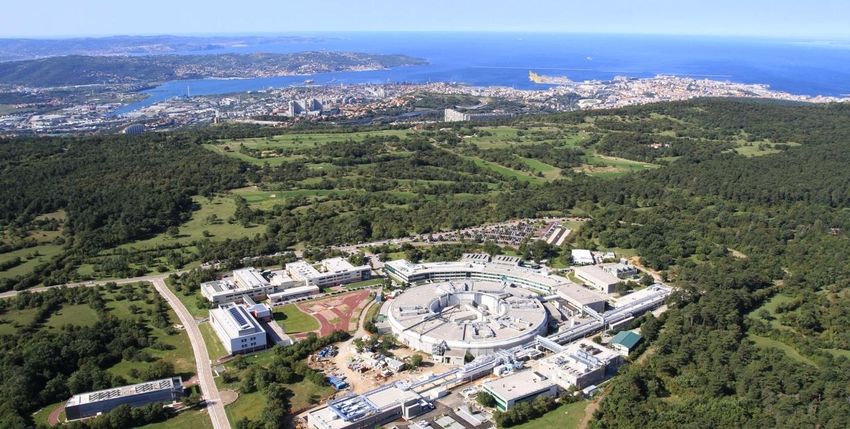
Elettra - Sincrotrone Trieste S.C.p.A
No profit shareholder company recognized of national interest.
Shareholders: Area Science Park, Friuli Venezia Giulia Region, CNR, Invitalia.
Established 26 years ago to build and manage the Elettra synchrotron light source
open to international scientific and commercial user.
The mission is to promote cultural, social and economic growth through basic and
applied research in relevant fields, technical and scientific training, and technology
transfer.
4 TECH-ITALY Bruxelles, October 4th 2012 - © Elettra Sincrotrone Trieste S.C.p.A.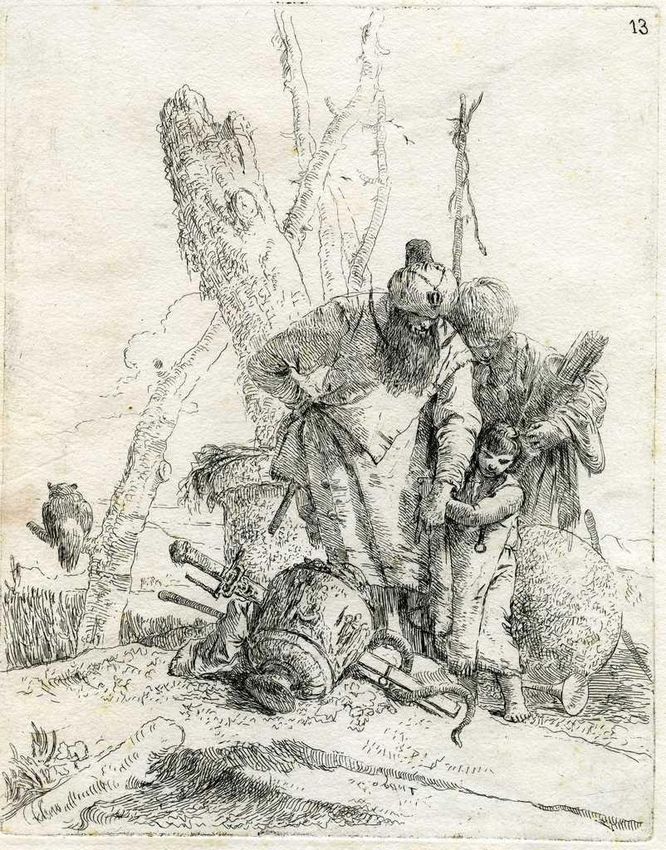
High performance “Microscope”
Light probe:
High brilliance
Wavelength tunability Booster
Coherent and collimated light Storage ring
Study:
Nanotech domain
Material Science Beamline
Crystallography
Life science
End Station
...
5 TECH-ITALY Bruxelles, October 4th 2012 - © Elettra Sincrotrone Trieste S.C.p.A.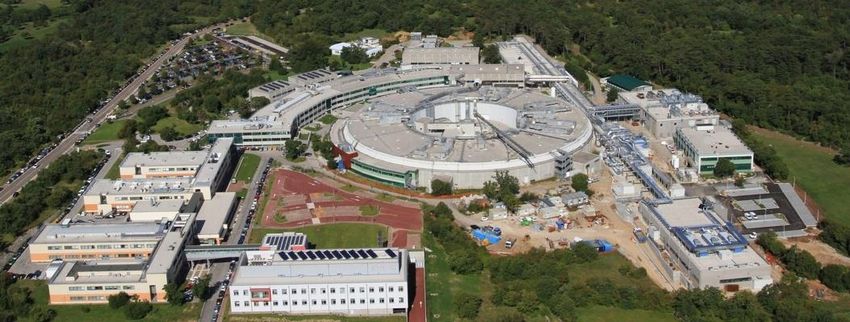
Color Centers

    • A color center (CC) is a
      defect in a crystalline
      structure in which a vacancy
      is filled by one or more
      electrons.

    • CC could be generated by
      ionizing radiation such as
      Synchrotron Radiation.

    • If CC are illuminated by an appropriate (Blue/UV) radiation, they fluoresce
      and emit light in the visible region of the electromagnetic spectrum.

    • CC produced using synchrotron radiation have a characteristic spectrum
      that cannot be produced using other activation methods.

6                     TECH-ITALY Bruxelles, October 4th 2012 - © Elettra Sincrotrone Trieste S.C.p.A.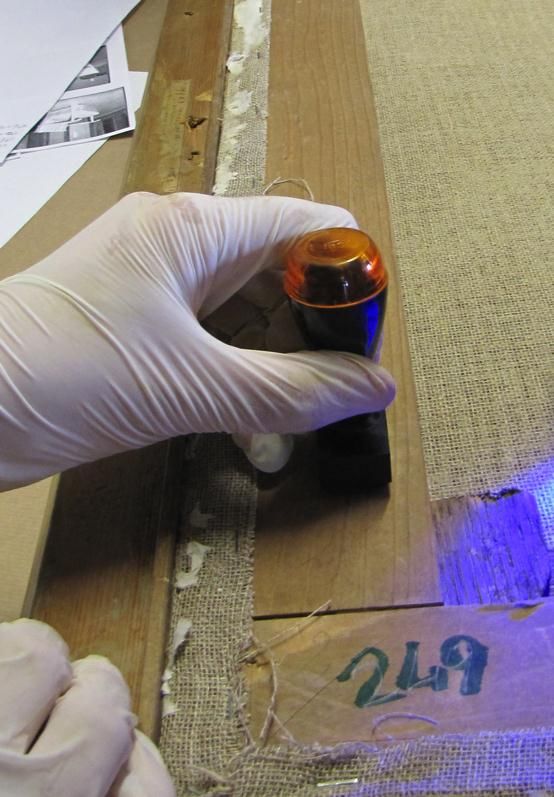
Fingerprint of the CC spectrum

    Comparison between
                                                       Electron source
    two emission spectra of             3500

    CC obtained using                   3000                                                   Synchrotron radiation
    synchrotron radiation (A,           2500
    blue curve) and an
    electron source (B, red             2000

    curve).                             1500

    The blue curve is typical           1000
    of Synchrotron light
    activated CC.                                   500          550           600          650       700

7                   TECH-ITALY Bruxelles, October 4th 2012 - © Elettra Sincrotrone Trieste S.C.p.A.
How to apply the technique
The CC can be produced (activation process) in a powder of small crystals
and applied to several support surfaces and in several ways.
Some of these methods are listed below:
Evaporation. Microscopic particles can be evaporated on a surface forming
a thin film with a thickness of few tens of nanometers on almost all
substrates and the mark can be generated by using a narrow beam of
electrons or synchrotron light.
Printing. Activated particles can be used as a component of ink or paint.
Inks or paints can be applied on many substrates through the standard
printing techniques such as flexography, inkjet, … or applied directly using
stamps, airbrush and paintbrushes.
Mixing. Activated particles can be mixed with other components like glue,
and used to fix tags on products. The simple presence in the glue of a
fluorescent component guarantees the authenticity of the tag.
8 TECH-ITALY Bruxelles, October 4th 2012 - © Elettra Sincrotrone Trieste S.C.p.A.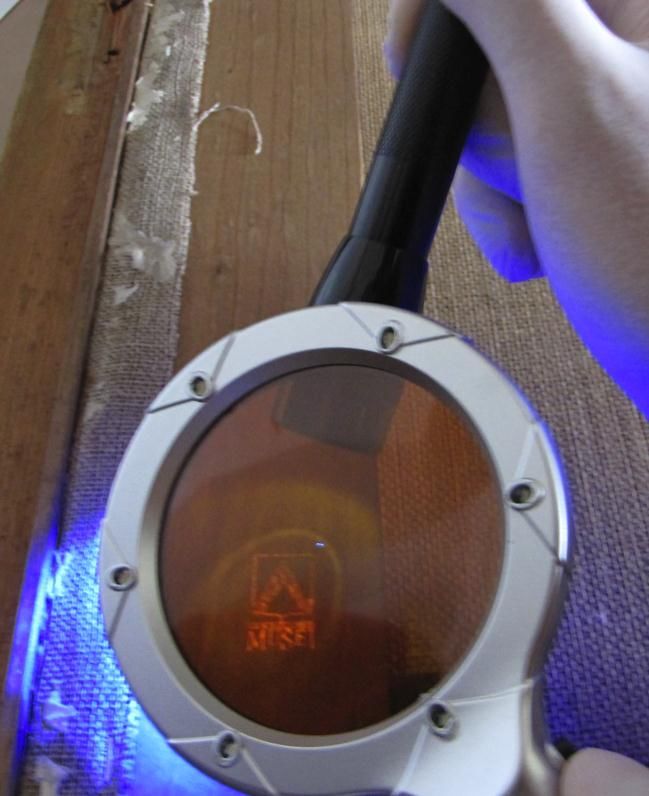
Applications
Industrial
ID field, Fashion, Bank Documents, …
Custom
Cultural Heritage, Small security projects
9 TECH-ITALY Bruxelles, October 4th 2012 - © Elettra Sincrotrone Trieste S.C.p.A.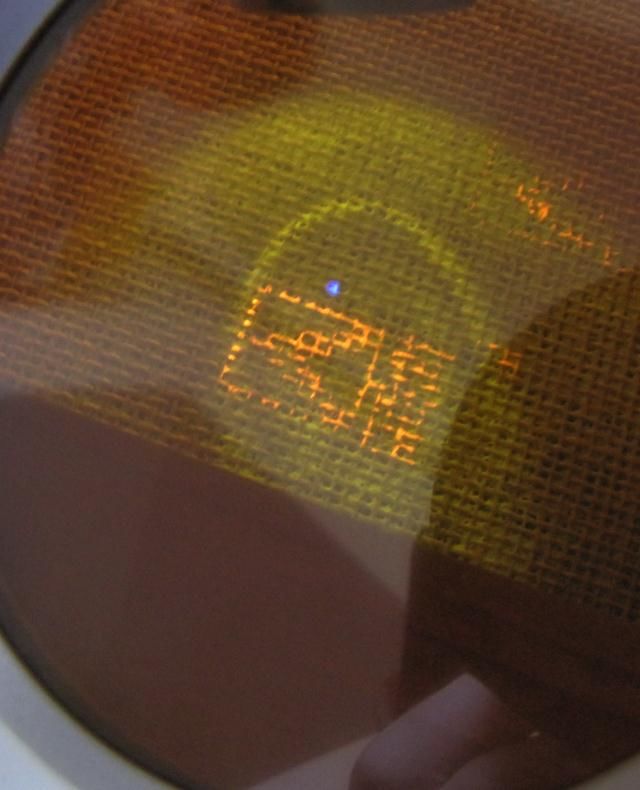
Cultural Heritage

     Standard techniques use visible marks or tags associated to the objects
     They are visible and easily reproducible

     Our technique is invisible, difficult to reproduce and removable if needed

10                TECH-ITALY Bruxelles, October 4th 2012 - © Elettra Sincrotrone Trieste S.C.p.A.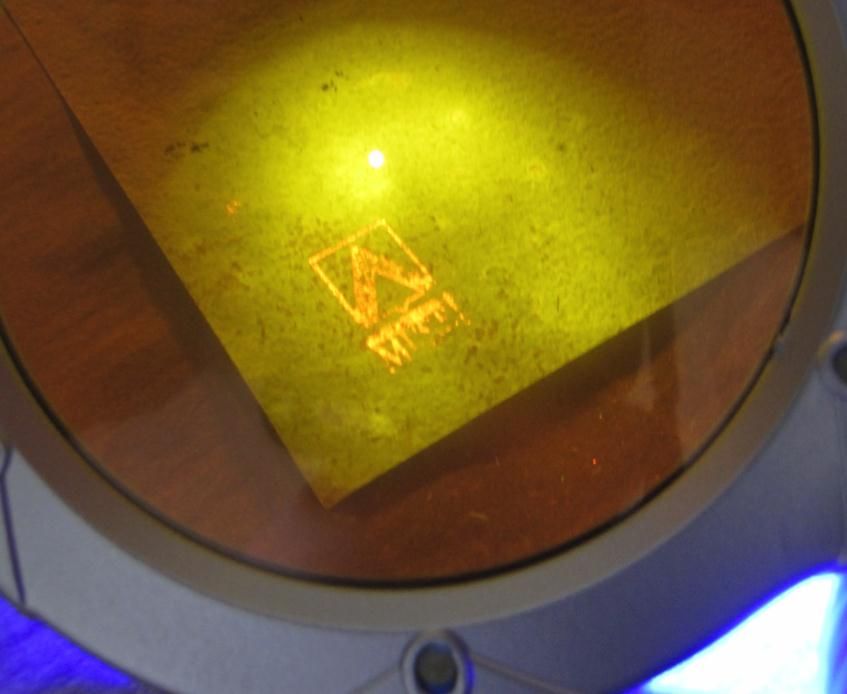
Application with airbrush

     The activated powder is mixed with
     other components to produce an ink,
     that can be applied with an airbrush
     through a mask.

     Marks are invisible if observed under
     normal lighting but visible when
     excited with specific wavelength
     produced by low cost lighting device.
11                     TECH-ITALY Bruxelles, October 4th 2012 - © Elettra Sincrotrone Trieste S.C.p.A.
Example #1: ancient coins
a) b) c)
Ancient coin marked with activated particles, observed under natural light (a)
and an ultraviolet source (b). Detail of the surface of the coin showing the
fluorescent writing (c). Each character is 0.5 millimeter large.
In cooperation with the “Soprintendenza per i Beni Archeologici del Friuli Venezia Giulia”
12 TECH-ITALY Bruxelles, October 4th 2012 - © Elettra Sincrotrone Trieste S.C.p.A.Example #2: Lithographic print
Giambattista Tiepolo
“Degli Scherzi” Acquaforte, sec. XVIII
In cooperation with the “Comune di Udine - Musei Civici”
13 TECH-ITALY Bruxelles, October 4th 2012 - © Elettra Sincrotrone Trieste S.C.p.A.Mark applied with a stamp
Ascanio di Brazzà –Drawing “testa di bue”, sex XIX
In cooperation with the “Comune di Udine - Musei Civici”
14 TECH-ITALY Bruxelles, October 4th 2012 - © Elettra Sincrotrone Trieste S.C.p.A.Example #3: painting (front)
Stamp of a label applied on a painted
surface of a oil–painting.
Observed under
natural light
Observed using
UV light
15 TECH-ITALY Bruxelles, October 4th 2012 - © Elettra Sincrotrone Trieste S.C.p.A.Example #4: painting (back)
a) b) c)
Stamp applied to the back of a painting, on the wooden frame (a-b) and on canvas (c)
In cooperation with the “Comune di Udine - Musei Civici”
16 TECH-ITALY Bruxelles, October 4th 2012 - © Elettra Sincrotrone Trieste S.C.p.A.Summary of Mark Features
Labels or marks are invisible if observed under normal lighting but visible
(and their authenticity can be verified) when excited with UV or blue light
produced by low cost lighting device (first level of security).
The activation process of the microscopic particles can be made in
different ways, each producing a specific fluorescence spectrum that can
be observed either with portable medium cost analytical tools or directly in
a dedicated laboratory to serve as central service (second level of
security).
Particles activated using Synchrotron radiation have a characteristic
spectrum that can be reproduced only in similar laboratories (< 20 in the
world). This feature helps to certify the origin of the particles used to
produce marks or labels (third level of security).
Synchrotron radiation activated powder could be produced at a relatively
low cost.
17 TECH-ITALY Bruxelles, October 4th 2012 - © Elettra Sincrotrone Trieste S.C.p.A.Other Applications
Many other tests have been carried out on different materials: ceramic pots,
canvas for paintings and plaster statues.
18 TECH-ITALY Bruxelles, October 4th 2012 - © Elettra Sincrotrone Trieste S.C.p.A.A new project
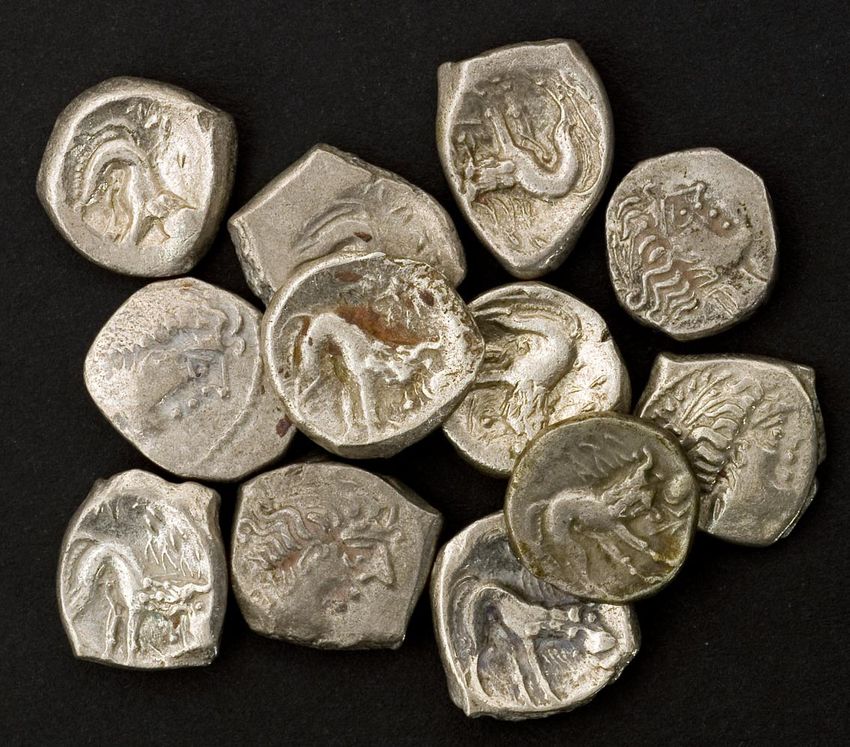
mark several thousand
small Roman silver coins
(drachmas) in
collaboration with the
municipality of Brescia
19 TECH-ITALY Bruxelles, October 4th 2012 - © Elettra Sincrotrone Trieste S.C.p.A.Acknowledgements
Researchers involved in the development of this technique:
Luca Gregoratti
Giusy Palma
Matteo Maria Dalmiglio
Annalisa Boscaino
Marco Peloi
Elettra – Sincrotrone Trieste
Marija Kosec
Danjela Kuscer Hrovatin
Jozef Stefan Institute - Ljubljana
Raffaela Rimaboschi
Art Conservation
Soprintendenza per i
beni archeologici
The activity has been done in cooperation with: del Friuli Venezia Giulia
AREA Science Park - Progetto Sister
Soprintendenza per i Beni Archeologici del Friuli Venezia Giulia
Comune di Udine - Musei Civici
Comune di Brescia - Settore Musei, Cultura e Turismo
20 TECH-ITALY Bruxelles, October 4th 2012 - © Elettra Sincrotrone Trieste S.C.p.A.Elettra – Sincrotrone Trieste
Industrial Liaison Office
Elettra - Sincrotrone Trieste SCpA
S.S. 14 - km. 163.5 in Area Science Park
34149 Basovizza - Trieste, Italy
Tel. +39 040 3758040
Fax +39 040 3758623 Elettra is part of “The Coordination
E-mail: ilo@elettra.eu Network of Friuli Venezia Giulia
web: ilo.elettra.eu Research Centres” (CER), a network
including 53 scientific institutionsYou can also read


