THE KYRGYZ REPUBLIC AND TAJIKISTAN 2018-2021 - Country Strategy for Development Cooperation
←
→
Page content transcription
If your browser does not render page correctly, please read the page content below
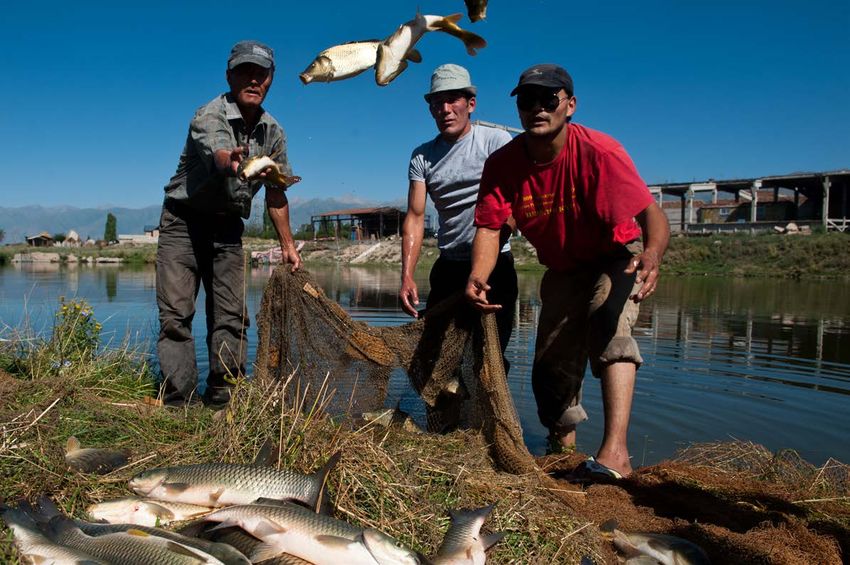
Country Strategy for Development Cooperation
THE KYRGYZ REPUBLIC AND
TAJIKISTAN 2018–2021
MINISTRY FOR FOREIGN AFFAIRS
Contents
Executive Summary............................................................................................................................ 3
1) Regional Context........................................................................................................................... 5
2) Country Context............................................................................................................................ 8
3) Finland’s Relations with the Region.......................................................................................... 13
4) Development Cooperation Context........................................................................................... 16
5) Expected Results of the Development Cooperation Programme........................................... 20
6) Monitoring and Evaluation......................................................................................................... 25
7) Risk Management........................................................................................................................ 27
8) Tentative Financing Plan (Budget)............................................................................................ 30
Annex I: Logic Model ....................................................................................................................... 32
Annex II: Risk Management Framework ........................................................................................ 41
Section 2: Risk Update and Decisions............................................................................................ 45

ISBN 978-952-281-581-1 (pdf)
Cover photo: FAO
Layout: Innocorp Oy, 2018
THE KYRGYZ REPUBLIC AND TAJIKISTAN

Executive Summary

The Kyrgyz Republic and Tajikistan are the poorest countries in Central Asia. Once part of the Soviet
Union, they still are on the challenging road of transition towards rule of law and market economy.
The Kyrgyz Republic has made more progress towards democracy than any other Central Asian
state. Democratic institutions have strengthened and political stability has improved in recent
years. In Tajikistan, authoritative rule has undermined democratic institutions and curtailed the
space for civil society.

EU-Central Asia relations are being developed under the EU Strategy for Central Asia, which dates
back to 2008. A new revised strategy is scheduled for adoption in 2019. In 2017 the Council
adopted conclusions on the EU Strategy, noting that Central Asian countries have become
significant partners of the EU and highlighting the need to strengthen dialogue and cooperation
on human rights, education, sustainability as well as to tackle emerging security challenges faced
by the Central Asian countries.

The EU’s Russia policy is after the illegal annexation of Crimea and the outbreak of the conflict in
Eastern Ukraine guided by five principles. One of these principles is to pursue closer relations with
former Soviet Republics in the EU’s Eastern Neighbourhood and Central Asia. The EU countries have
increased their political and economic support accordingly, including development cooperation
with these countries.

Finland’s development cooperation with the Kyrgyz Republic and Tajikistan complements the
EU Strategy for Central Asia. It is also in line with the EU’s Russia policy. Finnish development
cooperation supports the economic, social and environmental sustainability of the Kyrgyz and Tajik
societies. The programme builds on the experiences gained from the region since 2009. Projects
are implemented either by international organisations or by Finnish government authorities in the
form of inter-institutional cooperation.

             I COUNTRY STRATEGY FOR DEVELOPMENT COOPERATION THE KYRGYZ REPUBLIC AND TAJIKISTAN 2018–2021 I 3
THE KYRGYZ REPUBLIC AND TAJIKISTAN Finland’s development cooperation programme in the Kyrgyz Republic and Tajikistan was evaluated 2016. The evaluation noted that the programme overall is very relevant, that it has been implemented largely as foreseen, and that is producing expected outputs. The next evaluation will be conducted in 2019 and the results will be used to plan the next strategy period from 2022 onwards. 4 I COUNTRY STRATEGY FOR DEVELOPMENT COOPERATION THE KYRGYZ REPUBLIC AND TAJIKISTAN 2018–2021
THE KYRGYZ REPUBLIC AND TAJIKISTAN

1) Regional Context

Central Asia was part of Russia from the 1870s until the 1917 Russian Revolution, when it was
integrated into the Soviet state and system of planned economy. In the 1920s and 1930s, the
region was carved into five Soviet socialist republics. Following the collapse of the Soviet Union in
1991, these republics became the sovereign and independent nations of Kazakhstan, Kyrgyzstan,
Tajikistan, Turkmenistan and Uzbekistan.

The Soviet era left behind a legacy of vast ecological destruction, including most notably the
drying up of the Aral Sea. As traditional crops were replaced by water-intensive cotton growing,
irrigation requirements caused the sea to shrink. In addition, vast areas of Kazakhstan were used
for nuclear testing, and there are uranium tailings and other hazardous waste sites in the Kyrgyz
Republic and Tajikistan.

The region’s economic performance since independence has been mixed. Its natural resources are
among the richest in the world, but transportation presents major challenges. Distances to ocean
ports are longer than anywhere else in the world, and most transport links pass through Russia.
Since the 1980s, the gas and oil rich Kazakhstan and Turkmenistan have accumulated greater
wealth than the other three countries, as illustrated by the following table:

             I COUNTRY STRATEGY FOR DEVELOPMENT COOPERATION THE KYRGYZ REPUBLIC AND TAJIKISTAN 2018–2021 I 5
THE KYRGYZ REPUBLIC AND TAJIKISTAN Gross National Income (Atlas method) 2016 Country USD OECD classification 2018–2020 Kazakhstan 8,710 UMIC Turkmenistan 6,670 UMIC Uzbekistan 2,220 LMIC Tajikistan 1,110 LMIC Kyrgyzstan 1,100 LMIC Source: The World Bank. UMIC = upper middle income country, LMIC = lower middle income country. Following independence, former Communist Party officials retained their positions of power in all the new states. Political stability was largely maintained, with the notable exception of the Tajik Civil War that lasted from 1992 to 1997. The Tulip Revolution in 2005 saw the largely peaceful ousting of the Kyrgyz president, and in the same year there was an outbreak of violence in Andijon, Uzbekistan. In 2010, another Kyrgyz president was ousted in a violent process that caused much tension between Kyrgyzstan and Uzbekistan. The wider geopolitical context and especially the role of Russia, China and the United States are particularly relevant to the Central Asian situation today. For historical reasons Russia continues to wield significant influence in the region, while China is emerging as a new power. In 2014 the US began to scale down its presence in and to withdraw its troops from Afghanistan, and consequently its interest in Central Asia has diminished. The situation in Afghanistan is a major regional concern because of its potential spillover effects. There are also serious security threats across the region due to terrorism, radicalisation, extremism and the lack of clean water. In many Central Asian states the absence of democratic political structures presents succession issues and therefore a possible risk to stability. 6 I COUNTRY STRATEGY FOR DEVELOPMENT COOPERATION THE KYRGYZ REPUBLIC AND TAJIKISTAN 2018–2021
THE KYRGYZ REPUBLIC AND TAJIKISTAN

Islamic radicalisation and Taliban insurgent activity in border areas pose a threat to stability
especially in Tajikistan. Hundreds of people have joined the so-called Islamic State (Daesh). The
return of foreign fighters to Central Asia is a security threat in this region, too.

There is also a positive twist to current relations and cooperation between the five Central Asian
countries. Uzbekistan is in the process of opening up and the country’s new president has confirmed
his commitment to reform. However, it is clear that this will not be an easy journey.

EU-Central Asia relations are being developed under the EU Strategy for Central Asia, which was
signed in 2007 and reviewed in 2015. A draft proposal for a renewed strategy will be tabled by
the end of 2019 during the Finnish EU Presidency. In 2017, 10 years after the First Central Asia
Strategy was signed, the Council adopted conclusions on the EU Strategy for the region. The
Council emphasised that Central Asian countries have become significant partners of the EU
and welcomed the progress achieved under partnerships with the EU. The Council reaffirmed the
EU’s commitment to develop stronger relations and highlighted the need to strengthen dialogue
and cooperation on human rights, education, sustainability, as well as to tackle emerging
security challenges faced by the Central Asian countries.

            I COUNTRY STRATEGY FOR DEVELOPMENT COOPERATION THE KYRGYZ REPUBLIC AND TAJIKISTAN 2018–2021 I 7
THE KYRGYZ REPUBLIC AND TAJIKISTAN 2) Country Context THE KYRGYZ REPUBLIC Political, economic and social development Ever since independence, the Kyrgyz Republic has been characterised by political instability. Revolutions in 2005 and 2010 led to the overthrow of the incumbent presidents, who subsequently fled the country. A new constitution was adopted following the revolution in October 2010, establishing a predominantly parliamentary system of government. In December 2016 amendments were approved by a national referendum that shifted further powers from the presidency to parliament (Jogorku Kenesh) and the prime minister. Among other things, the amendments prevent the president from dissolving parliament and calling early elections. In 2015 the Kyrgyz Republic joined the Russian-led Eurasian Economic Union. Most significantly, this made it easier for Kyrgyz citizens to work in Russia – the main source of remittances and household income. On the negative side, membership of the EEU has complicated re-exports from China, a major source of employment in the Kyrgyz Republic. Relations between the Kyrgyz Republic and Uzbekistan have been strained because of tensions over natural resources, water sharing and border demarcations. However following the appointment of Uzbekistan’s new president in December 2016, relations between the two countries have seen a breakthrough. In October 2017 they signed a strategic partnership agreement and a draft treaty that defines 1,170 km of the 1,370 km borderline between the two countries. 8 I COUNTRY STRATEGY FOR DEVELOPMENT COOPERATION THE KYRGYZ REPUBLIC AND TAJIKISTAN 2018–2021
THE KYRGYZ REPUBLIC AND TAJIKISTAN

Relations with Tajikistan are cordial, but there are some local conflicts over land and water.
Increased Kyrgyz-Tajik cooperation is needed to ensure completion of mutually beneficial projects
such as CASA-1000, which will export electricity to South Asia and the Central Asian regional
electricity grid.

China is set to remain a major source of investment in infrastructure and concessionary loans to
the Kyrgyz state. China is working closely with the Kyrgyz Republic to combat terrorism.

The government’s long-running and highly visible dispute with the largest foreign investor in
the country (Canterra Gold) regarding the Kumtor gold mine has discouraged potential foreign
investors. However the problems were solved in 2017, and the investment climate is improving.
Kumtor’s output has a major and direct impact on GDP figures, which can be quite volatile. In 2015
the gold sector accounted for 42 per cent of Kyrgyz exports. Remittances from Russia are another
volatile GDP component. In 2015 they fell by more than 30 per cent in USD terms, but in 2016
bounced back by 10 per cent.

Real GDP growth in 2016 was 3.8 per cent (with gold exports at 16,700 kg), and the growth estimate
for 2017 is 4.9 per cent (anticipating 17,400 kg of gold exports). Projected growth for 2018 and
2019 is 4 per cent. Inflation was very low in 2016, coming in at only 0.4 per cent, on the back of
low commodity and food prices. In 2017 the inflation rate is expected to pick up to 3.3 per cent.
The forecast for 2018 and 2019 is 2.9 per cent.

Kyrgyzstan’s Human Development Index value for 2015 positioned it at 120 out of 188 countries.
From 1990 to 2015 Kyrgyzstan’s life expectancy at birth increased by 4.5 years, mean years of
schooling increased by 2.2 years, but GNI per capita (2011 PPP$) decreased by 9.1 per cent.

Kyrgyzstan is the only Central Asian country pursuing a system of democratic parliamentary
governance. This is clearly reflected in the 2016 Democracy Index, in which Kyrgyzstan ranked 98th
out of 167 countries. Kyrgyzstan’s ranking in the Press Freedom Index also sets it apart from its
neighbours: in 2017 Kyrgyzstan ranked 89th out of 180 countries.

            I COUNTRY STRATEGY FOR DEVELOPMENT COOPERATION THE KYRGYZ REPUBLIC AND TAJIKISTAN 2018–2021 I 9
THE KYRGYZ REPUBLIC AND TAJIKISTAN Kyrgyzstan’s most recent Universal Periodic Review was conducted in 2015. Kyrgyzstan is a member of the UN Human Rights Council for the period 2016–2018. The main problems identified in the UPR process were slow judicial progress in handling the interethnic violence of 2010, violence and discrimination against women and LGBTI persons, and the use of torture by law enforcement officers. Kyrgyzstan opposed all recommendations relating to the ratification of the Rome Statute of ICC, ICPPED and ICESCR. It was also opposed to the inclusion of sexual and gender identity in national legislation on discrimination. TAJIKISTAN Political, economic and social development Tajikistan’s Constitution was amended by popular referendum in May 2016. The amendments allow the president to rule indefinitely, make him and his family immune from prosecution, and lower the eligibility age for the presidency from 35 to 30. The president has appointed many of his family members to senior government posts. The lowered presidential age of eligibility means that the current president’s son will be able to run in the next election in 2020. These dynastic elements could have destabilising effects in the long term. Tajikistan’s authoritarian regime has long worked to curb political, media and religious freedoms, and exaggerated the risk of Islamic radicalisation in order to suppress opposition. Since March 2015, the Islamic Renaissance Party of Tajikistan (IRPT) – the only genuine opposition party in the country – has been banned on grounds of being a terrorist organisation, and in 2016 several IPRT party leaders were sentenced to lengthy prison terms. The exclusion of IPRT from the political system signals an end to the settlement established by the 1997 peace accord which ended the civil war. 10 I COUNTRY STRATEGY FOR DEVELOPMENT COOPERATION THE KYRGYZ REPUBLIC AND TAJIKISTAN 2018–2021
THE KYRGYZ REPUBLIC AND TAJIKISTAN

Insurgent activity in the Tajik-Afghan border area has increased since the drawdown of the
International Security Assistance Force (ISAF) from Afghanistan in late 2014. The government
is using this threat as a pretext to tighten its control in Tajikistan, including a crackdown on
opposition to the regime and steps to restrict civil society activity. Extreme poverty and shortages
of heating, power and water combined with a weak labour market and a dysfunctional banking
sector present further risks to political stability during the strategy period.

Tajikistan’s links with Russia will remain strong: political, economic and military ties are close.
Russia’s military base in Tajikistan is the largest non-naval Russian military facility abroad, and
there are more than one million Tajik migrant workers in Russia. Tajikistan’s economic dependence
on China is continuing to rapidly deepen through borrowing and infrastructure investment.

Tajikistan’s banking sector has been in crisis since the sharp decline in remittances from
migrant workers in Russia in 2015–2016 drove up the number of clients defaulting on loans. The
government has failed to secure external support from the EBRD or the IMF, and the National Bank
of Tajikistan has announced the liquidation of several lending agencies. In response to persistent
problems in raising infrastructure funding from multilateral sources, the government issued a
10-year USD 500 million bond with a yield of 7.125 per cent. The bond was oversubscribed.

The Russian economic rebound in 2017 has brought an increase in remittances and boosted
household demand. GDP growth in 2017 is estimated to reach 2.5 per cent and between
3 per cent and 5 per cent during the strategy period. Inflation in 2017 is expected to come in at
10 per cent, and the forecast for the strategy period is 9 per cent–10 per cent.

Tajik relations with Uzbekistan were previously hampered by Tajikistan’s long-running plans to
build the Rogun Dam, which would threaten Uzbek cotton crops. However, the new Uzbek president
has pushed to improve relations with Tajikistan, and the two countries have decided to restore
direct flights for the first time since 1992, to integrate their power grids and increase trade.
Furthermore, Uzbekistan has silently approved the construction of the Rogun Dam. In general,
joint economic activities will contribute to intensify regional cooperation throughout Central Asia
during the strategy period.

            I COUNTRY STRATEGY FOR DEVELOPMENT COOPERATION THE KYRGYZ REPUBLIC AND TAJIKISTAN 2018–2021 I 11
THE KYRGYZ REPUBLIC AND TAJIKISTAN Tajikistan’s Human Development Index (HDI) value for 2015 positioned the country at 129 out of 188 countries. From 1990 to 2015, Tajikistan’s life expectancy at birth increased by 6.7 years, mean years of schooling increased by 0.8 years but expected years of schooling decreased by 0.8 years, and GNI per capita (2011 PPP$) fell by 28.3 per cent. The situation with regard to political freedom and freedom of expression in Tajikistan has recently deteriorated further. The 2016 Democracy Index ranked Tajikistan 161st out of 167 countries. In 2017 Tajikistan ranked 149 out of 180 countries in the Press Freedom Index, compared to 122 out of 178 countries five years earlier in 2012. A Universal Periodic Review was undertaken in 2016. The main concerns raised in the review were the widespread use of torture, new legislation restricting the space for civil society, the increase in the number of politically motivated detentions, and incarcerations of human rights defenders and opposition figures in the name of national security. Furthermore, the UPR report mentioned freedom of press concerns, domestic violence, child marriage, homophobia and discrimination against LGBTI persons. The 2004 moratorium on the death penalty was commended, as was the adoption of a law on the prevention of domestic violence in 2013. 12 I COUNTRY STRATEGY FOR DEVELOPMENT COOPERATION THE KYRGYZ REPUBLIC AND TAJIKISTAN 2018–2021
THE KYRGYZ REPUBLIC AND TAJIKISTAN

3) Finland’s Relations with the Region

THE KYRGYZ REPUBLIC

Finland recognized the independence of Kyrgyzstan on 30 December 1991 and established
diplomatic relations with the country on 23 March 1992. Finland enjoys an excellent reputation in
the Kyrgyz Republic. During the Soviet era Kyrgyz citizens learned to trust the quality of Finnish
products. Political relations are good but thin due to very limited trade. Finland is represented
in the Kyrgyz Republic by the Ambassador to Astana, while the Kyrgyz Republic is represented in
Finland by the Ambassador to Moscow. Finland has an Honorary Consul in Bishkek and Kyrgyzstan
has an Honorary Consul in Helsinki. Development cooperation issues are addressed in connection
with political consultations between the foreign ministries and at ministerial meetings. Ministerial
visits from Kyrgyzstan to Finland are quite common. In 2017 Finland received visits from both the
Foreign Minister and the Minister of Education. Parliamentary cooperation has started actively.

Finland’s development cooperation with Kyrgyzstan started almost immediately after diplomatic
relations were established. This included the launch of a major anti-tuberculosis project and the
provision of expertise to help establish the Central Bank of Kyrgyzstan. Cooperation then withered
for various reasons, but was revitalized with the Wider Europe Initiative (WEI) in 2009. Finland’s
2012 Development Policy Programme identified Kyrgyzstan and Tajikistan as key targets of WEI
focus. This was reaffirmed in Finland’s 2016 Development Policy, which stated that “Finland will
support Kyrgyzstan and Tajikistan, the poorest countries of Central Asia. Finland’s support will
be used to strengthen human rights, the rule of law, the business environment, water resource
management, and climate change preparedness”.

In 2017, Finnish exports to Kyrgyzstan amounted to 1.6 million euros. Imports from Kyrgyzstan
came to 5,120 euros.

           I COUNTRY STRATEGY FOR DEVELOPMENT COOPERATION THE KYRGYZ REPUBLIC AND TAJIKISTAN 2018–2021 I 13
THE KYRGYZ REPUBLIC AND TAJIKISTAN Only a few Finnish non-governmental organisations are active in Kyrgyzstan. The most prominent NGO is the disability rights organisation Abilis, which has provided long-term support for Kyrgyz organisations working in this field. The University of Eastern Finland is also very active in Kyrgyzstan. UEF has institutional cooperation with the National Agricultural University of Kyrgyzstan. Kyrgyzstan has clearly indicated that it wishes to emulate the Finnish model in its own social development. It also acknowledges that in order to maintain a democratic path of development, it will need foreign aid and cooperation. The government has managed to restore stability in the country after violent unrest in 2010. According to the World Bank, Kyrgyzstan’s main challenges in the near future are to: a) strengthen public administration and public services, b) improve the business environment and investment climate and c) manage scarce natural resources such as forests, pastureland, and water and maintain the physical infrastructure. All this is closely in line with the Finnish-Kyrgyz development programme. TAJIKISTAN Finland recognized the independence of Tajikistan on 31 December 1991 and established diplomatic relations on 26 February 1992. Finland has a good reputation in Tajikistan, where it is represented by a Roving Ambassador based in Helsinki. Tajikistan has not accredited an Ambassador to Helsinki. The President of Tajikistan visited Finland in 2012. Political relations are good but thin, with an emphasis on development cooperation. Trade between Finland and Tajikistan is almost non-existent. Finland’s development cooperation with Tajikistan started with the WEI initiative in 2009. It was consolidated by Finland’s 2012 Development Policy Programme and further reaffirmed by Finland’s 2016 Development Policy, which stated that “Finland will support Kyrgyzstan and Tajikistan, the poorest countries in Central Asia...” 14 I COUNTRY STRATEGY FOR DEVELOPMENT COOPERATION THE KYRGYZ REPUBLIC AND TAJIKISTAN 2018–2021
THE KYRGYZ REPUBLIC AND TAJIKISTAN

Finnish exports to Tajikistan in 2017 totalled 1.1 million euros. Imports from Tajikistan amounted
to 78,500 euros.

The Finnish disability rights organisation Abilis is active in Tajikistan, too. The Finnish missionary
organisation FIDA is also active in Tajikistan.

Tajikistan needs foreign support to mitigate the adverse impacts of shortages and poverty and to
reorganise the country’s dysfunctional banking system, which will help to defuse the potential for
social unrest and Islamic radicalisation. The government must be convinced to respect democratic
institutions and political, religious and press freedoms. Finland, together with the rest of the
international community, has an important role to play here.

            I COUNTRY STRATEGY FOR DEVELOPMENT COOPERATION THE KYRGYZ REPUBLIC AND TAJIKISTAN 2018–2021 I 15
THE KYRGYZ REPUBLIC AND TAJIKISTAN 4) Development Cooperation Context THE KYRGYZ REPUBLIC Kyrgyzstan has been classified as a lower middle income country (LMIC) since 2014, but it lies at the very bottom of the table with a GNI of USD 1,100 per capita in 2016. Total NetODA in 2015 was USD 769 million (USD 129.1 per capita) from DAC countries and multilateral organisations. The largest donors are the Asian Development Bank (AsDB), the USA, Japan, the EC, the International Development Association (IDA) and Germany. Other major donors are Russia, China and Turkey. Development efforts in the Kyrgyz Republic have been guided by the National Sustainable Development Strategy 2013–2017, which in 2018 will be updated and replaced by the National Sustainable Development Strategy 2040. In the short term, development will be guided by the 40 Steps to the Future programme and the Taza Koom (Smart Nation) programme, which was published in 2017. 40 Steps is a general plan that outlines the main development priorities, while the ambitious Taza Koom is aimed at improving people’s livelihood through the use of information technologies, specifically by promoting digital opportunities for all, encouraging digital citizenship, and transforming the Kyrgyz Republic into a regional hub for the digital Silk Road. The SDGs of Agenda 2030 are well covered in NSDP 2040. Kyrgyzstan also has a national programme to ensure compliance with the Paris Declaration. The government is unable to provide for the effective coordination of foreign aid, which is carried out through the Development Partners Coordination Council. Finland is a member of the council, which meets monthly. 16 I COUNTRY STRATEGY FOR DEVELOPMENT COOPERATION THE KYRGYZ REPUBLIC AND TAJIKISTAN 2018–2021
THE KYRGYZ REPUBLIC AND TAJIKISTAN

TAJIKISTAN

Tajikistan is classified as a lower middle income country (LMIC) for the period of 2018–2020.
Total NetODA in 2015 was USD 426 million (USD 50.2 per capita) from DAC countries and
multilateral organisations. The largest donors are AsDB, Switzerland, Germany, the USA and the EC.

Long-term development in Tajikistan is guided by the National Development Strategy 2016–
2030, and in the shorter term by the Mid-Term Development Programme 2016–2020. The SDGs
of Agenda 2030 are well covered by these two plans. Development cooperation is coordinated
through the Development Coordination Council. The government has very limited capacities for
coordination. The State Committee on Investment and Property does compile statistics, but it has
no input or influence on donor activities.

FINLAND’S DEVELOPMENT COOPERATION WITH
THE KYRGYZ REPUBLIC AND TAJIKISTAN

Finland’s development cooperation with the Kyrgyz Republic and Tajikistan complements the
EU Strategy for Central Asia. The EU’s key financing tool in Central Asia is the Development
Co-operation Instrument (DCI). Finnish development cooperation is aimed at supporting
economic, social and environmental sustainability in the Kyrgyz and Tajik societies, as based
on experiences gained from the region since 2009. Development cooperation projects and
programmes can be either regional, covering both countries, or country specific, and they are
implemented by UN organisations or Finnish government authorities in the form of inter-
institutional cooperation. One notable exception is the Programme for Finland’s Water Sector
Support to Kyrgyzstan and Tajikistan, which is administered by the Finnish Environment Institute,
but the actual projects are implemented by UN organisations or INGOs. The aid programme is
almost identical in both countries, with the exception of the FAO implemented project Towards

           I COUNTRY STRATEGY FOR DEVELOPMENT COOPERATION THE KYRGYZ REPUBLIC AND TAJIKISTAN 2018–2021 I 17
THE KYRGYZ REPUBLIC AND TAJIKISTAN Sustainable Aquaculture and Fisheries Development in the Kyrgyz Republic, which has no counterpart in Tajikistan. In both countries Local Cooperation Funds are used to support the local civil society initiatives. Finland’s development cooperation programme in the Kyrgyz Republic and Tajikistan was evaluated in 2016. It was deemed to be highly relevant to government priorities in the target countries and to beneficiaries’ needs, as well as to Finland’s overall development policy objectives. Projects were thought to have a high probability of achieving most of the planned outcomes, despite some problems with slow procurement processes and high staff turnover. Cross-cutting objectives are well covered when relevant. The main sustainability concerns had to do with high staff turnover and inadequate funding for government institutions. In general, the projects contributed to aid effectiveness through strong national ownership and active collaboration both with other Finnish-funded projects and with other donors’ projects and programmes. The management structure is straightforward and appears to work well. However, ongoing MFA staff cutbacks were a cause for some concern with regard to future management and administration. In conclusion, the evaluation noted that Finland’s development cooperation programme in the Kyrgyz Republic and Tajikistan is overall very relevant, that is has been implemented largely as foreseen and without major delays, and that it is producing expected outputs. The EU’s Russia policy is based on five guiding principles as a countermeasure against Russia’s illegal annexation of Crimea and the ongoing war in eastern Ukraine. One of these principles is to pursue closer relations with former Soviet republics in the EU’s Eastern Neighbourhood and Central Asia. To this end, EU countries have stepped up their political and economic support as well as their development cooperation with these countries. Another guiding principle is to deepen selective engagement with Russia on foreign policy issues. In line with this principle, Finland has increased its engagement with Russia on issues that serve Finnish and EU interests. By way of counterbalance it is important that Finland also steps up its support to Russia’s former Soviet neighbours. 18 I COUNTRY STRATEGY FOR DEVELOPMENT COOPERATION THE KYRGYZ REPUBLIC AND TAJIKISTAN 2018–2021
THE KYRGYZ REPUBLIC AND TAJIKISTAN

Cuts in Finland’s development funding have taken a heavy toll on aid programmes in Central Asia.
During the strategy period the existing programme shrinks substantially 2019 and all present
projects will be completed by the end of the strategy period. The strategy will be evaluated as part
of the Ministry wide country strategy evaluation process. Planning for the next strategy period will
commence in 2020 in line with the National Sustainable Development Strategy 2040 in the Kyrgyz
Republic and the National Development Strategy 2016–2030 in Tajikistan. This work will also take
into account the recommendations of the project evaluations, possible strategy evaluation, the
priorities of the new Finnish government, the guidance of the EU Strategy for Central Asia, and
the guiding principles of the EU’s Russia policy.

           I COUNTRY STRATEGY FOR DEVELOPMENT COOPERATION THE KYRGYZ REPUBLIC AND TAJIKISTAN 2018–2021 I 19
THE KYRGYZ REPUBLIC AND TAJIKISTAN 5) Expected Results of the Development Cooperation Programme The impact areas for the development cooperation programme are derived from the National Sustainable Development Strategy for the Kyrgyz Republic 2013–2017 and the National Development Strategy of the Republic of Tajikistan for the period to 2015, since all programme activities in both countries have been initiated during the effective dates of these plans. The impact areas are identical for both countries, as the problems and efforts to rectify them are very similar. The first impact area for Finland’s cooperation in the Kyrgyz Republic and Tajikistan is the establishment of more equal societies and strengthened realization of human rights and rule of law. Both countries are still in transition from a Soviet past towards a democratic and stable political system and a free market economy. The road to transition has been fraught with difficulty for both countries. In Tajikistan, the process to independence started with a civil war, and in the Kyrgyz Republic two presidents have been ousted by civil unrest. Both governments have inherited a Soviet style of authoritative administration. This, coupled with low wages in the public sector, has left government institutions lacking the ability even to meet their mandatory responsibilities. Any changes in the impact area will be reflected in indicators measuring states’ political and civil rights performance. Such information is provided by Freedom House (Freedom in the World) and CEDAW (Gender Inequality Index). The first expected outcome under this impact area is that effective institutions are able to respond to the needs and rights of citizens, especially women and vulnerable groups. This outcome is measured by the findings of the Universal Periodic Review. The three outputs of this outcome – increased access to justice and legal aid services, in particular for women and 20 I COUNTRY STRATEGY FOR DEVELOPMENT COOPERATION THE KYRGYZ REPUBLIC AND TAJIKISTAN 2018–2021
THE KYRGYZ REPUBLIC AND TAJIKISTAN

persons with disabilities, strengthened institutions to uphold rule of law, and promote
and protect human rights, and ratification and implementation of human rights related UN
conventions – are measured by activity-level inputs and monitored through project reporting.

The second expected outcome area is strengthened civil society engagement in national
dialogues. Progress will be measured by Human Freedom Index findings as published by the
Cato Institute. The expected outputs are women’s and vulnerable groups’ improved awareness
of their human rights, and policy dialogues become a key platform for advocating policy
change and civil society organisations have the capacity to contribute. These outputs are
measured by activity-level inputs and monitored through project reporting.

The inputs for this impact area are Widening Access to Justice in the Kyrgyz Republic, Phase II,
and Strengthening Rule of Law and Human Rights to Empower People in Tajikistan, Phase II (both
implemented by the United Nations Development Programme UNDP).

The second impact area for Finland’s cooperation in the Kyrgyz Republic and Tajikistan is
sustainable and inclusive economic growth. At the time of the Soviet collapse, both the Kyrgyz
and Tajik economies were based on a Soviet Union wide division of labour and collectivisation.
With independence, many industries lost their markets and rural people, who were used to
collective ways of production, failed to develop productive private farming. The first two decades
of independence are often described as a “time of lost opportunities”. The region’s industrial
base is very weak. In the longer run the only way to achieve sustainable and inclusive economic
growth is through development of the SME sector. Small and medium-sized enterprises employ
about half of the population, but they are very small in size and lack development potential. One
obstacle to private sector development is the red tape surrounding the setting up and running of
a business, including unnecessary and ineffective official inspections. Development cooperation
must be aimed at supporting SME development through technical and financial assistance to
SMEs that will bolster their competitiveness. The impact area will be measured using the World
Bank GDP per capita index and EBRD Transition indicators.

           I COUNTRY STRATEGY FOR DEVELOPMENT COOPERATION THE KYRGYZ REPUBLIC AND TAJIKISTAN 2018–2021 I 21
THE KYRGYZ REPUBLIC AND TAJIKISTAN The first expected outcome under this impact area is a diversified and expanding private sector that provides decent working conditions. The outcome will be measured by country specific analyses such as the Economist Intelligence Unit Country Report, and WB Doing Business Report. The expected outputs are the promotion of green economy and an improved private sector operating environment. These are measured by indicators of activities related to environmentally sustainable business development as well as improved regulatory framework. The indicators are monitored through project reporting. The second expected outcome is better access to economic opportunities, which will be measured by country specific analyses like EIU country reports and WB Doing Business Report. The first expected output, increased income generation, is measured by the indicators related to the increase of volume and value of SMEs supported by the projects. The second expected output – strengthened small and medium-sized enterprises – is measured by the number of jobs created, and the percentage of female-managed businesses, and successful implementation of the business plans. The third output – decent working conditions – is measured by the activities related to better working conditions. All outputs are monitored through project reporting. The inputs in this impact area are the Aid for Trade Project in Central Asia, Phase IV (implemented by UNDP), Towards Sustainable Aquaculture and Fisheries Development in the Kyrgyz Republic, Phase III (implemented by the UN Food and Agriculture Organization FAO) and From Crisis towards Decent and Safe Jobs, Phase II (implemented by the International Labour Organization ILO). The third impact area for Finland’s cooperation in the Kyrgyz Republic and Tajikistan is an environmentally sustainable society. Both countries are extremely mountainous and prone to natural calamities and the effects of the climate change. They have also inherited huge amounts of hazardous waste from the Soviet era. As government authorities furthermore lack the capacities to fulfil their mandatory tasks and to set up early warning systems, there is a high degree of vulnerability to all kinds of environmental hazards. Development cooperation can make a significant contribution in all these areas. The impact area will be measured using the SEDAC Environmental Sustainability Index. 22 I COUNTRY STRATEGY FOR DEVELOPMENT COOPERATION THE KYRGYZ REPUBLIC AND TAJIKISTAN 2018–2021
THE KYRGYZ REPUBLIC AND TAJIKISTAN

The first expected outcome under this impact area is that water resources are equally shared
and used in a sustainable way. This outcome is measured by the country specific UNECE
Environmental Performance Reports. The expected outputs are that the authorities are able to
effectively manage water resources and control water quality, and that the civil society
participates in the planning of the use of water resources. The first output is measured by
the number of new institutional arrangements for water resources and progress in implementation
of approach, and number of inclusive platforms created to support water sector reforms and
stakeholder participation in water governance. Both outputs are monitored through project
reporting.

The second outcome is an enhanced understanding of mineral resources, an improved mineral
rights allocation process and improved geohazard management. The outcome is measured
by the increase of the mineral resources investment and the number of successful actions taken
to manage geo-hazards. The outcome is monitored through project reporting. The outcome has
two outputs: the authorities have the ability to produce geoinformation in digital form and
to forecast geohazards and improved access to geoinformation for decision-makers and
stakeholders. The former is measured by the number of capacitated professionals disaggregated
by gender, and the number of staff capable to independently produce digital products from
field observations; and the latter by the increased use of geo-information as part of promotion
of stakeholder services and stakeholders clientele for utilizing geo-information. The outputs are
monitored through project reporting.

The third outcome is that the availability of high quality information and accurate early
warnings increase productivity and reduce health risks and the risks of loss of life and
property caused by severe weather, climate and environmental events. The sources of
information are the annual reports of the Kyrgyzhydromet (K) and the Committee of Environmental
Protection (T). The two outputs are the improved capacity of the authorities to produce
weather, climate and environmental information and early warning services and improved
planning by government authorities and other groups that have special needs for early
warnings and weather and environmental information. The former is measured by the number

           I COUNTRY STRATEGY FOR DEVELOPMENT COOPERATION THE KYRGYZ REPUBLIC AND TAJIKISTAN 2018–2021 I 23
THE KYRGYZ REPUBLIC AND TAJIKISTAN of new services and products with improved quality, and the latter by the use of the CAP-warning message format, and increased collaboration with national authorities and NGOs towards early warnings. In both cases monitoring takes place through project reporting. The fourth outcome is an increased preparedness to adapt to and mitigate the effects of climate change. The outcome is measured by the number of climate change related laws, policies and guidelines. The sources of information are the National Communications for the UNFCCC. The two outputs of the outcome are the authorities have the ability to produce and disseminate climate change related information and early warnings and increased awareness of the hazards caused by climate change. The former is measured by the growth in investments and budget funding on climate services and early warning systems and the adoption of measures with replication potential identified and selected priority measures implemented; and the latter by the number of new climate change and/or early warning products developed and published on relevant institutions web pages, and increased knowledge of geo-hazard applications in environmental impact and climate change studies. The monitoring takes place through project reporting. The inputs in this impact area are the Programme for Finland’s Water Sector Support to Kyrgyzstan and Tajikistan, Phase II (administered by the Finnish Environment Institute SYKE), Strengthening the Mastering of Natural Resources in the Kyrgyz Republic, and Strengthening the Mastering of Natural Resources in the Republic of Tajikistan (both implemented by the Geological Survey of Finland GTK), Capacity Building in the Field of Meteorology in the Kyrgyz Republic, Phase II, and Capacity Building in the Field of Meteorology in Tajikistan, Phase II (both implemented by the Finnish Meteorological Institute FMI). 24 I COUNTRY STRATEGY FOR DEVELOPMENT COOPERATION THE KYRGYZ REPUBLIC AND TAJIKISTAN 2018–2021
THE KYRGYZ REPUBLIC AND TAJIKISTAN

6) Monitoring and Evaluation

Monitoring of this strategy is based on ongoing evaluations of development projects and
programmes and related policy dialogue by the MFA ITÄ-20 development cooperation team in
Helsinki, the Embassy of Finland in Astana (the Kyrgyz Republic) and the Roving Ambassador to
Tajikistan.

Since multi-bi implementation is a key modality of the strategy, primary responsibility for
monitoring and project management in general rests with each multilateral agency according to its
own rules and regulations. The MFA receives monitoring data on project implementation through
multilateral agencies’ reports, but also works actively to ensure that the projects are achieving their
results according to the plans agreed in the project documents. Therefore, the MFA participates on
a regular basis in the meetings of project governing bodies and field monitoring missions.

Another important modality of the strategy is inter-institutional cooperation. In this context the
Finnish partner reports to the MFA on project implementation and progress. Again, the responsible
MFA team in Helsinki, the Embassy in Astana or the Roving Ambassador follow the progress
achieved by field monitoring missions and participate in the meetings of project governing bodies
when possible. The MFA chairs the steering committee of the water sector support programme
administered by the Finnish Environment Institute.

The evaluation of the programme covered by this strategy for development cooperation will be
integrated in the Ministry wide country strategy evaluation process. Separate evaluations will be
conducted by the multilateral agencies involved in project implementation according to their own
rules and regulations. The water sector support programme is uniquely structured in that it is
administered by SYKE, but the projects are implemented by UN organisations and INGOs.

            I COUNTRY STRATEGY FOR DEVELOPMENT COOPERATION THE KYRGYZ REPUBLIC AND TAJIKISTAN 2018–2021 I 25
THE KYRGYZ REPUBLIC AND TAJIKISTAN The following MFA guidelines are used to benchmark the implementing partners’ practices: Guidelines on Results-based Management, Human Rights Based Approach Guidelines, Manual for Bilateral Programmes, MFA internal guidelines for multi-bi projects, Handbook on Corruption Prevention and Evaluation guidelines. The MFA ITÄ-20 development cooperation team will monitor the validity of the assumptions made in this strategy and its logic model (Annex I) as well as the risks identified, and take corrective measures as needed. The use of budgeted funds is monitored on an ongoing basis using reports from the MFA financial accounting systems. The team will prepare an annual report following the MFA reporting format and instructions for each calendar year. The annual report provides an overview of strategy monitoring and reporting. The need for any corrective measures will be determined by the Department for Russia, Eastern Europe and Central Asia. 26 I COUNTRY STRATEGY FOR DEVELOPMENT COOPERATION THE KYRGYZ REPUBLIC AND TAJIKISTAN 2018–2021
THE KYRGYZ REPUBLIC AND TAJIKISTAN

7) Risk Management

Since Finland has no permanent representation in either of the programme countries, all activities
will be implemented by UN agencies in the form of multi-bi cooperation or by Finnish authorities
in the form of inter-institutional cooperation. These modalities will provide a strong basis for
implementation and minimise the risk of the misuse of funds.

Contextual risks

Political and security instability is a considerable risk in both countries. However, the Kyrgyz
Republic’s traditionally volatile political climate has recently shown signs of stabilising. On
the other hand, the tensions inherited from the violent unrest in 2010 continue to linger. In
Tajikistan, restrictions imposed on political and religious rights and media freedom combined
with poverty, shortage of services and authoritarian rule have increased the risk of social unrest.
Taliban insurgent activity in the Tajik-Afghan border area is threatening stability in Tajikistan, but
on the other hand it is also used by the government as a pretext to tighten its grip and to restrict
civil rights.

Frequent natural calamities are another source of risks in both countries. Tajikistan and Kyrgyzstan
are among the most mountainous countries in the world. Half of Tajikistan is at an elevation of
above 3,000 metres, and half of the Kyrgyz Republic is at an elevation of 2,500 metres or more.
Land degradation and deforestation have left the steep mountain slopes vulnerable to landslides,
and accelerating climate change is continuing to make the situation worse. Earthquakes are also
common.

            I COUNTRY STRATEGY FOR DEVELOPMENT COOPERATION THE KYRGYZ REPUBLIC AND TAJIKISTAN 2018–2021 I 27
THE KYRGYZ REPUBLIC AND TAJIKISTAN Both countries are highly dependable on remittances from migrant workers in Russia and Kazakhstan (Tajikistan 40 per cent of GDP, Kyrgyzstan 30 per cent of GDP). Therefore any swings in the Russian economy can have momentous economic effects in Tajikistan and Kyrgyzstan. Programmatic risks The cumbersome administrative structures inherited from the Soviet era coupled with inadequate government funding have in many cases paralysed the ability of institutions to perform their duties. It is clear that government structures have failed to keep up with the transformation from planned to market economy. Given the shortage of funding and the general lack of orientation, some institutions remain without any meaningful activities. Poor pay in the public sector is hampering the recruitment and retainment of competent people. High staff turnover rates constitute a risk for successful project implementation and sustainability. Poorly paid and ineffective institutions are prone to bad governance, misappropriation of funds and corruption. In all inter-institutional cooperation Finland has sought to strengthen capacities and influence the attitudes of government organisations by promoting a more open civil service. The sustainability of government has been supported by encouraging them to increase self-funding through the sale of their products. 28 I COUNTRY STRATEGY FOR DEVELOPMENT COOPERATION THE KYRGYZ REPUBLIC AND TAJIKISTAN 2018–2021
THE KYRGYZ REPUBLIC AND TAJIKISTAN

Institutional risks

Democratic development in Central Asia has often been criticized in Western media. There is a
real possibility that the role of the opposition may diminish in the Kyrgyz Republic and the space
of the civic society shrinks to almost non-existent in Tajikistan. If this happens it would cause
a reputational risk of Finland being publicly perceived as supporting undemocratic regimes by
giving aid and cooperating with them.

The cultural background and values of the Kyrgyz and Tajik people is very different from the
prevailing European ones. This may hamper or prevent the implementation of certain policies or
activities especially regarding women’s rights.

           I COUNTRY STRATEGY FOR DEVELOPMENT COOPERATION THE KYRGYZ REPUBLIC AND TAJIKISTAN 2018–2021 I 29
THE KYRGYZ REPUBLIC AND TAJIKISTAN
8) Tentative Financing Plan (Budget)
Budget framework 2018–2021 (total funds 14.8 million euros)
€
6,000,000
5,000,000
4,000,000
3,000,000
2,000,000
1,000,000
■ Total Funds Central Asia
0 ■ Decisions
2018 2019 2020 2021
30 I COUNTRY STRATEGY FOR DEVELOPMENT COOPERATION THE KYRGYZ REPUBLIC AND TAJIKISTAN 2018–2021THE KYRGYZ REPUBLIC AND TAJIKISTAN
Planned budget allocation 2018– 2021 (total funds 14.8 million euros)
4
11
25 A democratic and equal society
%
Sustainable economic growth that benefits all
15
Environmentally sustainable society
Funds for local cooperation (FLCs) and Organization for
Security and Cooperation in Europe (OSCE)
Other
45
I COUNTRY STRATEGY FOR DEVELOPMENT COOPERATION THE KYRGYZ REPUBLIC AND TAJIKISTAN 2018–2021 I 31THE KYRGYZ REPUBLIC AND TAJIKISTAN
Annex I: Logic Model
Strategy for Finnish Development Cooperation in Kyrgyz Republic and
Tajikistan 2018–2021
Key assumptions
Instruments
IMPACT OUTCOME OUTPUT linking outputs/outcomes/
and Inputs
impacts
IMPACT 1: Outcome 1.1. Output 1.1.1. Output-outcome: Inputs for outputs
1.1.1.–1.2.2.
More equal Effective Increased access to justice and Government actors remain
societies and institutions legal aid services, in particular committed to reforms sup- United Nations
strengthened are able to for women and persons with ported by donors and the Development Pro-
realization of respond to disabilities donor funding is available gramme (UNDP):
human rights the needs and as planned Widening Access
and rule of law rights of cit- Indicator: to Justice in the
izens, espe- Number of persons receiving quality Social and cultural barriers Kyrgyz Republic,
Indicators: cially women free legal aid, disaggregated by to women’s and vulnera- Phase II (€1.7 mill,
Freedom in the and vulnerable gender and PwDs ble groups’ participation are 2018–2021)
World (Free- groups tackled systematically at all
dom House) levels of societies United Nations
Output 1.1.2.
Indicators: Development Pro-
CEDAW Universal Governments are able to gramme (UNDP):
Strengthened institutions to uphold
Gender Periodic Review fund legal sector reforms Strengthening
rule of law, and promote and protect
Inequality Index Rule of Law and
Human Rights
Outcome-impact: Human Rights to
Empower People
Indicators:
Continued development of in Tajikistan,
A new law on Free Legal Aid is
legal framework and institu- Phase II (€1.7 mill,
drafted (T)
tional reforms according the 2018–2021
newly adopted constitutions
Amount of funding provided by
GoT for SALAC LAC activities (T)
FLA quality standards adopted
and integrated into the work of
MoJ FLA center (K)
Funds allocated for MoJ FLA center
(K)
32 I COUNTRY STRATEGY FOR DEVELOPMENT COOPERATION THE KYRGYZ REPUBLIC AND TAJIKISTAN 2018–2021THE KYRGYZ REPUBLIC AND TAJIKISTAN
Key assumptions
Instruments
IMPACT OUTCOME OUTPUT linking outputs/outcomes/
and Inputs
impacts
Output 1.1.3.
Ratification and implementation of
human rights related UN conventions
Indicator:
UN CRPD is ratified and Action Plan
implementation started
Outcome 1.2. Output 1.2.1. Output-outcome:
Strengthened Women’s and vulnerable groups’ Civil society continues to
civil society improved awareness of their human develop and non-govern-
engagement rights mental organisations can
in national remain engaged in policy
dialogues Indicator: dialogues
Number of people gaining awareness
Indicator: of their rights, disaggregated by gender Outcome-impact:
Human Free- and disability status
dom Index The government authorities
(Cato Institute) respect the contribution of
Output 1.2.2.
the civil society in national
dialogues
Policy dialogues become a key plat-
form for advocating policy change
and civil society organisations have
the capacity to contribute
Indicators:
Number of policy proposals resulting
from regional policy dialogue meetings,
including those proposed by DPO´s and
gender focused CSO´s (T)
Selected components of the media
strategy implemented by at least 8
women and PwDs rights protection
CSOs in the selected provinces
covering 7 districts and Bishkek and
Osh cities (K)
I COUNTRY STRATEGY FOR DEVELOPMENT COOPERATION THE KYRGYZ REPUBLIC AND TAJIKISTAN 2018–2021 I 33THE KYRGYZ REPUBLIC AND TAJIKISTAN
Key assumptions
Instruments
IMPACT OUTCOME OUTPUT linking outputs/outcomes/
and Inputs
impacts
Impact 2: Outcome 2.1. Output 2.1.1. Output-outcome: Inputs for output
2.1.1. and 2.1.2.
Sustainable Diversified Promotion of green economy Continued respect for
and inclusive and expanding ecological values UNDP: Aid for
economic private sector Indicators: Trade Project
growth that provides Number of productive capacity studies Continued national invest- in Central Asia,
decent work- that focus on environmental sustainabil- ment in ecological solutions Phase IV (€4.8 mill
Indicators: ing conditions ity and job-rich growth support and per- 2018–2021), Kyr-
WB World centage of recommendations applied National Decent Work gyzstan, Tajikistan
Development Indicators: (UNDP, K&T) Programmes are
Report (GDP/ WB Doing Busi- implemented UN Food and
Capita) ness Report Agriculture Orga-
EBRD Tran- EIU Country nization (FAO):
sition report Reports Outcome-impact: Towards Sus-
(transition tainable Aqua-
indicators) Continued government culture and
reforms to promote private Fisheries Devel-
sector growth opment in the
Kyrgyz Republic,
Continued investment in Phase III (€0.7
infrastructure development mill, 2018–2019)
both in urban and rural
areas International
Labour Organisa-
tion (ILO): From
Crisis towards
Decent and Safe
Jobs, Phase II
(€4.0 mill 2014–
2018), Kyrgyzstan
and Tajikistan
34 I COUNTRY STRATEGY FOR DEVELOPMENT COOPERATION THE KYRGYZ REPUBLIC AND TAJIKISTAN 2018–2021THE KYRGYZ REPUBLIC AND TAJIKISTAN
Key assumptions
Instruments
IMPACT OUTCOME OUTPUT linking outputs/outcomes/
and Inputs
impacts
Output 2.1.2.
Improved private sector operating
environment
Indicators:
# of companies supported and specially
those led by women by the state agen-
cy for investment and export promotion
through account-managed approach
for export promotion and development
(UNDP K)
# of recommendations on improv-
ing policies regulating the private sec-
tor provided to the government and
integrated in policies, including those
which relate to women entrepreneurship
(UNDP T)
Revised regulatory framework (FAO K)
National LM policies on youth employ-
ment promotion peer reviewed (ILO,
K&T)
Outcome 2.2. Output 2.2.1. Output-outcome: Inputs for output
2.2.1.
Better access Increased income creation Development of private
to economic sector financing UNDP: Aid for
opportunities Indicators: opportunities Trade Project
Volume increase in USD of export in Central Asia;
Indicators: contracts supported by the state agency Continued elimination of Phase IV
WB Doing for export promotion (K) institutional and cultur- (4.8 m€, 2018–
Business al obstacles to women’s 2021), Kyrgyzstan
Report per cent of increase of export volumes engagement and Tajikistan
of exporters serviced by the centers (T)
EIU country
reports
I COUNTRY STRATEGY FOR DEVELOPMENT COOPERATION THE KYRGYZ REPUBLIC AND TAJIKISTAN 2018–2021 I 35You can also read


