Tipperary ROAD SAFETY - STRATEGY 2018-2020 - Tipperary County Council
←
→
Page content transcription
If your browser does not render page correctly, please read the page content below
Tipperary ROAD SAFETY
  STRATEGY 2018-2020

Contents

      Foreword                                                      5

   1. Introduction                                                  5

   2. Mission Statement                                             6

   3. Profile of County Tipperary                                   6

      3.1 Transport and Vehicle Ownership in County Tipperary       6

      3.2 The Economy of County Tipperary                           7

      3.3 Tipperary’s Road Network                                  8

      3.4 Licensed Vehicles and Traffic Patterns                    9

   4. The National Context                                          9

       4.1 Government Road Safety Strategy 2013-2020               13

       4.2 Safe System’s Approach                                  14

   5. Local Context                                                14

      5.1 The Aims of Tipperary Road Safety Strategy               15

      5.2 The Role of the Working Group                            15

      5.3 Factors Which Contribute to Collisions                   15

      5.4 Critical Interventions Needed to Sustain Progress        16

   6. Road Safety Working Together Group                           17

      6.1 Stakeholders                                             17

   7. The Four Pillars or the Four E’s of Road Safety              19

   8. Action Plan                                                  21

      8.1 Education                                                21

      8.2 Engineering                                              25

      8.3 Enforcement                                              30

Tipperary Road Safety Strategy 2018-2020                        Page 3
8.4 Evaluation                          32

   9. Summary                                 34

   10. List of Acronyms                       35

Tipperary Road Safety Strategy 2018-2020   Page 4
Foreword

The challenge has been set to raise Ireland’s road safety performance to that of the best performing
countries in the world. This joint strategy sets out the collaborative approach to improving road
safety until 2020 and the targeted actions to be delivered throughout County Tipperary. Significant
progress can be achieved through a solid strategy of enhanced co-operation on education,
engineering, enforcement and evaluation.

Building on former road safety interventions, there will be a co-ordinated approach to the delivery
of services by the key stakeholders including An Garda Síochána, Tipperary County Council,
Transport Infrastructure Ireland and the Road Safety Authority. The network of roads in County
Tipperary must be designed and maintained to reduce the consequences of collisions and where
possible identified road hazards should be eliminated or mitigated against. Safer behaviours can’t
be brought about by enforcement alone. Education is central to influencing safer behaviours by all
road users.

Road safety is a shared responsibility and there is a developing culture of road safety amongst road
users. Critical to success will be the level of interaction with all road users, so as to continue the
marked change in personal behaviours and attitudes and bring about further responsible road user
behaviours in order to achieve a safer road environment.

    1. Introduction

In addition to their statutory obligations under roads and traffic legislation, local authorities have an
important role to play in promoting road safety. Tipperary County Council, in conjunction with its
partners, An Garda Síochána (AGS), Transport Infrastructure Ireland (TII), Road Safety Authority
(RSA), Tipperary Fire and Rescue Services and Health Service Executive (HSE), through the National
Ambulance Service, has devised a Road Safety Strategy to examine specific local issues relevant to
Tipperary.

This, the first Road Safety Strategy for all of Tipperary, covers the period 2018-2020. It offers a
strategic direction for road safety in Tipperary in terms of Education, Engineering, Enforcement and
Evaluation and reflects the Government Road Safety Strategy 2013-2020. It is designed to ensure a
co-ordinated, collaborative and consistent approach to improving road safety for all road users in
Tipperary. Its implementation will be dependent on the cooperation of the principal organisations
charged with responsibility for road safety.

With this in mind, a countywide Road Safety Working Together Group was established for Tipperary.
This working group meets on a regular basis to jointly ensure the development and implementation
of road safety initiatives and campaigns targeted at a local level.

The Plan also encourages all members of the community to play an active part in reducing fatalities
and injuries on Tipperary’s roads by taking responsibility for their own behaviour as road users.

Tipperary Road Safety Strategy 2018-2020                                                          Page 5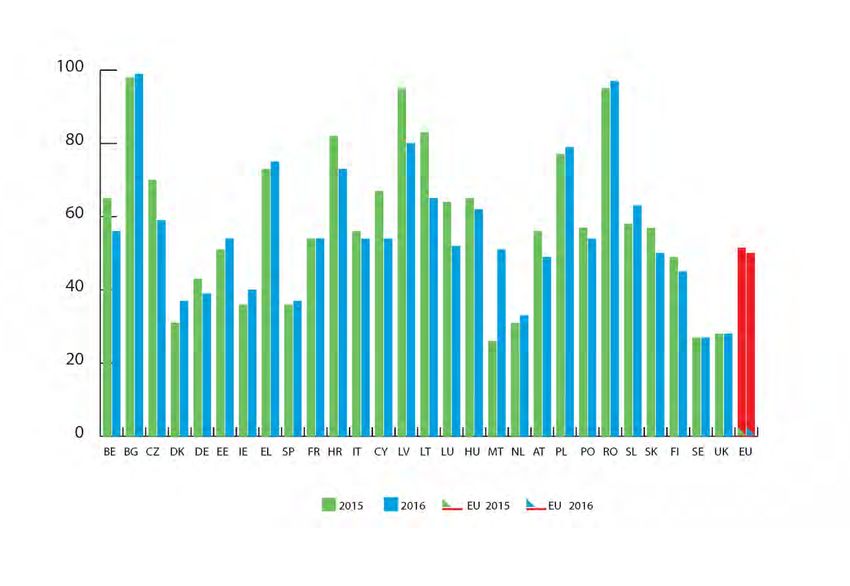
2. Mission Statement

To create a greater awareness of road safety through all our stakeholders with the aim of reducing
the number, severity and life-changing impact of road collisions, thereby making County Tipperary a
safer place for all road users.

    3. Profile of County Tipperary

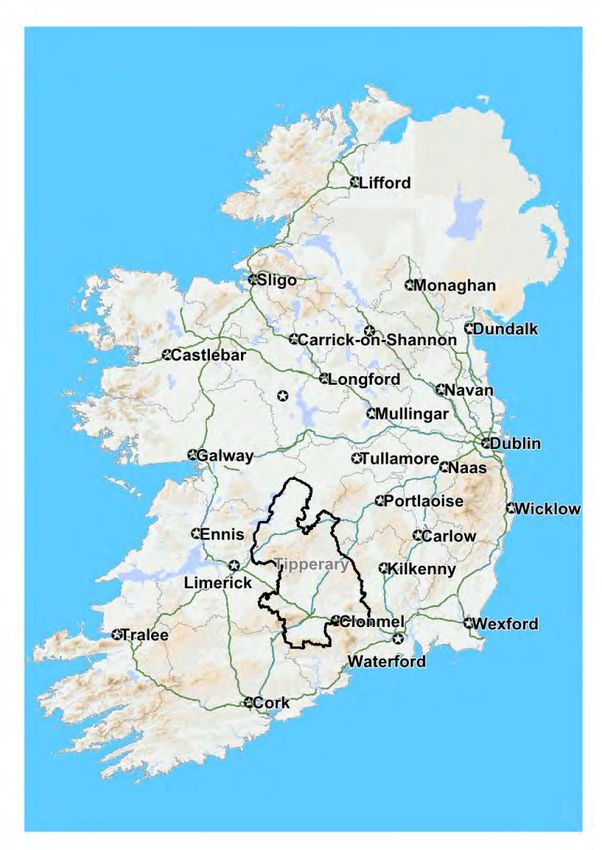
The ‘Premier County’ as Tipperary is known, is an inland, predominately rural county in the Province
of Munster covering an area of 4,305 square kilometres and is bounded by Galway, Limerick, Offaly,
Kilkenny, Cork, Clare, Laois and Waterford. It is the sixth largest county in Ireland based on size and
the twelfth largest based on population. Tipperary is the third largest of Munster’s six counties by
size and also the third largest by population. According to Census 2016 the population of Tipperary
has risen from 158,754 in 2011 to 159,553 in 2016 (an actual increase of 799 or 0.5%) of which
79,668 were males and 79,885 were females.

                                                            Tipperary County Council, which was
                                                            established in 2014 under the Local
                                                            Government Reform Act 2014, is the
                                                            local government authority for the
                                                            county. It reunified the county which
                                                            was divided in two for administration
                                                            purposes between 1898 and 2014. There
                                                            are five Municipal Districts in Tipperary:
                                                            Carrick-on-Suir; Cashel/Tipperary;
                                                            Clonmel; Nenagh; and
                                                            Templemore/Thurles. The largest towns
                                                            in County Tipperary are Clonmel, Nenagh
                                                            and Thurles.

                                                            3.1    Transport & Vehicle Ownership
                                                            in County Tipperary

                                                          Road transport dominates in County
                                                          Tipperary. The M7 motorway crosses the
                                                          north of the county through Roscrea and
                                                          Nenagh. The M8 motorway bisects the
                                                          county from north of Two-Mile-Borris to
                                                          the County Limerick Border. Both roads
                                                          are among the busiest roads in Ireland.
Other National Roads which traverse the county are the N52 Dundalk to Limerick road which goes
through the North-Western part of the county and the town of Nenagh and the N24 Limerick to
Waterford road which crosses the southern half of the county.

Tipperary Road Safety Strategy 2018-2020                                                       Page 6
Tipperary has a number of railway stations situated on the Dublin-Cork line, Dublin to Limerick and
Limerick-Waterford line. The railway lines connect places in Tipperary with Dublin, Cork, Limerick,
and Galway. However, the Dublin-Limerick line which passes through Nenagh is sparsely used.

3.2     The Economy of County Tipperary

Tipperary is one of the richest agricultural areas in Ireland. Dairy farming and cattle rearing are the
main farming occupations. It is also famous for its horse breeding industry and is the home of
Coolmore Stud, the largest thoroughbred breeding operation in the world. Tourism plays a
significant role in County Tipperary and some of the primary tourist destinations in the country are
located here; The Rock of Cashel, Lough Derg and Cahir Castle among them. Industry is situated
around the main towns, in particular Clonmel.

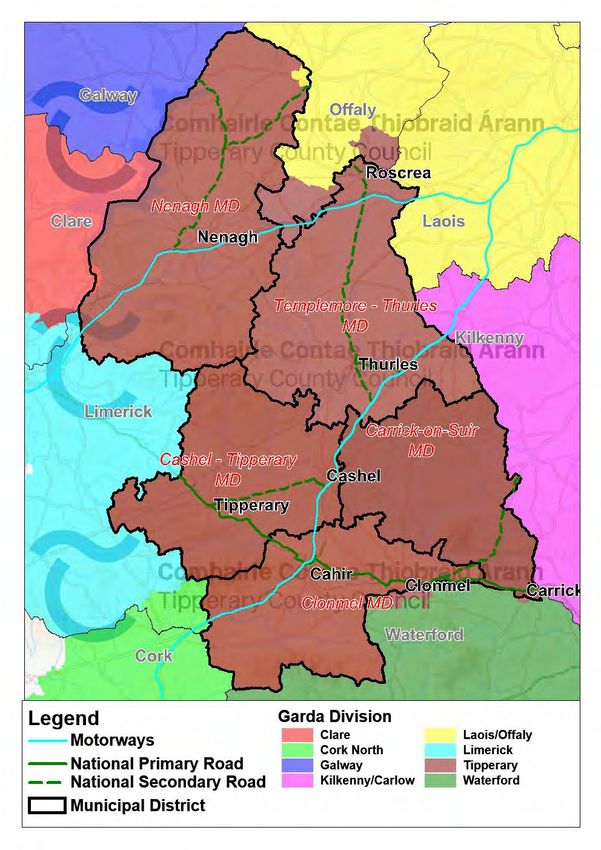
Map 2: The map below illustrates the main roads, towns, Municipal Districts and Garda Divisions
       in County Tipperary.

Tipperary Road Safety Strategy 2018-2020                                                       Page 7
Map 3: This map shows the population of each of Tipperary’s five Municipal Districts
        according to Census 2016.

3.3     Tipperary’s Road Network

The total length of road in County Tipperary by category is as follows:

                              Lengths in Municipal Areas (Kilometres)

Municipal      Nenagh        Templemore/ Clonmel             Cashel/      Carrick-on-   Total
Area                         Thurles                         Tipperary    Suir
Motorway           39             34         25                  15            6           119
National           0               0         38                  16            11          65
Primary
National           52              52               6             21          14           145
Secondary
Regional           289             147             146           171          150          903
Local              496             484             347           294          291         1,912
Primary
Local              453             367             245           328          295         1,688
Secondary
Local              261             232             210           167          120          990
Tertiary
Including         1,590           1,316           1,017         1,012         887         5,822
Motorways
Excluding         1,551           1,282            992           997          881         5,703
Motorways
 Percentage       27.2            22.5            17.4           17.5        15.4

Tipperary Road Safety Strategy 2018-2020                                                    Page 8
3.4 Licensed Vehicles and Traffic Patterns
There were 59,071 car owning households in 2016 compared to 58,275 in 2011 and the households
owning two cars had risen from 20,529 in 2011 to 20,660 in 2016 an increase of 131. However, the
households owning three cars had fallen from 4,096 in 2011 to 3,747 in 2016. The number of
vehicles under current licence at 31st December 2016 in Tipperary was 100,722.
The following table indicates the means of travel to work, school or college for people in Tipperary
aged 5 years and over according to Census 2016
Means of Travel Work School or College Total
On foot 5,081 5,886 10,967
Bicycle 517 229 746
Bus, minibus or coach 458 6,308 6,766
Train 311 193 504
Motorcycle or scooter 142 14 156
Car driver 40,908 1,959 42,867
Car passenger 2,678 19,888 22,566
Van 4,772 94 4,866
Other (incl. lorry) 586 11 597
Work mainly at or from home 5,013 42 5,055
Not stated 2,407 1,231 3,638
Total 62,873 35,855 98,728
4. National Context
There has been a strategic approach to road safety in Ireland since the first Government Road Safety
Strategy in 1998 and this approach has achieved considerable success under a number of key target
areas such as speeding, driving under the influence of alcohol and seat-belt wearing. The result has
been a significant reduction in the number of deaths and in 2016 Ireland was the seventh safest
country in the EU for road collision fatalities per million population (40). This achievement may be
set against an increase in the number of cars during this period of 66%. However, road deaths and
serious injuries continue to have a severe impact on society. In the period January - December 2016
there were 174 fatal collisions resulting in 186 fatalities on Irish roads. This represents 19 (+12%)
more collisions and 24 (15%) more deaths compared to provisional Garda data for the same period
in 2015.
Of the 186 fatalities, there were 81 Drivers killed, 38 Passengers, 35 Pedestrians, 22
Motorcyclists and 10 Pedal Cyclists.
The highest number of fatalities on our roads occurred among those aged 16-25 (40) and
66+ (44).
Tipperary Road Safety Strategy 2018-2020 Page 9
138 of those killed were male (74%).
Almost 1 in 4 of the drivers and passengers killed were not wearing a seatbelt (23%).
Thursday (32) and Sunday (37) were the most dangerous days on Irish roads in 2016.
The highest number of fatalities in 2016 occurred between 4pm and 6pm (28) and 10pm and
12am (19).
In 2016, Dublin (21) and Cork (21) had the highest record of road fatalities. Carlow had no
road fatalities and Tipperary had 13.
Figure 1: Number of Deaths in the EU 28 in 2015 per million population
Below: Number of Fatalities per County in 2016
County Fatalities County Fatalities County Fatalities
2016 2016 2016
Carlow 0 Kilkenny 6 Offaly 4
Cavan 3 Laois 3 Roscommon 7
Clare 4 Leitrim 1 Sligo 2
Cork 21 Limerick 17 Tipperary 13
Donegal 10 Longford 3 Waterford 9
Dublin 21 Louth 7 Westmeath 4
Galway 10 Mayo 4 Wexford 4
Kerry 7 Meath 12 Wicklow 2
Kildare 7 Monaghan 5 Total 186
Tipperary Road Safety Strategy 2018-2020 Page 1025
20
15
10
5
0
Kildare
Laois
Carlow
Clare
Cork
Dublin
Mayo
Leitrim
Louth
Sligo
Wicklow
Cavan
Donegal
Kilkenny
Kerry
Monaghan
Wexford
Meath
Galway
Limerick
Longford
Tipperary
Offaly
Waterford
Westmeath
Roscommon
Figure 2: Fatalities per County in 2016
The following table and chart show the number of fatalities which occurred in the six Munster
counties between 2007 and 2014.
Year Cork Clare Kerry Limerick Tipperary Waterford Munster
Total
2007 31 12 14 16 18 6 97
2008 24 7 19 18 21 7 96
2009 21 7 12 22 12 3 77
2010 18 4 11 18 6 5 62
2011 27 2 7 15 11 7 69
2012 21 2 7 5 4 3 42
2013 20 2 14 6 12 2 56
2014 18 5 14 10 14 6 67
35
30
2007
25
2008
20
2009
15 2010
10 2011
2012
5
2013
0
2014
Figure 3: Fatalities- Tipperary v Surrounding Counties 2007-2014
Tipperary Road Safety Strategy 2018-2020 Page 11The following table and chart show the number of injuries which occurred in the same counties
between 2007 and 2014.
Year Cork Clare Kerry Limerick Tipperary Waterford Munster
Total
2007 840 209 394 470 357 240 2510
2008 976 288 387 539 348 225 2763
2009 933 267 345 487 336 243 2611
2010 867 225 254 393 312 211 2262
2011 773 172 249 429 243 189 2055
2012 742 194 239 385 237 201 1998
2013 701 178 250 401 248 195 1973
2014 816 173 347 400 266 165 2167
1000
900
800
2007
700
2008
600
2009
500
2010
400
300 2011
200 2012
100 2013
0 2014
Figure 4: Injuries - Tipperary v Surrounding Counties 2007-2014
Casualty Trends in Tipperary from 2007 to 2014
Year Fatalities Injuries
2007 18 357
2008 21 348
2009 12 336
2010 6 312
2011 11 243
2012 4 237
2013 12 248
2014 14 266
Tipperary Road Safety Strategy 2018-2020 Page 12Tipperary
25
20
15
10
5
0
2008 2009 2010 2011 2012 2013 2014 2015
Figure 5: Tipperary Fatalities 2007 to 2014
Tipperary
400
350
300
250
200
150
100
50
0
2008 2009 2010 2011 2012 2013 2014
Figure 6: Tipperary Injuries 2007 to 2014
4.1 Government Road Safety Strategy 2013-2020
Ireland’s fourth Government Road Safety Strategy 2013- 2020, called ‘Closing the Gap’ builds on
existing road safety interventions, but reframes the way in which road safety is viewed and managed
in the community. It requires an acceptance of shared overall responsibilities and accountability. It
has the key target of reducing road collision fatalities to 25 per million population or less by 2020
and serious injuries to 61 per million population. This means reducing deaths from 186 in 2011 to
124 or fewer by 2020. The provisional target for the reduction of serious injuries by 30% is from 472
(2011) to 330 or fewer by 2020. The Strategy focuses on the three main areas of intervention of
Tipperary Road Safety Strategy 2018-2020 Page 13education, engineering and enforcement which will continue to underpin the implementation of the
actions of the Strategy.
To ensure that the Government Strategy develops in the most efficient manner, a programme of
monitoring, research and evaluation will be put in place. A mid-term evaluation of the Strategy was
undertaken in 2016 and this provided an opportunity to recalibrate targets and to implement
adjustments to the education, engineering and enforcement measures as required.
The Ministerial Committee on Road Safety will continue to oversee the implementation of the
Strategy. Ongoing monitoring and outcome measurement will be augmented by the midterm
review. The review included an analysis of all socio economic costs and burdens in relation to road
safety as well as congestion/disruption costs.
4.2 Safe Systems Approach
A key element of the current Government Road Safety Strategy is that Ireland is now looking to
move towards a “Safe Systems” approach to road safety. The ‘Safe Systems’ approach was
developed in the Netherlands in the 1990s and has since been applied in best practice countries such
as Sweden, Norway and Australia. The Safe Systems approach to road safety builds on existing road
safety interventions by adopting a holistic approach to reducing deaths and serious injuries on our
roads. The approach focuses on road safety as a responsibility shared and managed by everyone,
from national and local Government, to private business and the road-users, working together at
every level – national, regional, local and community – to develop effective and innovative road
safety initiatives and interventions.
The Safe Systems approach to road safety is built on several key principles:
Human Behaviour – no matter how well we are trained and educated about responsible
road use, people make mistakes and the road transport system needs to accommodate this;
Human Frailty – the finite capacity of the human body to withstand physical force before a
serious injury or fatality can be expected is a core system design consideration;
Forgiving Systems – roads that we travel on, vehicles we travel in, speeds we travel at and
the attitudes of road users to each other needs to be more forgiving of human error.
In addition, the Safe Systems approach has three core components:
Safe roads and roadsides – a transport system designed to make a collision survivable
through a combination of design and maintenance of roads and roadsides
Safe vehicles – the design of vehicles and their safety equipment to include protective
systems including electronic stability control, air bags etc
Safe Speeds – the speed limit should reflect the road safety risk to the road users.
Through a combination of the core components, the Safe Systems approach aims to design and build
a transport system that will protect road users and reduce the number of deaths and serious
injuries.
5. Local Context
The Tipperary Road Safety Strategy 2018-2020 reflects the Government strategy in its aims and
objectives and is designed to ensure a co-ordinated collaborative and consistent approach for all
Tipperary Road Safety Strategy 2018-2020 Page 14road users. The development and implementation of measures under the headings of Education,
Engineering, Enforcement and Evaluation all play a crucial role in terms of road safety.
5.1 The Aims of the Tipperary Road Safety Strategy are:
To create a safer road environment in Tipperary for all road users
To improve co-operation between the agencies and groups represented on the RSWTG
To improve road user behaviour by co-ordinating public education and awareness and to
ensure compliance by the public with all relevant legislation
5.2 The Role of the Working Group
The Road Safety Together Working Group coordinated by Tipperary County Council in partnership
with Transport Infrastructure Ireland (TII), Road Safety Authority (RSA), An Garda Síochána, Health
Service Executive (HSE) National Ambulance Service and Tipperary Fire & Rescue Services has a
significant and pivotal role in:
Overseeing the development and implementation of the Tipperary Road Safety Strategy
Agreeing actions to be progressed over the lifetime of the plan
Securing funding for the implementation of actions
Ensuring that all agencies/representatives on the Group work together to achieve the
objectives of the plan
Recommending road safety policies to the Roads & Transportation Strategic Committee
Inputting into the County Speed Limit Review Process
The Group will meet four times each year.
5.3 Factors which Contribute to Collisions
The following factors are significant contributors to road collisions. The primary ones to be
addressed initially are:
Speed inappropriate for, or inconsistent with, the prevailing circumstances
or driving conditions.
Impaired driving through alcohol or drugs
Failure to use or properly use seatbelts and child safety restraints.
Driving while under the influence of alcohol or drugs
Unsafe behaviour towards vulnerable road users (pedestrians, motorcyclists,
cyclists, young children and older people.)
Unsafe behaviour by vulnerable road users (pedestrians, motorcyclists,
cyclists, young children and older people) e.g. not wearing high visibility clothing
Driver fatigue – driving while over-tired and/or unable to remain awake.
Driver distraction e.g. mobile phone use
Medical fitness to drive
Research on fatal collisions nationwide indicates:
Excessive speed is a contributory factor in 1 in 3 fatal collisions.
Alcohol is a contributory factor in 1 in 3 fatal collisions.
Driver fatigue is estimated to be a factor in 1 in 5 fatal collisions.
Tipperary Road Safety Strategy 2018-2020 Page 15 1 in 3 of those killed in cars in the last 6 years was not wearing a safety belt or child restraint.
1 in every 3 children travels unrestrained in a car.
3 out of 4 people killed on the roads are male.
Young men aged 17 to 34 are consistently over-represented in death and serious injury
statistics.
(RSA, 2016. Fatal Collisions 2008 – 2012, Excessive Speed as a Factor)
In addition, the RSA study of fatal collisions that occurred between 2008 and 2012 found that the
largest proportions of drivers deemed to be responsible or part responsible for the collision with
defective tyres on their vehicles were in Donegal (18.2%), Cork, Kerry and Wexford (9.1% each).
(RSA, 2016. Fatal Collisions 2008 – 2012, Vehicle Factors.)
The Health Research Board (HRB) conducted research on behalf of the RSA which collated
information on 2014 road traffic fatalities from closed coronial files (136 of 193 fatalities) in the
context of the National Drug-Related Deaths Index (NDRDI). This research found that almost a third
(31%) of Road Traffic Collision (RTC) fatalities in 2014 (42/136) had alcohol on toxicology.
35% of car drivers
40% of motorcyclists
28% of pedestrians
killed had a positive toxicology for alcohol.
(Source: The Health Research Board National Drug-Related Death Index (NDRDI) report on
behalf of the RSA)
5.4 Critical interventions needed to sustain progress
Targets have been set at a national level for further reductions in fatalities and serious injury by
2020. Implementation at both national and local level of the following measures could help reach
those targets:
Reinforce the importance of wearing seatbelts and the use of child restraints
Reinforce the message of the consequences of:
o driver fatigue
o driver impairment such as alcohol and drug driving
o driver distraction, in particular mobile phone use
Highlight the importance of driver and motorcyclist use of appropriate speed for road and
conditions
Continue to reduce incidence of Learner Drivers unaccompanied
Empower users to adopt positive behaviours.
These messages are relevant to all drivers but have particular relevance to younger drivers.
(Source: RSA)
Tipperary Road Safety Strategy 2018-2020 Page 166.0 Road Safety Working Together Group
Road safety is not the sole responsibility of any one person or authority. It involves many different
partners and stakeholders working together to reduce casualties. It has to be based on co-operation
and co-ordination by all state agencies, the general public and the private/business sector working
together at every level; national, regional, local and community. Indeed, in the Government Road
Safety Strategy, the Road Safety Authority recognises that the ambitious road safety targets will only
be met through the co-operation of all agencies involved in road safety and the shared
responsibilities by all users. To achieve this, a Road Safety Working Together Group is to be
established in each Local Authority area to co-ordinate multi-agency road safety policy and to
implement it at a local level.
6.1 Stakeholders
Tipperary County Council
Tipperary County Council is responsible for the construction and
maintenance of public roads in the County in co-operation with
Transport Infrastructure Ireland, National Transport Authority and the Department of Transport,
Tourism and Sport. This involves responsibility for the planning, design, development and
maintenance of roads in Tipperary. Key elements of the Tipperary Road Safety Action Plan include
safety considerations and ongoing maintenance together with the implementation of a Road Safety
Education Programme in conjunction with stakeholders, in order to provide a safe and efficient
network to serve the needs of County Tipperary for Business, Industry, Agriculture, Tourism,
Education and Community Development.
An Garda Síochána - Garda National Roads
Policing Bureau
The main responsibility of Garda Traffic is to significantly reduce
the incidence of fatal and serious injuries and improve road
safety. An Garda Síochána's Traffic Mission Statement is to
“develop a national culture of safe road use”. This includes a
number of strategic goals in the area of Traffic and Road Safety
in an attempt to significantly reduce the incidence of fatal and serious road injuries and to improve
road safety.
The Garda National Roads Policing Bureau (GNRPB) was established in 1997 to formulate policy and
oversee traffic policing throughout the state. The Bureau is headed by Assistant Commissioner
Michael Finn and is based at Garda Headquarters in the Phoenix Park.
Operational Traffic Corps Units based in each Garda Division enforce the policies developed by
GNRPB. The two key factors in policy formulation are:
Prioritised enforcement
Traffic management
Enforcement is almost entirely a Garda function while traffic management is a shared responsibility
between An Garda Síochána and other agencies.
Tipperary Road Safety Strategy 2018-2020 Page 17The Garda Traffic Corps is dedicated to the enforcement of road traffic legislation and also to
assisting the free flow of traffic. The first Traffic Corps Unit was established in Dublin in 1953 and
was extended nationwide in 1973. The current strength stands at 709 Garda members as
of July 2016.
Road Safety Authority
The aim of the Road Safety Authority is to save
lives and prevent injuries by reducing the
number and severity of collisions on the road. Working to Save Lives is the stated goal adopted by
the Board of the RSA. The functions for which the RSA is responsible are set out in legislation. The
RSA is organised into five directorates as follows:
Road Safety, Research and Driver Education
Driver Testing and Licensing
Vehicle Standards and Enforcement
Finance and commercial services, Human Resources (HR) and Information and
Communications Technology (ICT)
Corporate Strategy Policy and Technology
The RSA researches, educates and protects road users by improving their knowledge, skills and
behaviours as they move through life, sets and assesses driving standards, promotes remedial
training and licences drivers according to entitlements and sets standards for vehicles, tests against
minimum standards and supports compliance amongst commercial vehicle drivers and operators
and enforces where necessary.
The Road Safety Authority (RSA) acknowledges the important role played by Tipperary’s Road Safety
Committee in the drive to reduce the level of death and injury occurring on our roads. The RSA has
given its full support and co-operation to the Tipperary Road Safety Working Group in its
implementation of the Road Safety Strategy locally.
Transport Infrastructure Ireland
Transport Infrastructure Ireland (TII) was established through a
merger of the National Roads Authority and the Railway
Procurement Agency under the Roads Act 2015, with effect
from 1st August 2015. The primary function of TII under the
terms of the Roads Act (2015) is ‘to secure the provision of a
safe and efficient network of national roads’. TII’s mission
statement is to contribute to improving people’s quality of life
and to economic competitiveness by developing, maintaining and operating the national road
network in a safe, cost effective and sustainable manner. TII also has a Regional Road Safety
Engineer who liaises with Tipperary County Council, as well as other counties in the region, regarding
issues of road safety on national roads.
Tipperary Road Safety Strategy 2018-2020 Page 18Health Service Executive (HSE)
The Health Service Executive (HSE) is responsible for providing
health and personal social services for everyone living in the
Republic of Ireland.
The HSE recognises that it has a key role to play in Road Safety.
Road Traffic Collisions are a significant social problem resulting in death, injury and long term
disability which impacts the health system as well as society as a whole. The Irish Health Service
deals with the many health related outcomes of road crashes and collisions from the Ambulance
Service, A&E Services, hospital services, rehabilitation, longer term and community care. The Health
Service deals with the trauma, tragedy and results of crashes and collisions on our roads on a daily
basis. The HSE fully supports and endorses the aims and objectives of the National Road Safety
Strategy 2013-2020.
Tipperary Fire & Rescue Service
Tipperary Fire & Rescue Service maintains round the clock
emergency cover to protect life and property. There are
twelve fire stations in the county based at:
Borrisokane Nenagh
Cahir Newport
Carrick-on-Suir Roscrea
Cashel Templemore
Clonmel Thurles
Cloughjordan Tipperary Town
The fire fighters based at these stations undergo continuous training to ensure that the service they
provide is of the highest possible standard. In addition, fire officers are available to give fire safety
advice and to ensure that standards are properly maintained to ensure public safety. On average
the fire service attends over 1500 incidents per year.
The fire service headquarters is based at Limerick Road, Nenagh. These offices administer all items
relating to the operational fire service, fire safety, building control, emergency planning and
petroleum licensing.
6. The Four Pillars or The Four E’s of Road Safety
Education - raising awareness of road safety by imparting knowledge and developing an
understanding of the risks with a view to changing attitudes and behaviour at individual, community
and organisational levels.
The core element of road safety awareness happens in schools – the stakeholder organisations
undertake many initiatives and programmes for road safety education at all levels of schools across
the county, from pre-school to third level and in the community.
Engineering - making the road network safer and more forgiving of inevitable errors by road users.
Tipperary County Council with support from Transport Infrastructure Ireland, Department of
Tipperary Road Safety Strategy 2018-2020 Page 19Transport, Tourism and Sport and the National Transport Authority, is responsible for engineering issues on Tipperary roads, including annual road works programmes, road safety audits, identifying and implementing low cost safety measures, speed limit reviews, driver feedback signs and traffic management. Enforcement - visible and appropriate enforcement acting as a deterrent and increasing compliance with road traffic legislation. An Garda Síochána is responsible for enforcement of the road traffic legislation. This includes setting up checkpoints for the purpose of carrying out of Mandatory Alcohol Tests (MAT), checks for speeding, seatbelt wearing and other violations of traffic offences. Evaluation - monitoring of actions and seeking sustainable reduction in road deaths and serious injury by constant research into the efficacy of actions undertaken. The Road Safety Authority continues to carry out surveys and evaluations in an effort to ascertain the value and quality of certain campaigns and road behaviour. Focusing on these four areas has worked well over the period of previous Government road safety strategies and facilitates the identification of intervention measures and the agencies responsible for carrying them out. The measures under these headings are informed by the challenges identified in the Strategy and are underpinned by a programme of research, monitoring and evaluation. Enabling or persuading people to change their behaviour and demonstrate personal responsibility in relation to road safety is essential for the success of the strategy. The four Es of education, engineering, enforcement and evaluation have a large part to play in this – through these measures, the general public will come to perceive that road safety is consistent with his or her core values and it is the norm in terms of attitude and behaviour. Tipperary Road Safety Strategy 2018-2020 Page 20
7. Action Plan

8.1       Education
 Action                 Project            Lead Dept or    Support Dept or          Action               Timeframe          Target
   No.                                       Agency            Agency
1.
           Pre-school                RSA                  Tipperary County   Promote the use of     Annually         1 Session
                                                          Childcare          Simon and Friends
                                                          Committee (TCCC)   Education
                                                                             Programme
2.         Primary School            RSA & TCC            TCC                Deliver road safety    Annually         30 Primary schools
                                     (Tipperary County                       talks to primary
                                     Council)                                schools, promoting
                                                                             the use of road
                                                                             safety programmes
                                                                             such as Be Safe, Let’s
                                                                             Go, Seatbelt Sherriff,
                                                                             Hi Glo Silver and
                                                                             Safe Cross Code
3.
                                     Tipperary Sports     Cycle Ireland      Provide Safe Cycle      Annually        20 schools per year
                                     Partnership/TCC                         Training to fifth and
                                                                             sixth class
4.
                                     TCC                                     Provision of adult      Ongoing         Continue to provide
                                                                             School Warden                           school warden service
                                                                             Service                                 at identified schools
                                                                                                                     and have wardens
                                                                                                                     trained as prescribed.

Tipperary Road Safety Strategy 2018-2020                                                                                          Page 21
Action Project Lead Dept or Support Dept or Action Timeframe Target
No. Agency Agency
5.
TCC Schools Road Safety Poster Annually 3rd class in all primary
Competition schools in 1 M.D. per
year
6. AGS Deliver Personal One lecture in each
Safety Lecture of the 170 primary
which includes schools in the
road & traffic county
safety
7. RSA TCC Deliver road safety Annually 10 Schools
Post Primary School talk to secondary
schools, promoting *RSA & AGS to liaise
the programmes regarding list of
‘Road Safety schools which it is
Matters’, ‘Your intended to visit to
Road to Safety’ allow maximum
and ‘Wrecked’ to exposure of Road
schools Safety Initiatives.
8. RSA TCC Deliver in-service Annually 3 new schools to
training on the undertake
junior cycle and programme each
transition year year
programmes in
schools
9.
Linked with next item AGS TCC Deliver transition Annually Deliver to Transition
year programme “It Year students in 2
Won’t Happen to schools per year
Me”
Tipperary Road Safety Strategy 2018-2020 Page 22Action Project Lead Dept or Support Dept or Action Timeframe Target
No. Agency Agency
10. Linked with above AGS Road Safety Talk
delivered by Twice per year
members of the capturing 15 schools
Divisional Traffic
Corps
11. Third Level RSA/AGS TCC Deliver road safety Annually 1 session
talks to third level
students
12. Companies RSA TCC Deliver road safety Annually 5 Sessions
talks to companies
including roll over
and RSA shuttle
13 Community RSA Voluntary groups Protecting our Annually 4 sessions
community – a call
to action
Mobility Matters –
road safety which
targets the elderly
14 Road Safety Promotion RSA/AGS TCC Implement public Annually Utilise national/local
awareness media to increase
campaigns which public awareness of
target the main road safety issues.
casual factors for
collisions, deaths
and serious injuries
for all road users but
in particular the high
risk groups.
Tipperary Road Safety Strategy 2018-2020 Page 23Action Project Lead Dept or Support Dept or Action Timeframe Target
No. Agency Agency
15.
RSA TCC/AGS High visibility Ongoing Distribute high
materials visibility and road
safety resources as
required/planned and
in conjunction with
other media
campaigns.
16. Road Safety Interactive RSA AGS/TCC ‘Check it Fits’ road Annually 3 locations in
Resources show Tipperary each year
17. RSA TCC Visit primary schools Annually 2 Primary Schools
with ‘Street Smart’
programme
18. RSA AGS/TCC Road Safety Annually 2 locations
Interactive Shuttle &
Roll-over Simulator
19. Road Safety Week RSA AGS/TCC Organise a road Annually All road users
safety week with a
series of local and
national events
including ‘Beep Beep
Day’ for preschools.
Tipperary Road Safety Strategy 2018-2020 Page 248.2 Engineering
Action Project Lead Dept or Agency Support Dept Action Timeframe Target
No. or Agency
20. Abnormal Load TCC/AGS Assess applications Ongoing All applications to be
Permits and apply conditions assessed in a timely
as appropriate manner
21. Hedge Cutting TCC Landowners/ Investigate Ongoing Issue Notices in
occupiers of complaints regarding response to complaints
land hedges and issue and follow through to
notification to ensure compliance.
landowners/occupiers
where hedges
become a road safety
issue for users in
accordance with
Section 70 of the
Roads Act 1993.
22. Public Lighting TCC ESB/AUS Annual programme of Ongoing Complete annual
new lights and LED programme of works
upgrade/retrofit
23. Winter Maintenance TCC TII Monitor and Ongoing Implement Winter
undertake salting as Service Plan and
required on routes publish Plan on TCC
identified in the website.
Winter Service Plan
Tipperary Road Safety Strategy 2018-2020 Page 25Action Project Lead Dept or Agency Support Dept Action Timeframe Target
No. or Agency
24. Fleet Management TCC Maintain TCC fleet so Ongoing Ensure all vehicle
that all vehicles are inspections are
safe and fit for recorded and are in
purpose accordance with
relevant legislation.
Arrange independent
audits and gate checks
of vehicles and the fleet
management system.
25. Establishment of AGS TCC Partnership between Ongoing 1 meeting at
Collision Prevention District Engineers and local/district level per
Programmes (CPP’s) in AGS in reviewing quarter
Garda Districts collision prone zones
and actively
contributing to a
reduction of road
traffic collisions at a
local level.
26. Installation of TCC Consider the Ongoing Complete annual
footpaths and incorporation of footpath programme
development of cycle footpaths, cycle ways subject to funding.
ways and green ways and green ways in
new road designs, Progress NTA funded
especially in urban projects involving cycle
locations. Seek ways and greenways
additional funding for where appropriate.
footpaths in poor
condition.
Tipperary Road Safety Strategy 2018-2020 Page 26Action Project Lead Dept or Agency Support Dept Action Timeframe Target
No. or Agency
27. Reduce the hazard of TCC TII/DTTAS Carry out annual Ongoing Complete annual
poor drainage on roads programme of drainage programme.
leading to surface maintenance Issue Notices as
water flowing on or drainage works. Issue appropriate. Take
causing damage to Section 76 Notices planning enforcement
road surfaces. under the Roads Act, measures as necessary.
1993 where water is
deemed to be flowing
onto the road. Follow
up on planning
conditions relating to
surface water and
entrances.
28. Identify, prioritise and TCC DTTAS Based on an Annually Complete locations
implement low cost assessment of identified in Road
safety measures for collision data, Works Programme
non national roads prioritise and submit each year.
the collision prone
locations on non
national roads for
inclusion in the
national low cost
safety programme.
29. Complete LA16 forms TCC/AGS LA16 forms to be As required Within one month
following fatal completed and following fatality.
collisions. submitted to TII as
soon as possible
following fatal
Tipperary Road Safety Strategy 2018-2020 Page 27Action Project Lead Dept or Agency Support Dept Action Timeframe Target
No. or Agency
collision
30. Road Works TCC TII/DTTAS Publish annual road Annually 1 programme per year
Programme works programme subject to funding
identifying road
improvements being
carried out
31. Road Safety TII TCC Systematic Ongoing Starting in 2018 TCC
Inspections on inspections of all will begin addressing
National Routes in National Routes to identified hazards
accordance with HD17 identify existing based on a prioritised
(AM-STY-06044) of the issues relating to road ranking for treatment.
DMRB and the EU Safety.
Directive on Road Recommendations to
Safety Infrastructure be implemented by
Management. TCC & MMARC on the
County National Road
network.
32. Identify High Collision TII TCC, MMaRC TII provides annual Annually & ongoing All proposed schemes
Locations on the report to Local implemented where
National road network, Authority of identified engineering measures
Routes in accordance high collision deemed appropriate.
with HD15 (GE-STY- locations. Tipperary
01022) of the DMRB County Council &
and the EU Directive Road Operators put
on Road Safety forward schemes with
Infrastructure feasible engineering
Management. solution for funding
to TII. Local
Authority/Road
Operator implement
Tipperary Road Safety Strategy 2018-2020 Page 28Action Project Lead Dept or Agency Support Dept Action Timeframe Target
No. or Agency
funded schemes.
33. Road Safety Audit TCC TII Road Safety audits to Ongoing 100% of all schemes
(For National Roads in be undertaken on all that meet the audit
accordance with HD19 applicable DoTTaS requirement.
(GE-STY-01024) of the funded road schemes
DMRB and the EU (Local, Regional &
Directive on Road National) that affect
Safety Infrastructure the layout or
Management.) management of the
road.
34. Implement HD16 (CC- TCC TII Undertake periodic Varies depending on Ensure all relevant road
STY-04002) inspection inspections of the timeframe of the works are inspected
requirements for temporary safety road works. periodically and
temporary safety measures at registered on the TII
measures at road roadwork sites on all website
works in accordance projects sanctioned
with the EU Directive and/or procured by
on Road Safety local authorities and
Infrastructure register all relevant
Management. road works on the TII
website.
Tipperary Road Safety Strategy 2018-2020 Page 298.3 Enforcement
Action Project Lead Dept or Support Dept or Action Timeframe Target
No. Agency Agency
AGS Increased presence Quarter 1 Greater visibility in
35. (a) High Visibility Policing on the Road each District
Network.
35. (b) Road Traffic Legislation AGS Increased Ongoing Decrease in fatal
Enforcement enforcement of and serious
Road Traffic and accidents in each
Road Safety District
Legislation
36. Mandatory Intoxication AGS Enforcement of Ongoing Enhance the
Testing (MITS) legislation in relation Enforcement of all
to driving while Drink/Drug Driving
intoxicated through Legislation
drink and/or drugs
37. Commercial Vehicle Checks AGS RSA Continue individual Ongoing Greater Road Safety
and joint Road compliance
Operations with the
RSA targeting
abnormal loads and
commercial and
heavy goods vehicles
safety checks
38. Life Saver Offences AGS Compliance with and Ongoing Continued
Enforcement of engagement with
Speed/Seat community groups
Belts/Mobile Phone and local media to
Legislation and promote Safe
Regulations Driving Practices
39. Inter-Agency Checkpoints AGS - RSA To participate in Ongoing At least two per
- Department of Inter-Agency quarter
Tipperary Road Safety Strategy 2018-2020 Page 30Action Project Lead Dept or Support Dept or Action Timeframe Target
No. Agency Agency
Social Protection Checkpoints and
- Revenue participate in
Commissioners targeted Multi-
- Customs Agency Road Safety
Operations
throughout the
Tipperary Division
40. Collision Prone Zones AGS - Tipperary County To monitor and Quarterly Collision Prone
Council update the list of Zones are targeted
- TII Collision prone with increased level
locations and to of visibility. Zones
ensure that identified are
appropriate policing targeted with Go-
attention is paid to Safe technology to
those areas. improve
compliance with
speed limits.
41. Media Awareness AGS - Tipperary County To develop and Monthly Increased Public
Council utilise Local Media Awareness of Road
- RSA including Social and Safety
Digital forms to raise
awareness of
National and Local
Road Safety
Initiatives
Tipperary Road Safety Strategy 2018-2020 Page 318.4 Evaluation
Action Project Lead Dept or Support Dept or Action Timeframe Target
No. Agency Agency
42. Monitor the implementation TCC RSWTG Place as an item on Ongoing 3 meetings per
of the Tipperary Safety the Agenda for each annum
Strategy meeting of the Road
Safety Working
Together Group
43. Monitor Action Plan TCC RSWTG Provide report Annually Annual report
annually on progress
of plan
44. Identify areas where actions TCC RSWTG Provide report Annually Annual report
have not been met identifying the
reasons why
actions/targets have
not been met. Offer
potential solutions or
alternatives to
implement into the
Strategy.
45. Capture the number and type TCC AGS/RSA Provide report on Annually Annual report
of community consultations, number and type of
community participations and community events
the different community and the number of
channels used in the area of people who
Road Safety education. participated in the
events.
46. Develop feedback form for TCC AGS/RSA Provide feedback After each event Annual report
joint road safety events forms to participants
for completion.
Evaluate comments
Tipperary Road Safety Strategy 2018-2020 Page 32Action Project Lead Dept or Support Dept or Action Timeframe Target
No. Agency Agency
to see how events
can be improved on.
47. Complete a Post Plan Review TCC RSWTG Provide a report after Quarter 1, 2021 Quarter 1, 2021
the expiry of the Plan
and make
recommendations
for the next Road
Safety Strategy
48. In order to meet the target of All Implementation of End 2020 Fatalities 4
25 fatalities and 61 serious Education, Serious Injuries 10
injuries per million population Engineering and
or less by 2020 as set out in Enforcement Actions
the Government Road Safety
Strategy 2013-2020, or 4
fatalities and 10 serious
injuries per year in Co.
Tipperary by 2020, a reduction
of 69% in fatalities will be
required.
Tipperary Road Safety Strategy 2018-2020 Page 338. Summary Tipperary County Council, in conjunction with its partners, the Road Safety Authority, Transport Infrastructure Ireland, An Garda Síochána, Tipperary Fire and Rescue and The HSE/National Ambulance Service has adopted a Strategy for road safety based on what is known as the Four E’s; Education, Enforcement, Engineering and Evaluation. This requires a co-ordinated approach between all the stakeholders to provide a focus on collision and casualty reduction in the county and try to improve overall safety levels within our communities and to minimise loss and disruption to society. Empowerment through the Four E’s is extremely important as it underpins the cultural shift, which will be required to effectively achieve road safety within the county. This means that all of us as road users, in all of our various roles within our communities, such as family members, education providers, community leaders, volunteers, care givers and employees have to take personal responsibility for both our own safety and the safety of others. Empowerment is the overarching element of this Strategy and forms the fundamental foundation on which the other elements will be achieved. The effectiveness of a particular service refers to the extent to which it achieves its objectives. It is vital that the Road Safety Strategy, as set out in this Plan, be monitored to establish its effectiveness and allow changes to be made, if required, at the end of each year. Analysis of targets is imperative in guiding the delivery of the Road Safety Strategy. The stakeholders will continually monitor the progress of this Strategy and prepare an annual report. It is the sincere hope of all the stakeholders that the continued focus on road safety in County Tipperary as part of this Road Safety Strategy will contribute further to collision and casualty reduction in the County over the lifetime of the Strategy. Tipperary Road Safety Strategy 2017-2020 Page 34
9. List of Acronyms

AGS            An Garda Síochána

DTTAS          Department of Transport, Tourism and Sport

GNRPB          Garda National Roads Policing Bureau

HRB            Health Research Board

HSE            Health Service Executive

M.D.           Municipal District

MITS           Mandatory Intoxication Testing

NDRDI          National Drug Related Deaths Index

RSA            Road Safety Authority

RTC            Road Traffic Collision

RSWTG          Road Safety Working Together Group

TCC            Tipperary County Council

TCCC           Tipperary County Childcare Committee

TII            Transport Infrastructure Ireland

Tipperary Road Safety Strategy 2017-2020                    Page 35
You can also read


