Ultra High-Speed Ground Transportation Study: Business Case Analysis Packet A - Washington State Department of Transportation - WSDOT.com
←
→
Page content transcription
If your browser does not render page correctly, please read the page content below
Washington State Department of Transportation
Ultra High-Speed Ground Transportation Study:
Business Case Analysis
Packet A
Submitted by: Jacobs Engineering Group, Inc.
June 12, 2018

Ultra High-Speed Ground Transportation Study: Business Case Analysis

1. QUALIFICATIONS/EXPERTISE OF FIRMS ON TEAM
1A/1B. TEAM INFORMATION
Jacobs understands the complexity of developing a business case to support ultra high-speed ground
transportation (UHSGT) between Portland, OR and Vancouver, BC. Our team has the expertise to continue
our work from Phase I by narrowing down technology, creating a flexible and future-ready demand model,
evaluating financing options, and generating interest from investors to continue future phases. Recognizing
the importance of this project, we built a team that brings world-class talent to analyze the UHSGT business
case and are invested in growing and further exploring the next phase of UHSGT with WSDOT. Our dynamic
team’s expertise is demonstrated in Table 1A.1.
The Jacobs Team offers:
Phase I Experience: Having worked on Phase I of the Ultra High-Speed Ground Transportation Study, our
team is ready to hit the ground running with a keen understanding of the project expectations and goals. We
will maximize efficiency and available resources by using data from Phase I. Our local presence with offices in
Portland, Seattle and Vancouver combined with access to local transit, roadway, and aviation demand models
gives us an understanding of the local transportation market and an additional leg up to getting the study up
and running.
Investor Engagement Expertise: Our team includes specialists in transactions advisory services and have
advised on over $25 billion of successful transactions since 2013 including the recent sale of High Speed 1
(HS1), the United Kingdom’s only high-speed rail line, and acting as Lenders’ Traffic Advisor on the new Tours
to Bordeaux high-speed line in France. The team brings both an understanding of the financial community,
their critical success factors in rail transactions, and existing relationships which will be leveraged within the
investor engagement element of the study.
Multimodal Knowledge: A robust business case for UHSGT requires not only an understanding of high-
speed rail (HSR) and similar technologies, but also those modes from which demand may shift. Given the
complexity of the corridor and alternative transport modes, we will deploy a multidisciplinary team to the
demand forecasting tasks which includes expertise in highways, aviation, bus/coach and conventional rail in
addition to the high-speed technologies.
Technology and Decision-Making Experts: To perform a thorough technology assessment, our team has
nationally recognized experts in high-speed rail,
magnetic levitation (maglev), and hyperloop                                      Firms on our Proposed Team
technologies. Additionally, we have brought on
                                                                                 & Consulting

                                                                                                        EnviroIssues
                                                                                 Engineering

                                                         Qualifications and
a strategic decision making facilitator to help                                                                                   Strategic
                                                                                                                                  Partners

                                                                                                                                              Partners
                                                                                   USA Inc.

                                                                                                                       RSG Inc.
                                                                                                AECOM

                                                                                                                                              Paladin
                                                                                                                                   Insight
                                                                        Jacobs

                                                             Expertise
                                                                                     DB

objectively narrow down the technologies.
Innovative Mobile Data Collection: Our
                                                       Years Experience     69  52         28     28    32  2   9
approach to the data collection and survey
                                                       Washington Staff     505 N/A       250    104 N/A    4  N/A
includes innovative and cost-effective use of
cell phone data for transport modeling. Jacobs Firms’ Expertise
has been at the forefront of this, having led           Demand and
                                                        Revenue Forecasting P                           P
the development of a national database of
interurban road, rail and air trips in the United Corridor Evaluation P
Kingdom. Deploying such an approach will                Operations Planning
                                                                            P   P
                                                        and Costing
provide superior data quality for the study             Technology
compared to traditional methods.                        Assessment          P   P          P
Transparent, Future Ready Model: Our team           Governance                                                                      P
will use an investor friendly logit model to        Stakeholder
                                                                        P                               P
                                                    Facilitation
forecast demand and revenue that will lay the
                                                    Finance (P3),
groundwork for future exploration.                  Economic Analysis   P                                                                       P
                                                                                                            Table 1A.1: Firm Information
                                                                                                                                    Page 1 of 30
Ultra High-Speed Ground Transportation Study: Business Case Analysis

TEAM STRUCTURE
Our leads have specialized experience to move the study forward independently while sharing technical
resources and collaborating to build a cohesive study. Several of our teaming partners worked on Phase I
and we are excited to continue with them. The project organizational chart below (Figure 1A.2) depicts our
experts available to support this phase of the study.
Project Management: David Solow, armed with his subject matter expertise, will manage the project
alongside Scott Richman and Tom McDonald.
Demand and Revenue Forecasting: Ian McGookin will lead the team in the development of the demand
and revenue forecasting tool. This includes data collection using stated preference (SP) surveys and mobile
phone data.
Operations Planning and Costing: We have teamed up with DB Engineering & Consulting USA Inc. (DB) to
study to study UHSGT operating and capital planning needs. Their team has performed similar services on
high-profile projects such as the California High-Speed Rail.
Technology Assessment: AECOM has unparalleled experience with advanced technologies such as maglev
and hyperloop. Led by Kenneth Sislak, our team will quickly narrow down technology options within our
demand and revenue forecasting model.
Governance and Stakeholder Facilitation: Marty Loesch will help lay the foundation for governance
strategies able to feed into future phases. Angie Thomson will continue her work from Phase I and facilitate
the stakeholder advisory group.
Finance (P3), Economic Analysis: Under the guidance of Jon Clyne, this team will explore public and private
funding options to build the business case for investors. As stated above, this team includes transaction
advisory specialists with a keen understanding of what investors need to know for further exploration.
Our strategic advisors further provide expertise to create the comprehensive business case.

                                                                                                                 Firms:
         Strategic Advisors                                       Project Manager                                1. Jacobs
   Project Assessment and Financing                                 David Solow1                                 2. DB Engineering & Consulting USA Inc.
             Shaun McCabe7                                                                                       3. AECOM
           HSR Operations                                                                                        4. EnviroIssues
           Richard Eastman1                                                                                      5. RSG Inc
                                                              Deputy Project Manager                             6. Insight Strategic Partners
          Governance Issues                                       Scott Richman1                                 7. Paladin Partners LLC
            Geoff Roberts1
                                                                                                                       Key Personnel
             Mobile Data
          Stephen Rutherford1
                                                                                                  Scheduling and Quality Manager
      Strategic Decision Making                                                                            Tom McDonald1
            Dan Speicher1

    Demand and                                          Operations                                     Governance &
                                                                                 Technology                                        Finance (P3),
     Revenue                  Corridor Evaluation      Planning and                                     Stakeholder
                                                                                 Assessment                                      Economic Analysis
    Forecasting                                           Costing                                       Facilitation

        Lead                  Corridor Assessment          Lead                     Lead             Governance & Cross                 Lead
    Ian McGookin1                Scott Richman1         Yoav Hagler2            Kenneth Sislak3     Border Relationships          Jon Clyne (Lead)1
                                                                                                            Lead                    Ian McGookin1
    Steve Weller1             Alignment/Engineering    Marc Klemenz 2            Ottmar Grein 2
                                                                                                        Marty Loesch
    Survey Lead               Miguel Lopez-Dubois1                                                                                 Nurez Damani1
                                                                                                    Stakeholder Facilitator
     Greg Spitz4              Environmental Strategy                                                   Angie Thomson4
                                Christina Martinez1

                                                                                                                    Figure 1A.2: Org Chart
                                                                                                                                      Page 2 of 30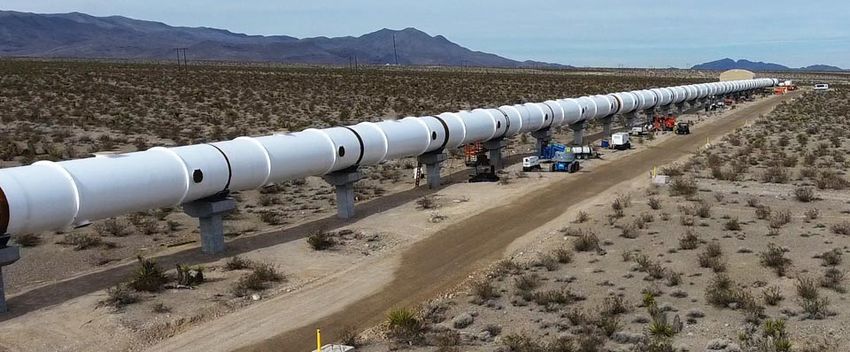
Ultra High-Speed Ground Transportation Study: Business Case Analysis

1B. TEAMING HISTORY
Jacobs’ teaming partners for this project not only provide key local resources, but also staff with unique and
relevant expertise to develop this study. Jacobs’ past and/or current relationships with our subconsultants is
highlighted in the table below. (See table 1B.1 below.)

    Firm Name            Project (Last 3 Years)                               Firm Responsibilities (role)                                       Dates
DB ENGINEERING &
                        Ultra-High-Speed Ground                                         Jacobs: Prime
 CONSULTING USA                                                                                                                          June 2017 - Dec 2017
                          Transportation Study                                    DB: Technology Assessment
      INC.
                        Ultra-High-Speed Ground                                      Jacobs: Prime
       AECOM                                                                                                                             June 2017 - Dec 2017
                          Transportation Study                     AECOM: Technology Assessment and Economic Analysis

                        Ultra-High-Speed Ground                                        Jacobs: Prime
  ENVIROISSUES                                                                                                                           June 2017 - Dec 2017
                          Transportation Study                     EnviroIssues: Stakeholder Engagement and Facilitation

                                                                                       Jacobs: Prime
INSIGHT STRATEGIC        1-90 SR 18 Interchange
                                                         Insight Strategic Partners: Strategic Planning, Government/Community               2017 - Present
    PARTNERS                 Improvements
                                                                                         Relations

                                                                                                                           Table 1B.1: Teaming History

1C. AVAILABILITY OF KEY STAFF
Table 1C.1 below illustrates hours of monthly availability for the Ultra High-Speed Ground Transportation
Study: Business Case Analysis. Our Project Manager, David, understands the capabilities and capacities of all
firms on our team, and he will monitor the workload of key staff members to ensure the right resources are
available when they are needed, and will continue to be available through the course of the study.

    Key Team                                                                                             Hours Available per Month
                                    Role                        Firm
    Members                                                                   1        2      3      4        5     6       7        8      9      10        11
David Solow      Project Manager                          Jacobs            88       88     88     88      88      88      88    88       88      88     88
Scott Richman    Deputy Project Manager                   Jacobs            88       88     88     88      88      88      96    96       96      96     96
Tom McDonald     Scheduling & QA Manager                  Jacobs            120      120    130    140     140     120     140   150      150     140    140
Ian McGookin     Demand & Revenue Forecasting Lead        Jacobs            64       64     128    128     128     128     128   128      128     128    128
Steve Weller     Demand & Revenue Forecasting             Jacobs            60       80     100    100     80      80      100   100      100     100    100
Jon Clyne        Finance (P3), Economic Analysis Lead     Jacobs            40       80     90     80      80      80      70    70       80      80     80
Greg Spitz       Demand & Revenue Forecasting (Survey)    RSG               61       61     61     61      61      61      61    61       61      61     61
Yoev Hagler      Operations Planning and Costing Lead     DB                40       40     40     40      40      40      40    40       40      40     40
Ken Sislak       Technology Assessment Lead               AECOM             20       20     20     40      40      40      40    40       40      20     20
Marty Loesch     Governance and Cross-Border Governance Insight             20       20     20     20      20      20      20    20       20      20     20
Angie Thompson   Stakeholder Facilitation                 EnviroIssues      60       60     80     80      80      80      80    80       80      80     80

                                                                                                                                      Table 1C.1: Availability

                                                                                                                                                Page 3 of 30
Ultra High-Speed Ground Transportation Study: Business Case Analysis
1D. PREVIOUS RELEVANT EXPERIENCE
Below is Jacobs’ and our subconsultants’ experience providing the relevant services and expertise needed to
successfully complete this project.
JACOBS | WSDOT, ULTRA HIGH-SPEED GROUND TRANSPORTATION STUDY, PHASE 1
| 6/17-12/17 | FEE RECEIVED: $382,605
Jacobs (formerly CH2M) recently completed an ultra high-speed ground RELEVANCE:
transportation feasibility study on behalf of WSDOT for a potential future 33 Previous phase of the
link between Portland, Seattle and Vancouver, British Columbia. The proposed study
high level study examined potential demand, revenue, alignments, and 33 Corridor Identification
technology. 33 Funding/Financing
The team reviewed high-speed rail, maglev, and hyperloop technologies, 33 International Border
along with factors including the number and general locations of new Issues
stations, ridership and costs, potential implementation models for 33 Technology Assessment
funding/financing and governing a new service between two states and 33 Forecasted Demand
the Province of B.C. The study also incorporated a broader agglomerated
33 Stakeholder Facilitation
economic benefits assessment funded by Microsoft and trade
organizations.
2.2 Ca
scadia M
The results of our study provided high-level yet comprehensive results
2.2.1 egaregio
Population n Contex
The Cas
Oregon
cadia meg and Em t ployment
ION 1.
INTRODUCT
ION
SECT
aregion
metrop
. It incl
ude spans Profile
olitan area s two medium approximately
density ‐sized met 466 mile
from thei (Vancouver)
compelling enough for WSDOT to further explore ultra high-speed
metro r urban . Portland ropolitan areas (750 km) from
region
with mor core through and Sea s (Portlan Van
d and Sea couver, BC to
e than their met ttle are rela ttle) and Eugene
two mill tively com
ion peo ropolitan frin one larg ,
ple. 9 Figu ge. Van pact with con er
re 2‐1 couver is siste nt med
illustrat
es the Canada’s thir ium
Cascad d largest
ia meg
aregion.
ground transportation. Our team was able to deliver all project goals in a
compressed time frame to meet project funding deadlines.
Our team’s focus included: Seattle
and
other U.S. Portland hav
in 2010, metros with e relatively larg
Sea muc
ttle’s cen h larger e cen Source: Figure
2‐2.
• Analysis using the FRA CONNECT Model
within tral bus http: //www.am Cascadia
10 mile tral bus pop iness dist Megareg
iness dist ulations, such
erica
2050.org/
within s of the ricts, esp megaregio ion
10 city rict (CBD as ecially
jobs bein miles (16 km) center. Port ) ranked Los Angeles,
ns.html
when com
g located of dow land Hou
within ntow 10 ’s CBD rank ninth in the nati ston, and Dall pared with
The pop
ulations 10 mile n. Vancou ed 14th
in the nation and suppor as. For exampl
s (16 km) ver,
a faster of
rate than the three larg of its CBD BC, supports on ted 700 e,
and Van . a similar and supported ,000 jobs
couver, anticipated by est metropolita number 650,000
• Identifying and examining new alignments and existing alignments
people, BC, met demogra n areas of jobs with jobs
respecti ropolita in the Cas
growth vely by n statistic phic forecast cadia meg
600,000
made in 202 ers.
approxi 1990. In 0. As of 201 al areas (MSAs) In 1990, the aregion
are grow
mately 2015, the 5, eac wer pop
expecte 8.4
d to add million peo three met h MSA had exce e forecast to ulations of Port ing and at
ple. ro regi reach 2.0, land, Sea
around
1 million Rapid populat ons had eded the 202
people ion a com 0 forecast 3.4, and 2.3 ttle,
each, with growth is exp bined total pop s for populat million
• Technology identification and assessment
9
Todorovic Seattle ected to ulation ion
h, P. and exp erie continu of
10 Y. Hagle ncing the e; eac
Todorovic
h, P. and
r, 2011
, High Spee greatest h metro area
Y. Hagle d Rail in
America.
levels of is
r, 2011
, High Spee growth
d Rail in
America.
PREPARED
FOR WASH
INGTON
• Funding and financing analysis
STATE
DEPA RTMENT
OF TRAN
SPORTATIO
N
ing
erat 2‐3
23
al op ps.
initi ily tri
e, or 115 da
n lin
atio erates
onstr op
dem d now
Train 04 an
lev
ag April 20
ai M
ATION Sh angh ion since
Our current teaming partners were integral to the quality and success
ALU e
OGY
EV
. Th l operat
HNOL utes
3. TEC min mercia
TION in 8 m
SEC km) en in co
0.5
s (3 s be
mile ent, ha
segm
of phase I of the study. aglev
Train
m.
ai M orandu
angh
. Sh al Mem
DB evaluated technological options for ultra high-speed rail and
e 3‐3 nic
Figur ns Tech
Optio and
logy kyo
chno n To
Study
: Te ee
tw o and
ion n be t Toky imum
ortat ctio ec max ll
ansp nstru conn a ya wi
nd Tr r co ed to ing at Nago
Grou unde pect nn
developed capital and operating costs for inclusion in the FRA CONNECT
to
Spee
d line e is ex utes, ru er) line
lev e lin min
‐High
. Th in 67 mag met
Ultra ing ‐kilo
2017
,
ent duct re 3‐4) aka (285.6
2M, opm supercon a (Figu o and Os 5‐mile
Devel panese to Osak y Toky the 177.
: CH
urce
So re
Futu nsen is a Ja extendedd eventupercent of
all
3.2.3 ka be , an
Shin ned to 2027 About 90 .
Model.
Chuo plan es by ) nnels
The ya and minut 05 km/h ugh tu
Nago ya in 40 mph (5 or thro
4 d
Nago d of 31 rgroun
spee ilt unde
be bu
Map
sen
inkan andum.
AECOM lead the technology assessment and economic analysis. The
uo Sh emor
. Ch M
e 3‐4 nical
Figur ns Tech
tio
y Op
nolog
: Tech
Study
ion
ortat
ansp dum.
technology assessment evaluated technologies capable of sustained
nd Tr moran
d Grou hnica
l Me
TION
Spee ns Tec NSPO
RTA
‐High Optio
OF TRA
, Ultra ology ENT
2017 Techn
PARTM
2M,
dy:
on Stu TE DE
ce: CH ortati TON
STA
Sour Tra nsp
SHING
SECTION
6. IMPL und R WA
ed Gro
speeds of at least 250 mph, which included high-speed rail, maglev and
EMENTING D FO
ULTRA h Spe RE
HIGH‐SPEE ra‐Hig PREPA
D GROUND 7, Ult
2M , 201TRANSPOR
23 CH TATION
3‐4
hyperloop. Economic analysis included using the FRA CONNECT sketch
planning tool that provided cost recovery data, ridership and consumer
surplus as part of the benefit/cost analysis. Wider economic impacts were
also considered. 6.2.1 Ov
erv
Source: Figure
CH2M, 6‐1. Fina
2017, Ultra ncing and Deliv
High‐Spe ery
ed Grou models ‐ Distr
Tradition iew of Pub nd Tran ibut
sportatio ion of Risk for
cost ove al public‐secto
lic‐Private n: Pote
ntial Fund Various Project
EnviroIssues led stakeholder engagement and facilitation of a 20-member
rruns. r delivery Partnersh ing and Delivery
risks to
the part
The P3
mod of large‐sc ips Financin Opti
g Mechani ons
allocati y that is el aims to pro ale infr sms.
ng
constru risk properly
best suit cure infr astructure pro
ction and in an infr ed to manage astructure mor jects often
the astr ucture them e effic has bee
There are operati
onal life project . Studies in Can iently by con n associated
revenue two main sou of the
asset. 40
leads to
major
ada and tractual
ly
with
include rces of else whe allo
Advisory Group that provided key insight on engineering, economic and
leases). cost and cati
Paymen
user fees revenue
and thre time savi re have shown ng
availab t structur (e.g., farebox e mai ngs both that
ility hyb n during
rid. The es include con revenue) and payment stru
Use sources structio ancillar ctur
r Fees: of reve n y revenue es for P3 mod
rail serv This refe nue and payments, ava s (e.g., els. Sou
ice. Fare rs to fare paymen ilab park rces of
passen box reve t structur ility paymen ing fees, com
gers. Ofte s may be sub nue es are ts, and mercial
n fare incr ject to regu that is a dire describ a
ed belo construction‐
policy feasibility. They also developed content for the project’s website
eases are lation by ct paymen w.
tied to the t by
econom public authorit public riders
40 ic indicato y to cap on a pas
CH2M,
2017, Ultra rs such fare incr senger
High‐Spee as the eases for
d Grou Consum
nd Trans er Price
portation: Index
Potential
6‐2 Funding
and Financing
and final report.
Mechanism
PREPARED s.
FOR WASH
INGTON
STATE
DEPA RTMENT
OF TRAN
SPORTATIO
N
Page 4 of 30
Ultra High-Speed Ground Transportation Study: Business Case Analysis

JACOBS (FORMERLY CH2M) | MYHSR, MALAYSIA-SINGAPORE HSR TECHNICAL
ADVISORY | 2016-2017 | FEE RECEIVED: $1,500,000
Jacobs (formerly CH2M) acted as technical advisor to MyHSR, the agency                RELEVANCE:
created by the Malaysian Government to develop and deliver a new 217                  33 International border
mile High-Speed Rail (HSR) system between Kuala Lumpur, Malaysia and                     issues actively
Singapore. As sole technical advisor to MyHSR during the critical early                  considered
development stage of the project, Jacobs has had a pivotal role in this               33 Spreadsheet-based
transformational cross-border project. Our advisory role was critical in                 demand modeling
developing demand forecasts and creating an appropriate economic and                  33 Business case
regulatory framework to produce incentives on all parties to deliver high                development
service quality, by optimizing use of the new high-speed rail assets. The             33 Support for market
Jacobs team also advised MyHSR on the commercial and economic case for                   sounding with
the scheme, working with potential investors and other key stakeholders                  investment community
– in particular, we produced analysis of the commercial potential of the              33 Detailed engagement
new stations, the associated economic benefits, and potential corridor and               with potential investors
alignment options to seek to optimize the scheme within capex constraints.               & developers
JACOBS (LEIGH FISHER) | OTPP AND BOREALIS, HIGH SPEED 1 SELL SIDE
COMMERCIAL DUE DILIGENCE | 01/2017-09/2017 | FEE RECEIVED: $300,000
LeighFisher, wholly owned by Jacobs, was appointed by Ontario Teachers                RELEVANCE:
Pension Plan and Borealis Infrastructure to undertake sell side vendor due            33 International high-speed
diligence in relation to a divestment in High Speed 1 Ltd (HS1). Our scope               rail corridor
of work was to develop passenger demand and train path forecasts for                  33 Forecast demand
international operators, domestic services and freight operators using HS1. A            modeling of ridership
multidisciplinary team including rail and aviation experts reviewed passenger            on new routes based on
and operational data across all rail operators and, for international services,          factors like speed, price,
reviewed competing air demand, capacity and journey times. Spreadsheet-                  location and market size
based passenger demand forecasting models were built for both international           33 Operational Planning
and domestic services, and our operational experts converted these into train         33 Multi-modal assessment
path forecasts, considering infrastructure capacity, demand profile, rolling
                                                                                      33 Spreadsheet-based
stock availability, OPEX and CAPEX. International passenger services also
                                                                                         model
considered border / immigration considerations, and explored new markets
                                                                                      33 Investor engagement
for future service expansion (e.g. Amsterdam, Bordeaux and Geneva). We
also reviewed ancillary revenues associated with HS1-owned car parks at 4 of          33 Commercial business
the stations.                                                                            casing
DB ENGINEERING & CONSULTING USA INC. | WINDSOR MINISTRY OF TRANSPORT,
HIGH-SPEED RAIL SERVICE | 9/2012 - ONGOING | FEE RECEIVED: $3,000,000
In 2008, the federal government of Québec and Ontario awarded a contract              RELEVANCE:
to the EcoTrain Consortium, with DB as a partner, for an update and revision          33 Technology Assessment
of an existing study. This revision of this study was to provide the clients with        and Application Study
a detailed survey of the environmental and financial effects of the proposed          33 Operations Planning
high-speed rail project, and it included an assessment of high-speed train            33 Cost Estimating and
technologies; potential routings; traffic forecasts; financial and economic              Planning
(cost-benefit) analyses. DB was assigned to perform and revise the technology
assessment, operations planning, and compilations of capital costs.

                                                                                                         Page 5 of 30
Ultra High-Speed Ground Transportation Study: Business Case Analysis

DB ENGINEERING & CONSULTING USA INC. | CAHSRA, SAN JOSE TO BAKERSFIELD |
2017-ONGOING | FEE RECEIVED: $30,000,000
DB is the “Early Train Operator” between San Jose and Bakersfield. DB id             RELEVANCE:
consulting on operational specifications affecting high-speed trains, systems,       33 Operations Planning and
and stations. This includes the operations and maintenance cost modeling                Consulting
and forecasting, ridership and passenger revenue forecasting, service                33 Maintenance Models for
planning and scheduling, and operations control systems. As the Early Train             Tracks and Systems
Operator, DB is also working closely with CAHSRA in order to help with
revenue optimization, and support for procurement, and testing of high-
speed trains.
AECOM | VIRGIN HYPERLOOP ONE AND COLORADO DOT, HYPERLOOP ONE
COLORADO FEASIBILITY ANALYSIS | 2017-ONGOING| FEE RECEIVED: $500,000
This continued study for VH1 and CDOT outline both vision and technology             RELEVANCE:
application, and how this technology will benefit the region in traffic              33 Regulatory and
impacts, economic development and quality of life. The study also includes              Implementation Strategy
an economic benefit analysis, transportation demand modeling, route                  33 Economic Benefit
planning, stakeholder engagement, and development of a regulatory                       Analysis
and implementation strategy. AECOM is coordinating and collaborating                 33 Technology Application
closely with both VH1 and strategic stakeholder engagement across several               Study
municipalities.

AECOM | MARYLAND DOT MTA, SUPERCONDUCTING MAGLEV (SCMAGLEV)
ENVIRONMENTAL STUDY | 2016-ONGOING | FEE RECEIVED: $4,000,000
AECOM is preparing an environmental impact statement (EIS) for a proposed            RELEVANCE:
SCMAGLEV train system between Washington, DC and Baltimore, Maryland,                33 Engineering, and
with an intermediate stop at Baltimore/Washington International Thurgood                detailed environmental
Marshall Airport. The EIS has seven official co-operating agencies including            studies
the Federal Aviation Administration, the Federal Transit Administration              33 A comprehensive public
and the Surface Transportation Board. There are also 23 participating                   and agency stakeholder
agencies including Federal Highway Administration, as well as nearly all of             involvement program
the Maryland and Washington DC environmental regulatory and planning
agencies. AECOM is leading collaboration between all agencies and also
hosting a project website to keep stakeholders and agencies informed.
ENVIROISSUES | WSDOT, AMTRAK STATION FREIGHTHOUSE SQUARE RELOCATION |
2014-2017 | FEE RECEIVED: $64,000
EnviroIssues helped WSDOT Rail develop and implement a communication                 RELEVANCE:
and outreach strategy for the relocation of the Amtrak Station to                    33 Developed
Freighthouse Square in Tacoma. With strong opposition from the community                Communication and
on early designs, and stakeholder relationships strained, EnviroIssues helped           Outreach Strategy
engage the community, and rebuild trust through an open and transparent              33 Open Houses,
site selection and design process. Their involvement eased the opposition               Workshops, and
the relocation was facing and allowed the involved stakeholders to reach                Advisory Group
concurrence and arrive to a consensus based solution.                                   Meetings

                                                                                                        Page 6 of 30
Ultra High-Speed Ground Transportation Study: Business Case Analysis

ENVIROISSUES | SOUND TRANSIT, LONG-RANGE PLAN UPDATE AND ST3 | 2013-2018
FEE RECEIVED: $1,450,000
EnviroIssues provided comprehensive and inclusive engagement, strategic               RELEVANCE:
communications, comment management, graphic design and web                            33 Stakeholder facilitation
development services. This led to a successful ballot measure resulting in            33 Graphic and design
a $54 billion transit funding package that passed in November 2016. They                 support
developed and implemented an intensive 45-day scoping comment/outreach                33 Built outreach toolkit to
period, built outreach toolkit, and developed a graphic-rich website which               broaden reach
received nearly 60,000 surveys. Their involvement led to a successful ballot
measure resulting in a $54 billion transit funding package that passed in 2016.

RSG | VIRGINIA DEPARTMENT OF RAIL AND PUBLIC TRANSPORTATION, SOUTHEAST
HSR TIER II EIS- RICHMOND TO POTOMAC | 2014-ONGOING | FEE RECEIVED: $951,355
RSG conducted a turnkey project—including surveying, modeling, and                    RELEVANCE:
forecasting—to determine the feasibility of a higher-speed rail connection            33 Field Surveys of rail, air,
between Washington, DC, and Richmond, Virginia. The surveys involved                     and bus passengers
sp experiments that required respondents to choose between travel time,               33 Forecast modeling of
access time, reliability, and other service elements. These data were then               ridership on potential
used to estimate mode choice models, from which demand elasticities and                  new rail based on factors
values of time were imputed. The field surveys (train, air, and bus) were used           like speed, price, and
the survey results to inform a forecasting model of intercity travel along the           location
Washington-Richmond corridor, including rail, bus, air, and automobile travel.        33 Stated Preference
                                                                                         Surveys
RSG | FLORIDA RAIL ENTERPRISE, TAMPA TO ORLANDO HIGH SPEED RAIL | 2010-
2011 | FEE RECEIVED: $485,215
RSG helped developed ridership forecasts for the Tampa-Orlando high-speed             RELEVANCE:
rail corridor. RSG designed, implemented, and analyzed a web-based stated             33 Stated Preference
preference survey to understand current travel behavior and to estimate                  Surveys
how future travelers may respond to the different service characteristics of          33 Travel Demand Forecasts
the high-speed rail service (e.g., travel time, cost, reliability, access modes,      33 Multinomial and Nested
amenities). The stated preference data was used to develop multinomial and               Logit Models
nested logit models for use in the travel demand forecasts.
INSIGHT STRATEGIC PARTNERS | WSDOT, I-90 EASTLINK | 2016-2017
FEE RECEIVED: $100,000
1-90 Eastlink will bring Sound Transit light rail across the I-90 floating bridge RELEVANCE:
to Mercer Island and beyond. Insight Strategic Partner’s (Insight) supported       33 Strategic position and
negotiations with Mercer Island regarding permitting and mitigation. Insight          messaging
provided consultation and advice for discussions with local, county, state, and 33 Negotiation with local,
federal officials, developing strategic position and messaging for negotiations,      county, state, and
and participating in those negotiations on behalf of and with the WSDOT               federal stakeholders
Regional Manager.

                                                                                                         Page 7 of 30
Ultra High-Speed Ground Transportation Study: Business Case Analysis

PALADIN PARTNERS | TEXAS CENTRAL PARTNERS, RULE OF APPLICABILITY (RPA) |
2012-2018 | FEE RECEIVED: $5,600,000
Paladin Partners selected and led a nationally recognized team of safety        RELEVANCE:
experts to draft a new set of HSR safety regulations specific to the HSR system 33 Federal safety
being imported from Japan. The RPA safety regulatory petition was the               requirements for HSR
underlying significant Federal action that satisfied the NEPA requirements for      services
the EIS, and the draft rulemaking petition enumerated both functional and        33 Capabilities, services of
technical specifications for the HSR system.                                        multiple international
                                                                                    HSR OEM’s and service
                                                                                    providers
1E. PREVIOUS CONTRACTING EXPERIENCE WITH WSDOT
Over the last 5 years, Jacobs has successfully negotiated
over $63 million in WSDOT contracts. We understand your              Contract Negotiation Best Practices
procedures and have demonstrated an ability to work through          • Everyone on our team has
the contracting process to get projects moving. Jacobs acquired         experience contracting with WSDOT
CH2M in 2017; both firms has a long history of completing               will have submitted overhead
projects for WSDOT across multiple disciplines and regions.             audited rates for this project prior
Both respective business entities have WSDOT audited                    to selection.
overhead rates and current ante tables, therefore this process       • Upon notice of award, David and
should be seamless for WSDOT.                                           Scott will begin working with you to
                                                                        define the scope of work details and
On the previous WSDOT Ultra-High Speed Ground                           expected deliverables. Our team will
Transportation Study, initiated in Spring 2017, David and Scott         come to Olympia to work through
demonstrated their ability to quickly and efficiently contract          assumptions, milestones, schedule
with WSDOT. They proactively coordinated with subconsultants            and deliverables. Beginning with
and WSDOT contracting staff to secure approved ANTE Rate                the scope of work developed at the
Tables. They developed and negotiated an appropriate scope of           conclusion of Phase I, we will refine
work and corresponding cost to execute an initial startup Task          scope to meet the unique needs of
Order in June, 2017. This initial task order enabled WSDOT to           this phase.
provide our team with notice to proceed to set up and kick off       • Once we have agreed to the scope
the study, while we completed needed contract documents                 of work, we will finalize the level
with WSDOT for subconsultants who needed to establish                   of effort required to develop the
WSDOT contracting approval. WSDOT signed the initial task               business case. We understand this
order on June 15th and issued NTP the following day on June             study needs to be completed within
16th and held a kick-off meeting the following week. Our                the budget allocated by the State
diligent work with WSDOT to initiate the contract was critical          Legislature and have already started
                                                                        to discuss options for refining our
to completing the study to support the mandated Legislative
                                                                        costs.
report-out in December, 2017.                                        • We will seek early Notice to
                                                                        Proceed for time critical scope
                                                                        elements; Initial critical path work
                                                                        can proceed while the entirety
                                                                        of the project is scoped and
                                                                        contracted.
                                                                     • We have a developed a standard
                                                                        Diversity Inclusion Plan template
                                                                        to quickly comply with WSDOT
                                                                        documentation requirements.

                                                                                                       Page 8 of 30
Ultra High-Speed Ground Transportation Study: Business Case Analysis

2. QUALIFICATIONS OF PROPOSED PROJECT MANAGER
DAVID SOLOW | PROJECT MANAGER
                       David Solow brings 39 years of experience in starting, building, and leading complex
                       rail transportation operations. David is an experienced and accomplished project
                       manager and consensus builder who will work along-side WSDOT to guide this
                       study to a successful completion. He brings national experience conducting rail
                       analyses, and guiding and developing rail programs with the U.S. Federal Rail
                       Administration (FRA). As Project Manager, David will bring his former commuter rail
                       CEO experience in order to bring an investor’s perspective to project development
                       and delivery and his unmatched experience uniting and collaborating with diverse
                       groups, stakeholders, and interests to successfully deliver a business case study that
                       addresses WSDOT’s needs.
DAVID BRINGS:
33 Life-long public agency experience in guiding projects to successful completion in challenging political
   and stakeholder environments.
33 Experience working with WSDOT, first in oversight role working for the FRA and second, as Senior Advisor
   in the just completed Phase 1 study.
33 National experience conducting passenger rail analyses including high-speed rail studies.
33 Keen understanding of the US federal decision-making process for approval of rail projects.
2A. PROJECT EXPERIENCE
FRA, High Speed Rail and Intercity Passenger Rail Programs | Executive Advisor | May 2010 - July 2017
David assisted FRA in evaluating project applications, service development plans, operations simulations
and stakeholder agreements, required for current and future funding under the $10.5 billion (US) High-
Speed Rail and Intercity Passenger Rail Programs. He developed program guidance for FRA staff, grantees,
stakeholders and host railroads. David assisted FRA with negotiating project agreements with host railroads
and State grantees and the tracking of those agreements. He assisted FRA in its analysis of policy options
for identifying project benefits for future funded projects. Additionally, David supported FRA in network
integration planning for the CA High Speed Rail Program, Initial Operating Segment.

WSDOT, Ultra-High-Speed Ground Transportation Study | Operations and Planning Lead | June 2017 -
December 2017
David provided operations and planning expertise for a high-level study evaluating high-speed rail
alternatives between Vancouver, BC and Portland, OR. Utilizing FRA’s CONNECT model, the study included
ridership and revenue, mode share, operating and total cost recovery estimates for this almost 300-mile
corridor. It also analyzed connecting corridors east to Spokane, WA and south to Sacramento, CA. David
provided overall project guidance and assisted in management to ensure that this project completed its
scope within a very challenging budget and schedule. David was specifically responsible for overseeing the
modeling component performed by the FRA and the institutional and financing tasks for the study.
Texas DOT, Oklahoma-Texas Passenger Rail Alternatives Analysis, EIS and High Speed Rail Engineering | QA\
QC, Funding and Financing Task Lead | June 2014 - January 2017
David lead the funding and financing analysis task and proving QA and QC for the Service Development Plan
(SDP) task for this FRA funded alternatives analysis, Tier 1 EIS and High-Speed Rail Preliminary Engineering
study of a 850-mile multi-segment rail corridor from Oklahoma City to Dallas/Ft. Worth to multiple termini
in South Texas and Mexico. The FRA required service development plan (SDP) included service, capital and
operations and maintenance costing, station analysis and maintenance planning at a level required to assess
the initial impacts of the project. David was specifically responsible to ensure that the SDP met federal
guidelines. The program successfully received an FRA Record of Decision (ROD) in mid-2017.

                                                                                                        Page 9 of 30
Ultra High-Speed Ground Transportation Study: Business Case Analysis
2B. FAMILIARITY WITH RELEVANT STATE AND FEDERAL REGULATIONS AND/OR PROCEDURES
David brings 39 years working, with and for, public agencies and their regulations/procedures. Prior to
consulting, David was the CEO of the Southern California Regional Rail Authority (SCRRA). In that position,
David and his team dealt with numerous federal (FTA, FRA), state and local funding sources, each of which
have unique regulations and procedures. David was a senior member of the team that performed the first
phase of the WSDOT UHSGT project.
2C. PROJECT MANAGER’S ABILITY TO MANAGE PROJECT
Southern California Regional Rail Authority (SCRRA) | CEO
Schedule: During the 11 years of his CEO tenure, the schedule was always met and no budget amendments
were required unless the agencies scope increased. This points to an acute awareness of the need to meet
scope, schedule and budget. As an operating entity providing daily services, SCRRA had to adopt an operating
budget by the beginning of the next fiscal year (July 1). This required an adherence to a strict schedule with
extensive negotiations among SCRRA’s five-member agencies.
Scope of Work/Scope of Work Creep: Anticipated annual projects changed due to unforeseen circumstances
or shifting priorities. In response to these changes, David modified other budgeted expenses, to incorporate
the change without asking for a budget amendment.
Community and Stakeholder Engagement: David addressed constituent and community issues along the
500-route mile service area in five counties in the LA basin through sharing timely and relevant information
from all perspectives, and promoting early engagement. David’s instructions to his staff was to always address
an issue as soon as possible, as opposed to allowing the issue to get out of hand.
Budget Issues: Annually, David developed both an operating and capital budget, negotiated its contents with
five county based member agencies, and got approved prior to the beginning of each fiscal year.
Project Changes: During the 11 years that David was CEO of SCRRA, there were continual requests for service
frequency increases. David ensured that all steps were taken to efficiently and cost effectively budget for those
increases with sufficient lead time for successful implementation.
WSDOT, Ultra-High-Speed Transportation Study | Operations and Planning Lead
Schedule: David was instrumental in working to adaptively sequence the FRA work, through multiple stages
of review and refinement. Scott and WSDOT relied on David’s guidance to make schedule adjustments that
ensured the analysis results were properly presented and caveated in both interim deliverables and stakeholder
meetings, while retaining the overall project schedule.
Scope of Work/Scope of Work Creep: Scott and David adjusted the service planning deliverables to reflect the
technologically neutral study, and that focusing on specific corridors and potential station sites would introduce
unneeded risks at this initial level of study. This managed the work scope by appropriately framing the study
around the most critical elements, and eliminating unnecessary work where less specificity was needed.
Community and Stakeholder Engagement: David worked with the project team to appropriately adjust the
meeting agendas and presentations, to reflect actual project progress. David also provided critical content for
Advisory Group presentations and WSDOT’s public messaging.
Budget Issues: David coordinated closely and frequently with Scott to focus his time and activities most
efficiently, and to provide advice regarding most effective budget allocation amongst tasks.
Project Changes: The primary project change was that representatives from the private sector, including
Microsoft, and contractor trades, requested information about potential economic benefits of UHSGT to the
greater Seattle and Vancouver metropolitan areas. This requested information, needed to be drawn from
additional analysis and was not included in the initial study scope of work. Scott and David worked with
WSDOT to develop an amended work scope and task order to complete this work while not delaying scheduled
delivery of the UHSGT study final report to the State Legislature in December, 2017. The additional analysis was
incorporated into the revised final study report within the contract terms, in February, 2018.
2D. PROFESSIONAL LICENSES/ACCREDITATIONS
N/A
Page 10 of 30Ultra High-Speed Ground Transportation Study: Business Case Analysis
SCOTT RICHMAN, AICP, PMP | DEPUTY PROJECT MANAGER & CORRIDOR ASSESSMENT LEAD
Over his 25-year career, Scott has led multi-modal transportation planning and project
development for large, complex projects with multiple stakeholder entities. He brings
experience working as a task lead or project manager for various rail corridor studies
and projects including the initial phase of the WSDOT Ultra High-Speed Ground
Transportation Study and the FRA’s Southeast Regional Rail Study. His experience
working on projects with multiple stakeholders across jurisdictions, along with his
project management experience will be critical to the success of this project as
he works with David to manage an expert international multi-disciplinary team to
successfully complete this study.
SCOTT BRINGS:
33 Recent experience working with WSDOT PM and other Rail, Freight and Ports staff to execute expedited
contract and task order amendments, and successfully deliver the initial UHSGT study phase.
33 Extensive experience leading pre-NEPA and NEPA studies for complex, transportation projects involving
diverse stakeholders.
33 Deep knowledge of federal Department of Transportation (DOT), and multiple states’ planning and
environmental guidance, policies and regulations.
2A. PROJECT EXPERIENCE
WSDOT, Ultra High-Speed Ground Transportation Study | Project Manager | June 2017-February 2018
Scott led the consultant team through the initial UHSGT study that examined a high level a range of north-
south “conceptual corridors” for a future ultra-high-speed system to link the urban areas of Vancouver,
British Columbia, Seattle, Washington, and Portland, Oregon. Scott worked closely with WSDOT to setup and
kick off the project, and create a milestone-based project schedule which met the studies delivery date of
December 15, 2017. He worked to accommodate any changes in scope while meeting the targeted delivery
date. Along with the WSDOT Rail, Freight and Port Division Director, Scott presented the study results to the
Washington State Legislature’s Joint Transportation Committee. The study findings and recommendations
were instrumental in helping the State of Washington attain legislative support for the current Business Case
phase.
ODOT, Oregon Passenger Rail Corridor (OPR) Investment Plan | NEPA Task Lead | August 2016-Present
As the NEPA task lead, Scott was part of a multi-consultant team preparing a Tier 1 Environmental Impact
Statement (EIS) and Service Development Plan (SDP) for enhanced intercity passenger rail service between
Eugene and Portland, Oregon. Scott led a multi-consultant team to completion of multiple technical
documents and a Tier 1 Environmental Impact Statement (EIS) that the FRA will publish in July 2018. The
team completed scoping, developed project alternatives, and completed analysis documented in the Draft
EIS that the Federal Railroad Administration will publish in Summer 2018. Throughout this process Scott
attained experience and in-depth understanding of the FRA-led NEPA corridor-to-project development
process, and comprehensive familiarity with the Pacific Northwest Passenger Rail Corridor and it’s unique
issues and stakeholder entities.
FRA, Southeast Regional Rail Study | Base Market Conditions Assessment Lead and Key Author | August
2016-Present
The Southeast Regional Rail Study was conducted with six state DOTs in the southeast U.S. to identify multi-
state, metropolitan area connections that could support future intercity, high-performance passenger rail
service. Scott is the lead author working with David and the FRA to complete the draft and final study report.
He led development and presentation to stakeholders of the baseline market conditions, and coordinated
data needs from FRA’s updated CONNECT network planning tool for the market conditions work that
informed development of initial intercity passenger rail network scenarios and subsequent analysis and
refinement. As a result, he compiled and reported complex information for a very large geographic area in
clear and concise ways to a broad spectrum of stakeholder interests.
Page 11 of 30Ultra High-Speed Ground Transportation Study: Business Case Analysis
2B. FAMILIARITY WITH RELEVANT STATE AND FEDERAL REGULATIONS AND/OR PROCEDURES
Over his career of more than 25 years of transportation and environmental planning and project
management, Scott has led or provided key contributions for numerous USDOT-led NEPA processes that
have advanced projects into final design and construction. Through his project work for federal lead agencies
that have included the Federal Highway Administration (FHWA), Federal Transit Administration (FTA), and
Federal Railroad Administration (FRA), and through work and supplemental training in states including
Oregon and Washington, Scott has developed and maintained a strong understanding of federal and state
legal and regulatory requirements and procedures.
2C. PROJECT MANAGER’S ABILITY TO MANAGE PROJECT
Oregon Passenger Rail (OPR) Corridor Investment Plan (CIP) and Tier 1 Environmental Impact Statement
Schedule: As schedule and budget savings measures that MAP-21 accommodated, Scott documented
justification and schedule savings for ODOT and the FRA to identify a recommended Preferred Alternative in
the DEIS, and to streamline the final decision documents into a combined Final EIS and Record of Decision
(ROD) that is expected in 2019.
Scope of Work/Scope of Work Creep: During the OPR project, Scott and ODOT supported developing a “white
paper” to articulate the high-level outlook of the feasibility of true high-speed rail in Oregon. As the consultant
team’s project manager, Scott facilitated the production of this parallel effort to inform and help clarify the feasible
alternatives and the state’s decision process for the Tier 1 EIS, while minimizing delay and additional cost to the
project.
Community and Stakeholder Engagement: For the OPR Project, Scott has been deeply involved in developing
strategy, planning, and participating as a project representative. This included development of public
information materials, presentations at group and committee meetings, and public open houses over the
course of this project, from Scoping, through Preferred Alternative Recommendation.
Budget Issues: From the beginning of the OPR CIP project, Scott worked with ODOT and coordinated a team
of multiple consultants to develop an overall project budget, plus a breakdown of projected costs by five major
project stages – with each stage representing a separate ODOT Work Order Contract. Through the first four
project contracts, the consultant team has completed all work under the contracted budget.
Project Changes: A major project change has been refinement of the alternative that would improve the
existing Amtrak Cascades service along the existing route owned by Union Pacific Railroad. The team went
through extensive technical analysis and refinement to develop an alternative that could be improved
incrementally to accommodate the planned increase in intercity passenger trains within a reasonable range of
costs, while likely avoiding significant environmental impacts.
WSDOT, Ultra-High-Speed Ground Transportation Study
Schedule: From the beginning of the study, Scott communicated frequently with WSDOT as needed, to plan
and complete deliverables, making adjustments as needed over the course of the study, but maintaining
the work flow to complete the final study report by the Washington Legislature’s directed delivery date of
December 15, 2017.
Scope of Work/Scope of Work Creep: Scott worked to adjust the service planning deliverables to reflect the
fact that this study was going to remain technologically neutral, and that focusing on specific corridors and
potential station sites would introduce unneeded risks and associated complexities at this initial level of study.
Community and Stakeholder Engagement: Successful engagement of a Stakeholder Advisory Group was a
critical task in this study made more complicated by it covering two states and two countries.
Budget Issues: Scott’s efficient budget management created flexibility to respond to WSDOT requests that
included an additional in-person meeting with the Governor’s Advisor and Microsoft, and for Scott to assist
WSDOT in presenting the key study elements and outcomes to the State Legislature representatives.
Project Changes: Microsoft, and contractor trades, requested information about potential economic benefits
of UHSGT to the greater Seattle and Vancouver metropolitan areas. This needed to be drawn from additional
analysis, was not included in the initial study scope of work. Scott and his team worked with WSDOT to develop
an amended work scope and task order to complete this work while not delaying scheduled delivery.
2D. PROJECT MANAGER’S ABILITY TO MANAGE PROJECT
American Institute of Certified Planners (AICO), Project Management Professional (PMP)
Page 12 of 30Ultra High-Speed Ground Transportation Study: Business Case Analysis
3. KEY TEAM MEMBERS QUALIFICATIONS
Ian McGookin | Travel Demand and Revenue Forecasting Lead
Ian is Director of Operations based in LeighFisher’s (Jacobs) London office, specializing in transactions advice
and due diligence in the rail (high-speed, conventional rail and rolling stock) and highways sectors. He is an
experienced practitioner in both P3 and secondary market transactions, and his high-speed rail experience
includes provision of transactions advice to pension and infrastructure funds, acting as Lenders’ traffic
advisors in relation to the refinancing of projects, and supporting bids for high-speed rail operations. Ian has
also supported private sector bids for United Kingdom rail franchises, which includes acting for private sector
bidders for franchises such as South Eastern which includes domestic operations overs HS1.
OTPP and Borealis, Sell Side Vendor Due Diligence in relation to the sale of HS1 | Project Manager | 2017
Ian led commercial advisory work in relation to the sale of HS1 Ltd, the United Kingdom’s only high-speed rail line linking
London with the Channel Tunnel. He led the development of a comprehensive modeling suite and supporting reports on
domestic and international passenger demand growth, train path forecasts, and international rail freight and car parking. He
subsequently led the vendor due diligence sessions with prospective investors. The transaction successfully reached financial
Prior Relevant Projects
close in September 2017 with a value of $4 billion.
Lenders to LISEA, LISEA Concession Lenders’ | Traffic Advisor |2017
Jacobs was appointed by Ligne A Grand Vitesse Sud Europe Atlantique (LISEA) as Traffic Advisor for potential debt providers
in relation to the potential refinancing and/or restructuring of the new high-speed line between Tours and Bordeaux, France
which opened in July 2017. Ian led the due diligence review of the LISEA business plan, including assessments of passenger
demand, modal shift from airlines, train path requirements and train scheduling assumptions.
GIC and EDF Invest, Commercial and Technical Due Diligence in the United Kingdom Government’s sale of 40% of Eurostar
| Project Manager | 2014-2015
Ian led the provision of buy-side commercial and technical due diligence of Eurostar for a consortium of institutional investors.
This included a detailed review of historic traffic and revenue trends, competition from aviation and other modes, Eurostar’s
service development plans, fleet investment programs, competitive entry, security and immigration policy. Ian also oversaw
development of a demand, revenue, OPEX and CAPEX forecasting model (to EBITDA level).
Ian brings international experience of rail regulation. In the United Kingdom, he has supported the United Kingdom
Department of Transport and private sector bidders in the procurement of rail franchises, all which need to be compliant with
Reg. Exp.
the regulatory framework (including fares, track access agreements, competition and safety). His transactions advisory work
worldwide has also included a review of applicable regulatory policies in each jurisdiction, focused on their impact on business
performance, risks and opportunities.
Steve Weller | Demand and Revenue Forecasting Model Lead
Steve brings a long history of investment grade ridership and revenue forecasting for intercity passenger and
high-speed ground transportation and toll roads. Steve has developed sketch, intermediate, and investment
grade forecasts in support of Florida high-speed rail corridors, Southeast High Speed Rail, and the Northeast
Corridor. Steve has successfully completed investment grade forecasts for the Florida Overland Express (FOX),
Indiana Toll Road, the Capital Beltway and I-95 Express Lanes in Virginia, and Northwest Parkway and has
provided intermediate level demand and traffic and revenue forecasting for multiple toll facilities across the US.
Metrolinx, UP Express Ridership and Revenue Forecast Upgrade | Modeling Lead | 2016-2017
This project included developing an origin-destination survey for air passengers at Pearson airport and estimating mode
choice models to develop new ridership and revenue forecasts to support an updated business plan for UP Express. After UP
Express was not meeting ridership forecasts developed by others, Steve led the modeling effort to develop new models for UP
Prior Relevant Projects
Express, a 14.5-mile airport access train from downtown Toronto to Pearson airport which opened in summer of 2015.
FRA, Economic Analysis of Long-Term Investment in Rail | Modeling Task Lead | 2010-2011
Steve assisted FRA staff in developing the framework and parameters for a national strategic plan for passenger and freight
rail. As part of this engagement: developed an Excel-based model to quantify factors that contribute to intercity travel
market sizes and modal splits, explored the relationship between freight rail investment and passenger rail investment, and
developed methodologies for estimating the economic benefits generated by various service types and markets.
WSDOT, Passenger Rail Forecasts for the Cascades Corridor | Demand Forecaster | 2000-2001
Steve assisted in the development of ridership and revenue forecasts for passenger rail service between Eugene, OR,
Portland, OR, Seattle, WA, and Vancouver, BC by updating existing intercity rail demand models using new data on travel
patterns created by merging multiple trip tables from difference sources and utilizing new survey results.
Steve has worked for various public agencies throughout his career, adapting to each agencies regulations and procedures.
Steve has participated in numerous projects developing NEPA documentation, Interchange Justification and Modification
Reg. Exp.
Reports, and several sensitive and confidential analyses and Investment Grade Studies for State and Federal agencies,
private concessionaires, lenders, and bond rating agencies, and he has used the state's travel forecasting policy manual to
ensure all steps of the process meet or exceed agency guidelines.
Page 13 of 30Ultra High-Speed Ground Transportation Study: Business Case Analysis
Greg Spitz | Survey Lead
Greg is a transportation economist, planner, and project manager with both domestic and international
experience. His focus is researching transit, using multiple types of transit surveys: origin-destination (O-D),
stated preference (SP), customer satisfaction, and market analysis. From these surveys, Greg estimates demand
models to create travel market forecasts. As part of the Demand and Revenue Forecasting team, Greg will
collaboratively work with the rest of the team to develop and distribute the transit surveys, moderate focus
groups, and conduct descriptive and multivariate statistical analyses in order to collect accurate data to ensure
a detailed and valid forecast for demand and revenue.
Virginia Department of Rail and Public Transportation and FRA, Southeast HSR Tier II EIS – Richmond Area to Potomac |
Project Advisor | 2014 - Ongoing
Greg was the Project Advisor for this high-speed rail study, and he oversaw the design and implementations of the stated
preference survey, the data collection efforts at intercity bus stops and Amtrak trains, and an online survey for travelers in the
corridor across multiple modes of transportation. He also helped develop a discrete choice model to estimate the relative
Prior Relevant Projects
importance of travel time, station location, price, and other factors on a future high-speed rail link
Caltrain, Pricing and Revenue Study | Project Manager | 2017
Greg was the Project Manager on this cooperative research program study. His responsibilities included overall study
management, questionnaire design, sampling plan, sample recruitment, modeling and analysis, and reporting. The project
modeled nontraditional factors in addition to standard level-of-service variables, such as underlying attitudes and values, to
measure their influence on mode choice for intercity travel.
Transportation Research Board, Intercity Passenger Rail in the Context of Dynamic Travel Markets | Project Manager
Greg was the Project Manager for this cooperative research program study. This project modeled nontraditional factors in
addition to standard level-of-service variables, such as underlying attitudes and values, to measure their influence on mode
choice for intercity travel. His responsibilities included overall study management, questionnaire design, sampling plan,
sample recruitment, modeling and analysis, and reporting.
Greg has over 20 years of experience working with public agencies and adhering to their procedures. He has the experience
Reg Exp.
to ensure work groups are properly guided and in close cooperation with WSDOT to ensure deliverables meet applicable
regulations and procedures.
Yoav Hagler | Operations Planning and Costing Lead
Yoav brings 12 years of experience in railway or the rail transit industry. He brings expertise and knowledge of
rail operations analysis, service planning and scheduling, as well as strategic planning for high-speed rail. With
a strong background in economics and finance and experience in quantitative analysis and modeling, Yoav is an
invaluable resource, and brings expertise and experience with data analysis, site development review, and rail
systems operations management for clients like the FRA, and CAHSRA, which will be critical to the success of
the business case study.
FRA, Midwest Regional Rail Plan | Task Lead Network Development & Service Analysis | 2016 - Ongoing
The Midwest Regional Rail Plan is developing a comprehensive vision for an integrated regional rail network for twelve state
region centered on Chicago. Yoav is leading all technical analysis for the development of the Regional Rail Plan, including
strategic planning, service planning, and infrastructure assessment. Mr. Hagler is responsible for developing the methodology
and approach to network development, overseeing its execution, and communicating the methodology and results to
Prior Relevant Projects
stakeholders including state DOTs and other interested parties.
CAHSRA, Peninsula Corridor Expansion Master Plan | Project Manager | 2017 - Ongoing
Yoav is leading a study to support the California High Speed Rail Authority and Caltrain in developing an integrated investment
program that will identify the elements required in the short, medium and long term to accommodate HSR and Caltrain service
in a blended service environment. Mr. Hagler is developing service concepts, infrastructure requirements, and evaluation
methods for developing this integrated investment program.
CAHSRA, Connected Corridors Study - North | Project Manager | 2016 - 2017
The CAHSRA initiated the Connected Corridors Study: North to develop an integrated phased investment strategy in
partnership with the key stakeholders in the Merced-Sacramento corridor. As project manager, Yoav led all aspects of this effort.
He was responsible for developing the strategic approach and oversaw all analysis including service planning, GIS, and high-
level conceptual engineering, and stakeholder engagement.
Yoav brings over 12 years of regulatory experience working for a multitude of local, state, and federal agencies. These
Reg. Exp.
include CAHSRA, FRA, Virginia Department of Rail and Transportation, Amtrak, and the Northeast Corridor Commission.
He is well versed in national regulations and guidelines and is prepared to adopt any additional WSDOT regulations and
procedures.
Page 14 of 30You can also read


