United Na ons Human Rights Appeal 2018 - OHCHR
←
→
Page content transcription
If your browser does not render page correctly, please read the page content below
United Na ons Human Rights Appeal 2018
Contents
    3    Foreword by the High Commissioner

    4    Highlights of our work

    6    Our roadmap for 2018-2021

    10   Celebra ng the Universal Declara on

    14   Finance and Budget

    20   Trust Funds

2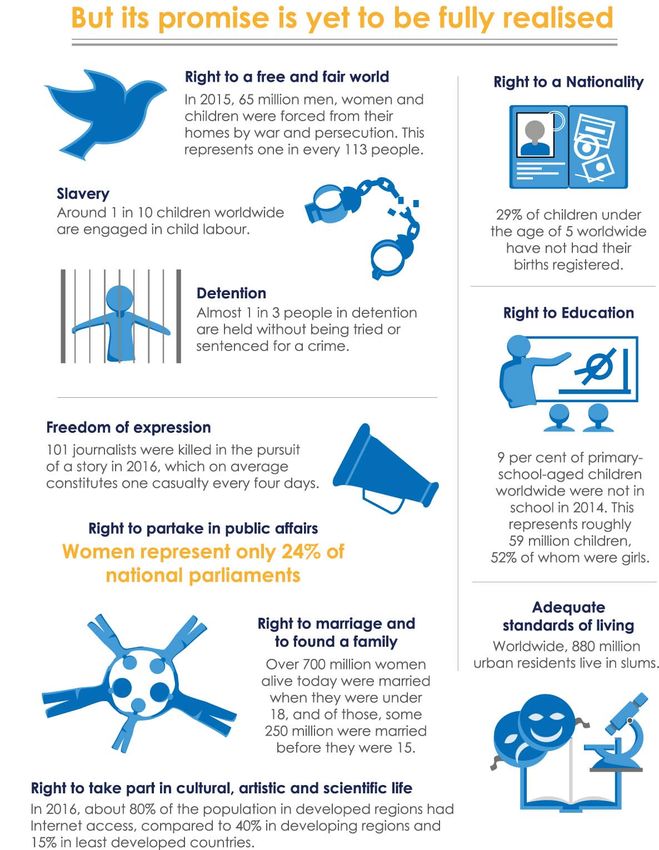
Foreword of the
High Commissioner
Denials of human rights are both a cause and a consequence of mul ple,
inter-related fractures that are breaking down our socie es: on-going and
new conflicts, inequality and depriva on, violent extremism, discrimina-
  on, and an increasing effort to curtail democra c space.

The upholding of human rights could solve virtually all the issues we
confront. Humanity has done this before. Our forebears in the past
century faced similar challenges, and far worse ones — and they le
us a road-map to their solu ons: the Universal Declara on of Human
Rights (UDHR).

In 2018, while we celebrate the 70th anniversary of its adop on, this
milestone text is just as relevant, as urgently useful, as it was at the
close of World War II. It is a dis lla on of the lessons of preceding
genera ons. It draws on experience of every kind of disaster that
humanity can face – the exploita on of colonialism, atomic destruc-
  on, the horror of genocide and global conflict. It is a statement of the
fundamental truth of human equality, drawing on visions from many
cultures of what it means to be human.
The Declara on lists the ways to build socie es where there is greater jus ce and stronger par cipa on;
more economic and social rights. Deeper respect, less discrimina on. The 30 Ar cles of the UDHR build jus-
 ce, combat extremism and despair.

Thanks to the Declara on, and States’ commitment to its principles, the dignity of millions has been upli ed
and untold human suffering prevented. While its promise is yet to be fully realised, it has helped countless
people gain and enjoy greater freedoms and more dignity.

The 70th anniversary provides us with an opportunity to engage a broad range of audiences, to raise aware-
ness of the UDHR’s con nued relevance and to reflect on what has been achieved in the past seven decades
as well as today’s challenges.

Later this year, we will launch our programme of work for the coming four years. A central part of that work
will be to build a global cons tuency for rights; to help prevent violence; expand civic space and address the
overarching challenges of our mes from a human rights perspec ve.

To carry out this work, we rely on the support of Member States and other partners. I am grateful for the re-
cord amount of voluntary contribu ons we received in 2017 and the fact that 47 per cent of these funds were
unearmarked. S ll, it fell short of the target amount we needed to respond to all requests for assistance.

I appeal to all Governments for their con nued and even stronger support in 2018. As important as it is for
us to increase our funding, it is equally important that we establish the widest possible support base for our
work. In 2017, 63 Members States voluntarily contributed to my Office. On this anniversary year of the UDHR
and as we launch our 4-year plan, I call for universal voluntary support. Increasing the number of donor
countries is the best way to reflect the true breadth and diversity of the interna onal support that exists for
human rights, like it was the case when the Declara on was adopted.

Please join us in standing up for human rights – this year and beyond.
                                                                                                             3
Zeid Ra’ad Al Hussein
High Commissioner for Human Rights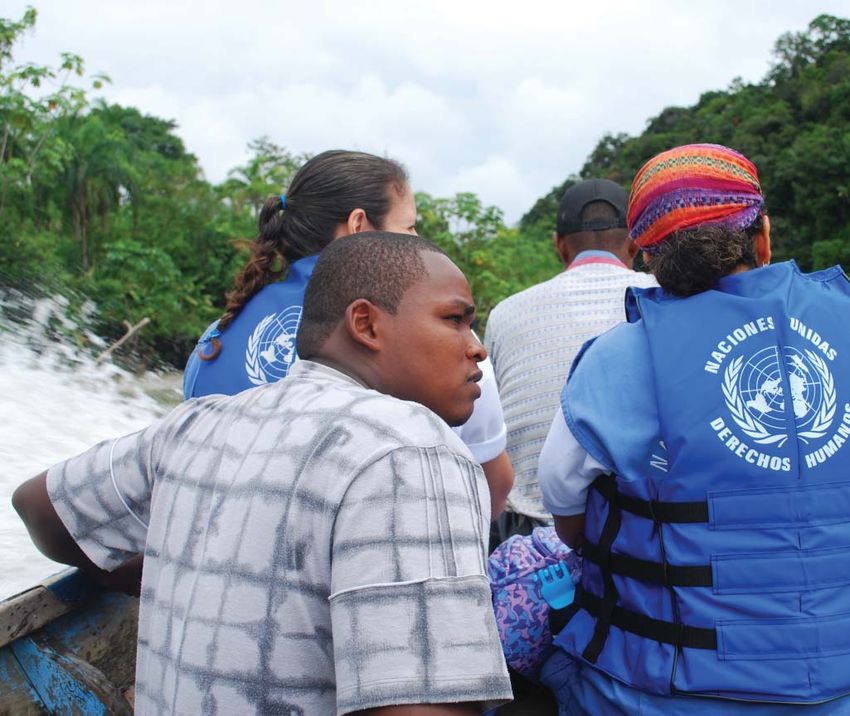
Highlights of our
    work in 2017

4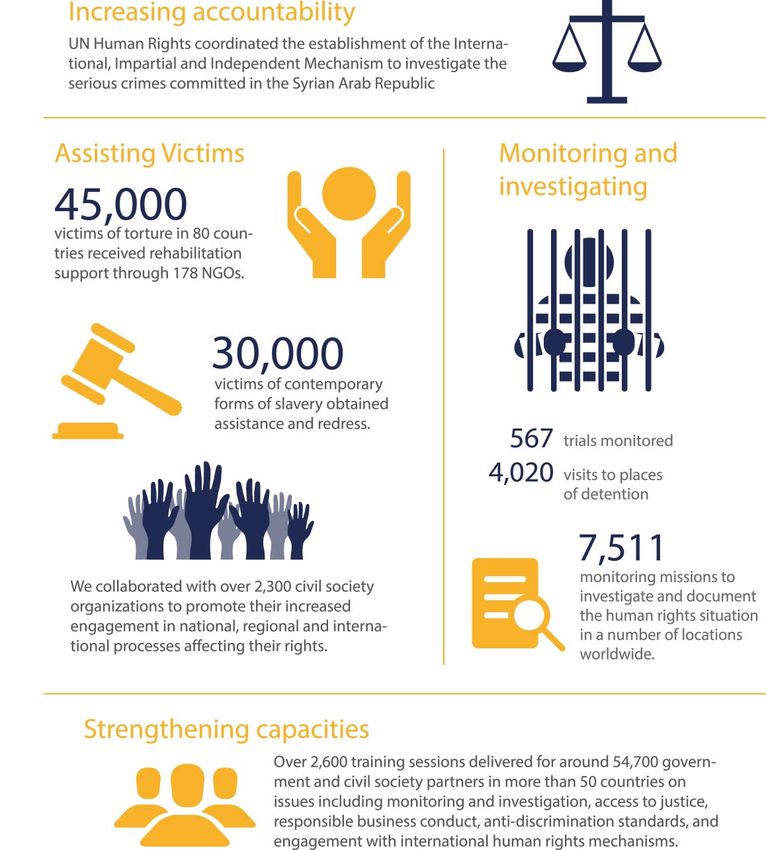
United Na ons Human Rights Appeal 2018

UN Human Rights Officers during a monitoring mission in Ukraine © OHCHR

                                                              5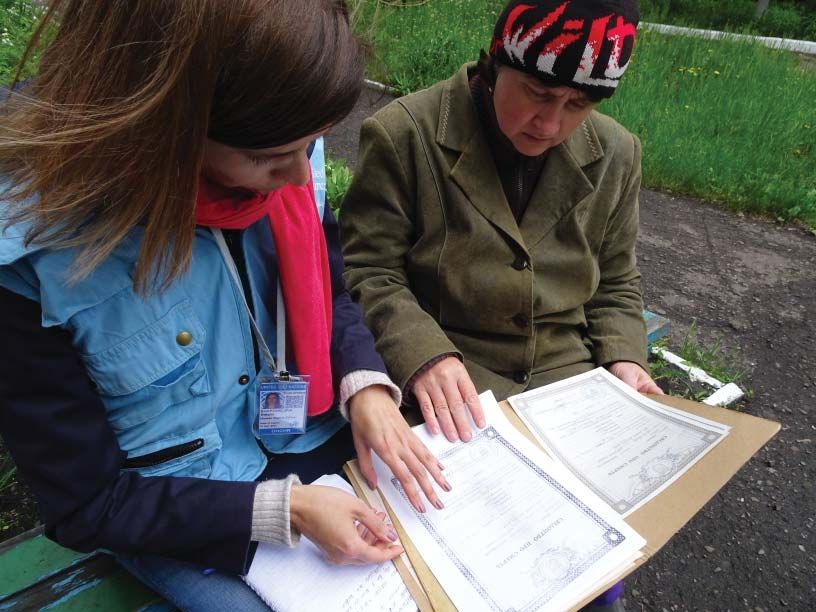
UN Human Rights
    2018-2021 Roadmap
    The journey forward
    Through broad-based consulta on in 2017 with Member States, the UN system, civil society, the phil-
    anthropic community and the private sector, we confirmed a new results roadmap to 2021.

    The pillars of our work
    This results-framework - our management plan - is            Consulta ons on our Roadmap
    built around the six pillars that frame OHCHR’s
    priori es, being the core components of the                      100+ Member States
    Office’s mandate. These embody the universality
    and indivisibility of human rights and are relevant              5 Regional consulta ons with
    to all countries.                                                140+ external stakeholders
    The Pillars are: the core human rights principles
                                                                     40 UN en es
    of par cipa on, non-discrimina on and account-                   Civil society
    ability; the mainstreaming of human rights across
                                                                     Online survey of 900+ people
    development and peace and security, the other
    pillars of the UN; and, support of the UN human                  UN Human Rights in Geneva, New
    rights system.                                                   York and the regions
    Over the next four years our strategic objec ves
    for UN Human Rights’ thema c pillars are defined as:

    1. Accountability - Strengthening rule of law and accountability for human rights viola ons
    2. Par cipa on - Enhancing and protec ng civic space and people’s par cipa on
    3. Non-Discrimina on - Enhancing equality and countering discrimina on
    4. Development: Integra ng human rights in sustainable development
    5. Peace and Security – Suppor ng early warning, preven on and protec on of human rights in
       situa ons of conflict and insecurity
    6. Interna onal Human Rights Mechanisms - Increasing implementa on of the interna onal
       human rights mechanisms’ outcomes.

    Making a shi
    We also iden fied key areas in which we need to “shi ” our approach. These “shi s” will focus our efforts, as
    one Office, to ensure coherence, scale and measurable human rights impact in a changing external environ-
    ment. Across all six pillars, we will work to help:

    1. Broaden the global cons tuency for human rights
         Engaging a broader range of audiences to help counter roll back on human rights.

    2. Protect and expand civic space
         Emphasising the future of civic space as a threshold issue since without it, human rights cannot be effec-
          vely protected, promoted and enjoyed.

6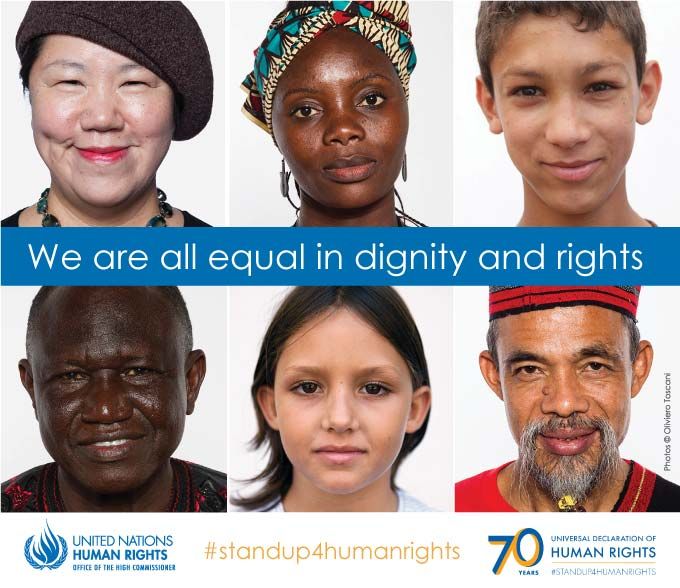
United Na ons Human Rights Appeal 2018

                               A team of UN Human Rights Officers heading in to a remote community in Colombia © OHCHR

3. Prevent conflict, violence and insecurity
   Enhancing recogni on of the value of human rights in efforts to prevent conflict, building on the
   Human Rights Up Front framework and directly contribu ng to the Secretary-General’s strategy on
   preven on.

4. Deliver human rights in the context of “fron er” issues
   Given major challenges to the future of people, peace, prosperity and planet (.i.e. climate change,
   corrup on, digital space, inequality and migra on) have o en unseen but cri cal human rights
   dimensions.

                                                                                                                7
Roadmap 2018-2021

        Leaving no-one behind – suppor ng implementa on of the
        Sustainable Development Goals
        Our results roadmap is anchored in the goals and targets of the 2030 Sustainable Development Agen-
        da and with a par cular emphasis on the human rights based commitment to “leave no one behind”.
        In this spirit, over the next four years we will shine a par cular spotlight on the human rights of
        women, young people and people living with disabili es.

        Changing how we operate
        To deliver successfully on our promised results, we will also adjust how we work opera onally,
        including in our field presences. Whole-of-office Organiza onal Effec veness Ac on Plans will guide
        our efforts as we:

        1. Put our people front and centre by enhancing talent management, strengthening performance,
           deepening diversity across our staff cohort and ensuring we help deliver on the Secretary General’s
           Gender Parity strategy.

        2. Enhance how we work together as one Office by strengthening knowledge management, fostering
           innova on, and sharpening strategy;

        3. Pivot to the external world by transforming our communica ons approach and mobilizing high
           quality partnerships;

        4. Deliver measureable value opera onally by diversifying our resource mobiliza on and through
           con nuous improvement in opera ons management.

        The OHCHR Management Plan 2018-2021 will be launched in the first semester of 2018.

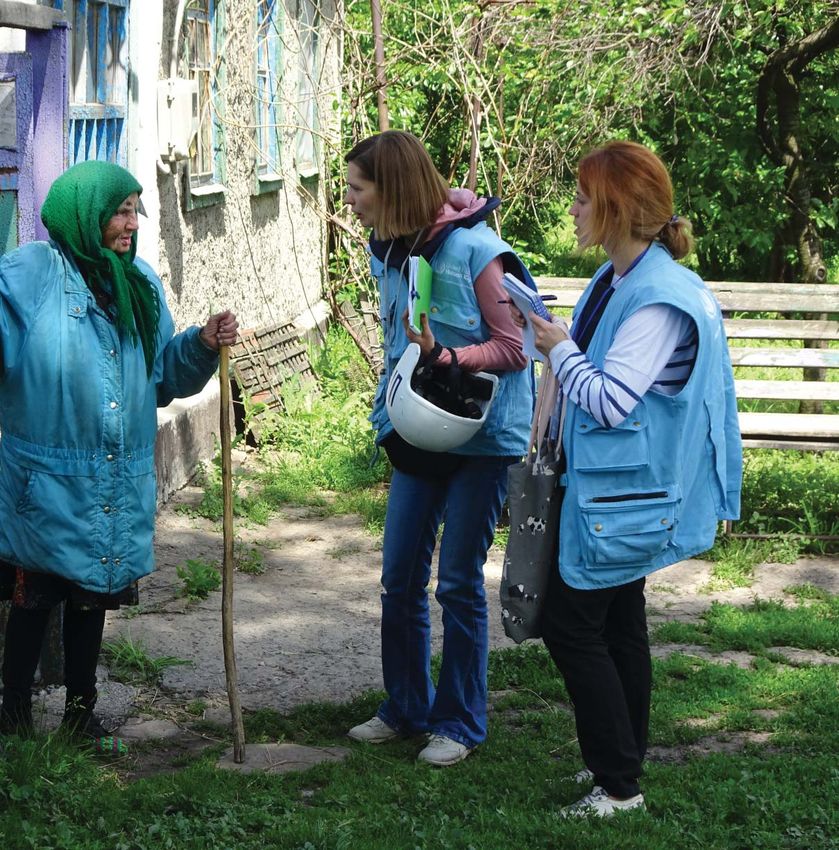
                                              UN Human Rights Officer discussing with local resident, Ukraine © OHCHR

8
United Na ons Human Rights Appeal 2018

The Results UN Human Rights Delivers
 State laws and policies protec ng and promo ng
 human rights.

 State ins tu ons, non-state actors and the private
 sector promo ng, protec ng and respec ng human
 rights.

 State accountability mechanisms monitoring inves -
 ga ng and providing redress for human rights viola-
  ons.

 Public par cipa on in policy-making processes,
 par cularly by women and members of groups facing
 discrimina on.

 Wider-spread public support for protec on of human
 rights.

 Member States and other actors engaging with United
 Na ons human rights mechanisms.

 Interna onal and regional human rights mechanisms
 and bodies promo ng and protec ng human rights
 effec vely

 The interna onal community responding to cri cal
 human rights situa ons and issues.

 Interna onal human rights law and standards devel-
 oping.

 Human rights effec vely integrated in UN policies and
 programmes.

                                                                                            9
Celebra ng the
     Universal Declara on
     The year 2018 marks the 70th anniversary of the Universal Declara on of Human Rights. This is an
     occasion to celebrate the many achievements of the UDHR but also to reflect on the extent to which
     its promise is as yet unfulfilled. This is also a moment to reach out to new audiences, to spread the
     Declara on’s message of hope and a me for everyone to recommit to universal human rights to
     “Stand up for human rights”.
     A milestone document in the global
     history of human rights, the UDHR is
     infused with values and ideals drawn
     from the world over. Proclaimed by
     the United Na ons General As-
     sembly on 10 December 1948, the
     Declara on was designed to prevent
     the repe on of the horrific human
     rights viola ons that had been com-
     mi ed during World War II. It estab-
     lishes the equal dignity and worth of
     each and every person and sets out
     a common standard of achievements
     for all peoples and all na ons.

     The Declara on was dra ed by a
     diverse group of experts from Australia, Canada, Chile, China, France, Lebanon, the Soviet Union, the
     United Kingdom and the United States. Eleanor Roosevelt was the first chair of the fledgling United
     Na on’s Commission on Human Rights and other dra ers included Chang Peng-Chun, the Chinese
     playwright, philosopher and diplomat was vice-chair of the commission; Dr. Charles Malik, the Leba-
     nese academic, philosopher, and ethicist who, as rapporteur, played a vital role in shaping the ethical
     contents of the UDHR; and René Cassin, a French jurist, judge, and legal advisor to General Charles
     de Gaulle.

     The Declara on holds the Guinness World Record as the world’s most translated document, in over
     500 languages.

     To highlight what the Universal Declara on means for people in their everyday lives, UN Human
     Rights launched a year-long campaign that will culminate in the actual occasion of the Declara on’s
     70th anniversary celebra on on 10 December 2018. Please join us to:

           PROMOTE: Raise public awareness of the UDHR as a cri cal milestone for human rights and
           highlight what it means for people in their everyday life.

           ENGAGE: Mobilise a wide range of actors in the promo on and protec on of human rights.

           REFLECT: Take stock of what has been achieved, of the state of human rights in the world
           today and reflect upon the challenges and opportuni es to come.

      Please visit our campaign website: www.standup4humanrights.org and contact us at udhr70@ohchr.org to
      discuss how you can contribute.
10
United Na ons Human Rights Appeal 2018
Our key messages for the 70th anniversary of the UDHR
The UDHR empowers us all
Human rights are relevant for all of us, every day
Our shared humanity is rooted in these universal values
Equality, jus ce and freedom prevent violence and sustain peace
Whenever and wherever humanity’s values are abandoned, we all are at greater risk
We need to stand up for our rights and those of others.
#Standup4HumanRights
The Vienna Declara on and Programme of Ac on
2018 also marks the 25th anniversary of the Vienna Declara on and Programme of Ac on, which
took the fundamental no on of universality of the Declara on a step further, by acknowledging the
inseparability of all human rights. All States recognised that all human rights are “indivisible, inter-
dependent and interrelated” and it was on this occasion that the posi on of United Na ons High
Commissioner for Human Rights was established.
11Funding and Budget
The Year 2017 at a Glance
Extrabudgetary resources
Voluntary contribu ons fund around 54 per cent of OHCHR’s budget. However, the Office requires
greater financial support from Member States and other donors, including the private sector, to more
fully implement its mandate and contribute its unique capacity so that human rights are promoted
and upheld more broadly.
In 2017, OHCHR received US$142.8 million* in extrabudgetary contribu ons, compared to US$129.5
million in 2016. This 10 per cent growth was mainly thanks to a number of countries substan ally
increasing their contribu ons. The addi onal income was a much appreciated investment in human
rights and meant the Office could meet more of the demands placed on it. S ll, the amount given
falls far below the US$252.9 million in extrabudgetary funding we sought.
The overall increase of 10% was comprised of both earmarked and unearmarked contribu ons. For
the fourth year since 2008, earmarked contribu ons (57%) surpassed unearmarked ones (43%) in
2017. However, unearmarked funds reached the second highest amount ever at US$61.4 million.
Some of the increase in earmarking can be a ributed to receipt of more local funding for field
ac vi es as well as contribu ons from non-tradi onal budget lines that can only be accessed as
earmarked funds. Other contribu ons that were previously unearmarked have been transformed
into more circumscribed funding. While addi onal funding is much appreciated, the ongoing trend
towards earmarking limits the Office’s capacity to allocate resources to where they are most urgently
required and demands more constant budgetary adjustments over the course of the year.
Regular budget
The United Na ons regular budget should finance all ac vi es mandated by the General Assembly
and its subsidiary organs, including the Human Rights Council.
Human rights, alongside development and peace and security, is recognized as one of the three
pillars of the UN system. Although human rights are central to the work of the en re UN system,
its regular budget alloca on is by far the smallest of three. While approximately half of all regular
budget resources directed to the three pillars, human rights receives less than 8 per cent of those re-
sources. The approved regular budget appropria on for the Office in 2018-2019 is US$201.6 million,
is just 3.7 per cent of the total UN regular budget.
Once again, the final approved 2018-2019 regular budget is a step backwards from the longstanding
principle of “zero growth”, as it entails a number of reduc ons resul ng from the General Assembly’s
decisions, including across-the-board reduc ons of between 5 per cent to 25 per cent on several
budget lines.
14
*Figures es mated at the me of print. To be adjusted and confirmed upon the final closure of the 2017 accounts.United Na ons Human Rights Appeal 2018
To a large extent, these reduc ons offset the resources approved for new mandates adopted by the
Human Rights Council in 2016 and 2017. The official human rights mandates con nue to grow in
number and in scope, but regular budget resources are not keeping pace. As a result, UN Human
Rights con nues to rely on voluntary contribu ons to finance as much as ten per cent of officially
mandated ac vi es that ought to be financed by the regular budget.
This challenging financial situa on is further exacerbated by the ming of alloca ons. Although
most of the resources required for new mandates are approved each year, the delay in their pres-
enta on to the General Assembly means that the Office is forced to rely on exis ng resources to
cover new ac vi es with a more immediate meline.
Financial requirements
For the Office to respond posi vely to the requests for assistance it receives, the level of project-
ed extrabudgetary resource must also grow. An amount of US$278.3 million is es mated as the
requirement for 2018 in this regard.
The Office demonstrates through this Appeal the full extent of these requirements, as opposed to
focusing only on its opera ng cost plans. Nevertheless, the needs-based budget presented herein
is s ll limited to what can realis cally be implemented within a single year. For this reason, and
due to the lengthy recruitment process the Office must adhere to, some increases, notably in the
field, remain modest. To increase the reach of field presences requires a steady build-up of human
resources and budgets over me.
Breakdown of donors in 2017 by brackets of contribu on
Breakdown of donors in 2017 by geographic group
15
*Figures es mated at the me of print. To be adjusted and confirmed upon the final closure of the 2017 accounts.Regular budget alloca on and extrabudgetary requirements for 2018 - Overview
Extrabudgetary Total
All figures in US$ Regular budget requirements (planning figures)
Opera ng Resources
Programme of Work
Subprogramme 1:
Human Rights Mainstreaming, Right to Development, Research and Analysis 13,575,000 22,351,900 35,926,900
Subprogramme 2:
Suppor ng the Human Rights Trea es Bodies 14,472,600 9,154,900 23,627,500
Subprogramme 3:
Advisory Services and Technical Coopera on1 25,217,500 24,301,400 49,518,900
Subprogramme 4:
Suppor ng the Human Rights Council and its Special Procedures 21,313,400 22,404,000 43,717,400
Headquarters
Execu ve Direc on and Management and New York Office 7,785,000 23,566,900 31,351,900
Policymaking Organs 8,457,100 - 8,457,100
Other
Headquarter effec veness - 3,509,300 3,509,300
Right Up Front Ini a ve Ac on Plan - 6,424,400 6,424,400
Unmet requests for HRAs (ac vi es) - 1,500,000 1,500,000
Support to the Programmes 5,165,700 11,526,000 16,691,700
Subtotal Headquarters 95,986,300 124,738,900 220,725,200
Field Presences
Africa 2,461,900 47,504,000 49,965,900
Americas 1,761,500 29,485,600 31,247,100
Asia and the Pacific 3,359,400 13,770,100 17,129,500
Europe and Central Asia 1,865,000 13,687,800 15,552,800
Middle East and North Africa 3,400,300 26,284,700 29,685,000
Regular Programme of Technical Coopera on 2,031,400 - 2,031,400
Programma c, Outreach and Administra ve Func ons at Regional or Country level - 6,416,000 6,416,000
Subtotal Field Presences 14,879,500 137,148,200 152,027,700
Total Opera ong resources (HQ + Field Presences) 110,865,800 261,887,100 372,752,900
Other Trust Funds
Voluntary Fund for Vic ms of Torture - 11,414,500 11,414,500
Voluntary Fund for Indigenous Peoples - 592,000 592,000
Trust Fund on Contemporary Forms of Slavery - 1,265,500 1,265,500
Trust Fund for Universal Periodic Review - Par cipa on - 1,033,400 1,033,400
Trust Fund for Universal Periodic Review - Technical Assistance - 968,700 968,700
Trust Fund for Par cipa on of LDCs and SIDS in the HRC’s work - 450,200 450,200
Special Fund for the Op onal Protocol to the UN Conven on against Torture - 645,000 645,000
Total Other Trust Funds - 16,369,300 16,369,300
GRAND TOTAL 110,865,800 278,256,400 389,122,200
1
Includes regular budget allotments for commissions of inquiry.
16Regular budget alloca on and extrabudgetary requirements for 2018 - Headquarters
Extrabudgetary Total
All figures In US$ Regular budget
requirements (planning figures)
Subprogramme 1 - Human Rights Mainstreaming, Right to Development, Research and Analysis
Coordina on and Management 390,900 1,692,400 2,083,300
Rule of Law, Equality and Non-discrimina on Branch 4,652,500 8,734,700 13,387,200
Development, Economic and Social Issues Branch 4,995,200 11,924,900 16,920,100
Human Rights Council Mandates 3,536,400 - 3,536,400
Subtotal subprogramme 1 13,575,000 22,351,900 35,926,900
Subprogramme 2 - Suppor ng the Human Rights Trea es Bodies
Coordina on and Management 372,800 - 372,800
Human Rights Trea es Branch 14,099,800 8,644,500 22,744,300
Treaty Bodies Webcas ng Arrangements - 510,400 510,400
Subtotal subprogramme 2 14,472,600 9,154,900 23,627,500
Subprogramme 3 - Advisory Services and Technical Coopera on Division
Coordina on and Management 2,855,800 6,037,000 8,892,800
Africa Branch 1,965,000 2,771,800 4,736,800
Americas, Europe and Central Asia Branch 2,079,700 3,478,300 5,558,000
Asia-Pacific, Middle East and North Africa 2,629,500 7,033,300 9,662,800
Human Rights Council Mandates 14,113,200 - 14,113,200
Commissions of inquiry 1,574,300 - 1,574,300
Inves ga on Capacity - 4,981,000 4,981,000
Subtotal subprogramme 3 25,217,500 24,301,400 49,518,900
Subprogramme 4 - Suppor ng the Human Rights Council and its Special Procedures
Coordina on and Management 387,100 1,347,300 1,734,400
Human Rights Council Branch 2,594,500 2,083,000 4,677,500
Universal Periodic Review Branch 3,930,900 2,659,800 6,590,700
HRC and UPR webcas ng - 760,900 760,900
Special Procedures Branch 7,916,200 11,783,500 19,699,700
Special Procedures Branch - Earmarked/Specific Funding - 3,769,500 3,769,500
Human Rights Council Mandates 6,484,700 - 6,484,700
Subtotal subprogramme 4 21,313,400 22,404,000 43,717,400
Execu ve Direc on and Management and New York Office 7,785,000 23,566,900 31,351,900
Policymaking Organs 8,457,100 - 8,457,100
Other
Headquarter effec veness - 3,509,300 3,509,300
Rights Up Front Ini a ve Ac on Plan - 6,424,400 6,424,400
Unmet requests for HRAs (ac vi es) - 1,500,000 1,500,000
Support to the Programmes 5,165,700 11,526,000 16,691,700
Subtotal Headquarters 95,986,300 124,738,900 220,725,200
Other Trust Funds
Voluntary Fund for Vic ms of Torture - 11,414,500 11,414,500
Voluntary Fund for Indigenous Peoples - 592,000 592,000
Trust Fund on Contemporary Forms of Slavery - 1,265,500 1,265,500
Trust Fund for Universal Periodic Review - Par cipa on - 1,033,400 1,033,400
Trust Fund for Universal Periodic Review - Technical Assistance - 968,700 968,700
Trust Fund for Par cipa on of LDCs and SIDS in the HRC’s work - 450,200 450,200
Special Fund for the Op onal Protocol to the UN Conven on against Torture - 645,000 645,000
Total Other Trust Funds - 16,369,300 16,369,300
17
Total Headquarters and Trust Funds 95,986,300 141,108,200 237,094,500Extrabudgetary requirements for 2018 - Field
Extrabudgetary requirements
Africa All figures In US$
Country Offices
Burundi 3,926,500
Chad 2,656,200
Guinea 3,871,300
Uganda 5,716,200
Regional Offices
Central Africa, Yaoundé - Subregional Centre for Human Rights and Democracy 320,700
East Africa, Addis Ababa 2,253,900
Southern Africa, Pretoria 986,000
West Africa, Dakar 5,753,900
Human Righs Advisers
Kenya 963,400
Madagascar 1,206,500
Malawi* 299,900
Niger 164,000
Nigeria 868,500
Rwanda 547,500
Sierra Leone* 206,500
Zimbabwe* 258,800
Human Rights Components in Peace Mission
Central African Republic 596,100
Democra c Republic of the Congo 6,457,800
Liberia 2,105,800
Mali 265,400
Somalia 222,000
South Sudan 122,600
Sudan, Darfur 234,500
Other
Sahel G5 7,500,000
Subtotal Africa 47,504,000
Middle East and North Africa
Country Offices
Mauritania 1,418,900
State of Pales ne** 3,447,900
Tunisia 3,003,400
Yemen 4,817,000
Regional Offices
Middle East and North Africa, Beirut 3,595,400
South-West Asia and the Arab Region, Doha - Training and Documenta on Centre 1,239,400
Human Rights Advisers
Jordan* 256,000
Human Rights Components in Peace Missions
Iraq 618,900
Libya 1,908,100
Other
Saudi Arabia 1,753,300
Syria 4,226,400
Subtotal Middle East and North Africa 26,284,700
* Human Rights Advisers funded by the UNDG Human Rights Working Group
** Reference to Pales ne should be understood in compliance with United Na ons General Assembly resolu on 67/19.
18Americas All figures In US$
Country Offices
Colombia 13,052,000
Guatemala 5,420,500
Honduras 2,568,800
Mexico 3,315,700
Regional Offices
Central America, Panama City 603,600
South America, San ago 1,320,400
Human Rights Advisers
Argen na* 87,600
Barbados* 125,000
Brazil* 93,200
Dominican Republic* 276,400
Ecuador* 81,800
Jamaica * 262,500
Paraguay 617,100
Peru* 101,700
Uruguay* 129,900
Venezuela 500,000
Human Rights Components in Peace Missions
Hai 408,400
Other
Bolivia 168,300
El Salvado 352,900
Subtotal Americas 29,485,600
Asia and the Pacific
Country Offices
Cambodia 2,962,200
Myanmar 1,660,500
Republic of Korea - Field-based structure 234,500
Regional Offices
South-East Asia, Bangkok 3,844,100
Pacific, Suva 1,471,500
Human Rights Advisers
Bangladesh* 242,000
Malaysia* 53,200
Papua New Guinea 1,245,000
Philippines* 618,600
Sri Lanka 370,700
Timor-Leste* 618,600
Human Rights Components in Peace Missions
Afghanistan 449,100
Subtotal Asia and the Pacific 13,770,100
Europe and Central Asia
Regional Offices
Central Asia, Bishkek 1,401,000
Europe, Brussels 764,100
Human Rights Advisers
Belarus* 240,200
Southern Caucasus 791,000
Human Rights Mission
Ukraine 6,872,000
Other
Azerbaijan 809,200
Georgia 347,300
Moldova 857,400
Russian Federa on 949,100
Serbia
656,600
Subtotal Europe and Central Asia 13,687,800
Programma c, Outreach and Administra ve Func ons at Regional or Country Level 6,416,000
Total Field 137,148,200Trust Funds
Voluntary contribu ons to support OHCHR’s ac vi es are channeled and managed through nine Unit-
ed Na ons trust funds, as well as three special funds (the OP-CAT Special Fund, the Special Fund for
civil society par cipa on and the Con ngency Fund). In addi on, the Office receives contribu ons
through United Na ons mul -donor trust funds.
While OHCHR encourages funding to be unearmarked whenever possible, contribu ons to these
Funds must be specifically earmarked in order to be a ributed.
Funds administered by the UN Human Rights Office
The UN Trust Fund for the Support of the Ac vi es of the High Commissioner for Human Rights was
set up in 1993 to supplement regular budget resources. It is the largest fund administered by OHCHR
and is used to manage approximately 75 per cent of all extrabudgetary funds received (especially
unearmarked funds).
The UN Voluntary Fund for Technical Coopera on in the field of Human Rights was established in
1987 to support na onal efforts at building human rights protec on frameworks, including strong
legal frameworks, effec ve na onal human rights ins tu ons, independent judiciaries and vibrant
civil society organiza ons.
OHCHR also administers and manages the UN Trust Fund for a Human Rights Educa on
Programme in Cambodia that was established in 1992. The objec ve of the Fund is to contribute to
the development and implementa on of a human rights educa on programme in Cambodia to pro-
mote the understanding of and respect for human rights.
The UN Voluntary Fund for Par cipa on in the UPR mechanism was established in 2008 to facilitate
the par cipa on of official representa ves from developing and least developed countries in the UPR
process and provides training for the prepara on of na onal reports.
The UN Voluntary Fund for Financial and Technical Assistance for the Implementa on of the UPR,
also established in 2008, provides financial and technical support to implement recommenda ons
issued under the UPR review process, at the request of and in consulta on with the country con-
cerned.
Voluntary Technical Assistance Trust Fund to Support the Par cipa on of Least Developed
Countries and Small Island Developing States in the work of the Human Rights Council. This Fund
was established in 2013 through Human Rights Council resolu on 19/26 to enhance the ins tu onal
and human rights capacity of Least Developed Countries and Small Island Developing States through
the provision of targeted training courses, travel assistance for delegates a ending Council sessions
and fellowship programmes.
OHCHR acts as the Secretariat for the following three grant-making trust funds that were each es-
tablished by a General Assembly resolu on. These funds provide financial assistance to civil society
organiza ons and individuals working in specific fields of human rights.
The UN Voluntary Fund for Vic ms of Torture, established in 1981, awards grants to organiza ons
working to alleviate the physical and psychological effects of torture on vic ms and their families. The
types of assistance provided by Fund-supported organiza ons range from psychological, medical and
social assistance to legal aid and financial support.
The UN Trust Fund on Contemporary Forms of Slavery, set up in 1991, distributes small
grants to grassroots projects that provide humanitarian, legal and financial aid to vic ms of contem-
20 porary forms of slavery. The Fund primarily focuses on projects that assist individuals who are suf-United Na ons Human Rights Appeal 2018
fering from the most severe forms of human rights viola ons occurring in the context of contemporary
forms of slavery and other forms of exploita on.
The UN Voluntary Fund for Indigenous Peoples, established in 1985, provides indigenous
peoples with the opportunity to raise issues faced by their communi es at the interna onal
level and par cipate in the development and implementa on of interna onal standards and na onal
legisla on for the protec on of their rights. Funds are distributed in the form of travel grants to enable
indigenous peoples to par cipate in UN mee ngs and events.
OHCHR Con ngency Fund
A Con ngency Fund of US$1 million was established by the Office to enable it to respond to human
rights emergencies in a mely and adequate manner. The revolving Fund is maintained through volun-
tary contribu ons for rapid response ac vi es and is used to facilitate, implement or carry out ac v-
i es within the priori es, overall strategies and policies of the Office, in par cular in the context of
the establishment of a rapid response capacity. The Fund has greatly increased the capacity of OHCHR
headquarters to provide conceptual and opera onal support to unforeseen mandates or situa ons that
require a rapid response.
Special Fund established by the Op onal Protocol to the UN Conven on against Torture
The objec ve of this Fund is to help finance the implementa on of recommenda ons issued
by the Subcommi ee on Preven on of Torture and Other Cruel, Inhuman or Degrading Treatment
or Punishment (SPT), following a visit of the Subcommi ee to a State Party, as well as educa on pro-
grammes of na onal preven ve mechanisms (NPMs). Recommenda ons have to be contained in a
report made public upon request of the State Party. Applica ons may be submi ed by State Par es and
NPMs, by na onal human rights ins tu ons compliant with the Paris Principles and NGOs, provided
that the proposed projects are implemented in coopera on with State Par es or NPMs.
The Special Fund for the Par cipa on of Civil Society in the Social Forum, the Forum on Minority
Issues and the Forum on Business and Human Rights was created by Human Rights Council’s decision
24/118 of 27 September 2013. It aims to facilitate the broadest possible par cipa on of civil society
representa ves and other relevant stakeholders, and to give priority to the par cipa on of local or
na onal-level non-governmental organiza ons ac ve in relevant fields, with par cular a en on being
paid to par cipants from Least Developed Countries, in the annual mee ngs of the three forums. The
Special Fund became opera onal soon a er the receipt of the first contribu ons in 2014.
Mul -Partner Trust Funds (not administered by OHCHR)
The UNDG Human Rights Working Group and the Mul -Partner Trust Fund
This Fund, set up in 2011, provides support to the work of UN agencies and UN Country Teams in main-
streaming human rights and strengthening coherent and coordinated responses to na onal needs. Over
the last decade, there has been significant progress in mainstreaming human rights into the work of the
UN system. An increasing number of UN agencies are not only integra ng human rights into their inter-
nal policies, but are also ac vely advoca ng for human rights through their mandated work. The Trust
Fund is used to support the placement of human rights advisers in UN Country Teams.
Mul -Partner Trust Fund on Indigenous Peoples
This Fund was established to advance the goals of the United Na ons Indigenous Peoples’ Partnership
(UNIPP). The UNIPP promotes the rights of indigenous peoples and supports governments, indigenous
peoples and organiza ons in establishing effec ve dialogue processes, mechanisms and partnerships
aimed at guaranteeing indigenous peoples’ rights.The Partnership includes ILO, UNICEF, UNFPA, UNDP
and OHCHR. The UNIPP Fund, administered by UNDP, was established in May 2010.
Mul -Partner Trust Fund on Disability
This Fund was established to achieve the objec ves of the UN Partnership to Promote the Rights of
Persons with Disabili es (UNPRPD). The partnership aims to develop the capaci es of na onal stake-
holders, par cularly governments and organiza ons of persons with disabili es, for the effec ve imple-
menta on of the Conven on on the Rights of Persons with Disabili es. The MDTF brings together six
UN en es: the Department of Economic and Social Affairs, UNDP, UNICEF, ILO, WHO and OHCHR. The
21
Disability Fund, also administered by UNDP, was officially launched in December 2011.GREATER
FREEDOM
STRONGER
RESPECT
MORE
COMPASSION
The designa ons employed and the presenta on of the material in this report do not imply the expression of any
opinion whatsoever on the part of the Office of the High Commissioner for Human Rights concerning the legal
status of any country, territory, city or area, or of its authori es, or concerning the delimita on of its fron ers and
boundaries.
Produced by the Donor and External Rela ons Sec on, Office of the High Commissioner for Human Rights.
Photos cover page: LeŌ: © UN Women/Ryan Brown, top: © Oliviero Toscani, right: © UN Photo/Pernaca Sudhakaran.
Photos this page: Top: © Oliver Weiken/EPA, middle: © Lynn Bo Bo/EPA, boƩom: © Sanjeev Gupta/EPA.
Office of the High Commissioner for Human#standup4humanrights
Rights
Palais des Na ons, CH 1211 Geneva 10 – Switzerland
To make a dona on: donatenow.ohchr.org
Email: dexrel@ohchr.org
Tel: +41 22 917 96 44
For more informa on:
www.ohchr.org
www.standup4humanrights.orgYou can also read


