VOLVO OCEAN RACE 2017-2018 - VESTAS 11TH HOUR RACING SUSTAINABILITY REPORT #LEADINGSUSTAINABILITY
←
→
Page content transcription
If your browser does not render page correctly, please read the page content below
VESTAS 11TH HOUR RACING
  SUSTAINABILITY REPORT
       #LEADINGSUSTAINABILITY

                                A
CONTENTS
           1    FOREWARD                               13   MAKING AN IMPACT
                                                            13 - Exploration Zone
                                                            14 - Legacy Project
           2    #LEADING SUSTAINABILITY                     15 - Ocean Summits
                                                            16 - Media & Fan Engagement
           4    THE VOLVO OCEAN RACE 2017-18
           		5 - Volvo Ocean Race
                 Sustainability Program                17   OPERATIONS & REDUCTION
                                                            ACHIEVEMENTS
           		6 - Boats and Logistics
                                                            18 - Environmental Footprint
                                                            19 - Greenhouse Gases (GHG) Emissions

           7    BECOMING THE MOST SUSTAINABLE               20 - Carbon Footprint Tracking
                TEAM IN THE RACE                            21 - Operational Scope
                                                            22 - Vestas 11th Hour Racing Carbon Footprint
           		7 - Background                                 23 - Carbon Footprint Compensation -
           		8 - Sustainability Training                         Seagrass Grow
           		9 - Planning for Sustainability                24 - Boat Repair
           		10 - Implementation and Monitoring             25 - Water Footprint
                                                            26 - Waste Footprint

           11   POWER OF PARTNERSHIPS                       27 - Dismasting
           		11 - Co-Title Partners                         28 - Waste Footprint Compensation
           		11 - Sub-Sponsor                               29 - Infographic
           		11 - Team Suppliers
           		12 - Musto Supplier Challenge -
                                                       30   APPENDIX
                                                            30 - File Links
                  Musto Reduces Plastic Usage by 70%
                                                            30 - Inclusions and Exclusions
FOREWARD
                                                          We are incredibly proud of the legacy our team       Vestas, the global leader in sustainable energy
                                                          has created with our sustainability initiatives.     solutions, aligned organically with our goals
                                                          When we started the Volvo Ocean Race                 and with 11th Hour Racing’s leadership and
                                                          campaign in 2017, our goal was to achieve            mission. We felt that this partnership would
                                                          exemplary results in sport and sustainability.       send a powerful signal - with two leading
                                                                                                               players within sustainability combining forces
                                                          We proved that racing for two very different         to promote sustainable solutions within
                                                          trophies on and off the water united the team        wind and water.
                                                          with a common ethos, without hindering
                                                          performance, and fostered powerful                   With these ambitious goals we put together
                                                          partnerships across our stakeholders -               a team of trusted, talented and passionate
                                                          ultimately helping us face adversity with            individuals, and we drafted a robust
                                                          perseverance and great determination.                sustainability strategy. Hiring Damian Foxall
                                                                                                               as the team’s Sustainability Manager was a
                                                          The process of creating Vestas 11th Hour             key milestone of our campaign that enabled
                                                          Racing started during the last edition of Volvo      us to get started in our journey with great
                                                          Ocean Race (2014-15). While reflecting on            knowledge, skill, enthusiasm, and leadership.
                                                          how much marine debris we saw as we sailed
                                                          around the world with Team Alvimedica, we            This sustainability report offers a
                                                          knew we wanted to compete again, using               comprehensive description, supported by
                                                          the platform of sport to raise awareness on          real data, of how our team was the most
                                                          pressing environmental issues, and helping to        sustainable to compete in the Volvo Ocean
                                                          source solutions to mitigate the problem.            Race. Most importantly, it demonstrates how
                                                                                                               performance, sustainability, and business can
       As sailors, we have a direct connection to         Having already worked with 11th Hour                 merge into a successful and replicable model
       the ocean. It’s our office, our playground,        Racing since the beginning of 2011 with All-         for the industry and beyond.
                                                          American Offshore Team when we raced in the
       and our livelihood; ultimately we                  Transatlantic Race, it was a natural progression     Along with this report, which we hope will
       are responsible for taking care of it.             for us to partner officially with the organization   serve as a guide for other teams looking to
                                                          to carry the message of sustainability through       become more sustainable.
Circumnavigating the globe opened our eyes to             the 2017-18 edition of the Volvo Ocean Race.
the tremendous amount of pollution that exists
and has motivated us to do something about it.
                                                          Mark Towill, Team Director - Vestas 11th Hour Racing
                                                          Charlie Enright, Skipper - Vestas 11th Hour Racing
– Charlie Enright, Skipper & Mark Towill, Team Director
                                                                                                                                                                 1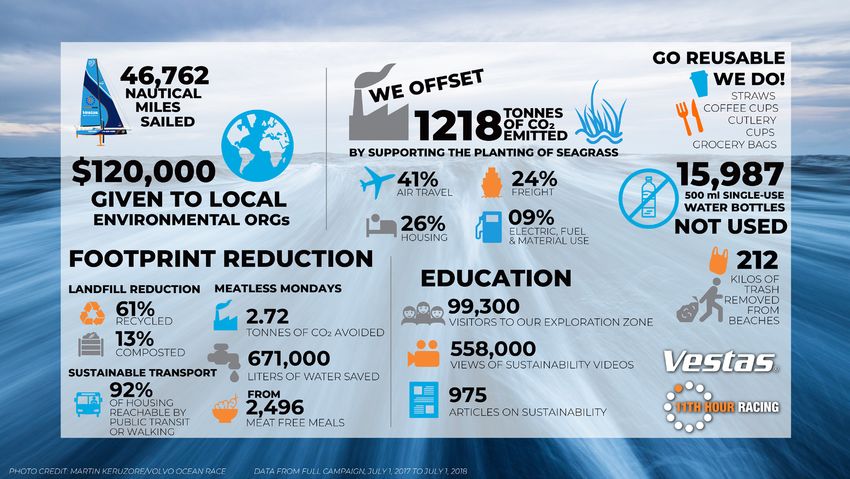
The unique journey by Vestas 11th Hour Racing of #leadingsustainability has been a hugely rich experience for all of the team members. We managed
       to significantly reduce our footprint, we reached out to millions of fans and most importantly we were able to leave a lasting legacy. The privilege to
       coordinate this project has given me a strong belief that our sport has a key role to play in the future of our ocean.

       This was the first time a comprehensive approach was taken to integrate sustainability as a core element of a Volvo Ocean Race team. The opportunities,
       challenges and the final achievements contained in this report showcase what is possible for sailing teams and the sailing industry as a whole.

       Engaging the team from the outset, with training received at the Cambridge Institute for Sustainability Leadership, helped define the sustainability
       strategy, objectives and boundaries of the sustainability plan which focused on the following:

    POSITIVE OUTREACH                                                   SUSTAINABLE OPERATIONS                                              ENVIRONMENTAL FOOTPRINT
    The team used the platform of the Volvo Ocean Race to raise         The team ran its operations using best practices to promote         The team used stringent global reporting guidelines to track,
    awareness of ocean health and environmental issues, and focus on    sustainability values and footprint reduction from the outset of    calculate and report on their emitted carbon, water, and
    sustainable solutions. This included:                               the campaign. This was demonstrated by partner relationships,       waste footprints. The final environmental footprints have been
                                                                        sourcing suppliers, and across the network of team operations -     acknowledged and compensated for, some highlights included:
                                                                        examples include:
    • Connecting directly with the public through outreach and
                                                                                                                                           • The team’s carbon footprint of 1,218 tonnes CO2e was
      education via media relations, social media and in person
                                                                       • The team’s technical clothing supplier Musto reduced                compensated for with a blue carbon offset program.
      at each stopover.
                                                                         their packaging footprint by 70% or a projected 11,000
                                                                                                                                           • Participating in the Meatless Mondays initiative saved
    • Public speaking engagements and conferences including              kilograms of plastic each year.
                                                                                                                                             a staggering 677,000 liters of water, and compensated
      presenting at the Volvo Ocean Race Ocean Summits to
                                                                       • Team supplier Bluewater provided on-site drinking water             for the 14,919 liters of water the team used during the
      discuss ocean health issues with local and
                                                                         solutions preventing the use of 9,600 liters of water,              campaign.
      international leaders.
                                                                         2,000 liters of fuel and 6.64 tonnes CO2e.                        • The team compensated for their waste footprint through
    • Participating in a legacy project, supported by 11th Hour
                                                                                                                                             a ghost fishnet recovery initiative that will recover more
      Racing, which allowed the team to award a grant to a local
                                                                                                                                             than 2 tonnes of old fishing gear from the ocean.
      organization at each stopover, and further their mission.

    • The outreach program was leveraged by a concerted
      communications effort generating over 313 million media
      impressions that mentioned sustainability.

       The results and methodology contained in this report establish an industry-recognized baseline for a Volvo Ocean Race team environmental footprint
       report. Additionally, a suite of generic tracking, calculating and reporting tools are being developed to streamline the future process of reporting
       environmental footprints, and acknowledging sustainability responsibilities for the wider sailing community.

       Damian Foxall
       Sustainability Manager & Sailor
2      Vestas 11th Hour Racing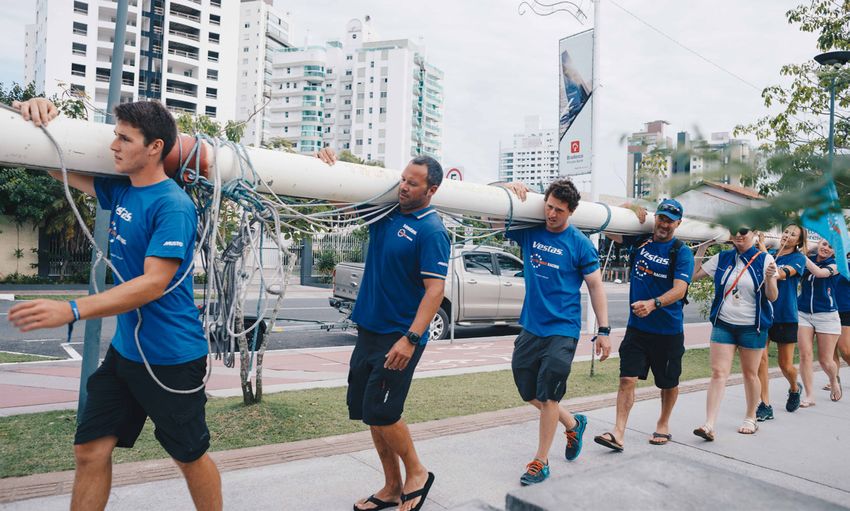
Across the country and around        positive change in the way we
the world, the sailing community     think about energy and the natural
knows that our livelihoods and       resources of the planet. As co-title
our passions are tied to healthy     sponsors of this team, we engaged
oceans. We also know that the        fans in increasing understanding
manufacturing, transportation and    about our vital connection to
widespread enjoyment of sailing      the oceans and showcase how
can have a negative impact on        embedding sustainability in a top-
ocean health. That’s why we focus    level professional sports team can
on the discovery and promotion       drive performance, efficiency,
of the most sustainable practices    and innovation.
across our sport and industry. Our   - Jeremy Pochman, 11th Hour Racing
partnership with Vestas 11th Hour     Co-Founder, and Strategic Director.

Racing has been about inspiring

                                                                            3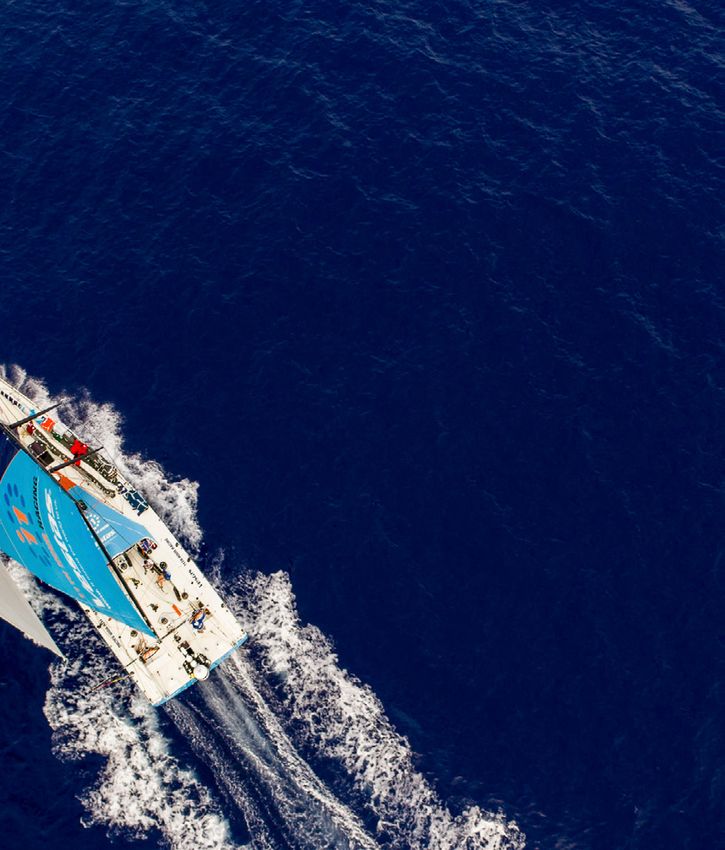
THE VOLVO OCEAN RACE 2017- 2018
    The 2017-18 Volvo Ocean Race was the longest and one of the most grueling editions of this iconic marathon around the planet that started in 1973. The 45,000
    nautical mile race started in Alicante, Spain, on 22nd October 22, 2017, and finished - 11 legs and 12 stopovers later - in The Hague, The Netherlands, on 24th June 24,
    2018. With three teams in close contention for the overall win until the very last miles, it was the closest and the most nail-biting finish the race has ever seen.

    LIST OF COMPETITORS                                                                                                                    The global platform of the Volvo
                                                                                                                                           Ocean Race meant that in each of
                                                                                                                                           the 12 landmark host cities, Vestas
    Team AkzoNobel                                                                                                                         11th Hour Racing had a unique
                                                                                                                                           opportunity to engage with the
    Team Brunel                                                                                                                            local community, understand local
                                                                                                                                           issues and spread their sustainability
    Dongfeng Race Team
                                                                                                                                           message to a global audience.
    MAPFRE
                                                                                                                                           While racing, Vestas 11th Hour
    Team Sun Hung Kai/Scallywag                                                                                                            Racing also leveraged the powerful
                                                                                                                                           communications platform of the race
    Turn the Tide on Plastic                                                                                                               - featuring high-quality storytelling
                                                                                                                                           using real, respected characters - to
    Vestas 11th Hour Racing                                                                                                                engage with their audience, foster
                                                                                                                                           positive behavior change, drive the
                                                                                                                                           conversation, and discuss issues with
                                                                                                                                           local relevance.

4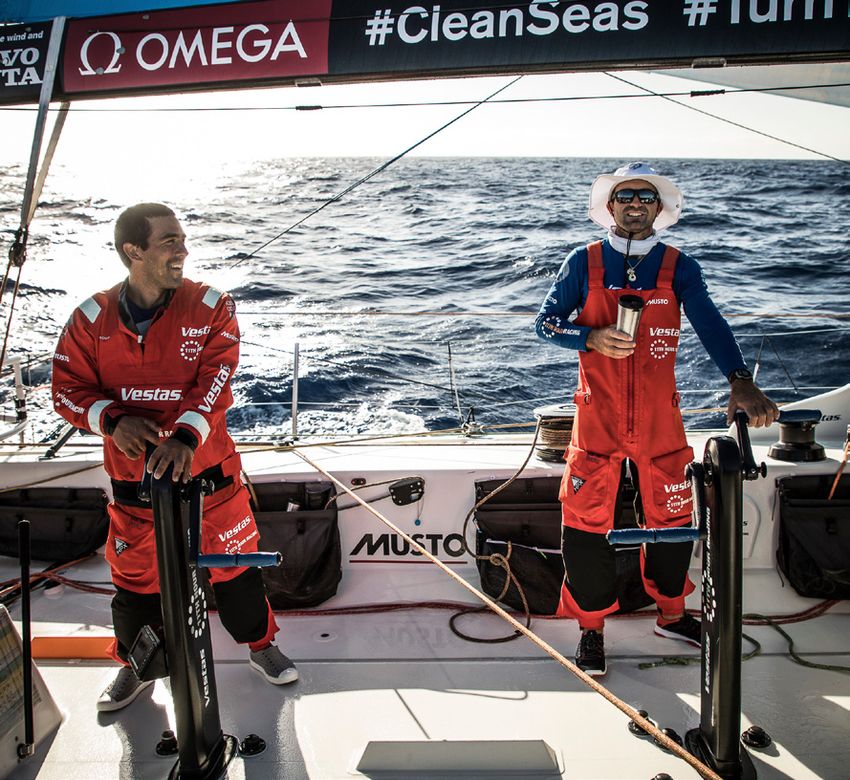
VOLVO OCEAN RACE SUSTAINABILITY PROGRAM
                                                                                                                              FEEDING FREENZY
As ocean racers, all those involved in the Volvo Ocean Race recognize the critical environmental challenges facing
us. That’s why the Volvo Ocean Race 2017-18 Sustainability Program focused on ocean health, specifically on
plastic pollution.

THE RACE ORGANIZERS IDENTIFIED THREE CLEAR DIRECTIVES:

  Maximize Impact - To maximize the race’s impact using its global communications platform to spread awareness,
  an educational programme to change views, and a science programme, using the Volvo Ocean 65 racing yachts
  to capture data while at sea and contribute to our understanding of the oceans in the most remote areas of
  the planet.

  Minimize Footprint - To minimize the race’s own footprint with a particular focus on reducing, and where
  possible, eliminating the use of single-use plastic in the Race Villages – a challenging task but one that will help to   While racing on Leg 4 from Melbourne
  change behavior.                                                                                                          to Hong Kong, Vestas 11th Hour Racing
                                                                                                                            witnessed an incredible sight, a feeding
  Leave a Positive Legacy - To leave a positive legacy wherever the Race goes, through our actions and through              frenzy of whales and sharks. The team’s
                                                                                                                            onboard reporter, Amory Ross, quickly
  the creation of Ocean Summits to bring together science, government, sport, and business, with an objective of
                                                                                                                            grabbed his drone and captured a bird’s
  getting attending parties to commit to new positive actions in this area.
                                                                                                                            eye view. Afterward, the team reflected on
                                                                                                                            the beautiful sight and the video went viral.
Volvo Ocean Race was able to achieve these goals by partnering with 11th Hour Racing, the Founding Principle                Click on the video to watch.
Partner of the Sustainability Program and Principal Race Partner, along with a set of credible partners with a global
reach and a strategic alignment.

                                                                                                                                                                        5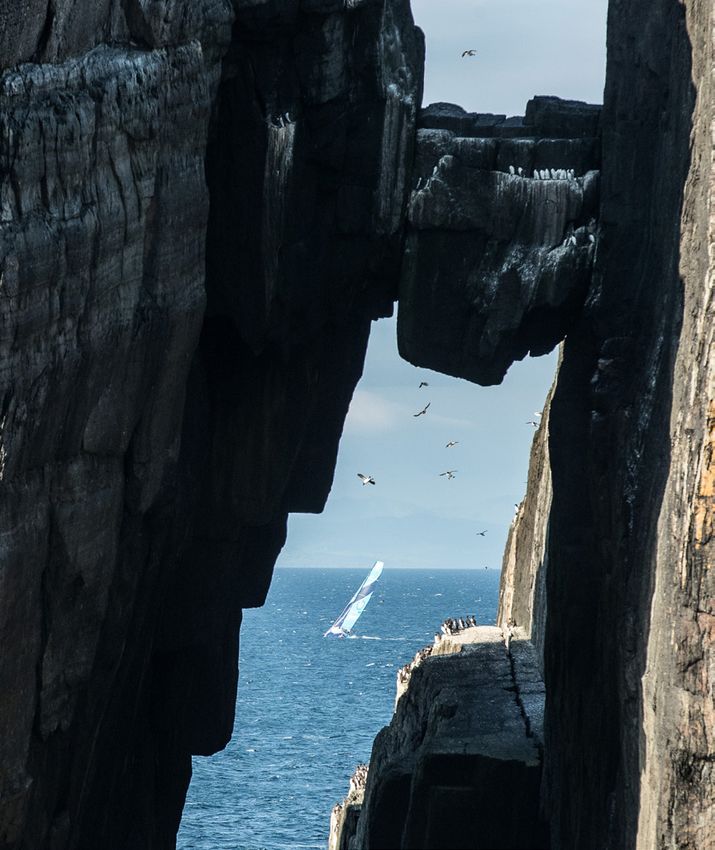
BOATS AND LOGISTICS

    The introduction of the one design VO65           The 2017-2018 Volvo Ocean Race route map, which included 12 stopovers and 45,000 nautical miles of racecourse.
    for the 2014-15 edition was a revolutionary
    move by the race organizers which would
    dramatically reduce team entry costs and
    increase the competitiveness of the boats
    on the water. By racing one-design boats the
    build costs and efficiencies were significantly
    decreased, and the technical services during
    the race could be centralized into the Volvo
    Ocean Race managed ‘Boatyard.’ These
    actions provided a significant footprint
    reduction for each team, thanks to the
    ability to share equipment, logistical
    support, and staff.

    The use of the same boats for the 2017-18
    edition - negating the need to build new
    ones and the associated footprint - was
    one of the most significant reductions of
    the whole race. The continued centralized
    Boatyard encouraged scale and economy
    within the material and spared inventory,
    further reducing the overall footprint
    of the race.

6
BECOMING THE MOST SUSTAINABLE TEAM IN THE RACE

BACKGROUND
                                                                              CARBON FOOTPRINT OF TEAM ALVIMEDICA IN THE
The 2014-15 edition of the Volvo       the 2014-15 Volvo Ocean Race
                                                                              2014-15 VOLVO OCEAN RACE
Ocean Race with Team Alvimedica        were used to create a sustainability
was the first lap of the planet for    plan and overall carbon footprint
Charlie Enright and Mark Towill.       estimate, setting an important
The satisfaction of competing in       baseline. Team Alvimedica’s
the most grueling race on earth        Sustainability Report would also                                              Events 0.3%
was curbed by seeing the impact        offer 55 South and Vestas 11th
that human activity is having on our   Hour Racing an important starting                                             Waste 1.5%

ocean first hand. For their second     point as they planned to the
lap of the planet, Charlie and Mark    2017-18 edition.                                                              Lodging 4.1%

knew they wanted to race for with
a higher message, and looked to        In preparation for the 2017-                                                  Shipping 1.5%

see how they could implement           18 Volvo Ocean Race, Mark
sustainability into their program.     and Charlie committed their                                                   Land Travel 0.9%

                                       management company 55 South
Sustainability is challenging to       to an ambitious mission - leading                                              Air Travel 91.9%

implement retrospectively - a          sustainability on and off the water,
lesson carefully avoided for the       while aiming at a podium finish.
next edition - but operations for

                                                                                                                                         7
SUSTAINABILITY TRAINING
                                                                                     A key element to the successful implementation of the team’s goals was to ensure the crew
                                                                                     was well educated on ocean health issues and their sustainability efforts. With one month to go
                                                                                     before the start of the Volvo Ocean Race, Vestas 11th Hour Racing sailors, shore team, partners,
                                                                                     and suppliers filled the halls of the University of Cambridge in England, one of the world’s
                                                                                     oldest universities and leading academic centers, for a seminar hosted by 11th Hour Racing at
                                                                                     Cambridge Institute for Sustainability Leadership (CISL), with British Antarctic Survey (BAS).

                                                                                     The objective of the session focused on global environmental challenges related to climate
                                                                                     change and ocean health was to increase the team’s understanding and confidence as
                                                                                     ambassadors for sustainability, with specific attention to how an individual can take action.

                                                                                           To sail around the world is a                     knowledge comes a deep sense of
                                                                                           privilege, I’ve done it once and I                responsibility and the education
                                                                                           look forward to doing it again with               today at the Cambridge Institute for
                                                                                           a team dedicated to protecting                    Sustainability Leadership has given
                                                                                           the planet. When out at sea, the                  the team a stronger understanding
                                                                                           contrast of encountering beautiful                of how a sports team can ignite
                                                                                           wildlife one day and plastic                      change around the world.
Photo credit: P. Bucktrout, BAS
                                                                                           pollution the next is truly an eye-
                Mark Towill, Co-founder & Team Director of Vestas 11th Hour Racing                                                           Charlie Enright, Skipper,
                                holding a piece of 1,000-year-old ice.                     opening experience. With that                     Vestas 11th Hour Racing.
 8
PLANNING FOR SUSTAINABILITY
3. Environmental Footprint - the team would track and report on their
The work done by Alvimedica in the 2014-15 campaign gave the newly formed operations, build industry understanding of impacts, and offset their carbon
Vestas 11th Hour Racing team an excellent starting point from which they could footprint at the end of the race.
build a comprehensive and robust sustainability plan.
4. Compliance - the team would follow the most stringent local and global
marine and environmental regulations and conduct environmental reporting
WHAT IS SUSTAINABILITY?
aligned with international standards.
Sustainability is based on a simple principle: Everything that we need
for our survival and well-being depends, either directly or indirectly,
on our natural environment. To pursue sustainability is to create and
The next step was to develop a detailed Sustainability Plan that included the
maintain the conditions under which humans and nature can exist in
following elements:
productive harmony to support present and future generations.1
• Travel Policy
The first step was for the team to define what sustainability meant to them and • Environmentally Preferable Purchasing (EPP) plan
how they could have the most impact during their year-long campaign. Four areas • Food Charter
of influence were identified: • Sustainable Operations Plan
• Monitoring/Reporting
1. Positive Outreach - the team would use their platform and leadership to
raise awareness of ocean health and environmental issues. • Carbon Footprint Tracking
• Sustainability Communications Plan
2. Operations - the team would run its activities on and off the water in a
sustainable manner, incorporating best practices, and sourcing suppliers with
sustainability values.
1
https://www.epa.gov/sustainability/learn-about-sustainability#what (US Environmental Protection Agency).
9IMPLEMENTATION AND MONITORING
BY THE NUMBERS
92%
of the team’s housing was within
walking, biking, or public transit
distance of each stopovers race village.
To ensure that everyone on the team fully understood the specifics and roles to
implement the sustainability plan successfully, Mark Towill and Charlie Enright Photo credit: Atila Madrona/ Vestas 11th Hour Racing
Each container held a set of bikes for all team members and staff, ensuring they had the ability to choose to
appointed six-time Volvo Ocean Race veteran and ocean advocate Damian
bike instead of drive a car.
Foxall as the team’s Sustainability Manager. Damian would direct and oversee
the daily operations and would also be responsible for monitoring, tracking and The GRI Standards help organizations build sustainability reports that reflect
reporting on the objectives and achievements. The team’s Logistics Manager, their social, environmental and economic impacts. For Vestas 11th Hour
Aimee Famularo, also provided significant support by tracking the team’s Racing, this meant monitoring and tracking a range of quantitative and
accommodations and flights as well as the freight logistics - the three largest qualitative performance indicators, e.g., waste footprint and educational
contributors to the team’s overall carbon footprint. outreach respectively. The GHG Protocol helped the team to specifically track
and measure their GHG emissions to enable a standardized calculation of their
Before the start of the race, the team worked with industry professionals to Carbon Footprint which they would then offset.
develop a tracking and reporting structure aligned with the GRI Standards
(Global Reporting Initiative sustainability reporting standards) and Two other documents that the team specifically produced for guidance were
GHG (Greenhouse Gas) Protocol. the Food Charter, committing the team to source local sustainable food around
the world, and the EPP (Environmental Purchasing Policy), to drive responsible
purchasing decisions and encourage partners and suppliers to do the same.
10POWER OF PARTNERSHIPS TEAM SUPPLIERS
SOS - Electrolyte Hydration
Vestas 11th Hour Racing was supported by a series of partners and stakeholders fully aligned with the
SOS is a fast-acting electrolyte replacement drink made from
team’s ethos and committed to their sustainability goals. non-GMO and organic ingredients, created to prevent and combat
dehydration due to physical performance.
CO-TITLE PARTNERS
https://store.sosrehydrate.com/
Vestas
Vestas is the energy industry’s global partner on sustainable energy solutions. We design, manufacture, install, and
Bluewater - Water Filtration
service wind turbines across the globe, and with 94 GW of wind turbines in 79 countries, we have installed more
Bluewater water purifiers deliver the world’s most effective tap water
wind power than anyone else. Through our industry-leading smart data capabilities and unparalleled 79 GW of wind
cleaning technology, removing over 99% of most known pollutants.
turbines under service, we use data to interpret, forecast, and exploit wind resources and deliver best-in-class wind
www.bluewatergroup.com
power solutions. Together with our customers, Vestas’ more than 24,300 employees are bringing the world sustainable
energy solutions to power a bright future.
Karün - Sunglasses
> More information at www.vestas.com
Karün created a dedicated series of Volvo Ocean Race sunglasses,
made from recycled fishing nets and recycled carbon fiber.
11th Hour Racing https://karunworld.com/collections/sailing-collection
11th Hour Racing establishes strategic partnerships within the sailing and maritime communities to promote
collaborative, systemic change benefitting the health of the ocean – one degree at a time.
Aethic - Sunblock
Since 2010, 11th Hour Racing has been harnessing the power of sport with an innovative and comprehensive
Aethic Sôvée is the world’s first sunscreen to be certified Marine Positive,
approach through three primary areas of engagement: Partners, Grantees, and Ambassadors.
having invested in a unique patent-pending eco-compatible formula
> More information at www.11thhourracing.org
of its own, proven completely safe for both corals and clams.
www.aethic.com
SUB-SPONSOR
Argo Group Musto - Clothing
Argo Group International Holdings, Ltd. (NASDAQ: AGII) is an international underwriter of specialty insurance and As the world’s leading sailing brand, Musto continually pushes the
reinsurance products in the property and casualty market. Argo Group offers a full line of products and services boundaries of design and innovation. They create technical performance
designed to meet the unique coverage and claims handling needs of businesses in four primary segments: Excess & clothing that provides athletes across multiple disciplines with ocean
Surplus Lines, Commercial Specialty, International Specialty and Syndicate 1200. engineered protection for all weather conditions.
> More information at www.argolimited.com www.musto.com
11MUSTO SUPPLIER CHALLENGE - MUSTO REDUCES PLASTIC USAGE BY 70%BIL
When it comes to reducing plastic usage in the marine industry, there are many avenues for improvement, and the
clothing sector is no exception. As the Official Supplier of Sailing Apparel and Footwear for the
Volvo Ocean Race, Musto knew this was an opportunity to improve their company’s environmental impact.
In December 2016, Musto was challenged by Vestas 11th Hour Racing and the Volvo Ocean Race to
reduce their environmental impact by finding a more sustainable alternative to plastic packaging. The project
resulted in a savings of more than 4,000 kg of plastic packaging across two product collections and has
paved the way for Musto to save over 11,000 kg of plastic each year.
As part of this effort and in partnership with 11th Hour Racing and the sustainability team at the Volvo
Ocean Race, Musto identified using pre-consumer waste materials as the best product available for
creating their garment bags instead of virgin plastic. The company also determined that adding an extra fold in the
clothing and reducing the thickness of the plastic bag along with other initiatives, would enable them to reduce
70% of the plastic used in the manufacture, packaging, and delivery of Musto’s 2017-18
Volvo Ocean Race Collection.
At the first Ocean Summit in Alicante, Spain, in October 2017, Nigel Musto announced that Musto had become
the first private business to support the United Nations Environment Clean Seas campaign officially.
> Musto Case Study
We are excited to partner with the Volvo Ocean Race and Vestas 11th Hour Racing in producing our most innovative and sustainable
packaging to date and hope this will help raise awareness of ocean health. We are proud of the sustainability innovations we have
made in 2017 and remain committed to further exploring this area in the future. - Petra Carran, Head of Marketing, Musto
12LITYMAKING AN IMPACT
The international format of the Volvo Ocean Race, as innovations to prevent micro-fiber
well as the tens of millions of race fans and followers, pollution, and the principles of a circular
gave Vestas 11th Hour Racing a unique opportunity economy. The concept and contents of
to magnify their message and engage with a global the Exploration Zone were developed with
audience. Vestas and 11th Hour Racing featured
various different organizations such as
The team’s legacy focused on three main Schmidt Ocean Institute, Saildrone, the
areas of engagement: Rozalia Project, The New Plastics Economy and The team's Exploration Zone focused on educating visitors on the power of wind
and the importance of the ocean to our everyday lives.
the UN Environment Clean Seas campaign.
1. Team Base Exploration Zone
2. Legacy Project A virtual reality headset offered fans the opportunity the team chose a local not-for-profit organization
3. Volvo Ocean Race Ocean Summit Series to stand on top of a wind turbine and a grinder, just recognized for its work on specific environmental
like one on the boat, captured fans’ attention and issues connected to ocean health, with local
EXPLORATION ZONE showcased how much energy it takes to charge a cell relevance to the host city and surrounding region.
All teams had different options and configurations phone or turn on a light bulb. The entire space was
to choose from for their Race Village bases. While a dedicated to raising awareness of critical issues and During the grant activations, Vestas 11th Hour
portion of each base was needed for team operations inspiring the desire for positive change. Racing team members spent a morning with each
and hospitality, the teams were also required to organization to learn about their mission and engage
grant access to the general public. Vestas 11th Hour LEGACY PROJECT with their work. 11th Hour Racing awarded a
Racing devoted their public space to a free, interactive Supported by 11th Hour Racing, the Legacy Project $10,000 grant to each organization and promoted
educational space focused on wind and water - the gave the team the opportunity to experience and their work and their collaboration with the team
‘Exploration Zone.’ More than 99,300 visitors came highlight some of the work happening around the world through a dedicated communications plan that
through this space over the course of the race, learning to mitigate human impacts on our ocean. At each race included creating a short educational outreach film.
about renewable energy solutions, ocean research, stopover, with guidance from The Ocean Foundation, Below is a map outlining each grantee as the team
raced around the world.
13It’s been fascinating and an honor to meet with so many different NGOs from around the world and learn about
what affects their local communities. It’s been inspiring to see how many individuals are truly passionate about
improving the health of the oceans that we crossed as we’ve sailed around the globe. We are incredibly proud of the
work we have accomplished as a team in raising awareness about specific environmental issues to millions of fans
LEGACY PROJECT
and followers, leveraging the high visibility of this fantastic race.
- Mark Towill, Team Director, Vestas 11th Hour Racing.
Guangzhou CHN
China Blue
Gothenburg SWE
WWF Sweden
Cardiff GBR
Cambridge Institute For
Sustainability Leadership
Hong Kong SAR CHN
Ocean Recovery Alliance Newport USA
Lisbon POR Alicante ESP Save The Bay
Circular Asociación De sustainable seafood
Economy Portugal Naturalistas Del Sureste
11 sustainable fisheries
leadership 10 12 consumer choices
6
9
plastic footprint wetland conservation
2 1
circular economy marine ecology
Itajaí BRA
5 Sea Turtle Sanctuary
Cape Town RSA Auckland NZL
Environmental Orca Research Trust
Monitoring Group Melbourne AUS
Take 3 The Hague NED
Healthy Seas
marine biodiversity 8
3
7 watershed management
4
water scarcity
plastic pollution
GRANTS PROVIDED BY
14OCEAN SUMMITS
As part of Volvo Ocean Race sustainability commitment, and
supported by the race partnership with 11th Hour Racing,
seven Ocean Summits were held around the world - Alicante
(Spain), Cape Town (South Africa), Hong Kong, Newport
(USA), Cardiff (UK), Gothenburg (Sweden), The
Hague (The Netherlands). These innovative
events, designed to use the power of sport
to engage key stakeholders on the issue of
ocean health, saw the release of ground-
breaking data on micro-plastics and a series
of local and global announcements in support
of the UN Environment Clean Seas Campaign.
Vestas 11th Hour Racing, represented by
either Mark Towill or Charlie Enright, spoke
at six of these events about their powerful
‘View from the Sea’, highlighting the role that
athletes can play in harnessing the power of
Mark Towill speaking at the first Ocean Summit in Alicante, sport to promote positive change, and calling
Spain. The two team leaders, Mark and Charlie Enright took
turns speaking at each Ocean Summit.
on industry, government and sport representatives to sign
the Clean Seas Pledge and take further action. You, too, can
take action and sign the pledge at
http://www.cleanseas.org/take-action.
The UN Environment Clean Seas campaign was supported by the race. 20,000 people
and 3 countries signed the pledge, committing to reduce their plastic footprint.
Image credit: UN Environment
15MEDIA & FAN ENGAGEMENT
As part of the team’s mission to lead sustainability and use the race as a platform to grow awareness of plastic pollution and other ocean health issues,
11th Hour Racing developed a comprehensive and dedicated communications plan with the team, covering both traditional and social media.
SOCIAL MEDIA FOLLOWING 2 MOST POPULAR VIDEOS
974
News articles featuring the team
Vestas 11th Hour Racing Volvo Ocean Race
Feeding Frenzy & Ice Exclusion Zone
6 MOST POPULAR POSTS
40,139 1,266,725
focused on sustainability Facebook:
Take 3 For the Sea, Hawaii bans sunscreen
16,600 102,000
unsafe for coral reefs, Vestas 11th Hour Racing
314
Activation in Cape Town
Instagram:
Million potential viewers of 24,600 198,000 Visit our Exploration Zone, Meet the Enrights
Twitter:
team-related sustainability news
Happy Earth Day
558,000
ARTICLES
Open Waters?, New York Times (Reach 259 million)
Volvo Ocean Race Is A Powerful Platform For Team Vestas 11th Hour Racing And Ocean Health Too, Forbes (Reach 40.1 million)
Views of Sustainability Videos
Why The Completed Volvo Ocean Race Includes More Than A Nautical Victory, Forbes (Reach 40 million)
Round-the-world sailing race works to protect its racetrack, Daily Mail Online, (Reach 39.6 million)
‘Planet is doomed’ unless ocean health improves, says yachtswoman, CNN, (Reach 15 million)
2.9 Million
Volvo Ocean Race: Son of gun travels as onboard reporter, New Zealand Herald (Reach 3 million)
Foxall a key speaker at World Sailing conference in Mexico, The Irish Times (Reach 2 Million)
Monetary value of media coverage (USD) No ‘silver bullet’ for Cape Town’s #WaterCrisis, IOL (Reach 1.15 million)
Vestas 11th Hour Racing: Cross-Sector Partnership a Perfect Storm for Sustainable Sailing, Sustainable Brands (Reach 73.3k)
Big-hearted sailors’ gift to orca, NewsRoom (Reach 47.3k)
Businesses, NGOs Partner to Create New Supply Chains for Ocean Plastic, Triple Pundit (Reach 130k)
High Seas Entrepreneur, Hawaii Business Magazine (Reach 9 thousand)
16OPERATIONS & REDUCTION ACHIEVEMENTS
Sustainability Kits Reuse
All team members were provided with a personal sustainability kit to support their efforts • The majority of the team’s office area was equipped with furniture that was being reused from the
to operate with a lower environmental footprint. The kits included: last edition of the race – folding tables, printers, chairs, bicycles, mini-fridges, coffee pots, and more.
• In the team base, public space and hospitality area, the majority of the furniture was rented and
• Reusable Water bottle therefore returned at the end of the race. The purchased items remained in good condition and
• Reusable Coffee mug were sold back to the supplier for reuse.
• Sustainable soap, shampoo, toothpaste and laundry detergent After the race, all team bases were sent to Lisbon, and the team was able to work once more with
• Bamboo toothbrushes their Lisbon grantee, Circular Economy Portugal, who organized the donation of furniture and
equipment to a co-working space in nearby Beato.
• Personal water filter to ensure safe drinking water
• Reusable shopping bag
Recycle and Compost
• The team’s goal was to have a 75% landfill diversion rate, meaning that only 25% of the waste
Reduce generated by the team throughout the race would end up in a landfill or incinerator. In actuality, the
• The team was committed to not using single-use plastics, which had a significant team achieved 74% which, given the complexities of different venues and recycling schemes at each
impact on the team achieving a 74% landfill diversion rate during the race. stopover, this was an impressive achievement.
• On the boat, the crew used a watermaker to produce drinkable water from seawater. • Food scraps from the team’s operations on land were composted when the service was available
As a standard practice in the Volvo Ocean Race this has not been included in the plastic (8 stopovers out of 12).
avoidance calculation - but can be a reduction opportunity for many races and classes. All food packaging came back to land from the boat to be included in the waste footprint tracker,
• 15,987 single-use 500ml water bottles were not used thanks to Bluewater water filtration as much as possible was recycled.
units that supplied the team, sponsors and guests’ water needs.
Food
BY THE NUMBERS • The food charter outlines the team’s commitment to sourcing local, sustainable foods from the
countries they visited, including sustainable seafood.
If you eat just one less burger per week, over the course of a
year, it’s the same CO2 emissions reduction as driving 320 miles • By adopting Meatless Mondays, the team reduced their carbon footprint by 2.72 tonnes, prevented
less in your car the use of 671,000 liters of water, and helped to raise awareness of this global movement.
Did you know that growing a tomato requires 13 liters of water
while making one hamburger requires 2400 liters of water?
17ENVIRONMENTAL FOOTPRINT
With its long format, complex course and heavy logistics, the
Volvo Ocean Race is often described as a massive business
trip, and every competing team has an inherent environmental
footprint associated with the event. While the teams cannot
control some elements, others were addressed, monitored and
compensated for.
For Vestas 11th Hour Racing, tracking and calculating their
environmental impact throughout the race was a key tenet
of their sustainability strategy, focusing first and foremost on
reducing any negative impacts, and then compensating for
unavoidable negative impacts at the end of the race.
The team’s environmental footprint is broken down into three
main areas:
• GHG Emissions
• Water Footprint
• Waste Footprint
Photo credit: Ainhoa Sanchez/Volvo Ocean Race
18 Looking at Vestas 11th Hour Racing, from the other side of Bull Rock.GREENHOUSE GASES (GHG) EMISSIONS
WHAT IS A CARBON FOOTPRINT AND OFFSET?
A carbon footprint is defined as the total amount of greenhouse gases (GHG) produced to, directly and indirectly, support human activities, usually expressed in
equivalent tonnes of carbon dioxide (CO2e).
Carbon offsets let you empower projects in communities across the world that reduce GHG emissions
beyond what one can achieve through individual action or reduction. Carbon offsets are purchased to
fund these projects and diminish the impact of one’s own GHG emissions2. Examples include planting
trees, capturing methane gasses, or restoring seagrass beds.
The carbon management approach applied by Vestas 11th Hour Racing followed the requirements of the
Greenhouse Gas Protocol Corporate Accounting and Reporting Standard3, and the data was compiled
and CO2e emissions calculated using the UK Government GHG Conversion Factors for Company
Reporting4. This aligned with the reporting protocols followed by the Volvo Ocean Race Sustainability
Program. The inclusion limits were guided by a financial approach, which meant that everything that
was directly funded by the team was included in the calculation. The Volvo Ocean Race was responsible
financially and logistically for the centralized services, such as the Boatyard, which meant that the team
was not responsible for the associated footprint.
Specifically, the team developed a Carbon Calculator based on factors from the UK Government GHG
conversion table, on the recommendation from the Sustainability Manager of the Volvo Ocean Race. It
is to be noted that the team customized inclusions and exclusions to best reflect the nature of a Volvo
Ocean Race team. A breakdown of these is included in Appendix 2.
After leaving Itajai, Brazil, the Volvo Ocean Race fleet quickly ran into a oil
exploration zone, a reminder of the importance to reduce our reliance on fossil fuels. 2
https://www.terrapass.com/
3
Developed by the World Resources Institute and World Business Council for Sustainable Development.
Available at https://ghgprotocol.org/corporate-standard
4
UK Government GHG Protocol for Company Reporting 19CARBON FOOTPRINT TRACKING
Below are the parameters tracked by Vestas 11th Hour Racing throughout the campaign and the method of tracking. The final tracked values, be they air miles,
kilograms of waste or dollars spent, could then be inputted into the Carbon Calculator which, in turn, produced the team’s Carbon Footprint.
ITEMS TRACKED The choice of factors sourced from the UK Government GHG conversion tables,
or elsewhere when needed, is explained on the relevant worksheet tab within the
Air Travel Services Carbon Calculator. In some instances, this was changed for certain stopovers to
- Commercial: Long Haul (>3,700km) - Electricity kWh used reflect the international differences.
Short Haul (785-3,700km) - Water liters used The UK Government GHG Conversion Factors for Company Reporting classifies
Domestic (OPERATIONAL SCOPE
SCOPE DESCRIPTION VESTAS 11TH HOUR PERCENTAGE OF
RACING EXAMPLES EMISSIONS
SCOPE 1 Direct emissions of greenhouse gases from e.g. Fuel emissions from 1.2%
EMISSIONS all sources owned or controlled by Vestas team RIB, cars & private jet
11th Hour Racing (for emergency travel to the
Falkland Islands)
SCOPE 2 Indirect emissions of greenhouse gases e.g. Electricity for Team 0.9%
EMISSIONS resulting from the generation of purchased Base & Workshop
electricity by Vestas 11th Hour Racing
SCOPE 3 Other indirect emissions. Most of Vestas e.g. Travel logistics, 97.8%
EMISSIONS 11th Hour Racing’s emissions fall into accommodation, freight
this category. Where possible these also
take into account upstream
‘Well-to-Tank’ impacts.
Most of the team’s emissions are classified as scope 3. Where possible, these also took into
account upstream “Well-to-Tank” (WTT) impacts6 which can be seen in the Scope 3 adjusted
column of the Description of Scope table. The downstream impacts such as consequent use-
cycles of the boat and equipment have not been included. It should be noted that using the
same boats from the previous edition of the Volvo Ocean Race was a very significant footprint
reduction as it avoided the footprints associated with building a new boat.
6
21
Well-to-Tank is an analysis technique of estimating the GHG emissions of the primary (pre-road) fuel production and transportation.VESTAS 11TH HOUR RACING CARBON FOOTPRINT
Vestas 11th Hour Racing Carbon Footprint by Category
The team’s carbon footprint for the 2017-18 Volvo Ocean Race was calculated as 1,218 Tonnes CO2e. Air travel, VESTAS 11TH HOUR RACING CARBON FOOTPRINT
accommodations, and freight were the ‘big ticket’ items of the team’s carbon impact, totaling more than 85% of
BY CATEGORY
the overall footprint. This result was similar to the findings of Team Alvimedica’s Carbon Footprint calculations
from the 2014-15 campaign. However, introducing tracking form the beginning of the campaign, rather than done
in retrospect, revealed accommodations and freight accounted for a larger portion of the team’s footprint than Air Travel 41.5%
anticipated. The team’s freight footprint was greatly impacted by the boat repair required in Auckland (see Boat Accomodation 25.6%
Repair section) due to the necessity of shipping the boat to Auckland from Hong Kong and flying a new hull section
from Italy. This was responsible for 18% of the team’s freight footprint. When compared with partner operations, Goods Freight 24.0%
the team’s footprint is more significant because their staff of 20 was much larger than their partners’ onsite staff,
Material Use 6.2%
and the most substantial impact items, accommodations, and flights were directly tied to staff numbers.
Standard industry practice is to set a minimum threshold for tracking categories of emissions. The team set this Fuels & Land Travel 1.4%
threshold at 1% of the total carbon footprint. However, every effort was made to track footprint categories that
Electricity & other 1.3%
were below 1% of the team’s total emissions, to retain this information for a baseline reference.
Vestas 11th Hour Racing Carbon Footprint by Department
VESTAS 11TH HOUR RACING CARBON FOOTPRINT The cost of compensating for Vestas 11th Hour Racing’s operational carbon footprint will be covered by a grant from
11th Hour Racing given to The Ocean Foundation’s SeaGrass Grow program. The footprint associated with the team’s
BY DEPARTMENT
guest hospitality program throughout the race will be divided between the team’s partners Vestas, 11th Hour Racing, and
Bluewater, and these three organizations have also committed to compensating for their own Volvo Ocean Race footprints.
Hospitality Base 8.5%%
Standard carbon offset projects have a starting cost of approximately $10 per tonne. This price point would allow the team
Partner Hospitality 13.6 %
to offset their footprint for roughly $12,180 - a remarkably reasonable price considering they flew over 2 million kilometers.
Partner Operations 11.8 %
It also shows that offsetting is financially accessible and a small percentage of the campaign budget.
Sailing Team Operations 66.1%
However, the team opted to offset with blue carbon, through the SeaGrass Grow program. As sailors, boaters, and ocean
lovers the team felt it was essential to protect these crucial marine habitats on which our livelihood and sport depends -
and we urge other sailing teams to do the same7. This program, as a fledgling research area, has higher associated costs of
$25 per tonne increasing the offset cost to $30,450. 11th Hour Racing was happy to raise their offset grant to support the
development of scientific research and understanding of blue carbon offsets.
22
7
Vestas and Bluewater’s footprints were calculated with the team’s assistance, and are included within the scope of this report.
11th Hour Racing offsets their operations as standard practice through a separate program, therefore are not included herein.CARBON FOOTPRINT COMPENSATION - SEAGRASS GROW
Seagrass Grow is a blue carbon offset program run by The Ocean Foundation, THE POWER OF BLUE CARBON
the same organization that assisted the team in identifying the legacy project
grantees at each race stopover. Anyone can voluntarily use the program to
calculate their footprint8 and donate to offset it. These donations allow The
Ocean Foundation to identify seagrass meadows, mangroves or salt marshes that
are under threat and/or in need of restoration. They then work with experts, local
organization and scientists to protect and restore these habitats.
In Newport, the grantee
Blue carbon refers to the ability of salt marshes, seagrass, and mangroves, to
selected was Save the Bay.
capture and store CO2. Seagrass meadows are found on the coast of every The team learned about how
continent, bar Antarctica, and these humble habitats are up to 35 times more marshes sequester carbon
emissions and helped dig
effective than Amazonian rainforests, in their carbon uptake and storage runnels to allow trapped
capabilities! Like rainforests, they are experiencing an alarming rate of loss at Photo credit: Jessica Seevers/ 11th Hour Racing water to flow off the marsh.
2-7% annually, and without protection and restoration projects these critical
carbon sinks could be largely gone within 50 years.
Sequester Carbon:
Seagrasses occupy 0.1% of the seafloor, yet are responsible for 11% of the organic
carbon buried in the ocean. Seagrass meadows, mangroves, and coastal wetlands
BY THE NUMBERS capture carbon at a rate two to four times greater than tropical forests.
Biodiversity:
Scientists estimate that we lose a seagrass meadow Seagrass meadows form the basis of the world’s primary fishing grounds, supplying
the size of a soccer field every 20 minutes. 50% of the world’s fisheries. They provide vital nutrition for close to 3 billion people,
and 50% of animal protein to 400 million people in the third world.
Shoreline Protection:
Seagrass meadows reduce flooding from storm surges and hurricanes by dissipating
wave energy.
8 Data source: The Ocean Foundation
It should be noted that online carbon calculator tools only offer a quick and approximate indication of a carbon footprint. As such they
are not a substitute for the in-depth calculation contained in this report nor do they contain the same valuable learning opportunities. 23BOAT REPAIR
Vestas 11th Hour Racing had to retire from Leg 4 and could not compete in Leg 5 and 6 following a tragic collision with a fishing vessel in Hong Kong. The team’s VO65 racing
yacht suffered significant damage to its port bow. The challenge of the damage, the exacting standards set by the Volvo Ocean 65 One design Rule, and the timing of the race
provided only one option for repair. The boat and its equipment were shipped to New Zealand for the upcoming stopover ahead of the Volvo Ocean Race fleet to carry out the
necessary repairs. This included having a new bow section built at Persico Marine in Italy and air-freighted to New Zealand. The carbon footprint of these additional logistics
including building the new hull piece was recorded and added to the team’s overall footprint calculation. It accounted for 6.8 tonnes CO2e. The model applied was a Life Cycle
Assesment (LCA) built and developed by a previous partnership of 11th Hour Racing with Land Rover BAR in the 35th America’s Cup.
BOAT REPAIR CARBON FOOTPRINT BY MANUFACTURING STEPS BOAT REPAIR CARBON FOOTPRINT BY MATERIAL TYPE
Materials Transport 31%
Utiities 10%
Materials Transport 32%
Resin 8%
Part Assembly 35%
Plastic 2%
Part Manufactured 33%
Dry Fibre 27%
Consumables 33%
The LCA model is the first step in a full Life Cycle Assesment tool that can be made available to the industry to help designers assess the impact of different materials
in the construction, use and decommissioning of boats. The model computes the embodied carbon of the various raw materials sourced for the manufacturing of
parts and calculates the CO2 emissions of the various processes used in modern boat building techniques.
24WATER FOOTPRINT Meatless Mondays - going meat-free just one day a week during the campaign
accounted for 99% of the team’s water savings!
Recognizing that water scarcity is a global issue of growing concern, the team
approached water consumption with great responsibility. The team tracked
their direct freshwater consumption at each stopover in the following areas:
BY THE NUMBERS
• Dock 2,496 meat-free meals prevented
• Team base 2.72 tons of CO2 from being emitted and
• Team workshop
671,000 liters of water being used
• Drinking water at the team base
The team’s total direct freshwater consumption from these four areas
amounted to 14,919 liters of water. Bluewater - Power of Partnerships
16,000
It should be noted that these calculations did not include the team’s complete
water impact, such as the upstream water impact of the products they bought, THE TEAM PREVENTED THE USE OF 9,600
particularly food, and it also did not include the impact of processing the 500 ml SINGLE-USE
WATER BOTTLES
LITERS OF WATER, 2,000 LITERS OF OIL, AND
team’s wastewater.
NOT USED 6.64 TONNES OF CO2E - IN MANUFACTURING.
Consuming water has an impact on greenhouse gas emissions, as processing
and transporting water requires energy. The carbon impact of the team’s direct By equipping the team base with two state-of-the-art water filtration and refill
freshwater consumption was negligible, at 5 kilograms of CO2e. systems, with a sparkling water option, official supplier Bluewater enabled the team
While sailing, the crew used a watermaker to convert seawater into drinking to lower their overall footprint significantly.
water. Since the boat’s engine powered the water maker, the associated
emissions were included in the team’s carbon calculations. The team’s relationship with Bluewater led to one of the most impressive
sustainability achievements of the Volvo Ocean Race: in Cape Town, South Africa,
The team’s reduction techniques provide the most interesting insights a mega-city affected by a severe drought, Bluewater installed four water stations
regarding the overall water footprint: they reduced their water footprint by a in the Race Village with the support of 11th Hour Racing. Each unit was capable of
staggering 677,000 liters through two main initiatives: producing 8,000 liters a day of clean drinking water from previously untapped non-
potable water, therefore avoiding the need to bring in tens of thousands of plastic
water bottles for the visitors.
25WASTE FOOTPRINT The team separated and tracked by weight all of the waste produced on each
race leg and at each stopover, and classified it as recyclable,
non-recyclable or compostable.
BY THE NUMBERS
The team also recorded the amount of litter removed at beach cleanups
61% of the operational waste was recycled hosted by Volvo Cars at several stopovers - this activity wouldn’t reduce
the team’s own waste footprint, but it had a positive impact by directly
13% of the operational waste was composted preventing waste and plastic from entering into the ocean.
26% of the operational waste went to a landfill Additionally the team recorded and included the impact of the rig of their
boat that had to be cut away and left in the Southern Ocean after the
dismasting incident of leg 7.
The sustainability plan developed by the team at the beginning of the race included
several best practices to help them reduce waste and encourage resource recovery The total waste footprint (operational waste plus lost rig & beach cleans) was
throughout their operations. 3.03 Tonnes. This comprises of 1.71 Tonnes of positive impact, i.e. recycling,
The team’s Environmental Purchasing Plan (EPP) was the best practice which composting and beach cleans, and 1.32 Tonnes of negative impact, i.e.
underpinned all of the team’s purchasing and had a significant impact on the overall Landfill and the lost rig. The negative impact was compensated for through a
waste reduction efforts. ghost fishing initiative, see Waste Footprint Compensation section.
Vestas 11th Hour Racing Waste Footprint
TOTAL WASTE FOOTPRINT OF VESTAS 11TH HOUR RACING
Moving around the world was an added challenge for resource recovery from the team Vestas 11th Hour Racing Waste Footprint
base, as each stopover had different rules and regulations. The Volvo Ocean Race Beach Cleans 6.9%
sustainability team provided a sustainable stopover guide for each host city, which
outlined waste management systems for the event, and the team used this information Recycled 40.9%6.9%
Beach Cleans
to label our bins appropriately. Moreover, the Volvo Ocean Race sustainability team
Composted 8.6%
Recycled 40.9%
had largely prepared centralized resource recovery recycling systems at each host city
stopover. These systems included: Landfill 17.2%8.6%
Composted
• Composting Rig lost at
Landfill Sea 26.4%
17.2%
• Common recyclables (e.g. aluminum, plastic, glass, paper)
• Plastic film recycling in Auckland and Cardiff supported by host city Rig lost at Sea 26.4%
event delivery partners
26DISMASTING
Leg 7, from Auckland, New Zealand, to Itajaí,
Brazil, was one of the most grueling Southern
Ocean legs in the history of the Volvo Ocean
Race. Vestas 11th Hour Racing rounded Cape
Horn in second place, but approximately
100 nautical miles southeast of the Falkland
Islands, the team’s mast broke just above the
first spreader. Winds were over 25 knots with
3-meter waves. To protect the integrity of
the boat and for the safety of the crew, the
only option was to cut away the rig, leaving it
in the ocean. The team then motored to the
Falkland Islands where they regrouped and
worked tirelessly to rejoin the race. The sailors
managed to build a jury rig out of an old lamp
post with the help of the Islanders, and the
team made it back to the start line of Leg 8.
The team donated the jury rig to ANI
(Associação Náutica de Itajaí ), a local
sailing school in Itajaí that fosters
social inclusion for young people
who wouldn’t have the chance to sail The decision to cut away the rig did not come lightly. We never want to put anything in the ocean. We
otherwise. The organization is now
using it as a flagpole. set out in this campaign to be the most sustainable team in the race, and we are not going to let this
incident stop that. We are working with 11th Hour Racing to support an organization that removes
marine debris in an effort to compensate for this incident.
- Charlie Enright, Skipper, Vestas 11th Hour Racing. 27WASTE FOOTPRINT COMPENSATION
Working with 11th Hour Racing and The Ocean Foundation, the team compensated for their waste footprint through the work of Healthy Seas, the final grantee of Vestas
11th Hour Racing’s legacy project. Healthy Seas is a collaborative, cross-sector organization that works alongside divers from the NGO Ghost Fishing to collect abandoned
fishing nets - often called ghost gear. Aquafil Group, a for-profit entity, then creates a high-quality raw nylon yarn that can be reused and recycled continuously and is
currently used to make socks, bathing suits, and car carpets. The $10,000 grant awarded by 11th Hour Racing for this project will enable the team to compensate for their
entire waste footprint as it will empower Healthy Seas and their partners to remove up to 2.1 tons of ghost gear - while also supporting the circular economy.
Thanks to the generous donation from 11th Hour Racing we will be able to organize about seven diving trips which will allow us to remove
approximately 2.1 tons of ghost gear from the seas. We can’t save the world alone, but by doing something good, we hope to inspire others to follow.
According to a recent report, by 2050 there will be more plastic in the ocean than fish. We all have to work hard against it, not to let it happen.
- Veronika Mikos, Project Coordinator, Healthy Seas.
2829
APPENDIX
 File Links                                    Inclusions and Exclusions

 Team Alvimedica Sustainability Report           INCLUSION                                BOUNDARY

 Vestas 11th Hour Racing Sustainability Plan
 Environmental Purchasing Plan (EPP)             UK 2017 GHG conversion factors           Electricity – Being less than 2% of the total GHG footprint it was decided not to buy the current 2018 factors but to
                                                 were used for tonnes CO2e (tCO2e)        use the International Energy Agency 2013 model. Factors used are in the Carbon Calculator.
 Food Charter                                    calculations, with the exception of:
 Team accommodation and flight tracker                                                    Water – Being only a small percentage of the total GHG footprint, the UK conversion factors (as opposed to using
 Air and sea freight tracker                                                              different factors per country visited) were used for all stopovers
 GRI tracker
                                                                                          Material and products purchased:

                                                                                          - GHG emissions were sourced using the Carnegie Mellon EIO-LCA model to give CO2e per Euro spent
                                                                                          - A factor was used to account for inflation from the model base year 2002 to the campaign year 2018
                                                                                          - Euros were converted to US$

                                                 A Life Cycle Analysis (LCA) using the    For the calculation this model uses its own database with more than 200 entries collected from:
                                                 Land Rover BAR LCA model was done
                                                                                          i.     “Online available information”
                                                 to take into account a boat repair and
                                                 replacement part made in the UK and      ii.    “Computation using the estimated price of each items x a carbon coefficient from various sources”
                                                 shipped to New Zealand mid-race          iii.   “Computation using EC values from raw materials (or estimated from equivalent materials EC values)”
                                                                                          iv.    “Computation using EC values from raw materials and estimated amount of energy”
                                                                                          v.     “Information input from various composite materials manufacturers”

                                                 Accommodation                            As per the 2017 UK GHG reporting protocol, business accommodation is included

                                                 Air travel was calculated using          Domestic (7853700 km); was used for all flights above 3700 km (UK included)
                                                                                          All flights were factored as economy flights
30
You can also read


