Water and climate change: Accelerating action - CALL FOR ENGAGEMENT - Siwi World ...
←
→
Page content transcription
If your browser does not render page correctly, please read the page content below
WORLD WATER WEEK | 23–28 AUGUST, 2020

Water and climate change:
Accelerating action
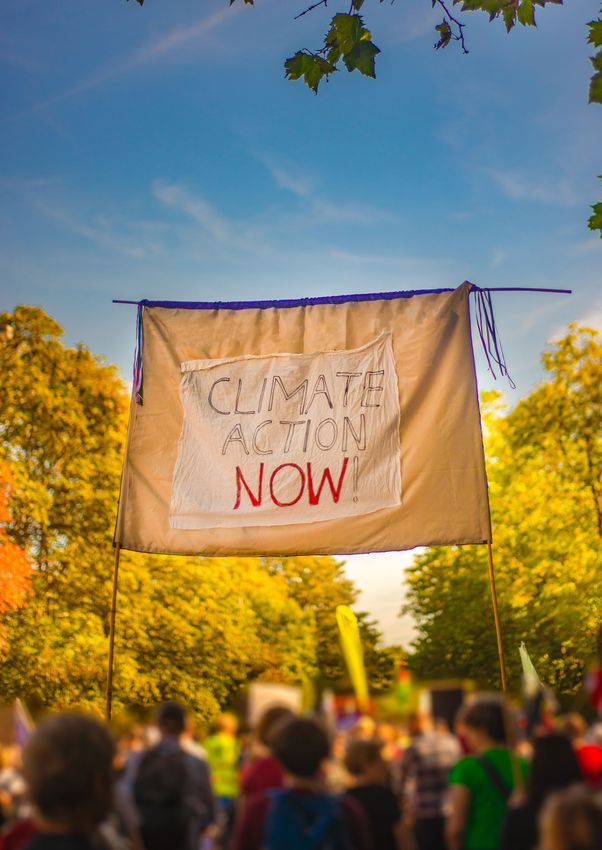
                       CALL FOR ENGAGEMENT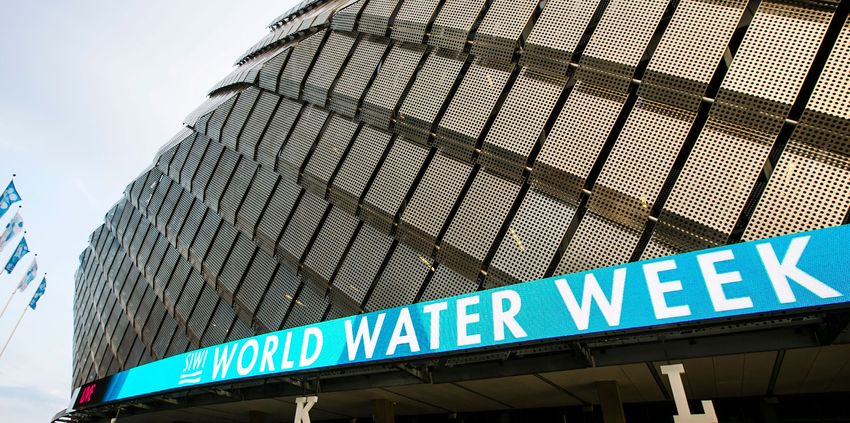
Help us find the tools to tackle climate change! World Water Week 2019: A smashing success!
More and more people are taken to achieve a climate resilient future. We want to learn
starting to understand that from what we already are doing (what works, what does not),
the climate crisis is in fact but also explore how we can move forward and create dis
a water crisis. Most of us ruptive actions that will help us leapfrog to a fossil free future.
experience climate change in Drawing on the lessons from World Water Week 2019
the form of water – as floods, on the theme of inclusion, we are seeking broad solutions
droughts, cyclones, and that include everybody, the private and the public sectors as
Photo: Thomas Henriksson
increasingly unpredictable well as civil society. An obvious starting point must be that
rainfall patterns. The water forming future solutions should also involve marginalized
community can play a lead groups and make it easier for fragile societies to become
ing role in finding common more resilient.
solutions, but we must do We now invite you to be part of this important journey.
so fast. The coming years Which topics, new developments, cases and examples would
will be decisive. you like to highlight at World Water Week 2020? We are
Although there are processes and complex interlinkages eagerly waiting for your proposals that help the world tackle
that we do not yet fully understand, this must not stop us water challenges and the climate crisis. Join us at World Water
from taking action. If we all come together, we will be able Week 2020 – your voice is needed!
to develop new ideas, and find solutions, that will help tackle
the climate crisis. More research is certainly needed, as well as
the development of new ideas to make both the private and
public sectors more resilient. Not least, best practice examples
must be shared across the globe at unprecedented speed.
World Water Week 2020 offers a unique platform for this
much needed knowledge sharing and collaboration. With
the theme being “Water and climate change: Accelerating Torgny Holmgren
action”, the focus will be on innovation, science and actions Executive Director SIWI Tele2 Arena Photo: Mikael Ullén
In 2019, World Water Week relocated to a new venue,
the Tele2 Arena in Stockholm, enabling the creation of
In 2019, over 4,000 participants
a more collaborative and inclusive learning experience. from some 138 countries gathered
Tele2 Arena facilitates greater flexibility while providing
ample networking opportunities, with a World Water Week in Stockholm
Village at its very heart. Several sessions were opened up to
the public while young professionals had the opportunity
to join one day for free and, for the first time, they had
three days to choose from to enable greater choice and AGE
access to the Week. 1/3 of participants
were 35 or
World Water Week is organized by the Stockholm Interna Our mission is to “Strengthen water governance for a With 4,000 participants, 277 sessions, 74 exhibitors and younger
tional Water Institute (SIWI). One of the world’s leading just, prosperous and sustainable future”. 578 convening organizations, World Water Week 2019
water institutes, SIWI works to strengthen the governance SIWI was founded in 1991 and has a strong international broke several records and experimented with new formats.
of freshwater, globally, regionally, nationally, and locally. team of knowledge-generators, convenors, facilitators, and PARTICIPANTS
Our vision is a water wise world – a world that recognizes trainers that have built unique expertise in strengthening 43% were
first-time
the value of water and ensures that it is inclusively shared and the systems and processes that govern access to fresh water. Gold Standard participants
used sustainably, equitably and efficiently for all. We believe We also award the prestigious Stockholm Water Prize,
that the best way to tackle water crises and help bring about under the patronage of the H.M. King Carl XVI Gustaf in 2019, 73 per cent of all sessions adhered to the Gold
Standard, meaning that at least 40 per cent of presenters were GENDER
lasting change – with the ultimate goal being the eradication of Sweden, and the Stockholm Junior Water Prize under Male 51%
of poverty – is to strengthen water governance, among public the patronage of H.R.H. Crown Princess Victoria of female, at least one presenter was under 35, and the sessios
Female 48.5%
and private actors alike. Sweden. were designed to encourage audience participation.
Non-binary 0.5%
This announcement is published by the Stockholm International Water Institute.
Cover photo: Adobe Stock | Graphic design: Marianne Engblom/Ateljé Idé, Emy Welin, Ingrid Stangberg
2 worldwaterweek.org worldwaterweek.org 3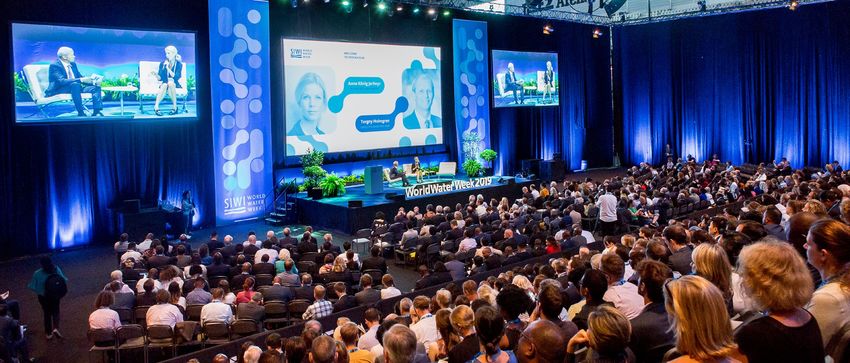
World Water Week network
World Water Week could not happen without our community of advisors and supporters
that work together with us in different ways to ensure an inclusive Week.
Key Collaborating Partners
Each year, we team up with Key Collaborating Partners (KCPs) to widen the reach of the Week, enrich the discussions, and
encourage participation. In 2019, the Key Collaborating Partners are:
CEO Water Mandate | The CEO Water The Global Commission on World Meteorological Organization
Mandate is a commitment platform Adaptation | To thrive under climate (WMO) | a specialized agency of the UN,
mobilizing a critical mass of business change, humanity faces two urgent cooperates with National Meteorological
leaders to address global water challenges imperatives: Sustaining an Earth and Hydrological Services to provide
through corporate water stewardship, in system with a suitable environment necessary climate, weather and water infor
partnership with the United Nations, and Building the resilience of human mation for informed decision-making Photo: Thomas Henriksson
governments, civil society organizations, systems to change. Water is vital to and to protect their populations against
and other stakeholders. Being a 2020 achieving both aims. The Global related disasters. The Organization pro Young Scientific Programme Advisory Committee
Key Collaborating Partner is centrally Commission on Adaptation and over vides tools, guidance and capacity build Committee
aligned with the Mandate’s mission and 30 global partners gathered under its ing for operational hydrology. It supports The Advisory Committee advises SIWI on strategic issues
programmatic work given the major leadership will champion a global effort modelling, forecasting and early warning The Young Scientific Programme Committee (age 35 and to develop and improve World Water Week. It aims to
impacts that climate will have on today’s to accelerate progress towards these of disasters associated to flood, drought under) is a group of individuals selected each year to support strengthen the Week as a meeting place for decision-makers
water systems and the water resilience critical aims. The Global Center on and water quality. It also helps collect, the Scientific Programme Committee. They collaborate with connected to water-related challenges and how the impact
imperative that is spurred by the climate Adaptation, a managing partner of this manage and share data for the quantifi experienced scientists and water professionals and develop the the world’s environment, human health, economic
crisis. endeavor, recognizes 2020 World Water cation of water resources, food security, seminar programmes. development and poverty reduction agendas.
Week as a key platform and SIWI a key and sustainable development. These activi
partner to mobilize action commensurate ties are fundamental so that countries
with these great and urgent ambitions. develop water management solutions that
effectively contribute to climate adapta
tion and mitigation, the SDGs, and the
Sendai Framework.
Scientific Programme Committee
The Scientific Programme Committee is comprised of pro ●● Dr Jenny Grönwall, SIWI
fessors, scientists, and experts from water and development ●● Ms Mai-Lan Ha, CEO Water Mandate (co-opted member) Help us bring in the youth perspective!
related fields. Their role includes the development of the ●● Ms Eiman Karar, UNEP Are you a youth organization?
World Water Week thematic scope and seminars. ●● Dr Louise Karlberg, Swedish Society for Nature
Conservation Are you interested in the World Water Week and want to help
Members are: ●● Dr Marianne Kjellén, UNDP us organise a water/climate change related session?
●● Dr Torkil Jønch Clausen, SIWI (Chair) Dr Martina Klimes, SIWI
●●
Every year, the World Water Week hosts several sessions with
●● Prof Jennie Barron, SLU Mr Jon Lane, Independent consultant
●●
youth and water at its core as part of our continuous work
●● Dr Fred Boltz, Global Commission on Adaptation Ms Karin Lexén, Swedish Society for Nature Conservation
●●
on inclusiveness. This year, we take it one step further and
(co-opted member) ●● Mr Ravi Narayanan, Asia Pacific Water Forum/ WIN invite interested organisations to co-convene these sessions
●● Mr François Brikké, GWP Mr Henk Ovink, Special Envoy for International Water
●●
with us based on suggestions and ideas from previous young
●● Mr Sergio Campos, Inter-American Development Bank Affairs of the Kingdom of the Netherlands professional participants.
●● Mr Johannes Cullmann, WMO (co-opted member) ●● Ms Belynda Petrie, OneWorld
●● Ms Viktoria Granström, IKEA Industry AB – Inter IKEA ●● Mr Adrián Puigarnau, SIWI Submit your proposal here before 1 December 2019!
Group ●● Dr Diego Rodríguez, The World Bank Group For more information, please contact Cajsa Larsson at
●● Prof Gyewoon Choi, Incheon National University Dr Joan Rose, Michigan State University
●●
cajsa.larsson@siwi.org
●● Prof Guillermo Donoso Harris, Pontificia Universidad ●● Prof Stefan Uhlenbrook, IWMI Photo: Mikael Ullén
Católica de Chile ●● Mr Torgny Holmgren, SIWI (Vice Chair)
●● Ms Mai Flor, WaterLinks ●● Ms Ingrid Stangberg, SIWI (Secretary)
4 worldwaterweek.org worldwaterweek.org 5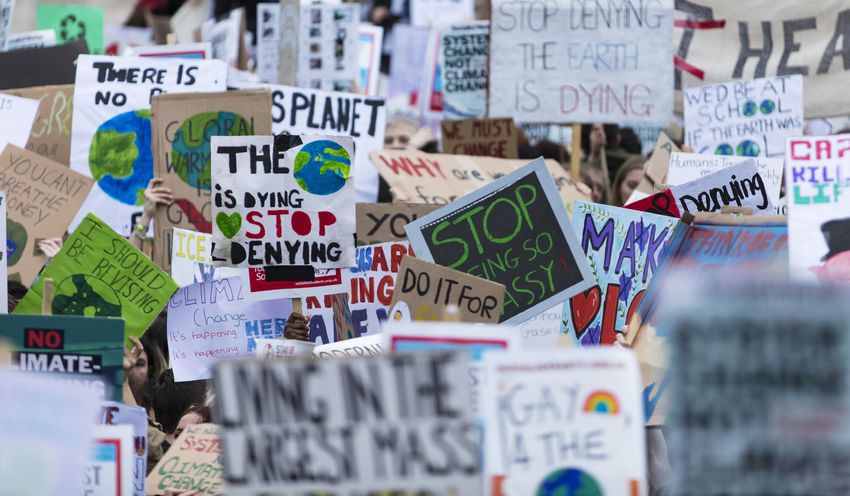
World Water Week 2020
Water and climate change:
Accelerating action
answers and technologies, neither in the short term, nor the
This Thematic Scope outlines the rationale
long term, to design the transformation required for long term
and overall content of the 2020 World Water sustainability, but this should not stop us. World Water Week
Week theme: “Water and climate change: 2019 addressed the theme of “Water for Society – Including
All”, linked to the UN’s “no-one left behind”-agenda. We shall
Accelerating action”. follow that up by ensuring the inclusion of women and youth
in all our deliberations, both in substance and by promoting
World Water Week ( W W W ) | takes place in the city where the Gold Standard in all sessions.
a young girl, Greta Thunberg, started a world-wide movement During the many events at World Water Week, discussions
to demand action to address climate change now, while there will address the theme from different perspectives, led by a
is still time to save our planet, and with that the livelihoods broad range of stakeholders from within and outside the water
for her and coming generations. The call by the young gener and climate communities. Several key topics that provide
ation has inspired climate-concerned voices who are demand broad coverage of the theme have been identified as the focus Photo: Adobe Stock
ing that the data and information provided by scientists are of the nine core SIWI Seminars, each to be co-convened by
listened to, and to begin moving towards a political agenda three to four partner organisations. These are addressed in the
that recognizes climate change as the single biggest threat to following paragraphs. and build capacities at all levels from local-national-regional Healthy ecosystems have the potential to capture carbon at
the world. The UN Climate Summit of September 2019 took in a gender-sensitive way? How do we better anticipate and a rate which far exceeds any related human efforts, but how
these demands on board and demonstrated growing recogni Water and politics: The leverage for climate and SDG respond to both the gradual onset of climate change and the do we stimulate carbon capture in ecosystems through inte
tion that the pace of climate action must be rapidly accelerated impact | Water represents one of humankind’s most chal prevalent increases in frequency and intensity of extreme events? grated land-water management? The changing climate is also
to achieve the Paris Agreement. lenging and complex risks. Floods, droughts, and pollution How do we learn to respond to climate events to enable returns affecting traditional water management for food and energy
coincide with rapid urbanization, increasing the demand for on investment in short and long term financial, social, and production, all the way from source to sea, including inter-
In this context World Water Week | will focus on the role food and energy, growing populations and migration, gender natural capital? This is challenging since the most threatened state negotiations on shared water resources, most notably in
of water, recognizing that the climate crisis is, indeed, a water inequality, and climate change. Conversely, these challenges regions are those with the weakest capacities to respond. conflict-afflicted regions. How can stakeholders ensure gender
crisis, and on turning climate risks into engagement. As we also bring opportunities to use water as a catalyst for politi and social inclusion in transboundary water management?
recognize “water as the connector across the Sustainable Devel cal action. How do we improve connections between the Addressing the burden of vulnerable people under climate How does the vulnerability and resilience to a changing climate
opment Goals (SDGs)”, we must also be looking outwards, water community and political leaders to ensure more atten change | Climate change is set to put disproportionate pressure affect transboundary basins? How can increased inter-regional
beyond our water community, to actively include climate tion is given to water as a driver of change to achieve all the on the already poor and vulnerable, among these especially connectivity be made part of future solutions? What new
actors from all communities, and link our discussions, solu SDGs, the Paris Agreement and other internationally agreed women and children. More extreme weather, water scarcity, approaches to water management and inter-sectoral coopera
tions, and initiatives to other international water and climate- instruments such as the Sendai Framework for Disaster Risk and water quality degradation will manifest itself through tion are required to reduce the risks from floods, droughts,
related events and processes. In March 2020 the UN World Reduction? What are the most effective triggers of change? more droughts and floods that will impact hunger and mal water quality degradation, saltwater intrusion, and water-
Water Development Report will address water and climate How can we support the implementation of the Nationally nutrition, as well as basic water supply and sanitation, with related stresses?
change. Together with other key global reports such as the Determined Contributions (NDC s) after Paris 2015 with their the risk of increased climate-induced migration. How does
2018 Intergovernmental Panel on Climate Change (IPCC) large focus on water? How do we reach out to climate actors increased climate variability and frequency of disasters affect
1.5-degree Report, the Report of the Global Commission on from all sectors, particularly in the least developed countries food security and health for the most vulnerable people?
Adaptation, and significant global reports in 2019 addressing and small island developing states, and how do indicators, What are the mitigation strategies for addressing food security,
climate change, food, biodiversity, and land, set the stage for monitoring and data management help this political process? nutritional quality, and sanitation to improve the health and
our discussions. Just a few months after WWW, COP26 will well-being of vulnerable groups and the poor? Given that
take place in Glasgow, Scotland, which our discussions in Building resilience at all levels: From local to national the most vulnerable will be the least able to build resilience
Stockholm should aim to influence. and global | Most current water management policies and towards the escalating and multiple challenges of climate
practices across the world assumes a given set of circumstances. change, what are the solutions needed to reach the SDG
World Water Week is about “accelerating action”, | so we But scientific predictions and an evident spike in unseasonal goals and targets on well-being, improved livelihoods and
need a strong focus on concrete examples and cases: what natural events are upsetting this balance. Global warming, economic resilience?
worked, what did not work, and what did we learn? We and its impacts on rainfall variability and extreme events,
shall also focus on innovation and science towards building a coupled with high rates of population, economic growth, and Addressing climate change holistically: Across sectors
resilient future, illustrated by examples and ideas. We have urbanization, is decreasing water availability in the previously- and boundaries | Climate change, ecosystems, society, and
no excuse for inaction: we have enough facts, solutions, and expected right place and time. How do we adapt to that and economies interact dynamically and, therefore, a holistic
experiences to act now. Certainly, we do not have all the mainstream climate resilience across governance systems approach to adaptation and mitigation is paramount.
6 worldwaterweek.org worldwaterweek.org 7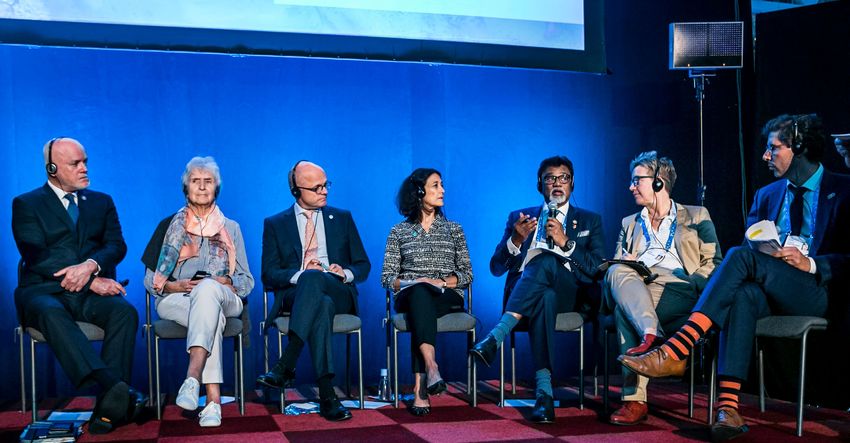
Climate-smart cities: Utopia or reality? | By 2030, cities
will house 60 per cent of the world population and be the main
sustainable production of food, fuel, and fiber. Its complexity
requires a more integrated response; however, linkages between
How will you engage in World Water Week in 2020?
engine of growth, accounting for 70 per cent of the world’s climate change adaptation and mitigation remains largely
economy. Urban planners and local authorities are increas unexplored. How can ecosystem management and governance There are several ways to engage in World Water Week. The theme guides the construction of the World Water Week
ingly facing the challenge of finding ways to include adaptation of water resources achieve this coherence and ensure multiple programme. SIWI is also interested in receiving session proposals that link to previous themes, and/or have a strong
strategies into their work, but how can they be helped to better ecosystem services, such as carbon sequestration, water puri focus on current debates, generate new ideas and advance solutions.
address the combination of heat island effects, sea-level rise, fication, supply and recharge, and habitat provisioning for
coastal, and inland flooding and droughts? A paradigm shift biodiversity? How can spatial planning be used as a mecha
is required at the system-wide level, that benefits all sectors nism towards re-carbonating the landscape, by, for instance,
of society, including poor peri-urban women and men, while increasing the carbon content of tropical soils? How do we Start here!
also addressing rural-to-urban climate induced migration. How further explore the role of different products and actors along
Is your primary
do we develop integrated adaptation-mitigation approaches the supply chain in industries and utilities to find new solu Will your session
No... focus on new
and move towards climate-smart and green cities through tions, and promote behavioral change, in order to achieve a be invite only? Yes!
thinking &
transformational change, by adopting principles of the circular more circular economy? How do we support the particular research?
economy and innovative approaches? What will inspire leader roles of women and youth as agents of change for climate
ship and the participation of all key stakeholders, including mitigation and adaptation?
local operators, utilities and civil society?
Tapping into climate finance | Adaptation and mitigation Do you want
Yes! That’s
The private sector in action: From stewardship to business measures to achieve the SDGs will widen the already enormous Is your focus on to speak or
Is your focus on important
opportunity | The world’s economy is crucially dependent on financing gap until 2030. Traditional sources of public and further convene?
networking, too, but ...
water. Agriculture/food production account for some 70 per private finance will most likely be insufficient, so how do we developing or
visibility or No... presenting your
cent, and industry/energy another some 20 per cent on a daily improve and develop new mechanisms to attract financial business initiative or Yes!
basis. All activity needs to become a lot more efficient in their flows? How can innovative financial mechanisms, such as development? project? Convene Speak
use of water if the SDGs are to be met. The economic and green and climate bonds that have flourished in recent years,
financial risks of water-related losses are significant. Novel play a more important role in funding projects? How can we
green solutions are appearing, but how do we up-scale? What map and attract different types of investors, and the structur Is it a
can private sector companies do to promote climate-friendly ing of new schemes, combining sovereign and non-sovereign Stockholm-
based No... Are you Is your
processes throughout their supply chains, and promote entre financing? How can we include gender aspects in climate content
practical case planning for
preneurship and innovation in creating a green economy? finance? Climate insurance can provide security against losses aligned
Yes! study? No... audience
Can companies work together with regulatory agencies to from extreme weather events; how can it also incentivize invest with the
engagement?
improve water management? How can sustainable solutions, ment in prevention? What can be done to enforce medium seminars?
underpinned by green finance, create even more business and and long-term planning as part of climate finance and action Do you want
jobs at all levels, including in local communities. Water use agendas at both national and local levels? visibility for the Yes!
per unit of output is declining, but what is required for private Yes!
full week?
sector actors to go a lot further in mainstreaming resilience Through data and science towards innovative policies, Is your Yes!
No... Will there be
planning across production sectors and value chains? governance, and capacity | Solid data and information, focus discussion &
ground-truthing and big data alike and sharing of climate on social networking?
Seeking coherence between adaptation and mitigation | change science are key to innovative decision-making and interaction? Yes!
No... Yes!
A changing climate requires changes in management practices meaningful stakeholder participation, and thus good govern
Yes!
for agriculture, forestry and energy production to maintain ance. Does citizen science and open access provide for increased No...
Do you want
ownership and involvement in climate mitigation and adapta
to be Yes! No...
tion? Can climate services including, digital transformation strategically
be capitalized on to build climate resilience? How can stake aligned with
holders drive change towards innovative policy development the Week? Yes!
and new governance practices, including multi-level Integrated
No...
Water Resources Management (IWRM) and bottom-up
processes as keys to adaptation? How do we better ensure a
just transition and better include the private, public and civil No...
society actors and multi-stakeholder partnerships, including Have a closed Become a Host a Host an Submit an
women and youth, for policy implementation and scaling up meeting! supporter! showcase! event! abstract!
of responses to climate change? How can emerging law and
policy, the human-rights based approach and governance sys
tems be made more responsive to climate change-induced risks? Have a private mingle! Exhibit at Organize a Host a Contact the event
(apply for closed meeting) the Week! field trip! sofa! convenor directly!
At SIWI we hope that the Thematic Scope outlined above
will provide inspiration for lively and thought-provoking
discussions during World Water Week 2020.
8 worldwaterweek.org worldwaterweek.org 9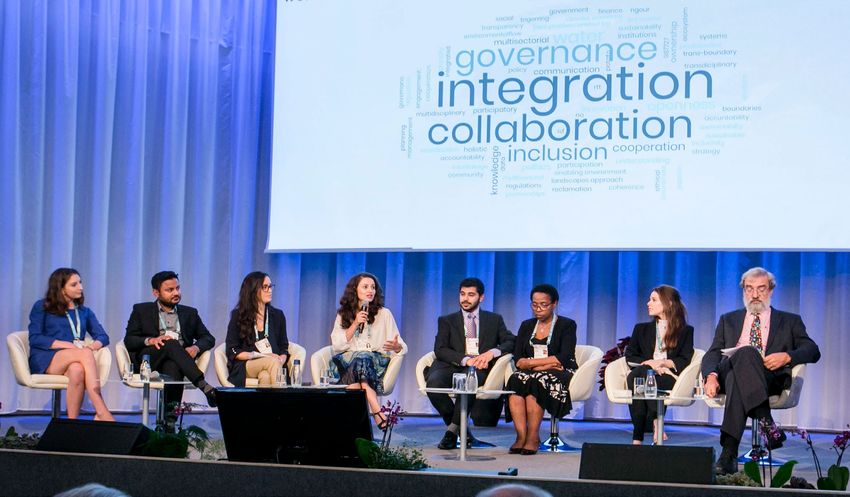
Showcases
In a short, snappy showcase session organisations and companies
looking to to tell their water stories have the opportunity to
promote their approaches and share their perspectives, initiatives,
tools and projects. Possibility to open up for the public!
Length: 45 or 90 minutes
Price: SEK 24 000 or 40 000
(extra fees will apply for external participants)
Deadline: 8 March 2020
(Applications open 20 January 2020)
(All prices are excluding VAT)
Photo: Thomas Henriksson
Movie night
Photo: Mikael Ullén
Have you produced a movie on a water related topic? Take
the opportunity to show your movie to the Weeks audience
Seminars in this new session format. Taking place in the evening these
sessions are open to the public.
Individuals who want to present their research in one of the
Weeks seminars are welcome to submit abstracts. Reviewed
by the Scientific Programme Committee your abstract can be Length: 60 minutes
submitted relating to any subject around the important issues Price: SEK 24 000
addressed in the seminars (see pages 14–18). Deadline: 8 March 2020
(Applications open 20 January 2020)
Length: Approximately a 10 minute presentation (All prices are excluding VAT)
Price: See terms and conditions Photo: Istock
Deadline: 19 January 2020
Photo: Thomas Henriksson
Gold Standard Events
SIWI welcome organisations who strive to advance
Field visits
Inclusiveness is at the very core of SIWI’s work and
in 2020 we would encourage all sessions to pursue knowledge and present new and innovative findings to Field visits offer the perfect opportunity for local organisa
the Gold Standard of excellence. submit an event proposal. tions and companies to demonstrate practical case studies,
SIWI encourages proposals from all sectorsthat encourages initiatives, tools or projects by inviting participants to experi
Criteria will be based on gender and youth representa- collaboration and inclusiveness to bring diverse perspectives ence unique locations in close proximity to Stockholm.
tion, interactive format, and how the session attempts to the Week.
to incorporate inclusiveness principles (e.g. human
rights, gender, youth, non-water stakeholders) in the Length: 2–4 hours (incl. transport time)
discussions. Length: 90 minutes Price: SEK 20 000
Price: SEK 28 800*–36 000 (*with maximum discount) Deadline: 8 March 2020
Read the full criteria on World Water Week’s website. Deadline: 19 January 2020 (Applications open 20 January 2020)
(All prices are excluding VAT) (All prices are excluding VAT)
Photo: Lotta Samuelson
10 worldwaterweek.org worldwaterweek.org 11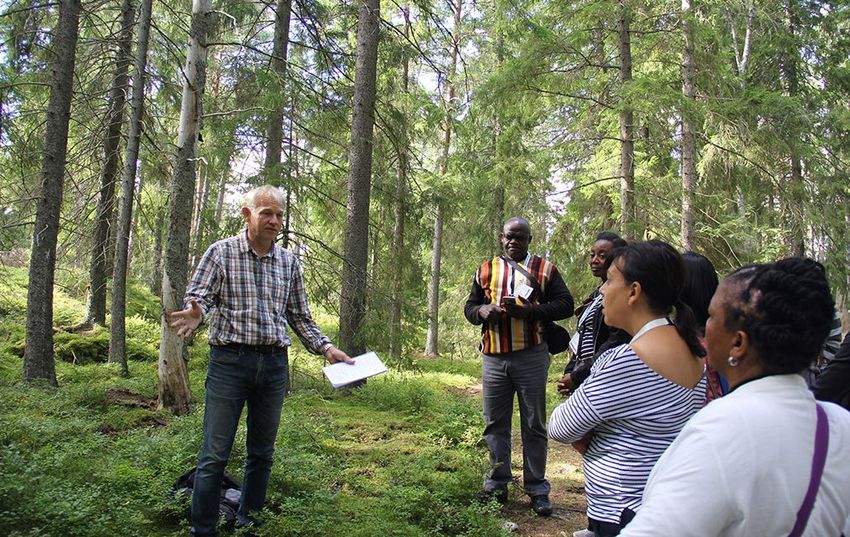
Sofa
The sofa is an innovative window into the Week. A cross
between a speaker’s corner and an interview studio, and broad
casted live beyond the walls of the Week, experts, decision-
makers and leaders are interviewed on a wide variety of water-
related topics. A sofa segment can be used to highlight a hot
topic, interdisciplinary collaboration, knowledge sharing, or
to increase understanding of key water issues.
Length: 1 x 25 minute segment OR
1 x 15 minute + 1 x 3 minute
Price: SEK 27 000 or 30 000
Deadline: 3 May 2020
(Applications open 9 March 2020)
(All prices are excluding VAT)
Photo: Thomas Henriksson
Photo: Mikael Ullén
Exhibition
If your organisation strives to develop and enhance its
brand, why not apply for a booth at our exhibition area.
Engage with water and development decision-makers and
present your organization’s water and environment-related
innovations and initiatives. Exhibition spaces of different
sizes are available to cater for your needs.
Price: From SEK 25 000 and up Volunteer at World Water Week
Deadline: 3 May 2020
(Applications open 9 March 2020)
Would you like to experience the atmosphere of the Week? Junior Rapporteurs
(All prices are excluding VAT) Are you interested in water and determined to build your
As a Junior Rapporteur, you are an instrumental part of the
network? Help us deliver the world’s leading annual event for
Photo: Mikael Ullén reporting and concluding process by capturing, summarizing
water and development by becoming a volunteer. Volunteers
and analysing the cross-cutting trends, knowledge and inno
receive free registration for the full week (including lunch),
vations discussed in sessions at World Water Week
access to social events, public transportation within
Stockholm, and endless networking opportunities.
Submission open 1 March to 12 April
Closed meetings The Young Scientific Programme Committee Our Assistants
Are you 35 or younger, and interested in water and develop
For many, the Week is an opportunity for participants to Over 120 water and development professionals volunteer as
ment issues? Apply to be one of nine committed young
meet their international networks in person. Host a committee assistants at World Water Week, elevating the experience and
professionals supporting the Scientific Programme Commit
meeting, annual general meeting, board meeting, project atmosphere for the participants. Our assistants come from
tee (SPC). Collaborate with experienced scientists and water
initiation or a brainstorming session. Rooms of varying sizes, all over the world to take part in the conference, dedicating
professionals, develop the programme of one of the world’s
and IT facilities available. their time to ensure that the Week is a true success. They
most renowned water conferences, and gain visibility within
assist us in answering participants’ questions, assist presenters
the water community. Your involvement also adds another,
in preparing for sessions and generally ensure the smooth
important perspective to the SPC’s work. The members of the
Length: 1/2 or full day running of the event. They are the eyes, ears, and arms of the
Price: SEK 6 000–25 000 Young Scientific Programme Committee will work directly
Secretariat and are the welcoming faces of SIWI throughout
Applications open in May 2020. with the SPC to develop the seminar programmes.
the Week.
(All prices are excluding VAT) Submission open 1 November to 1 December
Submission open 1 March to 12 May
Photo: SIWI
12 worldwaterweek.org worldwaterweek.org 13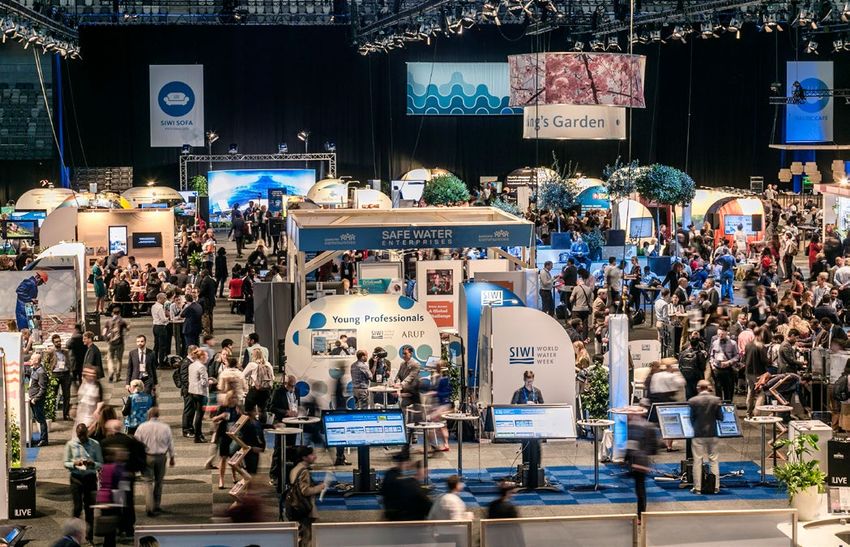
Seminars 2020
Water in a climate crisis: Capacitating resilient solutions All aboard? Water for inclusive health and food security
Co-conveners: 2030 Water Resources Group 2030, ICIMOD (tbc) Co-conveners: CAF, Catholic Relief Services, Food and Agriculture Organization
Global warming – or heating – is rapidly Climate change is set to put dispropor
propelling the world toward a state of tionate pressure on the already poor
climate emergency. Yet, water man This seminar will focus on developing impact and cost and vulnerable, who live on less than In this seminar, the focus is on solutions for the most
agement policy and practice assume a benefit investment pathways for the most vulnerable USD 3.20 a day and include more vulnerable and poverty affected populations in the face
stable set of circumstances, while dis areas and populations, an approach consistent with than 800 million undernourished of increasing climate variability and water scarcity today
aggregating disaster risk solutions from achieving the SDGs. What examples of good practice people. Climate change will bring more and tomorrow. How are new facets of risk for food, health
those for building long-term resilience. demonstrate the rationale and materiality for urgent extreme weather, water scarcity and water and disaster changing for vulnerable people? What are the
Scientific predictions and a spike in unseasonal extreme natural interventions? Do any of these yield tangible alternatives quality degradation will be manifested with more droughts mitigation strategies for addressing food and nutritional
events challenge these assumptions. With high rates of popula to ‘business as usual’ or transformational development? and floods impacting hunger and malnutrition (SDG2), security, and sanitation to improve the health and well-
tion growth and urbanization, this accentuates the significant And, do they address a range of systemic issues, from basic water supply and sanitation (SDG6). Food security will being for the vulnerable and poor, especially women
risk to water governance and development. Resource mobili financial resourcing to combined institutional and human be affected through climate and water variability in rainfed and children? How do linkages co-varying to disable (or
zation that confronts climate change is urgently needed to capacity development – particularly for women – while and irrigated agriculture, incl. freshwater fisheries. In combi enable) transformation towards higher wellbeing? What
mainstream resilience while transforming development – applying the right science and technology? Presenters nation with inadequate sanitation infrastructure, it will is the impact of climate migration? Finally, how can risk
impossible without evolved, gender balanced, capacities across will be encouraged to share ideas for leveraging climate increase risk for health concerns and disease in addition to mitigation and resilience be strengthened with financial
systems and geographies. In turn, these must leverage responses crises spend and solutions for sustained resilience. food insecurity. The most vulnerable will be the least able mechanisms and/or partnerships?
to current climate crises to build sustained resilience to the to build resilience and wellbeing towards the escalating and
gradual onset of climate change. A granular understanding of multiple challenges. Without a focus on solutions to address
how to enable returns on investments in short and long term increasing climate variability, extreme weather events, along
financial, social and natural capital, is critical. However, the side water security issues, reaching goals on well-being, in
most threatened regions are those with the weakest resources. creased livelihood and economic resilience will not be possible.
Adaptation and mitigation: Hand in hand
Water politics for climate impact
Co-conveners: Alliance for Global Water Adaptation (tbc), Swedish Society for Nature Conservation, World Agroforestry (tbc)
Co-conveners: Government of South Africa, World Meteorological Organization, World Resources Institutes
Identifying and facilitating synergies
Water represents mankind’s most chal between mitigation and adaptation to
lenging and complex risk. Floods, avoid inefficiency and ineffectiveness In this seminar we will explore how water and ecosystem
droughts and pollution coincide with This seminar will focus on clear, actionable examples. of compartmentalized approaches management and governance will need to change in
rapid urbanization, growing demand We invite abstracts that demonstrate good practice is urgently needed to tackle climate order to maintain functionality and resilience, whilst
for food and energy, migration, and and highlight the role of politics (and related concepts change. The climate crisis requires far- accounting for climate change mitigation. Are paradigm
climate change. As these water challenges such as accountability, transparency and stakeholder reaching changes in management practices shifts needed to foster synergy between mitigation
become more important, so too does the influence). How can understanding and managing water for sustainable production of vital commodities. Sustainable and adaptation, or will modifications of conventional
role of politics to address them: political decisions can either help the world achieve the 2030 Agenda and Paris Agree- management and governance of water resources provides practices be sufficient? What are new opportunities
trigger or block sustainable and fair water development. ment? How can we update and water-proof the NDCs such changes. Multiple ecosystem services, such as carbon for management and governance of agriculture and
Conversely, water can also be a catalyst for political action. while following the Katowice Rulebook? What are the sequestration, water purification, supply and recharge, and forestry? We will also dig deeper into the role of different
The water community has useful knowledge to contribute to most effective triggers of change? How do indicators, habitat provisioning for biodiversity, all interact with a actors along their supply-chains, finding new solutions
political discussions and to help drive change to achieve all the monitoring and data management help this political changing climate. Re-carbonisation of the landscape has a for moving towards a more circular and green economy.
SDGs, the Paris Agreement and other internationally-agreed process? How can politicians and the water community large potential for binding substantial amounts of carbon Examples of behavioural change amongst different actor
instruments such as the Sendai Action Plan. To focus attention together make water the catalyst to sustain the climate dioxide whilst boosting agricultural yields. Simultaneously, groups will furthermore be explored.
on some critical aspects, the High-Level Panel on Water, the and achieve the SDGs? there will be new demands for bio-based products during the
OECD Water Governance Initiative, the Global Commission transitioning towards a fossil-free, circular economy, while
on Adaptation and others have emphasised: reaching out to ensuring a smart allocation of water resources. Enabling condi
climate actors from all sectors; giving special attention to least tions for a synergistic design and implementation and new
developed countries and small island states; agreeing and governance and policy mechanisms, need to be implemented
monitoring key indicators. in the energy and water sectors to promote the necessary shift
towards mitigation and adaptation coherence.
14 worldwaterweek.org worldwaterweek.org 15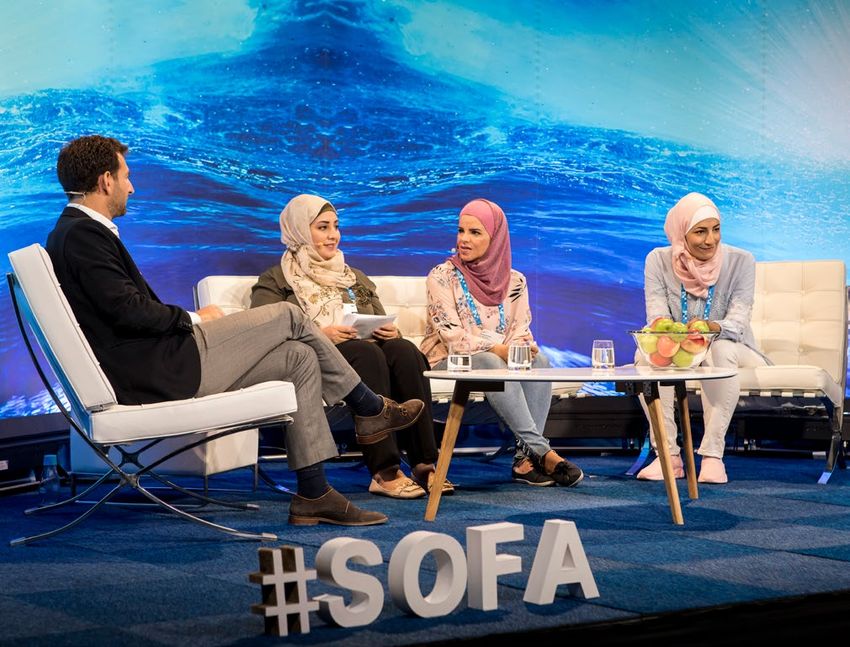
Breaking silos: Climate action and water – across sectors and boundaries Business water resilience in uncertain times
Co-conveners: Cooperation in International Waters in Africa, International Water Management Institute, NATO, United Co-conveners: CEO Water Mandate, World Business Council for Sustainable Development
Nations Economic Commission for Europe (tbc)
The world’s economy is crucially depend
Climate change, ecosystems, society ent on water. Agriculture (70 per cent)
and economies interact dynamically and industry (20 per cent) constitute The seminar is looking for successful actions by businesses
and, therefore, a holistic approach How can we all work better together towards a water- most uses of the world’s freshwater that have taken us closer to addressing the climate crisis
to adaptation and mitigation is wise and climate-smart world? The seminar will explore consumption. Climate change intro and contributing to the SDGs. Nature based solutions
paramount. For example, improved political, socio-economic, institutional and technological duces uncertainties to the water cycle show promise, but how do we achieve scale? What can
water management can support healthy strategies for addressing climate change across different that requires businesses to adapt and inno business do to promote climate-friendly processes
ecosystems that also capture carbon and sectors and boundaries through water management. vate in order to endure and thrive. Businesses of all sectors throughout their supply chains, and promote entre-
provide livelihood opportunities, whereas degraded ecosystems More specifically, how is vulnerability and resilience must approach climate change systemically, changing their preneurship and innovation in transitioning to a low car-
can develop into additional carbon sources and hamper affecting transboundary basins and inter-regional con- overall business strategy to better understand, anticipate and bon, resource efficient, and socially inclusive economy?
socio-economic development. The changing climate is also nectivity? What roles do international trade, demo- navigate new risks and opportunities. Such an approach will How should business partner with other water users,
affecting traditional water management for food and energy graphic changes, expanding economies, land use change, need to be inclusive and consider broader dynamics within working together with regulatory agencies to improve
production, all the way from source to sea. Floods, droughts, digitalization and other aspects of globalization play? the catchment under different scenario and timeframes. water management and be good stewards? How can
water quality degradation, and related water stresses are What are the options for stimulating carbon capture in Companies are partnering with stakeholders on reforestation investments be de-risked with innovative public-private
increasing in severity and frequency in many places, where ecosystems through integrated land-water management and wetlands reconstruction and working with regulatory partnerships that unlock financial flows, creating even
the most vulnerable people are increasingly threatened. and related policies and strategies? Finally, how can agencies to improve water management. Green solutions more business, jobs, and usher in a just transition? What
While creating additional challenges, the changing climate progress through innovative and disruptive technologies, underpinned by innovative financing models are creating is required for business to mainstream approaches, prac-
also opens new opportunities for transboundary and inter- and how can digital transformations be accelerated? new opportunities at all levels including for local communi tices and markets that strengthen business, social and
sectoral cooperation facilitating states to take joint actions ties. But the much more needs to be done to mainstream environmental resilience?
which can bring mutual benefits in the future. This calls for resilience planning across sectors and value chains.
new approaches to water management and inter-sectoral and
transboundary cooperation to reduce risks while simultaneously
stimulate carbon capture and other ecosystem services and
provide new opportunities for socio-economic development.
Climate smart cities: From utopia to reality Tapping into climate finance
Co-conveners: Asian Development Bank, Inter American Development Bank, Ministry of Environment and Energy of
Co-conveners: ENDA, Megacities Alliance for Water and Climate, Global Center on Adaptation, World Bank Costa Rica, SEB (tbc)
By 2030 cities will house 60 per cent of Wide-ranging impacts of climate
the world population and will be dom change–droughts, floods, sea-level
inant engines of growth, accounting The objective of the seminar is to present state-of-the art rise, melting glaciers, among others The seminar will explore financing alternatives that sup-
for 70 per cent of the world economy. approaches to the development of urban water resil- – pose serious threats to the timely port mitigation and adaptation actions in water and
Of the cities with at least 500,000 ience for climate-smart cities in different regions and achievement of the SDGs. Adapta sanitation. What can countries do to attract institutional
inhabitants in 2018, 60 per cent repre geographical contexts. How can cities address at the tion and mitigation needs will widen investors to expand the long- term financing for mitiga-
senting a population of 1.4 billion were at same time climate-smart urbanization, and the tremen- the already enormous financing gap until tion and adaptation projects? What specific actions can
a high risk of exposure to climate- and water-related disasters. dous demographic, social, economic, and environmental 2030. Traditional sources of public and private financing will governments take to develop robust portfolio of projects
Faced with the coupled challenges of increasing human growth challenges that they are facing. What key steps cities be insufficient, making it crucial to improve and develop new to attract climate finance? What is the eligibility criteria
and vulnerability, urban planners and local authorities must could make in order to advance towards climate-robust mechanisms to attract financial flows. Innovative financing, to tap into the green and climate bond markets and
urgently build robust climate change adaptation strategies, and inclusive urban development? What are the critical such as green and climate bonds that have flourished in the other similar instruments? What can we do to facilitate
while also mitigating the urban climate footprint. roles of local authorities, operators and civil society in last years, can play an important role in funding projects and broader use of climate insurance? and What can be done
A paradigm shift in urban development is imperative, one undertaking transformative change to build resilient urban in mapping and attracting different type of investors and to enforce medium- and long-term planning as part of
that shifts from a growth-driven approach to one of building futures? These questions will be addressed through the structuring of new schemes combining sovereign and the climate finance and action agenda?
urban system sustainability and resilience. This shift will require specific examples and open debates. non-sovereign financing. Climate insurance has come under
an integrated approach to urban water resilience, comprising the spotlight to provide security against losses from extreme
climate-smart design and an efficient, circular economy weather events; and insurance premiums could incentivize
approach. Coherence in adaptation and mitigation as well as investment in prevention. To ensure the sustainability and
addressing the needs of the urban poor and rural/urban trade efficiency of climate actions and financing, it’s necessary to
offs are critical to progress. reinforce long-term planning at the national and local levels.
16 worldwaterweek.org worldwaterweek.org 17
Dancing the climate resilience tango: Information, governance and justice
Co-conveners: Stockholm Environmental Law and Policy Centre, Swedish Meteorological and Hydrological Institute,
UNDP-Water Governance Facility
Building resilience to extreme weather
events and water crises can be enhanced
The seminar will engage questions like: does citizen science
by the use of ground-truthing and
provide for increased ownership and involvement in
big data alike, to better respond to
climate mitigation and adaptation? How can big data and
climate risks, uncertainty and equity
open access complement? Can climate services and the
concerns. Generating useful informa
digital transformation be capitalized on to build climate
tion and participatory knowledge-sharing
resilience? How can improved awareness, education
regarding climate change and water-related impacts are key
and capacity involve all while embracing differences in
to innovative decision-making and meaningful stakeholder
contexts and needs? How can emerging law and policy,
involvement. Stakeholders must drive change towards a just
the human-rights based approach and governance be
transition through global partnerships and creative policy
made more responsive to climate change-induced risks,
development. Novel governance practices, including multi-
leaving no-one behind? Can courts supported by climate
level IWRM and bottom-up organizing, are key to adaptation.
knowledge and data provide an arena for civil society
There are vital roles to play for private, public and civil society
to demand a clean environment with reduced GHG
actors and multi-stakeholder partnerships under SDG 17
emissions?
– including women and the young – for policy implementa
tion and scaling up appropriate responses to climate change.
Meanwhile, courts, and climate lawsuits against violations
of human rights and obligations, have added an arena for
demanding accountability, greater transparency, lowered
emissions and a future without climate-induced droughts
and flooding.
Photo: Mikael Ullén
Prizes
Recognizing outstanding achievements in water, SIWI hosts the world’s most respected
water prizes – the Stockholm Water Prize and Stockholm Junior Water Prize. SIWI is
grateful for the years of support from prize patrons, H.M. King Carl XVI Gustaf and
H.R.H. Crown Princess Victoria of Sweden.
Stockholm Water Prize Stockholm Junior Water Prize
The world’s most prestigious water award honours vision For 24 years the Stockholm Junior Water Prize has brought
ary women, men and organizations whose outstanding together some of the world’s brightest young minds. The
work contributes to the conservation and protection of competition aims to encourage young people’s interest in
water resources, and to the well-being of the planet and its water and the environment.
inhabitants. The Laureate is announced on UN Water Day Each year, thousands of students between the ages of 15 and
in March, and awarded the prize by the patron, H.M. King 20, from around the world, enter national competitions in the
Carl XVI Gustaf of Sweden during World Water Week. hope of making it to the international final in Stockholm.
The winner is announced by the prize patron, H.R.H. Crown
Princess Victoria of Sweden during World Water Week.
Photo: Istock
18 worldwaterweek.org worldwaterweek.org 19World Water Week 2020 World Water Week Partners
Important dates
Media Partners Tech Partners
Key Collaborating Partners
Stockholm Water Prize
Thanks to: Grand Hôtel
Stockholm Junior Water Prize
Thanks to: Arlanda Express
Supported by
20 worldwaterweek.orgYou can also read


