Welcome to the series of webinars on Ocean Literacy!
←
→
Page content transcription
If your browser does not render page correctly, please read the page content below
1

Welcome to the series of webinars on
         Ocean Literacy!

                             www.responseable.eu
2

Why these webinars?
• Ocean literacy – a new term for old challenges
  embeded into awareness raising, capacity building,
  education…
• Coming from the US (science and education) ,
  mentioned in the Galway statement on
  transatlantic cooperation, the focus of two H2020
  projects SeaChange and ResponSEAble
• Increasing importance for science, education &
  training, policy (e.g. the achievement of the
  objectives of marine policy, for ensuring Blue
  Growth is sustainable)

                                    www.responseable.eu
3

Objectives of the series:
• Sharing views, challenges and best practices on
  ocean literacy in all its dimensions
• Discuss how to collectively build effective ocean
  literacy in Europe - including how best to mobilise all
  «marine-connected» parts of society for enhancing
  ocean literacy
• Identify areas/issues that need «further work»
  (science, education, policy….)

Overall, to widen the European “community of
  practice” of ocean literacy practitioners

                                          www.responseable.eu
4

Expected results?
                                           Children

        6 webinars – every second Thursday            Consumers
             from 14h00 to 15h00 CET
                                          Economic actors
                          Blue Growth
                                                Strengthening
                               Effectiveness

         Synthesis of the webinars with key
          messages and recommendations

Conference on « making           Input to policy making
   change happen »                 (targeted products,
  (March 18-21, 2019)            participation in events)

                                        www.responseable.eu
5

A few words about how we use the ZOOM
platform
  • All participants are ‘muted’ as a default, except
    host and speakers.
  • Can use CHAT button to ask questions – not
    moderated – all participants will receive it
  • You can use Q & A button– moderated by hosts – -
    only host and panelists will see it, but not other
    participants

                                        www.responseable.eu
Hosts: Pierre Strosser(ACTeon), Matthew
Ashley (University of Plymouth), Owen
Molloy (NUIG)
7

Questions for today’s webinar
• Question 1 – What is the right level of ocean
  literacy?

• Question 2 – How should we measure the
  effectiveness of ocean literacy initiatives?

• Question 3 – What do we need to consider
  when measuring effectiveness of an ocean
  literacy initiative?

                                     www.responseable.eu
8

Today with us:
        Sabine Pahl              Louise Ras
        University of Plymouth   Océanopolis, Aquarium
                                 de Brest

       Fiona Crouch
       European Marine
       Science Educators
       Association               Gillian Glegg
                                 University of Plymouth

       Matthew Ashley            Owen Molloy
       University of Plymouth    National University of
                                 Ireland, Galway

                                 www.responseable.eu
9

1. The right level of ocean literacy

                     Ocean literacy tools designed to provide
                     awareness and knowledge of the topic: the
                     Drivers, Activities, Pressures, State Change,
                     Impacts, impacts on Welfare, Responses.

                     Actors provided with knowledge of responses
                     (behaviours) they can take to address negative
                     human – ocean impacts

                                             www.responseable.eu
An understanding of the ocean’s influence on you and
                                                  10

your influence on the ocean.

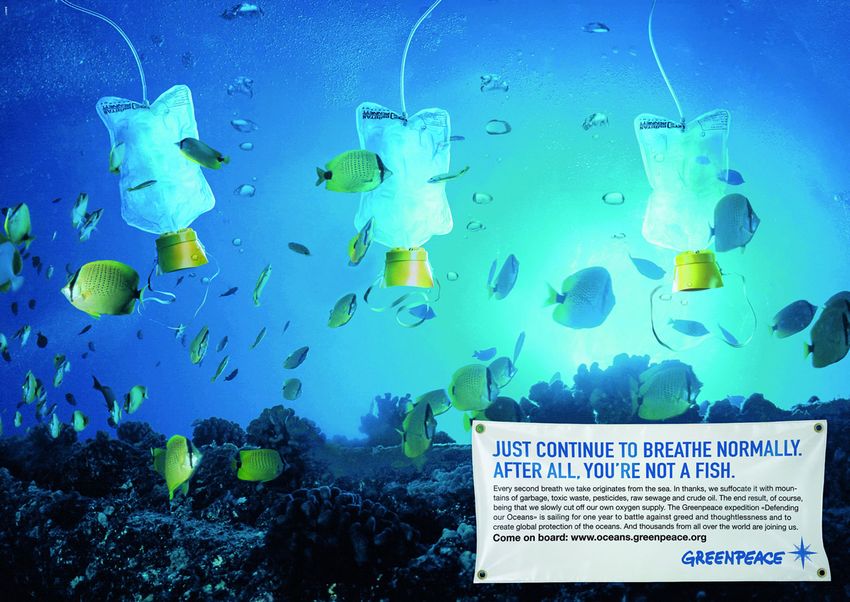
                        Every second breath we take comes from
                        the ocean

 An ocean literate person:
 makes informed and
 responsible decisions
 regarding the ocean and its
 resources                                           www.responseable.eu
11
Intro Poll to the audience: How would you rate
your level of Ocean Literacy?
www.responseable.eu12
Feedback from the panel:
In your work/experience…
• What is the right level of ocean literacy?
• What does the right level of ocean literacy depend
on?...
- Depend on the role the actor is involved with? (public
citizens young or old, industry, government and policy)
- Depend on the topic that is being considered? (plastic
pollution, climate change, spread of non native invasive species)
- What is important to keep in mind when embarking on
measuring ocean literacy?
www.responseable.eu13
2. Is Knowledge Enough? How should we
measure ocean literacy?
• An ocean literate person: makes informed and responsible
decisions regarding the ocean and its resources.
• End Goal = people appreciate the effects of their actions
and undertake behaviours to reduce impacts.
• Are we assessing attitude and behaviour change as much
as knowledge?
www.responseable.eu14
POLL to the audience:
In your experience, what drives your behaviour (to
reduce human impacts on the environment, particularly
in the ocean environment)?
www.responseable.eu15
Feedback from the panel:
From your work/experience…
• What has worked well for assessment of effectiveness of
ocean literacy initiatives?
• Is knowledge enough to lead to behaviour change?
• What else might need to be measured for a tool to be
considered effective and how?
www.responseable.eu16
3. Approach in ResponSEAble
1. Identify behaviour change objectives
for a given audience identified by tools
Com
Aw K At / SN BC
Commun-
Awareness Knowledge Attitude ication (social BEHAVIOUR
norm) CHANGE
www.responseable.eu17
Approach in ResponSEAble
Com
Aw K At / SN BC
Commun-
Awareness Knowledge Attitude ication (social BEHAVIOUR
norm) CHANGE
3. Set out objectives under each ocean literacy dimension within a
Theory of Change logic model, for each tool, for each audience.
www.responseable.eu18
Approach in ResponSEAble
4. Use survey tools pre and post interaction with the ocean literacy tool
to gather participant’s self –reported:
1. Awareness of the issue,
2. Knowledge of the issue, its causes and effects,
3. Concern for effects of the impact,
4. Belief in the benefit of undertaking actions to reduce impacts
5. Frequency of communication about the topic and
6. Frequency of taking behaviour options to reduce the impact.
www.responseable.eu19
Approach in ResponSEAble
Assessing applicability of questions to audience – detecting ocean
literacy levels and detecting relationships between knowledge attitude
and behaviour
Com
Aw K At / SN BC
Commun-
Awareness Knowledge Attitude ication (social BEHAVIOUR
norm) CHANGE
• We surveyed students on ocean literacy topics
• A correlation was found between Attitude and Behaviour, but no
correlation was found for knowledge
• Further analysis indicated how the questions could be improved
(Rasch and Reliability analysis)
www.responseable.euResults from Assessment in ResponSEAble 20
www.responseable.euResults from Assessment in ResponSEAble 21
AWARENESS How informed do you feel about the effects of *** d =2.5)
invasive species
Self Reported KNOWLEDGE - Effects on marine life *** (d 1.5)
Self Reported KNOWLEDGE - Effects on availability of seafood *** (d 1.7)
ns (d 1.0)
ATTITUDE - General environmental concern
ATTITUDE - Concern for effects of invasive species *** (d 1.8)
*** (d 1.4)
ATTITUDE - Belief in benefits from treatment of ballast water
SELF EFFICACY - Feel capable can reduce the spread of invasive ns (d 0.4)
species through own actions
RESPONSIBILITY - New 'ballast free' ships to be constructed *** (d 0.8)
RESPONSIBILITY - Crew follow best practice in operation of ballast ns (d 0.8)
water system
RESPONSIBILITY - All ships to have effective ballast water ns (d 0.9)
treatment systems
RESPONSIBILITY - Research into spread of invasive species and ns (d 1.1)
methods to reduce impacts
COMMUNICATION - How often talk about the issue of invasive *** (d 0.5)
species and ways to reduce impacts with others
Self Reported BEHAVIOUR - Undertake actions to reduce the *** (d 1.4)
spread and impacts of invasive species
0 2 4 6 8 10
pre
Mean agreement / frequency of actions
post www.responseable.eu22
Feedback from the panel and audience
• In your experience what else needs to be considered
when measuring effectiveness of an ocean literacy
initiative?
– What contributing factors need to be considered?
– What challenges have been encountered when assessing tools as well as
implementing them?
– What solutions did you find?
• How can we best apply what we have learnt to
designing new OL initiatives and tools?
www.responseable.eu23
What is next?
• Follow us and our Ocean Literacy tools and results of testing
effectiveness in different countries
• Join us at the event co-organised by ResponSEAble and
MARINA (H2020) projects:
SUPPORTING EFFECTIVE OCEAN GOVERNANCE
The role of Ocean Literacy and Responsible Research and Innovation
18- 20th of March in Brussels
www.responseable.eu24
Thanks for your contributions!
Please, don’t forget to give us your feedback in the
survey after the webinar
www.responseable.euYou can also read


