WHITE PAPER 2018 The Trade Finance Marketplace and Cryptocurrency Economy - Envoy
←
→
Page content transcription
If your browser does not render page correctly, please read the page content below

The Trade Finance Marketplace and Cryptocurrency Economy

                       2018
       WHITE PAPER
                          V1.2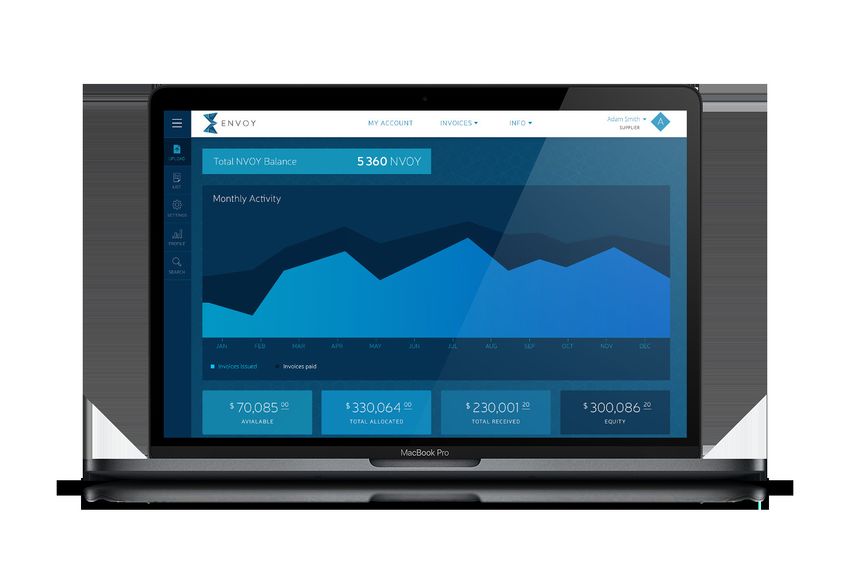
WHITE PAPER 2018                                                 ENVOY
                                         2

       CONTENTS

         Legal Disclaimer                                   03
         Abstract                                           04
         What is Trade Finance                              06
         Envoy: The Future of Trade Finance on Blockchain   15
         Our Marketplace                                    18
         Why Corda                                          19
         Interoprability with Ethereum                      20
         Our Key Attributes                                 22
         Platform & NVOY Token Workflow                     25
         User Experience                                    26
         Envoy’s AI                                         32
         Distributing Risk                                  33
         The ENsure Ratings System                          34
         Data Storage & Privacy                             37
         Future Developments                                38
         The Engage Gateway API                             39
         Target Markets                                     42
         Roadmap                                            45
         Token Sale                                         46
         Strategic Partners                                 49
         Team and Advisors                                  50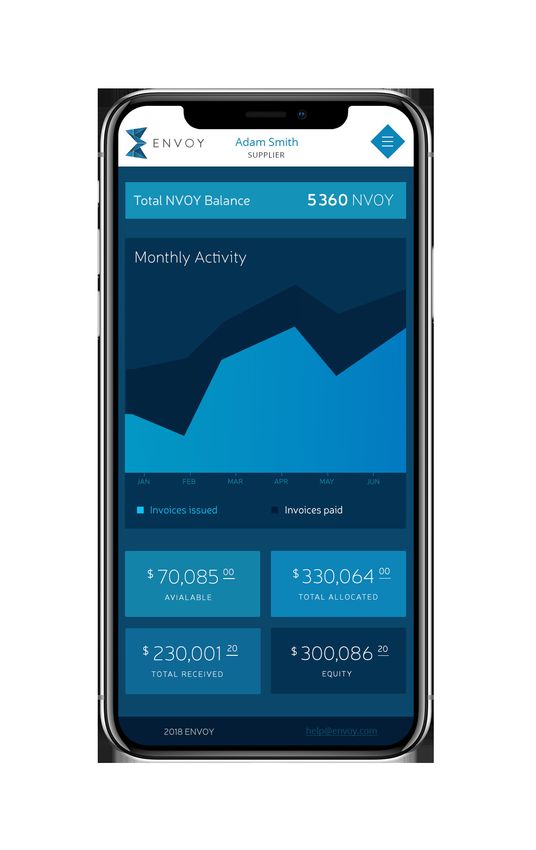
WHITE PAPER 2018                                                                              ENVOY
                                                 3

   LEGAL DISCLAIMER
   This white paper discusses certain aspects of Envoy, (NVOY), and its underlying
   cryptocurrency marketplace and virtual currency. The white paper and the information
   stated herein is not legally binding and the study focuses exclusively on the activities
   and assets as it relates to Envoy. This white paper does not constitute an offer for nor
   an invitation to exchange any amount of cryptocurrency for NVOY.
   Forward-Looking Statements: The white paper contains certain forward-looking
   statements. A forward-looking statement is a statement that does not necessarily relate
   to historical facts and events. The forward-looking statements are based on forecasts
   of future results and estimates of amounts not yet determinable or foreseeable. Such
   forward-looking statements are identified by the use of terms and phrases such as
   anticipate, believe, could, estimate, expect, intend, plan, predict, project, will and similar
   terms, including references and assumptions.
   This applies, in particular, to statements in this white paper containing information on
   future developments of Envoy or its industrial mining operation, plans, and expectations
   regarding Envoy or its growth of value. Forward-looking statements are based on
   current estimates and assumptions that the author makes based on verified present
   knowledge.
WHITE PAPER 2018                                                     ENVOY
                                     4

                             ABSTRACT

                                   TRADE
                               FINANCE IS THE
                          BEATING HEART OF GLOBAL
                         COMMERCE, NOURISHING THE
                    CONTRACTS THAT KEEP GOODS, SERVICES
                      AND CURRENCIES STREAMING ACROSS
                   BORDERS, THROUGH EXCHANGES AND ONTO
                   SHELVES THE WORLD OVER. WITH CLOSE TO A
                   THIRD OF THE $16 TRILLION INTERNATIONAL
                        MARKET FLOWING THROUGH ITS
                       CHAMBERS HOWEVER, IT’S A HEART
                            UNDER CONSIDERABLE
                                   STRAIN.

    The industry suffers from the same key logistical issues as
    many other supply chains and stretches across many disparate
    stakeholders; from buyers and sellers to financial institutions
    and banks. Challenged to keep up with fast-paced markets whilst
    ensuring quality and compliance, and effectively managing
    investor risk, trade finance is also an industry stuck in its ways.
WHITEPAPER
WHITE PAPER2018
           2018                                                   ENVOY
                                                                  ENVOY
                                   55

   Whereas most sectors have embraced digitalisation, trade
   finance has not. Shamefully, much of the industry’s processes
   still rely on paper trails and rubber stamps which are easily
   manipulated, lost and subject to dispute. Naturally this opens
   up financiers to duplicate invoicing, and both buyers and sellers
   to considerable levels of fraud - in turn leading to investment
   timidity.

   At the same time, the sluggish speed at which deals are done
   means the prices of commodities can go up and down whilst
   financing is sought, leading to potential losses. To see the
   industry truly flourish, trade finance desperately needs to be
   dragged into a new age.

   By its very nature, Distributed Ledger Technology (DLT) lends
   itself perfectly to coping with these stresses and strains. It
   eliminates the issue of duplicate financing through finality,
   ratifies asset movement through total transparency and
   facilitates the flow of finances through tokenization.

   Enter Envoy: a      trade finance marketplace powered by
   blockchain. Envoy   has united the old with the new by creating
   an interoperable     marketplace that is both legacy system
   compatible and       blockchain-agnostic.

   Bringing together the siloed systems used by different
   stakeholders around the world, simplifying supply chain
   processes and dramatically increasing liquidity, the new
   marketplace and virtual currency will transform the way
   businesses and investors interact through advanced Know
   Your Customer (KYC) procedures, superior automation and by
   championing cross-border collaboration.
WHITE PAPER 2018                                                               ENVOY
                                         6

    WHAT IS TRADE FINANCE?
    Growing business means taking risks. Doing so internationally means taking
    even bigger risks, and as a business owner opens you up to a dizzying list of
    questions and quandaries. How do I know that I am going to get paid? Will
    the goods I paid for arrive intact and on time? Will that worsening political
    situation affect my deal? What if I can’t liquidate my assets?

    In the past, this meant that international trade relied upon high levels
    of trust and considerable capital to back transactions, but trade finance
    changed all of this.

            SUPPORTED
          BY BANKS AND
        OTHER FINANCIAL
      INSTITUTIONS, TRADE
      FINANCE FUNCTIONS
     AS AN INTERMEDIARY
     BETWEEN IMPORTERS
         AND EXPORTERS
           IN ORDER TO
         GIVE PARTIES ON
         BOTH SIDES THE
       ASSURANCES THAT
      THEY NEED IN ORDER
      TO TRADE WITH ONE
             ANOTHER.
WHITE PAPER 2018                                                                                                            ENVOY
                                                                7

    Though most people are unaware of its existence, trade finance
    permeates every aspect of the products we use. Take, for example, a
    simple tin of beans: the seeds to plant the beans need to be bought
    and transported to the farmer. Once harvested, they are sold and
    sent to a manufacturer. Having been processed, they must be tinned
    - the tin needs to be mined, transported to a refinery and sent to the
    manufacturer. The paper for the label itself is either manufacturer or
    recycled, and the ink bought in bulk to brand the product. Finally, the
    beans are sold wholesale to a retailer. Every step in this journey is
    facilitated by trade finance.

    Consider, then, more complicated products. The computer you are
    reading this on. Your smartphone. The chair you’re sitting on; and you
    start to see the impact that trade finance has on every single part of
    our lives.

    And with recent studies showing that roughly 70% of working capital
    is tied up in a supply chain*, it’s easy to imagine why international
    trade finance is a stressful and complex process, involving multiple
    parties, and extending to insurance, forfaiting and factoring amongst
    other financing procedures. Keeping track of all the moving parts has
    proved increasingly difficult.

     *https://s3-eu-central-1.amazonaws.com/fsd-circle/wp-content/uploads/2015/07/30094433/15-07-30-GrowthCap-Technical-Note-
     SME-Supply-Chain-Finance.pdf
WHITEPAPER
WHITE PAPER2018
           2018                                                                                                               ENVOY
                                                                                                                              ENVOY
                                                                 88

   A BILLION DOLLAR BUSINESS

   Global trade has been growing at double digit rates over the course of
   the last 18 years, and it has brought the banks along with it. The World

         80%
                                                                      Trade Organization estimates that
                                                                      up to 80% of trade is now financed
                                                                      by credit or credit insurance*,
             OF TRADE IS                                              with the average value of a letter
         FINANCED BY CREDIT                                           of credit now at $350,000**.

                                                                      3.77%
   Undergoing a period of rapid
   expansion, current predictions
   expect the compound annual
   growth rate (CAGR) between                                                LONG-TERM CAGR
   2016 and 2020 to be 3.77%***.                                                GROWTH

         4.7%
                                                                      Additionally, global revenue from
                                                                      Trade Finance is expected to
                                                                      increase at 4.7% annually from
           INCREASE IN TRADE                                          $36 billion in 2016, to $44 billion
                FINANCE                                               in 2020****.

   Understandably under pressure and with mounting demands
   from companies and consumers, creditors are finding themselves
   increasingly stretched. And whilst trade finance has emerged as
   a consistent and interest rate independent source of revenues for
   banks, with default rates 10 times lower than corporate lending*****,
   it remains an industry hampered by the key issues of risk, cost,
   transparency and efficiency.
  * https://www.wto.org/english/res_e/booksp_e/tradefinsme_e.pdf
  ** http://store.iccwbo.org/content/uploaded/pdf/ICC_Global_Trade_and_Finance_Survey_2016.pdf
  ***https://www.businesswire.com/news/home/20161010005465/en/Global-Trade-Finance-Market-Growth-CAGR-3.77
  ****https://iccwbo.org/publication/2017-rethinking-trade-finance/
  ***** https://www.accenture.com/t20160412T053548Z__w__/us-en/_acnmedia/Accenture/Conversion-Assets/DotCom/Documents/Global/PDF/
  Dualpub_21/Accenture-Trade-Finance.pdf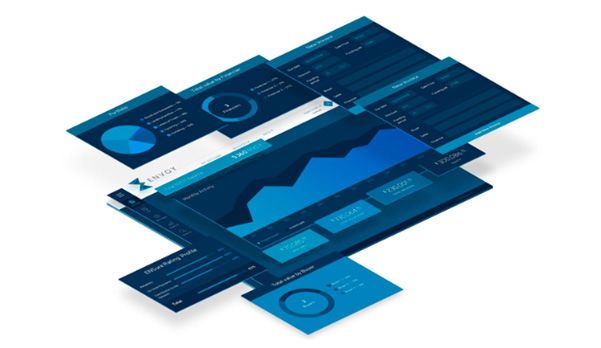
WHITE PAPER 2018                                                                                                                   ENVOY
                                                                        9

    BALANCING RISK AND REWARD
    As with any investment, trade finance comes coated in risk. With
    current processes still handled manually, all parties involved are
    opened up to issues of fraud and simple human error.

                                                                                 $ 1.1B
    An often cited example is the $1.1
    billion lawsuit brought against
    Citigroup by Rabobank Groep* (as
    well as other creditors and investors)
    after it emerged that the American                                                  LAWSUIT
    corporation had falsified receivables. Although fraud at such levels is
    relatively rare, there are many other exploits which opportunists can
    take advantage of.

    INVOICING FRAUD
    One of the major risks in international trade finance is the creation
    of duplicate invoices. As most financiers maintain independent
    ledgers, fraudsters can present invoices to various creditors and
    secure multiple loans on the same goods without the banks finding
    out.

      $200M
                                                                                    In a notable case, Standard
                                                                                    Chartered Plc. lost close to
                                                                                    $200 million from such a
                                                                                    scheme in China’s Quingdao

                           LOSS                                                     port in 2014**.

    * https://www.bloomberg.com/news/articles/2016-02-27/citigroup-faces-fraud-suit-claiming-1-1-billion-in-losses
    ** https://www.livemint.com/Industry/CXfxl1yePlwTDuokXU3c2K/Fraud-in-4-trillion-trade-finance-turns-banks-to-digital-le.html
WHITE PAPER 2018                                                                                               ENVOY
                                                                    10

                                                              $
                                                                              BANK A
                                                        Invoice to secure
                                                            Loan #1

                          S

                                                              $
                                                                              BANK b
                                                     SAME Invoice to secure
                                                            Loan #2
                                                                                         As banks maintain
                                                                                       independent ledgers,
                                                                                         they cannot tell if

                                                                                        the same invoices.

    The effects of duplicate invoicing fraud are far reaching:

    - Banks have to write off millions of dollars leading to conservative
    future investment;
    - Buyers, unlikely to receive goods, have their commitments affected.
    - Suppliers are faced with higher interest rates as financiers have to
    recoup losses;
    Insurers may have to cover the cost of claims, leading to higher
    premiums.

    CONSIDERABLE COSTS
    JP Morgan claims that Fortune 500 companies spend no less than
    $81 billion* annually on unnecessary working capital and supply
    chain costs due to trade finance activities, requiring about 36 original
    documents, 240 copies and the involvement of 27 entities.

    As the industry grows, and as regulatory demands increase, the costs
    to strengthen compliance and set in place provisions for effective risk
    management are expected to follow suit. In turn, this will make it harder
    and more expensive for businesses to access finance, in particular
    affecting SMEs who constitute 20% of US and 40% of EU exports**,
    and who have more than 50% of their trade finance requests rejected.

  *https://www.jpmorgan.com/country/US/EN/2017-trade-outlook-key-factors
  ** https://www.wto.org/english/res_e/booksp_e/tradefinsme_e.pdf
WHITE PAPER 2018 ENVOY
11
OPERATING IN ISOLATION
Current trade finance platforms are not interoperable, with most
parties keeping private and paper-heavy ledgers. This leads not only
to invoice fraud, as outlined above, but also obfuscates much of the
supply chains that feed from trade finance.
Sharing data between warehouses, manufacturers, shippers, buyers,
sellers and financiers is often incredibly time-consuming, if not
impossible. Disputes, then, inherently arise causing companies to
engage in costly and time-consuming resolution procedures.
Moreover, it is difficult to discover and investigate possible illegal
supply chain connected activities such as counterfeiting, forced labour,
poor conditions in factories, or revenues used to fund war crimes and
criminal groups.
ANTIQUATED & INEFFICIENT
Trade finance is haunted by analogue operations. Most processes are
still manually programmed and, where digitalisation has managed to
penetrate the industry, market uptake has been slow, mostly down
to issues with scalability and flexibility which current platforms have
not managed to deal with. Typically, this means that time is wasted on
unnecessary hand-holding, due diligence and compliance.WHITE PAPER 2018 ENVOY
12
THE TRADE FINANCE GAP
Money is being left on the table due to slow moving and heavily
laden legacy systems. A survey from the Asian Development Bank
estimates that the trade finance gap is an astounding $1.6 trillion,
whilst International Finance Corporation suggests that MSMEs face a
finance gap of between $2.1 to $2.6 trillion*.
It is these smaller businesses that are facing the greatest obstacles of
accessing affordable finance. This is the case in both developed and
developing nations, though the impact is far more substantial in lower
income countries. There, small national banking sectors and a lack
of interest from global institutions are hampering not only business
development but economic growth.
In particular, African nations are suffering considerably, with estimates
that the unmet demand for trade finance on the continent is up to $120
billion** - a third of the trade finance market. In Asia meanwhile, the
unmet demand is an astounding $700 billion. This is compounded by
exorbitant fees of up to 20% taken by banks in order to fund invoices.
Such astonishing gaps lead Roberto Azevêdo, Director-General of the
World Trade Organization, to write:
“We should hear this call and act to improve provision… Such actions
could include: enhancing existing trade finance facilitation programmes;
helping local banking sectors to grow by improving training programmes;
better monitoring of problems with provision; and maintaining a closer
dialogue with regulators.”
* https://www.adb.org/publications/2016-trade-finance-gaps-growth-and-jobs-survey
** https://www.wto.org/english/res_e/booksp_e/tradefinsme_e.pdfWHITE PAPER 2018 ENVOY
13
IN SUMMARY
The importance of trade finance for global commerce is undeniable.
With numbers ranging from the millions to the trillions, it is an industry
relied upon not only to facilitate international trade and build business,
but to grow economies.
Whilst past iterations of trade finance did a good job of bridging the gap
between importers and exporters, the world has changed. Embracing
digitalisation is no longer an option, and its archaic processes must
be modernised before they do any more damage.
The closed, centralised systems that trade finance relies upon need
to be made more transparent in order to prevent fraud and reduce
exploitation;
Risk needs to be better mitigated to open up finance for MSMEs,
and allow access to huge revenue streams for financiers;
Diminished levels of trust need to be improved upon by better
connecting businesses and their data at all stages of the supply
chain;
Efficiency must be greatly improved so that deals can be done
quicker and made more profitable.WHITE PAPER 2018 ENVOY
14
B S
Delays in
paper-based
payment to
Fine paid by HSBC after US companies
money laundering scandal
Documents such as bills of lading
A lack of transparency in Delays in the presentation of,
can be forged allowing criminals
shipping processes adds risk to and human error in handling
to claim good that aren’t theirs.
the buyer. This can also lead documents can hold up goods
Fraudulent documents can also
lead to the loss of goods, or behind customs for days.
hide illegal activities and be used
damage of goods in transit.
to con buyers.
UP TO Involved
in the
transport
Of all maritime fraud is
supply The cost of committed by falsifying
COMPANIES chain processing paperwork documents
Innovation: Envoy will radically improve the TF industry, dis-
rupt the status quo and remove these flaws once and for all
by employing DLT, and scaling with other bleeding edge tech-
nologies to provide a marketplace that boosts trade, pumps
revenue streams for financiers and helps businesses blossom
on the international market.WHITE PAPER 2018 ENVOY
15
ENVOY: THE FUTURE OF TRADE FINANCE ON
BLOCKCHAIN
Blockchain is the panacea to trade finance’s pain points. A type of
distributed ledger technology (DLT), blockchain can be used to record
the details of transactions, apply cryptography to the data and then
distribute the updated ledger across the network for all to see.
For this reason, it is the perfect solution for trade finance and supply
chains because, much like complex supply chains themselves, the
data isn’t centralised. There isn’t one clear or dominant owner who
controls all elements, and information added to the blockchain must
be validated by consensus.
BANK
B CARRIER
BUYER
S
SELLER
REGULATOR
FORWARDER INSURERWHITE PAPER 2018 ENVOY
16
HOW TRADE FINANCE ON THE BLOCKCHAIN
CAN WORK:
Once a transaction happens on the blockchain, it is validated, secured
cryptographically with a time stamp, and a copy of the altered ledger
is distributed to all nodes of the system. The sovereignty of a deal is
then protected by preventing anyone tampering with the entry. This
is known as immutability.
Paper-intensive processes such as drawing up bills of lading, letters
of credit, title papers, quality certificates and many more - can now be
digitised and securely stamped, creating an indelible record that will
last forever.
When it comes to supply chain finance (SCF), blockchain can also be
used to register the transfer of goods as a transaction, and create
a record of all parties involved and their actions. This makes it is
possible to trace the provenance of every single product back to even
the original raw materials used in manufacturing.
Thus, together with immutability, notarisation and assured provenance,
transparency is a core blockchain attribute. Such transparency will
dramatically cut third party costs, help pinpoint weaknesses in mere
seconds and provide absolute finality on disputes. In turn, investors
can truly understand what they are financing and make giant steps
towards reducing regulatory and reputational risks.WHITE PAPER 2018 ENVOY
17
FINANCIER
5
INVOICE
FINANCING
7
VERIFY
RECEIVABLE 4
OWNERSHIP
CREDIT
REPAYMENT
3
ISSUE TRADE
RECEIVABLE
ISSUE
INVOICE
S 2 B
SELLER 1 BUYER
DELIVERY
INVOICE PAYMENT AFTER
CREDIT PERIOD
6
INTRODUCING ENVOY
Trade Finance is being turned on its head with Envoy; a marketplace
that will unlock previously unavailable liquidity by tokenizing access
to trade finance invoice settlement and by allowing financiers identify
and fund various projects. The ground-breaking marketplace will
empower businesses across less developed nations and stimulate
economies in the process.
Breaking down the barriers that both buyers and sellers face to free
up cash flows, and cutting out the network of affiliate banks and the
mess of paperwork and commissions that go along with it, the EnvoyWHITE PAPER 2018 ENVOY
18
marketplace will make identifying and funding trades easier, more
efficient and better available to businesses looking to claim their place
on the world stage.
Powered by blockchain, Envoy will bring together stakeholders at
every stage of the trade finance supply chain in a highly secure, totally
transparent and risk-averse environment. Generating smart contracts
that provide assurances to all parties, we will give our users the insights
they need to make better financial decisions and encourage staking in
businesses they believe in.
OUR MARKETPLACE
Looking for the best-in-class solution to trade finance’s current
inefficiencies, Envoy takes advantage of two different blockchain
ledgers:
1. NVOY is the ERC20 utility token which powers marketplace
transactions;
2. R3 Corda will be used to record and settle invoices and smart
contracts off the platform.
NVOY
ERC20 UTILITY TOKEN R3 CORDA
The graphic above shows how the strength of each blockchain is leveraged.
In addition, with Envoy’s interoperability, we can implement cross-chain value
transfers and enable various future trade finance products by using any database,
decentralised ledger, technology or fund.WHITE PAPER 2018 ENVOY
19
Since Envoy is completely digital and is underpinned by blockchain
technology, we can eliminate the need for physical paper, increase the
time/efficiency of sending documents back and forth, and reduce the
delays at port and through customs by assuring that all records are
immutable and auditable. This process increases speed and efficiency,
cuts down on costs, and drastically increases data reliability.
WHY CORDA?
Corda was selected as the blockchain rail for the Envoy marketplace
because it was custom built with trade finance and supply chain in
mind. And with their enterprise solution rolled out on six continents
and currently used by over 200 companies, it is the largest and best
supported platform in the space. Moreover, it supports high transaction
speeds relative to Ethereum, and it also provides transaction privacy
which is crucial for our B2B marketplace.
An open-source solution that removes costly friction in business
transactions, Corda is simple to use and natively provides many
essential trade finance functions and comprehensive financial
settlements protocols. Key amongst these are:
KYC procedures;
Reference data;
Credit rating data;
Trade finance orchestrations;
Dual-use goods checks;
Sanction screening services.WHITE PAPER 2018 ENVOY
20
These features can be immediately plugged-in and used to immediately kickstart
the Envoy marketplace. Utilising smart contract and blockchain technology,
Corda allows businesses to reduce transaction and record-keeping costs, and
to simplify business operations. These benefits lead to substantial increases in
efficiency, taking businesses to a new level of productivity and gives our users
the oversight they need to make better investments.
INTEROPERABILITY WITH ETHEREUM
There have been many proposed cross-chain interoperability standards,
such as the InterLedger Protocol and other on-chain relayer networks.
Many of these interoperability standards are extremely complex and
are built with the purpose of enabling completely decentralised on-
chain computations.
However, for the purposes of the Envoy marketplace, we only require
the use of cross-chain atomic swaps, which can be easily done with
hashed time-locked contracts. This technology has already been
implemented to enable Litecoin-Bitcoin swaps, and is widely used in
the cryptocurrency industry.
2. use the same H(X)
1. NVOY1,SIGN+H(X) NVOY NVOY 3. NVOYRESERVE,SIGN+H(X)
TOKEN CORDA
RESERVE RESERVE
C1 C2WHITE PAPER 2018 ENVOY
21
MARKETPLACE ARCHITECTURE
The general architecture of the marketplace includes the core Corda
blockchain components, as well as an external oracle service that acts
as a trusted source of input that triggers on-chain Corda contracts,
events, and transactions.
Information from both 3rd party services and the Envoy marketplace
will be sent into an off-chain isolated AWS server instance that provides
self-attestation and does not allow external modification once it is
deployed. This ensures data integrity and removes the need for a
trusted intermediary to process information.
After receiving inputs and processing them, the oracle signs the
information and outputs it directly to the appropriate smart contracts
on the Corda blockchain. These transactions are validated by the
smart contracts on the Corda blockchain, ensuring that only legitimate
transactions that have been authorised by the external oracle are
processed.
3RD PARTY
SERVICE
(DATA SOURCE)
ENVOY
PLATFORM TRANSACTIONS
REQUEST FOR DATA SMART
CONTRACT
RECEIVE AND TRANSACTIONS
MARK DATA /
ENVOY TOKEN
UPDATE
CONTRACT / INVOICE
CALLBACK
EXTRENAL
ORACLEWHITE PAPER 2018 ENVOY
22
Multisig Smart Contract
This allows for locking of the mechanism with multisig address to control wallet functions
INTERFACE VALIDATOR
API IPFS
SERVER NODE
PROVIDERS
WEB
SERVER
WEB BLOCKCHAIN
SERVER SERVER
SMART CONTRACT
VOTE-LOCK
INTERNALLY
GENERATED WALLET
ISOLATED AWS ORACLE INSTANCE
Properties of the Envoy platform utilising Corda:
Atomic transaction: NVOY/ Corda / Fiat
Cash & Assets update
Off Ledger transaction
Abserver/Regulator monitoring
Table: A use case for typical transactions within the Envoy platform
ASSET RECORD
S B
SELLER INVOICE BUYER
INVOICE DATA, PARTIES
DETAILS, PAYMENT
OBLIGATION
OFF-LEDGER
CASH MOVEMENT
bank bank
REGULATOR REGULATORWHITE PAPER 2018 ENVOY
23
OUR KEY ATTRIBUTES
DIRECT TRANSACTIONS
Envoy can facilitate direct transfers using Corda, thereby removing the
costs of complicated system agreements. This allows every participant
in the trade finance process to better use the capital available to them.
DISCRETION
Traditional blockchain systems open up transactions to every
single node in their network. This is inefficient and unacceptable
for businesses which require protection from privacy leaks. For this
reason, Envoy’s transactions will use Corda’s ‘consensus service’ which
retains all the benefits of DLTs and smart contracts without exposing
businesses to the vulnerability of uncontrolled data sharing.
INTEROPERABILITY
Corda has created ‘interoperability zones’ which support the seamless
integration of Oracle and SQL server databases and are designed
to be compatible with most corporate IT environments. This allows
the Envoy marketplace to interact with legacy Enterprise Resource
Planning (ERP) systems, and integrate IoT connections to enable the
real-time tracking and monitoring of physical goods.
Our AI will tie this all together to assess risks and provide data. It can
even execute and fund contracts based on user-directed, preset
parameters. Freeing up information previously siloed in disconnected
machines gives our users key insight they won’t find anywhere else.WHITE PAPER 2018 ENVOY
24
TRADE FINANCE FUNCTIONALITY
Envoy will unlock the full potential of trade finance by confronting
the issues of payment, timing and currency exchange directly. With
verifiable signatures, automated capital process and binary escrow
contracts flowing, Envoy’s AI machine will concurrently generate risk
assessments. Automating this previously manual job means less
paper work, less wasted time and more exacting insight.
SCALABILITY
Ready to integrate with the likes of Microsoft’s Azure, Envoy is fully
equipped to deal with the transition of financial trade systems to
more cloud-based softwares. We are therefore perfectly positioned
to capitalise on the global market, break down international barriers
and ensure ease of use for Envoy users no matter where they are in
the world.
TRADE FINANCE TYPES
Trade finance is a broad term and covers a wide variety of different
transaction types. The most common trade finance types are:
Supply chain finance, which optimises cash flow by giving the supplier
the option to be paid early by selling invoices or receivables to
financiers at discounted rates;
Forfaiting, which allows the supplier to sell the buyer’s owed invoices
at a discount, removing any liability from the supplier if the buyer
defaults on their payment;
Repurchase finance (Repo), which is used to raise short-term capital
by dealers in government securities, by selling securities to investors
on a short-term basis and buying them back later;
Inventory finance, which allows retailers to gain access to a line of
credit by borrowing against their inventory as collateral;WHITE PAPER 2018 ENVOY
25
Confidential invoice discounting, which allows businesses to release
money tied up in their ledgers without making the involvement of
financiers’ public knowledge.
Supply
Chain
Finance
Forfaiting Forfaiting
(Type 1) (Type 2)
TRADE
FINANCE
Repurchase
Inventory TYPES Finance
Finance
(Repo)
Invoice Confidential
Discounting Discounting
By bucketing different transaction opportunities into separate classes,
the Envoy marketplace will make it easier for financiers to find contracts
of interest based on their risk thresholds and portfolio diversification
requirements. To gain access to a ‘class’, a user will have to stake a
certain amount of NVOY.
Envoy will begin with simple off-chain finance processed through Corda
in order to quickly launch a working marketplace. As the reputation
for Envoy platform builds within the industry, it is likely we will see
market demand for the inclusion of other, more advanced types of
financing as outlined above. For this reason, the Envoy platform is
being developed iteratively, with the groundwork set in place on day
one for the future incorporation of further trade finance types.WHITE PAPER 2018 ENVOY
26
PLATFORM & NVOY TOKEN WORKFLOW
TOKEN FUNCTIONALITY
In order to denominate a common mode of exchange between
Ethereum and Corda, we require that a token be used for maintaining
a consistent store of value that can be used in transactions. By using
controlled floats, we will also be able to reduce exchange rate volatility,
which is necessary for ensuring that transactions do not deviate from
real-world value beyond a certain fixed margin.
TRANSACTION RELAYERS
In order to maintain smooth user flows and prevent Sybil attacks, certain
actions on the platform will require users to hold a minimum amount
of NVOY tokens on the platform. However, for transactions exceeding
a certain volume, we provide the ability to run the transactional relayer,
which allows for a competitive market and lower fees.
COMMUNICATION CHANNEL
user a relayer
TAKER
ACCOUNT
PLATFORM
MAKER
ACCOUNT
relayer user b
COMMUNICATION CHANNELWHITE PAPER 2018 ENVOY
27
USER EXPERIENCE
Interfacing directly with a blockchain can be difficult, confusing, and
error-prone. Envoy fixes this by creating a simple User Interface.
Users will not need to waste time learning about blockchain, private/
public keys, nodes, consensus, or any of that. Instead, they can simply
log onto the platform and focus on their actual business needs with
minimal distraction.
Each user will have a personal dashboard where they can view their
total NVOY token balance, any contracts with which they are associated,
the relevant details of those contracts and the Ensure rating profile of
any related parties. The platform will automatically deduct NVOY from
a user’s wallet/account whenever a payment is to be made and will
add NVOY whenever a payment is received.
Financiers will be able to view all open contracts, their terms, their
buyer/seller profiles, the details of any financiers already involved. In
the same way, buyers and sellers will be able to assess the Ensure
rating profiles of other prospective counterparties and financiers.WHITE PAPER 2018 ENVOY
28
STAKING
To begin using the Envoy platform, all participants must first purchase
NVOY tokens and deposit and stake a minimum amount of NVOY tokens
(subject to change) in the marketplace’s wallet for Envoy membership.
This allows for user identification and locks up a portion of the total
NVOY supply, as well as granting basic access to the platform data
and community.
Staking NVOY also allows the member to view the various project
types, terms associated with each class and other basic information.
Members can chat and discuss trades with other members within the
platform too.
In staking these tokens, the user creates a Membership node which
then serves to verify the validity of the Ensure credit risk ratings
calculated by Envoy for each of its users. Through these, financiers,
buyers and sellers are able to assess their would-be counterparties.WHITE PAPER 2018 ENVOY
29
CONTRACT CREATION
Buyers and sellers identify and agree Trade Finance contract terms.
Once it is agreed to list a contract on Envoy, a listing fee is charged
in NVOY and paid to the platform by both parties. A portion of this
payment is burnt, thus driving down the total supply. Once financiers
are found for the relevant contract on the marketplace, the contract
is immediately sent off-chain to Corda for processing.
Various financiers can check the marketplace to view available
contracts to fund. By browsing the various project types, a member
can see basic information on contracts, any previous or currently
open trades, as well as AI past performances and ratings.
SUCCESSFUL CONTRACTS
Once a member decides to fund a particular invoice, they will need
to stake a minimum amount of NVOY tokens (subject to change) as
collateral to enter a specific class of project. This creates a ‘Collateral
Node’ which both assures the financier’s deposited value and
represents the financier’s promise to fund a contract. If the financier
identifies a contract which has agreeable terms and wishes to claim
a contract, they must pay a claim fee in order to make that claim.
Once this occurs, the financing of the particular Trade Finance project
occurs off-chain outside the marketplace on the Corda platform.WHITE PAPER 2018 ENVOY
30
TWO WAYS TO PARTICIPATE IN THE TRADE
FINANCE MARKETPLACE:
1 Manual
Members choose to fund invoices on their own by manually staking
the tokens needed. Certain contracts may require a higher minimum
number of tokens per financier.
2 AI
Members choose to allow the Envoy AI to trade on their behalf from a
designated fund. The AI then auto-fills contracts appropriate to each
member’s specific risk type. Regardless of which option is chosen,
when an invoice is fully funded, the funds are converted to Ethereum.
The smart contract, along with the collateral, is then transferred
off-platform to the Corda blockchain where the settlement process
begins.
ratings platform to get goods
moving
The buyer and
seller agree
B S
Invoice
onboarded
Financier stakes to
enter marketplace
e
enc
llig
inte Settlement fee for
Envoy in ETH
art
ific
al
Post settlementWHITE PAPER 2018 ENVOY
31
CONTRACT SETTLEMENT
Despite the settlement process happening off-platform, Corda
facilitates the settlement process directly between the parties by using
DLT and smart contracts. Envoy then makes it seamless for businesses
to track the data without having to feel as if they are directly interacting
with the blockchain.
Corda’s DLT allows for provenance and independent verification of
the assured history of a recorded item. Whenever a settlement activity
occurs - such as if a shipper ships goods, or if a buyer receives goods
- an immutable record of this activity is kept on the blockchain. Envoy
pulls the information onto the marketplace where it can be presented
on user dashboards in a simple and intuitive manner.
sign off
testing
build phase 2
build phase 1
protoype
Design
CONTRACT DISTributed and
manufacturing milestones updated on digital ledger SHIPPING / transport logs
All milestones are updated on
the distributed ledger and
UI for all users to track
progress.
supply chain
systems
SUpply chain management
SMART CONTRACT DELIVEREDWHITE PAPER 2018 ENVOY
32
ENVOY’S ARTIFICIAL INTELLIGENCE
As a partner of the Corda platform, we gain access a treasure trove
of information on financial deals and user interactions. And with our
tokens tethering trade data immutably to our blockchain, we will have
an unparalleled overview of the trade finance ecosystem.
The Envoy AI, then, will be the lynchpin that ties all of our systems
together. It combines
big data from Corda’s resources, our own in-house databases and
future connections from IoT technologies.
Utilising these data streams, it will be able to execute investments
based on the user’s self-defined parameters, thereby removing the
need for manual risk analysis.
Further, as IoT technologies become more and more prevalent,
hardware embedded into, for instance, shipping, will be able to track,
trace and monitor goods in transit. Information on the on-time delivery
of goods, the on-time payments of invoices, and accurate settlement
of funds can then be sent to the Envoy platform and processed by
the AI in order to automatically update progress reports, as well as to
inform the ENsure Ratings system (see page XX).
As the system is adapted, the number of calculations we are capable of
processing will substantially increase, allowing for significant growth in
supply chain finance settlements. With the number of possible trades
per annum then multiplied, both efficiency and global GDP would be
unbridled.WHITE PAPER 2018 ENVOY
33
DISTRIBUTING RISK
For financiers, managing risk is of paramount importance. For buyers,
gaining access to liquidity comes top of the list. And whilst top tier
companies have solid banking relationships, good credit ratings and
consistent trade partners with whom they do business on a regular
basis, second tier companies have it much harder. Many SMEs have
short or poor credit histories, they do not have long established
partnerships or banking relationships, and the liquidity serving these
second tier markets is very low.
Envoy tackles these issues head-on by allowing trade to be financed
by multiple parties, thus distributing risk amongst investors, and
unlocking considerably more capital.
The transparency of the Envoy platform reduces the risk of trade
finance fraud which often relies on the fragility of the manual processes
and paper documents of the traditional system. Nefarious attempts
by both the buyer and seller to double-finance a trade will be all too
easy to read on the DLT. Users need only do their KYC due diligence
offline thanks to Envoy’s enterprise-grade credit risk rating system -
ENsure.WHITE PAPER 2018 ENVOY
34
THE ENSURE RATINGS SYSTEM
To help users analyse counterparty risk, the Envoy platform will
implement a decentralised verification and ratings system for all users
called Ensure. Buyers, sellers and financiers will each have an Ensure
rating score calculated by analysis of factors such as their reliability,
on-time payments and contribution to the network.
All parties interacting with Envoy can view counterparty ratings and
use the information to make contract decisions. Each user can also
set minimum Ensure rating requirements for any deal to assure high-
quality counterparties.
today’s
Traditional artificial requirements disruptive
Systems intelligence insights
big open
data banking
Historical z-score with
static ratios
iot real world live
touch points ratiosWHITE PAPER 2018 ENVOY
35
Ensure ratings are automated and based on factual data from the
actual trade finance process itself and from third party big-data
sources, such as Corda’s own ratings system. Weighted data points
such as past ratings, volume of trade, frequency of trade, on-time
payments, quality and accuracy of goods shipped, and number of
successfully completed contracts will all be fed back to the platform’s
AI at the conclusion of every contract and take instant effect.
The AI also uses this data to help in making automated recommendations
and funding decisions based on token holders preferences. Their data,
then, becomes the backbone of Envoy’s trade finance system which
the platform’s AI can convert into real-time assessments of credit risk
as opposed to the traditional system of historical credit scores from
static ratios which can more easily be gamed.
The Ensure rating system is significantly more robust than simplisticWHITE PAPER 2018 ENVOY
36
5-star ratings on popular websites such as Amazon, Fiverr and Uber
etc., which are not nearly reliable enough for trade finance. It is not
based on selectively recorded user feedback which can be biased,
manipulated, unfairly negative and inaccurate.
CONFIRMED BY CONSENSUS
Envoy’s network of nodes all work together to form consensus.
Since NVOY is an ERC20 contract built upon Ethereum, it can utilize
Ethereum’s PoA (proof of authority). Whenever consensus is required,
the nodes verify data on the platform. Our Ensure ratings system will
rely on this consensus to ensure the data coming into the system is
valid, and to validate ratings.
When contracts are sent off-platform for execution, Corda uses its
own RAFT consensus algorithm to confirm terms are met. When that
data is sent back to Envoy, it is validated a second time by Envoy’s
consensus mechanism, which provides assurance that the data was
not altered during transmission and the data displayed on Envoy’s
platform accurately matches the validated source data from Corda.
Our rating system is therefore impenetrable to manipulation and
guarantees the information integrity required by investors to make
well-informed decisions.WHITE PAPER 2018 ENVOY
37
DATA STORAGE & PRIVACY
Data sensitivity and security will be important for many of our users,
whether that is their transactions, personal information, or the
contracts or invoices between them.
At the same time, we need to guarantee uptime of our system and
that all relevant data can be accessed 24/7. As such, we have put a
great deal of thought into the way that we store and secure data on
the Envoy platform.
Data that supports Envoy and credit ratings will be securely stored off
chain to enable the best use of resources, security and funds whilst
maintaining decentralisation.
CORDA
Built on point-to-point architecture, Corda functions as a ‘multilateral
ledger’ without the need for routing to intermediaries or broadcasting
transactions globally. Participants in a contract only have copies of the
transactions of which they are participants or permitted observers.
Using Intel Software Guard Extensions (SGX), Corda allows for all
records to be verified whilst remaining encrypted to all parties.
Further, Corda stores information using ‘states’. In our case, we will
create a CustomerDataState class and then create instances of this
class on the ledger to represent our various customers.
This data is updated by transactions, but only if transactions based
on the rules associated in the CustomerDataContract are valid. Envoy
will then query this data from our node’s vault or transaction storage
using an SQL-style syntax.WHITE PAPER 2018 ENVOY
38
All information Envoy users share on the Corda platform is safeguarded
as a priority by the system’s basic architecture, with data safely
encrypted and secured. Envoy is permissioned to access specific
data elements and display them on the Envoy UI to inform, amongst
others, our ENsure ratings and risk assessments. Users signing up
to use Envoy will have to give us permission to read and analyse this
information.
ENVOY
Ratings data (and perhaps other user specific data directly related
to or generated specifically in relation to Envoy) will be stored on the
Ethereum blockchain and validated by the staked NVOY tokens for
membership. Since all people utilizing the Envoy platform will need
to stake NVOY tokens, we will use this as a mechanism to store each
users ratings data alongside their staked tokens.
FUTURE DEVELOPMENTS
We want to make asset trade investment even faster, cheaper and
less risky than it is now. We want to expand trade opportunities for
all players. And we want to make it easy for entrants in the space to
learn, develop and capitalise upon this lucrative industry.WHITE PAPER 2018 ENVOY
39
THE ENGAGE GATEWAY API
Key to making our platform as robust as possible is the Engage
Gateway; a cutting edge API which allows our platform to seamlessly
connect to third party funds, blockchains, big data services and other
third party services.
Initially we will use the Engage Gateway to link the underlying Corda
blockchain to Envoy. As we introduce new trade finance types, which
may have different requirements or capabilities from the underlying
blockchain, we will configure the Engage Gateway to permit new
connections. Built iteratively, we will be able to upgrade and port new
technologies into our ecosystem without disrupting existing business.
As the Envoy platform continues to develop, one of the more interesting
and highly beneficial uses for the Engage Gateway will be with security
tokenized funds which can act as financiers. An example of which is
outlined below.
FUTURE USE CASE: SECURITISED FUNDS API
If institutional trade finance experts or fund managers were to spin up
a tokenized fund that was focused on a specific trade finance product
or a mix of products, they could simply plug into Envoy’s Engage
Gateway and immediately begin trading on the platform.
Creating a security-tokenized fund (STF) provides many benefits over
more traditionally structured funds:
They are asset backed, and so institutions are able to quickly raise
capital through the sale of their security token.
The token itself can inherently track ownership, profit and net
asset value (NAV).WHITE PAPER 2018 ENVOY
40
A system can be created that automates dividend/incentive
distribution.
The fund structure is more secure and precise, lowering
administrative strains and costs.
By its very nature, an STF will be consistently reflective of the NAV.
Records of these values are then immutable, time stamped, traceable
and highly secure due to the nature of the underlying blockchain the
security token is built upon.
This level of accuracy allows for a simple calculation of monthly (just as
easily, daily or hourly) NAV. It can be set up such that automatic non-
periodic payments can be made to investors as a return of capital/
dividend income based upon meeting incremental NAV benchmarks
(high-water mark), or as an immediate percentage of profits from
each completed contract. Further, the contributions and distributions
can easily be tracked through the purchase or redemption of security
tokens.
Once configured, the Engage Gateway can act as an automated bridge.
It will allow the third party funds to exchange their security tokens or
other deposited value for NVOY tokens and use that value as collateral
(as a financier) for financing. The STF would then be able to engage
with Envoy’s AI through the Engage Gateway to find contracts and
balance portfolio investments according to their specified investment
strategy and risk profile.
The Gateway would be able to match these preferences against the
various trade finance types available and take into account the Ensure
risk ratings of the contracts within each product class. After the
contracts are claimed and executed off-platform, the data from these
transactions will be fed back to the Envoy platform and the Engage
Gateway will relay the profits earned back to the fund.WHITE PAPER 2018 ENVOY
41
Once the first fund has been created, multiple funds, with varying
portfolio strategies or risk profiles, can be quickly and easily copied,
pasted and immediately plugged into Envoy’s Engage Gateway to take
advantage of different trade finance products. These can even be run
autonomously through Envoy’s AI.
Future Use: How a securitized fund can plug into the Engage Gateway
FUND INVESTOR
payout
fit
ENGAGE GATEWAY
pro
CONTRACT pro
fit
START pro
fit
net asset VALUE
payout
fit
pro
fit
pro
CONTRACT
fit
COMPLETE pro
payout
fit
pro
PROFIT pro
fit
fit
pro
Disclaimer: It is important to note that Envoy does not intend to create a security token, a security-tokenised fund, nor
does it intend for NVOY token to become a security token. Also note that the above sections related to Security-Tokenised
Funds are not and should not be considered legal advice of any kind and are merely hypothetical situations which may
or may not be feasible. Envoy will not and does not intend to create any third party funds. Instead, the above is simply
meant to illustrate how a fund could create a security-tokenised fund which could plug-in seamlessly and autonomously
to the Envoy platform through use of the ENgage gateway.WHITE PAPER 2018 ENVOY
42
THERE ARE MANY PLAYERS IN TRADE FINANCE –
ENVOY HAS SOMETHING FOR THEM ALL
There are several different types of stakeholders that are a part of
the trade finance ecosystem. Buyers, sellers and financiers are the
broadest terms that can possibly be used to describe these parties
and within each of these categories are various kinds of stakeholders,
corporations and more. Envoy aims to meet the needs of them all.
Envoy is changing traditional trade finance by introducing blockchain
technology into the mix, bringing new opportunities for everyone
involved. The digitalisation of the entire process removes all the paper
weight from the ecosystem and allowing multiple financiers to fund
the same contract gives greater opportunities for more businesses to
enjoy the benefits of reduced risk that trade finance has to offer.
Envoy caters to all trade finance stakeholders with adaptable solutions
for each.
STAKEHOLDER FINANCIERS
Stakeholders represent a broad spectrum of trading budgets to utilise
Envoy and pool their resources to fulfil invoices. Envoy increases
transparency through blockchain and lowers the total required cost
to participate through partial funding of contracts.
Envoy provides a compelling business model for institutional financiers.
Envoy creates an enterprise-ready platform that is trustworthy and
scalable. The platform will be robust enough for institution-grade
financing by allowing financiers to mitigate risks through partial
contract funding and proper risk assessment using the Envoy Ensure
community ratings system by streamlining much of the trade finance
process,
Institutional third-party financiers who have a tokenised fund will be
able to plugin using our Engage gateway which provides even more
streamlined automation and compatibility - a completely unique
opportunity for the trade finance ecosystem.WHITE PAPER 2018 ENVOY
43
CORPORATE CLIENTS, RETAILERS AND DISTRIBUTORS
Whether a buyer or seller, Envoy’s platform facilitates trade financing
by unlocking liquidity that would otherwise be unavailable. Once
contract terms are agreed upon between buyers and sellers, the
contract can be listed on the platform’s marketplace for funding.
Envoy also provides the required transparency in the invoice process
which leads to further assurances and accountability. Due to the
lowered administrative costs of the digitised processes, All of these
factors combined create a compelling framework for corporate clients,
retailers, and distributors alike.
So, whatever role you’ve found yourself in in trade finance, Envoy has
the solution.
PRIMARY TARGET MARKET: SMES
Presenting one of the most obvious use cases for the Envoy platform,
with a trade finance gap of up to $2.6 trillion, SMEs will be one of our
primary markets and subject to much of our marketing activities.
In particular, we will be focusing on penetration in developing nations
where the call for a platform to ease trade finance is loudest. To this
end, we are already in negotiations with large importers throughout
Africa to introduce our marketplace. Helping businesses there side
step high lending fees from national banks, and gain access to much
demanded liquidity, we hope to empower people in less developed
countries and encourage truly global commerce.WHITE PAPER 2018 ENVOY
44
MARKETING STRATEGY AND COMMUNITY OUT-
REACH
The Emissary Guild have joined the Envoy project to help generate
major marketing awareness. The focus will be on creating a community
dedicated to the project, a large bounty campaign aimed at helping
our global marketing efforts and a considered outreach program to
connect us with key players in the cryptosphere.
Our marketing strategy will also entail high-level planning with trade
finance and funds to aid in the evolution of the platform as the one-
stop-shop trade finance marketplace.
REGULATORY AND LEGAL
As with most utility token projects, significant consideration and
research has gone into addressing all potential regulatory and legal
issues. Envoy has partnered up with a tier 1 law firm in Scandinavia,
a practice with a wealth of experience in the ICO and crypto space to
ensure compliance. We have also enlisted the experience and advice
of one of the foremost Blockchain attorneys in the world - licensed
barrister-at-law James Edward McDonald. It has been confirmed that
Envoy is a utility marketplace platform and NVOY a utility token, not a
security.WHITE PAPER 2018 ENVOY
45
ROADMAP
The following is a summary of the key events and milestones in the
development, integration, and implementation of the Envoy platform.
The roadmap is frequently reviewed and, as such, is subject to revision.
Q4 Vision of
2017 Envoy Formed
Team and
Strategic
Q1
2018
Partners Formed
Q2 Smartym
2018 Development Team
Smart Contract
Q3
Development 2018
Q3 Whitelist
2018
Marketing Campaign /
Q3
Events / Seminars 2018
NVOY
Q3
2018 Wallet Creation
Q4
TGE
2018
q4 Token Issuance
2018
Q2
Platform Build
2019
Q3 Beta Testing
2019
Q4
Platform Launch
2019WHITE PAPER 2018 ENVOY
46
NVOY TOKEN SALE
Sept 2018: Whitelist *
TOKEN SALE Oct 2018: Private Pre sale
30% Discount*
Seed and whitelist wallet address:
20% Discount*
XXXXXXXXXXXXXXXXXX
BLOCKCHAIN PLATFORM - ETHEREUM Nov 2018: Public Pre sale
CONTRACT TYPE - ERC-20 20% Discount**
TICKER SYMBOL - NVOY
10% Discount
1 NVOY - 0.00044 ETH
TOKEN NAME IN FUL - ENVOY TOKEN Dec 2018: Public Sale
DIVISIBILITY (DECIMAL PLACES) - 8 5% Discount
INITIAL ISSUE AMOUNT - 250,000,000
0% Discount
INITIAL SELL VOLUME - 150,000,000
HARDCAP - 40,000 ETH
SOFTCAP - 5,000 ETH
NVOY WALLET TYPE - MultiSig
Envoy is based in the well established and renowned for being TGE, crypto and
blockchain friendly Estonia. whereby we follow all Estonian regulatory TGE guide-
lines legal opinion.
The NVOY token sale will be restricted from residents
and citizens of China, USA and any other restricted
countries, and will require a strict KYC/AML process on
registration.
TOKEN RESTRICTIONS
The founders and management of ENvoy token
are conversant with the volatility of cryptocurrencies
and ICOs, and are taking all necessary precautions to provide
assurances to our ICO investors. One way we are seeking to do
this is through token restrictions.
There are numerous examples of sales where holders of newly acquired
tokens have seen the token drop below market pricing following a token
sale. With this is mind, Envoy has put unlock restrictions in place for
founders, team members and early investors along with a larger discount to
reflect the market security sentiment.
The Envoy Token Sale therefore includes the following restrictive conditions
for token holders:
*Founders/Team/Advisors/Private Presale /whitelist: 50% unlocks after year
1 and 25% each month thereafter
**Public Presale/ 50% unlocks after year 3 months and 25% each month
thereafter
Main Public sale/ token holders: No restrictionsWHITE PAPER 2018 ENVOY
47
TOKEN BURN
The token burn will happen periodically on a percentage of tokens
taken from the token fees paid (exact rate TBD and may be subject to
change). As usage of the platform increases, the burn rate will increase
and help to decrease total token supply.
STAKING
Tokens will need to be staked by holders to become a member of the
platform, and when entering into asset classes for invoice fulfilment.
These will remain permanently staked so long as the user wishes
to use and be a part of the platform. Therefore the total amount of
tokens staked will increase in parallel with our usership. Additionally,
tokens staked as collateral for invoice fulfillment are held as collateral
while invoices are settled off-chain.
ENVOY FUNDS & WORKING CAPITAL
Funds reserved as working capital will be initially kept in a professionally
managed portfolio of cash and NVOY, and will be prudently used to
support Envoy’s long-term business goals.
Some of the strategic use of funds may be:
To develop a strong ENvoy ecosystem by sharing financial benefits
and incentives with our strategic partners, community members
and token holders.
For general business development activities and unplanned
opportunities for growth to promote our brand internationally.
Loaned to other areas of the projects in order to cover any
unexpected shortfalls or changes to long-term funding structures.WHITE PAPER 2018 ENVOY
48
TOKEN DISTRIBUTION (TOTAL SUPPLY)
Operations
/set up
discretionary
12%
10% legal &
COMPLIANCE
7%
advisors exchange
& team 15% 8% listings
10% 15%
r&d
marketing
8%
founders 15%
working
capital
6%
Strategic
3% partnerships
exchanges
9%
Advisors/team
6%
Bounty/marketing/
partners/airdrop
6%
Founders 60%
ICO
10% Special
allocation / reserveWHITE PAPER 2018 ENVOY
49
STRATEGIC PARTNERS
As with any project, the strategic partnerships that are created along
the way are essential for success. Envoy recognises this importance
and is proud to announce it has already partnered and is working
with the following teams:
GROUP
As we continue to seek out the strongest partners for the growth of
our business, the Envoy team are keen to pursue further valuable
connections in order to create the premier trade finance platform.
PROTOTYPE
Envoy, with the aid of strategic partners will be creating a prototype
to show the potential of real user case scenarios of the platform and
so our strategic partners are key in that build, providing real usability
of the technology and show the potential that the trade financeYou can also read


