Strategic Community Plan - 2019/20 to 2029/30 - Western ...
←
→
Page content transcription
If your browser does not render page correctly, please read the page content below
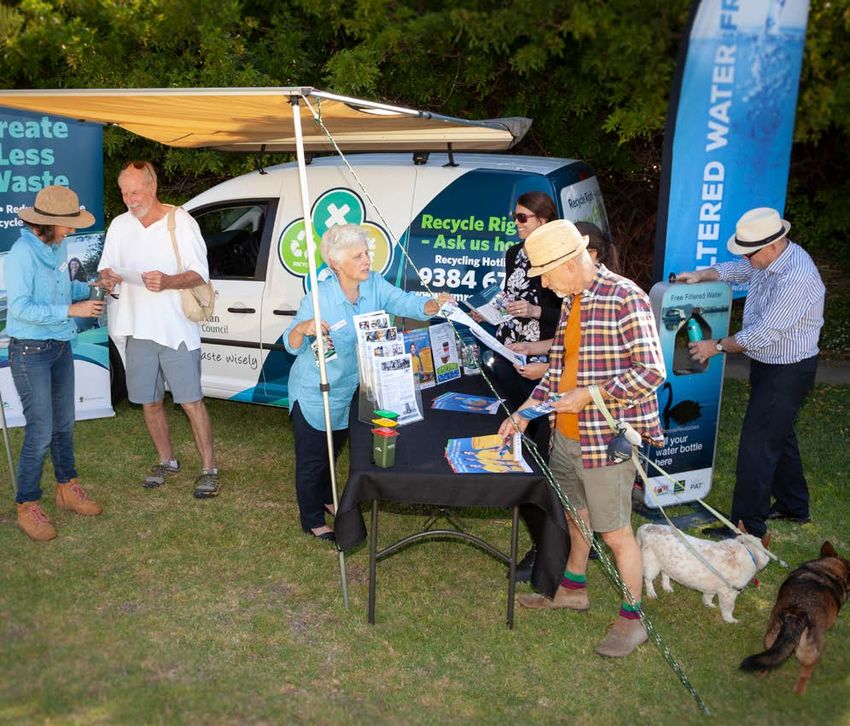
Strategic
Community Plan
2019/20 to 2029/30
Contents
    Our vision for waste management in Perth’s central                                       3. Context......................................................................... 11
    western communities in 2030......................................... 3                         3.1. State Government Actions and Decisions........11
    1.   Introduction.................................................................. 5          3.2. Markets for Recyclables.......................................12
         1.1. About the WMRC Strategic Community Plan...5                                         3.3. The Landfill Levy ...................................................12
         1.2. The Integrated Planning Framework                                                    3.4. Material and Energy Recovery Facilities..........12
              and Process................................................................5
                                                                                                   3.5. Waste Disposal Facilities.....................................12
         1.3. WMRC Guiding Principles.................................... 6
                                                                                             4. WMRC Services..........................................................13
         1.4. WMRC Services........................................................7
                                                                                                   4.1. WMRC Services for Member Councils............13
         1.5. WMRC Current Functions......................................7
                                                                                                   4.2. Providing Value-For-Money................................13
    2. 	 A Snapshot of Waste in the Western Suburbs......8
                                                                                                   4.3. WMRC Initiatives..................................................14
         2.1. Population Serviced................................................. 8
                                                                                                   4.4. Resourcing Implications.......................................14
         2.2. Collection Services................................................. 8
                                                                                             5. Strategic Action Plan Outline................................. 15
         2.3. West Metro Recycling Centre............................. 9
                                                                                                   Key Strategies.................................................................15
         2.4. Communications and Education.......................10

    The WMRC acknowledges the Whadjuk Noongar people as the traditional custodians of this land, and pays respect to their
    Elders past, present and emerging.

2   Western Metropolitan Regional Council
Our vision for waste management in
Perth’s central western communities in 2030
The Western Metropolitan Regional Council (WMRC) will assist the community in effectively
and efficiently reducing waste; recovering resources; and minimising the impact of waste on
the environment.

By 2030, metropolitan waste management will no longer      Municipal and commercial waste vehicles from Perth’s
be heavily reliant on landfill disposal. Organic waste     central western communities will deliver waste to
will largely be separated from other municipal solid       the West Metro Recycling Centre in Brockway Road,
waste, especially through the introduction of a third      Shenton Park for cost-effective consolidation and
FOGO (food organics, garden organics) bin; and will be     haulage to waste treatment facilities. Residual material
effectively processed into soil conditioning materials     will be handled by waste to energy facilities, with landfill
that meet Australian standards. Most residual wastes       disposal acting as a destination of last resort.
will be dispatched for energy recovery at waste to
                                                           The WMRC will continue to support municipalities
energy plants.
                                                           and the community with effective waste management
To minimise transport and logistics costs and enable       strategy and services; and sound advice and education
efficient waste haulage to distant waste treatment and     on waste minimisation and effective waste management
disposal sites, waste collection trucks across the Perth   practice.
metropolitan area will deliver to strategically located
waste transfer stations, including that of the WMRC.
Waste collection routes will be optimised to localise
the operation of waste collection vehicles and achieve
economies of scale.

                                                                   Strategic Community Plan 2019/20 to 2029/30            3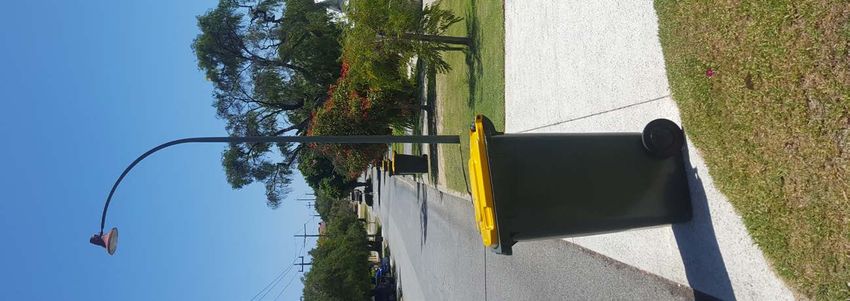
COMPREHENSIVE & COST EFFECTIVE WASTE MANAGEMENT SERVICES

                                                                                           Community drop off
      Waste Collection Services                                                         including problematic and
                                                                                       household hazardous waste

                                                                                           Specialised Materials
                                                                                            Recovery Facilities

                                                  West Metro Recycling
                                                        Centre
                                                                                                 Bulkwaste
                                                                                                 Recycling
           Landfill Disposal
                                                 WMRC Administration,
                                                 Governance, Contracts,                       FOGO Recycling
                                                       Projects                                  (future)
           Waste to Energy
              (future)

                                                                                           Greenwaste Recycling
                                                WMRC Communications
                                                   and Education

                                                                                             Expert Waste
            Community
                                               Waste Reduction Promotion                   Management Advice
           Waste Education
                                                                                              and Support

    Glossary of Acronyms
    AWT – Alternative Waste Treatment which denotes a           HHW – Household Hazardous Waste which are specific
    variety of methods of processing organic material derived   hazardous wastes including batteries, poisons, acids etc
    from residual waste.                                        as specified by legislation.
    FOGO – a kerbside collection system that collects           MGB – Mobile Garbage Bin commonly known as a
    Food Organics and Garden Organics in a single bin.          wheelie bin.
    GO - a kerbside collection system that collects Garden      MSW – Municipal Solid Waste which is collected usually
    Organics in a separate bin.                                 from households by Local Governments through kerbside
                                                                and vergeside services.

4   Western Metropolitan Regional Council
1. Introduction

1.1. About the Western                                        The WMRC will meet the requirements of Integrated
                                                               Planning Process as follows:
      Metropolitan Regional Council
                                                               1. Review of the 2013 WMRC Strategic Community Plan.
      Strategic Community Plan
                                                               2. Prepare a revised draft 2019 Strategic
This revised Strategic Community Plan outlines a shared           Community Plan.
vision on waste management for Perth’s central western
                                                               3. Invite comments on the draft Strategic Community
communities and organisations. It follows a review
                                                                  Plan from WMRC’s staff and Councillors.
by the WMRC of its 2013 Strategic Community Plan.
The Plan will guide WMRC actions to deliver an                 4. Obtain approval of the draft Strategic Community Plan
integrated approach to providing effective and efficient          by the WMRC Council.
waste management services across the central west              5. Invite comments on the draft Strategic Community
metropolitan area.                                                Plan from WMRC’s five member Councils.
                                                               6. Advertise public consultation period in local
1.2. The Integrated Planning                                      media, with the draft Strategic Community Plan
Framework and Process                                             made available for comment, including on the
                                                                  WMRC website.
The Local Government (Administration) Regulations 1996
require all local governments to prepare a Strategic           7. Revise draft Strategic Community Plan to reflect public
Community Plan. The Strategic Community Plan in turn              and member Council comment.
informs the Corporate Business Plan which sets out a           8. Have the new Strategic Community Plan adopted by
four-year delivery program, including financial projections.      WMRC Council.
                                                               9. Use the Strategic Community Plan to guide
                                                                  development of a Corporate Business Plan, activities
                                                                  and reporting.

Strategic objectives                          Strategic Community Plan

Planning                               Corporate Business Plan incorporating:

  Asset Management Planning                       Workforce Planning                      Operational Planning

                                                   Financial Planning

Income & Expenditure                                 Annual Budget                      Mid-Year Budget Review

Reporting                                            Annual Report

                                                                        Strategic Community Plan 2019/20 to 2029/30         5
1.3. WMRC Guiding Principles

                                           To minimise and efficiently manage waste for
       Purpose
                                      Perth’s central western communities and organisations

        Vision                 A world where waste and its impact on the environment is minimised

                             Reliability                  Transparency              Customer Service
                      We deliver on our purpose          We are open and          We aim for excellence in
                       and our undertakings to          transparent in our          customer services
                      our member Councils and           business dealings
                           the community

                             Excellence                 Risk Management                Value for Money
        Values        We seek to do the best we        We understand that            We strive for more
                        can in all that we do        sound risk management          efficient and effective
                                                      is fundamental to our          delivery of services
                                                    ability to create value and
                                                         manage our costs

                                                         Collaboration
                              We foster partnerships with key stakeholders to identify opportunities
                                   and work collaboratively to achieve our purpose and vision

                      Primary Stakeholders          Secondary Stakeholders        Tertiary Stakeholders
                      • M ember Council            • Councillors, staff and      • Other Regional
                         Residents                    residents of other            Councils
                      • Member Council               surrounding local           • State Government
     Stakeholders        Councillors & staff          governments
                      • Customers                   • Customers throughout
                                                      Perth’s central
                                                      western communities
                                                      and organisations

6   Western Metropolitan Regional Council
1.4. WMRC Services
The WMRC was established in 1989 to deal with waste from
Perth’s western suburbs and immediate surrounds in an
efficient and environmentally sound manner; and to provide
guidance on improved waste management practices. Its role
is governed through the WMRC Establishment Agreement
(1998) and its member Councils are:
• Town of Claremont
• Town of Cottesloe
• Town of Mosman Park
• Shire of Peppermint Grove
• City of Subiaco

1.5. WMRC Current Functions
                       Communications
                       & Education
Waste
Management                           Community
                                     education &
                                       support
                       Problematic
                      waste recycling       Marketing &
                        Household           promotion
   Greenwaste        hazardous waste
    recycling
                               Business
                             development
                                         Advocacy
    Waste transfer
     & haulage           Member Council Policy &
                          staff support planning

                      Safety &
                     compliance

                             Financial management
                           Executive support to Council
    Administration
    & Governance

WMRC provides essential recycling and waste drop-off
services at its West Metro Recycling Centre to residents
of its member Councils as well as those of the surrounding
City of Nedlands and adjacent Town of Cambridge,
reinforcing its importance as a waste service provider in
Perth’s central and western suburbs.

                                                             Strategic Community Plan 2019/20 to 2029/30   7
2. A Snapshot of Waste in the Western Suburbs

    2.1. Population Serviced                                              2.2.2. Recyclables
    The Estimated Resident Population for each member                     All Councils collect co-mingled recyclables fortnightly
    Council is most recently available for 2018 and is                    in a yellow-lidded MGB. Recyclables are delivered to
    given below.                                                          various materials recovery facilities.
                                                                          Materials accepted for recycling were standardised
                                                    Population
                                                                          across the Perth metropolitan area in 2018 to
     Municipality          Population 2018         2026 Forecast
                                                                          the following:
     Claremont                   10,704                 12,450
     Cottesloe                    8,188                 8,425
     Mosman Park                  9,067                 10,585
     Peppermint
                                  1,721                  1,925
     Grove
     Subiaco                      17,106               22,290                             Paper (excluding
                                                                                           shredded paper)
     TOTAL                       46,786                 55,675
                                                                                          Cardboard (flattened)
    Extracted from: Australian Bureau of Statistics (ABS), 3218.0 Table
    of Regional Population Group, section Population Estimates by                         G
                                                                                           lass (clean and
    Local Government Area (ASGS 2018) and DLPH Western Australia                          empty, broken glass
                                                                                          also accepted)
    Tomorrow Population Report No.11.
                                                                                            lastic containers
                                                                                           P
    2.2. Collection Services                                                               and plastic bottles
                                                                                           (clean and empty)

                                                                                           Aluminium cans
    2.2.1. General Waste                                                                   (empty)

    General waste is collected by member Councils or                                        Steel cans
                                                                                            (clean and empty)
    their contractors weekly in mobile garbage bins (MGB)
    with a dark green or red lid. General waste is delivered                               All items should be CLEAN, EMPTY,
                                                                                                   with LIDS REMOVED
    to the WMRC’s West Metro Recycling Centre for                                              and placed LOOSE in the bin.
    consolidation, compaction and haulage for treatment
    or disposal.
                                                                          2.2.3. Green Waste and Food Waste
                                                                          The Town of Cottesloe and the Town of Mosman Park
                                                                          provides residents with a third bin (GO Bin) for garden
                                                                          organics. The Town of Claremont and Shire of Peppermint
                                                                          Grove are intending to follow suit in the near future.
                                                                          The City of Subiaco provides a weekly bagged green
                                                                          waste service. The future will see a roll out across our
                                                                          region by 2025 of food organics and garden organics
                                                                          (FOGO) waste collection services, in accordance with the
                                                                          State Government target set out in the Waste Avoidance
                                                                          and Resource Recovery Strategy 2030.

                                                                          2.2.4. Bulk Waste
                                                                          All Councils collect household bulk general waste and
                                                                          green waste via verge collections. There is a trend
                                                                          toward pre-booked bulk waste collection services.

8   Western Metropolitan Regional Council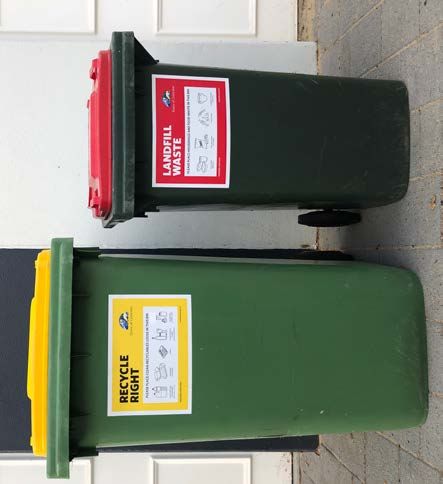
2.3. West Metro Recycling Centre
The principal piece of waste infrastructure in the region
is the WMRC’s West Metro Recycling Centre located
at the corner of Brockway Road and Lemnos Street in                           North Beach
Shenton Park on Crown Land vested in the WMRC.
Its official name is the JFR (Jim) McGeough Resource
Recovery Facility. The location is an industrial area –
                                                                            Scarborough
adjacent to a Water Corporation Wastewater Treatment
Plant, a bus depot and a major electrical substation.
The facility is licensed to handle 55,000 tonnes of waste
per annum. The WMRC greenwaste stockpiling facility
                                                                              City Beach    Floreat
located nearby is licensed to handle 20,000 tonnes
per annum.                                                                                                      Perth
                                                                                                      Subiaco
2.3.1. The vital role of waste transfer stations                              Swanbourne
Transfer stations are important consolidation points                                Claremont
in the waste logistics chain, where collected waste is                       Cottesloe
aggregated, compacted, and loaded to special purpose                            Peppermint Grove
long-haul vehicles or freight containers for efficient                         Mosman Park
transport to distant disposal sites. The additional
handling step involved is cost-effective when the travel                       North
time/distance from collection to disposal would take                         Fremantle
short-haul collection vehicles out of action for excessive
periods; highly relevant for municipal waste logistics in
major cities, including Perth.
Like other such facilities in our major capital cities, the
WMRC facility is specially equipped to compress waste
for transport by long-haul vehicles to waste treatment or
disposal facilities to maximise transport efficiency.
This vital logistics-efficiency role for the WMRC facility
is supplemented by its capacity to receive small loads of
privately delivered waste and recyclable materials from       The West Metro Recycling Centre receives:
residents and contractors.
                                                              • Council and commercial general waste.
The WMRC facility’s primary function is to consolidate
                                                              • Council, drop off and commercial bulk waste.
and compact large volumes of Municipal Solid Waste
(MSW) into silos to facilitate efficient and effective        • Council and commercial bulk greenwaste.
transfer to distant waste treatment or landfill disposal      • Drop-off recyclables, problematic and
facilities; and it’s ideally positioned to provide this         hazardous waste.
service to the extended west central Perth region.

                                                                     Strategic Community Plan 2019/20 to 2029/30        9
2.3.2. Residual Waste Community Contacts
Residual waste is consolidated into silo bins at the
The WMRC has extensive contacts with
facility. These are loaded onto heavy haulage trucks and
transported to landfill. In the future this waste may be residents from our region through both
transported instead to a waste to energy facility. the West Metro Recycling Centre and the
Communications and Education team.
2.3.3. Bulk Waste
These include:
Bulk waste is consolidated at the facility, loaded into high
volume bins and transported for sorting, re-use, recycling • Recycling Hotline and responses to
and disposal. online queries
• Website and social media presence
2.3.4. Greenwaste Processing • Customer service for residents dropping off
Greenwaste from household collections and Council problematic, household hazardous, bulk and
operations is received and consolidated at the WMRC’s garden waste at the recycling centre
greenwaste site, loaded into heavy haulage trucks and • Community education workshops and events
transported to a local greenwaste processing facility.
• Problem waste drop off days
The greenwaste is mulched and composted. The
resultant mulch is made available for free to member • Displays and stalls at events
Councils and their residents. • Talks and activities for schools and
community groups
2.3.5. D
rop off Recyclables & Hazardous Waste • Battery and other problem waste
A number of free and subsidised drop-off services stream collection through schools and
are provided at the West Metro Recycling Centre community facilities
for residents. This includes cardboard, metals, tyres, • Media articles and advertisements
mattresses, televisions and computers, used batteries, • Factsheets, leaflets, bin stickers etc.
used motor oil, wrapped asbestos, household hazardous
waste and general recyclables.
2.4. Communications and Education
The WMRC delivers waste communication and
community education programs encouraging
householders to reduce waste and recycle correctly.
The programs are aligned with the WA Waste Avoidance
and Resource Recovery Strategy 2030 and tailored to the
needs of our local community.
Services delivered by the WMRC Communications and
Education Team include:
• Recycling Hotline – a phone in service for
the community
• Waste reduction and recycling promotion
• Waste education courses, workshops and events.
• Specialist waste management advice to member
Council staff
• Representing the interests of our member Councils
on waste management strategy and policy through
active involvement on relevant working and advisory
groups, policy forums and committees
• Promotion of the recycling and reuse services
provided at the West Metro Recycling Centre.
10 Western Metropolitan Regional Council3. Context
This Plan must be considered in the context of Headline Strategies
significant relevant external factors. • A consistent three bin kerbside collection system,
which includes separation of food organics and
3.1. State Government Actions and garden organics from other waste categories, to be
Decisions provided by all local governments in the Perth
The WA Waste Avoidance and Resource Recovery Strategy and Peel region by 2025 and supported by State
2030 has set key strategy elements including: Government through the application of financial
mechanisms.
Vision • Implement local government waste plans, which
align local government waste planning processes
• Western Australia will become a sustainable, low
with the Waste Avoidance and Resource Recovery
waste, circular economy in which human health
Strategy 2030.
and the environment are protected from the impact
of waste. • Implement sustainable government procurement
practices that encourage greater use of recycled
Objectives and Targets products and support local market development.
Avoid – Western Australians generate less waste • Provide funding to promote the recovery of more
value and resources from waste with an emphasis on
• 2025 – 10% reduction in waste generation per capita.
focus materials.
• 2030 – 20% reduction in waste generation
• Review the scope and application of the waste levy
per capita.
to ensure it meets the objectives of Waste Avoidance
Recover – Western Australians recover more value and and Resource Recovery Strategy 2030 and establish
resources from waste a schedule of future waste levy rates with the initial
• 2025 – increase material recovery to 70%. schedule providing a minimum five-year horizon.
• 2030 – increase material recovery to 75%. • Develop state-wide communications to support
consistent messaging on waste avoidance, resource
• From 2020 – recover energy only from
recovery and appropriate waste disposal behaviours.
residual waste.
• Review and update data collection and reporting
Protect – Western Australians protect the environment systems to allow waste generation, recovery
by managing waste responsibly and disposal performance to be assessed in a
• 2030 – no more than 15% of waste generated in timely manner.
Perth and Peel regions is landfilled. • Undertake a strategic review of Western Australia’s
• 2030 – all waste is managed and/or disposed to waste infrastructure (including landfills) by 2020 to
better practice facilities. guide future infrastructure development.
Strategic Community Plan 2019/20 to 2029/30 113.2. Markets for Recyclables 3.4. Material and Energy Recovery
The Western Australian waste processing system has Facilities
been built on the assumption of the availability of an Alternative Waste Treatment (AWT) facilities developed
export market for many types of sorted recyclables. in metropolitan Perth to date to process general
This assumption no longer holds. household waste have not proved particularly effective
Since January 2017 China’s National Sword policy or efficient.
and similar policies in other countries have severely Gate fees for processing mixed MSW into compost
restricted world markets for recyclable materials, and are generally high and generate an approximate
have reduced the financial viability of export of collected 50 percent level of residual material which is landfilled.
and sorted recyclables. Western Australia currently lacks Their compost products have so far not been able
capacity to reprocess major categories of recyclables meet the relevant Australian standards and have little
including paper and cardboard, aluminium and steel, market value.
and plastics.
The Bunbury Harvey Regional Council is successfully
The likely effect will be to increase the cost of recycling operating a facility to compost FOGO material collected
services, owing to the reduced revenue stream from sale from kerbside across the region. The compost product
of recyclable materials. meets the Australian Standard and is successfully
sold into a ready market. There will likely be a steady
3.3. The Landfill Levy
development of FOGO processing capacity across the
The landfill levy is payable on every tonne of waste metropolitan area consistent with the progressive roll
derived from the Perth metropolitan area which is out of FOGO services in keeping with the State Waste
disposed of in landfill. When initiated in 1998 under the Strategy target of all households in the Perth and Peel
Environmental Protection (Landfill) Levy Act 1998 it was region having a FOGO service by 2025.
initially set at $3 per tonne but it has since increased to
There is a well-established and commercially successful
$70 per tonne. The scale and timing of future increases
greenwaste processing industry to service the Perth –
to the landfill levy beyond 2019-20 are uncertain.
Peel region. There is no indication that the market for
the industry’s mulch and soil amendment products is
over-supplied.
There are two waste to energy proponents currently
competing in Perth for municipal and commercial
waste supply contracts. The technology proposed
conforms to world best practice consistent with EU
emission standards. These proponents are commencing
construction of their facilities in 2019. Their combined
capacity is 700,000 tonnes of residual solid waste
per annum.
3.5. Waste Disposal Facilities
WMRC relies on other organisations to provide landfill
services for the disposal of its MSW.
Metropolitan area landfill disposal sites will fill over time
and close. The location of replacement, more distant,
sites are uncertain.
12 Western Metropolitan Regional Council4. WMRC Services
4.1. WMRC Services for 4.2. Providing Value-For-Money
Member Councils In operating the West Metro Recycling Centre and
providing services, the WMRC faces considerable
The services the Western Metropolitan Regional Council
fixed costs. These costs, together with variable costs
(WMRC) offers its member Councils are specifically
associated with consolidating, compacting and haulage
tailored to their situation; all service a small population
of waste to landfill, were previously recovered via a gate
base; none have specialist waste officers; and many are
fee per tonne of waste received at the facility.
interdependent. In responding to the situation, WMRC
enables economies of scale by providing the following Over time, the tonnage received at the facility has
services that its member Councils aren’t resourced to do declined, particularly following the loss of the City of
for themselves: Nedlands as a customer in 2014. Relatively high fixed
• Waste transfer service enables efficient and effective costs have meant that lower levels of throughput led to
waste collection and haulage for member Councils increased gate fees to the point that member councils
and the West Central metropolitan area. were paying over $250 a tonne for general waste
by 2017-18.
• Responsible resident disposal of HHW and other
problematic waste. Also resident drop off of A new funding model adopted by WMRC in 2018-19
recyclables and general waste. which shares fixed costs on a population basis
• Community waste education courses, amongst its member Councils, has allowed WMRC
workshops, site tours, online materials and to considerably reduce its gate fees for all categories
volunteering opportunities. of waste.
• Broad consistent community waste communication – To provide value for money services, the WMRC must
promotes services and produces material which suits manage its costs well and must attract additional
all member Councils e.g. local newsprint advertising, business through its facility to develop economies of
flyers, leaflets, and bin stickers. scale and reduce average costs per tonne.
• Insightful input to State policy and strategy-making – The WMRC West Metro Recycling Centre is well-placed
amplifying and informing member Council voices at to do this through its central west location and its ability
a state level. to consolidate waste and haul it for disposal to distant
• A recycling hotline service – with knowledgeable landfills or waste treatment facilities in 22 tonne or
officers providing reliable and up-to-date greater loads – at a much lower cost than is possible
information. with small waste collection vehicles.
• Consultancy advice and support for member Council
events, including specialist signage and equipment.
• Local school and community group support with
education, recycling services and workshops.
Strategic Community Plan 2019/20 to 2029/30 134.3. WMRC Initiatives • Expand recycling services and facilities available at
the West Metro Recycling Centre.
• Assist member Councils in reducing waste at the
• Divert waste from landfill including via waste to
source and improving resource recovery rates
energy facilities, in keeping with Waste Avoidance and
through appropriate public communications and
Resource Recovery Strategy 2030 targets.
education services.
• Provide contract management services for specific
• Assist member Councils in developing and
waste streams to access economies of scale and
implementing waste plans to achieve the targets
increase efficiencies for member Councils.
established by the Waste Avoidance and Resource
Recovery Strategy 2030. 4.4. Resourcing Implications
• Secure additional West Metro Recycling Centre
The resourcing implications of this Strategic Community
throughput from municipal and commercial sources.
Plan are limited in scope for the following reasons:
• Upgrade the West Metro Recycling Centre
infrastructure to increase waste receival capacity and • The plan does not rely on additional staff for
improve resource recovery. its implementation.
• Consign bulky waste received at the West Metro • Infrastructure requirements do not extend beyond
Recycling Centre for sorting and resource recovery. replacement or refurbishment of existing assets.
• Improve site access at the West Metro • The plan does not involve the WMRC investing in
Recycling Centre for customers, including those waste processing or treatment facilities.
with disabilities.
14 Western Metropolitan Regional Council5. Strategic Action Plan Outline
These six key strategies have been formulated In the light of:
• the WMRC Guiding Principles
• the current state of waste in the region,
• the context including direction set by the State Government through its Waste Avoidance and Resource Recovery
Strategy 2030 and
• the WMRCs Establishment Agreement
The listed actions are aimed at achievement of the key strategies.
Key Strategies
1 Achieve a comprehensive, cost 2 Increase the number of 3 Divert waste from landfill by
effective waste management Councils, businesses and making materials and energy
service across the region people using our services recovery available
• Provide a comprehensive, • Offer competitive rates to • Engage closely with the
cost-effective waste attract additional business. community in supporting
transfer service. • Increase the number of waste avoidance and
• Develop economies of scale Councils and businesses effective resource recovery.
as a means of reducing using WMRC services. • Reduce contamination
ACTIONS
ACTIONS
ACTIONS
average costs. • Increase customer numbers in materials collected for
• Assist member Councils by at the West Metro Recycling recycling.
defining and communicating Centre. • Effectively separate and
best practice in waste • Increase the number of divert waste for recycling
management. residents using WMRC and treatment.
• Seek to reduce costs through services. • Direct residual wastes to
competitive tendering for energy recovery facilities.
waste treatment and disposal
services.
4 Promote and facilitate waste 5 Develop a strong and capable 6 Contribute to the development
avoidance and responsible organisation of effective policy and advocate
waste management in the on our member Councils’ behalf
• Provide exceptional service.
community
• Develop a productive and • Advocate and contribute
• Conduct community waste capable team. to state policy on behalf of
ACTIONS
ACTIONS
ACTIONS
education programs. member Councils.
• Provide a safe work
• Communicate waste environment. • Work cooperatively
management and avoidance with relevant external
• Deliver responsible financial
methods. organisations.
management.
• Support member Council staff
in waste management,
communication and contracts.
Strategic Community Plan 2019/20 to 2029/30 152/317 Churchill Ave, Subiaco WA 6008
T 08 9384 4003 | E admin@wmrc.wa.gov.au
*Printed on 100% recycled paper,
www.wmrc.wa.gov.au please reuse, recycle or compost
key2creative_40111_09/19You can also read


