World best Practices Guide - in Professional and Technical Education
←
→
Page content transcription
If your browser does not render page correctly, please read the page content below
World best
Practices Guide
in Professional and
Technical Education
About the wfcp
                              The World Federation of Colleges and Polytechnics (WFCP) is a member-
                              based international network of colleges, polytechnics, university colleges,
                              institutions and individuals of professional and technical education and
                              training. The Federation provides leadership in delivering workforce
Contact                       education for the global economy.
WFCP Secretariat:
                              The WFCP began as an informal network borne out of a desire to have
secretariat@wfcp.org
                              a forum for the almost 4,000 professional and technical education
613-746-2222 ext. 3141        and training institutions around the world to meet regularly, learn from
                              each other, and share experiences. The first meeting was held in 1999
1 Rideau Street – Suite 701
                              in Quebec City, Canada along with the first World Congress of the
Ottawa, ON K1N 8S7 Canada
                              WFCP and officially formalized as a network in 2002 with the 2nd World
1-613-746-2222 ext. 3141
                              Congress held in Melbourne, Australia.
wfcp.org                      Today, the Federation represents colleges, institutes, and polytechnics,
                              united by the mandate to prepare students for complex professional roles
                              in a changing society so that they can emerge as leaders and innovators
                              in their chosen careers.
                              Acting as the united voice for its members, the Federation enables the:
                               •   promotion of its members to their communities;
                               •   influence on the development of policy;
                               •   access to information and experiences
                                   that allow each to learn from each other;
                               •   sharing best practices;
                               •   offering of an online community;
                               •   promotion of partnerships to improve staff and student mobility;
                               •   development of partnerships to deliver international contracts;
                               •   organization of the bi-annual World Congress
                                   to enable knowledge exchange; and,
                               •   positioning of its members on crucial issues such
                                   as inclusiveness, expectations of excellence in
                                   professional and technical education and training.
                              To learn more about the WFCP and how to become a member,
                              please visit wfcp.org.
Contents
1   Introduction
    THE 2016 WORLD CONGRESS IN BRAZIL                  2

2   Access to learning                                     3   Applied Research
    and employment                                             and Innovation
    GOLD - HOLLAND COLLEGE                             4       GOLD - BRITISH COLUMBIA INSTITUTE OF TECHNOLOGY   12
    SILVER - NORTH ISLAND COLLEGE                      7       SILVER - LAMBTON COLLEGE                          14
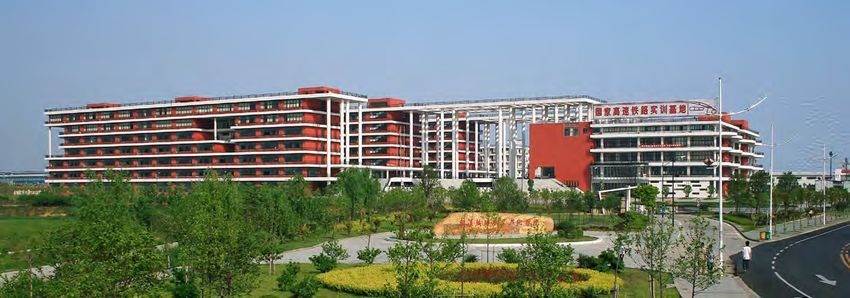
    BRONZE - WUHAN RAILWAY VOCATIONAL                  9       BRONZE - CIFP ARETXABALETA LANBIDE
                                                               ESKOLA LHILL - TKGUNE                             17

4   Entrepreneurship                                       5   Green Colleges
    GOLD - NANJING INSTITUTE OF INDUSTRY TECHNOLOGY   20       GOLD - DURHAM COLLEGE                             29
    SILVER - OLDS COLLEGE                             23       SILVER - CÉGEP LIMOILOU                           31
    BRONZE - LAMBTON COLLEGE                          26       BRONZE - GUIDAOJIAOTONG POLYTECHNIC INSTITUTE     33

6                                                          7   Leadership Development
    Higher Technical Skills
    GOLD - BURTON AND SOUTH DERBYSHIRE COLLEGE        36       GOLD - COLLEGES AND INSTITUTES CANADA             44
    SILVER - HANDAN POLYTECHNIC COLLEGE               38       SILVER - ANN BULLER – CENTENNIAL COLLEGE          46
    BRONZE - GEORGIAN COLLEGE OF APPLIED                       BRONZE - LAKELAND COLLEGE                         49
    ARTS AND TECHNOLOGY                               40

8
    Student Support Services
    GOLD - QINGDAO TECHNICAL COLLEGE                  52
    SILVER - NORTHEAST COMMUNITY COLLEGE              54
    BRONZE - YANGZHOU POLYTECHNIC INSTITUTE           56
Introduction
    The World Federation of Colleges and Polytechnics is pleased to present
    its first World Best Practices Guide in Professional and Technical Education.
    The Guide pulls together profiles of the recipients of the WFCP’s second
    Awards of Excellence, which recognized the contributions and accomplishments
    our members make to the world of professional and technical education
    and training. These projects, institutions, and individuals offer guidance
    on everything from establishing remote access programs to constructing
    buildings that embrace green technologies to dedicating an institution to
    applied research. The Guide demonstrates the growth, innovation, and
    leadership of Federation members; offers inspiration to other institutions
    seeking to develop processes; and, serves as a catalyst in generating
    world-class performance.
    The idea for Best Practice Guide came from a desire to achieve one of the
    Federation’s stated goals: sharing of best practices. Who better positioned
    to determine and share best practices than institutions, individuals and
    organizations that have been recognized for what those best practices can
    achieve. Each entry provides a snapshot of the institution, a short look at
    the projects, what has been accomplished, the value to international leaders
    in education, words of wisdom to inspire, and next steps for the projects or
    programs or institutions or themselves. The Guide is organized according to
    the categories of recognition: Access to Learning and Employment, Applied
    Research, Entrepreneurship, Green Colleges, Leadership Development,
    Higher Technical Skills, and Student Support Services. These seven
    categories are also the World Federation’s seven affinity groups. These
    groups serve as a forum where group members work with their peers from
    around the world to discuss common challenges and collaborate on projects
    around the groups’ theme.
    The entries reveal that challenges institutions of professional education
    face are common, regardless of where they are in the world. The desire to
    have a forum to address these common challenges, share experiences, and
    learn from each other goes back to the core of the Federation’s founding;
    the World Best Practices Guide in Professional and Technical Education is
    another tool to help us achieve that goal. Each entry is accompanied with
    contact information for the institution to ease collaboration, sharing of best
    practices, and learning.
    We hope you enjoy the World Best Practices Guide in Professional and
    Technical Education, but mostly, we hope it helps you and your institution
    as you address the challenges of professional and technical education
    and training.

2
Access to
lEARNING AND
 eMPLOYMENT
Access to learning and employment

Access to Learning                                                    curriculum. The shared onsite experiences contributed to
                                                                      stronger relationships, established safety and familiarity

and Employment                                                        among classmates and faculty, and enriched their online
                                                                      dialogue about the day to day practices in their early
                                                                      childhood centres. The onsite interaction also provided a
                                                                      sense of trust in the faculty, who could then provide more
GOLD: Holland College                                                 robust feedback and ask more thought provoking questions.
Early Childhood Care and Education, Blended                           The ECCE-BL Program operated from 2010-2016. It was
Learning Delivery Model                                               delivered over 3 phases, and each phase was completely
Canada                                                                funded via provincial government programs. Learners
                                                                      were able to continue to work, receive their salaries, and
                                                                      complete their studies without incurring personal financial
Introduction
                                                                      expense. In addition to government sponsorship, program
Holland College, in Prince Edward Island, Canada
                                                                      partners included the provincial francophone college,
delivers more than 65 full time career training programs.
                                                                      the provincial early childhood development association,
The college was founded in 1969, and has almost 2,500
                                                                      a provincial essential skills training program, and the
full and part time students, as well as adult education,
                                                                      licensed early childhood programs across the province.
continuing education, and language training students. In
                                                                      The cooperation between government and agency partners
the past number of years, Holland College has created an
                                                                      was significant, and ensured all parts of the project were
emphasis on developing programs and partnerships that
                                                                      able to operate effectively, with the best outcomes.
emphasise pathways, to further education and to desired
careers. In addition to the long standing apprenticeship              External outcomes can also be used to measure the
training the college is known for, there are increased                program’s effectiveness, considering its service to the
initiatives towards blended and distance offerings, as                local and national aspects of the early childhood sector.
well as articulation agreements into related degrees.                 In 2007, the Canadian Child Care Human Resource
                                                                      Sector Council prepared a report outlining a training
The long-established Early Childhood Care and Education
                                                                      strategy to enhance early childhood services in Canada.
Program is one of Holland College’s classroom-based
                                                                      Their three goals were to:
diploma programs. In this program, learners generally attend
class on a full time basis for two years. The project described        1. Enhance the Size and Capacity of the Trained
below was built in collaboration with full time program.                  Early Childhood Workforce
                                                                       2. Enhance the Quality and Consistency of the
Award Winning Project                                                     Early Childhood Programs
The Early Childhood Care and Education Blended
                                                                       3. Enhance Access to Early Childhood Education
Learning Program (ECCE-BL) was created to address
                                                                          and Effectiveness of ECEs
a sector/government need in Prince Edward Island.
In 2010, due to extensive changes to the educational                  (Child Care Human Resource Sector Council, 2007)
requirements for early childhood education staff in PEI,
a large influx of already employed, undertrained
employees required a delivery model that
would enable them to work full time, while they
studied towards the newly established levels of
certification and training.
The program was designed as a cohort-based
model, with class sizes capped at 25 (most
having between 18-22 learners). The online
content was delivered asynchronously; with
one Saturday a month together onsite in the
classroom. This blend allowed for various types
of assessments, as well as interactive, hands-on

                                                                  4
Access to learning and employment

The ECCE Blended Learning program has been an                      International value
important part of PEI’s response to these national                 The ECCE-BL program is transferable in that the
recommendations. Prior to the beginning of this program,           majority of the curriculum resides in an online learning
the sector had over 50% of the educators with no training          management system, meaning it can technically be
or certification in early childhood. This training will            shared and accessed globally. Prince Edward Island is
have served to enhance the size and capacity of PEI’s              a comparatively small province, but the rural regions
trained early childhood workforce, while also growing the          have often struggled to access consistent, high quality
knowledge and skill base of the sector, resulting in higher        educational opportunities. For the in class component of
quality and consistency of programs.                               this model, the program was delivered in each of the three
                                                                   provincial counties. Much of the digital material created for
                                                                   the blended learning program has been accessed for the
Results and accomplishments
                                                                   full time classroom, and for delivery of ECCE courses in
Holland College holds to a high standard for competency
                                                                   Henan and Jiangxi, China.
based learning in the classroom, and this remained a
primary objective for the ECCE-BL Program. This blended            Pedagogically, the content is applicable because it is
model was influenced by the students’ involvement in the           designed to provide the learner with a broader exposure to
workplace; student experiences and issues were used to             early childhood, while prompting the individual to explore
build the curriculum and assessments were practical and            how these theories and practices apply to them in their
authentic, requiring students to demonstrate their learning        personal, localized settings. The program incorporates
in real and meaningful ways, in their workplace, in the            an introduction to recent trends in the profession, while
classroom, and online.                                             ensuring a solid foundation in child development and play
                                                                   based, emergent curriculum practices.
This video provides a snapshot of student impacts from
approximately half-way through their training (clickable
link) Continuing Education and Lifelong Learning .                 Words of Wisdom
Realizing the benefits to these educators, it is easy to           A core element that underpins the ways the ECCE-BL
understand the rippling positive impacts on the children,          program was successful is that of collaborative relationships.
families, and colleagues with whom they worked.                    In order to aspire for the most collective success, all partners
                                                                   involved must play active, fully committed roles. Not only
Program objectives related to students, industry, and
                                                                   the agencies, but the individuals must understand and
college. The students, via this educational opportunity
                                                                   value the initiative, and the shared benefits.
grew their own skills, knowledge, and capacities for
learning. They were eligible to access higher wages and            As well, being a relatively small institution with limited
they gained an academic pathway to further education               technical resources, and working initially with a team of
and career laddering. The industry benefitted with an              instructors with little to no experience developing and
increase in qualified, certified early childhood educators         delivering curriculum via distance, the program assumed
working in licensed programs and new training levels               a no-fear approach to change, put the pieces into place
that better correspond with the provincial educator                as we went, and didn’t avoid trying out new approaches.
certification levels. The college benefitted from the              Input and feedback from students enabled an evolving,
government sponsorship that enabled the development                more manageable model to grow over time, and
of an alternative delivery option for the early childhood          minimized any difficulties related to territory/boundaries
curriculum, as well as a growth in faculty skill to develop        that can occur when we work in silos. Remain open to
and deliver training via distance.                                 ideas, and do not shut down seemingly insurmountable
                                                                   odds… instead, focus on building, bit by bit, the structure
As Holland College evolves and responds to emerging
                                                                   needed to overcome them!
student needs, we are actively creating a more flexible
and accessible college. The ECCE-BL program
demonstrates the college’s commitment to a new flexible
and accessible academic model; one that continues to
build firmly on essential industry standards, while creating
increased access to the programs that enable people to
become professionals in these industries.

                                                               5
Access to learning and employment

Next Steps                                                           Contact
Prince Edward Island remains committed to growing                    Contact Person: Kim Gillis
the skills and knowledge of incoming early childhood
                                                                     Email: kgillis@hollandcollege.com
staff, and Holland College will continue to offer 1s t year
courses through a part time, blended model to ensure                 Phone: 1-902-566-9524
access to the training required for their work in the
early childhood sector.
Internationally, the curriculum will continue to be used by
instructors who deliver ECCE courses in our programs in China.
The partnership team who sponsored, developed, and
delivered the ECCE-BL program will serve as contributors
to the emergence of technology enhanced initiatives,
and also as a resource to others locally and beyond our
province. The positive outcomes and lessons learned from
the ECCE-BL program could be useful and inspiring to
small or medium sized institutions as they navigate issues
related to cross sectoral partnerships, limited resources,
and student preparedness for distance/blended learning.

                                                                 6
Access to learning and employment

Access to Learning
and Employment
Silver: North Island College,
The Remote Web-based Science Lab (RWSL)
Canada
Introduction
Since 1975, North Island College (NIC) has been
responsible for offering opportunities to some 159,000
residents in a geographic area encompassing 80,000
square kilometres. Because of this population-to-area
ratio, NIC has spent 40 years focusing on technological
innovation in education to serve individuals in both
urban and remote areas.
                                                                  Albert Balbon has been developing innovative technology for
In 2002, Albert Balbon and Ron Evans created a
                                                                  distance education for over 30 years at North Island College.
system to allow distance astronomy students to explore
the universe from the comfort of home using a telescope           (NANSLO) lab, which has partnerships between several
remotely operated over the internet. That technology              colleges in the United States. Through the Consortium for
paved the way for development of the Remote Web-based             Healthcare Education Online (CHEO) project, the RWSL
Science Lab (RWSL) in 2004. With limited core funding             offers healthcare education to thousands of students at
and dedicated facilities, NIC provides students a unique          colleges throughout the United States.
opportunity to pursue Science, Technology, Engineering
and Math (STEM) related courses that are hands-on and
                                                                  Results and accomplishments
in real-time from any location with an internet connection.
                                                                  The original commitment of accessibility remains as the
                                                                  core principle of RWSL, which puts high-end science
Award Winning Project                                             equipment and technology into the hands of those who
The Remote Web-based Science Lab (RWSL) is a North                otherwise would not have access. RWSL allows students
Island College innovation that currently allows students          and instructors to blend theory with hands-on experiential
and educators to conduct high quality online science              learning from anywhere. Students work in collaborative,
labs in real-time from anywhere in the world via the              inquiry-based environments that encourage critical and
internet. Since its creation in 2003, students have used          creative thinking. The RWSL Lab provides an opportunity
RWSL to access research-grade lab equipment including             to take classes when it is not possible to attend training
microscopes, a telescope system, spectrometers,                   labs in person. For example, a military student is able to
robotics and more. The RWSL technology is an effective            complete studies regardless of their current location.
channel for delivering Science, Technology, Engineering
and Math (STEM) education to students who may not
                                                                  International value
otherwise have access to this equipment and learning.
                                                                  The RWSL project knows no boundaries. The lab has
RWSL provides students global access to affordable,
                                                                  been accessed by students in South Korea, Philippines,
hands-on experiential learning in a collaborative, social,
                                                                  New Zealand, Turkey, Canada, and United States
online environment that is reflective of 2 Century learning
                                                                  (including Alaska and Hawaii). Our project benefits
principles. Sharing lab equipment and facilities within and
                                                                  international professional education in that students
between campuses and institutions increases utilization
                                                                  can be anywhere with an internet connect and still have
rates and offers dramatic cost efficiencies, a critical
                                                                  access to these training labs. Our projects allow student
consideration in today’s climate of decreasing public
                                                                  mobility and allow other institutions to set up similar
education budgets. NIC was the lead the development
                                                                  remote labs or to utilize ours. North Island College has
of the North American Network of Science Labs Online
                                                                  collaborated with Great Falls College in Montana and

                                                              7
Access to learning and employment

Colorado Community College to establish a network of               Contact
labs available to students both in North America and               Contact Person: Randall Heidt
throughout the world. Similar remote labs could be
                                                                   Email: randall.heidt@nic.bc.ca
duplicated at institutions anywhere in the world.
                                                                   Phone: 250-334-5249
Words of Wisdom
By collaborating with other institutions NIC has been able
to scale the technology and expand our educational and
technological reach. The biggest lessons are finding like-
minded individuals and institutions who shared in our values
and were committed to grow and expand the technology.

Next Steps
Now that the technology has been proven, NIC is
seeking to identify potential partners who can utilize the
technology. We are also working to identify opportunities
to use this technology in new markets, for example,
industrial training applications. We are working to promote
our successes to institutions around the world.

                                                               8
Access To Learning and employment
Access to Learning competition; faculty and students participated in the joint
debugging of equipment before Wuhan-Guangzhou high-
and Employment speed railway and Beijing-Fujian high-speed railway were
put into operation. The college designed and developed
the “pin” and the “intake manifold” of the new specified
vehicle for China South Locomotive & Rolling Stock Cor.
Bronze: Wuhan Railway Vocational Besides, the college trained railway technical personnel
College of Technology for China Railway Corporation and railway bureaus, and
the trainees reached more than 8,000.
China
The college was the first one to offer new high-speed
Introduction related programs in China. The faculty of the college
Founded in 1956, Wuhan Railway Vocational College developed more than 10 course books of high-speed
of Technology is a full-time higher vocational institution railway, among which the English version of Track
specialized in railway programs, sponsored by Hubei Construction and Maintenance of High-speed Railway
Provincial Government. Located in Wuhan, Hubei province, and Construction Organization and Management of
China, the college has an enrollment of more than 12,000. High-speed Railway were published in India. The college
It is one of China’s national exemplary vocational colleges, trained the first high-speed railway technicians, and 60%
the national top fifty colleges with good employment, and employees of Wuhan high-power locomotive maintenance
the president unit of Railway Transportation Vocational station and Wuhan bullet-train station come from the
Education Group as well. The graduates of the college college, about 1/3 employees of Wuhan Metro Group
enjoy great advantages in employment, and the graduate come from it, the first 60 chiefs of stations along Wuhan
employment rate remains at a level of 98% and above. Metro Line 3 also come from it. The college works closely
Consequently, the college has moved into a favorable with Wuhan Railway Bureau and Wuhan Metro Group to
situation for both enrollment and employment. train students and promote the modern apprenticeship.
Award Winning Institution Results and accomplishments
The college serves industries: cooperating with Wuhan After 60 years of development, the college has
Railway Bureau, it built the in-campus high-speed EMU established the guiding principle: “base in Hubei,
simulation driving room, which is the most advanced serve railways, focus on human development and
in China; cooperating with Taiyuan Railway Bureau, it create excellence”. The college is deeply integrated
constructed the first high-speed railway safety warning and cooperate with large rail transport enterprises such
and accident rescue training center in China. The college as Wuhan Metro, Guangzhou Metro and Chengdu
serves the local economy: it provides a large number of Metro to create “work-integrated learning” cultivation
outstanding graduates for Wuhan Railway Bureau and mode, improve the quality of talent cultivation and offer
Wuhan Metro Group. The college serves enterprises: outstanding graduates for rail transport enterprises.
it held the national railway industry vocational skills
9Access to learning and employment
The college trains technical personnel for large rail Next Steps
transport enterprises such as China Railway Corporation, Next steps: Further optimize the college operating
Wuhan Railway Bureau, Wuhan Metro Group, conditions, strengthen the construction of faculty, improve
Guangzhou Railway (Group) Company, Qinghai Tibet learners’ access to employment, and put great efforts to
Railway Company and so on. It also holds staff skills international exchanges and cooperation.
competitions organized by China Railway Corporation
Future goal:
and Wuhan Railway Bureau.
To continue to build a world-class railway vocational college.
International value Contact
The college spares no effort to promote international
Contact Person: Liu Li
exchanges and cooperation: Let the world know it, let it
understand the world. In the light of the principle “Where Email: kaywhll@qq.com
there is a high-speed railway, there is our service!”, the
Phone: +86-27-51168568
college serves China’s “One Belt, One Road” initiative and
strives to become the window for the world to know China’s
higher vocational education in the high-speed railway field.
At present, the college has successfully cooperated with
Banphai Industrial and Community Education College on
Sino-Thailand railway talents cooperative program.
Words of Wisdom
Advice: The railway college adheres to the school-
running pattern “Railway-oriented, railway-integrated,
railway-supplied, railway-boosted”, insists on college
and enterprises “double subject” training mode and the
modern apprenticeship training mode. In the international
exchanges and cooperation, the college persists in the
principle: “base on specialties, rely on platforms, seize the
opportunities and take initiative to get achievements”.
Lessons: The faculty construction restricted the quality
of talent training.
10Applied
Research
and InnovationApplied Research and Innovation
Applied Research Dr. Paula Brown holds the CRC in Phytoanalytics and has
numerous awards for her work in Natural Health Food
and Innovation Products research. In 2016 she received the “Neil Towers
Award” form the Natural Health Product Research Society
of Canada, the Herbal Insight Award from the American
Herbal Products Association and First Place Blue Ribbon
Gold: British Columbia Institute award from the American Urological Association. Over
of Technology the years before 2016, she received a total of 7 different
awards for her research.
Canada
Dr. Hassan Farhangi, Director of the Smart Microgrid
Introduction research group, holds 4 patents and has contributed
With over 47,000 students enrolled annually, BCIT is one numerous publications to international scientific journals.
of British Columbia’s largest post-secondary institutions. Most recently because of his prominence in the Smart
Their goal is to be integral to the economic, social, and Microgrid field, he was honored by being made chair
environmental prosperity of British Columbia through its of the Canadian Smart Grid Research Network (NS
applied education model of student learning. M G-Net}, which is a network of Industry, academic
institutions and students in Canada.
Founded in 1964, BCIT has established itself as one of
the leading educational institutes in engineering; health
sciences; business; computing; trades, apprenticeship and
technical programs; and applied research.
Renowned for offering hands-on, practical learning,
BCIT graduates are prepared to succeed in their careers
from day one. BCIT’s curriculum and applied research
endeavors are industry connected, and help ensure, year-
after-year, that they are advancing the state of practice.
Award Winning Institution
BCIT researchers have at their disposal, 53,800 sq.ft. of
laboratory space, and a $28 million Centre for Applied
research and Innovation. With $10 million in research
grants and $2.5 million of industry services contracts
yearly they are responsible for 50+ collaborative industry
projects and 1,000+ applied research projects annually. Results and accomplishments
While there are many highly qualified and respected Students have benefited and been impacted directly
researchers who contribute to BCIT’s outstanding applied by applied research in each of their programs and
research record, there were 3 researchers selected as industry capstone projects.
a proxy for all the researchers, because the worldwide
The NSM G-Net chaired by Dr. Farhangi, has been
prominence their research has garnered.
responsible for contributing to the education of 107
Dr. Fitsum Tariku was BC/T’s first Canada Research students (49 PhD, 47 MSc and 18 Undergraduate) across
Chair {CRC}. His area of expertise is Whole Building Canada. In addition, numerous corporate students were
Performance. His CRC was recently renewed by NSERC educated on the intricacies of Smart Microgrid theory and
for a 2nd term of 5 years . In addition to his CRC, he application. They were exposed to hardware and software
has received awards for the Best Journal Paper Award, innovations, collaborations with manufactures, service
Building Simulation: an International Journal, Housing providers and providing hands-on experience to solve
Studies Achievement Award for Doctoral Thesis, Canada current problems in the substation simulation lab.
Mortgage and Housing, and finally, Industry Support
A major responsibility of a CRC holder, is the training of
Award, National Research Council of Canada, Institute of
students in their particular field. In the 1st term of his CRC,
Research in Construction.
Dr. Fitsum Tariku has developed new curricula for both
undergraduate and graduate programs. With only 2 years
12applied research and innovation
into her CRC, Dr. Paula brown supervises 8 graduate 2) You must have a key leader that understands all
students. Also each year she has had 3-4 undergraduate aspects of the Applied Research world. Applied
students intern in her laboratory. Research is different from basic research and
requires that the Dean, Director or VP for Research
The results from the applied research from the three
is knowledgeable not only in performing research,
researchers profiled have impacted the community: Dr.
but also in the administration of research. Often
Fitsum Tariku’s research has resulted in the development
successful researchers do not make good research
and implementation of new building standards for BC
administrators. Successful researchers want to
which has eliminated the “leaky condo” problem. Dr.
do research, they don’t want to get involved in
Hassan Farhangi’s smart grid research has been a major
the minutia of dealing with contracts, collective
contributor to the modernization of the electrical grids across
agreements, policies and governance.
Canada. Dr. Paula Brown’s work on Aloe vera has become
the worldwide gold standard for Aloe vera production. 3) Applied Research must be Champion driven. Your
research programs must be led by someone with a
vision and a passion for the research they are doing:
International value
someone who will be able to carry the research
Some specific examples of international value include Dr.
through the lean times, and take advantage of
Farhangi’s establishment of a Canadian national center for
variations in funding.
smartgrid research to deal with the significant challenges
of the worlds aging utilities infrastructure (BCIT Smart 4) You must keep the client in mind. For applied
Microgrid). This research program included participation research to be successful, the client’s needs and
from global manufacturers and now the findings are outcomes, come first.
benefiting any islanded or remote locations with power
5) You must be willing to take the long term view. You
sustainability needs. This includes Institutes of higher
cannot grow world class, country leading research
education in China, Brazil, the Netherlands, Germany,
programs overnight. It takes time to build infrastructure,
Saudi Arabia, Turkey and the USA.
to build connections and to build a reputation.
Another example is the progressive approach that BCIT’s
Natural Health & Food Products Research Group has
Next Steps
made in the identification of fraudulent health and food
To increase our external partnership network and take
products. Under the direction of Dr. Paula Brown the
our results to the world. It might sound cliché but we have
research group jointly works with students and institutions
reached the point at BCIT where we need bigger horizons
of higher education in the USA, India, China, Brazil and
in many of our projects. There is only so much room to
Europe to create new methods and standards.
grow on any campus and in many cases the technology
Vancouver Canada, like many other cities in the world can and value from the research work must be applied in the
experience excessive rainy weather. Dr. Fitsum Tariku, real world in order to move forward. In taking our projects
developed a program of research around construction from lab to demonstration, the next step is to put the
quality to prevent leaky condos. These best practices are results into practice and to share the knowledge gained.
now in the process of implementation in the USA, France, We truly believe that the reason we have been successful
Japan, Germany, Belgium, and the Netherlands. is our industry and real-world first view of applied research.
Words of Wisdom Contact
Key Lessons Learned: Contact Person: Kim Dotto
1) You must have institutional buy-in for Applied Email: kim_dotto@bcit.ca
Research as an organizational goal. Creating a
Phone: 604.451.6941
viable Applied Research environment encompassed
all aspects of an organization from budgets and
funding, to knowledge dissemination, to industry
partnerships. Done well it can become a cornerstone
for the organization’s marketing plan.
13applied research and innovation
Applied Research selecting the area for their pilot and production projects
due to the existing local capacity. Additionally, the local
and Innovation economy is rapidly evolving, complementing traditional,
local refining and petrochemical production with an
intentional focus on the emerging, bio-based and
renewable energy industries. In recent years, there has
Silver: Lambton College been a significant local, provincial and national effort to
Canada diversify regional industry, due to its advantages including
a) proximity to major markets, b) access to raw materials
Introduction and feedstock, c) well-trained and dedicated workforce,
Lambton College established the Applied Research & and d) culture of collaborative innovation. Based on strong
Innovation department in 2007 to provide applied research, community direction that recognizes Sarnia-Lambton’s
development, technical services, technology transfer, natural fit for ongoing developments in the fields of
commercialization to industry, and organizations nationally. industrial biotechnology and sustainable energy, two
local initiatives, the Bio-hybrid and Chemistry Cluster and
This department has consistently outperformed its larger
the Sarnia-Lambton Sustainable Energy Cluster were
Canadian counterparts with respect to research growth,
established. In these cluster hubs, chemical, bio-chemicals
volume, and intensity, which has led to recognition as an
and energy start-up businesses will bring strong innovative
applied research and development hub due to the college’s
technologies and entrepreneurial skillsets to the region.
expertise, capacity and capabilities in many unique areas.
Still, two major growth challenges face these clusters.
These areas include a wide range of technology-related
Most of the companies within the clusters are start-ups
themes such as: advanced materials, chemical process
or SMEs, and offer a wide range of novel Canadian
design and optimization, instrumentation and process
and international industrial processes, which need to
control, bio-industrial technology, advanced manufacturing,
be validated, instrumented, automated, optimized, and
water, energy, and information technology. In recent years,
scaled up prior to commercialization and full production.
the College has also extended its research portfolio into
Many of these companies either do not have Research
new sectors including health and wellness, social sciences
and Development (R&D) capacity or their R&D is limited
and business. These growing initiatives have provided
and focused on their technology, rather than multi-faceted
ongoing support to many organizations and small and
support required for commercialization and full-scale
medium-sized enterprises (SMEs).
process development. Additionally, due to the high cost of
Last year, Lambton College recorded a 70.3 per cent in-house R&D, the activities of most companies have been
increase in research revenue, totaling $11,382,476 up outsourced, downsized, moved, or closed in recent years.
from $3,108,000 in 2013. Since its inception, college Lack of applied R&D is a significant roadblock against
research initiatives have also received more than $20 successful commercialization and expansion of the cluster.
million in funding from federal and provincial agencies.
As the only post-secondary provider in the area, and in
As Lambton College looks to the future, it will continue to stand response to this unique regional priority, Lambton College
out against other colleges by leveraging its unique strengths has supported regional, provincial and national visions
as a global leader in applied research and development. in two ways: academic training and applied research.
Lambton College included the establishment of a Centre
of Excellence in Energy & Bio-Technologies as a strategic
Award Winning Institution
priority in its Strategic Mandate Agreement (2013-2018) and
Canada’s Sarnia-Lambton region is home to the biggest
identified instrumentation, process control and optimization
cluster of petrochemical and refining plants second only
as one of its key research priorities listed in its Applied
to the province of Alberta. The region specializes in
Research & Innovation Strategic Plan (2013-2018).
production of plastics, synthetic rubber, and chemicals.
Many chemical and material processing SMEs are Lambton College Applied Research supports the
community, region, province and national strategic visions.
By providing research and development support, Lambton
College is able to impact the region, province and the
country by attracting new industry and investments,
improving industry competition, environmental impact,
economic impact and socio-economic impact.
14applied research and innovation
A unique partnership has also been developed with the
Results and Accomplishments
Western Sarnia-Lambton Research Park, utilizing the
The mission of Lambton College Applied Research
strengths of each organization to form an innovative
& Innovation is to support and advance industry,
network, called The Innovation Bridge, which is unlike
community and Canada through excellence in applied
anything else offered in Ontario. The formation of this
research, commercialization, and scholarly activity.
strategic alliance has allowed the College to provide
Lambton College is committed to pursuing research
a wide range of research, development, incubation,
and development activities to:
acceleration and commercialization services to a variety of
SMEs, raising the region’s profile as a desired destination • Strengthen and enhance staff / faculty development and
for start-ups across the province, particularly in the areas student learning through involvement in applied research
of Energy & Bio-Industrial Technology.
• Support economic development in the region and
Overall, the objective of Applied Research & Innovation beyond through partnerships in applied research,
at Lambton College has always been to support and innovation and commercialization activities
advance industry and community through excellence in
• Improve the productivity and increase the
applied research, commercialization, entrepreneurship
competitiveness of partnered industries and
and scholarly activities. This mission has been
organizations, in particular small and medium
strategically and successfully carried out over the past
sized enterprises (SMEs)
eight years, allowing Lambton College to support regional
industry while contributing to the economic growth as well • Support the creation of new jobs through successful
as social, environmental and educational impact for the applied research and commercialization projects
region and province.
15applied research and innovation
All research projects are faculty-lead and involve students, Words of Wisdom
thus providing a real-life applied research experience. • Applied Research in college becomes the
Student involvement has been extended by hiring core access point for industrial R&D.
students and recent graduates as research assistants
• Applied Research provides a comprehensive set of
through collaborative research, course-based and
economic, social, environmental, training and
capstone projects in partnership with external research
entrepreneurial impacts.
partners including regional SMEs. Since 2013, more
than 157 collaborative research projects and over 200 • Communities with the help of Applied Research can
course-based projects have provided students with such diversify their industrial portfolio, attract companies
experiential opportunities. These activities resulted in various and attract or retain youth.
opportunities for domestic and international students,
• Successful Applied Research at the College means
including 19 paid graduate positions, 176 paid research
Successful Community, province and country.
positions and more than 250 unpaid student positions.
Over the years, Lambton College has learned some of
Through applied research Lambton College has provided
following on our path to success in Applied Research:
ongoing support to many organizations and small and
medium-sized enterprises (SMEs) and helped develop 18 • Assign a visionary leader for your project/initiative.
new prototypes, seven prototype improvements, five pilot
• Build comprehensive partnership and collaboration.
plants, 35 new processes and technologies, 12 improved
processes and technologies, and 71 services. • Grow according to your core strength.
• Build based on long term vision not short term.
International Value
• Attract and retain high quality technical people.
Lambton College Research is community-minded with a
global outlook. Many research projects being conducted • Build a good operation team.
through college partnerships are connected to international
challenges such as energy, water, environment or food
Next Steps
innovations. The College also has a growing list of research
• Build infrastructure for more research centres and training.
partners who have a strong focus on internationalization
including Lirrico Technologies, Jungbunzlauer, Lanxess, • Build more international projects.
CARBER, Celestica, GreenField Ethanol, BIC, CENNATEK,
• Help companies to export their new and
and AVEtec Corp. Two years ago, Lambton College
novel technologies.
partnered with KmX Corporation to optimize and scale
up their membrane-based technology for integration • Build focused and unique applied research centres.
with RWL Water, an Israeli company, for the treatment of
• Enhance partnership with universities
industrial wastewater from oil and gas and mining plants.
nationally and globally.
This technology is providing a global solution to a critical
problem that companies within this industry face. Another • Attract high quality people.
partnership with global start-up Liricco Technologies Ltd.
saw the development of a new mobile device application Contact
for residential energy monitoring and management. With
Contact Person: Cindy Buchanan
operations in Ontario, U.S.A. and Hong Kong, Liricco
Senior Director, Marketing, Communications
commercialized the new developed application, allowing
& Brand Management – Lambton College
them to expand into the European smartphone market.
In the past year alone, Lambton College’s Research & Email: Cindy.buchanan@lambton.on.ca
Innovation department has hired 52 international students
Phone: 519 542 7751 ext. 3334
for paid research positions.
Cell: 519 312 3927
In addition, Lambton College Applied Research and Innovation
Department collaborates with organizations with international
focus including Bio-industrial Innovation Canada (BIC). BIC’s
focus is to attract and invest promising technologies and
companies globally and Lambton College has been acting as
applied research and development arm for BIC.
16Applied Research and Innovation
Applied Research Concretely, this project has answered to the need of the
company to deepen knowledge of the technology related
and Innovation to new generation vehicles. For that, the workgroup
has managed to turn an electric vehicle in a “Range
Extender” type vehicle. That is, a combustion motor has
been coupled to an electric one in order to increase the
Bronze: CIFP Aretxabaleta vehicle´s autonomy. The result of the work done has
Lanbide Eskola Lhii - TKgune been the implementation of a prototype range extender
vehicle, which was not aimed to be traded. The company
Range Extender Hybrid Vehicle Prototyping wanted to acquire the needed expertise to develop related
Basque Country services in the future and to introduce herself in a new
emerging market, and the current project was a way to
Introduction
get it. The project carried out has been very demanding
Addressing the request of the SMEs in the Basque
technologically and has required the VET centre and the
Country, the Tkgune programme was launched by the
enterprise to share information and contribute expertise
Basque Deputy Ministry for VET in the 2014/2015 school
by complementing each other. The result has been
year. In line with the smart specialization strategies
beneficial for both agents, as they have increased their
fostered by the Basque Government, the main goal of
knowledge related to the subject. The specific work to be
the programme is to promote the collaboration among
done, including all the tasks carried out during the project
VET centres and SMEs, in order to provide them with
have been documented and are available, in order to be
innovation services.
analysed with the students in the classrooms.
The project analysed below, developed in collaboration
In a few words, these have been the followed steps
between Aretxabaleta VET centre and Fagor Automotive
during the project:
is a clear example of the work carried out within TKgune.
• Firstly, a prototype was developed starting from
The coordinated teachers/enterprise workgroup has
several components. For that aim, the heat
managed to turn an electric vehicle into a “Range
engine was booted and all kinds of assemblies,
Extender” type hybrid vehicle, implementing a prototype
adjustments, electrical facilities and cooling system
vehicle not to be traded. During the process, a combustion
installations done.
motor was coupled to an electric one in order to increase
the vehicle´s autonomy. However, the main goal was to • Once launched, the prototype in question, static and
acquire the know-how necessary to later introduce that dynamic tests were conducted in order to validate it.
technology in the company.
• Meanwhile, the project was developed and all the
steps documented in order to provide free access
Award Winning Project education contents to other teachers.
Aretxabaleta VET Centre is one of 29 VET centres
involved in the Tkgune programme. The VET centres
Results and Accomplishments
are divided into 5 different strategic environments
The project developed is a step beyond in the company/
(manufacturing, automotive, automation, energy, and
VET centres collaboration, although there has always
creative industries), fixed in line with the Basque smart
been a close relationship between both agents (students
specialisation strategies and taking into account, both the
conduct their practices in nearby enterprises, future
capabilities of the VET centres and the real needs of the
workers are formed in VET centres and current workers
Basque SMEs. Each centre taking part in the programme
receive advanced training courses there). The relationship
is focused on a unique strategic environment where a
with companies is a fact, but offering technological service
multicentre coordinated workgroup is created in order to
is a step further in this collaboration. As a result of this
offer services to the SMEs.
collaboration, SMEs that otherwise would have little
Aretxabaleta VET centre is working in the automotive opportunity to innovate their product and processes have
field, and the following is a clear example of a successful the chance to became more competitive in a steadily
project; where a technical labour has been done more demanding market. It also represents a new source
collaboratively with Fagor Automotive company, billing the of funding for the centres, enabling them to live not only
enterprise for it. upon public funds but on the private ones as well.
17Applied research and innovation
Participating in these sorts of projects, with marked The VET centres, have an accumulated expertise that can
technological component, is a great opportunity for be very useful for the enterprises and the close relationship
teachers. When faced with a real problem, they are in existing within both agents makes them the perfect allies.
need of acquiring new knowledge or developing new In addition, both the company and the teachers bring their
skills and the support of industry is very important for that knowledge and complement each other to develop the
purpose. It also represents a motivation for the teacher to projects, so it´s beneficial to all the participants.
continue training their own and update themselves.
Nevertheless, in order to ensure the success of the
The students in consequence to having these teachers, programme, training of teachers and providing them
who know a lot about the latest technologies, have access with resources must be taken into account.
to a higher quality education. The curriculum is modified
and new materials are implemented. Moreover, the
Next Steps
development of these projects allows studying real cases
The Basque Deputy Ministry for VET has firmly supported
in the classroom, even allowing students to participate
the Tkgune programme. Based on the results attained it
in some way. Through this, the learning process is more
can be assumed this will continue in the years to come.
meaningful for students.
The objective in the short term is to continue expanding the
programme and to involve more centres and teachers in the
International Value new working model.
During the 2015-2016 school year, the Tkgune programme
Facing the future it is necessary to find new funding
has offered 354 services up to 252 different companies in
sources to enable the VET centres to make the
the Basque Country. This data involves both improvement
programme sustainable, renew the equipment, and train
and innovation projects; it is unquestioned that is a useful
their professors in the latest technologies, essential to
tool to address the real needs of the SMEs. Moreover,
continue offering quality services to SMEs. In that sense,
apart from the advantage for the companies, by developing
it is important that the continuous training of the teachers
this project the teachers´ skills are continuously updated
should be a priority for the future.
and the student can deal with real cases in their learning
process. Consequently, it is profitable for the SMEs to The future main work regarding funding is to reinforce
innovate their product and processes, while it enables the payment from the involved companies for services,
improvement of the teaching. and to get the approval of the Department of Economic
Development and Competitiveness, by featuring Tkgune as
As it has been successful in the Basque Country, it
an effective innovation actor in the Basque business network.
could be transferred to other VET systems; considering
the following elements:
Contact
• A close and trust based relationship between
Contact Person: Jose Luis Fernandez Maure
VET centres and SMEs.
Email: jlfernandez@tknika.eus
• Good trained teachers, with professional competences.
Phone: +0034 605 773 198
• Willingness of VET teachers to get involved. New roles.
• Culture of innovation in VET centres and
governmental support.
Words of Wisdom
The Basque business structure is mainly composed by
SMEs. As in many other countries, most governmental
programmes implemented do not meet the real needs of
SMEs. That is because there is not a close relationship
between the small enterprises and the technological
agents taken into account when planning by politicians.
In order to fill this gap, the role to be played by the VET
centres is crucial.
18eNTREPRENEURSHIP
entrepreneurship

Entrepreneurship                                                      Award Winning Institution
                                                                      The Institute meticulously implements the decisions
                                                                      and plans of the CPC Central Committee and the State
                                                                      Council on “mass entrepreneurship and innovation”,
Gold: Nanjing Institute of                                            takes the initiative to adapt to the new normal economic
Industry Technology                                                   development, deepens the reform of innovation and
                                                                      entrepreneurship education, and achieves the interactive
China                                                                 development of “innovation leading to entrepreneurship,
                                                                      and entrepreneurship promoting employment”. In recent
Introduction
                                                                      years, the Institute has received a number of national
As Vice-Chairman of the Unit of the National College
                                                                      and provincial honors and media coverage of its work,
Alliance of Innovation and Entrepreneurship, and
                                                                      enabling the Institute to become a pacesetter and
Chairman and Secretary General of the Unit of the National
                                                                      advanced model of innovation and entrepreneurial reform
Higher Vocational College Alliance of Innovation and
                                                                      in national higher vocational education. The Institute was
Entrepreneurship, Nanjing Institute of Industry Technology
                                                                      elected to be the Vice-Chairman of the National College
(NIIT) boosts the implementation of the national strategy
                                                                      Alliance of Innovation and Entrepreneurship under the
of mass entrepreneurship and innovation. NIIT actively
                                                                      direct guidance of the Ministry of Education, and the
supports its teachers to carry out site application technology
                                                                      chairman of the National Higher Vocational College
research and development; promotes teachers and students
                                                                      Alliance of Innovation and Entrepreneurship.
to participate in innovation and entrepreneurship; serves
regional economic development, industrial restructuring,              The Institute is promoting the reform of talent cultivation
upgrading through scientific and technological innovation;            and cultivating mechanisms. First, through innovation and
and constructing of provincial high-end government-                   entrepreneurship workshops for the willing and potential
college-industry- research. In the past 5 years, students             students, and establish innovation and entrepreneurship
of NIIT won 104 first prizes in the National Innovation and           files to objectively record and quantitatively evaluate
Entrepreneurship Competition, obtained 366 patents, and               the students’ innovation and entrepreneurship activities.
had more than 200 autonomous student innovation teams                 Secondly, lectures in various forms are organized to
and R&D projects annually. The number of approved                     broaden students’ horizons and stimulate their innovation
invention patents and utility model patents are taking a              and entrepreneurship enthusiasm. More than 20 innovation
leading role in similar institutions in China.                        and entrepreneurship lectures are held annually,
                                                                 20
entrepreneurship
attracting more than 8,000 participants. Thirdly, special Results and Accomplishments
innovation and entrepreneurship training are offered to The Institute promotes the students’ high-quality
improve students’ comprehensive quality, innovation, entrepreneurial activities with generalized system
and entrepreneurship ability. More than 1350 students are of preference of innovation education, aiming at
trained receive special training course each year. coordinated development of the students’ innovation
and entrepreneurship education. NIIT focuses on building
The Institute is optimizing its innovation and
the “mass entrepreneurship and innovation” pattern of
entrepreneurship education curriculum. Adhering to
“theory-practice integration, teacher-student interaction,
the principles of integrating compulsory courses with
comprehensive education, major support and focus on
optional courses, integrating overall guidance with
transformation”, and establishes the “maker space” service
classified guidance, and integrating general education
system for all students, to cultivate students’ innovation
with systematic education, the Institute achieves full
and entrepreneurship, stimulate students’ enthusiasm for
coverage and classified guidance of innovation and
innovation and entrepreneurship, and help students to
entrepreneurship education. First, the required course of
realize their innovation and entrepreneurship dreams.
innovation and entrepreneurship education for 18 hours
is offered in the series of courses of Employment and The Institute has won 61 national first prizes in recent
Entrepreneurship Guidance to provide general education three years, including 10 first prizes, 13 second prizes
in innovation and entrepreneurship for all students. and 7 third prizes in the National Vocational Students
Secondly, nine public elective courses in innovation and Skills Competition, and 21 first prizes, 32 second prizes
entrepreneurship education such as Fundamentals of KAB and 26 third prizes in the 10th National “Invention Cup”
College Students Entrepreneurship, Entrepreneurship Innovation, Entrepreneurship and Creativity Competition,
and Employment, Entrepreneurship Education and and Outstanding Organization Award for the Institute
College Students’ Entrepreneur Internship Network are for five consecutive years. The Institute won second
offered to provide individualized and specific guidance prize in the 14th National “Challenge Cup” Competition
for the students with innovation and entrepreneurship in 2015, becoming the higher vocational college with
interest. Thirdly, the compulsory course of innovation the best performance in the national competition. In the
and entrepreneurship education theory for 32 hours and “Challenge Cup” provincial competition, the Institute won
the comprehensive training course of simulated college 1 grand prize, 1 second prize and 1 third prize, becoming
students’ entrepreneurship for 24 hours are offered for the the higher vocational college with the most finalists, the
students majoring in economics and management, and most prizes and the best performance in the provincial
the “tripartite” entrepreneurship education teaching model competition, and at the same time, becoming the only
is adopted, namely, teaching, students’ participation and higher vocational college with national competition finalists
extracurricular practice account for 1/3 respectively. in this provincial competition. A number of innovations
achievements have received social attention and media
In addition to the above, the Institute has built a “one-stop”
coverage, and attracted venture capital funding. In recent
innovation and entrepreneurship service platform. The
years, among our nearly 600 students winning national
corresponding service places for different stages of innovation
and provincial recognition, 65% of them have patents,
and entrepreneurship are set up by the Institute, to realize
or innovation and entrepreneurship competition awards
“one-stop” service. This includes counselling services and
above the provincial level.
simulations of entrepreneurial projects.
Finally, the Institute is strengthening the construction of
International value
“maker space” and “maker culture”. The use of mentors,
At present, the Network Platform of National College
from NIIT and local businesses, an online simulation
Alliance of Innovation and Entrepreneurship led by
platform, and workshops, students cultivate a passion and
Tsinghua University is about to go online. The Alliance has
know-how for entrepreneurship.
also reached cooperation agreements with Massachusetts
Institute of Technology, Berkeley and many other well-
known universities to jointly realize international exchange
platform and network big data platform of innovation and
entrepreneurship education, establish online and offline
organizational forms, maximize the Alliance members’
nationwide coverage in the true sense, and establish an
important platform to promote international exchange of
21You can also read


