Your eating plan after having a gastric balloon fitted / inserted - Northumbria Healthcare
←
→
Page content transcription
If your browser does not render page correctly, please read the page content below

Northumbria Healthcare
                                  NHS Foundation Trust

  Your eating plan after
having a gastric balloon
        fitted / inserted
       Issued by Nutrition and Dietetic Department

                1
Introduction
This leaflet will provide you with tips on how to eat well after
having your gastric balloon fitted.

Your commitment to healthy eating and lifestyle habits will help
you to lose weight, maintain your weight loss and feel well.

Physical activity is important to help manage your weight in the
long term. You should aim to include 30 minutes of activity five or
more days per week. This should be activity which leaves you
slightly breathless and warm.

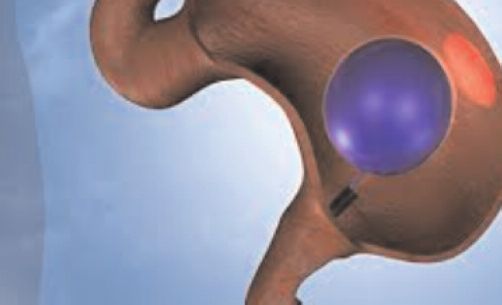
How the balloon works
The% balloon
         %
                 partially
                 % %
                           fills
                            % %
                                  your
                                   %
                                       stomach
                                           % %
                                               which
                                                 % % %
                                                      means
                                                         %
                                                            that
                                                            %  %
                                                                 it takes
                                                                       %   %

less food   % to make  you % feel% full.%
           % %       % %        %  % %    %  % %    %  %   % %       %   %
       %           %
  %

The %balloon  % is filled
                       % % with     % a blue          dye.  If %you% %notice
                                                                           % a% change    in
                                                                                           % the
          *           *             *           *

colour   of   your  urine       or   stools       you    should     report  to Accident   and
                                                %      %                          % %          %
    %    %%

Emergency     % % as %soon   % % as % possible      % and  % %inform  % your
                                                                        % % surgeon
  %

immediately       as
                   % this    % could        mean  % the balloon         has
                                                                        % % burst.
                                                                                 % If% the %
     %                                      % %                                 % %     %    % %
       %    %                   %           %                   % %                              %

balloon %is% not % removed           % it can cause         a %bowel obstruction/blockage.
          %             % %       %       %        % %         %    %    % % %      % % %

The %balloon  % MUST% % be removed            % % after    % six months.
                         % %                        %
                                       %
  %
  *

                                                                                                                               *
  *

What* to
      * * do before the
                     * * balloon is inserted
  *
             * *             *

On   the  day of the procedure    have nothing to eat for six hours prior
      %           %       % %       %                       %       %               % %         %       %     %            %           % %               %           %
        %  % % %   %   %       %%

to insertion  and* clear *fluids only up to four hours before.
  *
      *    *
                          %                 %                            %          % 2%                % %           %                %           % %           %           %   %
                                %                   %                   %           %    %                        %                %
  %
              *
                  %       %                 %           %       %       %       %          %%                         %                        %                         %
                      %                 %       %                           %        % %            %                  %           %       %         %       %
Diet after balloon insertion
Initially you may feel uncomfortable as you get used to the balloon
being in place and you may experience vomiting, bloating, nausea
and stomach cramps.

Day 1
For the first day you should not eat and should only drink water -
If you drink too much, too soon, you may vomit.
Next 3 – 4 days (from day two to approximately day five after the
balloon has been inserted)
Continue drinking liquids (fluids) and avoid solid foods.
It is important that you make sure you drink enough. You should
aim to drink 1½ - 2 litres per day. Take small, frequent sips
throughout the day.
As well as water, sugar free / reduced sugar / low calorie diluting
drinks and tea, you can also include:
l   Thin strained soups
l   Milk (skimmed or semi skimmed)
l   Diluted fruit juice (½ juice, ½ water)
l   Bovril/Oxo
Next Stage: purées to solids
See the ‘Meal Ideas’ diet sheet for options and recipes for each
stage.
After the first few days, once you are tolerating fluids, you can
begin introducing more solid foods.
It is important that you build the textures up slowly. How quickly
you progress through the stages is very individual.

                                   3
Start with puréed foods such as pureed meats / fish and mashed
potatoes / thicker soups / Weetabix or porridge softened with
plenty of milk.
Take your time when you are eating and as soon as you feel full,
stop eating. If you overeat you will be sick.
When you are tolerating pureed foods well, start introducing
softer foods such as minced meats / tender meats / soft fish / soft
vegetables. You can also try crispy foods (bread sticks/
crispbreads) which dissolve in your mouth.
The speed at which you increase the textures varies from person
to person. Take your time and only progress to the next texture
stage when you feel you are ready.
As a guide, you should be able to manage solid foods 1- 2 weeks
after the balloon has been placed.
Vitamin supplements
l For the first month after balloon placement you should take a
chewable / liquid multivitamin and mineral supplement once a
day. Choose a variety which says: ‘multivitamins with
minerals’ and suitable for adults. You can buy these over the
counter
l After the first month you should be able to take a tablet
multivitamin and mineral. Choose a variety which says on the
label: “A-Z multivitamins and minerals” or “Complete
multivitamins and minerals”. Take one tablet a day
l You may need to take additional supplements on the advice
of your bariatric specialist dietitian or consultant. This is
usually because your blood tests have shown a deficiency
and / or your diet is lacking in the nutrient
4Portion guide
It is difficult to give set portion sizes for each stage. This is
because the amount people can eat after a gastric balloon varies
between individuals.
It is important to eat slowly and stop eating as soon as you feel
full.
As a guide, we expect your first few meals to be no more than 3-4
teaspoons. This will slowly increase to an egg cup size portion.
By the time you are on a soft diet you should be eating no larger
than a saucer-sized portion.
Eventually your portion will increase to a side plate sized (7 inch
plate).
Meal pattern
Once you can eat solid foods your meal pattern should be as
follows:
l Eat three meals a day
l No snacks - keep to three regular meals per day
l Plan your meals in advance
l Choose foods that are mostly solid
l Choose foods from all the main food groups. Each main meal
should contain protein such as meat, fish, pulses, beans;
vegetables and carbohydrates such as rice, pasta, potatoes
l Eat a mouthful of each food in turn
l Avoid high fat and high sugar foods which provide excess
calories with little nutritional value. These include: chocolate,
cakes, biscuits, sweets, ice cream, puddings, pastry
products, full sugar drinks, butter, alcohol
5Changing how you eat
l Eat slowly. Take small bites of solid food and chew them
very well
l Do not eat and drink together – avoid drinking 30 minutes
before a meal and 1 hour after a meal
l Focus on enjoying your food
l Avoid distractions such as the television / telephone /
computer or work while you are eating
l Pay attention to your body’s signals of hunger and fullness.
l Learn to know when you start to feel full and stop eating at
that point
l You may find it helpful to eat your food using smaller cutlery
l 20:20:20 Rule:
- Chew every mouthful 20 times
- Pause for 20 seconds between mouthfuls
- A meal should last approximately 20 minutes
Drinks / fluids
l Do not drink with your meals. Drink liquids 30 minutes
before and 1 hour after your meals
l Try to drink 2 litres of fluids each day - keep a drink with you
throughout the day
l Sip drinks slowly - do not gulp quickly. Initially a small glass
should take 1 hour to drink
l Do not use straws to drink your liquids. This may cause gas
or bloating
l Avoid alcohol as it is high in calories and has no nutrition.
l If you continue to drink alcohol regularly your weight loss will
be affected
6Foods to avoid
It is common not to be able to eat certain foods after a gastric
balloon.
l Some foods may stick to your balloon. Foods such as
overcooked rice, overcooked pasta and soft doughy breads
are more likely to be sticky and are best avoided
l Avoid foods which are hard to chew. This includes dry, tough
meats / stringy vegetables or fruits / vegetable or fruit skins /
nuts / popcorn
l Large pieces of food can cause blockages and vomiting. So
make sure you chew your food well
l Avoid chewing gum as it can cause bloating
l As alcohol only provides calories it is best avoided
7The following list gives examples of these foods which you may
struggle to eat and alternatives:
Foods to avoid Alternative to try
Bread Crackers
Crispbreads / breadsticks
Toast
Pitta bread / wraps
Overcooked rice,
5LFHDQGSDVWDFRRNHGVWLOOLQ³SLHFHV´DO
overcooked pasta
dente
Couscous
Tough, dry meats Cook meats in slow cooker/oven for a longer
time until soft and tender
Wafer thin cold cuts
Minced meats
Flaky fish such as poached / steamed white
fish or salmon
Canned tuna mixed with low fat mayonnaise
Eggs ± soft boiled / poached / scrambled
Skins on fruit and Peeled fruit and vegetables
vegetables Ripe, soft fruits
Tinned fruits in natural juice
Fibrous and stringy CDXliflower, broccoli, carrots, root
vegetables such as stringy vegetables (buy frozen to reduce waste).
beans / cabbage / onions / Chop onions finely
lettuce / sweetcorn Try grating fruit or vegetables
Oranges / grapefruit
Soft ripe fruits such as peeled peach /
plum / pear / tinned
fruit in natural juice
Nuts / dried fruits /
seeds and foods
containing these
Coconut
Popcorn
8How to keep the gastric balloon clean
Over time you may find that you develop bad breath. This is as a
result of food becoming stuck to the balloon. You can avoid this
by having a small glass of fizzy water or a sugar free fizzy drink
from time to time. Do not drink fizzy drinks all the time though.
Before gastric balloon removal
It is recommended that three days before the date you are due to
have the Gastric Balloon removed you should follow a liquid diet,
as you did when it was first placed. Aim for 8 cups of fluid per
day (approximately 1½ - 2 litres) and have the drinks at regular
intervals throughout the day. Avoid milk / milky drinks.
Drinks to choose are:
l Low calorie / sugar free / reduced sugar squash
l Tea / herbal teas
l Diluted fruit juice ( ½ juice : ½ water)
l Bovril, Oxo, Marmite diluted in water
l Thin strained soup
l Jelly (sugar free)
The difference this time is that you should try to have at least 1
litre of fizzy drinks each day to help clean the balloon before it
is removed. The bubbles help to clean the food residue off the
surface of the balloon which will make it nicer for you when the
balloon is removed through your mouth. Fizzy water is best,
although you may drink low calorie tonic water or soda water.
Contact Details:
Dietitian: ........................................................................
Bariatric Specialist Dietitians
Telephone: 0191 293 2707
9Notes
10Notes
11PIN 691/V2 Review date: December 2021
You can also read


