12/19/2017 STEAM CONVERSION - Virginia Public Utilities Commission - Virginia, MN
←
→
Page content transcription
If your browser does not render page correctly, please read the page content below
Contact:
Greg French or
Bill Hafdahl at
218.748.7540

                        Virginia Public Utilities Commission

       12/19/2017   STEAM CONVERSION
12/19/2017                                                       STEAM CONVERSION PLAN
                                                                                                                 page 2

   VPU to downsize residential steam district; provide assistance
   for home heating conversions

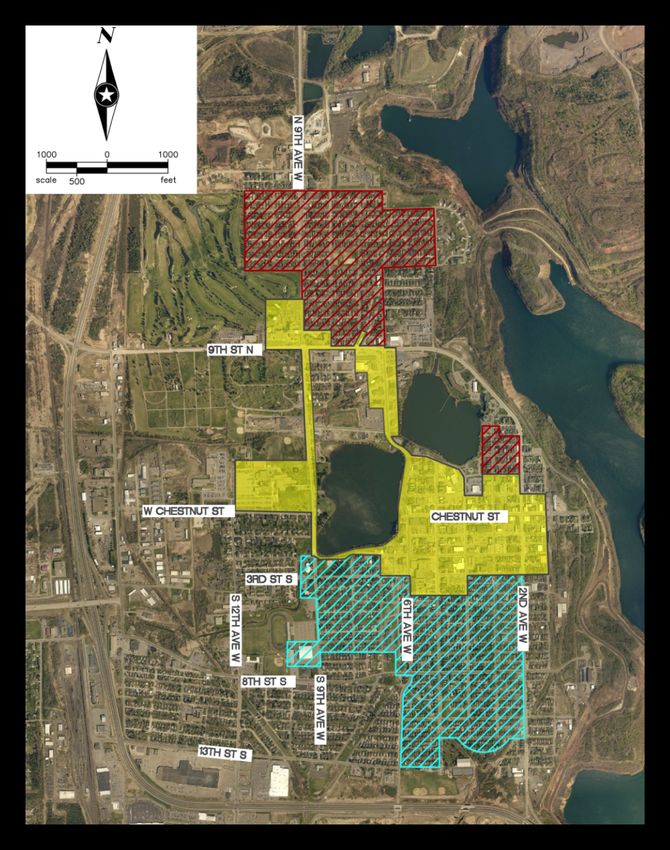
   In 2018, Virginia Public Utilities (VPU) will begin to downsize its district steam system. The move will phase out
   steam service to residential customers in Southside and Northside neighborhoods by the end of 2021. It will
   retain a core steam district to serve the local hospital, college, high school, downtown businesses, and some
   homes within that geographic area.

   VPU originally had planned to complete this project by 2026, but an unexpected turn of events has accelerated
   the timeline and provided financial resources to assist residential customers through this transition. Assistance
   may include direct rebates or no-interest loans to help modernize homes with natural gas furnaces or other
   contemporary heating systems.

   Affected customers now have a unique opportunity to lower winter heating costs, improve home resale values,
   and position this proud Iron Range community for a more vibrant, sustainable future—at a minimal cost.

   Why is this downsizing needed?
   Virginia is home to what may be the world’s largest residential steam district. This sprawling system was
   installed between 1920 and 1956 as an alternative to coal or wood heating, prior to the rise of reliable,
   affordable natural gas and electric home heating alternatives. With more than 60 miles of steam main
   currently serving approximately 1,500 residential and over 200 commercial customers, it has operated far
   beyond its useful life.

   Virginia’s aged district steam system is simply too expensive to operate and too expansive to maintain. It
   drains critical resources from the utility, increases the cost of steam production, and burdens both residential
   and business customers who pay far too much for heating in this cold-climate community.
12/19/2017                                STEAM CONVERSION PLAN
                                                                      page 3

             MAP: Virginia district steam system and affected areas
12/19/2017 STEAM CONVERSION PLAN
page 4
A history of failed attempts
Over the years, there have been multiple attempts to curb operating losses by reducing the steam district’s
size and scope, most notably in the mid 1980s and late 1990s. The latter successfully converted some
residential neighborhoods from steam to alternative home heating systems.
Unfortunately, it was halted midstream when steam customers protested and agreed to pay a greatly increased
service charge in exchange for keeping their steam service. This was followed by a new policy that discouraged
customers from voluntarily disconnecting, making it more expensive for people to exit the steam system.
The policy kept a critical mass of customers but did nothing to address problems with deteriorating
infrastructure.
Biomass project’s impact to steam district
Virginia’s district steam system got a new lease on life in 2007 when VPU and Hibbing Public Utilities (HPU)
collaborated to form the Laurentian Energy Authority (LEA) and entered into a 20-year power purchase
agreement with Xcel Energy for 35 megawatts of biomass-produced power.
The stated goals of this biomass project included stabilizing steam heat costs for 20 years, maintaining local
power plants and steam systems, and helping customers avoid costs of converting to other heat sources.
Recognizing that Virginia’s steam district could not be maintained at its current size once this power purchase
agreement ended, in 2015 VPU authorities began planning to eliminate steam service in residential
neighborhoods by 2026.
As these plans were coming together, Xcel Energy sought and won legislative approval to terminate the power
purchase agreement ahead of schedule. Partners in LEA negotiated a lucrative $142 million buyout agreement.
That money will pay off the balance of the revenue bonds which financed the project and then will be split
evenly between VPU and HPU to be used for making steam and electric production investments and/or
distribution system upgrades or to otherwise benefit steam or electric ratepayers.12/19/2017 STEAM CONVERSION PLAN
page 5
Buyout agreement is a boon for residential customers.
VPU and city officials view the buyout as an extraordinary opportunity to finally address the aged district steam
system. A portion of the proceeds will fund rebates or no-interest loans to assist residents in making the
transition away from steam heat.
Customers switching to natural gas will realize significant energy savings. The average household will save
roughly $100 per month or approximately $1,200 per year by using natural gas in lieu of steam. Most natural
gas conversions will pay for themselves in less than 10 years.
Although the ease of installation of electric heat systems may be attractive, VPU does not recommend such
conversions because there are no savings in converting to electric heat due to the cost of electricity.
Either way, rebates or no-interest loans available through VPU will help residential customers replace their
outdated heating systems.
The bottom line for residential customers … now is the right
time.
Virginia has been kicking the can down the road for decades, delaying the inevitable need to reduce the city’s
dependence on steam heat. This is a critical moment in time.
The archaic residential district steam system is draining the utility’s budget—month after month, year after
year. Century-old steam mains are deteriorating at a rapid pace, creating an unsustainable situation where two
units of steam are lost for every one unit sold. Money that could be used for more productive purposes
evaporates into thin air.
VPU has a once-in-a-lifetime opportunity to address significant losses in its steam department. It is a win-win
for the utility and for ratepayers. VPU now has the resources to weather the transition, and, because natural
gas prices are extremely low, residential customers who convert to natural gas systems will recover their
investments quickly.12/19/2017 STEAM CONVERSION PLAN
page 6
Businesses also will benefit.
The buyout proceeds also will enable VPU to better serve commercial (and a limited number of residential)
steam customers within a core geographic area that includes the downtown business district, Essentia Health-
Virginia, Mesabi Range College, Virginia High School, and other businesses easily served along the pipeline
corridor.
VPU is committed to providing steam to customers within this smaller district using a pricing model that is
competitive with natural gas.
In addition, money from the buyout could be invested in new steam plant technologies to improve the
economics, efficiency, and reliability of steam heat production for remaining customers in the core district.
VPU would essentially “house a new furnace” for the core district so property owners would not have to invest
in expensive upgrades to heat their older buildings. The goal is to help keep local businesses competitive while
making Virginia’s downtown business district more affordable and attractive to commercial development.
Maintaining a smaller steam district will position VPU to address steam leaks and other infrastructure
challenges in proactive, rather than reactive, ways. Steam distribution staffing will remain at its current level.
If at some point in the future it is no longer financially prudent to maintain the core district, steps could be
taken to eliminate steam service altogether.
Details are being finalized.
VPU officials are working with city leaders to draft a fair, equitable policy for converting homes to alternate
heating systems by the end of 2021, starting with Southside (2018-2020) and then Northside (2019-2021).
Communication is key. Materials are being developed that will provide detailed timelines for when the
conversion will take place in various neighborhoods, what resources will be available to assist home and
property owners, and the application processes for available rebates or no-interest loans.
The biomass buyout is a golden opportunity for progress in Virginia. It will strengthen the Queen City of the
North, maintain the vitality of area businesses, benefit VPU ratepayers, and stimulate homebuyers who have
hesitated to purchase homes saddled with archaic steam district heat.
The benefits far outweigh the sacrifices.
Full steam ahead!You can also read


