X-band for Mission Critical Communications - Guaranteed communications wherever you are, whenever you need them. Discover why X-band is the ...
←
→
Page content transcription
If your browser does not render page correctly, please read the page content below

X-band for Mission
Critical Communications
Guaranteed communications wherever
you are, whenever you need them.
Discover why X-band is the military
frequency of choice and what this
means to you

X-band from Airbus
    for Mission Critical
    Communication
    Why X-band for Mission Critical Communications?

    X-band satellite capacity is reserved exclusively for military and government organisations
    for mission critical, sensitive command and control communications systems, where loss of
    communications is not an option.

    Whether the need is for government, military, humanitarian, emergency response or other
    diplomatic communications, Airbus can provide uncontended capacity and availability
    wherever and whenever required on its’ own constellation of military secure X-band satellites.

    Why X-band from Airbus?

    •   World’s first and largest commercial operator of hardened and protected X-band
        satellites compliant to NATO STANAG interoperability standards
    •   Access to 7 Skynet satellites – the world’s most powerful X-band satellites built to date
        and commercially owned. Additional access to X-band transponders on Anik G1
    •   Skynet 5’s flexible global and steerable spot beams can be quickly repositioned to
        provide high power coverage where the user requires it
    •   Their multi-beam switching capabilities and anti-jamming phased array delivers shaped
        and high gain footprints, optimizing a highly concentrated link for maximising the data
        to small terminals and blocking out sources of interference
    •   Uniquely designed to specifically support COTM (comms-on-the-move) operations
        making it the best choice for naval and airborne platforms
    •   X-band on Skynet 5 is capable of providing secure data links to submarine vessels and
        currently performs these operations for users

    X-band services from Airbus, as a commercial
    operator, provide military satcom capability to
    military and government customers with faster
    and more efficient procurement practices

    Customers: UK MOD, US DoD, French Armed
    Forces, The Netherlands, Slovenia and more.
    Operations particularly extend to US COCOMS
    and Special Forces personnel.

2
KEY FEATURES & BENEFITS OF X-BAND

As a trusted industry
partner, Airbus is
the only supplier of
X-band to ISAF and
the largest supplier
to NATO

Key Features of X-band

    X-band is reserved exclusively for military and government users as it provides all the
    benefits of commercial bands such as Ku, i.e. high speed data rates to smaller antennas,
    but with many additional benefits including resilience to rain fade and interference.

    These benefits, combined with Airbus’ Skynet 5 advanced milsatcom capabilities, makes
    X-band from Airbus the ideal choice when loss of communications is not an option.

                          X-band from Airbus
     A. INTERFERENCE      Airbus’ X-band is resilient to interference due to coordinated operations between all
        RESILIENCE        satellites and minimum slot separation enforcement. Shapeable beams on Skynet
                          minimise interference further in addition to the smaller population use (reserved for
                          mil/govs only) on X-band compared to commercial bands.
     B. RAIN RESILIENCE   X-band has the best resilience to rain fade. The only frequency comparable is
                          C-band and this is a highly contended bandwidth used for broadcast to commercial
                          users.
                          Combined with Skynet 5’s unique capabilities, X-band from Airbus is the best option
                          for military satcom operations in any environment.
     C. TERMINAL SIZE     X-band is the best compromise for terminal size and data rates whilst maintaining
        VS. DATA RATES    resilience to rainfade. Combined with Skynet 5’s powerful steerable antennas and
                          beaming forming networks, data rates of 10Mbps to a 45cm antenna is achievable
                          without interfering with adjacent satellites.
     D. DATA RATES FOR    X-band is well suited for high data rates to “on the move” and “on the pause”
        COTM/COTP         platforms. Combined with the unique capabilities of Skynet 5 as previously stated
                          and the assurance and uncontended bandwidth as standard, X-band from Airbus
                          has proven rates in excess of 14Mbps using DVB-S2 ACM SCPC links, with
                          bespoke coverage providing high gain spot beams tailored for Airborne ISR (UAV)
                          missions.
     E. REMOTE &          Airbus’ X-band footprints are specifically located in areas with little or no
        MARITIME          infrastructure making it ideal for remote and maritime platforms. With the addition of
        COVERAGE          Anik G1 to Airbus’ constellation, we are the only commercial provider of X-band over
                          North and Latin America, with substantial coverage of the Pacific Ocean, reaching
                          out to Hawaii and Easter Island.

4
INFRASTRUCTURE

World Class Infrastructure
    We deliver secure and resilient end-to-end services around
    the globe

      Current Skynet Constellation
      Protected and resilient MILSATCOM X-band
        180      160     140      120           100   80   60          40         20          0
80

60

40

20

0
                                        W

                                                                        ˚W

                                                                                  W

                                                                                              6˚E
20
                                            ˚

                                                                                .8˚
                                        7.3

                                                                     34

                                                                                          E
                                                                              17
                                     10

                                                                                         t4
                                                                 4F

                                                                             C

                                                                                        ne
                                  G1

                                                                et

                                                                             t5

                                                                                          y
                                                                yn

                                                                                       Sk
                                 nik

40
                                                                         ne
                                                            Sk

                                                                          y
                               **A

                                                                       Sk

      **X-band payload on Telesat’s Anik G1 satellite

6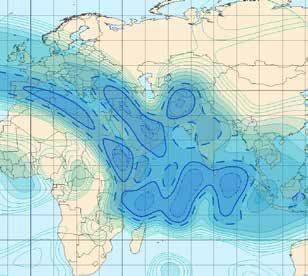
20         40       60    80        100   120   140   160             180
       ˚E

             ˚E

                       ˚E

                                       ˚E
       25

             33

                    53

                                       95
   B

        4C

                  5D

                                  5A
  t5

                                  et
        et

                  et
 ne

                                 yn
       yn

              yn
   y

                                 Sk
Sk

       Sk

              Sk

                                                                                        7
                                                              11229tl © Airbus DS Nov 2016. All rights reserved.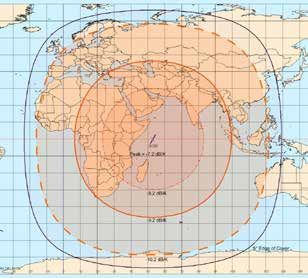
Skynet 5 - Providing
    Advanced Milsatcom
    Capabilites
    The Skynet 5 spacecraft were built with features perfectly suited to guarantee
    communications in the demanding military environment. The benefits of these features for
    our customers include:

     Skynet 5 System Features                        End User Benefit
     Multi-beam switching capability                 • Operator can manage the power and bandwidth
                                                       available to the end user
     The OBARA “On Board Active Receive • Protection of the link against direct attacks & hostile
     Antenna” enables:                               interference
     • Multiple uplink beams across the global • Higher data throughput need from any terminal size
       coverage region                             • Bespoke customer solutions tailored to customer
     • Increased uplink sensitivity where required   requirements
     • Shaped beams around interference
     • Anti-jamming & nulling
     Steerable Spot Beams – placing downlink • Allows higher data rates to smaller terminals
     power where you need it                 • Bespoke customer solutions tailored to customer
                                               requirements
     One global X-band downlink and one • Global uplink beam offers the customer the greatest
     global X-band uplink per satellite:          satellite coverage but balanced by a lower data rate
     • 41 dBW peak EIRP in each global downlink • Typically supports antennas 1.2m or greater at
        beam                                      >1Mbps
     • Global uplink beam - Typical edge of cover
        G/T >-10.2dB/K
     Eight shapeable X-band uplinks & 4              • The theatre uplink beam can track a deployed user
     steerable downlinks per satellite:                requirement to ensure maximum data rates
     • Theatre uplink beam - typical edge of cover   • Allows use of small terminals (0.45m)
       G/T >4.5dB/K                                  • Users can form their own networks as per their
     • 50.5 dBW peak EIRP in each downlink             requirements
       transmit spot beam                            • Guaranteeing >99.9% connectivity
     NATO STANAG & MAC 1 Compliant                   • Interoperability with other NATO friendly militaries/
     System                                            governments
     • Military hardened satellite & system          • Military grade security assurance
     • Resilient & secure teleports with dual        • Protects integrity of the customers’ service (bespoke
       redundancy                                      to customer)
     • Dual redundant fibre communication paths      • Assured communications
     24/7 Customer & Technical Support               • Service Level Agreements available for the customer
                                                     • 24/7 access to a dedicated support & networks
                                                       team for reassurance
                                                     • Any issues are resolved very quickly & efficiently

8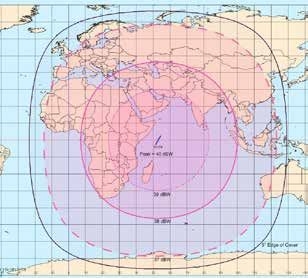
9
Anik G1 and Skynet 4
Responding to the growing demand for commercial satellite services by government
and military organisations, Airbus has partnered with Telesat to deliver Anik G1. With the first
commercial X-band coverage across North and Latin America, Anik G1 provides substantial
coverage of the Pacific reaching out to Hawaii and Easter Island.
Anik G1, launched in April 2013, holds a 3-transponder, global-beam X-band payload,
operating from 107.3°W, giving coverage from 178°W to 35°W until at least 2028.
The payload is fully compliant to NATO interoperability standards giving seamless
interoperability and portability with the Skynet fleet of X-band satellites, giving uncontended,
near-global coverage to allow seamless maritime operations, integrated transit and
deployment conops for our customers worldwide.
Anik G1 satellite capacity is ideal for:
• Naval operations
• Disaster recovery
• Emergency management
• Protection of natural resources, such as mining,
forests, oil and gas
• Remote army operations
• Remote government offices
• Civil-military inter-agency Collaboration
Skynet 4 MHJ&$(1/ C!6@S$."
Airbus still owns and operates 3 Skynet 4 satellites.
The original design life for these satellites was 7 years
but Skynet 4C have over 25 years in service. We never
retire a satellite if it still has operational use. Each of the
Skynet 4’s still provide either X-band or UHF connectivity
for operations. Skynet 4C is currently inclined at 10.3
degrees and is visible to the South Pole. Due to this
distinctive capability, Skynet 4C is currently providing up
to 5 hours of communications to the National Science
Foundation a day.
MHJ&$(1/ C!6@S$." MHJ&&3 C!*@S$."
10COVERAGE
Africa

                 Example of whole of Africa uplink & high power downlink beams

                             Example of Horn of Africa downlink beam
     Footprints shown are examples only – actual footprints can be provided to customers upon request

12
Africa
Example of uplink spot beams over Africa
Example of multi head Africa uplink beam
Footprints shown are examples only – actual footprints can be provided to customers upon request
13Asia
Global downlink beam coverage map
Example of Australia & South East Asia uplink beam
Footprints shown are examples only – actual footprints can be provided to customers upon request
14Asia
Example of Indian Ocean downlink beam
Global uplink beam coverage map
Footprints shown are examples only – actual footprints can be provided to customers upon request
15Europe
Example of Europe, Middle East, Indian Ocean & Far East uplink
beam
Example of UK uplink beam
Footprints shown are examples only – actual footprints can be provided to customers upon request
16Europe
Example of UK downlink beam
Example of Europe to West Africa uplink beam
Footprints shown are examples only – actual footprints can be provided to customers upon request
17Middle East
Example of UK & Africa uplink and Middle East downlink beams
Example of Iraq & Afghanistan uplink beam
Footprints shown are examples only – actual footprints can be provided to customers upon request
18Middle East
Example of Middle East downlink beam
Example of Middle East uplink and UK downlink beams
Footprints shown are examples only – actual footprints can be provided to customers upon request
19North America
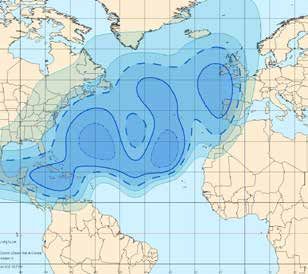
Example of Northern Atlantic downlink beam
Example of US uplink beam
Footprints shown are examples only – actual footprints can be provided to customers upon request
20North America
Example of US uplink & downlink beams
Example of North Atlantic uplink beam
Footprints shown are examples only – actual footprints can be provided to customers upon request
21South America
Example of Southern Atlantic downlink beam
Example of South & Central America uplink beam
Footprints shown are examples only – actual footprints can be provided to customers upon request
22South America
Example of Central & South America uplink beam
Example of South America to UK uplink beam
Footprints shown are examples only – actual footprints can be provided to customers upon request
23Australia, Belgium, France, Germany, Macedonia, Norway, Singapore, Sweden, UAE, UK, US
10132sr-p - Design Services © Airbus. 10/05/2017
This document is not contractual. Subject to change without notice. Product and company names mentioned herein may be trademarks or trade names of their respective ownersYou can also read


