2020 Master Plan - Perth Airport
←
→
Page content transcription
If your browser does not render page correctly, please read the page content below
Master Plan
2020
APRIL 2020
184
Section 8:
Services

The safe, effective and
efficient operation of
the Perth Airport estate
depends on a reliable
and adaptable network of
power, water, sewerage,
gas and communications
infrastructure.

          PERTH AIRPORT MASTER PLAN 2020   185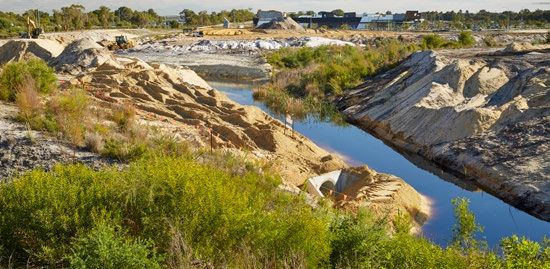
Section 8: Services

8.1 Introduction                                                    8.2.1 Stormwater Management
The safe, effective and efficient operation of Perth Airport and    There are two open drainage channels than run through the
the activities within the estate depend upon having reliable        airport estate. Prior to Perth Airport taking over management of
access to services including power, water, drainage and             the airport in July 1997, the Water Corporation administered the
telecommunications. Perth Airport has developed strategies to       drainage infrastructure. Perth Airport now manages these drains
ensure these services are reliable and available to meet current    within the estate, along with all other stormwater infrastructure.
requirements as well as being adaptable to the growing needs of
                                                                    Perth Airport liaises with the Water Corporation and surrounding
the airport as demand increases.
                                                                    Local Governments about long-term planning and proposed
Perth Airport operates its own internal power, water, waste water   changes to common stormwater infrastructure.
and communications networks, integrating with the State’s
systems at the estate boundary. Perth Airport also controls         8.2.2 Existing Stormwater Network
stormwater drainage running through the estate. Gas and             Perth Airport is located on a coastal plain that sits between the
commercial telecommunications are provided throughout the           Darling Scarp (Perth hills) and the Indian Ocean. The coastal
estate by external suppliers. The power supply is sourced from      plain covers over 100,000 square kilometres and has 30 major
the Western Power grid, supported by emergency power backup         stormwater runoff catchments that ultimately drain into the
units to ensure that the airport can continue to operate during     ocean via the Swan River. The airport estate sits within two of
external power supply interruptions.                                those major catchments, with local stormwater draining to a
                                                                    main drain in each catchment that ultimately flows into the
                                                                    Swan River.
8.2 Stormwater Drainage
                                                                    The two drainage channels within the airport estate are referred
Stormwater management is required to minimise storm and
                                                                    to as the Northern Main Drain (NMD) and the Southern Main
flood risks that include personal harm, environmental harm,
                                                                    Drain (SMD).
physical damage to infrastructure, and interruption or
cancellation of aviation and non-aviation operations.               The NMD catchment (2,332 hectares) and the SMD catchment
                                                                    (2,355 hectares) both extend from the top of the Darling Scarp
Perth Airport is responsible for the provision and management
                                                                    down to the Swan River. The airport estate is sited as close as
of stormwater infrastructure, both piped and open channel,
                                                                    450 metres from the Swan River and makes up 43 per cent of
within the estate.
                                                                    the total NMD catchment and 35 per cent of the total SMD
Subject to the suitable management of inflows into the estate to    catchment. There are two other smaller catchments on the
the legacy 1997 levels, Perth Airport also controls outflows from   estate, referred to as the Fauntleroy Avenue and North Eastern
the estate into external infrastructure to the peak flow rates as   catchments, which are mostly piped.
they were in 1997.
                                                                    The stormwater catchments within the estate are shown in
As development occurs, infrastructure will be provided to meet      Figure 8-1.
the inflows and peak stormwater storage requirements from
upstream sources, for 1997 levels, and provide transmission
and relevant peak stormwater storage for runoff from all new
development and infill within the estate, again to the 1997
legacy levels.
Perth Airport has undertaken detailed stormwater modelling of
the current network. With the 1997 levels providing the baseline
for monitoring peak flows from the estate, an ultimate concept
network has been prepared for the future development of
the estate.
Careful planning and control of stormwater will allow Perth
Airport to manage associated safety and environmental
outcomes, while also managing potential impacts and risks to
aviation and non-aviation activities.

186
Section 8: Services

                                                                            North Eastern
                                                                             Catchment

                Fauntleroy
                 Avenue
                Catchment
                                                       Northern
                                                      Main Drain
                                                      Catchment

                                      Southern
                                     Main Drain
                                     Catchment

                                                                             0        500      1,000

                                                                                     METRES

Figure 8-1 Perth Airport water catchment boundaries
Source: Perth Airport

                                                                   PERTH AIRPORT MASTER PLAN 2020      187
Section 8: Services

                                                            Limestone
                                                            Creek

Sw
   a   nR
            i ve
                   r
                                                                                          Future Northern
                                                                                          Main Drain

                                               Fauntleroy
                                               Drain

                                                                             Northern
                                                                             Main Drain

                                                                                                  Munday
                                                                                                  Swamp

                                           Southern
                                           Main Drain                                                             Poison Gully Creek

                                                 Runway
                                                 Swamp

                                                                        Future
                                                                        Southern
                                                                        Main Drain

                                                                                                            Crumpet Creek

                                                                                                                     Airport Drains

                                                                                                                     Proposed Drains

                                                                                                                     Water Corp/Shire Drains
                                                                                                              0            500         1,000

                                                                                                                          METRES

                       Figure 8-2 Perth Airport major stormwater drainage systems
                       Source: Perth Airport

                       188
Section 8: Services

Upstream of the estate, the NMD catchment consists primarily          8.2.2.3 Fauntleroy Avenue Catchment
of residential areas, while the SMD catchment is also primarily       The Fauntleroy Avenue Catchment is a small catchment within
residential but with an industrial area just outside the estate to    the estate. It is an underground piped network for the majority of
the east. Downstream of the estate, the areas for both                its length. The network starts in the vicinity of Terminal 3 and
catchments are a mix of residential, commercial and light industry.   Terminal 4 and drains directly to the Swan River in a pipeline
The major stormwater drainage systems within the estate are           managed by Perth Airport.
shown in Figure 8-2.                                                  This catchment drains Terminal 3, Terminal 4, part of the terminal
                                                                      aprons, the nearby car parks and part of the General Aviation
8.2.2.1 Northern Main Drain
                                                                      Area, all of which are in the Airport West Precinct.
The NMD is an open unlined channel for most of its length
through the airport estate. It drains three open channels that        8.2.2.4 North East Catchment
cross the eastern boundary: Poison Gully, which has its source        The North East Catchment is an underground piped network
near the top of the Darling Scarp, and two Water Corporation          which has its upper reach located mostly within the estate. The
scheme drains. The two Water Corporation scheme drains that           catchment drains the part of the Airport North Precinct north of
enter the estate discharge directly into Munday Swamp. During         Kalamunda Road. This area is an industrial area, with some flows
times of high flow, the NMD on the airport reaches capacity and       entering the estate from an adjacent industrial area and a nearby
overflows into the southern end of Munday Swamp. When                 residential area.
Munday Swamp reaches capacity, it overflows at its northern
end and drains into the NMD.                                          The downstream estate boundary is the Great Eastern Highway
                                                                      Bypass. From the airport discharge point, the stormwater
Within the estate, the NMD drains the majority of the Airport         drains north into the Helena River which in turn drains into the
Central Precinct, the majority of the existing cross runway           Swan River.
(06/24), just under half of the existing main runway (03/21), a
small portion of the Airport West Precinct, and the Airport North     Perth Airport manages the catchment within the estate, the
Precinct south of Kalamunda Road.                                     City of Kalamunda manages the small section upstream, and
                                                                      the City of Swan manages a small section upstream and also
Perth Airport administers the drain within the estate, the Water      the downstream section outside of the airport estate.
Corporation administers its two scheme drains and the City of
Kalamunda manages Poison Gully upstream of the estate. The            8.2.2.5 Gate 4 Catchment
City of Swan manages the NMD downstream of the estate                 The Gate 4 catchment is a small piped network that drains to a
(where it is known as Limestone Creek).                               retention basin where water is infiltrated into the ground or
                                                                      evaporates.
8.2.2.2 Southern Main Drain
The SMD is an open unlined channel for most of its length
through the estate. It drains Crumpet Creek which has its source
near the top of the Darling Scarp.
The SMD drains the Airport South Precinct, just over half of the
existing main runway (03/21), the majority of the Airport West
Precinct, some areas of Tonkin Highway and small areas of the
neighbouring suburbs of Redcliffe and Cloverdale. It traverses
the airside area and runs under the south end of the existing
main runway (03/21).
Perth Airport manages the drain within the estate, the Water
Corporation manages it downstream of the estate, and the City
of Kalamunda manages the drain upstream (where it is known as
Crumpet Creek).
Within the past five years, three projects have been undertaken
on the SMD which have provided upgraded capacity and
additional storage detention basins to cater for the one-in-100
year storm events. In 2015, a 1,700 metre section was realigned
along the western boundary (adjacent to Tonkin Highway) as
part of the Gateway WA project and vegetated as a living stream.
In 2016, a new downstream outlet was constructed at Central
Avenue to replace the Brearley Avenue outlet that was closed as
part of the Forrestfield-Airport Link project. A 200 metre section
of the SMD within the estate that connects to the Central
Avenue outlet is managed by the Water Corporation. Works
associated with the Direct Factory Outlet construction in the
Airport West Precinct, which was completed in 2018, required
the realignment of a 1,000 metre section of the SMD, with 700
metres constructed as a vegetated living stream.

                                                                                             PERTH AIRPORT MASTER PLAN 2020         189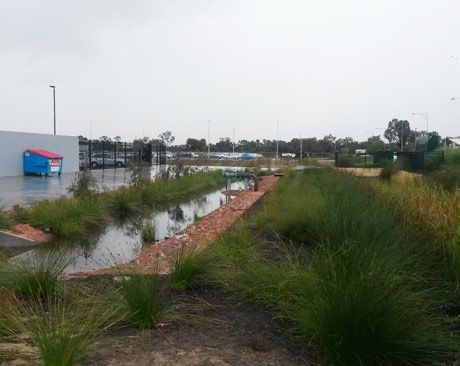
Section 8: Services

8.2.3 Drainage System Considerations                                8.2.3.2 Internal System Capacity
The development of the drainage system within the estate takes      Extensive stormwater modelling has been undertaken to
into consideration:                                                 develop the Perth Airport Master Drainage Strategy. This
• external system capacity (upstream and downstream),               Strategy is used to inform land use planning decisions and
• internal system capacity,                                         detailed stormwater designs to help ensure that the network is
• modifications required for future land uses,                      integrated and keeps peak flow discharge off the estate to the
• design criteria to manage a one-in-100 year storm event for       1997 values, subject to inflows remaining the same.
  the existing runways (main runway 03L/21R and cross runway
                                                                    The NMD has a number of limitations which contribute to the
  06/24), the proposed new runway (03R/21L), taxiways and
                                                                    potential for localised flooding in peak flow events, including:
  the terminal buildings,
                                                                    • limited open channel capacity based on size,
• design criteria to manage a one-in-50 year storm event for
                                                                    • gradient of the drain being as flat as one in 3,300,
  major access roads, aprons and short-term car parking,
                                                                    • various culverts along the drain have insufficient capacity for
• suitable service levels for other infrastructure and land
                                                                      the larger flows,
  development, based on stormwater industry standards, and
                                                                    • the drain downstream of the airport has several restrictive
• managing environmental impact from airport and commercial
                                                                      culverts and bends, and
  development operations.
                                                                    • maintenance of the drain downstream of the estate is not
8.2.3.1 External System Capacity                                      under Perth Airport control.

Prior to the privatisation of the airport in 1997, the Water        The SMD has a number of limitations which contribute to the
Corporation administered the NMD and SMD. As part of this           potential for localised flooding in peak flow events, including:
management, land within the estate was used for the detention       • limited open-channel capacity based on size,
of stormwater due to stormwater infrastructure limitations          • gradient of the drain being as flat as one in 2,500,
downstream of the airport. Perth Airport now administers this       • the 1,200 millimetre diameter pipe under the main runway
legacy of detaining stormwater volumes generated upstream,            (03L/21R) and Horrie Miller Drive has insufficient capacity for
based on 1997 levels.                                                 the larger flows,
                                                                    • the drain downstream of the airport has several restrictive
Construction of the new runway (03R/21L), together with the
                                                                      culverts and bends, and
planned development of the airport estate, will result in
                                                                    • maintenance of the drain downstream of the estate is not
alternative uses for some of the land that has historically
                                                                      under Perth Airport control.
been used for stormwater detention purposes. It is therefore
essential that upstream authorities continue to increase
detention volumes to provide suitable storage for all
stormwater volume increases generated by off-airport
developments since 1997.
Alternatively, approval would need to be obtained to increase
outfall capacity to match inflow from upstream catchments as a
minimum, and ideally allow for a reasonable proportion of run-off
generated on the airport site to be disposed of in the main
drains. Perth Airport will continue to work with the Water
Corporation and the surrounding Local Governments to
achieve the required outcomes through increased upstream
compensation and/or downstream outfall capacity to reduce
the amount of compensation required on the airport estate.

190
Section 8: Services
8.2.4 Drainage Network Development Plan Aboriginal Traditional Custodians have indicated that Poison
The Perth Airport Master Drainage Strategy has been updated Gully historically drained into Munday Swamp. The drainage
to include changes to land use on the estate based on the 2014 works planned as part of the new runway project will realign and
Perth Airport Master Plan. The 2017 version of the Strategy restore the original natural water flows, with a restored
identifies the modifications that will be required for the NMD, connection of Munday Swamp upstream to Poison Gully Creek
SMD and major pipe networks to enable the planned and future (through the eastern hills area) and downstream to Limestone
development of the estate. Creek (which connects to the Swan River).
Previous work by the Water Corporation assumed that, in Additional stormwater storage is planned for the development of
addition to the run-off generated on site, Perth Airport would the Airport North Precinct.
accommodate a substantial amount of stormwater on the airport
8.2.4.2 Southern Main Drain
estate as part of the legacy 1997 arrangements.
Modifications to the alignment and the configuration of the SMD
The Master Drainage Strategy identifies possible infrastructure will be required to allow Perth Airport’s ongoing development.
works including: The current SMD alignment passes through land required for:
• various options for flood mitigation on the airport estate, • the new runway (03R/21L), and
• the need for detention basins, • development of the Airport South and Airport West precincts.
• realigning parts of the NMD and SMD, and
• constructing a ‘living stream’ as part of the realignment works The planned development of these areas will incorporate a
for the NMD and SMD. realignment of the SMD. Provision for additional storage is
planned for the Airport Central, Airport South and Airport West
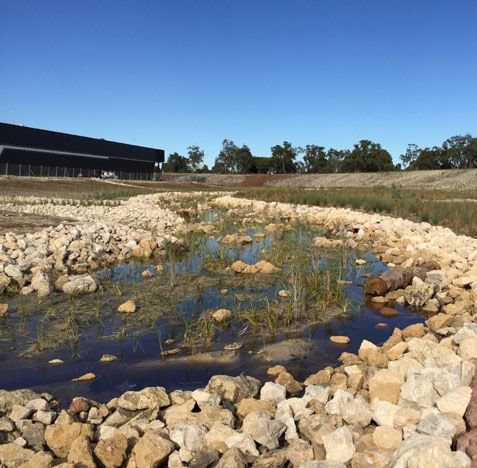
The living stream is an open channel that mimics the precincts. The continued detention of the legacy 1997 storage
characteristics of natural streams with suitable tree canopy, volumes will be incorporated into the SMD network.
understorey and in-stream vegetation. Local provenance
vegetation is used where suitable. Water quality improvement is 8.2.4.3 Fauntleroy Avenue Catchment
achieved by aquatic vegetation and natural biological processes As consolidation of commercial air services continues, with the
helping to oxygenate the water and removing nutrients plus relocation of Qantas operations to the Airport Central Precinct in
non-nutrient contaminants. The development of living streams 2025, land uses in the Airport West Precinct will change and
within the estate supports the natural surface water complementary upgrades to the drainage system will be
management and control of peak flows, as well as improving progressively undertaken.
water quality prior to discharge of the stormwater off the estate.
Living streams also improve the general amenity of the area. 8.2.4.4 North East Catchment
The run-off created by Perth Airport’s ongoing development The stormwater network within the North East Catchment
needs to be managed. The option of upgrading infrastructure consists of a pit and pipe system with three detention storage
downstream of the airport estate relies on the co-operation and basins. The development of the network in this area was
timeliness of other parties. Initial system upgrades are likely to completed in 2015.
be undertaken on the airport estate, however discussions with
8.2.4.5 Environmental Considerations
State and Local Government authorities will continue to
achieve the best overall outcome. Realignment of both the NMD and SMD as living streams
through the airport estate will further provide a valuable function
8.2.4.1 Northern Main Drain in flood control, opportunities for biodiversity management and
Modifications to the alignment and the configuration of the NMD protection, and an improved level of ambience for visitors and
are planned to facilitate Perth Airport’s ongoing development. employees of the airport estate.
The current NMD alignment passes through land required for:
8.2.4.6 Wetlands
• the new runway (03R/21L),
• extensions of terminals and a new terminal in the Airport There are several wetland areas within the airport estate,
Central Precinct, including Munday Swamp which is part of the current
• proposed extension of the cross runway (06/24), and hydrological regime at the airport.
• development of the Airport North Precinct. For most of the time, wetland areas only obtain surface water
As detailed in Section 4, Perth Airport is currently seeking from their own localised catchments or rising ground water
Commonwealth approvals for the construction and operation of following winter rains. However, in times of high flow, wetland
the new runway. The new runway (03R/21L) is planned to be areas may receive varying amounts of overflow water from the
operational between 2023 and 2032, subject to demand. NMD or SMD.
As part of the new runway project, the NMD will need to be The airport drainage design endeavours to minimise adverse
realigned to facilitate the safe operation of the new runway and impacts on the wetlands on the airport estate resulting from
to provide adequate drainage capacity during storm (1 in 100) changes to the hydrological regime, and potential contamination
and flood events. The realignment of the drainage network from stormwater. The redirection of the high flows of the NMD
includes key design features of a pollution capturing basin, an through Munday Swamp, as part of the new runway project, has
infiltration basin, and measures to control the velocity and quality been designed to keep peak water levels and inundation times
of existing water flow into Munday Swamp. The design of the close to the existing scenario and within tolerance levels of the
new infrastructure also ensures that the peak water levels and wetland flora and fauna.
inundation times will remain close to the existing scenario and
within tolerance levels of the wetland flora and fauna.
PERTH AIRPORT MASTER PLAN 2020 191Section 8: Services
8.2.4.7 Pollution Control 8.2.4.9 Hydrogeology
Pollution control is an integral part of any drainage system. All Perth Airport is located over the Cloverdale groundwater flow
developments at Perth Airport must satisfy the requirements of system. The groundwater beneath the estate is an unconfined
the Airports (Environment Protection) Regulations 1997. water table within the Bassendean Sand (the surface geological
unit) and within the mostly unconfined Guildford Formation
The greatest potential source of pollution related to airport
geological unit below that sand.
operations has been identified as oil and fuel spills during aircraft
servicing and refuelling. Hydrocarbons from these areas are The general direction of the groundwater flows is north-west,
intercepted prior to reaching the main drains or the Fauntleroy towards the Swan River. The groundwater level sits at a shallow
Avenue catchment outlet. Hydrocarbon interceptors are depth (surface to four metres below ground level) across the
specified on all new apron construction projects that provide estate. Soil conditions vary, and seasonal changes are generally
bays for aircraft refuelling operations. All apron constructions experienced, with various areas of the airport estate becoming
include these measures. Regular monitoring and maintenance inundated or water logged in the winter months.
are undertaken to ensure operational efficiency is continued.
Site specific assessment of groundwater conditions will be
Pollution control is also required to be implemented directly by required when proposed developments are likely to be impacted
tenants. This may be in the form of ensuring appropriate spill kits by groundwater.
are available, hydrocarbon interceptors or the installation of
water-quality protection infrastructure and procedures. These
requirements are administered through tenant Environmental 8.3 Water Supply
Management Plans and tenant audits. The Water Corporation provides potable water to the majority of
the airport estate through three main connections. These
8.2.4.8 Water Quality connections feed the requirements of the internal airport water
Management of water quality is a requirement of Perth Airport ring main system. The ring main provides redundancy to the
under the AEP Regulations. Management measures will continue supply network for upgrade works, maintenance and unplanned
to be implemented to mitigate any impact on water run-off and events.
quality resulting from development on the airport estate.
The land north of Kalamunda Road, within the Airport North
Water quality at Perth Airport is monitored on a quarterly basis. Precinct, is serviced directly from the Water Corporation
Perth Airport has a large groundwater monitoring bore network network to the individual tenants. Within the Airport North
and surface water monitoring locations that are consistently Precinct there are multiple connections to the Water
sampled during each monitoring event. Results are compared Corporation network, providing redundancy for this area.
to the AEP Regulations and a quarterly monitoring report is
Works carried out to replace all valves and water meters for the
provided to Department of Infrastructure, Transport, Regional
three incoming main water lines were completed in 2018 in
Development and Communications.
conjunction with the Gateway WA project and the Direct Factory
Estate tenants also undertake water quality monitoring, and this Outlet construction. Backflow devices were also fitted to achieve
is reported to Perth Airport as part of each tenant’s Annual conformance with required standards. Upgrades to main line
Environment Report. Further information on Perth Airport’s services were achieved in conjunction with work for the Terminal
water quality monitoring program is provided in Section 9. 1 forecourt and the preliminary works for the Airport Central
Train Station, completed in 2016.
The original main drains were designed and constructed for
conveyance of stormwater with limited improvements in water 8.3.1 Water Supply Development Strategy
quality. The concept for the SMD and NMD is to construct them
A Water Supply and Waste Water Planning Study has identified
on new alignments as living stream vegetated open channels.
and characterised future demand and considers water supply
The aim is to provide a healthy ecosystem for microbes to
options including mains, groundwater and wastewater reuse.
perform bioremediation and biotransformation of environmental
The study included a 30-year upgrade works program, guided by
pollutants such as hydrocarbons (e.g. oil), nutrients and various
development demands which are based on growth in passenger
metals. This will provide further opportunity to improve water
numbers, proposed land developments and asset end-of-life
quality.
replacement.
Perth Airport design guidelines require most individual lots on
Perth Airport will continue to work with the Water Corporation to
the estate to retain and infiltrate the first 15 millimetres of rainfall
provide potable water to the airport estate. The works required
from each storm. This helps to provide at-source pollution
to fulfil the preliminary development strategy are shown in
control and therefore provides ecological protection for
Figure 8-3 and will involve the creation of a series of additional
receiving water ways. This is in line with the State guidelines
ring mains within the airport estate to improve the continuity of
for stormwater management in urban areas.
supply and water pressure.
Perth Airport is investigating opportunities for the reuse of
stormwater to alleviate the reliance upon scheme water.
192Section 8: Services
Airport Mains
Proposed Mains
Water Corp Mains
0 500 1,000
METRES
Figure 8-3 Perth Airport potable water mains
Source: Perth Airport
PERTH AIRPORT MASTER PLAN 2020 193Section 8: Services
PS 9
Main Sewerage
Pump Station PS 10
PS 12 PS 8
PS 7
Water Corporation
Sewer Outfall Terminal 3 & 4
Redcliffe Road Aircraft Waste
Disposal Unit
PS 13
PS 19
PS 11
Terminal 1 & 2
Aircraft Waste
PS 17 Disposal Unit
International Area
PS 16 Sewerage Transfer
(PS 3)
PS 14
PS 5
PS 4
Paltridge
Sewerage
Transfer
Station
(PS 2)
Eastern Area
Sewerage Transfer
Station
(PS 1)
Water Corporation
Sewer Outfall
Dubs Close
Pump Station
Fawcett
Sewerage
Transfer
Station
(PS 6)
Gravity Mains
Pumping Mains
Future Main
Pump Stations
Water Corporation 0 500 1,000
Sewer Outfall METRES
Kewdale Road
Figure 8-4 Perth Airport sewerage systems
Source: Perth Airport
194Section 8: Services
8.4 Sewerage System Upgrading of infrastructure has begun, with works in 2015
increasing storage capacity at the International Area Sewer
The Perth Airport sewerage system consists of a mixed network
Transfer in the Airport Central Precinct and the Helicopter Sewer
of gravity and pumping mains (see Figure 8-4), the majority of
Pump Station servicing the General Aviation Area. An upgrade of
which discharges into the Water Corporation network at three
the pumping main between Pump Station 3 and the Paltridge
locations around the estate. Waste water from the land that is
Pump Station 2 was also completed in 2015. Installation of flow
north of Kalamunda Road, in the Airport North Precinct, is
metering on the principal sewer pump stations in 2016 has
conveyed to the Water Corporation network via a combination of
provided monitoring of peak flows and enhanced real time
gravity and pumping mains, while the other three discharge
management.
points use pumping infrastructure.
The land that is south of Kalamunda Road currently has minimal 8.4.1 Sewerage System Development Strategy
development. Developments in this area currently pump their A sewerage system development strategy has been developed
waste water to the Airport West Precinct. by Perth Airport. The strategy includes an upgrade works
The Airport West Precinct has a sewerage system with a single program based on projected demand, which is guided by
discharge point, however the Water Corporation has placed a passenger numbers, proposed land developments and asset
maximum limit on that outflow. Perth Airport is working with the end-of-life replacement.
Water Corporation to manage outflows and develop a Perth Airport will continue working with the Water Corporation on
long-term strategy. capacities and quality of sewage being discharged from the estate.
The Airport Central Precinct has a series of linked pumping
stations that discharge via a pumped main to the Water
Corporation discharge point adjacent to the eastern airport
boundary at Dubs Close.
The Airport South Precinct has two separate sewerage
networks: the southern industrial area discharges to the south,
and the rest of the precinct discharges to the east via the Airport
Central pumped main.
There are also various lease holders that have private pumping
mains discharging into Perth Airport’s system. Some lease
holders within the Airport North Precinct maintain onsite
sewerage treatment systems as they do not have the ability to
connect to the main network.
PERTH AIRPORT MASTER PLAN 2020 195Section 8: Services
8.5 Power Supply Extensive work on the High Voltage power supply system
resulted in installation and commissioning of five new ring main
The Perth Airport power distribution system operates as an
units across the estate to support the aviation and commercial
embedded network. The electricity distribution network is
developments.
managed by Perth Airport.
In 2013, Perth Airport constructed a co-generation plant in the
The main portion of the airport estate is currently supplied by
Airport Central Precinct to support Terminal 1 International, the
two Western Power grid connections and internal generation as
Terminal 1 Domestic pier and Terminal 2. To continue capacity
follows:
enhancement for the Airport Central Precinct, between 2016
• Western Power’s Belmont Zone substation to the west
and 2018 Perth Airport installed a further seven ring main units,
supplies power to the Dunreath substation in the south of
seven major transformers, new feeder connections and an
Airport West Precinct,
additional diesel-powered back-up generator.
• Western Power’s Munday Zone substation on the airport
eastern boundary, which supplies power into the Airport Perth Airport is progressively replacing all airside and landside
Central Precinct, and lighting with highly energy efficient LED light fittings.
• a natural gas fired co-generation power plant with waste heat
recovery providing electrical power generation, space heat and 8.5.1 Power Supply Development Strategy
cooling services to Terminal 2 and the Terminal 1 Domestic A High Voltage Electrical Master Plan has been completed to
pier. consider an upgraded works program out to 2044 based on
The Eastern Metropolitan Regional Council (EMRC) waste to projected passenger growth, proposed land developments and
energy wood pyrolysis power generation plant, located one asset end-of-life replacement as shown in Figure 8-5.
kilometre north of the estate, is due to commence operations in Electrical load growth associated with Perth Airport estate
2020 and will supply power into the airport grid. development will be supplied through the Western Power grid
Perth Airport is also undertaking a feasibility assessment of and by new embedded generation.
future solar power from the introduction of photovoltaic cells Option planning with Western Power for additional grid power
(solar farm) within the Airfield Precinct and/or Airport North supply has commenced.
Precinct. The installation of solar power for Perth Airport
facilities, and increased use on tenanted facilities, will become Feasibility studies for embedded generation such as solar PV, a
increasingly important to supplement power from the Western green waste bio-gas plant and grid storage batteries are
Power grid. underway.
The area of the Airport North Precinct that is north of An Energy Strategy may also be affected by WA Energy Strategy
Kalamunda Road is supplied directly from Western Power’s Transformation Reform process that will provide network and
distribution network. market guidance on distributed energy resources.
A ring main distribution around the airport estate provides a high The proposed new parallel runway will require relocation of
level of redundancy in that a single section of faulted network existing Western Power 132kV powerlines on the eastern
can be switched out and power restored to most customers by boundary of the airport. Option planning for this relocation has
additional switching. commenced.
Emergency backup power to the terminal and essential airfield
operations is provided by:
• a co-generation power plant which provides back-up power to
the Terminal 2 and Terminal 1 Domestic,
• Terminal 1, Terminal 3 and Terminal 4 have backup diesel
generators,
• backup generators maintained for airfield lighting, and
• car park areas which have backup generators.
196Section 8: Services
EMRC
Pyrolysis Plant
Future
Switch Room
Fauntleroy
Switch Room
Cogen
Facility
Kendall
Switch Room
Western Power
22 kV Overhead Dunreath
Transmission Line Switch Room
Western Power
132 kV Overhead
Mint Switch Transmission Line
Room
Western Power
Forrestfield Sub Station
Western Power
Munday Sub Station
Airport Ring Mains
and Feeders
Future Ring Mains
and Feeders
Western Power
Western Power Overhead Mains
132 kV Overhead EMRC Power Main
Transmission Line
Feeder Substations
Airport Network Switchs
0 500 1,000
METRES
Figure 8-5 Perth Airport high voltage power supply network
Source: Perth Airport
PERTH AIRPORT MASTER PLAN 2020 197Section 8: Services
Existing Bores
Future Bores
0 500 1,000
METRES
Figure 8-6 Perth Airport irrigation bores
Source: Perth Airport
198Section 8: Services
8.6 Irrigation 8.7 Gas Supply
The majority of irrigation within the estate is sourced from Gas supply to the airport is currently provided by Synergy
groundwater. As well as irrigating landscaped areas, through a piped network mostly owned and maintained by
groundwater is used for some construction activities. Perth ATCO Gas Australia. The existing system includes gas
Airport recognises that groundwater supplies in the area are reticulation mains along Horrie Miller Drive, Brearley Avenue
limited and therefore seeks to rationalise its use. and Fauntleroy Avenue.
The Water Supply and Waste Water Planning Study (Jan 2017) A high-pressure gas main runs along the western side of Horrie
has considered the future irrigation demands, including Miller Drive and services the Airport South Precinct, Airport
groundwater monitoring data, resource assessments and future Central Precinct and surrounding developments. This line is
uses of groundwater. reticulated from a gas main running adjacent to Tonkin Highway
at the southern end of the airport and may need to be upgraded
Figure 8-6 identifies the current and future groundwater bores
at some time in the future as demand dictates. A further gas
within the airport estate. The extent of current groundwater
pressure main supplies airport tenants located north of
usage by Perth Airport is approximately equivalent to irrigating
Kalamunda Road.
70 hectares of grassed playing fields per year in the Perth area.
There are two high-pressure gas transmission lines that run
Irrigation systems were extended and re-routed to support
through dedicated easements on the estate. These are known
landscaping in the ongoing development areas, in particular the
as the:
Terminal 1 forecourt and Airport Drive (completed in 2016) and
• Parmelia Pipeline, which passes through a portion of the
Dunreath Drive in the Airport West Precinct (completed in 2018).
Airport North Precinct to the north of Kalamunda Road, and
Additional bores were established to support the extended
• Dampier to Bunbury Natural Gas Pipeline, which runs from
landscaping regime.
north of Kalamunda Road in the Airport North Precinct and
then along the entire length of the eastern airport boundary.
Incoming gas supply lines were relocated as a result of the
Gateway WA project in 2015 and Redcliffe Station construction,
as part of the Forrestfield-Airport Link project, in 2018.
Throughout 2018, internal gas distribution was extended to
service the Direct Factory Outlet and adjacent development
sites in the Airport West Precinct.
PERTH AIRPORT MASTER PLAN 2020 199Section 8: Services
8.7.1 Gas Supply Development Strategy 8.8.1 Communication Development Strategy
In the longer term, additional natural gas capacity will be Communications systems will be upgraded as required to
required on the airport estate as the planned consolidation of maintain or increase capacity and effectiveness in line with Perth
commercial air services to the Airport Central Precinct proceeds, Airport’s IT Fixed Infrastructure Strategy. The Strategy considers
more commercial development occurs, and if additional on-site development of communications across the airport through the
gas-powered generation is installed. establishment of additional cable/fibre containment, equipment
rooms and integration with Fibre Distribution Centres. Perth
To service this projected demand an additional gas main will be
Airport is also considering the benefits of wireless
required. Discussions will be conducted with the relevant
communications networks for connectivity to a wider range of
providers to ensure this additional service is correctly sized and
facilities, including airport operations, facility monitoring and for
delivered within required timeframes to support the airport
some commercial applications.
development plans.
As shown in Figure 8-7, connections have been proposed by
ATCO Gas to support the future development of the estate and 8.9 Sustainability
enhance diversity of supply. Perth Airport has developed a Sustainability Strategy which
references the water supply, wastewater, IT Fixed Infrastructure,
drainage, power supply and environment strategies which have
8.8 Communications all been developed to reflect current requirements and anticipate
Reliable communication systems are necessary to ensure safe future demand. The strategies include measures for Perth
and efficient aircraft navigation and airport operations. Airport to become more sustainable in the use of all major
Communications infrastructure within the airside boundary are services. This will also have the benefit of limiting the impact that
primarily the responsibility of Perth Airport, although a airport developments have on demand for service infrastructure
substantial network of airside communication cables for outside the airport estate. Measures considered include:
control of navigational aids and associated communications is • increased on site power generation, including options from
owned by Airservices Australia. more sustainable sources such as solar photovoltaic system,
grid batteries, and airport waste to energy such as biogas
Perth Airport has an extensive network of communications
generation,
systems consisting of air-to-ground and point-to-point radio
• increased ‘fit for purpose’ water use, including the collection
communications utilising:
and reuse of storm water and reduction of ground water use
• high frequency transmitter and receiver stations,
from water sensitive landscaping and planting regime, and
• satellites,
• shared resources, such as large-scale power storage and
• microwave links, and
co-generation plants (power, hot and cold water) will be
• land-line communications via underground cables and optic
explored.
fibre.
Ongoing commercial development together with construction of
Commercial telecommunications are provided throughout the
new terminals and terminal expansions within the Airport Central
airport estate by various third-party service providers, such as
Precinct will provide opportunities to include water, energy
Telstra, Optus and NBN Co Ltd, whose distribution utilises the
saving initiatives and incorporate renewable power generation,
Perth Airport duct networks or their own dedicated containment.
while innovative design features can be used to reduce service
In recent years, Perth Airport’s communication systems have demand.
been strengthened with the upgrading of data lines across the
estate that support the monitoring of various systems in
terminal, landside and airside locations.
In 2017, Airservices Australia completed an upgrade of its
monitoring, control, navigation and surveillance systems across
the airfield and linking to the Air Traffic Control tower and Air
Traffic Services Centre.
In 2017, works commenced to establish the national broadband
network (NBN) within the airport estate. The network became
available to Perth Airport and estate tenants in 2019.
200Section 8: Services
Gas Powered
Cogeneration
High Pressure
Gas Main
Dampier To Bunbury
Natural Gas Pipeline
Parmelia
Gas Pipeline
High Pressure
Gas Main
Airport Gas Mains
Distribution Gas Lines
Future Connections
Dampier Bunbury NGP
Parmelia NGP
Gas Facilities
0 500 1,000
METRES
Figure 8-7 Perth Airport gas supply network
Source: Perth Airport
PERTH AIRPORT MASTER PLAN 2020 201You can also read


