2020 Year in Review Fashion Law - Foley & Lardner LLP
←
→
Page content transcription
If your browser does not render page correctly, please read the page content below

2020 Year in Review Fashion Law

Fashion Law | 2020 Year in Review
Housekeeping
Questions can be entered via the Q&A widget open on the left-hand side of your
screen. We will address questions at the end of the program, time permitting.
The recorded version of this presentation will be available on Foley.com in the
next few days and you can find a copy of the slides in the Resource List widget
on the left-hand side of your screen.
Foley will apply for CLE credit after the program. To be eligible for CLE, you will
need to answer a polling question during the program.
If you did not supply your CLE information upon registration, please e-mail it to
Jenny Delatorre at jdelatorre@foley.com. Certificates of attendance will be
distributed via email to eligible participants approximately 8 weeks after the web
conference.
NOTE: Those seeking Kansas, New York & New Jersey CLE credit are required
to complete the Attorney Affirmation Form in addition to answering the polling
question. Please email the form in the Resource List to Jenny Delatorre at
jdelatorre@foley.com immediately following the program.
1
Fashion Law | 2020 Year in Review

HOSTS

               Laura Ganoza                          Julie McGinnis
               Partner, Co-Chair Fashion Apparel &   Associate
               Beauty Team
               Foley & Lardner LLP                   Foley & Lardner LLP
               Miami                                 Milwaukee

               305.482.8409                          414.297.5289
               lganoza@foley.com                     jmcginnis@foley.com

                                                                           2
Fashion Law | 2020 Year in Review
Overview
2020 Supreme Court Rulings
Other Notable Court Cases
Developments in IP Enforcement
Trademark Modernization Act of 2020 & Other
Legislative Initiatives
2021 Cases to Watch
3
Fashion Law | 2020 Year in Review

        2020 Supreme Court Rulings

                                     4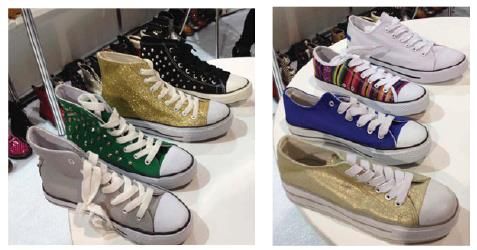
Fashion Law | 2020 Year in Review
Lucky Brand v. Marcel –
“Defense Preclusion”
Lucky Brand Dungarees, Inc. v.
Marcel Fashions Grp., Inc., 140 S.
Ct. 1589, 206 L. Ed. 2d 893 (2020).
The parties have a long history of
litigation involving their respective
“LUCKY” marks.
5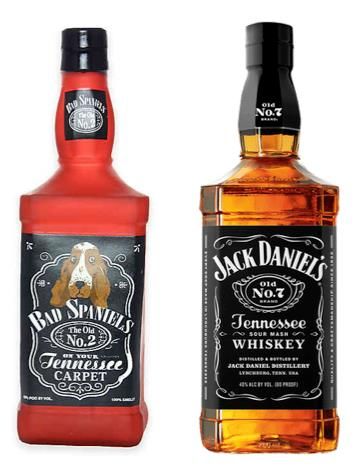
Fashion Law | 2020 Year in Review

Lucky Brand v. Marcel –
“Defense Preclusion”
  2001         Marcel Sues Lucky Brand for TM Infringement

  2003         Initial Settlement
               •   Releases Lucky Brands from any claims regarding Lucky Brand’s use of
                   its own trademarks.

  2005         Lucky Brand Sues; Marcel Counterclaims
               •   Results in judgment against Lucky Brand
               •   Lucky Brand enjoined from using “Get Lucky”

  2011         Marcel Sues Lucky Brand Alleging Continued
               Infringement of the “Get Lucky” Mark and for
               Contravention of the Judgment Issued in the 2005 Action
               •   Lucky Brands defends action based on release contained in 2003 settlement

                                                                                               6
Fashion Law | 2020 Year in Review
Lucky Brand v. Marcel –
“Defense Preclusion”
Lucky Brand moved to dismiss 2011 lawsuit, arguing that
the release in the 2003 settlement agreement applied.
The District Court granted the motion.
The Second Circuit vacated and remanded, concluding
“defense preclusion” prohibited Lucky Brand from raising
the release defense.
– Lucky Brand should have raised the settlement release defense in the 2005
action
Issue on appeal to SCOTUS: Is a defendant precluded
from raising a defense in a subsequent action?
7
Fashion Law | 2020 Year in Review
Lucky Brand v. Marcel –
“Defense Preclusion”
Justice Sotomayor explained that in order for “defense
preclusion” to apply, the facts must meet the
requirements of the standard concepts of issue
preclusion or claim preclusion.
– Issue preclusion prevents the parties from relitigating an issue when the
issue has actually been litigated and decided.
– Claim preclusion prevents the same parties from raising claims that could
have been raised and decided in a prior action between the parties, even
if they were not actually litigated.
Requires that the prior claims and the new claims share a “common nucleus of operative
facts”.
8
Fashion Law | 2020 Year in Review
Lucky Brand v. Marcel –
“Defense Preclusion”
The Court’s decision finding there is no “defense
preclusion” avoids the harsh litigation consequences of
the Second Circuit’s decision.
Litigants do not have to pursue every possible defenses,
even weak ones, for fear of losing such defenses in the
future.
– This was a legitimate concern that could have affected not just dueling
apparel companies or trademark cases going forward, but could have
implicated all litigation, if the Second Circuit’s decision was affirmed.
9Fashion Law | 2020 Year in Review
Romag Fasteners v. Fossil – Profit Awards
in Trademark Infringement Cases
Romag Fasteners, Inc v. Fossil, Inc., 140 S. Ct.
1492 (2020).
Romag alleged that the foreign factories Fossil
hired were using counterfeit magnetic
fasteners.
A jury concluded that Fossil’s awareness of the
counterfeiting and “callous disregard” for
Romag’s trademark rights was not enough to
establish that Fossil acted willfully, and District
Court refused Romag’s request for an award of
profits.
10Fashion Law | 2020 Year in Review
Romag Fasteners v. Fossil – Profit Awards
in Trademark Infringement Cases
Supreme Court granted cert to resolve a circuit split
as to whether an award of profits in a trademark
infringement case requires evidence that an infringer
acted willfully.
– Willfullness required in First, Second, Eighth, Ninth, and Tenth;
– Not required in Third, Fourth, Fifth, Sixth, Seventh, and
Eleventh.
Held: A plaintiff in a trademark infringement suit is not
required to show that a defendant willfully infringed
the plaintiff’s trademark as a precondition to an award
of profits.
11Fashion Law | 2020 Year in Review
Romag Fasteners v. Fossil – Profit Awards
in Trademark Infringement Cases
The Lanham Act specifically requires willfulness
as a precondition to a profits award in a suit
under §1125(c) for trademark dilution, but does
not specifically require willfulness for a suit under
§1125(a).
Profits may be awarded under “principles of
equity.”
Justice Gorsuch noted that a defendant’s mental
state (e.g., willfulness) is still “a highly important
consideration in determining whether an award of
profits is appropriate.”
12Fashion Law | 2020 Year in Review
Romag Fasteners v. Fossil – Profit Awards
in Trademark Infringement Cases
This new controlling law has been recognized in a
handful of cases:
– Second Circuit: Experience Hendrix, L.L.C. v. Pitsicalis, No.
17CIV1927PAEGWG, 2020 WL 3564485 (S.D.N.Y. July 1,
2020).
– Eighth Circuit: Wing Enterprises, Inc. v. Tricam Indus., Inc., No.
17-CV-1769 (ECT/ECW), 2021 WL 63108 (D. Minn. Jan. 7,
2021).
– Ninth Circuit: Monster Energy Co. v. Integrated Supply
Network, LLC, 821 F. App'x 730 (9th Cir. 2020).
– Tenth Circuit: Vitamins Online, Inc. v. HeartWise, Inc, No. 2:13-
CV-00982-DAK, 2020 WL 6581050 (D. Utah Nov. 10, 2020).
13Fashion Law | 2020 Year in Review
Other 2020 Case Law Developments
14Fashion Law | 2020 Year in Review
VIP Products v. Jack Daniel’s - Parody
VIP Prod. LLC v. Jack Daniel's Properties, Inc., 953 F.3d
1170 (9th Cir. 2020)
15Fashion Law | 2020 Year in Review
VIP Products v. Jack Daniel’s - Parody
VIP filed a declaratory judgment action
seeking a declaration of non-
infringement and cancellation of Jack
Daniel’s trade dress registrations for
its bottle design.
Jack Daniels counterclaimed for
trademark and trade dress
infringement, and dilution by
tarnishment.
The district court found in favor of
Jack Daniel’s and issued a permanent
injunction.
16Fashion Law | 2020 Year in Review
VIP Products v. Jack Daniel’s - Parody
The Ninth Circuit affirmed the lower court’s ruling
concerning the distinctiveness of the trade dress, but
reversed on the dilution claim, vacated the judgment on
trademark infringement, and remanded the case.
Under Rogers v. Grimaldi, 875 F.2d 994 (2d Cir. 1989), the
Lanham Act applies to an expressive work only where the
plaintiff can show that the defendant’s use of a mark is
either:
– (1) not artistically relevant to the underlying work; or
– (2) explicitly misleads consumers as to the source or content of the work.
17Fashion Law | 2020 Year in Review
VIP Products v. Jack Daniel’s - Parody
The Ninth Circuit found the Bad
Spaniels dog toy to be an expressive
work.
The court noted the Fourth Circuit’s
2007 decision holding that dog toys that
loosely resembled Louis Vuitton
handbags were successful parodies
and did not infringe.
The Ninth Circuit remanded for the
lower court to determine whether Jack
Daniel’s could satisfy one of the prongs
in the Rogers test.
18Fashion Law | 2020 Year in Review
VIP Products v. Jack Daniel’s - Parody
On the dilution claim, the Ninth Circuit noted that there is no
dilution when use of a mark is “noncommercial.” Speech is
noncommercial if it does more than propose a commercial
transaction and contains some protected expression.
Though VIP used Jack Daniel’s trade dress and bottle
design to sell Bad Spaniels, they were also used to convey
a humorous message, which is protected by the First
Amendment. VIP was therefore entitled to judgment in its
favor on the dilution claims.
Jack Daniel’s filed a petition for certiorari to the Supreme
Court, which was recently denied on January 11, 2021.
19Fashion Law | 2020 Year in Review
Unicolors v. H&M – Copyright Validity
Unicolors, Inc. v. H&M Hennes & Mauritz, L.P. et
al., 2:2016-cv-02322 (C.D.Cal.).
In 2016, Unicolors sued, claiming H&M had
ripped off a pattern design known as EH101.
In 2017, a jury ruled in favor of Unicolors,
finding H&M had willfully infringed Unicolors’
copyright.
H&M filed a renewed motion for judgment as a
matter of law, arguing that Unicolors’ copyright
registration was invalid because it included
knowingly false information.
20Fashion Law | 2020 Year in Review
Unicolors v. H&M – Copyright Validity
H&M alleged Unicolors registered 31 separate designs as
part of a single-unit registration, but that the designs were
not all published at the same time to the same customers.
The district court rejected H&M’s argument for invalidating
the registration.
– No evidence of intent to defraud the Copyright Office.
– Although Unicolors marketed and sold various works covered by the
registration separately, that didn’t mean all of the works were not first
made available to the public on the same day.
21Fashion Law | 2020 Year in Review
Unicolors v. H&M – Copyright Validity
H&M appealed to the Ninth Circuit, which reversed the
lower court. Unicolors, Inc. v. H&M Hennes & Mauritz, L.P.,
959 F.3d 1194 (9th Cir. 2020).
The court held:
– Invalidation of a copyright registration does not require an
intent to defraud.
– A “collection of works” does not qualify as a “single unit of
publication” unless all individual works of the collection were
first published as a singular, bundled unit.
22Fashion Law | 2020 Year in Review
Unicolors v. H&M – Copyright Validity
Unicolors sought to register its collection of works by
inaccurately claiming the words were a single unit of
publication, “with knowledge” this information was
inaccurate.
Ninth Circuit remanded so that the district court could
request the Register of Copyrights to advise whether the
inaccurate information, if known, would have caused the
Register to refuse registration.
On January 4, 2021, Unicolors filed a petition for certiorari
with the U.S. Supreme Court.
23Fashion Law | 2020 Year in Review
Arcona v. Farmacy Beauty – Trademark
Infringement
Arcona, Inc. v. Farmacy Beauty, LLC, 976 F.3d 1074 (9th
Cir. 2020).
Arcona sued Farmacy Beauty for trademark infringement,
unfair competition, and counterfeiting based on the use of
the term EYE DEW on skincare products.
Arcona owns a trademark registration for the word mark
EYE DEW in standard characters.
24Fashion Law | 2020 Year in Review
Arcona v. Farmacy Beauty
Arcona’s product: Farmacy’s product:
25Fashion Law | 2020 Year in Review
Arcona v. Farmacy Beauty – Trademark
Infringement
Arcona dropped its claims for trademark infringement and
unfair competition, pursuing only counterfeiting claim.
The district court granted partial summary judgment for
Farmacy on the counterfeiting claim, reasoning that the only
similarity between the products was the phrase EYE DEW,
and found that it was implausible that a consumer viewing
Farmacy’s EYE DEW product would be tricked in believe
the product was one of Arcona’s EYE DEW products.
26Fashion Law | 2020 Year in Review
Converse – Trade Dress and Secondary
Meaning
Converse – In re Certain Footwear Products, Inv.
No. 337-TA-936 (Remand, 2020):
On September 24, 2020, in the long-running dispute over the
Chuck Taylor sneaker design, the ITC ruled that elements of
Converse’s claimed trade dress were protectable, but that the
accused footwear still in controversy are non-infringing.
27Fashion Law | 2020 Year in Review
Converse – Trade Dress and Secondary
Meaning
In 2018, the Federal Circuit clarified six factors to be
assessed in determining whether a mark has acquired
secondary meaning:
– association of the trade dress with a particular source by actual purchasers
(typically measured by customer surveys);
– length, degree, and exclusivity of use;
– amount and manner of advertising;
– amount of sales and number of customers;
– intentional copying;
– unsolicited media coverage of the product embodying the mark
Converse, Inc. v. ITC, 909 F.3d 1110 (Fed. Cir. 2018)
28Fashion Law | 2020 Year in Review
Converse – Trade Dress and Secondary
Meaning
In October 9, 2019, ITC issued its initial determination on
remand, finding:
– No Section 337 violation with respect to allegedly infringing
parties Highline, Skechers, or New Balance.
– With respect to defaulting respondents in the case, there was
infringement, and if validity is to be assessed on remand, then
the Converse Midsole Trademark is valid as of the date of
registration.
Converse petitioned for review of the remand determination.
29Fashion Law | 2020 Year in Review
Converse – Trade Dress and Secondary
Meaning
Converse’s Non-Infringing Infringing
Trade Dress
30Fashion Law | 2020 Year in Review
Converse – Trade Dress and Secondary
Meaning
For Skechers, the determining factor was that Skechers has
a “brand name that is well-known and recognized by
consumers” and that their use of “branding, labeling, and
marketing significantly reduces the likelihood of confusion.”
For New Balance’s PF Flyers footwear, the design was
found to be non-infringing due to a lack of substantial
similarity to the asserted trade dress.
As to Highline, a key factor was its “more sophisticated” set
of consumers purchasing at a higher price point, along with
its long term use before Converse’s upper trade dress
registration issued, and its very small market share.
31Fashion Law | 2020 Year in Review
“Upcycling” – Rolex v. La Californienne
Rolex Watch U.S.A., Inc. v. Reference
Watch LLC d/b/a La Californienne;
Courtney Ormond; and Leszek
Garwacki, 2:19-cv-09796 (C.D.Cal).
La Californienne customized existing
Rolex watches.
Rolex sued, alleging that the alteration
of its timepieces to include non-
authentic Rolex parts (or parts not
otherwise approved by Rolex)
transforms an authentic watch into a
counterfeit.
32Fashion Law | 2020 Year in Review
“Upcycling” – Rolex v. La Californienne
The parties settled the dispute in May
2020.
La Californienne can tell customers that its
watches were formerly vintage Rolex
watches, now modified.
However, it is permanently enjoined from:
– Using or reproducing any Rolex trademarks,
including on its website.
– Engaging in any conduct likely to cause confusion
or dilute Rolex’s trademarks.
– Using a description including words or symbols
representing its products as Rolex watches.
– Providing any warranty or services on already-
sold watches that bear Rolex’s name or logo.
33Fashion Law | 2020 Year in Review
“Upcycling” – Hamilton v. Vortic
Hamilton Int'l Ltd. v. Vortic LLC, No.
17CV5575AJNOTW, 2020 WL
5496113 (S.D.N.Y. Sept. 11, 2020)
Vortic specializes in restoring antique
pocket watches and converting them to
wristwatches.
Hamilton sued for trademark
infringement over Vortic’s watch “The
Lancaster” which features a restored
movement produced by Hamilton
Watch Company.
34Fashion Law | 2020 Year in Review
“Upcycling” – Hamilton v. Vortic
The court looked to the Supreme Court’s 1947
ruling in Champion Spark Plug Co. v. Sanders,
331 U.S. 125 (1947) to evaluate whether
Vortic’s disclosure of the origins of the product
were sufficient.
The court found there to be full disclosure,
noting that Vortic’s advertising and the watch
itself would accurately convey to an ordinary
prudent purchaser that the only connection
between the parties is that Vortic used antique
Hamilton watch movements and parts.
No suggestion of affiliation or sponsorship
between the parties.
Turning to the remaining Polaroid factors, the
court found no likelihood of confusion.
35Fashion Law | 2020 Year in Review
“Upcycling” – Ralph Lauren v. VNDS
PRL USA Holdings, Inc. v. VNDS Los
Angeles et al, No. 2:20-cv-00374 (C.D.
Cal)
In January 2020, Ralph Lauren sued
VNDS Los Angeles for trademark
infringement and counterfeiting.
At least some of the products at issue
were created using materials from
authentic Ralph Lauren materials, such as
a hat upcycled by VNDS from vintage
authentic Polo Sport swim shorts.
Default judgment entered December 9,
2020
36Fashion Law | 2020 Year in Review
Anti-SLAPP Claims
dbleudazzled, LLC v. Khloe Kardashian
and Good American, LLC, 20STCV20510
(Cal.Sup.)
Designer Destiney Bleu filed a lawsuit for
fraud and deceit, common law trade dress
infringement, misappropriation, and unfair
competition against Khloe Kardashian and
Good American over alleged infringement
of her bejeweled bodysuit designs.
The unfair competition claim was based on
a claim that public statements, including
that Good American and Khloe did not
copy the bodysuits, were false and
misleading.
37Fashion Law | 2020 Year in Review
Anti-SLAPP Claims
GA and Khloe responded with a motion to strike the unfair
competition claim under California’s anti-Strategic Lawsuits
Against Public Participation (“SLAPP”) statute.
California’s anti-SLAPP statute protects against lawsuits
brought to “chill the valid exercise of constitutional rights of
free speech.”
In a December 28th ruling, the judge dismissed the motion,
ultimately finding that the unfair competition claims were not
based entirely on conduct that was protected activity, and
the statements also fell under the “commercial exception” in
the statute.
38Fashion Law | 2020 Year in Review
Developments in Counterfeiting
Enforcement
39Fashion Law | 2020 Year in Review
Landlord Liability for Counterfeiting
Omega SA v. 375 Canal, LLC, No. 19-969-CV (2d Cir. Jan.
6, 2021).
Omega sued a landlord for contributory trademark
infringement, based on vendors at the property selling
counterfeit watches.
The property has a long history of litigation alleging
counterfeiting and trademark violations.
– 2006 and 2009 nuisance claims from the City of New York.
– Prior lawsuit by Louis Vuitton resulting in a permanent injunction.
A jury awarded $1.1 million in statutory damages for
contributory infringement.
40Fashion Law | 2020 Year in Review
Landlord Liability for Counterfeiting
Landlord appealed, arguing that Omega needed to identify
a specific vendor to whom Canal continued to lease
property despite knowing or having reason to know of
counterfeiting.
The court confirmed that a defendant may be held liable for
contributory trademark infringement despite not knowing
the identity of a specific vendor who was selling counterfeit
goods, as long as the lack of knowledge was due to willful
blindness.
41Fashion Law | 2020 Year in Review
Luxury Resale
In 2018, Chanel sued luxury resale sites The RealReal and
What Goes Around Comes Around for trademark
infringement and counterfeiting.
– Chanel, Inc. v. What Goes Around Comes Around, LLC, et al., 1:18-cv-02253
(SDNY)
– Chanel, Inc. v. The RealReal, Inc., 1:18-cv-10626-VSB (SDNY);
Chanel’s claims are twofold:
– Sale of counterfeit products
– Deceptive advertising that causes consumers to believe there is a
connection between Chanel and the reseller.
42Fashion Law | 2020 Year in Review
Luxury Resale – Chanel v. The RealReal
On March 30, 2020, the SDNY issued a ruling on TRR’s motion
to dismiss Chanel’s complaint.
The court found that Chanel adequately alleged that TRR
marketed and sold counterfeit Chanel products, and that its
advertising regarding the authenticity of the products it sells is
literally false.
– The court noted a difference from eBay because of TRR’s Consignment Terms,
which provided that it was TRR’s responsibility in its sole discretion to approve for
sale, price, display, market, and make goods available for sale.
– TRR’s advertising contained “unambiguous representations of fact” that all of the
products it advertised and sold were 100%.
The court dismissed other claims relating to TRR’s use of
Chanel’s genuine trademarks, on the basis that such use was
not likely to cause customer confusion.
43Fashion Law | 2020 Year in Review
Luxury Resale – Chanel v. WGACA
In the What Goes Around Comes Around case, Chanel also
claims that “vintage” Chanel products sold on the site do
not meet the FTC’s definition of “vintage” (at least 50 years
old).
No significant rulings in this case; the parties appear to be
in discovery.
44Fashion Law | 2020 Year in Review
Amazon Marketplace – Counterfeiting
Schemes and “Dupes”
In November 2020, Amazon filed a lawsuit in the U.S.
District Court for the Western District of Washington.
The suit claims that influencers Kelly Fitzpatrick and Sabrina
Kelly Krejci, along with 11 Amazon marketplace sellers,
engaged in a sophisticated campaign of false advertising,
conspiring to evade Amazon’s anti-counterfeiting protections
and policies.
45Fashion Law | 2020 Year in Review
Amazon Marketplace – Counterfeiting
Schemes
Use of “Hidden Links” – advertising a “dupe”
(counterfeit) product via social media, with a link to
a very “generic” looking product listing on Amazon
that makes no mention of the brand name.
Complaint alleges the scheme included numerous
counterfeit items including Gucci and Dior
trademarks.
46Fashion Law | 2020 Year in Review
Amazon Marketplace – Counterfeiting
Schemes
47Fashion Law | 2020 Year in Review
Amazon Marketplace – Counterfeiting
Schemes
48Fashion Law | 2020 Year in Review
Counterfeiting Schemes – Beauty Products
Growth of e-commerce during the pandemic has led to a
rise in counterfeit beauty products.
Counterfeit beauty products present an additional problem
for brands because the use of unregulated chemicals can
also present health and safety hazards.
A 2019 report from Incopro found that 52% of US
consumers say they’ve lost trust in a brand after
unintentionally purchasing a fake version of its products
online.
49Fashion Law | 2020 Year in Review
Counterfeiting Schemes – Beauty Products
In August 2020, Amazon and KF Beauty jointly
filed a lawsuit against four companies and 16
individuals for counterfeiting KF Beauty’s
WUNDER2 beauty products, including
WUNDERBROW. Amazon.com Inc et al v.
Sirowl Technology et al, No. 2:20-cv-01217
(W.D. Wa)
Effective September 1, 2020, Amazon requires
U.S.-based third-party sellers to display their
business name and address on their
Amazon.com seller profile page.
Amazon has teamed up with other brands in
similar lawsuits, including Valentino and Yeti.
50Fashion Law | 2020 Year in Review
Counterfeiting Schemes – Proposed
Legislation
SHOP SAFE Act of 2020 – the Stopping Harmful Offers on
Platforms by Screening Against Fakes in E-Commerce
(H.R.6058).
Current standard for contributory liability only imposes
liability when there is a proof that the intermediary (i.e. the
platform) intentionally induces a third party to infringe or
continues to supply services to a party that it had reason to
know was engaging in infringement.
The Shop Safe Act would require e-commerce platforms to
implement certain best practices to avoid liability for the sale
of counterfeit products that pose consumer health and
safety risks.
51Fashion Law | 2020 Year in Review
Counterfeiting Schemes – Proposed
Legislation
SHOP SAFE Act “safe harbor” requirements for e-commerce
platforms would include the following:
– Display and verify seller identity, location, contact information, and the source
of the goods.
– Condition a seller’s use of the platform on consent to U.S. jurisdiction in the
event of a lawsuit.
– Require sellers to use images that accurately depict the goods and that the
seller owns or has permission to use.
– Screen for counterfeits before a seller’s goods appear on the platform.
– Implement a timely takedown process.
– Three strikes: terminate sellers after three listings or sales of counterfeit
goods (and screen sellers to prevent terminated sellers from rejoining under a
different name).
– Share infringer information with law enforcement and the trademark owner.
52Fashion Law | 2020 Year in Review
Counterfeiting Schemes – Proposed
Legislation
INFORM Consumers Act: Integrity, Notification and Fairness
in Online Retail Marketplaces for Consumers Act (S.3431).
The Act would require online marketplaces to collect and
disclose verified identity and contact information for high-
volume third-party sellers.
“High Volume” = 200 sales or transactions of new or unused
consumer products resulting in $5,000 or more in gross
revenues during any continuous 12 month period during the
previous 24 months.
53Fashion Law | 2020 Year in Review
Counterfeiting Schemes – Proposed
Legislation
INFORM Consumers Act – verified identity and contact
information:
– Verified bank account information
– Government-issued photo identification for an individual representing the
seller
– Government-issued record verifying the individual or business contact
information
– Business tax ID number
High-volume third-party sellers would also be required to
disclose contact information in a conspicuous manner in its
product listings on the platform.
54Fashion Law | 2020 Year in Review
Trademark Modernization Act of 2020
55Fashion Law | 2020 Year in Review
Trademark Modernization Act of 2020
Signed into law December 27, 2020, the TMA introduces
significant amendments to the Lanham Act.
Effective December 27, 2021
Modernizing trademark examination procedures
– Authorizes the USPTO to shorten response periods for office actions.
Applicants will still have up to six months, but may require additional fees.
– Codification of letter of protest procedure.
Ex parte challenges to registrations
– Ex parte reexamination: permits challenges to use-based registrations to
allow the USPTO to reexamine the accuracy of an allegation of use.
– Ex parte expungement: permits challenges to marks what have never been
used in commerce (primarily targeting registrations issued under 44(e) or
66(a).
56Fashion Law | 2020 Year in Review
Trademark Modernization Act of 2020
Clarifies the standard for obtaining injunctive relief in litigation
(effective immediately)
– The Supreme Court’s prior decisions in eBay Inc. v. MercExchange LLC, 547
U.S. 388 (2006), and Winter v. Natural Re-sources Defense Council, Inc.. 555
U.S. 7 (2008) called into question whether a prevailing plaintiff under the
Lanham Act was entitled to a presumption of irreparable harm.
– This lead to a circuit split as to whether the presumption applied.
– The TMA codifies that a trademark owner seeking injunctive relief is entitled
to a rebuttable presumption of irreparable harm.
At the proof stage: upon establishing infringement
For TROs and preliminary injunctions: upon showing a likelihood of liability
Other administrative changes
57Fashion Law | 2020 Year in Review
2021 Cases to Watch
58Fashion Law | 2020 Year in Review
2021 Cases to Watch: Fleet Feet v. Nike –
Trademark Use and Slogans
Fleet Feet Inc. v. Nike Inc. et al., No.
19-2390 (4th Cir.)
Fleet Feet sued Nike over an ad
campaign involving the slogan
“SPORT CHANGES EVERYTHING,”
alleging infringement of Fleet Feet’s
trademarks RUNNING CHANGES
EVERYTHING and CHANGE
EVERYTHING.
59Fashion Law | 2020 Year in Review
Fleet Feet v. Nike – Trademark Use and
Slogans
The lower court found that Fleet Feet was likely to prevail in the
case and issued a preliminary injunction.
Nike appealed, arguing that the preliminary injunction was not
warranted, but also that its use of the phrase “SPORT CHANGES
EVERYTHING” was a descriptive slogan and not actual
trademark use.
Fleet Feet argues that Nike used the phrase in a manner similar
to the way it uses its iconic “JUST DO IT” slogan.
The Fourth Circuit’s ruling in this case could have a significant
impact on how brands should treat slogans going forward.
60Fashion Law | 2020 Year in Review
THANK YOU
Laura Ganoza Julie McGinnis
Partner, Co-Chair Foley FAB Associate
Foley & Lardner LLP Foley & Lardner LLP
Miami Milwaukee
305.482.8409 414.297.5289
lganoza@foley.com jmcginnis@foley.com
61You can also read


